I went for an early morning bike ride around Medicine Lake this morning and stopped at a bench for a water break. The birds were in full form, tweeting their little hearts out when I remembered the app I had loaded on my phone last year.
By allowing a recording on your device Merlin Bird ID will let you know who you are hearing. The yellow band indicates a song bird in action. It’s fascinating to have access to this information, if you’re a bird watcher,
And what does it cost? The small price of keying in where you are recording from. The use of technology connects one group to another. Those collecting data about birds provide the tools. Independent birders get educated on their hobby.
Sure there are devious no-gooders, but there have always been crooks and criminals. Let crime stoppers round them up,
Meanwhile look for a group that will amplify the good in your life for a small fee or inconvenience. And get busy.
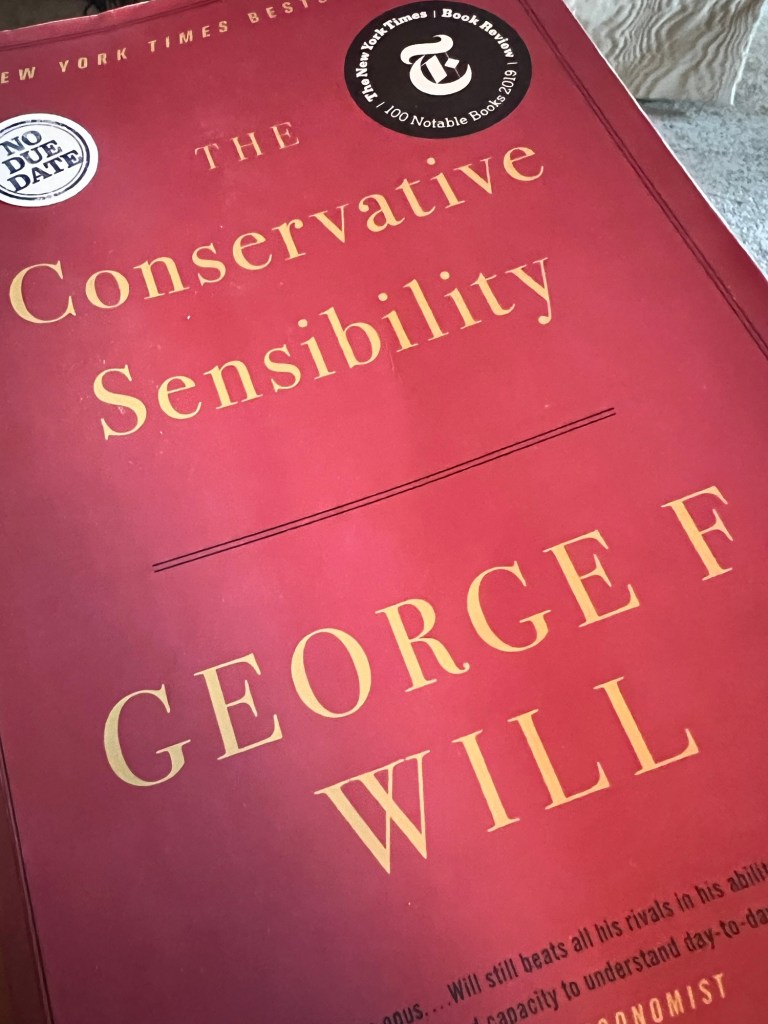
I’ve enjoyed this book by George Will. It’s been an education for the mind, and a challenge for one that is missing many pieces (thank goodness for ai!) .
Here’s a bit.
There is, however, something more, something exceptional about American patriotism, something complex and demanding because it involves assent to a creed that says rights are natural to, meaning inherent in, our humanity. A rights-centered society, must, however, take seriously the fact that duties are not natural. They must be taught. Self-interest is common and steady; virtue is rare and unpredictable. A society devoted to guaranteeing a broad scope for self-interested behavior must be leavened by virtue. So measures must be taken to make virtue less rare and more predictable. Among those measures, Americans have always considered education crucial.
I feel like there has been a neglect of the sense of duty. Sometimes shockingly so. I’m not sure if it is due to the decline of jobs with implied duties of service. Or if it is fashionable for those who were once revered for service work, to now want tangible income.
How to feather duties into ones course of life more readily occurs with role models. And then once individuals feel the reward of watching a flourishing, hopefully it will self-ignite in a virtuous cycle.
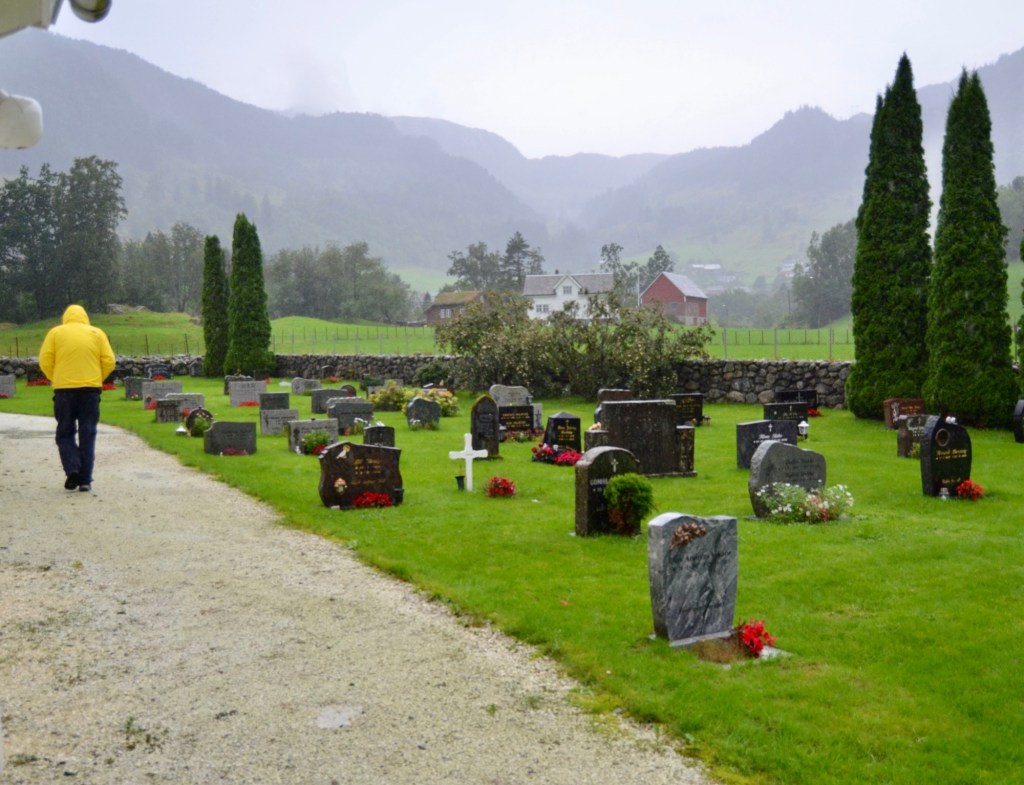
I know tombstones are out of fashion, but there’s something sacred about standing at a gravesite. In that moment, we pay tribute to those who came before us—the parents, grandparents, and ancestors whose lives shaped our own. We lay flowers, say a prayer, or simply pause in silence
Or you can use the excuse of a visit to bring you back to your ancestral country, even if you’re thousands of miles from where your roots first took hold. The headstones tell stories of immigration, hardship, and resilience. The soil of your lineage lies beneath your feet.
The ritual of the visit itself is grounding. Cleaning the marker, pulling weeds, sitting on a nearby bench—these small acts become a meditation. Gravesites are peaceful places, often surrounded by ancient relics of stone and weathered bronze that have stood watch for decades or centuries. The wind moves through the trees, a light rain falls, birds call overhead, and for a brief time, the noise of the modern world fades.
It’s a beautiful form of communing with the past while staying firmly in the present. You carry their memory forward in your daily life, your choices.
We all share this truth: We live. We die. It’s the one universal experience that binds every human who has ever walked this earth. Yet in our modern world, with community activities on a smaller scale, funerals are no longer the regular communal events they once were. That makes these intentional visits to memorials even more importance.
So if you haven’t lately, consider making the trip.
What separates Europe’s rise from China’s long stagnation? A fascinating answer comes from economic historian Joel Mokyr in a recent presentation.
Mokyr highlights a profound institutional divergence over the last millennium. In China, extended families, lineages, and clans grew increasingly central to social organization. In Europe, their importance declined, gradually replaced by what Avner Greif called “corporations” — associations of unrelated people who voluntarily come together to pursue a shared objective.
This isn’t just about family size. Decades of work in anthropology and psychology show that growing up in tight-knit extended kin networks shapes culture and psychology differently than growing up in societies where non-kin institutions dominate. The result is a contrast between more communitarian orientations (strong loyalty to a close in-group, weaker trust toward outsiders) and more universalist orientations (greater willingness to cooperate with strangers on the basis of shared goals or rules).
Mokyr gives concrete examples of these European “corporations”: guilds, monasteries, universities, and even military companies. Some were largely non-profit in orientation; others blended public spirit with pay. What united them was that membership was voluntary and exit was possible — unlike family, which you cannot leave.
How does this connect to real economic life?
At home-economic, we share much of this framework: most public goods are actually local or club goods, cooperation depends on group boundaries, and associational life often involves significant unpaid or underpaid contributions.
Is it possible that there is another angle to the core distinction that is slightly different?
Instead of a sharp divide between “family” versus “non-family” institutions, we observe that every transaction contains a blend of public-spiritedness and private interest. The key variable is the anchor of the interaction:
• In tight kin or clan settings, the anchor is often the family/group itself.
• In associational settings (guilds, fire departments, churches, professional networks), the anchor is usually a shared objective or cause.
This blend shows up constantly. A firefighter receives a stipend but accepts the role largely out of civic duty. A business owner might give a meaningful discount to a fellow church member or longtime customer without giving the product away for free. Group affiliation influences the transaction, but self-interest never fully disappears.
The more clearly a group’s shared purpose is defined, the easier it becomes to understand where public spirit ends and private calculation begins.
Mokyr’s analysis is enlightening. It reminds us that culture, institutions, and psychology are deeply intertwined — and that the ability to form effective groups beyond blood ties may have been one of Europe’s quiet advantages.
What do you think? Is the family vs. corporation divide the right frame — or is the real story the varying mix of “we” and “me” in every human transaction?
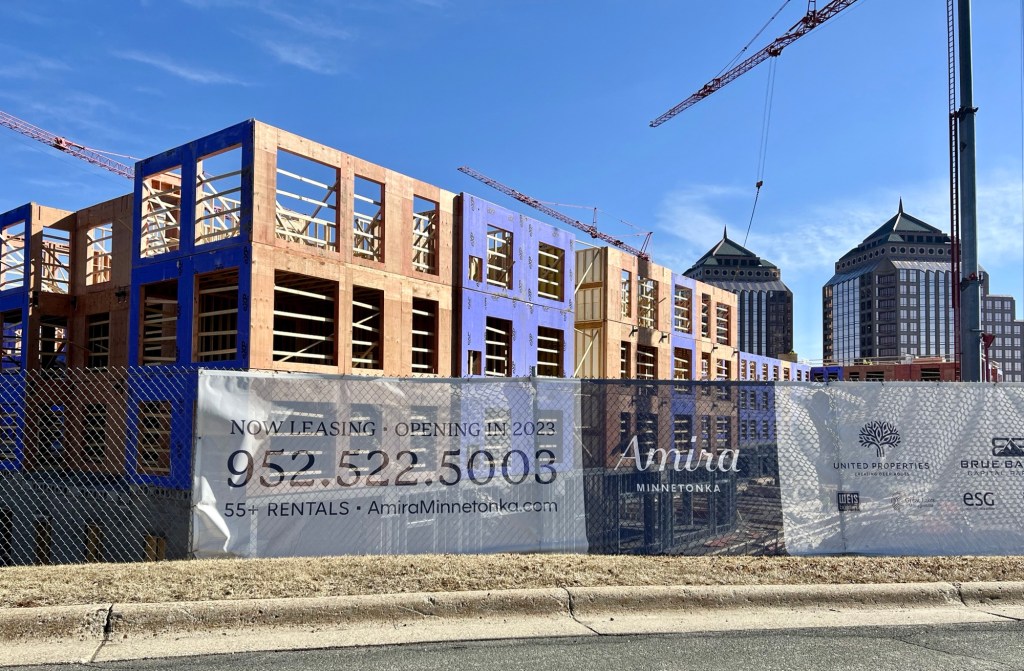
The bill is the 21st Century ROAD to Housing Act (H.R. 6644), a major bipartisan package aimed at boosting housing supply, cutting red tape, modernizing programs, and addressing affordability.7
It passed the House on May 20, 2026, by 396-13 (an amended version of the Senate’s earlier passage). It now heads back to the Senate for reconciliation. This is the most significant housing legislation in decades (first major one in ~36 years).5
Big-Picture Goals
Increase housing supply and construction.
Lower costs through regulatory streamlining.
Modernize outdated federal programs (e.g., HUD, FHA).
Limit large institutional investors’ role in single-family homes (a Trump priority).
Support affordability, homeownership, rentals, and manufactured housing without massive new spending.9
Key Provisions (in Easy Morsels)
1. Curbing Institutional Investors (the headline item) Large investors (those controlling 350+ single-family homes) face new limits on buying more single-family homes.
No forced selling of what they already own.
Exemptions exist (e.g., for certain rentals), but the House version softened a Senate “sell after 7 years” rule for build-to-rent properties to avoid discouraging new construction.
Goal: Reduce Wall Street competition with individual buyers; critics note investors own only a small % of single-family stock.17
2. Boosting Housing Supply & Cutting Red Tape
Streamlines environmental reviews (NEPA) for housing projects → faster approvals.37
Grants and incentives for local governments to reform zoning/permitting, convert offices to housing, and adopt pre-approved designs (e.g., ADUs, duplexes).
Ties some Community Development Block Grant (CDBG) funds to actual housing production.
Expands use of CDBG for new affordable housing construction.2
3. Manufactured & Modular Housing
Modernizes definitions and financing to make factory-built homes easier and more accessible (including modular without permanent chassis).
Aims to expand affordable options, especially in rural areas.47
4. Modernizing Key Programs
HOME Investment Partnerships: Permanent reauthorization + tweaks (higher income eligibility up to 100% AMI for homeownership help, more flexibility).42
Reforms to Rental Assistance Demonstration (RAD), rural housing, and veteran housing access.
Raises bank investment caps for affordable housing/community development.
Pilot programs for whole-home repairs and office-to-housing conversions.
Incentives for Opportunity Zones and innovation grants (~$200M annually in some versions) for high-performing localities.
Community banking provisions (restored in House version) to support more lending.39
Status & Outlook
The House and Senate versions differ (e.g., on investor rules, banking provisions, disaster aid). Negotiations continue, with White House/Trump support for the investor limits. If passed, it could help ease the supply crunch driving high prices/rents, though broader issues like zoning, interest rates, and construction costs remain key.5
This is a compromise package—supply-focused with some demand-side and investor curbs. Real impact depends on implementation and local action. For full details, check the House Financial Services Committee’s section-by-section or the bill text.
Here’s a list of neighborhoods things that are often controlled in some way as they are thought to harm a neighbor or the neighborhood:
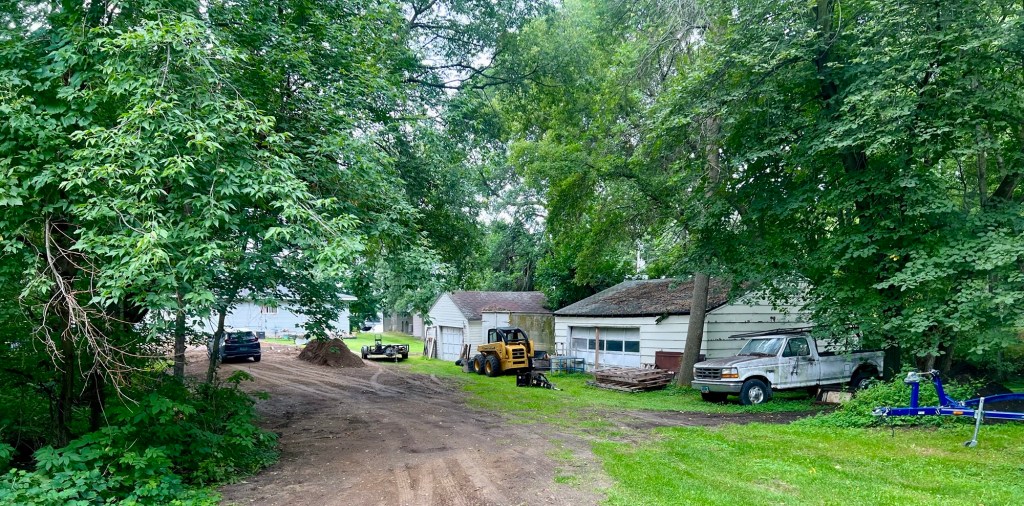
Grass too long, garbage can in plain site, too many cars in the driveway, too large a vehicle (ex RV) in the driveway, garage door up, sidewalk not cleared property, diseased tree, dilapidated garage, dumping, time of day for running construction equipment, level of noise from music, size of party, pet limitations and I’m sure there are more.
Communities draw these lines imperfectly, but the alternative (pure libertarian “do whatever on your lot”) ignores how tightly interconnected suburban/urban living really is. The key question for any specific case isn’t “Is this harming me?” but “Is this forcing costs onto others without their agreement?” That’s where regulation gains legitimacy.
Second Treatise of Government, Chapter 2, Section 6:
The state of nature has a law of nature to govern it, which obliges every one: and reason, which is that law, teaches all mankind, who will but consult it, that being all equal and independent, no one ought to harm another in his life, health, liberty, or possessions.
Be free as long as you draw no harm to others.
Of course, what constitutes harm gets sticky fast.
There is a lot of merit to the indirect approach, especially in matters where people are shielded from seeing themselves. That’s where poetry can be an asset. An odd coupling of words, placed side-by-side, may galvanize those deeply buried thoughts and allow them to surface.
And yet we neglect this art form. I had never heard of Edwin Arlington Robinson (1869-1935), who was revered by Teddy Roosevelt, won the Pulitzer Prize three times and was nominated for a Nobel.
Don’t be like Miniver Cheevy so full of regret for a time long past.
Miniver Cheevy, child of scorn,
Grew lean while he assailed the seasons;
He wept that he was ever born, And he had reasons.

Miniver loved the days of old
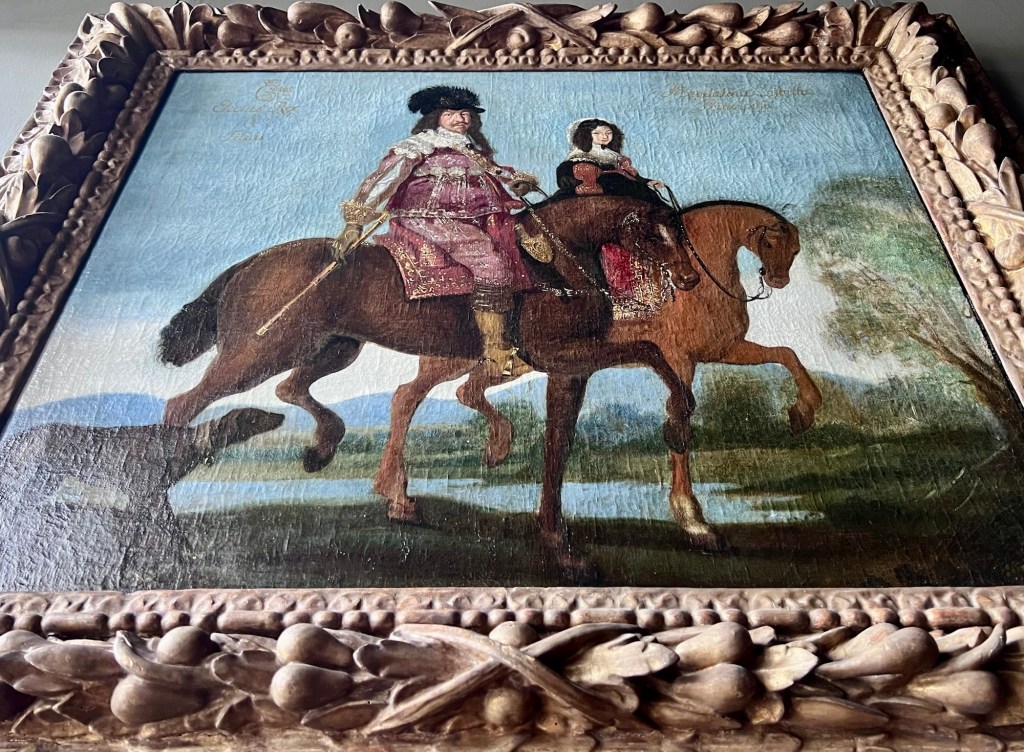
When swords were bright and steeds were prancing;The vision of a warrior bold
Would set him dancing.

Miniver sighed for what was not, And dreamed, and rested from his labors;
He dreamed of Thebes and Camelot, And Priam's neighbors.

Miniver mourned the ripe renown
That made so many a name so fragrant;
He mourned Romance, now on the town, And Art, a vagrant.

Miniver loved the Medici, Albeit he had never seen one;
He would have sinned incessantly
Could he have been one.

Miniver cursed the commonplace And eyed a khaki suit with loathing;
He missed the mediæval grace
Of iron clothing.

Miniver scorned the gold he sought, But sore annoyed was he without it;
Miniver thought, and thought, and thought, And thought about it.

Miniver Cheevy, born too late,
Scratched his head and kept on thinking;
Miniver coughed, and called it fate, And kept on drinking.
Embrace the dynamism of the future, one of individual actors working towards their best lives independently or in collaboration. The trappings of royalty are but costumes.
In Theory and History (1957), Ludwig von Mises laid out one of the twentieth century’s most ambitious defenses of praxeology: the idea that economics begins not with statistics or material forces, but with purposeful human action. Mises argued that people act toward imagined futures, interpret the world through ideas, and rely on institutions that make social life intelligible across time. Markets, in this framework, are not machines. They are processes of coordinated human plans unfolding under uncertainty.
Among Mises’s students and intellectual descendants, few pushed these insights further than Ludwig Lachmann. A German-born economist who fled Nazi Europe and later taught in South Africa, Lachmann became famous for emphasizing uncertainty, interpretation, and the instability of expectations within market life. If Mises provided the logical structure of action, Lachmann explored what it feels like to inhabit the market process from the inside.
One of Lachmann’s most illuminating concepts was orientation.
For Lachmann, markets work only because people possess enough shared orientation to make their plans compatible with one another. Individuals act in a world they can never fully know. The future is uncertain, information dispersed, and expectations constantly shifting. Yet somehow social coordination still occurs. Why? Because actors rely on orienting frameworks: prices, legal rules, habits, business conventions, reputations, and inherited institutions that help them interpret what is happening around them.
This idea is deeply compatible with Mises, even if Lachmann extends it in new directions. Mises already understood that human action depends on meaning, expectation, and interpretation. Money prices themselves function as orientation devices because they allow actors to compare alternatives and calculate across time. Property law, contracts, and market institutions stabilize expectations sufficiently for entrepreneurship and planning to occur. Lachmann’s contribution was to ask a deeper question: what happens when those orienting structures become unstable, contradictory, or fragile?
In this sense, Lachmann radicalized the subjectivism already present in Mises. Not only are values subjective; expectations about the future are subjective as well. Coordination is therefore never automatic or guaranteed. Markets persist because institutions provide interpretive bearings that make action intelligible.
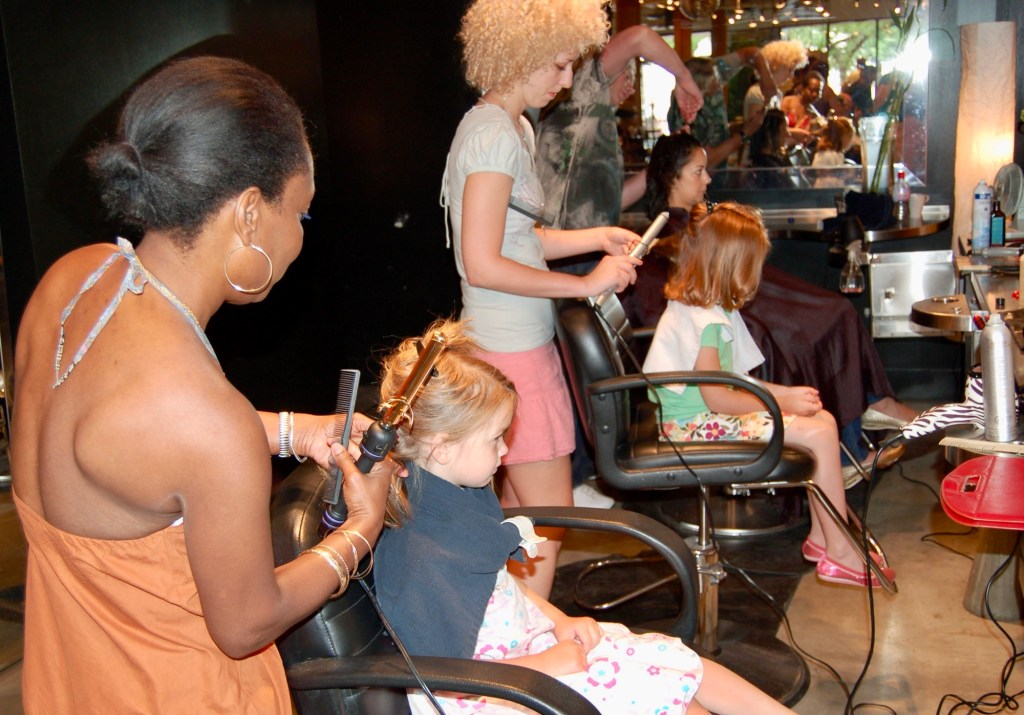
This becomes especially clear in ordinary life. Consider something as simple as a haircut. One person pays a premium to visit an elite salon because it reinforces a desired social identity and participation in a certain status network. Another pays her sister-in-law to cut her hair in a basement salon, partly to support family ties and obligations. A third chooses the inexpensive chain haircut because convenience and standardization matter more than symbolic meaning. In each case, the technical service may be similar, but the transaction contains different institutional and social valuations.
This insight suggests an important refinement to the common claim that “prices are embedded in institutions.” It may be equally true that institutions themselves are partially priced into transactions. Family loyalty, reputation, social belonging, neighborhood identity, prestige, trust, and status all enter economic life through the valuations actors attach to them at the moment of exchange.
This leads toward what might be called an orientation-by-institution framework. Institutions are not merely rules and constraints sitting in the background of economic life. They are meaning-bearing structures that orient expectations, stabilize plans, and render action understandable to others. Markets depend not only on competition and private property, but on the interpretive frameworks that allow people to navigate uncertainty together.
Mises supplied the foundation. Lachmann opened the interior. Together they point toward a richer understanding of economic life—one where prices, institutions, expectations, and social meaning continuously shape one another within the unfolding market process.
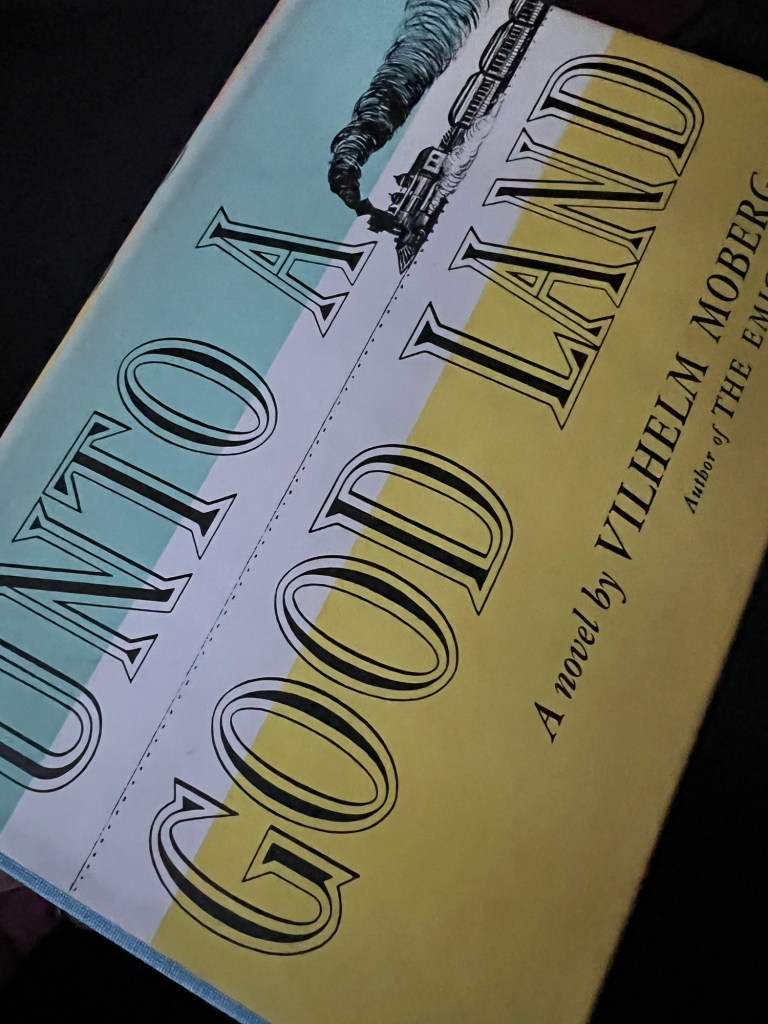
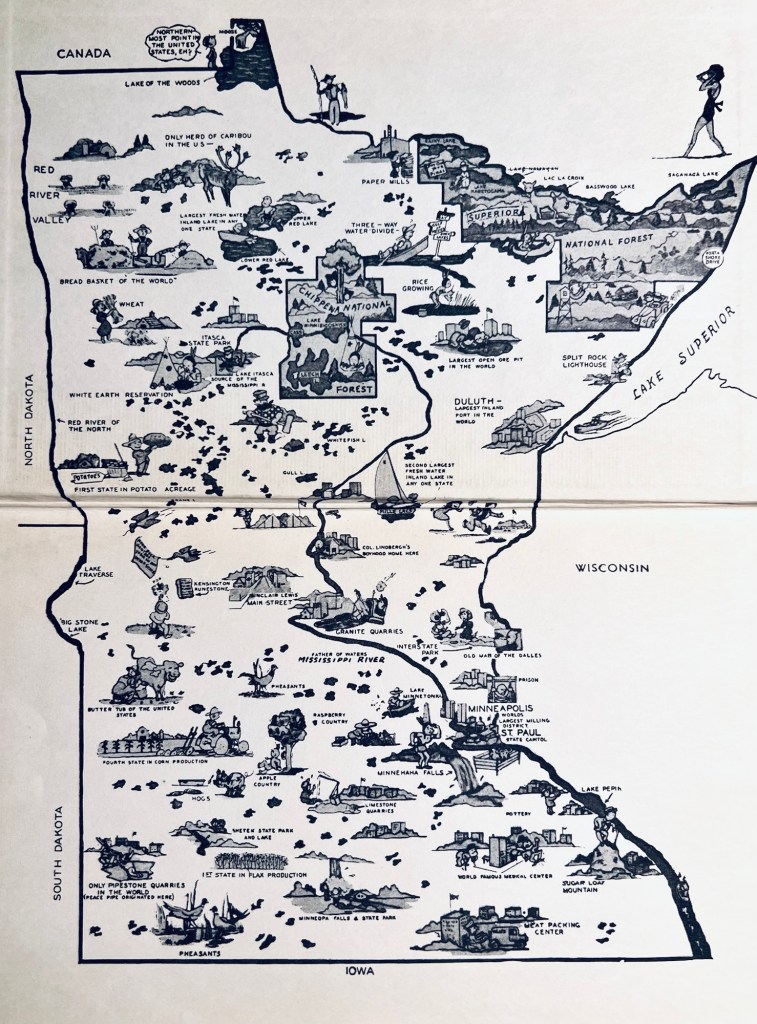
When I stumbled across this book at an estate sale it threw me back to all those stories of Northern Europeans making their way to NY and then onto the midwest.
The story starts as the captain has just brought a cargo of Swedes to their new country.
And having sailed these Swedish peasant’s continent to another, Captain Lorentz now felt so great a responsibility for them he wouldn’t even leave them to shift for themselves after they had landed. Hardly had his ship tied up at the pier when all those who made their living from the simplicity and inexperience of immigrants focked around the gangplank like rapacious dogs at slaughter time. These runners and grafters and brokers, and whatever they were called in the language of this new country, watched for every newly arrived ship. There were agents from freight companies which the captain knew were fraudulent; there were men from taverns and quarters of ill repute; well-fed and well-dressed men in funny little round caps with large visors; lazy men who avoided honest work and whose presence was repugnant to Captain Lorentz. He would always place an armed guard at the gangplank to keep such rascals off his ship, for once on board they would steal all they could lay hands on, down to a single nail or a piece of rope.
Such a cacophony of characters all melding and sorting themselves out. But one thing they share is a disdain for the rigid class structure they left behind.
He (the captain) could never reconcile himself to the strange customs and ideas he met in North America. Here people of many races mixed, and the classes were so turned about that one couldn’t tell which were the upper and which the lower. Lowly people considered themselves changed when they landed on American shores; they thought themselves equal to those of high birth and position. Every farm hand and servant wench assumed a conceited, disobedient, insolent attitude. Several times it had happened that able-bodied men of his crew had become so arrogant that they had boldly broken their contracts with him and had simply remained in America. Here, respect for authority and masters was disregarded, and consequently, the servant class was ruined. Here all felt at home, even those who smeared pork grease over their faces while eating, not yet having learned the use of a napkin.
Ha! The servant class is ruined! Indeed.
And class warfare in general never amounts to much in the US. The preferred strategy to attack wealth is to personalize a position as demonic, not a class. Landlords are one such position. And this bears class overtones as it was the landholders who plied work from the serfs.
But that’s a story from the old country. US landlord villains are sleazy guys in suits who walk in to ‘inspect’ the unit at will. That’s the new tale, anyway. Or there’s the evil corporate landlord. Yet corporate ownership of rental properties only comprise maybe 3% of all rental homes. Hard to see much of an impact at that number.
The thing is that class warfare doesn’t really take hold on this side of the Atlantic. It’s a romantic notion of strife from another time that is ruined by the melting pot that is America.
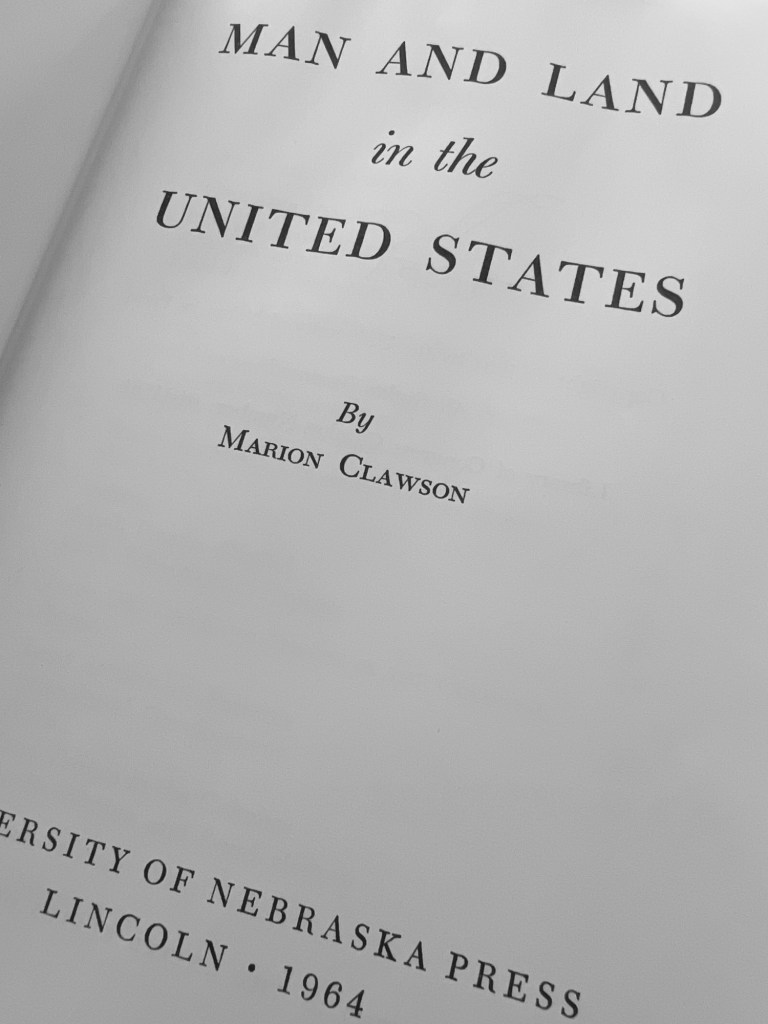
It’s always a treat to read a book written in another era, fresh from current tropes. Marion Clawson’s Man and Land in the United States (1964) doesn’t flinch: right after the American Revolution, the federal government’s primary goal with the public domain was brutally simple—sell huge swaths of land to big investors and speculators. Why? The nation was drowning in war debt and those empty western acres were the only real asset it had. The Land Ordinance of 1785 wasn’t some noble grid for yeoman farmers; it was a surveying machine built to sell fast and tax later. Economics first, romance later.
Yet within a generation Thomas Jefferson’s vision took hold: the independent family farm as the bedrock of republican virtue. The individual settler, not the absentee investor, became the ideal. The Wild West followed—horse-trading, shady deals, claim-jumping, and countless homesteaders who broke and walked away. But here’s the quiet genius Clawson reveals: out of all that chaotic, small-scale bargaining a standardized system of real-estate transactions slowly crystallized. Title, survey, deed, mortgage, clear transfer. And with it came the deep cultural conviction that if you cleared the land, improved it, and worked it, you could actually accumulate wealth.
The largest peaceful land transfer in world history happened in the decades after the Revolution—roughly 1.8 billion acres of public domain eventually moved from federal hands into private ownership. George Will has often recounted the Constitutional moment as one of hard-headed institutional craftsmanship: the framers knew a weak central government couldn’t pay its debts or secure the frontier. So they built a framework—federal control of western lands (Article IV), clear property rights, enforceable contracts—that turned raw wilderness into capital.
How much of America’s distinctive faith in markets, mobility, and earned wealth was “feathered” (as Will might put it) by those early trading institutions and the lived experience of buying, improving, and owning land? The horse-trading was messy, the failures heartbreaking, but the emergent order was powerful: work the land, trust the deed, and the system will let you keep what you build.
That’s not just history. It’s the quiet origin story of the American dream of property as the ultimate stake in the game.
There is another relation of man to land, however, which shall be the focus of our book: under what social arrangements, laws, and customs has man been allowed to use the land, and how has he in fact used it. This is more properly a man-man relationship than it is a man-land one. Men, acting through the tribe, or the family, or the government, have set up rules under which other men are allowed to own, sell, buy, lease, inherit, and otherwise use land for their benefit.
Sometimes these arrangements are specific and written, perhaps highly complex and detailed; sometimes they are less definite, subject to interpretation by the stronger for their own ends. In their totality, these various arrangements constitute a system of land tenure for that time and place.
And, following the success of the American Revolution:
Some specific consequences for land flowed rather immediately out of the victory. Tory estates were confiscated, subdivided, and sold to farmers, to help raise money to repay the costs of the war. Some, but by no means all, large landowners had been Tories, and subdivision of their estates meant a further strengthening of the landowning farmer. As we have noted, quitrents and certain restrictions on land inheritance were abolished, thus moving further in the direction of freedom in land ownership. During and after the war, grants of land were made to soldiers as a reward for their military service. In many cases, these soldiers sold their land rights, thus setting the stage for extensive land speculation and for the building of new large landholdings.
The indirect consequences of the Revolution, as far as land was concerned, were greater and more enduring. The whole pattern of public land ownership and disposal, and of private land ownership and use, which we shall describe in more detail in later chapters, grew naturally and more or less inevitably out of the attitudes toward land that had evolved during the colonial period and which were strengthened—one may almost say solidified—as a result of the Revolution.
We the People of the United States, in Order to form a more perfect Union, establish Justice, insure domestic Tranquility, provide for the common defence, promote the general Welfare, and secure the Blessings of Liberty to ourselves and our Posterity, do ordain and establish this Constitution for the United States of America.
Throughout the day, you can keep doing the same ol’ thing or you can try something new. New is hard. Those nagging questions sing-song along in your head: Will I just waste my time? Will I try and fail? Will I be led down a dubious—or even dangerous—path?
Take trying out a new trail as an example. The map may be unreliable, and your walk could be cut short when the promised connection turns out to be nothing more than a fictitious line on paper. Or the trail might meander through an industrial area that starts to feel a little spooky—the grind of machinery and the sudden hiss of released steam painting a scene of foul play and stashed bodies.
Trying small segments at a time can be one way of tricking ourselves into pressing on instead of holding back. Picking moments when the risk of a setback doesn’t feel quite so dear helps too. And engaging a reliable partner (one with fur and fangs is especially nice) works wonders.
But in the end, it’s often the unexpected joy of experiencing something new that pulls us forward.
On his SlowBoring substack today, Matt Yglessias wrote how the seniors are quite a bit better off than in years of yore. Fewer live check to chek and many have additional assest, their homes included. To close the piece he notes:
Right now, 28 percent of America’s large homes with 3+ bedrooms are owned by empty-nesters. I’m not a communist who thinks we should seize those homes and redistribute them to young zoomer couples who want to get married and have kids.
But if affluent boomers were to sell their homes, realize large capital gains on the transaction, and move into smaller dwellings and live off their financial windfall, that would be a fine outcome for the country. When Senator Kelly says that Washington doesn’t talk about the problems of retired people enough, he has the actual situation completely backwards.
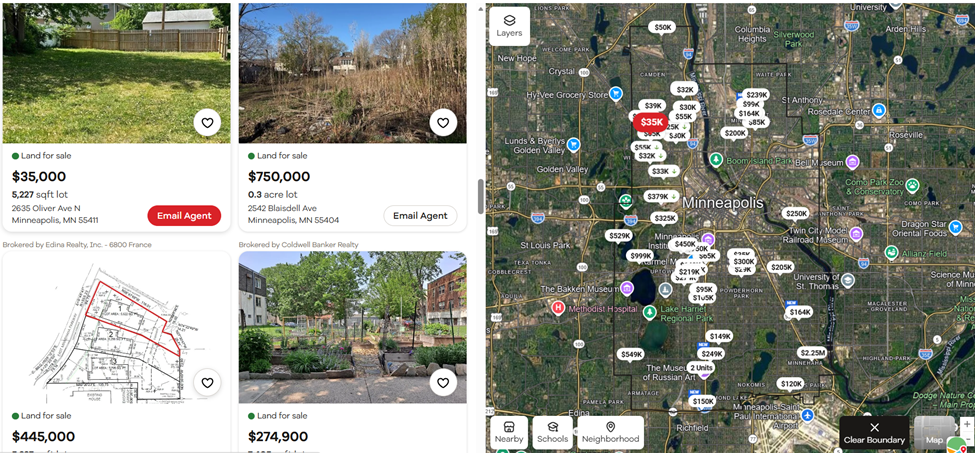
This syncs with yesterday’s post in that it may not be the quantity of homes in a community, but rather there could be gains by right-sizing of the household to the structure.
An elderly person may feel comfortable in their 4,000 sq ft home while living in only three to four rooms. They may have financial incentives to stay put if a move leads them to an assisted living facility. But it is not always ideal. The repairs, and fear of repairs, can be wearing.
If a municipality were to offer services to help ease them into other forms of living than these move-up houses would be freed up for new families. Some of these might be practical, like having pick up days where all items left at the curb would be collected at no cost. The burden of things can be an obstacle to a move. Tours of other types of living options might get people interested. Stressing the ease of less to care for, or the conveniencce of being closer to medical facilities might be an angle.
Giving up a long-time resident is difficult for many, at any age. When the constraints of being on in years make everything a bit more of a project, offering ways to facilitate a move could better align the people with the structure.
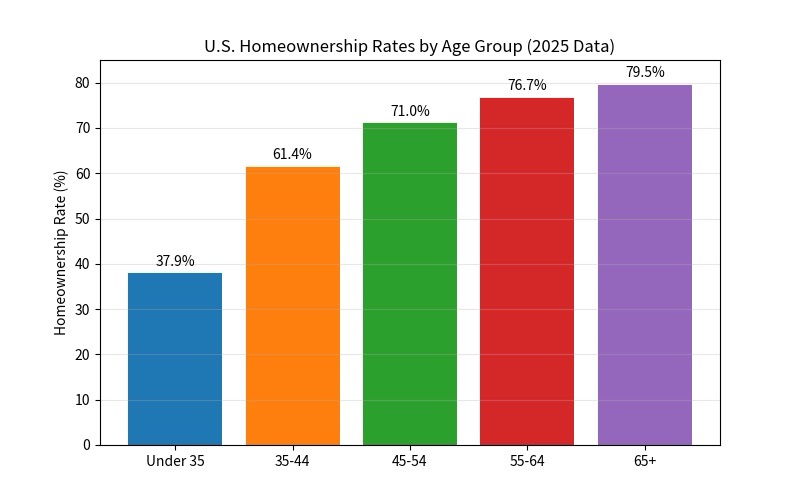
But the numbers favor an increase in viable units of housing through the cycle of life. Folks over 65 have a 3% higher home ownership rate over other ten-year population groups.
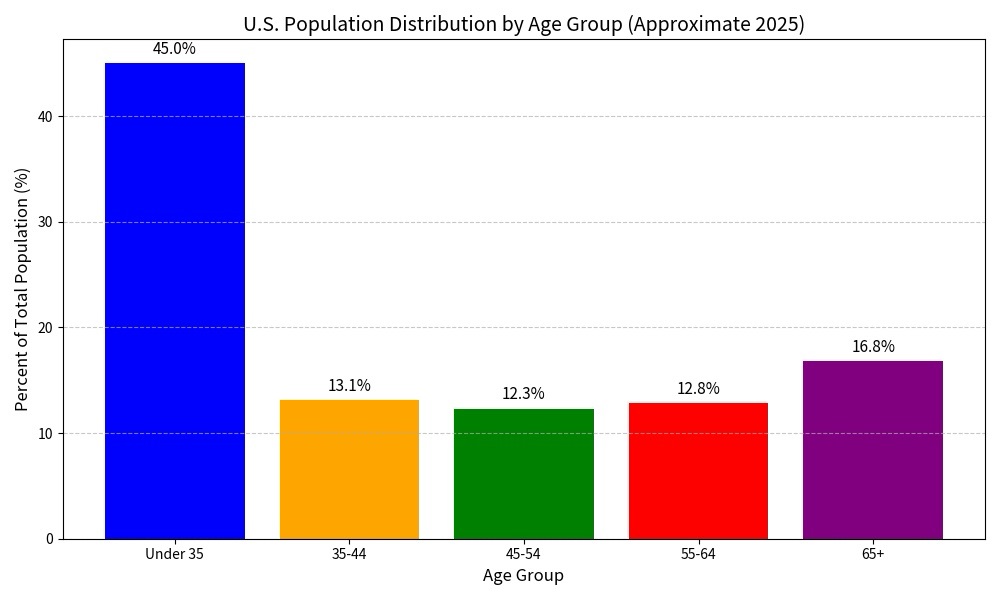
Plus they are a larger group. They make up 4% more of the population than younger cohorts.
Natural attrition over the next fourteen years or so will loosen up supply in the housing market.
It’s not about simply adding more housing units. It’s about communities strategically matching their housing stock to the households they seek to attract — the ones best positioned to support local public infrastructure and services.
Buchanan’s “Windows” Metaphor and the Public-Private Tension
James M. Buchanan deliberately used the metaphor of “windows” to show how the same economic phenomena can look radically different depending on the lens you choose. In his 1964 essay “What Should Economists Do?,” he urged a shift in perspective:
“I want economists to modify their thought processes, to look at the same phenomena through ‘another window,’ to use Nietzsche’s appropriate metaphor. I want them to concentrate on ‘exchange’ rather than on ‘choice’.”
Through the choice window, human action appears as individual optimization—private actors maximizing their own utility. This lens makes spontaneous private sorting (e.g., parents voluntarily funding improvements in a public K-12 district) look feasible and natural. Yet Buchanan worried it fails at scale because of free-riding.
By switching to the exchange window, Buchanan reframed everything as cooperative agreements among individuals. Public servants can now legitimately incorporate private incentives (votes, prestige, career advancement) inside formal institutions because those institutions are themselves the product of constitutional exchange. At the same time, Buchanan could quite easily switch the framing around and agree that private actors, operating through voluntary exchange and mutual agreement, can also produce genuine public goods when they form clubs, associations, or local arrangements that successfully internalize benefits and limit free-riding.
This raises a deeper question: Does “human action” itself take on a different form when viewed through the two perspectives?
The lawyers, Bob, know too much.
They are chums of the books of old John Marshall.
They know it all, what a dead hand wrote, A stiff dead hand and its knuckles crumbling, The bones of the fingers a thin white ash.
The lawyers know
a dead man's thoughts too well.
In the heels of the higgling lawyers, Bob,
Too many slippery ifs and buts and howevers, Too much hereinbefore provided whereas,
Too many doors to go in and out of.

When the lawyers are through
What is there left, Bob?
Can a mouse nibble at it
And find enough to fasten a tooth in?

Why is there always a secret singing
When a lawyer cashes in?
Why does a hearse horse snicker
Hauling a lawyer away?

The work of a bricklayer goes to the blue.
The knack of a mason outlasts a moon.
The hands of a plasterer hold a room together.
The land of a farmer wishes him back again.
Singers of songs and dreamers of plays
Build a house no wind blows over.
The lawyers — tell me why a hearse horse snickers hauling a law-
yer's bones.
I’ve got some more lawyerly ideas for poetic treatment, like — those who think they know so much train themselves to be myopic. Or those who busy themselves pointing out what others don’t know fail to hook an opportunity in their midst. And then those who think they know so much create an industry of people who know just how to leverage this blindness.
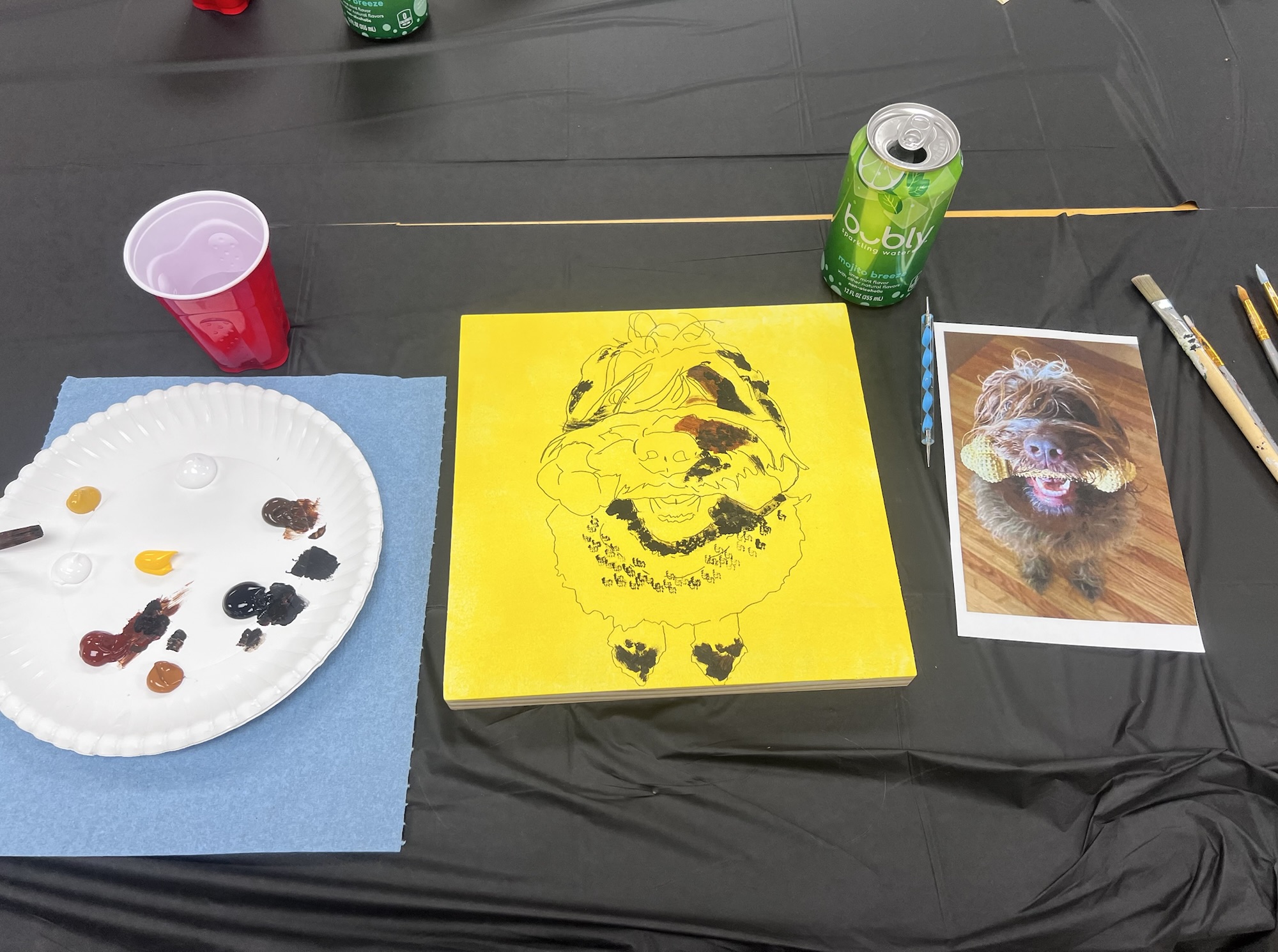
Doing art is fun. Doing art stretches the hand mind connection. Doing art makes your eyes assess values. Doing art can be unpredictable which can be disappointing or rewarding or some blend of both. Doing art captures so much of life in a nugget.







 Home Economics