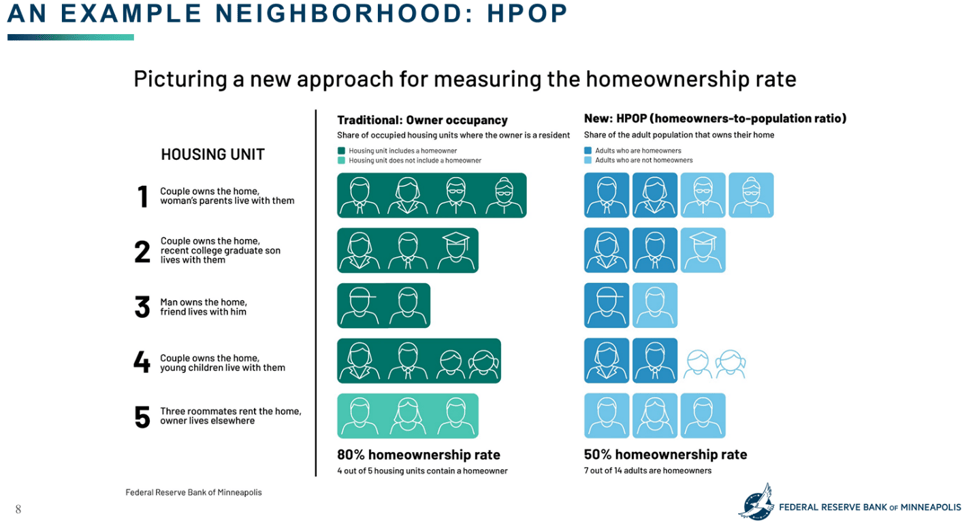
Eric Hembre, a senior economist at the Federal Reserve Bank of Minneapolis, offers a new perspective on counting homeownership. Rather than measuring the percentage of housing structures occupied by an owner versus a renter, Hembre considers how many people in the population being observed are homeowners. This distinguishes households that accommodate multiple adults from those occupied by just one or two owners and their children under eighteen.
He calls this new measure the Homeowners-to-Population Ratio (HPOP). It is based on people, rather than structures.
Here are some slides from a presentation given to the Minneapolis Area Association of Realtors this past week that help clarify the concept.
What could be interesting about this measure is observing various community outcomes as the ownership rate drops—which implies a larger number of adult work hours taking place in the home. It’s reasonable to assume there might be some sharing of duties, like mowing the grass or caring for dependent family members. But what else?
Could there be more associational work done informally through neighborhood groups? Are the streets better tended and free of litter? Are the sidewalks more likely to be shoveled? Do people report better health because there are more adults to give rides to medical appointments?
It raises an interesting question about the relationship between homeownership and the less visible work that goes into maintaining a community. Beyond the structures themselves, what changes when the people living in them have different arrangements of ownership, responsibility, and time?
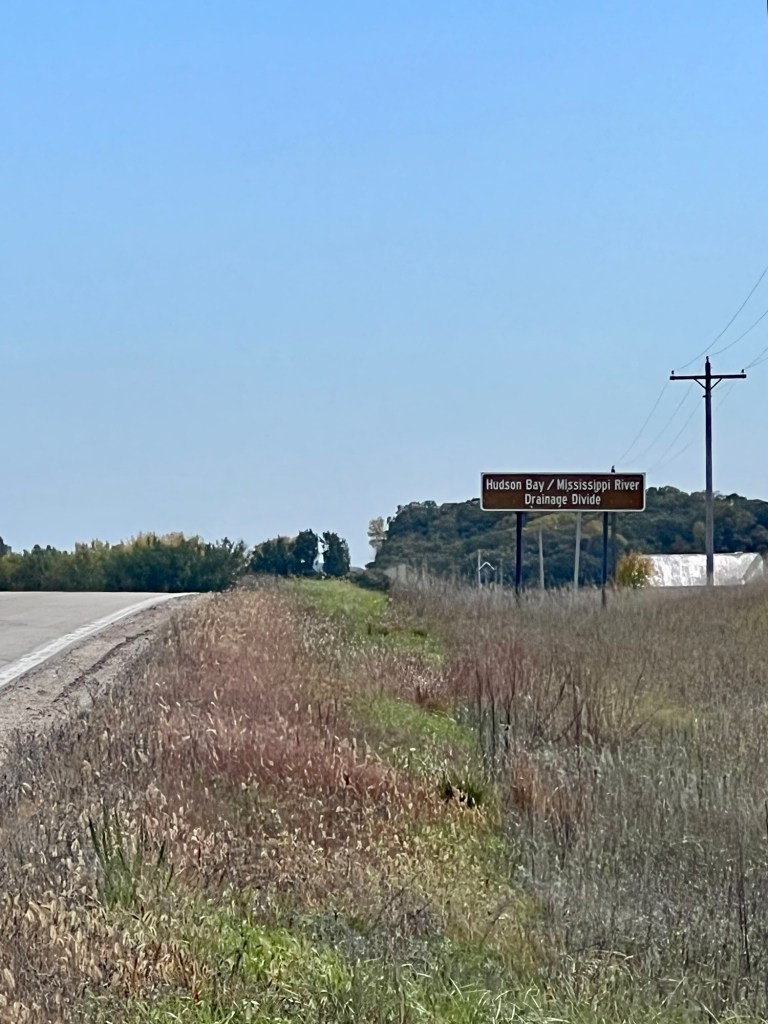
I’m never quite sure how they draw the watersheds off a continental divide. A drop from a storm cloud over Minnesota can end up in one of three basins, hundreds of miles from here: Hudson Bay, the Atlantic by way of the Great Lakes, or straight south on the Mississippi to the Gulf of Mexico. You cannot tag a drop the way you band a migrating waterfowl and wait to see where it lands.
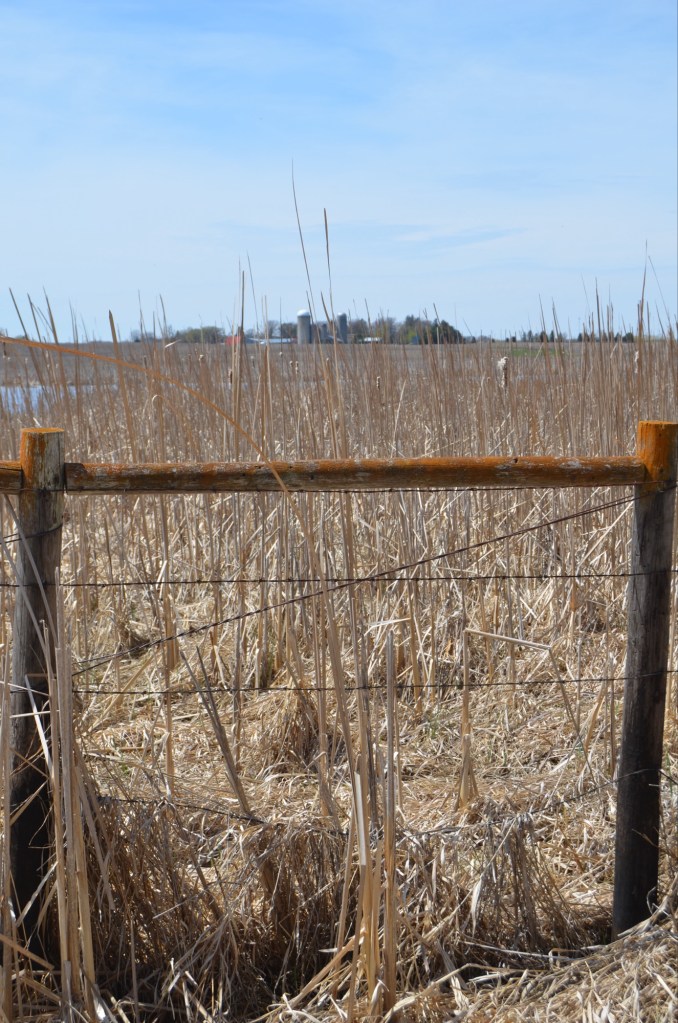
The sign announcing the great divide doesn’t help. Hardly a peak, hardly a break in the land. Just another crest on a meandering country road, grass gone to seed on both shoulders, and a brown board that says the water on one side is bound for Hudson Bay and the water on the other for the Mississippi.
They figure it by elevation. Surveyors follow the high ground — the Laurentian Divide, what the old maps called the height of land — and mark where a raindrop has no choice but to run one way or the other. Near Hibbing the St. Lawrence Divide crosses it, at a place the Ojibwe called the Hill of Three Waters. Same trick of the land. No drama, just a highland plain, and three oceans waiting.
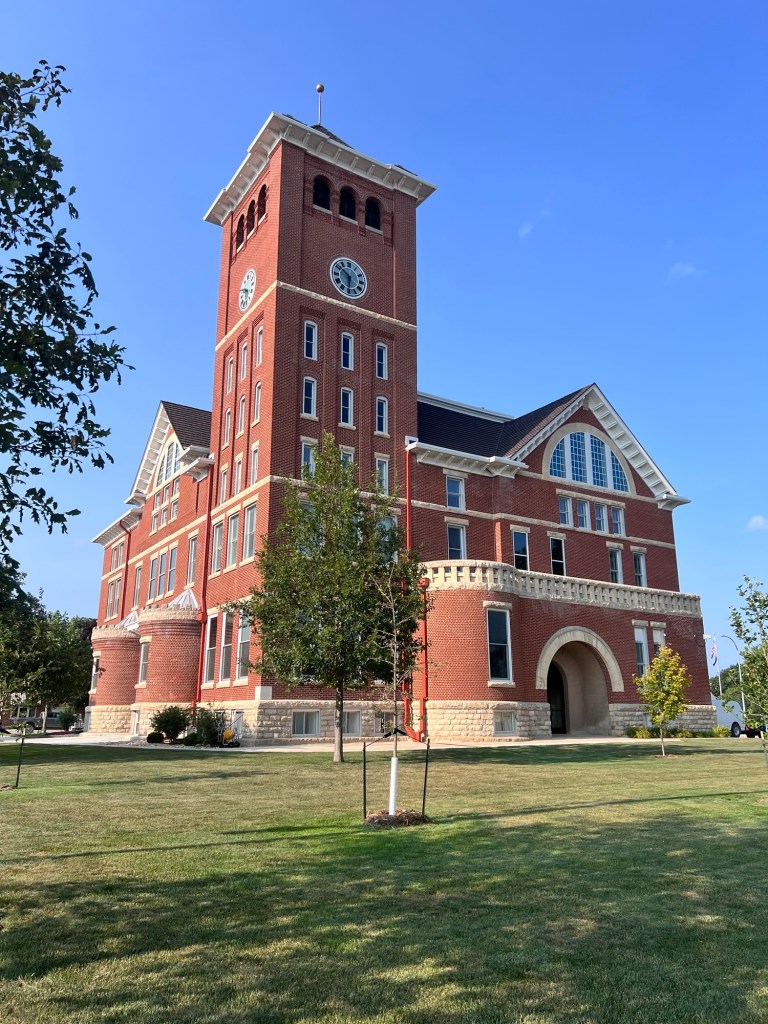
Local courthouses in county seats across the country stand as reassuring symbols of property documentation and the enforcement of law. These imposing buildings often anchor towns with populations as small as 2,700.
This, the third and present courthouse, was built for about $50,000 and completed in 1893. Three stories high except for the clock tower, which rises well above the multi-gabled roof, it underwent extensive renovation in 1974.
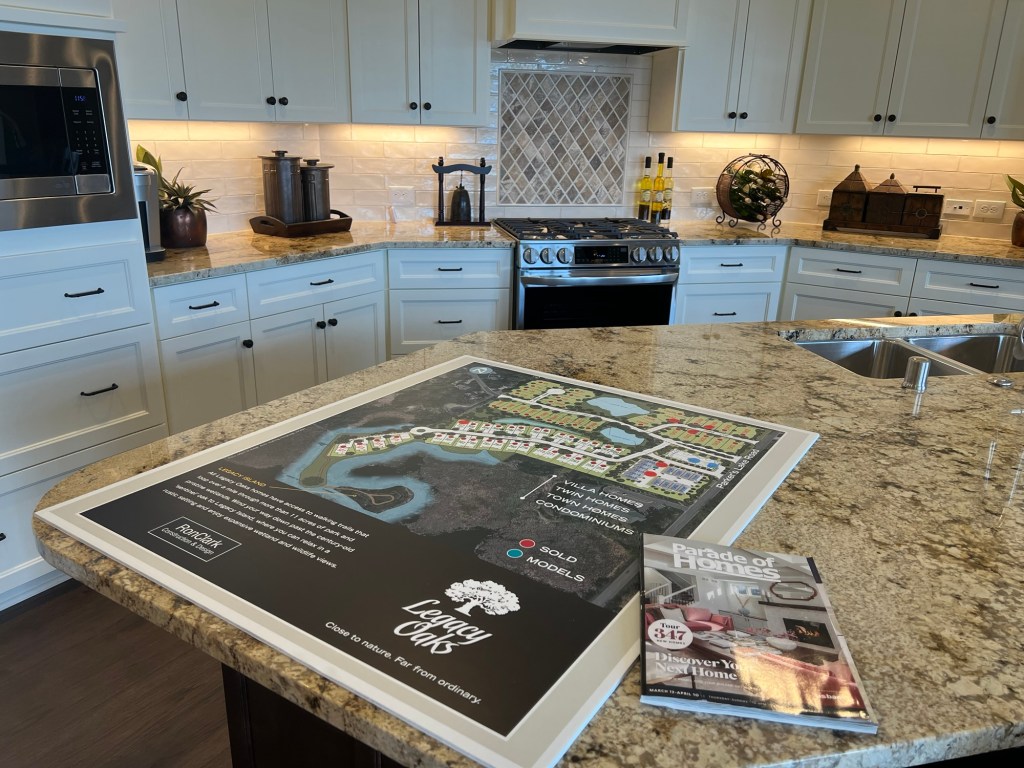
A recent working paper making the rounds claims that home staging — furnishing a property for sale with items that won’t be included in the transaction — generates a price premium of roughly 10%. On a $300,000 home, that’s $30,000 of value supposedly created by renting some furniture for a few weeks at a cost of perhaps $2,000-$5,000. It’s a compelling story. It’s also almost certainly wrong, or at least dramatically overstated, for several reasons that anyone familiar with real estate markets should find intuitive.
The Arbitrage Problem
Let’s start with the most basic objection. If staging reliably produced a 10% premium, every rational seller and every competent real estate agent would stage every property, every time, without exception. The return on investment would be extraordinary — spending $3,000 to generate $30,000 is the kind of trade that doesn’t stay secret for long. And in fact the market has responded: the paper itself notes that roughly 70% of sellers already professionally stage their homes. But here’s the problem — if nearly everyone is doing it, you can’t generate a 10% premium by doing what everyone else does. Competition erodes excess returns. The equilibrium effect of universal staging should collapse toward something approximating its cost — which in percentage terms on the average home sale is closer to 1-2%. That’s not a behavioral bias. That’s just how markets work.
The paper’s authors are aware of this tension but don’t resolve it satisfactorily. They frame the persistence of staging as evidence of buyer irrationality — that buyers keep falling for visual cues despite having every incentive to discipline themselves. But a more parsimonious explanation is simply that the measured 10% isn’t a real staging effect at all. It’s a statistical artifact of who chooses to stage.
The Self-Selection Problem
This is the deeper issue. The decision to stage a home is not random. Sellers who stage are systematically different from sellers who don’t, in ways that directly affect sale price and have nothing to do with furniture. Staged sellers tend to be more motivated to maximize their sale price, better advised by experienced agents, more willing to invest time and money in the listing process broadly — better photography, more careful pricing, more patient negotiating. They are, in short, more sophisticated participants in the transaction. All of those characteristics independently predict higher sale prices and faster sales, and none of them are captured by a furniture dummy in a regression.
The paper’s most ambitious attempt to address this is a clever design: they look at properties that sold at least twice in their sample and compare the same house to itself — once staged and once unstaged. By including a property fixed effect, they control for any fixed characteristic of the house that might explain why it sells for more. This is a legitimate technique and it does rule out the story that staged homes are simply nicer homes.
But it doesn’t rule out the story that staged sellers are simply better sellers. A fixed effect controls for time-invariant house quality, not time-varying seller circumstances. If the same house sold in a distressed situation the first time — estate sale, divorce, job relocation, must-close-by-Friday — and was then thoughtfully prepared and patiently marketed the second time, the regression would attribute the entire price difference to the staging when it really reflects the seller’s situation and strategy. Distressed sellers systematically underprice and often skip staging. Patient, well-advised sellers stage and also do a dozen other things that push prices up. The furniture is the most visible signal of that bundle, but it’s probably not doing much of the work.
What Is Staging Actually Worth?
None of this means staging has no effect. Presentation clearly matters at the margin, and there is genuine psychological evidence that buyers respond to visual cues. A well-staged home probably does sell somewhat faster and at a modest premium over a comparable poorly-presented one. But the operative word is modest. A 1-2% premium — enough to justify the cost of staging but not enough to represent a large, exploitable behavioral bias — is far more consistent with what a reasonably efficient market with professional intermediaries would produce. The fact that the paper’s own experimental results show a 2-3% premium for furniture alone, rising to 6% only when decor is added under hypothetical conditions with no real financial stakes, suggests even the authors’ own controlled evidence points to a smaller number than their headline transaction-based finding.
A 10% staging premium would be one of the largest and most persistent mispricings ever documented in a major asset market. Extraordinary claims require extraordinary evidence. The evidence here, while creative and carefully assembled, isn’t strong enough to support that conclusion.
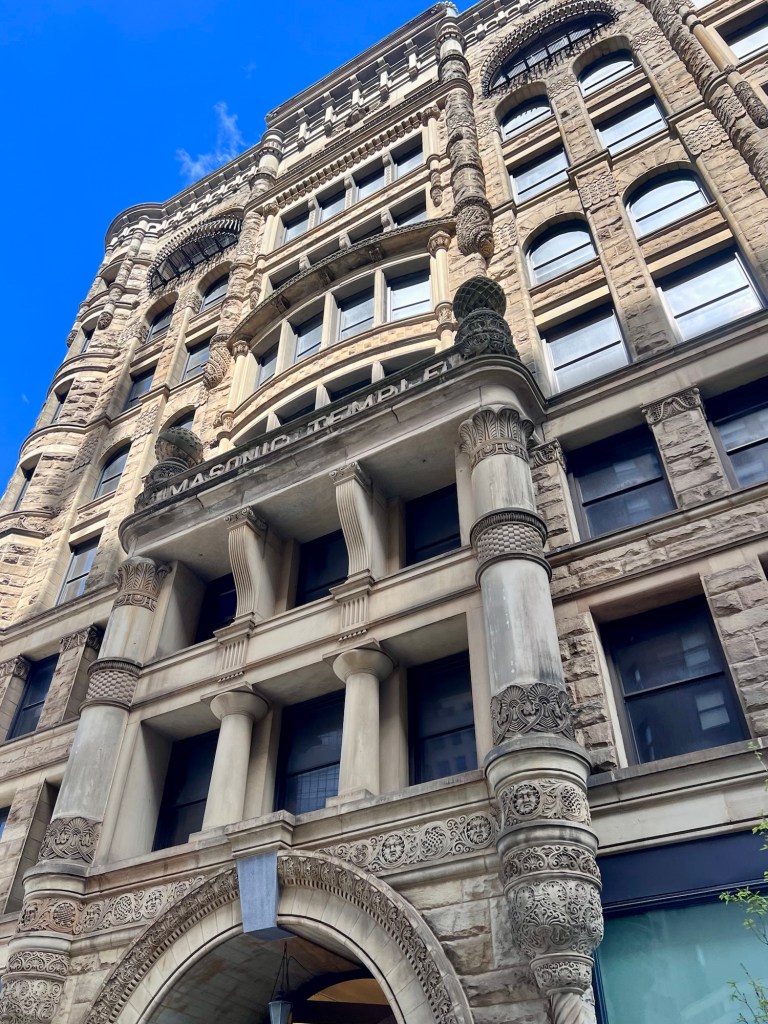
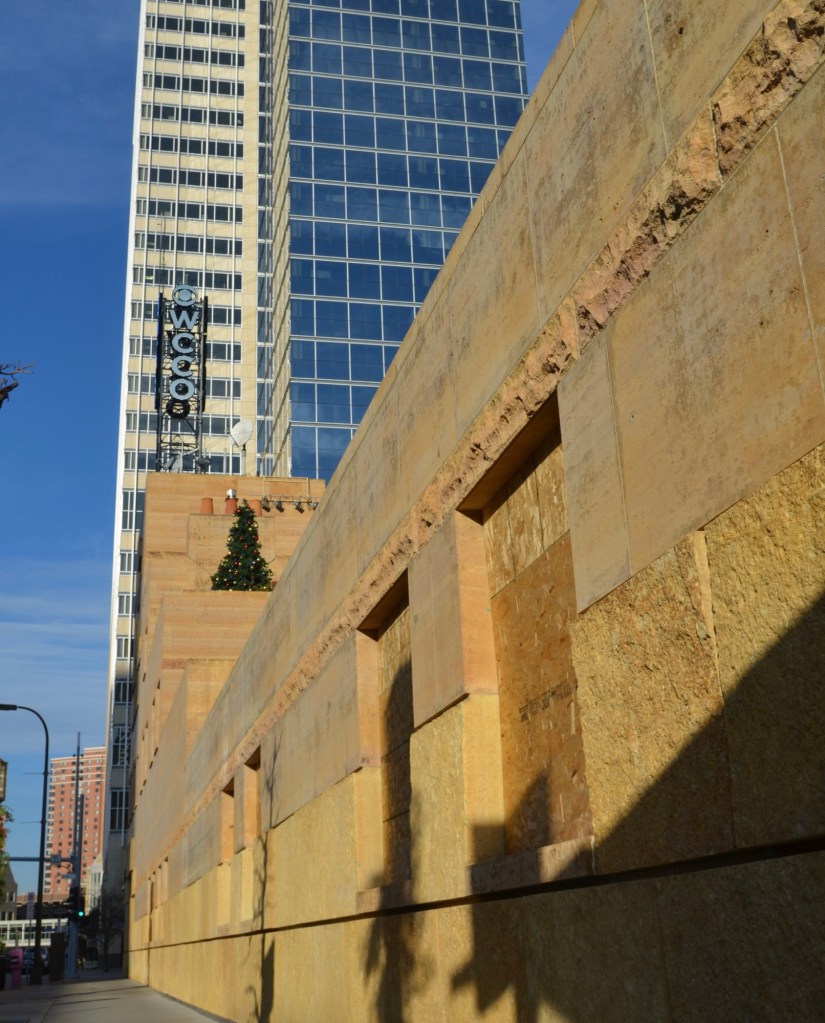
Original Site (1924–1938): WCCO Radio began broadcasting on October 2, 1924, from the Nicollet Hotel in Minneapolis, after the Washburn-Crosby Company (predecessor to General Mills) acquired the WLAG station.
Move to 625 2nd Ave S (1938): WCCO Radio relocated to the old Elks Club building at 625 2nd Avenue South in April 1938.
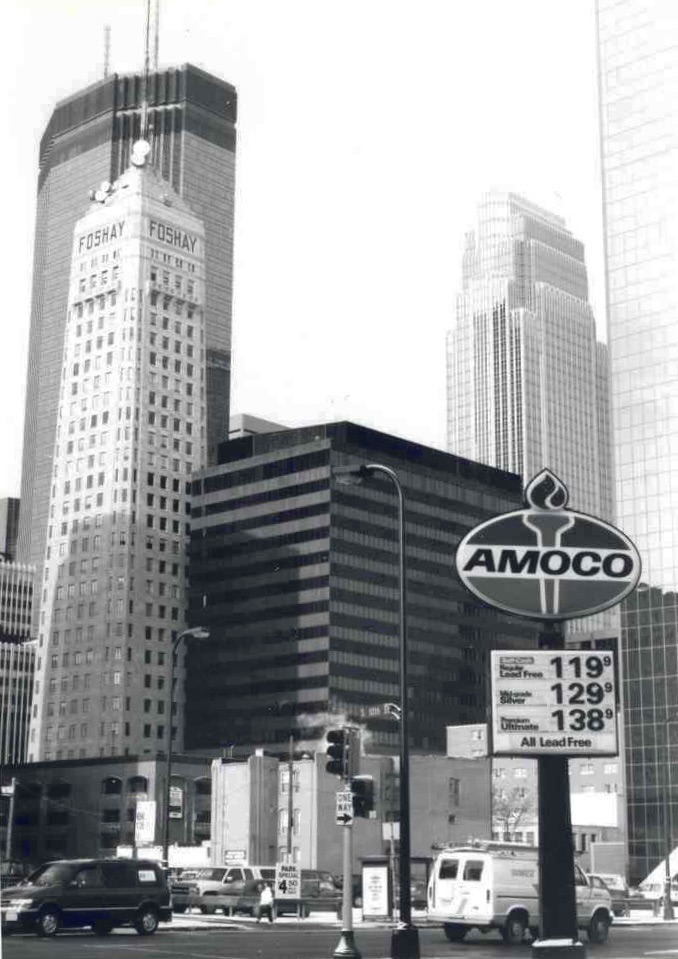
The “Radio Building”: Throughout the 1940s and 50s, this location became known as the WCCO Radio Building.
Broadcasting Milestone: The station is famous for its 1965 live tornado coverage from its studio, which saved lives and established it as a trusted source.
FBI Presence: The FBI’s Minneapolis Division briefly operated from the 4th and 5th floors of the WCCO Building in 1955 before moving in 1961.
They are rattling breakfast plates in basement kitchens,
and along the trampled edges of the street
I am aware of the damp souls of housemaids
sprouting despondently at area gates.

The brown waves of fog toss up to me
twisted faces from the bottom of the street,
and tear from a passer-by with muddy skirts
an aimless smile that hovers in the air
and vanishes along the level of the roofs.
When the daylight begins to linger yet the freeze is still in the ground, your mind wanders to warmer seasons. Summertime. The slow long days on a farm in central Iowa, surrounded by acres of crops, hogs and crickets, fireflies and cut grass.
Standing tall in a stork-like embrace with my cousin.
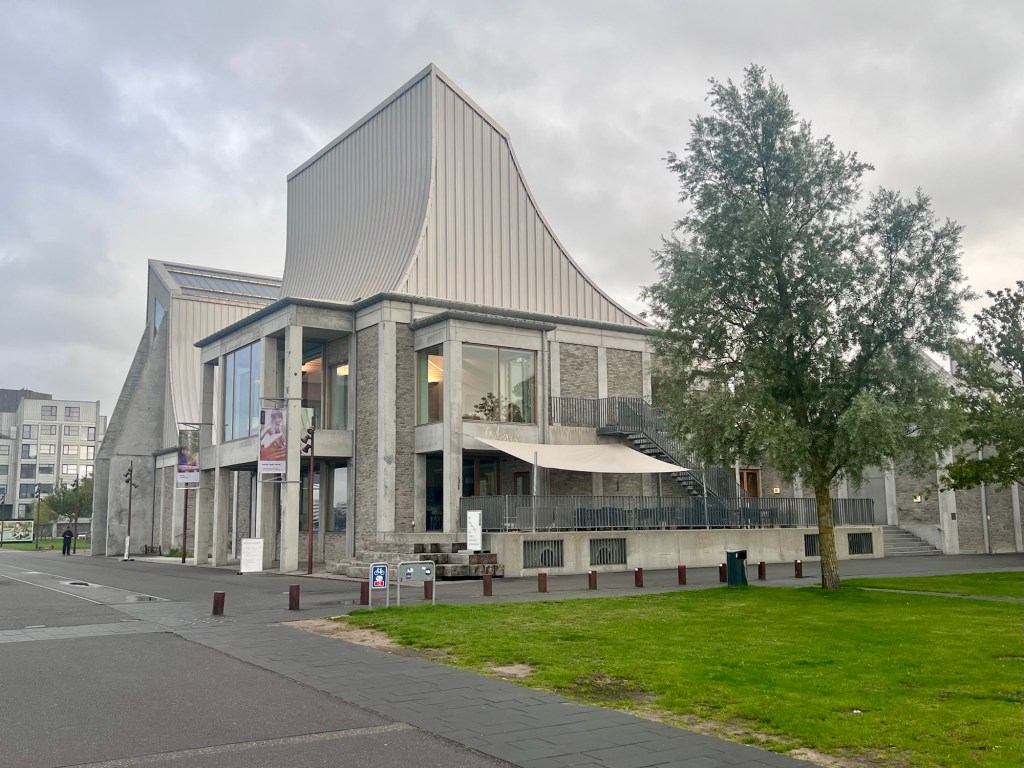
Aarhus City Hall, a classic of Danish Scandinavian Modernism, was designed by Arne Jacobsen and Erik Møller and completed in 1941, replacing an older, medieval city hall. A competition was held in 1937 to replace the increasingly insufficient town hall from the mid-19th century, leading to Jacobsen and Møller’s winning, intentionally unmonumental design. However, after public and political requests, a towering clock tower was added, and construction continued despite the German occupation of Denmark during World War II, making the finished building a symbol of democratic governance during that time.
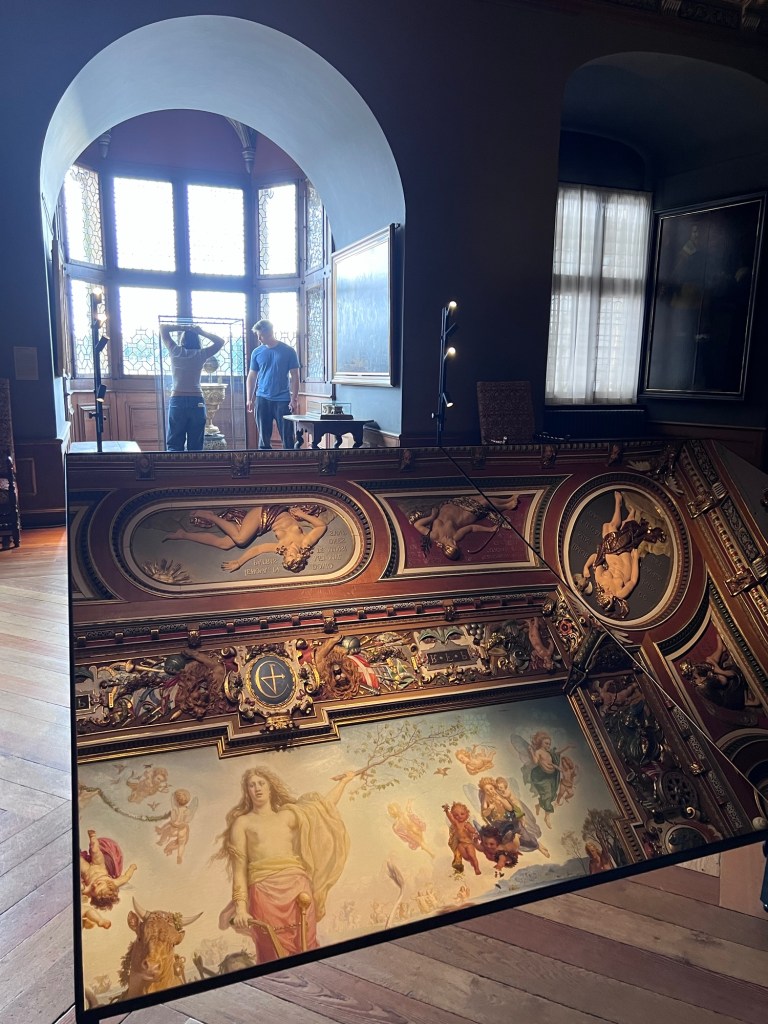
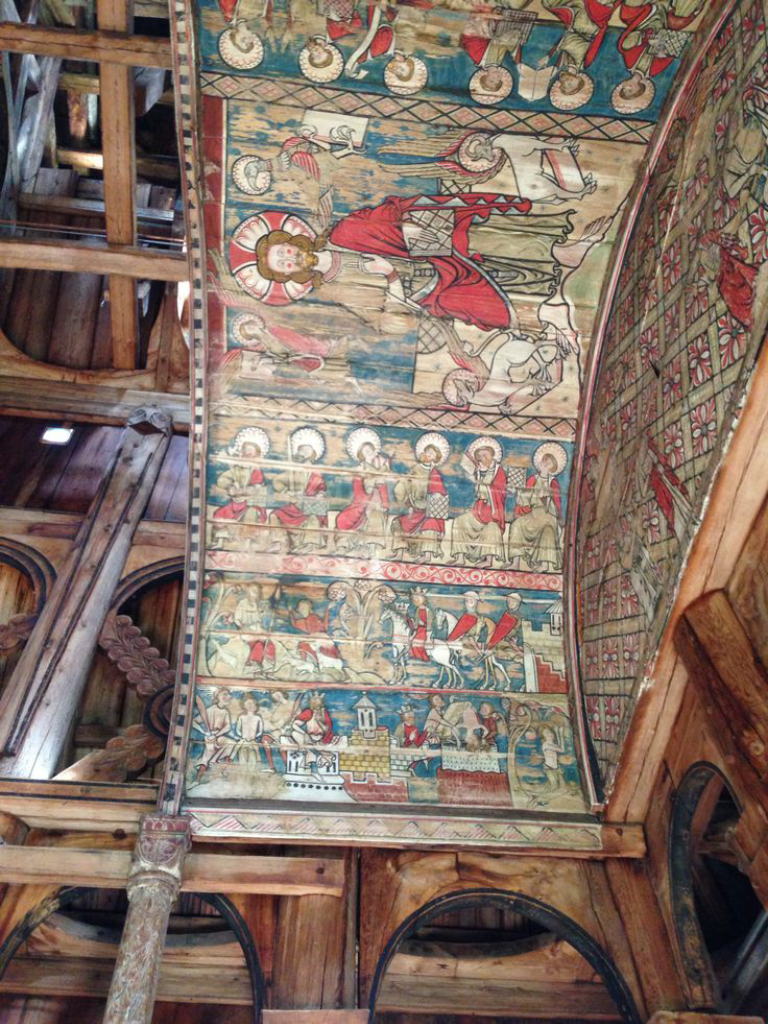
I don’t go to tons of museums, so perhaps this is not new. But using a large magnified mirror on a tilted platform to display a ceiling fresco is so effective!
With nearly 500 food items, 30 carnival rides, and more than 900 free performances, there’s plenty to keep you busy throughout the Minnesota State Fair‘s 12-day run.
It’s a thing here in Minnesota. All walks of life mingle through the entrance gates in Falcon Heights. Check out the one day attendance record.
The Brief
The Minnesota State Fair saw its first record-breaking attendance day so far this year.
On Monday, 145,022 people were recorded attending the fair.
This breaks the previous record of 144,504 people set in 2017.
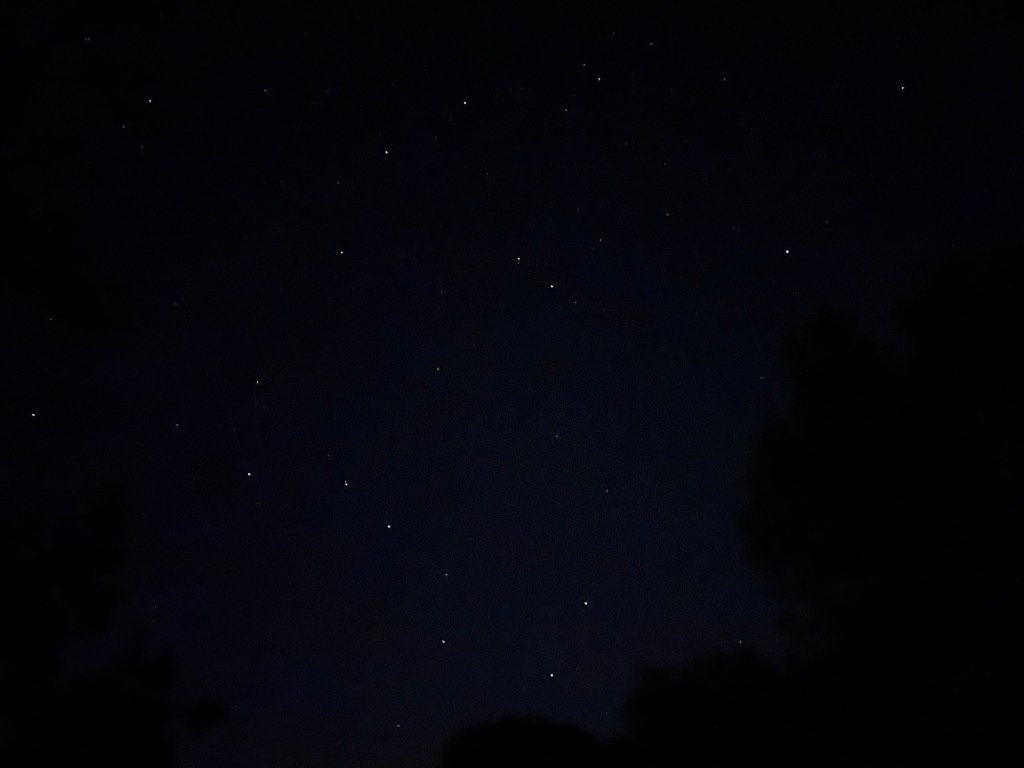
It’s dark out! So I gave my iPhone a try at constellation photography. Not outrageous, but still satisfactory.
Big Dipper on the bottom edge of the frame
According to NPR, here’s the reason for the bright lights.
There are “blood,” “super” and “blue” moons, and then there’s the “black” moon.
The “black moon,” a rare phenomenon that occurs during a new moon phase of the lunar cycle, will occur this weekend. But don’t get your hopes up too much, scientists say, because it will be technically invisible.
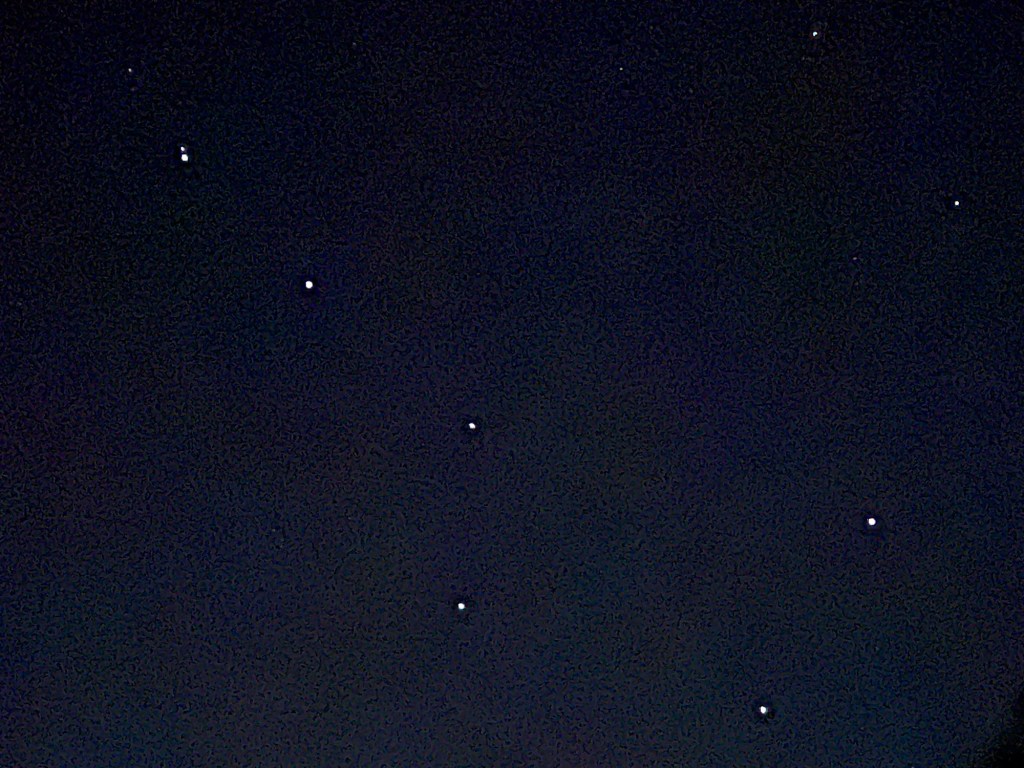
Big Dipper with telescope feature
It’s unclear when it was coined, but “black moon” is an unofficial astronomical term. A new moon is considered by some to be a black moon one of two ways. It can happen when a new moon appears twice in one month (new moons usually happen once per month) or when there are four new moons in one season. When there are four new moons in one season, the third new moon is called a “black moon.”
These little video clips were made by Grok Imagine from photos taken of a Finnish farm family in 1957. The animation brings out detail from the prints that went unnoticed.
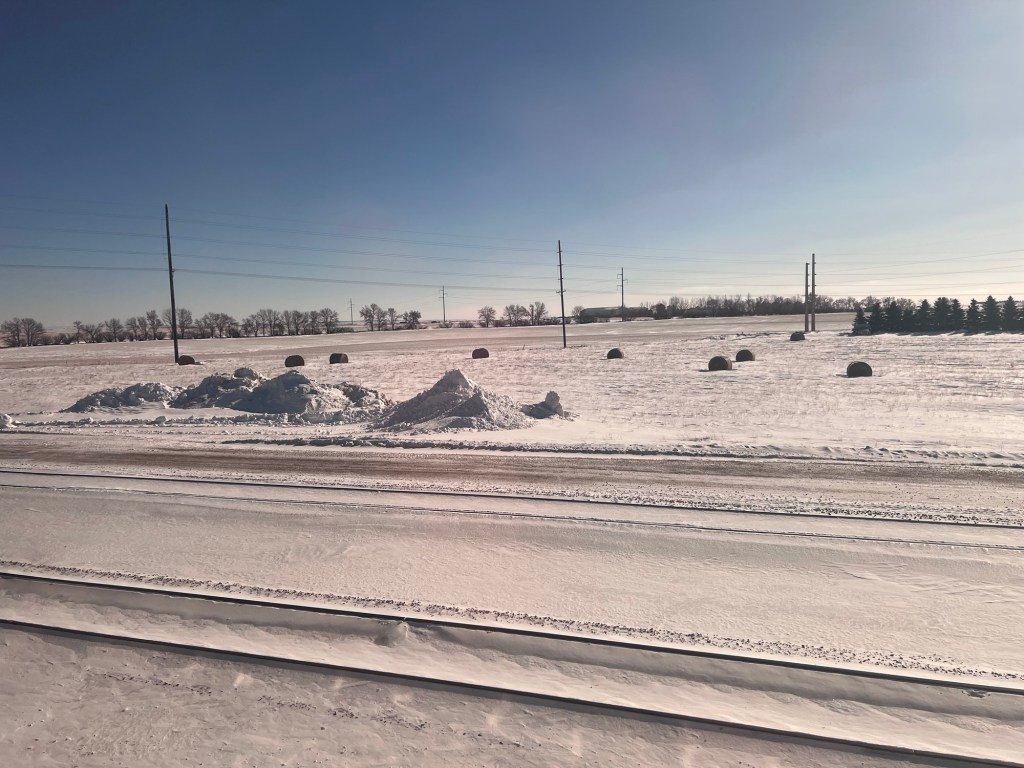
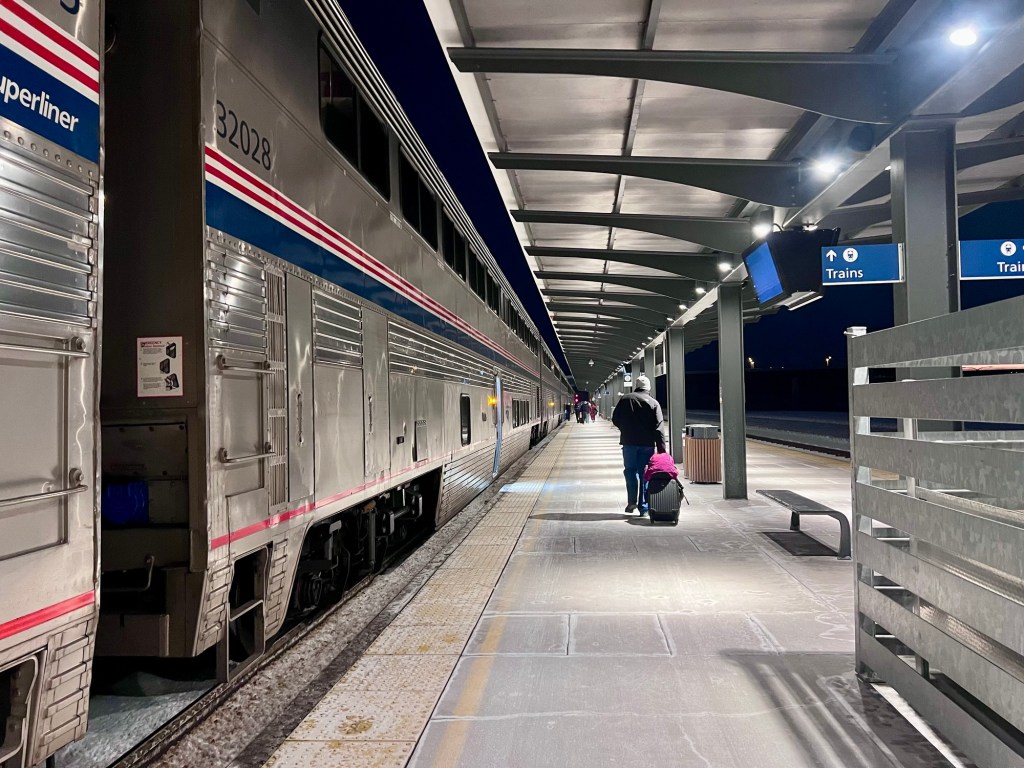
Riding the Amtrak Empire Builder from Union Depot in St. Paul MN to Whitefish MT across the northern plains. A sparse landscape especially in the below zero temps.
Built in 1192, the Torpo Stave Church is the oldest building within the valley and traditional district of Hallingdal (Norway). The church was dedicated to Saint Margareta.
The Torpo Stave Church is one of two stave churches that are signed by their craftsmen, the other being the church at Ål. In both churches a runic inscription reads: Thorolf built this church.[4] The full runic inscription in the Torpo Stave Church, which is listed as N 110 in the Rundata catalog, reads:§A þorolfr : gærþi : kirku þesa ÷: askrimr ÷ hakon ÷ ælikr ÷ pal ¶ æinriþi ÷ siønti ÷ þorolfr§B þorer ÷ ræist§C olafr[5]
This translates as “Þórolfr made this church. Ásgrímr, Hákon, Erlingr, Páll, Eindriði, Sjaundi, Þórulfr. Þórir carved. Ólafr.”[5]WIKI
Nobody knows this little Rose — It might a pilgrim be Did I not take it from the ways And lift it up to thee. Only a Bee will miss it — Only a Butterfly, Hastening from far journey — On its breast to lie — Only a Bird will wonder — Only a Breeze will sigh — Ah Little Rose — how easy For such as thee to die!
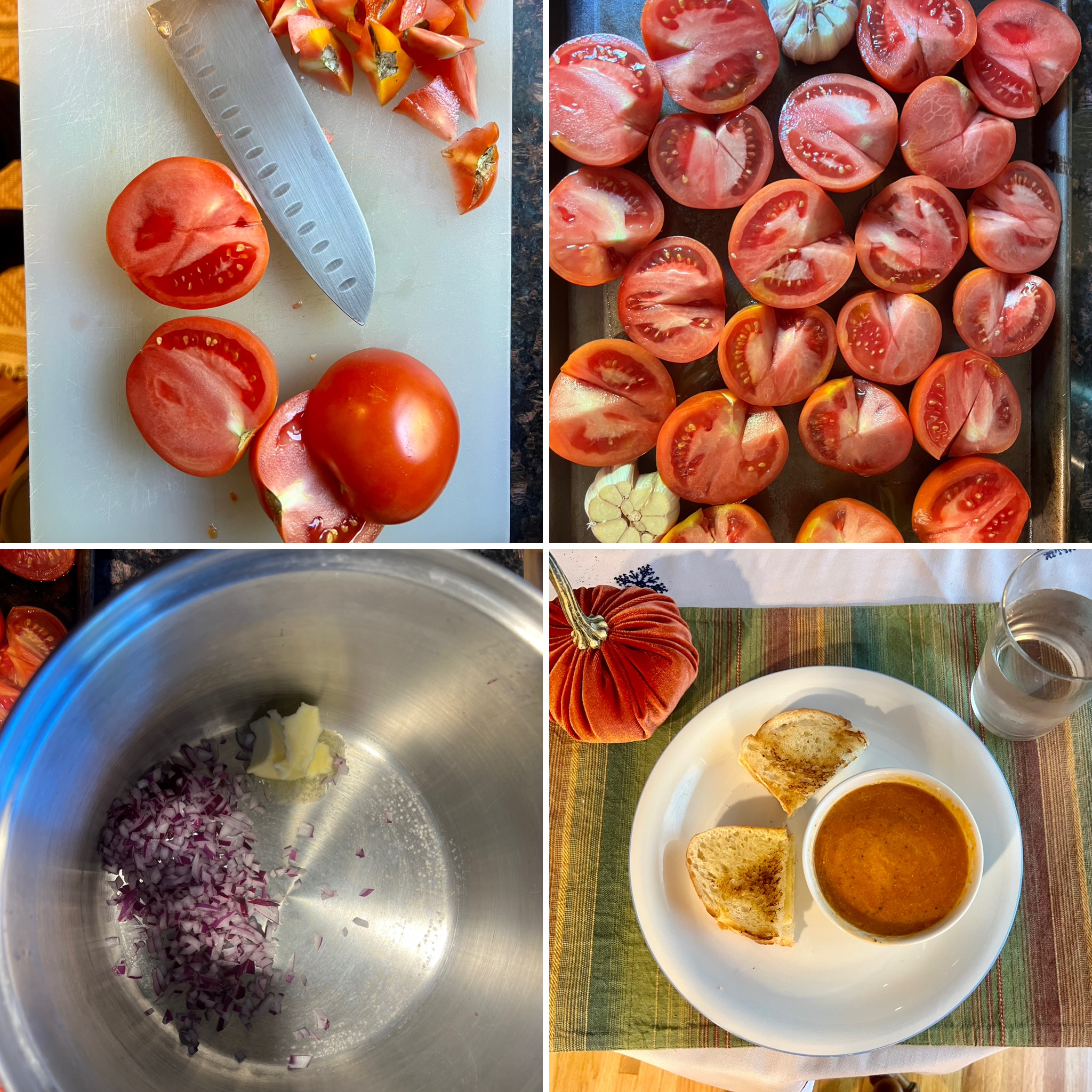
This time of year, the farmer’s markets are full of fresh produce. Most of the suburbs in our area have their day when a collection of vendors pitch tents in parking lots and sell their products to all who try to stop in. It’s hard to pin down the appeal of the ancient agora. Grocery stores of every stripe nearby are open at just about any hour, so it’s not about convenience. It’s not about variety, as minivans can only transport so many items. It’s not about bargaining- the people meandering by the stalls pay whatever is asked of them.
I say it’s about inspiration. The thought of all those plump tomatoes made me want to try making tomato basil soup- which I adore.
Maybe others bring home too many choices and thus force themselves to find inspiration in what they brought home. Perhaps a conversation over the bushy fresh dill led to Grnadma’s pickle recipe being pulled out and put to use.
Experiences stay with us. They teach us, and we go back to them again and again.
A majestic bird that is easily identified by its size and how the light causes a flash of white on its head or tail feathers.
A human with normal eyesight has 20/20 vision. Bald eagles can have 20/4 or 20/5 vision, meaning they can see 4 or 5 times farther than the average person. This is one spots a quite small fish and glides to catch it.
For those who love adventure and real-world challenges, body and mind. Nature is a heaven on Earth. Here, Pastor, we surely agree. The Creation, whether you believe it was placed on this planet by a single act of God or accept the scientific evidence that it evolved autonomously during billions of years, is the greatest heritage, other than the reasoning mind itself, ever provided to humanity.
The answer to this is something like the answer Lincoln gave to the question, “How long should a man’s legs be?” Long enough to reach the ground, Lincoln said. Just so, proper city dwelling densities are a matter of performance. They cannot be based on abstractions about the quantities of land that ideally should be allotted for so-and-so many people (living in some docile, imaginary society).
Densities are too low, or too high, when they frustrate city diversity instead of abetting it. This flaw in performance is why they are too low or too high. We ought to look at densities in much the same way as we look at calories and vitamins. Right amounts are right amounts because of how they perform. And what is right differs in specific instances.
The Death and Life of Great American Cities, Jane Jacobs
This is one of my very favourite photographs, I love everything about it. The movement, the music, I can hear it. The expressions on their faces…I could write a whole story from his alone. But I can't remember the photographer – can anyone help? 🖤 pic.twitter.com/8kyXVwXaqX
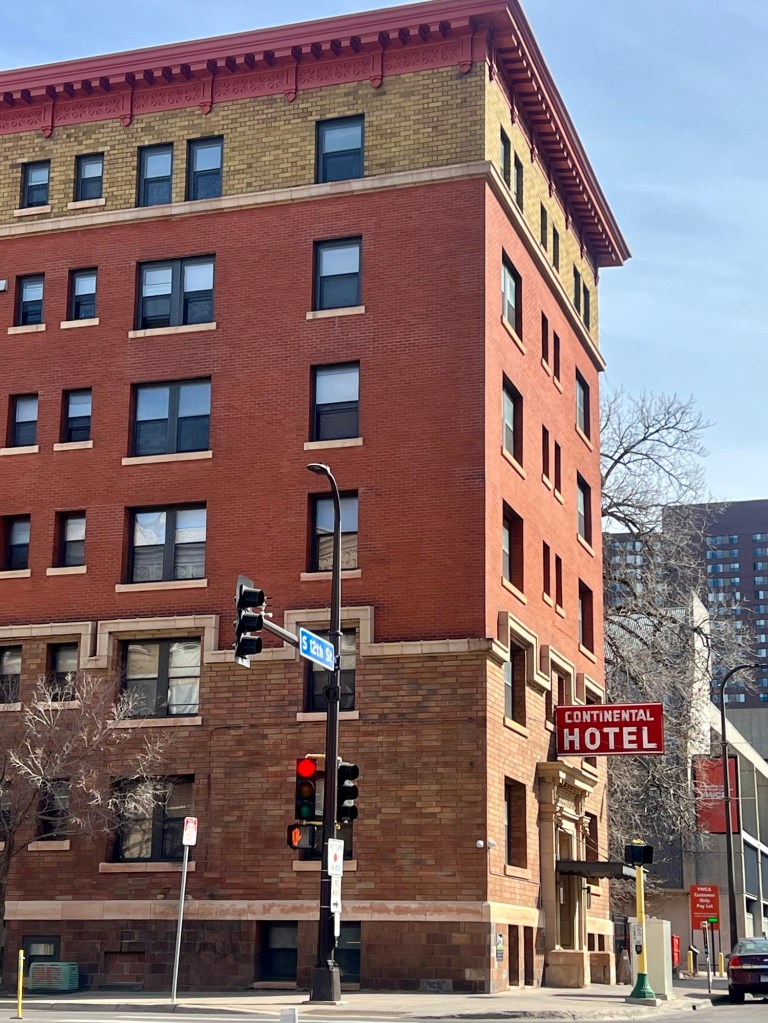
When this building was originally built in 1910 was used to house working folks. Not the poor.
The building was designed for middle class worker housing when demand for such housing was increasing around the beginning of the 20th century. It was billed as an “apartment hotel“,… The individual units did not have their own separate kitchens; instead, residents ate from a common restaurant in the building.
It was beautifully renovated in the 1990s and is now home to 70 previously homeless people. There are onsite services, classes and workshops.
Single occupancy rooming houses were a perfectly acceptable form of housing for many years. But not any more. Norms and standards are bound to change. It’s just that when people cry fowl on affordability, they also need to acknowledge that today’s standards are apart of the the higher expense.
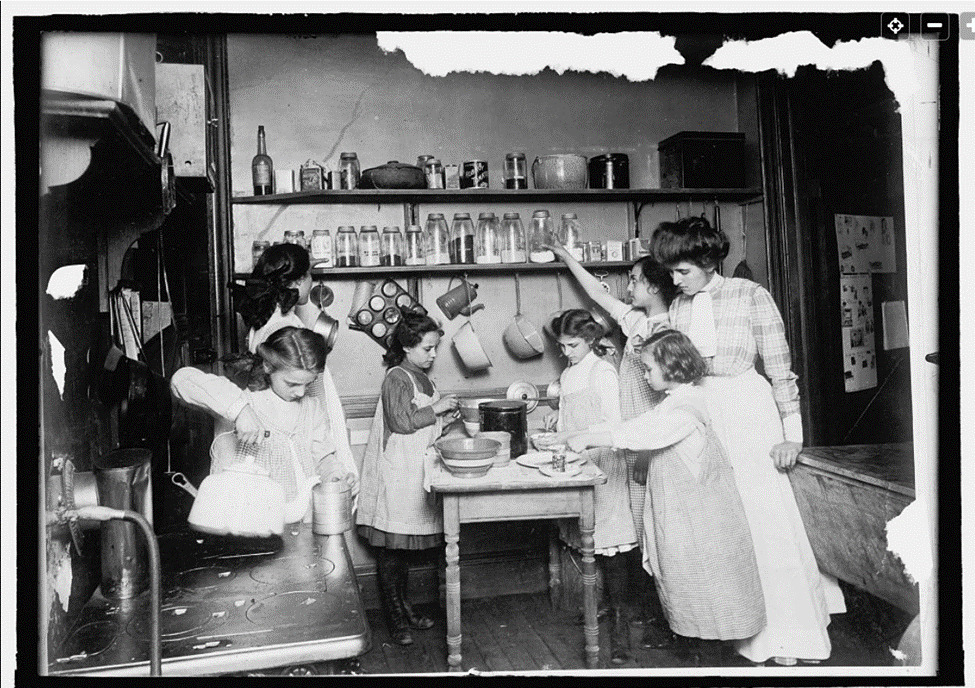
The image is estimated to have been taken between 1908-1919 in the New York City. A home economics class is taking place in the kitchen of a housekeeping flat.
It was the consensus of opinion of these women that the proposed plan covered the material or mechanical side of home life. On the other hand they considered it important that the less tangibic side should be emphasized. The most fundamental problems the thinking home women today involve decisions of what to do. Many agencies are telling her how to do the various household tasks, but it is equally important to give her motives for doing them and to attach to the various duties such clear-cut standards of value in relation to all the aspects and contributions of home life that she will be helped in knowing what to do and what may be left undone. Such careful weighing of values is needed by the housewife in organizing her working time, in apportioning the material resourees of the family, and in all the choices she constantly makes that bear on the material and social well-being of her family.
Report of the Chief of the Bureau of Home Economics- June 30th, 1924
As a memorial to the first responders who were tragically killed last month, three bronze statues of the men will stand outside the Burnsville city hall.
I tell my secret? No indeed, not I:
Perhaps some day, who knows?
But not to-day; it froze, and blows, and snows, And you're too curious: fie!
You want to hear it? well:
Only, my secret's mine, and I won't tell.

Or, after all, perhaps there's none:
Suppose there is no secret after all, But only just my fun.
To-day's a nipping day, a biting day;
In which one wants a shaw,

A veil, a cloak, and other wraps:
I cannot ope to every one who taps, And let the draughts come whistling through my hall;
Come bounding and surrounding me, Come buffeting, astounding me,
Nipping and clipping through my wraps and all.
I wear my mask for warmth: who ever shows His nose to Russian snows
To be pecked at by every wind that blows?
You would not peck? I thank you for good will, Believe, but leave that truth untested still.

Spring's an expansive time: yet I don't trust
March with its peck of dust,
Nor April with its rainbow-crowned brief showers, Nor even May, whose flowers
One frost may wither through the sunless hours.

Perhaps some languid summer day,
When drowsy birds sing less and less, And golden fruit is ripening to excess, If there's not too much sun nor too much cloud,
And the warm wind is neither still nor loud,
Perhaps my secret I may say,
Or you may guess.
As the beautiful fall days come to a close and the forecasts include temps in the 30’s, consumers are wrestled from their automated routines and think, “I must get xyz done before the snow flies!”
Changes in temps are a definite factor in the real estate business. I suppose it is self-interest, in a way. A seller is better off to take the time to finally put an extra coat of paint on their front door, and tuck the garden hoses in the garage, and clear the gutters of all those golden leaves. A seller will be looking after themselves when they go to put their home on the market in March as the door will be a cheery greeting to a prospective buyer, and the hozes won’t look odd all covered in snow, and there won’t be an ice dam where the leaf debris would have clogged the gutters.
Buyers are also nudged along by the changing seasons. The cool crisp air reminds them that they thought they’d be in their new place before the end of the year. The passing of time draws their thoughts back over what they’ve seen so far in the market. Perhaps they regret passing on a purchase. Perhaps they realize that their demands are quite steep. Perhaps a little reflection reveals just what it is that has been holding them back.
Changing season can be the motivator to put in a little extra effort to prep a home prior to the arrival of winter winds. Or talk of Halloween candy and Thanksgiving dinner can encourage a buyer to revisit what he has learned so far about the market. In either instance, a driving rain from the north not only strips the autumn color from the trees but also plays a part in the home buying process.
That’s what municipalities are asking now it is legal to possess cannabis in the state of MN. If there are no policies regarding smoking in public places such as parks and playgrounds, there will be shortly. And it has been a bit of an oversight. Once cigarette smoke became unfashionable the smokers had to find places twenty feet away from building entrances to keep the air at entries free from smoke. If it is no to tobacco, it follows that it is no to weed as well.
According to the park workers, however, some users are not appreciative of being asked to quit smoking in the open air of the park. Maybe that was the aim, to make it socially acceptable. But as it turns out, norms can be stronger than laws.
There were numerous beautiful cars at the car show we went to today. Most of us do not have the opportunity to come up close to a Lamborghini or Bugatti. An Audi is not uncommon, but that Audi in red and black is exotic.
A local car shop that organizes the event. They have sponsors and keep the admittance free of charge. This keeps the lines long and the viewers skewed towards under twenty and male. It’s a lot of fun to see them all photograph a Ferrari as it revved by. Some were all geared up with video cameras and mikes.
I loved that there were old classics like the red jaguar, stuffy Bently’s, Porschs, Vipers, and many more I can’t remember.
I even found one that I thought would suit me just fine.
It’s about now that Minnesotans tire of the humidity and mosquitos sticking in sweat. They long for crisp fall mornings and leaves turning bright orange, yellow, and red.
A photographer comes out ahead in this story of copyright infringement.
Andy Warhol’s posters of Prince, some shaded purple and others orange, may have been works of art, but they infringed the copyright of the photographer who captured the original image of the musician, the Supreme Court ruled Thursday.
It’s nice to see a win for photography over other forms of art. Often it feels as if taking a photo is something anybody can do. And thus it is a maiden-in-waiting to the fine arts. But capturing a framing, a look, or a feel is what differentiates a snapshot from something interesting. Warhol took advantage of Goldsmith’s perception of our famous Minnesotan.
“…But…to sing, to dream, to smile, to walk, to be alone, be free, with a voice that stirs and an eye that still can see! To cock your hat to one side, when you please at a yes, a no, to fight, or- make poetry! To work without a thought of fame or fortune, on that journey, that you dream of, to the moon! Never to write a line that’s not your own…” ― Edmond Rostand, Cyrano de Bergerac
Author and playwright Edmond Rostand (1868-1918) lived at Villa Arnaga in Cambo-Les-Bain.
The icy grip of winter is being melted away by an 88 degree day here in Minnesota. The surface of the lakes turn black right before the ice goes out. A steady south wind generally helps the chunks turn to mush.
This is a celebratory time in Minnesota. Soon there will be outdoor concerts at the Lake Harriet Bandshell.
Frost-locked all the winter,
Seeds, and roots, and stones of fruits,
What shall make their sap ascend
That they may put forth shoots?
Tips of tender green,
Leaf, or blade, or sheath;
Telling of the hidden life
That breaks forth underneath,
Life nursed in its grave by Death.

Blows the thaw-wind pleasantly,
Drips the soaking rain,
By fits looks down the waking sun:
Young grass springs on the plain;
Young leaves clothe early hedgerow trees;
Seeds, and roots, and stones of fruits,
Swollen with sap, put forth their shoots;
Curled-headed ferns sprout in the lane;
Birds sing and pair again.

There is no time like Spring,
When life's alive in everything,
Before new nestlings sing,
Before cleft swallows speed their journey back
Along the trackless track,--
God guides their wing,
He spreads their table that they nothing lack,--
Before the daisy grows a common flower,
Before the sun has power
To scorch the world up in his noontide hour.

There is no time like Spring,
Like Spring that passes by;
There is no life like Spring-life born to die,--
Piercing the sod,
Clothing the uncouth clod,
Hatched in the nest,
Fledged on the windy bough,
Strong on the wing:
There is no time like Spring that passes by,
Now newly born, and now
Hastening to die.
Christina Georgina Rossetti (1830-1894) is remembered as one of the Pre-Raphaelites – a group of 19th century artists and writers who took inspiration from works of art produced in the Middle Ages. Her brother, the painter Dante Gabriel, was one of the most prominent of this group.
One must have a mind of winter
To regard the frost and the boughs
Of the pine-trees crusted with snow;

And have been cold a long time
To behold the junipers shagged with ice,
The spruces rough in the distant glitter

Of the January sun; and not to think
Of any misery in the sound of the wind,
In the sound of a few leaves,

Which is the sound of the land
Full of the same wind
That is blowing in the same bare place

For the listener, who listens in the snow,
And, nothing himself, beholds
Nothing that is not there and the nothing that is.
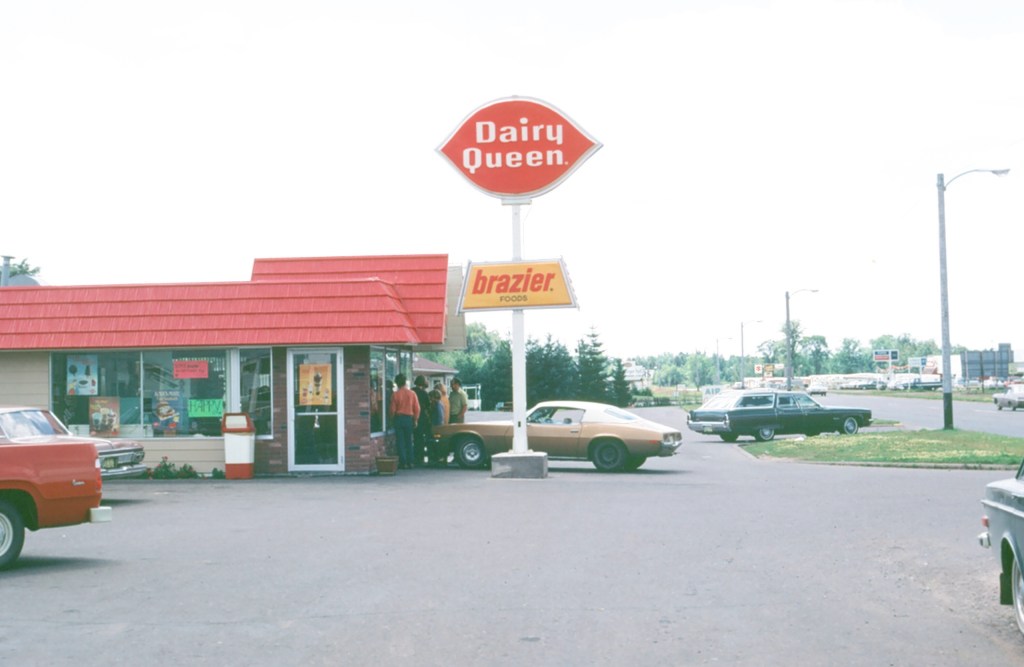
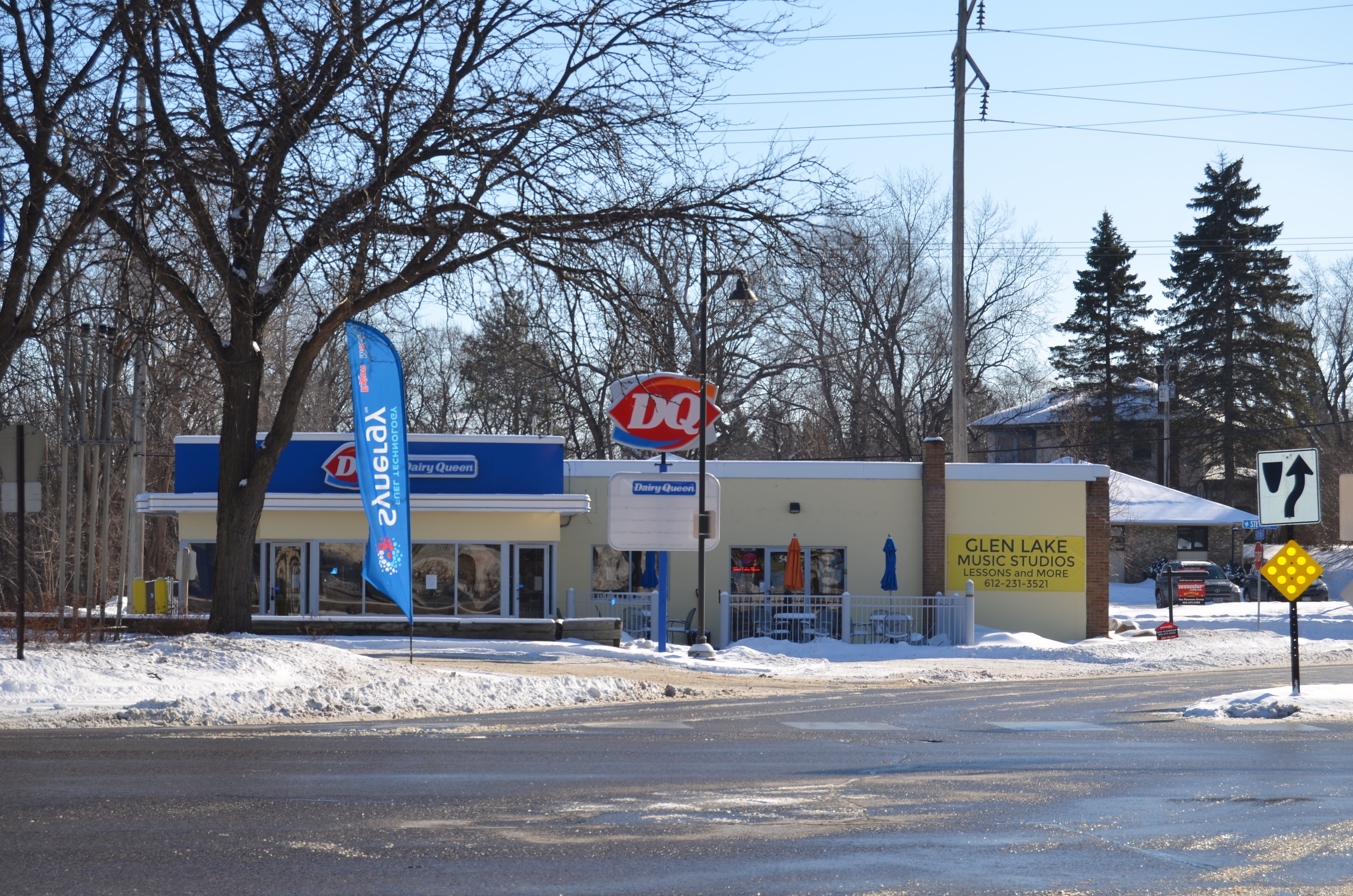
The first DQ restaurant was in Joliet, Illinois. It was operated by Sherb Noble and opened on June 22, 1940.[6] It served a variety of frozen products, including soft serve ice cream.[7]
The soft-serve formula was first developed in 1938 by John Fremont “J.F.” “Grandpa” McCullough and his son Alex. They convinced friend and loyal customer Sherb Noble to offer the product in his ice cream store in Kankakee, Illinois.[8] On the first day of sales, Noble sold more than 1,600 servings of the new dessert within two hours.[9] Noble and the McCulloughs went on to open the first Dairy Queen store in 1940 in Joliet, Illinois. It closed in the 1950s, but the building at 501 N Chicago Street is a city-designated landmark.[10]
Since 1940, the chain has used a franchisesystem to expand its operations globally. The first ten stores in 1941 grew to 100 by 1947, 1,446 in 1950, and 2,600 in 1955.
But as for my grandmother, in all weathers, even in a downpour when Françoise had rushed the precious wicker armchairs indoors so that they would not get wet, we would see her in the empty, rain-lashed garden, pushing back her disordered gray locks so that her forehead could more freely drink in the salubriousness of the wind and rain. She would say: “At last, one can breathe!” and would roam the soaked paths-too symmetrically aligned for her liking by the new gardener, who lacked all feeling for nature and whom my father had been asking since morning if the weather would clear-with her jerky, enthusiastic little step, regulated by the various emotions excited in her soul by the intoxication of the storm, the power of good health, the stupidity of my up bringing, and the symmetry of the gardens, rather than by the desire, quite unknown to her, to spare her plum-colored skirt the spots of mud under which it would disappear up to a height that was always, for her maid, a source of despair and a problem.
Over the weekend we had a guest puppy at our place. She and our pup figured out how to play tug of war. One grunted, the other rolled on a growl. It was all in fun- all part of the game. When one would drop their hold on the rope-wrapped toy the other would dangle it back so the tugging could continue. They were entertained for hours.