
When I stumbled across this book at an estate sale it threw me back to all those stories of Northern Europeans making their way to NY and then onto the midwest.
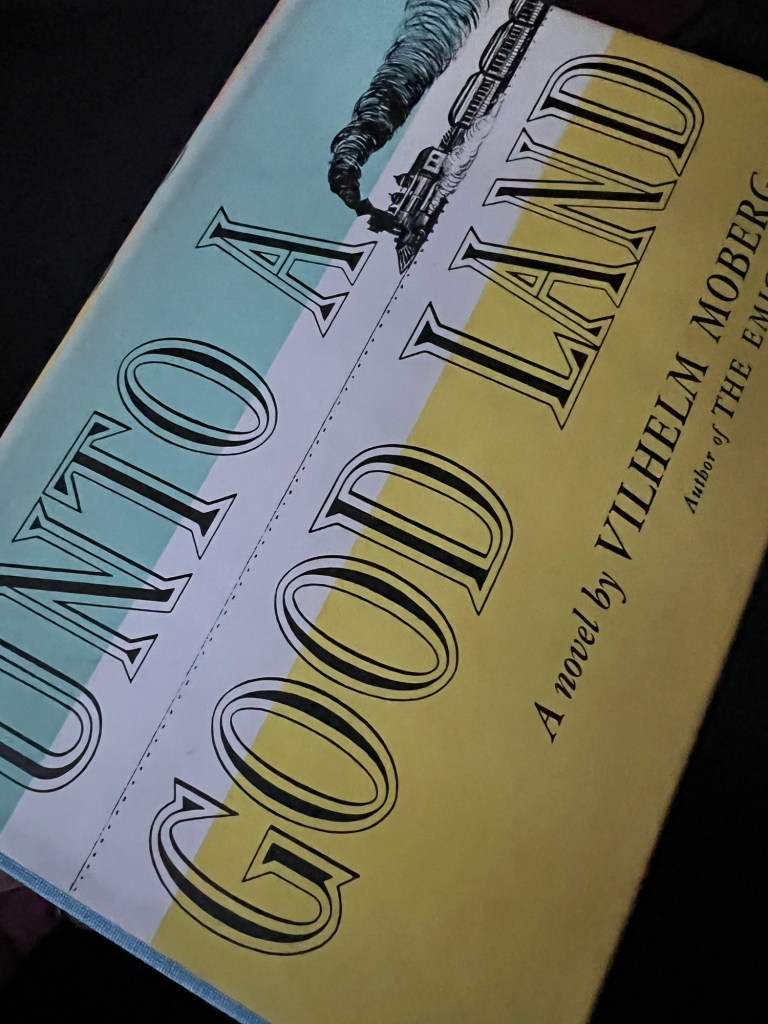
The story starts as the captain has just brought a cargo of Swedes to their new country.
And having sailed these Swedish peasant’s continent to another, Captain Lorentz now felt so great a responsibility for them he wouldn’t even leave them to shift for themselves after they had landed. Hardly had his ship tied up at the pier when all those who made their living from the simplicity and inexperience of immigrants focked around the gangplank like rapacious dogs at slaughter time. These runners and grafters and brokers, and whatever they were called in the language of this new country, watched for every newly arrived ship. There were agents from freight companies which the captain knew were fraudulent; there were men from taverns and quarters of ill repute; well-fed and well-dressed men in funny little round caps with large visors; lazy men who avoided honest work and whose presence was repugnant to Captain Lorentz. He would always place an armed guard at the gangplank to keep such rascals off his ship, for once on board they would steal all they could lay hands on, down to a single nail or a piece of rope.
Such a cacophony of characters all melding and sorting themselves out. But one thing they share is a disdain for the rigid class structure they left behind.
He (the captain) could never reconcile himself to the strange customs and ideas he met in North America. Here people of many races mixed, and the classes were so turned about that one couldn’t tell which were the upper and which the lower. Lowly people considered themselves changed when they landed on American shores; they thought themselves equal to those of high birth and position. Every farm hand and servant wench assumed a conceited, disobedient, insolent attitude. Several times it had happened that able-bodied men of his crew had become so arrogant that they had boldly broken their contracts with him and had simply remained in America. Here, respect for authority and masters was disregarded, and consequently, the servant class was ruined. Here all felt at home, even those who smeared pork grease over their faces while eating, not yet having learned the use of a napkin.
Ha! The servant class is ruined! Indeed.
And class warfare in general never amounts to much in the US. The preferred strategy to attack wealth is to personalize a position as demonic, not a class. Landlords are one such position. And this bears class overtones as it was the landholders who plied work from the serfs.
But that’s a story from the old country. US landlord villains are sleazy guys in suits who walk in to ‘inspect’ the unit at will. That’s the new tale, anyway. Or there’s the evil corporate landlord. Yet corporate ownership of rental properties only comprise maybe 3% of all rental homes. Hard to see much of an impact at that number.
The thing is that class warfare doesn’t really take hold on this side of the Atlantic. It’s a romantic notion of strife from another time that is ruined by the melting pot that is America.


