From Minnesota Twitter

I happened to catch media-personality Jason DeRusha’s post in time to listen to former Governor Pawlenty take over his three-hour time slot on talk radio. The two-term governor seemed to be having a good time interviewing and surprising people across the airwaves. I don’t see how anyone can say that the political nuance of an interviewer doesn’t make a difference.


My latest favorite Twitter follow is a Reverand out of North Minneapolis. He calls it the way he sees it, pulling no political punches. Here’s an example of calling out the bread-and-butter politicians.


And in local sports, the Timberwolves basketball season got underway with a win a couple of nights ago. Fans are in that hopeful stage of the season, excited about the potential of a winning record. We’ve had some amazing talent come through the Target Center, but have fallen short on team dynamics. Maybe this is the year? Viking football superstar Dalvin Cook and friend in costume were on the floor- wish I could afford those tickets!

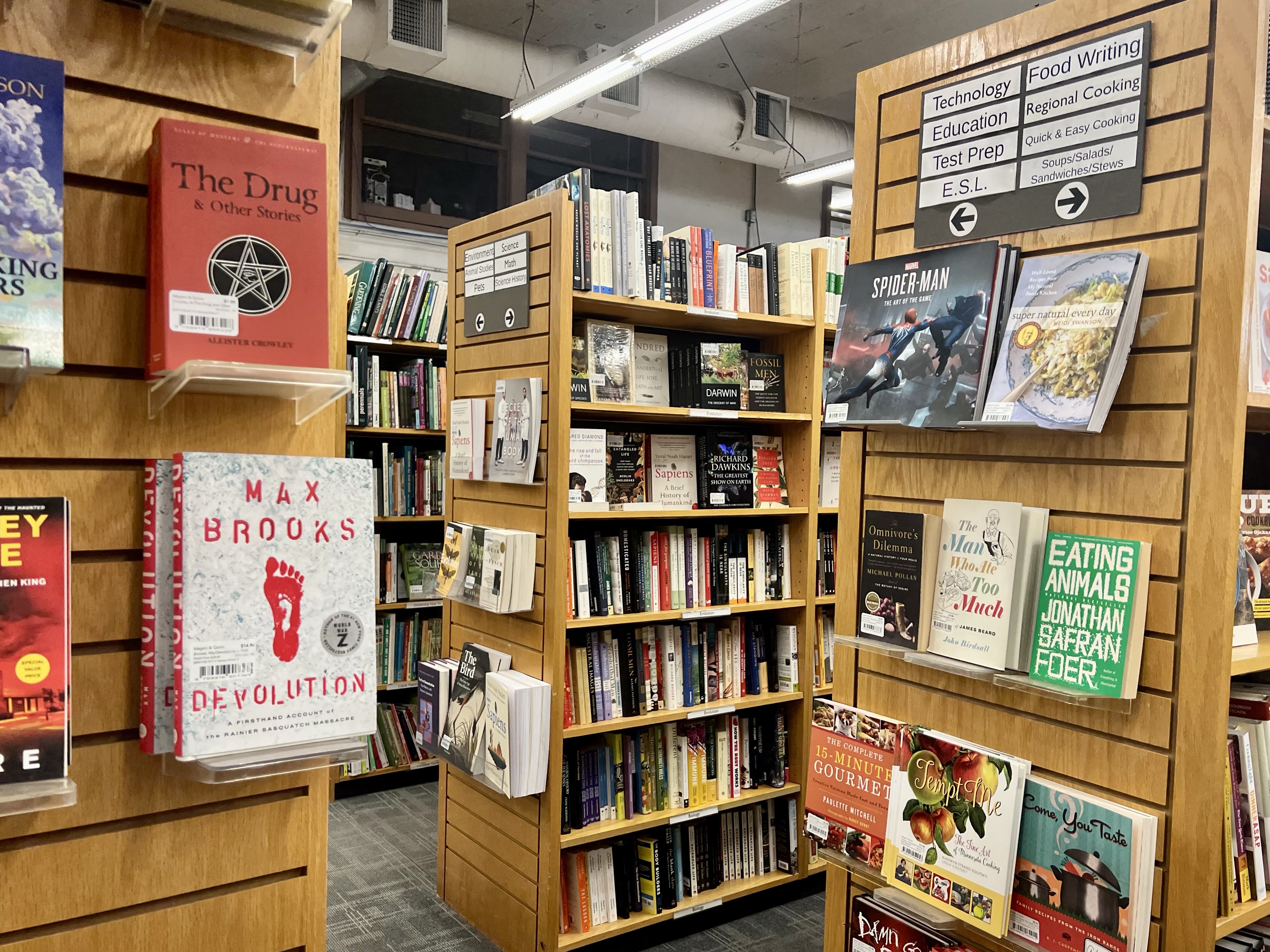
Curious about books

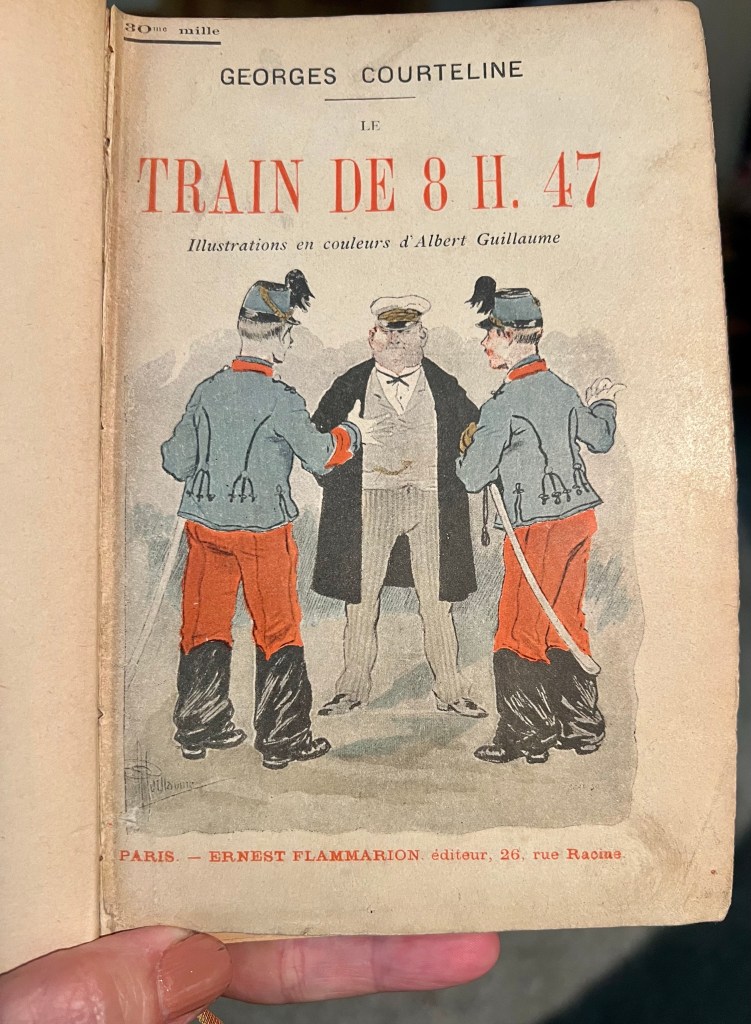
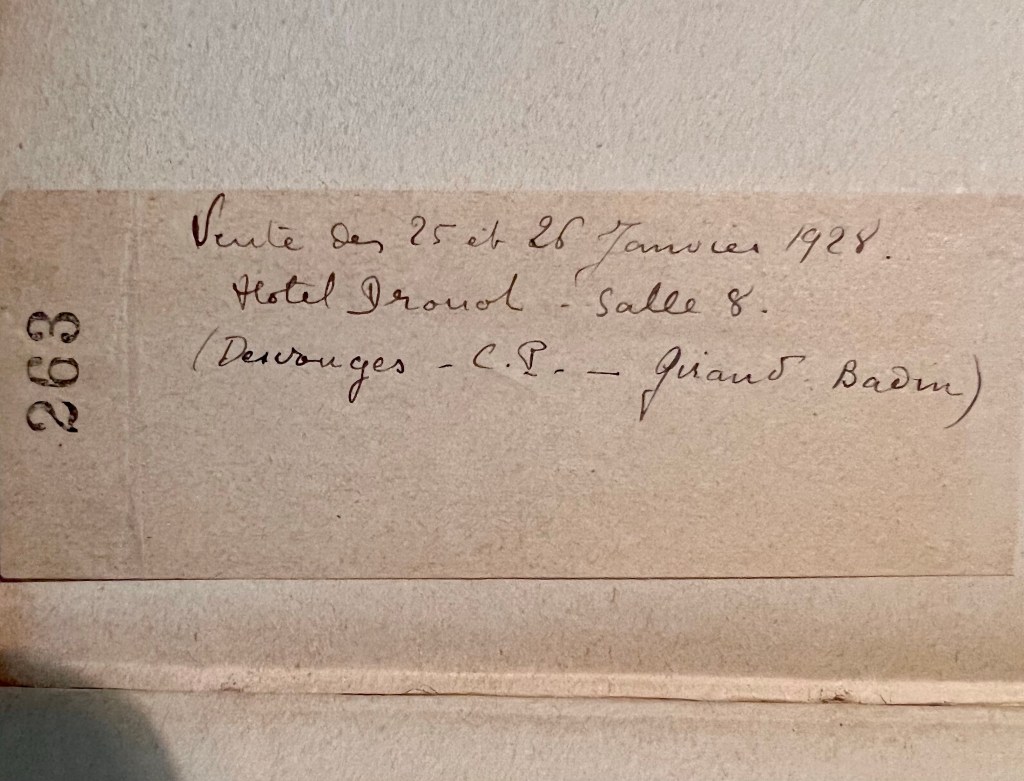
I picked up this roman at a sale some time ago. I was, and still am, intrigued by the little note tacked onto the first endsheet. The enscriptions reads “Vente les 25 et 26 Janvier 1928, Hotel ? salle 8…” The penmanship is exquisite.

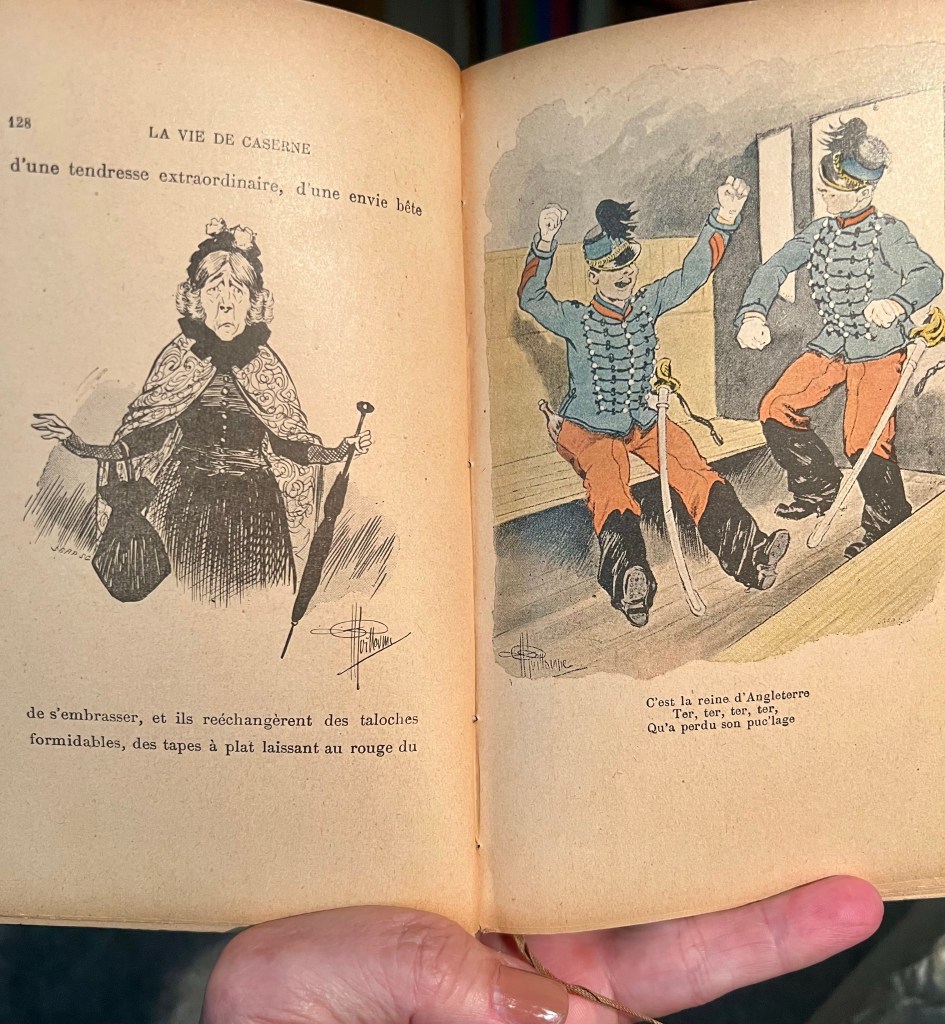
There is no doubt that this was a mass-produced book, part of a series of popular books. And I have looked into books enough to know that most do not garner any type of monetary extravagance. But I do like this book. The pages are cut to different sizes, the binding looks primitive and the marbling on the cover is a sign of a book of yesteryear. The drawings are also delightful.

And I suppose that is the reason we like to collect things, whether objects or ideas- because they delight us.

Building booms have their own timeline

Local urban geographer Bill Lindeke does a nice job describing how a building boom finally came to fruition along the first light rail line in Minneapolis. When the Blue Line went in eighteen years ago, there were heightened expectations that new construction would line up along this aging railway corridor from downtown Minneapolis out to the airport. But it took time.

That was 18 years ago. And ever since, for the most part, the pace of transit-oriented development has seemed glacial. According toย Metropolitan Council studies, more than 12,000 new apartments have been built along the Blue Line since its opening. But if you glance at a map, the vast majority of this construction has been downtown, or else subsidized in some way. For most interstitial stops along Hiawatha, south of downtown, thereโ€™s been very little new housing construction. Even the rosiest development booster would have to admit itโ€™s been a slow climb.ย ย ย 

MinnPost

What I remember from selling single-family homes is there was an increased interest in those within a handful of blocks from a rail stop. The houses along there are modest for the most part, and the prices ran with the metro average, so younger people latched onto the opportunity for great access to downtown Minneapolis. No need to drive to work and pay exorbitant parking. No need to drive to your favorite ballgame or watering hole. Just hop on the rail line!

The premium in the sales prices of these homes could easily have been verified by anyone with an excel program. With proper splicing of access to various public amenities, regression analysis can parse down the amounts paid for all sorts of public amenities. Improved access to transit is certainly on most consumer’s minds. Still, the price push wasn’t enough for new construction.

โ€œIt really boils down to rent levels in every neighborhood,โ€ Sweeney said. โ€œHistorically, rents in (Longfellow) were too low to justify much new construction. Few projects worked here (and so) while there were a few things built 10 years ago, you didnโ€™t see a large boom. But area rents have grown, which allows new construction to be feasible.โ€

Sweeney is the developer who has put up two new apartment buildings along the Blue Line in recent years. Policymakers and pundits want to theorize about housing solutions, but people like Sweeney and the investors who support his group are the ones who have to be able to make the numbers work. A bonus for transit infrastucture is just one component of price.

Another valid issue discussed in the article is the various timeline for the pace or even appearance of new construction in older areas. The story tells of a tipping point for this neighborhood. Still to be discussed is a more thorough overview of the neighborhood components that green light building.

A Gentleman in Moscow – book review

I can’t recommend this book enough. It is beautifully written- throughout. It has a lovely and entertaining storyline. There are many layers to it yet you don’t have to live in each one. Choose! It’s part of the book.

If you like to learn about history but not through school books, you will come away with an education. There are references to Rousseau and Montaigne, Dostoyevsky and Tolstoy yet not in a pedantic way.

Mostly it is about a gentleman who is dedicated to his ideals, the love of his country, and the devotion to his friends and heritage.

Live and Let Live?

Restrictions on how and what is built where is an ongoing conversation in any city planning department. Too many rules limit the number of available dwellings, pushing prices to new heights. Too few rules might infringe on the use and enjoyment neighbors are promised when they acquire their homes.

In Japan, teeny tiny apartments are being built to allow more people access to the hot areas of town. These micro apartments are smaller than a ten-by-ten-foot room which is considered a small bedroom in our neck of the woods.

With its high property prices and the worldโ€™s most populous metropolitan area, Tokyo has long been known for small accommodations. But these new apartments โ€” known as three-tatami rooms, based on how many standard Japanese floor mats would cover the living space โ€” are pushing the boundaries of normal living.

NTY

The article mentions that these units are not at the bottom of the market. They are stylish and new. They are attracting a younger set of renters who see themselves in a higher-end neighborhood and have yet to experience a larger apartment, and thus (perhaps) don’t feel the loss of space. It’s the match of neighborhood amenties, quality of interior finishes and price that make these small spaces work.

And they are situated near trendy locations in central Tokyo like Harajuku, Nakameguro and Shibuya, which are generally quite expensive, with luxury boutiques, cafes and restaurants. Most of the buildings are close to subway stations โ€” the top priority for many young people.

Over two-thirds of the buildingsโ€™ residents are people in their 20s, who in Japan earn on average about $17,000 to $20,000 a year, according to government data. (Wages in Tokyo are on the higher end.) 

On the other extreme of the housing restriction stories, is the conclusion of a longtime feud between a Marin County (CA) man and local regulators. He’s being evicted, in part, for operating a creative sustainable toilet that has been in use for the past fifty years.

…, heโ€™s built a sanctuary to showcase his ideas about environmental sustainability: the Shower Tower, the Worm Palace (crucial to his composting toilet), the Tea Cave (where he has stored more than 50,000 pounds of rare, aged tea), the Tea Pagoda (where heโ€™s hosted tea ceremonies for friends and dignitaries for more than 40 years) and so many more.

He calls it The Last Resort and he never had permission to build any of it. โ€œIโ€™ve been a scofflaw all my life,โ€ said Mr. Hoffman, 78. โ€œI have to recognize that.โ€

NYT

The battle between this outsider artist and the government has been going on for more than a couple of decades. Ten years ago the NYT ran a similar piece. He has a contingent of supporters and recently had a shot at maintaining the property through a historical designation. But now his eviction seems imminent. Meanwhile, new construction in the San Fransisco Bay area is being stymied by regulation-induced high prices.

This brings up the point that in some areas of the country the use of an outhouse is completely acceptable. On large acreage properties in the wide open plains, there’s no harm done in digging a hole and erectly a one-stall shack with a bench and a door with a half moon. The value or harm of regulations that allow super-small apartments or unstructured sewage disposal is entirely dependent on the group structures and commitments of nearby neighbors.

The essence of things

The rational man model is has been under attack for a while. Many have noted that what is rational becomes as slushy as ski hill in spring. Instead of shuffling all things non-rational (according to whom?) to a field of behavioral interpretation, let’s think about the essence of a transaction.

The marketplace is made up of trades. One individual or party commits labor or resources (or both) in exchange for something of value, often money. Where that settles is called the price. At that fixed point in time, at least two parties were able to come together and voluntarily agree to an exchange. The price is interesting because when people and parties repeat these activities more frequently when they can look to a history of price to feel reassured that they aren’t getting duped. Being called a fool is a significant deterrent to economic activity.

So it seems to me once there is a consistent (or statistically significant as the mathematicians like to say) price, there is a market.

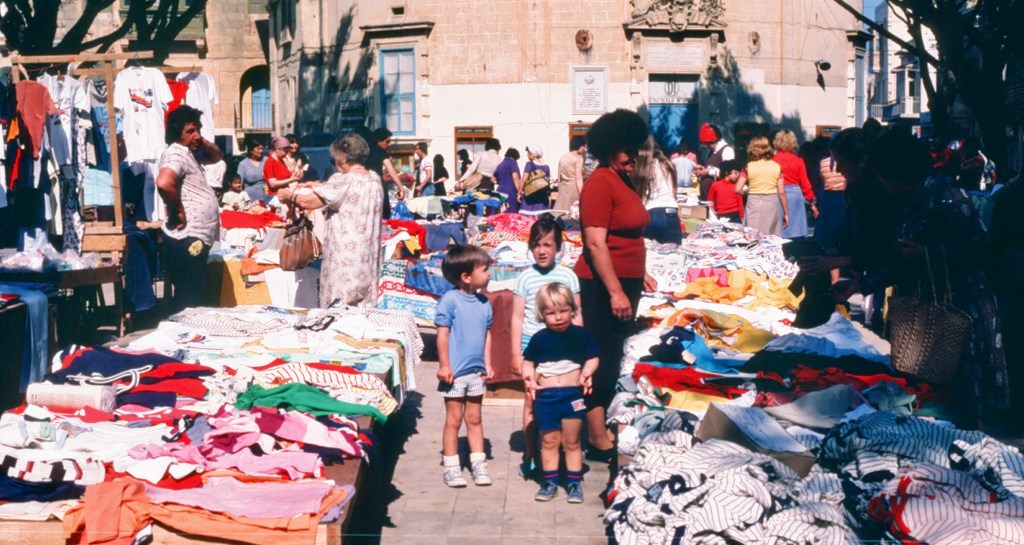
Markets refer to the grouping of people or parties who are able to participate in these deals. Before you think that is anyone who chooses to stroll into the central open air market in Marrakesh, consider that not everyone can get to town. And even some of the richest citizens of the world- US women- as early as forty years ago, did not have their own bank accounts, were not on the title of the homes where they raised their children, and had no personal wealth. Barriers to markets are eveywhere in many forms.

But back to the essence of a transaction. If you are lucky to travel abroad to that exotic marketplace with covered stalls and trays piled high with brightly colored spices, you will find that as a foreigner, the price to you is not the same as the price to the countryman. A tourist will pay a surcharge if you are deemed rich enough. When you buy girl scout cookies the surcharge is a donation to scouting programs. A purchaser of organic fruits and vegetables once expressed the surcharge as a tax he willingly paid to support the farmer’s efforts. The price for the spices in the market, the cookies, or the fruits is made up of two essences: the private market one and the social surcharge.

What about the other way around. Say you hire a kid from a disadvantaged family. He doesn’t show up on time, you have to smooth things over with your customers due to some communication problems, and you’ve got to devote more time than usual to training. This employment arrangement also has two essences. The primary essence may still be to perform a job for a wage. Yet the secondary essence is done presumably to lend a hand to someone who might otherwise fall to the wayside and is accounted for in the loss of the extra time necessary to manage the employee. The second essence is social.

I’ll stand by the claim that each and every transaction has two essences. Sure- some are hard to distinguish because the product or service at hand is so well suited to the private market. And some transactions are mostly provided through public intermediaries due to the heavy social implications endogenous to the trade. There are no market failures. But that’s for another post.

MN Election Update

With four weeks to go until election day, the campaign ads are becoming increasingly frequent. What is different this year is that every level of office, down to the Secretary of State (an administrative position), is coming up with the funds to run TV ads. And then there are counter ads. And the news media jumping in to evaluate whether the ad and counter ads are accurate.

A television ad produced by an independent expenditure group takes aim at Republican Kim Crockett in her bid to defeat Democratic Secretary of State Steve Simon.

The ad makes some truthful claims about Crockettโ€™s stand on a couple of key election issues but also significantly misleads viewers by claiming she โ€œproudly calls herself your โ€˜election denier-in-chief.โ€™โ€

The ad starts with a narrator promoting Simon, saying โ€œSecretary of State Steve Simon makes it his job to defend democracy.โ€ Thatโ€™s followed up with audio from Simon himself saying, โ€œI have pledged to do everything to always protect the freedom to vote.โ€

The ad then quickly pivots to attacking Crockett, including a grainy black-and-white video of her speaking at a forum in June.

โ€œKim Crockett proudly calls herself your โ€˜election denier-in-chief,โ€™โ€ the ad says, with the last part of the quote making it appear Crockett is calling herself that nickname.

……

Because this ad includes a mix of misleading and out-of-context material along with truthful claims, it gets a โ€œCโ€ on the 5 EYEWITNESS NEWS โ€œTruth Test.โ€

KSTP

The state auditorโ€™s race is also getting more play on the local public affairs program, Almanac, as several DFL candidates have refused to participate in long-held debates. This position is in place to enable an outside audit of various forms of government. Ryan Wilson is the GOP challenger and Julie Blaha is the DFL incumbent. There is some question as to whether she should have stepped in and audited the disbursal of $250 million in federal funds in the Feeding our Future fraud scandal.

But by far the biggest race in terms of ad expenditures is the competition for the seat held by congresswoman Angie Craig (DFL) in Minnesota District 2. This is the second challenge by Tyler Kistner who narrowly lost the race two years ago. During the Vikings game or the news, there are sometimes three ad installments per commercial break. Angie is back-roading in a Jeep looking down to earth and Tyler shows off his beautiful young family. The race is often cited among the top ten most competitive races in the country.

Perhaps energy generated from this political tete-a-tete is stirring up the rest- but whatever the reason Minnesotans are getting an earful about each contest from the Minnesota Governor to the Minnesota Attorney General, the Secretary of State, the State Auditor, and even on down to the County Attorneys. Tradition has it that a last-minute bombshell always explodes in the weeks leading up to November 8th. I can only imagine what that will be.

On the Mall in DC

Forests

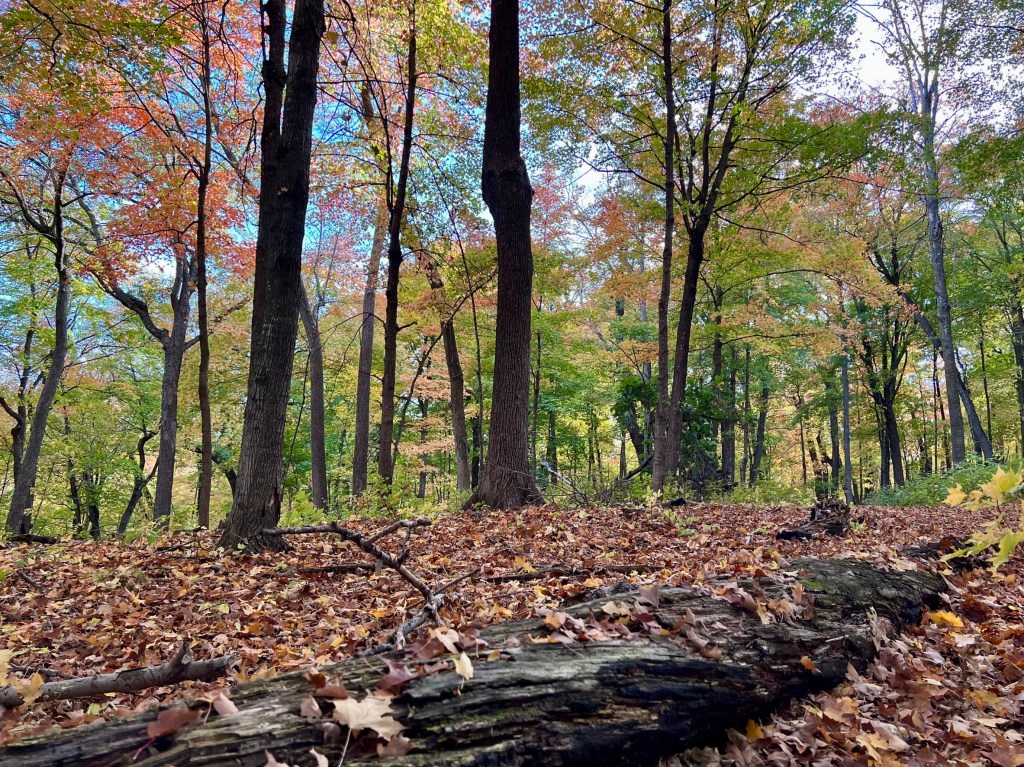
A fall that follows a long hot summer produces the most spectacular blaze orange and crimson colors amongst the tree canopies. There’s no escaping its beauty. Old elms arch over city streets littering the sidewalks with reds, yellows, and amber. Scallop-edged crowns of maples, oaks, and birches bunch up along the freeways. It’s a time of year when you don’t have to go looking for nature, as it has already found you.

My grandmother used to love taking walks in the woods. Perhaps it is because she grew up on the wide open prairie, plowed under into farmland. The woods held all sorts of delights, mystery, and adventure. She’d have us kicking through the leaves looking for mushrooms. In the spring the trillium was the first to bloom and later, under very special circumstances, we may find a Jack-in-the-Pauper. Follow a trail after a chipmunk and you may look up to see a doe, frozen in its tracks, hoping you’ll not notice it amongst a stand of popular.

I think my grandmother would have enjoyed this poem by Mary Oliver.

How I Go Into the Woods

by Mary Oliver

Ordinarily I go to the woods alone,
with not a single friend,
for they are all smilers and talkers
and therefore unsuitable.
I donโ€™t really want to be witnessed talking to the catbirds
or hugging the old black oak tree.
I have my ways of praying,
as you no doubt have yours.
Besides, when I am alone
I can become invisible.
I can sit on the top of a dune
as motionless as an uprise of weeds,
until the foxes run by unconcerned.
I can hear the almost unhearable sound of the roses singing.
If you have ever gone to the woods with me,
I must love you very much.

Changing Intermediaries

There was a time when concerns about the future of communities arose when changing preferences shifted people’s activities. When the lanes were no longer booked on Thursday evenings for leagues and bowling balls were being sold at garage sales, predictions of cultural decline became fodder for those who watch such things.

But about the same time, church basements were seeing a lot less of the ladies who know how to fill the fifty-cup aluminum coffee maker. As new generations come through communities, their preferences change. The inclinations to be supportive of a community or devote time to causes or charitable endeavors do go up in smoke in some sort of generational existential crisis. They simply find new marletplaces.

The volunteer firefighter model is on its way out. Half a century ago perhaps as much as a third of the firefighters were volunteers. Becoming part of the force was a competitive process. It was a position that held prestige. The men would hang out at the station house in shifts waiting for the next deadly blaze. Now most firehouses are staffed by paid employees or transitioning to such an arrangement.

2nd St and 5th Ave Minneapolis

One could speculate that why men don’t want to pile in and hang out in the cramped quarters of an aging firehouse. But I think it is a mistake to assume the men of today lack an impulse for civic duty. They are most probably exerting efforts elsewhere in their family or work structures. Many workplaces now offer opportunities to partner with non-profits. Many non-profits offer opportunities to become involved.

Environmental Initiative is an intermediary which is driven by a desire to improve the environment.

Currently, it is estimated that 25% of passenger vehicles cause 90% of vehicle air pollution. Older cars often have outdated or broken emission controls and exhaust equipment. By partnering with garages to repair broken emissions systems, Environmental Initiative is cleaning up some of the highest polluting cars on the road while reducing barriers to reliable transportation. 

Partner garages provide low- or no-cost repairs to emission control systems. This allows car owners to reduce their carโ€™s emissions and prioritize paying for other repairs necessary for the safety and drivability of their car.

This type of interface between people who have skilled labor, and most probably some idle time, and those who voluntarily support a cause, like pollution control, is an excellent matching game. There is an arbitrage opportunity between the former group which loses little by helping and the latter group which will be vigilant to the appropriate disbursement of reimbursements.

Rush Hour – Movie Review

This 1998 Jackie Chan comedy is packed with good stuff. I’m not sure if I lost a lot of time getting to know the masterful Chan or if the serious lack of jest and comedy in today’s world makes him all the more valuable, but I really liked this movie. It is funny and smart and strong.

Within moments of the opening scenes, there is a flurry of completely inappropriate word choices. Wokeness be damned! Both actors (Chris Tucker is an excellent sidekick) are gifted in comedic gestures and facial expressions which simply amplify the use of cancellable verbal offenses. It’s so delightful.

Chan is endearing as he draws a laugh through self-deprecation and physical faux pas– but don’t let his warm-up show fool you. His use of trips and slaps and fake punches is there to set the bubbly laughter adrift in his audience. Once everyone is relaxed and ready to let go of a noisy guffaw, giggle or snicker, then Jackie Chan will show off his real moves. And they won’t let you forget the strength of this martial arts performer.

He also holds the film together with a credible yet not wholly predictable plot and lively scenes across neighborhoods, Burroughs, and architecturally interesting buildings. I loved the clips from pre-China Hong Kong.

A lack of Voice

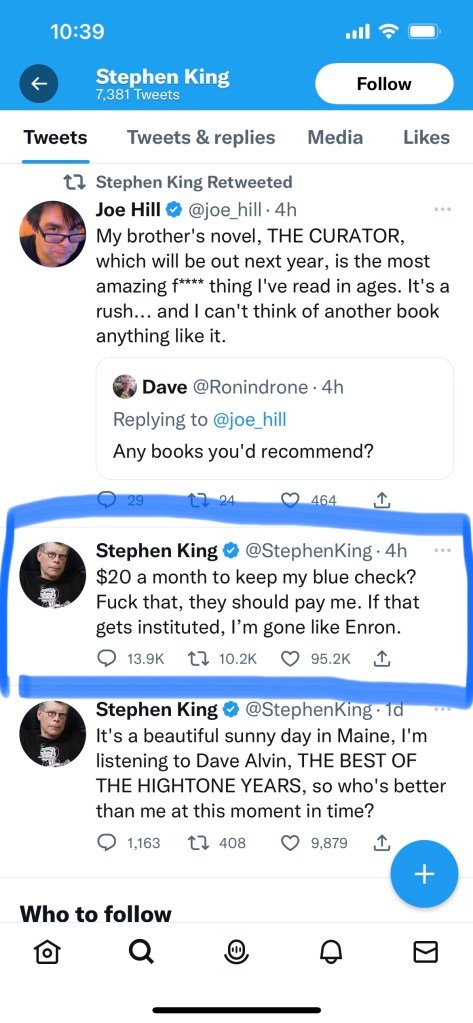
Long (long) time host of the Twin Cities public affairs show, Almanac, is quite upset about the Governor’s lack of interest in a televised debate. Something about tradition and, ummmm, hearing the voice of our leaders, seems to strike a cord.

The twitter population seems to agree.

Will the political strategy to keep his voice quite be an asset, or play as a liability? All will be revealed in November.

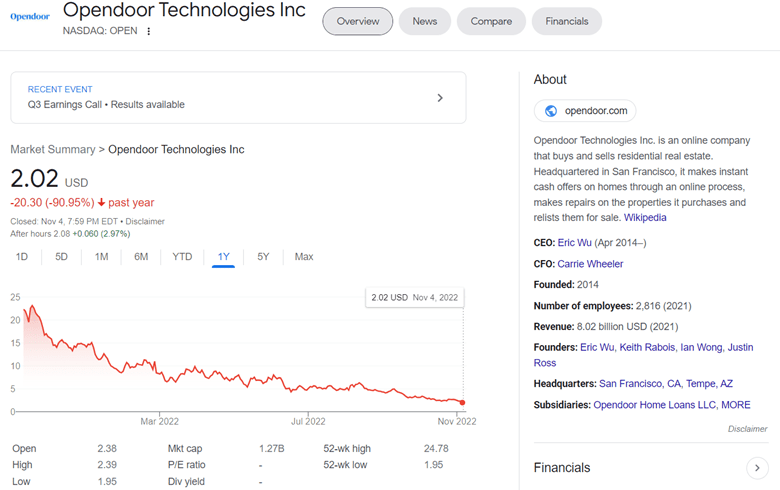
Update on AI pricing of Homes

Speaking of this last unit, Zillow bought it for $700K in Nov 2021, and withdrew the listing at $625K last month. Then they sold it to Opendoor for $354K. I haven’t pulled comps, but it’s not hard to imagine a fat discount that’ll look good on paper for Opendoor in the future.

And here’s a piece I wrote about their exit. Their failure wasn’t about market conditions, but strategy. In other words, this wasn’t about them foreseeing the future and knowing the market would change due to rates being at 7%.

Originally tweeted by Ryan Lundquist (@SacAppraiser) on October 5, 2022.

What happened to the US Post Office debate?

This is a rather fancy post office.

There was a time when the demise of the US Postal system was all but certain. Typically criticized for being poorly run and expensive, it was thought that private competitors like UPS and FedEx would take over transporting packages, and electronic means would replace printed letters. Surely there has been a reduction in the number of personal letters (which is truly a shame) but advertisers still choose the postal service as a way to get into consumers’ households.

When I’ve gone into our local branch to purchase stamps or mail a package there are more frequently than not a few people in line. Some are clearly running a business from home and have a stack of packages needing attention. I suppose people stop in for items needing to be tracked. And then there are passport services too. I personally like the custom stamps. (Perhaps this is a hangover from stamp collecting as a child.)

Back when there was talk of starting to close down some of the branch locations, contention flared at the suggestion that their post office would be the one to close. Buildings of all shapes, sizes and styles dot the entire US. In a way, the structures reflect the character of the neighborhood. The only compromise that was reached, that I can think of nearby, was a reduction in the overall space that zipcode’s branch occupied in the building. A religious community took over the back of that structure. They administered Covid shots during the pandemic.

As I’ve proposed here at home-economic, some goods are more naturally considered public and some private. Postal delivery service appears to fall in the first category. Whether people feel the public should have access to reliable and secure delivery of letters and parcels, or- they are nostalgic for the discovery of a crisp white envelope in their post box, for the time being, the US Postal Service is still a going concern.

Of Our New Day

We were in Northfield this afternoon for parent’s weekend at St. Olaf College. After lunch at the Reunion on Main Street and a walk along the nature trail behind Skogland, we went to listen to the Family Music Performance. The freshmen male choir, directed by Tesfa Wondemagegnehu, formed a half moon on the risers first, and they did not disappoint. I had several friends in choir back so many years ago now, that these new fresh faces simply met their level of excellence.

Having no expectations for the St Olaf Band, however, led to a delightful sense of discovering something exceptional. The variety of instruments and tones and tempos! Well, listen for yourself.

Have you lost that feeling?

It’s hard to extrapolate feelings out of numbers. Novelists have the luxury (and the skill) to fine-tune phrasing in a way that demonstrates how the same scene can in fact be different. Take this passage for example:

Yes, that was it-the change was there. Before the war at a luncheon party like this people would have said precisely the same things but they would have sounded different, because in those days they were accompanied by a sort of humming noise, not articulate, but musical, exciting, which changed the value of the words themselves. Could one set that humming noise to words?

Virginia Wolf- A Room of Oneโ€™s Own

But when you see numbers, tabulated-out in sales figures of Rolex sales, income disparities between adjacent countries, or tallies of police arrests- you don’t feel anything. Of all the inputs that go into economic analysis- resources, labor, utilities, transport, and so on, there is no mention of an emotional quantifier.

Yet isn’t at least a portion of why people buy a Rolex due to a feeling? A luxury good makes one stand up a little straighter and beam a little brighter. A luxury good encourages others to treat you with a little more attention. A luxury good may be the ticket to gain entry into a new network of associates. There’s a swarming effect to luxury goods where people are drawn to the aura of the wealthy establishment. At least Kim Kardashian has a billion reasons to think so.

And then there is the opposite effect. The feeling of neglect and secondary status is always in the mix when economic results are released and compared to a strong neighbor. The numbers may divvy out the details of who stands where with what, but the gnawing feeling of being two steps back and half a year behind comes to the surface in casual conversation. “Oh- they are just so brash down there!” Implying, of course, a certain nobility in lower production, further justifying complacency.

Analysis of the cost of policing goes into rows and columns as easily as any set of numbers. But the emotion of seeing your middle school buddy handcuffed and walked out of school doesn’t show up in any way in the numerical representation. How many officers are needed in a community that has memories of one type of public safety is going to be different from another. The expense to leverage community participation in crime-solving is also going to vary. Like groups need to be compared to like groups.

And similarly, when solutions are presented and discussed, time and time again by people outside a community, especially those with elitist inklings, eye-rolling follows disjointed analogies.

The mayor of Minneapolis is Jacob Frey. Keith Ellison is MN’s Attorney General. Also pictured is St. Paul Mayor Melvin Carter.

How to heat a house

The measure used when transacting in wood is called a cord- or 128 cubic feet.

Up north (as we call any rural community vaguely north of the Minneapolis-St. Paul metro) it is common for homeowners to heat their homes with wood. There are stoves built to burn the split logs slowly and maximize efficiency. Sometimes the black cast iron fireboxes are in the lower level of the dwelling, or sometimes out in the yard with a venting system drawing the hot air into the home.

No matter what or where, there’s a lot of work involved. Fallen wood in a forest may be there for the taking but the labor involved in sawing the timber into eighteen-inch lengths and splitting it into manageable widths is persistent labor. Then there is the hauling and stacking. It will make a Lumber Jack (or Jill) out of you.

The backup system in most homes is baseboard electric. Often people use some combination of the two, loading up the fire before bed and then counting on the baseboards to kick in toward dawn. The remote nature of rural living makes it difficult for utility companies to run natural gas lines along all the roadside ditches. Natural gas is the most prevalent form of fuel for homes in the metro. It is also the most economical, whereas electric heat is the most expensive. Propane is a less common option and has its own set of drawbacks.

It would be wonderful if battery technology was advanced enough to capture and store energy off solar panels. The energy would flow right through the existing baseboard network. But in a part of the world where the temps can run below freezing for several weeks at a time, it simply isn’t possible to rely on solar energy. As populations grow, gas lines are appearing in populated areas. Splitting wood is a young man’s game and when given the option, most consumers are ready to convert to gas.

A sliver from *To Sir Henry Wotton*

Be thou thine owne home, and in thy selfe dwell;
Inne any where, continuance maketh hell.
And seeing the snaile, which every where doth rome,
Carrying his owne house still, still is at home,
Follow (for he is easie pac’d) this snaile,
Bee thine owne Palace, or the world’s thy gaole.
And in the worlds sea, do not like corke sleepe
Upon the waters face; nor in the deepe
Sinke like a lead without a line: but as
Fishes glide, leaving no print where they passe,
Nor making sound; so closely thy course goe,
Let men dispute, whether thou breathe, or no.

John Donne

Update on the housing market

As one can imagine the sharp increase in mortgage interest rates is having an effect on the housing market. For the average buyers who have between 5-20% to invest as a down payment, their monthly obligation has probably increased by about 20%. Yes- that’s a lot. Hence the decline in mortgage loan applications.

So far, however, the change has only resulted in a deceleration in the number of buyers but not in the price of housing. For the past couple of years, buyer demand has outstripped inventory causing virtually every sale to garner between three to twenty offers. This is not hyperbole. The steady jump in the cost of housing is verification of a sellersโ€™ market.

A few months ago, a fresh listing would still attract a strong first buyer, one who perhaps even wrote an offer above the list price in an effort to pre-empt the market. As news gets out that the market is shifting, buyers are starting to slow down and finally we are seeing inventory staying on the market more than a few days. This has advantages.

For the time being the new dynamics are attracting a new set of buyers who never were interested in the rat race of competing for a home. Making a decision within hours of viewing a home, foregoing an inspection, or offering non-refundable earnest money is not for everyone. Today’s buyers have the leisure of coming back through for a second showing, of looking into possible home improvements, of lining two options up side-by-side to see which one they prefer.

I expect this will be the status quo through the holidays. Thanksgiving to Christmas is always a slower time as many people are tied up with family obligations. Come early 2023, we’ll see how the interest rate environment is impacting price.

Serendipity and the creation of books

The ‘Withdrawn from Hennepin County Library’ sticker on its cover is a dead giveaway that I must have picked up Encounters by publisher George Braziller at a library sale. The short format tales of interactions with authors are fun and informative. Braziller’s small independent publishing house brought Orhan Pamuk’s The White Castle to an American audience- this book I can highly recommend. But I also enjoyed the stories of books coming together as a deroulement of chance encounters. In this example, an artist is paired with a poet.

Will Barnet

One of the magical aspects of publishing is the serendipitous way by which books are created. I learned this important lesson while working The World in a Frame. The book brought together two strands of George Braziller’s publishing program-literature and art-and was created on the heels of several books that Braziller had published in the mid-1980s,

The year 1986 marked the centenary of Emily Dickinson’s death. To mark the occasion, Braziller published a short introduction to her poetry, Emily Dickinson: Lives of a Poet by Christopher Benfey-then an up-and coming and now a formidable and well-established scholar. Benfey’s book offered an overview of Dickinson’s life, a well-crafted synthesis of the main themes in her poetry, and a thoughtful selection of her most well-known and loved verses.

Soon after the Dickinson volume was published, I visited Will Barnet, a well-known American artist, in his studio in the National Arts Club building in New York. While looking at his paintings, I noted that his work evoked nineteenth-century New England, which was not surprising in that Will had grown up in Massachusetts. Will, in turn, mentioned that he loved the poetry of Emily Dickinson and would like to have a copy of the Benfey book. The next day, I sent him a copy. A few weeks later, he called to let me know that he had created a series of drawings inspired by Dickinson’s poetry.

Back to his studio I went to look at the drawings. They were extraordinary.

Encounters, by George Braziller

Lately, I’ve been listening to Econ Talk on my daily three-mile walks which correspond conveniently to the duration of one episode. This one caught my eye today Janine Barchas on the Lost Books of Jane Austen and I was not disappointed. If you enjoy books, Jane Austen and a knowledgeable acedemic with a pleasant timbre you will find the hour well spent.

It was her explanation of how she fell into writing the book that I loved the most. Experience has taught me that many of life’s best outcomes occur haphazardly. And this seems to have created the interesting research she presents here. An antithesis, I know, from the advocates of- Plan your day! Schedule your every move! Make a ten-year plan! Some things come about when they are meant to be.

Regional trail system connecting through Wayzata

Econ or Poli-Sci?

I recently saw this quote on Twitter: Economics is the study of human behavior under constraints. This makes sense to me if the individual and the clusters of individuals operate under maximum freedom. But the reality is that virtually all people have some sort of, or many layers of, political structures also setting constraints. Where econ stops, and where poli-sci begins is deviding line to consider.

For instance, if you were trying to figure out the choice parameters for automobiles in the Amish community you may come to the conclusion that they don’t have a preference as you cannot come up with any data. Yet the political constraint of only being allowed to drive a horse and buggy is the political constraint which explains the lack of opinion. Complete exclusions from some choices are entirely political and hence do not provide economic insights through the actor’s behaviors.

Gorgeous blooms are still to be seen at the Lyndale Rose Garden in Minneapolis

The Staircase- Series Review

The Staircase is an HBO series based on the real-life story of the death of Kathleen Peterson (Toni Collette) and the subsequent trial of her husband Michael Peterson (Colin Firth). Before you commit to the viewing time be forewarned that this series will play in the shadowy crevices of your brain. The film brings out the fears and uncertainties of relationships and the strength of their bonds. Your mind will be mulling over the hour-long episode well into the following day.

Full disclosure, I’m a fan of Toni Collette; and Colin Firth for that matter. They do not disappoint. But there are far more producing and editing tricks done with this story which leave the audience in a persistent state of questioning. The splicing of events as members of the family review and question past occurrences reminds of us of the complexities of kith and kin. Timelines with a six-year distance between them are run simultaneously. The overlay of the documentary being filmed and produced in real-time creates a window upon the world effect. (Here’s the link to the documentary.)

There are several interesting collisions between the intended use of the justice system and economic incentives. One is pretty typical. An agency authorized to review forensic material for jury trials is not operating at an arm’s length from the prosecuting office. An outside organization proves the bureau both fails to report pertinent information as well as distorts its level of experience. Another ho-hum, let’s protect our buddies, incident occurs when a homosexual lover threatens to provide a complete list of his liaisons should he be called upon to testify. Something about the word systemic comes to mind in the ability of the district attorney to waive away this witness.

But the more intriguing, or perhaps nefarious, turn of events occurs amongst the kids. Of the five college-age children in the Peterson household only one, Caitlin, was Kathleen’s biological offspring. She is also the only child who broke with the others in their unwavering support of Michael’s innocence. After testifying against her step-father she successfully sues him for claims to a large insurance settlement and other assets. It seems like a jury should receive some sort of incentive disclosure eventhough this may seem cynical.

This series will remind you that life is complicated. But you may not be satisfied that you have been given any answers.

Why object to Immigration?

Ron DeSantis of Florida put immigration back on the front page of most newspapers a few weeks ago when he chartered a couple of planes to fly Venezuelan migrants to Martha’s Vineyard. Of course, he is not the first to shuffle off those in need of social services to other locals. The Governor of TX also recently bussed migrants to the home of Vice President Harris. But for decades those in need have shown up in Minneapolis having been given a one-way bus ticket from Chicago.

Immigrants have a place in America’s history and they continue to bring fresh economic energy with them when they arrive. Their work is visible across neighborhoods as roofers and painting contractors and nail technicians. Still- there’s an underselling of the work and services needed to bring new families into the American way of life. Who is going to be sure they have proper clothing for winter? Who can help set them up with services? Who can they call for advice on all those things a 20-something person would ring up their folks for reliable answers?

Even though the state provides another set of goods, there’s a certain type of capital needed to ease immigrants into their new communities. When a church sponsors a new family, the parish members fill the orders for all those material goods and services. Let’s say circulating capital is that which is needed to support the community interfaces between the new and existing polities.

Some communities claim they have no spare reserves. There are communities like Martha’s Vineyards who have reserves but not the structured intermediaries to deliver services. Then some communities welcome those in need despite lacking the circulating capital to maintain their existing community (this undoubtedly produces the most expensive outcome).

Hopefully we can come up with a better way to ease newcomers into American life than relying on the showmanship of politicians.

A quote about structure

The cause of freedom is not the cause of a race or a sect, a party or a class ~ it is the cause of humankind, the very birthright of humanity.

Anna Julia Cooper

There are certain causes, or sympathies- as Adam Smith calls them in The Theory of Moral Sentiments, which hold the universal attention of all men and women. Unlike the interests of a particular community, church, county, or region, the longing for freedom settles in at the first order of sensibilities. And when left to fruition, leads society to the most favorable outcomes.

Anna Julia Haywood Cooper (August 10, 1858 โ€“ February 27, 1964) was an American author, educator, sociologist, speaker, Black liberation activist, and one of the most prominent African-American scholars in United States history.

Born into slavery in 1858, Cooper went on to receive a world-class education and claim power and prestige in academic and social circles.[2] In 1924, she received her PhD from the Sorbonne, University of Paris.[3] Cooper became the fourth African-American woman to earn a doctoral degree.[a][4] She was also a prominent member of Washington, D.C.’s African-American community and a member of Alpha Kappa Alpha sorority.

Cooper made contributions to social science fields, particularly in sociology. Her first book, A Voice from the South: By a Black Woman of the South, is widely acknowledged as one of the first articulations of Black feminism, giving Cooper the often-used title of “the Mother of Black Feminism”.[5]

From Wikipedia

Is there more to it than mincing words?

When I was in college I steered clear of philosophy. The intricate hairsplitting was more than a little off-putting. Plus the numbers and problems in my math classes were more fun than words, or at least more reliable. It is only now, later in life that I see the need for it. I still am partial to philosophers who talk through examples instead of building some analytical castle in the sky. That’s why I like Bertrand. He said:

Philosophy, like all other studies, aims primarily at knowledge. The knowledge it aims it is the kind of knowledge which gives unity and system to the body of the sciences, and the kind which results from a critical examination of the grounds of our convictions, prejudices, and beliefs.

Bertrand Russell, The Problems of Philosophy (Urbana, IL: Project Gutenberg, 2004)

Descriptive words can paint out the details of your examples, but precisely defined words are necessary to hone the edges of the properties which settle in together and erect a model of activity. And words are slippery things often showing up in other ways at other times. It truly is a project to draw it all out for people to follow.

It seems there is a renewed interest in the discipline. Instead of being the butt of any graduation party, “What are you going to do with a philosophy major? Become a barista at a Parisian cafe?” People genuinely express a desire to understand foundational principles in order to participate in the public conversation.

It would have been helpful through the years to have a little sidebar in that History of XVII Century Thought book or an Anthology of Literature from the Caribbean outlining a view of the philosophy of the day. Most centuries had predominant views on how to think and reason. If these would have been laid out alongside a history of events, I might have started getting the picture earlier that there was more to philosophy than tedious quibbling over definitions.

An outing to the Caspian Sea

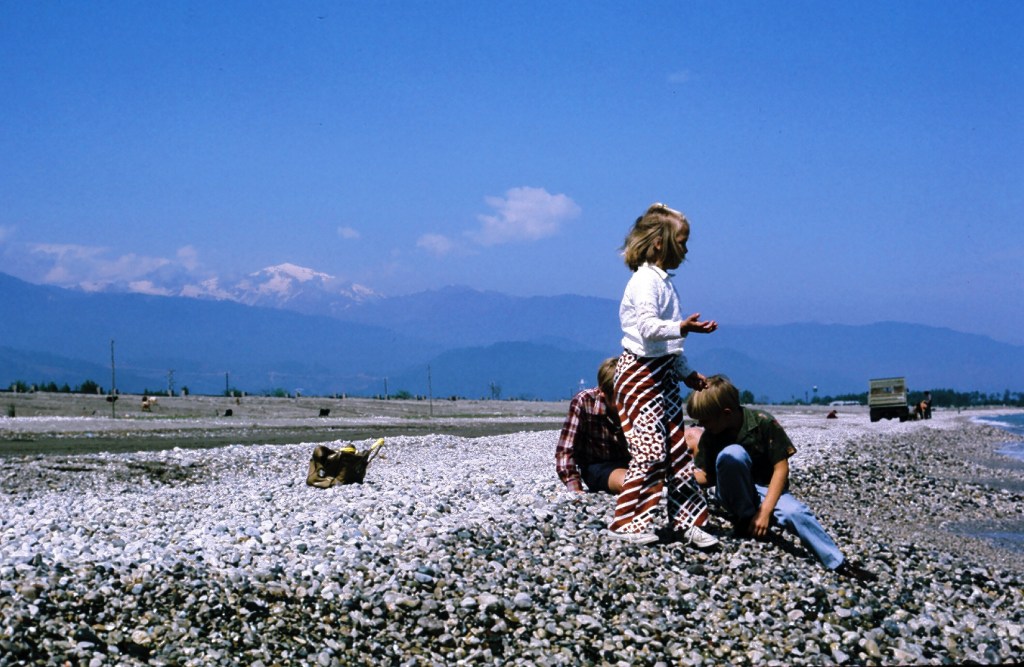
For a handful of decades, no one in my family paid any attention to the carrousels of slide trays that held film of trips we had taken in my childhood. Finally, I convince my mother to package up the thousands of images and have Costco scan them for easier viewing. Some were in sequence and some were not. This, along with my parents failing memories, added complexity to determining exactly where the pictures were taken.

It didn’t take too long to figure this one out. I vividly remember visiting the Caspian Sea. The name alone is romantic and adventurous. When we got there the pebbly beach felt remote and austerely beautiful. The drive from Tehran is only two to three hours, and crosses a dry and rocky mountain range.

Perhaps it is difficult to imagine now, how easy it was to travel through this part of the world in the early 70s. Aside from having to watch for the cabbies rounding up their fares, I have no recollections of difficult or unpleasant encounters on these sojourns. Hopefully one day the world will right itself again and people will be able to appreciate the sites there are to see in this part of the planet.

For more recent photos of this area, along with some video footage through the mountains check out this link: Adventure Iran, Tehran to the Caspian Sea.

Booo, traffic is back

One upside during the pandemic was the light traffic on the roads. For two years it was completely unnecessary to think through whether rush hour would delay one’s arrival. There was no need to buffer in extra time, no need to avoid travel at certain hours of the day. It was a public service windfall.

We have no toll roads in Minnesota, so roads are a classic, open to everyone, public amenity. (Well- there are a very small number of gated communities, where austere gates carry signs stating ‘Private Drive’ even though said gates are wide open to entry.) When lots of people are using the roads, it costs me money in extra use of my time. More or less the opposite dynamics to a private good.

Roads can also externalize negative private benefits when they are in ill repair. Hitting a large pothole even at moderate speeds can throw your alignment out of place. And this is why people get on the phone with their city council person and demand to see sand and tar trucks out filling holes in the neighborhood. Not everyone gets their cars damaged, and not everyone needs to call the city council person. But if the average guy/gal provide the feedback, and expectation are pursued, then the whole benefits.

Before dismissing local politics as boring, think for a moment at how many levels these tasks of feedback and correction occur. Property owners take care of their driveways, sometimes under duress from neighbors. Associations, cities, counties, and townships all have ownership and maintenance responsibilities. Then there are state highways and the Federal Interstate system. Motorists may not give a second thought to the land under the pavement they are passing over. But there is competition for resources between each system.

I recently overheard a conversation where it was pointed out that the county snow removal vehicles were parked in our city. This is a windfall. Their trucks must plow a few hundred yards of city streets before getting to the county roads. Although both the city and the county provide a public service, each acts as a private competitor when interacting with one another.

So even though roads are public goods, they can cost me privately in time during congested periods and repairs due to poor maintenance. They also function like a private good (in the sense of competition for resources) between the levels of government responsible for the system’s interconnected parts. And there are lots and lots of levels of economic interaction to keep it all in good repair.

Plunder! Feed the Children Edition

Supply of public funds without demand is the simplest way to attract profiteers to the public trough. Whether aid is given freely overseas, or in Minnesota, if specific recipients are not identified, the money is readily diverted to real estate, expensive trips, fast cars and lots of luxuries that poor children will never enjoy.

Today’s report from the US Department of Justice’s website:

The Department of Justice announced today federal criminal charges against 47 defendants for their alleged roles in a $250 million fraud scheme that exploited a federally-funded child nutrition program during the COVID-19 pandemic.

โ€œThese indictments, alleging the largest pandemic relief fraud scheme charged to date, underscore the Department of Justiceโ€™s sustained commitment to combating pandemic fraud and holding accountable those who perpetrate it,โ€ said Attorney General Merrick B. Garland. โ€œIn partnership with agencies across government, the Justice Department will continue to bring to justice those who have exploited the pandemic for personal gain and stolen from American taxpayers.โ€

โ€œTodayโ€™s indictments describe an egregious plot to steal public funds meant to care for children in need in what amounts to the largest pandemic relief fraud scheme yet,โ€ said FBI Director Christopher Wray. โ€œThe defendants went to great lengths to exploit a program designed to feed underserved children in Minnesota amidst the COVID-19 pandemic, fraudulently diverting millions of dollars designated for the program for their own personal gain. These charges send the message that the FBI and our law enforcement partners remain vigilant and will vigorously pursue those who attempt to enrich themselves through fraudulent means.โ€

โ€œThis was a brazen scheme of staggering proportions,โ€ said U.S. Attorney Andrew M. Luger for the District of Minnesota. โ€œThese defendants exploited a program designed to provide nutritious food to needy children during the COVID-19 pandemic. Instead, they prioritized their own greed, stealing more than a quarter of a billion dollars in federal funds to purchase luxury cars, houses, jewelry, and coastal resort property abroad. I commend the work of the skilled investigators and prosecutors who unraveled the lies, deception, and mountains of false documentation to bring this complex case to light.โ€

What is more egregious yet is the local woke protected the plunderers. When the good employees at the Minnesota Department of Education (MDE) tried to cut off the non-profits from obtaining further funding, they were sued for discrimination and excessive oversight. And it worked! Funding resumed.

When MDE attempted to perform necessary oversight regarding the number of sites and amount of claims being submitted, Bock and Feeding Our Future gave false assurances that they were monitoring the sites under its sponsorship and that the sites were serving the meals as claimed. When MDE employees pressed Bock for clarification, Bock accused MDE of discrimination and unfairly scrutinizing Feeding Our Futureโ€™s sites. When MDE denied Feeding Our Future site applications, Bock and Feeding Our Future filed a lawsuit accusing MDE of denying the site applications due to discrimination in violation of the Minnesota Human Rights Act.

There is little outrage amongst a certain party regarding this announcement today, as far as I can tell. Perhaps they are being good party participants and keeping their opinions on the qt. But surely they can’t think this outcome is helpful for race relations.

Owls

Owls make the most interesting sounds. Only a few call out anything close to the well-reported Hoo Hoo. If you are out for an evening walk and hear something you can’t identify it could very well be an owl. Some cheap, some warble, some chatter. Some sound like a chipmunk barking out, or a cat in a duel. Here’s a short video with the more common North American breeds.

This next video is more lengthy and contains breeding and migration patterns. Many of the breeds are international dwellers, their nesting areas spanning more than one continent.

File under ‘how to be a good listener.’

Yglesias Tip Toes across Platters

In the old days, or in the movies, the good and bad guys are contrasting characters in nefarious plots. Activists love the straightforward dichotomy of the winners and the losers as it facilitates their theory of choice. If you want to benefit the world, you’re with us; if you want to harm the world you’re with them. You are either on the inside or you are excludable. You are blessed or descending into the bowels of the earth.

In the most recent free newsletter from Slow and Boring, Let Joe Manchin have his pipeline, Matt Yglesias lays out economic arguments for allowing the completion of the Mountain Valley Pipeline despite the negative externalities it will generate. He tiptoes through a dizzying array of players and their platters, in the operating systems of cooperative endeavors. He concludes that there should be less focus on chum (I like that word) and more focus on the stuff that matters.

The stuff that matters appears to be the more socially favorable outcome once the pros and cons of the action are tallied up. Instead of hype, Matt wants an accounting.

Here are all the groups mentioned in roughly the order they appear: Mountain Valley Pipeline (MVP), Biden Administration, West Virginia, Virginia, Joe Manchin, green activists, Senators, democrats, Keystone XL pipeline, left writers, center-left writers, Barack Obama, Labor Unions, Rail Lines, activist organizers, protestors, Putin, Russian Oil Producers, LNP gas export facilities, the United States

There are a bunch of ways to sort these players. Elementary school math with Venn diagrams comes to mind. All the oil producers which operate on a for-profit basis, MVP and Keystone XL, and LPN export facilities form a group. Then you have the political people who are meant to act on behalf of their constituents like the two Presidents, the Senators, and Joe Manchin in particular. Clearly, there is different weighting on the impact of these decisions based on who they represent. This brings us to the states themselves, specifically West Virginia, Virginia, and a bunch of unnamed states affected by Keystone. And there are the people who advertize for the various positions, the writers (both left and center-left), and protestors. I would put the activist organizers in the same bin as the labor unions because their function isn’t to care about the issue as much as to energize those who will resist. Putin and Russian oil producers are in a group to themselves as they are not nested in any way with the others.

It is impressive to touch on so many levels of tradeoffs and draw the reader to the intended conclusion: Joe Manchin’s pipeline project will cause less environmental harm than economic good. The social externalities are less than internalized social benefits.

Not everyone can successfully call out those who oversell the need– in this case for climate caution. It is something only someone of his stature could accomplish. Since there is no numerical system of coordination, supply is determined by trusting the voices of those close to the action to describe the need. Food shelf providers give feedback on the demand for food. School counselors give feedback on the need for social services. Hospitals give feedback on the number of uninsured patients.

I’m all for calling out the beefed-up hype and manufactured objections to socially valuable industry. Hold the Chum! And give Yglesias the proper accounting he demands!

Proust’s slendid portrayal of the ordinary

I know that sharp coastal folk wonder what we have to do here in the Midwest, so far away from the action of the world. But it seems Proust understood that thorough details of la vie quaotidienne provide excellent insights into how and why our lives unfold.

For, upon a permanent foundation of eggs, cutlets, potatoes, jams, biscuits which she no longer even announced to us, Franรงoise would add-depending on the labors in the fields and orchards, the fruit of the tide, the luck of the marketplace, the kindness of neighbors, and her own genius, and with the result that our menu, like the quatrefoils carved on the portals of cathedrals in the thirteenth century, reflected somewhat the rhythm of the seasons and the incidents of daily life-a brill because the monger had guaranteed her that it was fresh, a turkey hen because she had seen a large one at the Roussainville-le-Pin market, cardoons with marrow because she had not made them for us that way before, a roast leg of mutton be cause fresh air whets the appetite and it would have plenty of time to “descend” in the next seven hours, spinach for a change, apricots be cause they were still uncommon, gooseberries because in two weeks there would not be any more, raspberries that M. Swann had brought especially, cherries, the first that had come from the cherry tree in the garden after two years in which it had not given any, cream cheese, which I liked very much at one time, an almond cake because she had ordered it the day before, a brioche because it was our turn to present it.

Swann’s Way

Pheew, captured all in one sentence!

A man behind a beast

Bangladeshi working with oxen

It might be easy for someone from the west to categorize the man in the photo. It might be easy to assume that, despite perhaps a potential for the intellectual heights of a professor, his opportunities in life are limited by his environment. But this view may lack clarity.

To feel sorry for a man in a photo based on presumptions of status and reach is more than likely an imprecise calculation. The man of letters may acknowledge the third world inhabitant has the capbilities of being his peer, yet considers his voice to have 20x’s the impact. But the numbers don’t support this.

The population density in Bangladesh is 1265 people per sq kilometer where as in the US it’s a meer 37. So say an influencer in the US thought they had the ear of 85,000 people. Since the population density in Dhaka is 23,234 per kilometer, the man in the photo would only need to circulate through 3.66 square kilometers to touch a similar audience. This is the spatial equivalent of a handful of city blocks.

In fact, if social capital is defined by the number of people in a network, than this man must be quite well off.

Furthermore, capable people who do the work of city councils or community organizing could very feasibly act in ways that impact and improve the lives of hundreds of thousands of their fellow city dwellers. A small elevation of sanitation standards would provide significant and immediate health impacts. Should the man in the photo have the capabilities, he most certainly could and does do work to ameliorate the circumstances of those in close proximity.

Perhaps the distance between the reality of his economic and social circumstances are more than geographic, it is hard for the westerner to see him in his proper function. But without this insight, it is erroneous to pronouce this man’s life-work a market failure.

Seasonal Motivations

Some people suggest that self-interest is what drives people’s decision making; some people say it is sympathy. But I’m here to tell you that the weather can spur folks into action as well. Once the night temperatures start to dip into the 50s you can safely turn off the central air and fling open the windows. The sedum will bud into a rosy hue and a scattering of yellow leaves will look pasted onto the edges of leafy canopies.

All these indications of a change in the seasons serve as a whistle call to make like the squirrels and start storing nuts away for the winter months. People assess their outdoor spaces, deciding what needs to be painted or put away before the snow flies and the theromostat readings drop well below zero. Tires are kicked and inspected for baldness as soon their treads will be the determining factor for a quick stop on an icy road.

I suppose all these initiatives could be categorized as actions out of self interest. But the seasonal shift indicates another consistent and repetitive aspect that initiates action. Time comes into play in all sorts of ways in our economic efforts. Some endeavors are seasonal, some are generational, some apply a quarter of a centruy at a time. It almost seems like there should be a disclaimer, like a bond maturity: this deal has a time horizon of X.

Villainous Homes

I went to our library’s used book sale on Saturday and came home with an armful. I’ve learned that half of what I enjoy is about browsing the titles, appreciating what people are reading, and seeking out the unusual titles that aren’t being heavily marketed by the big bookseller.

And then there are the books that must be bought at reatil because they are so new. Like this one:

The author, Christine Madrid French, has an article in Vanity Fair if you want to get a scent for the trial she follows in her book.

Alfred Hitchcock was one of the first major directors to leverage this architectural zeitgeist, co-opting the essential features of modernist design and turning those characteristics into totems representing the calculated fervor of a malevolent genius. Drawing from early films such as Metropolis, Hitchcock also reconstructed the essential character of the screen villain, abandoning the crazed henchmen of the 1920s and instead casting dashing, charismatic people who wielded wit and charm as their weapons. In North by Northwest, Hitchcockโ€™s team revealed these two new archetypes fully fledged for contemporary moviegoers, pairing a modern villain with a mid-20th-century modern building. This cinematic-architectural marriage of patron and design was so successful that it has been fully typecast as a storytelling device. In the years afterward, production designers, screenwriters, and directors recruited actual houses to play the part of the villainโ€™s lair, drawing from a proliferation of modern designs in Southern California created by architects such as John Lautner, Richard Neutra, and Frank Lloyd Wright. Other creators designed fantastical modernist hideaways that existed only on film and in matte paintings.

I only recently watched North by Northwest and loved the shots in the VanDamm House. But I never thought about the setting’s influence of the audience’s view of the villain. French’s insights give the brain a little massage.

In North by Northwest, the modernist design effectively merged the malevolent identities of the structure and the villain. Film critics such as Raymond Durgnat interpreted the Vandamm House as a sentient being; he described the building as โ€œan alien, malign, disaffected intelligence.โ€ Likewise, he interpreted the position of the home, on a plateau above the carved stone faces of Mount Rushmore, as one that โ€œexpresses visual domination and panoptic controlโ€ over the nearby โ€œdevotional shrine of American democracy.โ€ Author Steven Jacobs, who created a set of blueprints of the house based on extensive archival research, observed that โ€œboth love of the arts and a predilection for modern architecture are persistent Hollywood signifiers of menace and malice.โ€ Jacobs conflated the style and location of the building with the power of the villain within. He posited that this iconic residence ultimately represented a โ€œprogressive quest for power and wealth,โ€ a quality attributed to capitalists and likewise to criminals.

For this book, I’ll willingly pay full price.

Meet Roxanne

Roxanne and her helper replace the work of five able bodied men. You go girl.

I’ve been one to poo poo the whole AI is going to conquer the world of workers thing. When they come up with a way for robots to do all my housework, I’ll be a beleiver. Until then, AI is just an upgraded piece of machinery.

But then I met Roxanne. She a deminuitive type, but does she pack a punch. Come ball season she can paint the lines on the fields in perfect geometric patterns, all with the aid of GPS and the guy holding the tablet. They say if you compare satellite pictures from manually painted fields to AI painted the differences are striking.

She’s a bit pricy. And she’s high maintenance. But the parks department is so bummed when she is out of commission they’ve stored up the parts for the most common repairs. Not only does she do the work of five men, she’s a lot of fun.

What do workers want

There’s a worker shortage.

The city I live in is getting by with less than 50% of the seasonal staff they typically have for the summer months. Once the weather gets nice in Minnesota there are acres of parks to mow and canopies of oaks, elms, and maples to trim. On eighteen year old who applied said he would consider the job if he was given a city car to drive home in the evening.

But the most perplexing trend, for those of us of a certain age, is the no response option. Applicants set up times for interviews and simply don’t show. No call; no attempt to reschedule; no ‘I changed my mind.’ Perhaps for the seasonal part-time workers that is understandable (perhaps). But apparently no shows for interviews even happen for fulltime, full benefits jobs with a major suburban city.

Another manager in a different field said she had fourteen openings to fill so she scheduled an afternoon of interviews. Not one applicant showed. There she sat, spinning a pen between her fingers.

The โ€˜no communicationโ€™ modus operandi started about the same time texting became a popular means of conversing. It’s like a wave of people who might as well have yelled down the corridors of society โ€œwe donโ€™t want to talk to youโ€ changed how we make plans. Or like some grouchy teenager proclaiming indignantly, โ€œWe donโ€™t want to have to listen to what you have to say.โ€

Texting is a great way of cutting the personal out of the conversation. No chit-chat. No opportunities to ask a few extra details. The fumbling around of thumbs on tiny screens makes for short replies. Plus you are not on the spot to get back to someone. You can control when and how you choose to respond as you can leverage the uncertainty of whether you’ve received the message.

As these folks age, maybe theyโ€™ll notice the benefits of being civil. Maybe they’ll consider the fluidity of the process of general customer service is beneficial to amicable relations. Maybe they’ll notice when you open a dialogue, you might actually learn something else that is useful.

Rent Control Revised

After a voter referendum last fall, the most rigid rent control in the US went into play in May in the city of St. Paul. Four short months later, most stakeholders agree, that rent control is a deal killer for housing providers.

Want housing? Then let people who know how to provide it do their thing.

Identifying Circulating Capital

In years gone by, every political season was adorned by a scandal involving the spouse of a candidate charging a bunch of clothing and personal effects to an inappropriate account. The reasoning was the spouse had to maintain a certain status exemplified in their presentation. One could say the the candidates spouse, and family for that matter, required circulating capital in support of the candidate in image and appearance.

Circulating capital is a businessy term which is defined by Webster Marriam as:

capital consumed in the process of production (as fuel, power, and raw materials) โ€”contrasted with fixed capital

In loose language it pays for the maintenance and utilities to keep the lights on, the machines oiled, the pathways shoveled, and so on. Since the business world has replaced this concept with the term working capital, perhaps circulating capital could capture the more socially relevant maintenance items.

One might say that the resistance of workers to go back to a brick-and-mortar workplace is due to the increase in circulating capital required to do so. The reversion to pre-Covid times may involve purchasing some new dockers, reacquainting oneself with the bus routes, and debating the tradeoffs between a bag lunch or Subway. There’s no question that the circulating capital will suck some profits out of the paycheck.

Another reason to bring back the term is that it is all but ignored in many important marketplaces. The circulating capital required to maintain a houseful of kids in their education and recreational programming is significant- ask any parent. The circulating capital required to provide housing to folks on the margin is substantial ask any half-way house provider. The circulating capital required to keep a small theater group performing is substantial, ask their donors.

It would be helpful to know some of these numbers.

Sculpture, Minnesota Style

Paul T. Granlundย (October 6, 1925,ย Minneapolis, Minnesotaย โ€“ September 15, 2003,ย Mankato, Minnesota) was an Americanย sculptor. His creative career spanned more than 50 years and more than 650 different works. Most of his work is figurative and made from bronze. His patrons included colleges, hospitals, Lutheran churches, and other institutions.[1]

Granlund received hisย Bachelor of Artsย fromย Gustavus Adolphus Collegeย inย St. Peter, Minnesotaย in 1952 and hisย Master of Fine Artsย fromย Cranbrook Academy of Artย inย Michiganย in 1954. Awarded a Fulbright scholarship to study sculpture in Italy the same year, he later returned on Guggenheim Foundation fellowships in 1957โ€“1959. During the 1960s and ’70s, he was a faculty member at theย Minneapolis College of Art and Design.[3]ย He also chaired the sculpture department for 14 years.ย [4]

Granlund was the sculptor in residence at his alma mater, Gustavus Adolphus College, from 1971 until his retirement in 1996, and maintained a studio at the institution until his death. Over 30 works are on campus, including the friezes and doors of Christ Chapel.[5]

wikipedia

What Tradle can Teach you

There usually comes a point in my day when I need a little diversion. Wordle and Tradle can provide just the right type of distraction. The first game is simply about discovering as many letters as possible in the fewest attempts. Then it is easy to guess the answer. But the second asks for an interpretation of the products represented in the colorful boxes as well as a sense of geography.

When this image popped up today was evident by the number of boxes and colors of boxes that it represented a complex economy. I first mentioned tradle a few months ago, that screenshot captured a simple image of perhaps a couple dozen boxes. Forty percent of the trade was gold. Without even looking at the dollar value of the transactions, it is evident one will find the answer among the poorer countries which rely on the export of natural resources.

There are still quite a few of these to choose from and so it is necessary to look further amongst the few products that are traded like palm oil or fish fillets to narrow down the choices by geographic differentiation. Still- it is a challenge. There are more remote islands than you would imagine. And while certain clues might signal the far east, you might find the answer in west Africa.

When a colorful image reminiscent of a Piet Mondrian tableau pops into the browser window, you know you are hunting with a higher level of sophistication. It is no longer simply about resources and geography. Now your guesses are dependent upon what type of education system could produce a savvy workforce. In which countries are laws in place and honored for patents? Where are the transportation networks to get all the pieces and parts to all the right industries?

And as you move through your guesses and bounce through the various country options, voila- you start to learn the level of infrastructure various countries have to support the industries listed in the colorful squares.

The Presidio- Movie Review

Just yesterday I dropped off my daughter at her choice of college, which happens to be my alma mater. The day felt like a time warp. Memories, long pushed aside by a busy life, kept setting up film screenings in my head. As I blathered on about some irrelevant fact or another, she gave me the most endearing look of tolerance. Remembering the past as the present unfolds does the trick of revealing the granular difference of what seems like just a few years.

The movie Presideo, an action thriller from 1988, had me drawing similar comparisons. The shots of San Fransisco are so good. What you see is a city growing past a rough go through the 70’s. There are many street scenes, the cityscape with night lights, a bustling China Town and various residential options. I couldn’t help but thinking how wonderful it was to visit San Fransisco through the 90’s. And now, 20 years on, it’s back to a struggling mess.

The famous military base, The Presidio, was dismantled in 1994. Perhaps there was some motivation to preserve a sense of it in the film. The theme of the old guard military of mid-century, represented by Sean Connery’s role, and the younger generation runs throughout. The aging military man strides around in full uniform while Mark Harmon and Meg Ryan both slip in and out of bomber-styled jackets.

True to this genre, there is only one (ok- two if you count the GI who gets shot in the movie’s opening scene) female role. As usual, the lead lady is irresistibly attractive, funny, daring, and rebukes only in a way that everyone knows is temporary. Meg Ryan shines with grown-up Shirley Temple curls gently swirling around a beatific smile and large doe-like eyes. At least if there is only to be one woman, the producers picked one above the grade.

It’s certainly not the movie of the century but it does offer strong entertainment value. The car chases are genuine and done back in a time before AI, so they really set them on fire. And you will smile when Harmon looks at his pager with delight, pulls over to the curb, and pops into the near phone booth to call his buddy. Aside from a few brief lapses in acting, the actors do a great job. And the plot has a twist to boot. The past can still keep you on your toes.

Political Scorekeeping

It seems like we are in for more of the same tactics in the runup to the elections in November. So far we have:

  1. Demand to release tax returns- to which the response was that no one cares
  2. Demand to debate- to which the response was end of Oct, too late for many voters
  3. Fear of loosing right to choose- apparently not within the capacity of the position
  4. Fear of extremism– an open-ended fear in search of a monster

It will be interesting to see how it all works out.

The Scottish philosopher is a little harsh on landowners

The interest of the first of those three great orders (โ€ฆthe rent of landโ€ฆ), it appears from what has been just now said, is strictly and inseparably connected with the general interest of the society. Whatever either promotes or obstructs the one, necessarily promotes or obstructs the other. When the public deliberates concerning any regulation of commerce or police, the proprietors of land never can mislead it, with a view to promote the interest of their own particular order; at least, if they have any tolerable knowledge of that interest. They are, indeed, too often defective in this tolerable knowledge. They are the only one of the three orders whose revenue costs them neither labour nor care, but comes to them, as it were, of its own accord, and independent of any plan or project of their own. That indolence, which is the natural effect of the ease and security of their situation, renders them too often, not only ignorant, but incapable of that application of mind which is necessary in order to foresee and understand the consequences of any public regulation.

Wealth of Nations, Rent of Land : Conclusion, page 248

A National Lottery?

Recent payouts by the federal government whether during the COVID pandemic or more recently via student loan forgiveness, feel a little bit like a lottery system. In a wild spree of funding the feds have been savvy to include a wide net of beneficiaries. As long as everyone is getting a taste, there are fewer objections to the outlays of cash.

I remember reading how one single mom was genuinely grateful as she was planning on spending her COVID money on passports for herself and her children. She explained that the $130 per person fee was otherwise a luxury she couldn’t justify. But with the windfall, she would find a way to take her kids on a trip abroad. As a steadfast supporter of travel, I admire her decision. Her kids will learn more through travel than through many other educational venues.

People also spent their dollars on home improvements. Appliances are still on backorder, depending on what country they originate from. Another couple I know excavated their aging sewer line. These are all great purchases. When you improve your home you are partly just transferring money from a savings account to an equity-in-my-home account. The other portion, not retained in your home’s value, you will appreciate every day when the whisper of your new Bosch dishwasher does not interfere with your favorite NetFlix series

The lottery system creates mad money- you won’t starve without passports or silent dishwashers, but they sure are nice to have.

But this leads us to question whether the American people are really that bad off in the first place. That’s what we are being told. Many voice excessive rents, struggles, and need. But if the need was that great, wouldn’t there be a desire to get desperate funds to desperate people? Wouldn’t the power players try to direct the most funds away from those who can and towards those who have none?

I’m not here to minimize the fact that in America we have people who are destitute. We do. And we should help them. I just think we are being oversold on the level of need. And the proof is in the papering of ‘relief’ funding across all age groups and income levels. People who earn 100K are not needy. If you want to run policy like a lottery- just call it what it is.

Norms of today; Norms of yesteryear

Minneapolis is lucky to have a long-standing history of parks and trail system support. Early in its history, the city set up a connected park system throughout its neighborhoods. The green space ropes together a string of lakes which often have a walking path encircling their parameter. But despite being glorified for prescient action in the development of a great city- city leaders of yesteryear have failed the environmentalists of today.

Now wild rice is something to be preserved! Enshrined! Even though it is cultivated for commercial sale around the state, and grown wild under a protected status near and on Indian reservations. It’s a little hard to believe that even with this new status, the city consumer of parks and trails would be better off with a slothy body of water in lieu of what Lake Nokomis is today.

I’m not sure how far the revisionists would like to go with their return to nature. Perhaps there will be a push to revert all yards to prairie grasses. Or dig up all the asphalt roads and return them to cart trails. Nor am I sure how this shaming of the present and glorification of the past is helpful.

Unclear duties

Another type of duty shifting happens when regulations, or rules, are made official across a group. We all want to be able to go to the Minnesota State Fair and eat from as many of the food booths as our gastronomical ambitions allow. It would be unfortunate to find out after the fact that the mini donut vendor did not change out their frying oil promptly. Even the most non-regulatory types would agree that purchasing food without the risk of food poisoning is a good thing.

If food prep regulations were weighed out, it is clear that having the rules in place allows for more people to be freer to sample the Fresh French Fries and Sweet Martha’s Cookies and Turkey on a Stick. Having the rules in place gives people confidence in interacting not only with people they know personally, or they’ve heard of from friends, but with any food truck or pop-up vendor operating with a license. The rules push the duties of edible foods on the small vittles providers because this allows for greater freedom, not less, overall.

The Minnesota State Fair is the best in the Midwest.

This feature works really well when populations are nested one inside the other. Although there may be small differences between counties, the rules reflect what is expected at the state level. And it is fairly reliable to maintain the same consumer expectations as one crosses state lines as everyone is nested in a federal suite of rules. And although there is sometimes pushback, like when the health department wants to show up at a church basement waffle breakfast for their parishioners, the system, in general, reflects efficient coordination.

Who gets to assign the duties becomes a bit more opaque when bundles of economic activity operate separately from one another. For instance, do European consumers of garments manufactured in Bangladesh owe the workers an EU evaluation of their working conditions?

Within one’s own trading system one relies on the press and complainants to expose wrongful work practices. Then consumers can make choices with consideration of brand reputation. When markets operate at a distance, it is unclear which market has a duty to established norms.

Shifting Duties

The LA city council would like to force local hotels into giving up their unrented rooms to the homeless. Every day the hotels are to report to the city the number of vacancies they have and allow the homeless to take over the room. It seems like some dream of authoritarian control over private property for the public concerns is budding in the sunshine state.

Mind you the hotelier will be paid. But everyone knows that the complexity of homelessness is not a billable problem, it is a social problem. What is really happening here is an attempt to externalize the caregiving of a disenfranchised segment of the population onto small business people.

Where else do we see political muscle transferring duties between groups?

  1. The rent control measures in St. Paul come to mind. The risk of market fluctuations in rental prices is transferred from the lessee to the lessor, from those who do not own real estate to those who do.
  2. The student loan debt release plan transfers the private debt of past and present students to the US taxpayers.
  3. Our city adopted a new model for firefighters where all are paid and none are volunteers. The duties change direction here as the transfer is from the public to the private job market.

Fresh Sweet Corn

When sweet corn is in season we stop by our favorite farm and pick up a dozen or two. Pull into the semi-circular drive that swings past the farm buildings to the garage and an elderly farmer in overalls appears to serve you. He often had an assortment of vegetables as well. Three medium tomatoes might run you $1.50- the corn is pegged at $5/dozen.

I realize that eating corn off the cob is not done everywhere, so here’s how it goes. You shuck the coarse leaves encasing the cob, pull back and remove all the silky threads spinning through the shiny kernels and plop the cob into boiling water for eight minutes. Remove from the pot carefully, place the prongs into the tender ends, and butter up the golden and white nubby corn. This guy grows the best ‘peaches and cream’ variety. A little salt and you are in for a delight.

It used to be that every farm in the Midwest had a setup as our corn guy (pictured here). A great big red barn anchored by a massive blue silo. Now simple rectangular sheds have won over the landscape due to their lack of maintenance. Economics! The adversary to nostalgia. Although the dollar amount of subsidies that go to farmers indicates that there is in fact a price for hanging onto the past.

In the 80s and 90s immigration of the younger outstate population in the urban areas lead to a fear of the loss of the family farm. Dilapidated farm sites were pulled down and plowed under to lay in more valuable crops. A sense of abandonment rippled through the local communities. Then corporate buyers appeared to be buying up the open landscape. An era of homesteading and a farmsite on every 80 acres and gathering at the local churches and corn feeds every fall seemed to be all but gone.

As a result, a suite of subsidies has evolved over the years to help the farmers. And there have been many that have been in line with other types of backstops in the system to avoid failures and their subsequent negative impacts. I asked a farmer in one of the really good years how he felt about the subsidies. He responded that it was a little ridiculous to be on the receiving end of government aid given how well the year had gone, but, “if we let them go we’re not sure they’ll be there in the bad years.” People are fearful that the mechanics of support are not nimble enough to be able to respond in a price and practice sensitive motion.

Corporate America was not successful in becoming the majority owner of the great American breadbasket. “There is a popular myth out there that todayโ€™s modern food production system is being run by corporations or industrialized agriculture. But, the truth is that much of our food is grown and raised on farms by families. Iowa has roughly 88,000 farms and 129,000 farm operators. According to the U.S. Department of Agricultureโ€™s 2012 Census of Agriculture, more than 97 percent of Iowa farms are owned by families.” This data may be a little old but still is true. Families still own farms, they just look a little different.

All this is to say that nostalgia does have a price. And the mythic corporate boogie man is always the fall guy for the uncertainty of change. And lastly- we’d all be better off and trust the system if a coordination of services were dependent on an enumeration of the cascading costs and benefits in the system instead of a bureaucracy.

Sonnet 60

Like as the waves make towards the pebbled shore,
So do our minutes hasten to their end;
Each changing place with that which goes before,
In sequent toil all forwards do contend.
Nativity, once in the main of light,
Crawls to maturity, wherewith being crownโ€™d,
Crooked eclipses โ€™gainst his glory fight,
And Time that gave doth now his gift confound.
Time doth transfix the flourish set on youth
And delves the parallels in beautyโ€™s brow,
Feeds on the rarities of natureโ€™s truth,
And nothing stands but for his scythe to mow:
And yet to times in hope my verse shall stand,
Praising thy worth, despite his cruel hand.


โ€”William Shakespeare

Rest in peace dear Margaret.

A boy from Bayonne

Frederic Bastiat is known for a set of essays, the most recognized is entitled, What is Seen and What is Not Seen. At time of writing, the french nineteenth-century statesman and philosopher is in the latter part of his life and is inspired to record some economic thoughts in a wry and witty manner. The language is vivid and descriptive and the text takes on many forms including dialogue and LaFontaine-like fables. He playfully names his actors M. Prohibant, M. Jacques Bonhomme, and M Blockhead.

En pays basque

His objective is to open the eyes of his fellow statesmen to take into account of the entire cycle of economic impact in the system; to note what is seen but also what is unseen. Much of his inspiration comes from the waste he sees in a heavily bureaucratic tariff industry which seems to have sprung up at crossovers between countries or every city gate. This gross abuse of skimming a bit off the top of every transaction, and the bloated civil service that supports such things, is easily exposed as inefficient.

The Collected Works of Bastiat is over 500 pages, so, for as much as there is to say about the restraints of free trade, it is only a segment of the entirety. It might be the portion that free traders have used to identify the author as their own. But the boy from the Paye Basque offers so much more. In fact, it is against his professed philosophy to pluck out but one section of the analysis and not look under the cushions for the rest of the loose change.

Bastiat does not deny the core services of government “the army, the navy, law and order, public works, the university, the national debt, etc..”(pg43) He decries all abuses of taking private profits whether through commercial fraud or abuse in the public sphere (pg123) or through the church (pg123). He denounces the fraudulent taking in any sector as “Plunder!” It is not simply across the custom’s desk that he sees waste in the system.

Through the volume and variety of writing he devotes to flushing out various aspects of exchanges, he seems to want to expose much more to the systems he sees than simply the revulsion of protectionism. For instance, he talks about the different natures of work. There is work where the value is determined in the end product, not the hours spent. For that reason ‘make work’ by the government is unproductive and should be replaced by unemployment insurance (pg160). He opposes postal rates which vary by distance, which suggests that he feels postal service is a public good to be provided at a reasonable cost no matter where you are, as told in the story of the Salt, the Mail and the Customs Service.

We could talk more about how he describes the various levels of markets (not ‘your’ market, ‘our’ market he tells the paysanne!) There are markets off the rail stops, there is the vaste city market of Paris, there are the other European markets, and just bursting on the scene is the market in Algiers which is a net loss, as it is pulling taxes out of the system (184).

Bastiat has a lot to say. His text deserves a more thorough read. He is trying to locate the whole elephant and would like everyone to stop advocting for the one angle he or she is clinging to.

Some people make the trip to the Twin Cities

Len Kiefer is the Deputy Chief Economist at Freddie Mac. He tweets out wonderful visuals.

Ingredients for a good restaurant

My husband and I enjoyed dinner at Blackboard, a restaurant located at the intersection of two country roads in Ottertail County. If I’m going to pay someone else to cook for me, then I prefer something I wouldn’t make myself. The walleye was scrumptious and fit the bill. I’m pretty open to the ambiance in the sense that I am more than willing to go to a dive restaurant or a street vendor if they have the goods. But this place is quaint and cozy. We sat indoors in a space that glinted and winked at you to make you feel special. The outdoor seating looked wonderful as well.

The setting of Blackboard is a little unusual as it is truly on backroads. There are many lakes in the area and lake homeowners need restaurants. It also has the good fortune of being trimmed in by a thirty-two-mile bike trail connecting it to several communities as well as Maplewood State Park.

They have live music on Thursday evening. We’ll have to go back.

Structural comments by Bertrand Russell

This passage is taken from Portraits from Memory by Bertrand Russell, published in 1953. He is reflecting on a change in societal structure since John Stuart Mills wrote his famous treaty On Liberty which was published almost one hundred years earlier in 1859.

What has changed the situation since Mill’s day is, as I remarked before, the great increase of organization. Every organization is a combination of individuals for a purpose; and, if this purpose is to be achieved, it requires a certain subordination of the individuals to the whole. If the purpose is one in which all the individuals feel a keen interest, and if the executive of the organization commands confidence, the sacrifice of liberty may be very small. But if the purpose for which the organization exists inspires only its executive, to which the other members submit for extraneous reasons, the loss of liberty involved may grow until it becomes almost total. The larger the organization, the greater becomes the gap in power between those at the top and those at the bottom, and the more likelihood there is of oppression. The modern world, for technical reasons, is very much more organized than the world of a hundred years ago: there are very many fewer acts which a man does simply from his own impulse, and very many more which he is compelled or induced to perform by some authority.

How about today? Are we more individualistic and atomized? Or associational and organized?

No Time to Die- Movie Review

If you are a 007 fan, you will be pleased with the last appearance of Daniel Craig as the debonair James Bond. Staying true to the brand, it shows off all the great features of a sprint to save the world from treacherous evil. Car chases in fabulous cars across European mega-scapes. Amazing stunts. The intrigue of who is double-crossing who.

A notable change from Bond movies of decades ago is the number of interesting female characters. There used to be the devoted secretary playing support worker and the super attractive girl plunged in the midst of the action. That was it. For decades. This film has a spectrum of female characters from somewhat comedic, to tough but still female, to gorgeous and even motherly.

Settle in for a long film, it’s worth it. I found it fresh yet true to everything I love about Bond movies.

Mn reports crime

This thread, from a former east coast journo who moved to MN to raise a family, has a lot of good information yet lacks some important details.

In this first map visualization, we see the measure is listed in increments of 100 violent crimes/100k people. The top level, 400, is denoted in black. Ingraham observes that two of the four top counties are in outstate MN as opposed to the Twin Cities metro area. However, if you look at the data you’ll notice that Hennepin and Ramsey counties are reporting over 500 violent crimes per 100K (ie they should have their own category) and the spread between the leader and Mille Lacs county is 25%. That’s a lot.

One negative point for visual misrepresentation. Playing on the general public’s weakness with numbers is not nice.

A few other observations that Ingraham highlights appear more oriented toward a political message than supporting his thesis that there is more nuance to crime than the urban areas have it and outstate doesn’t. A more thoughtful approach might be to point out that some of the higher rates of crime are in countries with larger cities like Duluth, St. Cloud, and Morehead. Or that the Iron Range has desperately needed jobs from mining and the lack thereof has placed a community into a slow slide to desperate times.

The best item of news in this thread is that Minnesota takes crime reporting seriously.

This story was only possible because Minnesota does some of the best crime data collection in the country. Serious thanks to@MnDPS_DPS and all the local agencies responsible for that.”

The threat of personal injury is, for most people, the most important factor in helping to navigate their choices on where to live, work and recreate. Accurate data which could be used to compare people’s choices, given levels of crime, is very valuable.

The culture that is CDG

Charles de Gaulle is a busy airport. Sitting about sixteen miles to the northeast of Paris’ city center, it is a hub for Air France and inter-continental air travel.

In 2019, the airport handled 76,150,007 passengers and 498,175 aircraft movements,[4] thus making it the world’s ninth busiest airport and Europe’s second busiest airport (after Heathrow) in terms of passenger numbers. Charles de Gaulle is also the busiest airport within the European Union. In terms of cargo traffic, the airport is the eleventh busiest in the world and the busiest in Europe, handling 2,102,268 metric tonnes of cargo in 2019.[4] It is also the airport which is served by most number of airlines with more than 105 airlines operating to the airport.[5]

Wiki

Bozeman Montana also has an international airport- the busiest in the state. Avid skiers who call Big Sky their main mountain account for a portion of the 1.8 million passengers who passed through the boarding gates in 2021. At BZN it wouldn’t be uncommon for a perky flight attendant to look out into the line of passengers waiting to go through security and beckon passengers on a flight with an empending departure to cut the line. The other passengers wouldn’t say a word. It is perfectly acceptable to not let a fellow traveller miss their flight!

That’s not quite the way they roll at CDG. First off the lines are horrific. A snaking string of figures and baggage step through the cordoned passageways. An agitated passenger, boarding pass in hand, attempts plunging on ahead. They are concerned they will miss their flight! The attendants look away. They will only step in for the elderly or those with babes in arms.

Is OK to push ahead in CDG when polite line waiting is the only way to go in BZN? Can a person maintain their moral standing when various environments dictate different rules? Or do you just accept that sometime you’ll miss your flight?

Twin Cities market, in a snap

Full Report

Aggregate numbers in real estate are best at showing large-scale trends, and that’s why I like this snapshot summary of some home sale indicators. The impact of the mortgage interest rate fluctuation a few months ago did indeed take the edge off the bidding wars that had become the norm in the past two years. Prices are rising, but at a far lesser pace. Inventory is gaining a bit of traction- even though there are still far fewer properties for sale than in past. Days on market have ticked up just a bit so buyers can take a breath before having to write an offer.

As long as rates don’t squeeze the life out of the market, the new dynamics are favorable to the home selling process.

Plunder!

It’s a great word. It has panache and motion. It is much better than corruption which is the word I use in Categories Explained. But I think I’ll switch to plunder, as Bastiat uses it in the way I do, and he got there first.

In the second series of Economic Sophisms, he devotes the first chapter to “The Physiology of Plunder.” Here he states that “Plunder consists in banishing by force or fraud the freedom to negotiate in order to receive a service without offering one in return.” But I am most interested in the plunder of a fraudulant nature, the theft that occurs when moving resources from one sphere to the other.

He has a lot to say about the extraction of services by the church in return for a designated spot in heaven. He acknowledges that the priest who is the instrument of religion will be “gentle, tolerant, humble, charitable…” And yet some priests are “turned in many ways so as to draw the greatest benefit for themselves.” Representatives of the public good are privately pilfering from group resources, so it would seem.

There is plunder in the commercial sector when flawed products are sold, or measures shortened. Lawyers and doctors can skim off the public goodwill by offering “disastrous advice.” And he spends a lot of time navigating the ins and outs of plunder in the name of the government.

I look forward to reading further to see how he parses all these transactions out into a structure.

Nature- by Emily Dickinson

'Nature' is what we seeโ€” 
The Hillโ€”the Afternoonโ€”
Squirrelโ€”Eclipseโ€”the Bumble beeโ€”
Nayโ€”Nature is Heavenโ€”
Nature is what we hearโ€”
The Bobolinkโ€”the Seaโ€”
Thunderโ€”the Cricketโ€”
Nayโ€”Nature is Harmonyโ€”
Nature is what we knowโ€”
Yet have no art to sayโ€”
So impotent Our Wisdom is
To her Simplicity.
Crow-Hassan Park Reserve- Three Rivers Parks

What would a philanthropist want to know?

How to giveaway money is a tricky business. There are lots of worthy causes. Although I have yet to face this problem, it is fun to speculate on what a philanthropist would want to know to make a giving decision. Given the potential depth of this inquiry, this is just a starting point.

To manage expectations, I think a donor would like to understand how the funds will help. One way to get a handle on this is to consider at what level the investment will carry through a system. Bed nets for instance are life-saving one individual at a time. It is a one-to-one transaction and eventually the net needs to be replaced.

Then there is support given to ongoing activities. Many people like to give to their alma matter. Some choose to provide an annual scholarship thus contributing to a well-educated society. The efforts now affect a network, and the importance of the individual agent fades as the success of the group dominates. The analysis turns to whether the food shelf is serving the group of people in need, or whether the neighborhood clinic is improving local health outcomes.

And finally, there is the most adventuresome type of giving, the dollars spent to create something new altogether. It may be a novel medical treatment or a library system.

By 1920โ€”less than 150 years after Benjamin Franklin first donated what would become a town’s first public library collectionโ€”there were more than 3,500 public libraries in the United States. This rapid expansion of the US public library can be traced back to another American man’s donationโ€”steel magnate Andrew Carnegie. Carnegie’s funding had built about half of these 3,500 public libraries, earning him the nickname, the “Patron Saint of Libraries.”

Carnegie Libraries

These are far more risky investments as you can’t be sure that the new drug will work or that the libraries will be maintained. But in the instance of success, the public good is significant.

Reading Bastiat

We are reading The Collected Works of Frederic Bastiat for the No Due Date book club, and it is quite a volume. The sheer size of the tome is daunting, and a translated text written a few centuries ago requires a careful read. Bastiat loves to reference which makes for a collection of footnotes (interesting to be sure) at the lower edge of every page. The pace is slow.

What makes it fun are the successive anecdotes which call out for a subtitle: The More Things Change, The More They Stay The Same. His primary objective in the first section is to point out the fallacies of protectionism. He talks of fears. The fear the rich will become richer and the poor will become poorer. The fear machines will replace workers. The fear workers will not receive their due for their labor. The fear that trade produces war, not peace.

There’s a section from chapter 22, Metaphores, where he discusses the impact of inflamatory language, in particular the use of the word ‘invasion.’

Take the word invasion itself.

A French ironmaster says: “May we be preserved from an invasion of iron from England.” An English landlord exclaims: “Let us reject the invasion of wheat from France!” And they propose that the barriers between the two peoples be raised. Barriers constitute isolation, isolation leads to hatred, ha tred to war, and war to invasion. “What does it matter?” say the two sophists, “is it not better to be exposed to the risk of invasion than to accept certain invasion?” And the people believe them and the barriers remain.

And yet, what analogy is there between an exchange and an invasion? What similarity can be established between a warship which comes to vomit shells, fire, and devastation on our towns and a merchant ship that comes to offer us the opportunity of exchanging goods for other goods freely and voluntarily?

Words that vomit misrepresentation. Too funny.

Bastiat (1801-1850) was born in Bayonne which is within ten miles of where this photo was taken.

Primaries- how to get on the ballot

It’s primary season in the US, which is when the field of candidates for office gets narrowed to one per party. Given that there are mainly two political parties in the US, the primary vote is an important separator of who is endorsed by a major party and who is left out of the main foray of political business. If you do not receive the endorsement of your party, you may still run as an independent. Though the chances of success as an independent are pretty low.

Tonight’s big surprise was Don Samuels’ challenge to Ilhan Omar. Although a long-time political figure in local politics, Samuels has only 697 Twitter followers compared the Omar’s 3 million. Yet he was able to muster enough support to leave the race at a 2 percent spread.

New York Times ‘Live Updates’

The message is clear. Voters are questioning the progressive agenda, leaving the door open to those who would like to take a new course of action.

Commissioner of Community Safety

MPR reports:

โ€œWeโ€™ve been talking for two and half years about reimagining public safety, creating a continuum of public safety, bringing all aspects of our public safety responses together in one department, and today that has happened,โ€ Jenkins said. โ€œAfter much consternation and vitriol, we have reached that day.โ€

MPR

I like Andrea Jenkins, who is now President of the Minneapolis City Council. In some ways this trans woman is the most conservative amongst the group of thirteen. She has also held consistent views over the past two years.

Cedric Alexander will be the first ever Commissioner of Community Safety. Here’s where he accentuates the necessity of public participation in the work if keeping the streets safe:

โ€œWe need to move policing forward and rebuild relationships in the community,โ€ Alexander said. โ€œWe need to redesign our approach to public safety so everyone is working together.โ€

DQโ€™s then and now

The first DQ restaurant was in Joliet, Illinois. It was operated by Sherb Noble and opened on June 22, 1940.[6] It served a variety of frozen products, including soft serve ice cream.[7]

The soft-serve formula was first developed in 1938 by John Fremont “J.F.” “Grandpa” McCullough and his son Alex. They convinced friend and loyal customer Sherb Noble to offer the product in his ice cream store in Kankakee, Illinois.[8] On the first day of sales, Noble sold more than 1,600 servings of the new dessert within two hours.[9] Noble and the McCulloughs went on to open the first Dairy Queen store in 1940 in Joliet, Illinois. It closed in the 1950s, but the building at 501 N Chicago Street is a city-designated landmark.[10]

Since 1940, the chain has used a franchisesystem to expand its operations globally. The first ten stores in 1941 grew to 100 by 1947, 1,446 in 1950, and 2,600 in 1955.

Wiki

Missing markets in Art?

I get into a fair number of homes in the luxury market. And while many of their kitchens are outfitted with Wolf ranges and Sub-Zero fridges, most of the walls are unadorned with anything of value. Is it not odd that people who have $70K to spend on an outdoor space with a patterned limestone paver seating area don’t want to look at original art, even if it is not a Monet or a Pollock?

As I recently found out, there very few art dealers who work in the $5-$50K price ranges for original oils, watercolors, collages, or sculptures. The local craft fares display art in the under $1000 range, most items falling under $500. And from what I remember pre-covid, there were plenty of purchases being made. Browsers were also interested in ceramic wall hangings or display pottery.

But what about the middle? – the artwork that deserves to fetch more than a few hundred bucks, yet isn’t of the Sothebyโ€™s caliber? There must be such things. There must be artists whose lives and careers gave importance to their life’s work. And similarly there should be a class of individuals, the ones wealthy enough to spend $60K on an appliance package, who would find pleasure at seeing their walls displaying something more beautiful than an item from the HOM store.

If someone knows of such a market- please leave me some breadcrumbs in the comments.

Bastiat talks about Gutenberg

Frederic Bastiat makes the observation that even though Gutenberg reaped private benefits from the printing press, the more than enormous value of this technology was (and still is) reaped from its transformation into a public good.

Found on page 33 in Economic Sophisms and “What Is Seen and What Is Not Seen” (July 1845)

TicToc shows Trucker saving the day

There’s got to be a better name for this than civic duty. Work for the community, work for free but not for nothing, work to the embetterment of my neighbors? Work3? Something?

It appears this trucker may have had a hand in stopping a pursuit of carjacking suspects a short tiime ago in north Minneapolis ๐Ÿ‘‡

Got a Tok, too, if that’s your thing:

@crime_mn

Trucker pins suspect vehicle in Minneapolis pursuit! The four kids book it from the car but were all eventually apprehended. #pursuit #trucker

โ™ฌ News Report Two – SMUSICBOX

Originally tweeted by MN CRIME | Police/Fire/EMS (@MN_CRIME) on August 4, 2022.

Supply side problems?

Girlfriend of Daunte Wright sues Kim Potter, Brooklyn Center

The girlfriend of Daunte Wright is suing former Brooklyn Center police officer Kim Potter and the city, claiming she has suffered physical and psychological injuries as a result of the fatal incident.

According to the lawsuit filed Friday, Alayna Albrecht-Payton was sitting in the passenger seat the day Wright was shot and killed during a traffic stop.

Wright’s familyย previously won a lawsuitย filed against the city and police department for $3.25 million, marking the largest settlement for a city outside of Minneapolis in Minnesota’s history.

MSN

Netflix Series Review: Capitani

My favorite part of watching foreign Netflix series is the change of scenery. I’ve never been to Luxembourg, and probably won’t go anytime soon as it is not very high on my must-see destinations. So taking in a show can temporarily put you en scene. Capitani is a police drama which is heavy on intrigue and light on violence. There is a nice balance of male and female characters. Everyone has a past. The youth can’t be trusted. All these factors keep the audience guessing.

The first season takes place in a rural setting. Capitani happens to be close by when a call comes over the radio to investigate the death of a fifteen-year-old girl. In season two the setting shifts back to a more typical urban underbelly. Whether Capitani is still a renegade police officer is something you will have to discover.


Book Review: American Spy

A new perspective on the spy novel can be found in Lauren Wilkeson’s 2019 novel American Spy. All the twists and turns and double-crossing agents can be found between the pages of this author’s first attempt at the espionage genre. But what makes it delightfully new is the perspective of a female African American. To be clear it is not a book on race or feminism. The story is true to the suspense thriller but her relationships, her family’s background, and her sense of identity when abroad feel fresh and authentic. It’s well worth the read.

Found at my favorite thrift store.

Syncing Incentives

Bangladesh has quite a story to tell. When I lived there as a child fifty years ago (give or take) it was an impoverished nation with few industries. At the time jute production was the most vital employer. And even today the total area under cultivation for the fiber in Bangladesh is 559,000 hectors.

Jute production circa 1970

Since then the country’s gross domestic product has surged from $4.27B in 1960 to $416.26B in 2022. This ratcheting up of financial success is all good. But ideally, a country with poor infrastructure, health, and environmental concerns would also like to make progress in public spheres.

Syncing the incentives between those with an abundance of social capital, like foreign investors, and local enterprises enjoying early success, is the puzzle destined to produce positive synergies. Who can provide what and when, and under what circumstances would they be willing to engage such resources is the type of knowledge that would be useful.

Australian woman rediscovers the advocacy of housewives

So I can only imagine their collective horror when a few years ago, in my 30s, I shacked up with a farmer schoolteacher (a male one), had two children in quick succession and sank into a quagmire of domestic drudgery in regional NSW.

There, I joined my local branch of the Country Women’s Association (CWA), arguably the nation’s most powerful and conservative women’s group.

Iย hesitated to mention my new membership to my staunchly feminist mother.

But it turns out that the CWA may have more in common with women’s lib than I’dย imagined.

The whole article can be found here.

News clip about the Country Women’s Association celebrating its centennial.

Undoing monopolies

About 500 nurses at the Mayo Clinicโ€™s hospital in Mankato, Minnesota, will no longer be represented by the Minnesota Nurses Association after voting 213-181 to decertify their labor union, according to a release.

Healthcaredive.com

Monopolies are helpful when there is an imbalance of power or when large infrastructure needs to be pushed through to completion. Ideally, a period of control is released after a time so that the actors can go back to making the best individual decisions to accomplish a blend of their private and public goals. After a 70-year stint, nurses at the Mayo Clinic will return to negotiating for themselves.

The decertification process was supervised by an outside agency.

The effort to dissolve the union was driven by the National Right to Work Legal Defense Foundation, a โ€œhighly powered, well-funded outside national organization bent on undermining worker power and collective bargaining rights,โ€ the MNA said in the release.

That Right to Work group says its goal is to provide โ€œfree legal aid to employees whose human or civil rights have been violated by compulsory unionism abuses,โ€ according to its website.

Sustainability is in fashion

The use of the word sustainable has been popular for at least a decade now. It has the same understood meaning as green or eco-friendly. Although the dictionary definition states “able to be maintained at a certain rate or level”, Wikipedia captures how it is most often used:

Sustainability is a societal goal that broadly aims for humans to safely co-exist on planet Earth over a long time.  Specific definitions of sustainability are difficult to agree on and therefore vary in the literature and over time.[2][1] Sustainability is commonly described along the lines of three dimensions (also called pillars): environmental, economic and social.[1] This concept can be used to guide decisions at the global, national and at the individual level (e.g. sustainable living).[3] In everyday usage of the term, sustainability is often focused mainly on the environmental aspects. 

Crop rotation in agriculture is an example of a sustainable practice. By changing the demands on the soil each year, the nutrients are not diminished at the same rate and hence the land will be productive over longer periods of time. Recycling metals in lieu of further extraction through mining is a sustainable practice. Adding insulation to your attic and sealing out the gaping holes around your cannisters lighting is a sustainable effort to conserve energy.

What is interesting is that the word suggests that some of what we do is for the here and now and some of what we do is for future generations. In adapting practices where a little effort or resources are forgone in the short run, wAs this guy ith an anticipated gain in the long run, we acknowledge that there is a bimodal function to our action. There is what is chosen for oneself and what is chosen for a societal goal.

And this is a good thing as this is how we solve problems. As this guy suggests, we will always be able to feed the world.

Voice

We’ve been in an age of novel voices. You can tweet your opinion; you can mass message through email; you can tik toc your way into an endless loop of your voice. But other than the medium through which constituents communicate, what kinds of voices are there?

There are the ‘call it from the rooftop’ voices. In times of dire need, like during a pandemic, it seems necessary to advertise the benefits from vaccines, for instance, by broadcasting loudly across all channels.

Then there are times when a quiet voice is desired. If the point is to encourage a timid participant to step forward and share their stake in the issue at hand, perhaps starting the conversation in a quiet voice will bring them along.

And what about the aggressive voice? Is there a place for it in the mechanisms of our social life? It seems so. Although an extended visit is usually counterproductive.

Albert Hirshman described a dynamic to the entrance and exit of people in and out of groups of their choosing in Exit, Voice, and Loyalty. But a lot more could be said about the methods and manners in which this all occurs.

Moonlight, Summer Moonlight by Emily Brontรซ

โ€™Tis moonlight, summer moonlight,
All soft and still and fair;
The solemn hour of midnight
Breathes sweet thoughts everywhere,

But most where trees are sending
Their breezy boughs on high,
Or stooping low are lending
A shelter from the sky.

And there in those wild bowers
A lovely form is laid;
Green grass and dew-steeped flowers
Wave gently round her head.

No worries about commodification

Perhaps one reason we have yet to enumerate the benefits of work done outside the job market, in the name of family or association, is that people fear the commodification of services meant to be done in loving care. A pecuniary take on the expense of raising a child or caring for an elderly parent or time devoted to helping a loved one fight an addiction, feels crass. An overt utilitarian calculation of every moment of every life sucks the soul out of good intentions.

Try to quell those fears with this thought. The impact of an individual is of no import in group dynamics. Value at an institutional level is the sum of the work over the whole group- hence there is no individual slicing and dicing of dollars to devotion.

Let me explain. If only one parental coupling in a school district tries to initiate a PTA there will be little value in it. These types of community investments only occur when a sizeable number of (individually motivated) decide to participate. So it really doesn’t matter if it is so-and-so’s mom or the Jones or the grandparent of Tommy, Johnny, or Sue. The institution of parental support within a school will be generated after a certain number of family members show up and give of their time and expertise.

Sometimes it does not matter who the individual is as no one can predict when the need for a community response will arise. The best way to deter crime is to stop it in the moment. Call the authorities, be a witness, and pull together a watch group. The act of doing any one of these things is not priced out individually, it only matters what the capacity of the group is to voluntarily respond, as needed, to crime prevention.

Watch Clint Eastwood in Grand Torino. He did not commodify himself. His contribution was calculated at the margin, and the return was significant.

Eye candy for book lovers

Magers & Quinn Booksellers rambles through an older brick building on Hennepin Ave in Minneapolis. The rows of shelving are weighted with a significant variety of material. There are dead-end aisles which serve as hideouts where time is suspended as readers thumb through their possible selections.

The display tables are sprinkled haphazardly throughout the storeโ€™s floorplan. Upward facing book covers are effectively eye catching. And the poetry display is adjacent to the mysteries- so convenient.

If you are a book lover, itโ€™s worth a visit.

Who is keeping count?

The National Association of Counties is offering a matchmaking tool which helps link housing strategies to governments based on their situations.

This joint effort between the Brookings Institute and the Aspen Insitute Financial Program looks promising. But what I wanted to note here is the category of the cost that is attributed to housing in the core counties of the Minneapolis-St. Paul metro. Both Hennepin and Ramsey counties are highlighted in green which is labeled as low-to-moderate cost. I agree with this representation.

Ten days ago the New York Times ran an article entitled The Housing Shortage Isnโ€™t Just a Coastal Crisis Anymore. For this article the shortage of housing is scarlet hot red.

Since scarcity and prices are tied together, one of these two representations is inaccurate. The New York Times article relied on data from and organization UpforGrowth.org. I scoured the site for background on how they calculated their underproduction of housing but was unable to locate a reference to methods.

It just seems like there should be a reliable count of the number of dwellings in a city consisting of those in use, minus those being demolished plus those near completion. Otherwise, it seems that data generators are being hijacked for political reasons.

Emma at the Guthrie

We have a beautiful theater building in Minneapolis. The Gutherie was relocated to its present spot on the Mississippi in 2006. ” The design is the work ofย Jean Nouvel, along with the Minneapolis architectural firm Architectural Alliance and is a 285,000-square-foot (26,500ย m2) facility that houses three theaters: (1) the theater’s signature thrust stage, seating 1,100, (2) a 700-seat proscenium stage, and (3) a black-box studio with flexible seating. It also has a 178-foot cantilevered bridge (called the “Endless Bridge”) to the Mississippi which is open to visitors during normal building hours.” (Wiki)

My daughter and I went to see the world premiere of Kate Hamill’s production of Emma last night. As the title suggests, it is adapted from the book by Jane Austen. The playwright uses the 19th century novel as a backdrop to narrate a more up-to-date version of a woman’s place in the world. Instead of a screechy demand for greater recognition of the abilities of educated women, the lead actress puts forth the idea (several times) that perhaps all her education is going to waste when all she has to occupy her time is matchmaking. At the same time, there is support for wage-earning women as well as a place for a maternal figure.

Hamill appears to be a feminist in the most well-rounded sense of the word.

The production was performed on the Wurtele Thrust stage, which holds the largest audience and is still very intimate. This facilitates an occasional conversation between Emma and the audience. At one point she looks out into the red upholstered seats and challenges with a wagging finger that perhaps we had been holding out on her. It’s hard to say if Hamill was trying to suggest that we need input from those around us when it comes to affairs of the heart.

Throughout the performance, there are a series of dance sets to the likes of the Supremes, Lizzo, Stevie Wonder, and Boyz II Men. Often there is a second act at the back of the stage, like the supporting actors slow-mo dancing, which is hilarious. It’s all very energetic and uptempo which syncs well with Amelia Pedlow’s interpretation of Emma.

As promised, it is a screwball comedy. There are a few heavy phrases tucked in including multiple suggestions of privilege and the lack of women’s rights. They seemed stilted and not necessary, but perhaps to others in the audience, the words do not bear a loaded meaning. There was much laughter, a few outbursts of applause, and a partial standing ovation at the finale. We were happy to have gone.

Cultivate creativity, take a walk

I like to walk. I’ve posted here about how Rousseau loved to walk, and here I suggest how to plan a walk; sometimes a walk is simply about the beauty of it, as seen here.

But this article by Steven Johnson will give you much more to chew on: The Thinking Path.

A few years after Charles Darwin moved into Down House, the three-story home in the suburbs of London where he lived with his family for the last forty years of his life, he leased an adjoining strip of land from a neighbor and constructed a gravel path that ran alongside its periphery. Over the years he planted gardens and trees to accompany the oak grove already on the property, which he came to call โ€œSandwalk Grove.โ€ Almost every day, he walked multiple loops on the path, working through the grand theory of evolution that he developed over the decades at Down House. Today, visitors to the property can retrace Darwinโ€™s steps on what is formally called โ€œthe sandwalk,โ€ though Darwin himself gave it another name. He called it his โ€œthinking path.โ€

Scenes from todayโ€™s walk at French Regional Park.

Are scents out of style?

It just doesn’t seem like you hear much about fragrance anymore. The TV ad with the latest must-have model glowering into the camera followed by an announcement-style proclamation of the brand is simply not around. Anywhere.

Understandably COVID took a whack out of the market. With everyone covering up their noses what is the sense of emitting a pleasant odor? Plus the closure of beauty shops and the work-from-home model encourages people to be more casual with their appearances.

But I’m not just referring to Eau de Toilet. It seems like writing also fails to reference the wafting of the linden trees when in bloom. Some say the “smell is bright and sunny with hints of honey” while this tree enthusiast says, ” The scent โ€” a blend of honey and lemon peel โ€” is far-reaching.” I found these references because I knew where to look. But if you think about the novel at your bedside table, are there references to scent contained between the covers?

And except for the weather man (or woman) who comments on the humidity, it is difficult to point to any writers out making daily commentary about bouquets or aromas. Noone even attempts to set a stage. No color or frangrance or lyrical language. Just straight jabs to the jaw.

Bring back the scents I say!

Trees, plants and things

This beautiful one hundred-year-old linden tree shades a large, grassy backyard in Edina.

What stays with a house sale and what goes isn’t always as transparent as one might think. Those lilies that were transplanted from your grandmother’s farm can’t just vanish in the days before you close on the sale of your home. The shrubs edging up the front windows and the beautiful trees in the back yard all are all part of the purchase agreement. If you want to take the hosta to line the flower bed at your next home, then you better write it in.

Trees can be costly. Not only to replace- which runs plenty especially if you are looking for mature trees- but having them trimmed runs more than a few hundred bucks. Large trees require equipment. If they can’t get the machinery into the backyard, then guys with chainsaws use ropes to shimmy up and down the trunks. A little cord tied to the back of my trousers wouldn’t reassure me, but these guys don’t seem to mind.

The key is to take account of the plantings on the lot before you make your purchase. Look for diseased trees. Take an assessment of any overgrown shrubs, especially if they are rubbing up next to the property. The whole package of structure and plot become yours to care for after closing.

Agitated buyers

Rising interest rates have put the brakes on the home buying market. Average listings are staying on the market for more than a day, and even the perfectly updated cream puffs are not commanding multiple offers which were so common since the summer of 2020. And it’s a good thing. The market is always moving which implies that either the buyers or sellers are favored. But long periods on one side of an unbalanced market is exhausting.

It was not uncommon for buyers to have submitted six or seven offers on homes before they secured a purchase. At each step, they learnt a little more about what is required of them to win the bid. Perhaps on the first house, they bumped up their offer price by a couple of thousands. As they relayed their experience to friends and co-workers they learnt that simply wasnโ€™t enough of a bonus- one must bid more.

The next time around they found out that many people were offering non-refundable earnest money. In the event the transaction did not close, the earnest money would be automatically relinqueshed to the seller. Then some people forewent their inspection. This allowed the seller the peace of mind of knowing nothing more would be asked of them

Most purchases in the US are done without haggling. Price are offered through different vendors or shops and you have the option to pay or buy somewhere else. The process of bid and discovery, and bid again, and more information can agitate buyers to the point that they pull out of the market entirely.

Those are the folks we see come back in to buy now that the market has cooled. They no longer have to give it all away to be the winning bid. Paying a higher interest rate is a sacrifice, but they are getting something in return.

Rules, power and getting things done

Most people agree that some rules are necessary. People cannot coexist with a reliance on internal moral compasses and common sense. Conflict is bound to arise and rules shape how to proceed once this happens. Even in the case of simple standards, rules can facilitate living in close quarters. It may seem like trivial overreach to implement a maximum grass height. But in fact, it’s the benchmark that tells the neighbors when they can say enough! Hire someone to mow that hay field.

ย 

A certain number of ordinances enables standard responses, which ease the ability of society to get along. But as the rule setting continues, a weird thing happens. People who like power (and often who understand power) mandate regulations to feel powerful. They talk a good game about the issues at hand, but you’ll notice the conversation always revolves back to some coalition beating out another coalition. There’s an ever-present fascination with some sneaky move that one group played on another.

People who like power are needed on occasion. But often these people have left the issue and the objectives at hand. The resolution is just a bobble to fight for. They are not useful in the daily duties of getting the job done. And this appears to be taking a toll on the workforce.

The New York Times looked into Why City Workers in New York Are Quitting in Droves. Read it. It’s all about power plays. The jobs have not changed, nor the compensation, nor the fact that the private sector has always been more lucrative. So what’s left? The social position of jobs has diminished and it is no surprise that the “(R)esignations and retirements from the Police Department are the highest they have been in nearly two decades.”

Other jobs that have become undesirable are the enforcers of the rules. “A critical New York City inspection team, which responds to violations and complaints about lead paint, mold, heat and hot water, has been hampered by a severe staffing shortage, with 140 positions waiting to be filled.” Call it pandemic enforcement fatigue. There is no status in it anymore.

And as tired as everyone is with discharging mandates, workers want a little freedom too.

Many also cited Mayor Eric Adamsโ€™s campaign to compel city workers to return to the office full time, a stance that was reinforced in late May. โ€œWhile hybrid schedulesย have become more common in the private sector, the mayor firmly believes that the city needs its workers to report to work every day in person,โ€

All I’m saying is that rule makers have fallen out of fashion, let’s hurry up and take advantage of the loss of status. Repeal the dumb rules and regulations. There are plenty out there.

More long sentences

But as for my grandmother, in all weathers, even in a downpour when Franรงoise had rushed the precious wicker armchairs indoors so that they would not get wet, we would see her in the empty, rain-lashed garden, pushing back her disordered gray locks so that her forehead could more freely drink in the salubriousness of the wind and rain. She would say: “At last, one can breathe!” and would roam the soaked paths-too symmetrically aligned for her liking by the new gardener, who lacked all feeling for nature and whom my father had been asking since morning if the weather would clear-with her jerky, enthusiastic little step, regulated by the various emotions excited in her soul by the intoxication of the storm, the power of good health, the stupidity of my up bringing, and the symmetry of the gardens, rather than by the desire, quite unknown to her, to spare her plum-colored skirt the spots of mud under which it would disappear up to a height that was always, for her maid, a source of despair and a problem.

Swann’s Way, Marcel Proust

Is there a natural market size for club goods?

When people gather and cooperate in the provision of a public good that is available only to their group, it is called a club good. Compared to private goods it is more difficult to track the output of these types of goods. The former can be counted up and traded, which translates into a neat and tidy quantity-vs-price graph. Public goods, like education for example, are made available to everyone. Hence the measure of success depends on the entire team.

Although a group is made up of individuals, for the purposes of tracking achievement, the outcome is a reflection upon everyone. As my son’s baseball coach would say, there is no ‘i’ in team. Or as dictionary.com explains, some nouns are mass nouns like sunshine or water. Even though we have such a strong tendenancy to try to extract the individual as the unit of analysis, we really must account for the group when dealing in club goods.

This leads us to wonder how big the marketplace should be in the collective efforts to, in this case, educate our children. This came to mind today as I was listening to Russ Roberts interview Nassim Nicholas Taleb on a new episode posted at Econ Lib. It sounded like the author of The Black Swan likes to process his ideas for new books by talking them through with Russ on the podcast. The topic today was the optimum size of the State. Here he makes the case for smaller groups.

But, let me make a comment here, why size is central to what we’re discussing. Because people keep using names–state, nation–the size is central.

You do a lot better, I think, meeting a person a thousand times than meeting a thousand persons once. In other words, you’re in a big city like New York City, you walk out, you’re going to see everyday different people. Whereas in a village you’re going to probably encounter the same number of people, assuming you encounter them, it would be the same people. It’s like knowing it’s a friend is a person that you see a thousand times. You see one person a thousand times rather than a thousand strangers once. You see? Things don’t scale properly. There are things that work differently at a lower scale. And, what I’ve discovered while working on volatility models show that why an elephant, for example, is not a large mouse. An elephant is vastly more fragile–

Taleb

The specific details about who runs into whom are less important than the gist of what he is saying with respect to gauging size. It might be a thousand people or all of Manhattan. What I think is being framed here is a way to identify the size of a community suited to accomplish their goals. And the suggestion is that it must be small enough to allow people with common interests to bump into each other and trade the resources necessary to edge toward an outcome.

As long as all the people interested in educating the kids can come across each other, then they can combine their enthusiasm and skills to foster learning. As long as enough of the folks who depend on transportation networks can give feedback and encourage the appropriate repairs and expansions, then roads and bridges infrastucture will stay up to date. As long as all the people best able to monitor the streets for safety are able to provide feedback to law enforcement, then the compact to protect all citizens will raise to expectations. And on through the list it goes.

As long as the size of the community allows for people to easily do the work of community, then the institutions in place to provide public goods will be backstopped with the resources needed to flourish. At this point, as I understand it, you have found the right size for the school district or the precinct, or the State.

The Hunter with Steve McQueen- Movie Review

Rotten Tomatoes only gives this 1980 action-adventure film a 5.2 out of 10, but I really enjoyed it. It is Steve McQueen’s (1930-1980) last feature film and he plays up the role of a bounty hunter who isn’t as spry as he once was. He is also an hysterically poor driver. I find it fitting that the mega star with a garage full of a hundred classic cars leaves the stage playing a parady of himself.

I was not aware of how rough a childhood Steve McQueen had endured. Raised by a handful of relatives, and beaten repeatedly by his mother’s new husbands, he found himself on the streets several times getting by with petty theft. He entered the Marines before he was eighteen and used the GI bill to pursue acting once he served his tour. In 1959 Frank Sinatra saw something in him and made sure the camera frequently found his close up in the movie Never So Few. By 1974 McQueen was Hollywoodโ€™s best paid actor.

If you lived through the 70s, and like cars, you will appreciate the array of vehicles throughout the film. The car chases are not edgy but they are fun. And there are plenty of stunts. The story takes you into some rough urban areas. When you see old footage of people living in buildings that are more or less slums, it is a good reminded of how far housing standards have come in most cities in America.

Lastly, you can’t help but notice the musical score. A full orchestra builds the auditory suspense and it is refreshingly original. Michel Legrad wrote the music; he wrote over 200 movie scores the most notable to me is “The Windmills of Your Mind” from the Thomas Crowne Affair (1968).

Why aren’t people studying capacity?

The last two years have seen two events where the actions of citizens have drawn worldwide attention. At the end of May two years ago the killing of George Floyd ignited protests in Minneapolis which lasted for three days. Before the National Guard was engaged to end the violence, three miles of businesses were vandalized and burned, and spotty destruction occurred elsewhere in the metro area. Everyday people who typically abide by the rules were looting and pillaging while others stepped to the side, let it happen, and even cheered it on.

What led people to normalize violent behavior in a city which has enjoyed a low crime rate?

More recently the west has been energized by the Ukrainian people’s passionate self-defense in their David and Goliath story. When the Russian military advanced on their territory experts assumed the government would fold and the people submit to a new rule. Yet the heroism of the people continues still today as they have successfully stalled the super power from further territorial gains.

In both cases, the citizens were underestimated. In one scenario the norm to preserve order and support the enforcement of rules or laws was subverted. In the other, a people found reserves of courage, commitment, and where with all to engage in military operations. Despite worldwide attention, I have seen little analysis as to how the capacity to fail to act or to act was stockpiled.

More has been written about the history of the conflict in Ukraine. Since 2014 when Russia invaded and successfully secured Crimea, the Ukrainians have had eight years to regroup. But since none of the foreign policy experts expected the strength of their patriotism, there must have been more happening on the ground to store away a united ambition to fight.

Similarly, in the years leading up to a teenage girl filming the death of a man under the knee of a police officer, it’s hard not to wonder what dynamics were put into play to allow law-abiding people to support and empathize with the subsequent action of thugs burning and looting businesses. Although the aspirations couldn’t be more different between patriotic fighting and protestors gone wild, the lack of outward signs of the build-up of such reserves is similar.

So how is it done? It seems like important information to know.

Metal Market

I was trying to get rid of a propane tank. It was taking up room in the garage and the fittings were obsolete so it was no longer something we could use. The county site referred me to Express Metals but the guy who answered the phone said they weren’t interested. Metals, he said, that’s what we take.

So I dug around some more and found five old metal open house tent signs. They are dangerous things. When you lift them in and out of your trunk there’s a fair chance you’ll slip and nick your bumper, or worse yet chip the paint. Open house signs have been made of plastic for several decades. This was my opportunity to get the ancient ones off their hanger on the garage wall and find out exactly where all the junkers drop off their aluminum cans.

The warehouse space was centrally located on one of those back streets lined with one-level commercial spaces. The sign was barely visible at the entrance alongside the chain-linked double gate that I assumed was closed and locked at night. You drive on past a row of dumpsters and a concrete building until the signage above an office door identifies where to bring your drop off.

As you enter, the first thing you see is this display of accepted items. I thought the headings were appropriately categorical.

One of the workers pointed back out toward the parking lot to a line of trolleys. I took the non-verbal communication and rolled my meek pile of metal onto the floor scale wondering about its value. A middle aged woman at the adjacent window was strong arming a large carton box of brass fittings. I had a feeling they were worth more. My ticket came up.

A hand extended into a pointed finger directing me to the scanner at the counter to the left of the metals display. The bar code instructed the cash dispenser to spit out my buck. Now you might think that’s not much. But given we had just paid a transfer station $120 to dispose of some construction debris- this at least was a benefit instead of a cost.

Tug of War

Over the weekend we had a guest puppy at our place. She and our pup figured out how to play tug of war. One grunted, the other rolled on a growl. It was all in fun- all part of the game. When one would drop their hold on the rope-wrapped toy the other would dangle it back so the tugging could continue. They were entertained for hours.

Not sure why people don’t want to have fun.

Stories from when I was young

Swallows and Amazons

They pulled off stone after stone, and with each stone that was removed the marvels of the box grew greater. It was entirely covered with labels. There were labels showing “P and O. First Cabin”. There were labels of the Bibby Line, of the Dollar Line, of the Nippon Yusen Kaisha. There was a label with palm trees and camels and a river from some hotel in Upper Egypt. There were labels showing the blue bays and white houses of Mediterranean seaports. There was a label saying, “Wanted on the Voyage”. There were labels with queer writing on them, and no English writing at all except the word Peking. There was a label of the Chinese Eastern Railway. There were labels of hotels in San Francisco, Buenos Ayres, London,Rangoon, Colombo, Melbourne, Hong-Kong, New York, Moscow and Khartoum. Some of them were pasted over others. Some were scratched and torn. But each one delighted the able-seaman and the boy. In the middle of the lid were two letters, “J.T.” Stone after stone was pulled away. The box had been put under the tree, in the hollow where the roots had been, and then covered with big loose stones, of which there were plenty on all sides. Some of the stones were so big that Titty and Roger both pulling together could hardly move them. As for shifting the box, it was like trying to move a house. They could not stir it a quarter of an inch.

“Let’s get it open,” said Roger.

by Arthur Ransome

Let Freedom do its Thing

Today the US celebrates the birth of its constitution and its independence from British rule. It’s a family day filled with picnics and parades. There is a lot of flag waving and fireworks traditionally close the show after nightfall. By far the most patriotic of holidays, it remains a cherished long weekend despite nagging challenges to the varieties of freedom present in American lives.

In the ‘ol days, freedom was simpler. As long as your kin and kith were not ruled by outside forces then you were free. Freedom from domination by force was the primary concern until modern history, and freedom to worship if you lived in the west. Since then the demand for freedom has expanded in all directions: free to love, free to choose, free from oppression, free to marry, free to express, free to join, and free to separate. But it seems that as the quest for greater freedom picked up speed, new forms of restrictions sprouted up like dandelions in early spring.

It’s like everyone is all for freedom, as long as it coincides with their ideas, their thoughts on the way life should be. Business-oriented people cringe at the freedom of a pool boy to work through the summer and coast through the winter. But we are not optimizing productivity! Women who thrive as corporate powerhouses find housewives inconvenient. Parsimonious types can’t fathom that artists wielding away their time and resources on churning out pottery or graffitti or embellishments. And thus the debates about details, a haggling over resources, produce battles for control. Progress trickles past all the damming.

Thereโ€™s a stumbling into a new power structure and a new paradigm of how networks of people with shared interests engage to produce. The model is bubbling with interconnected trading spaces. But it requires participants to allow others the freedom to navigate their choices. It requires a release of assumed dominance over the choices people make. This appears to require an unnerving amount of trust. The domain is vast.

The figuring out of this new balance within our old system is underway. People are distracted by the details. Instead of looking to the overarching structure they choose to bicker about their small corners. But the desire for maximum freedom never diminishes. And thus becomes a human project which touches us all. Happy Fourth of July!

Interceptor- Movie Review

This movie could be a comedy to the right audience. Every identity is represented: immigrant, nerd, red neck, white male psychopath, victimized woman, and on it goes. A whole collection of cliche phrases clunk out of a beaten up tool box.

The takes on capitalism driving people only to care about money, money, money! Whereas the heroine is been coached by her white haired father to remember its always about the fight (or the struggle to some.)

Thereโ€™s entertainment value, I guess, in keeping a scorecard for subtle and not-so-subtle messaging. And the physical fight prowess of the lead actress is impressive. If these donโ€™t trip your trigger though- donโ€™t invest the time.

Better ways to leverage

Mike Makowsky wrote an interesting post at Economist Writing Every Day. Given his knowledge of the sports labor market, he is able to provide details about the paths young atheletes take on their journey from high school star to mega-buck-NBA-earners. It’s easy to accept his point that kids with sports parents have greater chances of success. Just like kids with acedemic parents leverage their family life to enter acedemia. But it is the subtleties he flushes out, such as tacit knowledge and the various plateaus of success and affiliates careers, which are interesting.

If I’m following him, there are various components that contribute to securing a lucrative NBA job. Simply having a superstar parent doesnโ€™t mean you will be bestowed with benefits. In fact, it could be detrimental- think of the parent that is so self-absorbed that their kids go unheeded. In Mike’s story, the parent not only has connections but activates them. This is component #1. The work a parent is willing to devote to the child.

There are undoubtedly gains from great genetics, but a little tacit knowledge can also go a long way. Dell Curry realized his son would need added a particular shooting strategy to make up for his lack of height. “This lead him to entirely reinvent his sonโ€™s shooting form in a manner thatย rendered him unable to shoot from any distance at all for months, entirely based on his understanding as a former NBA player that his sonโ€™sย lackย of genetic predisposition to play in the NBA required a motion that would catapult shots over much taller players.”ย  Engaging insights and experience is component #2: Human capital.

The third advantage an experienced parent brings to the child is an understanding of the landscape. In high-profile sports, the funnel is steep, and only a few secure the lofty salaries. High school superstars with no other affiliation to pro sports may never make it.

The irony being that losing first is better than than getting the silver medal. Losing first means rebooting your life early and building up your human capital in something else (hopefully in something more forgiving of merely being very, very good). The silver medalist is, in fact, the biggest loser. The opportunity cost of time and energy they will never get back and never be rewarded for. I donโ€™t worry about players that donโ€™t get NCAA scholarships or drafted for the NBA. I worry about the guys hanging around in the G league until theyโ€™re 34 only to get released from their contract over a text message.

As an outsider, I can understand the structure of these components. Yet I have no background or experience to be able to connect a child to those who could help, or develop a winning shooting strategy and most of all understand the benchmarks between making it big and wasting years sitting on the bench for a minimal wage. As an outsider, it would be very difficult for me to know where to allocate work or resources to advance a youth athlete.

Yet this is what public policy experts do all the time. They slice off categories of disadvantaged kids by the income of the parents and throw cash at them and hope for the best. Some of these low-income families may still have very competent and even educated parents. They may not need human capital, they may need connections. Some of these kids may have the smarts but not the emotional and structural support to get them out of the neighborhood. And understanding the neighborhood landscape is most probably best understood from the inside, not the out.

Loosening of ties

This image of the G7 leaders in tieless attire is making the rounds on Twitter. There’s an observance that times are changing and the buttoned up look against the backdrop of some symbol of the halls of power is slipping away. Now the leaders are casual in their suits, almost sloppy if you look too closely at Boris Johnson. Perhaps old formalities are dropping to the wayside.

It used to be that public goods described activity in the public sector. Only economic activity administered by governments, such as the ones represented, were thought to fall inthis category. About ten or fifteen years ago people spoke up and noted that NGO’s also provided services when governments were failing. Instead of the funding coming from taxation, the money flowed from philanthropy.

The definition of a public good has expanded some more. Here is a peice from one version written by Tyler Cowen on Econlib, after the core concept has been flushed out.

Partially public goods also can be tied to purchases of private goods, thereby making the entire package more like a private good. Shopping malls, for instance, provide shoppers with a variety of services that are traditionally considered public goods: lighting, protection services, benches, and restrooms are examples. Charging directly for each of these services would be impractical. Therefore, the shopping mall finances the services through receipts from the sale of private goods in the mall. The public and private goods are โ€œtiedโ€ together.

Here is the insight that private endeavors also envolve the provision of community goods.

If you’ve spent time on this site then you know that we feel that any good can be made public or private to a group. What is public to those inside the group is most likely private to those outside. All the households appliances are free to use by anyone from within the home but are considered private to those looking at the house from the street. The lines which encircle groups are many, some formal, some informal. But in order to calculate wealth held within communities, or their capacity to provide goods, for instances, it must be understood that all goods can be club goods.

Words and Phrases

I love learning about words. They are so interesting; how they are used, where they come from. I’ve tried to collect new ones that I like.

Allegiances. When political economist Carlos Eduardo Suprinyka talks about pluralism he describes groups as being delineated by allegiances instead of interests. Instead of sharing a common interest in a family, community, workplace, or church- people have loyalty or commitment of a subordinate to a superior.

Price Discovery. The distinction of coming at price from a process rather than a calculation never really occured to me. Price discovery is very prominent in real estate. Most buyers and sellers dip their toes into a market several times before coming to terms with another party.

Foreign Direct Investment (FDI). This term describes a foreign entity owning a company on foreign soil. It implies a distinction and assumed benefit of purchasing the complete structure with local labor. Otherwise they would simply be a portfolio investor.

Natural Capital. The world’s stock ofย natural resources, which includes geology, soils, air, water, and all living organisms. It’s a much better word than ecosystem.

Underpin. Whenever I read this word a warning goes off that the author doesn’t know how the two issues interact- so the relationship is delegated to an ‘underpinning.’

Theoretical Construct. A descriptive word describing the space in which the abstraction exists. (Or that’s what I think it is.)

Mental Model. Is an explanation of someone’sย thoughtย process about how something works in the real world. It is a representation of the surrounding world, the relationships between its various parts and a person’s intuitive perception about their own acts and their consequences. Mental models can help shapeย behaviourย and set an approach to solving problems.

Cost vs. Value- Home improvement edition

It is fun to check and see the projected payback on a home improvement project. This is one of many charts or graphs available simply by googling cost versus value. Exterior work garners the greatest return. This is most likely due to its impact on first impressions. Windows most likely gain traction from improved energy efficiency. And coming in third on the cost versus value ordering is kitchen and bath remodels.

Some readers will question some of the projected costs (can it really be that much?!). And they may be different for your area. When we see compilations such as this, the final number is not actually ‘the’ bid. People realize there is a range of possibilities for the costs involved, depending on a bunch of factors. But these prices are not calculated through a mathematical model. They are reflective of what consumers are experiencing in their marketplaces.

Some may argue about whether the past is indicative of the future. But it seems that there is detailed information to derive from past transactions.

Van Gogh in Minneapolis

Five of Vincent van Gogh’s olive tree paintings are on loan to the Minneapolis Institute of Art. They make up a small exhibit along with several etchings. The viewing space is intimate with lighting picking up the texture of the paint strokes on canvas. Only a handful of people are present at any one time which encourages an inclination to linger rather than to leave.

Everyone knows van Gogh as the genius with mental illness. The man whose brush techniques and color combinations made his work vibrate with energy. I did not realize he started his artistic endeavors late in life nor that he was so prolific.

Largely on the basis of the works of the last three years of his life, van Gogh is generally considered one of the greatest Dutch painters of all time. His work exerted a powerful influence on the development of much modern painting, in particular on the works of the Fauve painters, Chaim Soutine, and the German Expressionists. Yet of the more than 800 oil paintings and 700 drawings that constitute his lifeโ€™s work, he sold only one in his lifetime. Always desperately poor, he was sustained by his faith in the urgency of what he had to communicate and by the generosity of Theo, who believed in him implicitly. 

Britannica

Insight into his state of mind can be gleaned from the many letters he wrote to his brother Theo. His brother gave him the freedom to pursue his calling. It’s hard to say how a brother can be so devoted to his sibling. Vincent tried to support himself as an art dealer, a language teacher, a bookseller, and a lay preacher. As he stumbled along, fighting with mental illness, his brother chose to support him unequivocally.

Perhaps Theo did this entirely out of family obligation. We all have duties to our blood ties. It sounds more likely that he had some sense about his brother’s brilliance. Fortunately, he lived in a time when he had the freedom and capacity to provide support. In a short run accounting, van Gogh would have been a liability- taking the long view, as perhaps Theo did, Vincent was a rainmaker.

Freedom trumps utility as the latter isn’t always readily apparent. Each couple or group or society must decide where to place their backing. Those on the outside are inadequate at doing the math or evaluating either short-term or long-term returns.

Waiting

Raymond Carver

Left off the highway and 
down the hill. At the
bottom, hang another left.
Keep bearing left. The road
will make a Y. Left again.
There's a creek on the left.
Keep going. Just before
the road ends, there'll be another road. Take it
and no other. Otherwise,
your life will be ruined
forever. There's a log house
with a shake roof, on the left. It's not that house. It's
the next house, just over
a rise. The house
where trees are laden with
fruit. Where phlox, forsythia, and marigold grow. It's
the house where the woman
stands in the doorway
wearing sun in her hair. The one who's been waiting
all this time.
The woman who loves you.
The one who can say,
"What's kept you?"

Whatโ€™s it called when a bystander stops a guy with a gun?

When police stop an active shooter they are doing their job. They are paid a salary to respond and resolve the conflict at hand.

We donโ€™t really have a name for what it is called when a bystander interferes with the gunman (or woman). Perhaps they are doing their civic duty. But this word implies an obligation to react. I donโ€™t think must people *expect* bystanders to put themselves in harms way.

Furthermore the bystander receives no monetary compensation. Itโ€™s not like thereโ€™s a standing bounty for anyone to grab if they stop a crime. When ordinary citizens give their time, skills and efforts to reduce public safety, what do they get?

Because whether a bystander or the police stop an active shooter the benefit to the nearby neighbors is the same. So youโ€™d think weโ€™d have a name for something so valuable.

Effects of the digital age- real estate sales edition

Yesterday, I was at a round table breakout session at a lovely golf course across town. The objective was to get real estate agents together and to hear what is working. Out of ten tables, only two presenters talked primarily about social media applications. This is quite a turn about from ten years ago. A decade ago everyone was still trying to get their heads around how platforms would impact the real estate transaction. Everything tied to social media was worth talking about.

As is often the case, the early predictions were wrong. Internet platforms did not change how homes are bought and sold, and certainly did not put Realtors out of work. The nature of the service is a bit (understatement) more involved than booking airline tickets. If anything the number of for sale by owner transactions has decreased, not increased.

Here’s how the digital age has affected real estate sales:

  1. Information that took a little work to obtain is now available at a click. For instance, public tax information has always been public, it just required some digging. Now most counties have mapping software that allows one to navigate a geography and click straight through to useful information.
  2. The software and interconnections available for workflow processing are a mixed blessing. Overall it is convenient to load the data and be able to access it through any portal. The form-filling applications are sophisticated. But all the systems do not match up perfectly causing redundancies and the necessity to clean up files. This issue of incompatible systems in an work flow seems to be ever present.
  3. The preferred means of communication with a client is set by them. Call, text, email, messenger- they are all in play. Zoom calls are beneficial on a limited basis. I’ve talked more on the phone lately as people have circled back to the realization that it is pleasant and efficient to talk through logistics. Technology’s ability to link a tremendous amount of information is extremely useful. But when it comes to navigating a decision tree with implications at each juncture, a telephone call is better.

Although advertising on social media still has an impact, it no longer holds the fascination it once did. The early years yielded great benefits to marketers as the audience did not realize they were putting their motivations on display. Once people understood their data was not private, they found, and continue to find, ways to withdraw and opt out of unsolicited offers. At the same time, a social norm has emerged which says it is unattractive to pound out one self-serving ad after the next.

Realtors are here to stay. So find the one who knows how to access the information most vital to your choices, who can communicate with you via the means you most prefer, and who will stay in touch using an agreeable method.

Have you left the building?

Sometimes when one is trying to converse about very large questions, a response is given which makes one wonder how they could have so misunderstood your vantage point. It’s as if you’ve been charged with redecorating a vast estate and they are working in the upstairs sleeping chambers while you are down in the study. One has a view over the valley and afar, and the other looks out onto the garden. One is meant for peaceful rest and the other for industrious outcomes. Bickering ensues over all sorts of details. But you want to scream that despite different points of view and purposes the topic is still under the same roof.

Roundabouts

Roundabouts are becoming popular in the Twin Cities. The city of Minneapolis has a list of seventeen mini ones on the docket. But it is not only in the center cities- they are popping up everywhere. The Ridgedale Mall area in suburban Minnetonka has feathered in two full-fledged traffic circles on the south side of the shopping area.

I remember the first time one slowed me down in Woodbury, located on the eastern edge of the metro. We had spent the afternoon at a large athletic playfield complex and were trying to get home for dinner and rest. The sun was low in the sky to add to the irritation that the car in front had come to a complete stop. Unprepared for this new fangled road feature, the late middle-aged driver had to assess her choices. In proper Minnesota fashion, we sat in passive aggressive limbo while she sorted out her confusion.

As people have become familiar with the concept it is less likely to stop entirely. Although drivers are hesitant, the setup works as intended with a continuous flow of traffic. In the area shown above, the quieting will most probably discourage hot-rodding and get-away cars. Thus there is safety to be gained from several areas of social activity.

Taken from *The Street* by Ann Petry

‘Money?’ she said suspiciously.


‘Sure. Pick out the bottles and the pieces of metal. I’ll pay you for them. It won’t be much. But I can cover more ground if somebody helps me.’

Thus, Mrs. Hedges and Junto started out in business together. It was she who suggested that he branch out, get other pushcarts and other men to work for him. When he bought his first piece of real estate, he gave her the job of janitor and collector of rents.

It was a frame building five stories high, filled with roomers. Not many people knew that Junto owned it. They thought he came around to buy junk scrap iron and old newspapers and rags. When he obtained a second building, he urged her to move, but she refused. Instead, she suggested that he divide the rooms in this building in half and thus he could get a larger income from it. And of course she made more money, too, because she got a commission on the rent she collected. She was careful to spend very little because she had convinced herself that if she had enough money she could pick out a man for her self and he would be glad to have her.

It’s surprising to me that Ann Petry’s The Street is not better recognized. I’ve never seen it referenced. Yet it is full of interesting interactions which show how the protagonist in particular, but others as well, get along in their lives. The prose is stronger than many of her peers. It was her first book and seems to have been well regarded when it was written in the mid-40s.

Petry’s first and most popular novel, The Street, was published in 1946 and won the Houghton Mifflin Literary Fellowship with book sales exceeding one million copies.[3] She was featured in a brief All-American News film segment covering her winning the award.[18]

Wikipedia