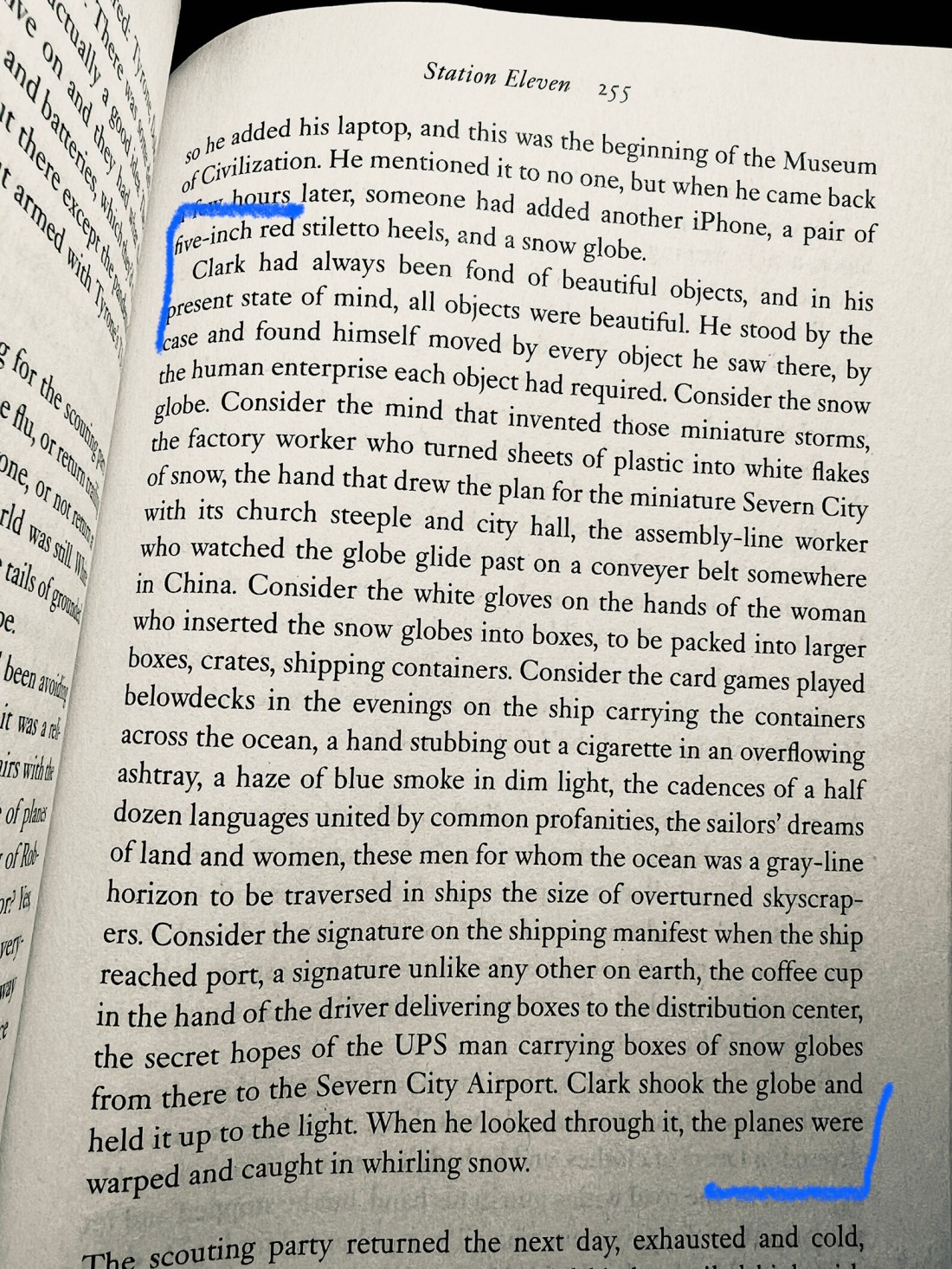
Emily St. John Mandel is an exquisite talent.
Searching for value
Emily St. John Mandel is an exquisite talent.
As in many professions, there is a continuing education requirement to maintain a real estate license in Minnesota. Today I learned a little more about sewer line scopes (fancy tech) and blockage (not nice). It was an informative hour hosted by an inspector who knows a lot about the physical aspects of homes.
Over the years various piping products have been used for sewer lines. Old is replaced by new usually for higher durability at lower cost. But what triggers the upgrade?

Older cities struggle with this question as no one wants to leakage to seep out of cracking pipes and into the ground a half of a dozen feet below the grassy lawns. Some cities have tried to encourage voluntary assessment and replacement through public messaging. I’m told this isn’t effective. The excavation expense of replacement is quite costly, ranging at a similar price point of a new roof. (And by that comparison it’s a bargain as the waste line, which runs from the exit point of the home to the street main drain connection, typically has a lifespan of 70-90 years. A roof, maybe 25.)
But as is often the case with shared property, everyone wants to be on the receiving end of the transaction and not the paying end. Residents, especially those who do not intend a long ownership period, feel like they are getting stuck with a cost that benefits many different parties over the infrastructure’s lifetime. To them, it makes more sense for a city to tackle the project section by section in the city, collect revenue, and perform the work for replacement.
The counterargument to that process is that sections of functional pipe will be replaced which is wasteful (no pun intended). Those who feel that a public bureaucracy is unable in its structure to obtain the best pricing see an inefficiency in performance here as well. Most of all, an across-the-board tax increase is always politically unpopular. The public pushes back. The project is kicked down the road. And aging pipes get wrecked by tree roots seeking out water and nutrients.
And this is why the point-of-sale solution is put into play. The party with the most to gain from a brand new piece of city infrastructure is a new buyer. A seller is required to comply in order to move forward with their plans. If they are unhappy with city council, oh well! They are out the door. This puts two parties to the transaction in favor of sewer scope inspections upon the sale of a property and one against. This is a positive momentum to get needed upgrades completed.
The downside is that there’s still considerable uncertainty to the extent of failing piping amongst the homes that do not go to market. Instead of a method which tackles the oldest first, the selected repairs are directed at those properties which happen to sell. And that’s not a very big number, maybe 4% of a city’s dwellings. It is also concerning that that it may be enough of an impediment to stop a seller from proceeding, which has negative effects in a market.
Still- it is interesting to note that by combining payment with interests, the likelyhood of infrasturcture repair increases.
These quantities (of commodities) vary continually, independently of the will, foresight and action of the producers. To them, their own social action takes the form of the action of objects, which rule the producers instead of being ruled by them. It requires a fully developed production of commodities before, from accumulated experience alone, the scientific conviction springs up, that all the different kinds of private labour, which are carried on independently of each other, and yet as spontaneously developed branches of the social division of labour, are continually being reduced to the quantitative proportions in which society requires them. And why? Because, in the midst of all the accidental and ever fluctuating exchange-relations between the products, the labour-time socially necessary for their production forcibly asserts itself like an over-riding law of Nature. The law of gravity thus asserts itself when a house falls about our ears. The determination of the magnitude of value by labour-time is therefore a secret, hidden under the apparent fluctuations in the relative values of commodities. Its discovery, while removing all appearance of mere accidentality from the determination of the magnitude of the values of products, yet in no way alters the mode in which that determination takes place.
Capital- Vol 1, Chapter 1 Commodities
How much work do group members have to put in to maintain the social structures that enable private exchanges? Seems like an interesting question.
We are pouring over Lavoie’s book Rivalry and Central Planning this month and it is a pleasant surprise that the text is gentle on the eyes. No squinting. No twisted eyebrows. He writes in a pleasant and forthright manner.

This page is worth reproducing as it overrides so much of what is taught in standard economics classes, the ones with the supply and demand curves settling sweetly on a set price. There is one price! And the consumer wants to know what it is. Yet…how do you tell them then that, it depends. On what? Well- one what is in the air at the moment of the transaction.
Markets exist in a fluid and dynamic system. Prices are representative of what has happened in the past. Thus they provide a guide to the future. But it is the participants of the moment who then again come to settle the new prices. And on it goes.
September has been showdown month between buyers and sellers. Not much is going under contract. I think most people expected mortgage interest rates to edge down due to the improving news on inflation. Then mid-month the Fed doubled down and rate went the other direction. They hit a 22 year high.
People are looking over their sholders trying to figure out where the recession is in this economy. People have jobs. Unemployment is low. Present home owners for the most part have equity which gives them flexibility to make decisions. The increases in food prices have taken a chunk out of people’s monthly budgets but that is easing off not escalating.
Higher rates do price some folks out of a purchase. But for the rest of the buyers out there, I anticipate they’ll get used to the new normal. At some point, the reason for wanting a different home will lure them into a decision. Hopefully, they will also appreciate that the bargaining power of having the upper hand. Because as soon as rates turn, there will be a new influx of competition for homes taking us back to the days of multiple offers.
I happened to be at the Minnetonka Government building getting my tabs renewed when I couldn’t help but swing into the library for a new read. I was looking for something easy and entertaining. Raymond Chandler came to mind and The High Window was sitting there nicely on the five-high shelving.
I’ve been a fan of Chandler since my twenties but am just getting around to figuring out why. First- he is a master at geographic descriptions. Not only in painting out the physical details but layering in thick colors to depict the social situation of the residents. There’s quite a long passage that I thought would be a bit much to reproduce here. So instead, here is how the author takes you to Idle Valley in just a few opening lines of chapter seventeen.
About twenty miles north of the pass a wide boulevard with flowering moss in the parkways turned towards the foothills. It ran for five blocks and died without a house in its entire length. From its end a curving asphalt road dove into the hills. This was Idle Valley.
The High Window by Raymond Chandler
The author’s real savoir-faire, however, is sliding in difficult valuations of social activity at just the right moment. Take his explanation to his haughty client, Mrs. Murdock, of the expense he would bear through mediating institutions should he keep her story to himself instead of coming clean to the police.
I got up and walked around my chair and sat down again. I leaned forward and took hold of my kneecaps and squeezed them until my knuckles glistened.
“The law, whatever it is, is a matter of give and take, Mrs. Murdock. Like most other things. Even if I had the legal right to stay clammed up- refuse to talk and got away with it once, that would be the end of my business. I’d be a guy marked for trouble. One way or another they would get me. I value your business, Mrs. Murdock, but not enough to cut my throat for you and bleed in your lap.”
She reached for her glass and emptied it.
It makes you wonder, as a reader, what came first for Raymond Chandler. Did he write the detective novels for the pleasure of his audience? Or did he write to lay out a landscape where he could fold in the types of ideas that stay with you and play in your head?

New York City is obliged to provide shelter to those in need due to the Callahan v. Carey consent decree created 42 years ago. Originally thought to act as a safety net catching a few transient men, it has ballooned into an enormous expense.
It eventually grew to a $2-billion-a-year industry housing all comers — and is likely to cost the city $4 billion this year and ahead, as long as influx of illegal immigrants doubles the shelter population.
New York Post
If all large cities floated the same offering, perhaps NYC wouldn’t feel the burden of this right to shelter. As it stands it, the city is particularly attractive to migrants.
Without question, the “right” is the central reason New York is spending far more per migrant than any other large city — nearly $40,000 a head here, vs. under $3,000 in Los Angeles and less than $7,000 in Chicago.

The mayor of the Big Apple is rightly going to adjust the benefits flowing out of the city coffers. As situations change, as population groups change, as the intentions for the support changes, government has an obligation to reassess the overall distribution of funds versus obligations.
The scenario is also a reminder that public funds, through programs, create a market. If one city creates laws to favor certain population groups, these groups will show up. In creating a new law, the intent might only be to help the few in town who clearly have a need. But once it is established as a formal offering, others are bound to migrate, incentivized by the above market public program.
Anthony de Jasay’s book The State may be his most recognized work, but it is not an easy read. So I went looking for more material to get a quicker fix on what he is all about. About twenty years ago he wrote about his house and his dog. It was a way to point out that the household members have a special claim on the home that outsiders do not. I like to think that the contenance and use of the home is a public good to its residents, dogs included.
De Jasay goes a step further to point out that others could possibly have claims to the home based on the neighborhood activities. The firefighters provide safety and the city infrastructure pipe in water and pipe out waste. Here again we have public goods being provided but instead of the line for insiders and outsiders being at the exterior walls of the home they are in a ring around the city or suburb or municipality.
More thought is needed fully to unravel the question of who owns your house, and indeed the question of who owns anything. If there were no fire brigade, the whole street might have burned down and your house would no longer stand. The fire brigade has contributed something to its value, and some figure ought to be put against their name. The utilities should not be forgotten, for how would you like to live in a house without running water, electricity and so forth? Some tentative numbers had better be credited to them. Surely, however, you cannot just ignore the builder who erected the house, the lumberman, the brick factory, the cement works and all the other suppliers without whom the builder could not have erected it. They too must have their contribution recognized, even if it must be done in a rough-and ready fashion.
But the best part of what de Jasay has to say is that the settling of accounts occurs at time of transaction.
Once this is understood, we can move on to the major point. All contributions of others to the building of your house have been paid for at each link in the chain of production. All current contributions to its maintenance and security are likewise being paid for. Value has been and is being given for value received, even though the “value” is not always money and goods, but may sometimes be affection, loyalty or the discharge of duty. In the exchange relation, a giver is also a recipient, and of course vice versa.

If you lived through the 80’s you will appreciate the references to a decade slowly sliding out of sight of the rearview mirror. Both Affleck and Damon came of age in this decade and it’s as if they sat around and brainstormed a long list of all their memories and refused to leave one out. The nostalgia was appreciated by this viewer. Along the same vein is the pleasure of being filled in on the back story of the cosmic celebrity launch of Michael Jordan’s career.
The prize for most charismatic performance goes to Chris Tucker who plays a co-worker, Howard White, at Nike. His vocabulary and gestures are emphatic without excess. He is really entertaining and effective. He interfaces with a lot of the athletes’ families and, along with Viola Davis, does justice to the racial component of the times.
There is a lot of fun economic type of stuff in this film. The blind bidding for example. All the players want to know what the other parties are up to. They ferret around for information. Then they return to their own base and try to get the team on board. There’s a lot of disbelief and eye-rolling. Can it be true? No not that much! Blind bids are hard on buyers. They have one shot at being the winner, so they want to push the price without reaching for more than they need to.
The relationship side(s) to deal-making runs throughout the movie. The agent to the athlete. The company’s closer to the sports agent. The talent scout to the CEO. This has been played out on the big screen before and doesn’t cover new ground as much as meter out all the different angles and ties and degrees of trust.
Matt Damain’s character Sonny wins over the Jordans through action, not words. He shows up at their doorstep, risking his job and position in the field, to demonstrate his belief in the lanky, composed, freshman. Through his knowledge of all the past games he shows he’s put in the time to understand the players’ game. In fact, it is by pointing out to Deloris Jordan that the competing companies are all words and not action that he builds her trust.
A lot of people talk about trust as if it is something that appears or can be bestowed. But trust is the result of seeing how people act and then basing an expectation of the future on the actions of the past.
The National Association of Realtors has been around for more than 100 years. Three of the founding boards were in Minnesota: Minneapolis, St. Paul and Duluth.
The National Association of REALTORS® was founded as the National Association of Real Estate Exchanges on May 12, 1908 in Chicago. With 120 founding members, 19 Boards, and one state association, the National Association of Real Estate Exchanges’ objective was “to unite the real estate men of America for the purpose of effectively exerting a combined influence upon matters affecting real estate interests.”
Before this professional organization coined the word, Realtor, the people who helped facilitate the buying and selling of real property were called land agents and then real estate agents. They pop up as characters in books like the ones written by Ivan Doig about settling Montana.
NAR sets and maintains standards for the industry which brings unity to the profession. Today there are more than 1.5 million members nationwide making it the largest trades union in the country.
When Zillow launched its website in 2006 many predicted the demise of the Realtor position in the transaction. Everything would occur online! Look at the home, contact a lender, order the title work, and close on the property without viewing it! Done. This narrative permeated the market for at least ten years before it started to ebb ever so slightly.
It has now been 17 years since the entry of big tech into the real estate business and Zillow is still losing money. In 2022 real estate disrupter lost $101 million. I don’t know how venture capital works, but where does all this money come from to float unprofitable companies for decades?
The long and the short of it is that Realtors are still out helping buyers and sellers come together and make a trade. The job really hasn’t changed in any substantial way since 2006, except that advertising occurs via the web instead of print media. There are a variety of arrangements available to clients from basic services to full service. Perhaps ironically, since the age of social media, there has been a shift away from for sale by owners.
It’s pretty clear that there is a place in the market for this type of work. If you’ve had a poor experience in the past maybe the solution is to take a little extra time in selecting your realtor next time around. There are as many styles and personalities in the business as there are clients. You just need to find the right match.

In Chapter six he refers only briefly to the term (in quotes): revealed preference.

I didn’t realize Samuelson’s thing was math.
It has been decades since I’ve heard talk of contract-for-deeds. But lately, in-office meetings, or out working on transactions, people are proposing this seller means of financing as a way to put a transaction together.
I suppose favorable interest rates have kept private parties out of the financing business for the last dozen years or so. With mortgage rates at new highs, there is an opportunity for investors to pick up a decent return, even with the risk of getting the house back.
Years ago they were used not only for people who were unable to qualify for a conventional loan but also for timing purposes. A retiree liked the idea of selling on a contract and receiving quarterly land payments. That way their tax burden was spread out over time instead of boosting their obligation all in one year.
Overall most consumers seem to prefer the impersonal interaction of working with a commercial lender. But when a need arises, it’s nice that entrepreneurial responses crop up and fill in the gaps.
In theory, consumers are meant to have knowledge about the products they are comparing. This knowledge helps them evaluate not only the object or service but other features such as reliability, consistency, or quality. On straightforward goods which are frequently consumed, this maybe reasonable. McDonalds’ success is in part due to the franchise’s ability for a consistent product.
But many services, in particular, are not so easy to evaluate.
Take the example of obtaining a mortgage. There is a spectrum of providers from online folks like Rocket Mortgage, to brokers who place loans with investors, to in-house lenders at the national banks. And each of these outfits advertize slightly different pricing.
Consumers often check with a couple and select the one with the lowest fees and rates. But do they have full knowledge of what they are buying? Without understanding the process of collecting information, verifying the financial information, submitting the documentation through the underwriting process, and tackling any bumps along the way, the consumer may not be able to interview the service provider to understand if they can complete the task with the proficiency needed for their particular situation.
The front-end people who are mainly responsible for pulling customers into the process are likely to answer affirmatively about their capabilities and performance. Underwriting guidelines can be vigorous. If you need something to fill your time, have a look at HUD’s handbook on FHA loans. The logistics of the underwriting process is not the only step in the chain of events that leads to a successful home purchase closing. There are appraisers, processors, and title closers who also have a hand in making the mortgage possible.
A successful loan officer plays a supervising role over all these functions.
Professor Glenn Mueller gave an interesting PowerPoint at our company-wide meeting this morning. He monitors five different real estate types as they cycle through the business cycle. He shows the results for 54 US metro areas.
You can view the full report and an explanation of his theory here.

A few days ago I wrote about how snow shoveling the public sidewalks fits well into a polycentric model. Instead of one provider of snow removal for the whole city, having each residence responsible for their own removal will best use public resources. Inevitably there are situations when residents cannot shovel, but in these events, neighbors cluster together and work out arrangements or help each other out. Using local labor saves administrative overhead of filtering the work through a bureaucracy.
What about trash removal? It feels the same. Each resident needs a service at their curbside.
There are debates across city council meetings about whether their city should take charge of trash removal or allow various sanitation services to compete for the business of each household. The former is usually desired by those who feel the extra truck traffic through the neighborhoods causes wear and tear on the roads. The latter feels that competition will keep downward pressure on pricing and allow residents to purchase the extent of service they desire.
This routine neighborhood service differs from snow removal primarily in the fact that residents can’t dispose of the garbage themselves. Nor can they assist a neighbor in the task. There is no reserve of voluntary labor tucked under the rooftops for the dispensation of Hefty bags tied at the rim. In the disposal of waste, the choices are either to purchase a private provider or take charge of it through the city offices. So a polycentric model is not useful here.

As to whether to go private or public on this one, there are benefits to both. A large city can provide many extra services such as large item removal, one-time cleanout pick-ups, that are helpful to those who don’t have means a transport for such things. Thus centralized garbage pickup with additional services is particularly beneficial in areas of a significant rental population.
The University of Wisconsin-Madison is a popular choice for ambitious students from the Twin Cities. The campus is situated on scenic Mendota Lake and the town of Madison provides a fair amount of diversion. The school has a strong reputation and graduates often go on to lucrative careers in Chicago. We toured the school not too long ago.

But my son was to be a Gopher not a Badger.
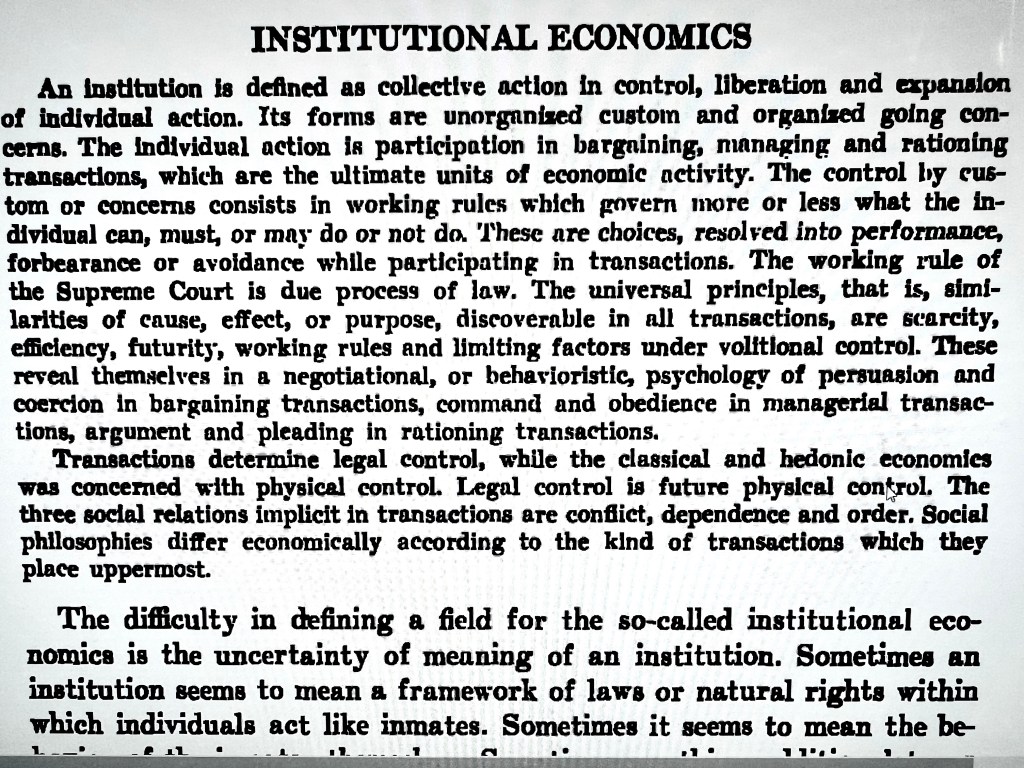
What I didn’t know at the time was that UW was the academic home to economics professor and institutional economics pioneer John R Commons for nearly thirty years. I’ve never been satisfied with the definition of of institutions as the sum of rules, laws and norms. As it turns out neither was Commons. He provides this helpful narrowing of the idea in a paper called Instituational Economics published in 1931 in the American Economic Review, Vol 21.
So many times when consumers think they are getting ‘ripped off’ it’s really a matter of not understanding the process.
Chey Cab owns a limo service in the twin cities and she describes below why it is best to book a car for the whole evening to go to the Taylor Swift concert than to book a ride to the venue and a return cab home.
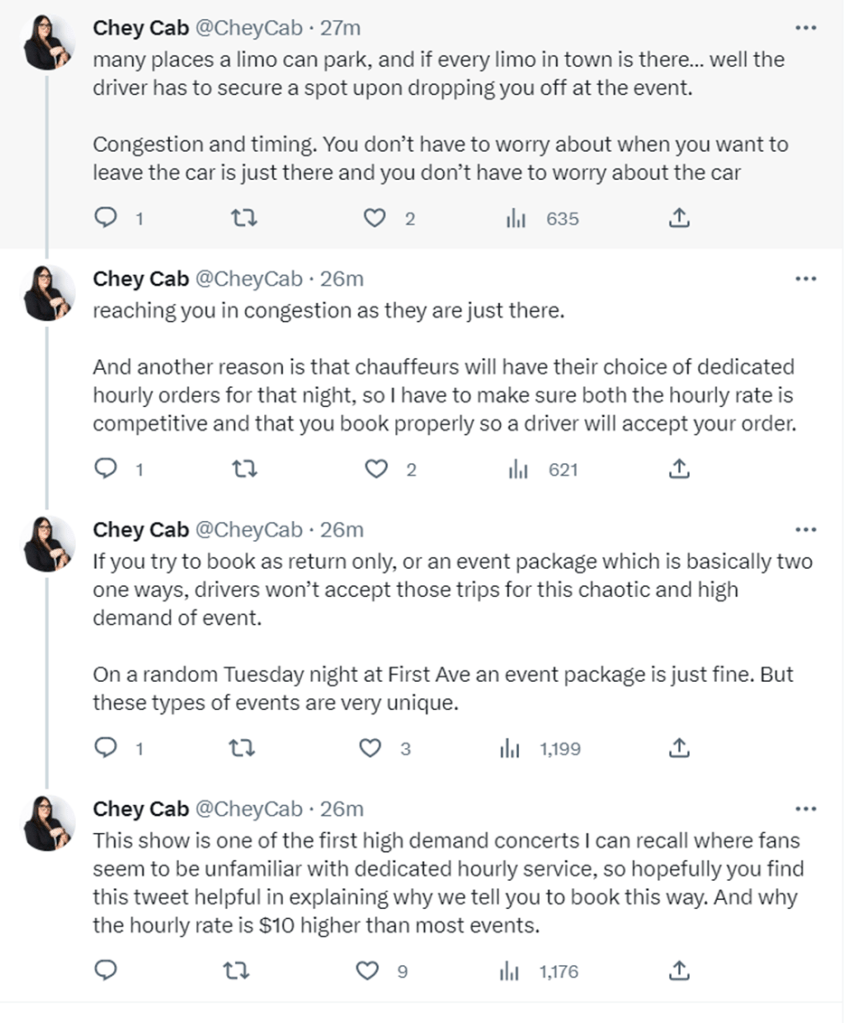
The consumer may think they are being taken for a ride (excuse the pun) when told they must book for the entire evening. They probably haven’t thought through the extent of the congestion when a megastar like Taylor Swift shows up in town. Nor have knowledge about other events happening that same weekend like the Pride Festival which is estimating an audience of 600,000. Outsiders often do not have full knowledge of the process.
Having been stuck downtown following the Aquatenial Target Fireworks display, I can vouch for the congestion following a major event. The traffic creeps one merge at a time.
The best way to be able to discover the ins and outs of the service you are requesting is to talk to several vendors. It usually becomes clear what is involved. And if they are free to enter and exit the market, the pricing they are quoting reflects the best options they can offer the consumer. Before hollaring greed or predatory pricing, check out the process.
Talk about confusing sets of interests. The secretary of the interior, Deb Haaland, who is of Native American heritage, was told to ‘go home,’ (presumably to DC) when she returned to her native state of New Mexico yesterday.
But her return to Chaco Culture National Historical Park on Sunday was derailed when a group of Navajo landowners blocked the road, upset with the Biden administration’s recent decision to enshrine for the next 20 years what previously had been an informal 10-mile (16-kilometer) buffer around the World Heritage site.
US News
Her ethnicity is meant to guarantee that the interests of her tribe are held in the highest regard in the nation’s capital. But it appears that social connections have taken a back seat to the power players of the political process. Those in control of her day job in DC want to favor the environmentalists with a land grab.
The landowners and Navajo leaders have said Haaland and the Biden administration ignored efforts to reach a compromise that would have established a smaller buffer to protect cultural sites while keeping intact the viability of tribal land and private Navajo-owned parcels for future development.
I thought affirmative action was meant to help minority groups by offering a figurehead to look up to. But when affirmative action advances political objectives of another sort, then its days as an interventionist strategy are most probably numbered.
The struggle over property rights is an economic story.
Navajo President Buu Nygren said in a statement issued Thursday that the weekend celebration was disappointing and disrespectful. It should have been cancelled, he said.
“The financial and economic losses that are impacting many Navajo families as a result of the secretary’s recent land withdrawal are nothing to celebrate,” Nygren said. “As leaders of the Navajo Nation, we support the Navajo allottees who oppose the withdrawal of these public lands.”
In this balancing act of heritage sites for posterity versus private property rights, the cultural argument proposed to be weighted more heavily. Yet if the true objective is property control to prohibit oil extraction, then it’s hard not to be cynical about claoking the issue in Native American garb and revisiting a sensitive part of American history to make a power play.

In this documentary with Cint Eastwood and Ray Charles, the pianist explains how he got his start. When he was about three, he followed the sound of boogie woogie music to a local musician named Wylie Pitman playing on an upright piano at the Red Wing Cafe. Instead of telling the toddler to run and play, Wylie spent time with the young Ray and taught him bit by bit. Hear Ray Charles tell the story around min 6.
It’s hard to imagine what the world of music would have lost if Wylie Pitman had ignored the youth. As explained in the clip, the elder took time away from his own practice to nurture the talent of the youth. For nothing. It’s a miracle that the right person appeared at the right time to mentor a wayward youth.
The transaction of his time and talent isn’t something that could be predicted. It was a spontaneous response in the moment. And, as the story is told, it was tied to the level of interest the benefactor of his lessons was exhibiting. The first rule of social support is that you can’t know how much will be given until the need is revealed.
The second rule of social support is that you only need one. The whole group doesn’t need to be taxed. When the right support meets the right benefactor then the delivery of services occurs on that level. Only one person is needed to call in a crime happening on the street. Only one person is needed to make sure the kid who’s being bullied gets home from school safely. If people offer just-in-time support, then resources are used most efficiently.
It only took Wylie Pitman to step up in the moment and deliver the megastar Ray Charles to music history.

I think it was on Twitter today that someone said that using a social contract as an argument was a cop-out. But using efficiency as an argument was valid as it required an explanation of how the optimal outcome was being achieved. Somehow efficiency is tied to numbers and not norms, so it’s more difficult to spell out.
If you want to claim a social contract, though, I think you have to show who is involved in the contract and how it’s unfolding. People always talk in broad strokes- crime is up! crime is down! Sweeping statements are not very useful as within the purview of the speaker there are more then likely people who are isolated from crime even if crime is rising, and those who continue to experience crime even when a generalist can legitimately claim crime is down.
So the first hurdle in the usage of social contract as an explanation is to be able to isolate the groups held to the agreement. Who are the givers, and who are the benefactors? And besides the two to the party, there are a more general group of observers, or what I like to call the audience.
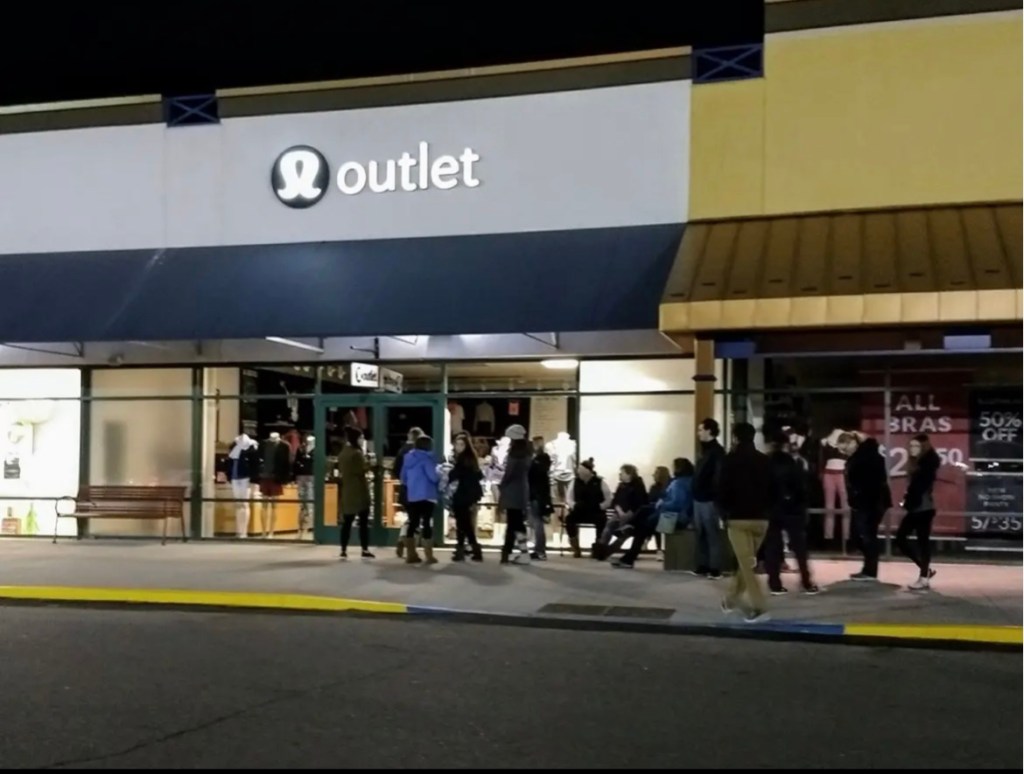
The CEO of LuluLemon recently made a show of a social contract when a handful of youths shoplifted from one of the retail stores. The benefactor from this leader’s contract of people of property were the shoplifters who faced no charges of breaking the law. The losers in this arrangement were the employees who lost their jobs as they were fulfilling the social contract they had been raised with, theft is bad and should be reported, instead of the social contract supported in a LuluLemon employee manual. The audience is the rest of us judging these interactions and evaluating how we would act should this scenario present itself.
If one is looking for efficiencies, one would have to take a closer look at the intersection of the employee’s behavior visa vie the CEO’s. If employee policy is so counter-intuitive to pre-existing social arrangements, ones that have been trained and maintained with most people since childhood, will it be efficient to expect the average worker to go against such impulses and look the other way at blatant theft? It seems there will be a brewing of backlash- or those pesky unintended consequenses.
On the other hand, if the store decides to hire a host of people who can easily ignore stealing and have no issues with criminal activity, then perhaps the social contracts between the CEO, gangster youth, and employee will be groovy. Except….if your employees feel it’s legit to operate as crooks, eventually they’ll be stealing from you themselves. And that truly can’t be very efficient.
You see, arguing optimal outcomes using social contracts requires some persuasion.
I have to say I’m one of those people who still send in payments in check form via the good old USPS. I figure the fewer people who have my credit card or debit card number the better. Why not send in a paper check and use it as a receipt in with your monthly bills?
A week or so ago I ran an errand at a neighborhood hardware store in a strip mall. An elderly woman with erratic grey hair was taken off guard when the young man, still sporting a black mask, asked her to wait while he called over the manager to approve her check. Besides telling him he can’t be understood when his mouth was covered. she gave him an earful about the approval process- you see she had been using checks at the store for decades.
The manager listened patiently while she tiraded about taking her business else, then watched her take her two items and use a cane to leave the store. But didn’t she just save them 3 percent of her purchase by writing out the check with her name and address typed neatly in the top left hand corner?
I was given the choice of paying a reduced rate by my window washers if I paid with cash or check. The savings came to $7.50. In a way it’s surprising more companies don’t offer the discount. On the other hand, the small time vendors, like estate sales folks, add the extra 3% if a buyer chooses to pay by card instead of check. This holds true for property tax payments at the county as well. If you pay with a card, plan to add on the surcharge.
I use the paper drafts out of habit and reluctance to give up the paper. But it seems as soon as you think a paper mode will vanish (think bookstores) there’s a return to the good old days.
On our walk yesterday we caught a crew doing some aerial work. A helicopter transported a worker to a spot on the power lines to install a colorful ball, presumably for visibility. Dealing with heights, leaning out of a moving aircraft, and touching power lines isn’t an everyday activity. Some people might like the adrenalin of it all, but most would agree that this job deserves bonus pay.
Activists like to paint a simple picture. There are rich people, think corporate types, who are greedy and make a bundle. Then there is a mass of inadequately, poorly treated people who don’t earn enough to pay their bills. With only two groups to consider, it’s an easy call to impose taxes on the former in order to strategically (there are incentives for e-bikes!) tranfer money to the later.
The thing is, life isn’t that simple. There are hundreds if not thousands of jobs that deserve more pay because only a few people are crazy enough to ride helicopters up to power lines. These guys still wear steel-toed shoes and most likely hang out at the same water holes as the rest of the crew. They are not greedy. They found a special talent- and thank goodness for that because we all benefit from the colorful balls which keep the lines up and running.

The political types down at the state capital are scrambling to finish the bills they want signed before the end of session. One such document involves a mandate for hospitals to form boards of nurses who in some way dictate the required staff levels in Minnesota hospitals. The largest hospital in MN, and most famous, said not so fast. Mayo Clinic threatened to take a sizable investment elsewhere should this come to be.
Last week, I predicted here that this wrinkle would be ironed out.
But what’s interesting is the justification that the speaker of the house used to explain why Mayo is getting a carve-out in the bill. In an interview yesterday Hortman tells Esme Murphy that the hospital operates at a different level than others in the state as they cater to famous dignitaries from around the world. The implication is that the demands of competing worldwide for care are a valid substitute for regulatory intrusion from a board of nurses.
I wish this type of platter identification (the medical provision at a worldwide level, versus a metro level, versus an outstate level, to give a few possible divisions) was used more widely in the analysis and provision of public goods.
In all seriousness, the price of chicken at the grocery has returned to pre-Covid levels.

I’m really having a hard time with the math behind current policies around daycare. If you’ve ever paid for care so you can work a forty-hour week, you know it’s a bundle. Yet there’s a push to have care workers unionize because they are paid too little, making that bundle turn into a load. And to divert that from circling back to being a burden on the working mother there will be a credit for the child which will come out of some tax to the people. Which all sounds like a double surcharge in administrative fees so someone else can care for a child of another who is paid a similar wage, all of whom are deemed to be paid too little.

One of the main reasons buyers make large down payments it to get lower mortgage rates. With this new rule, buyers now have an incentive to make lower down payments. Plus, its easy to screw up your credit score to qualify for a lower rate. So it's taxpayers who'll foot the bill.
Originally tweeted by Peter Schiff (@PeterSchiff) on April 20, 2023.
Note: I think there is a role for government mortgage provision. But playing with a pricing system which affects everyone in order to help a pocket of people with poor credit shows incredible hubris. Plus it will make everyone worse off simply so some people can feel like the are doing something.

A lot apparently. Common sense values, health care, and clean energy have morphing definitions depending on whose lips they leave. Welfare was meant to describe the well-being of the citizenry. But then it became associated with the assistance paid to the poor. The word was further tainted by derogatory titles like Welfare Queen.
Welfare was meant to evaluate how well a group would end up after a selection of choices. Ceratinly the idea behind the war on poverty in the 1960s had its roots in increasing welfare, particularly to the most disadvantaged. Monthly subsidies were an answer. Yet.
In the United States, “aid to children,” or “relief” had become Aid to Families with Dependent Children, and then the comfortingly opaque acronym, AFDC. In the 1960s AFDC was usually called “welfare,” but to many of the recipients, the very name felt like a bad joke. “Welfare means health, comfort, and happiness,” as Johnnie Tillmon, a mother who received welfare payments, put it in 1969, “and we on welfare don’t have none of that.” Policy makers on both sides of the Atlantic felt the hypocrisy of the name shifts, and sometimes insisted, purely for honesty’s sake, on applying the old labels.
Great Society- A New History, by Amity Shlaes
Financial measures are a necessary component to getting people back on their feet. But to be well means to have good health, to exercise, to pursue a vocation, to eat well, to sleep in peace, and to be able to provide the same to those who depend on you. I think what is called wrap-around services is now in place to address provisions to some of these other forms of well-being.
But the word welfare will forever carry negative connotations.
In this working paper, Sherwin Rosen suggests that workers purchase non-pecuniary attributes when they agree to be hired.
THE EQUILIBRIUM APPROACH to LABOR MARKETS
II. The Theory of Equalizing Differences
The theory of equalizing differences is fundamentally a theory of valuation of job attributes. In this account I specialize the job attribute to a consumption item, so the problem is basically one of a tie—in in which the worker sells the services of his labor but simultaneously purchases the characteristics of his job, viewed as on—the—job consumption. In this model work attributes are fixed for a given work situation, but vary from job to job. The basic problem is to match each worker’s preferences for on—the—job consumption versus market consumption to the proper work attribute; that is to say, to assign each worker to a firm which offers the desired job characteristics.
The first non-pecuniary attribute used as an example is dirty versus clean work- meaning the environment of the workplace. The next centers around safety. The next equal treatment dispite racial background. Of course education lines up with this set. Workers are paying for a menu of public goods.
Two new apps have come in handy in the last year.
WhatsApp is a texting mechanism with the option for video calling. It works really well internationally.
Splitwise helps keep track of bills being split between multiple parties. It was super helpful on the trip to London.


The Dem trifecta in Minnesota’s state offices is leading to a flurry of bills being passed. The latest is free school lunch for all k-12 students. A well-posed media shot of the Governor being body-embraced by a cluster of elementary school kids is as tart as an artificial sweetener.
We know the school kids aren’t banging down the doors for a bureaucratic response to their midday meal, so who’s asking for this culinary delight? The neediest kids were already receiving free breakfast and lunch at their public schools. From what I can follow on social media, the desireability of universal provision of food will first off not necessitate the requirement of some to ‘ask’ for a meal through the paperwork. And secondly, it will catch the kids whose parents fail to fill out the paperwork.
MN is a pretty well-off state. The poverty rate for children is 12%. From personal experience, I can attest that well over 12% of school kids are receiving free and reduced lunch. In other words, there was already a largesse to feeding the kids. Yet- to look at the celebration in St. Paul one would think this is a breakthrough of some sort.
Some politicians are asking for the ground rules on when and how the government should take from some and give to others. A new legislator, Walter Hudson, from an NW exurban area posted this recently.
It seems like a legitimate question.
Although everyone can feel good about putting food in the mouths of babes, if those babes don’t need the food more than some other babes need mental health assistance, housing, or some other basic need, then the tradeoffs determined by politicians are failing the system.
There’s a deeper answer to Hudson’s question. Where in the interlinked transactions of public dollars flowing to private citizens can we identify comparative needs? Where do we see the production value of public dollars invested?

It’s rather perplexing how the liberals feel about landlords. If in doubt check out this new round of rules and fees being proposed at the Minnesota Legislature.
The bill would also restrict landlord entry and apply fees to landlords for subsequent violations. It was approved and referred to the House Judiciary Finance and Civil Law Committee.
The bill offers few exceptions while outlining well-defined penalties.
The types of fees that would be banned include those for move-in, move-out, vague administration practices, lease processing, amenity and access to rental portals.
“HF315 would prohibit those non-optional fees for non-optional services,” said Rachael Sterling, a housing attorney at HOME Line.
“This is different from a pet fee or parking fee a tenant can elect to add to their monthly costs,” she said.
Violators would pay either three times the amount of each unenforceable fee or $500, whichever is greater. In addition, the court could award reasonable attorney fees to tenants.
Landlords entering residential properties could be limited to a four-hour window between 8 a.m. and 8 p.m. and be required to give at least 24-hour notice. Instead of a civil penalty of $100, minimum penalties would have to match or exceed one month’s rent and reasonable attorney’s fees.
MN House
Are there really that many landlords entering units before 8am and after 8pm? Because it seems to me that most business people would prefer to be at home during these hours. The move-in move-out fees could be reflective of a condo building’s rules to charge accordingly. But I’m splitting hairs.
In the bigger scheme of things, I’m just not sure why progressives don’t jump into the rental business, buy some buildings and rent them out? Every time there is a market downturn I hope that one of these groups sweeps up a bunch of properties and rents them out.

You’ve probably been trapped in a regretful conversation. One where there’s a dominant voice (usually male) telling everyone how he saw this stock as an up-and-comer or that business venture as a sure thing. Blaghty blagh blagh. The way the words drop out of his mouth, he should be a highflyer. But alas no. Despite the wealth of information he is willing to impart about the market, he never actually makes a move and puts his money on the table.
And then you have the travel bug. Oh- you should really go sailing amongst the Greek Isles and watch the sunset between Ionian columns. Or go kayaking in the Galapagos; snorkeling on the Great Barrier Reef, or horseback riding on a dude ranch in Wyoming! Come to find out, the travel bug never leaves the the winged back chair by the bay window in her living room. This wealth of information has yet to be experienced.
In the real estate business, everyone wants to anti up their advice to the prospective buyer or seller. At the job, their coworkers share all their experiences with ardent fervor- yet they moved over ten years ago. The neighbors warn the clients to look for this and be careful of that because the last time they were involved in a real estate transaction those were the going concerns.
As much as information gathering is part of the process of buying or selling a home, this type of chit chat is only vaguely helpful. The knowledge that guides a market participant to a successful outcome is obtained from parties, such as themselves, who are in an imminent position to complete a transaction. Those willing to pay have processed the particulars of their present market and thus have pertinent knowledge.
Never run half of a couple out to homes. Both will be making the final decision, hence both have to churn through the process.
It’s usually the woman. She has all the energy and ambition to drive around to eight homes over a two-and-a-half-hour window and consider their features. And then the spouse says that this suits him fine as she’ll make most of the calls. But this is almost always not true.
Both parties have their thing. One may care about the size of the center island and whether there is a pantry, but the other will absolutely not budge on the size of the lot. By looking at homes without a generous amount of verdure, Mrs. Buyer is getting a false sense of her choices. By disregarding one of the couple’s requirements, improper knowledge is gathered.
New realtor, do not be fooled! Mr. Buyer must join the hunt. In addition to holding some firm, albeit limited, requirements his impact on the decision is significant. Moreover, the process of looking, evaluating, of seeing which homes sell and which ones drag on the market creates an internal registry of pricing. People will not sign their names to one of the largest purchases of their lives without a sense of price.
So what I’m really saying to those of you just joining the profession, is that where a couple is concerned, the decision maker is the couple. It is not the addition of buyer one and buyer two. Through the discovery process of finding their new home, both individuals will find out their partner’s preferences as well as their own. And the final decision will include some combination of compromises between the two.


When you meet with a seller to talk about selling their home they are always keen to find out your opinion of the price of their home. The price is straightforward. The price is simple. But price alone lacks depth and understanding of the marketing process. More importantly, understanding the process leads a seller to gain a stronger price from the market.
I showed this home today. If you are not from the area, especially if you live across the world somewhere, you may not appreciate the updated fixtures found in these photos. The home is thirty-four years old which means it has hit a threshold for many if not all cosmetic finishes as well as most all of the mechanicals. For instance, the windows and siding have been redone. This project is a sizeable expense. This home also has a new kitchen and all the baths have been updated.

Nicely appointed homes will attract a large pool of buyers. This is favorable for a seller as more demand for property results in the best financial outcome. Hence the process of prepping a home for sale includes tackling refinishing hardwood floors, replacing ugly old appliances, and verifying the mechanicals are tuned and humming. Often couples get into a tussle about how much take on. One is watching the checkbook and shaking their head to and fro. The other is nodding yes, yes, yes. Can you over-improve? Definitely.
The home above has been improved to the point of reaching the highest segment of price in comparison to their nearby neighbors. The market may give the seller the best price in the neighborhood without giving the seller the price necessary to cover the expense of the updates. In other words some renovations result in a bigger bang for your buck upon sale.
Paying attention to the condition of the structure of a home before going to market is just one aspect of the process of marketing a property. Other angles also affect the final price the seller pockets at the time of closing.
I had to call a buyer this evening and tell them theirs wasn’t the winning bid on a house. It’s never fun to be the one to deliver the news that pulls the plug on all the plans they’ve been dreaming up.
Bidding on a home is just one of the steps toward market discovery. The stages might start innocently enough by browsing real estate sites during a slow time at work. Even though this low-touch method provides limited information, some bigger-picture decisions may start to formulate. Such as the realization that certain areas are simply too expensive, or others are too far from work.
Next buyers get in their cars and go tour homes during open houses. Or sometimes they start right away by meeting a realtor at properties. This step is more structured as basic parameters have been set both in the physical nature of the home but also in price. As the process continues, a third decision criterion emerges. It concerns the number of repairs or upgrades the buyers are willing to take on.
At some point, the buyer will find a home that interests them enough to make an offer. If they are the sole bidder then the discovery only involves the expectations of the seller. If there are multiple bids on the property, such as in this recent situation, then the offer process is much more thorny. Being the highest offer can be a means of winning the house but not necessarily. Terms matter as well.
In this case, there were eight bids in total. Usually, at this level of interest, at least one party that goes for broke, bidding high and giving up the inspection contingency. This market participant requires a tolerance for higher risk. It’s by going through the process that buyers discover their tolerances for not only price but terms of the purchase. Or they adjust them to compete in the market.
In Massachusetts, criminals will be able to trade organs for a reduction in their days served.
Bill HD.3822, which would establish a “Bone Marrow and Organ Donation Program,” was introduced late last month by state Reps. Carlos González and Judith García, both Democrats. If successful, it would allow those incarcerated in the Massachusetts Department of Correction (DOC) to get their sentence reduced anywhere between 60 days and 12 months in exchange for their bodily offering, which may include a liver or kidney, among other vital body parts.
AOL
Trading body parts is a sensitive topic. Even though plenty of ill people could need these healthy replacements to survive, a kibosh is put on this activity in the marketplace of unfettered exchanges. No cash- but trade is acceptable. A chain of trades is set up for kidney match-making for example. It’s a slower process than money for product as a sequence of events between unrelated people needs to be coordinated.
Instead of trading between family members who need a transplant, in this story, the incarcerated can trade off their debt to society. Ideally, the donors would not only be looking for their early release but have some personal interest in supporting the exchange. The intrusive nature of a medical procedure imposes a cost that must be balanced in some way.
The following passage is from Hayek on Hayek, an autobiographical dialogue.
Qi: What is it about you that makes you feel comfortable with the British?
HAYEK: The strength of certain social conventions which make people understand what your needs are at the moment without mentioning them.
Qi: Can you give us an example?
HAYEK: The way you break off a conversation. You don’t say, “Oh, I’m sorry; I’m in a hurry.” You become slightly inattentive and evidently concerned with something else; you don’t need a word. Your partner will break off the conversation because he realizes without your saying so that you really want to do something else. No word need to be said about it. That’s in respect for the indirect indication that I don’t want to continue at the moment.
Qi: How would that differ in the United States? More direct?
HAYEK: Either he might force himself to listen too attentively, as if he were attentive, or he might just break off saying, “Oh, I beg your pardon, but I am in a hurry.” That would never happen–I can’t say never happen-but that is not the British way of doing it.
Qi: How does it differ from the Austrian?
HAYEK: There would be an effusion of polite expressions explaining that you are frightfully sorry, but in the present moment you can’t do it. You would talk at great length about it, while no word would be said about it in England at all.
In just a few words, the author of A Road to Surfdom contrasts the norms of three different cultures. He says he’s most at home amongst the British because he does not have to explain himself. He is understood.
Perhaps this comes across as trivial, but it is not. The implications of social traits and standards can have immediate financial consequences. Say a couple goes to a jewelry store to buy an engagement ring. Should the person behind the counter misread their prospect and act too haughty, or too economical, the couple could become offended and walk out. The shop looses a sale. Or say a very bright student tours a potential university. At every question, she is cut off and talked over. The school loses an excellent scholar.
What’s tricky about these judgments and rejections is the person behind the counter or leading the tour never receives the feedback. People simply walk away from these situations. They politely decline to interact. So the offenders of social rules never are brought up to speed, they are simply left behind.
There are a lot of well-spoken words in this podcast. The eloquent banter is reason enough to listen. But there’s more. The view into a variety of angles of a group within a group’s past, present, and future accomplishments are illuminated. The light shows fine variations in interpretations and perceptions.
Glenn comes in strong around the 19-minute mark. I like how he frames the issues because the template he presents could be superimposed over other groups. Feminists made claim to be the power players for all women. Some bureaucrats make the claim of saving lives through regulation. The information feedback loops are not coming from the group but from people more interested in harnessing self-aggrandizement.
And the explanation of how a citizen can be an active part of more than one collective action project, without being disloyal to either, is an important observation. One can be observant of history and yet move forward with the work of today. In fact, all the speakers are much more in tune with how to forge new paths for better outcomes than being tied down by a burdensome past.
I tried to capture an excerpt by having my phone transcribe the audio. There are a lot of gaps! But hopefully there is enough to give you a taste of their conversation.
The construction of collective goods in the welfare state or in or on behalf of defending the country against external threat people are called based upon the earth and connection to the country. We are American with meaning black Americans in the 21st-century, the descendants of those who had been enslaved and labored to become fully equal citizens there’s a story there I want my children. Among other stories, I don’t want that to be the final word. I don’t want that to be their defining will close adequate to the task at hand that we wear lightly not that we wear as a shroud that we wear with the ability to take it off and to stand outside but I don’t think yet even now in the year 2022 we can afford to give up the leverage and the power that Robert Woodson has leveraged on more than one occasion of getting people together, work on behalf of collective goals, like raising our children, maintaining order in our communities, and doing honor to the sacrifices of our ancestors.
An attempt at an excerpt using an iPhone recorder

I’m dabbling in the Selected Works of Cicero. This Roman was a gifted writer, statesman, lawyer, and orator from the first century BC. In his practical guide to how to live a good life, I like this quote:
But the field in which a man’s obligations are most liable to confusion is friendship. For if, on a friend’s behalf, you omit to do all that you properly could, that is to fail in an obligation; yet if you help him in some improper fashion, then that too is failure. However, this whole problem is governed by a short and simple rule. Apparent advantages for oneself, such as political success, wealth, sensual gratifica-tion, and so on, must never be given preference over friendship. On the other hand no man of integrity will, for the sake of a friend, act against his own country, or his honour, or his oath.
A Practical Code of Behavior: On Duties III, Cicero
In this short passage, he makes clear that the ties of friendship demand a preference for cooperative behavior versus extractive action. If you allow your friend to fail then you have failed. One is not to internalize “political success, wealth, sensual gratification” at the expense of friends. In this space of friendship, the interactions are reciprocal, carried out with loyalties over long periods of time.
However- other relations may supersede the obligation of friendship, and those are loyalties to ‘his own country, or his honour, or his oath.’ This leads us to understand that Cicero speaks of multiple public obligations. The ties to friends may compete with ties to the state or to one’s allegiance to another cause. From an inward-facing perspective, the relations are communal in nature, yet as an outward-looking collective, voila, the groups compete.
The competitive nature of private actors is understood. But when people come together with a common interest, that grouping also competes.
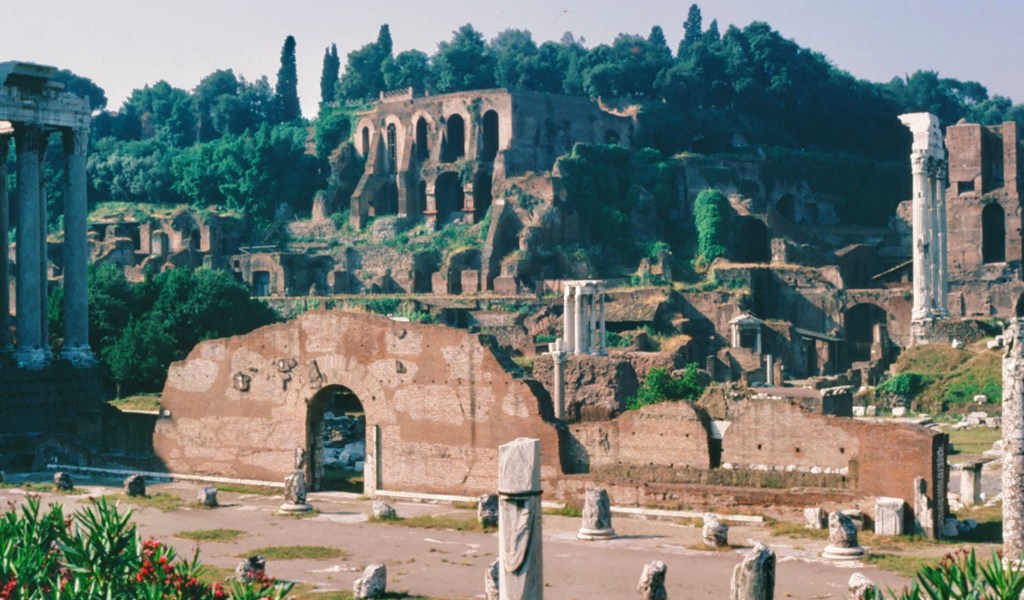

Our book club, NoDueDate, has been reading the historical novel Red Plenty, written by Francis Spufford. With well-documented historical references (which the reader can follow in the Notes at the end) the author details how a planned economy painfully fails its participants.
The following exchange occurs at the first business lunch between Chekuskin, a middle man between business and the black market, and a business executive. He’s explaining how his services may come in handy. But the naive Stepovoi points to the Soviet’s central Plan to verify his firm’s goods are all in the pipeline.
‘You’re right, you’re quite right. Indeed they do have to give you the goods. But when, that’s the question, isn’t it? You want them now, toot sweet, because your line is waiting; but why should they care? They’ve got a whole fistful of purchase orders to fill, this time of year, and why should they care about yours? What makes you so special that they should want to serve you first, or at least, serve you soon?’
Red Plenty, Chapter- Favours 1964
‘You do?’ said Stepovoi.
‘Correct, old son. But there’s a little more to it than that.
What Chekuskin illuminates in this brief conversation is that the terms of delivery are at least as important as having access to the goods. A manufacturer is hard-pressed to meet the Plan’s production goals if not adequately supplied with the inputs necessary to run their lines. Yet the bureaucracy has little incentive to respond promptly, to bow to the producers. The power to give and take lies within their books. The firms are at their mercy.
Some goods respond well to a network of supervision. Products that can cause bodily harm, such as drugs, benefit from bureaucratic supervision to ensure their safe consumption (the degree to which is of course always under debate!). People want to know the bridges they drive their cars across won’t collapse and that the food we eat at restaurants won’t give us food poisoning. These types of goods and services interface with the public to a degree that makes a bureaucratic overlay advantageous to the enjoyment of the products.
The widgets needed in the manufacturing example given in Spufford’s story are at the opposite end of the public versus private function gradient. The fixer, Chekuskin, is successful because the products he pushes here and there are completely interchangeable. They are not enhanced by a social overlay. They are fungible. And that is why they are ideal for a capitalist pricing system. Let the price procured from a dynamic trading system of all the suppliers and all the buyers at any point in time, and the resource will gravitate to where it is needed most.
Some goods tend toward the private, and some towards the public. But when they are forced into the wrong market, corruption inevitably occurs to allow an interface with a shadow market.

Raj Chetty of Havard University has done lots of research showing how a child’s outcome in life patterns after their parents and their neighborhood. He is not the first to note the effects between parents and their offspring. James S. Coleman also gained fame from tracking the human capital a parent bestows upon a child. This transference of resources more often than not germinates into flourishings of success throughout the child’s life.
What about in the other direction? If a person is corrupted in some way, do those flaws tie back to the parents? I don’t think I need research or data to make the claim that a kid from a tougher neighborhood has a harder time securing that first job. Employers will think twice before taking responsibility for an employee whose father, brother, or uncle has been in trouble with the law.
And then there are assumptions made when you turn over a whole bunch of your money to a perceived financial wiz kid. What portion of that decision was influenced by the fact that his parents are both attorneys with one of the most reputable universities in the world? Certainly, it must have played a part in calculated decisions to do business with a mere fledgling of a business person. The thought process goes something like, ‘they’d never let their own kid do something completely illegal, would they?’
No matter the exact portion of the impact on each of these economic actions: to hire, to invest. The point is that there is some numerical representation that pegs this social impact.

A few posts ago I used the example of a catalytic converter to distinguish between the use of an object and its function. This automotive accessory is used to remove particulates from emissions from the combustion exhaust. In 1975 it became a mandatory car feature and hence functioned as a political solution to pollution reduction.
Recently catalytic converters have been the target of local criminals who brazenly remove them from cars left out at night. Through a network exchange the stolen item is easily traded for cash. Fortunately there’s been a recent ‘takedown’ of nationwide catalytic converter theft ring included seizures in Minnesota.
The DOJ announced the successful operation on Wednesday, saying it is seeking the forfeiture of $545 million in the case, as well as the arrest and charging of 21 people from five states in connection with the scheme.
Bring me the News
The network across states allowed a teenager in the Twins Cities to swipe the apparatus, sell it to a fence who passed it along to “a trio of family members who ran an unlicensed business from their home in Sacramento, California, buying stolen catalytic converters from thieves and shipping them to an auto shop in New Jersey for processing.”
The number that I think would be interesting to know is how much the kid on the street is getting for breaking the law. What type of gain is needed for a youth to be tempted into illegal activity? All they give us is:
RXMechanic reports the scrap value of more valuable catalytic converters ranging from $300 and $1,500, with the DOJ saying that depending on the vehicle and the state, they can fetch around $1,000 on the black market.
The market price for youth conversion to criminal activity seems like a useful number. What share of that would be necessary to keep the kid on the right side of the law through some type of employment? Many argue that the lack of policing and consequences for illegal activity has also encouraged theft. But how do we know without keeping track of these numbers?
When a catalytic converter functions as unfettered cash to an urban teen, what is the buyout to preserve the innocence of youth?
There’s a debate in our household about hanging onto stuff. My husband feels that the stacks of clothing on the shelf in the walk-in closet may be useful one day. A pair of jeans is useful, for someone. But I argue that the dozen or so new pairs of pants purchased in the past decade leave the old ones out of date and ill-fitting. And thus the function of the neglected garment has changed. An old pair of Dockers no longer serves as the vehicle to looking business casual appropriate. It now serves as clutter, or dare I say garbage.
The use of an object is different than its function. If I can separate him from a few of his items, they then become a donation to Goodwill. They may serve as a tax deduction. And when Goodwill processes them and sells them they become income for the non-profit. The flow of ownership changes in this scenario is driven by the positive values at each trade. But functions can have negative values too. Clothing may be too torn, dirty, or tattered. Then the Goodwill would bare the expense of disposing of them (although this may not be the best example as I’ve heard there is a market for rags).
So to review, an object or good can have a use or several uses. A bench can be sat on, lied on, and stood on. Perhaps a skateboarder could even use it as a prop. In that case, the function of the bench is a skateboarder’s sliding support. Notice what happened. By focusing on the function, we’ve denoted a group of people who would use the object in this fashion. Now having skateboarders transform public spaces into skateparks is not always welcome. So we have another group of people who feel a loss by the transformation of a public space.
Voila! Tagging a function to an object delineates groups of people who trade for its use, depending on how its value affects them. We are shown the marketplace.
The rational man model is has been under attack for a while. Many have noted that what is rational becomes as slushy as ski hill in spring. Instead of shuffling all things non-rational (according to whom?) to a field of behavioral interpretation, let’s think about the essence of a transaction.
The marketplace is made up of trades. One individual or party commits labor or resources (or both) in exchange for something of value, often money. Where that settles is called the price. At that fixed point in time, at least two parties were able to come together and voluntarily agree to an exchange. The price is interesting because when people and parties repeat these activities more frequently when they can look to a history of price to feel reassured that they aren’t getting duped. Being called a fool is a significant deterrent to economic activity.
So it seems to me once there is a consistent (or statistically significant as the mathematicians like to say) price, there is a market.
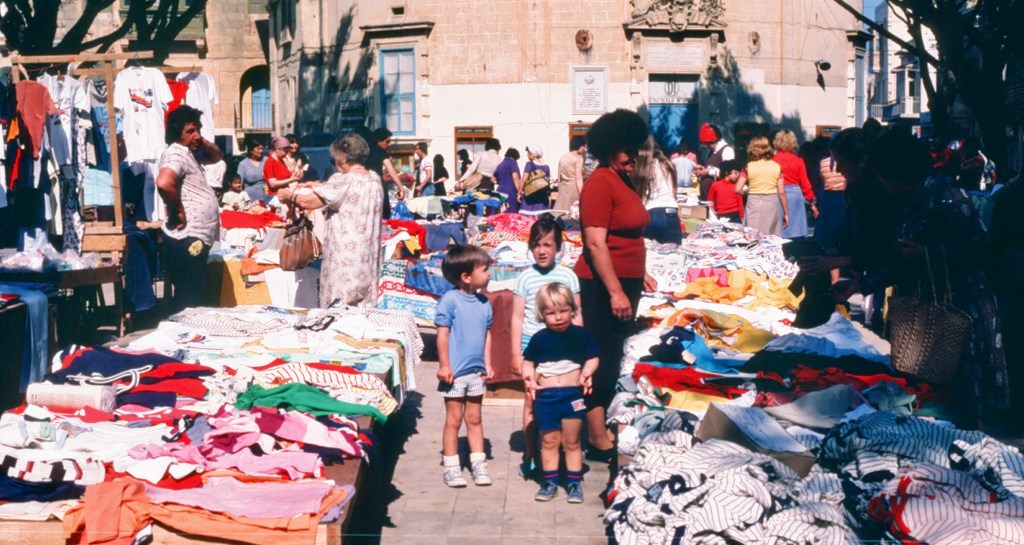
Markets refer to the grouping of people or parties who are able to participate in these deals. Before you think that is anyone who chooses to stroll into the central open air market in Marrakesh, consider that not everyone can get to town. And even some of the richest citizens of the world- US women- as early as forty years ago, did not have their own bank accounts, were not on the title of the homes where they raised their children, and had no personal wealth. Barriers to markets are eveywhere in many forms.
But back to the essence of a transaction. If you are lucky to travel abroad to that exotic marketplace with covered stalls and trays piled high with brightly colored spices, you will find that as a foreigner, the price to you is not the same as the price to the countryman. A tourist will pay a surcharge if you are deemed rich enough. When you buy girl scout cookies the surcharge is a donation to scouting programs. A purchaser of organic fruits and vegetables once expressed the surcharge as a tax he willingly paid to support the farmer’s efforts. The price for the spices in the market, the cookies, or the fruits is made up of two essences: the private market one and the social surcharge.
What about the other way around. Say you hire a kid from a disadvantaged family. He doesn’t show up on time, you have to smooth things over with your customers due to some communication problems, and you’ve got to devote more time than usual to training. This employment arrangement also has two essences. The primary essence may still be to perform a job for a wage. Yet the secondary essence is done presumably to lend a hand to someone who might otherwise fall to the wayside and is accounted for in the loss of the extra time necessary to manage the employee. The second essence is social.
I’ll stand by the claim that each and every transaction has two essences. Sure- some are hard to distinguish because the product or service at hand is so well suited to the private market. And some transactions are mostly provided through public intermediaries due to the heavy social implications endogenous to the trade. There are no market failures. But that’s for another post.

It’s hard to extrapolate feelings out of numbers. Novelists have the luxury (and the skill) to fine-tune phrasing in a way that demonstrates how the same scene can in fact be different. Take this passage for example:
Yes, that was it-the change was there. Before the war at a luncheon party like this people would have said precisely the same things but they would have sounded different, because in those days they were accompanied by a sort of humming noise, not articulate, but musical, exciting, which changed the value of the words themselves. Could one set that humming noise to words?
Virginia Wolf- A Room of One’s Own
But when you see numbers, tabulated-out in sales figures of Rolex sales, income disparities between adjacent countries, or tallies of police arrests- you don’t feel anything. Of all the inputs that go into economic analysis- resources, labor, utilities, transport, and so on, there is no mention of an emotional quantifier.
Yet isn’t at least a portion of why people buy a Rolex due to a feeling? A luxury good makes one stand up a little straighter and beam a little brighter. A luxury good encourages others to treat you with a little more attention. A luxury good may be the ticket to gain entry into a new network of associates. There’s a swarming effect to luxury goods where people are drawn to the aura of the wealthy establishment. At least Kim Kardashian has a billion reasons to think so.
And then there is the opposite effect. The feeling of neglect and secondary status is always in the mix when economic results are released and compared to a strong neighbor. The numbers may divvy out the details of who stands where with what, but the gnawing feeling of being two steps back and half a year behind comes to the surface in casual conversation. “Oh- they are just so brash down there!” Implying, of course, a certain nobility in lower production, further justifying complacency.
Analysis of the cost of policing goes into rows and columns as easily as any set of numbers. But the emotion of seeing your middle school buddy handcuffed and walked out of school doesn’t show up in any way in the numerical representation. How many officers are needed in a community that has memories of one type of public safety is going to be different from another. The expense to leverage community participation in crime-solving is also going to vary. Like groups need to be compared to like groups.
And similarly, when solutions are presented and discussed, time and time again by people outside a community, especially those with elitist inklings, eye-rolling follows disjointed analogies.
As one can imagine the sharp increase in mortgage interest rates is having an effect on the housing market. For the average buyers who have between 5-20% to invest as a down payment, their monthly obligation has probably increased by about 20%. Yes- that’s a lot. Hence the decline in mortgage loan applications.
So far, however, the change has only resulted in a deceleration in the number of buyers but not in the price of housing. For the past couple of years, buyer demand has outstripped inventory causing virtually every sale to garner between three to twenty offers. This is not hyperbole. The steady jump in the cost of housing is verification of a sellers’ market.
A few months ago, a fresh listing would still attract a strong first buyer, one who perhaps even wrote an offer above the list price in an effort to pre-empt the market. As news gets out that the market is shifting, buyers are starting to slow down and finally we are seeing inventory staying on the market more than a few days. This has advantages.
For the time being the new dynamics are attracting a new set of buyers who never were interested in the rat race of competing for a home. Making a decision within hours of viewing a home, foregoing an inspection, or offering non-refundable earnest money is not for everyone. Today’s buyers have the leisure of coming back through for a second showing, of looking into possible home improvements, of lining two options up side-by-side to see which one they prefer.
I expect this will be the status quo through the holidays. Thanksgiving to Christmas is always a slower time as many people are tied up with family obligations. Come early 2023, we’ll see how the interest rate environment is impacting price.
I know that sharp coastal folk wonder what we have to do here in the Midwest, so far away from the action of the world. But it seems Proust understood that thorough details of la vie quaotidienne provide excellent insights into how and why our lives unfold.
For, upon a permanent foundation of eggs, cutlets, potatoes, jams, biscuits which she no longer even announced to us, Françoise would add-depending on the labors in the fields and orchards, the fruit of the tide, the luck of the marketplace, the kindness of neighbors, and her own genius, and with the result that our menu, like the quatrefoils carved on the portals of cathedrals in the thirteenth century, reflected somewhat the rhythm of the seasons and the incidents of daily life-a brill because the monger had guaranteed her that it was fresh, a turkey hen because she had seen a large one at the Roussainville-le-Pin market, cardoons with marrow because she had not made them for us that way before, a roast leg of mutton be cause fresh air whets the appetite and it would have plenty of time to “descend” in the next seven hours, spinach for a change, apricots be cause they were still uncommon, gooseberries because in two weeks there would not be any more, raspberries that M. Swann had brought especially, cherries, the first that had come from the cherry tree in the garden after two years in which it had not given any, cream cheese, which I liked very much at one time, an almond cake because she had ordered it the day before, a brioche because it was our turn to present it.
Swann’s Way
Pheew, captured all in one sentence!

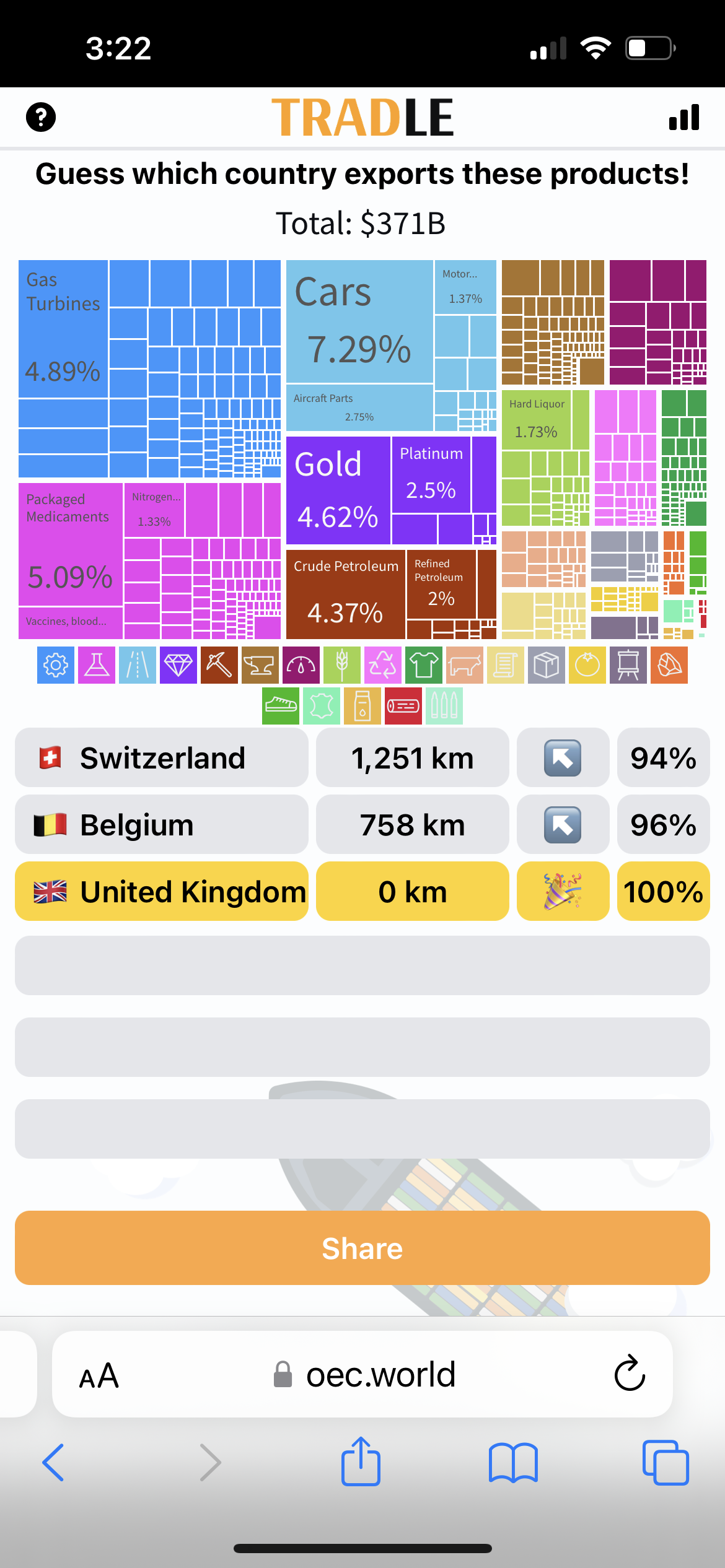
There usually comes a point in my day when I need a little diversion. Wordle and Tradle can provide just the right type of distraction. The first game is simply about discovering as many letters as possible in the fewest attempts. Then it is easy to guess the answer. But the second asks for an interpretation of the products represented in the colorful boxes as well as a sense of geography.
When this image popped up today was evident by the number of boxes and colors of boxes that it represented a complex economy. I first mentioned tradle a few months ago, that screenshot captured a simple image of perhaps a couple dozen boxes. Forty percent of the trade was gold. Without even looking at the dollar value of the transactions, it is evident one will find the answer among the poorer countries which rely on the export of natural resources.
There are still quite a few of these to choose from and so it is necessary to look further amongst the few products that are traded like palm oil or fish fillets to narrow down the choices by geographic differentiation. Still- it is a challenge. There are more remote islands than you would imagine. And while certain clues might signal the far east, you might find the answer in west Africa.
When a colorful image reminiscent of a Piet Mondrian tableau pops into the browser window, you know you are hunting with a higher level of sophistication. It is no longer simply about resources and geography. Now your guesses are dependent upon what type of education system could produce a savvy workforce. In which countries are laws in place and honored for patents? Where are the transportation networks to get all the pieces and parts to all the right industries?
And as you move through your guesses and bounce through the various country options, voila- you start to learn the level of infrastructure various countries have to support the industries listed in the colorful squares.
Frederic Bastiat is known for a set of essays, the most recognized is entitled, What is Seen and What is Not Seen. At time of writing, the french nineteenth-century statesman and philosopher is in the latter part of his life and is inspired to record some economic thoughts in a wry and witty manner. The language is vivid and descriptive and the text takes on many forms including dialogue and LaFontaine-like fables. He playfully names his actors M. Prohibant, M. Jacques Bonhomme, and M Blockhead.
His objective is to open the eyes of his fellow statesmen to take into account of the entire cycle of economic impact in the system; to note what is seen but also what is unseen. Much of his inspiration comes from the waste he sees in a heavily bureaucratic tariff industry which seems to have sprung up at crossovers between countries or every city gate. This gross abuse of skimming a bit off the top of every transaction, and the bloated civil service that supports such things, is easily exposed as inefficient.
The Collected Works of Bastiat is over 500 pages, so, for as much as there is to say about the restraints of free trade, it is only a segment of the entirety. It might be the portion that free traders have used to identify the author as their own. But the boy from the Paye Basque offers so much more. In fact, it is against his professed philosophy to pluck out but one section of the analysis and not look under the cushions for the rest of the loose change.
Bastiat does not deny the core services of government “the army, the navy, law and order, public works, the university, the national debt, etc..”(pg43) He decries all abuses of taking private profits whether through commercial fraud or abuse in the public sphere (pg123) or through the church (pg123). He denounces the fraudulent taking in any sector as “Plunder!” It is not simply across the custom’s desk that he sees waste in the system.
Through the volume and variety of writing he devotes to flushing out various aspects of exchanges, he seems to want to expose much more to the systems he sees than simply the revulsion of protectionism. For instance, he talks about the different natures of work. There is work where the value is determined in the end product, not the hours spent. For that reason ‘make work’ by the government is unproductive and should be replaced by unemployment insurance (pg160). He opposes postal rates which vary by distance, which suggests that he feels postal service is a public good to be provided at a reasonable cost no matter where you are, as told in the story of the Salt, the Mail and the Customs Service.
We could talk more about how he describes the various levels of markets (not ‘your’ market, ‘our’ market he tells the paysanne!) There are markets off the rail stops, there is the vaste city market of Paris, there are the other European markets, and just bursting on the scene is the market in Algiers which is a net loss, as it is pulling taxes out of the system (184).
Bastiat has a lot to say. His text deserves a more thorough read. He is trying to locate the whole elephant and would like everyone to stop advocting for the one angle he or she is clinging to.
The profit lies in making the best use of the resources of each country so that the same amount of work provides more satisfaction and well-being everywhere.
ES2 6 To Artisans and Workers, Frederic Bastiat
How to giveaway money is a tricky business. There are lots of worthy causes. Although I have yet to face this problem, it is fun to speculate on what a philanthropist would want to know to make a giving decision. Given the potential depth of this inquiry, this is just a starting point.
To manage expectations, I think a donor would like to understand how the funds will help. One way to get a handle on this is to consider at what level the investment will carry through a system. Bed nets for instance are life-saving one individual at a time. It is a one-to-one transaction and eventually the net needs to be replaced.
Then there is support given to ongoing activities. Many people like to give to their alma matter. Some choose to provide an annual scholarship thus contributing to a well-educated society. The efforts now affect a network, and the importance of the individual agent fades as the success of the group dominates. The analysis turns to whether the food shelf is serving the group of people in need, or whether the neighborhood clinic is improving local health outcomes.
And finally, there is the most adventuresome type of giving, the dollars spent to create something new altogether. It may be a novel medical treatment or a library system.
By 1920—less than 150 years after Benjamin Franklin first donated what would become a town’s first public library collection—there were more than 3,500 public libraries in the United States. This rapid expansion of the US public library can be traced back to another American man’s donation—steel magnate Andrew Carnegie. Carnegie’s funding had built about half of these 3,500 public libraries, earning him the nickname, the “Patron Saint of Libraries.”
Carnegie Libraries
These are far more risky investments as you can’t be sure that the new drug will work or that the libraries will be maintained. But in the instance of success, the public good is significant.

I get into a fair number of homes in the luxury market. And while many of their kitchens are outfitted with Wolf ranges and Sub-Zero fridges, most of the walls are unadorned with anything of value. Is it not odd that people who have $70K to spend on an outdoor space with a patterned limestone paver seating area don’t want to look at original art, even if it is not a Monet or a Pollock?
As I recently found out, there very few art dealers who work in the $5-$50K price ranges for original oils, watercolors, collages, or sculptures. The local craft fares display art in the under $1000 range, most items falling under $500. And from what I remember pre-covid, there were plenty of purchases being made. Browsers were also interested in ceramic wall hangings or display pottery.
But what about the middle? – the artwork that deserves to fetch more than a few hundred bucks, yet isn’t of the Sotheby’s caliber? There must be such things. There must be artists whose lives and careers gave importance to their life’s work. And similarly there should be a class of individuals, the ones wealthy enough to spend $60K on an appliance package, who would find pleasure at seeing their walls displaying something more beautiful than an item from the HOM store.
If someone knows of such a market- please leave me some breadcrumbs in the comments.
The use of the word sustainable has been popular for at least a decade now. It has the same understood meaning as green or eco-friendly. Although the dictionary definition states “able to be maintained at a certain rate or level”, Wikipedia captures how it is most often used:
Sustainability is a societal goal that broadly aims for humans to safely co-exist on planet Earth over a long time. Specific definitions of sustainability are difficult to agree on and therefore vary in the literature and over time.[2][1] Sustainability is commonly described along the lines of three dimensions (also called pillars): environmental, economic and social.[1] This concept can be used to guide decisions at the global, national and at the individual level (e.g. sustainable living).[3] In everyday usage of the term, sustainability is often focused mainly on the environmental aspects.
Crop rotation in agriculture is an example of a sustainable practice. By changing the demands on the soil each year, the nutrients are not diminished at the same rate and hence the land will be productive over longer periods of time. Recycling metals in lieu of further extraction through mining is a sustainable practice. Adding insulation to your attic and sealing out the gaping holes around your cannisters lighting is a sustainable effort to conserve energy.
What is interesting is that the word suggests that some of what we do is for the here and now and some of what we do is for future generations. In adapting practices where a little effort or resources are forgone in the short run, wAs this guy ith an anticipated gain in the long run, we acknowledge that there is a bimodal function to our action. There is what is chosen for oneself and what is chosen for a societal goal.
And this is a good thing as this is how we solve problems. As this guy suggests, we will always be able to feed the world.

What stays with a house sale and what goes isn’t always as transparent as one might think. Those lilies that were transplanted from your grandmother’s farm can’t just vanish in the days before you close on the sale of your home. The shrubs edging up the front windows and the beautiful trees in the back yard all are all part of the purchase agreement. If you want to take the hosta to line the flower bed at your next home, then you better write it in.
Trees can be costly. Not only to replace- which runs plenty especially if you are looking for mature trees- but having them trimmed runs more than a few hundred bucks. Large trees require equipment. If they can’t get the machinery into the backyard, then guys with chainsaws use ropes to shimmy up and down the trunks. A little cord tied to the back of my trousers wouldn’t reassure me, but these guys don’t seem to mind.
The key is to take account of the plantings on the lot before you make your purchase. Look for diseased trees. Take an assessment of any overgrown shrubs, especially if they are rubbing up next to the property. The whole package of structure and plot become yours to care for after closing.

Rising interest rates have put the brakes on the home buying market. Average listings are staying on the market for more than a day, and even the perfectly updated cream puffs are not commanding multiple offers which were so common since the summer of 2020. And it’s a good thing. The market is always moving which implies that either the buyers or sellers are favored. But long periods on one side of an unbalanced market is exhausting.
It was not uncommon for buyers to have submitted six or seven offers on homes before they secured a purchase. At each step, they learnt a little more about what is required of them to win the bid. Perhaps on the first house, they bumped up their offer price by a couple of thousands. As they relayed their experience to friends and co-workers they learnt that simply wasn’t enough of a bonus- one must bid more.
The next time around they found out that many people were offering non-refundable earnest money. In the event the transaction did not close, the earnest money would be automatically relinqueshed to the seller. Then some people forewent their inspection. This allowed the seller the peace of mind of knowing nothing more would be asked of them
Most purchases in the US are done without haggling. Price are offered through different vendors or shops and you have the option to pay or buy somewhere else. The process of bid and discovery, and bid again, and more information can agitate buyers to the point that they pull out of the market entirely.
Those are the folks we see come back in to buy now that the market has cooled. They no longer have to give it all away to be the winning bid. Paying a higher interest rate is a sacrifice, but they are getting something in return.

When people gather and cooperate in the provision of a public good that is available only to their group, it is called a club good. Compared to private goods it is more difficult to track the output of these types of goods. The former can be counted up and traded, which translates into a neat and tidy quantity-vs-price graph. Public goods, like education for example, are made available to everyone. Hence the measure of success depends on the entire team.
Although a group is made up of individuals, for the purposes of tracking achievement, the outcome is a reflection upon everyone. As my son’s baseball coach would say, there is no ‘i’ in team. Or as dictionary.com explains, some nouns are mass nouns like sunshine or water. Even though we have such a strong tendenancy to try to extract the individual as the unit of analysis, we really must account for the group when dealing in club goods.
This leads us to wonder how big the marketplace should be in the collective efforts to, in this case, educate our children. This came to mind today as I was listening to Russ Roberts interview Nassim Nicholas Taleb on a new episode posted at Econ Lib. It sounded like the author of The Black Swan likes to process his ideas for new books by talking them through with Russ on the podcast. The topic today was the optimum size of the State. Here he makes the case for smaller groups.
But, let me make a comment here, why size is central to what we’re discussing. Because people keep using names–state, nation–the size is central.
You do a lot better, I think, meeting a person a thousand times than meeting a thousand persons once. In other words, you’re in a big city like New York City, you walk out, you’re going to see everyday different people. Whereas in a village you’re going to probably encounter the same number of people, assuming you encounter them, it would be the same people. It’s like knowing it’s a friend is a person that you see a thousand times. You see one person a thousand times rather than a thousand strangers once. You see? Things don’t scale properly. There are things that work differently at a lower scale. And, what I’ve discovered while working on volatility models show that why an elephant, for example, is not a large mouse. An elephant is vastly more fragile–
Taleb
The specific details about who runs into whom are less important than the gist of what he is saying with respect to gauging size. It might be a thousand people or all of Manhattan. What I think is being framed here is a way to identify the size of a community suited to accomplish their goals. And the suggestion is that it must be small enough to allow people with common interests to bump into each other and trade the resources necessary to edge toward an outcome.
As long as all the people interested in educating the kids can come across each other, then they can combine their enthusiasm and skills to foster learning. As long as enough of the folks who depend on transportation networks can give feedback and encourage the appropriate repairs and expansions, then roads and bridges infrastucture will stay up to date. As long as all the people best able to monitor the streets for safety are able to provide feedback to law enforcement, then the compact to protect all citizens will raise to expectations. And on through the list it goes.
As long as the size of the community allows for people to easily do the work of community, then the institutions in place to provide public goods will be backstopped with the resources needed to flourish. At this point, as I understand it, you have found the right size for the school district or the precinct, or the State.

Today the US celebrates the birth of its constitution and its independence from British rule. It’s a family day filled with picnics and parades. There is a lot of flag waving and fireworks traditionally close the show after nightfall. By far the most patriotic of holidays, it remains a cherished long weekend despite nagging challenges to the varieties of freedom present in American lives.
In the ‘ol days, freedom was simpler. As long as your kin and kith were not ruled by outside forces then you were free. Freedom from domination by force was the primary concern until modern history, and freedom to worship if you lived in the west. Since then the demand for freedom has expanded in all directions: free to love, free to choose, free from oppression, free to marry, free to express, free to join, and free to separate. But it seems that as the quest for greater freedom picked up speed, new forms of restrictions sprouted up like dandelions in early spring.
It’s like everyone is all for freedom, as long as it coincides with their ideas, their thoughts on the way life should be. Business-oriented people cringe at the freedom of a pool boy to work through the summer and coast through the winter. But we are not optimizing productivity! Women who thrive as corporate powerhouses find housewives inconvenient. Parsimonious types can’t fathom that artists wielding away their time and resources on churning out pottery or graffitti or embellishments. And thus the debates about details, a haggling over resources, produce battles for control. Progress trickles past all the damming.
There’s a stumbling into a new power structure and a new paradigm of how networks of people with shared interests engage to produce. The model is bubbling with interconnected trading spaces. But it requires participants to allow others the freedom to navigate their choices. It requires a release of assumed dominance over the choices people make. This appears to require an unnerving amount of trust. The domain is vast.
The figuring out of this new balance within our old system is underway. People are distracted by the details. Instead of looking to the overarching structure they choose to bicker about their small corners. But the desire for maximum freedom never diminishes. And thus becomes a human project which touches us all. Happy Fourth of July!
It is fun to check and see the projected payback on a home improvement project. This is one of many charts or graphs available simply by googling cost versus value. Exterior work garners the greatest return. This is most likely due to its impact on first impressions. Windows most likely gain traction from improved energy efficiency. And coming in third on the cost versus value ordering is kitchen and bath remodels.

Some readers will question some of the projected costs (can it really be that much?!). And they may be different for your area. When we see compilations such as this, the final number is not actually ‘the’ bid. People realize there is a range of possibilities for the costs involved, depending on a bunch of factors. But these prices are not calculated through a mathematical model. They are reflective of what consumers are experiencing in their marketplaces.
Some may argue about whether the past is indicative of the future. But it seems that there is detailed information to derive from past transactions.

Yesterday, I was at a round table breakout session at a lovely golf course across town. The objective was to get real estate agents together and to hear what is working. Out of ten tables, only two presenters talked primarily about social media applications. This is quite a turn about from ten years ago. A decade ago everyone was still trying to get their heads around how platforms would impact the real estate transaction. Everything tied to social media was worth talking about.
As is often the case, the early predictions were wrong. Internet platforms did not change how homes are bought and sold, and certainly did not put Realtors out of work. The nature of the service is a bit (understatement) more involved than booking airline tickets. If anything the number of for sale by owner transactions has decreased, not increased.
Here’s how the digital age has affected real estate sales:
Although advertising on social media still has an impact, it no longer holds the fascination it once did. The early years yielded great benefits to marketers as the audience did not realize they were putting their motivations on display. Once people understood their data was not private, they found, and continue to find, ways to withdraw and opt out of unsolicited offers. At the same time, a social norm has emerged which says it is unattractive to pound out one self-serving ad after the next.
Realtors are here to stay. So find the one who knows how to access the information most vital to your choices, who can communicate with you via the means you most prefer, and who will stay in touch using an agreeable method.

Kenneth Ahrens recently wrote a paper, Robbing Peter to Pay Paul, The Redistribution of Wealth Caused by Rent Control. He was kind enough to join the Minneapolis Area Association of Realtors in a zoom call to present the material. It’s of particular interest in our market as he uses the effects of a recent ballot measure in the city of St. Paul. The paper is written in clear plain language and starts with a nice historical review of rent control in the US. It’s well worth the read. Here is the abstract.
We use the price effects caused by the passage of rent control in St. Paul, Minnesota in 2021, to study the transfer of wealth across income groups. First, we find that rent control caused property values to fall by 6-7%, for an aggregate loss of $1.6 billion. Both owner-occupied and rental properties lost value, but the losses were larger for rental properties, and in neighborhoods with a higher concentration of rentals. Second, leveraging administrative parcel-level data, we find that the tenants who gained the most from rent control had higher incomes and were more likely to be white, while the owners who lost the most had lower incomes and were more likely to be minorities. For properties with high-income owners and low-income tenants, the transfer of wealth was close to zero. Thus, to the extent that rent control is intended to transfer wealth from high-income to low-income households, the realized impact of the law was the opposite of its intention.
Ahrens mentioned that his peers were wondering why he was working on demonstrating the problems with a policy that has been shown to have greater negative impacts than positive ones. Experiments with rent control in the 50s and the 70s are long forgotten. A new generation of problem solvers and activists are reviving old ideas despite their flaws. The focus seems to be on preserving a renter’s ability to stay in their apartment by capping rent increases. This in turn transfers wealth from the landlord to the tenant.
Although the intent might be to have a one-for-one transfer from the pocket of the property owner to the renter, Ahrens points out that it is not that straightforward. “Basic economic theory predicts that rent control causes both transfers of wealth and deadweight losses (DWL) for property owners. These losses can be divided into a direct capitalization loss and an indirect negative externality loss.” A deadweight loss might derive from postponement of maintenance and repairs due to lack of income. “The sum of these effects is observable as a decline in the market value of real estate, as the property can no longer generate a market rate flow of income and fewer repairs to the property mean a lesser quality building.”
Furthermore, the transfers benefit the wealthy and hurt the less wealthy. In their findings, the lower income owners realize the greatest decline in home values- 8.52%- than any other transfer.
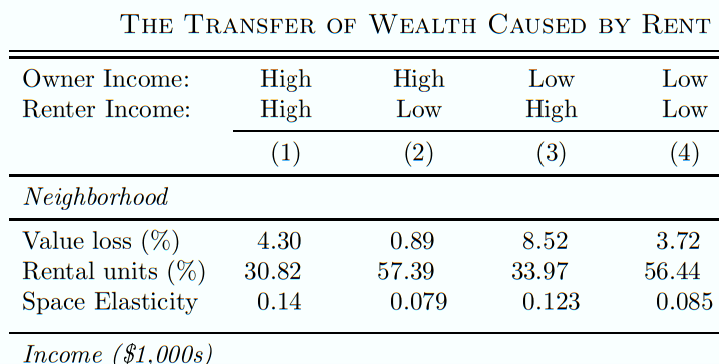
There have already been meetings in St. Paul to adjust the stringent rent control measures passed last November. But there is no talk of reversal. Constituents seem to feel that renters in some way are not getting a fair shake.
Maybe I can take a run at the reasoning. Renters play a role in the community as do property owners. They are not as vested as they are more mobile, yet they too can be good citizens. Perhaps they go to city hall to petition for a road safety concern, a new playground, or more observance of a problem property. Perhaps they are the bus stop mom or the football coach. Perhaps they help maintain a safe light rail system or advocate for better bike lanes. For all that personal time spent on city infrastructure, they enjoy an improved environment. Yet the homeowners enjoy greater home values. And renters face the possibility of being priced out.
Of course, homeowners do not always enjoy greater home values. I remember a period of three years following the great recession where most sellers brought a check to closing to buy out their remaining mortgage balance. Sellers also feel a pinch in their bottom line when cosmetic updates have not been done, or repairs deferred. Renters find it far less costly simply to move to a newer updated unit. Such are the differences between ownership and rentals.
Maybe there is a new framework to consider. One that takes into consideration the economic issues of civic participation yet still tallies the risks of ownership. What’s clear to me is that if economists do not come up with analytical tools that better express the motivations and incentives constituents are expressing in their political decisions, then we will continue to suffer through cascading unintended consequences of bad policy.

The price of lumber is dropping precipitously as the housing market cools off in response to higher mortgage interest rates. During the first peak in 2020 and on through 2021 the cause of the price increases was attributed to supply chain issues and trade with Canada. But the second peak in late 2021 was said to be driven by the producers. Maybe they’ll regret it. I can think of a handful of people who have moved to alternative plans (than building or building projects) as a result of the high prices. Once the wave of properties under construction leaves the pipeline, the builders might find themselves short of work.
Mackenzie Scott was in the local news last week after donating six million dollars to the local chapter of Big Brothers Big Sisters. That might be a drop in the bucket for the ex-spouse of Amazon founder Jeff Bezos. “The donation to Big Brothers Big Sisters Twin Cities is one of a number of no-strings-attached gifts Scott has made to charities and racial-equity causes. In all, Scott has donated more than $12 billion to more than 1,250 nonprofits since 2020.” But it is equal to the annual budget of this worthy non-profit.
My son’s frat, SigEp, supports the organization as well. That’s how I ended up with my family at a fundraiser on behalf of Big Brothers last fall. I used to avoid galas because I didn’t find them fun at all. After a few turns on the dance floor, I’ve learned how to enjoy fundraising auctions.
First, give yourself enough time to review the offerings. As in any purchase situation, it’s good to have options. I try to find things I enjoy but often don’t purchase as other more practical uses for money always seem to take precedence. At this event, my interest was piqued by four tickets to a Wolves game at the Target Center.
The whole idea of the event is to raise money. And there is an expectation that parents will participate in the fundraising (not obligatory, of course, but expected). So, there is a demand to make some sort of expenditure. You can always buy those certificates for eateries at face value, but that’s not very fun.
Most auctions are played out through an app. Once you start bidding you gauge the number of buyers for the item based on the response time on a counter bid. If two parties (or more) are bidding up the price without your participation, it might be a good choice to look for another auction item. If only one bidder is countering your bid, stick with it. Let them hold the high bid.
At this event of about three hundred people, the cutoff for bidding on live auction items was fifteen minutes into the presentation. This made it easier. In the last minute of open bidding, the high bidder was listening to the emcee while I placed the winning bid. It was exciting! First, because I had bought something I normally would put off purchasing. Second, I could feel good about playing my role as a parent. And lastly, it was nice to support the work of Big Brothers Big Sisters.
It was a three-for-one transaction!
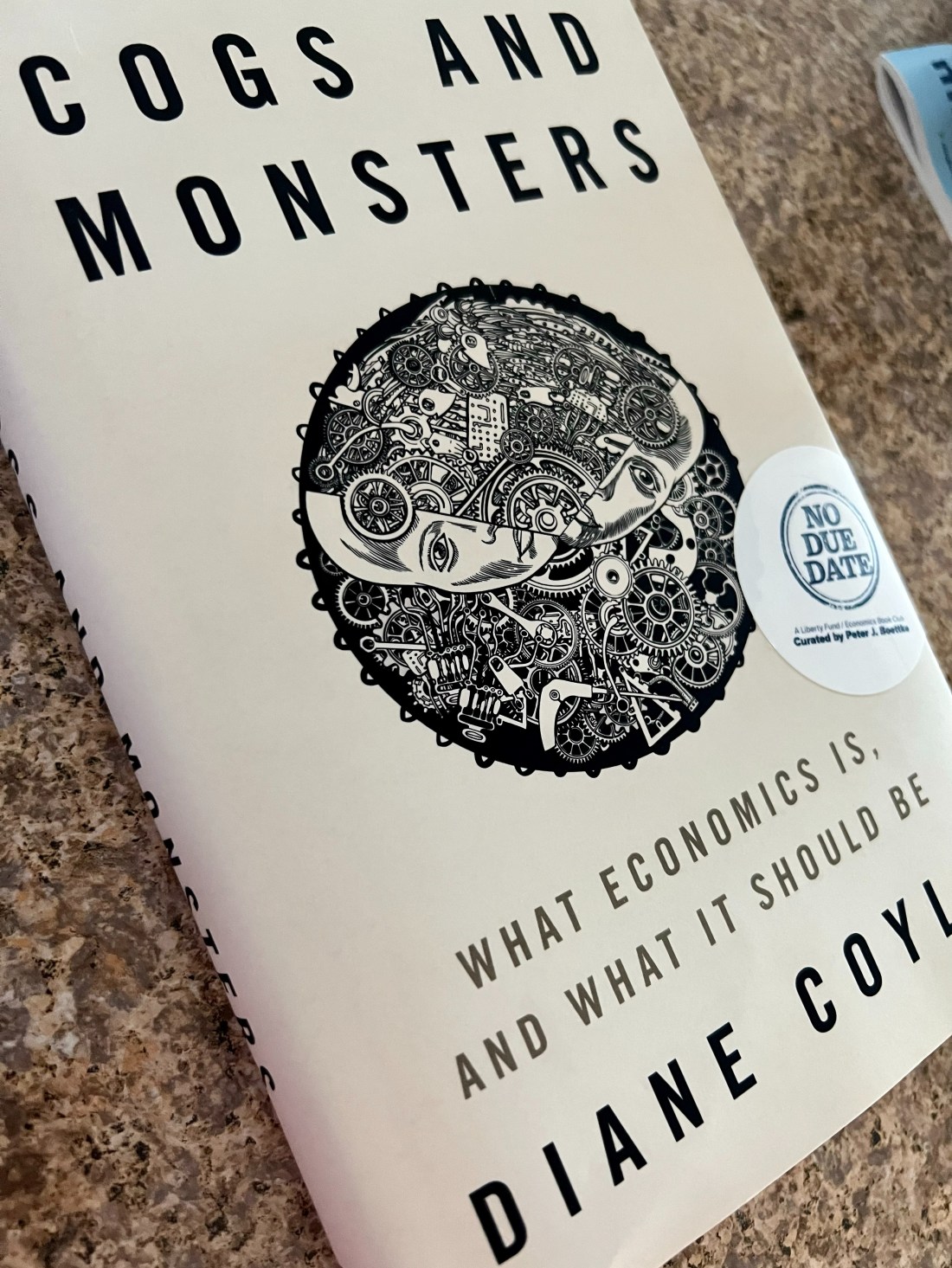
In a recent broadcast of Econ Talk with Russ Roberts, economist Diane Coyle (Cogs and Monsters: What Economics Is, and What It Should Be) expresses dissatisfaction with universal basic income, or UBI, as a policy solution. She reasons that the $10-$15K a year could not be used to purchase collective goods:
But what you can’t do with an Universal Basic Income is buy collective goods. And, to the extent you care about communities and improving the chances of those who are the least well off, then it’s often those collectively-provided goods that matter a good deal–the transport network, the quality of the public schools, the quality of the healthcare that you can access.
So, a lot of these classic public goods or traditionally collectively-provided goods are very important; and you can’t, with your individual $10,000 or $15,000 dollars, go and purchase those.
Econ Talk
I too feel that UBI is an unsatisfactory policy intervention.
When I was a few years past out of college, one of my classmates had used some family money to purchase a vehicle most would say was beyond her income level. I don’t remember if it was an Audi or a mid-range convertible. She admitted straight out she enjoyed how she was treated differently when she pulled up in a luxury vehicle versus a second-hand compact. She claimed she received better service. In other words, she felt a disproportionate outlay of her monthly income on a vehicle bought her into a higher level of service network.
Indeed, you can’t buy your way into, say, a network of moms who trade-off watching each other’s kids. Similarly, one of the moms can’t just decide to sell all the reciprocal arrangements she has stored away through her mom friendships. Money is mostly used for unfettered transactions, whereas chits of return favors are the currency of collective goods. But money can buy you the Lulu Lemon leggings that all the moms wear, or a membership to the gym where they work out and spend time by the pool in the summer months. Money helps get to the networks even if you can’t use it to buy your way all the way in.
My reason for disliking UBI is slightly different, yet similar. I too think that people who are not wealthy could benefit more from social structures than cash. UBI is just half a transaction. Giving people a monthly stipend does nothing to teach them how the social side of the economy works: exchanges, reciprocity, feedback, and the like. Simply transferring money to people, without having them think through and evaluate a selection of options, without experiencing the pros and cons of various relationships and outcomes, robs them of the experience of the market.
If you really want people to become wealthy, you would take the time to show them how.
I wish there was a discipline that focused solely on power. Political science only covers one slice of the use of power. The mechanics of government and the people employed to push and pull all the levers are well covered in academia. I’d like people to cover the power plays at a more local level, how they hold people back from living their best lives, and what can be done about it.
Fathers and Sons. August Wilson wrote one of his recognized plays, Fences while living in St. Paul Minnesota in 1985. A pivotal action in the narrative occurs when the father interrupts his son’s chance at a football scholarship by pulling his son from the high school team. The elder claims he is protecting his son from the racism he endured. The son feels otherwise. No matter the motivation, a parent has the power to restrain their child’s success. In this story, the son finds opportunity in the armed forces and his ambitions are rewarded with a secure career.
Physical Leverage. A well-known form of intimidation via physical force resides in domestic relationships. There are already social service support systems in place to help women (in particular) escape from an abusive partner. Yet they don’t. Perhaps, if they had understood the power structure earlier, it would make a difference. Fear of physical abuse is also used by neighborhood bullies to deter being ratted out. From the outside the answer in both cases might seem clear: turn the bums in. Yet these power players are part of their families, their networks, their lives. The solution is to level the field through an understanding of how to neutralize their power.
Socialites. The term socialites may feel as dated as old lace, but there are people skilled at managing who gets invited (or not) to social events. Many valuable benefits evolved from connections made during social gatherings. Those who control who’s in, and who’s not, wield a particular type of power.
The machinations of elected officials have far less impact on people’s lives than those closely connected to them. By understanding power, and how it’s used, or abused, people could navigate that line of staying with their pack while living fuller lives.
With war being out of fashion and colonialism a relic of a bygone era- how is a country is to acquire more land?
Even on a small scale, purchasing property that is owned by multiple independent parties is a messy business. In the middle of this satellite photo, you will notice fifteen five-acre homesites which were surrounded by open land twenty years ago. Developers in the home building business can spend years negotiating with neighbors to sell in unison.

These homes also happen to be fairly substantial. This just means that their values as stand-alone parcels are strong which pushes the buyout price higher than say a dilapidated tear-down property. Over time, however, if an owner thinks it is inevitable that their home will be torn down, they refrain from improving the property. It feels like a waste of their money. When the exterior starts to look run down, the neighboring properties are also affected. And slowly, the owners succumb to the pressures of an expanding metro, get used to the idea of living elsewhere and sell out to a builder.
This story is a way of suggesting a scenario where land could be sold between countries.

Proponents of a 15$/hour minimum wage claim this wage will provide a worker with a livable wage. This is a little hard to swallow this as an across-the-board benchmark as standards of living change across the country. Even within Minnesota, the wage may be considered a decent amount in the outstate areas to just above starting wage in the cities. Price setting or creating artificial bounds in economic systems inevitably creates more problems than they solve.
Setting a floor based on a threshold of a plucked-from-the-air minimum standard of living assumes that each worker is supporting themselves on this one job. High school kids would receive the wage and they are supported by parents. The stay-at-home spouse of a family unit might pick up a job for a while for extra cash, not for the core flow of funds to pay the bills. These workers may not want to work to the level of getting paid a higher wage, or as teenagers, not be qualified for a higher wage. So, let’s set these two groups aside.
For the workers who need to support themselves on one job, a minimum wage could provide them with a bit more money. But there would be a loss too. Pricing is a source of information. If a full-time worker cannot command a sufficient wage in the market to meet their basic expenditures, people should be asking why– not topping off their salary and sending them out in the world. What would they need to obtain the job at a better wage, and what would it take to get it: education? a connection? flexible hours?
Say there was a pattern of a whole set of workers who were unable to secure sufficient work. And it became clear that the reason was geography, transportation, or language skills. Would it make more sense to supplement their wage with a stipend until the restricting constraint was lifted? Would it make more sense to overcome the reason for below-par wage offers so that they may be confident of higher wages in the future?
Don’t mess with the pricing system. It’s valuable information. It provides all the insights necessary to help people progress towards self-sufficiency.

#Dallas builder: “Interest lists are shrinking or buyers are truly pausing.”
#Houston builder: “Many first-time buyers simply no longer qualify with the increase in interest rates, as their debt-to-income ratio gets out of whack.”
#SanAntonio builder: “Traffic has been cut in half since the hike in rates.”
#Raleigh builder: “Investor activity has slowed dramatically.”
#Provo builder: “Investors are evaluating the investment more critically than in the past.”
#WashingtonDC builder: “Traffic half what it was in March. Worried about first time buyers. Many fewer REAL buyers than number of people collected on interest list last 6 months. Certainly more attempts [from buyers] to negotiate.”
#Seattle builder: “Pause by a large population of buyers. To achieve our desired [sales] pace, we had to make price adjustments. Rates starting to knock people out of qualification.”
#RiversideSanBernardino builder: “Cancellations are starting to creep up due to loan declines and job losses. Waiting lists are certainly smaller. Saw an immediate change in buyer behavior when rates climbed over 5%.”
#LosAngeles builder: “Buyers who are stretching to purchase have become more cautious.”
#SanDiego builder: “Buyers are definitely a bit more edgy.”
#Denver builder: “Sales are slowing due to higher prices and rates. Backlog of buyers have remained but we are seeing new prospects priced out with interest rates and anticipated payments. Conforming loans quoting over 6%.”
#Boise builder: “Rising interest rates may have pulled some buyers forward, and we expect to see a slowing of sales in the coming months as a result.”
#SaltLakeCity builder: “In our lower priced segments, buyers are compromising and reducing options.”
#Bend builder: “Our market has slowed and prices are starting to drop.”
#Atlanta builder: “Seen a decrease in the number of potential buyers who are participating in best and final offers on homes/homesites.”
#Knoxville builder: “Detached 2,000-3,000 square foot product still selling, just not with 3 buyers for every home like a few months ago.”
#Allentown builder: “Double hit of higher home prices and higher mortgage interest rates clearly has reduced the number of qualified buyers. Our waiting list is almost zero as of April 30th.”
#Philadelphia builder: “Between higher interest rates and higher sales prices, along with high gas prices and a volatile stock market, we’re seeing a pullback in our sales.”
#Tampa builder: “We’ve seen a significant shift in buyer behavior in the last 30 days. Florida was on fire and pricing has really come to a high point, and people are not willing to pay the prices anymore.”
#Indianapolis builder: “Traffic has significantly declined and people have paused on moving forward with purchases.”
#KansasCity builder: “Our lower end product has paused or slowed dramatically.”
#Columbus builder: “Higher rates are definitely tempering buyer enthusiasm and traffic.”
#Baltimore builder: “Buyers aren't putting in as many options as they did last year.”
#Reno builder: “Cancellation rate last month more than doubled from 6% to 16%. We attribute this to buyers that did not lock interest rates early in purchase process. Also seeing many buyers put buying decision on hold.”
#Fresno builder: “Finding an increase in cancellations due to the rate increase. The majority of cancellations are resulting from fear vs non-qualification.”
#Cleveland builder: “Once we reach home closings, about 5% of our current customers on the books will be forced to bust out as they originally qualified at a 3.25% rate and won't be able to stretch beyond this.”
#Sacramento builder: “Seeing trouble qualifying for entry-level buyers as they are priced out by rates.”
#SanJose builder: “Quality traffic has significantly decreased.” THE END
Originally tweeted by Rick Palacios Jr. (@RickPalaciosJr) on May 9, 2022.
Rates are on the rise making mortgage money a chunk more expensive. For example, a few months ago, the principal and interest payment on a $350K loan was $1452/mo at a rate of 2.875%. But today’s rates are hovering around 5.25% which pulls in a p&i of $1933/mo. This $481/mo shift will come as quite a surprise to consumers who have long gotten used to low, stable interest rates.
The rate increases are the result of efforts by the Federal Reserve to slow down inflation. As seen below, CPI has increased sharply in the last year and shows no signs of moderation.

Real estate makes up a portion of the index and traditionally an increase in the monthly cost of a mortgage will tamper demand. Although homes in top condition or in prime areas are still selling in multiple offers in our area, there is a sense that the hold-no-barred rush for housing is subsiding.
This makes buyers who are not knocked out of the market by the more ample payment one of the winners in the shift. Even if they pay about the same amount of money for a home, they are less like to give up other concessions such as a home inspection or a preferred closing date. Buyers who can no longer afford to buy are, for the time being, out of luck. New buyers, just getting approved, are held neutral by the rate shift. They have no relative comparison to other options; the new rates are simply what it costs to buy.
Sellers with mainstream acceptable homes are also held neutral in the shift. Plenty of buyers will still materialize for their homes, and although the escalating prices are falling away, the sellers will still secure a sale at today’s higher price point. Sellers of homes with a significant drawback- and these vary depending on the market- but things like shared driveways or proximity to freeways, these properties will struggle to attract a buyer. So, sellers of properties with more condition issues or physical drawbacks will lose in a quickly escalating rate environment.
Lenders are losers too. The past couple of years has been flush with refinancing. Higher rates dry that market up. Homeowners in need of cash with a mortgage at two and a half percent are going to look to other options rather than a refinance. Second mortgages have served this demand in the past. It’s the folks that must refinance to pay off an ex-spouse or consolidate higher-interest consumer debt who will lose out financially on higher rates.
First-time buyers who bought a few years ago should feel pretty good about their situation in hindsight. Since they bought, they have gained some nice equity and now they realize the benefit of a fixed payment at a low rate. While their friends in rentals experience periodic rent increases, the new homeowners have stabilized their monthly obligation. These are the examples that need to be talked up to give renters (who qualify) the confidence to become homeowners.
As a realtor, I look forward to a balanced market. Some consumers can act quickly and compete for properties. But many people need more time to think things through. A bit of a slow-down will bring a new set of buyers into the marketplace. And this is a good thing.

Anthony Downs wrote Neighborhoods and Urban Development in 1981, yet this quote is as applicable today as it must have been then.
Each city’s strategy must balance two sometimes conflicting objectives. The first is encouraging renovation, since it upgrades residents environments and benefits the city government fiscally. The second is minimizing harm to low-income renters. In loose housing markets, city policies can encourage maximum revitalization, since displaced households can find alternative accommodations without suffering much harm. But tight housing markets pose a cruel policy dilemma, because revitalization may then cause severe hardship for poor displaced households. They probably cannot easily find alternative accommodations without paying much more for them–if then.
A tension exists between two groups of housing consumers, each interested in the same option: the bargain-priced property. What isn’t discussed in time. If transitions are in sync with the natural timing of residents giving up their homes, then it is a win for the city to benefit from stronger housing stock, and the poor who has moved to better circumstance.
My concern is that there is a little public commentary about helping the disadvantaged to match with neighborhoods best suited to meet their public goods needs. The conversation always seems to be about keeping people put, …in dilapidated housing.
Let’s go for the double win. We have the capacity.

When it comes to neighborliness it’s hard to get concrete numbers. There is a general sense that pitching in and helping out is a good thing. But does it count as economic activity? Here’s a story about snow falling on sidewalks that helps demonstrate the cold hard cash of being a good neighbor.
Sidewalks are common features of residential areas allowing the public to walk along the road. People stroll for exercise; they walk their dogs; they catch a bus at the bus stop. Residents are sometimes surprised when the concrete needs to be replaced that they are responsible for (the relatively costly) expense. The long-established norm is that the owner of the building behind the walk is the caretaker of the public walk. In a winter climate, the household also must clear the sidewalk of snow. Failure to do so can be hazardous as melt and refreeze makes for icy walkways.
The city of Minneapolis has been suffering from a lack of interest by residents to tackle to forty feet runs. A March 23rd editorial opinion in the Start Tribune calls a spade a spade, “let’s acknowledge that Minneapolis has an unacceptably large population of residents who feel no particular obligation to keep their walks clear.” It was written in response to a proposal that is making its way through city hall for the city to embrace the chore. The instigating motivation is people’s safety– “An unshoveled walk gets in the way not only of walking, but also of sightless navigating, of wheelchair maneuvering and other modes of travel that most of us need not master. When walks are covered in snow, a blind woman using a white cane cannot tell the difference between a residential street and an open field. A man in a wheelchair cannot negotiate the snow and ice, and might choose to risk traveling in the street instead.”
Please be aware that there are already serious repercussions in place for the n’er-do-wells who find it difficult to put their hands on a shovel. Here’s a violation letter:

I spoke with the crew who was clearing snow one morning. The gal said they can co up to thirty front walks in a day. Let’s see, 30 x $229= $6870. Paying six employees for eight hours of work only comes to $1680. It seems like a good money maker! But maybe they have to wait until someone complains to justify going out and shoveling.
This isn’t the first time shoveling has been a news feature. In 2018 the president of the Minneapolis City Council, Lisa Bender, was sited. Two of her constituents got creative and made an instructional video.
Another factor in shovel-gate might be the proportion of renters to owners in the city which runs about 53-47%. Owners receive the violation letter, but renters are in many cases responsible for snow removal in single-family homes, duplexes, and tri-plexes. Perhaps the process would be more effective if the $229 fee was directed at the residents of a dwelling.
Some argue that folks are disabled and for that reason cannot clear their walks. The US Census reports that 8.8% of city residents fall in that category. One would think that there is a capacity amongst city residents to lend a hand and help the few who can’t fend for themselves. But instead of pursuing a culture change, the city is looking into publicizing (my word, nationalizing at the city level). As one can imagine transferring a job to a bureaucracy is a little pricey. They are anticipating $20 million in this case.
Just to review the dynamics here. Most cities count on the goodwill of neighbors to clear walkways for the public. This is unpaid labor. For cultural reasons the residents of Minneapolis resist this norm. Instead of working on converting the mindset and showing people that it can be rewarding to lend a hand to someone in need, the city is pricing out the service. This process of making public something that was handled privately is called publicizing (the opposite of privatizing). The process will not only be more expensive, but it will also forgo the capacity of citizens to participate in their community. Publicizing is a change of structure not just a form of payment. It eliminates the possibility of citizens to see how simple gestures go a long way in communal endeavors.
And the price of neighborliness- for all you economists- is $20 million.
Actor Will Smith got a little attention at the Oscars on Sunday. And I’m not talking about the negative attention, but rather the recognition for playing the part of father and coach to Venus and Serena Williams in the movie King Richard. It’s the inspirational story of parents who make things happen for their kids. But what does that entail exactly? The trade of all the family’s extra resources and time to the sole focus of advancing, in this case, the girls’ abilities to achieve greatness on the courts.
I like to think of this as the mom job, the I’m-there-just-in-time-for-whatever-it-is-you-need job. The support worker in a family makes sure everyone gets fed and to their doctor’s appointments. After the priorities of food and health, they follow up on extracurricular interests. And if time permits, they volunteer in those organizations which advance the family’s interests. While some people are making fun of home economics majors, Hollywood is rightly pointing out the power of the position.
Infrastructure jobs are turning out to be a powerful tool in fighting wars. No longer is the tough-guy action figure the primary hero in a foreign war narrative. Now the people greeting refugees at the train station, communicating the number of beds they have available on cardboards signs, are heroes. You can be recognized for giving shelter over the internet too, through a donation to Airbnb. Patrons are booking weeks that they do not intend to use, and the hosts are return notes of gratitude.
It seems that the secret is finally out. You don’t have to be the front man to be valuable. You can be a support worker in a family or in a community and be powerful. So instead of pursuing a politic of tearing down, let’s use social infrastructure to build up. And create some cool new stuff.
From March 12th- April 10th builders showcase their model homes by having them open to the public. It is a convenient way for buyers to get out and look at what is being built around the metro. Some people go to see the latest trends in home design and decor. Some are interested in the latest technology. But many are considering a move and would like to build new.
The key appeal to the building is the personalization of choosing some of the finishes. There are very few truly custom builders, these work at the top of the price range, but even national builders allow the choice between several packages of finishes. Some buyers feel so strongly about having a hand in the creation of the home as well as being the first owner that building is their only option.
This explains how they justify the price they pay for that privilege. New builds are beautiful, crisp, modern- but they are not cheap.

Out of the 343 new properties on the tour, only a couple are priced below the Twin Cities metro median sales price of $340K. Most of the least expensive options are townhomes, but one is a split entry with the upper level finished. Most are also located on the outer peripheral of the urban area. Or in other words, half of the metro home buyers can purchase homes at lower prices and in closer proximity to infrastructure like jobs, education, medical facilities, shopping, and so on.
If a chief accountant of the community had to select a type of property to offer to members who needed help paying the rent, it is clear that she could stretch her public purse further by going with existing homes instead of new. The math is pretty clear.
Decades ago, when I was a manager in a corporate environment, I received some training which included an assessment. What I remember was the criticism. I scored poorly on not offering my employees a vision for their future.
I probably also retain the memory because, after a bit of reflection, I could still not put my finger on any examples of just that- verbalizing a future. But now more than ever I can see the importance of it.
Tech companies have swarmed over the real estate industry in the last dozen years. Two items seem to attract them. First the sheer dollar figure of the commissions paid to realtors. And second, the absolute certainty that realtors do not earn (or if you would rather, deserve) their fee. It doesn’t matter that the occupation of a Realtor has been in existence for over one hundred years. It doesn’t matter that the profession is one of the most monitored by commerce departments everywhere for price setting. People with advanced degrees claim collusion and cartels.
If you have been a part of the industry for the past thirty years you can vouch for the fact that every variation of for sale by owner to fee-based marketing to full commission brokerage has been tried. With the advantage of technology which unleashes exposures to all levels of buyers, you would think that the share of homes sold by owners would be up. In fact, the opposite is true.
According to the National Association of Realtors:
But still, tech companies persist in the narrative that the likes of Open Door, Exp, and Compass are the wave of the future for the industry. That what they do and how they do it is novel. They will be more efficient. One of their bragging points is the number of agents they are recruiting to their brokerages across the nation.
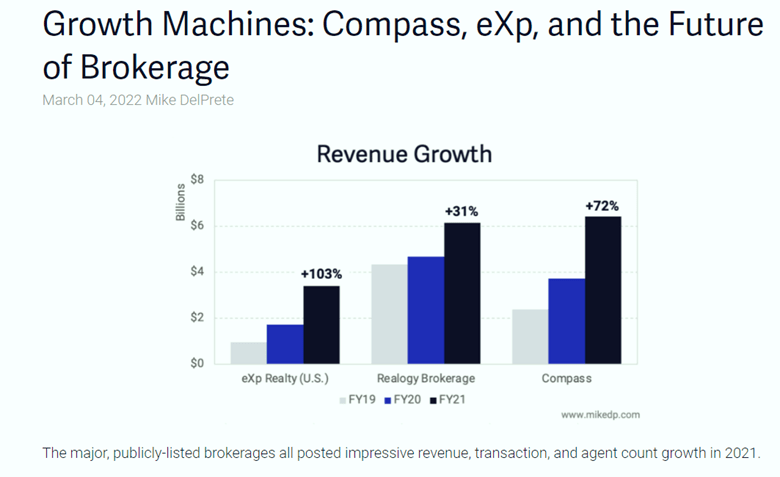
From what I hear they are paying bonuses to those agents to make the switch. And with salespeople being opportunists, it is not surprising that some make the jump. But while I think these tech companies are simply going down the well-trodden road of the traditional agent broker relationship, I do give them credit for spinning a better tale of the future.
The Steve Jobe’s overtones run rampant.
If traditional brokerages with established reputations in their market want to retain agents, they will need to learn to communicate their vision of the future of the industry.
Merriam Webster’s fifth definition of CAPACITY is as follows:
5: the facility or power to produce, perform, or deploy : CAPABILITY
//a plan to double the factory’s capacity
also: maximum output
//industries running at three-quarter capacity
Let’s do a little thought experiment. Let’s think of all the ways the capacity to support and advance the liberal democratic form of governance was underestimated.
There are all sorts of stories out on Twitter and other media outlets describing means and methods people around the world are assisting the Ukrainians in their time of need. From the business community, we have seen airplanes leases cancelled and major retailers like Ikea close their Russian outlets. As far as person-to-person transactions go there are reports of people booking VRBO’s as a means of cash transfers. Berliners lined up by the hundreds at the train station with signs offering up rooms in their homes to refugees.
To be sure the VOICE that has stirred this grass roots response in that of Ukraine’s leader, Volodymyr Zelenskyy. He surely was underestimated.
Means by which everyday people, no matter their country of origin, may offer time and resources to the cause has been transformed by technology. It can be as straight forward cash transfers. It can be as personal as allowing a young soldier to call home and make the situation more transparent. It can be as sophisticated as Elon Musk activating his commercial internet network.
In addition to technology, it appears that there has simply come a time for people like the Germans to rise to the occasion. They are digging in more than any other country to step up for greater military and social support beyond their borders. But others like Sweeden, Finland and Switzerland have also heard the call to trade in favor of democratic governance systems.
The old school way had to be initiated through heads of state. The modern era allows individuals to participate without borders. One might estimate that this moment has revealed a capacity for the liberal world order not seen in thirty years.

If Wall Street is the mainstay of pecuniary transactions, then the church (of the denomination your choice) is that of social welfare. Still- even centers of voluntary good works have needs that are best served in private markets. One of those is the maintenance and upkeep of their assembly halls.
The photo above is an example of a spectacular building whose beauty requires regular and costly upkeep. For that reason, from what I hear, the parishioners have considered replacing it with a more modern structure. This in turn upset some local folks in this town of 4500 people who can’t bear the thought of it being leveled.
To model this scenario let’s consider what is public and what is private. Though the church owns this fine house of worship privately, other townsmen and women feel that its historical value is public to their community. But there are others who could have a public interest in this beautiful building beyond the valley in which it is nestled in. There are enthusiasts of architecture and enthusiasts of Catholicism and enthusiasts of the American frontier. The preservation of this structure undoubtedly has support beyond what is obvious.
The traditional method of holding onto vintage buildings is to create historic districts. This lays the ongoing expense at the doorstep of the party who holds it in private ownership. And these districts often depress the market value of the parcels as restrictions are not market friendly. In other words, to take what should be traded in the public sphere and force those desires into the private market is inefficient.
It would make more sense if the ‘publics’ who have an interest in this building had a structural option to support the maintenance. Since they are the ones who appreciate the value of preservation, they are the most likely to voluntarily support such activities. And due to this, resources will find their way to projects most suited to consumers intentions.

All urban neighborhoods have rules. The garbage cans, for instance, in our neighborhood must be kept inside a garage or behind an enclosure of a certain dimension. The can might always sit on the private lot, even while down by the curb on collection day. Yet the city residence at some point gathered up in the city council chambers and voted that garbage bins are unsightly and hence violate the public enjoyment of our streets.
Although property rights secure ownership of the home and plantings and outbuildings, the neighborhood considers the outer appearance of the street as a shared good. And hence feels it reasonable to set some guidelines for those who don’t pick up on the nuances of social norms. To be sure these vary from place to place throughout a metro area. Some cities are fine with RV’s in the drive, while others do not permit extra cars in the drive and require garage doors closed while not in use.
Changing times present changing issues. The advent of Air B&B led to concerns around properties being used for entertaining instead of everyday life. Although the use of the short-term rental property is just for the structure, the noise and traffic that come along with vacationers is a negative externality to the neighbors. They are interfering with the public space shared amongst the group. And that is how it ends up on the city council persons’ agenda.
So how about the other way around? If a neighbor uses private resources to do a project which has positive externalities, is it reasonable for them to knock on the door across the street and ask for some equity payback, for having increased the value of the neighborhood? Can they say, “See the lovely $70K custom landscape job, with perennials bordering a gorgeous paver driveway and the welcoming front patio? I just increased your home value, so get your checkbook out and give me a little of that extra equity you’ve got tucked away in your house value.”
The error in the thinking here is in categorizing the goods as public or private. The activity which was done (hiring a designer, picking out the plan, hiring a landscape firm) was achieved for private purposes. The activity did not touch the neighbors’ private goods, like damaging a basement through flooding or perhaps taking down a tree that was right on the lot line. These landscaping transactions are in the moment and fungible.
Improving the facade of your home and thus elevating the ambiance on the road also directly impacts the neighbors (in the same way that a burnt out, boarded up house has a negative impact). This is a public impact. With public goods, you don’t see the cash until you exit the group. The stock of all the public goods tied to the neighborhood may go up and down through the ownership time period- but it is only upon leaving the group that a dollar figure is recorded on these non-fungible values.
Noticing the different mechanisms is a keyway to identify whether a good is public or private.
The reasons why a homeowner would over improve their property knowing that they pay the tab and others will benefit through externalities are important to understand, especially in policy recommendations. The net result of one improvement is generally a cascading effect of others. When people enjoying what they see across the way, they tweak their own property as it pleases them. Sometimes a little seed money from a city can be a catalyst to get the ball rolling.
These are the borderlands where publics and privates get negotiated. In city council meetings and across back fences. There is no one recipe. A reactive, amicable and consistent system of governance seems key.
Say you lived in a small rural community. Maybe there is one main grocery store in town and three churches of various denominations. All grades k-12 are taught in one building, with the younger ages on one side of the building complex. The senior high kids get the classrooms closest to the gym and the middle schoolers fill the classrooms sandwiched in between. Busses bring in kids from rural route addresses.
Now imagine one family is experiencing financial difficulties and the couple is separating. The land they farm came down through her family, so she is staying on the site to try to make a go of it. Eighteen months in, the past due notices are piling up and she comes to terms with the reality of having to sell. Normally this productive land is swept up by competing farmers wanting to increase their holdings. The nearby owners are usually particularly interested as the expense to move large farm equipment like combines is expensive. But the sale stalls- why?
In a small, isolated community there are only so many social activities, through church or the school sports or maybe a community center. When you run into someone at the high school basketball game or service on Sunday you don’t want to read across your neighbor’s face that they think you took advantage of their misfortune. When the idea is to get out and enjoy a round a golf or relax over a beer at the VFW, you don’t want to run into the lady who may feel like you stole her inheritance.
The paradox is that community is meant to be there for each other when times are bad. But in this case the aversion of being accused of profiteering is damaging to those who need help the most. And this is how an outsider can step in, easily appraise a favorable situation and finalize the purchase. The cost of social stigma is not felt by the outsider.
This a corruption of some kind. The community breaks its own rules and allows a profit to leave the group for another. A sense of loss remains. People turn on the outsider. They are the profiteer! They are not to be trusted.


It’s more expensive to live in New York City than Omaha Nebraska. If you are only going to relocate to Denver for a couple of years, you should rent instead of buy. Housing prices suffer in Baltimore due to high crime rates. These are all statements that don’t need an explanation. Living in a city full of opportunity is going to cost more than in a city a fraction of its size. The commitment to purchase a property is both financially and emotionally taxing for a short stay. And high crime rates make just about any neighborhood a tough sell.
It is easy enough for consumers to observe these strong market indicators. But if we want to start digging deeper into what market prices of housing can tell us, than we must be a more careful about sorting.
If we wish to look at housing costs in an open market environment and break the values down in order to find market preferences for attributes tied to the neighborhoods, then we must choose between either (residential) home sales data or rental data. Otherwise, the statistical outcome will fail because these are two different market transactions.
Purchasing a property is a multi-year commitment. Renting is generally a year at a time. The rule of thumb on how long a buyer should anticipate staying in their home has varied over the years. Back when I first got in the business the benchmark was seven years. Between real estate fees to move- perhaps around 7.5% of value- and the closing costs of financing, a buyer requires several years of appreciation to break even on purchasing versus renting.
But I’d argue there is more to it than this sketch of dollars and cents of the buy versus rent decision. For comparison’s sake let’s consider the actions taken by a homeowner or a renter or an Airbnb occupant. They are all enjoying shelter in the same location of a city. An individual walks by an alley and there is a body lying near the dumpsters. The Airbnb people will probably finish their stay and not mention it to anyone, although they will probably rethink their choice of lodging for the following visit. The renter may or may not call an authority like the police. If bodies in alleys become a routine occurrence they will probably move.
I think you know where I’m going with this. The homeowner is the most likely to get involved and not only notify the authorities but follow through with contact to a city council member and so on. This is work done on behalf of the neighborhood with no financial compensation. It is a job taken on as an investor in the neighborhood who aspires to live in a safe and desirable environment. The homeowner is willing to make this investment whereas the Airbnb and renter are progressively less likely.
The relatively transient nature of renting can affect price in other ways. A consumer maybe willing to pay more to be near key features, especially arts and entertainment venues. The reasoning goes that they know this is a temporary situation so why not enjoy something that they will not have access to once they have to come down to earth and purchase a property. Or they choose over-the-top structural amenities and a higher level of finishes, again not available to them once the concession of a long-term purchase stretches their resources in other directions.
The analysis of rental prices in determining the implicit prices of neighborhood amenities are valuable. But will not yield the same results as the analysis of home prices since consumers are not purchasing the same items.
But what should be worth a mind-blown emoji and seems to be greatly ignored is the reliable impact of public goods on home prices. In addition to knowing a school district is worth $xxx of a home’s value, and all those other observations at the beginning of this post, just about anyone can run a regression on a laptop. Just go into the county records, collect the price of 100 similar homes by area, plug them into Xcel columns as well as FBI crime data relevant to area and school test scores for the property. Then go to Data Analysis>Regression>Ok and generate a lovely statistically significant relationship.
The relationship of price to crime and school performance is so strong it doesn’t even need the most general of sorting. But most other things will.

Yesterday’s post was about how the implicit price for neighborhood public goods, or what some people call amenities, like schools, parks, city services are a portion of the final sticker price of a home purchase. Buyers in the housing market consider square footage, beds, baths and the level of landscaping, but also make choices of financial consideration when comparing the infrastructure in the neighborhood and surrounding area. Just how long it will take to get to work or whether there are medical facilities close by are all contenders in the battle for the right bundle of components wrapped up in the final purchase.
The mathematical technique used to identify these bits of the final sales price, each dedicated to an amenity, is to solve for a hedonic equation. That is to line up a set of prices against data thought to be considered by consumers prior to purchase, and then solve. For instance, the violent crime rate is a very strong indicator in metering out a buyer’s sense of safety, and k-12 test scores are faithful representations of feelings around schools. When an econometrician equates prices to this data it is called running a regression.
Of course, there is much to this statistical process, and many mistakes can be made or avoided depending on how the problems are structured. But what I want to talk about is conceptionally what the coefficients, the numbers dictating the value (or maybe impact is a better word) of each amenity. It feels like a price since the unit of measure is dollars. For example, if a home in one school district were compared to the same home in more favorable district, the natural log of the coefficient gives the value as a percentage. In considering a purchase the buyer could say they would have to pay ten percent more for one home over the other. Or that there is a forty-thousand-dollar premium (on a 400K home) to purchase in the better district.
Sherwin Rosen who first wrote about this process in the ’70’s warned against thinking of implicit prices (the prices of the categories which make up a product) as an actual price since they come together as a bunch. In housing this is particularly true. One can’t make a wish list of features and tell a manufacturer to build it, like your latest laptop. One is not able to blend a prespecified structure and plunk it down just anywhere. For the most part consumers often bend on some desirable features in order to get others.
Buyers are also attracted to a variety of public goods at different times if their lives. Families with children in the home care about schools. Working stage of life folks need daily commuting infrastructure. Later stage in life people may want access to medical facilities. And it is these groups of people who are vying and competing for the homes which best offer the desired benefits.
Home economics is a study of bundled goods and grouped consumers.
Numbers people are underrated. You probably have not heard of Amatino Manucci or Luca Pacioli, but they played a key role in the development of commerce though without the glamourous appeal of the adventurer types like Marco Polo or Vasco da Gama. They made contributions to the double accounting system.
Manucci kept the accounts for Giovanni Farolfi & Company, a merchant partnership based in Nîmes, France. Manucci was a partner for the Salon, South of France branch. The writing, entirely in Manucci’s hand, is neat, legible, and mostly well preserved.[3] Financial records from 1299—1300 survive that he kept for the firm’s branch in Salon, Provence.[1] Although these records are incomplete, they show enough detail to be identified as double-entry bookkeeping.[1] These details include the use of debits and credits and duality of entries.[1] “No more is known of Amatino Manucci, than this ledger that he kept.”[3] Amatino Manucci did not invent the double entry system, that was a 100-year process (perhaps a 9,000 year process).
Wikipedia
This was about the time that the Papal seat was moved to Avignon, just a short distance from Salon. The area, known for hilltop fortified villages, was surrounded by sophistication and learning.
Luca Pacioli, an Italian mathematician, Franciscan friar, collaborator with Leonardo da Vinci (there’s someone we know), came along a couple of centuries later accomplishing the great service of putting the method into a textbook.
The first published work on a double-entry bookkeeping system was the Summa de arithmetica, published in Italy in 1494 by Luca Pacioli (the “Father of Accounting”).[21][22] Accounting began to transition into an organized profession in the nineteenth century,[23][24] with local professional bodies in England merging to form the Institute of Chartered Accountants in England and Wales in 1880.[25]
Wikipedia
The double accounting system improved the accuracy of the bookwork for transactions. Keeping proper records goes a long way to maximizing profits and use of time. Having a running tally of the monetary movement also leads to confidence amongst parties to a trade. There’s a history, a verification of how things were done as a reference.
What is exciting is there are new efforts afoot to better account for intangibles in business such as “the value of business owners’ time and expenses to build customer bases, client lists, and other intangible assets.” Our very own Ellen McGrattan at the Minneapolis Federal Reserve, along with Anmol Bhandari at the U of MN, had a paper published in May 2021 which finds that the accountants have been missing a sizable amount of business assets. From the abstract:
We discipline the theory using data from U.S. national accounts, business censuses, and brokered sales to estimate a value for sweat equity in the private business sector equal to 1.2 times U.S. GDP, which is about the same magnitude as the value of fixed assets in use in these businesses.
Sweat Equity in U.S. Private Business∗
In the concluding paragraph of the authors suggest that there is a problem with how this capital is categorized.
Most of the applied work focuses on one attribute at a time and imposes a strict dichotomy on the nature of the asset: alienable or inalienable, specific or general, tangible or intangible. One of the key messages from our work is that sweat capital does not fit neatly in these dichotomies. Furthermore, the fact that these assets are a substantial part of private business value will likely necessitate a review of some of the classic results concerning the boundary of the firm and its capital structure.
A portion of the efforts and energies a business owner puts into his/her company is not the same as the work an employee is paid for to show up for a job. The labor of the owner has a non-fungible bit which is retained in the business. The later transaction, cash for time worked with no further obligation, is fungible.
It sounds like McGrattan is recommending a new accounting system to keep track of these entries.

Melissa Dell, an economist at Harvard, writes about persistence. One of her studies considers evidence of the effects of colonization in Indonesia. The Dutch controlled the archipelago caught between the South China Sea and Australia starting in 1610 with the establishment of the Dutch East India Company. Although the trading entity evolved, control of the territory and its resources lasted into the twentieth century.
Dell finds that the European presence left behind some societal benefits which persist to the present day. From the abstract of The Development Effects of the Extractive Colonial Economy: The Dutch Cultivation System in Java.
We examine these in the context of the Dutch Cultivation System, the integrated industrial and agricultural system for producing sugar that formed the core of the Dutch colonial enterprise in 19th century Java. We show that areas close to where the Dutch established sugar factories in the mid-19th century are today more industrialized, have better infrastructure, are more educated, and are richer than nearby counterfactual locations that would have been similarly suitable for colonial sugar factories.
Using a method of comparison between two similar geographic areas, the researchers were able to prove that the existence of factories and supporting works carried forward as a system, even after the colonizing power departed. It appears that the economic value of the factory extended beyond the daily production of the product at hand; that there is a residual benefit beyond the export produced (to the benefit of the Dutch) which remained attached to the land.
We also show, using a spatial regression discontinuity design on the catchment areas around each factory, that villages forced to grow sugar cane have more village owned land and also have more schools and substantially higher education levels, both historically and today.
Modeling this in the public/private-externalize/internalize framework would start by identifying three groups: the Dutch, the in-Indonesians and the out-Indonesians. The story of colonization which has been popular of late only involves one transaction. In this case it would be the Dutch reaping private monetary rewards from the sale of sugar to all the ports on the sailing route through the Straits of Malacca, around past Ceylon, past the Cape of Good Hope and on back to Europe. And although this is true, it leaves out a bunch of other trades.
Dell’s work indicates that the in-Indonesians (the ones who worked in the factories) ended up better educated. Their interactions with foreigners included being taught skills required of the job. Because it was to management’s benefit, time was spent to provide a public good to the locals which they then internalized. Similarly, because it was a benefit to the Dutch in a private sense, significant investment was made in transportation infrastructure, as noted here.
The analysis thus far has focused on the private sector, but public investments may also be an important channel of persistence. The historical literature emphasizes that the Dutch government constructed road and rail networks to transport sugar to ports. The Dutch made large infrastructure investments precisely because it was profitable for them due to the extraction of a surplus, and they would have been very unlikely to make these investments elsewhere in the absence of extraction
These public facilities were a public good to all the Indonesians who chose to use them. But Dell goes further in her analysis to suggest that the in-Indonesians persisted in developing infrastructure after the Europeans departure as they were simply more in-tune to the process of petitioning government for improvements. Perhaps their higher level of property ownership also motivated them to pursue a public good as they themselves would privately benefit.
To tell a story as a one-sided transaction does not do history justice. A complete accounting of all the transactions needs to be in play to evaluate whether everyone came out better off, or not.

Tim Taylor, an economist across town at Macalester College, was taken by poet Roya Hakakian‘s lengthy description of voluntary efforts to support associational objectives. If you were doubt whether individuals voluntarily give time and resources towards public goods, this list should set you straight. Everything that follows is taken from Tim Taylors blog the Conversable Economist:
I was also intrigued by Hakakian description of being surrounded by a nation of fund-raisers for small causes:
You used to give a coin or two to the poor of your city, or drop a banknote in the collection box at your place of worship, or help a neighbor or a friend with a loan. But these were a few small exercises at best. Here, people give regularly. Squirrels collect acorns, and Americans raise money. It is as natural as any instinct for them. Children offer lemonade on sidewalks to raise money for the kittens at the animal shelter. Girl Scouts go door-to-door selling cookies so other aspiring girls can become Scouts too, and do the same. Mothers organize bake sales to help pay for a new neighborhood playground. Teens give to the GoFundMe campaign of a filmmaker working on a documentary about the endangered aardvarks of Angola. Even Santa, the nation’s gift giver in chief, appears at the threshold of major department stores every December, ringing a bell at the side of a siren-red donation bucket. Overworked cashiers will not scan your items before listlessly asking if you would like to donate a dollar to the fight against something or other. Once a year, arsonists take a day off so firefighters can stand at intersections holding up their rubber boots, charming drivers into pitching in a few dollars. At the registers of greasy gas stations, two things are always guaranteed: the noxious smell of fuel and the cardboard quarter receptacle for St. Jude Children’s Research Hospital. In some movie theaters, films cannot start unless the ushers have walked aisle to aisle passing the empty popcorn container to collect money for whatever the star in the public service announcement
urged the viewers to donate to. Entertainers hold telethons to raise money for this disease or that. Rock bands compose songs for disaster victims and give them their proceeds. Radio broadcasts are interrupted so the hosts can make appeals for a donation, which the local attorney or dermatologist matches. Runners run, bikers bike, and comics crack jokes, all to help raise money for the needy. Politicians bombard their supporters with emails, asking them to give five, ten, twenty, or more dollars toward making a better tomorrow, when, in addition to a higher minimum wage and universal healthcare, there will also surely be more emails asking you to donate again. Corporations have charitable arms. Dignitaries ask for money to build homes for the destitute. In television commercials, celebrities, holding doe-eyed babies in their arms, urge viewers to adopt a child on another continent through a monthly contribution. Anything is possible in America, even raising a baby by subscription.When Americans do not raise money, they raise necessities. They have book drives, blood drives, food drives, turkey drives, even car drives. If they cannot solicit you in person, they send you letters. Heaps of envelopes arrive in America’s mailboxes every week asking the
citizens to donate to one organization or another. Fundraising is a behemoth as vast as any industry. … You may be naturalized already, but unless you begin writing checks for people you have never met, living in places you would never visit, you are not a real American.No nation so rich has ever asked for more money. They do not need the order or the permission of some authority to tell them what to raise and for what cause. They take matters into their own hands and wage campaigns to save the pandas, protect the bees, or reverse beach erosion. What is at the heart of all this fundraising is the same thing that is at the heart of all other perfectly American things—an irrepressible self.
For interested readers, here’s the full Table of Contents for this most recent issue of Capitalism and Society, with abstract and links to papers.

As a kid I really liked math because no matter the school curriculum, or country I happened to be in, the numbers were always the same. The problem sets followed a format as well. The givens were presented first off, and any other relationships, then you used theorems to generate answers– or rather one right answer. That was delightful! In customs and cultures there were never ending answers and conditions and expectations to keep track of.
In a philosophical argument, instead of givens, there are premises or premisses. Yet here, one must be ready to stand behind their validity.
A premise or premiss[a] is a true or false statement that helps form the body of an argument, which logically leads to a true or false conclusion.[1] A premise makes a declarative statement about its subject matter which enables a reader to either agree or disagree with the premise in question, and in doing so understand the logical assumptions of the argument.
Wiki
This would be all well and good if language were precise. But it’s not. The project seems doomed for perpetual hair splitting. Unless of course one has some sort of authority so that everyone simply nods to their wise ruling and agrees. (yet, I’ve always been suspect to authority as too many people in lowly positions are in fact far brighter than those in lofty positions to which authority is often assumed)
For the argument I make here, at home-economic, a primary premise is that individuals have freedom to make choices. In a free and open society this seems indisputable, but then a questioning starts. What about the poor, or the homeless or children or the elderly or, for that matter, the breadwinner who feels trapped in a place of employment? Does someone living under a bridge really have choices? Yes.
And I would even take it further and say that those who are so removed from the circumstances in play, folks who stand too far back to be able to note the distinguishing characteristics of choices, these people have little to contribute to the conversation. For if one cannot or simply do not acknowledge the framework within which a particular group is living than, for lack of understanding, their interference is likely to do more harm than good.
Here’s an example given in Viviana Zelizer’s book The Social Meaning of Money at the start of Chapter 5.
IN THE NEW TALES told by social workers during the early twentieth century, money was recast as the modern “white hat” of the charity saga. Consider the life story of Mrs. Czech, featured as the rhetorical centerpiece of an influential article published in The Survey in 1916 by Emma Winslow, home economist at the New York Charity Organization Society. Mrs. Czech was a widow who, for three years after her husband died, “was not obliged to use money in any way. “A charitable society provided her and her six children with food and clothing and paid their rent and insurance. And yet, despite such “theoretically…perfect care, the Czechs floundered. The mother “apparently … had no interest in the appearance of her home or of her children.” Nor did she care about their food. Soon, the children’s health deteriorated, their faces becoming “sallow and pasty.” At this point, the charity society decided to shift the method of relief into a weekly cash allowance, instructing Mrs. Czech “to do her own buying.” Soon housekeeping “became a delight,” the children’s health flourished, and the formerly indolent widow turned into a “remarkable… domestic economist.” And all because she now had the cash “to buy what she wanted when she wanted it.”
In this case substituting cash for a pre-selected bundle of goods allowed an actor to benefit from choice. Please don’t misread this to say I advocate for cashing out of all social circumstances. Far from it!
The premise I am trying to highlight is freedom of choice. That optimal solutions occur when individuals are free to make choices as they filter through the various economic marketplaces of their lives.
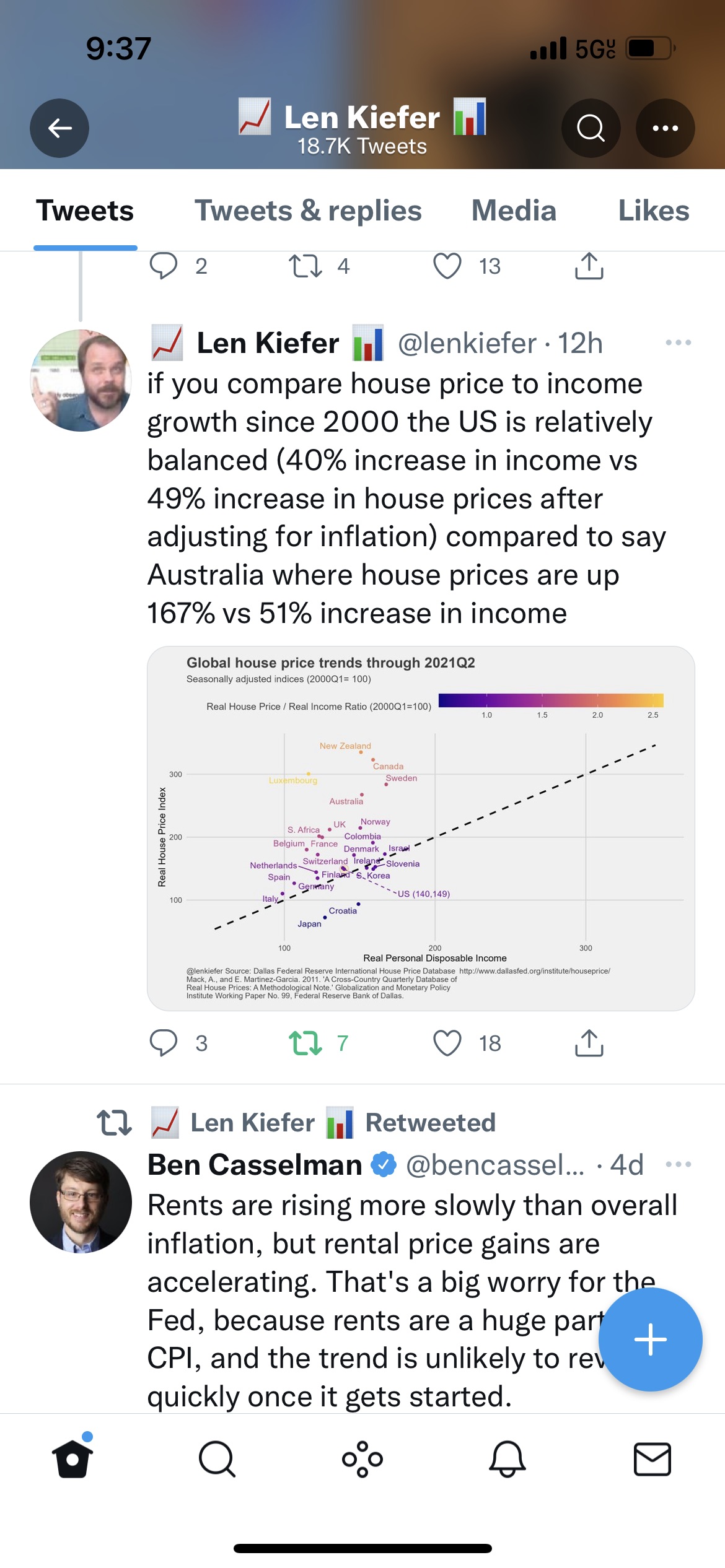
If you like graphics and real estate, you must check out Len Kiefer’s (Freddie Mac) twitter feed.

We have a little suburban newspaper that shows up in the mailbox on Thursdays. It’s called the Home Town Source and runs letters to the editor about local issues, covers the city council and school board races, and devotes three spreads to high school athletics. This morning an article about a Plymouth man caught my eye. He’s a perfect example of a connector.
Students in Ghana received more than 16,000 books last week as part of a collaboration between the African Diaspora Development Institute and Books For Africa, a St. Paul-based nonprofit.
The effort was led by Plymouth resident Jote Taddese, a former Books For Africa board president and a board member of the African Diaspora Development Institute. Taddese is also director of diaspora engagement for Books For Africa and a vice president of engineering at Optum Digital, a United Health Group Company.
The common interest here is literacy, an interest that transcends geographic boundaries. And the connector not only has ties to another continent through birth, but also experienced personally the benefits of picking up a book at a young age.
“As a person who was raised in Africa and educated in the diaspora, I am a living example of when we put a book in the hands of a child, we not only help fulfill the potential of the child, but also change the impact on the lives of individuals and the global communities that child will touch,” Taddese said. “This is my life experience that always inspires me to support kids in Africa with books.”
Taddese was born and raised in Oromia, Ethiopia, and immigrated to the U.S.
Not everyone is fortunate enough to be employed by an organization whose mission parallels so nicely with their private life. And the non-profit’s accomplishments are notable.
Last year alone, BFA (Books for Africa) shipped 3.1 million books, valued at over $26.2 million, and 224 computers and e-readers containing over 650,000 digital books, to 28 African countries. More than $3.1 million was raised last year to ship these books to the people of Africa.
But this story isn’t particularly new. The living standard differences between the two continents is so significant, and the lack of basic tangible goods like books so clear, that there is little to complicate the direction of the goods and services in arriving at their destination. The books in fact are what I call idle assets, sitting amongst a community unused, available at no cost except the work to get them to their new location.
Markets become trickier when the difference between groups vary less, when resources are not idle but need to be drawn upon, when ‘need’ is voiced loudly by people other than the intended recipients. In these cases we will need to rely on benchmarks for guidance.
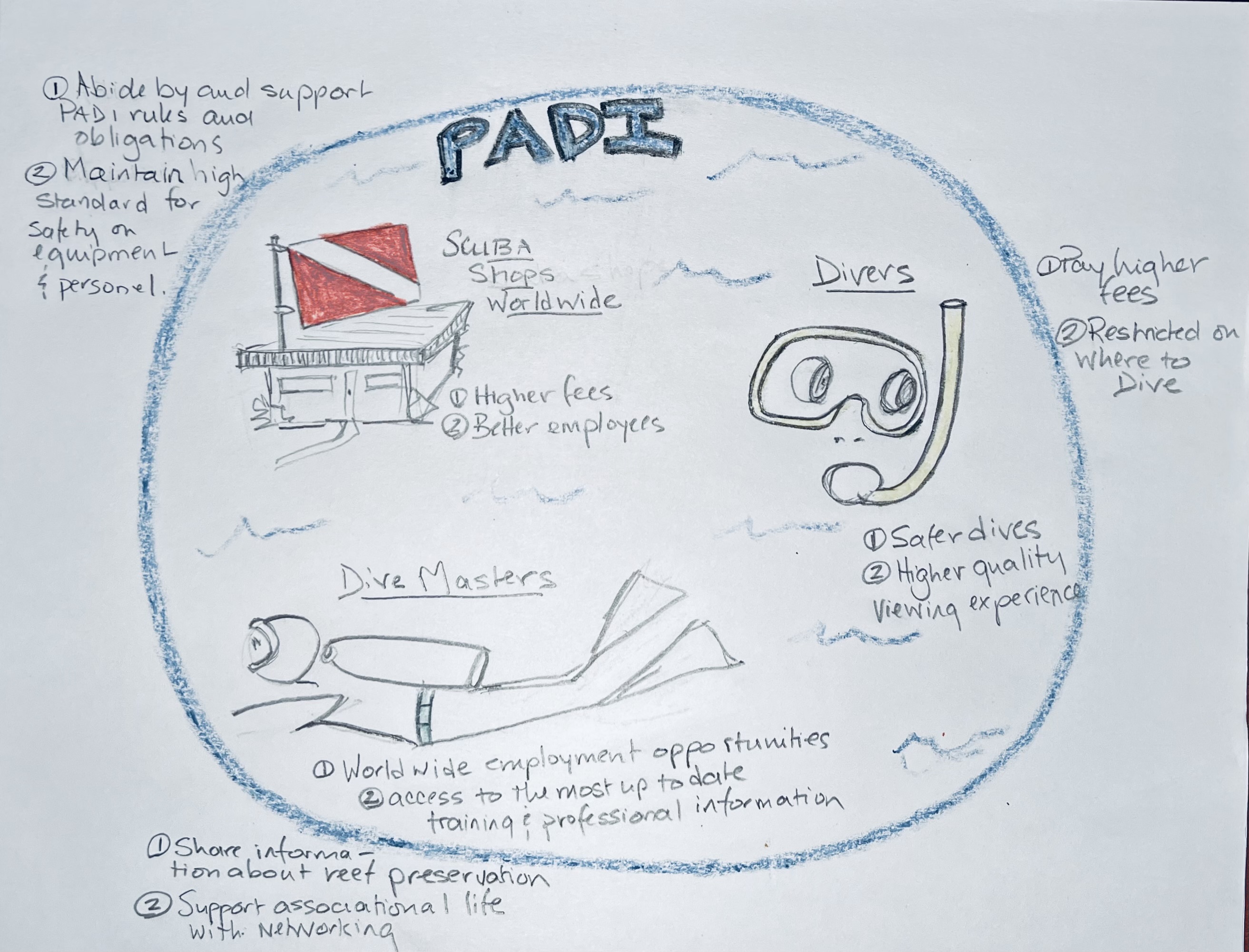
Say one wanted to figure out the impact of participating in affiliations with the professional association of diving instructors or PADI. First off we could identify three groups that are major players with the association: the dive shops, the instructors or dive masters and the divers who show up to be taken down to the ocean floor.
As I’ve attempted to sketch out each of these groups which internalize (listed inside the circle) and externalize benefits and costs in the relationship.
The divers, for instance, are willing to pay more to go on a two tank dive with a PADI shop and may adjust their travel plans or hotel selection to coordinate with the shop. But they do this because they feel they will experience a safer dive and see more sea life.
The dive masters who took us out in Kauai all had worked elsewhere including Honduras, Texas and the Caribbean. They also showed an active interest in the health and quality of the reefs in Hawaii and abroad. Just like so many outdoors men and women, they are important supporters of the environment they so enjoy, externalizing that knowledge and concern in so many ways.
Lastly the dive shops are able to charge more and internalize those profits but also must externalize the support and higher standards observed by the association.
Each of these actors are evaluating trade offs and making consumer choices in both fiscal matters as well as the degree of voluntary work or other concessions made in order to be part of the association.
A two tank dive isn’t simply $150USD. To get a grasp of the complete transaction would necessitate tracking all the components at time of exchange.
The other interesting aspect of this type of analysis is to see how externalize factors can be transferred between the groups of actors which come in touch with each other. For instance the dive masters are passionate about reef environment. As divers come through their work place there may be ways to capture idle assets to further reef preservation.

Did you know about Giving Tuesday? I didn’t. It’s a bit like Give to the Max Day, featured on this blog here. By creating a philanthropic holiday, a deadline is created to prompt procrastinators to write a check and send it in.
NPR ran an article about it today.
It’s #Giving Tuesday — a holiday marketing tradition inspired by Black Friday, Small Business Saturday and Cyber Monday, but with a twist. Today thousands of charities are asking us to open our wallets. But how can we be sure the group we donate to is effective — that we’re getting the most bang for our charity buck?
That question was vexing Elie Hassenfeld several years ago. He worked at a hedge fund, and he and a colleague wanted to give money to charity. Since they are numbers-oriented finance types, they wanted to maximize the results from their donation by finding groups that could offer the biggest impact per dollar.
“We were shocked by how little useful information was available,” says Hassenfeld.
Sure there were the rating sites that show how much a given charity spends on overhead and point up any red flags suggesting possible mismanagement.
But that’s not what Hassenfeld wanted to know: There was “nothing that said, ‘this is how much a charity can accomplish with the donation that you give.’ “
What’s interesting is that the article is a re-run of an article published five years. It seems there is a lack of momentum behind the idea. Hassenfeld indicates that he needed more information about the returns his philanthropic dollars would generate. So he took matters into his own hands.
And so in 2007, Hassenfeld and his friend, Holden Karnofsky, decided to start a nonprofit called GiveWell. The mission: Come up with an annual short list of charities they can recommend based on hard evidence. But it turns out this data-driven approach has its own set of issues.
It’s not surprising that the charities on their list are mostly located in the third world where cost of living differences create massive upsides for local employment of USD’s.
But perhaps there is something missing from a return on investment analysis. Maybe that is not the key index when it comes to why people donate. In order for a more lively engagement of philanthropic dollars at all levels of donors, maybe there is another sorting in addition to information regarding the scope and reach of the charities’ work.
Sounds trite, doesn’t it? Of course you are grateful for your family. No more of a surprise than you love your kids, as fiercely as I love these two beach bums:

The term family is often reserved for those with whom we share a household. The people who do the housework for the daily routine of food and lodging. But as we sat around our Thanksgiving meal this evening it was clear that the genesis of our lovely circumstances originated beyond the four sitting at the table.
Being thankful for good health, for example, cannot only be a tribute to our personal efforts. One must reach back and be thankful for all the good genes that have been passed down through the generations. And the habits of selfcare that were taught with quaint proverbs, like an apple a day keeps the doctor away, didn’t just pop into the family routine one day. But saying isn’t doing. Those who came before also showed us they were willing to pay more for fresh fruits and vegetables; they were willing to dedicate resources to better health.
The multigenerational passthrough of profitable habits doesn’t stop there. When parents establish the custom of aiding with advanced education, the gift is meant to tumble on down to the next generation and then onto the one after that. The payment of tuition is done with long views over a whole life, not short returns.
But when these habits of investing across and over people, of participating in a system of beliefs and not of immediate returns, then we are no longer talking about family as a gathering of four people. When choices have been thought through and tradeoffs considered; when families have evaluated outcomes and set norms; when all this circulates through decades worth of relations, then we are talking about something else. We are talking about family as an institution, as an economic force.
That is the sense of family we were grateful for this evening.
I pick up used books in all sorts of places. When I drop off a load of goods at the Goodwill (I have no patience for hosting garage sales, all that storing and sorting and ticketing), I always pop into the retail part of the store to see what books have found their way to the shelves. There’s inevitably an eclectic mix. That’s where I might have picked up A Bell for Adano, by John Hersey. I had never heard of it. The cover said it had won a Pulitzer Prize and a few page flips showed it was set in Italy. The odds were in my favor.
It started slow. About seventy pages in I’m questioning who this guy is–he studied at Yale and Cambridge, then taught for several decades at Yale. He was born in China. Interesting enough to keep plowing through the story of an American major put in administrative charge of a small Italian town in the early years following the allied victory in Europe. The writing is clear but unimpressive.
Then some economics filters in. He starts with endearing stories about wine and hair cuts.
He traced the black market in wine to the house of Carmelina, wife of the lazy Fatta. The very first person who bought wine from Carmelina, on the very first night of the invasion, was Corporal Chuck Schultz. Carmelina’s story to the Major was that the Corporal had just handed her a dollar and walked away. Schultz’s story was that the Italian lady had haggled and shouted and threatened to call the police. In any case, Schultz paid a dollar. The regular price for that grade of wine before the invasion had been twenty lire, or twenty cents.
Four soldiers sauntered into a barber shop one morning, and made motions with their fingers around their skulls that indicated they wanted haircuts. None of them could speak Italian, so they based their payment on what they had last paid for haircuts in the States.
Each plunked down a fifty cent piece and said: “Keep the change, Joe.” The regular price for haircuts had been three lire, or three cents, shaves had cost two lire. Here in one morning’s work, the barber had made two hundred lire. He retired to a life of leisure, and refused to cut any hair for three weeks, till his money gave out.
Then the vignettes turn more somber. There are two economic platters, that of the American soldiers and that of the local Italians. The clash of the two is upsetting a balance of exchanges. The most basic needs of the villagers are put at risk.
The welfare of the town was really threatened by the black market in food. Peasants, instead of bringing their grapes and melons and fresh vegetables into the town market, would go to the various bivouac areas and hang around the edges until they could catch a straggler. Then, in the heat of the day, they would tempt the Americans with cool-looking fruits, and would sell them for anywhere from ten to twenty times the proper prices. It got so bad that city people would buy what little fruit did reach the town market, and would take it out into the country to sell it to the foolhardy Americans.
To stop, or at least to curb, the black market, Major Joppolo did three things: he put the town out of bounds to American soldiers, who from then on could enter only on business; he had the Carabinieri stop all food-stuffs from leaving the town; and he fined anyone caught selling over-price or under-measure three thousand lire– a lifetime’s savings for a poor Italian peasant.
Major Joppolo is struggling with how to manage the economic forces which drive fungible exchanges for commodities, such as the desire to sell to the highest bidder. When two very different economies intersect with one another, how does one straighten out the obligation to community versus pull of premium pricing? How indeed do other social commitments, such as those to far away marriages, all pan out when distance and time and groups live temporarily in close proximity to one another?
I will read on to find out. I’m starting to like this guy Hersey.

When people refer to smart people they are generally talking about people who do well in school, people who go on to college, people who get professional jobs in fields like IT or legal or accounting or consulting. Those are the smart people. The ones who carried a high GPA, the ones who got into the best schools, the ones who decipher the paperwork that others can’t read. Smart people have high paying jobs with a fair amount of job security.
But aren’t smart people only really smart at book work types of things?
What smart people like to think is they are smart in ALL types of things. They are smarter than the guy who got a GED, until they have a flat on the side of the road and that guy comes to change their tire. They are smarter than the gal who had a baby in high school, until they are turning to that daycare worker for advise on the best finger foods for two year olds. They are smarter than the plumber who went to vo-tech until they can’t figure out the lack of water pressure in their pipes.
What smart people don’t get is that their self-appointed snugness creates an atmosphere of arbitrage when interacting with the less smart. What smart people don’t get is that, since they are in fact not smart in many practical things of life, those who are can take advantage of them without their knowledge. They can finesse a plugged j trap into a main drain flush. They can suggest the entire service door be replaced instead of just the rotted threshold board. They can recommend all sorts of more comprehensive solutions instead one that is simple and sufficient for the situation at hand.
What smart people need to get is that there are levels of smartness within each and every field. And thus it is to their advantage to treat with respect those who earn it within an occupation, instead of only respecting certain occupations.
It was a few years ago now that I introduce these structural ideas of capitalism as a system subjected to simultaneous influences of public and private interests at every transaction. My first approach was to make the argument that pure public goods really don’t exist. The classic example of the lighthouse, which provides a seemingly non-excludable benefit by beaming its bright lights across the water, can be taken private. As can virtually all goods.
More evidence that public goods, as classically defined, falls apart under scrutiny is fully unpacked here in Our Problem is a Problem of Design. (Wow, written some four years ago. Where does the time go?)
But the lighthouse, along with any other good, can have degrees of public and private holds on their value. And so it isn’t the nature of the good which determines it’s ownership, but the way that it is used by individuals or groups of individuals. The division of capitalism as the system of private interests and politics as the system of public interests isn’t the correct demarcation.
The division is that capitalism is a comprehensive economic system of public and private interests, where the actors simultaneously evaluate their private and their group (public) interests at time of transaction. The mechanism in each sphere is different but the end choice is a blend of the two. The division puts politics in a separate arena which handles the style and substance of governance.


If you follow my blog you know that my childhood was spent abroad as part of a US diplomatic family. My parents were partial to third-world countries, and living conditions often involved political upheaval. When we would return to Midwestern America for home leave or between postings, I found myself fielding questions about what had made it into the newspapers.
They were curious about the violence and warfare printed in bold across the mastheads. They were curious about the loss of life due to famine or flooding. In their minds, the reality of our domestic surroundings landed squarely between ghoulish and appalling.
What they couldn’t key into, and quickly lost interest in any efforts to follow an expanded explanation, is that the headlines were just snippets of life occurring all those miles away. There were still shopkeepers opening their storefronts, kids going to school, and bureaucracies slowly cranking out their workloads. The airplanes flew out of the airports, and cars took people to their appointments. You just couldn’t go anywhere, you had to stay away from the trouble.
People in the Midwest knew one thing about the places where we lived and they simply chose not to make a complex ecosystem of the foreign community part of their reality. This is us here in the US. Over there, across the world, they are shooting at each other. And before you judge my fair family members too harshly, don’t we all do that all the time?
For instance, do you remember the first time you met an individual with a substantial disability, like being in a wheel chair? Wasn’t the disability so all consuming that you couldn’t move it out of your focal view and enter the context of the person’s daily activities? Aren’t there areas in the city you live in right now that are inaccessible to you whether it be because they are too wealthy or too poor? The lives the people who live in those spots are out of the scope of your reality and it is hard to fill in the missing pieces.
The reason I bring it up is to emphasize that even though other people live in systems out of our normal patterns of activity doesn’t mean that our interests will never overlap. In fact there are probably many circumstances in which crossing paths could be mutually beneficial.
The point is to not get so distracted by one feature as to shut out entire groups of people from the reality of our lives. Because for as interesting as we all think we are, we are actually more ordinary than we’d care to admit.

Historically, efforts towards social amelioration fall into a category of charity or gift giving. It’s optional. It’s nice. Thus devoting time or resources to such things can only provide positive results.
So if your ambitions are to save a life, there is no possible negative outcome from your action. Whether your efforts are to curb climate change or to shelter the homeless or to raise funds for education, the number system only allows for a net positive social conclusion.
Living with the Corona virus has debunked such primitive thinking. The cautious trepidation at drug approval, intended to save lives, has most probably taken lives. The closing of schools intended to save lives, may have led to the rise in teens carjacking and in turn their tragic deaths when their joy ride collided with a street light.
Perhaps in the time before Covid it was more difficult to think abstractly about the positive as well as the negative outcomes. Perhaps it was too intangible to think that activism towards one cause, say gay rights, in fact squeezed out activism for addressing abuses in the criminal apprehension and persecution for petty drug crimes.
What the virus has done is lay bare at our feet the reality that it is not just in business matters that resources are limited, outcomes are interconnected, and well intended efforts can produce negative outcomes.
Negative numbers were not always accepted by mathematicians.
Thus, “modern” algebra is not so very modern, after all! To what extent is it abstract? Well, abstraction is all relative; one person’s abstraction is another person’s bread and butter. The abstract tendency in mathematics is a little like the situation of changing moral codes, or changing tastes in music: What shocks one generation becomes the norm in the next. This has been true throughout the history of mathematics.
For example, 1000 years ago negative numbers were considered to be an outrageous idea. After all, it was said, numbers are for counting: we may have one orange, or two oranges, or no oranges at all; but how can we have minus an orange? The logisticians, or professional calculators, of those days used negative numbers as an aid in their computations; they considered these numbers to be a useful fiction, for if you believe in them then every linear equation ax + b =0 has a solution (namely x = -b/a, provided a 0). Even the great Diophantus once described the solution of 4x + 6 = 2 as an absurd number. The idea of a system of numeration which included negative numbers was far too abstract for many of the learned heads of the tenth century!
A Book of Abstract Algebra, Charles C. Pinter
Although rationally it is accepted that there are tradeoffs in these choices between social interests, we don’t act like we know there are tradeoffs. We don’t do analysis like there are tradeoffs. We don’t approve funding like there are tradeoffs. There simply doesn’t appear to be an acceptance of the abstract concept that the allocations of time and resources function as an economy and not a charity.
My most underrated source of interesting books come from estate sales. You never know what you might come across, which is part of the fun of it. But you can be sure to see books that are not on the front tables at the bookstores. And you can actually stand there as long as you want sifting through them creating two piles: ‘maybe’ and ‘definitely.’
It’s a treat to come across a collection of philosophy books. Partly because people’s shelves often hold various genres of novels, but fewer homes house books on thoughts. I brought home a bundle a few weekends ago which included a Cornell University Press soft cover on the expansion of Rome. Chester G. Starr Jr notes:
If we are to understand the significance of Roman history and the reasons for the expansion of Rome, it is worth stop ping a moment to investigate this Roman character, as revealed in traditions and in religious beliefs. The traditions, which were preserved mainly in the family and so passed from father to son for generations, were often tied intimately with landmarks about the city; points such as the Tarpeian Rock, the Lake of Curtius, the Sister’s Beam, and others each had its tale pointing some patriotic virtue. Together, these traditions reveal a patriotic people who were above all else obedient to established, legal authority–the family, the state, and the gods.
The Emergence of Rome, As Ruler of the Western World by Chester G Start, Jr
When writers use the word tradition in this setting I really think they are referring to the work of the family, which ends up being in large part the work of women. The guys are off leading, soldiering or earning money. The women are maintaining the traditions. But note how clearly the groupings by mutual objectives are stated: family, state and gods.
Did the Romans understand better than anyone in their day that each of these obligations created an economic ecosystem or platter? That the mission of Rome could be an overarching ambition which left the families and their local cities free to pursue their priorities?
It appears that the Romans expanded across territories with a clear deal on the wind. Give us a few of your good men and you will be protected under the umbrella of the Empire. Other than that, we won’t tax you and you are free to go about your business.
As they advanced, the Romans opened up roads along strategic routes and established colonies of Roman and Latin families as permanent garrisons at key points. Land hunger certainly must not be discounted as a reason for the expansion of Rome; it has been estimated that conquered states on the average lost one-third of their land for the benefit of Roman settlers. Otherwise the defeated were not unduly penalized. They yielded control of their foreign affairs, they entered a permanent alliance with Rome by which they agreed to furnish a set number of men to the Roman army, but they paid no taxes and retained autonomy in their local affairs.
Furthermore the Roman infrastructure of roads, bridges and aquafers benefited the general public. The Romans understood how to give in public goods so that could gain what their warring faction desired, an army of the most physically able. A balance of exchange was struck between the multiple groupings of the public and the private.
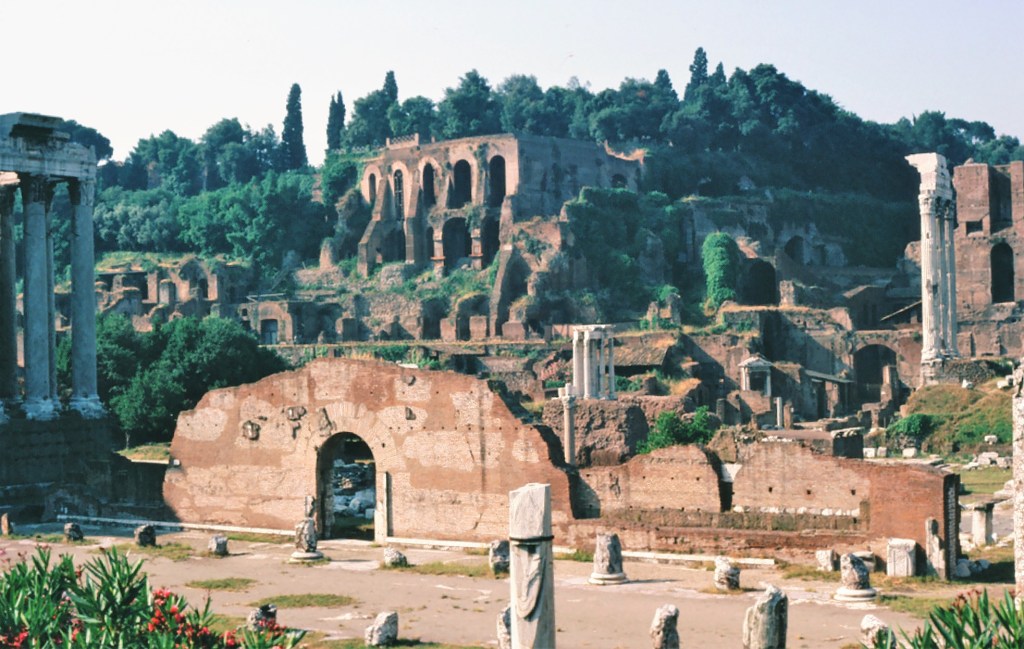
The real estate market has been moving so fast and furious lately that some buyers are opting to waive the right to have an inspection on the home. This way the seller knows the negotiations are done once the papers are signed. A couple out in Pennsylvania also forewent an inspection when they came across a hard to find parcel in their preferred school district.
Weaver bought the 1872 farmhouse in Skippack, about 30 miles northwest of Philadelphia, in December and told CNN the seller’s disclosure mentioned there were bees in the wall. But since the couple bought the home in the winter, she said the bees didn’t seem to pose much of a threat at the time of purchase.
“On the seller’s disclosure it said ‘bees in wall’ and that was it and I think because one, we didn’t see them and two, we were just so floored that we actually found land in the (school) district that was within our price range that I didn’t really ask any questions about those bees. I didn’t think it would be that big of an issue. It didn’t even cross my mind but when spring arrived that’s when we started to see them.”
https://www.cnn.com/2021/08/02/us/pennsylvania-honeybee-removal-trnd/index.html
The seller is obliged to disclose. If you are in doubt whether to mention the bat you found on your front stoop, write it down. It can’t hurt. The buyer is obliged to investigate any concerns prior to writing their offer, or during an inspection contingency. It is better for everyone to know what is exchanging hands.
In this case the package included 450,000 bees which had created a home for themselves within the wall framing over a thirty-five year period. It’s not uncommon to see a bee around the ridges of clapboard siding or hovering at the soffits, selecting a site for a hive. Perhaps that is what came to mind for these buyers. (Although it is hard to see how they missed the honey dripping down the wallpaper inside.)
In any event we need the bees! And it is great they were able to find a professional who knew what to do.
Over the span of a week, Lattanzi removed each and every tile on the portion of the home the bees occupied, treading carefully to not harm the bees and find the queen, which he found Friday.
I like to plants flowers to promote the bee population. They seem to like my tea roses the best.

Public goods affect the price of housing– but not always in the same way. Here’s a list of the good and its special influence.
Most mercurial: crime. Public safety is a clear deal breaker for consumers. If residents fear for their personal safety, they will move. News of this nature travels fast. And the result is that people react quickly with an inverse correlation to price.
The master delineated: school districts. The influence of public goods can hang loosely around an area, such as the effects of being near an arts district. But the opposite is true when it comes to school districts. The home is either in or out. The selection of schools makes for bold dividers in the search for homes.
Uniformly utilitarian: transportation infrastructure. Commuting distance to work and distance from family and/or support groups is very much a part of the home selection process. So time to and from major employment hubs effects pricing, as well as marketability in a downturn markets. But people are not passionate about transportation, it doesn’t bring forth a feeling of any sort. It is simply a useful fact of daily life.
The most hidden: status. People don’t like to admit it’s part of the deal. It is communicated in hushed tones that so and so politician raised his family one street over, three houses up. The name of a famous writer who own the book store in the quaint brick store front across from the park and elementary school slips into the conversation. Status is made known in an understated yet clearly revealed parlance.
The most emotional: historical districts.
Most long lasting: parks. Once parks are made part of the city grid they are there to be enjoyed for generations. Nature in its wisdom is seasonally consistent with it lessons of growth and beauty, change and renewal.
The following infographic compares total venture funding in Real Estate Technology to the number of companies in each category. Which Real Estate Technology categories do you think have the most traction and potential for growth? At Venture Scanner, we are currently tracking over 642 Real Estate Technology companies in 9 categories across 46 countries, with a total of $9.5 Billion in funding. To see the full list of 642 Real Estate Technology companies, contact us using the form on http://www.venturescanner.com.
Venture Scanner
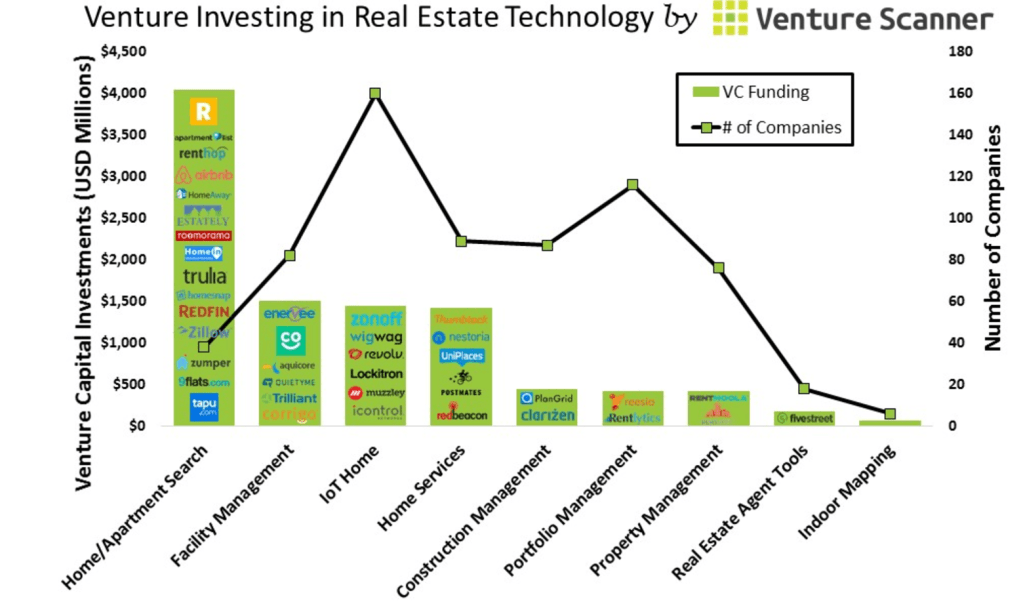
Since Zillow and Trulia became part of the real estate experience over a decade ago there has been an onslaught of technology companies attempting to disrupt the business.
Yet realtors and clients are, for the most part, going through the same processes in a move as they did in generations past. Was technology more about how information is delivered than about a new means of moving (in the purchase and sale of real estate)? Is technology providing a means of communicating and marketing instead of fundamentally changing the real estate transaction?
Maybe more on point is which of these technology companies will survive by providing a superior service and which will go to the wayside.

The old school way of thinking about markets was that anything traded with money was a rational exchange. Any trades involving domestic issues- family, health and well being and so on- were emotional. The world of men was based on pecuniary calculation. The world women was based on the heart. Thankfully such views are considered old fashioned.
Markets are the culmination of thousands of choices, but sometimes the people behind them are reacting with emotion. Take the corn and soybean market this spring as reported in Successful Farming:
The corn and soybean markets have had a tumultuous last three months. A significant rally in both was followed by a sell-off, then a recovery to challenge highs and then, another sell-off.
Each of these moves has been more than the markets have rallied or dropped in over five years. Corn futures peaked on May 7, rallying more than $1 in three weeks. Dry conditions affected the second crop corn in Brazil, otherwise known as safrinha crop. This was on top of a rally of more than $1 since fall. Just as quickly, December futures lost $1.38 on good U.S. planting progress. They then rallied sharply for the second time, with futures peaking at $1.28, as dry weather in the U.S. became a growing concern.
Farmers have the option to pre-sell their crop through the spring and summer. And often this is done in segments, so it is not a one and done decision. Needless to say, following worldwide ag conditions and gleaning insights into pricing can be stressful.
All this volatility can become exhausting, leading one to believe there is no real way to figure out markets and, therefore, perhaps the best thing to do is nothing. While understandable, this can be an expensive perspective.
When December corn futures rallied and traded above $5.50, it was a price that hadn’t been seen in seven years. When prices peaked at $6.38, this was even better, and farmers who did not sell at $5.50 were happy. Yet, in a very short time, prices dropped from $6.38 to $5.00.
For over a year and a half, the strong sellers’ market in housing has forced buyers to bid on homes in multiple offers. The listing price is set, but there is no way to know what other parties are bidding. In addition to offer price, closing date and terms come into play. Through the experience of making an offer, and failing to secure the winning bid, buyers learn what it takes to be successful.
What never gets dull is watching how the bulk of the buyers will bid within a relatively small variance. Independ of each other, without knowing more than a list price, out of eight bids on a house, five are likely to be within 2% of each other. It’s the bid from the buyer who has had enough, who has looked enough, or who wants it bad enough, which will reach high and secure the home.
The emotion for the farmers and home buyers is over fleeting opportunities, one for annual income and the other for the place they plan to live out their lives. But emotion doesn’t mean markets aren’t working. Emotion is just another feature. Just like the sentiment that goes into owning a Crist Craft, like the one in the photo, to splice through the waves on Lake Minnetonka.

The title Minnesota Farmers: Cashing in on the carbon bank, fighting climate change? says a lot about the direction this article takes. Farmers in the Mankato area are taking advantage of a new Biden initiative towards climate change.
President Joe Biden said he wants American farmers to be the first in the world with net-zero greenhouse gas emissions. How they might achieve that goal is still unclear — but one idea getting a lot of attention involves paying farmers to store carbon in the soil.
It’s called carbon banking, and some see it as one way to reduce the level of carbon dioxide in the atmosphere. While the concept has been around for decades, it’s still finding a foothold in ag-heavy states like Minnesota.
The mechanics of this deal goes something like this. When farmers extend the extra effort to bury carbon in the soil, they get paid for their work from corporations. In exchange for the dollars given to the farmers, the corporation receives a credit which allows them to pollute. Net result: the farmers don’t pollute but the corporations do.
Lilliston agrees that the work and money farmers like A.J. Krusemark invest to store carbon will have long-term benefits for the environment. But he argues that all that work won’t do much to help mitigate climate change if big companies are then allowed to buy those carbon credits to offset their own pollution.
This arrangement probably won’t last for long as the farmers are going above and beyond their compensated efforts, while the corporate credit purchasers are not. One group is working toward a mission, one is buying their way out of the mission. The incentive signals are all wrong. Furthermore, the groups are poorly delineated. We all have an interest in global climate change, but voluntary cooperative efforts seem to work better when the players are closer and can see progress.
Skeptics of carbon banking practices say that, in order for it to have real climate impact, the carbon storage must come in tandem with reductions in greenhouse gas emissions — not as a replacement for that pollution.

Walking is not only good exercise but is a way to touch nature. Ho Hum you say– but not so fast. Even on a well trodden path around Fish Lake Regional Park you can play the “identify the tree game.” Disclose your guess. Take a photo of the leaf. Then have google lens look it over, and “voila!” You have a winner.
The two on the left are the Norway Maple and below the Red Maple. In the middle, coming at the tips of wonderfully craggy branches, are the Red Oak and the Gambel Oak. And to the right top is the American Elm– really hard to find the elms as they were taken down by Dutch Elm Disease And below the White Poplar, which look to have canopies of coins jingling in the sky when the trees grow enormously tall.
Still not impressed? Nature shows us how to sort. How to see things that are similar and things that are slightly different. And then we have to give them names so we can talk about them. This is useful.
Then you can see how other things have properties in common, and see their differences. Take 1. Midwest men laid off after jobs went abroad, 2. Renters resisting gentrification 3. Proponents of environmental reviews. All three are (were) caught (fear being caught) out by the greater group accepting an exchange that will leave their situation worse off.
When America agreed to trade away manufacturing jobs, workers were left unemployed and unable to regroup. When a deteriorating neighborhood gleans the interests of redevelopment, those without the foothold of ownership face higher monthly expenses. When a mine in Northern Minnesota opens, the fear is that it will pollute and damage the environment.
In the first case the damage was done and the fallout was deemed to be larger than first anticipated. The thought was that workers would be able to adjust, take on new employment, and carry out their lives. Note to self: cash derived from private employment is only one aspect of a job, other social aspects include status, stage of life, relationship to others in family.
In the second case, renters are organizing to stop improvements and redevelopments in their area as they feel they will not benefit in any way. They feel that they will loose by either having to move to another area within their price range or face higher rents justified by the neighborhood improvements. Given the lack of understanding of the complete package of social implications and costs in 1., there must be a better calculation for the compensating factors for renters while still proceeding with neighborhood rejuvenation goals in 2.
Environmental reviews appear to have become a political way to slow down a project to the point where investors simply move on. The best way to discourage business– just keep requesting more stuff. If the community has standards, as all of them do, then enforce the standards and be done. It’s up to the business to take the risk. They will be the ones shutting down if they can’t.
All three scenarios involve transactions between public groups and private interests at multiple levels. Each scenario describes a little piece of a very large system. The conflicts and aggravating conversations around such issues stem in part from a lack of enumeration of the various tradeoffs at play. Striving for a proper sorting of what is public and what is private will contribute to being able to count it all out.
If you prefer drama to comedy I can recommend the HBO series The Wire. The first of five seasons came out in 2002 when the TV in our house was featuring Barney and Dora the Explorer. A crime drama portraying the grisly conflict between law enforcement and the (mostly drug) criminals wasn’t in the cards.
The story lines hold their own with intrigue and surprise, along with character development. Every season probes a new scheme, a new crew of gangsters, while bringing along the established cast and story threads from past seasons. From Wikipedia:
Set and produced in Baltimore, Maryland, The Wire introduces a different institution of the city and its relationship to law enforcement in each season, while retaining characters and advancing storylines from previous seasons. The five subjects are, in chronological order: the illegal drug trade, the seaport system, the city government and bureaucracy, education and schools, and the print news medium. Simon chose to set the show in Baltimore because of his familiarity with the city.[4]
What holds up so well is the consistency of the norms, whether they are those which the criminals obey or the ones the mainstream players abide. Each side has heroes and crooks, has chivalry and villainy. Each side has bad luck and good fortune. Each side has weakness and substance abuse. A few try to pass from one side to the next.
The Wire is lauded for its literary themes, its uncommonly accurate exploration of society and politics, and its realistic portrayal of urban life. Although during its original run, the series received only average ratings and never won any major television awards, it is now widely regarded as one of the greatest television shows of all time.
The Wire – Wikipedia
You will also realize how far technology has come in the last twenty years. The primary tool used to capture the drug dealers is “by getting up on their phone,” or getting court authority to tap phones. When the first season opens these are pay phones on the corners of the gritty streets of Baltimore.
As long as you can tolerate a little violence, it’s well worth a watch.
When I picked up Steinbeck’s In Dubious Battle it was to ensure a certain caliber of writing. Only good luck would have it that farm workers, activists and landowners struggling over resources was the subject matter. Steinbeck sets up the social and economic dynamics of which I speak. Now I’m only a couple dozen pages into The Winter of our Discontent (1961), and I’m realizing that this is his thing. Take this passage where the protagonist Ethan is trying to describe to the Mr. Baker, the banker, his frame of reference around investing his wife’s money.
Ethan started an angry retort- Course you don’t under stand; you’ve never had it-and then he swept a small circle of gum wrappers and cigarette butts into a pyramid and moved the pyramid toward the gutter. “Men don’t get knocked out, or I mean they can fight back against big things. What kills them is erosion; they get nudged into failure. They get slowly scared. I’m scared. Long Island Lighting Company might turn off the lights. My wife needs clothes. My children-shoes and fun. And suppose they can’t get an education? And the monthly bills and the doctor and teeth and a tonsillectomy, and beyond that suppose I get sick and can’t sweep this goddam sidewalk? Course you don’t understand. It’s slow. It rots out your guts. I can’t think beyond next month’s payment on the refrigerator. I hate my job and I’m scared I’ll lose it. How could you understand that?”
“How about Mary’s mother?”
“I told you. She sits on it. She’ll die sitting on it.”“I didn’t know. I thought Mary came from a poor family. But I know when you’re sick you need medicine or maybe an operation or maybe a shock. Our people were daring men. You know it. They didn’t let themselves get nibbled to death. And now times are changing. There are opportunities our ancestors never dreamed of. And they’re being picked up by foreigners. Foreigners are taking us over. Wake up Ethan “
The banker is trying to talk Ethan into being a risk taker, an investor. Ethan doesn’t have the stomach for it anymore. He lost ownership of the family grocery store, and it was more than a pecuniary loss. He lost social standing, he lost piece of mind, he lost dreams of his children’s future, and most dear to him, he feels he has lost his wife’s admiration. The slow process of exchanges that led to his financial demise was ‘the erosion’ that killed his spirit.
As history will have it, this played out during the more recent great recession, when everyday people were taken up short by the reality that they were going to loose their house through foreclosure. The evidence was there for anyone showing foreclosed properties to witness.
For the most part bank owned homes are in rough shape. An extended period of tough financial times results in missing cabinet hardware, water stains where a leak was left to drip, flooring worn right through to the subfloor. Foreclosures were a mixed bag in 2010. Frequently the properties were neat as a pin. Vacuum marks still tracked in the carpet. Appliances were clean and left intact. Sellers maintained pride in their home until they had to leave the keys on the counter and lock the door behind them.
But the strain of the situation, the erosion of spirit, kept people out of homeownership well past the three to five year waiting period as required by credit considerations. It’s a pretty safe bet that not only were their ambitions of ownership curtailed but also those of their siblings and people in their close circles. People who supported them emotionally through the process. The homeownership rate for Millennials is only 43%, well below any other cohort. And I don’t believe it is all about student debt.
But back to The Winter of our Discontent. The banker wants an investor and looks first to a man who comes from a family with experience. He makes an assumption that his best candidate comes from the pool of past business buddies. I’ll have to keep reading to find out how it all shakes out for Ethan and Mr. Baker.
But what I think we should take away from all this is that the emotional draw or drawback from participating in transactions whether for a house, or a police force or a business venture is much more dear and lingering than we acknowledge. And it cannot be ignored. The compensating factors to pull people back into those markets are perhaps partly pecuniary, but mostly something else. The need for a new entrepreneurial spirit may be harder to incentivize in the old pool and easier to energize in a new one.
What we need is to be better accountants of all the social implications of our pecuniary endeavors.

For as much as the US is associated with markets you would think that its citizens would have a pretty good feel for what they entail. But most Americans are removed from the mechanics of haggling in their daily lives as most of their consumer purchases are priced and on the shelves of the shops (virtual or in person) of their liking.
Americans actually don’t like to bargain that much. They simply don’t have that much experience. Even at markets that resemble the one pictured above, prices are honored. Every five years or so, in order to purchase a car, there maybe some uncomfortable bartering. Still many will doubt whether they got a good deal. And no one likes to feel they’ve been played the fool.
It’s a shame too, because it leaves a portion of the population disassociated from the moving impersonal parts of large groups of buyers and sellers weighing options and landing on agreeable arrangements. Traders know what it is. Auctioneers. But if anything a whole gaggle average people associate markets with the negative outcomes in some market transactions.
And since they dismiss markets as a mechanism, one that shuffles through a bunch of decisions made by their peers as they weigh options, they feel they best route is to pick arbitrary numbers and set floors. You can hear it in the rationalizing for rent control or minimum wage. We’ll fix the market!
They’re not fixing anything. They are interfering with a market. Which of course will resonate elsewhere in the system, resulting in the ever tiresome and now cliché– unintended consequence.
It’s in the comments!

With Non-Fungible Tokens (NFT) -digital artwork- making headlines in the art world by commanding sales of $69 million, I thought it would be interesting to ferret out other non-fungible things. Remember the NFT works of art are not retractable from the crypto space as their unique identifiers are encoded in blockchain.
Take the the Crown Jewels of England, protected safely in the Tower of London. Wikipedia says the owner of the collection of a bejeweled crown, two sceptres, an elegant orb and a ring is Elizabeth II. But can she sell them? Perhaps technically she could– but not really. They are not tradeable, hence non-fungible. So if they cannot not be exchanged for cash, does it follow that they are not worth cash?
Take another example closer to home. Say you are dividing out the belongings from your parents home and one of the possessions is grandma’s Limoge china, a place setting for twelve with serving dishes. Your brother says it’s quite valuable, so you can have it and he will take the mutual fund account. The thing is, you wouldn’t sell grandma’s china because it is part of your family history. In this sense it is not worth cash, and hence is non-fungible.
What about activities instead of objects. Say you have two people and one eats three square meals a day while the other stuffs down the occasional bar food between beer and cigarettes. By late middle age the former exercises regularly and is feeling good. The later is sporting the wrinkles of someone twenty years his senior and the voice of two packs a day. The results of choices on how to treat one’s body is non-fungible. A health condition, whether good or bad, can not be separated, traded or sold off.
You would think currency is the ultimate fungible product. It floats around through computer screens with the ease of electricity. But consider this example. You’re on a beach vacation and you offer to pay the knickknack vendor in USD or in their local currency. She opts for US cash. If you can offer both in equal value, why should that be? The strength US currency, and hence the fact that it is widely accepted as a form of payment, is non-fungible. And makes it more desirable. Even currency has portions of its value assigned to non-fungible qualities.
Have any examples of your own? Leave them in the comments!
The condo market continues to have growing inventory in this fast hectic market. (Or maybe part of the market is hectic because condos are being ignored.)
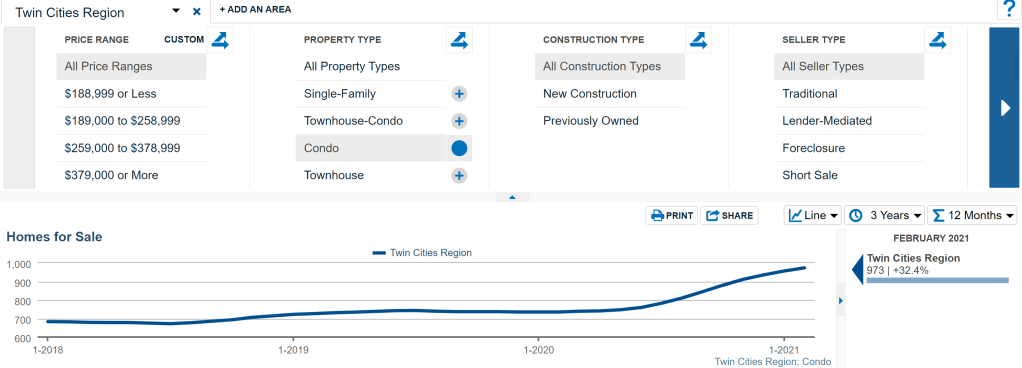
Either way, this won’t last forever folks! The extra inventory allows for better selection and better pricing. But in that funny way markets work, this opportunity will be taken for granted until it’s gone. Then there will be regrets.
Parents beware- Watch out for children’s books! First Laura Ingles Wilder’s memoires of life on the prairies of Minnesota and Wisconsin were warping young minds with an inaccurate portrayal of a free and self-reliant frontier. Now the linguistically entertaining word-strings penned by Ted Geisel are riddled with caustic racism.

Today’s price on Amazon for a copy of On Beyond Zebra is $650. What accounts for the 38 fold price increase? (Barnes and Noble still has the ‘out of stock’ hardcover listed at 16.99.) Cutting off supply seems like the traditional way to look at it. Stopping the presses from printing such offensive material indicates a future scarcity. This isn’t the first book to become dated so as to be dismissed by the publishers. Most of these tomes are simply forgotten, found for a few dollars on a table at a church sale.
In this case, the books are being withdrawn them from the market by those who hold their copyrights. On Beyond Zebra, however, is a relatively unknown Dr. Suess book. There are other discontinued books for sale by famous authors. Zane Grey’s The Vanishing America can be had for $3.79. Cass Timberlaine by Sinclair Lewis is posted at $5.39. And Pebble in the Sky by Isaac Asimov is $3 even. (So much to read–so little time)
The extra $633 dollars is the result of a social or community change. The premium for this copy, on this day in March, is a social component arrived at through the market pricing system we know as Amazon.

As you can see from the graph, the inventory of homes for sale in the Twin Cities had been fairly consistent until people emerged from the Covid lockdown and started buying last June. Now we are down 31.4% over last year. Buyers are buying but not enough sellers are bringing their homes to the market.
I speculate that some sellers are waiting until herd immunity as they are not comfortable interacting with the public. Some are being sold off market to Millennial children who are just now starting family formation. And some are being protected by stays which keep people in homes until after the crisis.
The NFT’s (non-fungible tokens) are making news in the art world as auction house “Christie’s Will Become the First Auction House to Offer Non-Fungible Token Art.”
Last December, an artist who goes by the name “Beeple” made headlines when he set a new record for the most valuable artwork auctioned off Nifty Gateway, a marketplace for limited-edition digital items. Beeple sold 20 artworks for a total of over $3.5 million, catching the attention of those who might not previously have known about the existence of NFTs, or Non-Fungible Tokens. While just a few years ago blockchain-based art might have been considered niche, a recent development proves this is no longer the case: on Tuesday, Christie’s announced an upcoming auction featuring thousands of images created by Beeple that have been compiled into a single composition.
The actual art looks very much like regular art. And are trading amongst buyers and sellers at a nice clip. Bitcoin.com reports that in a week last August there were 14,654 sales and $1.2 million in weekly trade volume. This piece by Trevor Jones commanded a nice price.

So what about the NFT- or the non-fungible token notation.
Crypto art relies on non-fungible tokens, or NFTs, which are usually issued with an Ethereum token, ERC-721. This ensures verifiable digital scarcity; each artwork is a uniquely distinguishable digital asset—no two are the same.
Crypto Art Sales on Ethereum Reach a Record $80 Million – Decrypt
At first glance it seems to be a certification of sorts, a blockchain version of an identifier to keep track of the art work’s provenance. An authentication certificate more than anything else. In the artworld the story of where a piece was produced and who has owned it since, is an integral part of preserving its authenticity. The token is attached to the piece and hence is non-fungible.
But something is missing from this conceptualization. Fungible has the quality of being able to be exchanged with other goods. The auction activity indicates a product that is very tradeable. Since these NFT’s are bought and sold freely, there seems to be a contradiction. Zoup at non-fungible.com tackles some of the issues.
zoup: I had several passionate debates during Meetups around the definition of non-fungibility. And I must confess… most of these debates turned out to be sterile but, they helped me understand something important: the definition of non-fungibility is everything but obvious.
Zoup explains that bitcoins are fungible in the same way that nickels, dimes, quarters are easily exchanged. A precious coin, however, is something different. To a collector a nickel that was mistruck during production can have significant value. To a collector the deformed nickel is non-fungible. And it is in this way the non-fungible tokens make digit art unique. Hence zoup comes to this conclusion:
It is therefore the use value that defines the fungible or non-fungible character of the asset. And not its technical characteristics. The main use of an asset and the perception that one can have of it define fundamentally if the asset is fungible or not.
Why most definitions of “non-fungible” are incorrect. – NonFungible.com
It is here that I propose a clarification needs to be made. The quality of being fungible, by definition, indicates an attachment to a group, as it is the group which determines its use.
Let’s try to disprove the idea and see what happens. The mistruck nickel is non-fungible when held within the collector group, it is precious, it has a unique story. To a kid who wants a coke on a hot day, the nickel is simply five pennies towards his purchase. He pops the coins into the slot on the side of the machine without another thought. He is using the coin as a fungible asset.
The quality of non-fungibility is attached to transactions that exist within groups. NFT’s find value in the crypt-investors sphere, but I doubt you would find much interest at the local VFW. Outside of this very specific group of people who understand the crypto space, the value goes to zero. I’ve written about fungible versus non-fungible transactions. I claim that when non-fungible assets are held within a group, they are a public good. All investors share equally in the assurance that the tokens represent a unique asset.
When a group assigns a use to an object- a park bench, for example, is open to the public in a park- then the bench is a non-fungible asset (it can’t be rented out or traded by any one individual) that is held by the group. When the crypto people decide to use tokens as identifiers, they’ve created a certification process that legitimizes an artwork by the community. And that is non-fungible.
I’ve said it before. It’s all about the group.
A handful of years ago a new term showed up in housing forums and real estate continuing ed classes. NOAH. The acronym stands for naturally occurring affordable housing. The Greater Minnesota Housing Fund explains:
The majority of affordable rental housing in the United States can be found in modest apartment buildings in every city and suburb.
These units are home to every stripe of renter and receive no federal or state subsidy at all. These Class B and Class C rental units comprise the bulk of affordable housing in the country today, but there is nothing to guarantee that they will stay that way.
Nationwide, this affordable rental housing is at risk. In prime real estate markets, this “naturally occurring affordable housing’ (NOAH) is often operated under poor management or in disrepair. Speculators are eager to snap up these developments, upgrade a few amenities, and convert these once-affordable homes to higher-market rents. This loss of affordability threatens the stability of individuals and families who are displaced, and even entire communities.
It was like a frosty burst of January air through an open front door. A much needed break from endless harping on ‘building’ more affordable housing. New construction is the most expensive form of housing and how it is in a community’s best interest pay top dollar for very few units is anxiety rising for any spendthrift.
It is equally refreshing to read that a real estate investor in Charlotte, Mark Ethridge, is building on the concept of NOAH. Here’s how he got started:
Ethridge had watched for years as properties like this were snatched up by big money investors who’d quickly renovate them, jack up the rents and then sell them off for a quick profit. With an estimated 120 people moving to the city every day and an economy on the rise, growth in Charlotte had put these kinds of apartment complexes in the sights of housing investors who saw them not as affordably priced homes for lower income residents but as undervalued assets.
Ethridge has attracted a bunch of like minded people to run up a $58 million fund for the purpose of providing housing at below market rates. The difference here is that his investors will receive annual returns on their investments, just at a reduced rate.
Bowles insists this is not philanthropy, and giving the fund a for-profit structure was a way to bring the discipline needed to ensure it would work for the long run. “We are capitalists,” he says. “We believe in capitalism. But if it’s going to survive, we have to make it work for more people. A lot more people.”
The city is still involved with help on the financing end of things and in return there is a twenty year deed restriction placed on the title of the property to ensure 80-100 percent of the units are rented to residents at the low end of the income scale.
Ethridge calls the effort “social impact capital,” and he says the Housing Impact Fund’s investors recognize that their investment can be both beneficial to society and profitable. “The nice thing about buying existing properties, unlike new construction, they cash flow the day you buy them,” Ethridge says. “So we will pay quarterly returns to our investors and we expect that cash flow to be relatively consistent.”
Humans have been sorting, measuring and trading for over 5000 years.
Standardized by shape and weight: 5,000 years ago, people used rings, bangles and axe blades as an early form of money.
The concept of fair or equal trade shows up 2500 years before ancient Greeks lean-in to put words to the consistencies of human existence. It was important enough for folks to hone skills to gauge the weight of a trading token.
The Dutch researchers examined more than 5,000 bars, axe blades, and rings from the period of 2150-1700 BC. The examined objects came from different archaeological sites, including in what is today South Germany, Austria, the Czech Republic, as well as North Germany and southern Scandinavia. They found not only single objects, but whole collections (hoards) of several hundred pieces.
It appears that in addition to having found the benefits of doux commerce, man of the Bronze Age was familiar with greed and hoarding. There are some constants in the world.
Have you ever noticed that there are yes jobs and no jobs? Attorneys are likely to say, “No, that’s too risky.” What would we do if all entrepreneurs listened to their accountants when they called up to say, “No, we can’t afford that!” Then there are processing types of jobs who like to say, “No, that’s not included in your policy.” Luckily there are visionaries that say, “Yes, let’s build a skyscraper!” And keep saying yes to all the naysayers as they wade through setbacks and plan approvals. And there are journalists that say, “Yes, we can meet the deadline for that story!” Then there are the killjoys, “No, no, no drag racing is not allowed, even if everyone is home on Covid lockdown.” But seriously, do you think Elon Musk says yes or no?
When you read something like this:
Online registration launched at noon but was disrupted within an hour as the website was overwhelmed with a peak of 10,000 hits per second. The site closed to new registrants at 2 p.m. in order to serve people stuck in a waiting queue, but in the end connected more than 5,000 people with vaccine appointments this Thursday through Saturday.
Seniors surge to Minnesota site to register for COVID vaccine – StarTribune.com
It feels like the vaccine distribution got assigned to the risk monitor, process types instead of the we-can-meet-that-deadline types. Give the right job to the right people.
In a Bloomberg article yesterday, Laura Millan Lombrana encouraged governments attending the United Nations climate talks to push oil and gas companies to fix methane leaks. Due to new satellite technology, which helps identify the location of the seepage, there is an economic efficiency argument to such action.
Methane emissions need to fall 70% over the next decade, a decline equivalent to eliminating CO₂ emissions from all cars and trucks across Asia, according to the report. Fixing methane leaks would be cost-effective for energy companies because the captured methane can be sold as natural gas. The cost of repairs and maintenance needed to capture methane can often be paid for by the value of the additional gas brought to the market.
The new information (as to where the pipes are leaking) is one driver for action, but there is also the notion that the low emissions benchmark, set in the Covid year, offers up a new goal. This combination of information and technology coupled with motivation, made me think of Harvey Lieberman’s concept of “X”-Efficiency. He was a professor at Harvard and is best known for coining this concept. Here’s how he describes it in Allocative Efficiency vs. “X”-Efficiency.
Our primary concern is with the broader issue of allocative efficiency versus an initially undefined type of efficiency that we shall refer to as “X-efficiency.” The magnitude and nature of this type of efficiency is examined in Sections II and III. Although a major element of “X- efficiency” is motivation, it is not the only element, and hence the terms “motivation efficiency” or “incentive efficiency” have not been employed.
He identifies the possibility of meeting a higher efficiency with new motivations, usually in combination with other factors. In the Bloomberg article, the sense of urgency around climate change motivates fixing the methane leaks.
The level of unit cost depends in some measure on the degree of X-efficiency, which in turn depends on the degree of competitive pressure, as well as on other motivational factors. The responses to such pressures, whether in the nature of effort, search, the utilization of new information, is a significant part of the residual in economic growth.
It’s hard to know for sure, but it sure seems like Leibenstein’s “X”-Efficiency refers to the efficiency attained in the blending of the public and private spheres.

For as long as I can remember, my mom tackled an extensive Christmas mailing with mimeographed updates of our family’s progress printed on colored paper. My job was to fold and insert these single-spaced typed communications into elegant cards purchased from UNICEF.
The greeting cards provided a means for people to support the United Nations International Children’s Emergency Fund while purchasing a commodity. Girl Scout cookies blend this genre of multi-function purchase. And some large retailers, like Target, will donate a percent of the purchases to the school of the customers’ choice, distributing funds to public good providers in much the same way.

When a UNICEF ad appeared as I scrolled through my Facebook feed, I clicked to see what they were up to. Holiday cards are still a mainstay with 18 categories to filter through and hundreds of choices from there. But that’s not all. The site has an extensive offering gifts, jewelry, and so on.

They’ve stepped up their offerings but also their accounting of how much the purchaser will contribute towards the benefit of desperate children. For just shy of a hundred dollars the buyer receives a hand crafted ring, and prevents 54 children from contracting measles. In addition to laying out the the tally of how many lives will receive a health benefit, the site allows the buyer to meet the artist. These brief bio’s can further connect buyer and seller through other shared interests.
UNICEF is creating an Amazon of dual sphere commerce.

Americans might benefit from a greater understanding of the Chinese custom of saving face, or Mianzi.
The Chinese concept of “face” (aka 面子 or miànzi) refers to a cultural understanding of respect, honor and social standing. Actions or words that are disrespectful may cause somebody to “lose face” while gifts, awards and other respect-giving actions may “give face”.
For good or for bad, Americans’ preoccupation with being right and transparency, seems to have folks battling-it-out on every single issue. Calling people out in public. Pursuing them until they are fired. Demanding video to confirm or deny what did, or did not, happen.
There is more at risk than your own embarrassment when you act to loose face, those near you are affected as well. So they act accordingly.
Raising your voice with someone in public is strictly frowned upon. Causing a scene makes bystanders lose face through embarrassment suffered on your behalf. They may actually scurry away from the scene to save face! Even if you win whatever argument, you’ll lose as a whole.
Don’t misunderstand my allegiance to the individualism and pursuit of the truth facilitated by our democratic system. It’s just with a public health crisis impacting our economic activity, I’m wondering if there is something to learn from those who start all solutions from the communal vantage point. If, by allowing some people, or groups of people, a little slack in making the wrong decisions, we will move more quickly to plan B, C or D? By letting people save face we skip that time delay of digging-in to hold onto poorly conceived territory.
I sure don’t grasp the fine tuned logistics of Manzi. But the Chinese have a whole social capital structure in Guanxi-based corporate social capital tied into their business dealings. There is an understanding and acceptance that social transactions are a component of economic outcomes.
Allowing people to be wrong at times without a public airing seems to be a way to keep the whole machine purring gently. Can’t we just let some arguments die without an investigation? After all that’s how we live our lives. You’ll strike out as a parent if you berate your kid when he’s up to bat, and your marriage will be stinkier than the garbage that your husband forgot to pull to the curb if you make a scene out in front of the neighbors. We evaluate which battles to fight all the time.
Maybe saving face has a place on this side of the Pacific.

This afternoon, as a lingering glow alights the World Trade Center and the lights go on at the Empire State Building, as the glimmers extinguish off the Hudson River, and the sun’s rays slide down New Jersey, Pennsylvania, Ohio, across the prairies, and silhouette the mountains of the West until finally slipping off the coast of California, Oregon and Washington, as the rays sink past Hawaii and into the Pacific, we say goodbye to 2020 with a wave. And a wish that we could give it a good kick in the petuti.
But this year allowed me to start this blog and I am very thankful for that. Readers have shown up in the hundreds, well over my expectations. I have relished every like and comment. Thanks so much for visiting.
The most popular article hands down was Is it so simple? A response to Nathaniel Rachman’s article in Persuasion allowed me to unabashedly promote the view that drives me to write this blog. These last three months have been devoted to laying some ground rules to how things work. There’s really no point to continue, if folks don’t see the definitions clearly of the economic nature of public and private transactions.
Since this is an economic philosophy I need to get around to tying it to material values, and I will get to such an accounting in due course. I could bring in the numbers, and show how they are assigned to forms of capital. But should people not accept the actors and the types of activity they do, all will be explained away, talked over. There will be references to cloaking and embedding and behavior.
For people to see the hard cash, they will have to see that private individuals employ time and resources to public endeavors everyday throughout; that governments are riddled with private transactions everyday throughout; that businesses develop goodwill on their balance sheets and accommodate labor demands everyday throughout; that associations are motivated by private ambitions while supporting the group’s goals everyday throughout. Until there is an acknowledgment of this type of dual structure–there is no point to assigning slices of material wealth to each and every activity.
Economics is not just represented with dollars. There are two natures to transactions. The value does show up in capital and dollars, most obviously when being externalized or internalize. Although-that moment is but a snapshot in time, a frozen price point, that could be simultaneously the result of the in-hand trade as well as the tapped capacity accumulated over generations. Hence the necessity to understand time.
For a generation, those who control the public purse have developed a party line, with nationwide control of talking points. They’ve developed an activist type of one issue dominance, with the devastating inability to see subtle trade-offs. They’ve basically obliterated the concept of varying degrees of importance. Covid has made this glaringly obvious.
So happily ring in the New Year! And ring out the old ways, while keeping an open mind to the new.
 Home Economics