I think it is unfortunate that economic literature adopted the phrase nonmarket valuation when using hedonic equations for securing a numerical value for public goods, or proxy thereof. The method of econometric calculation is used all over the world to secure numerical values for impacts of everything from wildfires to airplane noise to crime. You might notice that these are all goods which benefit (or detract) from the welfare of the public nearby.
Just to be clear- I’m referring to methods which involve the use of home sales values when properties are sold in an open and active market. There is no denying that the exchange of real estate for funds is a market transaction. Which is why I find it baffling that a component of a market generated price would be termed nonmarket.
Of course, buyers pay more for less airplane noise, or take a hit when a home is on a busy road. If it is a freeway instead of a through street with the occasional bus rolling by, the seller will need to take a bigger discount. Hundreds of buyers and sellers come up with these outcomes in a market. The discount of living in a flood plain or near a high-risk forest fire area or under the power line is derived by markets. The premium for the wooded lot or the view of the Rockies is determined by markets.
I think what is being drilled down on here is that the components cannot be separated from the bundles. And the features of the crime level or the subway or the quality of the schools are derived from efforts (or networks) of nearby participating neighbors. That makes these components of the total price non-fungible- they cannot be sliced off and traded.
But they are most definitely priced in a market environment. Nonmarket makes no sense.
My husband always groans when I delve into classic films. But watching Sophia Loren and Cary Grant team up in an endearing romantic comedy in the film Houseboat was worth it.
Here’s why:
Powerhouse lead actors are typically cast in strong films.
It was produced in 1958 yet the two marriages are far from nuclear family.
The painted backdrops are hysterical.
The audience must play along when a derelict houseboat is renovated in a snap by a family with three kids.
The adults leave for an evening at the country club without a thought given to a sitter.
Group gawking at Loren is entirely acceptable.
Bonus shots of DC as Grant works for the State Department.
Solving for climate change solutions is a tough go as the time spans over hundreds of years and the inputs offer imprecise measures. Luckily issues around real estate are typically on shorter horizons and tangible resources. Consider the story of the novice developer from Texas, Nathaniel Barret, in the tweet at the end of the post.
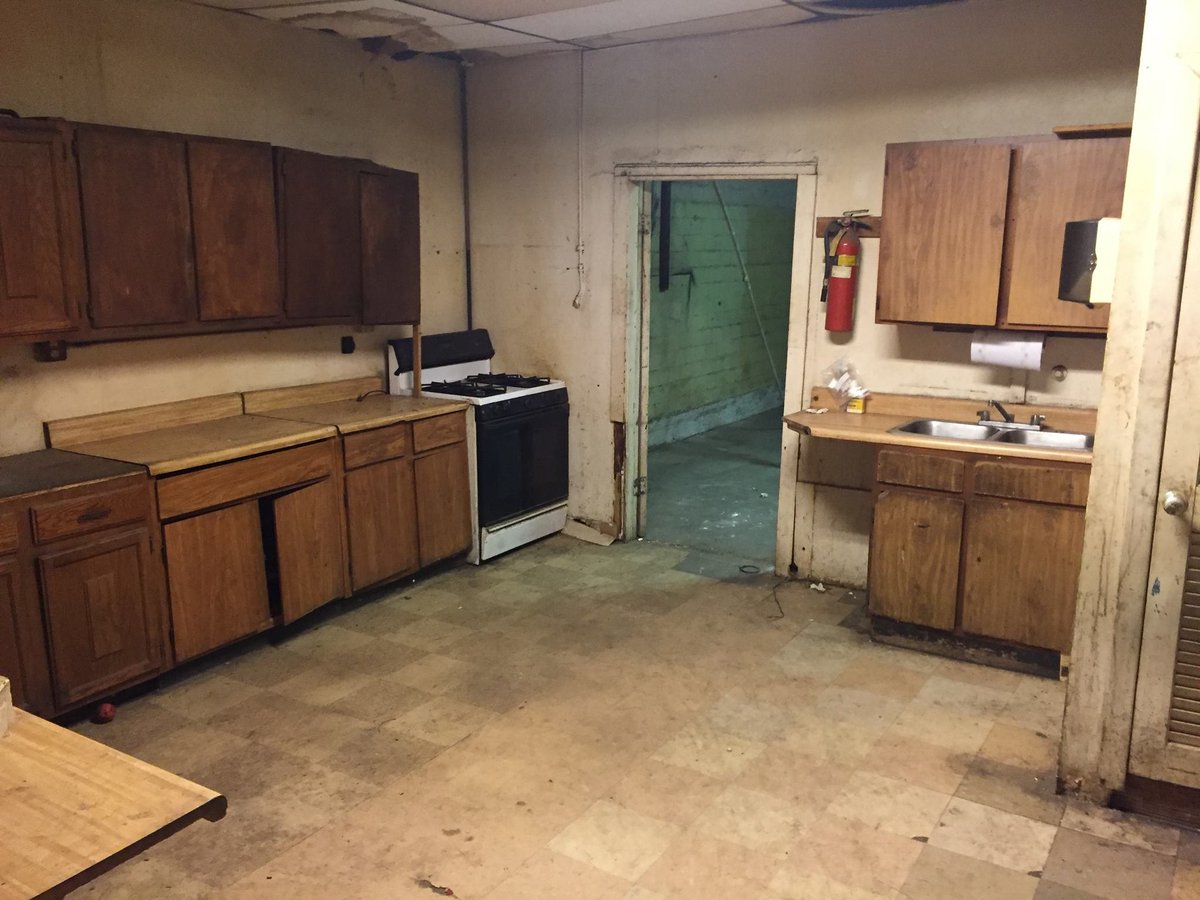
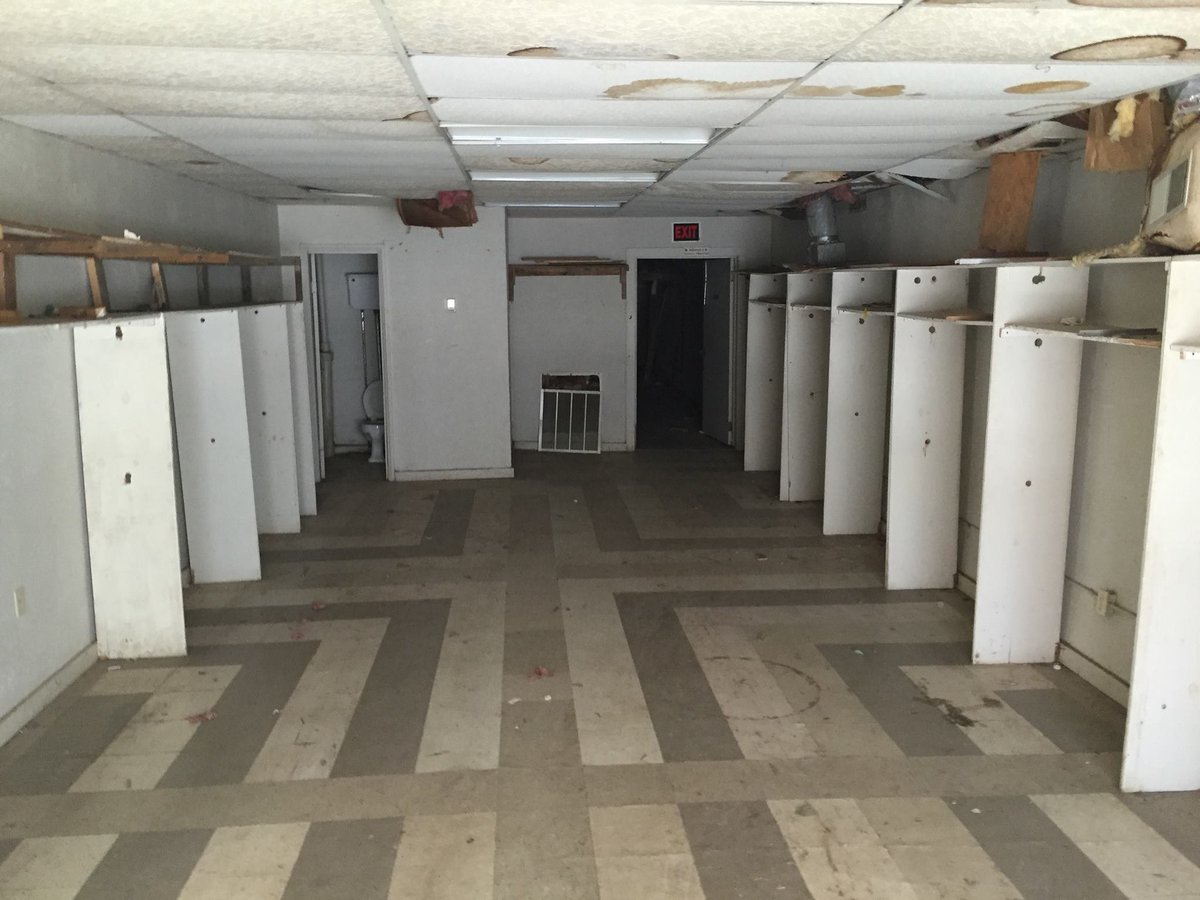
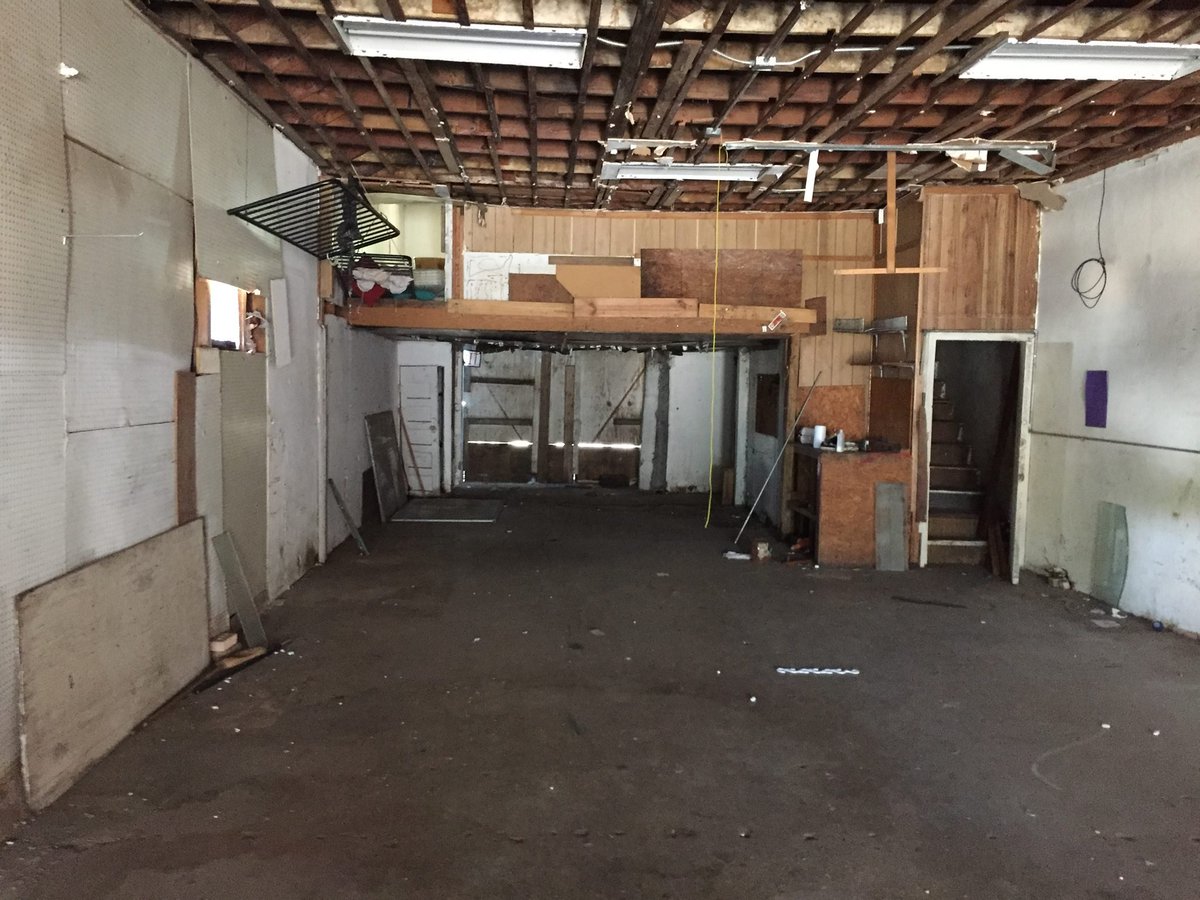
By the time you’ve read through the entire description of his experience as a developer you’ll get a feel for the grit and grime of the process. He has even provided visual aids through extensive photos. You can also sense the apprehension he must have felt when he had to go back to friends and family mid-project and ask for a sizeable amount of additional funding. Keep in mind that at this stage the building is ripped apart and there is no going back. It’s like saying, gee thanks for the $50K, if I don’t find another $150K, I won’t be able to repay you.
Note #1- developers are all in on their own money as well as money provided by their network.
Then consider the time over which this transpires. It isn’t a couple of months, or a year, but several years of no income, free labor and no certain outcome. Several years of owing people, who hold you in high esteem, to sit tight until the whole thing comes together. The post has his adventure starting in 2016. It may not have taken five years to wrap it all up, but it took that long to write about it.
Note #2- there is a backlog of expenses in investment return and in personal favors and in unpaid sweat equity.
Some people may come away from this story wondering how anyone would want to pursue such a project. Some people will never understand the satisfaction in turning a derelict building back into a going concern. Some people do not have the impulse to go toe to toe with a failing neighborhood and throw one’s ambitions at it full force. But fortunately, some investors do. These people are long term thinking, maybe twenty-year scope people.
Luckily a fully renovated property should be good to go for twenty years without major expenses. This allows for the return from the upfront investment of resources and sweat equity to be recouped over a dozen to fifteen years. And there is still the uncertainty as to whether the direction of the neighborhood will turn and inflate, rather than erode the equity in the property.
Now let’s leave behind this story from Texas specifically, and more generally entertain a speculative scenario. Say about five years following a rental property renovation, there is an influx of new residents to the neighborhood. They have relocated from another state. These folks have no memory of the seedy buildings from the past. However, they do bring their recollections of what things were like from whence they came, about relationships with landlords and laws in their previous hometown.
The area attracts an influx of residents due to these restorations. That combined with an overall uptick in the economy causes rents to rise. Tenants who sign one-year leases see increases in their monthly obligations. They cry foul and become politically active due to what they see as greedy landlords. Their short-term framing is not in sync with the longer-term investor framing, hence the perception of corruption. Since tenants make up over fifty percent of the city’s population there is success through four-year term city council people to restrict landlords from earning what was originally projected.
If we are trying to model a neighborhood, a city, or a rural community, where real estate structures are built to last over many decades, then it seems the disjointedness of short-term politics versus long-term investments is counterproductive. Maybe even destructive.
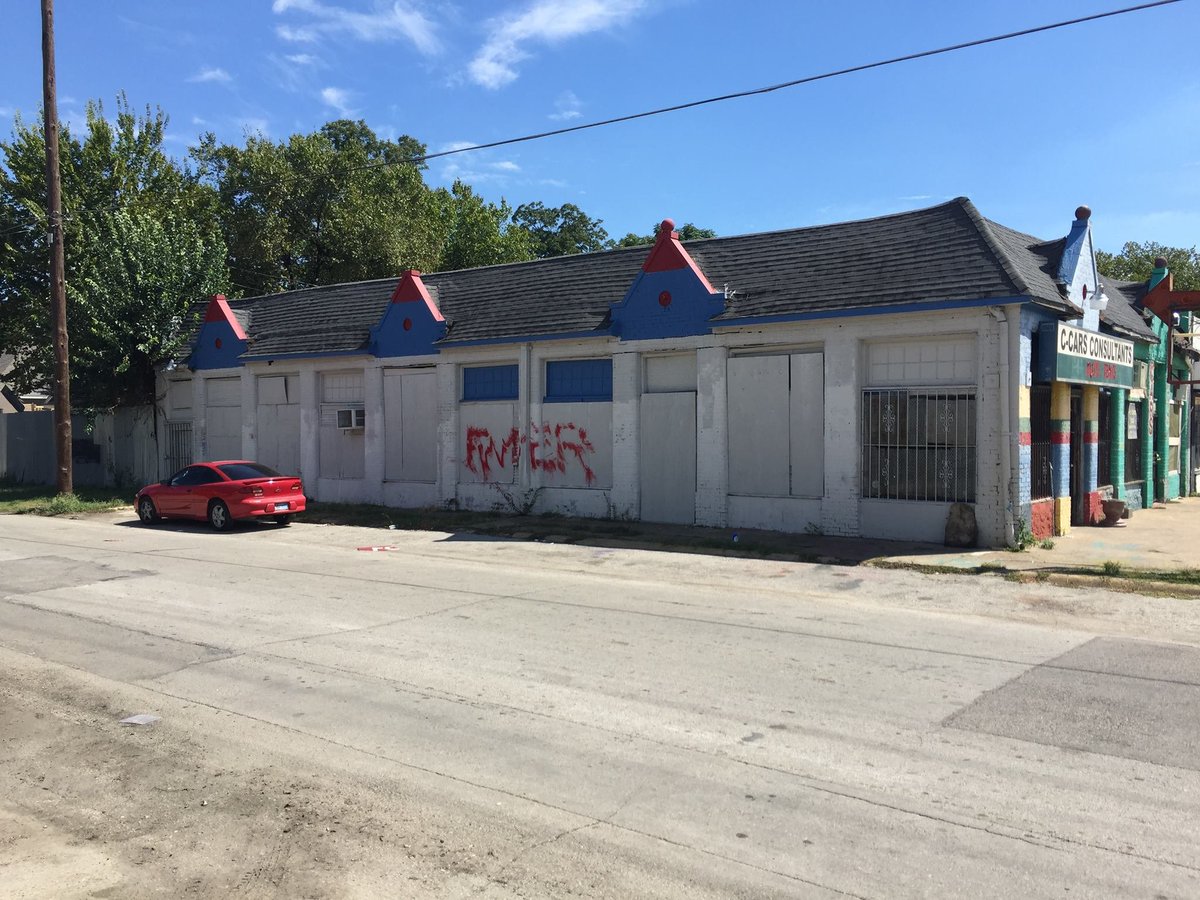
The 2016 story of my very first real estate project: How I bought a scruffy old strip center, almost died of stress, and started Barrett Urban Development.
After reading too many articles about problems with our urban development patterns (thanks @StrongTowns) and walking on our broken down sidewalks too many times, I thought there was no better person to address this than yours truly.
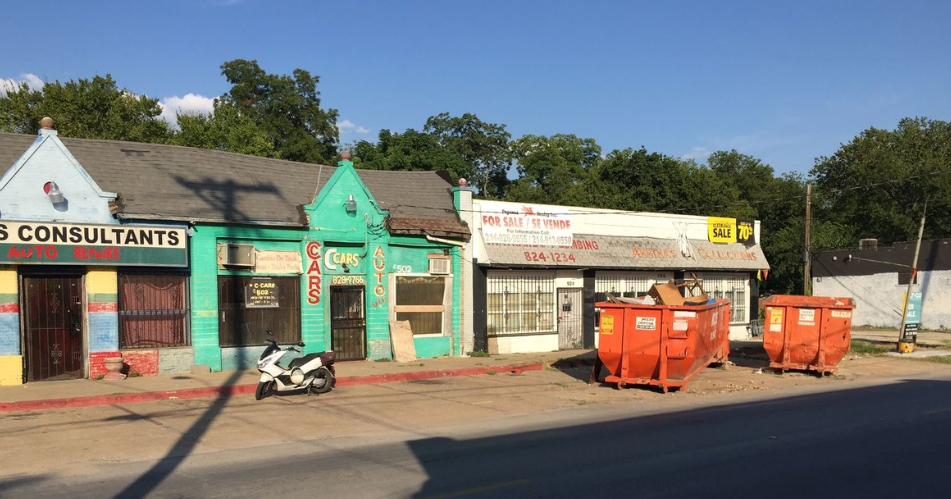
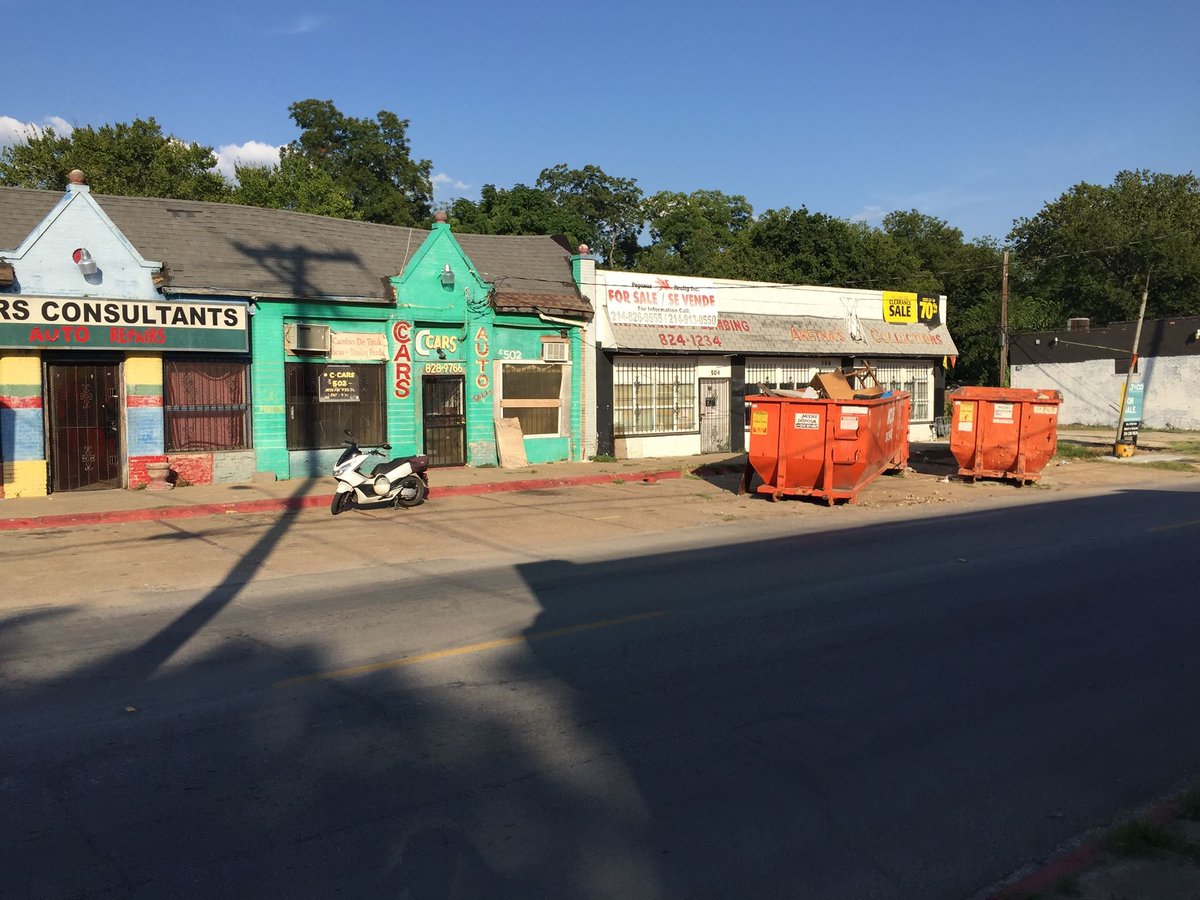
After reading RE books and looking at projects that would have surely failed (thanks @montewanderson & @IncDevAlliance for saving me), I found a pair of adjacent commercial buildings totaling just under 8,000 square feet both for sale. They were in…sub-optimal condition.
I raised money from family members and put a fair amount in myself and found a great GC and architect to work with. The scope: replace/repair everything except the wastewater lines, the foundation and maybe 60% of the structure.
During our walk-through, the GC ballparked it at $250,000 to white-box it. I was way too green to know of a better way to estimate costs or recognize the many red flags during due diligence.
Thanks to a pair of motivated sellers, the ACBM, and an REC during the ESA (don’t do auto-repair in the back yard), we negotiated pretty hard and got what I thought was a good deal: something like $400K for the pair of them.
The plan was divide the 2 buildings into 5 spaces since we figured we’d get higher rent that way. The building is awfully deep, but work with what you got.
The problems started almost immediately. Remember those wastewater lines I wanted to keep? Just past the bend we couldn’t get the camera past, the clay pipes had collapsed.
The plumbing bid to replace comes in: $80,000. I’m already 20% over my construction budget and we’re just getting started. This is not good but there’s no way to go but forward.
Since we’re replacing the plumbing anyway now, we move the bathrooms to the back of the building to shorten the run and reduce the number of bathrooms in the larger suites by 1 (foolishly I plumbed the wastewater lines for them anyway in case I wanted to add bathrooms later???)
Meanwhile, new problems come up: During due diligence, my GC commented that a lintel was sagging. Being naive, I didn’t probe further. Turns out you could put your arm through several of the beams over the openings. Now I need $20,000 of masonry work, steel, and welding.
At this point, I know I need another $150,000-200,000 to finish the project, money I don’t have. I have jaw pain as I start grinding my teeth at night while I sleep which isn’t much, because of the anxiety. A nightguard and sleeping pills solves the symptoms but not the problem
I look for money but I don’t know how: I apply for city grants, liquidate my stock holdings, and borrow against my 401k. I still don’t have enough and I find myself weeping outside City Hall after failing to get a grant as I wonder what I’m gotten into.
I finally have to tell my investors (should have told waaaay sooner). Most of them are circumspect but one is very upset and is making noises about taking over the project. I eat crow and fall on my sword.
I finally have a revelation: I can borrow money from places other than banks. Turns out if you pay a high enough interest rate, people are happy to lend you money*!
I raise another $150K and the project is on track: the walls are flying back up, the trusses going into place, the windows being installed.
It’s finally looking like a building again and I can start to think about actually leasing the place! One of my mentors comes by to check out the project and says I “Decided to skip the master’s degree and go straight for a PhD and now i’m studying 24/7 to get a C-“
I catch a break and a local publication does a favorable story on my project and I pick up several tenant commitments.
In not too long, the building is finally done. I get some really good long-term leases in place and the rents come in higher than expected, which is good because I owed a lot of people a lot of money.
I don’t recommend the above method for starting in real estate. I mostly succeeded due to luck and the good fortune of a large network of supportive people in my life. I can’t believe I actually made it through.
There is a space where the private market slides up next to the public goods market. This is where decisions over which products and services are best produced under an esprit de competition and which are best served through cooperative efforts are flushed out like pheasant from the wayside ditch. A Minnesota writer, Aaron Brown, wrote about this landscape in a piece entitled The troubled border between consumption and conservation. The issue on his mind is the ongoing tension between the desire for jobs from mining and the environmental impact they create.
How countries have handled these two spheres in their political choices is not what is being discussed here. This is more local than sweeping observations on governance directions towards socialism or communism or capitalist democracies. (Even though, it might be observed with a bit of irony that China has shown the agility of a communist state to profit from capitalist models. And whereas NIMY and YIMBY forces tie US cities into knots, China is using more private enterprise to build its cities.) Brown leads your focus past levels of national governance, past levels of state governance, past overlays of activism, and bring you right down into his back yard.
Bears fall limp on trampolines. Moose tangle in hammocks. Tourists lose themselves in the woods, their dying cellphones lighting a doomed path even deeper into the wilderness.
Then the helicopters come, looking for the source of the signal. They scare up the birds as their blades sweep across the marsh reeds. The metal dragons return to their dens. So it goes along the borderland.
There is a need to micro-manage your attention because this is a saga has been in the air almost as long as All My Children. And at all levels, political players will attempt to obscure the choices, to pull your support to their side. The weapon du jour is a miscasting of identity. If you value communal interest, then you must be a communist. If you voice support of one political party, then friends may find reason to exclude from their next dinner party. The activist entreats you to wear their hats, wave their banners. At all levels teams are built to harness political voice
This last round was at the national level, as two days ago the Interior Department revoked a lease for a mining project. The 2019 renewal of the lease during the previous administration was considered improper. There was no new evidence of environmental harm.
Twin Metals, in its own statement, excoriated the Biden administration and called the decision “a political action intended to stop the Twin Metals project without conducting the environmental review prescribed in law.”
The campaign to save the boundary water’s chair declared this a “win.” One might as well be following the sports section.
That’s why Brown needs to capture your attention, pull you away from power plays and home runs, and back to the arts. He paints the issues out in more romantic depth than the Hudson River School of American artists. He wants you to consider choices over a variety of time frames. The spaces where public and private choices intermingle have cascading impacts and generational persistence. I wish more writers lingered here longer.
The borderlands are where interesting questions are answered. Aaron Brown lays some groundwork on how to navigate the space between two competing spheres of human interest.
It was refreshing to see this post from Matt Yglesias regarding the homeless population in Europe. One of the most tiring things I found when I came back to Minnesota to go to college was the erroneous (and all too frequent) comparisons fellow students made between Europe and the US. One exchange program to Sweden and the fountain of suggestions on how we’d all be better off doing it the Scandinavian way was ever flowing.
Another pet peeve of mine is how homelessness is written about in the media. It shows up in articles around the cost of housing, right in there with scandalously high-priced luxury homes and the persistently rising average median price of homes. I question why people do not realize that the chronically homeless do not participate in open market real estate transactions, and hence in no way influence the cost of housing. When costs are escalating some people in financially precarious situations lose their housing, often temporarily. But these aren’t the homeless living in tents alongside the main roadways of our nation’s capital.
Which brings me back to the substack article at SlowBoring. Yglesias takes the time to point out that what market rate mainstream residents care about most is how the homeless are affecting their neighborhood public goods. (And I’m not saying they shouldn’t). Locals want to be able to use their parks without repercussions for their safety and access public transit and use the libraries for that matter. The objections to the lifestyle of the homeless has more to do with their neighborliness than their housing.
But I’m not here to give advice on how to remedy this group of societies issues. I’m here to point out that any shelter for these folks will have to be provided for them. They are not part of the market, and many don’t plan to be, as described by Jeanette Walls in The Glass Castle. Assistance to put the fraction who tumbled into their predicament during rapidly escalating prices back into the stream of self-provision, is common sensical. But there will always be a segment of the population who will need to be subsidized.
It just seems like issues of the homeless need their own articles. Mixing the topic of homelessness in with a hopping real estate market is like bringing up the number of entrepreneurs who fail every time there’s a breakout unicorn to write about. As we all seem to have short memories, I’ll take a moment to remind everyone that during a recession, when real estate prices are in a downwards spiral, folks also find themselves without shelter. Again- the homeless are neither borrowers nor sellers nor renters in real estate. And thus, to feature them in a discussion about pricing seems to be more of a trigger than anything else.
There is a watershed moment in the works as a Democrat, Amy Klobuchar, and a Republican, Chuck Grassley from Iowa, are teaming up against big tech.
Over the last twenty years a lot of leeway has been given to companies who needed control of frameworks in order to build what we know now as an ecosystem on the internet. A century ago the railroads were given similar leeway as they laid down tracks from east to west across the country. But now there is an appetite to disengage the big players from their power positions and open up opportunities for smaller players to get in the mix.
This is the first major technology bill on competition to advance to the Senate floor since the dawn of the internet! Very proud to lead it alongside @ChuckGrassley. https://t.co/OzzmGR0oWJ
Most people agree that monopolies in the private sector work against the consumer. If producers gang up and set prices, then consumers have no choice but to pay what is asked of them. When producers compete for their customers’ business, then they become lean in an effort to provide the best product at the best price. The private interest of each individual producer is isolated from the private interest of a conglomeration of producers.
In this blog I describe a transformation which takes place when a group of people acting in a public interest compete for products against other groups acting in their public interest. For instance, during the early days of the Covid N-95 masks were a hot commodity. Minnesota and Iowa and Oregon were all out in the marketplace trying to secure orders from abroad. All were attempting to pursue the public interest of safety for Americans, yet in acting as groups, they bid up the prices of the masks. The appearance was a pursuit of a public good, yet since each were interacting at the state level, the economic behavior followed the private market mechanisms.
Could the same be said for public school unions, that they appear to be a public interest whereas they are truly private? The k-12 schools are provided on behalf of a public interest in an educated citizenry. And although many teachers carry a civic spirit, everyone would expect them to look after their private interests when negotiating the terms of their employment. Certainly, there was a time where the amplification of speaking as a group, with the help of a union, was necessary.
But the teachers’ union has grown in scope and power. They not only dictate teacher contracts, but get politicians hired and have greatly influenced the opening and closing of schools during the pandemic. And in those activities, they have failed to act in the public interest of the children’s education, as they are by essence guarding the private interests of their teachers.
I think I’m not alone in categorizing the teacher’s union as a monopoly in the k-12 industry. I doubt teachers can influence or overturn membership. I doubt that all teachers stand behind their union. I know many parents don’t. If you want to break up tech, why not break up the teachers’ union? They both show monopolistic behavior over a public utility.
If you are an action/adventure film enthusiast I’m not sure if The Lost Daughter is right pick for your Saturday night viewing pleasure. Whereas James Bond movies open with a large landscape panning of a dramatic ski slope decent, this film meanders along an oceanside road for as long as it takes the sun to set. Whereas Bruce Willis navigates amongst hundreds of frantic bystanders taken hostage, this film has the camera angle so tight to the lead and her children that you can’t help but smell Johnson’s baby shampoo. Whereas the violence in action adventure is noisy, loud and explosive, the violence of the female sort is gut wrenchingly mean.
This is a movie about women. Women as mothers, as wives, as cheaters, as power brokers, as party goers, as needy. There are many layers to how all the players are set in motion. And of course, the femme fatale is a bushy bearded male who steals away the lead knowing she is easily baited by the public recognition he lavishes over her professional work.
On a first viewing I just want to enjoy the surface layer, with all the beautifully framed shots. But my subconscious is signaling there is more there to be seen, and to plan on a review at a later date. Though not heavy on action, there is intrigue. The movie starts slow but builds and with the help of an unreliable narrator, one discovers a need to learn more about Leda’s story.
Walking Around Money – Short Story Review
I started liking short stories when I first found Flannery O’Connor, probably because that was her preferred genre. Then I picked up The Best of American Short Stories because the volume had been edited by David Brooks- and then I was sold on short stories as a way of sampling a new author over an afternoon on the couch. The first selection in a volume called Transgressions (edited by Ed McBain) is Walking Around Money by Donald Westlake who is just one more prolific writer who was not familiar to me.
He’s a crime writer. This sixty-page caper is full of great language for his less than brilliant partners in crime. Take this description, for example.
Dortmunder and Andy Kelp and the man called Querk sat in silence (shoosh) a while, contemplating the position Querk found him self in, sitting here together on these nice wire-mesh chairs in the middle of New York in August, which of course meant it wasn’t New York at all, not the real New York, but the other New York, the August New York.
In August, the shrinks are all out of town, so the rest of the city population looks calmer, less stressed. Also, a lot of those are out of town, as well, replaced by American tourists in pastel polyester and foreign tourists in vinyl and corduroy. August among the tourists is like all at once living in a big herd of cows; slow, fat, dumb, and no idea where they’re going.
This is language I appreciate and enjoy. The plot is tight and fresh. Now that I’ve bumped into him, I’ll have to find more pages written by Mr. Westlake.
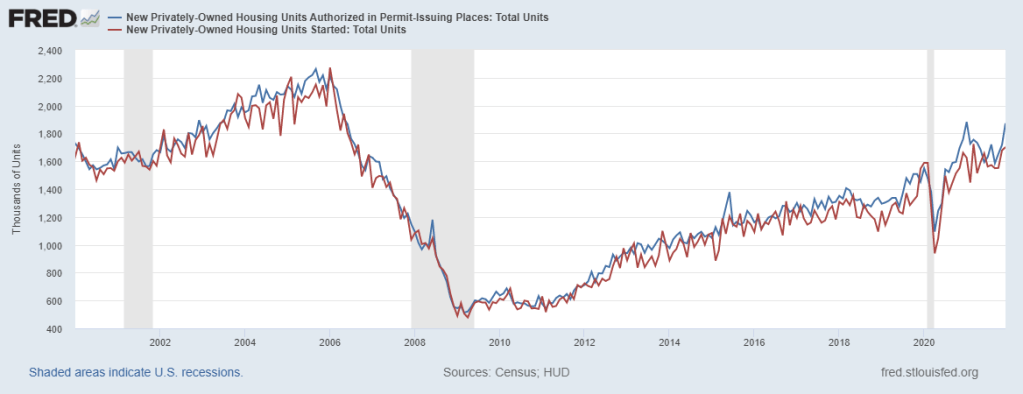
I listened in on a housing forum discussion today and in the chat a question appeared: “Why are developers not building more housing?” Below is a graph representing the nationwide trend. The trend follows here in Minnesota.
As you can see during the recession of 2007 the industry went from a production level of 2,200 to 500 (thousand). Or the production dropped by over 75%. And still hasn’t recovered a decade later.
The story of why can be told by thinking through what that drop between 2006-2008 meant for thousands of individuals whose assets and livelihoods were tied up in new construction. It’s common for land developers to spend several years of work, from conception to approval to shovel in the ground, before collecting earnest money checks for a new-build that takes another six months to close. The recession left thousands of projects half done with foreclosure notices piling up at the county. Development is a high risk, with a lot of upfront costs, type of business. Once you fall off that bronco, it’s hard to climb back in the saddle.
Others were bit too hard to forget that time period. Building requires all types of workers from framers to concrete contractors to plumbers, electricians, and finish carpenters to name just a few. If three quarters of the jobs closed down, then just as many workers were caught unemployed. This meant looking for jobs elsewhere. Many from the Twin Cities went up to work on the oil fields up in North Dakota. This tore families apart who were already reeling from financial pressures.
Maybe an industry could get back on top of these objections after four or five years. People forget about the past and remember what it was they liked about their previous occupation. And new construction permits have gone up mostly lead by large national builders. Undoubtedly another constraint is the annual upping of regulatory requirements. Builders have to explain these extra costs to the consumers and simultaneously know that they are often framed as greedy, profiteers. That probably gets old.
The public may not remember the wind-swept developments with foreclosure signs, but I’m sure the investors do.
Quite a few years ago when I was at the Carlson School getting an MBA at night, I recall a foreign student from Sierra Leon, or thereabouts, and I shaking our heads at the chatter of our fellow classmates. They were all off on a tangent on how easy this or that would be to accomplish. The foreign student and I were ticking off the number of implicit assumptions which held our fellow students’ ideas together.
The structures which support commerce in America are taken for granted by those who have experienced nothing less. We take it for granted that our money will at the bank, for instance. (Or even that the bank will open on time as I recall the Sierra Leonian noting) Most consumers not only anticipate the ability of financial institutions to keep our funds safe, but never bother to balance their accounts, as the bankers do all of that.
When I was a loan officer sitting behind an oversized wooden desk, my clients, from across the high gloss polish, would sign their mortage papers but never read them. They listened politely as I highlighted the terms and obligations for repayment, nodded, and then put pen to paper. In exchange for the blue ink on the promissory note which detailed possible foreclosure action for non-payment, they happily received a check. And so, it goes in America.
The fluidity in the marketplace and lack of concern with lengthy legal documents can be attributed to regular assurances people hear from all those around them. Their parents have bought a home, and it all went OK. Their friends used such and such mortgage broker and despite an inconvenience over some last-minute documentation, the rate and fees were as expected.
Of course, there are situations that lead the consumer dissatisfaction as well. A while back there was that interest free financing for six months at time of purchase of furniture or a large TV. But then the credit card didn’t send the statement with the balance in time, so the consumer was charged retroactively for 180 days of interest. More often than not these gotcha gimmicks get brought to the attention of the attorney general, and even though the duped don’t get repaid, future misleading advertising is curbed.
With the little bit of work and an audience for stories of assurances, the institutions which make for reliable financial services is maintained.
Abstract We study the city-wide effects of new, centrally-located market-rate housing supply using geo-coded total population register data from the Helsinki Metropolitan Area. The supply of new market rate units triggers moving chains that quickly reach middle- and low-income neighborhoods and individuals. Thus, new marketrate construction loosens the housing market in middle- and low-income areas even in the short run. Market-rate supply is likely to improve affordability outside the sub-markets where new construction occurs and to benefit low-income people.
As far as why a paper, which many would think of as addressing common sense, needs to be written. This tweet best explains it best:
New paper on the city-wide effect of new housing supply in Helsinki. Impressively, researchers secured access to the Finnish total population register, and were able to prove that newly built homes enable "moving chains" and free up more affordable homes.https://t.co/VaWJlrHCDj
This might seem obvious if you’ve ever read the literature (this process is normally called ‘filtering’) or indeed if you’re a renter who has moved around a lot, but the theory gets a lot of critique from those who don’t like what it suggests about the need to build more…
… And because you need access to the whole population address history in order to *prove* that market supply frees up more affordable homes for lower income households, it’s hard for researchers to do (lack of data/privacy issues). So good to have this extra empirical evidence!
The paper also has some interesting findings on the role of social housing as well. Tl;dr all new housing supply has a good impact across the city. Lots of interesting charts too!
Get the feeling most of the people giving me reasons it’s wrong haven’t read the paper, since they are arguing against points that a) this paper doesn’t make, and b) are irrelevant to the findings of this paper 🙃
I’ve had people saying “housing in Helsinki is expensive, so this paper is wrong & we need socialism” AND “the reason housing in Helsinki is cheap is because of socialism”.
… the paper is not about what prices in Helsinki are. And it supports both market and public housing.
It’s more expensive to live in New York City than Omaha Nebraska. If you are only going to relocate to Denver for a couple of years, you should rent instead of buy. Housing prices suffer in Baltimore due to high crime rates. These are all statements that don’t need an explanation. Living in a city full of opportunity is going to cost more than in a city a fraction of its size. The commitment to purchase a property is both financially and emotionally taxing for a short stay. And high crime rates make just about any neighborhood a tough sell.
It is easy enough for consumers to observe these strong market indicators. But if we want to start digging deeper into what market prices of housing can tell us, than we must be a more careful about sorting.
If we wish to look at housing costs in an open market environment and break the values down in order to find market preferences for attributes tied to the neighborhoods, then we must choose between either (residential) home sales data or rental data. Otherwise, the statistical outcome will fail because these are two different market transactions.
Purchasing a property is a multi-year commitment. Renting is generally a year at a time. The rule of thumb on how long a buyer should anticipate staying in their home has varied over the years. Back when I first got in the business the benchmark was seven years. Between real estate fees to move- perhaps around 7.5% of value- and the closing costs of financing, a buyer requires several years of appreciation to break even on purchasing versus renting.
But I’d argue there is more to it than this sketch of dollars and cents of the buy versus rent decision. For comparison’s sake let’s consider the actions taken by a homeowner or a renter or an Airbnb occupant. They are all enjoying shelter in the same location of a city. An individual walks by an alley and there is a body lying near the dumpsters. The Airbnb people will probably finish their stay and not mention it to anyone, although they will probably rethink their choice of lodging for the following visit. The renter may or may not call an authority like the police. If bodies in alleys become a routine occurrence they will probably move.
I think you know where I’m going with this. The homeowner is the most likely to get involved and not only notify the authorities but follow through with contact to a city council member and so on. This is work done on behalf of the neighborhood with no financial compensation. It is a job taken on as an investor in the neighborhood who aspires to live in a safe and desirable environment. The homeowner is willing to make this investment whereas the Airbnb and renter are progressively less likely.
The relatively transient nature of renting can affect price in other ways. A consumer maybe willing to pay more to be near key features, especially arts and entertainment venues. The reasoning goes that they know this is a temporary situation so why not enjoy something that they will not have access to once they have to come down to earth and purchase a property. Or they choose over-the-top structural amenities and a higher level of finishes, again not available to them once the concession of a long-term purchase stretches their resources in other directions.
The analysis of rental prices in determining the implicit prices of neighborhood amenities are valuable. But will not yield the same results as the analysis of home prices since consumers are not purchasing the same items.
But what should be worth a mind-blown emoji and seems to be greatly ignored is the reliable impact of public goods on home prices. In addition to knowing a school district is worth $xxx of a home’s value, and all those other observations at the beginning of this post, just about anyone can run a regression on a laptop. Just go into the county records, collect the price of 100 similar homes by area, plug them into Xcel columns as well as FBI crime data relevant to area and school test scores for the property. Then go to Data Analysis>Regression>Ok and generate a lovely statistically significant relationship.
The relationship of price to crime and school performance is so strong it doesn’t even need the most general of sorting. But most other things will.
Trust me when I tell you that thrift stores are the perfect place to meet new favorite authors. I’ll often stop into the shop after having dropped off a back seat full of neglected household goods and clothes that no one seems to wear. Days like these are relaxed, otherwise I never would have been sorting through closets, piling the items in my car and delivering them to the drop off window.
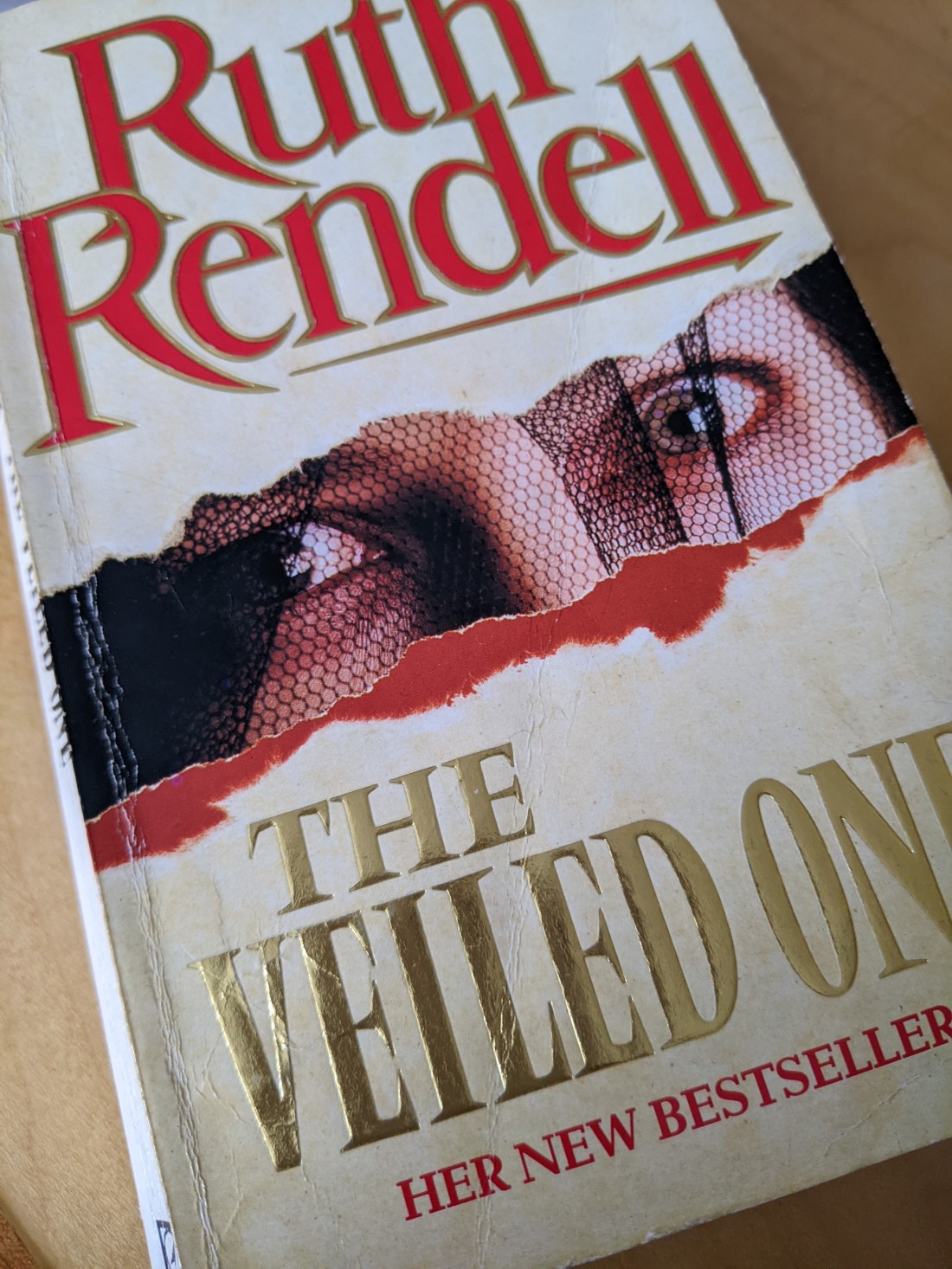
Sometimes the book shelves are organized, sometimes the books are tipping off the shelves. No matter. I scan the shelves for titles I know or covers that look interesting. If I’m unfamiliar with the author I google their name. I’m sure that’s how the Ruth Rendel book ended up in the basket of books by the overstuffed armchair in my living room. The search reveled that she has over sixty titles to her name and is one of Britain’s most recognized mystery writers. Well, that was news to me!
Friday evening when I was looking for some non-screen entertainment my hand landed on it where it had been waiting to be read. It succeeded on all counts. There is suspense. There are interesting settings (or maybe I’m just nostalgic for Europe). The level of character development is of greater complexity than commonly found in the genre. The author strings you along until the last few pages with red herrings and dead ends.
And I doubt I would have found Ruth Rendel except for the wonderful recycling effect of donations to a thrift store.
Welfare economics ran into market failures because of economic man. The view that all transactions are performed by an individual actor looking only after his own interest is relevant for the pursuit of private goods, but not public. If the problem isn’t structured from the point of view of a group, then it all falls apart due to freeriding. If the economic analysis isn’t contained within a sphere of voluntary reciprocity, then the desire for each and every to fulfill only their needs tells a story of everyone taking and no-one giving.
But we don’t live as the caveman did defending a little hilltop. We live in families, tribes, cities and countries. We participate in work life and school life and sports life and associational life. When our diplomatic family would show up at a new post halfway around the world, we’d be met at the airport and driven to our housing by a couple from the embassy. Co-workers would be sure we knew where to shop, how to get the kids in school, and other pressing local customs. I was recently reminiscing with a military guy who nodded knowingly when I relayed how, for years, I had missed the strong ties of service personnel when I got out into the work force.
And because these are lifestyles, the assumption of the group and its obligations can be taken for granted. The compacts of who takes care of whom at different stages of life, over decades, makes for messy accounting. But that doesn’t mean it can’t be tracked. It just means we have yet to do so. It’s taken forty years, since a little rebellion in the 70’s, to name a labor wedge. And now there’s credit for sweat labor. And then there are the Wikipedia contributors, and many more cooperative types making cool stuff.
The independent actor, however, is so ingrained in the US psyche that the conceptualization of a group as a consumer and supplier slips easily out of the analysis. To further muck up the landscape, an institution thought to be public, acts as an economic man with regard to anyone outside the group. Take the teachers’ unions actions regarding COVID as an example. The focus is on the public health and well-being of the teachers, and the teachers alone. The initiatives of their efforts do not include the public health of the school children nor their families. There is no consideration of other public objectives or benefits to keeping children in the classroom. The services the unions are negotiating are only public to dues paying members.
Economic man is a lonely notion. Have no fear, he lives in groups! But his behavior traits are accurate and, as it turns out, groups can be selfish too. To keep it all straight, one must declare an anchoring point of view in any analysis.
I clicked on this 1983 comedy with Walter Matthau and Robin Williams on a bit of a whim. It is not highly rated, but I’ve been curious about comedy and what I failed to see in it back when I was younger. Much of the humor is derived from subtle plays on social norms. If you are not from the area, or lack proficient language skills, or are not in tune with current political situations, the laugh often slips right on by you.
Walter Matthau is admirable (I am just realizing what a tremendous career he had!) and keeps the movie together. Robin Williams is not my favorite even though he pulls offs some great lines and gestures. But mostly what I found interesting is the harsh review of US bureaucratic services. This was a time of high interest rates and high unemployment, and a discouraging mood is present throughout. As a result, one does come away impressed with the speed and fluidity of the disbursement of Covid relief funds.
In order for all those home prices to end up on a list at the county recorder’s office, both buyers and sellers must agree on the exchange. The idea of revealed preferences tells us how the buyers are viewing, evaluating and reacting to, not only the physical characteristics and conditions of a home, but also what type of neighborhood infrastructure is in place to educate the kids, and to collect the trash, and to obtain potable water and so on. When price is equated against relevant quality indicators, a number will indicate what type of weight buyers put on each of these factors.
Now let’s think about the sellers. Sellers of course would like to secure the highest financial bid on their home. But this isn’t the only consideration. Since there is a four-to-six-week lag time between signing a purchase agreement and closing on the property, parties to the transaction consider the buyers’ level of earnestness, as it is a great disappointment should buyer’s remorse creep onto the scene. Sellers also take into account the financial viability of the buyers to be sure the lender will show up at the closing table with a suitcase full of cash.
A seller is no longer thinking about the public goods in their neighborhood because they are soon to exit the networks which rely on and participate in the production of those goods. But when they accept the money for the sale of their property, they are receiving payment for any participation they may have done over their residency. If they petitioned the city council for traffic-quieting-turn-abouts for safer streets or set up a tennis association to get people out exercising or led the kids out on a Trick-Can-Treat to gather up canned goods for the food shelf, it is at time of sale when they receive payment for their labor.
From my point of view, the equity in their home which accumulated during their ownership due to all these types of activities and investments is social capital.
Yesterday’s post was about how the implicit price for neighborhood public goods, or what some people call amenities, like schools, parks, city services are a portion of the final sticker price of a home purchase. Buyers in the housing market consider square footage, beds, baths and the level of landscaping, but also make choices of financial consideration when comparing the infrastructure in the neighborhood and surrounding area. Just how long it will take to get to work or whether there are medical facilities close by are all contenders in the battle for the right bundle of components wrapped up in the final purchase.
The mathematical technique used to identify these bits of the final sales price, each dedicated to an amenity, is to solve for a hedonic equation. That is to line up a set of prices against data thought to be considered by consumers prior to purchase, and then solve. For instance, the violent crime rate is a very strong indicator in metering out a buyer’s sense of safety, and k-12 test scores are faithful representations of feelings around schools. When an econometrician equates prices to this data it is called running a regression.
Of course, there is much to this statistical process, and many mistakes can be made or avoided depending on how the problems are structured. But what I want to talk about is conceptionally what the coefficients, the numbers dictating the value (or maybe impact is a better word) of each amenity. It feels like a price since the unit of measure is dollars. For example, if a home in one school district were compared to the same home in more favorable district, the natural log of the coefficient gives the value as a percentage. In considering a purchase the buyer could say they would have to pay ten percent more for one home over the other. Or that there is a forty-thousand-dollar premium (on a 400K home) to purchase in the better district.
Sherwin Rosen who first wrote about this process in the ’70’s warned against thinking of implicit prices (the prices of the categories which make up a product) as an actual price since they come together as a bunch. In housing this is particularly true. One can’t make a wish list of features and tell a manufacturer to build it, like your latest laptop. One is not able to blend a prespecified structure and plunk it down just anywhere. For the most part consumers often bend on some desirable features in order to get others.
Buyers are also attracted to a variety of public goods at different times if their lives. Families with children in the home care about schools. Working stage of life folks need daily commuting infrastructure. Later stage in life people may want access to medical facilities. And it is these groups of people who are vying and competing for the homes which best offer the desired benefits.
Home economics is a study of bundled goods and grouped consumers.
All we’ve heard for the last several years is how the price of housing is going up. Up. UP! And for the most part that is true. Whether it is because Millennials are finally getting on their feet and need a place to have their own families, or whether the baby boomers are not moving to the lower priced condos and giving up their family homes, there is no doubt that there is a housing squeeze.
But seriously, for as long as I can remember, except in deep recessions, people have thought housing is expensive. Because it is! It is the largest portion of people’s monthly budget. And this distraction about the cost of a home is the most uninteresting fact one can take away from home prices. House prices are a rich reflection of the revealed preferences of a community.
An economist in the early part of the twentieth century by the name of Paul Samuelson came up with the idea that when consumers chose different products, they reveal what best suits their needs. This differed from theories up to that point which placed the burden on policy makers to decide which goods provided the greatest utility to consumers.
Samuelson’s relationship with economics is lengthy. This excerpt paints the broadest brush of his brilliance. “In receiving the Nobel Prize in 1970, Mr. Samuelson was credited with transforming his discipline from one that ruminates about economic issues to one that solves problems, answering questions about cause and effect with mathematical rigor and clarity.”
One economist, his junior by twenty years, heard the clarion call for greater mathematical representation of economic theory. Zvi Griliches contributed to a publication called Economic Statistics and Econometrics published in 1968. In a paper called Hedonic Price Indexes for Automobiles: An Economic Analysis of Quality Change, Zvi pulled apart the prices for automobiles so that he could show how much consumers were paying for improved engines or length of the vehicle or other features. By comparing the components of the cost of vehicles he distinguished between inflation and consumers revealing a preference for higher quality provided by advanced technology.
But back to real estate. The economist credited for using this statistical method (taking the price of a complex product and using data to divvy out the weighted values of its various components) was Sherwin Rosen in his 1974 paper Hedonic Prices and Implicit Markets: Product Differentiation in Pure Competition. Now this is exciting! The price of a house can tell you how much one school district is favored over another. It can tell you the value effects of violent crime, or proximity to mass transit.
The implicit prices tell us that we trade in public goods as well as private goods. We shop for city services and good roads, for youth programming and parks, as well as for good schools and safe streets. The implicit prices tell us how groups of people choose bundles of public goods. Real estate prices are incredibly rich with feedback.
Opa grew up dirt poor in northwestern MN, one of a large family of Swedish immigrants. He was more or less orphaned when he was sixteen, so he persuaded a couple of buddies to see if they could winter off the land up along the Canadian border.
Whenever the temps and wind chills dig into the minus twenty, minus thirty range, I wonder how they pulled it off back around 1923. It’s no wonder that one of his favourite poems was The Cremation of Sam McGee. He knew it by heart and needed little prompting to recite it to you.
The Cremation of Sam McGee

BY ROBERT W. SERVICE

There are strange things done in the midnight sun
      By the men who moil for gold;
The Arctic trails have their secret tales
      That would make your blood run cold;
The Northern Lights have seen queer sights,
      But the queerest they ever did see
Was that night on the marge of Lake Lebarge
      I cremated Sam McGee.

Now Sam McGee was from Tennessee, where the cotton blooms and blows.
Why he left his home in the South to roam 'round the Pole, God only knows.
He was always cold, but the land of gold seemed to hold him like a spell;
Though he'd often say in his homely way that "he'd sooner live in hell."

On a Christmas Day we were mushing our way over the Dawson trail.
Talk of your cold! through the parka's fold it stabbed like a driven nail.
If our eyes we'd close, then the lashes froze till sometimes we couldn't see;
It wasn't much fun, but the only one to whimper was Sam McGee.

And that very night, as we lay packed tight in our robes beneath the snow,
And the dogs were fed, and the stars o'erhead were dancing heel and toe,
He turned to me, and "Cap," says he, "I'll cash in this trip, I guess;
And if I do, I'm asking that you won't refuse my last request."

Well, he seemed so low that I couldn't say no; then he says with a sort of moan:
"It's the cursèd cold, and it's got right hold till I'm chilled clean through to the bone.
Yet 'tain't being dead—it's my awful dread of the icy grave that pains;
So I want you to swear that, foul or fair, you'll cremate my last remains."

A pal's last need is a thing to heed, so I swore I would not fail;
And we started on at the streak of dawn; but God! he looked ghastly pale.
He crouched on the sleigh, and he raved all day of his home in Tennessee;
And before nightfall a corpse was all that was left of Sam McGee.

There wasn't a breath in that land of death, and I hurried, horror-driven,
With a corpse half hid that I couldn't get rid, because of a promise given;
It was lashed to the sleigh, and it seemed to say: "You may tax your brawn and brains,
But you promised true, and it's up to you to cremate those last remains."

Now a promise made is a debt unpaid, and the trail has its own stern code.
In the days to come, though my lips were dumb, in my heart how I cursed that load.
In the long, long night, by the lone firelight, while the huskies, round in a ring,
Howled out their woes to the homeless snows— O God! how I loathed the thing.

And every day that quiet clay seemed to heavy and heavier grow;
And on I went, though the dogs were spent and the grub was getting low;
The trail was bad, and I felt half mad, but I swore I would not give in;
And I'd often sing to the hateful thing, and it hearkened with a grin.

Till I came to the marge of Lake Lebarge, and a derelict there lay;
It was jammed in the ice, but I saw in a trice it was called the "Alice May."
And I looked at it, and I thought a bit, and I looked at my frozen chum;
Then "Here," said I, with a sudden cry, "is my cre-ma-tor-eum."

Some planks I tore from the cabin floor, and I lit the boiler fire;
Some coal I found that was lying around, and I heaped the fuel higher;
The flames just soared, and the furnace roared—such a blaze you seldom see;
And I burrowed a hole in the glowing coal, and I stuffed in Sam McGee.

Then I made a hike, for I didn't like to hear him sizzle so;
And the heavens scowled, and the huskies howled, and the wind began to blow.
It was icy cold, but the hot sweat rolled down my cheeks, and I don't know why;
And the greasy smoke in an inky cloak went streaking down the sky.

I do not know how long in the snow I wrestled with grisly fear;
But the stars came out and they danced about ere again I ventured near;
I was sick with dread, but I bravely said: "I'll just take a peep inside.
I guess he's cooked, and it's time I looked"; ... then the door I opened wide.

And there sat Sam, looking cool and calm, in the heart of the furnace roar;
And he wore a smile you could see a mile, and he said: "Please close that door.
It's fine in here, but I greatly fear you'll let in the cold and storm—
Since I left Plumtree, down in Tennessee, it's the first time I've been warm."

There are strange things done in the midnight sun
      By the men who moil for gold;
The Arctic trails have their secret tales
      That would make your blood run cold;
The Northern Lights have seen queer sights,
      But the queerest they ever did see
Was that night on the marge of Lake Lebarge
      I cremated Sam McGee.
I really like the first half of this TED talk by Stewart Brand (0-8:00). He captures the progress of people coming together in cities to provide public goods, like a marketplace and schools, cable and water, so that they may pursue their private desire to navigate the opportunities of large urban centers.
“These people are valuable as a group, and that’s how they work.” Stewart Brand (3:31)
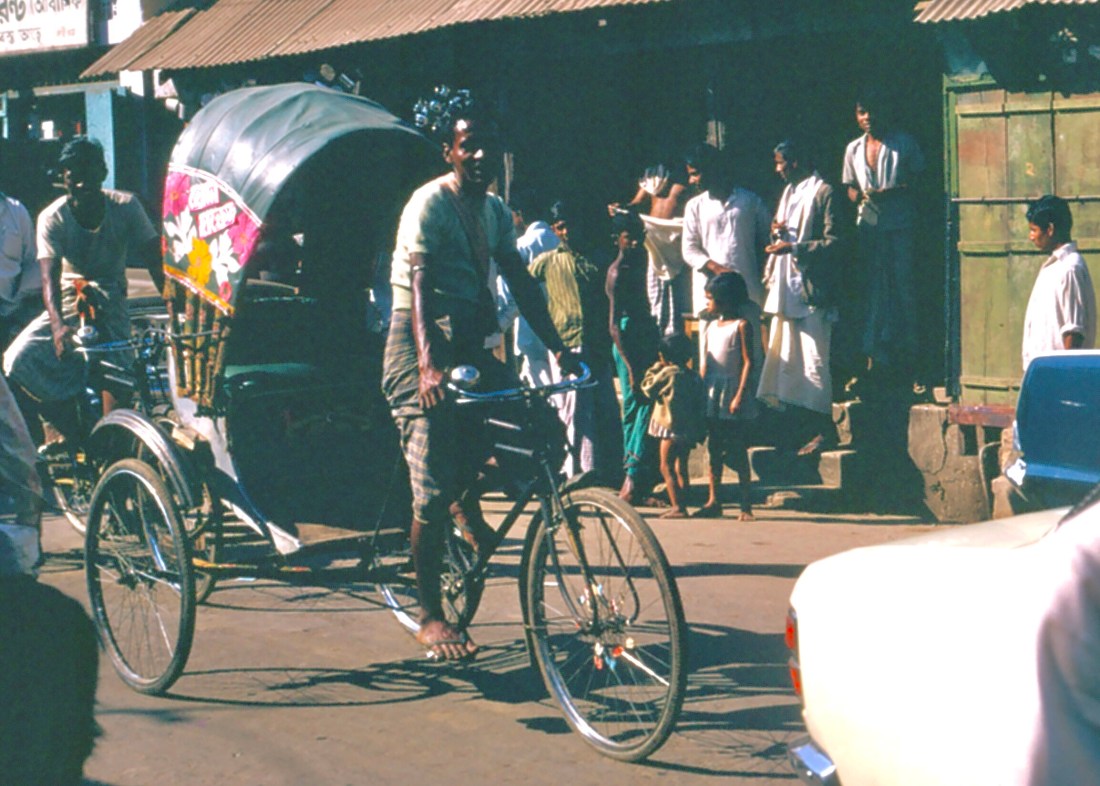
Settlements in Dhaka, Bangladesh, are shown as an example (6:58). When we lived in Dhaka in the late ’60’s this region was one of the poorest in the world. By the time this video was made in 2006 progress was underway. But just this year all indications are for continued success.
From today’s Dhaka Tribune:
He (Minister Muhammad Tajul Islam) said when the Awami League came to power in 2009, per capita income was hovering around the $700-mark. It increased to $2,554 in a decade under the leadership of Sheikh Hasina.
Brand’s predictions for a prosperous outcome for the people filling up the slums came to fruition in Bangladesh. Yet I take issue with how he refers to the economic activity as an informal economy. This term is a bit slippery, but its most prevalent definition is taken from the viewpoint of the political state. This, for example, from Wikipedia: “An informal economy (informal sector or grey economy) is the part of any economy that is neither taxed nor monitored by any form of government.”
The activities specified by Brand in the development of schools is a story of parents pooling money to hire teachers to educate their children. There is a cash element to this procurement of the public good, as well as a non-paid time portion from the parents involved in organizing and managing the teachers. But there’s nothing hidden or under the table in these proceedings.
Education is known to be the most important contributing factor to pulling people out of poverty. How it is described in the TED talk does not matched the definition of an informal economy. The state did not provide a public-school education in the slums, but I think we’re all past the notion that government has a corner on this sphere of the market.
Public goods are traded throughout the west as well as the east within groups of people who share a common objective. This is accomplished with a combination of paid and voluntary positions, with an input of shared and private resources.
People in the prime earning years of their work careers are leaving it all behind. Some have no plan at all except to be done with what they used to do and look forward to perhaps consulting options or other opportunities. Others resigned with the intentions of helping with their grandkids as the burden of at home schooling and work and having something of a marriage was taking its toll on their kids. The numbers for the Midwest are clear, with quit rates climbing to all-time highs, as shown here by FRED.
For some the virus has made life too stressful. The uncertainty of whether your kids have a reliable place to be during work hours is a significant concern under any circumstance. The last minute need to take leave from paid employment to look after a quarantined kid creates an entry on the positive side of the on-going debate whether the family would be better off with one worker dedicated to family affairs.
Many people settle into the extended family model where grandparents or aunts and uncles show up for a childcare shift throughout the week. This also alleviates the stress of transport to and from daycare in twenty below weather sliding over ice covered roads. The anxiety of a worker when faced with being late to pick up their infant is palpable.
People are making quality of life choices. It appears that Covid has drawn people up short on past choices about paid employment versus employment which allows greater time spent building equity in family relations, or flexibility to pursue other associational interests. Once people start sharing such ideas with others, a little self-reflection can set off a chain reaction.
Labor, like any commodity, is compensated by a mix of pecuniary and social rewards. Where individuals, couples, or extended families find the balance of enough cash and enough time to keep the family support systems in play so that everyone is safe and fed and healthy. And then there’s the altruistic side of people who feel the sheer reward of adding to the public goods market whether through education or their many other talents.
Numbers people are underrated. You probably have not heard of Amatino Manucci or Luca Pacioli, but they played a key role in the development of commerce though without the glamourous appeal of the adventurer types like Marco Polo or Vasco da Gama. They made contributions to the double accounting system.
Manucci kept the accounts for Giovanni Farolfi & Company, a merchant partnership based in Nîmes, France. Manucci was a partner for the Salon, South of France branch. The writing, entirely in Manucci’s hand, is neat, legible, and mostly well preserved.[3] Financial records from 1299—1300 survive that he kept for the firm’s branch in Salon, Provence.[1] Although these records are incomplete, they show enough detail to be identified as double-entry bookkeeping.[1] These details include the use of debits and credits and duality of entries.[1] “No more is known of Amatino Manucci, than this ledger that he kept.”[3] Amatino Manucci did not invent the double entry system, that was a 100-year process (perhaps a 9,000 year process).
This was about the time that the Papal seat was moved to Avignon, just a short distance from Salon. The area, known for hilltop fortified villages, was surrounded by sophistication and learning.
Luca Pacioli, an Italianmathematician, Franciscanfriar, collaborator with Leonardo da Vinci (there’s someone we know), came along a couple of centuries later accomplishing the great service of putting the method into a textbook.
The double accounting system improved the accuracy of the bookwork for transactions. Keeping proper records goes a long way to maximizing profits and use of time. Having a running tally of the monetary movement also leads to confidence amongst parties to a trade. There’s a history, a verification of how things were done as a reference.
What is exciting is there are new efforts afoot to better account for intangibles in business such as “the value of business owners’ time and expenses to build customer bases, client lists, and other intangible assets.” Our very own Ellen McGrattan at the Minneapolis Federal Reserve, along with Anmol Bhandari at the U of MN, had a paper published in May 2021 which finds that the accountants have been missing a sizable amount of business assets. From the abstract:
We discipline the theory using data from U.S. national accounts, business censuses, and brokered sales to estimate a value for sweat equity in the private business sector equal to 1.2 times U.S. GDP, which is about the same magnitude as the value of fixed assets in use in these businesses.
In the concluding paragraph of the authors suggest that there is a problem with how this capital is categorized.
Most of the applied work focuses on one attribute at a time and imposes a strict dichotomy on the nature of the asset: alienable or inalienable, specific or general, tangible or intangible. One of the key messages from our work is that sweat capital does not fit neatly in these dichotomies. Furthermore, the fact that these assets are a substantial part of private business value will likely necessitate a review of some of the classic results concerning the boundary of the firm and its capital structure.
A portion of the efforts and energies a business owner puts into his/her company is not the same as the work an employee is paid for to show up for a job. The labor of the owner has a non-fungible bit which is retained in the business. The later transaction, cash for time worked with no further obligation, is fungible.
It sounds like McGrattan is recommending a new accounting system to keep track of these entries.
Melissa Dell, an economist at Harvard, writes about persistence. One of her studies considers evidence of the effects of colonization in Indonesia. The Dutch controlled the archipelago caught between the South China Sea and Australia starting in 1610 with the establishment of the Dutch East India Company. Although the trading entity evolved, control of the territory and its resources lasted into the twentieth century.
We examine these in the context of the Dutch Cultivation System, the integrated industrial and agricultural system for producing sugar that formed the core of the Dutch colonial enterprise in 19th century Java. We show that areas close to where the Dutch established sugar factories in the mid-19th century are today more industrialized, have better infrastructure, are more educated, and are richer than nearby counterfactual locations that would have been similarly suitable for colonial sugar factories.
Using a method of comparison between two similar geographic areas, the researchers were able to prove that the existence of factories and supporting works carried forward as a system, even after the colonizing power departed. It appears that the economic value of the factory extended beyond the daily production of the product at hand; that there is a residual benefit beyond the export produced (to the benefit of the Dutch) which remained attached to the land.
We also show, using a spatial regression discontinuity design on the catchment areas around each factory, that villages forced to grow sugar cane have more village owned land and also have more schools and substantially higher education levels, both historically and today.
Modeling this in the public/private-externalize/internalize framework would start by identifying three groups: the Dutch, the in-Indonesians and the out-Indonesians. The story of colonization which has been popular of late only involves one transaction. In this case it would be the Dutch reaping private monetary rewards from the sale of sugar to all the ports on the sailing route through the Straits of Malacca, around past Ceylon, past the Cape of Good Hope and on back to Europe. And although this is true, it leaves out a bunch of other trades.
Dell’s work indicates that the in-Indonesians (the ones who worked in the factories) ended up better educated. Their interactions with foreigners included being taught skills required of the job. Because it was to management’s benefit, time was spent to provide a public good to the locals which they then internalized. Similarly, because it was a benefit to the Dutch in a private sense, significant investment was made in transportation infrastructure, as noted here.
The analysis thus far has focused on the private sector, but public investments may also be an important channel of persistence. The historical literature emphasizes that the Dutch government constructed road and rail networks to transport sugar to ports. The Dutch made large infrastructure investments precisely because it was profitable for them due to the extraction of a surplus, and they would have been very unlikely to make these investments elsewhere in the absence of extraction
These public facilities were a public good to all the Indonesians who chose to use them. But Dell goes further in her analysis to suggest that the in-Indonesians persisted in developing infrastructure after the Europeans departure as they were simply more in-tune to the process of petitioning government for improvements. Perhaps their higher level of property ownership also motivated them to pursue a public good as they themselves would privately benefit.
To tell a story as a one-sided transaction does not do history justice. A complete accounting of all the transactions needs to be in play to evaluate whether everyone came out better off, or not.
Tim Taylor, an economist across town at Macalester College, was taken by poet Roya Hakakian‘s lengthy description of voluntary efforts to support associational objectives. If you were doubt whether individuals voluntarily give time and resources towards public goods, this list should set you straight. Everything that follows is taken from Tim Taylors blog the Conversable Economist:
I was also intrigued by Hakakian description of being surrounded by a nation of fund-raisers for small causes:
You used to give a coin or two to the poor of your city, or drop a banknote in the collection box at your place of worship, or help a neighbor or a friend with a loan. But these were a few small exercises at best. Here, people give regularly. Squirrels collect acorns, and Americans raise money. It is as natural as any instinct for them. Children offer lemonade on sidewalks to raise money for the kittens at the animal shelter. Girl Scouts go door-to-door selling cookies so other aspiring girls can become Scouts too, and do the same. Mothers organize bake sales to help pay for a new neighborhood playground. Teens give to the GoFundMe campaign of a filmmaker working on a documentary about the endangered aardvarks of Angola. Even Santa, the nation’s gift giver in chief, appears at the threshold of major department stores every December, ringing a bell at the side of a siren-red donation bucket. Overworked cashiers will not scan your items before listlessly asking if you would like to donate a dollar to the fight against something or other. Once a year, arsonists take a day off so firefighters can stand at intersections holding up their rubber boots, charming drivers into pitching in a few dollars. At the registers of greasy gas stations, two things are always guaranteed: the noxious smell of fuel and the cardboard quarter receptacle for St. Jude Children’s Research Hospital. In some movie theaters, films cannot start unless the ushers have walked aisle to aisle passing the empty popcorn container to collect money for whatever the star in the public service announcement urged the viewers to donate to. Entertainers hold telethons to raise money for this disease or that. Rock bands compose songs for disaster victims and give them their proceeds. Radio broadcasts are interrupted so the hosts can make appeals for a donation, which the local attorney or dermatologist matches. Runners run, bikers bike, and comics crack jokes, all to help raise money for the needy. Politicians bombard their supporters with emails, asking them to give five, ten, twenty, or more dollars toward making a better tomorrow, when, in addition to a higher minimum wage and universal healthcare, there will also surely be more emails asking you to donate again. Corporations have charitable arms. Dignitaries ask for money to build homes for the destitute. In television commercials, celebrities, holding doe-eyed babies in their arms, urge viewers to adopt a child on another continent through a monthly contribution. Anything is possible in America, even raising a baby by subscription.
When Americans do not raise money, they raise necessities. They have book drives, blood drives, food drives, turkey drives, even car drives. If they cannot solicit you in person, they send you letters. Heaps of envelopes arrive in America’s mailboxes every week asking the citizens to donate to one organization or another. Fundraising is a behemoth as vast as any industry. … You may be naturalized already, but unless you begin writing checks for people you have never met, living in places you would never visit, you are not a real American.
No nation so rich has ever asked for more money. They do not need the order or the permission of some authority to tell them what to raise and for what cause. They take matters into their own hands and wage campaigns to save the pandas, protect the bees, or reverse beach erosion. What is at the heart of all this fundraising is the same thing that is at the heart of all other perfectly American things—an irrepressible self.
For interested readers, here’s the full Table of Contents for this most recent issue of Capitalism and Society, with abstract and links to papers.
Most coursework taught in a classroom setting under the guise of real estate is centered on one of three aspects: appraising, financing, and legal underpinnings. In fact, most of the reports generated around real estate feature these same three topics. The recent sales data is sliced and diced along with market times and the rates offered by the mortgage brokers.
Cornell University proves to be an exception in its course offerings which include a wide range of topics on all aspects of real property. In addition to the oh-so-common Finance and Investment class, there’s a taxation course and one on hospitality real estate finance. There is analysis of transaction and deal structuring, and advanced project management for real estate development. There is an emphasis on flushing out the business side to real property.
But the courses designed to teach the work which happens(ed) in the home has been severed from the neighborhood and become Policy Analysis & Management (PAM). The evolution of the 1920’s department of the Department of Household Management is depicted in the flow chart below. Clearly 1969 was a breaking point from the quaintness of home, a throwing off of the apron in favor of an upwards and onwards momentum to a more distinguished framing.
Another course offered at Cornell is Urban Economics and Real Estate Markets. The course description reads: “A theoretical understanding of the economic forces affecting urban land market change and development is needed for decision-making in the real estate profession… The two core models at the center of the course are the model of urban spatial structure that stems from the work of Alonso, Muth and Mills…” (Alonso, William (1964) Location and Land Use. Cambridge: Harvard University Press.)
A few years before the functions of health and human services were being detached from the geography of cities and suburbs, Alonso noted that the location of a central business district (CBD) created a spatial relationship within a city which affected real estate. While a model based on jobs and income and the commuting of a workforce was used and developed in the interplay of real estate uses in a city, the jobs of a homemaker in educating and feeding and educating her children found a new home in the Health and Human Services Departments across the nation.
Kids go back to school tomorrow after a two-week holiday break. There’s been little chatter in our area about school closures due to the new virus making the rounds. The kids do wear masks while in school and are asked to stay home if they are feeling ill. But there have been no further formal responses to the pandemic.
School performance and school boundaries are a significant consideration to families looking for a home. People can be open to several districts or specifically interested in one particular school. But the list is in place, and it delineates the possible selection of homes. Or at least this is true for those attending public schools, which runs about 88% of the student population in Minnesota
This number is reflective of the number of kids who attend private schools nationwide. One standout statistic is the range of spending per pupil. Vermont had the highest per student spending at $23,205, whereas Utah had the lowest at $8,352. Their graduation rates were different as well. Vermont pulls in a rate of 89.1 whereas Utah only has 86 percent at their lower rate of spending.
In Minnesota we’re right in the average at $13,456/pupil.
Being that today was a holiday and it is ten below outside, I settled in with Patty Jane’s House of Curl by Lorna Landvik, a local Minnesota writer. It was published in 1995 and is still the author’s best-known work. The story of two sisters growing through various stages of their lives in the ’60’s and 70’s is nostalgic for those of us who have seen the Twin Cities grow over the last four decades.
The book is rich in geographical references as Landvik describes where her characters’ lives play out above bakeries or small shops, on parkways that front the Mississippi River. Some of those small-scale brick commercial buildings have fallen to make way for larger apartment buildings, as a city ages, grows and changes. But the relationships that are made between people of different backgrounds who live in close proximity stays the same.
Lorna Landvik will walk you down the sidewalks of the predominantly Scandinavian community and out to Lake Nokomis and over to Minnehaha Falls. She’ll show you where the wealthy live and the corner bar where the not so wealthy enjoy a brew or two. If you’re curious about passive aggression or how families simply keep plugging along through adversity, you will find it a good read.
Reading Like a Writer, A Guide for People Who Love Books and for Those Who Want to Write Them, by Francine Prose, is a book which will slow you down as it is caulk full of wonderful references to all sorts of rich texts. Some I had read; some are now on a list. I first took note of Francine Prose when I was perusing an article in the Atlantic her words lulled in my ear. The crispness and informative conveyance of material is in high gear in this book about writers. It’s like someone has taken you into one of those amazing libraries stacked high with books, and as you walk along together in front of the stacks, she feeds you a stream of choice bits from each one.
She’s broken the book into paragraphs entitled in a manner to suggest her intended audience is composed of those who aspire to write a novel: Words, Sentences, Paragraphs, Narration, Character, Dialogue and so on. But you can ignore all that. The absolute best part of this book (for book lovers that is) is that she plucks out the loftier parts of a work and shines a light on the sheer beauty of it. She pulls a bucket out of a deep well of knowledge and has you take a sip. The book closes with a reading list of BOOKS TO BE READ IMMEDIATELY.











 Home Economics