At least a couple of decades ago, when I’d help a client purchase a home that happened to be along an open field, I’d remind them that the view may not always stay that way. The Twin City metro was growing and fields just like the one adjoining their new home were being plowed in and repurposed into neighborhoods of single-family homes. They would nod in acknowledgement and yet still feel a loss when a crop of dwellings soldiered up outside their windows.
There are more situations like that– where the surrounding circumstances change and present residents feel like a cost is imposed on them. Take that lightning rod word: gentrification. In certain circles, it is spit out with as much vehemence as the title capitalist. In reality, gentrification implies that a neighborhood is getting cleaned up, crime is being brought down, structures are being fixed up, and truancy is being pushed out. But when you spruce up the place, more people want to live there. This is distressing to longtime residents who don’t want to see rent prices rise in response to higher demand. The situation is changing around them without their consent!
Or consider an elderly couple who own a large, beautifully situated parcel of land on Flathead Lake. In the years they moved to northwestern Montana, it was remote. Desolate even. Over time, others discovered their paradise and passed the word along to still more people who appreciate views of the rugged snow-capped Rockies. As people arrive, more services are necessary which pushes up property taxes. Is it fair for the elderly to endure the increases? They did nothing to give rise to these new obligations, and now the expense may make their living choice beyond their reach.
Tariffs are a response to the same issue. When the pool of labor is opened up to a global market, should the loss of work in the Midwest manufacturing industries fall solely to die-cutters and assemblymen? They did nothing to change the circumstances, yet they bear the burden. Wall Street profits, labor abroad profits, and they are told to adapt.
What is the proper cycle of protection for the renter affected by gentrification? How long would the elderly be eligible for lower property taxes? Is there a natural circuit for these things to enable an easing of the effects of changing circumstances to all involved?
The fact seems to be, then, that human society, as distinguished from plant and animal society, is organized on two levels, the biotic and the cultural. There is a symbiotic society based on competition and a cultural society based on communication and consensus. As a matter of fact the two societies are merely different aspects of one society, which, in the vicissitudes and changes to which they are subject remain, nevertheless, in some sort of mutual dependence each upon the other. The cultural superstructure rests on the basis of the symbiotic substructure, and the emergent energies that manifest themselves on the biotic level in movements and actions reveal themselves on the higher social level in more subtle and sublimated forms.
Robert Ezra Park, “Human Ecology” from American Journal of Sociology (1936)
This movie is sure to make you smile, and most probably laugh out loud. I’m a tough critique of comedy, but this was a home run for me.
Don’t let the foreign language with subtitles issue dissuade you. At least fifty percent of the humor is visual. The visuals are beautifully done, actually. Interesting. Piquant.
There’s depth in the variety of stories, as told through all the different players. Their stories are revealed yet not dwelt on and pounded down. The audience gets it without needing to hyperextend the human frailties.
With all this tariff talk, I’m breaking some misconceptions. For instance, I thought China was our top trading partner. I had no idea that Canada charges tariffs between provinces —sounds laborious to keep track of! Nor did I realize the extent and amount of the tariffs charged worldwide.
Top Ten U.S. Trading Partners and Tariffs Charged Prior to April 1, 2025
Mexico
Trade Context: Mexico was the U.S.’s top trading partner in 2023, with total trade valued at approximately $776 billion (goods only). Under the U.S.-Mexico-Canada Agreement (USMCA), most U.S. goods entered Mexico duty-free prior to April 1, 2025.
Tariffs Charged: For USMCA-compliant goods, tariffs were generally 0%. For non-USMCA goods, Mexico applied MFN rates, averaging around 7% for industrial products and higher for certain agricultural goods (e.g., up to 20-25% on some items like dairy or poultry under supply management systems). Specific rates depended on the product.
2. Canada
Trade Context: Canada was the second-largest U.S. trading partner, accounting for 14.3% of U.S. trade in 2023. Like Mexico, it operates under the USMCA.
Tariffs Charged: Most U.S. goods entered Canada duty-free under USMCA prior to April 1, 2025. For non-USMCA goods, Canada’s MFN tariff averaged 4.1%, with higher rates on protected sectors like dairy (up to 200-300% on certain products due to supply management) and softwood lumber (subject to duties averaging 10-20% depending on market conditions).
3. China
Trade Context: China was the third-largest U.S. trading partner, with a 10.9% share of U.S. trade in 2023 and a significant trade deficit ($295.4 billion in 2024).
Tariffs Charged: Prior to April 1, 2025, China’s average MFN tariff rate was around 7.5% for U.S. goods, but retaliatory tariffs from the first Trump administration’s trade war (2018-2020) raised rates on many U.S. products to 20-25% or higher (e.g., soybeans, autos). The “Phase 1” trade deal in 2020 reduced some tensions, but specific rates varied widely by product.
4. Germany
Trade Context: Germany, as part of the EU, contributed 4.4% of U.S. trade in 2023. The EU as a whole is a major U.S. trading partner.
Tariffs Charged: Prior to April 1, 2025, the EU applied an average tariff of 5.1% on U.S. goods under MFN rules (no U.S.-EU free trade agreement existed). Specific rates included 10% on autos, 25% on certain steel products (retaliatory), and higher rates on agricultural goods (e.g., 15-20% on some food items).
5. Japan
Trade Context: Japan is a significant U.S. trading partner, with a trade deficit noted in 2024 data.
Tariffs Charged: Under the U.S.-Japan Trade Agreement (effective 2020), many U.S. goods entered Japan duty-free or at reduced rates prior to April 1, 2025. Japan’s average MFN tariff was 4.3%, but agricultural products faced higher rates (e.g., 38.5% on beef, 15% on some fruits). The Trump administration later claimed Japan charged 46% equivalent when factoring in non-tariff barriers.
6. South Korea
Trade Context: A key U.S. trading partner in Asia, South Korea had a free trade agreement (KORUS FTA) with the U.S.
Tariffs Charged: Prior to April 1, 2025, most U.S. goods entered South Korea duty-free under KORUS FTA. The average MFN tariff was 6.2%, with higher rates on agriculture (e.g., 40% on some rice products). The Trump administration later cited a 50% equivalent rate including non-tariff barriers.
7. UK
Trade Context: The UK ran a trade surplus with the U.S. in 2023 ($14.5 billion per U.S. data).
Tariffs Charged: Post-Brexit, the UK applied an average MFN tariff of 5.7% on U.S. goods prior to April 1, 2025, with most rates mirroring the EU’s (e.g., 10% on autos). No U.S.-UK free trade agreement was in place, though negotiations were ongoing.
8. India
Trade Context: India is an emerging U.S. trading partner with a notable trade surplus.
Tariffs Charged: Prior to April 1, 2025, India’s average MFN tariff on U.S. goods was high, around 13.8%, with significant variation (e.g., 20% on electronics, 100% on some alcoholic beverages). The Trump administration later claimed a 52% equivalent rate including non-tariff barriers.
9. Taiwan
Trade Context: Taiwan is a key supplier of electronics to the U.S.
Tariffs Charged: Prior to April 1, 2025, Taiwan’s average MFN tariff was 7.1% on U.S. goods, with lower rates on industrial products and higher rates on agriculture (e.g., 15-20% on some items). The Trump administration later cited a 64% equivalent rate with non-tariff barriers.
10. Vietnam
Trade Context: Vietnam has grown as a U.S. trading partner, especially for consumer goods.
Tariffs Charged: Prior to April 1, 2025, Vietnam’s average MFN tariff on U.S. goods was around 9.6%, with higher rates on specific sectors (e.g., 20-30% on some agricultural products). The Trump administration later claimed a 92% equivalent rate, halved to 46%, factoring in trade imbalances and barriers.
Notes and Context
Data Sources: Trade partner rankings are based on 2023/2024 data from sources like the U.S. Census Bureau and Euronews. Tariff rates reflect pre-April 1, 2025, conditions, primarily MFN rates unless a trade agreement applied.
Limitations: Exact tariff schedules for every product aren’t fully detailed here due to variability. The listed averages are indicative, and specific rates could be higher or lower depending on the good.
Trump’s Reciprocal Tariffs: On April 2, 2025, President Trump announced new U.S. tariffs effective April 5 (10% baseline) and April 9 (country-specific rates), calculated as half the perceived “charge” (trade deficit divided by exports, plus non-tariff barriers). Pre-April 1 tariffs from trading partners didn’t directly align with these calculations, which included non-monetary factors like currency manipulation.
This list reflects the top U.S. trading partners and their general tariff policies toward U.S. goods before the significant policy shift on April 2, 2025.
There are all sorts of claims about housing floating around the electronic media world. It’s nice to know where to look for reliable information. The Eviction Lab (Princeton) is one of those sources.
There are local politicians, for instance, drumming up the need for ‘protections’ when, in fact, renters in our area are not showing any signs of stress. One measure would be to consider the rate at which tenants are evicted. The information below shows a low rate of 3%. Only Wisconsin is at the same range in this sample.
There has been an increase in the number of filings since the COVID years, as tenants were protected during the pandemic. Landlords went months without rent. Nor was any assistance provided for lost income. Still– an increase from 1% to 3% hardly implies the type of hardship that some voices in the public sphere are trying to have you believe around housing.
I thought this was interesting too.
Conclusion: There is no housing crisis. There are housing needs that continually need to be looked after. And that is all.
A local non-profit executive recently stepped down from her post after her income, as listed on the organization’s tax form 990, was circulated publicly. The salary with bonus came to three-quarters of a million dollars. That’s a lot for around here. Claude says.
The average wage for a non-profit CEO in Minnesota is approximately $100,000-$130,000 per year, though this can vary significantly based on the organization’s size, budget, location within the state, and sector.
Larger non-profits with bigger budgets (especially in healthcare or education) tend to pay more, sometimes exceeding $200,000 for organizations with substantial operations. Small non-profits might pay significantly less, potentially in the $60,000-$80,000 range.
The Twin Cities metro area typically has higher compensation than rural Minnesota for comparable positions due to cost of living differences.
It would be one thing if the organization were a privately funded, hoity-toity type of group that brought in musicians from the Netherlands to listen to Back. If that’s what the philanthropists want ot do with their dollars, so be it. But the organization at hand is a food shelf. One that is substantially funded by tax dollars. Most of the criticism of this aggressive CEO’s salary compared it to the governor’s salary of under $ 150,000 per year. Again, justifying getting paid five times more than the lead state politician is difficult to wrap one’s analytical head around.
The thing is, the professional who run non-profits don’t view their jobs as volunteer work or civic obligations. They compete for salaries just like everyone else. Or, at least, that’s what they tell us when the salary of the University of Minnesota’s head person (I think over a million now) circulates through the news. Furthermore, group of people- usually a board of directors- must have approved the wage. Hence, there are several layers of people and opportunities to object or influence involved.
In years gone by people may have worked in social services at reduced rates with a sense of getting something in return for a discount on their labor. Soldiers are often recognized for their service in public by being allowed to board a plane early or receiving a discount at the till. The little perks of dedicating one’s life to serving others may arrive in the form of help at a time when a little extra assistance means a great deal. But the executives at the foodshelf appeared to be comparing their salaries to those of for-profit positions.
This tension between the management team, their mission, and the thousands of volunteers (16,000 according to their tax filings) who donate their time for no tangible returns is representative of a clash between the driving force of a mission versus the force of private interests. Claude will have the last word.
You’ve touched on an interesting observation about non-profit compensation, especially at the executive level. While non-profits are defined by their mission rather than generating profit for shareholders, many do operate with substantial budgets and compete in the broader labor market for talent.
Several factors contribute to the high executive compensation at some non-profits:
Market competition – Non-profits often compete with for-profit companies for skilled executives and must offer competitive salaries.
Organization size and complexity – Managing large organizations with multi-million or billion-dollar budgets, hundreds of employees, and complex operations requires significant expertise.
Fundraising ability – Boards often justify high executive pay when leaders demonstrate exceptional fundraising capabilities that bring in far more than their salary costs.
Mission impact – The argument is sometimes made that paying for top talent leads to better mission delivery and greater social impact.
That said, there’s often tension between these market realities and public expectations about non-profit compensation. Many donors and community members expect non-profit salaries to reflect a degree of sacrifice in service to the mission, particularly given the tax benefits these organizations receive.
The gap between executive pay and front-line worker compensation at some non-profits also raises questions about organizational values and resource allocation.
The chat out there is that there are too many regulations in housing, driving up the cost of building, owning, and maintaining a home. This is true. But there’s nuance missing.
The people who enforce rules have an impact on how the drag they pose. This can happen in several ways.
Holding the rule to the letter of the law when the issue at hand is not causing harm.
Frequently changing rules catch owners and practitioners off guard, leaving them to scramble and incur costs to catch up or reformulate their plans.
Enforcers, being subject to human impulses, become zealous enforcers with an overt sense of obligation to lay down the law.
The people in the mix can add costs simply by providing incorrect information. For instance, a homeowner is considering refurbishing certain items in their bathroom. Upon a preliminary call to the permitting department, they are given a lengthy list of what they should do without being provided with a reduced list of what could be done at a lower level. This discourages the homeowner to the point of throwing up their hands and not proceeding with any improvements.
Many people look into new construction over a several-year period. Many folks are hitting their maximum budget, as is easy to do with a new build. And every time they return to talk to the builder representative in the model, they are told about a new building code that adds $3-4K to the price. That’s enough to bounce some buyers out of the market.
Many inspectors are great. Some inspectors enjoy their jobs, too much so. They crane their necks around and try to find some new objection in the nearby vicinity of the project at hand. They infer there’s more to it until questioned for specifics. In effect, they feel more attached to the notion of a power broker than to the idea of helping a community maintain safe housing.
Ultimately, counting the number of regulations as a measure of the process’s drag is one indicator. But it is an underestimation. At the first step of inquiry, then during the application for a permit, and finally at the time of final approval, the individuals involved in the process can add a substantial drain on the timeline. These costs are in both time, money, and emotion.
It was a beautiful and warm day in the Twin Cities today, which had me thinking about bike rides. Here’s a post from last September- Now I just need to get set up with my own to venture out this year!
Few things are more enjoyable than meandering on a bike trail or cruising through a state park on a beautiful sunny day. Fortunately, communities share this ethos and support the continued development of public trails.
Today’s ride followed some of the new Heart of the Lakes Trail. It doesn’t show up on all the maps yet, so it’s essential to do some research to map out the route. There are excellent services along the way, like mile markers, benches, and trailheads for parking. With a plan in hand we set out for Lakes E-Bikes to pick up our rentals.
The operation runs out of a family-owned RV dealership. A third-generation member pitched the idea of selling e-bikes with an expectation of making twenty sales or so a year. His brother informed us while helping to load the cycles into the back of the pickup, and this year, he watched 250 go out the door. Hitting the market right can make all the difference.
If you haven’t tried an e-bike yet, I highly recommend it. It’s not really biking; it’s more of a scooter. But it takes you to the most wonderful places, and that’s what matters.
Thank goodness for all those who devoted countless hours in county board meetings to make it all happen.
Recently, I hosted a Zoom meeting with a group of folks I did not know. I was nervous. So, I went on YouTube and looked through the helpful how -to videos. I wanted to see where the participants would be at the start of the meeting. You can’t see the waiting room feature until they are there– as a number in the percipient box on the lower banner.
There was no need for concern. It worked precisely as intended. Run the cursor over participants, and up pops the sidebar showing the names of those in the waiting room. One by one, or all in one go, a host can let people onto the Zoom call. The YouTube tutorial said the host can just as easily pop someone back into the waiting room.
And then I started thinking. Wouldn’t it be great if someone’s voice starts irritating you, to take a moment and click them into the waiting room for a little break. Their input is valuable. You want to keep them in the conversation. You just need a pause from that screechy tone quality in their delivery. Or say you’ve got an interrupter, or a barker, or a drone on foreverer. Pop them in the waiting room!
Think how much progress could be made if a little break in the waiting room would make it easier for people to stay in communicato. Robin Hanson just wrote that he is an “adaptationist on social values, and prioritizes making my culture more adaptive, as a way to save as much of it as possible.” (Overcoming Bias)
Social capital is generally understood as the value derived from social networks and relationships, including trust and cooperation, that help individuals and groups achieve goals.
Research suggests it encompasses connections among people, norms of reciprocity, and trustworthiness, facilitating collective action.
Definitions vary, with some emphasizing economic benefits and others focusing on community and social cohesion, reflecting ongoing scholarly debate.
Definition
Social capital refers to the networks of relationships and the associated norms of trust and reciprocity that enable individuals and groups to work together effectively. It’s like the glue that holds communities together, helping people support each other to achieve common goals, whether in business, neighborhoods, or social groups.
Importance and Examples
This concept is crucial in fields like sociology and economics, where it explains how strong social ties can lead to better job opportunities, community resilience, or even lower crime rates. For instance, if you have a wide network of friends who trust each other, you might find it easier to get help during tough times, like finding a job through a referral.
Unexpected Detail
While often seen as purely beneficial, social capital can sometimes exclude outsiders, creating tight-knit groups that might not welcome new members, which can lead to social inequality.
Survey Note: Comprehensive Analysis of Social Capital
Social capital is a multifaceted concept that has been extensively explored in sociology, economics, and related fields, reflecting its importance in understanding social interactions and their outcomes. This note aims to provide a detailed examination of its definition, variations, and implications, drawing from a range of sources to ensure a thorough understanding.
Defining Social Capital: Core Concepts
At its core, social capital is understood as the value derived from social networks and relationships that facilitate collective action and mutual benefit. A widely cited definition comes from Robert D. Putnam (2001), who describes it as “connections among individuals – social networks and the norms of reciprocity and trustworthiness that arise from them” (Wikipedia). This definition highlights both the structural (networks) and cultural (trust, reciprocity) dimensions, suggesting that social capital is not just about who you know, but how these relationships function to support cooperative efforts.
The World Bank, in development contexts, often frames social capital as “the institutions, relationships, and networks that shape the quality and quantity of a society’s social interactions,” emphasizing its role in fostering community engagement and trust. This perspective aligns with efforts to enhance social cohesion in low- and middle-income countries, particularly in areas like health and environmental sustainability.
Historical and Scholarly Perspectives
The concept of social capital has evolved over time, with early uses dating back to L. J. Hanifan (1916), who defined it as “goodwill, fellowship, mutual sympathy and social intercourse among a group of individuals and families who make up a social unit” (Wikipedia). This focus on community bonds laid the groundwork for later scholars like Pierre Bourdieu (1983), who saw it as “the aggregate of the actual or potential resources which are linked to possession of a durable network of more or less institutionalized relationships of mutual acquaintance and recognition.” Bourdieu’s view introduces an economic lens, suggesting social capital as a resource that can be invested for returns, such as career advancement.
James Coleman (1988) further expanded this, defining social capital as “a variety of entities with two elements in common: they all consist of some aspect of social structure, and they facilitate certain actions of actors…within the structure” (Wikipedia). This structural focus underscores how social capital enables actions, such as improved group performance or entrepreneurial success, by leveraging existing networks.
Variations in Definition and Context
The definition of social capital varies significantly across disciplines and contexts, reflecting its adaptability but also contributing to scholarly debate. In economics, as seen in Investopedia, it is often described as “the practical outcome of informal interactions between people that can be attributed to networking in the business world,” focusing on professional gains like enhanced supply chain relations or strategic alliances (Investopedia). In contrast, sociological perspectives, such as those from the Institute for Social Capital, emphasize “social relations that have productive benefits,” highlighting community-level outcomes like improved health and education (Institute for Social Capital).
This variability is evident in a table of definitions from various scholars, as compiled from Wikipedia: Scholar Definition L. J. Hanifan (1916) “Goodwill, fellowship, mutual sympathy and social intercourse among a group of individuals and families who make up a social unit.” Pierre Bourdieu (1983) “The aggregate of the actual or potential resources which are linked to possession of a durable network of more or less institutionalized relationships of mutual acquaintance and recognition.” Thomas Sander “The collective value of all social networks (who people know), and the inclinations that arise from these networks to do things for each other (norms of reciprocity).” James Coleman (1988) “A variety of entities with two elements in common: they all consist of some aspect of social structure, and they facilitate certain actions of actors…within the structure.” Robert D. Putnam (2001) “Connections among individuals – social networks and the norms of reciprocity and trustworthiness that arise from them.” Francis Fukuyama “Generally understood rules that enable people to cooperate such as the norm of reciprocity or religious doctrine like Christianity.” Nan Lin “Investment in social relations with expected returns in the marketplace.” Robison, Schmid, Siles (2002) “Sympathy”: the object of another’s sympathy has social capital; those who have sympathy for others provide social capital. Baker (1990) “A resource that actors derive from specific social structures and then use to pursue their interests; it is created by changes in the relationship among actors.”
This table illustrates the diversity, with definitions ranging from community-focused (Hanifan) to market-oriented (Lin), reflecting the concept’s broad applicability.
Applications and Implications
Social capital has been applied to explain a range of outcomes, from superior managerial performance and the growth of entrepreneurial firms to enhanced community resilience and lower crime rates. For example, studies have found that higher levels of social capital correlate with better employment rates, academic performance, and individual health outcomes (Britannica). In business, it’s seen as valuable as financial or human capital, with networking and internet use exemplifying how social capital works to improve efficiency (Investopedia).
However, an unexpected detail is that social capital can sometimes have negative effects, such as excluding outsiders and reinforcing social inequalities. Tight-knit networks might benefit insiders but create barriers for those outside, potentially exacerbating divisions within society. This duality is noted in discussions around bonding versus bridging social capital, where bonding (within groups) can strengthen internal ties but may not connect to broader networks (ScienceDirect).
Recent Research and Ongoing Debates
Recent research, as seen in platforms like ScienceDirect, suggests that social capital remains an elusive concept, with no single definition dominating the literature (ScienceDirect). A 2019 study by the Institute for Social Capital found that definitions continue to vary, with some scholars advocating for a standardized approach, while others argue for context-specific interpretations (Institute for Social Capital). This ongoing debate underscores the complexity, with some viewing social capital as a form of capital akin to economic resources, while others criticize its measurement and application, particularly in quantifying effects on outcomes.
Public Perception and Everyday Relevance
Public understanding, as reflected in recent X posts, often simplifies social capital to the support and opportunities derived from relationships. For instance, one X post from March 20, 2025, states, “Social capital is more than just who you know—it’s about how you support and collaborate with others,” emphasizing its role in long-term success (X post). Another from the same day notes, “When you hear success isn’t just about money, but about the relationships you build, what comes to your mind?” linking it to the value of connections (X post). These perspectives align with academic definitions but highlight its practical, everyday relevance.
Conclusion
In summary, social capital is a dynamic concept defined by the networks and norms that enable cooperation and mutual benefit, with applications across personal, community, and economic spheres. Its definitions vary, reflecting disciplinary and contextual differences, but core themes of trust, reciprocity, and collective action remain central. This analysis, drawing from scholarly sources and public discourse, underscores its importance and the ongoing efforts to refine its understanding.
Minnesota lawmakers are considering a proposal to contribute state money to the Xcel Energy Center, primarily the home of the state’s hockey team, the Minnesota Wild. However, the venue is popular for all sorts of events, including mega-singing stars. It’s also one of the few large-scale attractions in the capital city, bringing thousands into town to eat and drink.
Allianz Field, home to Minnesota’s soccer team, the Loons, is also in St. Paul but not downtown. And then, of course, there is the Vikings’ stadium (US Bank stadium) in the sister city. The Timberwolves and Lynx shoot hoops at Target Center, and the Twins round the bases at Target Field. This metropolitan area is no stranger to the tug of war between owners and the public purse for stadium dollars.
All the teams draw fans from across the state, so it seems appropriate to kick in funding for taxpayers who want these distractions in their lives. Even though the structures are located within a municipality, the draw of supporters is cast widely across the state. There is a tension, however, between the fans and the hosting cities. A sense of proprietorship is accompanied by voicing demands for better policing or transit. The expected pushback is that fans are outsiders.
When the building starts topped out in the 2022s, it was impossible to get any type of tradesperson to call you back for a job.
Now that they are on the decline– it’s time to get those projects rolling. Not only will the pricing be more attractive, but you’ll also keep the industry rolling until interest rates taper.
By March, the real estate market is at one of its most substantial positions in the year. The snapshot of information below, taken from the Minneapolis Area Association of Realtors, shows that the market is running slow this Spring. Despite pended units being down around 5%, prices continue to inch up, an interesting, if not intuitively incorrect, outcome.
Would it be appropriate to say that Marx described two spheres of value creation: one held within the workforce through their hands passing over the products produced, and another in the taking to market by the capitalist and selling of the goods in exchange for money?
ChatGPT said:
Yes, it would be appropriate to describe Marx’s theory as recognizing two spheres of value creation—one rooted in labor and production, and the other in exchange and the market—but with a crucial hierarchical relationship between them.
Marx’s Two Spheres of Value Creation
The Sphere of Production (Labor as the Source of Value)
This is where real economic value is created.
Workers apply their mental and physical labor to raw materials, transforming them into useful goods.
The value of a commodity is determined by the socially necessary labor time required to produce it.
This value originates in the workforce, as their hands (and minds) shape raw materials into finished products.
The Sphere of Exchange (Market & Realization of Value)
The capitalist takes the goods to market, where they are exchanged for money.
This is where the value created in production is realized—but crucially, no new value is added here.
The price at which goods are sold can fluctuate due to supply, demand, and competition, but ultimately, the total value in society remains tied to labor.
There are lots of ways groups form in order to tackle shared interests. “In 1955, the Minnesota Legislature authorized the creation of watersheds through the Watershed Act. The intent of the Act was to develop water management policies and plans on a watershed basis, because water does not follow political boundaries.”
Water flows in the direction of the lowest point. If your neighbor’s lot sits higher than yours, then more than likely you will deal with the drainage that flows following a storm. For that reason, people in a shared drainage system collaborate to be sure adverse effects are tackled. These generally include land use planning, flood control and conservation projects.
From an analysis point of view, the watersheds are interesting as they are independent of standard governance structures. Water crosses country lines, meanders between cities, and flows around carefully surveyed property lines. They can group people and their properties over vast plains.
But where is the value in the grouping? Mainly in the flood zone analysis. Inundation and water tables effect construction prospects and insurance issues.
In Glenn Loury’s memoir, Late Admissions, the author states that he was the first to coin the term social capital as a retained value obtained through contact with social groups and activities. It appears in the following paper.
An individual’s social origin has an obvious and important effect on the amount of resources which are ultimately invested in his development. It may thus be useful to employ a concept of “social capital” to represent the consequences of social position in facilitating individual acquisition of (say) the standard human capital characteristics. While measurement problems abound, this idea does have the advantage of forcing the analyst to consider the extent to which individual earnings are accounted for by social forces outside the individual’s control. However, for precisely this reason such analysis is unlikely to develop within the confines of traditional neoclassical theory. A Dynamic Theory of Racial Income Differences(1976)
In the following decade, James S Coleman, a sociologist at the University of Chicago, writes the paper Social Capital in the Creation of Human Capital (1988). Here, the sense of the term is similar as there is a measurement of the efforts of a father put forth in the education of his son.
But in the 1990s, something changed. Putnam makes social capital a coffee table word in Bowling Alone (1995 article, 2000 book). Now, the term is morphing into a sense of access to networks. The thought is that business, or economic activity, is embedded in social life but clearly separate. Social life is a thing on the side. Benefits from social interactions arrive like electric pulses moving sporadically across a net of human connections.
Thanks to the book’s popularity, everyone grabbed hold of the term social capital from 2000 to 2010. It lost depth as it had become a marketing cliche. At about the same time, Nan Lin published Social Capital: A Theory of Social Structure in Action (1997), advancing the network theory of capital amongst relations.
Social Capital explains the importance of using social connections and social relations in achieving goals. Social capital, or resources accessed through such connections and relations, is critical (along with human capital, or what a person or organization actually possesses) in achieving goals for individuals, social groups, organizations, and communities. The book introduces a theory that forcefully argues and shows why “it is who you know,” as well as “what you know” that makes a difference in life and society.
Attempts are made to measure strong ties and weak ties, and distances between connections, but nothing really comes of it as a measurable model.
Was Glenn Loury thirty years too early with his concept of social capital? Did he bail on the theoretical world of economics too soon?
Kevin Drum proposed that in a 2022 article– and I agree entirely.
The real issue here is that America doesn’t have a housing crisis.
I’m not sure why, but I find the new urbanists one of the most annoying groups in the progressive pantheon. It’s not because they’re wrong, precisely, or because they’re meanspirited, or anything like that. There’s just a disconnect from reality that seems to motivate so much of what they say and do.
Take America’s housing crisis. Here it is:
We have as much housing per household as we had in 2001. And just in case you think I’m cheating with this “household” business, here it is per person:
We have more housing per capita than we did in 2001.
Just wait and see as the market softens. Prices in some markets have already ebbed away from a peak, and the number of homes on the market is creeping up. Builders who notoriously hold on to their list prices are marking spec homes down a bit. The tight market was not due to a shortage as much as the normal pressure of people moving to changes in their lives.
But the best part of Drum’s article is how he feels about the people who try to set a national agenda on housing: the urbanists.
But this still doesn’t really explain why I find the urbanists annoying. Here’s my real beef: they are obsessed with big cities. They spend nearly all their time trying to convince us that big, crowded cities should become even bigger and more crowded. Or that suburbs should become big and crowded, just like cities. This is a fantastic waste of time. Residents of big cities don’t want to become more crowded and resident of suburbs don’t want to become more like cities. They will fight you forever on this. Absolutely forever. The game isn’t worth the candle, especially when there are so many other far more useful things we could be devoting our energy to.
So why waste time on this? The urbanists will haul out studies about economic gains, environmental impacts, mass transit, etc., but they massively oversell those benefits and completely ignore the downsides of crowding. Instead, they should be spending approximately 100% of their time promoting policies that would get people out of big cities and into smaller cities that have room to grow.
It is funny how everyone wants to talk about ‘world-class cities.’ Ho-hum cities are where it is at for understanding the baselines of success.
Jens Moeller of the Copenhagen police is stumped by a journalist’s disappearance after a ride on a mini submarine. The craft’s pilot is held on suspicion for murder but all their leads are going nowhere.
I’m enjoying this Danish detective story. The focus is on the investigative side of events with the audience only finding out outcomes as they present to the police.
Understanding flood zones is crucial because they directly affect the safety of homes, businesses, and infrastructure. Knowing whether a property is in a high-risk flood area can help individuals and communities prepare for potential disasters, take necessary precautions, and make informed decisions about insurance. Floods can cause significant property damage, disrupt lives, and even lead to loss of life, making it essential to assess and understand the risk of flooding in any given area.
This is where FEMA maps come in. These maps, created by the Federal Emergency Management Agency, provide detailed information about flood zones, identifying areas with varying levels of flood risk. They help communities plan for floods, guide building regulations, and determine where flood insurance is required. Essentially, FEMA maps serve as a vital tool for understanding and managing flood risk.
This is the search result for 183 Dana Ave, Columbus (Franklinton) Ohio.
You will note the comment on the map that references the reduced risk due to a levee. The whole area hashed over in blue and white stripes, is protected by a seven-mile flood wall completed in 2004.
This has significance for property values as it lowers the cost of homeownership. Generally, property insurance in a flood zone can run three times the cost for the same property in a low risk area.
A local guy who’s good with computer software is taking the time to match public figures with associational affiliations.
These non-profits were once thought to be nice background features in a community. But with all the misdirected funds in the news lately, some are recognizing associational work as players not bystanders.
I recently led a reading group for Jane Jacobs’s famous book, The Death and Life of the Great American City. We covered just the first two chapters, where she introduces her philosophy of how cities work and starts off the conversation with the simple yet practical sidewalk. Participants were quick to bring the conversation to present-day examples. That is how I was introduced to Franklinton, Ohio, a neighborhood of Columbus.
As I reviewed the video, I longed for more information about the area. Turning to the real estate websites, I was pleased to see how advanced they’ve become. The most thorough presentation so far goes to Homes.com. Here are some of the bits of information I found informative.
After keying in the neighborhood in the search box, this nice introductory page pops up with a map and current listing. The for-sale signs on the map give an instant feel for price and amount of inventory presently on the market.
This is an excellent snapshot of the neighborhood. There are 49 homes for sale, and 77 have been sold in the last year. Market time is thirty days, quick but not unbearable for buyers. In fact, prices have come down one percent in the last twelve months.
This next section gives some demographics and neighborhood amenities and addresses the most frequently asked questions about an area.
The Redfin site had some extras like this price history graph.
Back to the Homes.com site for this interesting comparison between Franklinton and greater Columbus, Ohio.
In The Uses of City Neighborhoods, Jacobs explores how urban neighborhoods and districts, including Greenwich Village in New York City and the North End in Boston, function and interact. Using these cities as examples, she examines how effective districts empower residents to advocate for improvements in their neighborhoods. Additionally, Jacobs delves into the conceptual principles that make urban areas successful. These principles include self-governance in street neighborhoods and districts, the importance of continuous networks between street neighborhoods, the role of time in fostering stability, and the necessity of a functional identity to unify a district.
At the smallest level in urban areas, street neighborhoods consist of the residents along a single road or small section of a district. To be beneficial to their residence, Jacobs argues that these neighborhoods must prioritize walkability, and interconnectedness with surrounding streets. When neighborhoods become isolated or “island-like,” they lack the size and influence needed to effectively advocate for public improvements and services, often leaving them underserved by city administrators. These isolated neighborhoods often consist of distinctive ethnic groups. Although, while they may be ethnically cohesive, these neighborhoods are not necessarily socially or politically cohesive. Without a strong functional identity and broader connections to the city, isolated neighborhoods risk instability, particularly in urban areas where racial and economic disparities are deeply entrenched.
Effective districts are one of the most important components to urban living. These districts bridge the gap between street neighborhoods and the larger city, allowing residents to leverage the public power of votes. According to Jacobs, an effective district is built upon three key elements: a starting point, physical area, and time. Like street neighborhoods, districts should not be isolated by physical barriers such as large parks or highways. In her opinion, districts are always naturally shifting its boundaries as these obstacles not only disrupt natural boundary shifts but also hinder economic stimulation from outside visitors.
Jacobs emphasizes time as a crucial factor in districtdevelopment, describing it as a substitute for self-containment, and an indispensable element of urban stability. Over time, districts cultivate both strong and weak social ties through hubs such as churches, PTAs, political clubs, and fundraising committees. These social networks create what Jacobs calls the hop and skip phenomenon, allowing individuals from self-contained settlements to connect with others through special-interest groups and bring those relationships back to their own districts. As well, time fosters trust and cooperation, enablingindividuals to gain the confidence needed to voice concern about local public issues.
The city as whole is essential, serving as the hub for administrative and policy decisions. It is the primary channel for public funding, distributing resources from state and federal coffers for the benefit of the entire urban population. Jacobs also highlights the city’s role as a center for culture, employment opportunities and political action, including protests against unjust initiatives. Her message to city planners is to foster livelystreet networks that seamlessly connect street neighborhoods, design parks as communal destination rather than physical barriers, and cultivate strong functional identities within districts. Further research on Jacobs’ sociological theories should explore how societal changes have influenced her ideology. For example, Jacobs wrote her work in the early 1960s, a time when women were largely expected to stay home and care for their families, and before the political climate became as polarized as it is today.
A key question to investigate is: How do modern factors, such as families with two working parents and the increasing complexities of racial tensions, affect Jacobs’ vision of lively integrated streets?
It was one of those late summer afternoons when people had gathered at a lake home for a shared meal and a view of the lingering summer sun rays over the water. A local farmer often included in these, mostly family get-togethers was there. The harvest was still underway, but the crops had had a plentiful year, and there was a sense of contentment around the final crop. Every year, nature threatened crop failure with late spring plantings, or vicious wind storms, or excessive rain. This year, all had gone well.
The conversation turned to local issues, and the relationships were such that it was easy to ask about the necessity of farm subsidies, especially in plentiful years. He agreed. “But if we let them go, we’ll never get them back.”
Many groups’ strategies involve lying low and being silent when times are good. They don’t remind the governing body of the flow of money. Let the benefit slide while everyone’s focus is on some new issue. Let the political energies and attention be drawn away from the fact that the farmers live large at the moment. That’s how is can be in government programs. Once in place, there’s no mechanism to pull them away once the need is no more.
Until Trump, that is. The president’s actions are described as slash-and-burn, as he closes down departments and pulls programs. He’s put foreign partners on notice that what used to be may no longer be. Critics voice that there will be more harm done than good in the outside-the-normal-way-of-doing-things model is put to the test.
But is there nothing to learn? Is there a method here?
Isn’t the President testing group structure? Every time an old way of doing things is challenged- the various groups engaged in the activity respond through multiple forms of Voice. Aren’t some surprising? Like- who knew about the tariffs Canada imposes on the US or between each province? And isn’t the quiet around the Federal workforce reduction a little deafening?
Some people will not like the new arrangements and will leave. Farmers will encourage their kids to go into other fields of work. Countries will turn to their neighbors for new alliances. It just seems like there is something to learn from each of these instances of exit, voice and loyalty.
Yes! If we apply Hirschman’s concept of exit more broadly to Trump’s first six weeks in office, we can see multiple ways in which he used exit as a strategy—moving away from established policies, norms, and agreements rather than attempting to reform them from within. Here are some key examples:
Exit from the Norm of Allowing Migrants to Enter (Immigration Restrictions)
One of Trump’s most high-profile early actions was his January 27, 2017, executive order (often called the “travel ban” or “Muslim ban”), which restricted entry from seven predominantly Muslim countries (Iran, Iraq, Libya, Somalia, Sudan, Syria, and Yemen).
This was a stark departure (or exit) from the long-standing U.S. approach to welcoming refugees and immigrants, particularly under the Obama administration, which had expanded protections for asylum seekers and refugees.
Trump framed this policy as a matter of national security, but critics saw it as an abandonment of traditional U.S. commitments to humanitarian relief and global migration norms.
Exit from Diversity, Equity, and Inclusion (DEI) Policies
Even in his first few weeks, Trump began rolling back Obama-era diversity and inclusion initiatives.
While most of his full-scale attacks on DEI came later (e.g., the 2020 executive order banning certain diversity training programs), his administration signaled early on that it would exit from the emphasis on diversity programs in government hiring, education, and federal agencies.
For example, he nominated officials to the Department of Education and the Department of Justice who were skeptical of affirmative action and federal oversight on civil rights issues.
Exit from Certain USAID (U.S. Foreign Aid) Obligations
One of Trump’s first major foreign policy moves was reinstating and expanding the “Mexico City Policy” (also called the “global gag rule”), which blocks U.S. funding to international organizations that provide or promote abortion-related services.
While previous Republican presidents had reinstated this rule, Trump expanded it to cover all U.S. global health assistance, meaning billions of dollars in USAID funds were now subject to the restriction.
This marked an exit from previous U.S. commitments to funding certain international health and reproductive rights programs.
Conclusion: Exit as a Governing Strategy
Rather than working to modify or improve existing systems from within (which would be the “voice” approach in Hirschman’s framework), Trump often used exit as a political strategy—choosing to pull the U.S. away from norms, policies, and institutions that his administration viewed as ineffective, unfair, or counter to his “America First” ideology.
It’s a little hard to believe, but the concept of recording land ownership in a centralized (and supervised) public location is a relatively new thing. In Great Britain, a nationwide mandate was not enacted until 1990. The title work! The property claims! It must have been a messy process. And what if a deed went up in a fire or was thought to have turned to ash?
Here’s a Chat overview of the history of real property titling.
1. The Era of Deeds and Legal Descriptions (Pre-19th Century – Early 20th Century)
Great Britain
Land ownership was historically recorded through deeds, private legal documents that had to be manually traced to prove ownership.
The system lacked a central registry, meaning land transactions relied on historic title chains stored by property owners and lawyers.
United States
A similar system of deed recording existed, often based on metes and bounds descriptions (especially in the Eastern U.S.) or the Public Land Survey System (PLSS) (for lands acquired after 1785).
County governments recorded deeds, but there was no standardized way to track land ownership.
2. Early Land Registries and First Steps Toward Systematic Record-Keeping (Mid-19th Century – Early 20th Century)
Great Britain
1862 – Land Registry Act established HM Land Registry, but participation was voluntary.
1875 – Land Transfer Act simplified the process, but land registration was still not compulsory.
1897 – London mandated land registration, gradually expanding nationwide.
United States
1800s – Early county plat maps and tax assessment rolls began organizing land records more systematically.
Late 19th – Early 20th Century – Cadastral surveys (especially in the Western U.S.) improved property mapping.
1920s-1930s – States and local governments began experimenting with numbered parcel systems for property taxation.
3. Systematic Land Registration and Adoption of Parcel Numbering (Mid-20th Century – 21st Century)
Great Britain
1925 – Land Registration Act made registration compulsory for land sales in designated areas, gradually covering more of England and Wales.
1990 – Almost all land transactions required registration.
2002 – Digital land registration introduced, enabling electronic transactions.
United States
1950s-1970s – Parcel Identification Numbers (PINs) were introduced in many counties to systematically track land ownership and taxation.
1970s-1990s – Geographic Information Systems (GIS) were integrated into land records, linking parcel data to maps.
2000s-Present – Digital land records became the norm, allowing online access to property information.
Key Takeaways
Both Great Britain and the U.S. started with deed-based systems requiring lengthy title searches.
Great Britain centralized land registration earlier (1862), but it became widespread only by the 20th century.
The U.S. never adopted a national land registry but instead developed county-based parcel identification systems (PINs) during the mid-to-late 20th century.
Both systems are now largely digital, enabling online property searches, tax assessments, and real estate transactions.
It was only twenty-five years ago that abstract books were still in circulation. When a property changed hands, the abstracts were located and pages were added to reflect the changes. The result multi-page pad told the parcel’s ownership story, as seen below.
We’ve all seen them. Whether in a rural area or in the heart of a depleted urban setting, homes are abandoned. The cause generally is not due to a population boom or bust, but rather a population shift. For the later half of the twentieth century, there was heavy migration into cities. Thus rural areas were littered with homes like the one in the photo.
On the other hand, inner Detroit suffered from abandonment and is still dealing with the effects. Following the auto industry’s decline, residents suffered, and the urban neighborhoods slipped from neglect. Without proper shoring up of institutional services, residents continued to escape the area, seeking more favorable suburban dwellings.
The two most impactful effects on neighborhoods are undoubtedly access to employment and street safety.
This series is entertaining. The storylines have more depth than most shows. The two lead actors are new to me and have good chemistry. Of course, there is a passion building between them, but it has been well done thus far. And– the camera lens takes the viewers into all sorts of residences, large and modest. It’s fun to see how the average worker lives in London.
Academics continue to prove that simple improvements to street lighting reduce crime. In a new paper, Can Enhanced Street Lighting Improve Public Safety at Scale?, the authors examine a large-scale enhancement of street lighting in Philidelphia. In honor of new technology shining through on an old idea, here’s some background on the humble street lamp.
A Brief History of Street Lighting: Purpose, Progress, and Payment
The history of street lighting is deeply intertwined with the growth of cities and the need for safety, security, and functionality after dark. From ancient torches to modern LED systems, the evolution of streetlights reflects technological advancements and shifting urban priorities.
The Early Days: Fire and Flame
In ancient Rome and Greece, rudimentary street lighting consisted of torches and oil lamps, primarily used to guide travelers and deter crime. During the Middle Ages, European cities relied on lanterns carried by watchmen or hung outside homes. However, these systems were inconsistent, often dependent on individuals rather than citywide planning.
The Rise of Public Street Lighting
By the 1600s, cities like Paris and London began formalizing street lighting. Residents were required to hang lanterns outside their homes, creating a patchwork of illumination. In 1667, King Louis XIV ordered the installation of thousands of public lanterns, making Paris one of the first cities with structured street lighting.
Gaslight and Electricity: A New Era
The 19th century saw a revolution in street lighting with the advent of gas lamps. First introduced in London in 1807, gas lamps quickly spread to other major cities. These lights significantly improved nighttime visibility and were maintained by lamplighters who manually lit and extinguished them each day. By the late 1800s, electric arc lamps began replacing gas lighting, offering brighter and more reliable illumination. Cleveland, Ohio, was among the first cities to install electric streetlights in 1879, setting the stage for the widespread adoption of incandescent bulbs in the early 20th century.
Who Pays for the Light?
As street lighting became essential, cities had to find ways to fund it. Early efforts relied on:
Resident Contributions (1600s): Homeowners were required to provide their own lighting.
Taxation (1700s-1800s): Municipal governments introduced street lighting taxes, often targeting businesses and property owners who benefited most.
Gas Company Contracts (1800s-early 1900s): Cities partnered with private gas companies, paying for services through public funds or direct utility fees.
Municipal Ownership (1900s-Present): Cities took over the operation and maintenance of electric streetlights, funding them through general budgets, local taxes, and utility surcharges.
Modern Innovations (2000s-Present): With the rise of LED technology and smart lighting, cities are using efficiency grants, state funding, and public-private partnerships to offset costs. Some municipalities lease streetlight poles to telecom companies for 5G infrastructure, generating additional revenue.
Lighting the Future
Today, smart streetlights with sensors and adaptive brightness are transforming urban landscapes, reducing energy costs while improving safety and sustainability. The journey from candle-lit lanterns to intelligent lighting networks reflects a broader evolution of cities—constantly adapting to new technologies and the needs of their residents.
This bill is a shame. As if our school districts aren’t already reeling to keep up with mandates under strained budgets.
Of the 49.6 million school age children in the US, according to the article, 22 thousand experience a cardiac arrest while away from a medical facility. That’s less than a half of one percent of children.
This plan would require the district to have a designated cardiac emergency response team. Those teams would, as the bill is written, be required to do a simulation 30 days before the school year begins. Coaches would also have to be CPR and automated external defibrillator trained.
It feels like a lawmaker trying to get a bill passed more than a community need clamoring for attention. Feels like a resume builder.
And yet time, regulation and responsibility is going to be mandated down across 331 school districts in MN. It turns educators into medical care providers.
The bill would also require schools to make response plans available and accessible both on the school website and in paper form. It proposes offering $3 million to schools to assist and fund these efforts.
Born in Farmingdale, New Jersey, Ian entered the American folk music scene while still a teenager in the mid-1960s. Most active musically in that decade and the 1970s, she has continued recording into the 21st century. She has won two Grammy Awards, the first in 1975 for “At Seventeen” and the second in 2013 for Best Spoken Word Album, for her autobiography, Society’s Child, with a total of ten nominations in eight different categories.
The O-ring model in economics offers an explanation of a production weakness.
The O-ring theory of economic development is a model of economic development put forward by Michael Kremer in 1993,[1] which proposes that tasks of production must be executed proficiently together in order for any of them to be of high value. The key feature of this model is positive assortative matching, whereby people with similar skill levels work together.[1]
The model argues that the O-ring development theory explains why rich countries produce more complicated products, have larger firms and much higher worker productivity than poor countries.[2]
However, this model understates the possible results, as its production is thought to be positive. In communal markets, the weakest link can fail in their task and draw against the resources other teammates offer.
At Home Economics, we like to distinguish between two types of products: some are more conducive to private transactions, and others are more conducive to communal or public transactions. Those in the first category benefited greatly from the division of labor, for instance. Every worker in the chain focuses on one job, and the line produces a fabulous model T. The second category includes activities such as the ‘eyes on the street’ method of public safety, which was developed by urbanist Jane Jacobs. If a community is mindful of on-goings outside their front doors and reports as necessary, then residents benefit from reduced crime.
Now consider two forms of education delivery. Say one involves students completing modules of schoolwork from a home computer. The overall score of the class will harmed by the weakest link, but each individual performs independently. Now consider a classroom setting. Say one child often misses the bus. They regularly arrive late to class. This disrupts the teacher’s material delivery and causes friction between the students. In this communal situation, it is not only the tardy child who suffers but the whole class. This scenario is one most often given in explanation of why some high-poverty elementary schools suffer from below-average performance.
With items suited to private goods production, the o-ring model implies fewer products that meet perfection. If a company builds laptops and one worker fails to meet standards, fewer laptops are sold. But in a group scenario, where the leaders, perhaps of a certain age, are unwilling to adopt an electronic methodology, say a new accounting feature, they create more work for employees effectively pulling negative productivity.
The negative impact potential in the o-ring model for communal products is underestimated.
Who doesn’t like a wry metaphor or particularly apt simile? Tom Wolfe’s writing is rich in both. His short story Radical Chic depicts the wealthy of NY cooing over the edgy Marxist-Leninist black power organization.
For example, does that huge Black Panther there in the hallway, the one shaking hands with Felicia Bernstein herself, the one with the black leather coat and the dark glasses and the absolutely unbelievable Afro, Fuzzy-Wuzzy-scale, in fact—is he, a Black Panther, going on to pick up a Roquefort cheese morsel rolled in crushed nuts from off the tray, from a maid in uniform, and just pop it down the gullet without so much as missing a beat of Felicia’s perfect Mary Astor voice…
And this is all in one sentence. As a high schooler I would try out a few colorful comparisons just to have my paper returned marked up in red: too DRAMATIC! I guess you have to be famous to be creative.
There’s more to talk about in Radical Chic than a descriptive tableau. Perhaps we should take a cue from economist and blogger Tyler Cowen, who recently wrote about the Odyssey in economic terms. After all, the point of Radical Chic is a money transfer from the ultra-rich to a group with a cause, the Black Panthers.
In the Odyssey, the people involved are neatly tucked away on their islands. The groups are clearly delineated as a sea separates them from the others Homer meets on his journey. Fortunately, we have the clever and perceptive Tom Wolfe. He makes the reader see the affluent managing their servants in their townhomes in Manhattan. He corrals one group with descriptors and then another.
What the Bersteins will find out is that there are, in fact, many groups to consider. Many more than the radical chic who desperately needed something new and different in their lives. By the short story’s end, Wolfe lists many more economic players.
FOOLS, BOORS, PHILISTINES, BIRCHERS, B’NAI B’RITHEES, Defense Leaguers, Hadassah theater party piranhas, UJAvia-tors, concert-hall Irishmen, WASP ignorati, toads, newspaper readers-they were booing him, Leonard Bernstein, the egre-gio maestro… Boooooo.
As Leneord Berstein, a famous maestro, is booed while on stage, he learns that there were many more groups in play than the virtuous and the radicals, and this fact has led to him taking a private loss.
People love a villain. Sometimes, I think they need a villain. They can wrap up all their angst and anger and launch it into the world by saying mean things about them. Property owners and landlords have had targets on their backs for the last ten years. After the great recession of 2008 pulled real estate prices to new lows and held them fast under-water in prolonged recovery, the bubbling up of prices has made real estate ownership look like easy money.
The anti-capitalists appeared as if in response to a dog whistle, armed with outrage and disgust at the accumulated value through property ownership. Instead of being pleased with the improved market, which serves as the engine of continued investment in neverending maintenance and repairs, those who spend their days looking for someone with more than them proclaim foul play.
Will the critical voices show up tomorrow at the auction advertised below? A lovely downtown building is listed with a starting price of $1. No– they won’t be there. The truth is many people do not wish to carry the burden of ownership. And that’s fine, but then they can’t criticise those who do the work and reap the reward.
Voice is an essential feature in our economy. The voices I value the most are those from people with experience in the field and those with a personal stake in the experience under review. Be a good shopper. Cut through the noise and valuate the source.
The Minnesota Court of Appeal recently made an interesting ruling. The court concluded that a car’s interior may be a public space if it sits atop a public road.
The Minnesota Supreme Court ruled Wednesday that the interior of a vehicle is a “public place” if it is driven on public roads, in a case involving a criminal charge over a BB gun found under a driver’s seat. MSN
We at Home-Economic.com like to think through public and private spaces. Typically, what is considered public is defined by access. If anyone can stroll into a park, it is a public space. If you can walk through the doors of the public library, have a seat in a nice armchair, and read for a couple of hours, then it is a public space.
Wayzata Library is part of the Hennepin County Library System. Great views of Lake Minnetonka!
So, is public transit public in the same way? One might argue it is not. You can board the bus if you pay a fee. It is more of a service subsidized by the public and charged at a reduced rate. Is the interior of the bus a public space? In the sense that the buses are owned, usually by a metropolitan community, then it is public to the municipality. Yet- to board a passenger still needs to come up with the fee. Thus, there is a bit of the private side of life to the transaction.
In looking for perspectives on how to consider the interior space in a privately owned vehicle, the court considered this:
In trying to clearly define what exactly is a public place in relation to a person’s vehicle, McKeig’s opinion focused first on Minnesota legal statute concerning the transportation of firearms, explaining how the law allows for legal firearm possession in a vehicle: “A person may only transport a firearm in a motor vehicle under certain conditions, including in a gun case, unloaded and in the closed trunk of the vehicle, or with a valid permit.”
It seems a little unusual to me to look for the lines between what is private and what is public in a law regarding the use of firearms. But far be it for me to judge! I have no legal training.
It just seems that if a car is privately ownedand can be contained and controlled by its owner, it should be considered entirely private, even if it sits on a public road.
Although it is fair to keep in mind, or rather it is essential, to keep in mind that many other factors could contribute to the drop off in new housing permits in the city. If you can think back to the last time you made a housing decision, what were the core attributes of your new place to live? Perhaps safety. Crime is up in the city. What else? Perhaps schools. School performance and attendance rates are down. Perhaps proximity to work. Many employment situations went with a remote model, leaving the downtown core empty, reducing the premium to be close-in.
There are many variables that contribute to or detract from the desirability of living situations. Zoning has an impact, but it is way down the list of the core features that impact people’s daily lives.
There’s all sorts of reasons to travel. But inevitably you try something new, or experience something new, or learn something new.
Sometimes you see something new like this fancy faucet at the Kalispell airport.
If you look closely at the shiny chrome bar, the left hand side dispenses soap, water is activated under the middle and a cool hand dryer is triggered under the right hand corner.
Nifty icons prompt you while the water vanishes through the bar drain.
CNN brings readers up to date on the antitrust lawsuit against the National Association of Realtors. The plaintiffs were granted $418 million last summer, not a small amount of cash. Once all the legal bills were paid, the 500 petitioners received an estimated $900.
So, did all that work and expense result in a new way of doing business?
“Paperwork has changed, and I think some really good things have happened in the way most of us discuss commissions upfront with our buyers and sellers,” said Brita Kleingartner, a Realtor in Los Angeles. “But I don’t think that business has changed in any way.”
With mortgage rates hovering around 7% for the last six months and average home prices across the US continuing to rise, the new rules, which took effect in August, had spurred hope that commissions paid to real estate professionals would plunge, making homebuying and selling less expensive for average Americans. Last year, TD Cowen Insights estimated that the new rules could cause fees paid to Realtors to fall by 25% to 50%.
Instead, commissions have remained largely unchanged since August, according to a study released this month by real estate platform Redfin. For relatively lower-priced homes that sold for under $500,000, Redfin found that the average commission has increased since the rules took effect.
As I predicted a year ago, how business is done has not changed. The lawsuit alleged a problem that did and does not exist. How do we know? Watch the consumers and what they do. If they choose not to employ two realtors (one to represent the seller and one to represent the buyer), if they decide to pay them at a different rate, then their pull in the market generates a change. If consumers, despite all the layer’s fees, publicity, and exposure, continue to desire representation by a professional licensed agent, then the market rate is being met in an open and non-coercive environment.
Is all this activism worth it? I wish someone would keep track. A legal battle of this size is expensive. Plus, the plaintiffs who were encouraged to participate spent valuable time on this versus other aspects of their lives. It tapped into some of their family capacity for civic participation. Could other causes within their immediate circles better deserve their efforts? Very possibly.
Many feel a moral superiority by fighting the good fight. But when the fight goes to show that the monsters were but mist off a lake on a cold fall morning, then one must count up the expense of it all and do an analysis.
Montana’s Commerce Department has an interesting rating system for property conditions. Finding parcel information with physical measures is standard fare. But this site color codes each parcel with a rating from very poor to very good.
This is important as a long list of defrayed maintenance can negatively affect older properties. The costs for windows, siding, plumbing, and so on only increase as a property ages. It would be interesting to know what metrics are used to draw the ratings. If accurate, it is helpful information. At some point, for example, the cost necessary to bring a home back to an acceptable condition exceeds the finished project’s market value. These parcels are excellent prospects for tear-downs.
Of course, homes with pet deer, like this one in Whitefish, MT, which is near the pink square on the above map, are more valuable.
Chat gives an overview of what types of reporting are asked of non-profit organizations.
Nonprofit organizations are required to complete various types of reporting to maintain compliance with federal, state, and local regulations. These reporting requirements ensure financial transparency, accountability, and proper governance. The primary form of federal reporting is the IRS Form 990 series, which includes different versions depending on the nonprofit’s revenue and assets. Large organizations must file Form 990, while smaller ones may qualify for Form 990-EZ or the simplified Form 990-N (e-Postcard). Nonprofits with unrelated business income must submit Form 990-T, and private foundations must file Form 990-PF. Additionally, nonprofits receiving more than $750,000 in federal grants are subject to a Single Audit under OMB Uniform Guidance.
At the state level, many nonprofits must comply with charitable solicitation regulations, requiring annual registration and financial disclosures with the Attorney General’s office or another designated entity. Some states mandate additional corporate annual reports to maintain nonprofit status. Organizations with employees must also adhere to payroll tax reporting, including Form 941 for quarterly payroll taxes and W-2s for employees.
Beyond government oversight, nonprofits are reviewed by various watchdog organizations and trade associations that assess transparency, governance, and financial responsibility. Groups such as Charity Navigator, GuideStar (by Candid), BBB Wise Giving Alliance, and CharityWatch rate nonprofits based on financial health, accountability, and transparency. Many donors and grantmakers rely on these ratings when deciding which nonprofits to support.
Trade associations like the National Council of Nonprofits, Association of Fundraising Professionals (AFP), and Independent Sector provide best practices and ethical standards for nonprofit governance. Certain industry-specific organizations, such as the Council on Accreditation (COA) for human services nonprofits, the Joint Commission for healthcare-related nonprofits, and NAEYC for early childhood education nonprofits, offer accreditation programs to ensure nonprofits meet high standards in their respective fields.
Despite these oversight measures, fraud remains a concern in the nonprofit sector. Strengthening fraud prevention efforts could include stricter audit requirements, mandatory conflict-of-interest policies, and enhanced financial disclosure standards. Increasing public access to real-time financial reporting could deter misuse of funds, and whistleblower protections could encourage internal accountability. Additionally, watchdog organizations could collaborate with regulatory agencies to identify and penalize fraudulent activities more efficiently. By reinforcing these measures, nonprofits can build greater public trust while ensuring that charitable contributions are used effectively to serve their intended missions.
But something must be missing– as non-profits attract subterfuge and fraud. What other measures could be considered to validate the good works at hand? What about engagement?
When I was a young office worker, my employer supported several non-profit organizations. United Way was big at the time. Walking to raise money was a popular form of fundraising, and the presence of walkers out and about brought causes like MS into the public’s view. They were annual events.
When volunteers give their time, they implicitly endorse the activity. It’s a little vote of confidence for the cause and the folks in charge. Record volunteer participation if you want to determine an organization’s legitimacy.
Once you’ve spent a bit of time on police dramas, it can be fun to compare by country. Watching For Life with subtitles reminds one how different Norwegian is from the latin based European languages. It’s rare when you can pick up on the words. There are only a few Anglo words remixed with an accent.
The relationship between the two lead detectives has a different strong-woman vibe than Mariska Hargitay in the long-standing US show Law and Order and is the total opposite of Brenda Blethyn, who plays Vera in the British sitcom of the same name. Then there is the very modern and Scandinavian relationship between lead detective Victoria Wolls and her older yet still teenage son.
But the fun is in the details like detective Wolls fabulous modular home and the snowy Norwegian landscape. It is a show which reflects its place of origin.
Based on the latest available data, around 3,286 Californians moved to Montana from 2021 to 2022 according to IRS data analyzed by SmartAsset.com. However, another source from the San Francisco Chronicle reported that more than 13,000 Californians moved to Montana since the beginning of the pandemic, indicating a significant influx during that period. These numbers suggest that while the annual migration might be in the thousands, the total over recent years could be higher, especially considering the broader context of population movements during the health crisis.
Riding the Amtrak Empire Builder from Union Depot in St. Paul MN to Whitefish MT across the northern plains. A sparse landscape especially in the below zero temps.
Robin Hanson wrote recently about his Status Circles. They start on an enormous scale with the whole universe and then life on Earth. But when most people focus on nation, acquaintances, and family, Robin distinguished his affiliations to people interested in the big questions—the intellectuals. But even within this grouping, he offers a wide range of ever-narrowing groupings.
Government structures are often thought of as falling into one another. The town is part of a county, which is part of a state, which falls under a country’s national laws and jurisdictions. Let’s call this the Russian Doll effect. By encapsulating one organization into the other, it seems a default that the interests of the smallest doll would be taken in consideration up the chain.
In Vincent Ostrom’s book The Intellectual Crisis in American Public Administration, the author uses ideas offered by de Tocqueville to suggest otherwise.
I’m reading Vincent Ostroms The Intellectual Crisis in American Public Administration. On page 80, he refers to De Tocqueville’s impressions of the US administration. Can it be said that the French man thought there was independence between various levels of US governance, and that’s a good thing?
ChatGPT said:
Yes, Alexis de Tocqueville generally viewed the decentralization of governance in the United States as a positive feature. In Democracy in America, he admired how local institutions, especially townships and states, maintained a degree of independence from the central government. Tocqueville saw this decentralization as essential to fostering civic engagement, political responsibility, and democratic stability. He believed that allowing different levels of government to function with relative autonomy helped prevent tyranny and encouraged active participation by citizens in public affairs.
Vincent Ostrom, in The Intellectual Crisis in American Public Administration, often draws from Tocqueville to critique centralized bureaucratic models. Ostrom emphasizes how polycentric governance—where multiple centers of authority operate independently but cooperatively—aligns with Tocqueville’s observations about America’s administrative structure. So yes, Tocqueville did see this independence as beneficial, particularly in reinforcing democratic habits and limiting the overreach of centralized power.
4o
You said:
If one were to take the imagery one step further, could one separate each level out by encapsulating them in a self-interest cloak- the idea being that in terms of action, each level will prioritize the interest at the local level, which can be at odds with other levels of governance.
ChatGPT said:
Yes, you could extend the imagery in that way. If each level of governance is wrapped in a “self-interest cloak,” it suggests that local, state, and federal authorities will act primarily to protect their own interests, which may sometimes conflict with other levels. This aligns with public choice theory, which Ostrom himself engages with, emphasizing that political actors—whether at the local, state, or national level—pursue their own interests rather than some idealized collective good.
Tocqueville observed that the strength of American governance lay in its decentralized structure, where local institutions had enough autonomy to make decisions that best served their immediate communities. However, this same independence could lead to friction when different levels of government pursue conflicting agendas. For example, a state might resist federal mandates that it views as intrusive, or a local government might implement policies that are at odds with state priorities.
This “self-interest cloak” metaphor also ties into the broader tension in American federalism: the push and pull between cooperation and competition among different levels of government. In practice, while decentralization fosters adaptability and local problem-solving, it can also create inefficiencies, redundancy, and legal battles when interests clash. Ostrom, like Tocqueville, would likely argue that this tension isn’t necessarily a flaw but an inherent feature of a system designed to resist centralized authority and encourage pluralism.
The benefit of this model, as opposed to the Russian Doll model, is understanding when a group becomes a competitor rather than an altruistic companion. For instance, during the COVID crisis, all the states bid up the price of masks by bidding against each other. In their actions, which were independent (cloaked in self-interest), Americans increased the costs of masks for all Americans to the benefit of those abroad. When reorganized as a bidding unit at the national level, this price effect is reduced.
The only trick, of course, is that you must trust that the greater group will, in turn, divide out the masks to everyone’s satisfaction.
But he said to me, “My grace is sufficient for you, for my power is made perfect in weakness.” Therefore I will boast all the more gladly of my weaknesses, so that the power of Christ may rest upon me. For the sake of Christ, then, I am content with weaknesses, insults, hardships, persecutions, and calamities. For when I am weak, then I am strong. (2 Corinthians 12: 9-10)
They say some things you can’t buy. Or maybe some things are more conducive to pecuniary transactions than others. Take the Violence Interrupters. By the summer of 2020, the community wanted to try a new angle on crime prevention, as an article from September explains.
MINNEAPOLIS (WCCO) — The city of Minneapolis is sending members of the community into the streets to prevent violence that is plaguing the city.
They are called the Violence Interrupters, and they’re tasked with stopping shootings by mediating conflicts in the community, and following up with individuals to decrease retaliatory violence.
Jamil Jackson and his group of interrupters are on the move.
“Our mantra is engage, relationships, resources,” Jackson said. “We’re teachers, we’re business owners, we’re city employees, we’re park employees, we’re just individuals who came to the call and had a desire to come out here and change.”
Their bright-orange shirts stand out, so they can walk in and use their relationships within the community to stop the shootings before they happen
The idea was that if responsible people in the neighborhood could step in on demand when they saw an event unfolding, interacting with police would be avoided entirely. Neighbors helping neighbors have the advantage of, in many cases, a clearer view of the issues at hand.
Others have written about this very thing, extolling the benefits of an active community busy engaging with each other across the sidewalks and parks of a neighborhood. Here’s what Jane Jacobs wrote in The Death and Life of Great American Cities.
The first thing to understand is that the public peace the sidewalk and street peace-of cities is not kept primarily by the police, necessary as police are. It is kept primarily by an intricate, almost unconscious, network of voluntary controls and standards among the people themselves, and enforced by the people themselves.
With good intentions, an office of violence prevention was created and funding was carved into the city budget to pay people in the neighborhood to step in and prevent an incident from escalating. So what happened? Fast-forward to this week in 2025.
Some Minneapolis City Council members say the city’s Neighborhood Safety Department (NSD) has been too riddled with mismanagement to continue overseeing violence intervention programs. On Thursday, three council members proposed that more than $1.1 million be allocated to Hennepin County to temporarily take over two intervention programs.
For more than a year, council members have routinely flagged concerns over the department that administers violence interruption programs. Several violence interruption groups reported contracts that had lapsed or gone unpaid last year, which council members say shrunk safety services in parts of the city. A 2023 lawsuit also alleged the department arbitrarily awarded millions of dollars in contracts without adequate oversight.
Things have gotten so bad that the council people, who are most vocal against professional police, no longer want to be responsible for this new form of neighborhood quieting. But why didn’t it work? It has the right components.
It’s the money.
The eyes-on-the-street people, who help keep the peace, are many and are often never called on to intervene in any way. To meter out the job to an individual is resource misallocation as it takes a large group, a whole neighborhood, of people to monitor and, through small actions, or phone calls, or gestures, alter the course of events. There isn’t enough of a job for just one person.
When resources don’t have a direct draw against them, they become ripe for fraud. Those in charge of the money have to put it somewhere. Opportunists realize this and create a demand where none exists.
Community policing is a group thing. It does not jive with the division of labor or hourly wages. Whoever is available when the car crashes into a pole and is set on fire, whoever happens to be passing by and has the will and capacity to help, are those who step up voluntarily in times of need. For that they receive an award.
It’s kind of silly to say markets do not like uncertainty. Markets deal with new news all the time. Who thought Nvidia was going to surge last year and then precipitously drop in January? As a market participant, you can take advantage of such speculation. Bloomberg reports this activity in a newsletter today.
People don’t want to think of aid grants as having a market, but they do. They involve needs, donors and are constrained by resources. By abruptly closing down USAID, a repricing in the market for assistance will follow. Some of the needs will rise to the level of attracting a backer. But how?
Voice is used on this side of the market to advertise demand. Here’s an interesting comment from X.
People who need help are not always in a position to voice that need loud enough to be heard. But I think Mike Benz has a point. Why isn’t the international community, or doctors and health professionals commenting on the lack of funding?
So what next? Most probably some of the projects will continue under the management of the State Department. In the meantime, a market process sifts through the various priorities of market participants. Some needs abroad may be taken over by other philanthropies. Some local organizations might have to downsize.
What’s important, is the ones that are no longer deemed worthy of funding will no longer find a match.
It’s fading now, how discouraging it was decades ago when there were so few strong women in the public sphere.
That’s all changed. Minnesotan Lisa Demuth can claim a first as speaker of the House; Nellie Bowles with The Free Press gets extra credit for her skill with humor; Karoline Leavitt is so young to be so poised. And— they are all moms.
What most people want out of their homes hasn’t changed much. Most buyers are looking for a free-standing single-family dwelling with a yard in a suburban neighborhood (Slides taken from an NAR buyer report).
The most typical financing is a conservative thirty-year fixed rate mortgage.
Where do the compromises start? With money and condition, of course. Buyers will give on those and the size of the home before distancing themselves from their networks or jobs.
Planners love to come up with ideas like high density living, but in the end– the buyers are the boss.
After a challenging year, U.S. housing starts saw a 15.8% surge in December 2024, reaching an annualized rate of 1.50 million units. This growth was largely driven by a 61.5% rebound in multifamily construction, while single-family starts rose 3.4%. Despite this late-year boost, overall housing starts for 2024 fell 3.9% compared to 2023, reflecting a cooling market due to higher mortgage rates and construction costs.
A significant portion of the lumber used for home construction in the U.S. still comes from Canada, accounting for 25-30% of total softwood lumber consumption. However, the cost of lumber has fluctuated. Over the last year, lumber prices have declined from elevated levels seen in 2022-2023, as supply chains improved and housing demand adjusted. As of early 2025, lumber prices are around $538 per thousand board feet, down from previous highs but still above pre-pandemic averages.
Trade policy remains a critical factor. In August 2024, the U.S. increased tariffs on Canadian softwood lumber from 8.05% to 14.54%. Additionally, a new 25% tariff on Canadian and Mexican imports, set to take effect in February 2025, could drive costs higher. These tariffs may slow future building starts as material costs rise, impacting affordability and overall construction activity.
While December’s surge in housing starts is promising, builders must navigate ongoing supply chain challenges and policy shifts that could influence construction costs in the months ahead.
I’ll be hosting a reading group on the excellent Interintellect site. We’ll tackle only a few chapters at a sitting to make for an easy reading assignment and plenty of time for everyone to get in on the conversation.
A few months ago, I wrote about an investor who bought a property with an old style of electrical wiring called knob and tube. Their post was an example of the complexity of a rehad project. The price of the building was undoubtedly part of their decision-making. But you don’t always know what you are buying. Inspections are done to determine all the variables upfront; when it comes to real estate renovations, there are bound to be some unexpected costs. The expense of rewiring a nine-unit building was a downstroke against their profit.
Homes have so many features, which leads people to make different choices depending on their skills, what they value, and their tolerance to risk. Some homeowners, for instance, will not purchase a home with a tuck-under garage. The thought of the amount of energy loss every time the twenty-foot double garage door goes up in the winter when it is below zero makes them cringe. The energy inefficiency of this floor plan makes the home unacceptable in their eyes.
Over time, particularly when mechanicals or construction processes improve, old systems like knob and tube wiring make their way out of the market. First, the market starts to reject the item, so sellers, in preparation for sale, determine they would be best off making the improvement before going on the market. Sometimes, the insurance company will influence the market by making it more expensive to insure certain features, which provides incentives for replacing those items. Eventually, the old way of doing things becomes obsolete and unacceptable to buyers.
This process may take a couple of decades or a quarter century. Old-timers grumble about replacing perfectly feasible mechanicals, wasting funds that could be spent elsewhere. A long time ago, a local electrician advised that as long as the cylindric glass fuses supported the current demand, then all was well. When one insurance company refuses coverage, other smaller companies may step in. And around it goes until the verdict changes and most homes have been converted.
Consider this method versus a regulation. Once an empowered authority draws a line and publishes a restriction, the market no longer has the ability to evaluate this change in contrast to all the dozens of other upgrades and improvements that can go into a home. The burden falls most heavily on the more dated homes, which are often owned by people who have gotten on in years and are not keeping up on things or those of lesser means who patch and plug problems as that’s the best they can do.
A decree from above creates an acute demand for that one mechanical, which, in my experience, causes opportunistic behavior and price inflation. The market system is the kinder and gentler way to transition from one set of norms to another.
The men worked fifty, sixty, even seventy or more hours a weeks the women worked all the time, with little assistance from labor-saving devices, washing laundry, ironing shirts, mending socks, turning collars, sewing on buttons, mothproofing woolens, polishing furniture, sweeping and washing floors, washing windows, cleaning sinks, tubs, toilets, and stoves, vacuuming rugs, nursing the sick, shopping for food, cooking meals, feeding relatives, tidying closets and drawers, overseeing paint jobs and household re-pairs, arranging for religious observances, paying bills and keeping the family’s books while simultaneously attending to their children’s health, clothing, cleanliness, schooling, nutrition, conduct, birthdays, discipline, and morale. A few women labore alongside their husbands in the family-owned stores on the nearby shopping streets, assisted after school and on Saturdays by the older children, who delivered orders and tended stock and did the cleaning up.
It was work that identified and distinguished our neighbors for me far more than religion.
The founders of Airbnb, Brian Chesky, Nathan Blecharczyk, and Joe Gebbia, (see yesterday’s post) were not looking to sell a trendy item like beanie babies. They were looking to change the framing of travel lodging. This entailed getting people to use their platform while having their new method benefit from all the classic institutional supports. Both hosts and visitors require safety, for instance. What are the ways people monitor for safety? They report objections. The site allows both parties to provide feedback.
A fad can take off when it strikes people’s fancy at a particular moment. When the Twins baseball team headed to the World Series twice in a handful of years, fans took to Homer Hankies as a sign of their support. The whole stadium flutter with the white kerchiefs. It’s a simple transaction: an object for cash. No further servicing or support is needed. It’s a perfect private market trade.
The sharing market, whether house sharing or car sharing, has added dimensions of safety and property damage. My son’s friend ran some cars through Turo while in college. One rental went awry when the leasor passed off the vehicle to an acquaintance. Fortunately, there was a tile in the trunk, so it was easy to track down at a nearby strip mall. The boys gained access to the parked car and waited. When the dude came out of the store, he saw the vehicle was occupied and realized his ride was over. The boys drove by him slowly to emphasize the game was up.
Some transactions, like selling stock out of your Merrilyn portfolio, are private. And then some require engaging circles of cooperative action to enforce the rules of the trade.
Often, when people discuss problems that occur in group transactions, they single out an individual experience and hold it up as a representative example. That’s out of line. If you want to talk about individual outcomes, stick to that setting. If you want to talk about group outcomes, don’t exemplify one individual’s experience.
That’s what I like about the following clip from the Airbnb founders. They’ve come up with their house-sharing idea and worked out the logistical aspects to take it to market. Now, they just need people to try it. Not one person. That won’t make the platform start humming. They need a group.
They are trying to link the two groups of people with rooms to rent and the people who are taken with the idea and feasibility of renting from a homeowner. But they need something more. They need a common cause, an affinity that overlays the group and makes them feel like one. This elevates the sense of trust and is the little push needed to overcome the hesitancy of a new experience.
In groups, no one host can make the system move, no one guest. The individual is nothing on its own. Group analysis has group features, including an underlying group shared value.
Complete text:
Brian Chesky explains how Airbnb solved the chicken-and-egg problem “Marketplaces are incredibly defensible at scale, and maybe it’s because they’re incredibly hard to start. And the problem is simple – they call it the chicken and egg problem.” As Brian explains, it was tough to bootstrap Airbnb in the beginning because travelers couldn’t book homes if there was no inventory, and homeowners didn’t want to list their homes unless people were going to book them. “We didn’t know what to do for a while .We tried a lot of different things. And I can tell you what worked. Summer of 2008, the press announces that Barack Obama is moving from a 20,000 seat basketball arena to an 80,000 seat football stadium. And we said, that’s our shot. You have 60,000 people that don’t have housing, surely at least a few of them are going to need a place to stay… And so we literally started with local people in Denver. Then we started emailing bloggers. We got the bloggers. Then the Denver Post and the Rocky Mountain News covered us. Then the local ABC and NBC and CBS affiliates. And then the Wall Street Journal. Then the New York Times and CNN are in our living room… We did that in a matter of three weeks.” Brian continues: “We started these little infernos. You start getting a few users here, a hundred here, fifty there… And we did the same thing with the inauguration. And when you have a hundred people here and there, then you obsessively meet them… Paul Graham, our first investor, said it’s better to have a hundred people love you than a million people kind of like you. And the reason why is it’s really hard to build off of a really wide but shallow base. But with a hundred people, you can find out everything they want… You meet them, you spend a ton of time with them, and once they fall in love with your product, they’ll tell every one of their friends. That’s why [Airbnb] took a really long time to start, but it grew much faster later on.”
Sometimes, crazy northerners crack a hole in the ice and disrobe down to a skinny bikini before plunging into a chilly frozen lake. It’s called a Polar Plunge. It’s supposed to be fun!
But that’s not the type of plunge I’m bringing you in this article by well-known urban geographer Bill Lindeke. New construction in the legacy cities, which had made nice strides from 2017-2021, plummeted down 88%.
Comparing the slowdown to other cities of similar size reveals an undeniable first place in the worst record award to be given out. The cause, you ask? Bill suggests.
The most obvious culprit to me is that both St. Paul and Minneapolis have enacted (or taken steps toward enacting) rent stabilization policies. This was an issue that I argued about back in 2021, writing that the policy proposal appearing on the referendum would amount to St. Paul “redlining itself” when it came to attracting housing investment. The bigger surprise is that Minneapolis seems to also have been affected by concerns about rent stabilization, even though they haven’t actually enacted any actual policy.
I say it doesn’t stop there. The hostile environment against developers, landlords, tradespeople, maintenance and upkeep folks, and anyone who puts effort into the upkeep of real property has taken a toll.
There are other municipalities that welcome people who want to build upon and maintain investment properties. Options provide choices.
Is the Housing Act of 1949 the reason today for the hyper-local control of housing and real estate decisions? It’s hard to say. But the slum clearance, financed by the federal government, was significant enough to still be recognized today.
THE GATEWAY PROJECT City planners assumed that the Gateway area, the old core of downtown Minneapolis, would qualify for federal urban renewal assistance when they proposed clearing and reconstructing about one-third of the entire downtown in the mid-1950s. Beginning in 1956, federal renewal officials raised serious questions about the size of the project: was what was proposed too big for the local real estate market? In 1957 a group of civic and government leaders, led by Mayor P.K. Peterson, went to Washington, D.C. to convince federal renewal officials that Minneapolis needed a project this size. They were successful, and returned with a commitment for the money.
Not everyone found favor with the proposed redevelopment however. Several owners of condemned property tried to stop the Gateway plan. They sued the HRA, claiming that the condemnation action was “arbitrary and unreasonable.” They also challenged the legality of the overall development plan. The owners did not win any of these suits, nor did the preservationists who sued to stop the destruction of the Metropolitan Building (formerly the Guaranty Life Building). This last suit made it as far as the Minnesota Supreme Court, which upheld the HRA’s right to condemn the Metropolitan Building. This decision essentially reaffirmed the “greater good” argument about eminent domain (Buildings 1961 b).
The 1956 Highway Act worked with the Housing Act by sometimes forging the interstate system through poor, dilapidated neighborhoods. While I suspect only the most dedicated automobile haters would argue against a national network of roads, the lamentation of housing being leveled still lingers today. And petitions are underway to return the freeway to neighborhood streets. (Although, most recently removed from the planning process.)
What is the balance between hyper-local governance—where people want to take out a freeway for residential streets—and an all-encompassing federal project? In the end, who owns the land?
The downtown library sits in the old Gateway district.
Around the time (1961) Jane Jacobs was writing her book about cities, cities were reacting to many unpleasant issues. Skid row, for instance, was part of many downtowns home to drunks and vagabonds. A trend to suburban living had already led many people to focus their energies on the city’s limits; urban planners feared these litter-ridden blocks chased average folks from frequenting the area.
The solution? Raze to the ground the whole Gateway District of downtown.
Jacobs also comments on freeway expansions, parks, foot traffic, the impact of large institutions like hospitals, neighborhood interaction, and so much more. Her work is more about the questions about how neighborhood life works—what are they, and is there a logic to them?
The Northwestern National Life Building was built in the Gateway district in 1965.
To hunt for city neighborhood touchstones of success in high standards of physical facilities, or in supposedly competent an nonproblem populations, or in nostalgic memories of town life, is a waste of time. It evades the meat of the question, which is the problem of what city neighborhoods do, if anything, that may be socially and economically useful in cities themselves, and how they do it.
We shall have something solid to chew on if we think of city neighborhoods as mundane organs of self-government. Our failures with city neighborhoods are, ultimately, failures in localized self-government. And our successes are successes at localized self-government. I am using self-government in its broadest sense, meaning both the informal and formal self-management of society.
I will be hosting a reading group for Jacob’s The Death and Life of Great American Cities. More information to follow.
There’s an inclination to make things of natural beauty available to the public. John Muir, for instance, advocated for the National Parks in general and Yosemite National Park in particular. Yet, there are still obstacles of geography. One must take themselves to the south rim of the Grand Canyon to see the sunlight paint the canyon. One must board a plane and cross the Pacific to walk through Waipi’o Valley on the Big Island.
Then, political boundaries stand between the majestic places on Earth and the traveler. Nepal announced they were increasing the permit fees for aspiring climbers of the great Mt Everest.
Nepal will increase the permit fees for climbing Mount Everest by more than 35%, making the world’s tallest peak more expensive for mountaineers for the first time in nearly a decade, officials said on Wednesday.
Income from permit fees and other spending by foreign climbers is a key source of revenue and employment for the cash strapped nation, home to eight of the world’s 14 highest mountains, including Mount Everest.
I doubt the increase will deter the mountaineers who can accomplish such a feat. It seems that people with steep ambitions would be able to raise the finances. And there are options for reduced fees in two of the off-seasons. But of course, tackling the December through February quarter in high winter winds would whittle the group down to the fittest and most crazy.
If anything, the lines to the summit and the wait lists indicate that Nepal is underpricing access to the Himalayan peak. The climb’s popularity has exploded since Sir Edmund Hillary and a sherpa summited in 1953. Perhaps the tiny nation can use some of the fees to tidy up after the visitors who distractedly leave their debris behind.
The magnificence of nature is something to behold. If you are Nepalese, the snowy peak is a national treasure. It rises proudly every day sure as the sunlight at dawn. Citizens can also extract private benefits by accommodating the needs of visitors who come to tackle the mountain. For outsiders, issues of distance and expertise determine who can take in what part of the massif.
For still others, Mount Everest can be seen through the window of a prop plane tipping its wings at the majestic summit.
Yesterday, Carrie Underwood led the high-test audience in the Capital Rotunda in singing America the Beautiful. As a professional singer, she regularly performs in front of crowds. But in this case, the room was full of dignitaries, and the background music malfunctioned, leading to an awkward minute of silence.
Her confidence to rise to the occasion was rewarded. The acapella version, where the voices near her can be heard through the mike, was gorgeous. Both former and newly inaugurated presidents of the United States thanked her.
Paul Erdos, featured yesterday, chose a lifestyle that led to a striking number of shared work projects. Due to the sheer number of work friends, a number system was developed to keep track of the network that worked on shared ideas. Chat explains.
Paul Erdős, one of the most prolific mathematicians of the 20th century, collaborated with an extraordinary number of researchers throughout his life. His collaborators are often counted as part of the famous “Erdős Number” system, where Erdős himself has an Erdős Number of 0, his direct collaborators have a number of 1, their collaborators have a number of 2, and so on.
Estimated Number of Collaborators
Erdős collaborated with approximately 511 mathematicians on research papers during his lifetime. These collaborations resulted in over 1,500 papers, making him one of the most prolific authors in mathematical history.
This number of collaborators reflects Erdős’s unique approach to mathematics—he would travel extensively, visiting mathematicians worldwide, and work intensively with them on specific problems. This collaborative approach led to his reputation as a “mathematical nomad.”
Now, how do you think that work went when you think about all these math types puzzling over combinatorics or vertices of convex polygons? Did Erdos have a payroll and dole out cash? It seems it was the opposite. Collaborators and friends brought him into their home and put him up so he could work with them out of their university. This is not work compensated through pecuniary means.
So what’s in it for the collaborators? The Edos number, of course. Being in the Erdos network gives one sense of participation in the mathematical theory underway, and then their Erdos number specifies a claim to a distance from Erdos himself.
To recap, this type of work is voluntary and participatory, and the end product feeds into a jointly held asset—a school of thought in mathematics. Money is not the primary motivation for action. Membership in the network and the potential for the elevated position are the compensating factors. Every participant has access to the knowledge. It is a public good.
Here’s Chat’s visual.
Is it a public good to the whole world? In a sense, yes, but not in a practical sense. Just like it’s not practical to say the streets of Fargo, ND, are public to the whole world. The knowledge is open, but only a few will have the talents and learned knowledge to comprehend it. Only people in the geographic vicinity of Fargo will use their streets.
Is there externalizing and internalizing going on? Sure- when a new entrant learns a theorem, it becomes part of their knowledge. They have acquired the benefit, internalized, of the learned network. If a few of them collaborate on a textbook and sell it for their private pecuniary gain, they externalize knowledge and realize a gain. These actions do not conflict or reduce the network’s accomplishment. They add to the power and benefit of the group. The image you see inflates.
Paul Erdos’ life had living constraints, just as ours do. Yet the value of his research was such that he could be entertained at associates’ homes to assist in writing all 1,500 papers he left to the world.
Paul Erdos, traveling mathematician extraordinaire, has been on Home Economics before. The Hungarian distinguished himself both in abstract thinking and in being a prolific houseguest. This willingness to travel undoubtedly helped him to become the most collaborative scholar in mathematics.
This free-spiritedness apparently made the FBI uncomfortable. This video (13 min) will fill you in on all the details. One supporter claimed to the government agency that Erdos could never be a spy because his allegiance was to the truth, in science and not in politics.
Every year, the National Association of Realtors compiles a report on buyer and seller trends. Here’s a link to last year’s highlights.
What struck me about this chart isn’t that suburban locations came in as the top destination, but that small towns came in second. What happened to the allure of the big city?
One way to think about the public and the private is whether the activity is, rather uniformly, the benefit to a group of individuals or whether the benefit can be captured by an individual (or entity) which can preclude others.
According to Chat, here are some well-known models framed around two sectors of activity- the public and the private.
Yes, there are several economic models and frameworks that distinguish outcomes in two distinct spheres: public/groups (e.g., government, associations, nonprofits) and private individuals or organizations (e.g., households, corporations). These models analyze how actions, decisions, or policies produce effects that logically fall into one sphere or the other. Below are examples of such models:
1. Tiebout Model of Local Public Goods
Overview: This model explains how individuals “vote with their feet” by choosing communities that provide the optimal level of public goods (like schools, parks) for their preferences.
Public Sphere Outcomes:
Local governments provide public goods financed through taxes.
Group-level outcomes emerge as communities cater to specific preferences.
Private Sphere Outcomes:
Households or individuals make decisions about where to live based on private utility maximization (e.g., balancing taxes with public goods quality).
Distinctiveness: The model distinguishes between collective outcomes (e.g., quality of local schools) and private choices (residential decisions).
2. Coase Theorem (Private Bargaining vs. Public Regulation)
Overview: Coase’s theorem analyzes how private bargaining can resolve externalities without government intervention if property rights are clearly defined and transaction costs are low.
Public Sphere Outcomes:
If private bargaining fails due to high transaction costs, the government may step in with regulations or taxes to address the externality (e.g., pollution controls).
Private Sphere Outcomes:
Individuals or firms negotiate outcomes to internalize the externality (e.g., a factory pays a neighboring community for air pollution damages).
Distinctiveness: The model separates cases where private solutions are feasible from those requiring public intervention.
3. Public Choice Theory
Overview: Public choice models apply economic principles to political decision-making, distinguishing between individual preferences (in markets) and collective choices (in political processes).
Public Sphere Outcomes:
Collective decisions are made through voting, lobbying, or legislative processes, leading to public goods provision or redistribution.
Private Sphere Outcomes:
Individuals and corporations pursue private interests, such as profit maximization or personal utility.
Distinctiveness: The model highlights conflicts between collective outcomes (e.g., tax policies) and private incentives (e.g., tax avoidance).
4. Ostrom’s Commons Governance (Private vs. Collective Action)
Overview: Elinor Ostrom’s work explores how communities manage shared resources (e.g., fisheries, forests) through collective action rather than relying on markets or governments.
Public Sphere Outcomes:
Collective agreements and rules are created to manage resources sustainably, benefiting the group as a whole.
Private Sphere Outcomes:
Individuals or firms may overexploit resources if acting in self-interest without collective rules (tragedy of the commons).
Distinctiveness: The model contrasts sustainable group governance with unsustainable private behavior.
5. Samuelson’s Theory of Public Goods
Overview: Samuelson formalized the distinction between public goods (non-excludable and non-rivalrous) and private goods (excludable and rivalrous).
Public Sphere Outcomes:
Goods like national defense or public parks benefit everyone and are provided by governments or groups.
Private Sphere Outcomes:
Private goods like food or cars are traded in markets based on individual preferences and purchasing power.
Distinctiveness: Public goods are logically grouped into collective outcomes, while private goods are tied to individual consumption.
6. Corporate Social Responsibility (CSR) Models
Overview: CSR models analyze how corporations balance private goals (profit) with public outcomes (social and environmental responsibility).
Public Sphere Outcomes:
Actions like reducing carbon footprints or supporting local communities generate public benefits.
Private Sphere Outcomes:
Firms may adopt CSR policies for private reasons, such as enhancing brand reputation or avoiding regulatory penalties.
Distinctiveness: Outcomes are split between private gains and public benefits.
7. Club Goods Models (Shared Private Benefits vs. Public Goods)
Overview: Club goods are excludable but non-rivalrous within a specific group (e.g., private golf clubs, gated communities).
Public Sphere Outcomes:
Benefits are shared within a group (e.g., access to a community swimming pool), mimicking public goods but limited to club members.
Private Sphere Outcomes:
Individuals decide to join clubs based on their private valuation of the benefits versus the cost.
Distinctiveness: The model distinguishes between group benefits (public within the club) and individual decisions to join.
8. Tax Incidence and Distribution Models
Overview: These models analyze how taxes imposed by the government affect private individuals, groups, or firms.
Public Sphere Outcomes:
Taxes fund public services like infrastructure, healthcare, or education.
Private Sphere Outcomes:
Individuals or firms bear the tax burden directly (through income taxes) or indirectly (through price increases).
Distinctiveness: Public benefits are tied to tax-funded services, while private costs are borne by taxpayers.
Summary
Models like the Tiebout model, Coase theorem, and public choice theory offer frameworks where outcomes are clearly distinguished as belonging to the public/groups sphere versus the private sphere. These models are particularly useful for analyzing policies and decisions that impact both domains, such as taxation, public goods provision, and environmental regulation. Let me know if you’d like to explore any model further!
For anyone younger than 50, it might be hard to imagine the zeal and inflammatory context wrapped in the calling out of Marxism or Communism. There was a time when it triggered fear, fear of ostracism, loss of employment, or any many other adverse physical or social outcomes. Now that history has sorted itself out, the source of terror stemmed from the madmen who adopted Marx’s writings as their intellectual endorsement. Most agree that Marx would oppose the outcomes done under his philosophical banner. Most don’t bother to read the text to find out for themselves.
Last week, an English professor, Alex Moscowitz, suggested that Marx’s work is foundational for economics. The economists objected, debunking the validity of his work. Business people are particularly offended by his Labor Theory of Value, which the nineteenth-century thinker penned in Das Capital.
“The value of a commodity, therefore, is determined by the quantity of labor expended to produce it, but only of labor that is socially necessary. Socially necessary labor time is the labor time required to produce any use-value under the conditions of production normal for a given society and with the average degree of skill and intensity of labor prevalent in that society.” (Das Kapital, Volume I, Chapter 1)
Everyone knows that in the commercial world, one gets paid the market rate for labor.
Noah Smith types up an interesting overview of the topic in Should Economists Read Marx. He chews through a lot of the interesting aspects of the topic, including listing out the foundational economic material he was required to tackle while a PhD student. Each work tussles with market failures or public goods. The greats like Paul Samuelson and Kenneth Arrow devoted intellectual energy to issues on the cusp of private and public sectors, two sectors each with their own structure.
It’s just that people who came after Marx took his text to initiate disruption and then exert social control. Noah closes with a reminder to his contemporaries that accuracy is not everything. An impassioned sweep and forceful embellishment of an errant study can end in tragedy.
This should serve as a warning to economists — a reminder of why although narrow theories about auctions or randomized controlled trials of anti-poverty policies might seem like small potatoes, they’re not going to end with the skulls of thousands of children smashed against trees. Modern economics, with all of its mathematical formulae and statistical regressions, represents academia appropriately tamed — intelligence yoked to the quotidian search for truth, hemmed in by guardrails of methodological humility. The kind of academia that Alex Moskowitz represents, where the study of Great Books flowers almost instantly into sweeping historical theories and calls for revolution and war, embodies the true legacy of Marx — something still fanged and wild.
But what about the labor theory of value? Is there anywhere in life where there is a pooling value to the work at hand? Consider intellectual property. Is there some pool of work hours necessary to accomplish a new way of thinking about a technology? Scientists in twos and threes or on their own throw their time into advancing an idea. Isn’t the idea behind a patent that the inventor doesn’t get his labor time paid for in the idea development process, so he has a claim to future benefits from the product as a reimbursement mechanism?
What about founders and startup folks. Don’t they calculate the labor hours they think they’ll need to put into a new venture and then figure out whether they’ll be able to recoup their labor time?
I’ve been diving into Democracy in America lately, written by a Frenchman, Alexis de Tocqueville, about a voyage to the New World in 1831. He was writing for the French government and primarily focused on public life. So, taken by the spirit of the population, it resulted in a text that shares the rhythm and enthusiasm of civic life, which makes the book popular today.
One point of fascination is the energy of governance at the township level. He ogles at the ability of a small group of men to tackle a public project, do their best (although he notes that this is often not as well done as professional bureaucrats), and see it through to completion. He notes the short distance between the man on the street and the organizer of public goods. In France, the central authority resides far from the common man. It’s a distance thing.
As an outsider, de Tocqueville was a keen observer. But this isn’t always the case. Sometimes, the outsider over-simplifies, and sometimes, they interpret to fit a convenient view.
Lately, immigration has been in the news, particularly the subset of intelligent, well-educated types. We have one such community. The tech workers from Asia gravitate to the same suburban area, the same school district, really. This public school district pulls in the highest scores in the state. It’s no coincidence. All the Tiger moms want their kids to go to the top school—not a private school, mind you, but a public one. For comparison, Asians in Minnesota make up 5% of the population.
Their contribution to raising the level of education among all those other Minnesota kids doesn’t stop there. Their interests in debate club, science club, and robotics flush out the teachers who are willing to lead the group. Inevitably, a photo of the teams winning some national prize filters into the community newspaper a few pages ahead of the sports teams and their accomplishments. These families want a lot and put in the work to get it.
This community also wanted to play cricket close to home. And voila! Our city has a cricket pitch.
The activity of this group reminds me of what de Tocqueville describes in the immigrant communities he witnessed. The profile of people who support the notion that anything is possible if you put a little elbow grease into the project. The distance between those with ambition and those able to coordinate and shepherd a favorable outcome is short.
When commentators imply otherwise, you wonder where they’ve been. If you are in the education game, it’s clear who carries the ball. It’s the families and the teachers. Corporations are so far removed from education mechanics that they might as well be on an island somewhere. General observation shows that highly educated, foreign-born tech workers result in positive externalities to their surrounding communities.
Big business and corporate America aren’t even on the same playing field. And those who think so might want to check the game’s rules.
When Amazon changes the name of a product and puts it out there, it has a better chance of being embraced by the market. This seems to be true with the tiny home priced at an attractive $47K.
The 30-foot-deep house has a floor plan that’s anything but tiny, despite its name. It’s made with high-quality materials like steel that, according to the brand, will stand up against harsh weather conditions. It has two stories that you can access via a staircase, and it comes prewired with electricity and plumbing, making it live-in-ready upon installation. The sleek walls are also insulated, so you’ll stay cozy and cool all year long, and they’re soundproof, providing privacy between rooms.
On the first floor, there’s a bedroom with a full-size bathroom: It has a toilet, sink with storage, and a private shower area. The kitchen has built-in cabinets while the open-concept living room has ample space for a couch, a coffee table, and a dining room table. The second floor houses the main bedroom, an en suite bathroom, and sliding glass doors that lead out to a charming deck with space for chairs, a fire pit, or a patio heater.
Trailer homes and prefab homes have been on the market for decades. The difference lies in their setting. Despite their name, the former is traditionally stationary in a trailer park. Rent is paid to a landlord who maintains the grounds and hook-up services. Prefab homes are built in a factory and shipped in pieces to the purchaser.
So far, the prefab homes are not common in the Minnesota market. Perhaps Amazon will change all that.
Liberty regards religion as its companion in all its battles and its triumphs,—as the cradle of its infancy, and the divine source of its claims. It considers religion as the safeguard of morality, and morality as the best security of law, and the surest pledge of the duration of freedom….
From Democracy in America by Alexis de Tocqueville.
The US Census has a new look. The site has improved tremendously. This might be old news, but it’s news to me. It’s worth checking out if you haven’t been there in a while. I particularly like the profile pages, like this one.
Take note of the breakdown of housing units and households. There are approximately 5.7% more housing units than households in the state. You need some vacancies as there are units under renovation or being held while a family relocates from one living situation to another. Is 5.7% in the comfortable range? It’s hard to know. Still– comparing the spread between households and units is a measure to determine how many extra spaces, if any, there are for families to live.
The county-level profiles are great too and come in several formats. Here are three to compare.
Each county has a different spread between the number of housing units and the number of households. The range is from 7% vacancy in the agricultural area of Blue Earth to a low of 1.8% in the most densely populated Hennepin County to a generous 16% in the northern lakes area of Mille Lacs County. Hennepin County is the only place we can say with certainty that there is a clear need for more housing.
Counties are large. There may be vacant structures in rural Blue Earth county while the demand for places to live is in Mankato, a nice-sized town of forty-five thousand. For that reason, it’s great that the Census even zooms into the city level.
Here’s a snapshot of Perham, a small but humming town about an hour SE of Fargo.
The point here is that housing is local. When people observe that the price of housing did not come down when new units were added, the follow-up question should be, what type of housing and where?
Say you live in a high-density, well-frequented area where lots of people come and go to visit local amenities like ballparks, restaurants, and museums. At some point, you get tired of being unable to host book club because your friends can’t find parking in front of your home, or the noise of continual foot traffic along the sidewalk is plain annoying. You decide to do something about it. After all, this is your home—right?
The voluntary action taken to rev up the neighbors, petition your city council, and air your grievances across social media platforms can, in sum, add up. It is an opportunity cost to you. You’ve engaged in volunteering and spent some of your time and talents to improve your environment. In fact, you’ve done such a good job that there is now a team of neighbors- Team A- all on the same quest.
Traditionally, streets and sidewalks are open-access town amenities. It’s too inconvenient to block passage for those from afar and those nearby. Hence, most roadways in the US are public in the most generous sense of the term. The free flow of people circulates around for their various needs, whether it be for a commercial delivery, a commuter getting to and from work, or a family out and about doing what families do. People in the know might adjust their schedule and stay off the roads at rush hour or following a Taylor Swift concert, but otherwise, it is a free-for-all, first-come-first-serve type commodity.
Team A, in the neighborhood wants more control than the anything goes, and engage their city to intervene in the spirit of preserving their neighborhood. They make a material claim to the pavement outside their doors. In order to make it official, they need the blessing of an official body with authority. The constraints change once a sign goes up on the block limiting parking hours, or requiring a parking pass.
Imposing minor inconveniences like restricted hours, passes, or even meters might make street parking more orderly. It’s a way of relaying information. A restriction might be just what someone needs to make an effort to drive through the alley and put their car away in a garage. A small charge encourages people to walk further and park on a less busy street.
The time to take note is when a restriction pushes other groups to form. Then, there are more preferences to consider than simply those of the neighbors who want ownership benefits of the street spots in front of their homes. Take the recent change implemented for those who wish to drive into Manhattan. To listen to this guy, it’s all a great success to charge $9 and discourage entrance by vehicle. He appears to speak on behalf of the commuting group.
Screenshot
What other groups are in the mix? Shoppers who would come into the city, but now the surcharge discourages them? Small shop workers like home repair people? Tourists who decide against coming in for the day? What is the cost of their behavior in the face of this new constraint? It seems that retail shops and restaurants could see a decrease in business. Less competition for small-scale home repair services results in higher prices for homeowners. Fewer tourists, as pesky as they seem, weakens the arts and museum support systems.
Time will tell. But it seems that gaining a little bit of ownership of the asphalt might cost Team A more than the time it took to lobby for the change. Commuter Team B may benefit the most, as the $9 is a fraction of the income they earn in the city. And the others—workers, shoppers, and tourists—all lose out. After all, there’s no free lunch. But more importantly, is this matrix of tradeoffs between various interest groups the desired outcome of implementing the surcharge?
It might be a bit difficult to buy this picture as a model of spontaneous order. Spontaneity, perhaps, but order?
Each little bubble is a representation of an independent actor out fulfilling their purpose of the day. Bubble wrapped, as they each get to retain their skills, talent and experiences and bring those forth in the work they do.
This is in fact their super power. No matter who you know in life or where you start, you have the power to devote your time and energy to the endeavors of your choice.
Luckily, the twentieth century is full of modeling the chores done in exchange for pay. No need to review that here. Economics is most comfortable in this environment: money for goods, services, and labor. It’s countable. The measures are used in all sorts of reports and for all sorts of comparisons.
Sometimes the numbers seem off. Sometimes, people don’t end up where someone thinks they should. And Social Welfare Economics tried to get a handle on such things. As a method, it really couldn’t pull off the knowing part. How do you know when such a group is better off than the other? Isn’t a comparison contingent on all the factors that go into the moment? This is what James M Buchanan seems to argue in Positive Economics, Welfare Economics, and Political Economy (1959)
A second major problem which has concerned theorists in welfare economics has been the possible existence of external effects in individual consumption and production decisions, sometimes called “spillover” or “neighborhood” effects. But this annoying complication also disappears in the approach to welfare economics suggested here. If, in fact, external effects are present, these will be fully reflected in the individual choices made for or against the collective action which may be proposed. External effects which are unaccounted for in the presumptive efficiency criterion of the economist and the proposal based upon this criterion will negate the prediction of consensus represented in the alternative suggested. The presence of such effects on a large scale will, of course, make the task of the political economist more difficult. His predictions must embody estimates of a wider range of individual preferences than would otherwise be the case. The compensations included in the suggested policy changes must be more carefully drawn and must be extended to include more individuals who might otherwise be neglected.®
The reader might be led to believe, in this bottom-up observation of human behavior, that consumers reflect a comprehensive analysis of the entirety of their transaction, including internalizing spillovers and externalizing expenses. The market filters through individuals’ private desires and their accommodations for public or group enterprise in a complex, yet thoughtful manner.
The graphic specifies the draw of a common cause, whether it be education, peace, or public health (and there are thousands more). It is the cause that sorts the analysis. It’s not a group being told to sign up to walk for MS. It’s the desire to be on the team fighting a deadly disease that drives the worker to devote their superpower to a cause.
In review
First principles of the model are
1. Actors are independent free agents.
2. Actors may offer work for private benefit or toward a group goal.
Everybody knows what labor is. It’s the activity performed by an individual in return for a paycheck. But what about all those other activities that are done that also benefit some or many people?
I asked Chat to list all the terms out there for unpaid work done in homes and communities. And here is what I got.
1. The Home
Unpaid labor focused on household maintenance, caregiving, and family life:
Household Production
Domestic Work
Unpaid Domestic Labor
Reproductive Labor
Invisible Labor
Social Reproduction
Home Production
Unpaid Household Services
Homemaking
Housekeeping
Child-Rearing
Elder Care
Family Caregiving
Emotional Labor (within the household)
Caregiving
Informal Care
Unpaid Childcare
Parental Care
Kin Care
2. The Office or Other Professional Settings
Unpaid or voluntary labor in organizational, administrative, or professional contexts:
Pro Bono Work
Volunteer Work (for professional organizations)
Advocacy Work (unpaid)
Mentorship (unpaid)
Internship (unpaid)
Apprenticeship (unpaid)
Emotional Labor (in workplace or professional settings)
3. The Church or Other Places of Worship
Unpaid labor related to spiritual, communal, or faith-based activities:
Charitable Work
Community Service
Faith-Based Caregiving
Volunteer Work (religious organizations)
Advocacy Work (faith-driven)
Grassroots Organizing
Altruistic Work
4. The Community Center or Public Spaces
Unpaid labor supporting community well-being and public engagement:
Mutual Aid
Neighborly Assistance
Community-Based Care
Volunteer Work
Charitable Work
Grassroots Organizing
Community Service
Non-Market Work
Social Support Work
Advocacy Work (public or civic)
5. Schools or Educational Settings
Unpaid labor supporting education, learning, and mentoring:
Unpaid Tutoring
Mentorship (unpaid)
Parent-Teacher Association Work
Volunteer Work (schools)
Advocacy for Education
6. Medical and Health-Related Facilities
Unpaid labor related to caregiving and health support:
Elder Care
Family Caregiving
Informal Care
Unpaid Childcare
Caregiving (medical settings)
Volunteer Work (hospitals and clinics)
7. Farms, Rural Settings, or Outdoor Spaces
Unpaid labor connected to food production or outdoor community support:
Subsistence Work
Self-Provisioning
Reciprocal Labor
Communal Work
Obligatory Labor (culturally expected in rural communities)
8. Government or Civic Buildings
Unpaid labor focused on governance, policy, and public service:
Advocacy Work (political or civic)
Volunteer Work (government programs)
Grassroots Organizing
Community Service
9. Museums, Theaters, and Cultural Institutions
Unpaid labor supporting arts, culture, and historical preservation:
Volunteer Work (cultural organizations)
Passion Work (for the arts)
Charitable Work (for cultural causes)
This categorization demonstrates how unpaid work is intricately woven into all aspects of society, emphasizing its importance across diverse settings. (end Chat)
Although a lengthy list, I think Chat missed a few.
A notable one is the hours tinkerers spend trying to develop new products and technologies. Did the Wright Brothers get paid for their first flight?
Duncan Ironmonger, an Australian household economist, wrote in 2001.
3.2 The New Household Economics In the mid 1960s a major theoretical development took place, known as the “new household economics” (see Becker (1981), Ironmonger (1972) and Lancaster (1971). In this theory the household is regarded as a productive sector with household activities modeled as a series of industries. In this new approach, households produce commodities that are designed to satisfy separate wants such as thirst, hunger, warmth and shelter. The characteristics, or want-satisfying qualities, of the commodities used and produced can be regarded as defining the production and consumption technology of households. With changes in incomes and prices, households still alter expenditures as in the earlier theory. However, in the new theory, households adjust their behaviour as they discover new commodities and their usefulness in household production processes. The activities approach derived from the theory of the new household economics readily combines with the earlier input-output approach of Leontief (1941) to establish a series of household input-output tables as the framework for modeling household production.
And then this in conclusion.
6 Household Production and a World of Binary Economies
The major scientific achievement of this field has been the measurement of the magnitude of household production through surveys of the uses of time. Household production is now recognised as an alternative economy to the market; in many countries the household economy absorbs more labour and at least one third the physical capital used in the market economy.
In future, national statistical organisations will produce regular estimates of GHP. Data on outputs of household production – accommodation, meals, clean clothes and the care of children and adults – will complement data on inputs of unpaid labor and the use of household capital.
Proper recognition of the household economy will have arrived when national household accounts are published each quarter alongside national accounts for the market economy. These data will enable greater scientific research on the organisation of household production, the interactions with the market economy, the role of households in building human capital, on the effects of household technology and alternative social and economic policies on gender divisions of labor and on family welfare.
Here at Home Economics, much thought is given to the distribution of labor and resources throughout all facets of life. In the twentieth century, the economy is talked about as if held in a sphere of its own nested in greater society, with the government sitting on high, ready to use its power to intervene.
Embedded is a term used to depict a feature of this model. The sphere where all the money is exchanged for goods and services, from industry to agriculture to banking and so on, is cradled in a nest. The business works logically within the sphere but is nudged and tugged at by all the pesky twigs and branches that make up the lodge that holds it. This world isn’t complicit with the education system or the family. These are subsidiary concerns present to push things along for industry. They are supports, not players, in economic affairs.
By the 1970s, the public started voicing concerns. Many objected when acid-stained river beds from industrial pollutants burned through some of the thatchings in the nest. When small farmers were displaced by large-scale operations or factory closures caused massive layoffs, the support structure thinned, and people fell right through it. Market failure was the term coined for every debacle left behind by the economic sphere, guided by the rational economic man. The dented and damaged underpinnings of greater society were left for the government to fix.
I suggest we focus on Carl Menger, a European economist (1840-1921), who proposed a different view of the economy’s driver: the actors. Introducing Ed and Frida.
Individuals make independent decisions about their welfare and needs based on their present situation. Although they look after themselves, they are directed by human impulses like fairness, justice, and altruism. They are also influenced by what polymath Michael Polanyi described as tacit knowledge since individual experiences weigh heavily on one’s judgment throughout one’s life. The bubble around the figures represents their tacit knowledge as well as their education, or human capital, and unique skills, which are inalienable.
As atomic agents, individuals cling to others who share a similar goal in producing goods and services to accomplish those goals. This may very well be in industry, family life, the care of their elderly parents, and the countless other interests people pursue and share. These groups form, merge, and reconfigure. The model becomes a dynamic structure of movement as actors group and regroup throughout the day.
Each dot under the magnifying glass is a person with agency on the move. Generally, a spontaneous order pulls and pushes contributors to various objectives. They use their time, talents, and resources together with others and then move on to do it all again.
For the most part, we think of these agents as adults with the capacity to hold a job, raise a family, make it to the doctor regularly, and so on. But we all start out in this world as vulnerable infants in need of constant care. And many of us will need care again before we die. For this reason, it makes sense, for calculation purposes, to use a household as a base unit of analysis.
Throughout 2025, the goal will be to show how individuals participating in systems of spontaneous order contribute to or deter from the viability of their household unit and how that impacts neighborhoods and the public goods found herein. This is Home Economics.
A construction guy uses X for a market survey. He was surprised when another contractor claimed the biggest regret many have is taking on a large home. A bunch more commentors piled on to confirm that big is no longer a draw and for some a detriment.
Time changes all things. What was popular will run its course. It’s not always a new technology that gives entrepreneurs a new angle. Changing views are in continuous motion and desire constant attention.
I found myself at the grocery store almost daily in the flurry of preparations leading up to Christmas. I was buzzing by the produce section when the package of pearl onions stood out from its spot in the case. Despite the pressures of the moment, my attention was lifted back to another time.
My grandmother adored pearl onions. She wouldn’t pay the grocery store price, so she cultivated her own in a shallow plot beside their country home. The dirt was dry and loose in the warm days leading up to the fall. The onions, resting just below the surface, dislodged easily to the pull of a hand. Their skins were already drying at the edges as my grandmother arranged them across a screen in the garage to dry some more.
The anticipation of her harvest was palpable. She wasn’t a fancy cook but had an acceptable rotating menu. She cooked a roast in a Dutch oven. It stewed for hours, surrounded by root vegetables. The pearl onions were served as a side dish in a creamy white sauce. It was a marriage of meat and potatoes and a refined companion.
I speculate that tradition and your family largely influence what you eat. I’m not talking about the finer distinctions, whether a dinner roll accompanies a spaghetti dinner or the fat content of the yogurt you have for breakfast. A broader perspective includes people who rarely have a home-cooked meal versus those who eat around a table at least five nights a week. And then again, those who take the time to grow their special delicacies and serve them at their table.
If you google ‘health determinants, ‘ a bunch of stuff scrolls out in the feed, but none of it is exactly the same. For example, the World Health Organization‘s (WHO) site reports:
Determinants of Health
Many factors combine together to affect the health of individuals and communities. Whether people are healthy or not, is determined by their circumstances and environment. To a large extent, factors such as where we live, the state of our environment, genetics, our income and education level, and our relationships with friends and family all have considerable impacts on health, whereas the more commonly considered factors such as access and use of health care services often have less of an impact.
The emphasis is on a person’s situation in life more than on their genetic make-up or even access to health care services.
The US Center for Disease Control (CDC) offers a helpful graphic to describe their social determinants.
If you look at the hexagon you might note that the categories remind one of public goods. These goods are provided at large as they are thought to generate a universal effect that benefits everyone. If people are more educated, they will understand how to stay home with a virus so as not to pass it along to others. The availability of health care and clinics provide ease of treatment. The built environment includes transportation routes for ambulances and fire trucks to speed up a person in need. People fare better in safe communities enhanced through public provisions police services.
These categories line up nicely with the categories at Home Economics. Because the social determinants of health are also the determinants of a stable and vibrant neighborhood.
What isn’t provided at either of the sites are details. When one drills down to the street level, what can one measure that represents safety? Is it the number of pedestrian fatalities? Homicides? Or carjackings? Which number best represents safety?
Numbers meant to quantify school performance are subject to manipulation. Is the highest performer in a medium school really better off if they become a slightly above-average performer at a high-performing school? In the first instance, the student may evolve into a leader, one who expects more from themselves. Whereas in the second scenario they shrug off the duty to perform as there are so many better students in the lead. Yet competitive parents are expected to seek out the ‘top’ schools for their child- folklore says they are the best predictors of educational success.
Another factor that seems to be omitted is the level of dedication an individual, family, or community has to contribute to health issues. It’s one thing to live near a dentist, but if you never take off work to make sure your kids get in for a check-up, it does little good. Do the kids get on the school bus so they don’t trundle in late and disrupt the class? Does a neighbor ensure the octogenarian across the street gets in for their monthly treatments? How much work is going into these public health projects?
Neighborhoods are a rich source of social determinants. Combine that with a bit of information about volunteerism and who knows where that could lead us?
This book appeared in my stocking yesterday, and after rounding the halfway mark on the page number count, I appreciate the offering.
Introducing the gift receiver to an author they’ve never read opens the door to a world they might not have entered otherwise. My preferred mystery novel is the perfect mix: a bit scientific, a little unpredictable, and off-beat enough to be intriguing without overdoing the gore. Charles Donlea pens just such a combination.
A book is the kind of gift that adapts to its surroundings—it can be enjoyed in the quiet solitude of an armchair, glowing under a reading lamp, or in brief pockets of calm amid the holiday bustle. The dishes can sit. The requests quipped out from the kids can be left unheard. For a handful of pages, the story surrounds your thoughts.
Such a gift is light in its demands but rich in its rewards. It requires little investment but shows a wealth of thoughtfulness by the giver. A novel has the unique power to distract and delight, allowing the recipient to step away from the chatter and clatter of festive gatherings and into a story that captivates their imagination. It also has the lasting joy of discovering a new favorite author or style. In this way, a novel becomes more than a gift—it’s a gateway to connection, inspiration, and the timeless magic of storytelling.
Stocking stuffers are highly leverable. Don’t miss the opportunity to bring someone at your holiday festivities a little jubilation at this merry time of year.
‘Twas the night before Christmas, when all through the house Not a creature was stirring, not even a mouse; The stockings were hung by the chimney with care, In hopes that St. Nicholas soon would be there; The children were nestled all snug in their beds, While visions of sugar-plums danced in their heads; And mamma in her ’kerchief, and I in my cap, Had just settled our brains for a long winter’s nap, When out on the lawn there arose such a clatter, I sprang from the bed to see what was the matter. Away to the window I flew like a flash, Tore open the shutters and threw up the sash. The moon on the breast of the new-fallen snow Gave the lustre of mid-day to objects below, When, what to my wondering eyes should appear, But a miniature sleigh, and eight tiny reindeer, With a little old driver, so lively and quick, I knew in a moment it must be St. Nick. More rapid than eagles his coursers they came, And he whistled, and shouted, and called them by name; “Now, Dasher! now, Dancer! now, Prancer and Vixen! On, Comet! on, Cupid! on, Donder and Blitzen! To the top of the porch! to the top of the wall! Now dash away! dash away! dash away all!” As dry leaves that before the wild hurricane fly, When they meet with an obstacle, mount to the sky; So up to the house-top the coursers they flew, With the sleigh full of Toys, and St. Nicholas too. And then, in a twinkling, I heard on the roof The prancing and pawing of each little hoof. As I drew in my head, and was turning around, Down the chimney St. Nicholas came with a bound. He was dressed all in fur, from his head to his foot, And his clothes were all tarnished with ashes and soot; A bundle of Toys he had flung on his back, And he looked like a pedler just opening his pack. His eyes—how they twinkled! his dimples how merry! His cheeks were like roses, his nose like a cherry! His droll little mouth was drawn up like a bow And the beard of his chin was as white as the snow; The stump of a pipe he held tight in his teeth, And the smoke it encircled his head like a wreath; He had a broad face and a little round belly, That shook when he laughed, like a bowlful of jelly. He was chubby and plump, a right jolly old elf, And I laughed when I saw him, in spite of myself; A wink of his eye and a twist of his head, Soon gave me to know I had nothing to dread; He spoke not a word, but went straight to his work, And filled all the stockings; then turned with a jerk, And laying his finger aside of his nose, And giving a nod, up the chimney he rose; He sprang to his sleigh, to his team gave a whistle, And away they all flew like the down of a thistle, But I heard him exclaim, ere he drove out of sight, “Happy Christmas to all, and to all a good-night.”
(of an object) fixed firmly and deeply in a surrounding mass; implanted: “a gold ring with nine embedded stones”
I’ve never followed the use of this word as a descriptor of how norms and values influence economic activity. So I asked Chat. How is it that Karl Polanyi, who wrote The Great Transformation, talks of actors navigating a dynamic system where the act of their own free will and yet somehow is fixed firmly and deeply, i.e., embedded, in pre-set cultural norms? Here’s Chat’s response.
You raise a compelling point about the term “embedded” potentially being seen as static or limiting. However, in Karl Polanyi’s usage, the term “embedded” does not imply a rigid or unchanging system. Rather, it signifies that economic activity is integrally tied to social, cultural, and political frameworks. Within this embedded system, change and enhancement by participants are entirely consistent with the concept.
Why “Embedded” Is Appropriate in Polanyi’s Framework:
Embeddedness Is About Integration, Not Inflexibility:
Polanyi uses “embedded” to describe how economies are integrated into social and cultural systems, rather than existing as separate, autonomous spheres (as in the market economy).
Embeddedness highlights that norms, values, and institutions guide economic behavior, but it does not preclude change or evolution. It acknowledges that human agency and interaction shape these systems over time.
Dynamic Nature of Embedded Systems:
An embedded system evolves as participants interact with and reinterpret the norms and institutions that structure their actions. These systems are adaptive and responsive to changing circumstances, such as shifts in resources, relationships, or external pressures.
For example, reciprocity in a small community might evolve to accommodate new technologies or trade relationships, but it remains embedded because it is still governed by the community’s social values.
The Contrast with Disembedded Economies:
Polanyi contrasts embedded economies with disembedded ones, where economic activity becomes “autonomous,” governed solely by market principles. In disembedded systems, human relationships are subordinated to market imperatives, creating a more rigid and dehumanized structure.
Embeddedness, by contrast, ensures that economic systems remain rooted in human relationships, which are inherently flexible and participatory.
Room for Agency and Innovation:
Embeddedness does not eliminate agency or pre-set participants to fixed standards. Instead, it provides a context within which people act, negotiate, and innovate. Participants are active agents in shaping the system, but their actions are always informed by their embedded relationships and cultural understandings.
A Possible Refinement: “Interwoven” or “Integrated”?
For clarity, terms like “interwoven” or “integrated” might better capture the dynamic, evolving nature of the systems Polanyi describes. These terms emphasize the mutual influence between individuals and institutions, as well as the ongoing negotiation and adaptation of norms.
Conclusion:
The term “embedded” in Polanyi’s framework is appropriate because it emphasizes the interdependence of economic, social, and cultural systems. However, it is crucial to understand that embedded systems are not static. They are enhanced and reshaped by participants, reflecting a dynamic and evolving process rather than a pre-set, unchanging standard. If the term “embedded” feels too rigid, alternatives like “interwoven” or “integrated” can convey the same idea with more emphasis on fluidity.
I still say embedded is misleading. Economic activity doesn’t sit in a nest of norms and rules. It participates in making norms and rules along the way. In the process, economic agents are continuously confronted with the choice of Exit, Voice, and Loyalty.
How about you? Does economic activity sit atop a mangle of social requirements calling out orders? Or are social needs slid in side-by-side with personal gains?
It’s been a great year at Home Economics in 2024- thank you, readers! The views and visits were double that of any prior year.
By a mile, the most-read post was How Many Homes in a Neighborhood? This is beneficial because neighborhoods will provide the backdrop for more thoughts on volunteer and wage labor combinations and the outcomes that ensue.
Looking at large data sets can lose a lot of nuance. Not all countries show step-change movement between housing starts and price—take Spain as an example. The US numbers show that prices stayed low for years after the great recession, even after building starts started to rebound.
Local numbers, in conjunction with local conditions, are far more revealing in real estate.
Say one wanted to track how much labor was available in a neighborhood. There’s the labor devoted to paid-for employment and there is volunteer labor.
Let’s call the first one W (for wage) and the second one V (for volunteer). Then, one could note the total household available labor- such as seen above.
If you have a neighborhood of five hundred houses, for instance, you could have multiple households with the same labor mix. Or many varieties of labor mixes.
But the usefulness would be to see how the time available for wage labor balanced with the time available for volunteer work usually associated with community work.
We live such casual lives– meals in front of the TV. Snacks on the run. It really hit home when a college friend invited a few of us over for a Christmas tea. To sit at a well-dressed table is a luxury these days.
The visual appeal first draws you in. The cheery winter colors of red and green are offset against a crisp white tablecloth. The greenery in the centerpiece and window wreaths softens the setting. Then, your hand grazes the linens as you pick up your water glass, and you note the quality of the textile. While reaching for the strawberries you note the warmth of the tea light. There’s an evergreen scent gently emanating from the arrangement.
The hostess has invited you to a table to enjoy fine food and linger. She offers ginger scones with cardamon and curried chicken salad. There is fresh fruit, clotted cream, and jam. The finery of her table makes you feel pampered, and you desire to stay a while in such a fine setting and enjoy the company of friends.
Randy Clark has gotten a hold of a turn-a-bout momentum, bringing the DC metro into an about-face toward ridership satisfaction. Is there a method to his madness? First, consider the background, from the Washingtonian.
Clarke arrived in Washington at a low point for Metro. In July 2022, the Omicron variant was causing a midsummer spike in Covid cases and DC had one of the highest rates of remote work in the country. Bus and rail trips were still stuck at about half their pre-pandemic levels. The previous October, a relatively new 7000-series train had derailed on the Blue Line in Arlington, leading to a rebuke from the National Transportation Safety Board.
The metro chief was not a train enthusiast from the start. But as he went through school, he became fascinated by how transport touches many other aspects of life. People need to connect with each other and travel the distances to do just that, which gives the service a public flair. This sets up the juggle between the funding flow from governing bodies and the satisfaction of the general population.
There are two sometimes conflicting areas of public-transportation management: (a) politics, or how to obtain funding and craft policy, and (b) operations, or how to make trains and buses run safely and on time. An effective transit leader has to excel at both.
The payer and the end user are disjointed. So how does a manager of such a system tie the money and the product together?
A regular rider, Clarke has a commuter’s perspective on Metro—and an executive’s fluency with how it works. Onboard, he tells me about the relative quietness of the system’s tracks (they use massive lengths of continuous welded rail, so they don’t make the loud click-clack of, for example, the New York City subway) and the stretch of track where trains travel fastest (the tunnel between Rosslyn and Foggy Bottom).
It’s hard to get payers on board when the users are unhappy with the product. Clark dedicates himself to changing that.
When the system is working poorly, Metro can feel dated, even a little sad. But when it’s working well, it’s easy to feel the pride behind its creation. Clarke’s fans credit him with restoring that feeling, and he believes vibes matter. When transit infrastructure is broken and dirty, he says, riders and local politicians get frustrated. They ride less, drive more, and—consciously or unconsciously—devalue the system. By contrast, when trains and buses run frequently and stations feel clean, riders feel more pride and lawmakers believe the system is worth supporting.
Priming the pump to lure riders back to the metro is only one side of the story. The funding side is more complicated for this public good because 1. it has no dedicated funding source, and 2. its ridership draws from Virginia, Maryland and DC. Clark must shake out the individuals who place train transit at the forefront of their priorities. He is looking for the individuals out of the three groups who share this transit goal.
For now, Clarke is riding high, the closest thing to a rock star local transit has ever known. And he’s not changing his hands-on approach. As he rides the rails, he notes any problems he sees: Recently, he pointed out a broken gate to a station manager, and repairs were soon made.
There were very, very few minority neighborhoods in the area in 1947. Hence, 98% of displaced people were plain-Jane everyday folk. Here are the demographic numbers for the time that the Interstate was built.
When you can do something this cool with data, why not stick to it and skip the drama?
Hence, economic tasks-whether aiming at the acquisition of wealth or the instruments of defence- are never rigidly given; on the contrary, the rational acceptance of an economic task must always fully weigh up its social implications.
Andrew Yang points out that money won’t always purchase what you want to buy. Despite outspending her competitor handsomely, Harris lost.
You see this in social services too. Money can be poured into some of the most deserving causes: care centers, autism learning, culturally specific food without comparative results.
In fact, the less the objective is tied to a cash response, the more likely the cash flow will be highjacked by fraudsters.
So what is the factor which better represents a price paid for results?
In a recent post, House Prices and Quality: 1971 vs. 2023, Jeremy Horpedahl points out the difference in house prices by time values, which I really like for comparison purposes. He notes, “As you can see, in 2023 it took 31 percent more hours of work to buy a square foot of the median home, compared with 1971.” Furthermore, he makes the adjustments for the extra footage most homes offer today versus when the Brady Bunch lived in their swanky multi-level Californian home.
Then he goes on to say the quality of construction in the 1970s was modern and hence met a certain threshold of acceptability. I would argue that’s not the case. The 70s was a time of experimentation with new methods driven by a desire to enhance eco-friendliness. These materials and techniques did not provide the same longevity of use as the old country techniques from earlier in the century. This article cites a variety of issues. Focusing on a few mechanical components of a home will best exemplify how the norms and standards of the time affect the durability of the product, which is internalized in price.
Homes are expensive to buy and to maintain. One justification for paying the premium for new construction is that all major mechanicals are warranted for ten years, and most, on average, will last more than that. Heating and cooling systems have an average lifespan of fifteen years and cost $12-14K. Roofs keep homeowners dry for twenty-two years or so ($15K). Windows and siding can vary significantly depending on the quality of the materials.
For instance, in the photo on the right, the windows are original to the 1912 apartment building. They are wooden double-hung sashes that protected the lower level laundry and storage area from the weather for a century, serving the purpose intended. The windows on the left are vinyl replacement windows that were installed less than fifteen years ago. The dirty-looking glass is called a broken seal. Moisture has found its way through the double-paned structure, dictating that they are a failed mechanical by industry standards.
Window repair and replacement are among the more costly repairs in a home. The insert on the left probably costs about $3,500 in our market, just for one window.
The 1970s were full of experimentation with lower-quality materials. Hardwood flooring was replaced with plywood and then covered with carpet. Whereas wood floors are sanded and refinished for a beautiful crisp feel once every twenty years, carpet wears out in about a third of the time, seven years. My hardwood flooring guy tells me they have been back to refinish quarter-inch oak in one-hundred-year-old homes. There is the esthetic appeal to this home feature but it also translates to lower upkeep.
Solid stucco exteriors (stucco is a cement-like product that lasts for thirty years or more) are another application prevalent in homes built prior to the 1970s. Exteriors were instead clad in inexpensive plywood. This fibrous product does not necessarily fail in functionality after twenty years but no longer takes paint well and hence looks thrifty. Woodpeckers tend to find it appealing for sharpening their beaks as well.
By the late 1980s, homes built in the 1970s were highly unpopular. In part, their split entry style and vaulting with dark beamed ceilings had lost their cosmetic appeal to younger buyers. Buyers also longed for quality craftsmanship. The seventies homes were built cheaply, and consumers felt it. Most people wouldn’t have verbalized their selection as a commentary on an experiment in housing gone wrong, but they showed it in their choices.
No writer yet has fully succeeded in bringing life together all in one piece. The good writer never stops trying, and he will be discovered, as Steinbeck has been, by the readers for whom he is writing, by those who recognize that he has carried, further than they have been able to carry, some of their own efforts to make life into an orderly pattern. This is what you will find in these short novels, along with much else-beauty (and ugliness), questions (and some answers), and always the high drama, the urgent flow, of fine storytelling. Which is to say you will see Steinbeck plain, and maybe your world, too, a little more plainly than you had before.
Interfaith Outreach (IOPC) is a local organization that provides social support services in the area. Their most recent newsletter encouraged readers to use the power of personal consumption to simultaneously direct funding to their programs. Here how it works.
By frequenting local businesses, a portion of the price paid for a private market transaction will go to IOPC and thus toward a public purpose. It’s all accounted for.
We do this all the time, don’t we? Environmentally friendly consumers pay extra for electric cars or solar panels. Technology-loving individuals churn the tech market by purchasing all the latest innovations and gadgets. Pro-immigration folks frequent small businesses and restaurants run by those who have recently arrived in this country. We have packed purpose and intention into many of the purchases we make daily, even if we can’t come up with a monetary accounting like the one provided above.




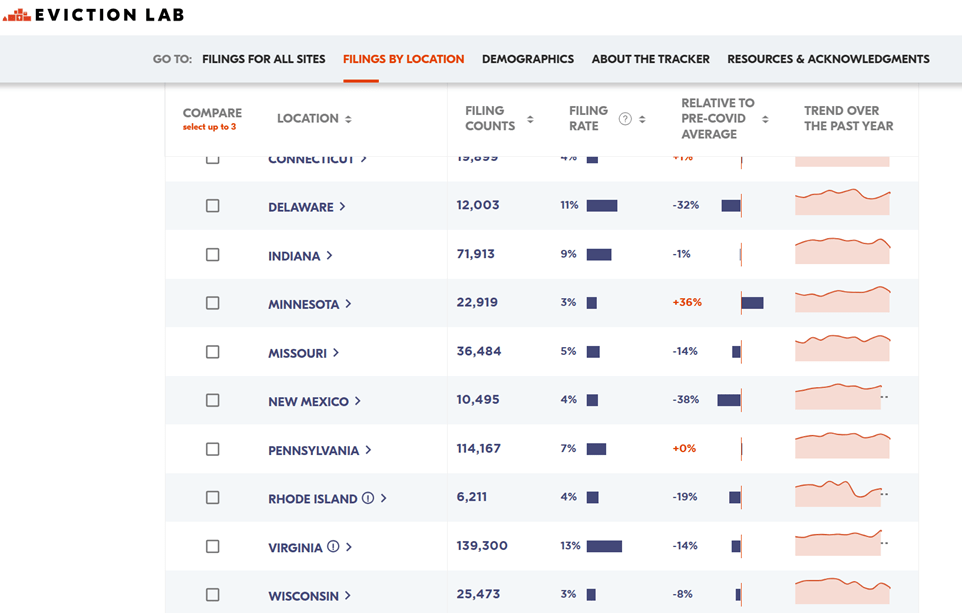
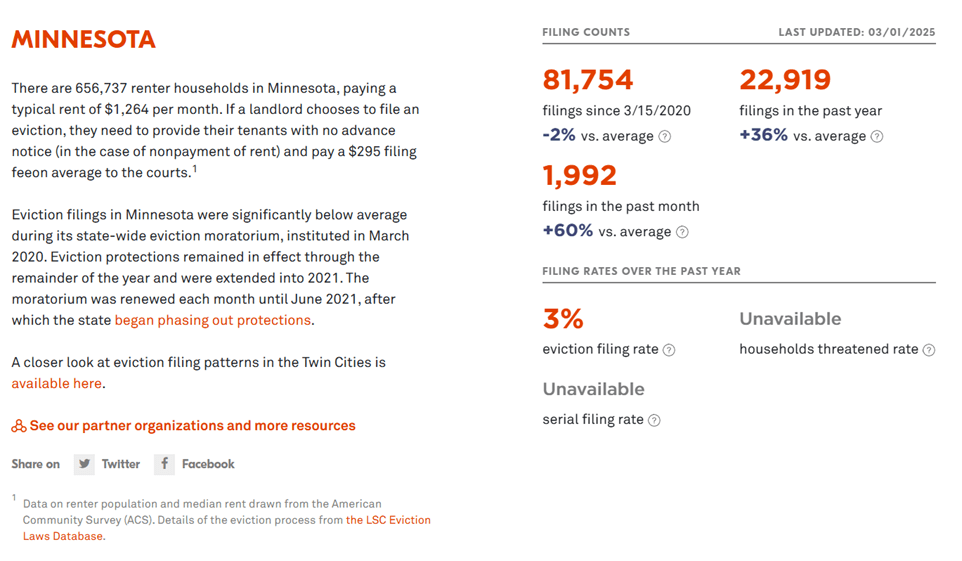
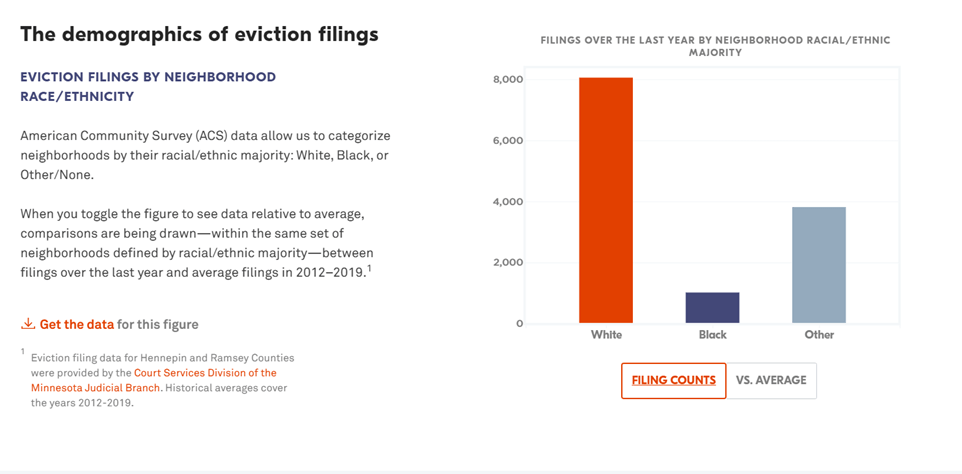
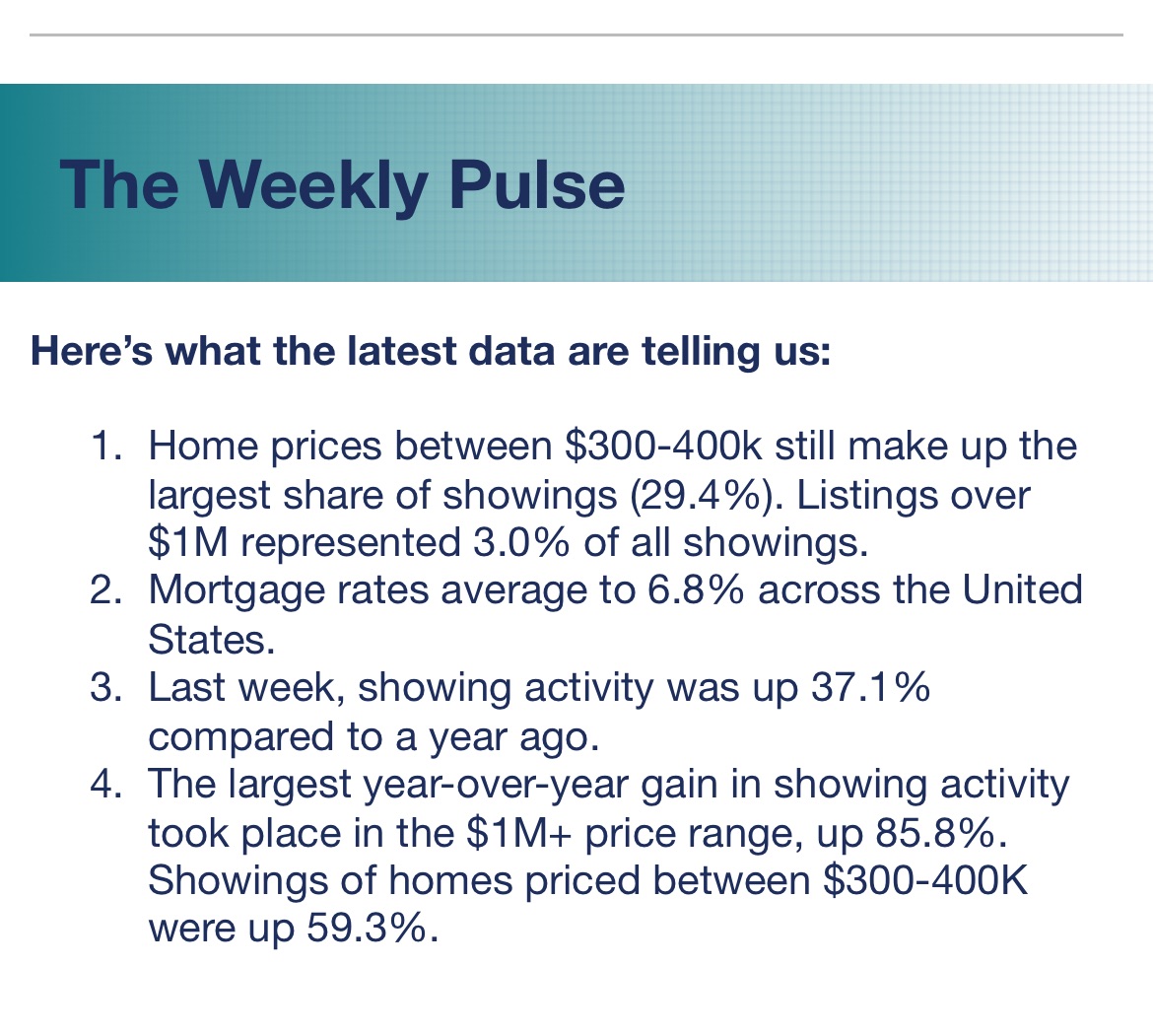























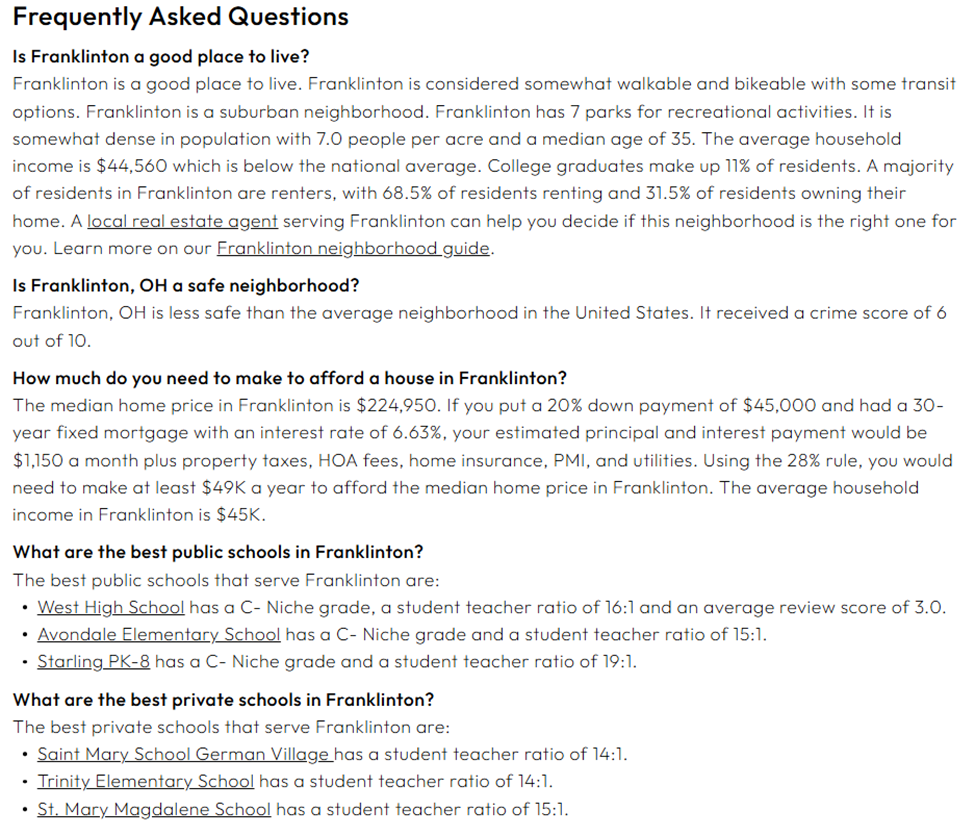
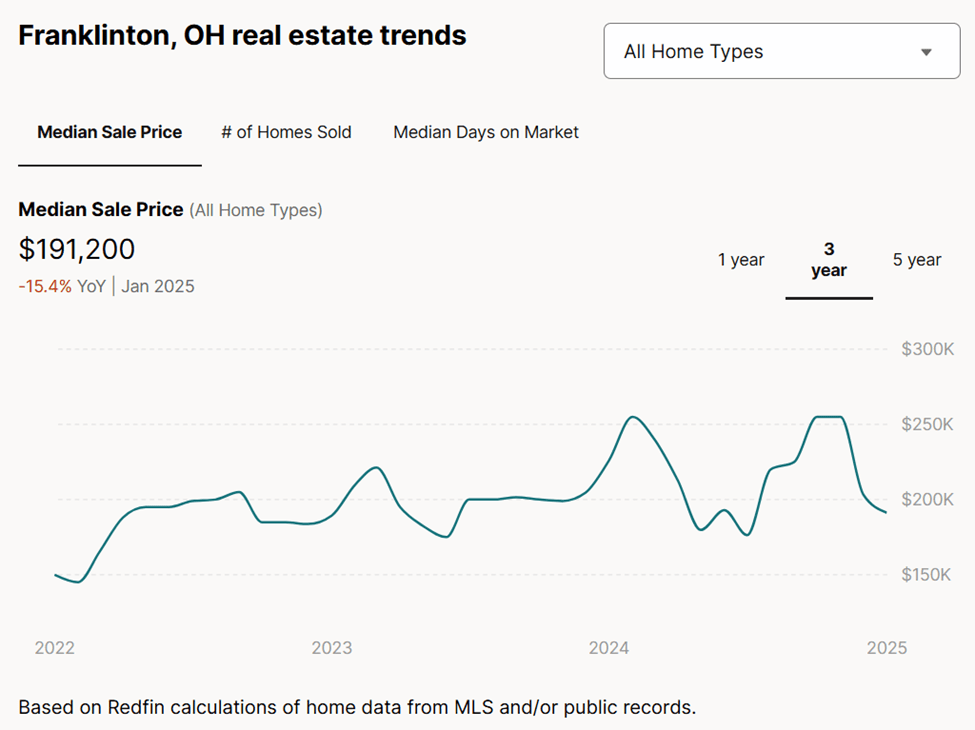








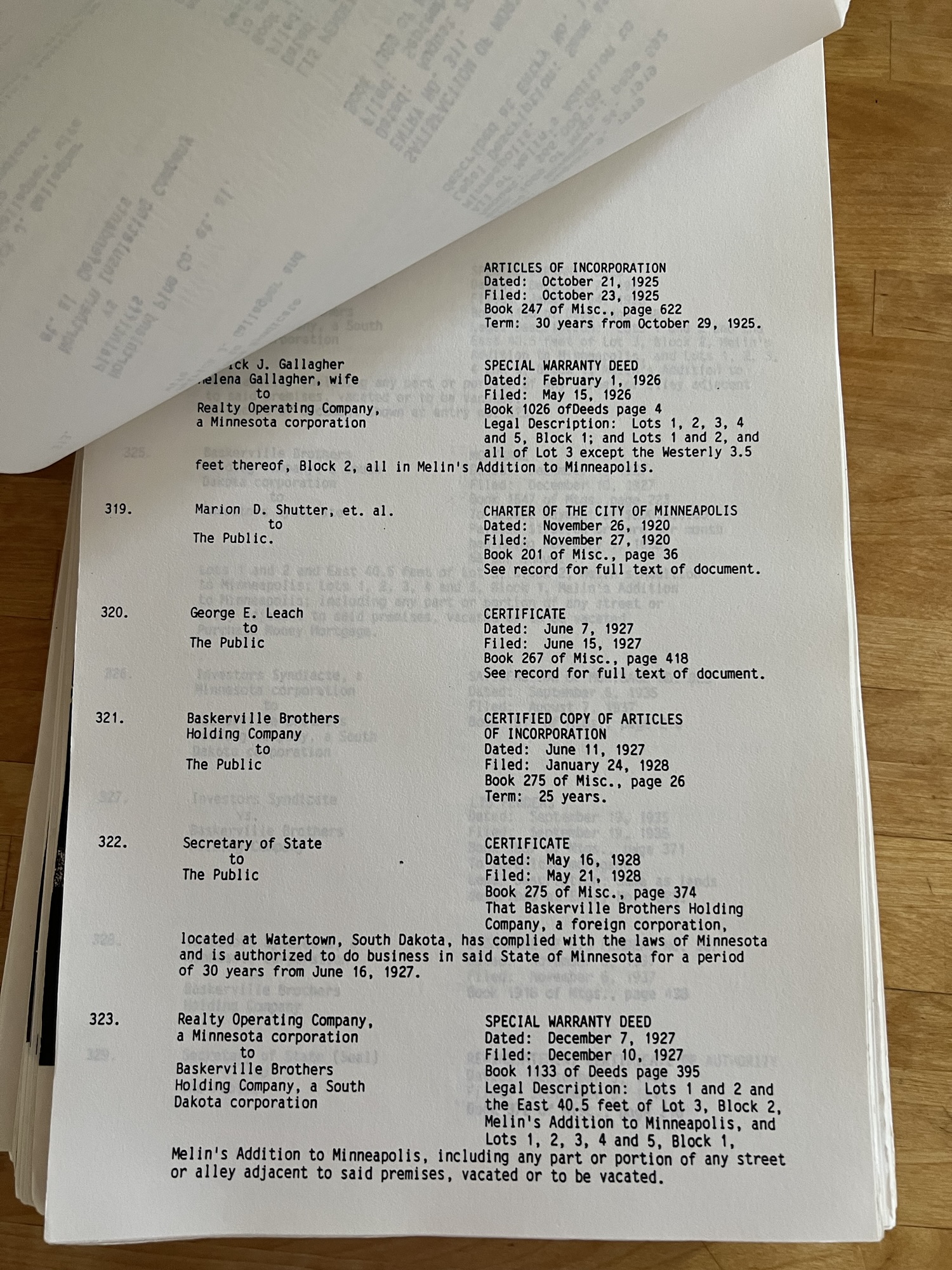











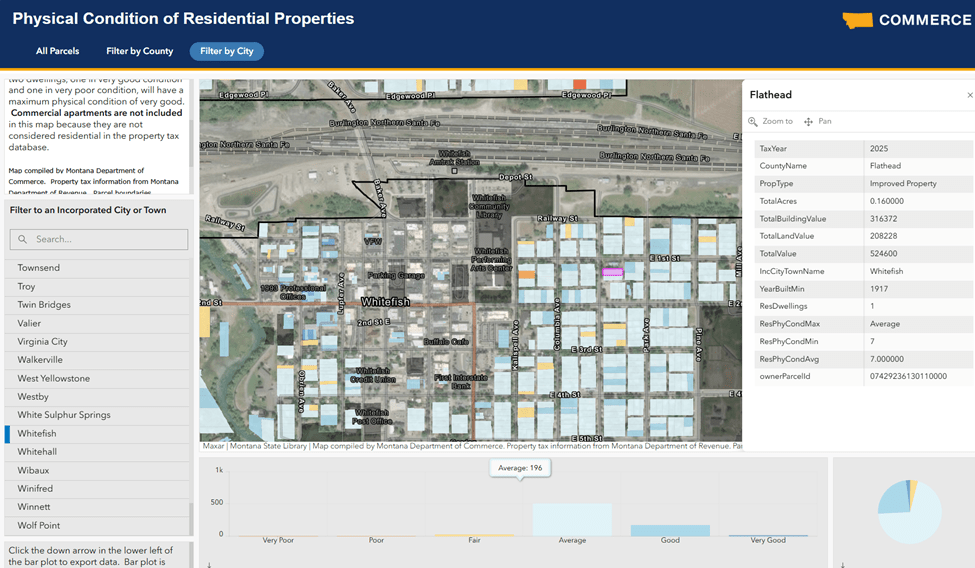












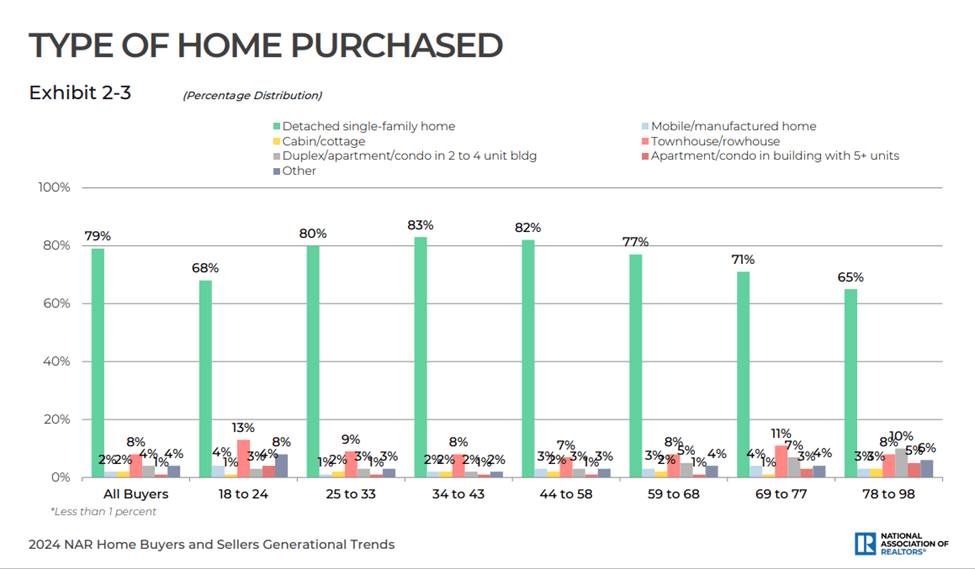




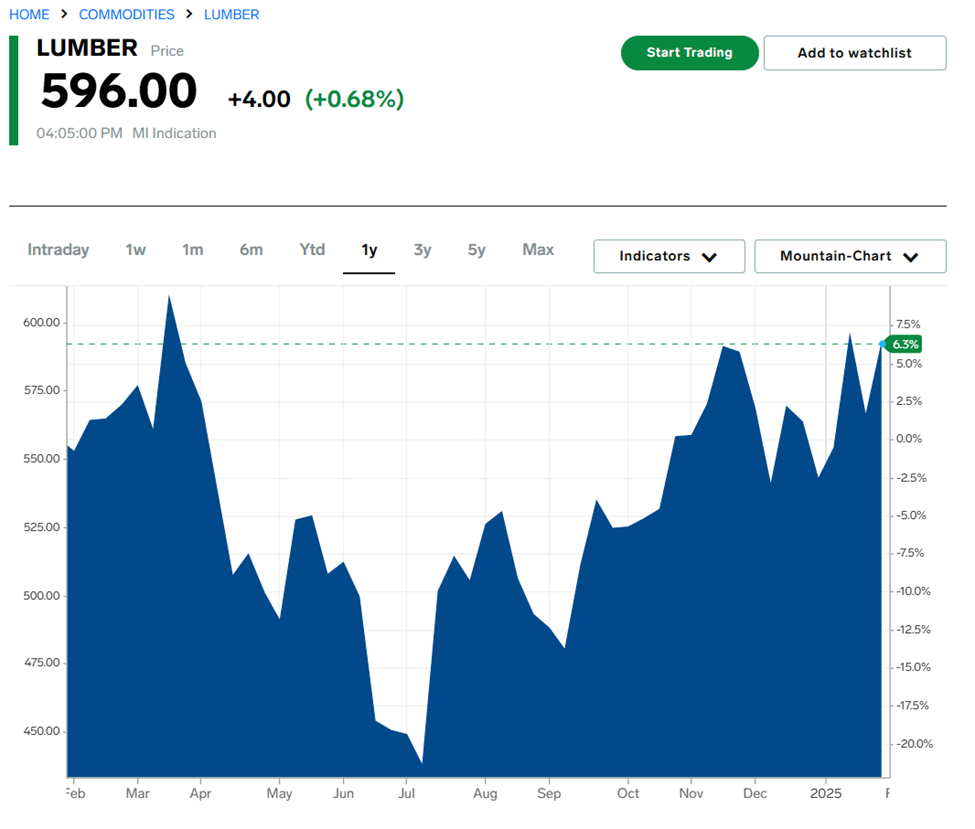


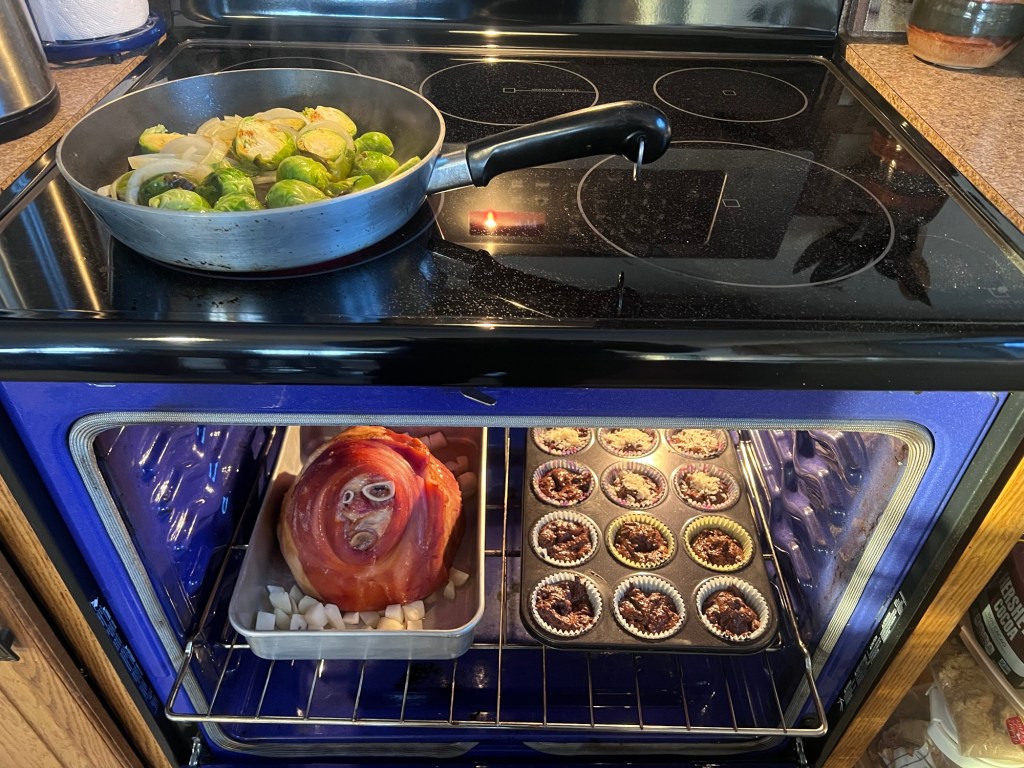








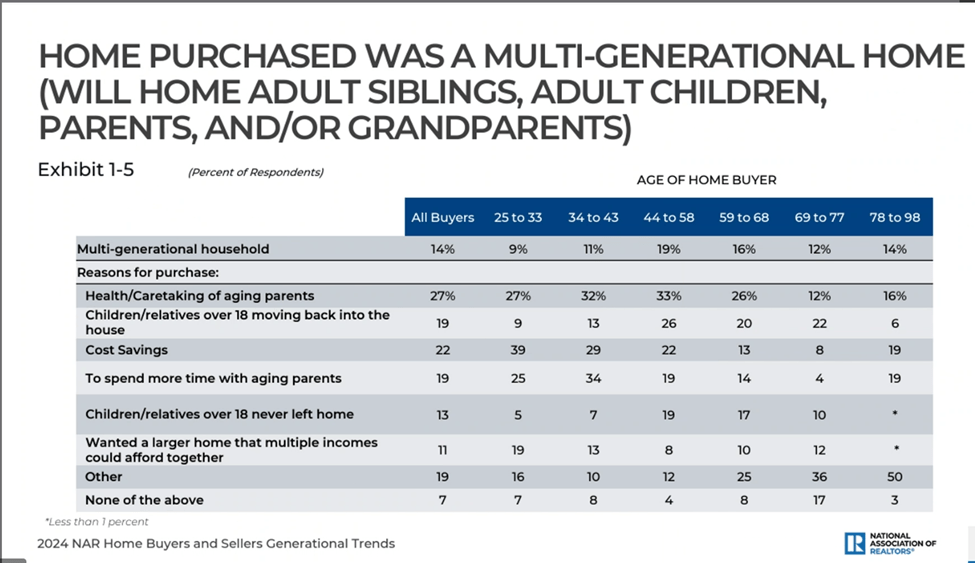




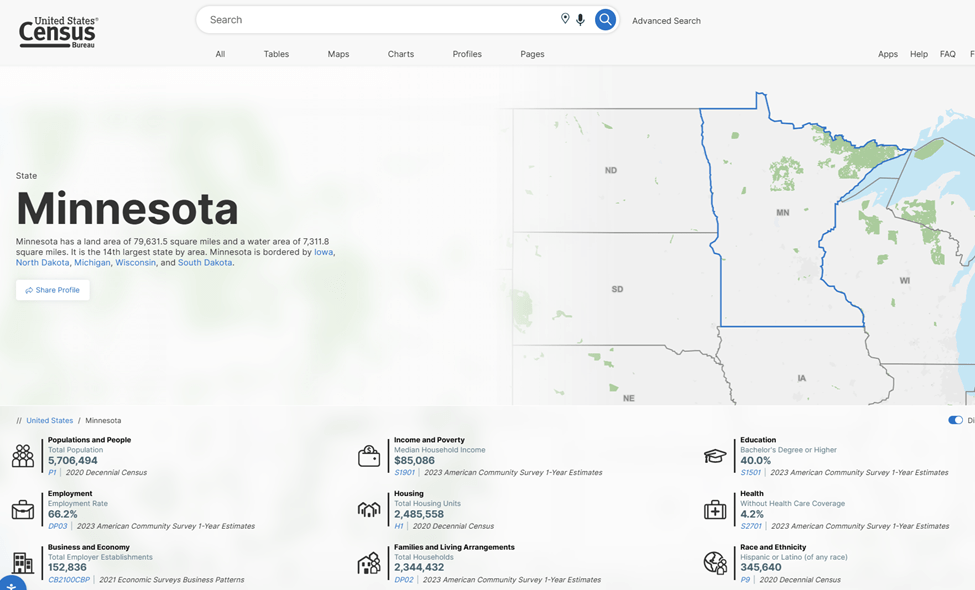
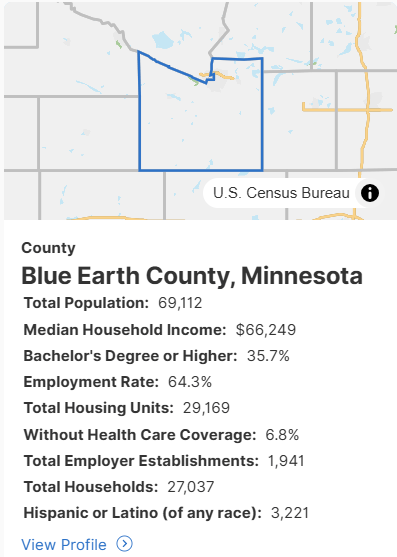

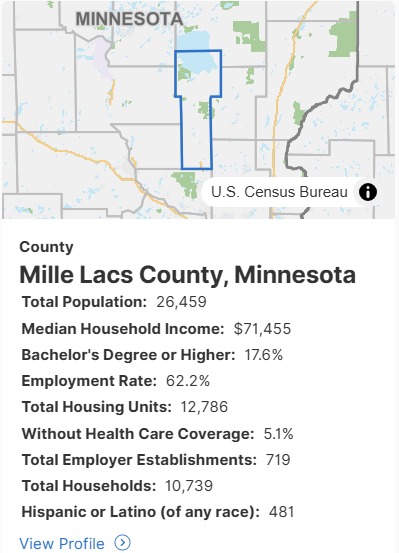


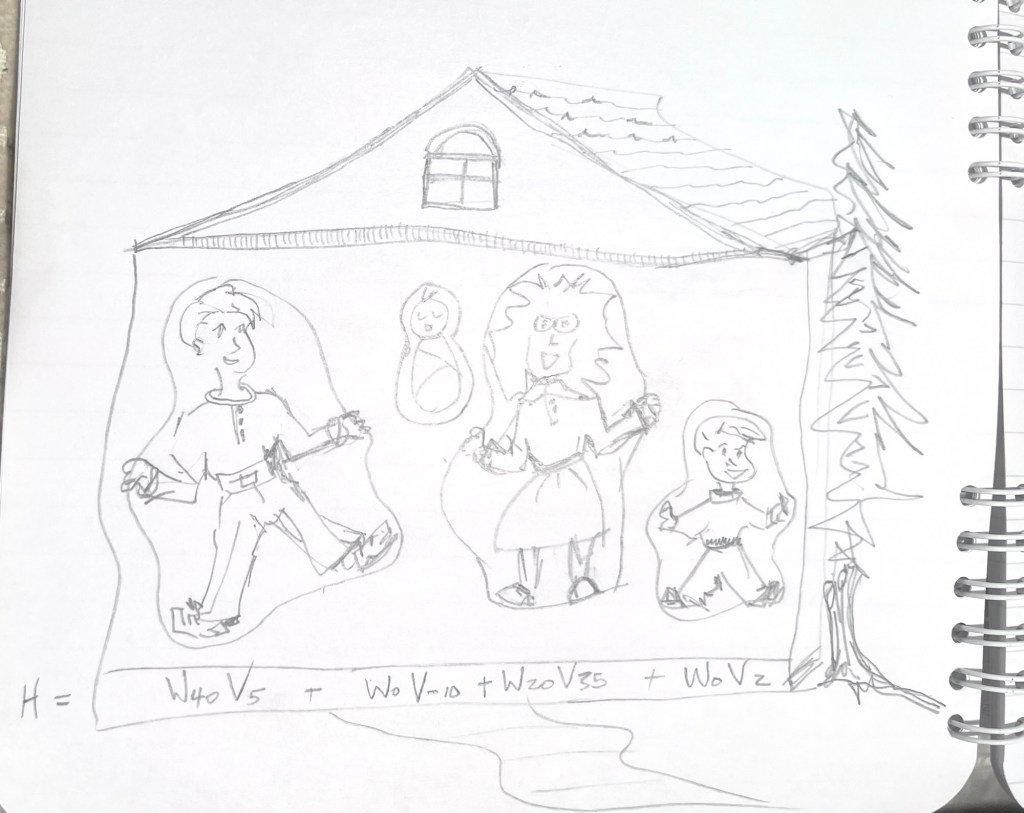









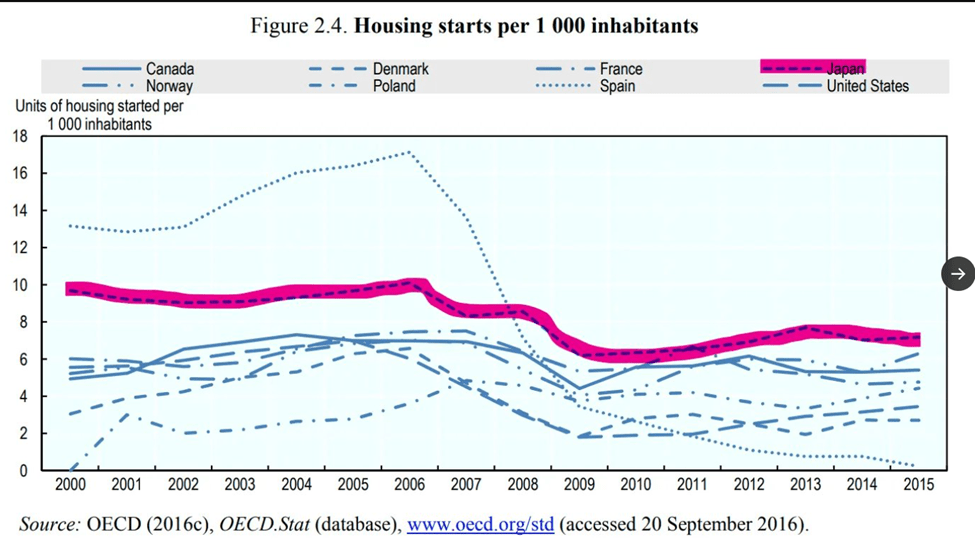





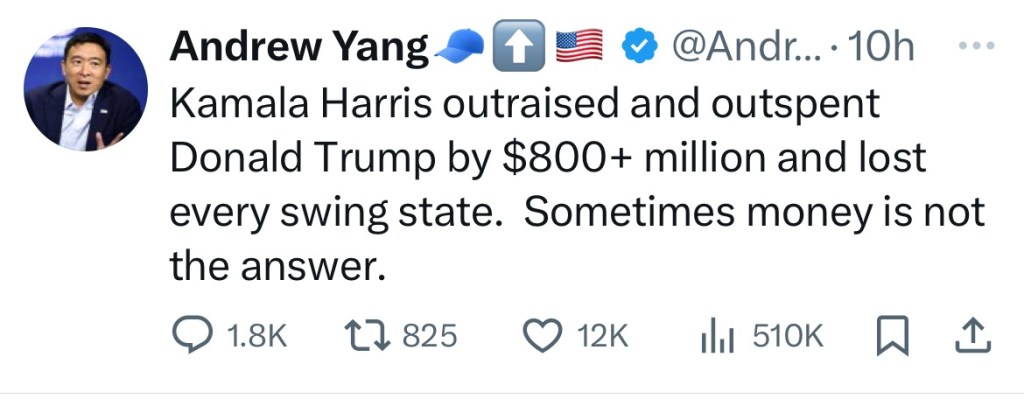





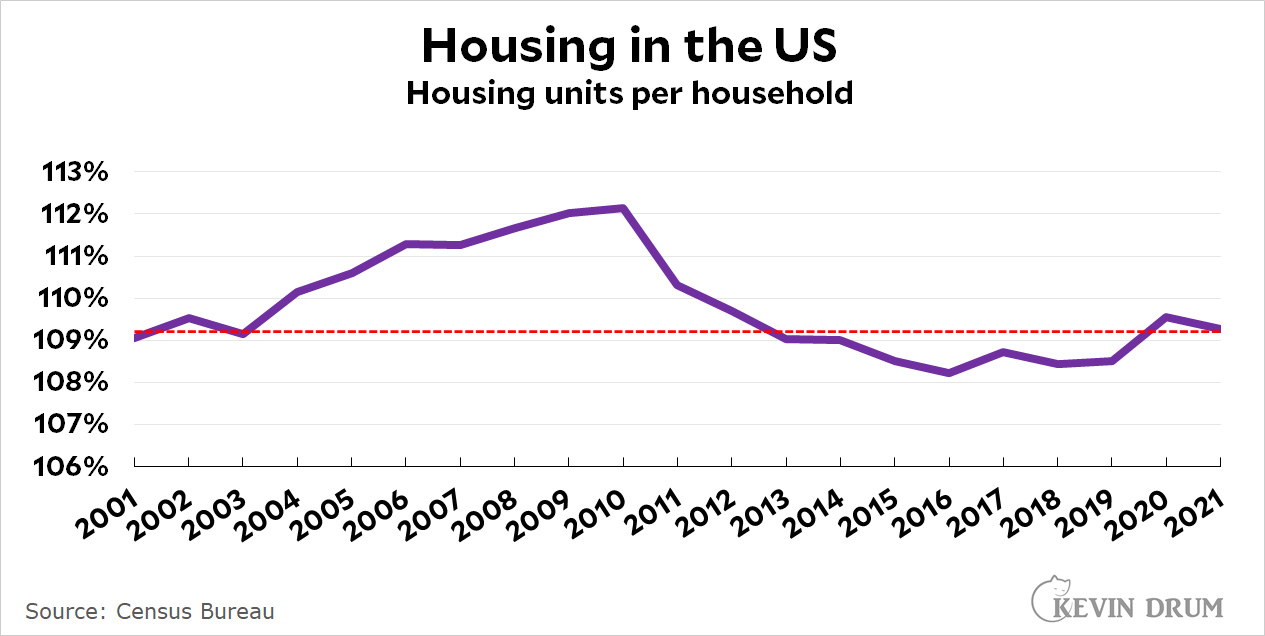
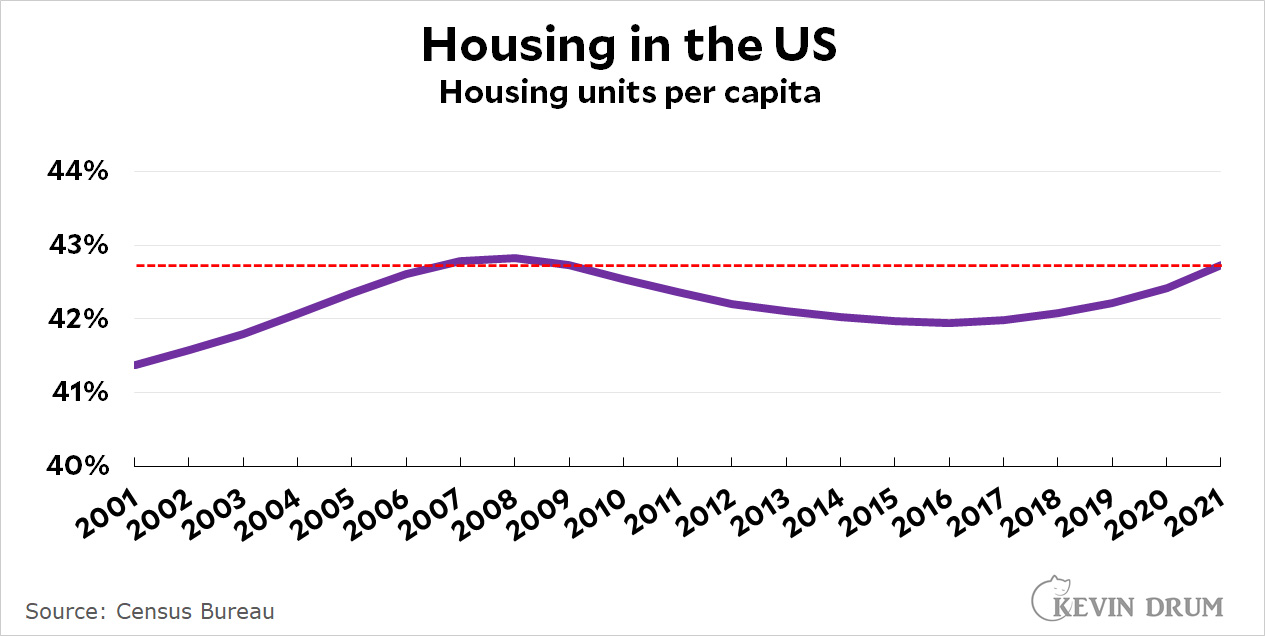





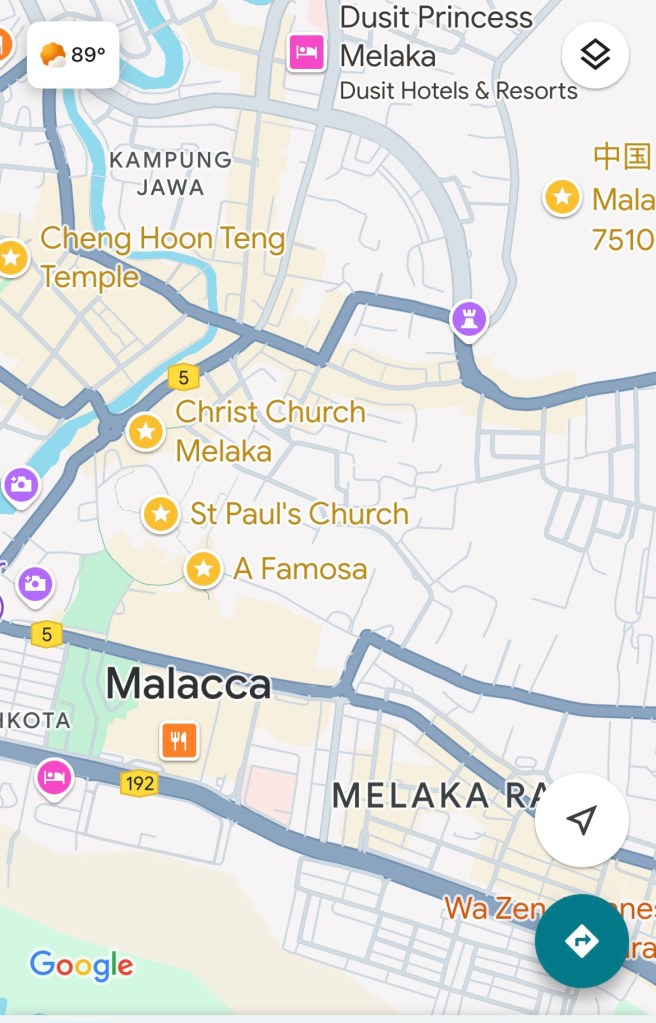
 Home Economics