There’s endless talk about “norms,” but how do we know one exists when it hasn’t been written down anywhere? That’s the question behind this entertaining episode of Shampoo, Property Rights, and Civilization from EconTalk—a sharp, practical exploration of why it’s perfectly acceptable to take the mini shampoo bottles from your hotel room, but not the towels… and certainly not the mattress.
Since such things resist a written format, how do people find out what the current norms entail? Also of interest is to pick up signals when a well-established and purposeful norm is eroding.
The county closed a motel in a first tier suburb recently. To read this article in the local newpaper, it was all about physical issues with the building.
“A few days prior, they had a frozen sprinkler pipe that broke, and we were just confirming that it was repaired. During this confirmation, it was noticed that the pipe was repaired and their sprinkler system was fully operational, but they were using a space heater in that unit, which is not up to good fire standards,” he said. “We found many other items of concern.”
Berg reportedly discovered common areas and unoccupied rooms that did not have heat, dried vomit and blood splatter on the walls in the stairwell, clothes scattered throughout the property and other health safety concerns. He conducted the inspection alongside the city’s fire marshal.
“One of the biggest problems is that none of their exterior doors close and lock. Two of them don’t even close all the way,” he said. “We explained the importance of getting these exterior doors repaired so that they lock. Management said that they have, and they try, and within days that they are damaged by their guests so that they can allow access to others in and out of the hotel, bypassing the front desk.”
And some more stuff about ceiling tiles and a dumpster.
The article focuses on the decay of the physical attributes. While completely relevant, it minimizes the social explanation for the deterioration of the property. Towards the close of the article, for the readers that linger that long, there’s this:
Berg said the fire department had been called to the Travelodge once for a possible heart attack, once for a gas odor and four times to provide CPR in the past month. The Brooklyn Center Police Department, meanwhile, responded to 102 calls from the Travelodge between Jan. 9 and Feb. 6. One led to the arrest of a carjacking suspect.
“It’s the highest four-week total since at least 2015,” Berg said. “They responded to seven drug overdoses, and two of them were fatal.”
The first sign of social concern could happen anywhere— a patron has a possible heart attack. But then the true numbers surface with no additional descriptors- 102 calls to the police. One hundred and two. People doing stuff that warrants a formal intervention from municipal security.
It is reported this way because readers don’t want to dwell on it. Nor the seven suicides. We don’t talk about unattractive social factors. Which is OK as long as they show up somewhere. Otherwise everyone just pretends the issue is physical maintenance when that is only a frivolous sideshow to the real concerns associated with this particular property.
I will be hosting a salon on the excellent Interintellect platform on Thursday, March 26, 2026 @ 03:00 PM CDT.
Join me for a salon-style conversation pairing Charles Dickens’s Bleak House with John Broich’s London: Water and the Making of the Modern City. Together we’ll explore how Victorian London confronted environmental crisis, institutional gridlock, and the slow work of reform—through story and through history. Expect close reading, thoughtful exchange, and a focus on how competing factions ultimately produced public results.
This is a guided discussion, not a lecture. Curiosity welcome; prior expertise not required.
This is a great post for identifying players among the parties with an interest in calm returning to the streets in the central city.
Interestingly, these groups are present in most all communities, large and small.
The 60 business signed and posted a request for further cooperation. Note the neutral tone.
The editorial board of the local newspaper also called for a resolution.
Interestingly, the law enforcement folks went directly to the White House. Anyone following along with the conflict five years ago saw the effects it had on this, very necessary, segment of our communities. Their desire to make a direct appeal is understandable.
Each group’s ability to succeed in their duties and objectives have been crimped by the unrest between local and federal officials. But taking a stand can have tremendous costs. For good reason, all of these components are weighed out before action is taken.
Here are key words and phrases commonly used to highlight the contrast between a philosophical approach (abstract, conceptual, theoretical, reflective) and an operational approach (practical, applied, concrete, implementation-focused). These draw from philosophy, political theory, methodology discussions, and related fields like liberalism debates.
On Fareed Zakaria’s show, GPS, this morning, guest Mai Hassan throws down a Trumpian challenge.
Finally, hundreds of civilians were massacred this week in Sudan’s Darfur region, a brutal escalation of the ongoing war in that country. Mai Hassan, a political science professor at MIT, sat down with Fareed to discuss how it got to this point.
She suggests that the US president has the power and influence to bring a peaceful solution in Sudan. At the margin, this conflict offers a better chance at that elusive Scandinavian prize.
Yesterday’s post showed off a range of house prices across the country. Since housing expenses are the largest portion of most people’s budgets, they greatly influence people’s standards of living and disposable income. To live a lush life in St. Louis might only allow you to squeak by in Salt Lake City.
For that reason, it’s funny when someone brags about their “six-figure salary” — and then you find out they live in Washington State. Sure, congratulations on your $100K, but that’s basically a modest Minnesota income with prettier mountains and pricier coffee. There’s a strange amnesia that kicks in when people talk about money across states, as if groceries, gas, and rent were all federally standardized.
Then there’s the gross-up crowd — those who love to quote the full sticker price of their income, conveniently forgetting everything that comes off the top. Taxes, insurance premiums, pension contributions… not to mention the hidden perks that don’t show up on a pay stub: flexible hours, remote days, or a workplace that doesn’t mind if you pick up your kid at 3 p.m. Some of the most valuable parts of a job can’t be cashed out — they’re lived.
Each region and industry really runs on its own microclimate of opportunity. What looks “low pay” in one city can mean stability, a yard, and free weekends somewhere else. Meanwhile, other jobs look golden until you notice the 70-hour weeks, commutes, and housing markets that never quite forgive you.
And then, of course, there are our Canadian friends. Always happy to tell you about their million-dollar home — in Canadian dollars, around $720K USD. Not quite as flashy a number. But don’t worry, we’ll do the math for you, eh?
Some claim a housing crisis is underway, but I’m not so sure. If the pressure for homes were severe, one would expect most properties to be occupied, leaving others stranded without a place to go. Vacancy rates provide us with additional information. An article by LendingTree, 14.9 Million Homes Are Vacant in the US — Here Are the States With the Highest Vacancy Rates, provides a great overview of the topic.
Vacancy rates differ significantly depending on where you look in the country. If you’re looking at Maine, you’ll find the highest vacancy rate in the country — 21.09% (157,467 vacant homes), according to our analysis of the U.S. Census Bureau 2023 American Community Survey (ACS) with five-year estimates. Following Maine at the top is Vermont, with a 20.06% vacancy rate (67,606 vacant homes), and Alaska, with an 18.24% vacancy rate (59,745 vacant homes).
Together, these three states account for nearly 285,000 vacant homes — out of 14.9 million vacant homes nationwide.
Nationally, the vacancy rate is much lower than that of these three states, with the U.S. average sitting at 10.43% — a figure that translates into nearly 15 million vacant homes. While that may sound like a lot, it may not feel like it if you’re searching for a place to live. That’s because not all of those properties are available to rent or buy.
In addition to seasonal and vacation homes, others are classified as vacant because they’re in transition — those that are rented but not occupied and sold but not occupied. Homes for migrant workers, which they occupy during crop season, are also classified as vacant.
Minnesota, as is often the case, is just average. There are 236,571 homes vacant, which, in percentage terms, is 9.39%
The article cites a list of reasons why a home could be vacant. It might be a second home or vacation property. It might be in a transition state from either a remodel or a relocation of residents. Sometimes people hang onto properties for emotional reasons, such as a family tie to the land.
But note, in any case, that there is a variation between the states. Real estate is local. National generalizations about the state of housing are often dumbed down and not particularly helpful.
There are three actions in the motion that drive social change. There’s the act of staying loyal to one’s team, until one simply can’t anymore. This stage prompts the act of voicing concerns. We can speculate that this is first an in-group activity before going public. And if these two steps don’t bridge the rift, the individual agent can opt to exit.
MPR gives a local politician the platform to express dismay at the local culture of corruption that has seized the state. He’s the first prominent person of that party to do so.
I would also say that there is a significant fraud problem in Minnesota involving nonprofits. And so, especially now, when we have seen hundreds of millions of dollars be stolen through the use of nonprofits — and in some cases for-profits receiving state and federal funds — it’s extra important to have the highest standards of ethics in state government, both with rules and with the conduct of elected officials.
The issue in the article is one of the tamer instances of misconduct in the state. Indeed, it may simply be the appearance of corruption. But this instance of Voice as opposed to a code of silence against any fellow team member is telling. It’s the move that leads to Exit.
Now, either the politician in question will exit, as Dean Phillips was forced to do after calling into question Biden’s abilities. Or the corrupters will be forced to exit as their behavior no longer meets the norms of the party.
There are all sorts of claims about housing floating around the electronic media world. It’s nice to know where to look for reliable information. The Eviction Lab (Princeton) is one of those sources.
There are local politicians, for instance, drumming up the need for ‘protections’ when, in fact, renters in our area are not showing any signs of stress. One measure would be to consider the rate at which tenants are evicted. The information below shows a low rate of 3%. Only Wisconsin is at the same range in this sample.
There has been an increase in the number of filings since the COVID years, as tenants were protected during the pandemic. Landlords went months without rent. Nor was any assistance provided for lost income. Still– an increase from 1% to 3% hardly implies the type of hardship that some voices in the public sphere are trying to have you believe around housing.
I thought this was interesting too.
Conclusion: There is no housing crisis. There are housing needs that continually need to be looked after. And that is all.
Recently, I hosted a Zoom meeting with a group of folks I did not know. I was nervous. So, I went on YouTube and looked through the helpful how -to videos. I wanted to see where the participants would be at the start of the meeting. You can’t see the waiting room feature until they are there– as a number in the percipient box on the lower banner.
There was no need for concern. It worked precisely as intended. Run the cursor over participants, and up pops the sidebar showing the names of those in the waiting room. One by one, or all in one go, a host can let people onto the Zoom call. The YouTube tutorial said the host can just as easily pop someone back into the waiting room.
And then I started thinking. Wouldn’t it be great if someone’s voice starts irritating you, to take a moment and click them into the waiting room for a little break. Their input is valuable. You want to keep them in the conversation. You just need a pause from that screechy tone quality in their delivery. Or say you’ve got an interrupter, or a barker, or a drone on foreverer. Pop them in the waiting room!
Think how much progress could be made if a little break in the waiting room would make it easier for people to stay in communicato. Robin Hanson just wrote that he is an “adaptationist on social values, and prioritizes making my culture more adaptive, as a way to save as much of it as possible.” (Overcoming Bias)
Minnesota lawmakers are considering a proposal to contribute state money to the Xcel Energy Center, primarily the home of the state’s hockey team, the Minnesota Wild. However, the venue is popular for all sorts of events, including mega-singing stars. It’s also one of the few large-scale attractions in the capital city, bringing thousands into town to eat and drink.
Allianz Field, home to Minnesota’s soccer team, the Loons, is also in St. Paul but not downtown. And then, of course, there is the Vikings’ stadium (US Bank stadium) in the sister city. The Timberwolves and Lynx shoot hoops at Target Center, and the Twins round the bases at Target Field. This metropolitan area is no stranger to the tug of war between owners and the public purse for stadium dollars.
All the teams draw fans from across the state, so it seems appropriate to kick in funding for taxpayers who want these distractions in their lives. Even though the structures are located within a municipality, the draw of supporters is cast widely across the state. There is a tension, however, between the fans and the hosting cities. A sense of proprietorship is accompanied by voicing demands for better policing or transit. The expected pushback is that fans are outsiders.
Kevin Drum proposed that in a 2022 article– and I agree entirely.
The real issue here is that America doesn’t have a housing crisis.
I’m not sure why, but I find the new urbanists one of the most annoying groups in the progressive pantheon. It’s not because they’re wrong, precisely, or because they’re meanspirited, or anything like that. There’s just a disconnect from reality that seems to motivate so much of what they say and do.
Take America’s housing crisis. Here it is:
We have as much housing per household as we had in 2001. And just in case you think I’m cheating with this “household” business, here it is per person:
We have more housing per capita than we did in 2001.
Just wait and see as the market softens. Prices in some markets have already ebbed away from a peak, and the number of homes on the market is creeping up. Builders who notoriously hold on to their list prices are marking spec homes down a bit. The tight market was not due to a shortage as much as the normal pressure of people moving to changes in their lives.
But the best part of Drum’s article is how he feels about the people who try to set a national agenda on housing: the urbanists.
But this still doesn’t really explain why I find the urbanists annoying. Here’s my real beef: they are obsessed with big cities. They spend nearly all their time trying to convince us that big, crowded cities should become even bigger and more crowded. Or that suburbs should become big and crowded, just like cities. This is a fantastic waste of time. Residents of big cities don’t want to become more crowded and resident of suburbs don’t want to become more like cities. They will fight you forever on this. Absolutely forever. The game isn’t worth the candle, especially when there are so many other far more useful things we could be devoting our energy to.
So why waste time on this? The urbanists will haul out studies about economic gains, environmental impacts, mass transit, etc., but they massively oversell those benefits and completely ignore the downsides of crowding. Instead, they should be spending approximately 100% of their time promoting policies that would get people out of big cities and into smaller cities that have room to grow.
It is funny how everyone wants to talk about ‘world-class cities.’ Ho-hum cities are where it is at for understanding the baselines of success.
It was one of those late summer afternoons when people had gathered at a lake home for a shared meal and a view of the lingering summer sun rays over the water. A local farmer often included in these, mostly family get-togethers was there. The harvest was still underway, but the crops had had a plentiful year, and there was a sense of contentment around the final crop. Every year, nature threatened crop failure with late spring plantings, or vicious wind storms, or excessive rain. This year, all had gone well.
The conversation turned to local issues, and the relationships were such that it was easy to ask about the necessity of farm subsidies, especially in plentiful years. He agreed. “But if we let them go, we’ll never get them back.”
Many groups’ strategies involve lying low and being silent when times are good. They don’t remind the governing body of the flow of money. Let the benefit slide while everyone’s focus is on some new issue. Let the political energies and attention be drawn away from the fact that the farmers live large at the moment. That’s how is can be in government programs. Once in place, there’s no mechanism to pull them away once the need is no more.
Until Trump, that is. The president’s actions are described as slash-and-burn, as he closes down departments and pulls programs. He’s put foreign partners on notice that what used to be may no longer be. Critics voice that there will be more harm done than good in the outside-the-normal-way-of-doing-things model is put to the test.
But is there nothing to learn? Is there a method here?
Isn’t the President testing group structure? Every time an old way of doing things is challenged- the various groups engaged in the activity respond through multiple forms of Voice. Aren’t some surprising? Like- who knew about the tariffs Canada imposes on the US or between each province? And isn’t the quiet around the Federal workforce reduction a little deafening?
Some people will not like the new arrangements and will leave. Farmers will encourage their kids to go into other fields of work. Countries will turn to their neighbors for new alliances. It just seems like there is something to learn from each of these instances of exit, voice and loyalty.
Born in Farmingdale, New Jersey, Ian entered the American folk music scene while still a teenager in the mid-1960s. Most active musically in that decade and the 1970s, she has continued recording into the 21st century. She has won two Grammy Awards, the first in 1975 for “At Seventeen” and the second in 2013 for Best Spoken Word Album, for her autobiography, Society’s Child, with a total of ten nominations in eight different categories.
People love a villain. Sometimes, I think they need a villain. They can wrap up all their angst and anger and launch it into the world by saying mean things about them. Property owners and landlords have had targets on their backs for the last ten years. After the great recession of 2008 pulled real estate prices to new lows and held them fast under-water in prolonged recovery, the bubbling up of prices has made real estate ownership look like easy money.
The anti-capitalists appeared as if in response to a dog whistle, armed with outrage and disgust at the accumulated value through property ownership. Instead of being pleased with the improved market, which serves as the engine of continued investment in neverending maintenance and repairs, those who spend their days looking for someone with more than them proclaim foul play.
Will the critical voices show up tomorrow at the auction advertised below? A lovely downtown building is listed with a starting price of $1. No– they won’t be there. The truth is many people do not wish to carry the burden of ownership. And that’s fine, but then they can’t criticise those who do the work and reap the reward.
Voice is an essential feature in our economy. The voices I value the most are those from people with experience in the field and those with a personal stake in the experience under review. Be a good shopper. Cut through the noise and valuate the source.
But he said to me, “My grace is sufficient for you, for my power is made perfect in weakness.” Therefore I will boast all the more gladly of my weaknesses, so that the power of Christ may rest upon me. For the sake of Christ, then, I am content with weaknesses, insults, hardships, persecutions, and calamities. For when I am weak, then I am strong. (2 Corinthians 12: 9-10)
It’s kind of silly to say markets do not like uncertainty. Markets deal with new news all the time. Who thought Nvidia was going to surge last year and then precipitously drop in January? As a market participant, you can take advantage of such speculation. Bloomberg reports this activity in a newsletter today.
People don’t want to think of aid grants as having a market, but they do. They involve needs, donors and are constrained by resources. By abruptly closing down USAID, a repricing in the market for assistance will follow. Some of the needs will rise to the level of attracting a backer. But how?
Voice is used on this side of the market to advertise demand. Here’s an interesting comment from X.
People who need help are not always in a position to voice that need loud enough to be heard. But I think Mike Benz has a point. Why isn’t the international community, or doctors and health professionals commenting on the lack of funding?
So what next? Most probably some of the projects will continue under the management of the State Department. In the meantime, a market process sifts through the various priorities of market participants. Some needs abroad may be taken over by other philanthropies. Some local organizations might have to downsize.
What’s important, is the ones that are no longer deemed worthy of funding will no longer find a match.
(of an object) fixed firmly and deeply in a surrounding mass; implanted: “a gold ring with nine embedded stones”
I’ve never followed the use of this word as a descriptor of how norms and values influence economic activity. So I asked Chat. How is it that Karl Polanyi, who wrote The Great Transformation, talks of actors navigating a dynamic system where the act of their own free will and yet somehow is fixed firmly and deeply, i.e., embedded, in pre-set cultural norms? Here’s Chat’s response.
You raise a compelling point about the term “embedded” potentially being seen as static or limiting. However, in Karl Polanyi’s usage, the term “embedded” does not imply a rigid or unchanging system. Rather, it signifies that economic activity is integrally tied to social, cultural, and political frameworks. Within this embedded system, change and enhancement by participants are entirely consistent with the concept.
Why “Embedded” Is Appropriate in Polanyi’s Framework:
Embeddedness Is About Integration, Not Inflexibility:
Polanyi uses “embedded” to describe how economies are integrated into social and cultural systems, rather than existing as separate, autonomous spheres (as in the market economy).
Embeddedness highlights that norms, values, and institutions guide economic behavior, but it does not preclude change or evolution. It acknowledges that human agency and interaction shape these systems over time.
Dynamic Nature of Embedded Systems:
An embedded system evolves as participants interact with and reinterpret the norms and institutions that structure their actions. These systems are adaptive and responsive to changing circumstances, such as shifts in resources, relationships, or external pressures.
For example, reciprocity in a small community might evolve to accommodate new technologies or trade relationships, but it remains embedded because it is still governed by the community’s social values.
The Contrast with Disembedded Economies:
Polanyi contrasts embedded economies with disembedded ones, where economic activity becomes “autonomous,” governed solely by market principles. In disembedded systems, human relationships are subordinated to market imperatives, creating a more rigid and dehumanized structure.
Embeddedness, by contrast, ensures that economic systems remain rooted in human relationships, which are inherently flexible and participatory.
Room for Agency and Innovation:
Embeddedness does not eliminate agency or pre-set participants to fixed standards. Instead, it provides a context within which people act, negotiate, and innovate. Participants are active agents in shaping the system, but their actions are always informed by their embedded relationships and cultural understandings.
A Possible Refinement: “Interwoven” or “Integrated”?
For clarity, terms like “interwoven” or “integrated” might better capture the dynamic, evolving nature of the systems Polanyi describes. These terms emphasize the mutual influence between individuals and institutions, as well as the ongoing negotiation and adaptation of norms.
Conclusion:
The term “embedded” in Polanyi’s framework is appropriate because it emphasizes the interdependence of economic, social, and cultural systems. However, it is crucial to understand that embedded systems are not static. They are enhanced and reshaped by participants, reflecting a dynamic and evolving process rather than a pre-set, unchanging standard. If the term “embedded” feels too rigid, alternatives like “interwoven” or “integrated” can convey the same idea with more emphasis on fluidity.
I still say embedded is misleading. Economic activity doesn’t sit in a nest of norms and rules. It participates in making norms and rules along the way. In the process, economic agents are continuously confronted with the choice of Exit, Voice, and Loyalty.
How about you? Does economic activity sit atop a mangle of social requirements calling out orders? Or are social needs slid in side-by-side with personal gains?
Listening to a complainer can be tedious. Wonh, wonh, waaaa. The sun isn’t shining bright enough, their coffee isn’t hot enough, and on it goes. It can be a character trait for some. If they can’t see something off in their world, then the world itself is the object of their grief.
But some folks are constructive complainers. For the most part, they go along to get along. But then something strikes them as idiotic. These people’s opinions most probably have some merit. So let them vent! Not only is it therapeutic, but it is also valuable. Listen to Bill Maher complain to Jane Fonda about the regulatory burden on his garage door.
Now—there’s no point in complaining when the powers that be are in no mood to listen. Every kid knows to take the temperature of the room before making requests to mom or dad. A parent recovering from a rough day is bound to be a more stringent rulemaker. Biding a little time can result in greater freedom. Wait them out until their frame of mind improves.
The time seems right in America for objections to inefficiencies. If you can’t get your garage door replaced, say it out loud. If you can’t get your lot approved for a rebuild—take it to the airwaves. The mood is open to housing growth over fears of a tall building throwing shade on a neighbor for a few hours daily.
Complaining is also most productive when solutions are possible. A deep recession is not such a time, for instance. But today’s economic environment is solid. There’s money churning in the system, and workers are able to get out and about ready to tackle new projects. Set them to work by complaining!
Hopefully, the record-keeping types will jump on board with this project and collect the notes. The same folks who show up at the PTA meetings and scribble out the meeting minutes in shorthand are perfect for the job. If they could pair up with someone gifted in the data visualization field, even better. Then, the crucial complaints can be told boldly, the numbers can be tallied for depth, and the information can be shared repeatedly so all benefit from the feedback.
Don’t delay. Time is not on the complainers’ side. It will soon become unpopular to lodge criticisms, no matter how objective. Just remember, riffling through all that mud, one is bound to dig out a few precious gems.
Last week, a local real estate brokerage settled with the state attorney general’s office over allegedly deceiving clients about the performance of a $540 home warranty. The product is offered to both buyers and sellers on an optional basis. Every client who does business with the broker signs a disclosure about the affiliated nature of this business, as well as other businesses such as mortgage providers, title company services, and so forth.
The settlement was for $3.5 million. A paltry amount when it comes to engaging the legal profession. The option of going to court to be exonerated from such a ridiculous claim would cost the brokerage a figure in the multiples of this, and the continued press coverage predictably tilted as anti-business. Take for instance, this quote from the attorney general:
“Today’s settlement will put this money back in the pockets of Edina’s customers who were misled into purchasing HSA warranties without ever being told that Edina was being paid handsomely to promote these problematic home warranties,” Attorney General Ellison said.
Explain how a spiff off a $540 home warranty can be considered handsome in the total expense to purchase a home. Even the full $540 falls, perhaps between .1-.2% of the average total home sale cost. The spiff might be a tenth of that- hardly a game changer for any worker in the chain of events.
There’s more from the Bring Me the News article. There’s the part where government makes claims about consumers’ abilities to determine value:
The investigation by the AG’s office also alleged that HSA “confused consumers” into believing its home warranty was a valuable product that contained benefits that it didn’t actually have.
Many consumers purchase warranty products through utility providers and home warranty insurance providers to have the peace of mind that if the mechanicals in question fail, they have some sort of repair or replacement coverage. I’m not sure how offering an accepted open-market product at a relevant point of another transaction confuses the general public.
Maybe the government is confused, and consumers are actually much more intelligent than they are.
O! say can you see by the dawn’s early light,
What so proudly we hailed at the twilight’s last gleaming,
Whose broad stripes and bright stars through the perilous fight,
O’er the ramparts we watch’d, were so gallantly streaming?
And the rockets’ red glare, the bombs bursting in air,
Gave proof through the night that our flag was still there;
O! say does that star-spangled banner yet wave,
O’er the land of the free, and the home of the brave?

On the shore dimly seen through the mists of the deep,
Where the foe’s haughty host in dread silence reposes,
What is that which the breeze, o’er the towering steep,
As it fitfully blows, half conceals, half discloses?
Now it catches the gleam of the morning’s first beam,
In full glory reflected now shines in the stream,
‘Tis the star-spangled banner, O! long may it wave
O’er the land of the free, and the home of the brave.

And where is that band who so vauntingly swore
That the havoc of war and the battle’s confusion,
A home and a country, shall leave us no more?
Their blood has washed out their foul footsteps’ pollution.
No refuge could save the hireling and slave,
From the terror of flight, or the gloom of the grave,
And the star-spangled banner in triumph doth wave,
O’er the land of the free, and the home of the brave.

O! thus be it ever, when freemen shall stand
Between their lov’d home and the war’s desolation,
Blest with vict’ry and peace, may the Heav’n rescued land
Praise the Power that hath made and preserved us a nation!
Then conquer we must, when our cause it is just,
And this be our motto: “In God is our trust;”
And the star-spangled banner in triumph shall wave
O’er the land of the free, and the home of the brave.
How many over-educated, under-utilized bitter people does it take to change the role of the homemaker and mother in society? Apparently, less than 4 percent.
A French conversation group started at our library earlier this year. It met twice a month and then went to every week as the turnout was strong.
Practice truly is the path to perfecting a skill. For one hour you demand your brain to look a little deeper amongst the crevices for those vocabulary words which have not been dragged out and dusted off in a while.
The words start to glow and you surprise yourself when two consecutive sentences flow out dressed in a fairly tuned accent. It’s fun to improve and watch the improvements by other participants.
There are a pitiful number of yard signs out in the neighborhood, considering it’s a presidential election year. Fifteen to one of the signs are for local councils, mayors, and state offices. Ginny is a popular state representative. Her signs are ones that people have out and about.
Last week hundreds of supporters lined the downtown streets of Owatonna to cheer on the high school football team. The in-group here is far more significant than at most schools. The accumulated population of grades 9-12 comes to 1475, a small size compared to the ones in the metro.
The parade watchers include a broad spectrum of folks in various shapes and sizes. People turn out. People in smaller towns are connected in many different ways and thus show support to those related to those they know. Then, the whole thing turns into the best social event, which is located an hour and a half from the heartbeat of the major metropolis.
A high school rivalry is the main event. It brings a town together, where people feel part of a team jousting against others. In this community, many other common goals, complaints, and successes are shared and passed along. The activity transpires on an invisible platform, providing sure footing to the townsfolks while leaving outsiders at bay.
Our parks board meeting was held at the historic Plymouth town hall this evening. The building had been decommissioned in 1960 (when everything old was out), neglected for decades and then rescued in recent time by a bunch of friends with civic spirit. Around six years ago they turned the project over to the city, their age pushing them onto another phase of life.
It’s been a huge project. The structure’s exterior was in need of significant repair. On the interior worn plank flooring, wainscoting and an elevated lectern were as thick in dust as in appeal. It was hard to see the details past the moving boxes stacked high and low. Apparently donations to the society were not turned away, nor sorted for local interest.
A fine historian has been busy for the past year doing a lot of house keeping. The walls are crisp and the flooring swept clean. There are historical vignettes throughout. The enclosed back porch is set up as a research area and study- a pleasant and inviting space. Professional cabinets hold artifacts in the lower level. He’s really brought the project forward.
He relayed the most frequent question people bring them is regarding the history of their property in Plymouth.
There are times when its seems necessary to ask the question: ‘Who owns that?’ Owners are the ones who hold the keys of entrance and admission as well as how something is used. So, for instance, if a local gang has taken over a city park, they have taken a grab at ownership privledges without the paperwork. Hence it reasonable for the residents of the city or their police force to remove the gang. But the way some stories are told, or some policies are made, make it difficult to determine, who owns that.
For example, when a portion of the federal interstate is up for reconstruction in the coming years, residents who live near the traffic artery use political activism to voice opposition to additional lanes. Do folks who live near a freeway, train track, or airport have disproportionate ownership rights over the rest of the public, which makes their voice disproportionately louder? What share of the project is allocated to the federal purpose of connecting all states by a freeway system and what portion is to be shaped by the opinion of local residents, if any? Who owns the road?
Calling out ownership versus voice will be an ongoing game: Ownership Issues.
If people can’t handle the truth (as Jack Nicholson is known to have said) then what will the new standards be? When will the slip up, the mispoke, be called out as a flat out lie?
It is not uncommon for people to misspeak. In thinking about the next thing to say, instead of “blue” you say “red”, or instead of “east” you say “west”. Few will object to a proper slip-up. It’s unintentional. It’s sloppy but harmless. But what about slipping up twice on the same word, or twenty times? When does the use of an incorrect title which embellishes one’s position and stature in a hierarchical system become more than an oops?
There should be some rules to such things. After all, you can’t go around calling out “liar, liar, pants on fire.” Nor is it always appropriate to blurt out a truth. It’s like the spouse who steers clear of the question, “Honey, do I look fat in this outfit?” Here a white lie gets you through the moment of insecurity and lets the evening proceed without an analysis about what one should do about a few extra pounds. Here no one gets hurt, in fact the couple is better off.
So is that the new rule? If no one gets hurt, letting a deception fall to the wayside is not a big deal? Who would care if your twelve year record in the girl scouts was real? Well, if you were making decisions about the future of the scouts, people in the audience may place more value on your opinion given a long-standing relationship with the organization. That’s how people make decisions. They gather information from reliable sources before taking action. Most feel firsthand knowledge is more reliable than outside opinion, so a long-standing interactive relationship lends credibility to a point of view.
It’s a theft in a way. People rely on product information before they make a purchase. They take action based on the material attributes of the product. If people are choosing their public goods, they should have access to a similar level of product information to a degree of reliability. Where the public will settle on the acceptable level of truth-telling is yet to come.
I like Frederick Melo- Reporter. He knows how to sum up a message in a few words. Here are some captions from the public at a city council meeting.
“If you want to condense the speeding, how about you patrol it? We can’t even get a (police) presence in our neighborhood. The lack of communication in our neighborhood is just huge…the bike lane, I don’t like it. It’s unsafe. That bump out? That’s stupid. Cars can’t see it.” https://t.co/TSyJyiWT69pic.twitter.com/e7CT4ICz0L
— Frederick Melo, Reporter/Axolotl (@FrederickMelo) July 10, 2024
Albert Hirshman describes an economic motion in his book Exit, Voice and Loyalty (1970). Parties can withdraw if they do not care for a product or arrangement. They may attempt to impact the process by exercising their voice. Over time, loyalties develop, which influence the superstructure of relationships.
It seems Hirshman would agree with his contemporary, Milton Friedman, about the benefits of school vouchers. Should a family be displeased with a pedantic school district, they could collect a coupon for their tax dollar input and cash it in at another more vibrant district. Since schools are tied to geographies, consumers always have the choice to relocate their homes to attend elsewhere. Vouchers make the process more fungible.
Hirschman outlined the logic of the exit option and how noted how increased competition could improve government performance. But competition didn’t solve all problems, and the exit option had several important drawbacks. The freedom to exit was often used by the most ambitious, educated, or well-to-do users of a particular service, and once they exited, those remaining were even poorer, less educated, and less demanding. Moreover, Hirschman pointed out, the possibility of exit weakened the effectiveness of voice, that is, the ability to directly change the management’s behavior through feedback, discussion, and criticism.
As Frank Fukuyama explains in his American Interest piece, Hirshman didn’t believe vouchers were the answer to improving a school system. Unlike other commodities, the departure of the stronger students from the classroom has a negative impact on the remaining students. This observation gives a new form to education. Casting the product in this light projects a little amber glow onto all members of the school community. The mission is to educate everyone. If not an educator or a student, the role may be to voice praise or criticism.
A school does not produce widgets on an assembly line, but a group process produces educated students. Changing the composition of the pool of players can have both positive and negative effects on the outcomes. And there are roles for an audience as well.
An associate asked if I’d consider a donation to World Vision, a philathropy dedicated to assisting children in poverty. I’m familiar with their work as they’ve been present in the developping world since I was a kid. Still- I did my due diligence and checked out their website: World Vision.
At the bottom of the web page the site offers linkes to organization which can vouch for their efficacy as a non-profit organization.
But I wanted to know the individual theoeries behind each on the tiles listed under the tab ‘Ways to Help.’ So I asked ChatGPT to break down an analysis.
Monetary Contributions:
Research planned giving options:
Input: Donors contribute financial resources through wills, stocks, IRAs, or gift annuities.
Return: Theoretical support from Social Exchange Theory suggests that donors gain satisfaction, tax benefits, and a sense of legacy by supporting a cause, fostering a reciprocal relationship with the organization and society.
Philanthropy:
Input: Christian philanthropists invest significant financial resources.
Return: According to Altruism Theory, the return is intrinsic satisfaction and fulfillment from helping others, along with potential social recognition and community status.
Create your own fundraising page:
Input: Individuals invest time and social capital to raise funds.
Return:Prosocial Behavior Theory supports the idea that individuals receive social approval, increased self-esteem, and a sense of accomplishment from mobilizing resources for a good cause.
Shop for a cause:
Input: Consumers spend money on products where proceeds support World Vision.
Return:Cause-Related Marketing Theory suggests consumers gain utility from purchasing needed items while simultaneously supporting a cause, enhancing their perceived personal value and satisfaction.
Donate cryptocurrency:
Input: Donors provide cryptocurrency assets.
Return: The Theory of Planned Behavior implies that donors are motivated by perceived ease of donation, tax advantages, and the belief that their actions will significantly impact.
Find donation-matching employers:
Input: Employees donate and leverage employer matching programs.
Return:Corporate Social Responsibility (CSR) Theory suggests that employees feel greater satisfaction and loyalty towards their employer, while employers gain enhanced reputation and employee engagement.
Volunteering Time and Effort:
Volunteer at a warehouse:
Input: Volunteers invest time and physical effort.
Return:Volunteer Function Inventory (VFI) indicates that volunteers gain personal growth, social connections, and fulfillment from contributing to a meaningful cause.
Host an event:
Input: Organizers invest time and resources to plan and execute events.
Return:Event Management Theory suggests organizers receive community recognition, personal satisfaction, and social networking opportunities.
Run or walk for clean water:
Input: Participants invest time and physical effort in running or walking events.
Return:Health Belief Model supports that participants benefit from improved health, social interaction, and the satisfaction of contributing to a cause.
Build kits with your group:
Input: Groups invest time and effort to assemble kits.
Return:Group Dynamics Theory posits that groups enhance cohesion, collective efficacy, and mutual support while achieving a shared goal.
Knit blankets and sweaters:
Input: Individuals invest time and skill in knitting.
Return:Flow Theory suggests that engaging in this activity provides a state of flow, where individuals experience deep satisfaction and absorption in a meaningful task.
Pray for those in need:
Input: Individuals invest time and spiritual energy in prayer.
Return:Spiritual Well-Being Theory indicates that individuals gain a sense of peace, purpose, and connection to a higher cause through prayer.
Corporate and Group Engagement:
Explore corporate partnerships:
Input: Companies invest resources to engage employees in charitable activities.
Return:Stakeholder Theory supports that companies enhance their reputation, employee morale, and customer loyalty by demonstrating social responsibility.
Ignite your Christian school:
Input: Schools invest in educational programs on poverty and injustice.
Return:Transformative Learning Theory suggests that students experience personal growth, increased awareness, and a commitment to social justice.
Activate your church congregation:
Input: Congregations invest time and resources in community engagement.
Return:Community Engagement Theory posits that congregations strengthen community bonds, deepen spiritual growth, and enhance collective efficacy.
Do the 30-Hour Famine:
Input: Students and participants invest time and experience temporary hunger.
Return:Empathy-Altruism Hypothesis supports that participants develop greater empathy, a deeper understanding of global hunger, and a stronger commitment to social action.
Ask for a World Vision speaker:
Input: Organizations invest time and resources to host speakers.
Return:Narrative Theory suggests that audiences gain inspiration, motivation, and a deeper emotional connection to the cause through storytelling.
Advocacy and Voice:
Tell congress what matters:
Input: Individuals invest time and effort to communicate with legislators.
Return:Civic Engagement Theory indicates that individuals feel empowered, experience increased political efficacy, and contribute to shaping public policy.
Connect kids with sponsors:
Input: Ambassadors invest time and social capital to promote child sponsorship.
Return:Social Capital Theory suggests that ambassadors build networks, enhance their social influence, and experience fulfillment from facilitating connections that improve children’s lives.
I’ve recently crossed paths with an individual who slides in the expression God Willing as a qualifier. Whether at the beginning or the end of a sentence, there it is. You are asked to have faith that it is God’s will. It’s neither preachy nor awkward, but rather comforting the way it lines right up with the other words he uses to communicate.
Many languages and cultures incorporate similar phrases. Inshallah is an Arabic expression meaning “if God wills” or “God willing.” In Latin a signator of a letter may have closed with Deo Volento, with hopes the message has arrived to the intended recipient. And in the King James version of the Christian Bible it appears in James 4:14-4:15.
14 Whereas ye know not what shall be on the morrow. For what is your life? It is even a vapour, that appeareth for a little time, and then vanisheth away. 15 For that ye ought to say, If the Lord will, we shall live, and do this, or that.
Roberta Estes at Native Heritage Project writes about an expression she remembers from her childhood, “God Willing and the Creek Don’t Rise.”
Did you know the saying “God willing and the Creek don’t rise” was in reference to the Creek Indians and not a body of water? We didn’t.
It turns out that the phrase was written by Benjamin Hawkins in the late 18th century. He was a politician and Indian agent. While in the south, Hawkins was requested by the President of the U.S. to return to Washington. In his response, he was said to write, “God willing and the Creek don’t rise.” Because he capitalized the word “Creek” it is deduced that he was referring to the Creek Indian tribe and not a body of water.
Have a wonderful rest of your Sunday- God Willing.
Albert O. Hirshman is known for a treatise on the connection between loyalty, voice, and exit. What he describes is an ebb and flow in people’s actions. Whether people interact in the public sphere and use their voice to signal a challenge, or whether people remain loyal to a brand while they nudge for changes using voice in the private sphere, both possible scenarios indicate that, before leaving a relationship, most people will try to talk through change.
In a free and open society, all voices should be heard. No questions there. But some folks are more able to broadcast their voice than others. So, it seems it would be useful to have some sense of evaluating the various impacts of the topics at hand.
The possible negative outcomes of giving the societal floor, for monopolizing the social audience ready and in attendance to react with resources to causes, are as follows.
Opportunity Costs. If the airwaves are only giving voice to one group in harm’s way, then others are receiving aid.
When a subgroup is given the mike again and again, even though they represent maybe ten percent of the population, then their imagined importance seems directly proportional to the edges they tend to skate on the issues. So again, there is a misallocation of resources.
When a voice of fear is loudly promoted, then a whole generation may act in an overly protective manner.
Wouldn’t it be useful to track three items when a topic gets brought to the elevated status of statewide attention? Wouldn’t it be helpful to see the numbers of all who are harmed, or affected in some way? Does this group command more, or less the same number of resources as many others who also have legitimate claims? Are the public officials in charge of bringing forward certain voices proportional to their representative groups? Or are they heard due to their proximity to core functions? Are the restrictions placed on people in sync with the risk of missing out?
It seems that a better matrix of analysis could be done before some voices are raised above others.
Pollution was a problem in the US in the 1970’s. Passengers would throw paper wrapping out of speeding car windows, litter blew around the curbs of city streets, and a pile of various types of debris would accumulate around waste bins that were a bit too full.
A successful public service campaign was initiated with Woodsey as the star. The tunes were catchy and were broadcast across TV. It wasn’t long and the new norm of disposing of garbage properly took hold.
There have been several interesting if not colorful headlines in the news since NAR settled a lawsuit last Friday. The issue under dispute is whether the posting of the payout commission to the selling broker (the agent who represents the buyer) is a key point of collusion amongst Realtors to set fees. For historical reasons, the commission is based on a contract with sellers at the time of listing, so there is a need to advertise that amount reliably. Hence, it’s posted on an industry-supervised service.
Some people appear to believe that the agreement to not post the payout on the multiple listing service, so that all professionals in the industry may see what it is openly and transparently, is the same as eliminating half of the work the profession currently carries and half of the commission. If we say it isn’t so, and they agree not to publish it where it has always been published, then poof! it’s gone.
Here are some things to keep in mind. The profession of bringing parties to the table in a real estate transaction has existed in its present form for more than one hundred years. It has always been an open process that accommodates parties who wish to represent themselves. There is a very low bar to entry into the profession as there is a small educational commitment and a few thousand dollars in fees. There have always been people of all stripes coming into the profession and trying new models of doing business. There have been menu systems, where clients just pay for pieces of the work to be done. There have been low-fee models. There has been full access to list a home on MLS and post your fee for the selling broker. The real estate business is an open, low-entry profession in which an entrepreneur can jump in and offer any type of combination of features for any type of pricing structure to the public.
And people have. Over and over again.
The tech companies were sure they had hit a gold mine and built out a network of information services nationwide. The clients loved it and told all their realtor friends in and around 2010 that they were soon to go the way of travel agents. While we sat in their homes holding them open to the public on a Sunday afternoon, they nodded away at their future vision. While we spent entire Saturday afternoons running them through half a dozen homes, they told us they were going to order up their home over the internet and do all the paperwork electronically.
But a dozen years later more people use Realtors than at any other time in the last twenty years.
What’s interesting is a lot of people who don’t believe that there is a market (that impersonal churning of groups of buyers and sellers who voluntarily make choices) for real estate services, are pro-market. It’s hard to understand how these critics believe in all other markets but not in paying a fee for representation in one of the largest purchases the average individual makes.
There is no collusion. There is no monopoly. There are no barriers to entry. The market has continually supported the real estate profession all on its own, despite persistent attempts to challenge it. For that reason, I have no reason to believe that this will stop simply because a payout needs to be posted in a new spot.
As we say here at Home Economic, context is important. Recently I heard the figure of twenty homes as a sweeping number with respect to an impact on a neighborhood. In order to evaluate an impact, it is necessary to know how many homes total constitute a typical neighborhood.
A standard city block with a sidewalk out front and an alley to the back generally has twelve to fourteen homes per city block. So if you were to think that your neighborhood was your block and two to the north, two to the east, two to the south, and then two to the west – you would have about 230 homes in total. In this case, twenty homes is about ten percent. If all these homes were in poor repair, for instance, this could be noticeable and have a negative effect on the outward appeal or from the street view.
Neighborhoods are quite a bit bigger than a cluster of two blocks to either side. Here’s a neighborhood map of Minneapolis, for example.
The USPS offers a useful tool for direct marketers which calculates the number of residential mail stops on mail carrier route (it’s called Every Door Direct Mail). We can use it here to help estimate the number of households by neighborhood. The first map is for the Armatage neighborhood. The number of homes comes in at 2620. Since the routes overlap into Fulton, let’s use a number of 2400. In this case twenty homes in the Armatage neighborhood makes up 0.83% of the total.
The Fowell neighborhood on the other side of town is know for having a larger share of corporate owned rental housing. Here, our USPS tool tells us that the neighborhood contains 2182 properties. Again rounding down is appropriate as the one route that runs on the west side of the cemetary is in the Victory neighborhood. Let’s use 2000 homes, in which case twenty porperties is 1% of the total.
It’s hard to see where one percent of a total number can have an effect on quality of life issues.
When a raw number gets tossed into a conversation as if it were a grenade ready to explode, always ask for context.
A few days ago Time magazine posted an article entitled Millions of Americans Spend Half Their Paycheck on Rent. Here Are Median Rental Prices by State. The research used in the analysis was generated by the Joint Center for Housing Studies at Harvard. And the intent is (seemingly) to draw readers to an alarming conclusion- that there is a large underclass in America who can’t afford a place to live.
But let’s pull apart the numbers in this claim that half of rental households and who that puts in dire straights.
In Minnesota three quarters of the population own a their home. That leaves one quarter of the population living in rentals. So half of those who rent are approximately twelve percent of the population.
In Minnesota just under ten percent of the population is known to live in poverty. Let’s use an even number of ten so that we cover the homeless as well. I don’t think it is surprising that this population pays a disproportionate amount of the income in housing expenses. And it should also be noted that support for people in poverty is not categorized as income, but arrives in different categories such as child tax credits, SNAP, and renter credits.
That leaves two percent of the population unaccounted for in this observation by the Joint Center for Housing Studies at Harvard. Could there be an explanation for the remaining few who pay a large share of their montly income to rent? College and grad students come to mind. For a brief time individuals work summer jobs, take out loans and yet still must pay for housing. Many of these folks are back stopped financially by family. The policies however for student loans and financial aid give advantage to individuals with lower income. And thus kids come off their parent’s returns and file individually.
In additional to students, the elderly could fall in this category. Say someone was living out their last years in a care facility with high rental fees for comprehansive services. Maybe they are even spending down a large retirement portfolio- because that what they saved it for in the first place. Their ratio of montly expense toward rent versus income will still be high. That was planned, not unexpected.
Here are some reasonable explanations for the breakdown in how housing expenses filter through the population. None of it is worthy of a hair-on-fire headline. And diverting attention to one market can do damage elsewhere. As people who need assistance are ignored.
Words are so easy, so fluid. People with a silver tongue can have an audience rich in the information of their choosing. Pursuasive people are often great with rhetoric.
This airline spokeswomen is paid to stand up and deliver a positive report. And the objective reports as to whether the airline is on time, whether they loose baggage or whether they cancel flights inconveniencing their customers is realitively easy to com by.
But what about political claims?
Will the sports stadium really bring in that much out of state spending? Will the program really propel people out of poverty? Will the light rail trasit be used to justify its expense? Some of those questions are more difficult to prove of disprove.
Although audiences have their way of calculating their personal benefits and observing the outcomes of others. They don’t need a camerman to pan upwards to the delayed flight arrival board to get a gut reaction to a politican’s claim.
It would just be nice to have earlier benchmarks to at least tighten up the projections before plunging forward with some of these joint ventures.
This nice video clip from Bloomberg takes place in Portugal- but it’s a common story which is replicated again and again. An area of town, a city, a region develops a draw for new residents. As the population grows, housing becomes more scarce which pushes prices of dwellings upwards.
The motivation to relocate to the area can vary. In this case it is easy to measure as the tax incentives were given to a specific and trackable group- foreign arrivals. The tax revenue thus is also easy to measure. The negative implications of higher prices for local new -comers to the housing market is being held up as the disadvantageous outcome. But why now? After nearly two decades?
What is not measured is the additional equity all the present owners have in their properties. Early in the process, sellers undoubtedly appreciated the extra appreciation upon the sale of their homes. As time goes on, the group of buyers needing homes and facing higher prices, grew to exceed the number of willing sellers reaping rewards from the inflated house gains. What was a positive is now outweighed as a negative.
The nesting equity in homes is of less concern to those who are not in a position to sell. Their use value of the property as lodging is on their minds more than its market price. Yet younger people coming into their household forming years find themselves at a disadvantage. Still- it seems like this is a mismanagement of housing stock problem rather than a tax policy problem.
Some felt the State of Mn needed a little rebranding. Here’s the new state seal.
Minnesotans: Here's the new state seal as decided by the state seal/emblem commission. (To be tweaked a bit perhaps) I like it. What do you think? pic.twitter.com/gDWwsvR3db
I think it is a nice combination of symbolism with a bit of formal style. The dark royal blue looks snappy in conjuction with the the taupy silver.
The finalists for the state flag are a bit perplexing. New yes. Stately? Distinguished? Enduring? Not so sure.
Ranked choice voting is a fun and easy way to select a winner among several deserving candidates! There were a lot of great designs submitted, and RCV helped a consensus choice rise to the top of the finalists list! pic.twitter.com/8FrkgiKdUw
I mean, they all look like the start of a quilting project. Large blocks of color. Geometric designs. What is suppose to regally flutter in the wind atop stately buildings looks like it should lie quietly spread across a queen size bed edged by a collection of blue and yellow shams.
Sometimes it is nice to do a refresh on a state symbol. But I think we can do better than flying quilt squares in the air.
The owners of Cup Foods along with other business owners in George Floyd Square are suing the city of Minneapolis and Mayor Jacob Frey over alleged lost business.
I think this is an interesting match-up: social justice vs. neighborhood grocer. If it goes to a jury will they simpathize with a city’s effort to designate space to an internationally recognized event, or the corner store who served a disadvantaged neighborhood deligently?
They seek over $1.5 million in damages, claiming the city and the mayor were negligent in violating the city’s nuisance ordinance and charter.
The damages don’t even seem that high. But let’s look at the claims.
Cup Foods at GeorgeFloydSquare and 4 other businesses (owned by the same family) are suing the @CityMinneapolis and @MayorFrey for the violent crime wasteland they've created at the intersection of 38th and Chicago (as we've been telling you for 3.5 years).
The claims revolve around two issues: the blockades halted business traffic and secondly the complete lack of police presence encouraged excessive crime. I can’t imagine anyone coming up with a strong rebuttal.
Perhaps the courts will be successful where the city was not in making it politically feasible to dismantle what has become hallowed ground for those who place social justice activities in the forefront of their lives.
We’re getting a new flag. Lawmakers decided last session that an emblem with a pioneer tilling the soil and a Native American on horseback was uncouth. So the competition has started.
There are over 2500 entries so far that one can peruse. Lots of blocky colors. Lots of loons- our state bird. Some mosquitos, haha. But no people.
I say nothing says Minnesota like the smile on a face that has hauled a catch out of our sky blue waters.
Based on a true story, this tale of flamboyant lawyer taking on the mega corporation on behalf of the small businessman is entertaining on many dimentions. Jamie Foxx plays a selfmade courtroom powerhouse who loves to win. But he does it by sliding into the seam in society where there is empathetic recompense waiting for a subpopulation who has been sectioned away from the better parts of life in this country.
Granted his client in this tale is a white small town businessman in his later years of life. But the jury, who ultimately decides the outcomes in trials, has a more cohesive background. You could say Foxx is a type of entrepreneur. He sees in groups. There are the large corporations who ‘got the bank.’ These folks have no issues with taking their wares to the high poverty areas where they depend on a general lack of poor support infrastucture to corner the market. The consumers are not educated in ways to hold a business to its advertizing; they don’t have the means to drive across the county looking for better deals; they are unable or uwilling to follow up on a consumer complaint.
They are the perfect consumer group to mess with, and as the lawsuit shows, they are taken for a ride.
But is it a misscarriage of justice that the award goes to the one plaintiff? Out of a group wronged, should one individual benefit? No- that is just how it works. It only takes one individual in a group to save a drowning child. Yet that one individual would do it for anyone. When a discovery is made, one individual gets credit eventhough many were working toward the same goal. But eveyone benefits from the invention. And everyone in the disadvataged community benefits when huge claims are made against corporations for predatory activities. It’s the voice of it that matters.
I must say, though, that my favorite scene in the courtroom where Jurnee Smollett cries out: “The hypocrasy! The hypocracy!” This seems to be the director Maggie Betts talking directly to the audience.
Oct 31 (Reuters) – A U.S. jury on Tuesday found the National Association of Realtors and some residential brokerages, including units of Warren Buffett’s Berkshire Hathaway (BRKa.N), liable to pay $1.78 billion in damages for conspiring to artificially inflate commissions for home sales.
For more than fifteen years, Silicoln Valley has tried to lure customers away from Realtors and have them buy direct. VC has the money, they have the technology, they have the consumer’s attention. Yet when it comes to the transaction the customers keep realtors on their team.
Why can’t market oriented people accept what the open market is saying?
Sigh- Big tech still thinks they are a substitute for Realtors.
It’s the time of year when small coalitions are formed to answer the call for gifts for the needy. Turkeys for Thanksgiving. Toys for Christmas. And warm weather gear for the low temps which inevitably blow in from the likes of Calgary and Saskatoon.
It was quite a while ago, perhaps before the aught years, that a coat drive requested new coats only. ‘Come again?’ my grandmother, whose spending habits were forever dampened by the depression years, would have asked. I even feel self-conscious writing it out now. Standards have changed so much that it is unacceptable to donate a gently worn, yet perfectly acceptable winter coats to those in need.
But that’s what happens over time. Standards change. Donations must be store bought with the tags attached. Co-workers and the like dutifully enforce the new code with smiles, nods, eye rolls or shoulder turns. Afterall, used clothes can be gifted to the thrift store for anyone to purchase on their dime. One doesn’t need be in need to be a thrifter.
Back when I was a girl (yes a long time ago) the concern was about maintaining the recipients pride while still funnelling items to their family. The openess to receive was communicated probably through the church. But delivery was descrete and distanced, so the one neighbor did not have to acknowledge the charity from the other.
A new generation, a new mode of giving. For the times will always be a changing.
In a recent Zoom conversation, a participant mentioned that he liked to organize gatherings for those interested in the Socratic Method. Most people have an idea about the ancient philosopher, Socrates, but many might not be aware of the manner in which he promoted the inquiry into ideas. So here is a summary provided by Tobias Weaver in an article entitled The Socratic Method: Think for Yourself.
The Socratic method, also known as dialectic, is a technique of philosophical investigation that emphasizes the use of conversation and inquiry to explore difficult ideas and concepts. The Socratic approach involves participants in a process of critical thinking and self-examination as opposed to providing knowledge in a simple or didactic manner. Socrates would lead his interlocutors to examine their own presumptions, convictions, and values through a series of probing inquiries, frequently exposing contradictions or inconsistencies in their thinking.
From what I gather, the idea is to ask questions. And in doing so the audience must search out what they believe to be true. Instead of shouting people down with your ideas, ask the right questions and see where they lead the conversation.
Just for fun, I decided to give it a try. John McWhorter, a linguist from Columbia, recently posted a clip about the voice of an NPR reporter. If are not familiar with John he has a popular podcast called Lexicon Valley (check it out- you will never think of language in the same way). Members of his audience had contacted him with a query. If they did not care for the voice and language of a radio reporter, a voice with a distinctive race identity, did that make them racist?
And that is exactly what I floated across the table of seven of us as we sat on the patio nibbling on Korean tacos and Cajun chicken over pasta. It was met with a thoughtful pause. Then there were a few clarification questions as to what an ethinic voice entailed. John played clips from the NPR show which I couldn’t do so I had to settled for descriptive words. A new pause. A few words wandered in one direction and then circled back before rendering any opinion at all.
I think it worked! No one dropped the hammer on any particular nailhead because one answer is not obvious. Of course, you do not have to enjoy every broadcaster’s voice. That does not mean you reject a whole race associated with manner of speaking. But it does make you question if there are underlying biases. And thus it is worth considering.
The method makes people wonder. It makes them reconsider. It draws their thoughts through their own experiences to process them for credibility. It was fun! I think I will try the Socratic Method again sometime.
I rummaged through my sources of poetry and quotes looking for an expression of gratitude and came up empty. Nada. Gratitude is an important acknowledgment. It gives form to those around us who support and direct us. It’s surprising find so few who wish to say thank you.
Until you look to the church. The Lutherans know how to write a hymn or two.
That’s what municipalities are asking now it is legal to possess cannabis in the state of MN. If there are no policies regarding smoking in public places such as parks and playgrounds, there will be shortly. And it has been a bit of an oversight. Once cigarette smoke became unfashionable the smokers had to find places twenty feet away from building entrances to keep the air at entries free from smoke. If it is no to tobacco, it follows that it is no to weed as well.
According to the park workers, however, some users are not appreciative of being asked to quit smoking in the open air of the park. Maybe that was the aim, to make it socially acceptable. But as it turns out, norms can be stronger than laws.
One important feature of technological development is enhanced communication, regardless of distance, and in this case, regardless of language.
Testing out @HeyGen_Official translation on French and German. I don’t speak either language so let me know if it sounds natural if you do. I hope if you pay you can turn off the color correction. It didn’t work on my phone so I had to upload on my pc.https://t.co/FMJp9sJEBIpic.twitter.com/iF5eONAQ3c
Even years ago I would read employment ads and wonder what exactly the words referred to. If you are not in an industry then you are not privy to the latest diction. This can be frustrating for the job seeker and a little mystifying for the idly curious. But have no fear, ChatGPT is here!
I was helping an entry-level computer programmer applicant and couldn’t follow the list of preferred prerequisites listed in the job description. Turning the text loose on Chat generated a plain language description of SEO and AWS technologies and many more mysterious terms. Asking further for examples of Core Web Vitals or cross-browser functional testing led to more specific, easy-to-read, applications.
Part of the job was to adjust or test for whether web content through browser windows matched with what a user views on a phone screen. And then I knew part of what that job was all about. Chat had bridged a knowledge gap. And was very pleasant about it too.
The Feds have been busy cracking down on crime in the Twin Cities. Three gangs in particular have been targeted by the attorney general first with an arrest of 45 members of the Highs, the Lows, and the Bloods in May. A few weeks ago, another fourteen members were charged under the RICO, a law originally intended to curb Mafia activity.
The short term results are good.
“There have been 127 fewer families who’ve had a loved one affected by gun violence this year compared to last,” O’Hara said. “Despite having the lowest number of sworn members in the MPD in decades, the level of gun violence in Minneapolis this summer is dropping to near pre-pandemic levels.”
At the news conference, O’Hara stood beside a chart that showed a big spike in the number of shooting victims in the city in mid 2020 — 111 of them that June alone. There were smaller spikes in 2021 and last year.
By June of this year, the number of reported gunshot wound victims in the city had fallen to 35. Homicides are also down, and carjackings fell by half compared to this time in 2022.
But will it last? Will residents be able to get back to watching their kids play ball without having to duck from stray bullets from gangsta’s in cars? Many wish they had the answer, and I certainly can’t say I know. But here is where I’d look for information: in groups.
The attorney general said that since 2020 local criminal activity coalesced and became more organized. From this one could infer that replacements for the 45-60 indicted criminals are in the wings, ready to take over their new positions in each respective gang. Law enforcement does their job, builds a case, and locks up the ne’r-do-wells only to open up new spots for fledging criminals in the pipeline.
Perhaps if there is stress in the organization there is an opportunity to detect the strength of the hold the delinquents have on associated groups. For instance, are they still able to recruit the youth? Or can this group be bought out of the interaction with other types of youth programming? What about the neighbors in general- are they doing as they are told to do or being subversive? Another group to watch are the informants. Are they staying loyal to their criminal friends or providing more information than usual?
In loose terms one might be looking for variables that represent how these groups are open to exiting the relationship, willing to voice their objections, or, a measure of the degree of loyalty they have to the gangsters.
One thing you notice, after you have lived in a home for more than one stage of life, is that at different times people have a little more time on their hands than at others. Take tending to the front lawn. Most people care at least a bit about how their home presents itself to the street. It’s the public side of the property.
Even the most fastidious of lawns can be seen with a dandelion or two when the owners are in the throes of elementary school children. It’s tough to get out and do the extra fertilizing when there is a baby to bathe, school lunches to make, and homework time. The crabgrass is green after all, so does it really matter that it is flouncing its long legs over the tender shoots of Kentucky bluegrass?
If you were trying to figure out the level of public capacity a neighbrohood had in its reserves, you might want to stroll the neighborhood and see if residents are pulling through on commonly expected maintenance. If the sidewalks are not shoveled in the winter it maybe because the residents are not home enough to make it happen. Or it might be because many of the residents are elderly or disabled.
Delve a bit more into a neighborhood and you might hear of complaints that an intersection is dangerous and ‘they’ haven’t done anything about it. Perhaps they don’t know how to get to a city council meeting and register a request to consider a stop sign at the intersection. Perhaps the they that do know how to get to the city council meetings are communiting across twon and are not around enough to work it into their schedule. It takes different they skills to keep all the different neighborhood amenities tuned up.
Answering some of these questions would help to determine why the store of reserves to perform typical neighborly duties is going missing. It’s always easier to identify the lack of state capacity than the abundance of it.
Americans like the Stars and Stripes- at least one can surmise as much by the frequency the Red White and Blue makes an appearance on schools, boulevards, government buildings, small homes, workplaces, fancy homes, and of course the nation’s capital.
For all the outrage people like to suggest, everyday actions profess a people who stand proud by this symbol of a united country.
Years ago I worked at a medium-sized financial institution. Every four years or so a back room clerk would be caught skimming a bit of money out of general ledger accounts and diverting it into a personal one. The sum total stolen were relatively minor $20-$40K. The typical way their ruse was discovered was when they left their desk and their actions while on vacation. As long as they were at their desks and did what needed to be done everyday, the accounts looked right side up. Once a fill-in employee took over for an extended period of time, some of the accounts showed themselves to be upside down.
The point is that even in the fulfillment of simple jobs, it is not easy to see flaws in the system from the outside. This is the reason why fraudulanet activity often gets so out of hand before being discovered. Unless- there is a whistleblower. But who really wants to take on that job? It is personally taxing both emotionally and often financially as, at least for a period of time, one’s employment may be suspended. The risks are high. And so most everyone prefers to turn away and let someone else deal with it. Not my job! They’d say.
In this story involving Movement Mortgage and the FHA/VA programs, the alleged conduct occurred in 2008. “Federal prosecutors said Thursday their investigation was triggered by a whistleblowers’ lawsuit from two former Movement Mortgage workers. They will receive $4 million of the settlement.”
"Movement Mortgage will pay $23.7M to settle probe of false claims to fed loan programs"
"… a whistleblowers’ lawsuit from two former Movement Mortgage workers. They will receive $4 million of the settlement."https://t.co/JsCBaYHyFv
Think a moment why a whistleblower might step forward. First off, it may be an individual who feels compelled to point out behavior which violates laws and norms. If the actions at hand hold their personal careers back in some way (they refuse to go to the line that others will to get paid) then their motivation may have a factor of private gain. I think it is fair to say that it is less likely they are galvanized by the prospects of a reward or settlement.
Certainly it is a public service if the whistleblowers are succesful in bringing the theft to a halt. When the cost of doing business goes up due to fraud, then all consumers pay through higher pricing.
So to review, a whistleblower may choose to use feedback loops to expose theft. Most probably they are animated by exposing something that ‘just isn’t right’. If sucessfull the cost and risk they bear is a benefit to all those in the consumer group. They may gain privately as well.
Getting closing gifts for my customers has been pushed down the todo list for a couple of weeks now. So today was the day that I was going to make some purchases. I stopped at a corner liquor market for one client and then onto Ingebretzen’s for another who I knew would appreciate a gift with a Nordic flare.
It was just a couple of years ago that the store celebrated its hundredth year on this busy street in Minneapolis. It originates from a time when Norwegians and Swedes were the disadvantaged new immigrants, scraping by without two dimes to rub together. You wouldn’t know it from the gifts stacking the shelves at the shop now. They are abundant and exquisit.
There is an immediately identifiable flare to Scandinavian housewares. It might be the heavy dose of primary colors with an emphasis on marine blue for dishware and cherry red for accent pieces. The elves and gnomes are peeking out from all the margins as if to give the Viking miniatures their fair due. Carl Larson captured the portraits of fair-haired women in particular; you can always find a sleeve of his notecards for purchase.
A lot of people bee line straight for the deli counter. One yelp reviewer went for the “Six types of herring. Swedish Meatball Meat. Julekage. Limpa Rye. Scandinavian sausages and cheese. Store made Lefse. Candy, Fish, Crisp Breads, Lingonberry jam.” Another noted “I also found lingonberries in syrup, lingonberry jam, lefsa, tisanes, sweaters . . . so much more.”
I had no problem picking out a little memento and card for my client. I also knew my mother would appreciate the little lamb. After my card was run for the purchases I noticed the Uf Da pins and had to add it to my gift. A pleasant sale lady with gracious hair had been talking with me through my perusings. I asked her if I could pay the two dollars in cash for the pin. “Well, there’s tax,” she said just about spitting the words. “That tax,” again, the vehement words contrasting against the gentle woman.
As long as the talk is theoretical, anything is possible and everything is agreeable. Once the toll is in place to pay, then people’s feelings are more apparent.
Tina Turner put her time into liberating women. She frees herself from an adverse and abusive marital relationship to pursue her talents. She doesn’t waste time dwelling on the bad but is confident in herself and her future.
Mike Thompson, the new cartoonist for the Start Tribune, was undoubtedly testing his employer’s tolerance for disruption. His Sunday cartoon was all the twitter this weekend. Racist! Was a common refrain. Offensive! For those more atuned to definitions.
From Star Tribune Opinion's new editorial cartoonist, Mike Thompson: It's a bit noisy in Minneapolis pic.twitter.com/MJ7cPrKJlG
When landlords and tenants get into a tussle, they end up in housing court. From the bleachers it appears the dominant activity addresses evictions. But a tenant may also ask the court to hold their rent in escrow until their complaint against their landlord is heard. That way they are not viewed as delinquent yet they are still denying the landlord access to their monthly income.
A typical rental turnover includes a tenant giving proper notice to a landlord regarding an intent to move. This is usually thirty or sixty days. The window of time allows the owner to reveiw the present condition of the unit, determine whether it needs any freshening up, and either proceed with improvements or decide to rent it as is. During the tenants remaining occupancy, the place is shown to prospective tenants and most often a new lease agreement is drawn up to match end to end with the term of the existing lease.
And then, there are times when this is not the case.
The tenant stops paying rent on the 1st. By mid-month it may be clear for a bunch of reasons that the teanant will no longer being paying rent. At this point the landlord needs to give them a two week notice of their intent to evict. Once that timeframe is completed, the landlord goes to housing court to file a complaint. In days of yore the courts were committed to processing the complaints in 6-14 days. In a post Covid, post eviction moratorium world, the wait is six weeks.
Keeping count of the cash flow reveals the landlord misses three months of rent in this last scenario- or a quarter of their annual income on the unit. One might point out that they keep the delinquent tenant’s deposit. True. But a delinquent tenant who won’t vacate a property more than likely has left the unit in rough to very damaged condition. These are folks who are often experiencing a few bumps in their lives.
On the one hand activists want landlords to house people with flaws on their rental applications. On the other hand when a landlord takes a hit on a scenario such as this one, and internalizes the loss of a quarter of annual income, it would be reasonable to expect the public to at least acknowledge the sacrifice. Instead the activists vocally promote the idea that all landlords are opportunistic wealth hoarders.
Wouldn’t it be cool if one could demonstrate who bears the social costs of things?
One of Professor Hayek’s most renowned essays is titled “Why I Am Not a Conservative.” I am tempted to emulate Hayek here and entitle this postscript essay, “Why I Am Not an Economist.” To anyone who reads the methodological urgings contained in the essays of this volume, written over almost two decades, and who simultaneously looks at what passes for “economics” in the professional journals of 1980, there is only one evident conclusion. The author of the essays is almost the only one in step or else he writes under some delusion that he is something that he is not.
If not an economist, what am I? An outdated freak whose functional role in the general scheme of things has passed into history? Perhaps I should accept such an assessment, retire gracefully, and, with alcoholic breath, hoe my cabbages. Perhaps I could do so if the modern technicians had indeed produced “better” economic mousetraps. Instead of evidence of progress, however, I see a continuing erosion of the intellectual (and social) capital that was accumulated by “political economy” in its finest hours.
The method politicians use to select the most egregious offenders of societal woe must be an interesting process. How in heavens did gas ranges make it to the top of the list? Even the left-leaning commentators I follow are cracking jokes and posting pictures of their gas ranges which they refuse to relinquish. People who like to cook on gas find electric far inferior.
And health consequences, the automatic shut-down-the-objections-because-you-can’t-possibly-want-to-kill-the-children justification is offered up as the reason? This is particularly hard to swallow when there is an active movement in getting marijuana legalized in MN. It’s OK for kids to ingest smoke into their lungs but running a low flame on occasion in a kitchen will surely cause their health to suffer.
At least in days of yore, there was some notable complaint coming from the populace, some parent had lost a child, and some movement like mothers against drunk drivers, to initiate a formal response. Now politicians just PFA (pluck from air as a teacher used to say) the action of their ambition. This will lead to nothing but cynicism.
To be credible and supported (ie not circumvented) the public must fear that some degree of harm is at hand. With all the mixed messaging during Covid, I’m not sure a note from the doctors is going to be enough anymore. Also- there must be a display of buy-in from the people pushing it down the ranks to the general population. As this tweet infers, there’s a sense that corruption is at hand when leaders don’t do as they say.
The following passage is from Hayek on Hayek, an autobiographical dialogue.
Qi: What is it about you that makes you feel comfortable with the British?
HAYEK: The strength of certain social conventions which make people understand what your needs are at the moment without mentioning them.
Qi: Can you give us an example?
HAYEK: The way you break off a conversation. You don’t say, “Oh, I’m sorry; I’m in a hurry.” You become slightly inattentive and evidently concerned with something else; you don’t need a word. Your partner will break off the conversation because he realizes without your saying so that you really want to do something else. No word need to be said about it. That’s in respect for the indirect indication that I don’t want to continue at the moment.
Qi: How would that differ in the United States? More direct?
HAYEK: Either he might force himself to listen too attentively, as if he were attentive, or he might just break off saying, “Oh, I beg your pardon, but I am in a hurry.” That would never happen–I can’t say never happen-but that is not the British way of doing it.
Qi: How does it differ from the Austrian?
HAYEK: There would be an effusion of polite expressions explaining that you are frightfully sorry, but in the present moment you can’t do it. You would talk at great length about it, while no word would be said about it in England at all.
In just a few words, the author of A Road to Surfdom contrasts the norms of three different cultures. He says he’s most at home amongst the British because he does not have to explain himself. He is understood.
Perhaps this comes across as trivial, but it is not. The implications of social traits and standards can have immediate financial consequences. Say a couple goes to a jewelry store to buy an engagement ring. Should the person behind the counter misread their prospect and act too haughty, or too economical, the couple could become offended and walk out. The shop looses a sale. Or say a very bright student tours a potential university. At every question, she is cut off and talked over. The school loses an excellent scholar.
What’s tricky about these judgments and rejections is the person behind the counter or leading the tour never receives the feedback. People simply walk away from these situations. They politely decline to interact. So the offenders of social rules never are brought up to speed, they are simply left behind.
There are a lot of well-spoken words in this podcast. The eloquent banter is reason enough to listen. But there’s more. The view into a variety of angles of a group within a group’s past, present, and future accomplishments are illuminated. The light shows fine variations in interpretations and perceptions.
Glenn comes in strong around the 19-minute mark. I like how he frames the issues because the template he presents could be superimposed over other groups. Feminists made claim to be the power players for all women. Some bureaucrats make the claim of saving lives through regulation. The information feedback loops are not coming from the group but from people more interested in harnessing self-aggrandizement.
And the explanation of how a citizen can be an active part of more than one collective action project, without being disloyal to either, is an important observation. One can be observant of history and yet move forward with the work of today. In fact, all the speakers are much more in tune with how to forge new paths for better outcomes than being tied down by a burdensome past.
I tried to capture an excerpt by having my phone transcribe the audio. There are a lot of gaps! But hopefully there is enough to give you a taste of their conversation.
The construction of collective goods in the welfare state or in or on behalf of defending the country against external threat people are called based upon the earth and connection to the country. We are American with meaning black Americans in the 21st-century, the descendants of those who had been enslaved and labored to become fully equal citizens there’s a story there I want my children. Among other stories, I don’t want that to be the final word. I don’t want that to be their defining will close adequate to the task at hand that we wear lightly not that we wear as a shroud that we wear with the ability to take it off and to stand outside but I don’t think yet even now in the year 2022 we can afford to give up the leverage and the power that Robert Woodson has leveraged on more than one occasion of getting people together, work on behalf of collective goals, like raising our children, maintaining order in our communities, and doing honor to the sacrifices of our ancestors.
The talk leading into this election was very favorable for the Republicans. Down ballots challenges were expected to be successful in at least two races. To be sure, this would have been unusual as Democrats have filled those seats consistently for decades. And the results were in fact very close. (MPR)
Despite all the turmoil over the past several years the incumbent party was given the benefit of the doubt and supported by the majority. This seems to have taken everyone by surprise. Several messages were voiced loud and clear by the electorate. And the threat of losing prompted a lot of promises. Time will tell if the action follows the words.
With four weeks to go until election day, the campaign ads are becoming increasingly frequent. What is different this year is that every level of office, down to the Secretary of State (an administrative position), is coming up with the funds to run TV ads. And then there are counter ads. And the news media jumping in to evaluate whether the ad and counter ads are accurate.
A television ad produced by an independent expenditure group takes aim at Republican Kim Crockett in her bid to defeat Democratic Secretary of State Steve Simon.
The ad makes some truthful claims about Crockett’s stand on a couple of key election issues but also significantly misleads viewers by claiming she “proudly calls herself your ‘election denier-in-chief.’”
The ad starts with a narrator promoting Simon, saying “Secretary of State Steve Simon makes it his job to defend democracy.” That’s followed up with audio from Simon himself saying, “I have pledged to do everything to always protect the freedom to vote.”
The ad then quickly pivots to attacking Crockett, including a grainy black-and-white video of her speaking at a forum in June.
“Kim Crockett proudly calls herself your ‘election denier-in-chief,’” the ad says, with the last part of the quote making it appear Crockett is calling herself that nickname.
……
Because this ad includes a mix of misleading and out-of-context material along with truthful claims, it gets a “C” on the 5 EYEWITNESS NEWS “Truth Test.”
The state auditor’s race is also getting more play on the local public affairs program, Almanac, as several DFL candidates have refused to participate in long-held debates. This position is in place to enable an outside audit of various forms of government. Ryan Wilson is the GOP challenger and Julie Blaha is the DFL incumbent. There is some question as to whether she should have stepped in and audited the disbursal of $250 million in federal funds in the Feeding our Future fraud scandal.
But by far the biggest race in terms of ad expenditures is the competition for the seat held by congresswoman Angie Craig (DFL) in Minnesota District 2. This is the second challenge by Tyler Kistner who narrowly lost the race two years ago. During the Vikings game or the news, there are sometimes three ad installments per commercial break. Angie is back-roading in a Jeep looking down to earth and Tyler shows off his beautiful young family. The race is often cited among the top ten most competitive races in the country.
Perhaps energy generated from this political tete-a-tete is stirring up the rest- but whatever the reason Minnesotans are getting an earful about each contest from the Minnesota Governor to the Minnesota Attorney General, the Secretary of State, the State Auditor, and even on down to the County Attorneys. Tradition has it that a last-minute bombshell always explodes in the weeks leading up to November 8th. I can only imagine what that will be.
Long (long) time host of the Twin Cities public affairs show, Almanac, is quite upset about the Governor’s lack of interest in a televised debate. Something about tradition and, ummmm, hearing the voice of our leaders, seems to strike a cord.
We can't remember the last time a candidate agreed to a debate then changed their mind. Our long standing tradition on @tptAlmanac of having the last gubernatorial debate of the election was upended when @GovTimWalz wouldn't agree to appear with @drscottjensen. Not a good trend.
It might be easy for someone from the west to categorize the man in the photo. It might be easy to assume that, despite perhaps a potential for the intellectual heights of a professor, his opportunities in life are limited by his environment. But this view may lack clarity.
To feel sorry for a man in a photo based on presumptions of status and reach is more than likely an imprecise calculation. The man of letters may acknowledge the third world inhabitant has the capbilities of being his peer, yet considers his voice to have 20x’s the impact. But the numbers don’t support this.
The population density in Bangladesh is 1265 people per sq kilometer where as in the US it’s a meer 37. So say an influencer in the US thought they had the ear of 85,000 people. Since the population density in Dhaka is 23,234 per kilometer, the man in the photo would only need to circulate through 3.66 square kilometers to touch a similar audience. This is the spatial equivalent of a handful of city blocks.
In fact, if social capital is defined by the number of people in a network, than this man must be quite well off.
Furthermore, capable people who do the work of city councils or community organizing could very feasibly act in ways that impact and improve the lives of hundreds of thousands of their fellow city dwellers. A small elevation of sanitation standards would provide significant and immediate health impacts. Should the man in the photo have the capabilities, he most certainly could and does do work to ameliorate the circumstances of those in close proximity.
Perhaps the distance between the reality of his economic and social circumstances are more than geographic, it is hard for the westerner to see him in his proper function. But without this insight, it is erroneous to pronouce this man’s life-work a market failure.
The city I live in is getting by with less than 50% of the seasonal staff they typically have for the summer months. Once the weather gets nice in Minnesota there are acres of parks to mow and canopies of oaks, elms, and maples to trim. On eighteen year old who applied said he would consider the job if he was given a city car to drive home in the evening.
But the most perplexing trend, for those of us of a certain age, is the no response option. Applicants set up times for interviews and simply don’t show. No call; no attempt to reschedule; no ‘I changed my mind.’ Perhaps for the seasonal part-time workers that is understandable (perhaps). But apparently no shows for interviews even happen for fulltime, full benefits jobs with a major suburban city.
Another manager in a different field said she had fourteen openings to fill so she scheduled an afternoon of interviews. Not one applicant showed. There she sat, spinning a pen between her fingers.
The ‘no communication’ modus operandi started about the same time texting became a popular means of conversing. It’s like a wave of people who might as well have yelled down the corridors of society “we don’t want to talk to you” changed how we make plans. Or like some grouchy teenager proclaiming indignantly, “We don’t want to have to listen to what you have to say.”
Texting is a great way of cutting the personal out of the conversation. No chit-chat. No opportunities to ask a few extra details. The fumbling around of thumbs on tiny screens makes for short replies. Plus you are not on the spot to get back to someone. You can control when and how you choose to respond as you can leverage the uncertainty of whether you’ve received the message.
As these folks age, maybe they’ll notice the benefits of being civil. Maybe they’ll consider the fluidity of the process of general customer service is beneficial to amicable relations. Maybe they’ll notice when you open a dialogue, you might actually learn something else that is useful.
It’s primary season in the US, which is when the field of candidates for office gets narrowed to one per party. Given that there are mainly two political parties in the US, the primary vote is an important separator of who is endorsed by a major party and who is left out of the main foray of political business. If you do not receive the endorsement of your party, you may still run as an independent. Though the chances of success as an independent are pretty low.
Tonight’s big surprise was Don Samuels’ challenge to Ilhan Omar. Although a long-time political figure in local politics, Samuels has only 697 Twitter followers compared the Omar’s 3 million. Yet he was able to muster enough support to leave the race at a 2 percent spread.
New York Times ‘Live Updates’
The message is clear. Voters are questioning the progressive agenda, leaving the door open to those who would like to take a new course of action.
We’ve been in an age of novel voices. You can tweet your opinion; you can mass message through email; you can tik toc your way into an endless loop of your voice. But other than the medium through which constituents communicate, what kinds of voices are there?
There are the ‘call it from the rooftop’ voices. In times of dire need, like during a pandemic, it seems necessary to advertise the benefits from vaccines, for instance, by broadcasting loudly across all channels.
Then there are times when a quiet voice is desired. If the point is to encourage a timid participant to step forward and share their stake in the issue at hand, perhaps starting the conversation in a quiet voice will bring them along.
And what about the aggressive voice? Is there a place for it in the mechanisms of our social life? It seems so. Although an extended visit is usually counterproductive.
Albert Hirshman described a dynamic to the entrance and exit of people in and out of groups of their choosing in Exit, Voice, and Loyalty. But a lot more could be said about the methods and manners in which this all occurs.
When people gather and cooperate in the provision of a public good that is available only to their group, it is called a club good. Compared to private goods it is more difficult to track the output of these types of goods. The former can be counted up and traded, which translates into a neat and tidy quantity-vs-price graph. Public goods, like education for example, are made available to everyone. Hence the measure of success depends on the entire team.
Although a group is made up of individuals, for the purposes of tracking achievement, the outcome is a reflection upon everyone. As my son’s baseball coach would say, there is no ‘i’ in team. Or as dictionary.com explains, some nouns are mass nouns like sunshine or water. Even though we have such a strong tendenancy to try to extract the individual as the unit of analysis, we really must account for the group when dealing in club goods.
This leads us to wonder how big the marketplace should be in the collective efforts to, in this case, educate our children. This came to mind today as I was listening to Russ Roberts interview Nassim Nicholas Taleb on a new episode posted at Econ Lib. It sounded like the author of The Black Swan likes to process his ideas for new books by talking them through with Russ on the podcast. The topic today was the optimum size of the State. Here he makes the case for smaller groups.
But, let me make a comment here, why size is central to what we’re discussing. Because people keep using names–state, nation–the size is central.
You do a lot better, I think, meeting a person a thousand times than meeting a thousand persons once. In other words, you’re in a big city like New York City, you walk out, you’re going to see everyday different people. Whereas in a village you’re going to probably encounter the same number of people, assuming you encounter them, it would be the same people. It’s like knowing it’s a friend is a person that you see a thousand times. You see one person a thousand times rather than a thousand strangers once. You see? Things don’t scale properly. There are things that work differently at a lower scale. And, what I’ve discovered while working on volatility models show that why an elephant, for example, is not a large mouse. An elephant is vastly more fragile–
Taleb
The specific details about who runs into whom are less important than the gist of what he is saying with respect to gauging size. It might be a thousand people or all of Manhattan. What I think is being framed here is a way to identify the size of a community suited to accomplish their goals. And the suggestion is that it must be small enough to allow people with common interests to bump into each other and trade the resources necessary to edge toward an outcome.
As long as all the people interested in educating the kids can come across each other, then they can combine their enthusiasm and skills to foster learning. As long as enough of the folks who depend on transportation networks can give feedback and encourage the appropriate repairs and expansions, then roads and bridges infrastucture will stay up to date. As long as all the people best able to monitor the streets for safety are able to provide feedback to law enforcement, then the compact to protect all citizens will raise to expectations. And on through the list it goes.
As long as the size of the community allows for people to easily do the work of community, then the institutions in place to provide public goods will be backstopped with the resources needed to flourish. At this point, as I understand it, you have found the right size for the school district or the precinct, or the State.
I bet I’m not the only one who feels like the use of the word systemic is a tad tired. Its appearance is a sure sign there is no systemic solution being offered in the article.
Over the weekend we had a guest puppy at our place. She and our pup figured out how to play tug of war. One grunted, the other rolled on a growl. It was all in fun- all part of the game. When one would drop their hold on the rope-wrapped toy the other would dangle it back so the tugging could continue. They were entertained for hours.
Today the US celebrates the birth of its constitution and its independence from British rule. It’s a family day filled with picnics and parades. There is a lot of flag waving and fireworks traditionally close the show after nightfall. By far the most patriotic of holidays, it remains a cherished long weekend despite nagging challenges to the varieties of freedom present in American lives.
In the ‘ol days, freedom was simpler. As long as your kin and kith were not ruled by outside forces then you were free. Freedom from domination by force was the primary concern until modern history, and freedom to worship if you lived in the west. Since then the demand for freedom has expanded in all directions: free to love, free to choose, free from oppression, free to marry, free to express, free to join, and free to separate. But it seems that as the quest for greater freedom picked up speed, new forms of restrictions sprouted up like dandelions in early spring.
It’s like everyone is all for freedom, as long as it coincides with their ideas, their thoughts on the way life should be. Business-oriented people cringe at the freedom of a pool boy to work through the summer and coast through the winter. But we are not optimizing productivity! Women who thrive as corporate powerhouses find housewives inconvenient. Parsimonious types can’t fathom that artists wielding away their time and resources on churning out pottery or graffitti or embellishments. And thus the debates about details, a haggling over resources, produce battles for control. Progress trickles past all the damming.
There’s a stumbling into a new power structure and a new paradigm of how networks of people with shared interests engage to produce. The model is bubbling with interconnected trading spaces. But it requires participants to allow others the freedom to navigate their choices. It requires a release of assumed dominance over the choices people make. This appears to require an unnerving amount of trust. The domain is vast.
The figuring out of this new balance within our old system is underway. People are distracted by the details. Instead of looking to the overarching structure they choose to bicker about their small corners. But the desire for maximum freedom never diminishes. And thus becomes a human project which touches us all. Happy Fourth of July!
I love learning about words. They are so interesting; how they are used, where they come from. I’ve tried to collect new ones that I like.
Allegiances. When political economist Carlos Eduardo Suprinyka talks about pluralism he describes groups as being delineated by allegiances instead of interests. Instead of sharing a common interest in a family, community, workplace, or church- people have loyalty or commitment of a subordinate to a superior.
Price Discovery. The distinction of coming at price from a process rather than a calculation never really occured to me. Price discovery is very prominent in real estate. Most buyers and sellers dip their toes into a market several times before coming to terms with another party.
Foreign Direct Investment (FDI). This term describes a foreign entity owning a company on foreign soil. It implies a distinction and assumed benefit of purchasing the complete structure with local labor. Otherwise they would simply be a portfolio investor.
Natural Capital. The world’s stock of natural resources, which includes geology, soils, air, water, and all living organisms. It’s a much better word than ecosystem.
Underpin. Whenever I read this word a warning goes off that the author doesn’t know how the two issues interact- so the relationship is delegated to an ‘underpinning.’
Theoretical Construct. A descriptive word describing the space in which the abstraction exists. (Or that’s what I think it is.)
Mental Model. Is an explanation of someone’s thought process about how something works in the real world. It is a representation of the surrounding world, the relationships between its various parts and a person’s intuitive perception about their own acts and their consequences. Mental models can help shape behaviour and set an approach to solving problems.
This University of Chicago philosophy professor takes her passion for philosophy to a greater stage. On Twitter today she created a helpful guide by simply asking a question:
“I don’t want to go to grad school or become a professional philosopher, but I want more philosophy in my life. How can I get this?”
This is the question I hear most. Please help me come up with a GREAT answer to it. Leave your thoughts in the replies so I can steal them.
Now can she ask the question, “How to craft a fruitful question when managing an expansive topic”? Because, careful questioning leads to productive conversation.
It’s the Memorial Day long weekend here in the US, a time when people get together with family and friends to visit and recreate. French Park, a regional park on the north side of Medicine Lake was full of folks today. Most were gathered in clusters around a set of picnic tables, grills cooking, and people chatting. The beach had some activity, as did the volleyball pit. Forty years ago, you may have seen people throwing lawn darts- metal darts with a pointed tip and aerodynamic fins. But they’ve long been banned in the US (Still legal in Europe).
Bag toss is a very popular activity at picknicks in the lakes area.
In April 1987, seven-year-old Michelle Snow was killed by a lawn dart thrown by one of her brothers’ playmates in the backyard of their home in Riverside, California, when the dart penetrated her skull and caused massive brain trauma.[9] The darts had been purchased as part of a set of several different lawn games and were stored in the garage, never having been played before the incident occurred.[9] Snow’s father David began to advocate for a ban on lawn darts, claiming that there was no way to keep children from accessing lawn darts short of a full ban,[9][10] and, partly as a result of Snow’s lobbying, on December 19, 1988, the U.S. Consumer Product Safety Commission introduced an outright ban on lawn darts in the U.S.[11] In the previous eight years, 6,100 Americans had visited hospital emergency rooms as the result of lawn-dart accidents. Of that total, 81% were 15 or younger, and half were 10 or younger. During the week when the commission voted to ban the product, an 11-year-old girl in Tennessee was hit by a lawn dart and fell into a coma.[9]
Wiki
Not to diminish the tragedy of a child’s death but forever labeling an artifact a weapon following one incidence of loss of life is surely government overreach. And then to add this numerical representation of 6100 hospital visits over 8 years without any reference points is so weak. According to the CDC, there were 130 million emergency room visits in 2018. So– 6100 divided by 8 taken as a fraction of 130,000,000— or basically an extremely trivial amount.
The lack of bracketing of relative impact on health and safety issues is mind-boggling. It takes one tragedy and a loud voice to create a law which forever bans an object. Meanwhile, knives kill people, hammers go bang upon the head, and if Hart to Hart is to be trusted as a reliable source, a marble paperweight or carved bookend can do just fine as well.
Sometimes it feels like people need answers- Why did the parents not give proper instruction to the children? How could the friends have been so careless? Why do innocent children sometimes die expectantly? People want to take action so as to make these questions go away. They demand something be done.
Common sense says that sometimes these are not questions for government and legislators. These are questions to be discuss within the religious community of your choice.
I’m not a fan of the abortion debate. It’s painful on many levels, from both sides. But I do wonder why there are so few (none that I know of) who have written a reflective narrative about their experience. People gush at length about so many personal and controversial experiences. Many revel in being at the center of such things. But on this issue it’s crickets.
Rates are on the rise making mortgage money a chunk more expensive. For example, a few months ago, the principal and interest payment on a $350K loan was $1452/mo at a rate of 2.875%. But today’s rates are hovering around 5.25% which pulls in a p&i of $1933/mo. This $481/mo shift will come as quite a surprise to consumers who have long gotten used to low, stable interest rates.
The rate increases are the result of efforts by the Federal Reserve to slow down inflation. As seen below, CPI has increased sharply in the last year and shows no signs of moderation.
Real estate makes up a portion of the index and traditionally an increase in the monthly cost of a mortgage will tamper demand. Although homes in top condition or in prime areas are still selling in multiple offers in our area, there is a sense that the hold-no-barred rush for housing is subsiding.
This makes buyers who are not knocked out of the market by the more ample payment one of the winners in the shift. Even if they pay about the same amount of money for a home, they are less like to give up other concessions such as a home inspection or a preferred closing date. Buyers who can no longer afford to buy are, for the time being, out of luck. New buyers, just getting approved, are held neutral by the rate shift. They have no relative comparison to other options; the new rates are simply what it costs to buy.
Sellers with mainstream acceptable homes are also held neutral in the shift. Plenty of buyers will still materialize for their homes, and although the escalating prices are falling away, the sellers will still secure a sale at today’s higher price point. Sellers of homes with a significant drawback- and these vary depending on the market- but things like shared driveways or proximity to freeways, these properties will struggle to attract a buyer. So, sellers of properties with more condition issues or physical drawbacks will lose in a quickly escalating rate environment.
Lenders are losers too. The past couple of years has been flush with refinancing. Higher rates dry that market up. Homeowners in need of cash with a mortgage at two and a half percent are going to look to other options rather than a refinance. Second mortgages have served this demand in the past. It’s the folks that must refinance to pay off an ex-spouse or consolidate higher-interest consumer debt who will lose out financially on higher rates.
First-time buyers who bought a few years ago should feel pretty good about their situation in hindsight. Since they bought, they have gained some nice equity and now they realize the benefit of a fixed payment at a low rate. While their friends in rentals experience periodic rent increases, the new homeowners have stabilized their monthly obligation. These are the examples that need to be talked up to give renters (who qualify) the confidence to become homeowners.
As a realtor, I look forward to a balanced market. Some consumers can act quickly and compete for properties. But many people need more time to think things through. A bit of a slow-down will bring a new set of buyers into the marketplace. And this is a good thing.
Let’s do a little thought experiment. Let’s think of all the ways the capacity to support and advance the liberal democratic form of governance was underestimated.
There are all sorts of stories out on Twitter and other media outlets describing means and methods people around the world are assisting the Ukrainians in their time of need. From the business community, we have seen airplanes leases cancelled and major retailers like Ikea close their Russian outlets. As far as person-to-person transactions go there are reports of people booking VRBO’s as a means of cash transfers. Berliners lined up by the hundreds at the train station with signs offering up rooms in their homes to refugees.
To be sure the VOICE that has stirred this grass roots response in that of Ukraine’s leader, Volodymyr Zelenskyy. He surely was underestimated.
Means by which everyday people, no matter their country of origin, may offer time and resources to the cause has been transformed by technology. It can be as straight forward cash transfers. It can be as personal as allowing a young soldier to call home and make the situation more transparent. It can be as sophisticated as Elon Musk activating his commercial internet network.
In addition to technology, it appears that there has simply come a time for people like the Germans to rise to the occasion. They are digging in more than any other country to step up for greater military and social support beyond their borders. But others like Sweeden, Finland and Switzerland have also heard the call to trade in favor of democratic governance systems.
The old school way had to be initiated through heads of state. The modern era allows individuals to participate without borders. One might estimate that this moment has revealed a capacity for the liberal world order not seen in thirty years.
The Lt Governor has been a strong advocate for trans youth since she ran four years ago. The posting indicates a continued dedication of her time and interest and political capital to this sub-group of Minnesota’s youth.
A new candidate for Hennepin Couty Sherrif (the largest county in the state, maybe 20% of total population) Jai Hanson, challenges her, and asks why the other kids don’t deserve to be nurtured to their true and full selves.
A third observer makes the claim that these are not competing issues. Herein lies the practical problem. People who feel versus people who count.
Some folks seem to think that the caring and demanding more is all it takes. I care about our schools so I’m going to ask for more resources for the kids. I care about the loss of life due to drunk driving, so I’m going to push for driver safety programs and prosecution of drunk drivers. There’s no thought given to length of the agenda, or whether their issues take all of the air out of the room. There’s a flat-out denial that resources are finite. If you care, you can make anything happen.
In reality, if you are gearing everyone up for one group of kids, then you are not gearing them up for another group of kids. The efforts of activism, or the labor to promote and voice social issues, has a set capacity. It’s not about caring enough.
I’ve been a fan of Walter Russell Mead’s writing since I came across his blog entries at the American Interest a bunch of years ago. In addition to his frequent entries about international affairs (he is now a columnist for the Wall Street Journal) I was captivated by his annual Yule Tide Blog. One entry in particular has stayed with me, one about the Mother Mary.
I hope it’s OK that I reproduce some of it here, as we approach Christmas. I had never read such a heartfelt celebration of a woman in a Christian context. Mead is the first to shine a bit of Jesus’s light back toward his mother.
Jesus is nothing if not paradoxical. On the one hand, Christians believe, he is the Second Person of the Trinity. But, say Christians, Jesus is also a human being. How does this work? Like the Trinity itself, the nature of the relationship between the divine and human in Christ is a complicated idea, and over the centuries has been described in very technical ways by theologians much better educated than me. With some notable exceptions, most Christians have held that Jesus has two natures combined in one person. He is fully divine, fully human—and still somehow just one person, one self. This idea was not formalized until the Council of Chalcedon in 451 AD, but the implications for Mary were already clear enough that twenty years earlier she was proclaimed Theotokos at the Council of Ephesus.
Theotokos can be translated into English several ways: the most common is “Mother of God” and a very large majority of Christians around the world considers Mary to be, literally, the Mother of God. Since Jesus’ two natures are combined in one person, she must be considered not only the mother of his “human side”; she is the mother of the whole person. God’s love knows no bounds; his decision to enter history was so unlimited, so unconditional, and so total that God became the son of a human woman.
The whole thing is worth reading, but here is another segment.
I like to think that there is something more: from what the Bible tells us about Mary, we know that Jesus was the son of a strong and independent woman. Steeped in the ethical traditions of Judaism, she was passionate about justice and willing to stake everything on her sense of God’s call. She had a soft spot for social outcasts—after all she was once in the position of being an unmarried, pregnant woman in a censorious and traditional society. She was thoughtful and meditative, but capable of swift and decisive action when the time came.
She was unflinching and courageous. She followed God, not social convention. She was ready to be snickered at and pitied by the gossips of Nazareth and to risk her relationship with Joseph to respond to God’s call. She followed Jesus to the cross and watched her son die; her loving presence would have been one of the few comforts he had during that final ordeal. She was ready to respond to the unexpected, to have her life wrenched out of a comfortable and traditional groove when God showed her that He had something else in mind.
Only someone raised by an equally compassionate and kind woman could have written such a beautiful tribute. It would be nice to thank him one day for putting pen to paper.
A couple weeks have gone by since the trillion dollar infrastructure bill was signed by President Biden. The bipartisan consensus for the deal appears to have been truly representative of public opinion as there has been little bickering or negative chatter since the announcement. However, politicians are balking at the Build Back Better plan.
I think the difference between the two forms of public investment is at the crux of why one is a yes and the other a no. The first package supports just about every form of durable infrastructure in the US today: roads, bridges, rail, airports, public transit, water, broadband. It is basically bonus bucks for all the things we have approved and used for decades. All notably in need of refurbishing. The dollars will leave the public sphere, and pay private contractors to pave the roads, install broadband, and beef up the power grid.
The second bill is not about durables. The second proposal is centered around the work that is done to provide public services such as child care, understanding and reducing environmental damage, health and wellness objectives, and the work to supervise who’s paying how much for what. The problem with agreeing to pay for such things is that we have little or no tracking which lends an understanding the return on the requested inputs. Call the American public a good consumer for wishing to be clear on their purchase before laying their cash out on the table.
The other haziness which obscures the ability to picture the second bill’s outcomes is the crude lumping of groups of people together by income. How children are raised in their younger years is accomplished through many different family arrangements and objectives- despite income. I think the fear is that throwing money around without discerning the work in play will at minimum be wasteful. And often when the dynamics of work is not understood, bad actors show up to ride the seams and take advantage of the ignorance.
The work to stay healthy and use health care dollars wisely, or to minimize pollution, or the work necessary to keep businesses on the up and up with tax payments, all of this type of work occurs in systems. There are groups with goals; there are incentives; and there is a dynamics to it. And to propose launching a whole bunch of cash at systems without understanding them makes for uncertain consumers.
Did you know about Giving Tuesday? I didn’t. It’s a bit like Give to the Max Day, featured on this blog here. By creating a philanthropic holiday, a deadline is created to prompt procrastinators to write a check and send it in.
It’s #Giving Tuesday — a holiday marketing tradition inspired by Black Friday, Small Business Saturday and Cyber Monday, but with a twist. Today thousands of charities are asking us to open our wallets. But how can we be sure the group we donate to is effective — that we’re getting the most bang for our charity buck?
That question was vexing Elie Hassenfeld several years ago. He worked at a hedge fund, and he and a colleague wanted to give money to charity. Since they are numbers-oriented finance types, they wanted to maximize the results from their donation by finding groups that could offer the biggest impact per dollar.
“We were shocked by how little useful information was available,” says Hassenfeld.
But that’s not what Hassenfeld wanted to know: There was “nothing that said, ‘this is how much a charity can accomplish with the donation that you give.’ “
What’s interesting is that the article is a re-run of an article published five years. It seems there is a lack of momentum behind the idea. Hassenfeld indicates that he needed more information about the returns his philanthropic dollars would generate. So he took matters into his own hands.
And so in 2007, Hassenfeld and his friend, Holden Karnofsky, decided to start a nonprofit called GiveWell. The mission: Come up with an annual short list of charities they can recommend based on hard evidence. But it turns out this data-driven approach has its own set of issues.
It’s not surprising that the charities on their list are mostly located in the third world where cost of living differences create massive upsides for local employment of USD’s.
But perhaps there is something missing from a return on investment analysis. Maybe that is not the key index when it comes to why people donate. In order for a more lively engagement of philanthropic dollars at all levels of donors, maybe there is another sorting in addition to information regarding the scope and reach of the charities’ work.
My daughter came home from high school the other day questioning the appropriateness of a teacher (a math teacher nonetheless) in some way incorporating ‘obey thy husband’ in a conversation with a female athlete. Daughter was sure this was out of line. But as in many cases, the story was missing context. The teacher had switched out his identity. He was on the field as the liaison for the high school’s chapter of the Fellowship of Christian Athletes. Still, daughter was a little taken aback by the submissiveness language.
I shared my own story of how decades earlier, while still in the wedding season of life, I had sat up a little straighter in the pew when the bride utter the Missouri Synod version of the Lutheran marriage vows. ‘Obey my husband’ is still pegged in there between ‘honor him’ and ‘keep him in sickness and in health.’ For the most part the Lutherans church keeps in sync with current trends. Yet this blanket submission seemed as archaic as gilded lettering on a manuscript, then as it does now.
As the teacher was working outside of his day job, he was within his prerogative to reveal a small part of his belief system. My kids had experienced an elementary school era of celebrating every other religion by name, while deferring to their own as a holiday celebration. This has conditioned them to think something is amiss if anything Christian is actually voiced above a whisper. The act has become paramount to a missionary conversion of some sort.
But what bugs me more than propping Christianity in a dark corner, is this attention to minutia which distracts from form. The quick objection to a few words of a ceremony takes away from the conversation of what it means to marry. This drilling down of a few words under the assumption that they will fasten a female’s will to some objectional subjugation is a distraction from the more fruitful conversation of the nature of the binding of two individuals in marriage. What does it look like when offset within a community of mutual cooperation? What form do they become when unified before friends, family and God?
I think it would be helpful to view the new couple and ensuing family as a grouping, a new unit. And within that unit the work its members will get done will more likely be based on skill than specific assignment. But from the outside what that unit consumes or contributes is based on the collection of their activities. If they choose to present their views to the outside world by giving one partner the microphone, this would seem to benefit all of them.
No matter the form of a grouping–a couple, a minority, an association– there are frequently others, on the outside, trying to manipulate their public voice. Trigger topics are metered out to stop conversation about form, the basic building blocks of social arrangements. Those few short words, or few awful people, are set out to distract, so folks divert their time to manufactured issues. And in the confusion their voice is stolen.
Since George Floyd was murdered on the streets of South Minneapolis on May 25th, 2021 the Minneapolis Police Department has been cast as the great villain in the story of racial injustice. The casting, directing and drumbeat against this service provider has been loud and persistent over the past eighteen months.
Democracy allows those who do not wish to be activists, and stand on street corners shouting their opinions, to express their will in the private ballot box. Thanks to the electoral process we can now see how the breakdown of broadly held opinions.
Question 2, regarding the defunding of the Minneapolis Police Department, appeared on the Minneapolis ballot as follows:
Department of Public Safety
Shall the Minneapolis City Charter be amended to remove the Police Department and replace it with a Department of Public Safety that employs a comprehensive public health approach to the delivery of functions by the Department of Public Safety, with those specific functions to be determined by the Mayor and City Council by ordinance; which will not be subject to exclusive mayoral power over its establishment, maintenance, and command; and which could include licensed peace officers (police officers), if necessary, to fulfill its responsibilities for public safety, with the general nature of the amendments being briefly indicated in the explanatory note below, which is made a part of this ballot?
It is not only interesting that the question was firmly rejected by Minneapolis voters in a 56% to 44% margin, but the breakdown of where it was rejected is worth noting. The heat map below shows how the question fared across neighborhoods. In very general terms the southern green portions is where most of the protests and burning of buildings occurred in the summer of 2020. The forest green knot in the mid-right range is the location of the University of Minnesota Twin Cities campus.
If you want a preview of the Minneapolis Q2 map: red is votes against the question. pic.twitter.com/r6vTBqo2dt
The quickest demographic map I was able to ferret out (from mncompass.org which is an excellent resource!) is this one, which also shows St. Paul. But it will do the trick. I want to point out that the top left hand section of the map is an area of Minneapolis strongly favored by minority residents. If you cross reference this nook with the map above you will see that these folks strongly opposed question 2. In other words they support the MPD.
Source: 2014-2018 American Community Survey 5-year estimates, adjusted to fit current neighborhood boundaries using the 2010 Census counts. The 5-year estimates represent averages of data collected over that time period. https://www.mncompass.org/profiles/city/minneapolis
It’s good to remember that the loudest voices can, and seem to often, highjack the voice of those who either aren’t ready or aren’t able to speak for themselves. This was true with the early feminist who chose to speak for all women. This has been true in the last eighteen months for those claiming to speak for the black community.
But the truth is fast friends with democracy, and eventually will find a way of expressing itself.
In about a week elections will be held here in the US. The presidential spot won’t be on a ballot for another three years, but there are still some important races in the works. Like the Mayor of Minneapolis.
With the largest commercial center in the state also home to many government service centers, public institutions like the University of Mn (home to 60,000 students) and sports and entertainment centers, it’s sometimes hard to get your head around the fact that only the residents of Minneapolis vote on core services like who is in charge of public safety. (The city proper has about 420K residents whereas the entire metropolitan area has a population of 3.65 million people.)
The city of Minneapolis has been engaged in a very vocal discussion around this issue and in the following video clip you can get a feel for how the political positions have shaken out. The incumbent mayor has risen in his position since the death of George Floyd had him numb and silent. He is more confident and more assured about the path ahead and his contribution to the journey.
There are three other candidates in the conversation. One represents the left/Marxist progressive angle, then there is a the center progressive/climate action candidate, and lastly a very articulate representative of the immigrant community. All in all the clip is worth watching as it pulls apart some common themes seen across the democratic party more generally.
Minneapolis also uses rank choice voting, and the moderator raises the question of whether collaborative efforts on the part of two of the candidates fulfills the intentions of this form of democratic determination.
Jump to minute 17 to get right to the debate section of the hour long public affairs show.
Wouldn’t it be cool if every time a public figure spoke, and metered out their opinion, a subtitle line was ticker-taping across the bottom of the screen disclosing which identity the person was prioritizing in the rhetoric? I was just on Twitter and a few local policy types were out denying a certain support of Blah Blah Blah. But are they making such pronouncements as a member of a political coalition? As a citizen of the municipality? As a member of a family?
Because it would be helpful to know if statements are motivated by power positions or sincere objective evaluation of the issue at hand.
Mostly it seems to be about power for the ones with the loudest voices. This is unfortunate for the advancement of the public conversation. The merits, drawbacks and possible outcomes of amendments are not discussed as much as who can do what for whom. I know, I know, that is the political game.
But doesn’t anyone care about the actual results?
I always tell my clients that the only ones who know the market are the parties in the mix, making the decisions around the exchange. In political policy making the recipients of the benefits are only superficially involved in the conversation. It is always assumed the receipt of anything will be beneficial and well received. I think we are shorting ourselves out of feedback.
Political actors seem to respond more to power than to economics outcome. Being able to distinguish between rhetoric for themselves versus their parties versus their constituents would undoubtedly enhance the system.
For a couple of decades I was an android owner. The price differential was a three to one, yet for me the value wasn’t. I didn’t need an iOS to get my emails, text, and yes, even use it as a phone to talk to people. The androids were good enough.
Well… I spent the weekend setting up apps on my new iPhone 13 Pro. So here’s what changed and how things are going so far.
But first a little history. The other members in our little household have been ardent Apple supporters. As soon as grandpa upped the Christmas gift money, the first born consolidated some savings and bought his first iPhone. I thought nothing more about it than the need for adolescents to keep up with the other kids at school until we were on a road trip in rural Montana. All our phones lost service on the road, but the kids’ phones were the first to pick up a signal as soon as we hit Bozeman or Butte or Missoula. Given we were on the same plan, I had to admit their equipment was better.
With travel on the near horizon, the need for connectivity is an impending necessity. Upgrading to 5G and those experiences with rural travel had me reading through the spec list at the Apple counter. The kicker that brought the purchase home was the video editing software. I’ve been trying for a year an a half to clip and edit short video takes and had to bail (as often is the case when delving into new technology applications) on it as it was simply too time consuming to figure out. The iPhone 13 promised efficiencies.
Now that I’ve had it for a few days it is obviously a superior machine. It’s not just about image or style, but better features. At time of app setup you are given the option to disconnect from future ads. In skyping I noticed the superior audio. Reading the screen is easier on the eyes. I’m still playing with the camera but the first shots are quite good. I look forward to trying out all the settings at various times of day and night.
I have yet to get to the movie editing function. When I do I’m sure it will end up in a post.
A self-appointed word-police-person is out scolding a gardener group member for implied Anti-Semitism. Wandering Jew is the common title for this attractive plant and used as such. What’s the mindset of someone who calls out a stranger in a very public way? See something, say something?
I wonder if that is how they live in their own household. Do they turn every infraction their child commits into a teaching moment? What a luxury to be able to draw-up the busy life of a household in motion to a full stop, in order to reprimand the word, comment, gesture, or eye movement!
Or what about an infraction out in public, at a store, or at a friend’s house? Ms Joyce might carry post it notes which say “dear, we don’t use that word now, we use this one.” And the child must bare it like a scarlet letter on their jersey. This might make for rocky friendships. The discomfort of watching the scolder put her discipling ahead of whatever activity is underway, an activity intended to be fun or enjoyable, could very well cause a dis-invite the next time around.
The fact is we are always letting things slide because life would be MISREABLE if all we did was scold our kids and spouses on all that we think they could do better. Maybe it is easier to call out total strangers for this reason– it can be done without shouldering any consequences.
Voice is a necessary component of the societal feedback loop. But lately the dynamics across social medium has been to divide and isolate; keep groups of varying opinions at bay, isolate and maintain only the voices which resonate your cause. And the echo is deafening.
It feels like a hang over from the 70’s feminists who learned all too dearly the lessons of being shut out of the conversation. First, it’s hard to be heard when you’re not even in the room, nor on the playing field. The decision makers met at men’s clubs and in their notorious dark paneled boardrooms. Men played tennis, golf or shot a few hoops. Women were accused of various gender infractions if considered to be too sporty.
Second, there’s the awkward silence of being completely ignored after taking advantage of an opportune moment to get one’s opinion out in the public sphere. Even as recently as 2017 the minority leader of the MN House, Melissa Hortman, called out the gaggle of men who had decided a card game was a better use of their time than listening to a female legislators expound on a budget bill.
“I hate to break up the 100 percent white male card game in the retiring room but I think this is an important debate,” she said, referring to a private room off the House floor.
So is it really that surprising that the job of voice-protectorate immerged to avenge the thoughtless and disrespectful behavior of a certain generation? I’ve run into voice-protectorates. Their strategies are remarkably similar to the ones men were known to employ: exclude, ignore, shun and intimidate any supporters with group expulsion.
Fortunately (or maybe unfortunately) the protectorates inevitably leave the realm of honest discussion since being a protectorate has power appeal. (Life so easily turns into a Lord of The Rings saga). The prestige and fear a dedicated voice-protectorate can infuse is so alluring that it becomes their intoxicant. And hence their downfall.
Sure they hide out in a large group of similar voices. It might be hard to identify them at first. But so were the mob guys in the Italian communities of years ago. Then you realize they are not carrying through with the work of the mission at hand. They are more about drawing lines and including or excluding people. Then you know they are about the power and no longer about the mission.
What to do about them is the same as with any imposter. Expose if you can. Count on their obsession with control to show what they are all about. The group will catch on. Then, at least for a time, we can all be regular folk again hammering out the complex nature of life.
With the mowing season upon us, let’s take a moment to reflect upon the subtle pressures in play which keep the block looking shipshape. Our pediatrician and I bantered around such stories, years ago when my then toddler kids were having a yearly wellness check. He lived in a tony part of town where buffed-up two stories sit on manicured postage stamp lots edged with crisp sidewalks.
A discarded bike in the grass would provoke an arched eyebrow. A creative chalk drawing colorfully leading up to the foot of the round top front door would cause a yoyo effect, as the pedestrian’s eyes followed the artwork up and back. An offensive pile of unattended fall leaves would cause the dog walker to yank the poor creatures nose as they hurried off.
Whether you are more casual about your yard work, or dig out each objectional dandelion at first sight of their jagged leaves amongst the soldier straight grass blades, it is something to consider at time of home purchase. Just how much time you are comfortable devoting to trimming hedges and potting geraniums can determine the admiration or wrath of your nearby neighbors.
To err on the tiptop side will mean an injurious sniff every time a green thumber strolls their pooch down the sidewalk. Err too casual, and you’ll cringe every time you approach your drive and note the massive brambling tea roses full of deadwood. You don’t want to turn into ‘that neighbor’ who inadvertently comments, or pulls a face, or displays some sort of other gesture of disapproval.
There aren’t specific standards on these things. A city may have an ordinance in place to regulate the maximum length of the grass. But it is usually pretty lenient– in the mid-calf to knee range. Even though you own your property, your neighbors have a say in its outward appearance, both through nudging and formal recourse.
A lot of people say they can’t do math. With a shake of the head, “No, I’m not good with numbers.” But they’re just being shy.
When you go to the grocery store and decide what goes in the cart and what stays on the shelf, you are doing math. With the background knowledge that money going out on fruit, milk, and meat has to come close to how much money is coming in, that’s a balancing act. There’s an equation in play, an equality.
You are doing math when you solve puzzles like Suduko or play strategy games like Sequence. Or when you have to meet someone across town. You are doing math when you calculate your drive time, including parking time. Maybe there is a risk of a traffic delay. Then you’re calculating the probability of an event and adding time accordingly. You have your givens: when you are suppose to be there, the speed limit, your route choices. The equation solves for how much time to allow.
The risk portion is a little more complicated. Probability is a fun one when it comes to betting on your poker hand, or figuring out the cards in your bridge partner’s hand. There’s a whole discipline devoted to probabilities. In statistics probabilities determine the likelihoods of events replicating historical data. If we know the past, we can be pretty sure about the future, to a certain probability.
There’s this weird rule called the Null Hypothesis. In Statistics for Social Data Analysis by David Knoke, the author asks: “What is the probability that the relationship observed in the sample data could come from a population in which there is no relationship between the two variables?” (the two things you are interested in comparing). You see, if you can show that this is false, or null, then voila–you’ve proven your point. Seems backwards, right? To prove a relationship, you disprove that there isn’t one.
Whether you think of it as doing math, you are in fact calculating (shrewdly I might add) every time you buy or sell a home. Buyers and sellers weigh all the features they value, do some internal calculating and sum it up to one final number: the figure they are willing to either pony up to purchase, or, exchange for a signed warranty deed. As buyers and sellers do this over and over and over again, the numbers can start to tell you things about what they prefer.
A statistician can work the data over to glean some insights, but it’s the consumers who are doing the math.
A few days ago I suggested that home buyers and sellers, at least while in the process of a transaction, do not place monetary value on a city’s truth-in-housing process (TISH). Whether the city mandated point-of-sale ordinance contributes to the transfer of property is not a new discussion. It’s not even controversial in the sense that the handful of cities which require the inspections are steadfast in the process and very few new cities have ventured down the road of its implementation. You can read the Minneapolis Realtor Association position statement on the matter here.
Let’s consider the expense of the regulation in a modest suburb of 23,000 households which experiences a ten percent turnover in any one year. The city collects a fee of $250 x 2300 or $575K to cover the costs of TISH. By design this fee pays inspectors on staff and the administrative burden of processing the certificates. Financially it is a wash through the city coffers.
What exactly do the residents get for the $575K? The idea, of course, is that the condition of the housing stock is elevated to some degree. As you can read in the position statement this reasoning is flawed, at least in a relative sense. The properties that come to market have been prepped and prettied up. Buyers often require sellers to do repairs before closing based on their own private inspections. Furthermore new owners, in their excitement, invest further in mechanical and cosmetic improvements. Just ask Home Depot.
The truth-in-housing process does double duty to the private process of a more comprehensive inspection. The city is perhaps better prepared to catch failures to pull or complete permits, but that is also covered in the disclosure process required my Minnesota law.
Regulations are needed. They are desired. Let’s just be as efficient with them as possible. If the objective is to elevate housing stock, I would argue that constituents may choose something other than TISH. They may choose for the $500K to be shoveled back into clearing up permits for the least advantaged households in their community. They may choose for the city to carry out TISH on properties that have not pulled a permit in the last fifteen years.
Many mechanicals have an average 15 year lifespan: appliances, hot water heaters, even furnaces. In a fifteen year window roofs might be replaced, window and doors. There’s a good chance that these households are not pulling permits because they either suffer from lack of money or the ability to tackle large projects. Wouldn’t this be a good use of half a million? To aid those who are not able to help themselves with their housing maintenance?
I don’t claim to know how a city’s population would respond. But I know the present system doesn’t even allow the conversation to happen. (And those with the most expertise in the process are quite deliberately left out on the permis they are only capable of self-interest.) Establishing a periodic rethink of regulations refreshes the figures, and the costs, the possible alternatives, and the goals.
Wouldn’t it be great if truth-in-regulations were right there, printed on glossy paper, with all the other summary reports of a city’s performance?
Americans might benefit from a greater understanding of the Chinese custom of saving face, or Mianzi.
The Chinese concept of “face” (aka 面子 or miànzi) refers to a cultural understanding of respect, honor and social standing. Actions or words that are disrespectful may cause somebody to “lose face” while gifts, awards and other respect-giving actions may “give face”.
For good or for bad, Americans’ preoccupation with being right and transparency, seems to have folks battling-it-out on every single issue. Calling people out in public. Pursuing them until they are fired. Demanding video to confirm or deny what did, or did not, happen.
There is more at risk than your own embarrassment when you act to loose face, those near you are affected as well. So they act accordingly.
Raising your voice with someone in public is strictly frowned upon. Causing a scene makes bystanders lose face through embarrassment suffered on your behalf. They may actually scurry away from the scene to save face! Even if you win whatever argument, you’ll lose as a whole.
Don’t misunderstand my allegiance to the individualism and pursuit of the truth facilitated by our democratic system. It’s just with a public health crisis impacting our economic activity, I’m wondering if there is something to learn from those who start all solutions from the communal vantage point. If, by allowing some people, or groups of people, a little slack in making the wrong decisions, we will move more quickly to plan B, C or D? By letting people save face we skip that time delay of digging-in to hold onto poorly conceived territory.
I sure don’t grasp the fine tuned logistics of Manzi. But the Chinese have a whole social capital structure in Guanxi-based corporate social capital tied into their business dealings. There is an understanding and acceptance that social transactions are a component of economic outcomes.
Allowing people to be wrong at times without a public airing seems to be a way to keep the whole machine purring gently. Can’t we just let some arguments die without an investigation? After all that’s how we live our lives. You’ll strike out as a parent if you berate your kid when he’s up to bat, and your marriage will be stinkier than the garbage that your husband forgot to pull to the curb if you make a scene out in front of the neighbors. We evaluate which battles to fight all the time.
Maybe saving face has a place on this side of the Pacific.
In a recent paper, Balancing Purse and Peace:Tax Collection, Public Goods and Protests, Benjamin Krause from UC Berkley evaluates state capacity in Haiti. From the abstract:
Strengthening state capacity in low income countries requires raising tax revenue while maintaining political stability. The risk of inciting political unrest when attempting to increase taxes may trap governments in a low-tax equilibrium, but public goods provision may improve both tax compliance and political stability.
The author predictions are very intuitive: 1. decreasing pubic goods (in this case garbage collection) and fines decreases tax collection. 2. increasing public goods increases tax collection. What is interesting to me are the variables he chooses as benchmarks. The research measures the public willingness to pay taxes while tracking their voice as expressed in graffiti and the amount of time some members may spend on barricade building.
… I introduce two novel metrics for independently measuring political unrest. First, to measure political speech, I conduct a census of and geo-tag the graffiti across the city. I then use the presence, prevalence, and tone of political graffiti specifically as outcomes of interest. Second, to measure the most violent or destructive political unrest, I track the construction of barricades in neighborhoods which are built, and often lit on fire, as a form of protest in this setting. Tracking both where these are constructed and which areas are affected provide additional outcomes of interest. As a result, I am able to provide novel experimental evidence of the effects of both tax collection and public goods on political unrest – and on violent or destructive unrest in particular.
In my model I propose that in the public sphere, goods are provided when the voice of the group expresses a need and people are willing to do work on behalf of the objective.
In this paper the author measures voice by tracking graffiti. Lack of graffiti speaks to an endorsement of the state or a sign of favorable response to provision of garbage collection. And he measures work as the number of hours spent building barricades to protest against the state. Where lack of work is an endorsement of the state.
Exciting to see something similar appearing in an academic paper.
Covid has kept audiences at bay this year. There have been substitutes. The New York Mets had 5000 fan cutouts at their opening game just to the right of home plate. Talent shows are running laugh tracks that only kids who grew up in the 70’s can appreciate. Jumbotrons with a checkerboard of fans applauding just isn’t quite the same as the noise of human hands clapping.
Audiences have been taken for granted. They aren’t considered part of the game, a player in the production, but now that they’re tucked away at home, they are missed. Maybe there’s more to the group of folks that show up, past their ticket buying, and pretzel eating and merch consuming.
Zoom offers a setting for an audience versus an on-line gathering. Today I took a class via Zoom and all I was allowed to do was post in chat, raise a hand or ask a question. The moderator was a gatekeeper saying yay or nay to who got an open mike.
Agnes Callard is a philosopher at the University of Chicago and is on a mission to bring the public back into her field of study. She wants your attention, she wants your engagement, and she wants you to listen. In this recent article run in the NYT, she talks to you –the reader– directly. She challenges her audience not to pre-screen her, not be that moderator who keeps her mike muted when they don’t quite get her and what she is all about.
You are so busy trying to answer this question — trying to serve as judge in the pain/suffering/disadvantage Olympics — that you cannot hear anything I am trying to tell you. And that means I can’t talk to you. No one can sincerely assert words whose meaning she knows will be garbled by the lexicon of her interlocutor. I don’t want privacy, but you’ve forced it onto me.
She counts on you to be her interlocutor, to provide her with a venue to continue her discovery of the truth and the fulfilment of her life.
Isn’t that what the audience at a high school graduation is meant to do? While they listen to pomp and circumstance as the graduates make their way to the podium to receive their diplomas– isn’t the audience saying, “Hey, you did great! You made it this far, we’ll be there with you as you continue this journey.”? It seems like there used to be more of such events, more baptisms, confirmations, more 50th wedding anniversaries. More opportunities to stand behind a couple and as a community say we are behind you; we are here to remind you of the good times so you can endure the hard times; we are here to cook for you when you cannot do for yourself; we are here to be your neighbor.
The audience taking in the Thai boxers sometimes in the ’60’s knows what to do. They watch, they cheer, they make signs of encouragement or reproach towards the refs. You see, the audience is very much a player in all we do. They observe and filter in mitigating ways, they support or fail to show, they filter through all those social cues so we can gradually moderate our behavior. So we can continue to process where and how to spend our time without everything escalating into a protest.
Audiences need a refresher course on how to do their job, and Zoom doesn’t offer it.
Like many Americans on Thanksgiving, we laid a rollicking fire in the hearth and watched a movie on an absurdly large TV. The feature film was Hillbilly Elegy, a Ron Howard film based on a true story. There is so much material here that is relevant to this blog: groups, public and private transactions, the externalities and the weighing of choices. The threads run fast and thick in this tale strung through several generations. I could fill a month of posts dissecting it all, but instead I’ll stick to just one scene.
JD Vance, the story’s author and lead character, has a tumultuous relationship with his mother played by Amy Adams (who did an excellent job as usual). The middle schooler asks to live with his widowed grandmother, Mamaw. The matriarch quickly starts to clip away at his juvenile delinquent friends and his poor school performance. But it isn’t the yelling nor the screaming nor the fist throwing that changes JD Vance’s perspective on his life and his future. It isn’t a hoo-ha in a shop over an expensive calculator or a potential run-in with the law.
The turning point for this youth, who eventually works his way to Yale Law School, occurs when he overhears a quite negotiation between his Mamah and the Meals-on-Wheels volunteer. JD listens as Mamaw makes a case to the volunteer for extra help in the care of her grandson. This plying of goodwill results in a handful of grapes, a pear and a snack size bag of chips. She brings the bounty back to their dinner table, slices a small chicken breast in two and tosses the chips his direction.
If you know anything at all about teenage boys, you know their stomachs are always begging for a refill. When the calculation of their predicament was tallied up in terms he understood, terms that made common and physical sense to him, the youth engaged. JD’s subsequent actions worked toward the goals that had been laid out for him, but only now he intrinsically understood.
The point is that everyone has to come to terms with their own trade offs and choices. No matter how much others (out of genuine concern or some protectorate fantasies) want to step-in and speak for another person, or another group; to make claims about what people need and all the should’s in the world that they should have; they simply can’t. To make productive choices, people have to understand the alternatives on their own terms.
Apparently the film is getting negative reviews (here and here) by many substantial outlets. I like what Amy Adams has to say in response:
Everybody has a voice and can use it how they choose to use it.
Maybe the open minded need to listen a little more closely.
Two longtime state senators from Minnesota’s Iron Range broke with Democratic-Farmer-Labor ranks on Wednesday to form an independent caucus in the narrowly divided chamber.
Sens. Tom Bakk, of Cook, and David Tomassoni, of Chisholm, said in a statement they would venture out on their own after finding both political parties to be too polarizing. The lawmakers had frequently broken with DFL party lines to vote what they felt best represented their districts.
That’s the election news from Austin, Texas. A pretty hefty purchase for a metro of 2.2 million people. More on the deets from the local Patch:
The project came in two separate parts for voters, Proposition A and Proposition B — both of which gained support from the majority of registered voters. The former, which passed with 59 percent of the vote, calls for an 8.75-cent increase per $100 valuation to the city’s property tax rate, resulting in around a 4 percent increase to the total bill, toward a high-capacity transit system known as Project Connect. Prop B, which passed with 68 percent of the vote, provides for $460 million in debt issuance toward transportation improvements —sidewalks, bikeways, urban trails, safety projects and the like.
This wasn’t the first run at a rail transportation package in the capital of Texas. It wasn’t for lack of need. The urban’s center’s population growth for the decade ending in 2018 was 37%. Yet two prior funding attempts had failed. This time things were different.
“There were three main arguments that were made,” says Austin mayor Steve Adler. “One was congestion. One was climate change. One was mobility equity in our city.”
This time the city was all in. The focus was not only on light rail to improve commute times and to connect various parts of the city, goals which appeal to those who could better use the hour from a daily commute, and to those who prioritize emission reduction. But the plan also provides for “transportation infrastructure including sidewalks, transportation-related bikeways, urban trails, transportation safety projects (Vision Zero), safe routes to school and substandard streets.”
Let’s count the public objectives: transit, health, environment, access to jobs, recreation, safety. And lest you think they forgot about housing:
The plan, funded by an increase in property taxes, also includes $300 million to help make sure that as transportation improves in some neighborhoods and housing values rise, residents aren’t displaced from their homes due to gentrification. They’ll do this by offering rent subsidies, building more affordable housing, and giving financial assistance to home buyers.
Austin’s business success and hence population boom has put it in the enviable position of having a need for all these public projects as well as the financial ability to fund them, which they have tied directly to the assessed values of real estate.
But what about cities that just need one of those amenities, or even just a leg of light rail, or upgrades to a suite of bridges, or replacement of a water treatment facility? What are the standard pricing mechanisms and what are they tied back to in such a way that is financially acceptable to all those who support the improvement? What are the combinations that upsell a project and close the deal, such as this one in Austin?
Minnesota passed a 1.87 billion bonding at the fifth special session held in 2020. Two years of touring and evaluating worthy projects, and still the delays and posturing and addon’s. The beauty of a standardized pricing mechanism is that the crazy haggling is reduced to more amenable swings. And more importantly people don’t feel the hazy disbelief that I did when I walked away from a souk off the central square in Marrakesh after paying $20 for two sad sticks of incense.

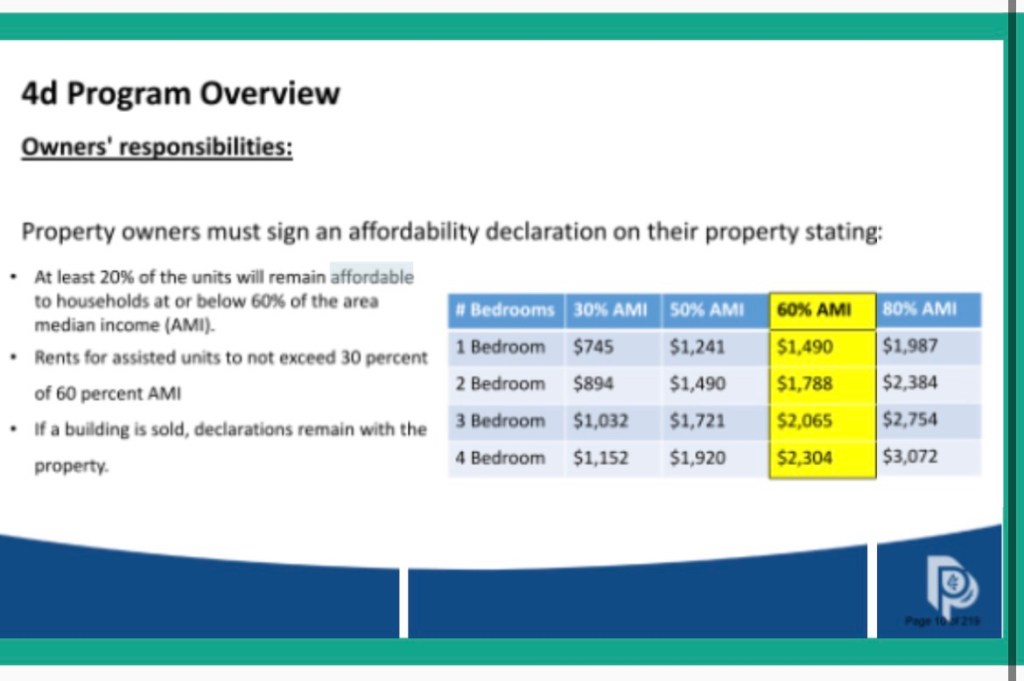


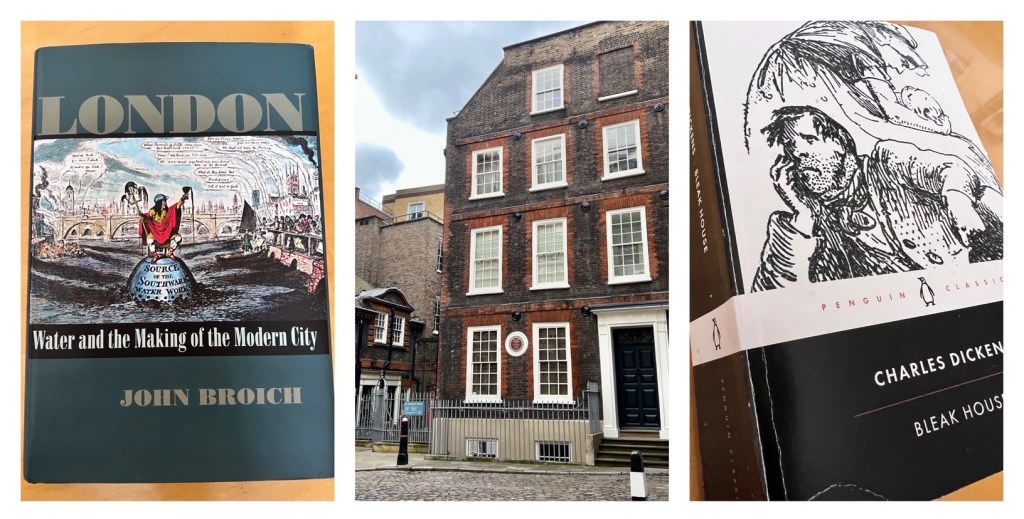
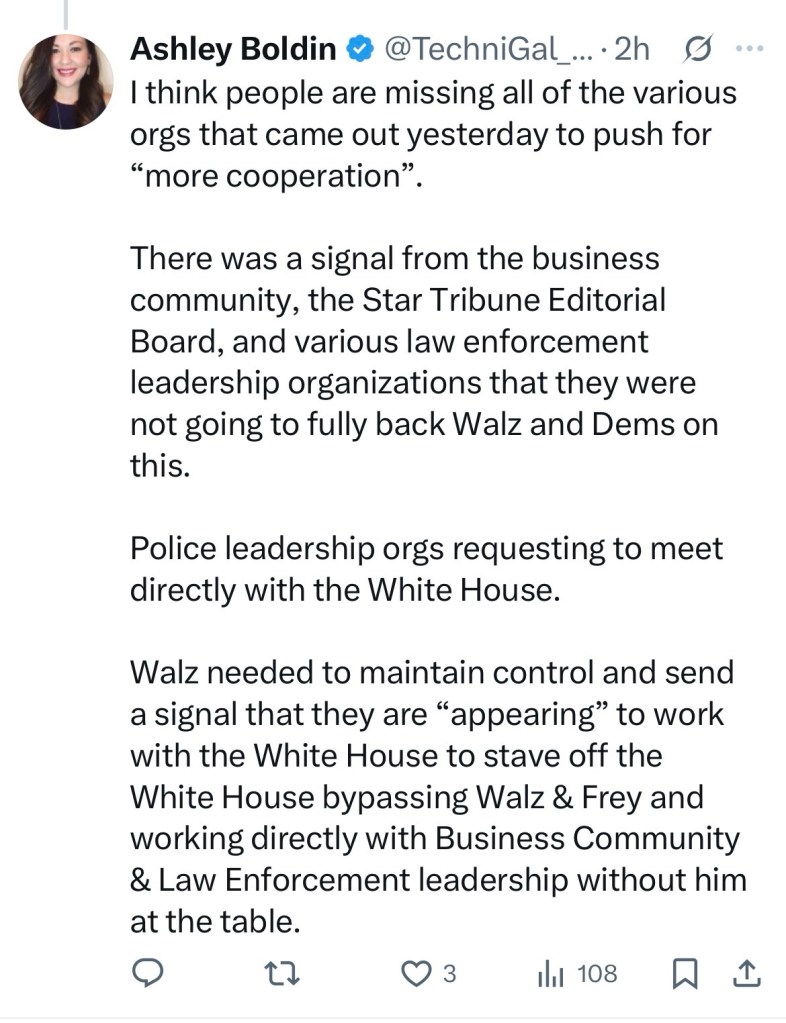
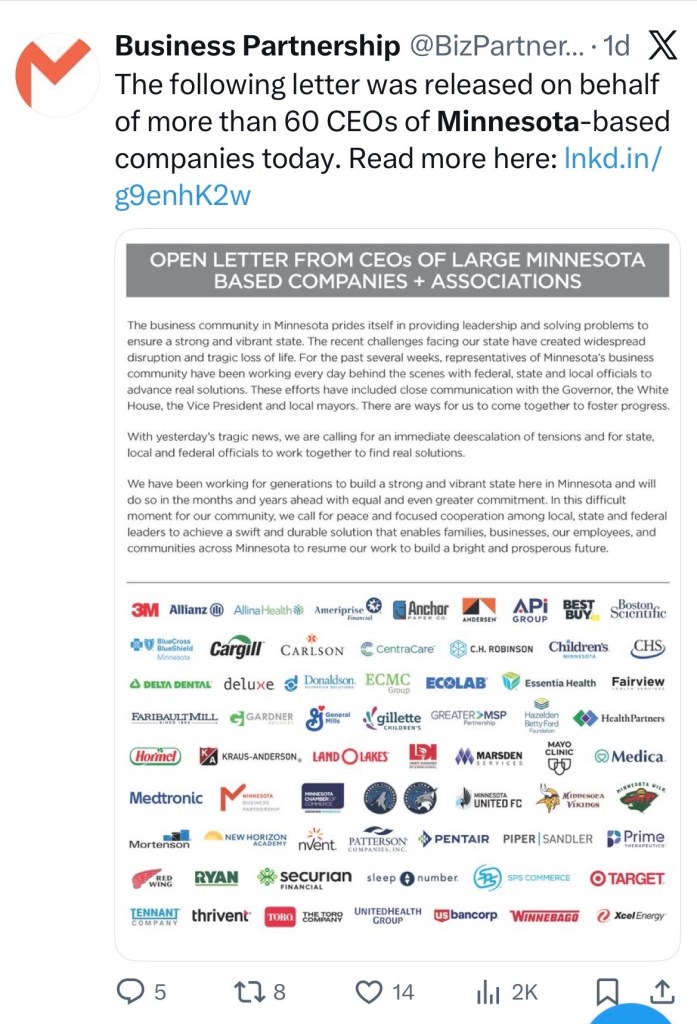



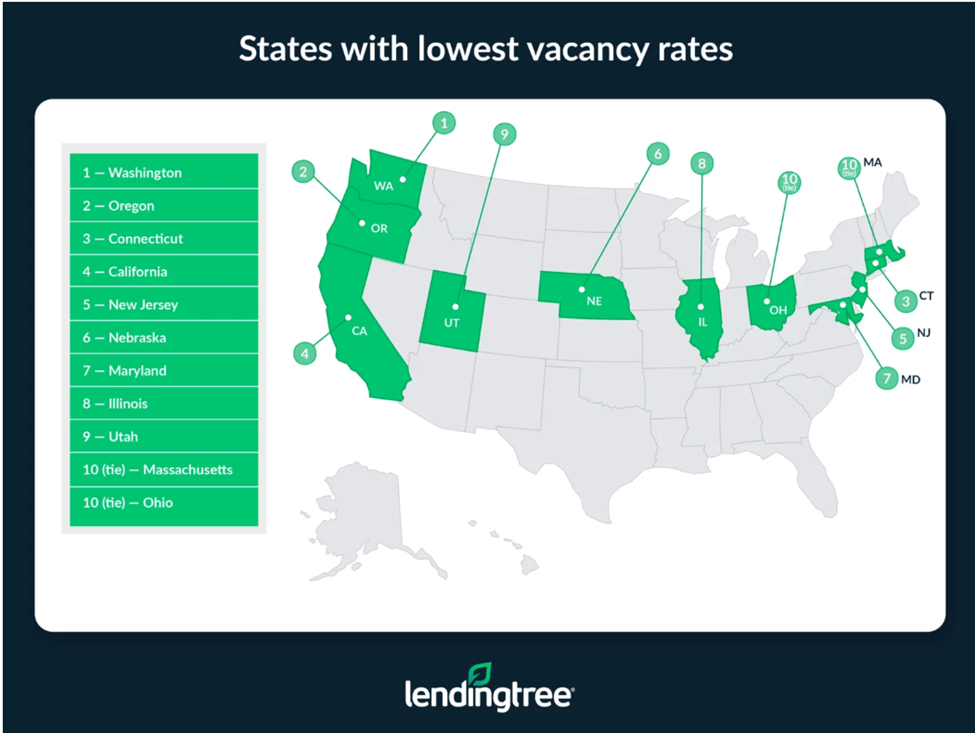
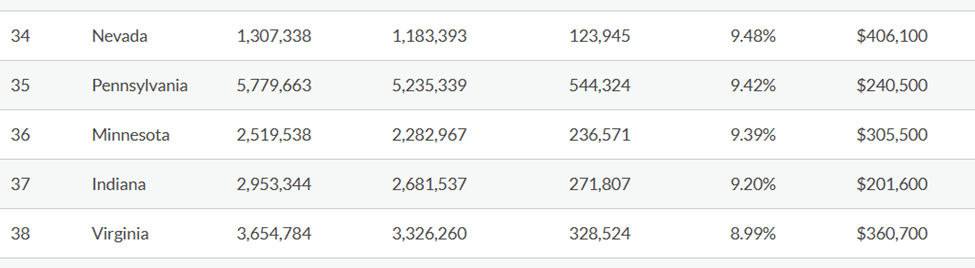

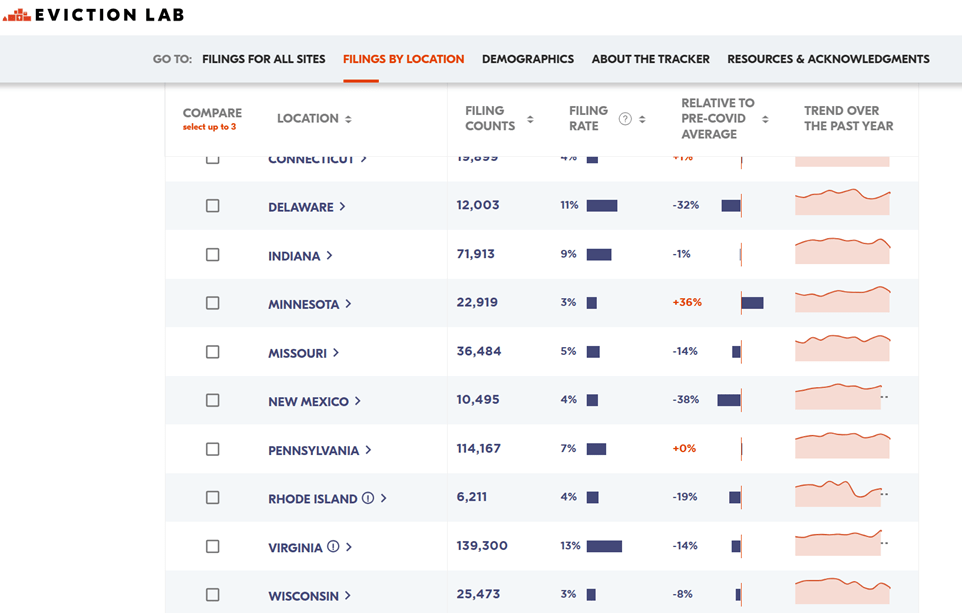
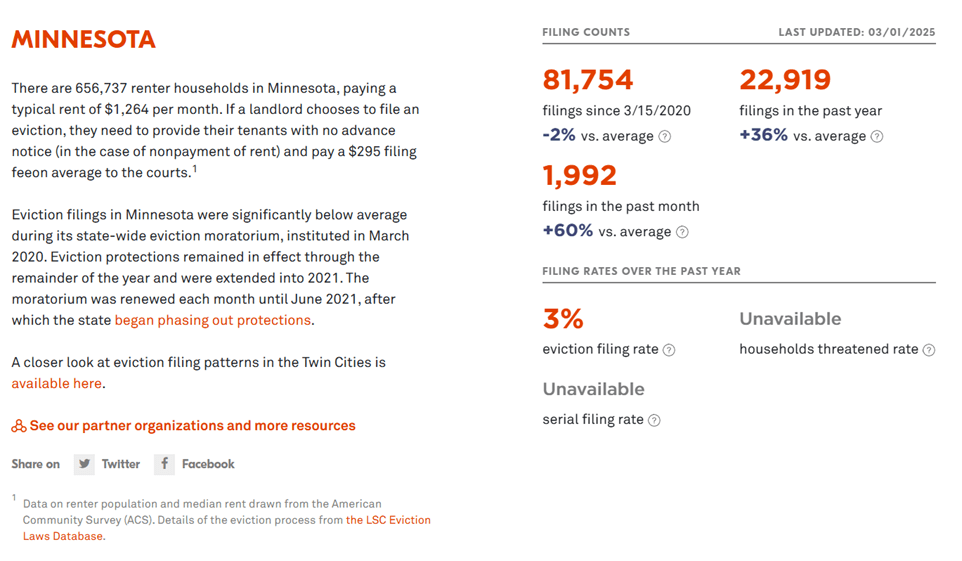
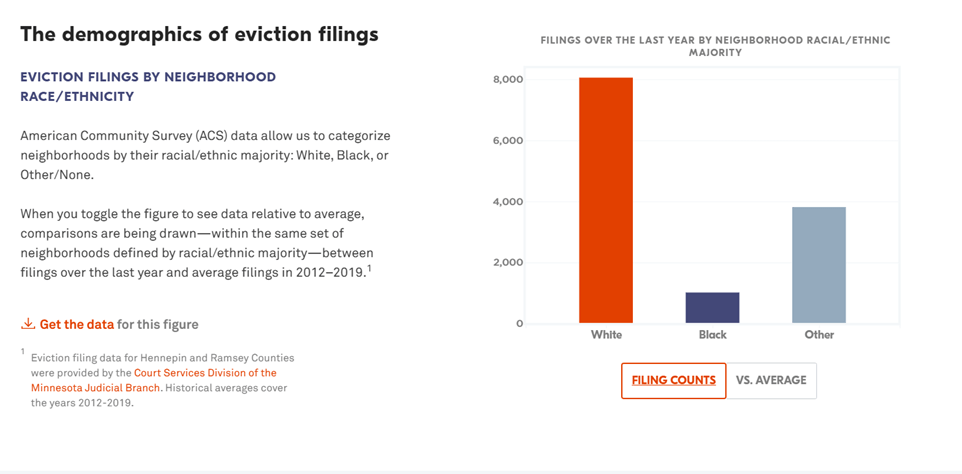


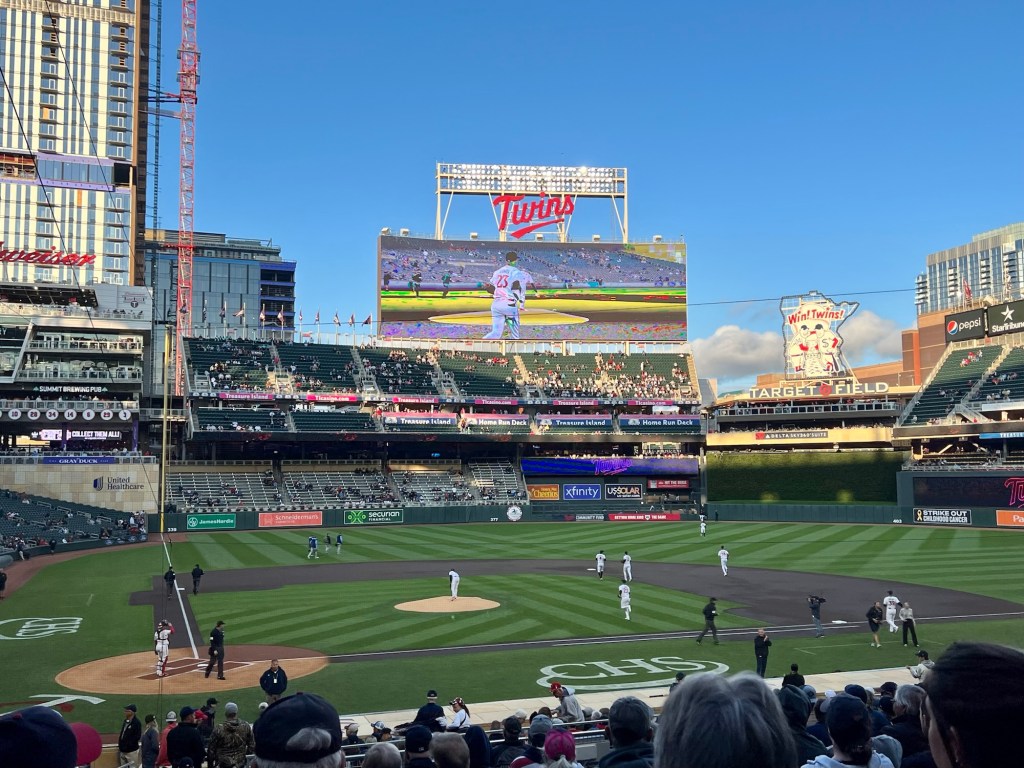







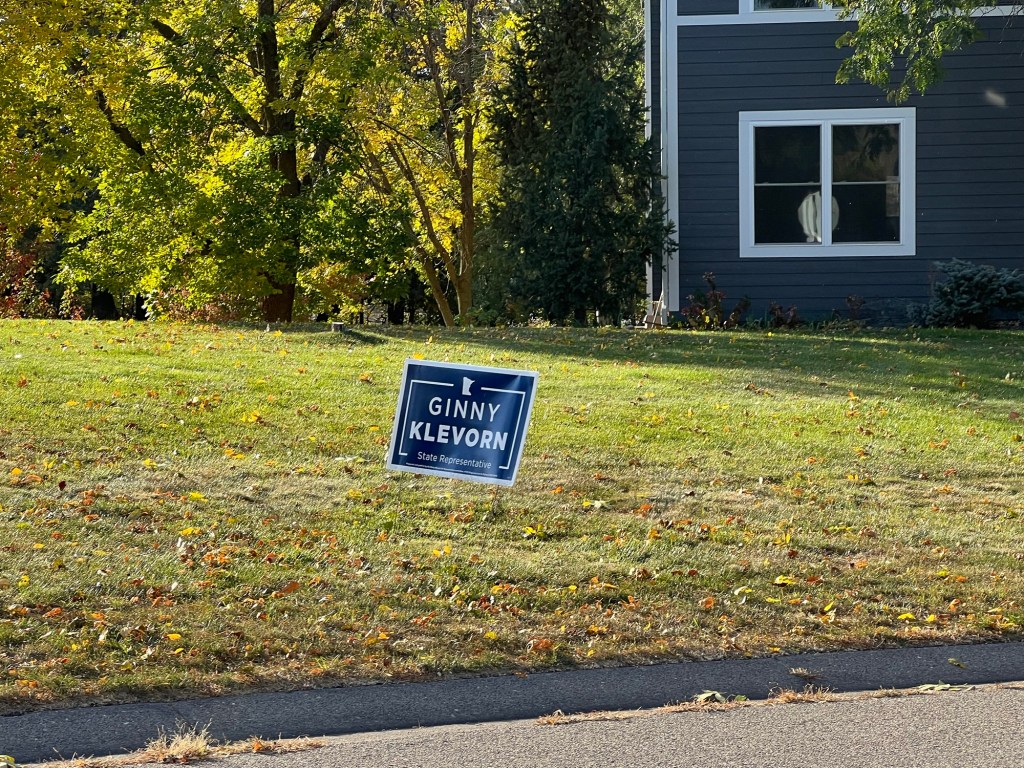
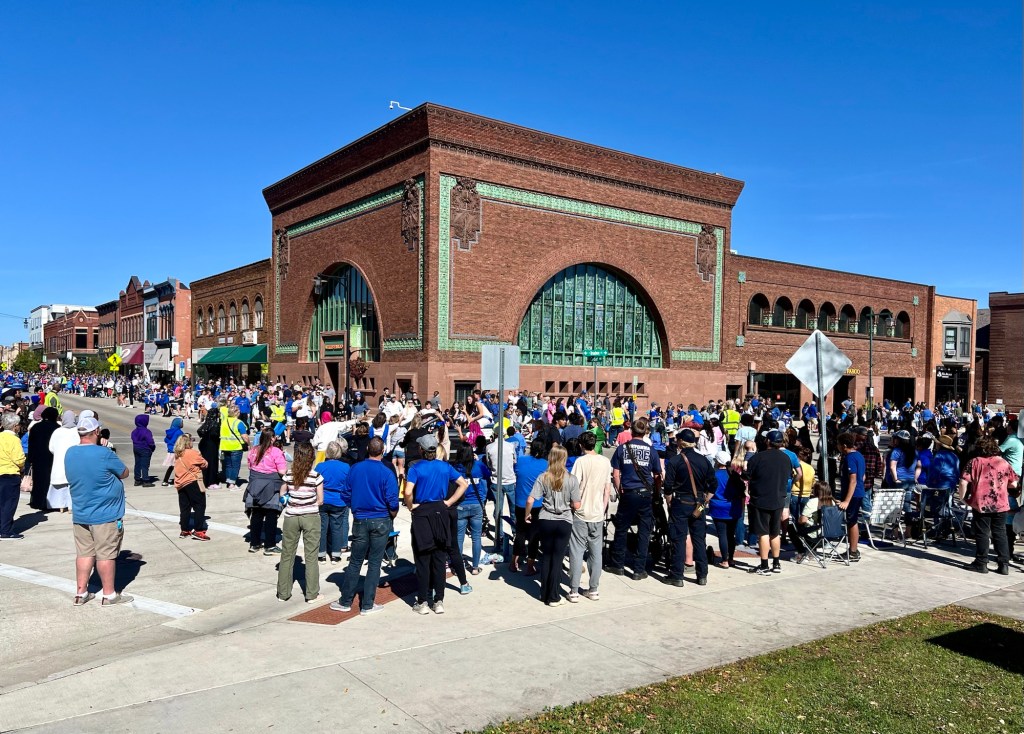




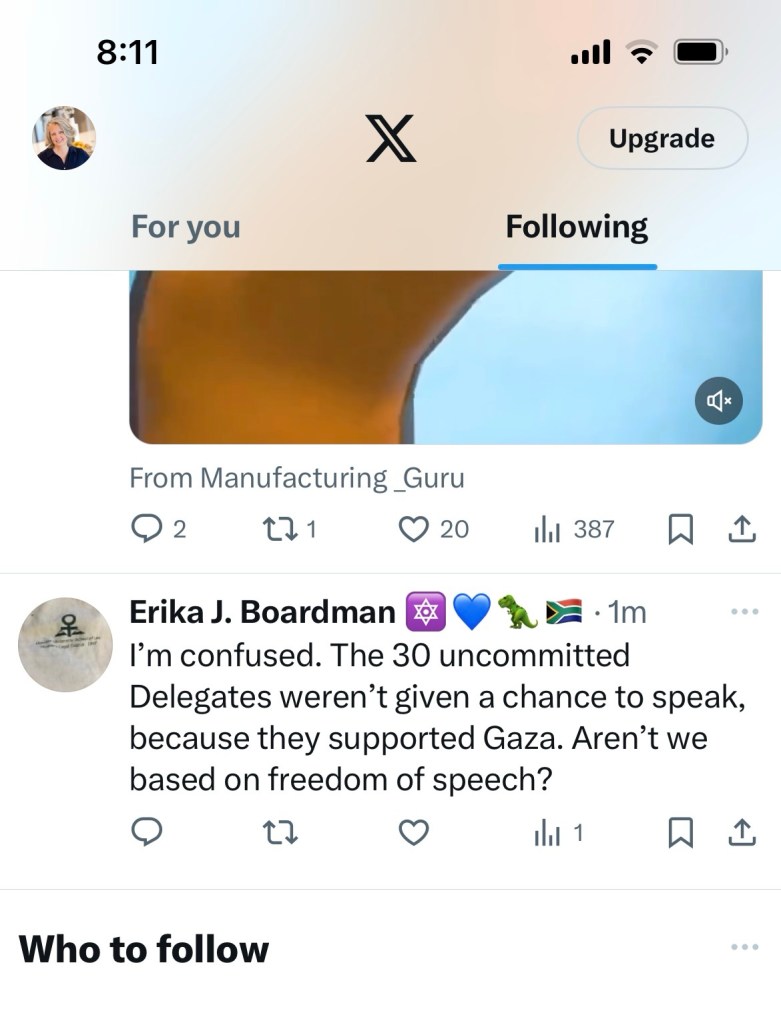




























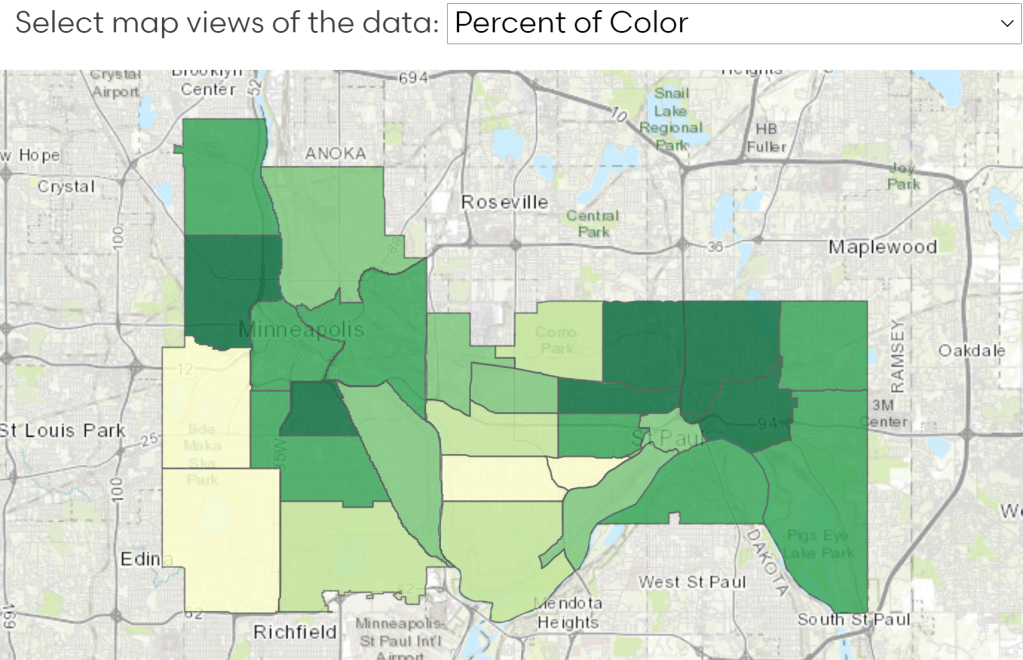








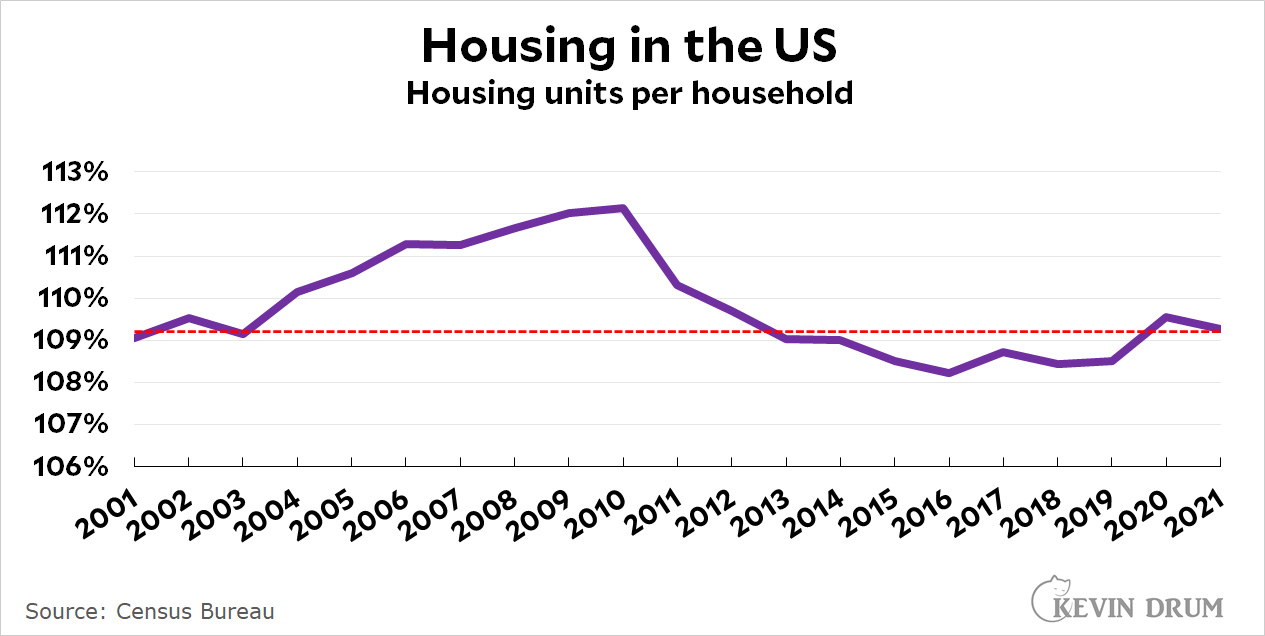
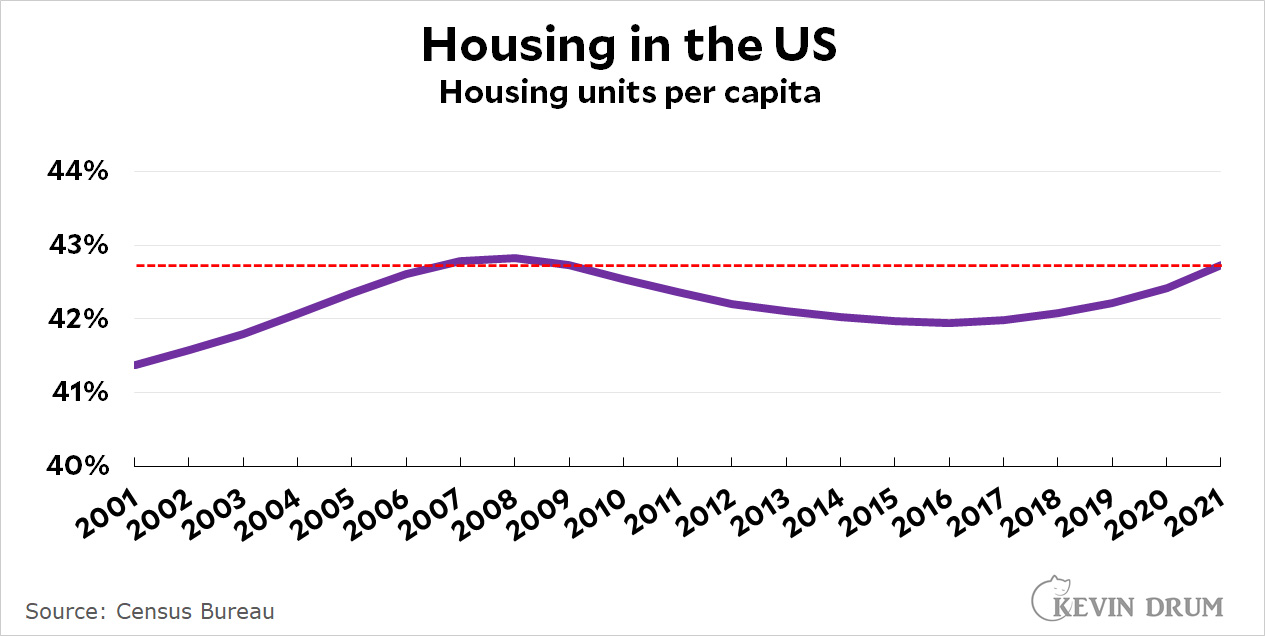
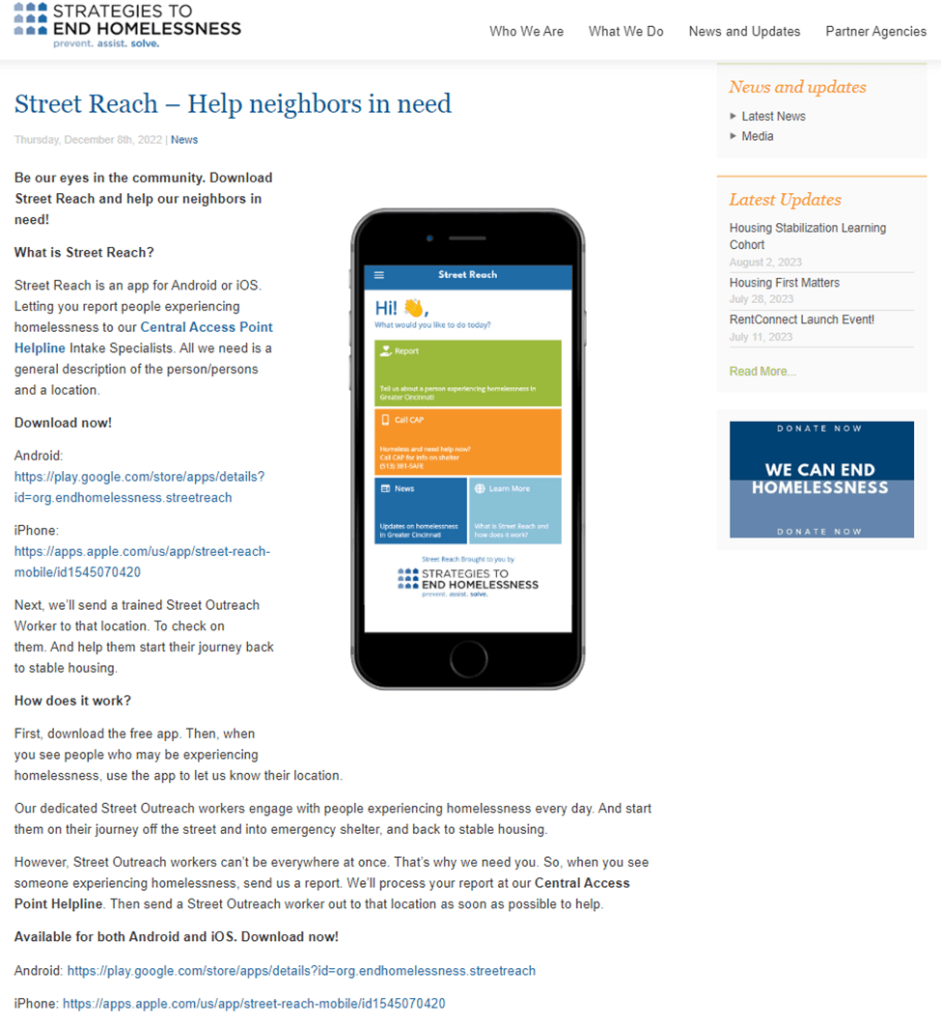

 Home Economics