Two recent articles by prominent housing policy voices reveal a shared concern about the structural limitations of the YIMBY movement’s traditional approach. Both Chris Elmendorf’s “YIMBYism started as a single-issue movement. It’s time to think bigger” and Matthew Yglesias’s “The power of a single-issue group” examine how YIMBY organizations have operated as focused advocates for increased housing density, but each author suggests that this narrow framework may need evolution to achieve lasting success.
The Competitive Model of Single-Issue Advocacy
Both authors describe YIMBY groups through a similar structural lens: as collections of people united around the singular goal of increasing housing density through land use reform and community lobbying. This approach has positioned YIMBY organizations as competitors in the arena of local politics, where they must vie against other community interests—from neighborhood character preservation to parking concerns—to secure favorable outcomes.
This competitive dynamic has been YIMBY’s strength. As Elmendorf notes, “The signal advantage of one-issue groups is that they can work with almost any legislator. By not taking stances on peripheral issues, they avoid making enemies.” Similarly, Yglesias emphasizes that “the strength of YIMBYism over the past 10-15 years has largely derived from its single-issue orientation during a time of relentless political polarization.” The movement has achieved bipartisan success across diverse political landscapes precisely because it hasn’t alienated potential allies by taking controversial positions on unrelated issues.
However, both authors identify a fundamental limitation in this competitive approach. When YIMBY groups operate as single-issue advocates, they inherently position themselves in opposition to other legitimate community concerns rather than as partners in comprehensive neighborhood improvement.
The Case for Pluralistic Collaboration
The articles converge on a crucial insight: sustainable support for housing density may require YIMBY groups to embrace a more pluralistic approach that considers multiple public goods simultaneously. Rather than competing against other neighborhood priorities, they could collaborate to address the full spectrum of urban challenges.
Elmendorf argues that this shift is not just strategically wise but empirically necessary. His research reveals that “people who feel good about big cities want existing cities to become more canonically city-like.” This finding suggests that support for density depends heavily on broader urban quality of life—including schools, transportation, public safety, and cultural amenities.
Yglesias acknowledges the value of this broader approach while defending the continued importance of single-issue organizing. He recognizes that multi-issue coalitions can offer something valuable to skeptical neighbors: addressing their concerns about construction impacts by simultaneously improving schools, transit, and safety.
Beyond Zero-Sum Thinking
The structural shift both authors envision moves beyond zero-sum competition toward collaborative problem-solving. Instead of viewing neighborhood concerns as obstacles to overcome, a more pluralistic YIMBY approach would treat them as legitimate issues requiring integrated solutions.
This doesn’t mean abandoning the core mission of increasing housing supply, but rather embedding that mission within a broader framework of neighborhood improvement. As Elmendorf suggests, such an approach could offer community members a compelling trade-off: “You may not like all the buildings, but you’ll love the great schools, safe streets, fast transit, and thriving business that we’ll deliver.”
The Challenge of Multiple Public Goods
Both authors acknowledge the complexity of this transition. Weighing multiple public goods requires sophisticated political judgment and potentially controversial prioritization decisions. A group focused solely on housing can avoid taking positions on education funding or transit investment; a multi-issue coalition cannot.
Yet this complexity may be precisely what sustainable urban policy requires. Rather than treating housing, transportation, education, and public safety as separate domains competing for attention and resources, effective urban governance demands understanding their interconnections and potential synergies.
Conclusion
While Elmendorf and Yglesias differ on whether YIMBY organizations should fully embrace multi-issue coalition building or maintain some single-issue focus, they share a recognition that the movement’s competitive, narrow approach has structural limitations. The path forward likely involves both preserving the strategic advantages of focused advocacy while developing new organizational forms capable of the pluralistic collaboration that sustainable urban development requires.
The evolution from single-issue competition to multi-issue partnership represents more than a tactical shift—it reflects a deeper understanding that creating livable, dense communities requires addressing the full spectrum of residents’ concerns rather than simply winning narrow victories on housing policy alone.
Chris Arnade is a city walker and a people watcher. He recounts his impressions on his Substack, Walking the World. Recently, he participated in a conversation on Conversations with Tyler, which is well worth listening to for those who travel to learn and love to travel.
There were several terms in the conversation which I will be using more frequently in references to city life. The first one is best described in a photo.
Organic Street Life
Localized Distribution- “Meaning there’s always a shop somewhere.”
The Normal Experience- As in this passage:
Then I started saying, “Well, I should . . .” When I was in Brooklyn, I walked the entire length of the New York subway system above ground. I’ve always been into walking, and I just realized, “Hey I can just . . .” I think I was looking at a table that about 1.5 billion people live in massive cities that we really don’t know the names, these big sprawling Jakartas. I’m like, “I would like to see that.”
COWEN: Yes, agreed.
ARNADE: That’s the normal experience for most people, and so I just started. I booked a trip to Jakarta and just started walking Jakarta.
The normal experience is where all the cool data is. What’s to be done with extraordinary events? They simply are not that interesting except for daily fodder.
I recently purchased this Aventon electric assist bike. It’s great! There was a time when I’d snarl at the e-bikers as they hummed by barely pedaling. But times have changed, and I’ve decided, out of necessity, that assistance isn’t a bad thing after all. If the difference is to get out and bike at all or bike with assistance, take the latter and get outside!
The bikes are a bit heavy at 70 pounds. You don’t notice when you’re riding, but when you are managing the vehicle at a standstill, there’s a little more to pay attention to. It won’t ride on my old bike rack, I’d mount on the trunk of my car. That’s OK.
The pros are, amongst others, a far greater riding range. The battery life covers up to 60 miles. And so far, that’s checked out against my shorter rides of ten miles or so. It also charges quickly on a convenient charger the size of a loaf of bread. If you want to take longer rides, you can always bring the charger along. I have yet to get a saddlebag for the back. It will sit nicely on the rack over the back fender.
There are five levels of assistance. The rider juggles these along with standard gear changing. The mechanisms are smooth and responsive. And if you are exhausted at the bottom of a hill, just hit the throttle with your left thumb and you’ll climb up the slope without a worry. It’s really a fun bike to ride!
It was a beautiful and warm day in the Twin Cities today, which had me thinking about bike rides. Here’s a post from last September- Now I just need to get set up with my own to venture out this year!
Few things are more enjoyable than meandering on a bike trail or cruising through a state park on a beautiful sunny day. Fortunately, communities share this ethos and support the continued development of public trails.
Today’s ride followed some of the new Heart of the Lakes Trail. It doesn’t show up on all the maps yet, so it’s essential to do some research to map out the route. There are excellent services along the way, like mile markers, benches, and trailheads for parking. With a plan in hand we set out for Lakes E-Bikes to pick up our rentals.
The operation runs out of a family-owned RV dealership. A third-generation member pitched the idea of selling e-bikes with an expectation of making twenty sales or so a year. His brother informed us while helping to load the cycles into the back of the pickup, and this year, he watched 250 go out the door. Hitting the market right can make all the difference.
If you haven’t tried an e-bike yet, I highly recommend it. It’s not really biking; it’s more of a scooter. But it takes you to the most wonderful places, and that’s what matters.
Thank goodness for all those who devoted countless hours in county board meetings to make it all happen.
There are lots of ways groups form in order to tackle shared interests. “In 1955, the Minnesota Legislature authorized the creation of watersheds through the Watershed Act. The intent of the Act was to develop water management policies and plans on a watershed basis, because water does not follow political boundaries.”
Water flows in the direction of the lowest point. If your neighbor’s lot sits higher than yours, then more than likely you will deal with the drainage that flows following a storm. For that reason, people in a shared drainage system collaborate to be sure adverse effects are tackled. These generally include land use planning, flood control and conservation projects.
From an analysis point of view, the watersheds are interesting as they are independent of standard governance structures. Water crosses country lines, meanders between cities, and flows around carefully surveyed property lines. They can group people and their properties over vast plains.
But where is the value in the grouping? Mainly in the flood zone analysis. Inundation and water tables effect construction prospects and insurance issues.
Is the Housing Act of 1949 the reason today for the hyper-local control of housing and real estate decisions? It’s hard to say. But the slum clearance, financed by the federal government, was significant enough to still be recognized today.
THE GATEWAY PROJECT City planners assumed that the Gateway area, the old core of downtown Minneapolis, would qualify for federal urban renewal assistance when they proposed clearing and reconstructing about one-third of the entire downtown in the mid-1950s. Beginning in 1956, federal renewal officials raised serious questions about the size of the project: was what was proposed too big for the local real estate market? In 1957 a group of civic and government leaders, led by Mayor P.K. Peterson, went to Washington, D.C. to convince federal renewal officials that Minneapolis needed a project this size. They were successful, and returned with a commitment for the money.
Not everyone found favor with the proposed redevelopment however. Several owners of condemned property tried to stop the Gateway plan. They sued the HRA, claiming that the condemnation action was “arbitrary and unreasonable.” They also challenged the legality of the overall development plan. The owners did not win any of these suits, nor did the preservationists who sued to stop the destruction of the Metropolitan Building (formerly the Guaranty Life Building). This last suit made it as far as the Minnesota Supreme Court, which upheld the HRA’s right to condemn the Metropolitan Building. This decision essentially reaffirmed the “greater good” argument about eminent domain (Buildings 1961 b).
The 1956 Highway Act worked with the Housing Act by sometimes forging the interstate system through poor, dilapidated neighborhoods. While I suspect only the most dedicated automobile haters would argue against a national network of roads, the lamentation of housing being leveled still lingers today. And petitions are underway to return the freeway to neighborhood streets. (Although, most recently removed from the planning process.)
What is the balance between hyper-local governance—where people want to take out a freeway for residential streets—and an all-encompassing federal project? In the end, who owns the land?
The downtown library sits in the old Gateway district.
If you google ‘health determinants, ‘ a bunch of stuff scrolls out in the feed, but none of it is exactly the same. For example, the World Health Organization‘s (WHO) site reports:
Determinants of Health
Many factors combine together to affect the health of individuals and communities. Whether people are healthy or not, is determined by their circumstances and environment. To a large extent, factors such as where we live, the state of our environment, genetics, our income and education level, and our relationships with friends and family all have considerable impacts on health, whereas the more commonly considered factors such as access and use of health care services often have less of an impact.
The emphasis is on a person’s situation in life more than on their genetic make-up or even access to health care services.
The US Center for Disease Control (CDC) offers a helpful graphic to describe their social determinants.
If you look at the hexagon you might note that the categories remind one of public goods. These goods are provided at large as they are thought to generate a universal effect that benefits everyone. If people are more educated, they will understand how to stay home with a virus so as not to pass it along to others. The availability of health care and clinics provide ease of treatment. The built environment includes transportation routes for ambulances and fire trucks to speed up a person in need. People fare better in safe communities enhanced through public provisions police services.
These categories line up nicely with the categories at Home Economics. Because the social determinants of health are also the determinants of a stable and vibrant neighborhood.
What isn’t provided at either of the sites are details. When one drills down to the street level, what can one measure that represents safety? Is it the number of pedestrian fatalities? Homicides? Or carjackings? Which number best represents safety?
Numbers meant to quantify school performance are subject to manipulation. Is the highest performer in a medium school really better off if they become a slightly above-average performer at a high-performing school? In the first instance, the student may evolve into a leader, one who expects more from themselves. Whereas in the second scenario they shrug off the duty to perform as there are so many better students in the lead. Yet competitive parents are expected to seek out the ‘top’ schools for their child- folklore says they are the best predictors of educational success.
Another factor that seems to be omitted is the level of dedication an individual, family, or community has to contribute to health issues. It’s one thing to live near a dentist, but if you never take off work to make sure your kids get in for a check-up, it does little good. Do the kids get on the school bus so they don’t trundle in late and disrupt the class? Does a neighbor ensure the octogenarian across the street gets in for their monthly treatments? How much work is going into these public health projects?
Neighborhoods are a rich source of social determinants. Combine that with a bit of information about volunteerism and who knows where that could lead us?
In a recent post, House Prices and Quality: 1971 vs. 2023, Jeremy Horpedahl points out the difference in house prices by time values, which I really like for comparison purposes. He notes, “As you can see, in 2023 it took 31 percent more hours of work to buy a square foot of the median home, compared with 1971.” Furthermore, he makes the adjustments for the extra footage most homes offer today versus when the Brady Bunch lived in their swanky multi-level Californian home.
Then he goes on to say the quality of construction in the 1970s was modern and hence met a certain threshold of acceptability. I would argue that’s not the case. The 70s was a time of experimentation with new methods driven by a desire to enhance eco-friendliness. These materials and techniques did not provide the same longevity of use as the old country techniques from earlier in the century. This article cites a variety of issues. Focusing on a few mechanical components of a home will best exemplify how the norms and standards of the time affect the durability of the product, which is internalized in price.
Homes are expensive to buy and to maintain. One justification for paying the premium for new construction is that all major mechanicals are warranted for ten years, and most, on average, will last more than that. Heating and cooling systems have an average lifespan of fifteen years and cost $12-14K. Roofs keep homeowners dry for twenty-two years or so ($15K). Windows and siding can vary significantly depending on the quality of the materials.
For instance, in the photo on the right, the windows are original to the 1912 apartment building. They are wooden double-hung sashes that protected the lower level laundry and storage area from the weather for a century, serving the purpose intended. The windows on the left are vinyl replacement windows that were installed less than fifteen years ago. The dirty-looking glass is called a broken seal. Moisture has found its way through the double-paned structure, dictating that they are a failed mechanical by industry standards.
Window repair and replacement are among the more costly repairs in a home. The insert on the left probably costs about $3,500 in our market, just for one window.
The 1970s were full of experimentation with lower-quality materials. Hardwood flooring was replaced with plywood and then covered with carpet. Whereas wood floors are sanded and refinished for a beautiful crisp feel once every twenty years, carpet wears out in about a third of the time, seven years. My hardwood flooring guy tells me they have been back to refinish quarter-inch oak in one-hundred-year-old homes. There is the esthetic appeal to this home feature but it also translates to lower upkeep.
Solid stucco exteriors (stucco is a cement-like product that lasts for thirty years or more) are another application prevalent in homes built prior to the 1970s. Exteriors were instead clad in inexpensive plywood. This fibrous product does not necessarily fail in functionality after twenty years but no longer takes paint well and hence looks thrifty. Woodpeckers tend to find it appealing for sharpening their beaks as well.
By the late 1980s, homes built in the 1970s were highly unpopular. In part, their split entry style and vaulting with dark beamed ceilings had lost their cosmetic appeal to younger buyers. Buyers also longed for quality craftsmanship. The seventies homes were built cheaply, and consumers felt it. Most people wouldn’t have verbalized their selection as a commentary on an experiment in housing gone wrong, but they showed it in their choices.
In a recent post about time prices, the excellent Jeremy Horpedahl noted that workers are better off today than in 1924 except in the cost of housing. These comments are rooted in data compiled by Anthony Davies.
Rent is shown to be less expensive than in 1924 in small and medium cities, not more expensive, and by quite a bit. Living in a small city today only costs the worker 4.7 days of labor versus 1.3 weeks in days of yore.
However, consider the increase in the cost of living in a large city, shown at 2 weeks versus a week and a half. Doesn’t the proximity to work and services save workers a considerable amount of time? Many people who live in smaller towns or rural areas commute long distances to work. They drive to larger commercial centers for shopping and medical services. In an emergency, an ambulance service can run up a large bill.
Aren’t there considerably more services in the large cities than in 1924? In addition to road transit, there is access to international airports. The city is also the heart of entertainment culture, from major sports franchises to fine arts and musical venues. Conferences take place in the city, and universities are located there. Cities provide the landscape for all the restaurants and eateries where politicians and leading business figures congregate.
When you rent in a large city, part of what you pay is the capitalization of the entrance fees to many more social enterprises that were not available in 1924.
Few things are more enjoyable than meandering on a bike trail or cruising through a state park on a beautiful sunny day. Fortunately, communities share this ethos and support the continued development of public trails.
Today’s ride followed some of the new Heart of the Lakes Trail. It doesn’t show up on all the maps yet, so it’s essential to do some research to map out the route. There are excellent services along the way, like mile markers, benches, and trailheads for parking. With a plan in hand we set out for Lakes E-Bikes to pick up our rentals.
The operation runs out of a family-owned RV dealership. A third-generation member pitched the idea of selling e-bikes with an expectation of making twenty sales or so a year. His brother informed us while helping to load the cycles into the back of the pickup, and this year, he watched 250 go out the door. Hitting the market right can make all the difference.
If you haven’t tried an e-bike yet, I highly recommend it. It’s not really biking; it’s more of a scooter. But it takes you to the most wonderful places, and that’s what matters.
Thank goodness for all those who devoted countless hours in county board meetings to make it all happen.
A few people were talking in the office the other day about how small their electric bills were due to the use of solar panels. One gentleman disclosed that the bill on his home in Arizona was barely above what would be typical for running standard kitchen appliances. This was when his air conditioner was continuously running to beat the hot desert sun. The Minnesota home was squeaking by with being charged an electrical bill that was less than most streaming services. These are wonderful endorsements for an eco-friendly real-estate-related energy application.
A group of realtor types don’t think word-of-mouth stories like these are enough to spread the word about eco-friendly energy use. They want the dollars saved through higher efficiency and more environmentally positive energy use to show up in the numbers. If a home has a certain level of insulation or a particularly efficient set of appliances, then the market should bear a higher price for that property, they reason. So instead of trying to find it in the price determined by buyers and sellers in a meeting of the minds, they suggest appraisers add a tweak post-sale. When in doubt- fudge it, I guess.
The reality is that the benefits of newer mechanicals and construction are featured in price. The reduced electric bill from solar panels is in there, too. It’s just not as standout noticeable as some people want. Therefore, I suggest they spend their efforts on another end to this issue. The focus should be on hyping up those communities where the ethos of the problems is alive and well. More people will be on board if they feel the acceptance of the norm by others. Start in the middle and work out.
I’m not sure utility bills and insulation thickness are the lowest-hanging fruit. Proper disposal of all the old appliances, depleted mechanicals, and construction debris seems much more problematic. Think of the rusty wall heater in the basement or the moldy knotty pine paneling from fifty-odd years ago. Face it, people are bad about staying on top of clutter; part of this is disposal.
This post draws a comparison between charging for parking on city streets versus charging for water through city pipes. The thought process is that people willingly pay to have potable water at the turn of the tap but object to renting a spot on a city road to leave their car.
Cities charge residents for water, which is something you need to live. Nobody cries foul at $50 to $200 per month for city water.
But when a city charges for parking on city streets, even $30 per year, car owners get violently angry and cry loudly.
It really comes down to ownership issues. It’s clear who owns the water system infrastructure. The cities maintain the lines in the street to the hook-ups. The property owners maintain the pipes through their front yards and their properties. Water is delivered and metered so that people pay based on their usage. But no one owns the water. People pay for the maintenance of the public system and the purification process.
On the other hand, city roads are publically owned. They are free to use by everyone. They are paid for by residents. So to exclude people from use by imposing a payment signals a change in ownership structure.
People often gather together to share on-going utilties. That’s the idea behind home owners associations. Individuals who no longer wish to mow their lawn and look for a roofer when the time comes, enjoy sharing those expenses and management with others. Whether to pay for clean water, garbage pickup or electric bills, the monthly useage payments is the sensible means of pecuniary support.
When it comes to the use of shared land like public parks, trails and streets, it is difficult to determine a proper amount to meter out on a monthly bases, and it is abrasive to be exclusionary.
This seems to be a popular question these days in light of the new US VP candidate. Those who would like to stress the decline in the quality of life in Minnesota post photos of homeless tents cropping up on vacant forty-foot lots in the city. The chaos, litter, and disorder represent a decline in street life since the summer of 2020 following the riots. The images are current. There is an ongoing whack-a-mole operation underway as neighbors have become tired of the issues around tents in their communities. The city moves them from one location only for them to relocate ten blocks away.
Those who like to stress the beauty of Minnesota post this type of image:
This portrait of a city framed in greenery, wildflowers, and water is not at all unusual or hard to come by. The Mississippi runs through the city, and twenty-two lakes lie within its boundaries. One hundred and eighty parks surround water features, old-growth trees, or grassy play fields, and fifty-five miles of walking and biking trails connect the system. The over seven thousand acres of public space started in 1856 with the donation of Murphy Square.
But here’s the argument that the recent unrest is unsettling. What people point to as the best features are those which were initiated over one hundred and fifty years ago. These whispers and aspirations took decades to initiate, then decades more to shape and form, then decades more to maintain and develop into a system for perpetual use. The photo exemplifies consistent and long-term commitment to this support.
Posting an image of an urban amenity that was decades in the making is an argument against the recent tolerance for civic destruction and unrest. There’s only so much public capacity. If it is drained in one area, then eventually, over time, other public amenities will fall to the wayside and deteriorate.
In Jennifer Burns biography of Milton Friedman, the famous economist is portrayed as affable and polite even under duress.
Still- he had many detractors. People in this camp, I suspect, might have been turned off by the thought that every service or enterprise is done better in the private sector.
Here is a section from Milton Friedman, the Last Conservative explaining how easy it would be to charge to enter the National Parks. And there is a small fee to access the park, as there is the cost of a stamp to post a letter.
“The entrances to a national park like Yellowstone, on the other hand, are few,” continued the Friedmans. It would be easy to set up tolls at the entrance. “I the public wants this kind of an activity enough to pay for it, private enterprise will have every incentive to provide such parks,” they concluded. Similar logic extended to the post office, public housing, toll roads, and even Social Security. Each of these could be more efficiently handled by private enterprise, the Friedmans proposed, enumerating a list of fourteen “activities currently undertaken by government in the U.S.” that could not be justified by their principles. “This list is far from comprehensive,” the authors noted.
But haven’t you ever wondered why some things remain in public hands while some are replaced by private alternatives?
Why are most parks public? Why is USPS still around after all the alternative forms of communication have evolved? Why do toll roads exist only in limited markets?
History continues to challenge the Friedmans’ view that all goods and services respond best in traditional private markets.
Years had passed without me giving the FFA a second thought. If someone had asked, I would’ve bet money on their demise years ago, during the era when everyone talked about the death of small-town rural America. If it hadn’t been for stopping at a rest stop on Sunday, the organization would still be out of my sight.
As it turns out the two bus loads of kids who were shoulder to shoulder in line for the sandwiches were headed to the FFA Minnesota State Convention at the UMN. Three days of events starting at a very early 7:30am. The dairy evaluations were at 7:45am.
This organization is not lacking for members eventhough it seems to be lacking media coverage.
Minnesota’s 95th State FFA Convention was held April 21-23 at 3M Arena at Mariucci and at the Minnesota State Fairgrounds.
Speakers, awards, competitions, workshops and sessions were some of the highlights for more than 6,000 FFA members from Minnesota attending the convention, celebrating the convention theme “Achieve – What It Takes.”
Here are some stats:
4,200 FFA members 7th-12th grade are pre-registered for the state convention. 15,000 FFA members in the state. 40,000 Minnesota students are enrolled in Agriculture, Food and Natural Resources (AFNR) classes. 218 FFA Chapters in Minnesota middle and high schools. 338 Agriculture, Food and Natural Resources teachers/FFA advisors in the state
Massive suburban mall parking lots must be one of the more unattractive features in a built environment. That’s why I like this little park so much. The city of Minnetonka installed a well landscaped gathering spot in one corner of Ridgedale Mall’s lot.
A woman walking her dog mentioned that on Tuesdays in the summer months the farmer’s market sets up in the open space.
Pollution was a problem in the US in the 1970’s. Passengers would throw paper wrapping out of speeding car windows, litter blew around the curbs of city streets, and a pile of various types of debris would accumulate around waste bins that were a bit too full.
A successful public service campaign was initiated with Woodsey as the star. The tunes were catchy and were broadcast across TV. It wasn’t long and the new norm of disposing of garbage properly took hold.
Adam Smith closes out Book Four, Of Systems of Political Economy, of Wealth of Nations by telling us the duties of the sovereign.
According to the system of natural liberty, the sovereign (Commonwealth) has only three duties to attend to; three duties of great importance, indeed, but plain and intelligible to common understandings: first, the duty of protecting the society from the violence and invasion of other independent societies; secondly, the duty of protecting, as far as possible, every member of the society from the injustice or oppression of every other member of it, or the duty of establishing an exact administration of justice; and, thirdly, the duty of erecting and maintaining certain public works and certain public institutions, which it can never be for the interest of any individual, or small number of individuals, to erect and maintain; because the profit could never repay the expence to any individual or small number of individuals, though it may frequently do much more than repay it to a great society.
Wealth of Nations, Adam Smith
We no longer have sovereigns, but we can see those duties in our local governance. And thus we can expect citizens to evaluate each of them in turn.
Municipalities serve all types of functions. There are the boring ones which no one talks about but that are all too relevent to people’s daily lives, like keeping the water turned on, the water mains flushed out and the roads in good repair. And then there are the controversial duties which everyone has an opinion about, like which polished developers should be able to build what, where. with what exceptions to the zoning codes.
And somewhere in between are the functions which are both useful and sometimes delightful. They happen right in the parks. Take a look at this photo and see the variety of services it is providing on a beautiful spring day.
There a youth in a tree instead of staring at a screen. A woman is on a bench, seated next to a man whose leg is in a cast is stretched out and leaning up against his crutch. There’s a cluster of three under the shade of the blooming Magnolia trees. There’s a two-some cutting across the open plaza. A bit further down a photographer is setting up a light diffuser. And in the foreground a lady in pink inspects her phone for any udates.
There are people at play, people in convalesence, people in a group and people passing through. There are people at work and people in communication. A park is a place where people doing all sorts of things mingle. It’s all capture here on a quick snap shot, on a sunny day, in Spring.
As a memorial to the first responders who were tragically killed last month, three bronze statues of the men will stand outside the Burnsville city hall.
I'm worried about us. Last week there was a county campaign to show "Recycling is real" and this week we're telling people "Don't rake those leaves" on February 6. Are we really this dumb? Or are government comms people this bored? pic.twitter.com/yUoEF23bkL
These are the grand national and social forces which have come into existence since the time of the Communist Manifesto, and have nullified what otherwise might have been accurate predictions of that Manifesto. For Karl Marx had based his calculations upon the purely mechanical, economic evolution of machinery, of tools, of markets, of supply and demand. He had not weighed these spiritual and psychological forces which have revolutionized the modern world. He had not seen beneath the economic forces. He had not seen the power of patriotism by virtue of which the divers classes of these different nations would finally unite. He had not seen the movement of trade unionism through which laborers learned to organize, learned self-control, learned to negotiate with em-ployers, learned that they need not fall back into the pauper condition that Marx predicted, but that by negotiation, by arbitration, they might make an agreement with the capitalists, that they might come to terms with the capitalists and divide the product between them.
The spirit of trade unionism, instead of being that of class struggle, is the spirit of partnership. The trade union movement looks upon itself, not as the irreconcilable opponent of capitalism, but as & member of the family. Being a member of the family it is entitled to have a row with the head of the family, and to live apart for a time, but it has not yet taken out a divorce. Trade unionists do not presume, as Karl Marx did, that the members of the family can do without the head of the family. Trade unionism is based upon that principle of partnership which we see in & different way in the home. Consequently here we have a spiritual movement which has not attacked family, religion, and property, as Karl Marx had done, but has organized itself to get a larger share of profits by negotiation, by agreement, by strikes.
Industrial Goodwill, John R Commons 1919
Why didn’t the Austrians appreciate John R Commons?
It’s important ot note early on in the quest-for-the-best house (an on-going project in 2024 at Home Economic) a few types of homes will be quickly eliminated. To qualify to be the best home to take to market, it must be an attractive home to a bunch of people. Like hundreds of thousands of people.
The inclination to become nostalgic and nominate the turn-of-the-century home of relatives several generations back, simple won’t do. The market for sentimentality exists only between a tight group of people.
Other factors attract only a slim pool of buyers. I once took the Empire Builder from Minneapolis to West Glacier in Montana. After leaving Minnesota the tracks run through North Dakota and Montana skirting the Canadian border by forty miles. Trains are wonderfully spacious which allows people to circulate. A woman from Devil’s Lake or Lakota or Epping explained that Amtrack was her best bet for travel. Bismark was hours away and air travel wouldn’t take her to her relatives, a day’s journey down the tracks by rail.
Property in remote areas may offer privacy. The views from a log cabin at the foot of the Grand Tetons are unique and spectacular. A two hunderd acre ranch in the Bitteroot Valley maybe a haven for horse lovers. Whereas movie stars a celebrities might relish the distance this keeps between them and their fans, most buyers would struggle to make a life in extremely rural conditions.
Historic homes, iconic homes, or those with sentimental ties are not qualifiers for the best-of-the-best. Nor are propeties in remote locales. Simply too few can make those work.
Talking about the best of the best when it comes to houses, here’s a vote for Alamo Heights in San Antonio, TX from X.
To me, this is the best real estate in the world. 1/3 acre lots, 2 hours (by car) to the beach, low-traffic highways in every direction, great public schools, a 2.5 hr flight to LA, and complete privacy (because nobody visits).
Lot size is cited at a third of an acre. For comparison, a typical city lot from the 40’s on tree lined, sidewalk fringed street is about a fifth of an acre. So a third of an acre is more generous, yet by no means expansive.
Next Girdley mentions easy access to the beach. Parks, trails, and outdoor recreation areas are popular amenities for many homeowners. Several overlapping groups take advantage of the outdoors for excercise, sports, and leisure.
Ease of circulation is important to most everyone. If you are not commuting to a job, you still need to get out and shop, or get your family here and there, or drive to medical appointments, and so on. Note here that transport by car is assumed. If the writer meant public transit, it would be mentioned.
Schools- this public amenity affects a lot of households. Although there are generalized winners and loosers, the rating systems for districts stem from subjective opinions. He likes the schools in Alamo Heights.
Lastly he mentions access to another form of transit, air travel. This note may be a nod to an airport nearby, or to the geographic distance to California. It’s hard to know if it is an infrastructure issue or a natural circumstance.
To summarize, Gridley votes Alamo Heights as an optimal bundle of building site, access to nature, road infrastructure, public schools and air travel.
Are there other factors that people use to judge their optimal real estate package? That’s what we will be exploring. Stay tuned.
Meanwhile, in @OtterTailCoMN… local fishing guide Bret Setterholm took his Lund Boat out on Otter Tail Lake over the weekend. He said the walleye bite was good. #onlyinmnpic.twitter.com/a51aZqgddl
In the first three chapters of Capital Vol 1 Marx throws down his founding priciples of capitalism under the premis that labor time is the ubiquitous unit of measure. He does conceed that the quality of labor time, and hence its ability to be productive, is influenced by other factors.
The value of a commodity would therefore remain constant if the labour-time required for its production also remained constant. But the latter changes with every variation in the productiveness of labour. This productiveness is determined by various circumstances, amongst others, by the average amoun of skill of the workmen, the state of science, and the degree of its practical application, the social organisation of production, the extent and capabilities of the means of production, and by physical conditions
Capital Vol 1- Karl Marx
Think about this list. 1.The skill of the workmen 2. State of Sciene 3. degree of practical application 4. social organization of production 5. capabilities of means of production 6. Physical condition.
Couldn’t this list be 1. Quality of public education available to workforce 2. Technology 3. Vo-tech adaptation of technology 4. Governance of plant 5. Degree of logistical support including maintenance and transportation 6. The environment.
No matter what specifics came to Marx’s mind as he wrote this list- the list appears to point to what we now call public goods. The productivity of the labor hours invested depended on the quality of the public goods inplay at the plant.
.
David Harvey has an excellent YouTube series on Capital
That’s what municipalities are asking now it is legal to possess cannabis in the state of MN. If there are no policies regarding smoking in public places such as parks and playgrounds, there will be shortly. And it has been a bit of an oversight. Once cigarette smoke became unfashionable the smokers had to find places twenty feet away from building entrances to keep the air at entries free from smoke. If it is no to tobacco, it follows that it is no to weed as well.
According to the park workers, however, some users are not appreciative of being asked to quit smoking in the open air of the park. Maybe that was the aim, to make it socially acceptable. But as it turns out, norms can be stronger than laws.
Cannabis. There’s a long article in the local paper about new rules around the use of Marijuana. The long and the short of it is that even though the state made it a legal substance, it can’t be enjoyed in any public spaces. Apparently weed isn’t as main stream as people thought.
Bees. I don’t really understand the fascination with tending to a hive of bees. The swarm seems to show up and disappear at will. But the thought of a mass of buzzing insects with stingers does make a mother worry. However- the bees got the thumbs-up vote. Residents are free to be beekeepers.
Green Step. An association has been circulating recruiting cities to join their organization which tracks and scores municipalities on compliance to preset environmental goals. Seems like a lot of signaling to me. Plus extra work for city employees. But the pressure group won, and Plymouth will become a Green Step city.
Mental Illness. If the number of words were a measure of importance, this topic is woefully under-represented. A two and a half inch space advertized a September meeting to talk about this very important issue.
The pro-pollinator people have gained further traction in preventing cities from undermining their wildflower gardens. A few years ago, in the SW Minnesota city of Mankato, a court ruled in favor of the homeowner to maintain the usually tall and gangly plants that the Monarchs and the Eastern Tiger Swallow or Red Admirals like to float over. The city said it was a public nuisance. The courts said no- the owner could save the bees.
A pollinator friendly article by Christopher Ingraham (the Washington Post journalist who critized northern MN and then moved his family there when he realized it was better for his kids) ran in the Minnesota Reformer. He explains, “new language requires cities to allow homeowners to install and maintain a managed natural landscape.”
Not every neighbor is thrilled with a relaxed yard which often looks unruly. Most cities have a restriction on how high the grass can grow before being declared a nuisance. Where some people see vivacious boulevard greenery, others fear bees and flying weed spores.
The private property rights people should rejoice. Owners are now protected in their ability to choose alternative landscaping. But you’d be surprised how quickly people turn on a dime when a rule is one they favor rather than oppose. Lots of people feel neighbors have some ownership in the view from the road. Whether it means you have to store you garage containers out of site, or keep the clip of your turf tight to the ground. Neighbors care!
The question becomes which level of governance is the right one to best address neighborhood expectations. As you can imagine the folks who are OK with dog kennels and RV’s sitting on a driveway all winter can hold different expectations than other metro dwellers. So shouldn’t this be a local decision?And who really gets to decided how many butterflies is the right number of butterflies?
It seems odd to me that this type of provision shows up in the state government finance bill. Wouldn’t something like this fit into the parks and trails type of category. Minneapolis Parks alone manage 6084 acres of land. Three River Parks, which covers an area mostly in Hennepin County, provide access to 27,000 acres of nature and wildlife to metro residents. Then of course local cities look after the local parks. The city of Plymouth for instance grooms 1855 acres. If state level politicians wanted to finance something for the butterflies and the bees, they could have given seed money to to one or all of these land stewards.
We had a beautiful walk on the Lake Trail at Lake Minnewashta Regional Park. We skipped the dog park and opted to follow the wide-mowed path from the main swimming beach to the boat launch and back. It was a Midwestern muggy day with the temps reaching over 90 degrees. Hence the smudgy look to the photo of Pepe and my husband by an old growth bur oak tree.
Many trees felt as if they had seen more than a couple of generations of walkers stroll beneath their canopies. This makes one wonder just how old some of these shade-makers are.
It turns out there are Tree Age Calculators. Oak trees grow with a fair degree of regularity, so all you need to know is the type of tree and its circumference at breast height. I’m eyeballing it, but I think ten feet is a fair guess for the one in the photo. Plug in the data and- voila- the site says this baby is 191 years old.
Now I just have to add a measuring tape to my walking purse.
The civic impulse to acquire and develop a Minneapolis park system connected by trails started well over a century ago. One fortuitous outcome of these endeavors is called the Grand Rounds. It completes a thirty-mile loop in a rough rectangle around the municipality.
Today I biked a small section which circles two lakes, Lake Harriet and (Lake) Bde Maka Ska, in the SW corner of town.
Lake Harriet is a more residential area where grand homes overlook the sky-blue waters. The parkway enlarges here and there along the way so there is plenty of parking under old-growth trees. Two trails ring the perimeter of the water, one for walkers and one for cyclists. Here people of all ages walk their dogs, push strollers, catch up with friends, rollerblade with AirPods, and chatter with work colleagues. The crowds consist of locals, not tourists.
As you circle Bde Maka Ska to the north, and a downtown view appears, the physical structures transition from single-family homes to condos and a few business buildings. There are public beaches on the lake as well as restaurants. And benches scattered here and there as if someone said, ‘I think Gramps would want his bench here,’ and set it down without a reference to any other object. It’s a lived-in feel instead of one of pomp and circumstance.
Before circling back to the SE, the trail touches the far side of the Uptown area. This spot is full of shops, restaurants, bars, and lots of apartments for all those wanting to be close to where they recreate.
The bike trail is a one-way loop which is nice as the slow riders stay to the right and the left-hand side is used for passing. There is a speed limit of 10 miles per hour painted in white on the asphalt every quarter mile. But I wonder how many cyclists have speedometers on their bikes. It is only necessary to wait for car traffic at the intersection pictured above left, in a section between the two lakes. This is also the only incline on the tour which makes the legs work a little harder.
At seven miles it is a pleasant run for the experienced rider. A way to get out on a nice day and enjoy the urban landscape.
When you don’t have time to go on a big overseas trip you can still perfect your travel skills when planning out an enjoyable bike ride. It’s a bit of an adventure as trail maps are more vague than street maps.
Like that section of Cedar Lake Pkwy as it slides up next to Hwy 394. I’m not convinced that it is a straight easy shot into downtown. But it might be. The Midtown Greenway is an old rail bed and that one I know is all paved and free from road crossings.
The thing you don’t get off of maps like this is the elevation changes. A general sense of the mileage is helpful in deciding how far a treck you want to tackle. But the energy exertion is significantly impacted by hills and valleys.
It’s been so dry!
There are several extra benefits to biking: the views, the variety of terrain and the exercise of course!
Talk about confusing sets of interests. The secretary of the interior, Deb Haaland, who is of Native American heritage, was told to ‘go home,’ (presumably to DC) when she returned to her native state of New Mexico yesterday.
But her return to Chaco Culture National Historical Park on Sunday was derailed when a group of Navajo landowners blocked the road, upset with the Biden administration’s recent decision to enshrine for the next 20 years what previously had been an informal 10-mile (16-kilometer) buffer around the World Heritage site.
Her ethnicity is meant to guarantee that the interests of her tribe are held in the highest regard in the nation’s capital. But it appears that social connections have taken a back seat to the power players of the political process. Those in control of her day job in DC want to favor the environmentalists with a land grab.
The landowners and Navajo leaders have said Haaland and the Biden administration ignored efforts to reach a compromise that would have established a smaller buffer to protect cultural sites while keeping intact the viability of tribal land and private Navajo-owned parcels for future development.
I thought affirmative action was meant to help minority groups by offering a figurehead to look up to. But when affirmative action advances political objectives of another sort, then its days as an interventionist strategy are most probably numbered.
The struggle over property rights is an economic story.
Navajo President Buu Nygren said in a statement issued Thursday that the weekend celebration was disappointing and disrespectful. It should have been cancelled, he said.
“The financial and economic losses that are impacting many Navajo families as a result of the secretary’s recent land withdrawal are nothing to celebrate,” Nygren said. “As leaders of the Navajo Nation, we support the Navajo allottees who oppose the withdrawal of these public lands.”
In this balancing act of heritage sites for posterity versus private property rights, the cultural argument proposed to be weighted more heavily. Yet if the true objective is property control to prohibit oil extraction, then it’s hard not to be cynical about claoking the issue in Native American garb and revisiting a sensitive part of American history to make a power play.
In 1985 Tyler Cowen, a Harvard graduate student, wrote a paper entitled: Public Goods Definitions and their Institutional Context: a Critique of Public Goods Theory. He proposes a new perspective on how we think about public goods and private goods. Remember, this was back in the day when the government provided public goods to constituents, and what private parties did amongst themselves and in the business world was mediated through a market process. It was one or the other.
The traditional definition of public goods focuses on the nature of the object or service in play. Does the lighthouse exhibit public qualities or private qualities? But Cowen proposes a new view.
The purpose of this paper is to tinker with the definition of public goods and show that nearly every good can be classified as either public or private depending upon the institutional framework surrounding the good and the conditions of the good’s production.’
One way that a good can slide between public to private is in the manner of its use. Roads serve as a great example. As long as only a few cars are on the road, the pavement appears to be public by nature. But once congestion ramps up, then the use of the road by a bunch of people may cut into another person’s personal time. The larger group of motorists impose a private cost on each other as they are no longer able to access the road without competition.
Furthermore Cowen points out.
Roads may also be more “private” if they are used for activities other than driving. To the extent that roads are used for parades, bicycling, or even littering, they are private goods.
The parade may preclude cars from the road, bicycles may obstruct a lane, and litter may decrease the marginal value of driving to everyone who dislikes litter.
Here I think it is important to note a feature that isn’t really specifically noted in the paper. He alludes that there are distinctions between consumers but doesn’t exactly set them aside. For folks who work third shift and are always commuting against traffic, the congestion never causes a privateness to their use of the road. On the other hand, the privateness of public road use is clearly seen when commuters, for a fee, can privately access an express lane in order to avoid congestion.
All the snow is just leaving the ditches here in Minnesota. And as the white stuff melts away, a crop of litter is strewn here and there. It’s too late to know who threw that Chick-fil-A wrapper casually out their car window. The garbage is a public expense to the city. Slowly neighborly people show up with empty plastic bags and walk through the soggy grass filling them up.
The trash that appears following a parade or a fundraiser walk around a scenic lake is another matter. This can be tied to an event and thus a group of people who have gathered on a certain day for a particular purpose. The detractors use the trail which skirks Lake Harriet for private use and produce a negative externality to others out on a Saturday stroll.
It’s important to keep track of the groups to meter out compensation. The chain of lakes in Minneapolis attracts events every summer weekend. The private use of public space generates trash, congestion, and parking inconveniences. For this reason, groups accept the requirement of a fee, paid to the city, for the use of what otherwise is considered a public asset. Although the fee is set by a park board or a city, the process includes thinking through who is coming into use the facilities and what other surrounding cities charge.
So the degree of publicness and privateness can be used to identify means of compensating factors. But at the core of determining publicness and privateness one must identify the groups, and whether the activities are public or private from their perspective.
What is surprising to me is that this is not a mainstream concept. Tyler Cowen is a famous economist who laid out this definition almost 40 years ago. Samuelson’s definition is often shown to have lapses in consistency- and yet it is still the textbook response. I guess tradition is hard to shake.
That’s the vision for the Three Rivers Park District. Minneapolis has its own parks district, but the suburban areas surrounding the city are united in maintaining a mega district. In all there are 27,000 acres of parks and trails which host over 7 million visitors a year.
To grow that number to include even more guests, the administration did some outreach to find out why people did not make use of the beaches, playgrounds, open prairies, cross-country ski trails, mountain bike courses, sliding hills, nature centers, and so on. At the State of the Parks Address and Expo today, the speaker presented these results:
Saying one doesn’t have time is really saying there are other demands for activities they find more worthwhile. But then, if they are not aware of all the there is to do, how could they properly evaluate their opportunities. Like with so many things, there needs to be a connector person who makes and introduction and smoothes over those first uncomfortable moments of not quite know what to say or do.
The parks are free from entrance fees, so there are not barriers there. The distance to he parks is a careful concern when for the parke people especially as they plan new connector trails. Their research gives them a pretty good idea how far folks travel to enjoy the open spaces. This leads them to craft corridors for spacially distributed access.
There’s no keen insight in the realization that homes on lake shore will command higher prices and those on an airplane flight path will be discounted. But there’s strength in the notion that, through math, you can ascertain a level of certainty about relationships. By stacking a whole set of prices up against numeric representations of features like crime, school districts, and transportation access, a methodology called Hedonic Regressions will generate a sense of the significance of the tie.
The hedonic price method was originally developed by Rosen (1974) and since has been used to estimate the effect of a wide variety of environmental amenities on residential property prices. Typically, house price is regressed on a series of variables that describe the physical characteristics of the house (e.g., area of the house), the neiborhood (e.g., school district), and the environmental amenity under study. Household utility may, therefore, be ‘expressed as U = u(X, Y, a), where X is a vector of house characteristic variables, Y is a vector of variables describing clzaracteristics of the neighborhood, and a denotes the environmental amenity under study .
The authors observe that home prices are affected by proximity to wildfire risk. They note some other interesting factors. When a website provides more risk information, the relationship strengthens. More knowledge impacts the market. Also as time passes, and the memory of the fire retreats, the impact on prices also dampens. This all illustrates a milling and churning of a market process.
Many papers have been written since this one about the environmental effects on house prices. Pollution is a big focus. Proximity to road arteries as well. This use of hedonic methodology only scratches the surface of gleaning information from consumers’ choices.
I’ve never met anyone who has regretted a visit to Banff National Park. Just an hour and a jig west of Calgary, Alberta making it easily accessible via an international airport. Regular bus service transports worldwide visitors up to the spectacular peaks. The mountain range is stunning. Summer, fall, winter, or spring, nature will impress you by washing the skies in pale blue and then fluffing out a smattering of white clouds through the valleys.
We generally come in the winter to ski at Lake Louise. Two hills in the areas, Sunshine and Mt Norquay combine their ticket sales under Ski The Big Three. But we stick to Louis. Even in years such as this one where the snow is scarcer than they would like and the tips of boulders are peaking through some of the moguls. How can anyone pass up that view?
A nice Brit took this picture of us today. He threatened to walk away with my phone and laughed at his ruse (and clearly gave me back my phone). On some of the runs, you can see Chateau Lake Louise and the lake beyond. Both it and the Banff Springs Hotel were built by the Canadian Pacific Railroad in the 1920s to encourage tourism into the park. In recent years the park attracts about 4 million visitors a year. Many stay in the town of Banff which is about forty mintues east of Lake Louis.
For us, one key component is the ease of transport. It’s easy to get up to Banff with all the ski/board equipment. The airporter drops riders off all along Banff Ave and up on Tunnel Mountain. Likewise, comfortable coaches pick up from strategic spots amongst the lodging choices to get skiers up to their hill.
If you need a connector shuttle, the city of Banff has several routes running through the town of 8000. This one is waiting out a six-minute pause before his next circle starts. He’s pulled up into a large camping area that is packed with people and their RV’s and campers in the summer months.
Whether you need a ride up to the park from the airport or around the ski hills or through the quaint and historic town of Banff, they have you covered in the most convenient ways.
A winter storm has been sweeping across the upper Midwest. Eight-twelve inches of snow are supposed to come in through the night. School closings are already being announced.
The weather offers that wonderful excuse to hunker down and stay home for the day.
The New York Times ran an article the other day about access to public lands: It’s Public Land. But the Public Can’t Reach It. Hunters out west in Wyoming are using an app called OnX to locate public lands. The controversy arises when access to the prime hunting acreages is blocked as the parcel is surrounded by private ranches.
This leads to the question of whether something is public if it is beyond their reach. But first, what does it mean to be public land. According to the NYT:
Especially around the fact that public land — by definition owned by all Americans — is not always publicly accessible.
Is it realistic that every park and open space is considered a public amenity to every person on US soil? It doesn’t seem like nearly a precise enough description of what is truly at work.
There are 30 million acres of public land in Montana
The sheer geographic distance can keep a US citizen from enjoying Half Dome in Yosemite or the Reflecting Pool on the Mall in DC, but there are other impediments to obtaining full use of a federal, state or city property. If a gang of pill pushers are dealing at the base of some statue or drunks are sprawled out across every park bench, then the function of the park is transformed. And a more general public is discouraged from entering.
Neighbors can also use local authorities and rules to keep people out as the private ranchers do in the NYT story. The hunters are threatened with a civil lawsuit for having stair-stepped their way onto Elk Mountain. There will be pressure for the use of the land and thus difficult to deter the public from venturing out. As the rancher finds out:
However, he couldn’t keep the public out, for interspersed within his property lay 27 parcels — 11,000 acres in total, an area the size of several airports — owned by the federal Bureau of Land Management and the State of Wyoming.
I was right down to the minute as I sailed into city chambers for our park’s commission meeting. Thinking it was going to be a sleepy November meeting, I was surprised to glide past a crowd seated on the standard upholstered blue chairs in the audience. Our city tends to over-deliver on parks and trails, so there is little controversy to draw a crowd to the assembly.
Present in the audience were activists in action. The representative for the group told us there’s a need for a cricket pitch in our city. And the arguments which followed were all worthy. A growing group of Asian residents was interested in a sport from their home country. It was their passion. Neighboring cities had put the necessary fields, so as a matter of pride it would be nice to play on some home turf. There were fields for baseball, soccer, and football, there’s no good reason to exclude cricket.
Cricket in Minnesota? It had never occured to me before. Our state does indeed have a Minnesota Cricket Association with, according to our presenter, several hunderd members. And as reported here, private individuals have gone to great length and expense to build up the infrastructure for the sport.
It is so easy to forget how many different activities and interests are present in a community, among people who live nearby. Here is an organized and engaged group who have claims to the public field– as do the Little Leaguers and Youth Football Associations. Wouldn’t it be nice though to have a little more information on all these different sets of people? What kind of numbers are we talking about for the people who devote their time, energy, and resources toward soccer, pickleball, or cricket? How many labor hours churn through to support the activities?
It just seems like, for analysis purposes, it would be handy to have a handle on the set of people who desire the use of a good for a certain function.
When I was out walking the pup today, I was thinking about things in terms of use, function, and design. Take for instance a park bench. You can sit on it, stand on it, or lie down across it. But its function, when used as a seat on a beautiful fall afternoon, is to enjoy the oranges and reds of the fall foliage. It may also function as a platform if there was a concert in the park and one wanted to see it over people’s heads. Lastly, it may function as a place to take a rest, especially for the homeless.
Now think about a catalytic converter. Its use is to reduce airborne pollutants produced by gas fueled vehicles, that could be harmful to people and the environment. In 1975 its function was a decisive step toward a cleaner environement as it enabled compliance with the EPA’s new mandates. Today, as the tweet below indicates, its function is currency for youth who have learned how to remove and trade them.
Michele, if you really care about public safety what you could do because you are a journalist is find out why we don’t have something in place to restrict who can buy and sell catalytic converter‘s. https://t.co/FGjoLUoMwQ
When the public surrounding a park decided to discourage the homeless from sleeping on park benches, they tackled the issue with design. And came up with this.
Isn’t it the function which determines an objects value? A bottled beverage at the check out at a grocery store may run you $2.25 even though right down the aisle you could grab a six pak for $4.59. The function of the first one is a refreshment.
The function of the stolen catalytic converters is a fungible commodity. I think Rev Christopher is asking for an economic design that would break up the market so that his youth would no longer have incentives to carjack and steal. Who’s up for the challenge?
A fall that follows a long hot summer produces the most spectacular blaze orange and crimson colors amongst the tree canopies. There’s no escaping its beauty. Old elms arch over city streets littering the sidewalks with reds, yellows, and amber. Scallop-edged crowns of maples, oaks, and birches bunch up along the freeways. It’s a time of year when you don’t have to go looking for nature, as it has already found you.
My grandmother used to love taking walks in the woods. Perhaps it is because she grew up on the wide open prairie, plowed under into farmland. The woods held all sorts of delights, mystery, and adventure. She’d have us kicking through the leaves looking for mushrooms. In the spring the trillium was the first to bloom and later, under very special circumstances, we may find a Jack-in-the-Pauper. Follow a trail after a chipmunk and you may look up to see a doe, frozen in its tracks, hoping you’ll not notice it amongst a stand of popular.
I think my grandmother would have enjoyed this poem by Mary Oliver.
How I Go Into the Woods

by Mary Oliver

Ordinarily I go to the woods alone,
with not a single friend,
for they are all smilers and talkers
and therefore unsuitable.
I don’t really want to be witnessed talking to the catbirds
or hugging the old black oak tree.
I have my ways of praying,
as you no doubt have yours.
Besides, when I am alone
I can become invisible.
I can sit on the top of a dune
as motionless as an uprise of weeds,
until the foxes run by unconcerned.
I can hear the almost unhearable sound of the roses singing.
If you have ever gone to the woods with me,
I must love you very much.
The measure used when transacting in wood is called a cord- or 128 cubic feet.
Up north (as we call any rural community vaguely north of the Minneapolis-St. Paul metro) it is common for homeowners to heat their homes with wood. There are stoves built to burn the split logs slowly and maximize efficiency. Sometimes the black cast iron fireboxes are in the lower level of the dwelling, or sometimes out in the yard with a venting system drawing the hot air into the home.
No matter what or where, there’s a lot of work involved. Fallen wood in a forest may be there for the taking but the labor involved in sawing the timber into eighteen-inch lengths and splitting it into manageable widths is persistent labor. Then there is the hauling and stacking. It will make a Lumber Jack (or Jill) out of you.
The backup system in most homes is baseboard electric. Often people use some combination of the two, loading up the fire before bed and then counting on the baseboards to kick in toward dawn. The remote nature of rural living makes it difficult for utility companies to run natural gas lines along all the roadside ditches. Natural gas is the most prevalent form of fuel for homes in the metro. It is also the most economical, whereas electric heat is the most expensive. Propane is a less common option and has its own set of drawbacks.
It would be wonderful if battery technology was advanced enough to capture and store energy off solar panels. The energy would flow right through the existing baseboard network. But in a part of the world where the temps can run below freezing for several weeks at a time, it simply isn’t possible to rely on solar energy. As populations grow, gas lines are appearing in populated areas. Splitting wood is a young man’s game and when given the option, most consumers are ready to convert to gas.
Roxanne and her helper replace the work of five able bodied men. You go girl.
I’ve been one to poo poo the whole AI is going to conquer the world of workers thing. When they come up with a way for robots to do all my housework, I’ll be a beleiver. Until then, AI is just an upgraded piece of machinery.
But then I met Roxanne. She a deminuitive type, but does she pack a punch. Come ball season she can paint the lines on the fields in perfect geometric patterns, all with the aid of GPS and the guy holding the tablet. They say if you compare satellite pictures from manually painted fields to AI painted the differences are striking.
She’s a bit pricy. And she’s high maintenance. But the parks department is so bummed when she is out of commission they’ve stored up the parts for the most common repairs. Not only does she do the work of five men, she’s a lot of fun.
Paul T. Granlund (October 6, 1925, Minneapolis, Minnesota – September 15, 2003, Mankato, Minnesota) was an American sculptor. His creative career spanned more than 50 years and more than 650 different works. Most of his work is figurative and made from bronze. His patrons included colleges, hospitals, Lutheran churches, and other institutions.[1]
Granlund was the sculptor in residence at his alma mater, Gustavus Adolphus College, from 1971 until his retirement in 1996, and maintained a studio at the institution until his death. Over 30 works are on campus, including the friezes and doors of Christ Chapel.[5]
Minneapolis is lucky to have a long-standing history of parks and trail system support. Early in its history, the city set up a connected park system throughout its neighborhoods. The green space ropes together a string of lakes which often have a walking path encircling their parameter. But despite being glorified for prescient action in the development of a great city- city leaders of yesteryear have failed the environmentalists of today.
Wild rice growing in Lake Nokomis in 1915. Theodore Wirth considered it "unsightly and unsanitary" and the Minneapolis Sunday Tribune called it a "weedy slough". Much like Hiawatha, Nokomis was extensively dredged and the existing ecosystem wiped out. pic.twitter.com/zbpAGHfYt8
Now wild rice is something to be preserved! Enshrined! Even though it is cultivated for commercial sale around the state, and grown wild under a protected status near and on Indian reservations. It’s a little hard to believe that even with this new status, the city consumer of parks and trails would be better off with a slothy body of water in lieu of what Lake Nokomis is today.
I’m not sure how far the revisionists would like to go with their return to nature. Perhaps there will be a push to revert all yards to prairie grasses. Or dig up all the asphalt roads and return them to cart trails. Nor am I sure how this shaming of the present and glorification of the past is helpful.
I like to walk. I’ve posted here about how Rousseau loved to walk, and here I suggest how to plan a walk; sometimes a walk is simply about the beauty of it, as seen here.
But this article by Steven Johnson will give you much more to chew on: The Thinking Path.
A few years after Charles Darwin moved into Down House, the three-story home in the suburbs of London where he lived with his family for the last forty years of his life, he leased an adjoining strip of land from a neighbor and constructed a gravel path that ran alongside its periphery. Over the years he planted gardens and trees to accompany the oak grove already on the property, which he came to call “Sandwalk Grove.” Almost every day, he walked multiple loops on the path, working through the grand theory of evolution that he developed over the decades at Down House. Today, visitors to the property can retrace Darwin’s steps on what is formally called “the sandwalk,” though Darwin himself gave it another name. He called it his “thinking path.”
I think it was Karl Polanyi who coined the term embedded. In The Great Transformation, the philosopher mulls over the notion that not all worthwhile interactions are adequately represented in a transparent market setting. He drew people’s attention to the influences of family relations, obligations to a tribe, and so on. He did not deny that the allocation of resources through a market process was beneficial. He claimed that all activity is embedded in the social circumstance of the actors and in that way influenced the outcome no matter how remotely
The definition of embedded is:
(of an object) fixed firmly and deeply in a surrounding mass; implanted: “a gold ring with nine embedded stones”
It’s like society and its institutions form a big glob of clay and the market trading apparatus is a shiny gold nugget glittering against the thick, slow, clay substance. The muddy substance can shift and nudge the glittery mass but embeddedness promotes the idea that each substance is separate. You’re either a part of the bling or the mud. Each exists in a realm that cannot be interconnect. Society can influence, rock, tug and tip but not breach the market.
Fast forward four score or so and people are talking differently about interactions between private market transactions and duties to the public. There are many personal stories in the newly released book Speed & Scale by John Doerr. They provide specific examples. Tensie Whelan is a journalist who was covering sustainable development issues when she made a discovery.
One big flashpoint at the time was McDonald’s practice of sourcing beef from Costa Rica. It kept U.S. hamburger prices down, but the added grazing also led to deforestation. Environmental boycotts led McDonald’s and others to stop sourcing beef from there, but that did not stop the deforestation. People turned to slash-and-burn agriculture to put food on the table. That got me interested in how we could help people pursue sustainable livelihoods. The Rainforest Alliance was founded by Daniel Katz. He was moved to act after reading that fifty acres of rainforests are destroyed every minute, and two dozen species become extinct each day.
Tensie Whelan- Speed & Scale
The environmentalist had successfully dissuaded McDonald’s from importing beef from Costa Rica, which, it is implied led to higher prices of US Beef. The expense of the attempt at stopping deforestation was realized in the market. Yet deforestation still occurred because the owners of the forest still needed to eat and thus put the land to that use. As a group, their action, rightly or not, created a negative externality to the world as they internalized the benefit of a harvest. Tensie Whelan’s firsthand accounting of the tradeoffs helped her understand the situation as she pursued other strategies of collaboration with the local people.
The 1990s saw considerable progress on deforestation, but it wasn’t fast enough for Tensie. It was a long, hard slog to go through the developing world farm by farm to collaborate with local growers and Indigenous peoples. Tense promised money for people to protect the rainforests instead of destroying them. She won farmers’ trust, and sign-ups rose each year. By mandating safe working conditions and fair pay, the program also caught on among farmworkers.
This time instead of forcing a corporate player to pull out of a market, the strategy was to buy out the benefit of farming the deforested areas. In effect, the rain forest is being maintained as a world club good through a buyout. The locals are made whole by internalizing the cash.
The next story comes from Laurene Powell Jobs. In this case the movement between the nugget of gold and the clay is between Silicon Valley’s semiconductor market and the health and environment of a neighboring town. The glitter of tech commerce doesn’t sit nicely atop an institutional environment, it penetrates the lives of East Palo citizens and throws cost on them in the form of their health expenses.
Thirty years ago, when I was getting my MBA at Stanford Business School, I found out that just a few miles away the city of East Palo Alto was a disposal center for Silicon Valley. A lot of semiconductor debris was dumped there, along with biomedical waste. The city was paid for this disposal, but it was not done properly. This happens across low-income areas all over the world. There were all sorts of toxicity in the water table, with high levels of arsenic and radon. It gets transmitted into the food that’s grown there, it’s in the gardens, it’s in the drinking water. Since we fund local education through property taxes, the schools in East Palo Alto were far inferior to the ones in West Palo Alto. They don’t have a robust tax base. They couldn’t afford good roads and sewage systems. They didn’t have a grocery store. They didn’t have a bank. They didn’t have the kind of infrastructure that would yield a healthy community. In 2004, I started the Emerson Collective on the belief that all the issues we work on, all the systems that touch our lives on the planet, are interlocking.
Laurene Powell Jobs- Speed & Scale
Embedding implies a lot of nudging and cradling and massaging. But the spheres of economic activity between the private sector and public groups (or clubs) is very porous. As Whelan points out, the impulse for action is not taken away when the large corporate entity withdraws. The action is running on its own group incentives. When pollution is externalized onto a neighborhood the medical expenses can be accounted for. When companies improve standards to reduce or eliminate the pollution, they internalize the cost to cease the externality. The price of their product now includes the reduction of pollution to the nearby community.
These are dynamic interactions between two spheres of economic activity. They can be identified, accounted for and evaluated. There’s nothing embedded here.
To be sure, I’m a big supporter of trees. Still- I wonder about these claims:
According to research conducted by MPRB, each city taxpayer saves around $100 a year from trees being on public property. Trees process about 200 million gallons of water each year, saving up to $6 million in stormwater management costs.
The population of Minneapolis is around 420,000. Of course, some of these are children who rely on their parents to pay taxes. Let’s say persons under 18 are around 20% of the city’s population, that leaves 336,000 taxpayers. At $100 savings per taxpayer, that comes to 33.6 million– not 6 million. Or if you go the other way and divide the 6 million by 336,000 taxpayers, the savings are $18 per person.
Like dueling twin cities, there is an ongoing feud between those who love the city versus those who prefer a suburb. Here are a few reasons why people move out to the burbs. I present these in no particular order other than how they come to mind.
Many buyers desire privacy. They want their own space and don’t really want to feel obliged to interact with their neighbors. It’s not to say that they don’t greet the resident across the street with a cheery hello- it’s just that they want to be able to retreat behind their four walls if they so desire. There is a little more elbow room on a .25-.31 of an acre lot which is standard in the burbs, than on a city lot which runs about half the size.
Less drama. That’s how an acquaintance explained it long ago. When you pull back your front shades and see a guy sleeping in his car in a pile of refuge, you wonder if you should go investigate. It’s not that he is causing you any harm, but you feel like you should go check on him. This happens far less out in the burbs.
Many suburbs offer reliable transit access to a central city around business hours. It is a myth that dwellers in the urban core do not require a vehicle whereas suburbanites do. I make this claim through observation, but I’d love to see statistics that prove me wrong.
The core cities indeed have many more restaurants. But the burbs have a greater selection of grocery and big box type of shopping all with easy access. Any store that needs space, Ikea, car dealers, REI, and Best Buy, will find space in less dense areas.
In Minnesota both the burbs and the city value parks and trails. But there are more lots in the outer areas which have views onto nature areas, marsh lands, and waterways. Since people find happiness in nature, this also edges the suburban options up a nudge from the city.
There’s a lot to love in all areas of a metro area. Luckily everyone likes a slightly different combination. It is a bit silly to poke fun at one area over the other when it’s clear that there are plusses and minuses to all options.
If you want to get the most out of walking, a little forethought can go a long way. I used to walk my dog in a loop around my house for two thirds of a mile and call it good enough. Life was busy and this fifteen-minute daily routine seemed adequate. Now my husband teases me when I pity the couples I see striding curbside, and he asks if I want him to pull over to give them advice. I have yet to take him up on his offer, but I will post some notes here.
Tip number one: with a little effort you can find some great spots to walk within a very short drive of your home. Take a look on google maps and use the various overlay settings to find trails. Anything that is highlighted in green is usually a park or nature setting. Often there are paths along waterways from simple streams to the likes of the Mississippi River. A little sleuthing will guide you to a much nicer environments than the pavement outside your front door.
When you first take up walking it’s a hard to get a sense of distances and just how long of a walk you want to tackle. Perhaps you start with a twenty-minute commitment, which is about a mile. If there are no obvious loops, you can always walk along a scenic path in one direction and simply turn back to where you’ve parked your car. Before you know it one mile won’t seem like enough and you’ll be able to extend the length of your walk. We like three miles as we can get it done in a little less than an hour and come away feeling like we got some exercise.
It is quite useful if you have a watch which tracks your distance. I recommend keeping track of all your jaunts in the beginning, before you have a set routine. It’s easy to forget or making excuses to cut it short. Measuring is a great way to keep on track and feel good about what you have accomplished. There are a variety of apps that do this as well. I think Run Keeper offers options for running or walking, for instance.
Discovering new trails is one of the best parts. You have to open to a disappointment when trying something new, in case it doesn’t pan out, but more often than not you discover a delightful new path through mature oaks or sugar maples. It was always in your back yard, and you didn’t even know it.
My grandmother delighted in the woods. From a young age she led my brothers and I in through the underbrush, searching. Nature was a treasure chest waiting to be discovered and she was Indiana Jones leading the adventurers into the cavern full of gold.
These were not well-groomed urban parks with asphalt trails meandering through a grove of trees, edged by grass, keeping walkers out of the mud. She took us into a dense cropping of oaks and maples and elms. All of them shooting up wildly, looking for the light. Large trunks lay where they fell after a significant windstorm, embarrassed by their exposed roots toppled to one side. A thick cover of faded dull leaves lay thick across the forest floor.
I can still see her in her cotton white shirt embroidered at the neckline, mint green Bermuda shorts and practical tan shoes. She would reach down, gather us around, and gently push the undergrowth to the side. With the delicacy of a hand model, she would pull back the cover on an earthy Jack-in-the-Pulpit or an elegant Lady Slipper.
She delighted in her success at finding us these special flora amongst all the mundane. For the rest of the outing we’d hear on repeat, “Weren’t we so lucky to find the red trillium, weren’t we? ” White trillium carpets the woods in the early spring before the leaves emerge, but we found ourselves nodding in agreement at the fortitude at coming across the red variety. How could you not get caught up in her enthusiasm?
As we got older my brothers lost interest in her guided tours or took up spending hours on my grandfather’s aluminum fishing boat. But I continued to tag along. She’d hear from someone in town where blueberry bushes had been spotted in some wayside ditch on a remote up-north road. With couple of empty plastic ice cream buckets in the back of her red VW bug, off we’d go to find what the woods had to offer us.
“Look,” she would say. Look at the bloom, the owl, the stream, the berries, the poison Ivy! Look. If I have any skills in observing nature, it is thanks to my Oma.
There is a space where the private market slides up next to the public goods market. This is where decisions over which products and services are best produced under an esprit de competition and which are best served through cooperative efforts are flushed out like pheasant from the wayside ditch. A Minnesota writer, Aaron Brown, wrote about this landscape in a piece entitled The troubled border between consumption and conservation. The issue on his mind is the ongoing tension between the desire for jobs from mining and the environmental impact they create.
How countries have handled these two spheres in their political choices is not what is being discussed here. This is more local than sweeping observations on governance directions towards socialism or communism or capitalist democracies. (Even though, it might be observed with a bit of irony that China has shown the agility of a communist state to profit from capitalist models. And whereas NIMY and YIMBY forces tie US cities into knots, China is using more private enterprise to build its cities.) Brown leads your focus past levels of national governance, past levels of state governance, past overlays of activism, and bring you right down into his back yard.
Bears fall limp on trampolines. Moose tangle in hammocks. Tourists lose themselves in the woods, their dying cellphones lighting a doomed path even deeper into the wilderness.
Then the helicopters come, looking for the source of the signal. They scare up the birds as their blades sweep across the marsh reeds. The metal dragons return to their dens. So it goes along the borderland.
There is a need to micro-manage your attention because this is a saga has been in the air almost as long as All My Children. And at all levels, political players will attempt to obscure the choices, to pull your support to their side. The weapon du jour is a miscasting of identity. If you value communal interest, then you must be a communist. If you voice support of one political party, then friends may find reason to exclude from their next dinner party. The activist entreats you to wear their hats, wave their banners. At all levels teams are built to harness political voice
This last round was at the national level, as two days ago the Interior Department revoked a lease for a mining project. The 2019 renewal of the lease during the previous administration was considered improper. There was no new evidence of environmental harm.
Twin Metals, in its own statement, excoriated the Biden administration and called the decision “a political action intended to stop the Twin Metals project without conducting the environmental review prescribed in law.”
The campaign to save the boundary water’s chair declared this a “win.” One might as well be following the sports section.
That’s why Brown needs to capture your attention, pull you away from power plays and home runs, and back to the arts. He paints the issues out in more romantic depth than the Hudson River School of American artists. He wants you to consider choices over a variety of time frames. The spaces where public and private choices intermingle have cascading impacts and generational persistence. I wish more writers lingered here longer.
The borderlands are where interesting questions are answered. Aaron Brown lays some groundwork on how to navigate the space between two competing spheres of human interest.
All we’ve heard for the last several years is how the price of housing is going up. Up. UP! And for the most part that is true. Whether it is because Millennials are finally getting on their feet and need a place to have their own families, or whether the baby boomers are not moving to the lower priced condos and giving up their family homes, there is no doubt that there is a housing squeeze.
But seriously, for as long as I can remember, except in deep recessions, people have thought housing is expensive. Because it is! It is the largest portion of people’s monthly budget. And this distraction about the cost of a home is the most uninteresting fact one can take away from home prices. House prices are a rich reflection of the revealed preferences of a community.
An economist in the early part of the twentieth century by the name of Paul Samuelson came up with the idea that when consumers chose different products, they reveal what best suits their needs. This differed from theories up to that point which placed the burden on policy makers to decide which goods provided the greatest utility to consumers.
Samuelson’s relationship with economics is lengthy. This excerpt paints the broadest brush of his brilliance. “In receiving the Nobel Prize in 1970, Mr. Samuelson was credited with transforming his discipline from one that ruminates about economic issues to one that solves problems, answering questions about cause and effect with mathematical rigor and clarity.”
One economist, his junior by twenty years, heard the clarion call for greater mathematical representation of economic theory. Zvi Griliches contributed to a publication called Economic Statistics and Econometrics published in 1968. In a paper called Hedonic Price Indexes for Automobiles: An Economic Analysis of Quality Change, Zvi pulled apart the prices for automobiles so that he could show how much consumers were paying for improved engines or length of the vehicle or other features. By comparing the components of the cost of vehicles he distinguished between inflation and consumers revealing a preference for higher quality provided by advanced technology.
But back to real estate. The economist credited for using this statistical method (taking the price of a complex product and using data to divvy out the weighted values of its various components) was Sherwin Rosen in his 1974 paper Hedonic Prices and Implicit Markets: Product Differentiation in Pure Competition. Now this is exciting! The price of a house can tell you how much one school district is favored over another. It can tell you the value effects of violent crime, or proximity to mass transit.
The implicit prices tell us that we trade in public goods as well as private goods. We shop for city services and good roads, for youth programming and parks, as well as for good schools and safe streets. The implicit prices tell us how groups of people choose bundles of public goods. Real estate prices are incredibly rich with feedback.
Say one wanted to figure out the impact of participating in affiliations with the professional association of diving instructors or PADI. First off we could identify three groups that are major players with the association: the dive shops, the instructors or dive masters and the divers who show up to be taken down to the ocean floor.
As I’ve attempted to sketch out each of these groups which internalize (listed inside the circle) and externalize benefits and costs in the relationship.
The divers, for instance, are willing to pay more to go on a two tank dive with a PADI shop and may adjust their travel plans or hotel selection to coordinate with the shop. But they do this because they feel they will experience a safer dive and see more sea life.
The dive masters who took us out in Kauai all had worked elsewhere including Honduras, Texas and the Caribbean. They also showed an active interest in the health and quality of the reefs in Hawaii and abroad. Just like so many outdoors men and women, they are important supporters of the environment they so enjoy, externalizing that knowledge and concern in so many ways.
Lastly the dive shops are able to charge more and internalize those profits but also must externalize the support and higher standards observed by the association.
Each of these actors are evaluating trade offs and making consumer choices in both fiscal matters as well as the degree of voluntary work or other concessions made in order to be part of the association.
A two tank dive isn’t simply $150USD. To get a grasp of the complete transaction would necessitate tracking all the components at time of exchange.
The other interesting aspect of this type of analysis is to see how externalize factors can be transferred between the groups of actors which come in touch with each other. For instance the dive masters are passionate about reef environment. As divers come through their work place there may be ways to capture idle assets to further reef preservation.
With the help of a vest and air source, a diver can sink to the ocean floor and have a look around. Instead of walking a trail and spotting robins and blue jays, the reefs spit out the whitespotted Toby, or the devil scorpion fish (my favorite), or the coffee table sized sea turtles.
Scuba diving is an enjoyable hobby which has gotten more and more popular in recent years. PADI, the Professional Association of Diving Instructors, reports that they hold certifications for 28 million underwater strollers worldwide. A certification is the end result of passing a course and an open water swim exam.
PADI® (Professional Association of Diving Instructors®) is the world’s largest ocean exploration and diver organization, operating in 186 countries and territories, with a global network of more than 6,600 dive centers and resorts and over 128,000 professional members worldwide. Issuing more than 1 million certifications each year, and with over 28 million certifications to date, PADI enables people around the world to seek adventure and save the ocean through underwater education, life-changing experiences and travel. For over 50 years, PADI is undeniably The Way the World Learns to Dive®, maintaining its high standards for dive training, safety and customer service, monitored for worldwide consistency and quality.
From either the PADI linked page or FB page
The organization was started in 1966 by a couple of guys who didn’t like the status quo and wanted to do something better. Given its worldwide reach, one can’t help but wondering how they got established and grew into the association of choice.
This isn’t a situation of government setting up a bunch of rules and allocating a means of enforcement. This is associational work. Why people choose this certification process would be something to consider.
I recently switched to an iphone after years of android use. It has been fun to compare their functionality. The ease of the transition is a tribute to Apple’s focus on the user experience. There is one feature, however, that I miss. It is Google Lens. My last phone was Google Pixel and the Google Lens icon is at the lower right hand side of the screen when you open a jpg. For instance, as I sort through some old travel photos from my youth, I often want to know where a shot was taken. Check Google Lens- Presto! It matches the image to ones on Google Maps.
Fath Ali Shah
I tried all sorts of methods to store and open this image from Iran on my new phone but gave up, and went back to my Google Pixel. Tapping on the picture on my old device summoned up web results which identified the location in seconds. The 4000 BC etching is located under a fortified wall at Rey Castle, near Teheran. Subsequent postings by the collective of google map supporters offered views of the image and surrounding landscape from multiple angles.
More than likely I’ll discover how to use Google Lens on my new device. But the fact that so many features are user friendly and this one is not made me reflect on how we are at the mercy of structures easily within our reach. And how we don’t make time (partly because we may not appreciate the benefits) of structures which we have yet to discover.
During the lockdown my family and I started a daily walk routine as it is good exercise and it was one of the few activities open to us. We used aps to monitor distances and times, and struck out looking for new scenic trails. I’m not sure how many times we shook our heads in disbelief that we had only now discovered so many pleasing miles in our figurative back yard.
On a recent trip to Calgary I discovered the ease and reliability of public transit. It was forced on me by the difficulty to secure a rental car in the era of Covid. This reminded me of when I took my kids on the Great Northern Railroad from Minneapolis to Glacier National Park. The line runs from Chicago out to Seattle skirting the northern most border of the US States. It appealed to me as it gave me a break from road tripping with young children and I thought it would make an impression on them. Many of the other passengers from places like Minot, Culbertson and Wolf Point used the rail frequently. It was their preferred form of transportation.
The dominance of some IT structures has made me wonder about other patterns in my life which have steered my activities. Where else have decisions kept me from advantageous experiences? What other take-it-for-granted services are people not using optimally which would make their lives better? And how can we reveal those little connectors to better engage a just-next-door infrastructure we have yet to discover?
We had some extra time for a walk around Missoula. Parking the car on a spur of a road near the University, we struck out on this path leading us westward along side the Clark Fork River.The trail infrastructure was quite good. Paths were wide and used by cyclists, walkers and runners. This pedestrian bridge allowed for a scenic river crossing.If you’re going to have a bench- might as well create an artistic setting.After getting in a good walk, stop in at one of coffee houses in the historic downtown for a latte and slice of pie.
How better to set a stage than to describe its landscape. Alan Branhagen sets about cataloguing all the plants native to the Midwest in a photo filled book with nice descriptions. He is affiliated with the Minnesota Landscape Arboretum, said to be one of the leading botanical gardens in the country. I certainly enjoy spending an afternoon touring various landscapes. Should you ever visit the Minneapolis St. Paul area, I hope you do as well.
The paper, Recreational and Resource Economic Values for the Peconic Estuary System, by James J. Opalueh, Thomas Grigalunas, Jerry Diamantides, Marisa Mazzotta, and Robert Johnston was written in 1999 as a study of the value of the Peconic Estuary system on the eastern end of Long Island. They used four methods to estimate value, but let’s compare just the first two: the hedonic pricing method using home values as the dependent variable, and a travel cost study. Here’s their introduction:
I.B. 1. Introduction and Overview
No single method can capture the value of the variety of services provided by the natural assets of the PES. Recognizing the many uses of PES natural resources, we designed and implemented a suite of four non-market valuation studies in order to provide estimates of the value of particular services:
(1) A Property Value study examines the contribution of environmental amenities to the market price of property. Using the Town of Southold as a case study, the Property Value study was designed to measure values of amenities to residents living in the immediate vicinity.
(2) A Travel Cost study uses original survey results to estimate outdoor recreational uses in the PES and the economic value that users have for four, key PES outdoor recreation activities: swimming, boating, fishing, and bird and wildlife viewing. This study also examines the impact that (A) water quality has on the number of trips and the value of swimming and (B) the effect of the catch rate on recreational fishing, important recreational uses of the estuary and activities much affected by water quality and resource abundance.
page 11.
Now this report looks at a fairly significant natural amenity, but isn’t the idea that residents place value on any public open space going to be subject to the same analysis? Whether a park with playground equipment, a lake with a swimming beach or a ravine with hiking trails; all these open spaces are valued both by homeowners who live in close proximity as well as others who come just for a visit.
The first approach the authors use to estimate a value of the public amenity is to calculate the portion of the home sale prices which can be attributed to the proximity of the natural resource. The idea behind the process is, if you could have exactly the same home, how would the value of the home change as it moved away (or toward) the public amenity.
We apply economic methods using the property value (or “hedonic” method) to a database comprised of all Southold real estate transactions in 1996 and GIS parcel coverage data for the town. Briefly, the analysis estimates correlations between property values and levels of valued environmental attributes, including open space.
page 27
Here is a further explanation on how the regression model works:
The Property Value technique is based on the assumption that a relationship exists between the market value of a property, and the characteristics of the property. The Property Value method uses a statistical technique called “multiple regression” to assess the impact of each characteristic on the market value of the property. The technique simultaneously compares a large number of properties with different prices and different levels of each characteristic. The method establishes which characteristics are associated with higher values, which are associated with lower values, and which have no significant impact on values. The model also estimates the dollar magnitude of these impacts–that is, it estimates how large an impact is likely to be caused by a specific level of a specific characteristic. Using this technique, the impact of different environmental amenities on nearby property values can be estimated.4 The technical details of the property value model (or hedonic technique) are presented in Appendix A.
page 16
Please read further through their paper for the statistical details, but what I would like to focus on is the equity, or capital, which is captured in each home due to its association with a public amenity. Buyers and sellers in a well functioning marketplace are bidding on the homes and thus determining what the market will bare for this infrastructure (not sure why it is considered a non-market approach). There is a premium in the offer price for greater access, hence they are pricing out the desirability of the public good.
In addition to what the authors derive as dollar figures for the market value retained by residential properties, they also note that there is value to people who use the estuary from a distance. This value is derived by a second process in step two. It is done by estimating number of visits, or trips made to use the open space. In a sense it is a user fee estimation.
I think they go awry by shifting from a capital perspective to a user perspective. We pay our water bills on a user based system but that does not represent the value of having the pipes in place to pump fresh water to all residents. And certainly metro user fees do not equate with the cost of installing mass transit. Analyzing visits more appropriately syncs with management issues such as how many lifeguards to have on duty, how often the trash bins need to be emptied and so on.
I offer a platter perspective for the inclusion of the value to the greater public who use the estuary. The residents adjacent to the estuary, who enjoy a view over an open space and a walking trail out their back yard, enjoy one level of access. The group of people who live in the local town have another relationship. And people who visit from across the county may derive yet another coefficient in front of the data which represents access to natural amenities within their reach.
At each level exists in an eco system- or platter– and a data set representative of the value of these public goods.
People move households a variety of times throughout their lives for a variety of reasons. Depending on your data source, Americans move every 7-9 years, with more frequent moves in young adulthood and more sedentary behavior in later life.
This makes sense. As folks move through different stages of life, both from an income stand point and a lifestyle standpoint, they want a different combinations of neighborhood amenities. These are not questions of ‘good’ things versus ‘bad’ things. These are simply mixtures of choices.
When you are young you may want to live near entertainment and restaurants. Once there are kids in the household, going out to shows and restaurants quickly takes a back seat to prioritizing daycare, schools, and after school activities. Stability of residence can be important at this stage as rearing children benefits from consistency.
If the norm is to move, to seek out new living arrangements that better suit new objectives, than wouldn’t incentives that lock people into a location be holding them back? Financial incentives such as rent control do exactly that. It discourages mobility.
And I’m not saying people who need help shouldn’t still receive help. I’m saying that paying people to live in the same set of living circumstance through all stages of their lives goes against the norm. Which leads one to believe it is a drawback in the long run, for a perceive protection in the short run.
For whatever reason walking suits me. It’s good exercise. Conversation always flows, so a companion is a good idea. And you never know what you might stumble across. This evening is was a doe and a fawn traipsing up from the shore of Medicine Lake and meandering through the lawns as if the neighbors didn’t mind.
I’m in good company. William Wordsworth was a walker too, in his Lake District.
Sweet was the walk along the narrow lane At noon, the bank and hedge-rows all the way Shagged with wild pale green tufts of fragrant hay, Caught by the hawthorns from the loaded wain, Which Age with many a slow stoop strove to gain; And childhood, seeming still most busy, took His little rake; with cunning side-long look, Sauntering to pluck the strawberries wild, unseen. Now, too, on melancholy’s idle dreams Musing, the lone spot with my soul agrees, Quiet and dark; for through the thick wove trees Scarce peeps the curious star till solemn gleams The clouded moon, and calls me forth to stray Thro’ tall, green, silent woods and ruins grey.
Elon Musk has stated that 2021 will be a key year for the Solar Roof, with the CEO noting that its potential would be evident this year. Considering the company’s ongoing rollout of the integrated PV system and the development of better Solar Roof designs, it may only be a matter of time before more customers of Tesla’s flagship residential solar product would have more design options available.
Aesthetics is one stumbling block in consumers’ embrace of solar energy. A look that blends into the standard architectural asphalt shingles, or clay roof tiles, would be more consumer friendly than panels.
NorthStar MLS
Attractive shingles will undoubtedly command greater appeal than shiny 24 x 24 inch panels set into a large framework.
Tesla’s Solarglass Roof tiles are already among the most aesthetically-pleasing PV systems in the market. A Solar Roof installation involves the setup of both PV and non-PV roof tiles, and according to Tesla, this could present some issues. Since some tiles do not have solar cells in them, there will be some angles or times when it is possible to distinguish which tiles have solar cells and which do not.
credit: Patentscope
Tesla also produces a lithium home battery, called a powerwall, which can store energy from the panels to be used after dark, during peak pricing hours.
The Tesla Powerwall pairs well with solar panel systems, especially if your utility has reduced or removed net metering, introduced time-of-use rates, or instituted demand charges. Installing a storage solution like the Tesla Powerwall with a solar energy system allows you to maintain a sustained power supply during the day or night, as long as you store enough power from your panels when the sun is shining.
With cost for the battery alone running around $8-9K, installation of an entire solar system is upwards of $20K. For comparison, a forest air furnace runs around $4-5K. That said, people pay extra for all sorts of social reasons. They use their son-in-law for their mortgage despite higher fees, they buy Girl Scout Cookies (OK, they are delicious too) and bid triple the value of a vacation package at a charity auction. There is an additional expense in buying organic vegetables and sometimes loyalty to one’s barber requires a drive across town. There are many circumstances where one pays above the going rate so that a portion of the price supports a social objective. Still- the premium has its limits. And solar power isn’t quite affordable enough to reach the mainstream concerned, yet.
In the end it is all about the payback and reliability, especially in a harsh climate. Natural gas is very affordable, but its infrastructure is not available throughout the state. Homes that rely on electric baseboard heat will most likely be the first to tackle the significant upfront investment and convert to solar.
Some words or phrases latch onto you like thistles while walking through blooming prairie grasses. They tag onto your pant leg until you notice them and pluck them off for a closer look. Labor wedge has such a nice visual, a separation between what a model is predicting and the empirical data, I think that’s how it wedged its way into my thoughts.
It seems to be a fairly new macroeconomic term, defined at the start of a paper by Loukas Karabarbounis, University of Chicago, as:
Do fluctuations of the labor wedge, defined as the gap between the firm’s marginal product of labor (MPN) and the household’s marginal rate of substitution (MRS), reflect fluctuations of the gap between the MPN and the real wage or fluctuations of the gap between the real wage and the MRS? For many countries and most forcefully for the United States, fluctuations of the labor wedge predominantly reflect fluctuations of the gap between the real wage and the MRS.
At different time periods, American households have found it advantageous to substitute out paid work for something else. They preferred to spend their time, perhaps at home, performing valued activities for their families. Or perhaps the value was found in associational life of another nature. De Tocqueville said years ago that Americans are apt at associational life.
More interesting are the measuring questions. How do we categorize where people have the opportunity to perform duties which build capital for themselves and, most probably, their communities? Where are they exerting energies in lieu of showing up for a paycheck?
Sorting by their economic benefit seems sensible. If the ambitions fall under health related activities (staying out of the workforce to care for an aging parent) then the credit goes to pubic health. If education (during these Covid times people are staying out the workforce to supervise their children’s education) is the goal then shuffle those hours to the public education column of the ledger. If governance (people are choosing to spend their time on park boards or citizen commissions instead of working) is where the hours are spent, then register the tally under civics, and so on.
A better understanding of these motives and ventures will smooth out the prickly problem of labor wedges.
In a Bloomberg article yesterday, Laura Millan Lombrana encouraged governments attending the United Nations climate talks to push oil and gas companies to fix methane leaks. Due to new satellite technology, which helps identify the location of the seepage, there is an economic efficiency argument to such action.
Methane emissions need to fall 70% over the next decade, a decline equivalent to eliminating CO₂ emissions from all cars and trucks across Asia, according to the report. Fixing methane leaks would be cost-effective for energy companies because the captured methane can be sold as natural gas. The cost of repairs and maintenance needed to capture methane can often be paid for by the value of the additional gas brought to the market.
The new information (as to where the pipes are leaking) is one driver for action, but there is also the notion that the low emissions benchmark, set in the Covid year, offers up a new goal. This combination of information and technology coupled with motivation, made me think of Harvey Lieberman’s concept of “X”-Efficiency. He was a professor at Harvard and is best known for coining this concept. Here’s how he describes it in Allocative Efficiency vs. “X”-Efficiency.
Our primary concern is with the broader issue of allocative efficiency versus an initially undefined type of efficiency that we shall refer to as “X-efficiency.” The magnitude and nature of this type of efficiency is examined in Sections II and III. Although a major element of “X- efficiency” is motivation, it is not the only element, and hence the terms “motivation efficiency” or “incentive efficiency” have not been employed.
He identifies the possibility of meeting a higher efficiency with new motivations, usually in combination with other factors. In the Bloomberg article, the sense of urgency around climate change motivates fixing the methane leaks.
The level of unit cost depends in some measure on the degree of X-efficiency, which in turn depends on the degree of competitive pressure, as well as on other motivational factors. The responses to such pressures, whether in the nature of effort, search, the utilization of new information, is a significant part of the residual in economic growth.
It’s hard to know for sure, but it sure seems like Leibenstein’s “X”-Efficiency refers to the efficiency attained in the blending of the public and private spheres.
According to research by Wallet Hub, here are the top five states in order:
Rank
State
Score
‘Family Fun’
‘Health & Safety’
‘Education & Child Care’
‘Affordability’
1
Massachusetts
60.88
9
10
3
6
21
2
Minnesota
60.57
14
5
8
11
5
3
North Dakota
60.10
33
7
2
14
1
4
New York
59.80
2
21
6
5
47
5
Vermont
59.16
40
1
5
27
4
Raising a healthy, stable family sometimes requires moving to a new state. And the reasons for moving are often similar: career transitions, better schools, financial challenges or a general desire to change settings. Wants and needs don’t always align in a particular state, though. For instance, a state might offer a low income-tax rate but have a subpar education system. However, families do not need to make these kinds of tradeoffs. They can avoid such problems by knowing which states offer the best combination of qualities that matter most to parents and their kids.
The column on the far right is title ‘Social Economics.’ The full report is here.
Say an individual, Bob, is concerned about a public good, like the environment. He decides to make a new year’s resolution to do something about it. Over a two to three year period, he activates others in his industry to legislate a testing requirement that costs the consumers, say, $200 on average per transaction. Note that this organizing and petitioning and writing communications and attending meetings was all done outside of the pay-check sphere of life.
One of the objectors to the added commission-for-the-public-good points out that, other than providing information, the testing will not give rise to any tangible reductions in green house emissions. Bob and his cohorts respond that doing something is better than doing nothing. Is he right?
Now let’s say that instead of doing the testing one could give the $200 to the client to not use their personal vehicle for a month, or to not take an airplane trip. In both scenarios there would be a measurable and immediate impact on green house emissions. Given these choices, it’s fair to say that there are other ways to spend $200 which would result in a greater impact on the goal to reduce global warming.
Numbers must be run so the public has a means of comparison. While everyone is working on (lobbying for, debating in favor of) one idea, other more valuable ideas are neglected, omitted from the realm of public consideration. Even though no one received payment for their time, the capacity of a community to engage and respond was tapped. So despite Bob’s sincere interest in climate change, doing nothing is, in fact, better than advocating for an unsubstantiated claim.
Now let’s say Bob was particularly talented at organizing and galvanizing folks around a cause. And due to this success he continued to seek approval and status through this type of work. The impetus for action transforms to status seeking, increasing Bob’s private persona, versus the stated tangible impact to any group concern. Now, in an error of commission, a form of corruption, starts to germinate.
The answer is not to stop the Bobs of the world. Hardly. The intent of this blog is to encourage the meaningful enumeration of choices; to clarify the resources used as inputs and record the increases in public capacity and capital; the intent is to provide the information necessary to steer Bob’s ambitions to the most productive choices.
Eco-tourism is a big player in Kenya’s GDP, coming in at close to 10%. Despite this economic success, decades of outside influence on the care and preservation of wildlife has some expressing tension around land use.
The only community Conservancy I know in Kenya that isn't under the thumb of a Conservation pirate NGO ✊🏿https://t.co/DbDGTXjBUh
The conservancy, portrayed in this BBC clip, celebrates the initiatives of local ownership.
Nashulai Maasai Conservancy , is the first ever community led and managed Conservancy which has been created to on the borders of the Maasai Mara National Reserve . The conservancy has been established for wildlife conservation but the local community would also live within the area and share it with both wildlife and livestock . It is a mixed model Conservancy the first of its kind in Mara
The point to be made here is that what was an agreeable arrangement 47 years ago, two generations or so, may no longer have the same feel to it. At that time perhaps there was insufficient home-grown ability to manage the parks, and as the shared objective of wildlife preservation still appealed to all, it was advantageous to have outsiders come in and put everything in place.
What was appealing and profitable in a social, ecological and financial sense, a half a century ago, is showing some wear. Now that the outsiders are no longer needed, they are pirates. They are taking instead of giving. Time has changed the circumstances.
A bright blue rooster showed up on the Minneapolis skyline a few years back. Minnesota Public Radio ran a piece on the installation.
The rooster stands atop a brushed stainless steel plinth for a total height of almost 25 feet. An earlier edition of the sculpture stood in Trafalgar Square in London for several months. Fritsch is known for presenting everyday objects in a new and provocative light.
In 2017 the Minneapolis Sculpture Garden, home to the adult male chicken, got a complete overhaul. The garden sits between Parade Stadium and the SW side of downtown, lining up like an elaborate front yard to the Walker Art Center. You can get a glimpse of the blue bird through the garden.
Before the avian monument’s appearance, The Spoonbridge and Cherry was the iconic Minneapolis placemaker. Since 1986 this whimsical piece was a prominent feature on all the brochures meant to lure tourists to our largest city. Which makes the argument, that at least one objective for public art, is to create a photogenic avatar.
As it turns out, Minneapolis is full of public art–69 installation is all. If you visit Minneapolis you’ll have to check out the self guided tours listed on the Minneapolis Parks and Recreation site. To facilitate planning your tour, there are time estimates for walking, biking or driving. No bike? No worries, Nice Ride has all sorts of stations with bright green bikes you can rent. Here is a screenshot of just the ones in downtown.
How did the city feather a nest so full of art? By getting the public involved, of course. Here’s how it works.
Community Organizations and Private Entities
There are more than 60 artworks in the Minneapolis park system, but only half are owned by MPRB, and they are mostly historic works. The rest are owned and maintained by the City of Minneapolis, community organizations, or private entities who sponsor and care for the artwork while it is hosted on public park land. Thanks to the generous support of these partners, dozens of creative and inspiring artworks are available throughout the park system for all visitors to enjoy. If you or your organization are interested, please see the “Sponsoring Art in Minneapolis Parks” tab.
The purpose and value of public art is more than just placemaking. It signals that residents care about their story, about their environment, about putting an effort to more than just the nuts and bolts of life.
Today is the last day of Minnesota’s gun deer season. My husband texted me an update from his deer stand a week or so ago. The warm weather has made the pre-dawn wake-up calls tolerable and allowed for an extended time hunkered down in camo gear. He reported seeing over fifty deer, almost all does and fawns.
Folks who never leave the urban centers and only experience gun ownership through violence and crime, view hunters as an odd breed. They are a blaze orange part-of-their-problem, an obstacle in tamping down the waywardness of youth. Hunting, however, barely contributes to MN mortality rates. The numbers show that fatalities from car collisions with deer are several times higher than death by fire arm while hunting. In 2019 there were 3 deaths on the roads, yet no deaths amongst the 841,063 individuals who bought deer hunting licenses.
The sport is safe enough to be conducted on a limited bases amongst the old growth oaks and quaking aspen in the 136,900 acres of parkland in the greater Minneapolis/St. Paul metropolitan area. Most of the deer hunts in the urban parks are for archery hunters (including crossbow if you are old enough, seniors get the priveledge of extra power). It is noted that the parks and trails remain open except during the few opportunities to rifle hunt, in which case the entire park closes.
It is the fortieth anniversary of the Minnesota Deer Hunters Association which attracts 20,000 members throughout the state. They “ensure that the culture of deer hunting in Minnesota is being upheld by improving opportunities through:Habitat, Education, Legislation/Advocacy.” Their on-line calendar is full of meetings, 7-gun raffles and holidays parties across the 400 chapters with names like Snake River, Crow River, Sturgeon River and Smokey Hills.
You wouldn’t think these gun toting outstaters would find themselves politically aligned with folks who wish to fund the MN Opera, Walker Art Center or Guthrie Theater. You wouldn’t think that they would sit at a table with earnest faced, clipboard toting environmentalists. But politically these two groups aligned on the matter of the health and welfare of our lakes and streams.
Minnesota voters approved the Clean Water, Land and Legacy Amendment to the state constitution in 2008. Beginning in 2009 and continuing through 2034, the Amendment increases the sales and use tax rate by three-eighths of one percent. Amendment dollars are dedicated to four separate funds, one of which is the Clean Water Fund.
The amendment was passed with 56% of the vote. The hunters weren’t going to let the deer herd drink from contaminated ditches, even if they think regulations on other commercial concerns are a bridge too far. And the urban activists simply had to put their resist impulses away for awhile and ignore their other objections to their fellow Minnesotans.
In the first year following the approval, the cash infusion was a little over $213 million, and to date the Minnesota Legacy has appropriated $2.9 billion. Basically there have been very few controversies with the implementation of the fund which allocates money into four pools: Arts and Cultural Heritage, Clean Water, Outdoor Heritage and Parks and Trails. All of the projects are listed for the public to see by the legislature.
So how do you find the adversaries to invite to your next dinner party? Look to where your guests spend their time and efforts. Don’t only invite the vocal ones, the emphatic chirpers. Look for the quiet ones too, doing the work of community. When the cause at hand intersects their activities, a stream of resources can be engaged, even among long standing rivals.
On the edge of the Saudi Arabian desert beside the Red Sea, a futuristic city called Neom is due to be built. The $500bn (£380bn) city – complete with flying taxis and robotic domestic help – is planned to become home to a million people. And what energy product will be used both to power this city and sell to the world? Not oil. Instead, Saudi Arabia is banking on a different fuel – green hydrogen.
That’s the election news from Austin, Texas. A pretty hefty purchase for a metro of 2.2 million people. More on the deets from the local Patch:
The project came in two separate parts for voters, Proposition A and Proposition B — both of which gained support from the majority of registered voters. The former, which passed with 59 percent of the vote, calls for an 8.75-cent increase per $100 valuation to the city’s property tax rate, resulting in around a 4 percent increase to the total bill, toward a high-capacity transit system known as Project Connect. Prop B, which passed with 68 percent of the vote, provides for $460 million in debt issuance toward transportation improvements —sidewalks, bikeways, urban trails, safety projects and the like.
This wasn’t the first run at a rail transportation package in the capital of Texas. It wasn’t for lack of need. The urban’s center’s population growth for the decade ending in 2018 was 37%. Yet two prior funding attempts had failed. This time things were different.
“There were three main arguments that were made,” says Austin mayor Steve Adler. “One was congestion. One was climate change. One was mobility equity in our city.”
This time the city was all in. The focus was not only on light rail to improve commute times and to connect various parts of the city, goals which appeal to those who could better use the hour from a daily commute, and to those who prioritize emission reduction. But the plan also provides for “transportation infrastructure including sidewalks, transportation-related bikeways, urban trails, transportation safety projects (Vision Zero), safe routes to school and substandard streets.”
Let’s count the public objectives: transit, health, environment, access to jobs, recreation, safety. And lest you think they forgot about housing:
The plan, funded by an increase in property taxes, also includes $300 million to help make sure that as transportation improves in some neighborhoods and housing values rise, residents aren’t displaced from their homes due to gentrification. They’ll do this by offering rent subsidies, building more affordable housing, and giving financial assistance to home buyers.
Austin’s business success and hence population boom has put it in the enviable position of having a need for all these public projects as well as the financial ability to fund them, which they have tied directly to the assessed values of real estate.
But what about cities that just need one of those amenities, or even just a leg of light rail, or upgrades to a suite of bridges, or replacement of a water treatment facility? What are the standard pricing mechanisms and what are they tied back to in such a way that is financially acceptable to all those who support the improvement? What are the combinations that upsell a project and close the deal, such as this one in Austin?
Minnesota passed a 1.87 billion bonding at the fifth special session held in 2020. Two years of touring and evaluating worthy projects, and still the delays and posturing and addon’s. The beauty of a standardized pricing mechanism is that the crazy haggling is reduced to more amenable swings. And more importantly people don’t feel the hazy disbelief that I did when I walked away from a souk off the central square in Marrakesh after paying $20 for two sad sticks of incense.
In the is-it-private-or-is-it-public game, I agree that a home is a private good. The event which makes you a home owner is a closing, which in Minnesota, is usually held at a title company. On the chosen day the buyers and sellers sit down (pre-Covid) and the buyers sign up for a mortgage to finance the purchase while the sellers sign over a warranty deed. Done deal. No take-backs. The fees include a little state tax and filing fees so the documents are filed publicly in the county recorders office.
The process almost seems trivial but it so powerful. This singing over of a title and its public recording in a government office is the most significant feature of private wealth in the US system.
Interestingly, there are a whole assortment of local norms and customs revolving around closings across the United States. Most states either close at the table or over an escrow period. In Wyoming, however, real estate agents conduct the closings. Also specified and unique to almost every state is a foreclosure process. Most weigh heavily on consumer protection. And here is an interesting table breaking down all the nit picky processes and fees.
Owning a home is a staple of the American dream. Owning a home ties you to a community where you participate in measure of all public venues: public safety, pubic schools, public transportation, parks trails and the environment, governance and civic pride.
There is a movement to provide home energy index scores for home that are going up for sale. It would accompany the homeowners’ disclosure. The Department of Energy provides this explanation in a lengthy document from 2017.
Like a miles-per-gallon rating for a car, the Home Energy Score is an easy-to-produce rating designed to help homeowners and homebuyers gain useful information about a home’s energy performance. Based on an in-home assessment that can be completed in less than an hour, the Home Energy Score not only lets a homeowner understand how efficient the home is and how it compares to others, but also provides recommendations on how to cost-effectively improve the home’s energy efficiency.
Like the stickers in the car windows which provide information on gas consumption, or the label on food products itemizing their contents, a house will be given a score between 1-10. The State of Oregon’s website has a nice, concise, easy-to-read page about the process. Here’s the first part about the score:
I’m just not convinced it’s that simple. When goods are new, whether a car, or a furnace or even a whole house, I think a scoring system could have some value. A home that has had a variety of owners, over six, seven, ten decades, some keeping them squeaky clean, some letting slide a whole host of maintenance and repairs issues, would prove to have a difficult history to rank from 1-10. The full report from the Department of Energy is long and strenuous to follow, and probably a better reflection of the complexity of scoring an entire structure.
The mandate for standardized nutritional facts labeling on food has been in place since 1990. The obesity rates, however, in the US continue to rise from 12% in 1990 to 23% by 2005 to upwards of 35% in some states in 2019. Despite being notified of what they are buying (which to be perfectly clear I am in favor of) consumer’s eating habits are becoming worse not better. Forcing businesses to label is something the government has the power to do, but it doesn’t mean it will be effective in accomplishing the goal.
If the goal is to persuade homeowners to spend extra money on home energy improvements, the tactic I would pursue is to search out the most likely group that has shown interest in this purchase. Retirees on a fixed income are good examples. The combination of desiring a low monthly obligation and of being at a point in life when there is extra money for this versus other activities, leads their homes to often having superior mechanicals (which undoubtedly offsets the dated décor). Or if you really want people to seal up the cracks in their homes so all the a/c doesn’t leak out in the summer nor heat in the winter, team up with the pest control people. I promiss that moms will pay a lot to plug up all the holes and keep the mice out.
I often stop at local parks, especially when I’m in an unfamiliar part of town. First off it is an incentive to maintain a regular walking regime. And you can almost always glean some insights into a community from its parks and trail system.
Yesterday I stopped at one which featured Nature Center in its name. Yet there was no building next to the forty by forty spread of asphalt off a deadend road, perhaps a half-mile from the heavily used I694 loop around the cities. Only the entrance sign confirmed I was in the right spot.
The trail led under a gorgeous canopy tall oak trees. Through all the dead fallen wood you could see a pond down to the left covered in a thick coat of pea green.
The signage was ambitious, from the greeting sign and then a series of signs denoting stations along the walk, pointing out the flora and fauna along the circular path around the pond. They were faded, and the plastic coverings cracked and damaged.
As the path descended down toward the water the noise of ducks alerted one to a large grouping of fowl. I first spotted a nice looking mallard. Then, hacking through the brambles and low brush to get a better look, a gaggle of no less than thirty wood ducks came into view.
If you’re a bird watcher seeing a glimpse of just a pair of these birds, with their exotically detailed plumage, is exciting. This site caught me spellbound.
My first impression of this park led me to feel sympathetic for the folks who must have spent so much time getting this 24 acre green space established. How disappointed they would be by the overgrowth and neglected beamed steps cut into the hill bank, washout at points here and there.
But I’ve changed my mind. Those folks, having invested work into this vision would probably be delighted not disappointed. For here was a habitat in the middle of a three and a half million people metro, where families of wood ducks floated contentedly on a pond.
Reminder to self: don’t be too quick to judge someone else’s point-of-view.
Name the author, title and page number (if applicable) for pop quotes and you will receive a grand prize!
On my return home, as I passed the relatively genteel playground near where I live, I noted that its only inhabitants in the late afternoon, with the mothers and the custodian gone were two small boys threatening to bash a little girl with their skates, and an alcoholic who had roused himself to shake his head and mumble that they shouldn’t do that. Farther down the street, on a block with many Puerto Rican immigrants, was another scene of contrast. Twenty-eight children of all ages were playing on the sidewalk without mayhem, arson, or any event more serious than a squabble over a bag of candy. They were under the casual surveillance of adults primarily visiting in public with each other. The surveillance was only seemingly casual, as was proved when the candy squabble broke out and peace and justice were re-established. The identities of the adults kept changing because ferent ones kept putting their heads out the windows, and different ones kept coming in and going out on errands, or passing by and lingering a little. But the numbers of adults stayed fairly constant-between eight and eleven- during the hour I watched. Arriving home, I noticed that at our end of our block, in front of the tenement, the tailor’s, our house, the laundry, the pizza place and the fruit man’s, twelve children were playing on the sidewalk in sight of fourteen adults.


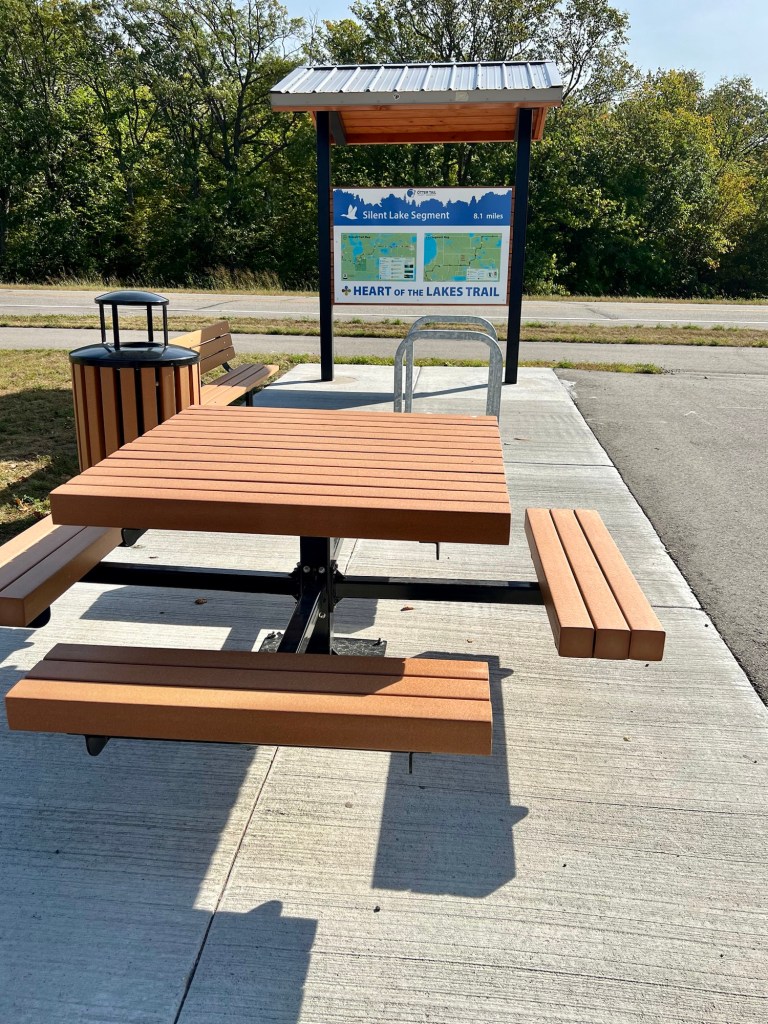
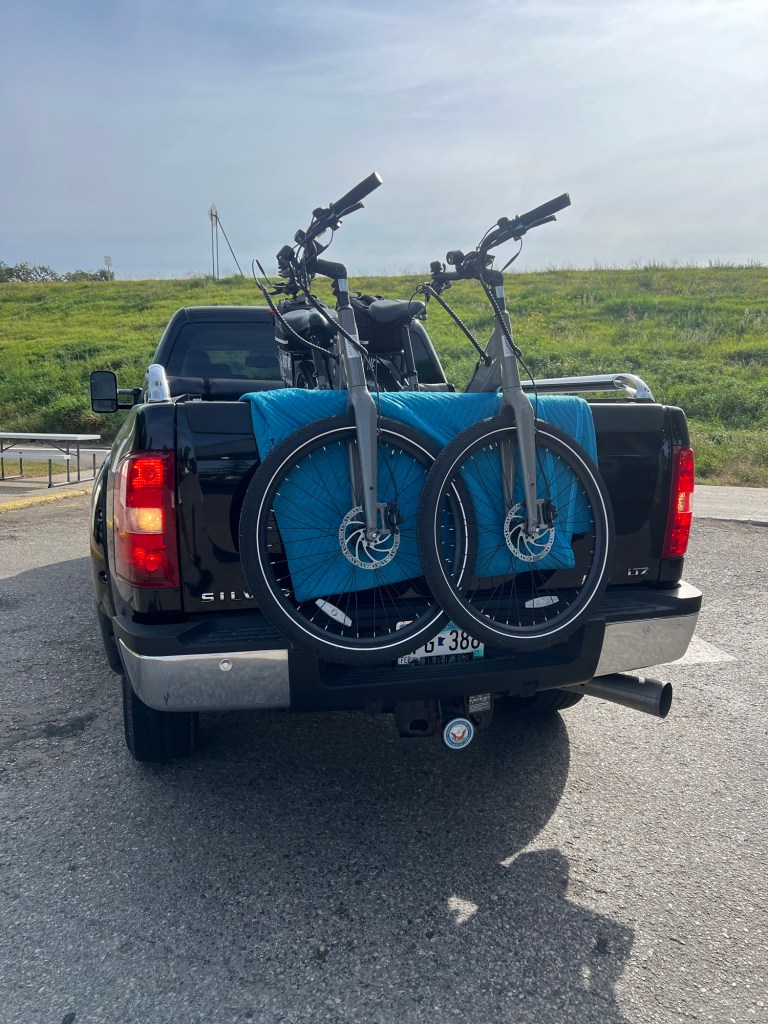




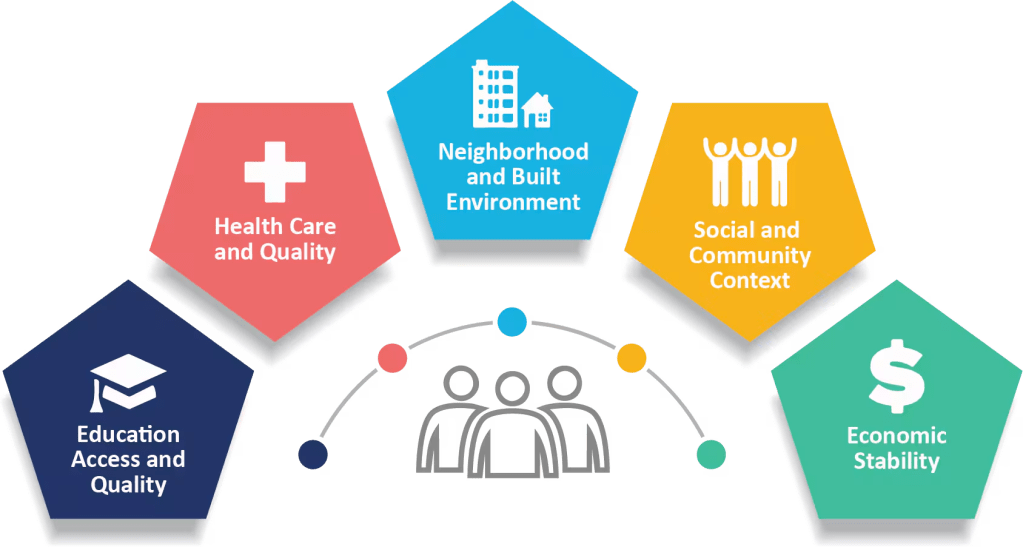


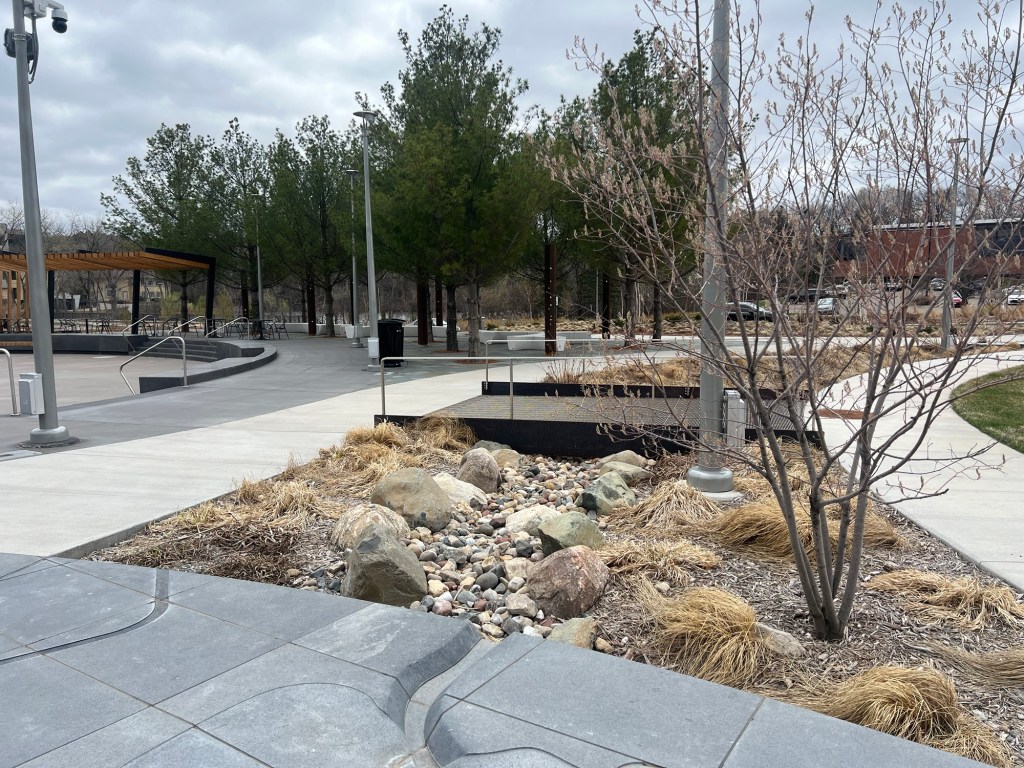






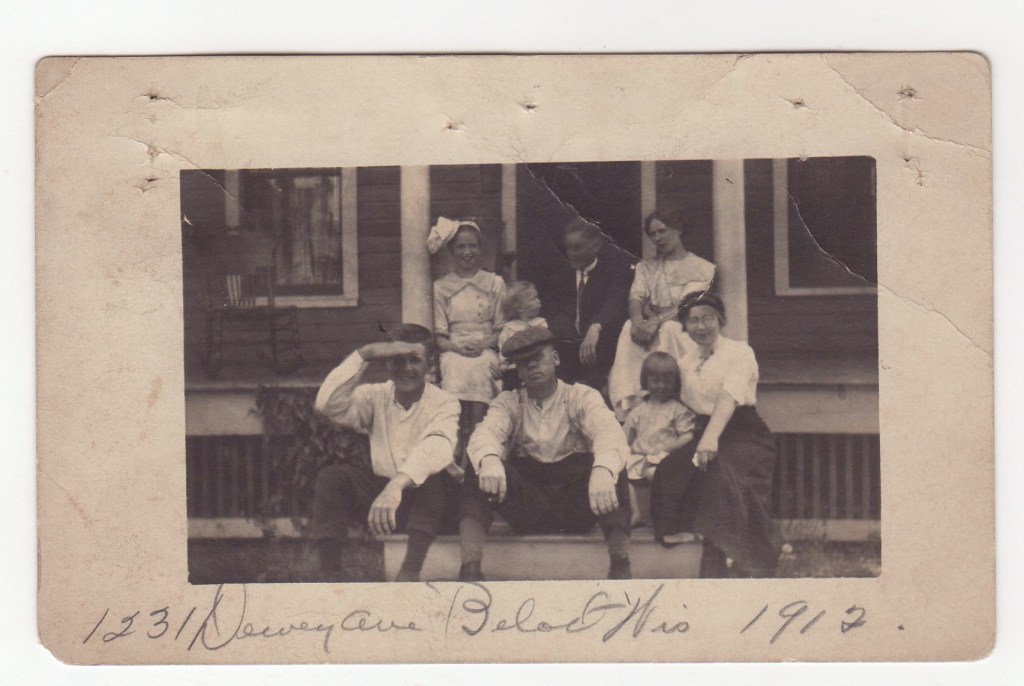


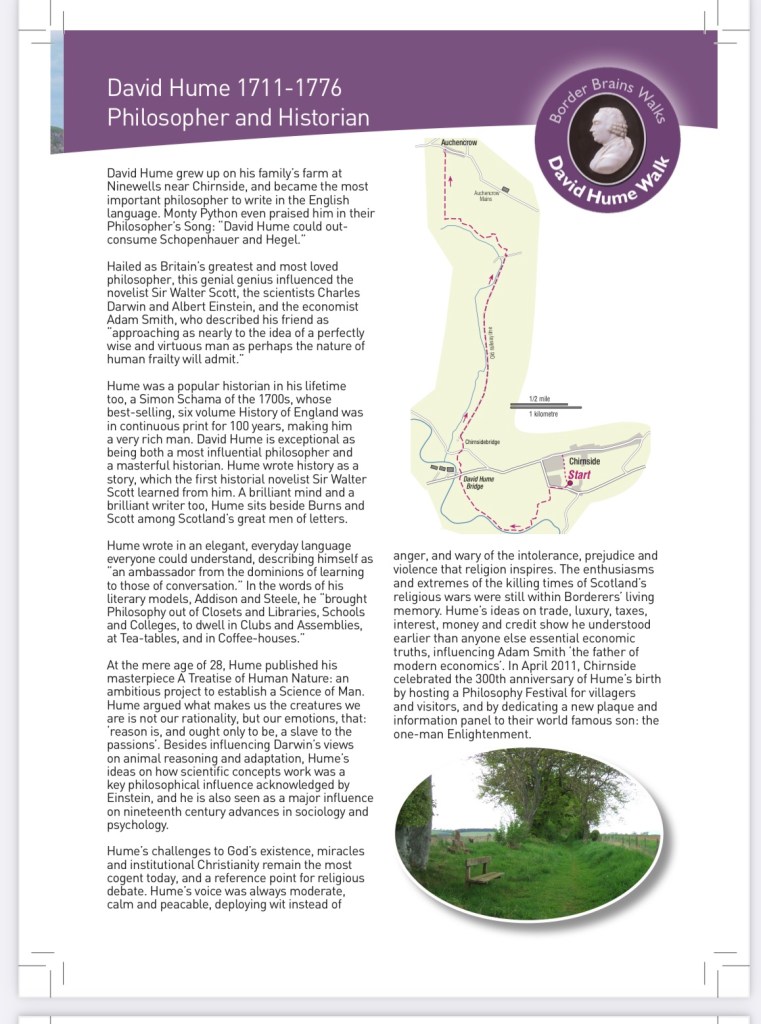



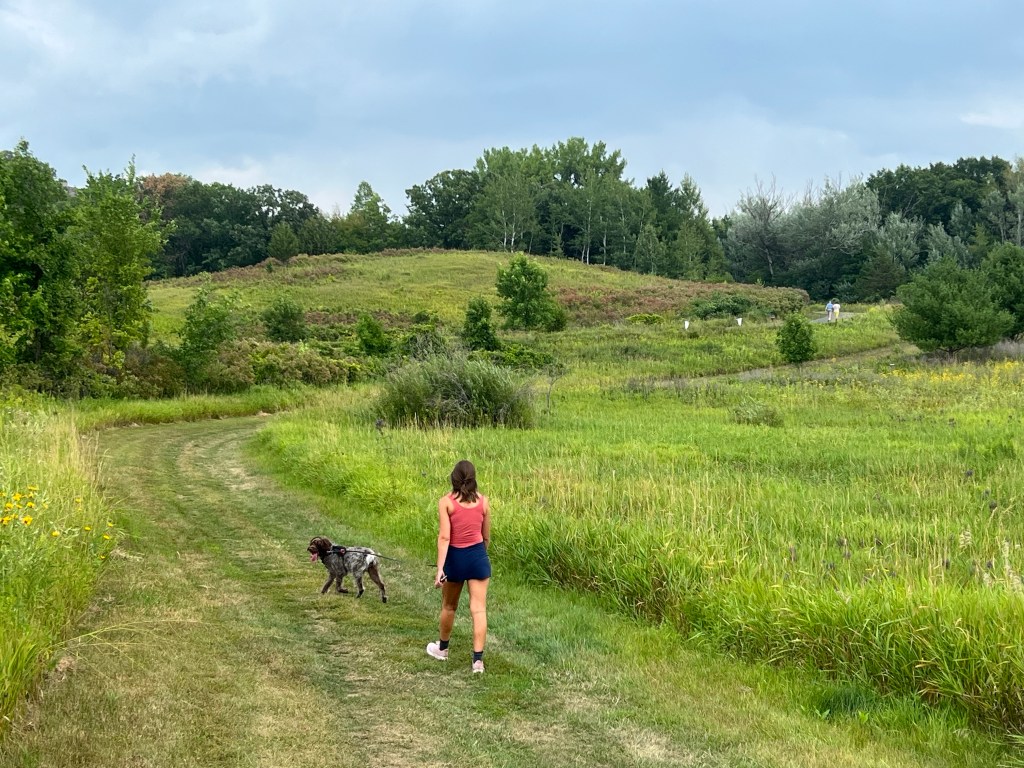

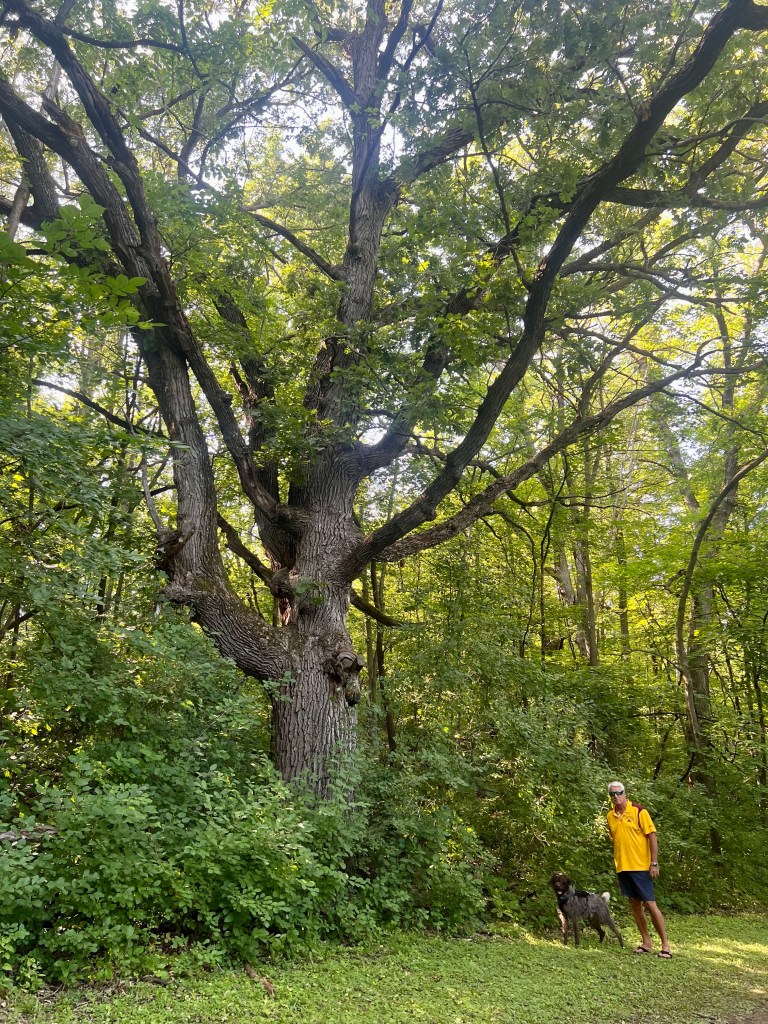
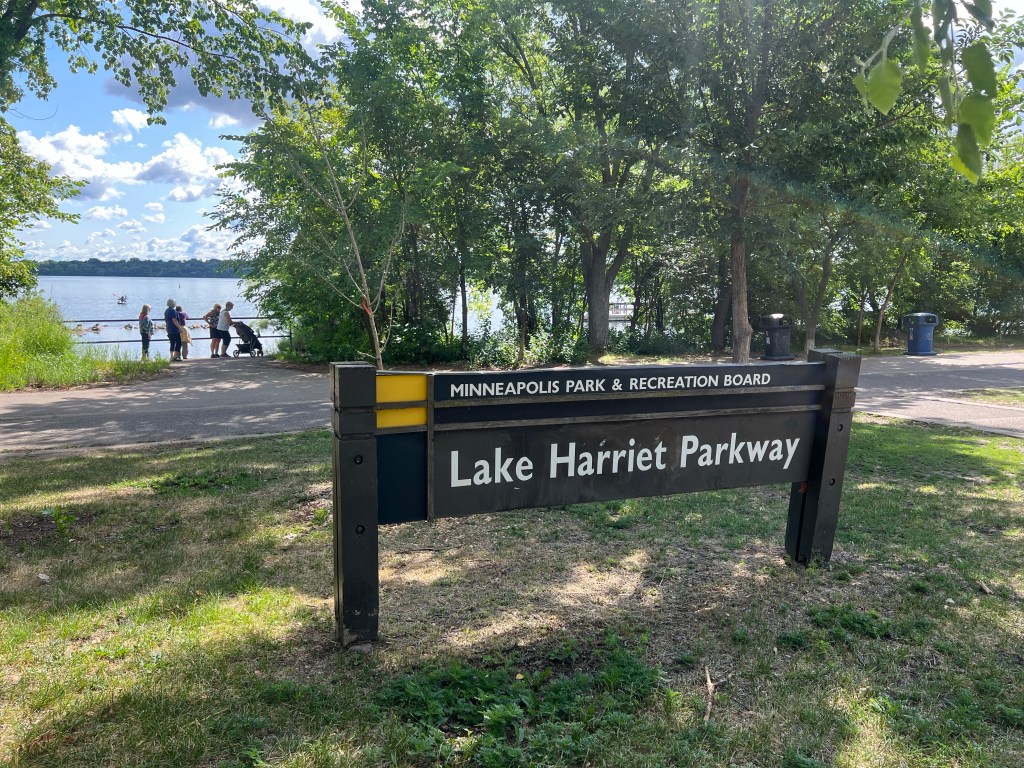


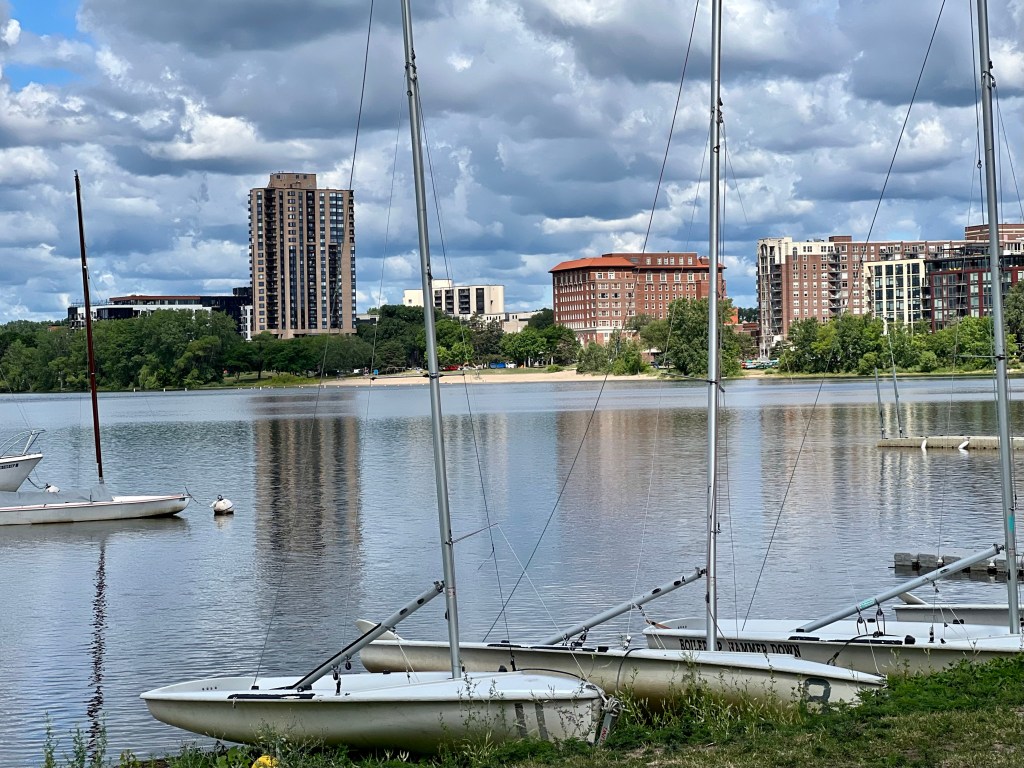


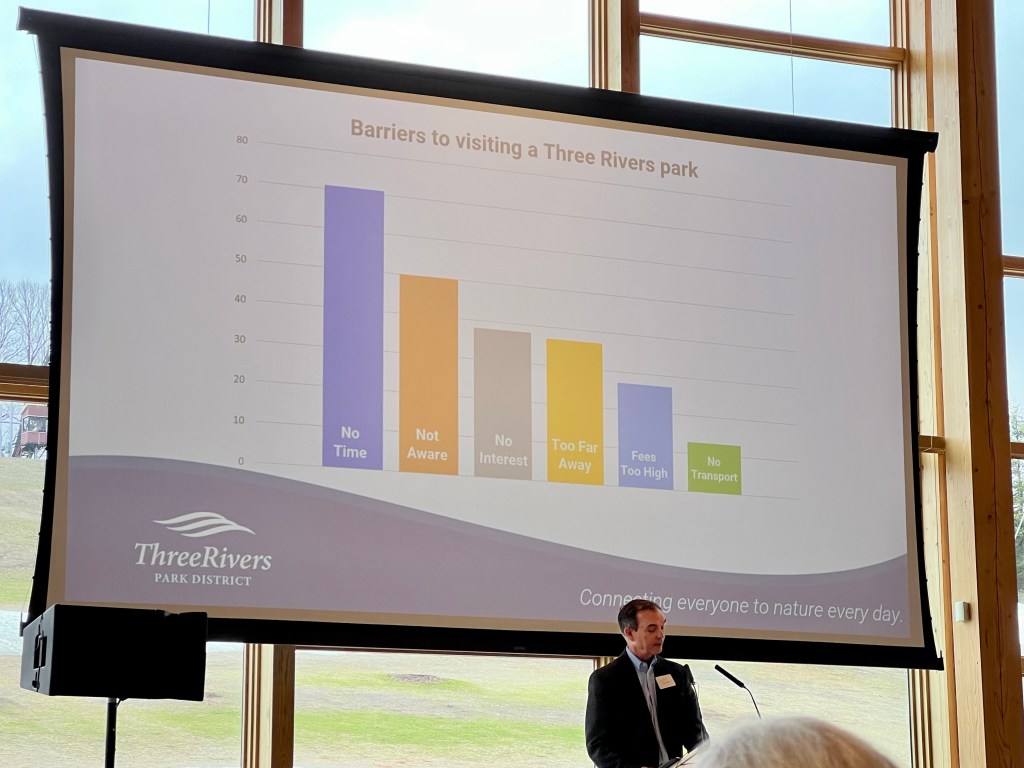


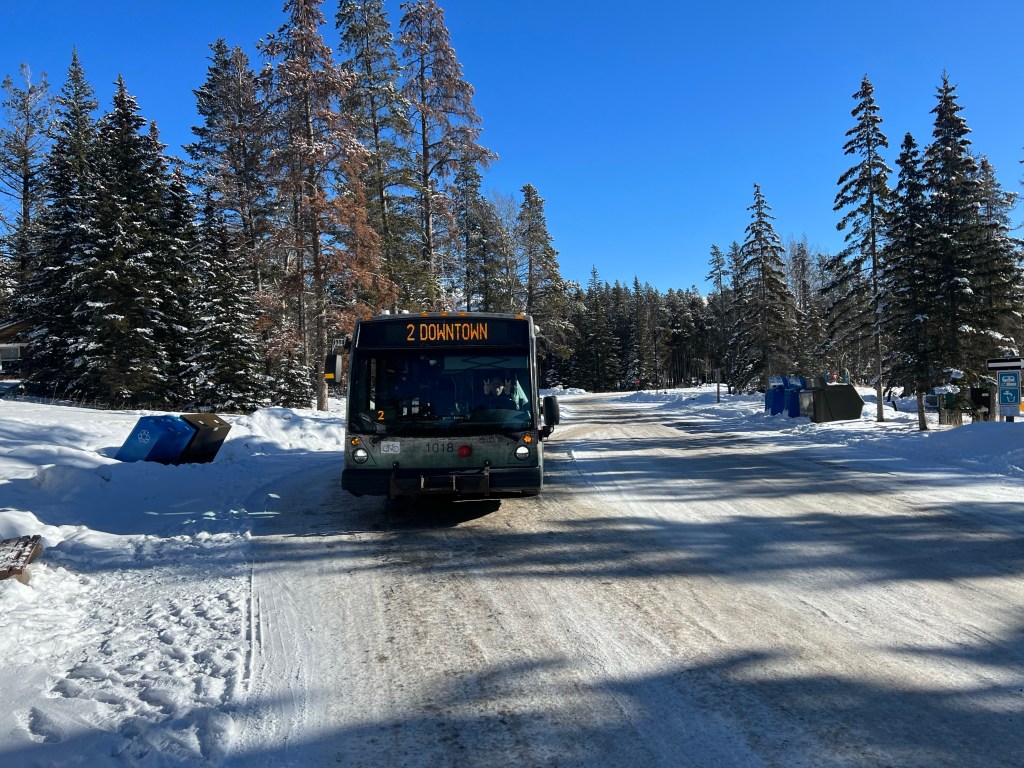


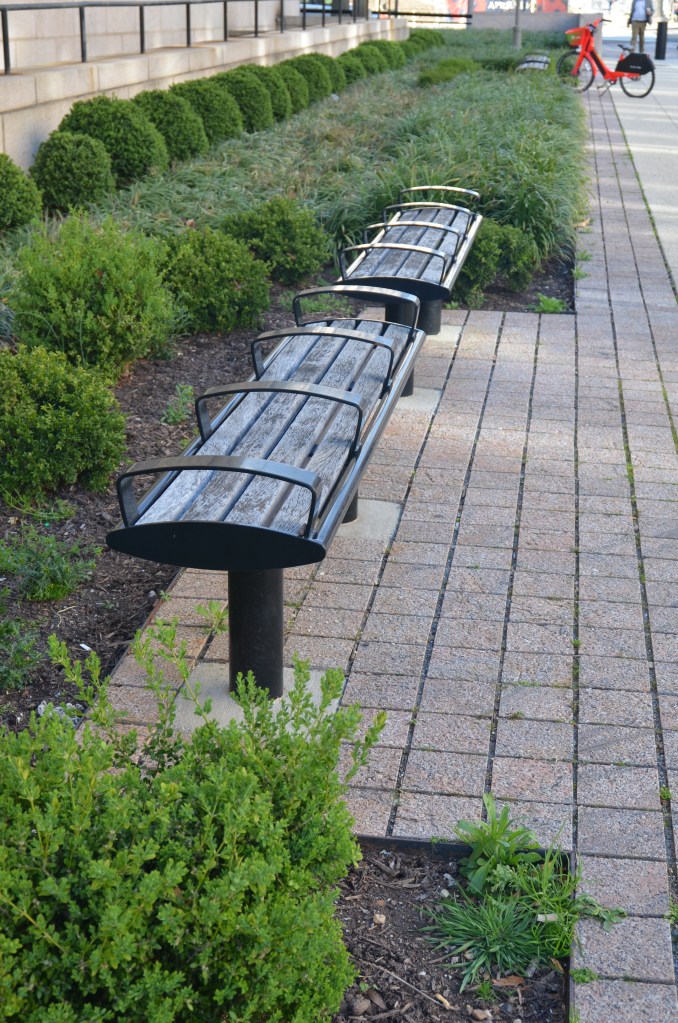
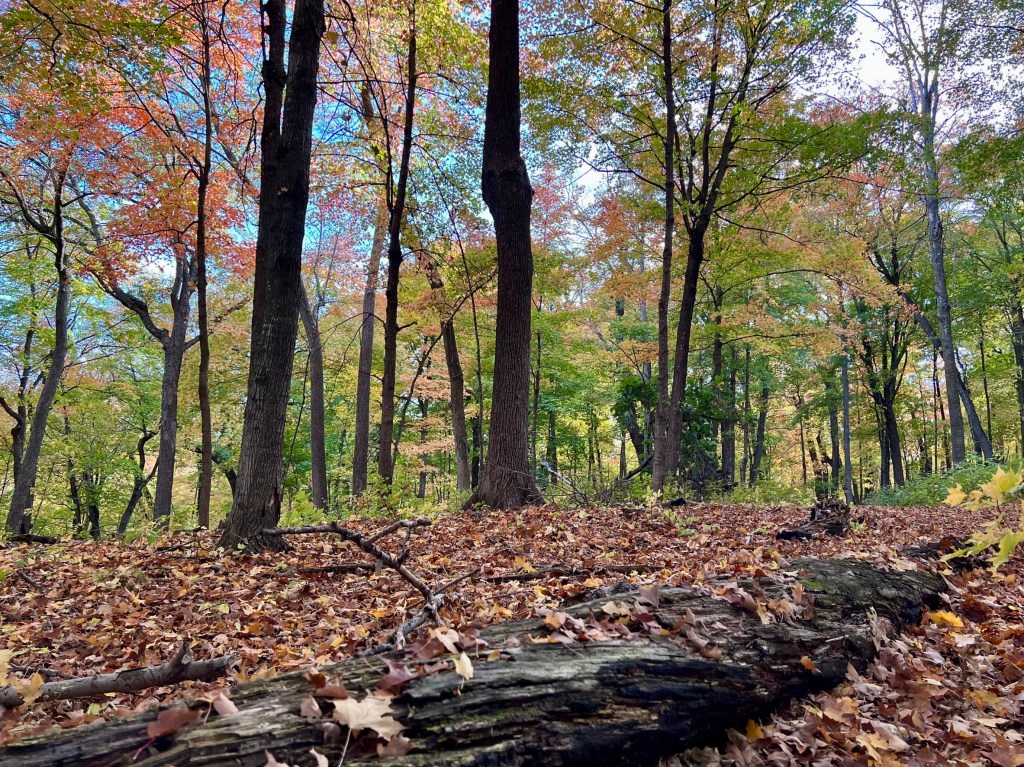


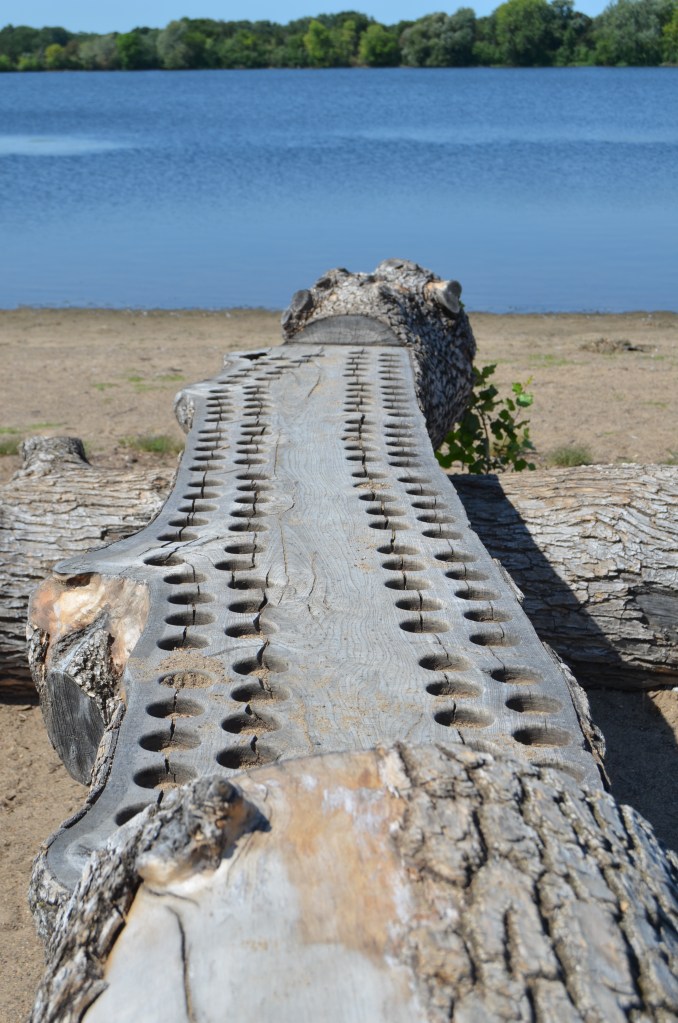
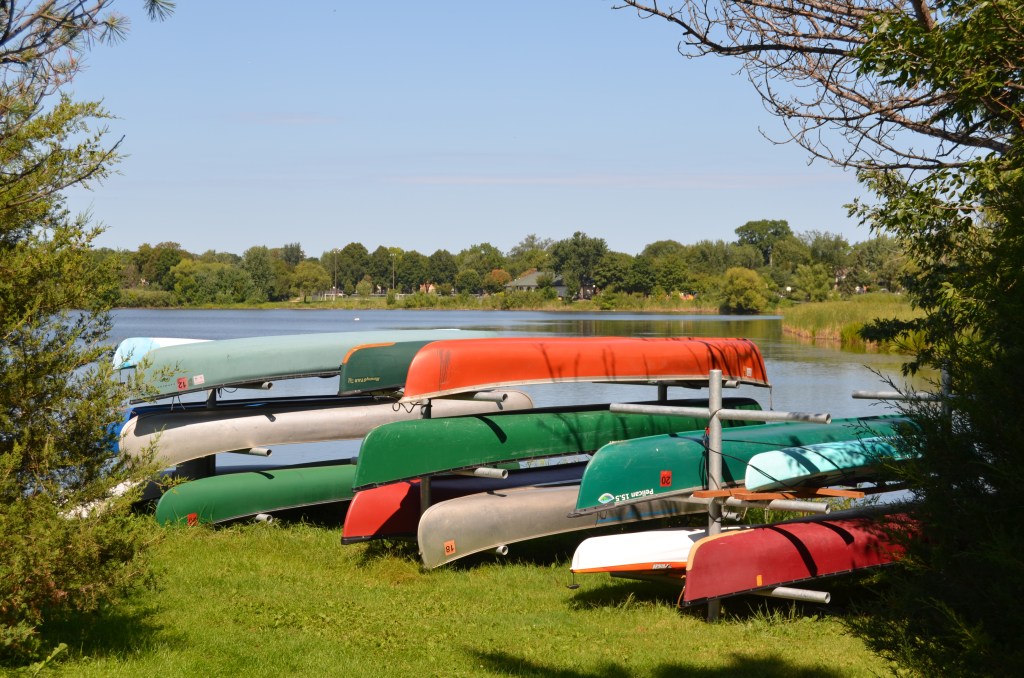




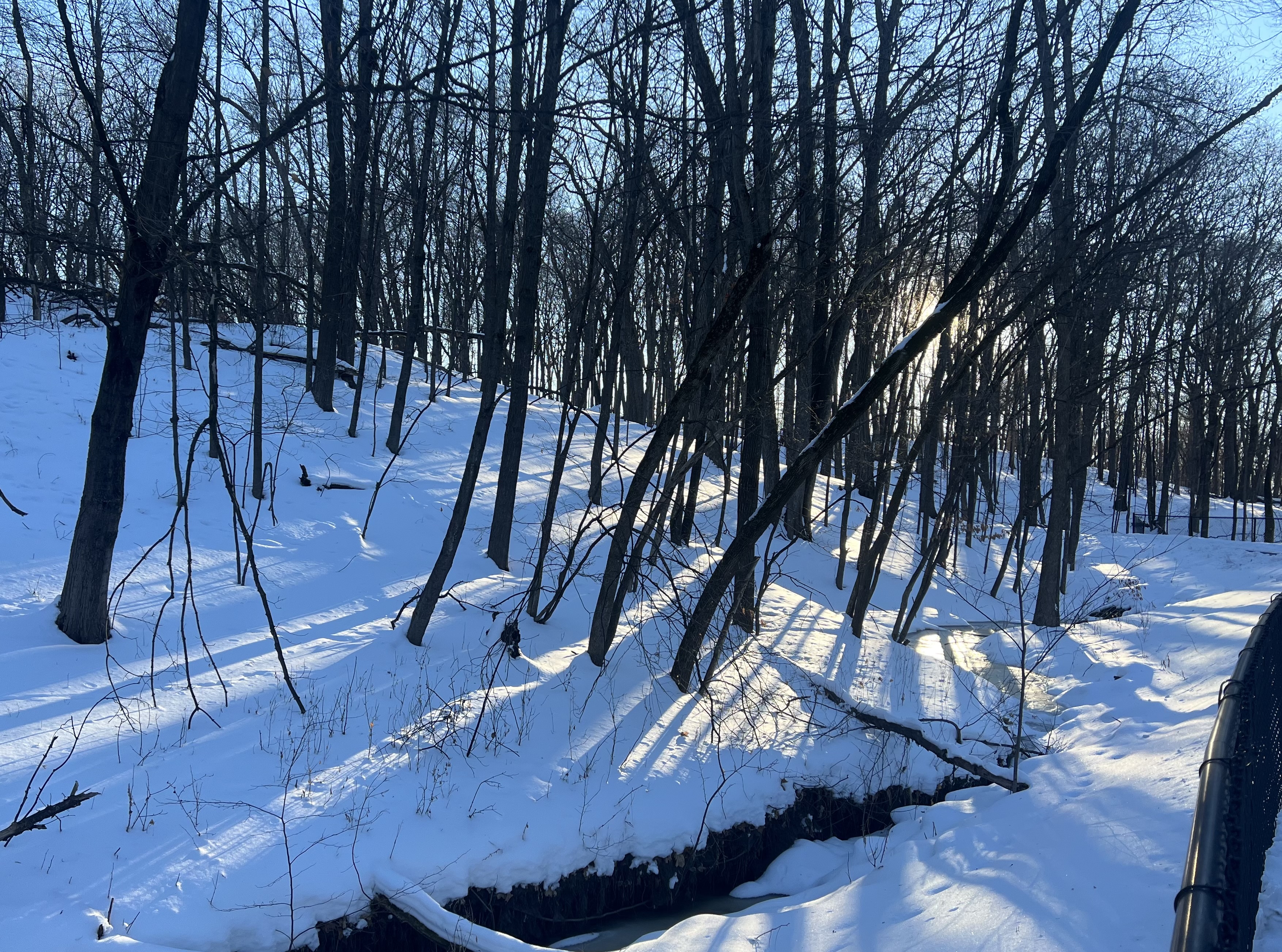




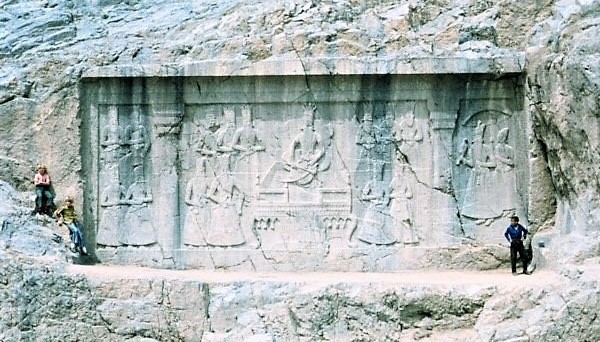
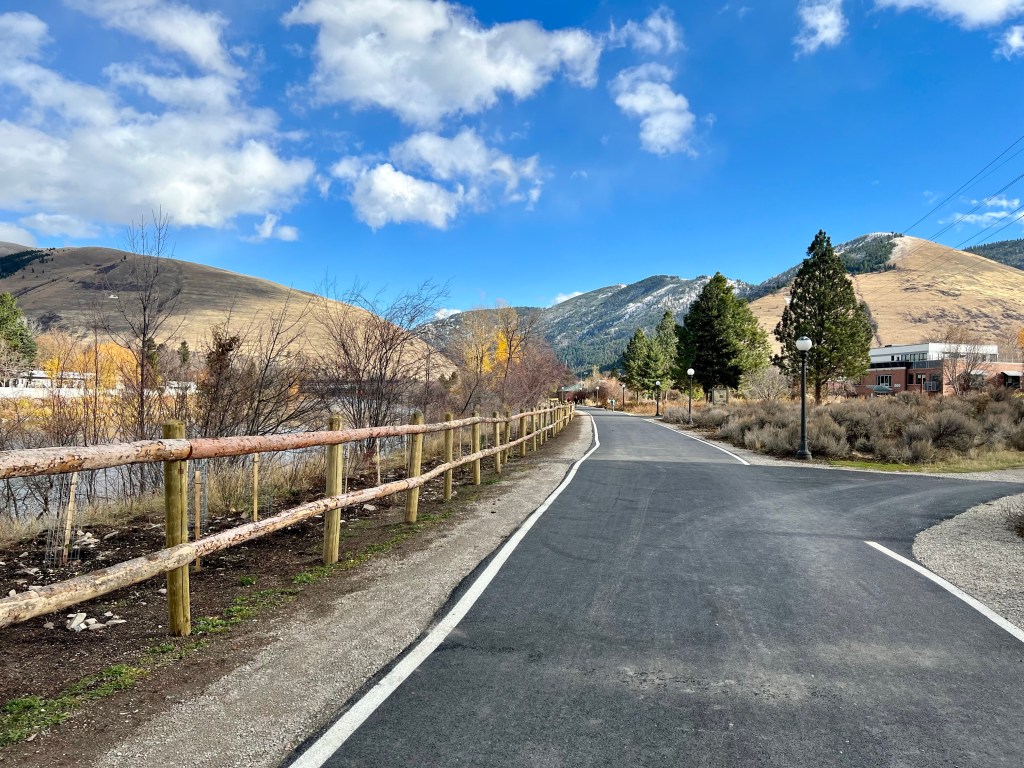
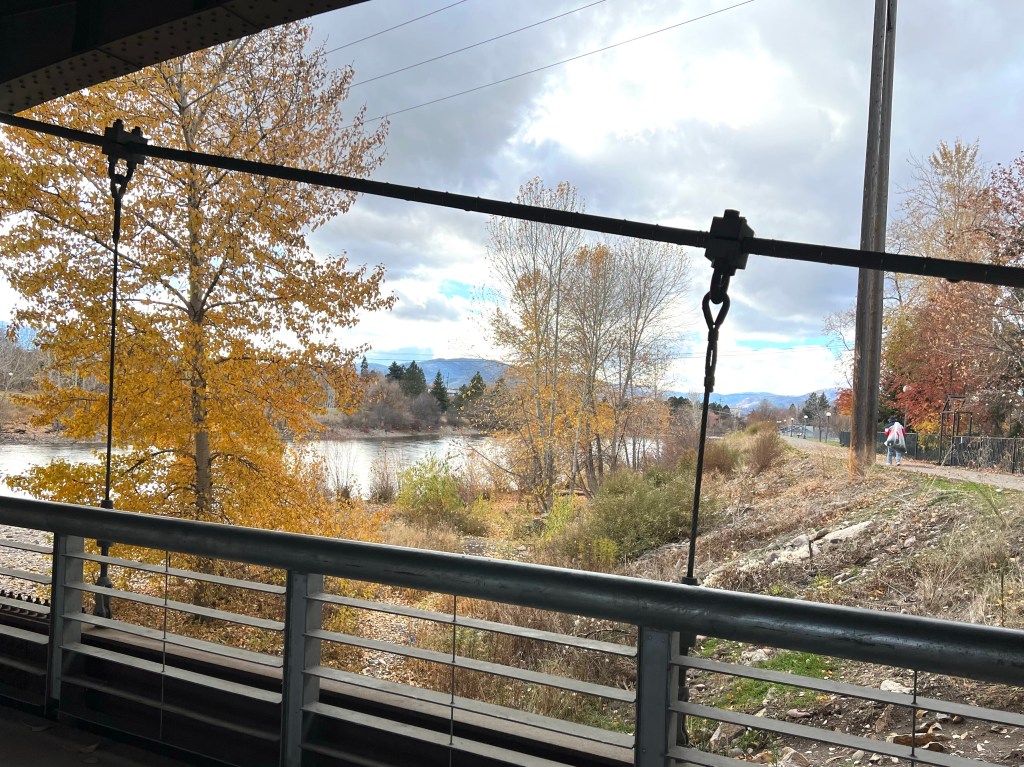



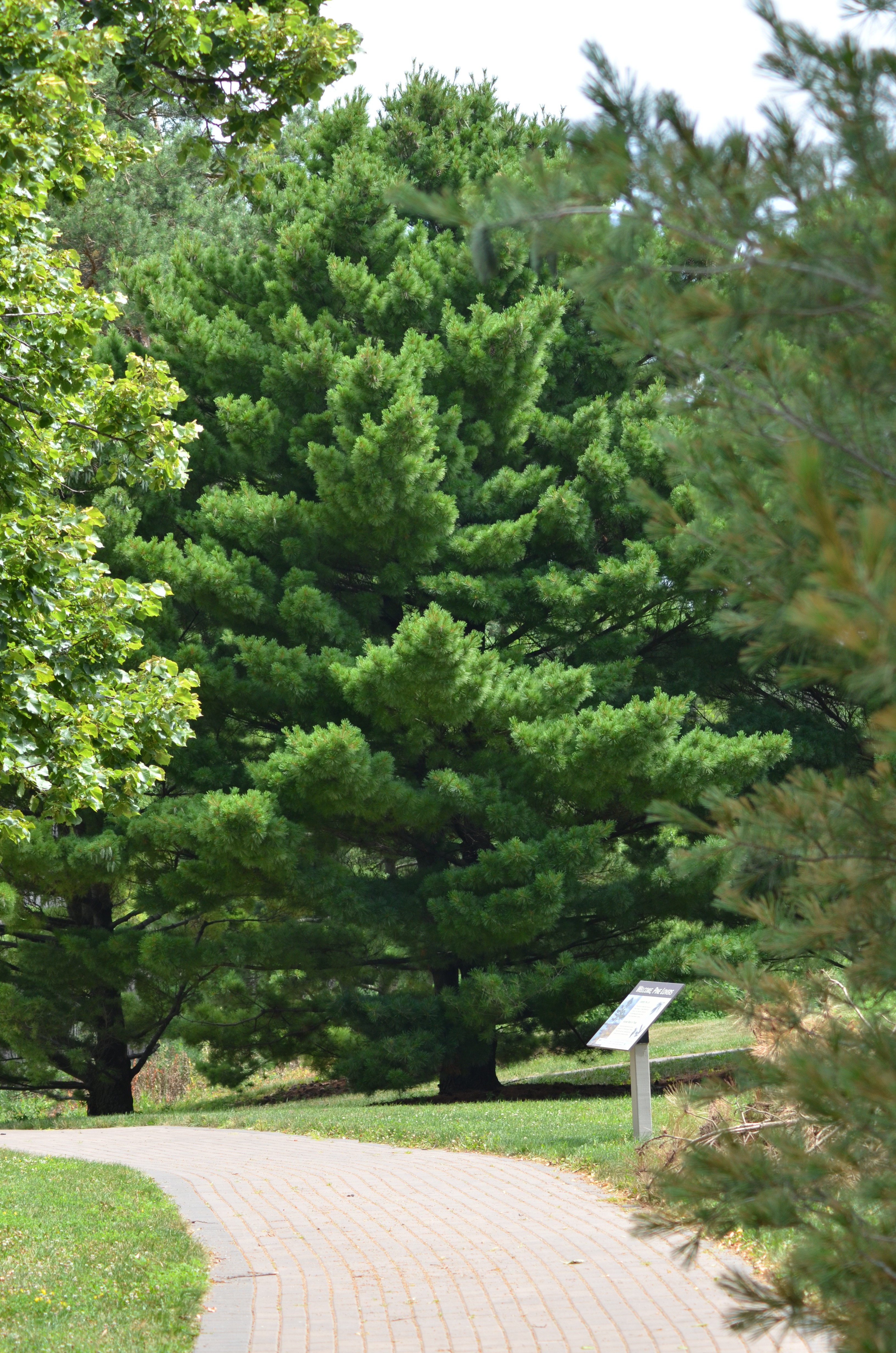



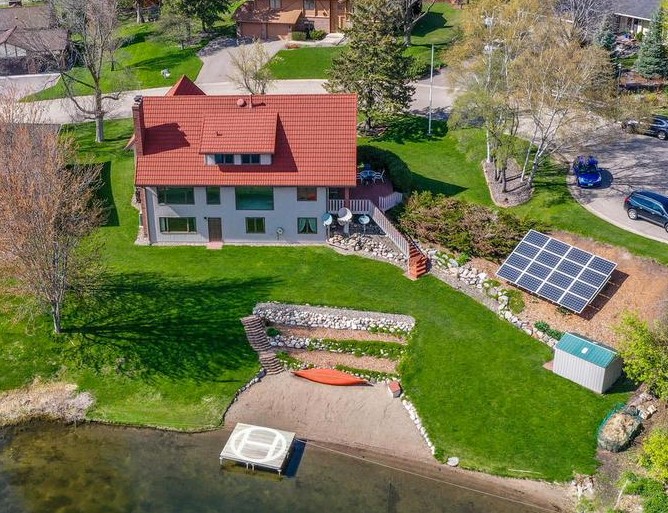
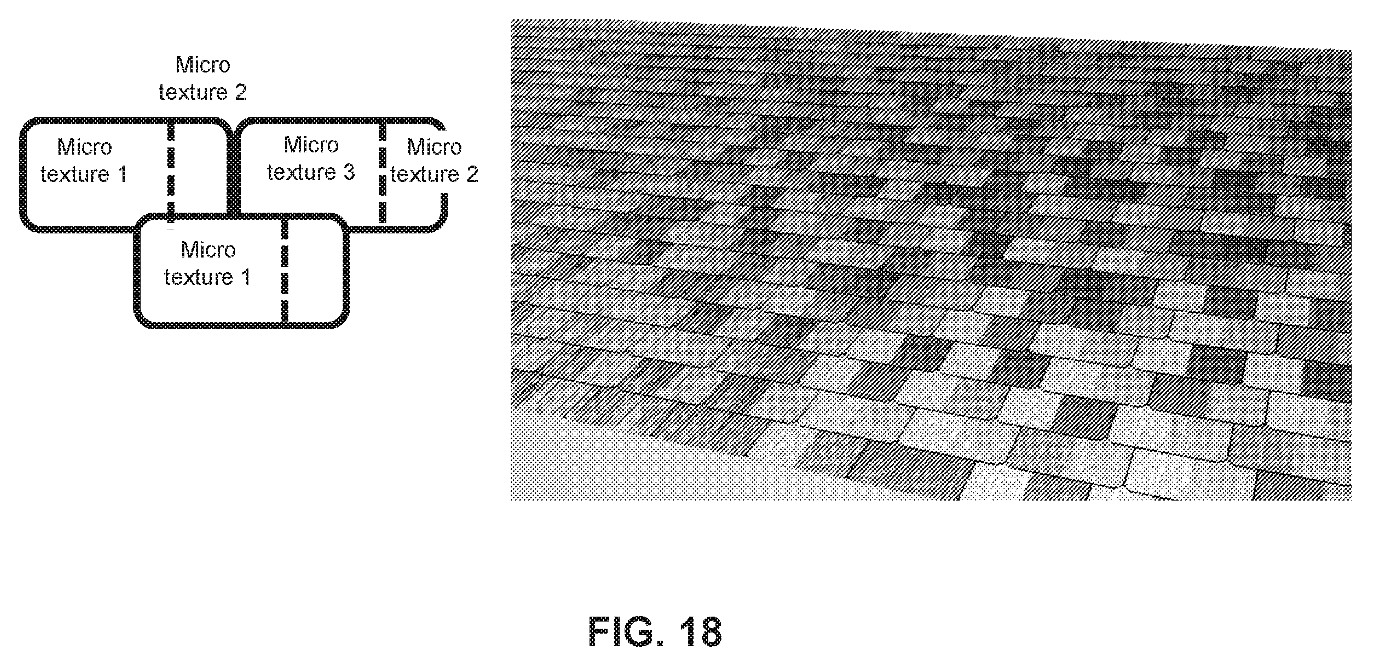
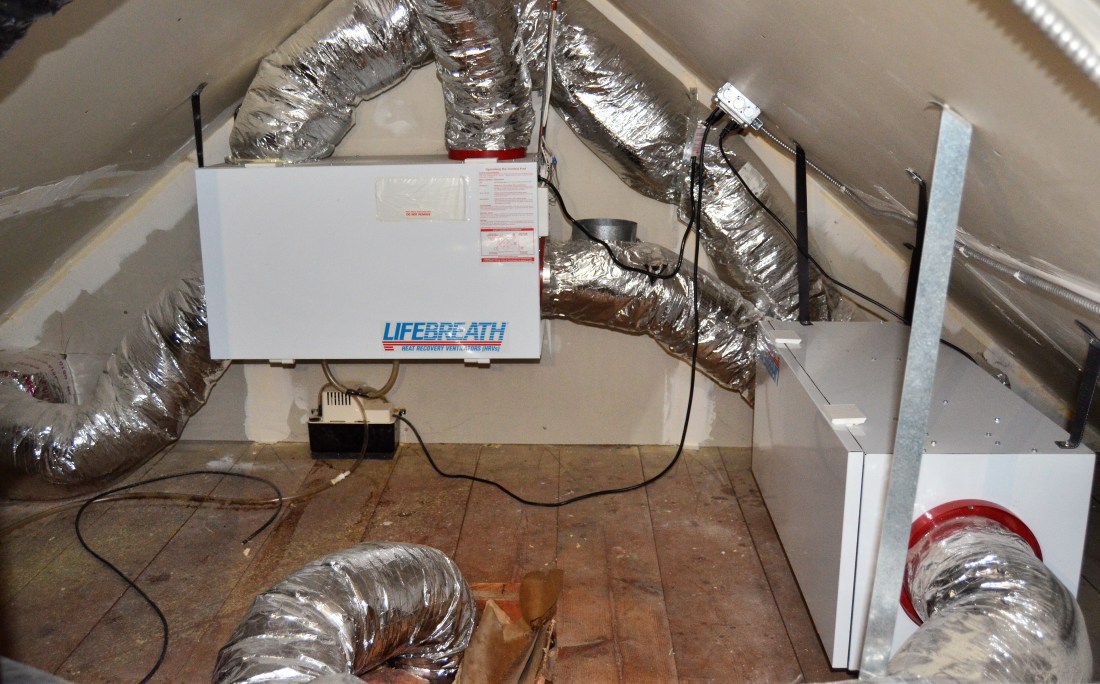





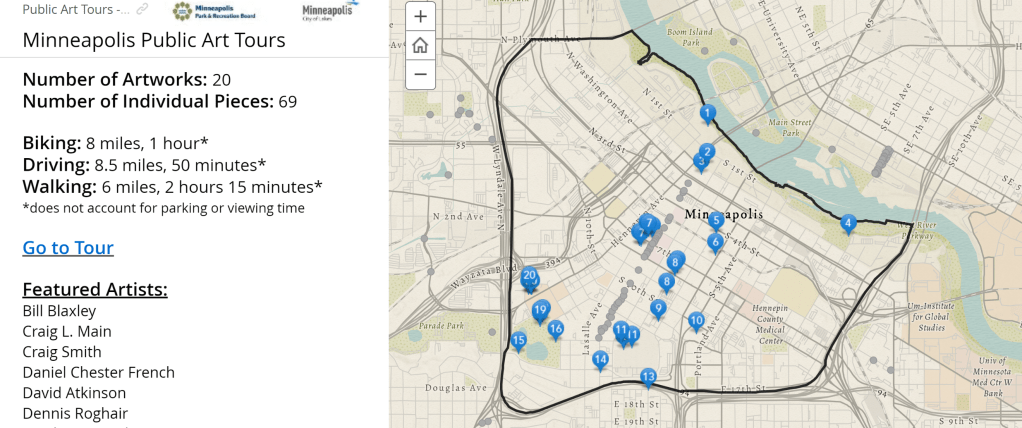

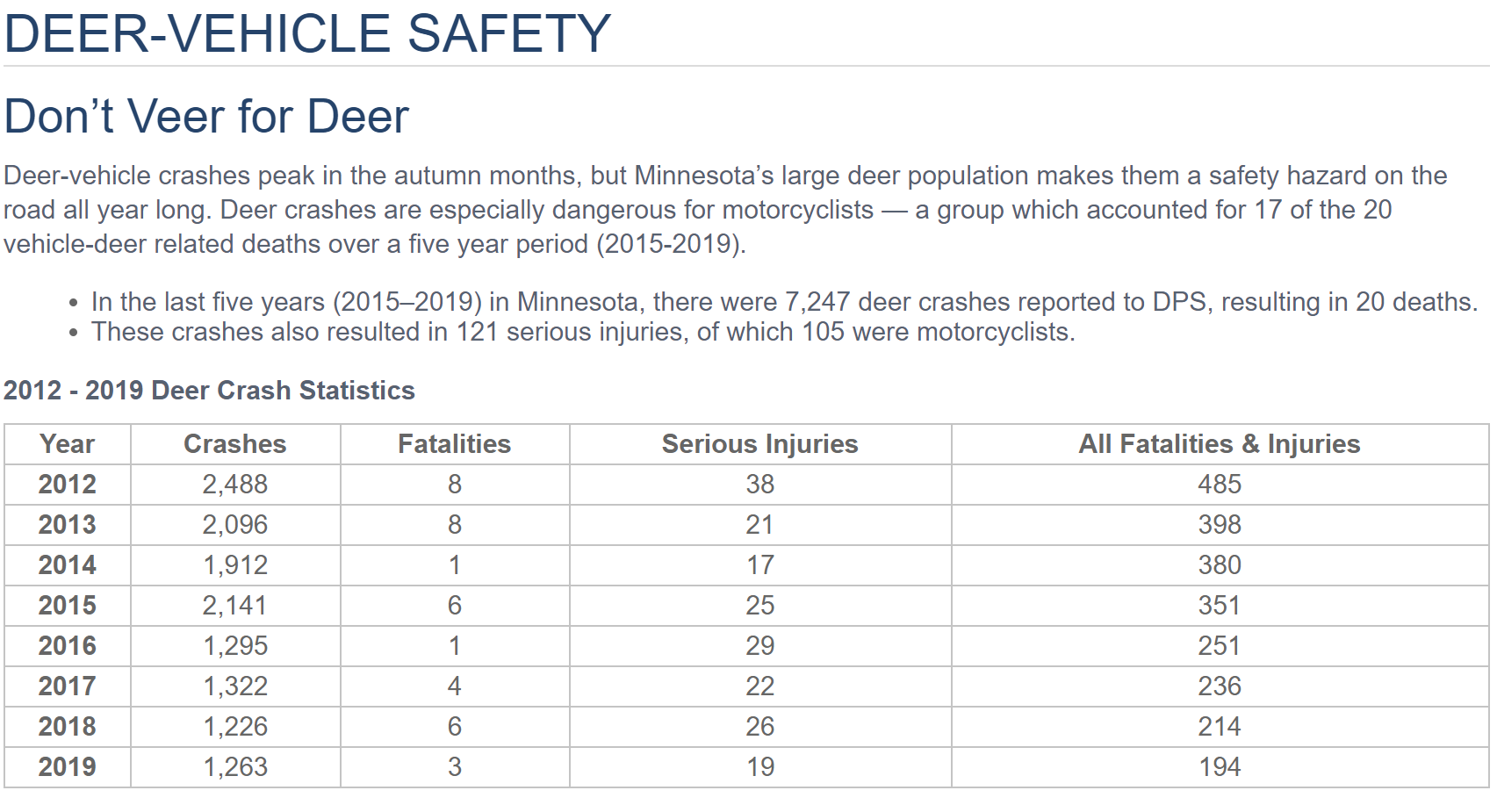
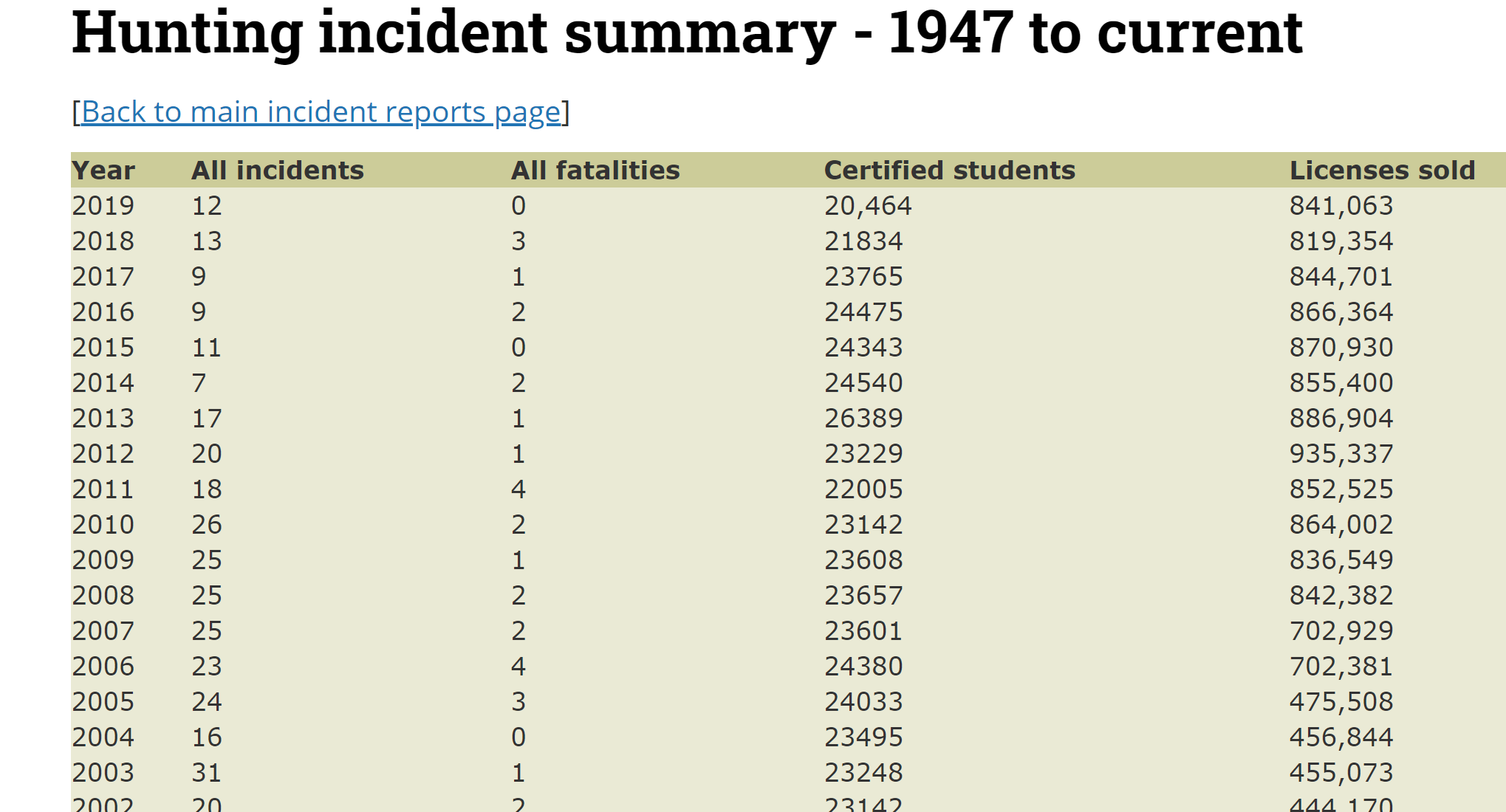
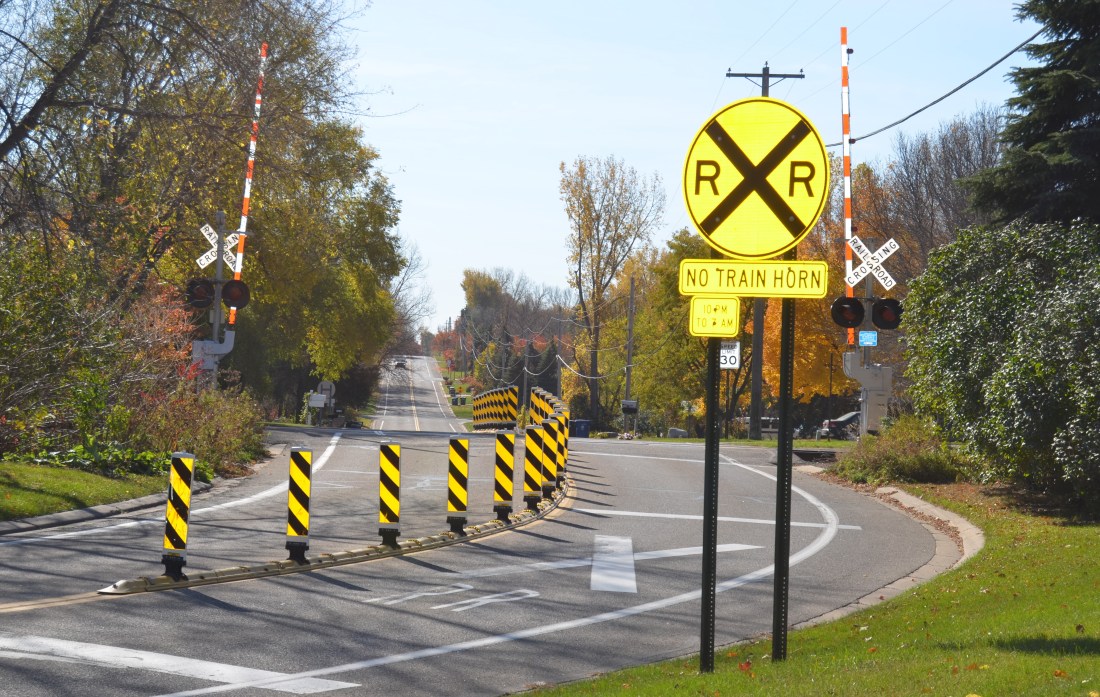



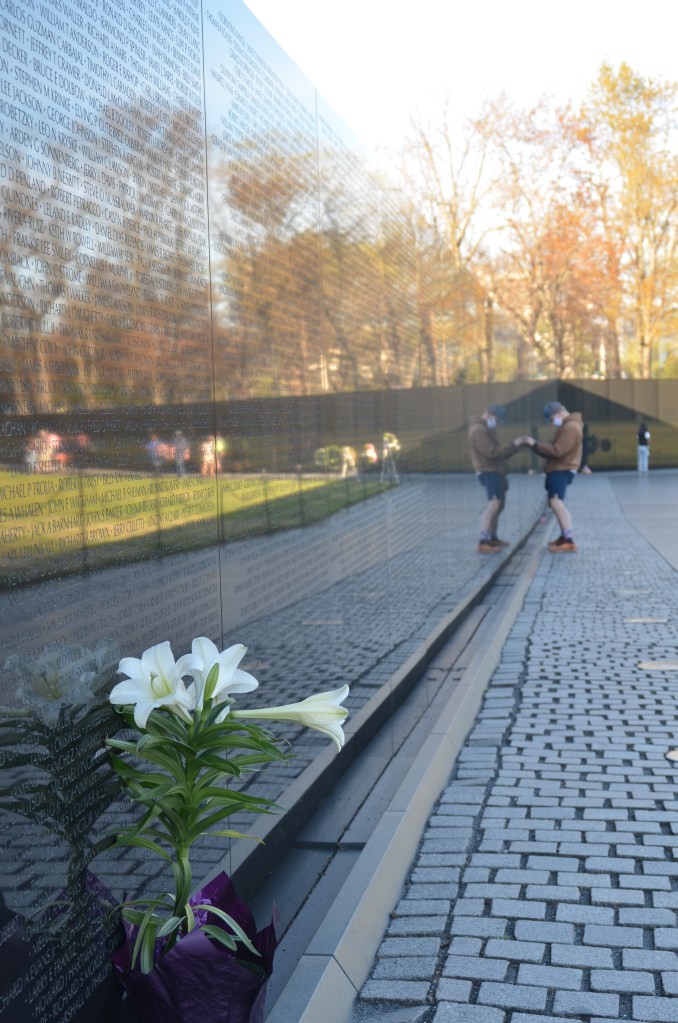


 Home Economics