This is one of my very favourite photographs, I love everything about it. The movement, the music, I can hear it. The expressions on their faces…I could write a whole story from his alone. But I can't remember the photographer – can anyone help? 🖤 pic.twitter.com/8kyXVwXaqX
It started over 30 years ago. Steven Landsburg wrote the popular book The Armchair Economist in 1993. Through popular stories of economoc quandries and paradoxes, he challenges the long held premise of the rational agent.
Quite the opposite: Our working assumption is that whatever people do, they have excellent reasons for doing.
If we as economists can’t see their reasons, then it is we who have a new riddle to solve.
Since then the discipline has been flooded with sub-categories. There is behavioral economics, feminist economics, health economics, environment economics and so on. Perhaps there’s a thread that ties them together.
If you are buying land from an individual or a group please follow the following STEPS to avoid being CONNED.
1. Ask to see the TITLE DEED or Copy of the title deed. Then do a search at the ministry of lands to confirm who the real owners… pic.twitter.com/uLG9SLE2ly
Example of private ordering described by Anthony Downs.
The purpose of shifting services to the neighborhood level is not just to improve quality but also to encourage self-development of local residents and enhancement of their personal values. Neighborhood self-development usually occurs most effectively through spontaneous, unplanned local efforts often led by charismatic individuals. In city after city the most effective such efforts have emerged from the dramatic leadership of one or a few unique individuals who took it upon themselves to “do something” about local conditions and galvanized others into : action. Inevitably, their efforts reflect their own unique combinations of talents and are therefore difficult to replicate elsewhere.
A coalition of diverse groups, it was reported, were all coming together for a housing bill. That was sixty days ago.
(KNSI) — The Central Minnesota Builders Association is throwing its support behind a piece of legislation aimed at addressing the lack of housing and the high cost of new construction.
A coalition of housing advocates and bipartisan lawmakers joined together at the State Capitol to call for an increase in access and affordability in housing through the Minnesotans for More Homes initiative.
The bill (HF 4009/SF 3964) legalizes missing middle housing and new starter homes across Minnesota.
From the builders association to affordable housing advocates, an unlikely melange of interested parties were looking for ways to reduce housing costs. How better to lower expenses then to reduce barriers to building by rolling back the rules. This bill brought authority over what can be built where to statewide control.
Once the implications of un-zoning the neighborhood hit local communities, residents weren’t impressed. Here are some of the changes proposed.
Sets a base level for density allowed on any residential lot by right (or without needing to go through a discretionary review processes) regardless of size at 2 units statewide and 4 units in cities of the first class. If certain conditions are met, 8 units are allowed in second-, third-, and fourth-class cities and 10 units may be allowed per lot in cities of the first class.
Forces administrative approvals of projects that meet the standards in the bill language and prohibits public input in the approval process.
Limits minimum lot size requirements to no greater than 2,500 square feet for first class cities and 4,000 square feet for all other cities except for Greater Minnesota cities with populations of less than 5,000.
Requires all cities to accept Accessory Dwelling Units on all residential lots regardless of size and allows property owners to subdivide their lots by right.
Prohibits off-street parking from being required close to major transit stops and limits off-street parking minimum requirements to 1 spot per unit in other areas.
Allows multifamily buildings to be built up to 150 feet tall on any lot in a commercial zoning district.
Broadly prohibits design standards for residential development and eliminates minimum square footage and floor area ratio requirements.
The cities organized and alerted their constituents who must have followed thorugh with calls to their state representatives as the bills is no longer progressing through the chambers. I doubt constitutents will agree to handing over local property rights to the state. This seems like a heavy handed, top down approach.
So how does one encourage increased density? Why- the market of course!
A recently discovered helium reservoir in Minnesota boasts “mind-bogglingly” high concentrations of the gas that are even greater than initially thought, potentially paving the way for commercial extraction.
Resource exploration company Pulsar Helium, Inc. announced the discovery of helium stores in late February, after a drill just outside of Babbitt, in northern Minnesota, located gas deposits at depths of 2,200 feet (670 meters). Initial measurements showed helium concentrations of 12.4% — which “is just a dream,” Thomas Abraham-James, the president and CEO of Pulsar Helium, told CBS News at the time. But new laboratory readings have surpassed those results.
Normally, helium is obtained as a byproduct of natural gas production, as it accumulates underground in pockets of methane and other hydrocarbons. Minnesota is one of just a handful of locations globally where helium is known to exist without hydrocarbons — the others being in Greenland and southern and eastern Africa. These sites all feature a crust of granite rock rich in uranium and thorium, as well as a rift system that fractures the rock to expose the helium produced through radioactive decay. A dose of volcanism then releases helium atoms from the rock.
Northern Minnesota has a love/hate relationship with the extraction of natural resources from the ground. The article doesn’t address how mining methods affect, if at all, the environment.
Albert O. Hirshman is known for a treatise on the connection between loyalty, voice, and exit. What he describes is an ebb and flow in people’s actions. Whether people interact in the public sphere and use their voice to signal a challenge, or whether people remain loyal to a brand while they nudge for changes using voice in the private sphere, both possible scenarios indicate that, before leaving a relationship, most people will try to talk through change.
In a free and open society, all voices should be heard. No questions there. But some folks are more able to broadcast their voice than others. So, it seems it would be useful to have some sense of evaluating the various impacts of the topics at hand.
The possible negative outcomes of giving the societal floor, for monopolizing the social audience ready and in attendance to react with resources to causes, are as follows.
Opportunity Costs. If the airwaves are only giving voice to one group in harm’s way, then others are receiving aid.
When a subgroup is given the mike again and again, even though they represent maybe ten percent of the population, then their imagined importance seems directly proportional to the edges they tend to skate on the issues. So again, there is a misallocation of resources.
When a voice of fear is loudly promoted, then a whole generation may act in an overly protective manner.
Wouldn’t it be useful to track three items when a topic gets brought to the elevated status of statewide attention? Wouldn’t it be helpful to see the numbers of all who are harmed, or affected in some way? Does this group command more, or less the same number of resources as many others who also have legitimate claims? Are the public officials in charge of bringing forward certain voices proportional to their representative groups? Or are they heard due to their proximity to core functions? Are the restrictions placed on people in sync with the risk of missing out?
It seems that a better matrix of analysis could be done before some voices are raised above others.
The 1960s failed, I believe, partly because of unclear thinking about institutions, which it portrayed in dark, conspiratorial, Kafkaesque terms. The positive role of institutions in economically complex societies was neglected. The vast capitalist distribution network is so efficient in America that it is invisible to our affluent, middle-class humanists. Capitalism’s contribution to the emergence of modern individualism, and therefore feminism, has been blindly suppressed. This snide ahistoricism is the norm these days in women’s studies programs and chi-chi, Foucault-afflicted literature de-partments. Leftists have damaged their own cause, with whose basic principles I as a 1960s libertarian generally agree, by their indifference to fact, their carelessness and sloth, their unforgivable lack of professionalism as scholars. The Sixties world-view, which integrated both nature and culture, has degenerated into clamorous, competitive special-interest groups.
Times Literary Supplement, London, May 22, 1992
Yikes! Paglia knows how to slice and dice her impressions. And I completely agree with her analysis.
Pollution was a problem in the US in the 1970’s. Passengers would throw paper wrapping out of speeding car windows, litter blew around the curbs of city streets, and a pile of various types of debris would accumulate around waste bins that were a bit too full.
A successful public service campaign was initiated with Woodsey as the star. The tunes were catchy and were broadcast across TV. It wasn’t long and the new norm of disposing of garbage properly took hold.
Tell all the truth but tell it slant —
Success in Circuit lies
Too bright for our infirm Delight
The Truth's superb surprise
As Lightning to the Children eased
With explanation kind
The Truth must dazzle gradually
Or every man be blind —
Adam Smith closes out Book Four, Of Systems of Political Economy, of Wealth of Nations by telling us the duties of the sovereign.
According to the system of natural liberty, the sovereign (Commonwealth) has only three duties to attend to; three duties of great importance, indeed, but plain and intelligible to common understandings: first, the duty of protecting the society from the violence and invasion of other independent societies; secondly, the duty of protecting, as far as possible, every member of the society from the injustice or oppression of every other member of it, or the duty of establishing an exact administration of justice; and, thirdly, the duty of erecting and maintaining certain public works and certain public institutions, which it can never be for the interest of any individual, or small number of individuals, to erect and maintain; because the profit could never repay the expence to any individual or small number of individuals, though it may frequently do much more than repay it to a great society.
Wealth of Nations, Adam Smith
We no longer have sovereigns, but we can see those duties in our local governance. And thus we can expect citizens to evaluate each of them in turn.
One of the most stressful transistions for those who move to MN from out of state is adjusting to winter driving. And there is good reason for that. When the typical rumble of friction between your car’s tires and the pavement goes smooth, you know your sliding. If you panic and yank your steering wheel in an effort to regain control of the 4000 pound beast, you’re likely to spin. A smooth turn of the wheels in the direction of the slide, and then a sensing of rubber feeling the road once again, is the signal that the tires will grip and drive you out and on your way.
It’s not an easy move. If you’re new to the white outs, it’s best to stay home.
Minneapolis – At least two vehicles have spun out on 35W near the Lake St overpass. Responders said the overpass is iced up. 19:33 pic.twitter.com/o6H8HZNovv
The window-tax, as it stands at present (January, 1775), over and above the duty of three shillings upon every house in England, and of one shilling upon every house in Scotland, lays a duty upon every window, which, in England, augments gradually from two-pence, the lowest rate, upon houses with not more than seven windows; to two shillings, the highest rate, upon houses with twenty-five windows and upwards.
The principal objection to all such taxes is their inequality, an inequality of the worst kind, as they must frequently fall much heavier upon the poor than upon the rich. A house of ten pounds rent in a country town may sometimes have more windows than a house of five hundred pounds rent in London; and though the inhabitant of the former is likely to be a much poorer man than that of the latter, yet so far as his contribution is regulated by the window-tax, he must contribute more to the support of the state.
There have been several interesting if not colorful headlines in the news since NAR settled a lawsuit last Friday. The issue under dispute is whether the posting of the payout commission to the selling broker (the agent who represents the buyer) is a key point of collusion amongst Realtors to set fees. For historical reasons, the commission is based on a contract with sellers at the time of listing, so there is a need to advertise that amount reliably. Hence, it’s posted on an industry-supervised service.
Some people appear to believe that the agreement to not post the payout on the multiple listing service, so that all professionals in the industry may see what it is openly and transparently, is the same as eliminating half of the work the profession currently carries and half of the commission. If we say it isn’t so, and they agree not to publish it where it has always been published, then poof! it’s gone.
Here are some things to keep in mind. The profession of bringing parties to the table in a real estate transaction has existed in its present form for more than one hundred years. It has always been an open process that accommodates parties who wish to represent themselves. There is a very low bar to entry into the profession as there is a small educational commitment and a few thousand dollars in fees. There have always been people of all stripes coming into the profession and trying new models of doing business. There have been menu systems, where clients just pay for pieces of the work to be done. There have been low-fee models. There has been full access to list a home on MLS and post your fee for the selling broker. The real estate business is an open, low-entry profession in which an entrepreneur can jump in and offer any type of combination of features for any type of pricing structure to the public.
And people have. Over and over again.
The tech companies were sure they had hit a gold mine and built out a network of information services nationwide. The clients loved it and told all their realtor friends in and around 2010 that they were soon to go the way of travel agents. While we sat in their homes holding them open to the public on a Sunday afternoon, they nodded away at their future vision. While we spent entire Saturday afternoons running them through half a dozen homes, they told us they were going to order up their home over the internet and do all the paperwork electronically.
But a dozen years later more people use Realtors than at any other time in the last twenty years.
What’s interesting is a lot of people who don’t believe that there is a market (that impersonal churning of groups of buyers and sellers who voluntarily make choices) for real estate services, are pro-market. It’s hard to understand how these critics believe in all other markets but not in paying a fee for representation in one of the largest purchases the average individual makes.
There is no collusion. There is no monopoly. There are no barriers to entry. The market has continually supported the real estate profession all on its own, despite persistent attempts to challenge it. For that reason, I have no reason to believe that this will stop simply because a payout needs to be posted in a new spot.
When this building was originally built in 1910 was used to house working folks. Not the poor.
The building was designed for middle class worker housing when demand for such housing was increasing around the beginning of the 20th century. It was billed as an “apartment hotel“,… The individual units did not have their own separate kitchens; instead, residents ate from a common restaurant in the building.
It was beautifully renovated in the 1990s and is now home to 70 previously homeless people. There are onsite services, classes and workshops.
Single occupancy rooming houses were a perfectly acceptable form of housing for many years. But not any more. Norms and standards are bound to change. It’s just that when people cry fowl on affordability, they also need to acknowledge that today’s standards are apart of the the higher expense.
Let’s investigate the claim that every job should be paid a ‘livable’ wage by spending some time with a mom in the neighborhood. First off, livable is very subjective. What some people claim as a bare minimum to get by in, say, NY is a fortune to others in Ames, Iowa. Furthermore, as soon as a generation goes by, livability inevitably has upped itself on the notches of life’s expectations. But for this examination, let’s assume that to qualify as livable the wage must be more than all lower paid work.
Now to say every job ‘should’ command a livable wage is the same (well almost the same) as saying that every job that does not offer a livable wage should be eliminated. And the intent of wanting every job to pay at least a livable wage (although I can read what’s in the hearts of those who say should) is to make society better.
A mom of three kids starts her day by dropping them off at school, after feeding them a breakfast of milk over cereal. After the middle schooler catches the bus, she delivers the first one to a before-school program where a college student greets them. He is picking up a few hours of work (not a working wage) to help with tuition and later he will be sitting in classrooms getting his in-school experience. The second child is walked over to the library where a nice grandmotherly woman sits at a low table surrounded by six mini chairs waiting to start extra reading help. She is part of a literacy program paid for through grants. (She does not receive a working wage).
Then the mom runs over to Target. Thanksgiving is around the corner and there’s lots of food to buy. At the checkout, she is pleased to see her neighbor. Her kids are a bit older, so our mom always appreciates picking up tips from a mom who has just forged down the road of rearing her children. Target gets busy over the holidays and hires additional workers (not a livable wage) so that busy parents can be in and out quickly with all their supplies. Many workers like the extra spending money around the holidays and the store gives a discount to employees.
Once the mom gets the groceries put away and straightens out the scattered items throughout the house, she pops over to the Y to get some ‘me’ time. After committing to a workout routine, which keeps her sanity, she’s gotten to know some of the instructors. Her favorite is a graduate of West Point and, a mom herself, is using the work (not a living wage) to keep in shape and provide an outlet to adult relationships.
Before you know it the first round of school classes are starting to let out. Her middle school child is involved in the Scouts, and they are having a special activity with a city recreational leader, a senior adult (not a living wage) who will show them some features of the local park. She drops him off before running back to the elementary school to pick up her two youngest. Once at home, a sixteen-year-old who lives next door stops in. She is going to look after the kindergartener (not a living wage) while our mom takes her other child to basketball. The coach (not a living wage) is great, and mom played in college so she stays on to help.
Our mom encounters six workers in less than eight hours who voluntarily and willingly participate in employment that is not considered a livable wage. They are not coerced. They are not full of regret. They play an essential role in elevating the quality of life for families.
If someone had time on their hands, they could calculate the market rate of each of these services and come up with the pecuniary difference. Yet this still would not be a true reflection of the total value as the interaction between these folks serves as a clearing house of beneficial information throughout the networks they support. The mom receives no income for her work to raise her children and would be at a great disadvantage to lose these support services.
Now think of a CEO, or an accountant, or a doctor, or a stockbroker, or a veterinarian. Do they depend on lower-wage labor to do their jobs? It seems like the people who they depend on like the managers and nurses and financial services admins and vet techs are all paid a living wage.
So, by eliminating the jobs paid at below a living wage the groups that get hurt are those who also do not earn above the living wage.
Yesterday’s post revolved around Adam Pratt’s framing of the groups with a stake in Uber & Lyft’s departure from Minnesota, in his article Getting to the Big Picture on Rideshare. Today’s post tries to sort through which groups will have a thumbs up or thumbs down on their value outcome.
Pratt describes how the two tech companies were able to enter into a market and survive for a decade without making a profit.
Like some tech companies of the era, Uber was funded with billions in venture capital to allow it a path to viability. And like other tech stars of the era, that glide path lasted over a decade and allowed Uber to price its service below cost and pay drivers more than it could profitably afford.
The profit motive is important. If a private company is a going concern, then it needs to make a profit under the existing constraints. So many of the tech companies blasted through traditional ways of doing business and shut them down. Or disrupted them, as the then-popular phrase went. But in effect, only some of the new platforms delivered enterprises that ended up being profitable. And for Lift and Uber to make a go of things, part of the restraints is the objectional driver wages.
There has always been a subsidized transportation system available to the public. And this journalist, H Jiahong Pan, did a fantastic thread outlining all the options. He points out that many of them are less expensive than the ride shares. These buses don’t have routes is one of his articles about micro-transport but read his thread for all the details.
For those wondering what to do with Uber and Lyft leaving Minneapolis, Uber leaving the 7-county Twin Cities:
In effect, Uber & Lyft became a subsidized ride system for more than a decade. The consumers preferred it as it was timely and came to your doorstep. If you are blind, for instance, this can be world-changing. It wasn’t because it was cheaper. Others who benefit from the private subsidy (gift from private VC) are all those others who could have paid for a taxi, or driven their vehicle, but preferred a ride if they were going to throw back a few.
All riders will lose convenience with the departure. But those on the low-income scale will be most inconvenienced. Those on the mid-to-high income scale will replace the service with other for-hire drivers. Those who drink and drive could suffer, and cause suffering.
If anything, new information about the market should give public transit clear directions on what customers value. After all, even though a profit motive is not entirely in play, ridership is still a measure of the performance of the various public transit options. In many cities tracking of public transit is available online so riders can make their connections.
The drivers who need a full-time driver positions can transfer to public transit driving and earn quite a bit more money as well as benefits. The thing is, if they had wanted those jobs, they would have already made the switch. Most probably they don’t want to be committed to a boss and a schedule and they benefit in some way from the flexibility of being self-employed. All those who were doing it part-time just lost their part-time gig. Many side jobs are lower paid without benefits. It seems like this group, which is quite large, will lose out financially.
The politicians can tally a score in the win column. They went to bat on an issue and won. But to say they can account for a positive value in the people-over-profits net sheet is very much in question.
It looks like Lyft and Uber are leaving Minnesota- the tech company sent out a notice to all their customers to that effect. This was brought on by the biggest city’s city council who voted to set price controls for wages within their municipal boundaries. But the political backlash to this political control-grab is snapping quick and hard as it seems there are many other groups who value the service and price of Lyft and Uber.
Thankfully a journalist has written the whole kerfuffle all out from the view point of groups. (Perhaps he’s an institutionalist.) Here’s Adam Platt’s essay Getting to the Big Picture on Rideshare in Twin Cities Business magazine of which he is the executive editor.
The big picture refers to group 1, Minnesotans. He’s looking to break down not one issue, the issue that was the bee in the bonnet of the activists, that drivers (who fall mainly into group 2, first generation immigrants) fight to challenge the oppression of low wage labor imposed by a corporation. The political entity who has the elected power to carry out the move was chosen by group 3, the residents of the largest city.
But it turns out that even parts of group 3 find themselves together with other Lift and Uber riders, Group 4,in that they are poor, handicapped and disadvanted themselves. They use the service regularly as public transit does not accomodate their needs for a variety of reasons. And a group of other politically elected officials across the metro in particular, group 5, are putting pressure on the only person in the state who can intervene, the Governor, to put an end to this Marxist, but not really, tale of oppressed labor.
The irony of it all is that group 2 (the drivers) are independent contractors not wage earners beholden to a no-face factory-boss. They work when they want. They break when they want. They set their own plan. So what Adam Platt also elucidates is that the whole political play goes contrary to established structures of paid labor versus self-employment. It’s really a very interesting twist on villanous characterizations with the whole red march theme.
In all seriousness, this article is worth the read. Adam Platt lays out the details both with a historical perspective and with an accounting of all the groups in play. Analysis of these issues are never a dichotomy. And only with a sense of where things originated, and in what direction are they heading, can a proper analysis be done for a stab at the best outcome for the most people.
I was looking for a book. I knew it was on one of the bookcases skattered throughout the house. An older style bookcover, in deep red with a difficult to read title, was upside down so I pulled it toward me with the intention to right it to its proper placement. It slipped, tipping open as it reached the floor, and out slid a business card, my grandfather’s. The published date on the copy of The Essays of Francis Bacon was 1908- so I suspect this was a college book for him.
Now that my attention was diverted from my search, I took a moment to inspect the volume. I only grabbed a handful of books from his library when his children were clearing out his things once they had sold their parents’ home. My grandfather marked pages with little scraps of paper, ripped from pages of a used pad. Opening to one, it read.
The edge of the page was frayed as if had been held tight between the thumb and crooked index finger of the right hand. It’s as if the words had sprung into the readers thoughts and grabbed hold. That delightful igniting of the brain caused him to clutch the paper.
That’s why we read, isn’t it? Those private moments when the words bewitch us with their beauty or their truth. When we sit in our big comfy arm chairs and wonder how someone could say it so concisely, how someone could have read our thoughts which were not yet properly formed and put the fragments into words on paper. It doesn’t happen often. But when it does we stare at the page, clutch it, and enjoy the moment.
Municipalities serve all types of functions. There are the boring ones which no one talks about but that are all too relevent to people’s daily lives, like keeping the water turned on, the water mains flushed out and the roads in good repair. And then there are the controversial duties which everyone has an opinion about, like which polished developers should be able to build what, where. with what exceptions to the zoning codes.
And somewhere in between are the functions which are both useful and sometimes delightful. They happen right in the parks. Take a look at this photo and see the variety of services it is providing on a beautiful spring day.
There a youth in a tree instead of staring at a screen. A woman is on a bench, seated next to a man whose leg is in a cast is stretched out and leaning up against his crutch. There’s a cluster of three under the shade of the blooming Magnolia trees. There’s a two-some cutting across the open plaza. A bit further down a photographer is setting up a light diffuser. And in the foreground a lady in pink inspects her phone for any udates.
There are people at play, people in convalesence, people in a group and people passing through. There are people at work and people in communication. A park is a place where people doing all sorts of things mingle. It’s all capture here on a quick snap shot, on a sunny day, in Spring.
Cities provide core services like streets, police and fire. They often have a parks and recreation function as well. A goal here is to bring residents together across picnic tables or tennis courts. It’s to maintain a level of physical activity or leisure activities. This is also a spot where the volunteer community can step in with a lending hand. In this city their efforts are accounted for on the department’s budget pie chart.
Although, the number is really only half the total value. For what ever the value of the services provided by the volunteers, these folks also receive the benefit of commarderie and a sense of purpose through their action.
Despite the crucial role of incomes in the advantages enjoyed by different persons, the relationship between income (and other resources), on the one hand, and individual achievements and free-doms, on the other, is neither constant nor in any sense automatic and irresistible. Different types of contingencies lead to systematic variations in the “conversion” of incomes into the distinct “functionings” we can achieve, and that affects the lifestyles we can enjoy.
Development as Freedom, Chapter 4
Lifestyle contingencies need to feature their own conversion rates.
Furthermore, the need to discuss the valuation of diverse capabilities in terms of public priorities is, I have argued, an asset, forcing us to make clear what the value judgments are in a field where value judgments cannot be and should not be avoided. Indeed, public participation in these valuational debates— in explicit or implicit forms— is a crucial part of the exercise of democracy and responsible social choice. In matters of public judgment, there is no real escape from the evaluative need for public discussion.
Only a clearing across societal resources can a responsible choice be made.
I overheard an exchange between a mom, her two girls and a West Metro firefighter today while shopping for produce. It started all fuzzy and in the background, as I scanned the vegitables trying to recall what we’d be having for dinner. The request was quiet but the man with the large lettering across his dark navy jersey said his partner would be right back.
“One for my cousin too,” said a young voice. “We want to be fire fighters.” He replied with encouragement and said it was the best job you could have. That they would be great at it.
As I saw another uniform approach I pivoted to have a look at the voices. An athletic man was handing over stickers and hats for the girls in the shopping cart. The mom looked on. There were two communities here that have had some rough patches. It was so nice to see them getting on.
As we say here at Home Economic, context is important. Recently I heard the figure of twenty homes as a sweeping number with respect to an impact on a neighborhood. In order to evaluate an impact, it is necessary to know how many homes total constitute a typical neighborhood.
A standard city block with a sidewalk out front and an alley to the back generally has twelve to fourteen homes per city block. So if you were to think that your neighborhood was your block and two to the north, two to the east, two to the south, and then two to the west – you would have about 230 homes in total. In this case, twenty homes is about ten percent. If all these homes were in poor repair, for instance, this could be noticeable and have a negative effect on the outward appeal or from the street view.
Neighborhoods are quite a bit bigger than a cluster of two blocks to either side. Here’s a neighborhood map of Minneapolis, for example.
The USPS offers a useful tool for direct marketers which calculates the number of residential mail stops on mail carrier route (it’s called Every Door Direct Mail). We can use it here to help estimate the number of households by neighborhood. The first map is for the Armatage neighborhood. The number of homes comes in at 2620. Since the routes overlap into Fulton, let’s use a number of 2400. In this case twenty homes in the Armatage neighborhood makes up 0.83% of the total.
The Fowell neighborhood on the other side of town is know for having a larger share of corporate owned rental housing. Here, our USPS tool tells us that the neighborhood contains 2182 properties. Again rounding down is appropriate as the one route that runs on the west side of the cemetary is in the Victory neighborhood. Let’s use 2000 homes, in which case twenty porperties is 1% of the total.
It’s hard to see where one percent of a total number can have an effect on quality of life issues.
When a raw number gets tossed into a conversation as if it were a grenade ready to explode, always ask for context.
Remember the finding that the gender wage gap is largely a gap between married men and the rest?
Researchers at the St. Louis Fed also broke that down by race and found that result mostly directionally held up, but the effect was much weaker among Blacks. pic.twitter.com/gk60w6uvla
As it becomes more and more accepted that government is not the sole purveyor of public goods, but just another actor in the economy with private interests, how do we then determine: What is a public good?
Here at Home Economic, we find that people associate with groups of individuals who share a similar interest. We’ve laid out a landscape of action based on whether a participant works towards their own interests or towards the interests of a group project. When work is done for the in-group, then it is a public good for all its members. When an individual takes action in an exchange with an outgroup, then it is private only to the individual. For instance, an inventor may, on one level contribute toward the project air travel, while still retaining a portion of the new technology in the form of a grant or a patent.
The private side is more visible as it is often compensated in fungible currency. Thus the flow of money can be traced and counted. But how do we see the public side?
In How Innovation Works, Matt Ridley tells the tale of the first attempts at air travel. People in several countries were working on this idea and it is safe to say that the information which transpired from these activities fall in the basket of a public good. The American government supported an individual, Samuel Langely, with grants of $50,000 (quite a sum in 1903). Although he internalized these funds privately, Langley was unable to come up with the goods for a successful technology. It was the Wrights brothers, with their zeal and voluntary efforts, who launched the Kitty Hawk on that successful day.
They tried to privatize their invention through the patenting system so they would reap a pecuniary reward, but to no avail. The information necessary was already out in the public sphere with no way to reign it back in.
In The Invisible Hook, Peter Leeson tells us about Pirates. He tells how pirates commandeer a vessel and then set out on the seas to pillage and steal. He calls the boat a “sea going stock company” as the boat crew operated it very must like a firm. I would say, however, that the boat was a public good to the pirates who shared the common interest of pillage and plunder. Here’s why. None of the pirates could sell their share of the boat. The ownership of the pirate endeavor was non-fungible.
A public good maybe identified if the the only way to access it is through membership to a group. You can’t sell a favor you are owed from one friend to another. You relinquish all rights and benefits to the good if you leave the group. When you exit.
The praddle following Super Tuesday outcomes is still filtering through the various media sites. I just caught a headline celebrating another ‘first’ for this sexual identitiy group or that one. Isn’t it time to but this exclamatory statement of achievement behind us and admit that the barriers have been broken? It really isn’t that novel. Diversity in politics has become a political angle not a hindrance.
I do remember the old days. When Geraldine Ferraro ran for president in 1984 it was heartbreakingly awkward. A whole bunch of people put themselves out there in the last forty years and were public flogged before we’ve reached this point. But not that we are here. Now that every configuration of social group has taken position in every political party-
Can we take a moment to celebrate and then put the issue to rest?
Minnesotan Libby Larsen was inducted into the American Academy of Arts and Letters. The 73 year old was interviewed at her home in Minneapolis near Lake of the Isles.
She sees it as “an honor for Minnesota as well.” Though Larsen’s work often takes her out of state, “by choice I’ve made my life here, and I’m deeply grateful and proud of the crazy culture that supports ideas — like no other place in the country.”
“People here really love to make music,” she said, “which is true everywhere, except that it seems to be more here with a smaller population.”
At one point in her busy career, packed with commissions, performances and recordings of works for orchestra, opera and band, she thought, “Where else could I make music? Just make music — instead of spending a year or two trying to get in the door to make music?”
You might have gotten a recommendation to always get three bids when inviting contractors over to do work on your property. This is wise for a couple of reasons.
First off, it’s common to see a spread in the proposal amounts. I’d say on average I’ve seen a twenty percent spread on quotes for roofs, garage doors, tile remodels and so on. Of course, everyone is consious of the cost of things and twenty percent is quite a bit. But you’ll notice other differences between the bids.
The second issue concerns the type of work to be done. The proposal above is quite detailed. There are measures and a sketch to demontrate spacial relationships. It has a floor drain option, and a service door pad option, and an apron. The posts from the overhang are noted and there is a suggestion to bring the patio floor out past them for a higher quality finish. In contrast, it competes with a proposal that was received by text and just gave to figures for the floor and the patio. And that figure exceeds this one with all the extras by ten percent. There were other bids somewhere in between these two.
This isn’t a difficult project, so why would various contractors want to diverge so seriously from the standard pricing? Most trades people work for themselves. They get to choose their pricing, and some feel they are worth more money. Others feel that they don’t want the work unless they get the premium amount. And they probably don’t get the work as many consumers like to check around. But that one consumer, who is in a squeeze, with a deadline to meet, might be happy as punch to pay a little extra and get the high priced guy to come at a moments notice. There’s room in the market for this.
For as many personalities there are subs. The contractors who are detailed will be appreciated by detail oriented people. The ones that keep it simple and quick will find their niche too. Some people find details irritating. Part of what the consumer wants is a good price, but they also want to connect socially with standards and timing.
The image is estimated to have been taken between 1908-1919 in the New York City. A home economics class is taking place in the kitchen of a housekeeping flat.
It was the consensus of opinion of these women that the proposed plan covered the material or mechanical side of home life. On the other hand they considered it important that the less tangibic side should be emphasized. The most fundamental problems the thinking home women today involve decisions of what to do. Many agencies are telling her how to do the various household tasks, but it is equally important to give her motives for doing them and to attach to the various duties such clear-cut standards of value in relation to all the aspects and contributions of home life that she will be helped in knowing what to do and what may be left undone. Such careful weighing of values is needed by the housewife in organizing her working time, in apportioning the material resourees of the family, and in all the choices she constantly makes that bear on the material and social well-being of her family.
Report of the Chief of the Bureau of Home Economics- June 30th, 1924
The homeless have been in the local news quite a bit lately. Tent cities keep appearing and then are dismanteled only to reappear again a few blocks away on another city owned lot. The lots are filled with uncomfortable large concrete blocks, the support groups for the homesless show up with more tents, more supplies and on it goes.
The seperation of fortunes from those who, for whatever reasons in their lives, choose to live out of doors in the cold winter climate, and those who live off the average wage in MN is dramatic. It’s hard to understand or compare the circumstances on how it all comes to be. For that reason it maybe beneficial to look elsewhere in the world for strategies to a more stable existence for these folks.
There are area of the world where whole sections of slums are in the process of ameliorating into better situations for the residents (What Squatter Cities Can Teach Us). What were the aspirations that helped drive this change? How did supporting services come into play? Who were the early adopters?
WHen there is too big of a spread from those who need institutional support and those able to provide it, the cultural difference might be getting in the way of success.
With the politicians back to work in their respective capitol buildings, news of their work starts to trickle out onto the media sites. Some topics seem so tired, others seem combative and unnecessary. If politicians feel a calling to go to bat, why don’t they put their energies to places in the world that need the very basics? Over a quarter of the world’s population still does not have piped water into their home. And more than forty percent live in places with no sanitation.
In 2022, 73% of the global population (6 billion people) used a safely managed drinking-water service – that is, one located on premises, available when needed, and free from contamination.
In 2022, 57% of the global population (4.6 billion people) used a safely managed sanitation service.
Over 1.5 billion people still do not have basic sanitation services, such as private toilets or latrines.
Of these, 419 million still defecate in the open, for example in street gutters, behind bushes or into open bodies of water.
In 2020, 44% of the household wastewater generated globally was discharged without safe treatment (1).
As a memorial to the first responders who were tragically killed last month, three bronze statues of the men will stand outside the Burnsville city hall.
People frequently make statements that, while technically true, lack the necessary surrounding context. Without this context, the claims can be, at the very least, misrepresented and, at worst, deceptive. Claiming context, however, maybe the responsibility of the the audience.
Consider an example.
During my highschool years, my family took advantage of me by giving me the responsibility of caring for a toddler and an enfant. I couldn’t broaden my experiences by participating in extracircullar activities or sports in highschool. I couldn’t earn my own money working at a fastfood restaurant. My family pocketed thousand of daycare dollars while I suffered a loss.
Now put context around the scenario to see if, as a member of a family, this claim is true.
Consider a farm family in the 1940s. People are still recovering from the great depression when thousands of farms were lost in bank repossesions. All the adults are preoccupied with the crops and livestock and feeding everyone in the household. Teenage boys sometimes leave school after eigth grade to work fulltime besides their fathers. Female family member from the old country may make the journey to help in domestic chores as an opportunity to make a new life in the US.
Consider a family in the 1970s. The women’s movement has championed women’s work outside the home. The parents have the financial capacity to put all their children through college. The also have the connections to mentor the kids about career choices and chanel their aspirations to people within their preferred industry. The children secure well paying jobs early in life.
Consider a famliy with a teenage foster child and three very young birth-children. The foster child is treated well in the household but at age eighteen is told to make it in the world by their own gumpshin.
I think most would say that the duties of the individual in the form of babysitting was matched by the duties given to her by the family in the first two scenarios. In the last scenario perhaps not so much. The point is that when a claim of retribution is made against a group, it is not possible to give an assessment until 1. the group is named 2. the context of the activity is described 3. a weighting of the benefits of being a member of the group is determined. Even then, it is often necessary to have a sense of a baseline of what social arrangements were typically acceptable for similar sets of people.
From here forward demand to know context. There is no way to assess a story without it.
This thread descibes the feel of the structure and tempo of the entire market. Throw away the old concepts of private industry and intervening governments. All parties from bureaucrates to solar panel installers to lobiests to oil rig workers to politicians to immigration officers participate in trades that look after their own interests as well as the interests of the groups to which they align. The economy represents outcomes based on the actions influenced by the will of the individual in conjunction to the will of their people. Benefits are internalized and become private benefits. Costs are externalized and show up as public deficits. No one is free from self-interest. Everyone can benefit as part of a group.
Read the whole thread.
Govts are happy to subsidize fossil fuels, underfund R&D, spread negative externalities across borders, and overuse debt pic.twitter.com/7xkvzFbrsF
A beautiful service was held today in Eden Prairie for three public servants. Grace Church hit its capacity limit of 7600 people and Prince of Peace in Burnsville also hosted a viewing session. The two police officers and a paramedic were shot in the early hours of Sunday February 18th while trying to seperate seven children from a madman. Three men went to work and did not return home to their families.
I found this eulogy particularly poignant.
No matter how hard a day most people have at work, few of us face this risk.
Images from today. The story from the Associated Press.
A new bill is being introduced in St. Paul concerning zoning. An eclectic mix of backers from builders to affordable housing advocacy groups, from the National Association of Realtors to progressive politicians, are in support eliminating exclusive zoning of single family homes across the state of Minnesota. Here’s are some of the highlights of the bill as provided by Edina Realty’s president Sheri Schmid- who did a nice job of presenting all sides of the issue at today’s company wide sales meeting.
The first bullet point is interesting. The public is denied the right to speak to their city council. It seems to me that there is an effort to take the NIMBY’s out of the conversation. Yet aren’t many, many city council meetings filled with advocacy groups doing their best to talk the loudest? Are they to be muted as well? This might be a public service.
I am an advocate for missing middle housing. In a 50s built neighborhood, it is common to see nice looking duplexes mixed in with single family homes. They blend in well and come at all levels of housing from a modest one bedroom to significant four bedroom units. They are also the main means of aquiring investment property for those entry entrepreneurs who would like to give rental property a try. I just wonder if these multifamily buildings sync with people today. The buyers in the 50s were still feeling the effects of the depression and thought of a little rental income on the side as comforting. Also families would buy a two unit property for siblings to live side by side, for instance. You just don’t hear those same demands anymore.
Let’s leave the next few points about building heights and parking for another time. Here are the points given that necessitate a shift of control from the very local level of the municipality to the state level.
The first bullet point in valid. There are too many regulations in the building process. But regulating by zoning is only one of the areas in question. Even after this is removed, said building would need to meet a whole host of other building regulations and set backs and still fit on the lot. Furthermore, these plans need to go through a planning approval process. It seems like whenever a change goes into effect on complicated process it takes the bureaucracies years to smooth out their systems.
Last I heard, considering the second bullet point, the production of new housing was on track to meet the Governor’s Task Force recommendation of 300,000 additional dwellings by 2030.
Do we need more affordable housing? Sure- the most disadvantaged in society will always, simply on a comparison scale, need to be accomodated to catch-up to the average. Minnesota has a poverty rate of just under 10 percent and folks in that income bracket have real and pressing needs. But what are the best housing opportunities for these families, and more importantly where are they?
Building more housing brings down the overall cost of housing. But helping people in need of housing as well as all the other components to a good life is a multidemential problem. I don’t think we’ve tackled all of the aspects involved. But I do think cities are at a much better vantage point to connect people to housing than the state.
Maybe because violent crime gets people’s attention, or maybe because we all like to look at problems from one dimension, I’ve noticed that analysis about people in prison has very little if anything to say about the family life of a criminal. Sure many of these guys and gals are thugs. Most don’t return home to streets shaded by old growth oaks and lined by tidy homes. But some do. And some have relationships outside of crime; and all have parents, possibly brothers and sisters and children.
The most galvanizing activity in the life of a criminal maybe their husstle. The monetary and materialist attraction to crime certainly has a strong allure. Undoubtedly for some that is all they have in life along with their network of work associates. But for most people family matters. It is a lifelong bond that can’t be shaken easily. And even if there is no connection to parents, these (mostly) men have women in their lives and children in their lives. It would be pretty cynical to think they elude the attraction of family that most of us hold dear.
In order to understand the dynamics of a certain population it is necessary to account for all the interests that draw their attention, especially the ones they are willing to act on. After personal security from harm and some form of sustenance for food, and housing, it must be family. Sometimes this is refered to as community. But that’s down the list from family. Sometimes the criminal try to tell each other they are family. But I don’t buy the omission of lovers and wives from this calculus.
At least for some, and certainly not for all, persuasion by family relations has got to play into the lifestyle choices of those who have found their way to prison. Support from these connections is the most likely way to prevent recidivism. Pulling this subgroup out of the main prison population could very well worth the effort.
After dabbling in a few more recent series and being disapointed, I decided to go way back to 1993 and try a classic. NYPD Blue was broadcast before TEVO or streaming so I’m sure I’ve only seen a handful of the episodes. It’s interesting to see how standards have changed in the last thirty years. Some issues are spot on the same.
The writing is much sharper and less predictable than most series. The characters have more depth. But then, that’s why it had a 12 season run.
I’m really enjoying this textbook on price theory by Deirdre Mccloskey. The explanations are lively and interesting. The book is available on-line at no cost.
As mentionned in yesterday’s post, knowledge of bargaining techiniques for a good being transacted in the marketplace is valuable to market participants. McCloskey provides this example.
But economists have not discovered very much about what constitutes exceptionally subtle bargaining. There are profound reasons why this is so. Suppose that some bargaining technique were known to be useful when employed by the Soviets-such as threatening to abandon bargaining altogether in a week if the Germans do not accede by then to the terms demanded. The Germans would come to understand this. The Germans would use it themselves. Its usefulness to the Soviets, therefore, would vanish. In general, any knowledge that the analyst of the situation acquires can be expected to be acquired by the participants. They will alter their strategies in view of the knowledge, making the knowledge obsolete. The Soviet bargainers make a “last” offer. The German bargainers know that the offer is insincere (that there are quotation marks around “last”‘) and ignore it, making their own “last” offer. But the Soviets know that the Germans know that the Soviets “last'” offer is insincere and prepare a “real” last offer. But the Germans know that the Soviets know that the Germans know that the Soviets’ “last” offer is to be replaced by their “real” last offer, itself insincere. And so forth.
In the real estate world, transactions can take several months to come together. There is a shopping period, which is, at minimum, a few months even if a client has thought through the main parameters of their search like price points and physical attributes of the home. Then there is the waiting time for a seller with a home with just the right combination of features to put it on the market. If the first bid process is successful, the next delay is from time of signing the contract and doing a house inspection to closing. This is typically six weeks give or take.
It is not until a property closes, with a seller signing over a warranty deed and a buyer handing over a bag of cash, does the information about the transaction get revealed to the market at large. So the lague time from shopping for a home to having access the sales prices of similar properties is often half a year.
Agents that work with a large broker have the advantage of gather in meetings such as the one in the photo. Here people discuss in general terms the feel of the market. It’s useful to sense who has the upper hand in what sub-markets through antidotal evidence. Although specifics are never given out the tempo and general pace of activity is helpful.
The state legislative bodies just went back to work for the season. One item they are working on involves land use regulation. The libertarian in you mught thing, ugh more rules. Maybe that’s too quick a judgement. Maybe there’s more liberty than restraint in this case.
Minnesota House and Senate will begin work on a sweeping change in local housing land use Tuesday, limiting city ability to regulate so-called Missing Middle housing. Bills are DFL led but with GOP co-sponsorship.https://t.co/4PIIZZoGqj
If an issue has risen to the attention of state politicians, than it’s possible it impacts all Minnesotans. Let’s call it the greater group or G-group. From Peter Callaghan’s tweet it sounds like the rules envolve restaints at the city level. Let’s call these groups C-groups. And then let’s keep households in the story and they’ll be H-groups.
So the line of reasoning goes, that due to land use restrictions at the local level, insufficient housing is being built. Since real estate is sold in an ever adjusting market, low supply rises prices for all participants. One might even argue that low supply is gumming up the market as single, older folks are sitting in large 3-4 bedroom homes as they have no where to go. So the opportunities for new buyers and move-up buyers to navigate to a new port-of-call is slowed. While those that would prefer to give up their large home, as they are no longer using but a quarter of it, are not finding appropriate options. Hence many participants in the H-group are not feeling very free.
The C-group is responsible for, over long periods of time, formalized language on the books to prevent hither dither building. This was all done to preserve the liberty of the H-group, at those points in time. The H-group had a certain idea of what their neighborhood was meant to be. It wasn’t meant to abutt a bowling alley, or a five story apartment building. The H-group wanted to drive down tree-lined streets past other single family homes just like theirs. They wanted consistency. They wanted tranquility. And with all the other options just a bit further out, their desires did not interfere with others in the G-groups
A few generations go by, and the metro area triples in population. The spacial relations evolve to something different. Those who were newlyweds hoping for a family now are elderly with low maintenance needs. The formal regulations set out be the C-group, which made perfect sense at the time, is putting a dam in a dynamic system. Instead of transforming itself under new demands, new needs are blocked at every turn.
And so the greater group is making a rule to take out the rule that is holding back the market. Call it a liberty rule instead of a regulation. For it is through transformation of the land to new uses that allows the C-group to arrive back at a balance of the greatest freedom for the best price.
Burnsville is a suburb of the Mpls/St Paul metro just over the Minnesota River from Hennepin County. In the early morning hours, two police officers and one first responder were shot and killed while negotiating with a homeowner who held his family of seven children captive in the property. This is the heartbreaking reality which may befall these civil servants.
Let’s honor their profession. Everyday.
As far as the eye can see….
Procession for our fallen heroes in Minnesota, 2 Burnsville Police Officers and 1 Medic, and their families from the hospital to MEO.
People often conflate cooperation with doing good or what is right. The thought goes that is everyone just gets along and cooperates, than it’s a win for everyone. And getting along is exactly what those nice churchy people do when they reach out into the community with a helping hand to those in need. Out of a sense of duty to our fellow person, an altruist will act to augment the welfare of others.
And this is true. But there are other examples of cooperation that have not a thing to do with do-gooders in their Sunday best.
We’ve been reading David Skarbek’s book The Puzzle of Prison Order. It’s a thoughtful book of comparative analysis. By looking at various prisons, both their physical structures and their management structures, the author elucidates the emergence of a variety of levels of self-governence throughout the convict community. In South America, prisoners maybe responsible for virtually all necessities behind their wardens’ wall. While in Norway the prisoner to guard ratio is virtually one-on-one creating little need for the captive take on any duties.
From the case studies it is clear that where few services are provided, prisoners organize to allocate housing, maintain safety standards, and supplement the meager amount of food provided to them.
In San Pedro prison, governance emerges in the political realm (in the form of housing associations), in the commercial realm (markets and exchange with the outside world), and in civil society (as with the parents association).
Whereas in Bolivia the time invested by the inmates is extensive, in a small Californian prison for the gay and trans population only one position was necessary to be the intermediary between the prison population and the guards. A House Mouse takes on the duties of go between with the prison staff. Skarbek’s examination of the various spontaneous arrangement throws light on the various levels of investments demanded of the convicts. Depending on the need for governance, individuals rise to the occasion and donate their labor hours to the endeavor (one might say the socially necessary amount of labor hours, but that’s for another post).
But wait. It’s easy to forget that these are criminals who have been removed from civil society. Their emerging cooperation is forced upon them as a result of immoral behavior against their countrymen and women. They are not do-gooders. They are not altruists- at least not to the outside. Altruism delivered through self-organization is to noone’s benefit but them and theirs. And the moral behavior is dictated by their own set of rules.
Cooperation is a descriptor for a type of societal action. It’s the act of foregoing a bit of freedom to be apart of a group. Cooperation is a technique to attain an aim for an ingroup while withholding it from an outgroup. Cooperation has no moral compass. Resulting outcomes can either be good or bad depending on which wall surrounds you.
It is not equivalent to altruism. Altruism is a gift for which no duty or repayment is required.
After devoting time to some movie duds, it was a delight to watch a comedy with a clever plot line. The film does a good job of contrasting the frivolity of distant social relationships versus the itimacy of the family. And in doing so says something about the value of the work necessary for such things.
The cast is impressive as well. But most of all I appreciated the laugh out loud moments.
Rent control is counter productive. From the Federal Reserve Bank of St. Louis:
Weighing Trade-offs
Economists generally have found that, while rent-control policies do restrict rents at more affordable rates, they can also lead to a reduction of rental stock and maintenance, thereby exacerbating affordable housing shortages. At the same time, the tenants of controlled units can benefit from lower costs and greater neighborhood stability—as long as they don’t move.4
For policymakers considering rent control, economics can help them anticipate possible effects and may even inform policy design for those who decide to pursue such policies. Given the trade-offs, policymakers must balance maintaining affordability for those with rental housing, while possibly shrinking the stock of affordable housing for others, especially when such housing is already in short supply.
Targeting a pecuniary benefit to a low-income group seems like an easy solution. The shift of funds from the property owners to a social value, however, promotes undesireable long-term social shortfalls. These include the convesion of rental property to owner occupied housing as the incentives cause landlords to exit the market. Or a deterioration in the quality of rental housing as, again over a longer time frame, long term maintenance becomes more difficult to fund.
In Chapter 3 of An Economic Theory of Democracy, the Anthony Downs suggests government services delivered to neighborhoods be measured by their utility.
All citizens are constantly receiving streams of benefits from government activities. Their streets are policed, water purified, roads repaired, shores defended, garbage removed, weather forecast, etc. These benefits are exactly like the benefits they receive from private economic activity and are identified as government-caused only by their source. Of course, there are enormous qualitative differences between the benefits received, say, from national defense and from eating mince pie for dessert. But no matter how diverse, all benefits must be reduced to some common denominator for purposes of allocating scarce resources. This is equally true of benefits within the private sector. The common denominator used in this process we call utility.
What he goes onto say is interesting as well. The reliability of government services in policing your streets, delivery your mail or making sure that potable water is shows up in your pipes should be thought of as a flow of utility income.
Using this broad concept of utility, we can speak of a utility income from government activity. This income includes benefits which the recipient does not realize he is receiving. It also includes benefits he knows he is receiving but the exact source of which he does not know. For example, many citizens are probably not aware that the water they drink is inspected by a government agency. If inspection were discontinued, they might not realize their utility incomes had fallen until they received polluted water. Even then, not all of them would know that a cessation of government activity had caused this drop in income.
He goes on to spell out a whole bunch of utility functions. But I am still back thinking about this flow of income to neighbors. Where is a the asset value that backs this benefit?
The colliding of NFL fans and the Swifties may not bring political harmony, but they sure are pushing up the prices for tickets to the big game tomorrow.
KC quarterback Patrick Mahomes
But then again it would be unusual to not see evolving sympathies between the camps. It’s just not as easy to pull out their price proxies.
During all the centuries of her life the church has made great use of art, but she has learned nothing from the artists. There was never an artist who did not know that he could not paint his picture or compose his music by thinking out the laws of beauty. If the church had seen the way to her truth as clearly as they did the way to theirs, there would have been no trouble and no defeat. Science never had any quarrel with artistic truth, and the artists never concerned themselves with what the scientists said was true. The painters and the poets and the musicians know that there is an order of reality in which intellectual assurance plays no part and the reason is unimportant.
And further along in Witness to the Truth:
Definitions and analyses and all such contrivances of the classifying mind were never of any importance to the poets. Aesthetic dogmas might come and go. They never touched poetry. If a man of saintly life disagreed with the churchmen’s rules, he suffered, in the so-called Ages of Faith, very painfully indeed. Not so in art. Aristotle’s Poetics was long the critics bible, but when Shakespeare was lined up against its rules and came out badly, it was not Shakespeare that suffered, but the rules.
Lots of publications put out their version of the ‘best’ cities. The best cities to raise a family. The best cities for bicycles or parks and trails. What’s a little humorous is the lack of consensus when it comes to the best cities for renters. Forbes’ picks has little interplay those of USA Today.
USA Today did something different, though. Here’s the results for their worst cities to be a renter list.
In Chapter 2 of “An Economic Theory of Democracy,” Anthony Downs introduces the concept of dual rationality, which he suggests characterizes individuals’ decision-making processes, particularly in economic and political contexts. This dualism reflects the idea that individuals often consider not only their narrow self-interests but also broader social concerns when making choices.
Here’s a breakdown of the dual rationality concept as outlined by Downs:
Narrow Self-Interest: Downs acknowledges that individuals typically act to maximize their own utility or self-interest. This aspect of decision-making is rooted in traditional economic theory, which assumes that individuals are rational actors who seek to maximize their personal well-being. In economic choices, individuals often weigh the costs and benefits to themselves personally.
Social or Broader Concerns: However, Downs also recognizes that individuals may take into account broader social or altruistic considerations when making decisions. This broader concern may include considerations for the welfare of others, societal values, or long-term societal well-being. In the context of political decision-making, voters may consider not only how policies directly affect themselves but also how they impact society as a whole or specific groups within society.
Downs argues that individuals exhibit this dual rationality in both economic and political spheres. While they may prioritize their narrow self-interest in many situations, they also incorporate social considerations into their decision-making process. This dualism reflects the complexity of human motivations and the interplay between individual and societal concerns.
By acknowledging this dual rationality, Downs provides a more nuanced understanding of decision-making processes in both economics and politics. He highlights the importance of considering not only individual self-interest but also broader societal implications when analyzing human behavior in various contexts.
I'm worried about us. Last week there was a county campaign to show "Recycling is real" and this week we're telling people "Don't rake those leaves" on February 6. Are we really this dumb? Or are government comms people this bored? pic.twitter.com/yUoEF23bkL
I can recommend this slim volume by Edith Hamilton for anyone interested in the Bible yet not interested enough to pull out the King James version they received in Sunday school and start at “ In the beginning, God created the heavens and the earth.”
Hamilton is masterful at providing a considerable amount of fodder in a condensed format without losing you, the reader. All those famous events that you’ve seen references over the years show up in an ordered format. You get to know the apostles instead if simply reading their version of Christ’s story.
Also, new to me yet the second time I’ve read about it lately, is the demonstration that the roots of Christian thought find their way back to Socrates. As in this section.
He believed with an unshakeable conviction that goodness and truth were the fundamental realities and that every human being had the capacity to attain to them. All men had within them a guide, a spark of the true light which could lead them to the full light of truth. This was Socrates’ basic belief, in the words of the Gospel of John, “The true Light which lighteth every man that cometh into the world.” His own mission he believed was to open blind eyes, to make men realize the darkness of their ignorance and evil and so to arouse in them a longing for the light; to induce them to seek until they caught a glimpse of the eternal truth and goodness “with-out variableness or shadow of tuming” which underlay life’s confusions and futilities.
Edith Hamilton was a late bloomer. She took up writing as a second career and her first book was publish when she was a spry woman of 62.
A few days ago Time magazine posted an article entitled Millions of Americans Spend Half Their Paycheck on Rent. Here Are Median Rental Prices by State. The research used in the analysis was generated by the Joint Center for Housing Studies at Harvard. And the intent is (seemingly) to draw readers to an alarming conclusion- that there is a large underclass in America who can’t afford a place to live.
But let’s pull apart the numbers in this claim that half of rental households and who that puts in dire straights.
In Minnesota three quarters of the population own a their home. That leaves one quarter of the population living in rentals. So half of those who rent are approximately twelve percent of the population.
In Minnesota just under ten percent of the population is known to live in poverty. Let’s use an even number of ten so that we cover the homeless as well. I don’t think it is surprising that this population pays a disproportionate amount of the income in housing expenses. And it should also be noted that support for people in poverty is not categorized as income, but arrives in different categories such as child tax credits, SNAP, and renter credits.
That leaves two percent of the population unaccounted for in this observation by the Joint Center for Housing Studies at Harvard. Could there be an explanation for the remaining few who pay a large share of their montly income to rent? College and grad students come to mind. For a brief time individuals work summer jobs, take out loans and yet still must pay for housing. Many of these folks are back stopped financially by family. The policies however for student loans and financial aid give advantage to individuals with lower income. And thus kids come off their parent’s returns and file individually.
In additional to students, the elderly could fall in this category. Say someone was living out their last years in a care facility with high rental fees for comprehansive services. Maybe they are even spending down a large retirement portfolio- because that what they saved it for in the first place. Their ratio of montly expense toward rent versus income will still be high. That was planned, not unexpected.
Here are some reasonable explanations for the breakdown in how housing expenses filter through the population. None of it is worthy of a hair-on-fire headline. And diverting attention to one market can do damage elsewhere. As people who need assistance are ignored.
When Obamacare was in the works I remember crossing words with someone who proclaimed, indignantly- Everyone should have the right to healthcare! I suggested that everyone in the US did have access to care. They simply had to show up to the emergency room of a public hospital, and the code of conduct would require the medical staff to provide care.
It’s nice to hear that confirmed by an expert, Amy Finkelstein, in this interview. What she says is that there are certain products and services a society will offer based on a social contract of civility. For starters, fellow human being will not be allowed to die in the street. Action will be taken to provide the frail, the vulnerable, or the simply irresponsible, with care.
What I said back fourteen years ago, and what she says now, is that it was never whether people would get care, it was how it would be paid for. People with insurance rely on the coverage to payout. People without insurance, according to her calculations paid around twenty percent of the tab. The rest was picked up by the hospitals or the public purse.
No matter the overarching accounting system that ends up allocating resources to health expenditures, this obervation once again confirms that some products are supported by social contracts. And thus they have more efficient outcomes when the group (society, neighborhood,…) devotes some concern to the cause. If you help with kids sports, you are contributing to a reduction in child obeisity. When you taxi an elderly neighbor to their routine doctors appointments, you are preventing them from requiring more expensive treatments later.
Insurance companies understand groups from an underwriting standpoint. And that’s one way to think about it. But what I’m referring to is the time and energy people devote to the habits and actions of folks they touch on a day to day bases. This energy, if you will, squarely supports (or detracts) from public goods such as health, or safety, or family cohesiveness, or local governance. This energy is the energy behind institutions.
It’s been a while since I’ve written a ‘what is public and what is private’ post. The premise is that goods and services fall into varying degrees of uses but what is important to note is the dynamics for their supply and demand differs.
Consider the shift from funding for higher education. Several generations ago parents were the main financiers of their childrens college education. Some kids could put themselves through school with scholarships and work programs, but those kids were particularly driven. In an effort to open higher education up to those who did not have the support of a family, the governement got into the student loan business.
Pretty soon norms shifted. No longer did parents see it as their responsibility to pay school. Kids became comfortable with taking out loans. And institutions of higher education saw a means of obtaining extra dollars for their operating expenses. And that is how we got to the point of kids graduating with large amounts of debt and schools having far more administrators on the payroll than professors.
Just to review. It used to be that kids had access to the public good education through their tribe. No kin, no school. Then government said- no here’s a way to make education public for all kids who wish to go. The outcome to this, however, was to have kids retain a private debt once they were done. Some kids under the old system may have come out debt free or with far less debt.
What maybe wasn’t considered at the time was this government intervertion not only created a demand among students but also demand from Universities and Colleges via the students. This is because the later group, although a non-profit and seemingly public in nature, is respondong like a private entity to incentives. We have expenses, here’s a source of revenue that we must pursue.
But did it work as intended? Did more kids that would not have gone to college end up getting a degree? It’s funny that no-one declares victory here. Was the public objective achieved?
Is this claim about Minneapolis renters correct? Is paying 30% of monthly income toward housing a distressed situation?
Lenders often extend the debt-to-income ratios to 30% for all types of loans.
50% of Twin Cities renters spent more than 30% of their income on rent and utilities in 2022—an all time high. 27% spent more than half of their income on rent and utilities.
These are the grand national and social forces which have come into existence since the time of the Communist Manifesto, and have nullified what otherwise might have been accurate predictions of that Manifesto. For Karl Marx had based his calculations upon the purely mechanical, economic evolution of machinery, of tools, of markets, of supply and demand. He had not weighed these spiritual and psychological forces which have revolutionized the modern world. He had not seen beneath the economic forces. He had not seen the power of patriotism by virtue of which the divers classes of these different nations would finally unite. He had not seen the movement of trade unionism through which laborers learned to organize, learned self-control, learned to negotiate with em-ployers, learned that they need not fall back into the pauper condition that Marx predicted, but that by negotiation, by arbitration, they might make an agreement with the capitalists, that they might come to terms with the capitalists and divide the product between them.
The spirit of trade unionism, instead of being that of class struggle, is the spirit of partnership. The trade union movement looks upon itself, not as the irreconcilable opponent of capitalism, but as & member of the family. Being a member of the family it is entitled to have a row with the head of the family, and to live apart for a time, but it has not yet taken out a divorce. Trade unionists do not presume, as Karl Marx did, that the members of the family can do without the head of the family. Trade unionism is based upon that principle of partnership which we see in & different way in the home. Consequently here we have a spiritual movement which has not attacked family, religion, and property, as Karl Marx had done, but has organized itself to get a larger share of profits by negotiation, by agreement, by strikes.
Industrial Goodwill, John R Commons 1919
Why didn’t the Austrians appreciate John R Commons?
On a trip to Manhattan a few years ago, my son and I noticed boarded-up store fronts along the best sidewalk shopping in the city. From the layers of flyers pasted on the brick wall and the thickness of dust perched on the window ledge, it was apparent that this state of disuse was a longterm thing. It didn’t make sense. What would make an owner prefer to leave a space empty instead of collecting rent from a desireable tenant looking for a desireable location?
If you were to think of this interms of a model, one might say, what are the negative implications of renting a storefront that zero out the benefit of incoming revenue from a tenant? What circumstances cause a property owner to be more interested in sitting on a vacant portion of a building rather than maximizing profit?
I say a portion of the building because the street level space of a NYC building is most always a small percentage of the entire building.
When an investor is looking to acquire new property there’s a lot of calculating to evaluate its prospects. The price of the building is mostly determined by how much cashflow the structure can generate. The lender (as in most cases there is financing involved) is also interested in the return their borrower will receive. This determines their comfort level in receiving payment on the debt.
With this in mind, a seller will often take action, prior to going on the market, to make the property attractive not only to the buyer but to all other parties involved in the transaction. For instance, an inspector will most probably make some rounds and look for mechanical flaws. The easy fixes are best done up front. Often there is a target renter in mind for the property and enhancement will be made to their structural preferences.
When a property goes for sale, there are lots of incentives to shine the place up and present it in its best light. Any salesperson will tell you this is how to generate the best offer.
Now fast forward twenty years, or thirty years, and the young investor with ambitions to build a portfolio has done exactly that. He or she is wealthy. There is a nice amount of equity in the property and the stress to recover every dollar in rent in order to pay the bank, the insurance company, the regulatory agencies and do repairs has eased. If the property is in a strong location, it is garnering a nice return year-in-year out. Often, it is better than other investments can offer.
Now, let’s consider the rental transaction for the storefront. It’s been a couple of decades since the property has had a full upgrade. Perhaps the paint is looking a little faded. Perhaps the interior tile work has more chips in the tile than some deem acceptable. A new younger set of folks want just that much more than what was available before. So for a bit more money in rent the owner is dealing with a lot more in either managing expectations or renovations. Renovations almost always means interacting with a regulatory entity as well. Once on the property, other issues may be brought to light.
There are two factors that go into the cost-benefit calculation of securing the lease. The rent received. And another important factor which we will call the engagement factor. When the owner takes on a new tenant they are agreeing to engage with their expectations, their payment and request idiosyncrasies. It’s not just the dollars. In the same way an insurance claim is not just about getting reimbursed for the repair work. You have to deal with the insurance rep, meet three contractors to get bids, and supervise the work. There’s an engagement factor. The street level activity also has an engagement factor. If the public has become more truant, than property damage or security issues create a cost on the owner’s time.
It gets to the point that the hastle of interacting with others starts to draw down the marginal benefit of the extra rent. Throw in a potential tax implication and that little benefit could shrink to almost nothing. An empty unit creates a tax write-off. A rented unit throws off income that is now taxed at higher rates, as many deductions have run their course.
The store fronts could be collecting dust because the engagement factors are simply too expensive.
It is difficut to jump right into a conversation around real estate topics. Have you ever noticed when opinion makers writeup their latest takes on what should happen with rent control or land taxes or zoning how incredibly broad a field they lay out before their readers? This is as helpful as coming up with a policy for diabetes on a worldwide scale. Someone who must cope with this disease has wide ranging opportunities for care, access to drugs and simply inside knowledge of norms and practives depending on where they live. One insight can’t possibly have a global impact.
In order to talk real estate one must select a starting point. For years, following the great recession, the analysis focused on why homeowners lost their homes. Other people are obsessed with real estate developers in the same way Swifties demure on whether she will make it to the next Kansas City Chiefs game. Still others love to banter about city councils and figure out how many votes it will take to tweak zoning from single family to multi-family. And what is to be done about parking?
This is TMI. Way too much.
I find the most fruitful place to start is at the time of transaction. When I was a loan officer decades ago we called it ‘the deal.’ Our manager, a plump Napoleon-type who loved to give you a hard time late on a Friday afternoon so you would think about him throughout the weekend, said the term was off the table. Too tacky (unlike him). From then on, as we sat behind oversized wooden desks that would make Matlock proud, we were to call every loan we closed a transaction.
So at home-economic we will always come back to the deal that was made when two people shook hands and exchanged a good or service for something of value.
Say you wanted to set up an analysis of tenant/landlord relationships. The starting point would be the lease. The written agreement that is signed between the parties prior to occupancy outlines the terms of the agreement including the monthly obligation and the landlord’s responsibilities. Simple right? Nada- there is much more nuance. And the configurance of renters and landlords (because there are many varieties of these actors) can cause all sorts of imblances that are not fully flushed out in the contract. But the parties to the deal and the agreement they reach is where to start.
With fertility rates falling across the wealthier countries, people are asking what can be done to encourage a new generation to have more children. Some think financial incentives are the way to go. Others like the idea of protecting a women’s career path while she takes extended maternity leave. Some focus on subsidizing daycare.
I say- make a mom cool again.
Scroll through the top sitcoms over the last thirty years and name one maternal figure that is not only relevant to the story line but revered in some way. I’ll start. In the 90’s the maternal roles were Rozanne Barr in Roseanne and Peggy Bundy in Married with Children. Both ladies are terribly funny. Does that mean to be a mom is to be funny? Full House did away with the mom role altogether- so I suppose there’s that.
In the 2000’s TV only one show cast starring mothers. Modern Family has us entertain by Claire Dunphy who plays a supportive and nurturing mother. Even Sophia Vergase is nurtuing with a voluptuous swagger. The rest of the shows, Friends, Scrubs, The Office, Will and Grace, Reno 911, My Name is Earl, have nothing to offer in motherly caring of her kin and community.
Hollywood seems averse to letting it slip that some mothers are over joyed with their role in life. Perhaps June Cleaver symbolized a compromise that women who wished to work could never promote. So when make believe won’t make motherhood glamorous, who can?
Well- reality TV of course!
The Kardashians put their children front and center. The matriarch, Kris Jenner, raised six children from two marriages. So far she has twelve grandchildren. And her two youngest girls are only in their mid-twenties. The Kardshians don’t hide their kids. They show them off. They make it look fun.
Perhaps the Kris, Kourtney, Kim, Khloe, Kylie, and Kendall are making a contribution to elevating the status of motherhood. Are you?
So I doubled up on entertainment and read a worn but intriguing paperback while watching the Chiefs steal superbowl dreams away from the Buffalo Bills.
Intrigue pulls the reader through on light and airy language
Javier Milei is the recently elected president of Argentina. He is a vocal libertarian and critic of socialism. He gave a speech this week at the World Economic Forum (WEF) in Davos Switzerland where all those with lots of money, or political power, or both, go to mull over global issues.
Here are some reactions on Twitter.
Milei’s speech is dangerous & ideological misinterpretation of economic history. It’s not about MARKET vs STATE. It’s about CONFIDENT & CAPABLE governments working w business around global challenges. Opposite of my @wef point ➡️ https://t.co/vIFr6mtQJ2https://t.co/f6uAGYa6sO
This view of the State vs. the Market seems a little old fashion. Does anyone really believe that one entity, the bureaucracy paid for through taxation, provides all public goods to all citizens? Often the media acknowledges the role of non-profits, like the Red Cross, stepping in with services in countries under siege. The western countries are set apart in their degrees of social democracy, implying that the decision to draw lines between state provision of benefits and the private sector vary depending on the will and the customes of the people. The concept of a dichotomy between two centers of power, the State and Big Business, is so twentieth century.
Here’s an example of two people hearing the same speech and yet not registering the same intake of information. Rodrik says Milei denounces neoclassical economics as another brand of collectivism, empowering the state through the doctrine of market failure.
This speech by Milei is something. Denounces neoclassical economics as another brand of collectivism, empowering the state thru the doctrine of market failure (which of course is an "oxymoron" since markets, based on voluntary exchange, can never fail!) https://t.co/M8zPYmUZkg
Here’s the section of Milei’s speech this Havard professor is referring to:
The problem with Neoclassicals is that the model they fell in love with does not map reality, so they put down their mistakes to supposed market failures rather than reviewing the premises of the model.
Under the pretext of a supposed market failure, regulations are introduced. These regulations create distortions in the price system, prevent economic calculus, and therefore also prevent saving, investment and growth.
This problem lies mainly in the fact that not even supposed libertarian economists understand what the market is because if they did understand, it would quickly be seen that it’s impossible for there to be market failures.
President Javier Milei’s WEF speech at Davos 2024
I don’t hear Milei saying neoclassical economics is a brand of collectivism. The neoclassical model, although powerful and useful, does not always represent of the entire economic picture under analysis. Instead of addressing why that could be and re-evaluating the premises of the model, hands have been thrown in the air and the following conclusion reached: “It’s not the model! It’s a failure in the marketplace itself. Players in the market are not rational when it comes to certain things. Hence, there is no market for these items.”
Who is called to shepard the irrational? The steadfast hands of the politicians who in turn hand off their mandates to the bureaucrats. This is the opportunity for collectivism, in the under utilization of the model. Even with the best intentions, a pencil pusher is not a player in the transaction. And this artificial involvement with the pricing system causes the mess. Barriers are erected. Transparency turns opaque and then solid. Consumers are dubious of outcomes and become cynical of efforts.
What President Milei is suggesting is that the underlying components and conceptual structure of markets has not been fully flushed out. Part of the driving force behind decisions are either taken for granted, ignored or simply not significant in a particular transaction. Once people digest how men and women search for meaning, how they are compelled to act on desires for freedom, a better life, and in support for the health and well being of the ones they love- then there will be an understanding. An interpretation of a market failure is the result of the failure to properly identify the players to the transaction, their objectives and how all this plays out.
And then there’s this guy. I’m using his post mainly because he has the best clip of the speech. Yet what he says is interesting as it is so man-of-the-street in its political orientation. If you object to a government intervention then you support fat cat Wall Street types. Sadly, excessive regulation mainly hits small business and the least skilled. They don’t have the capital required to navigate the new rules and regulations. And so, it becomes easier for them to work for others, loosing their freedoms, security and access to property.
I heard that Milei's speech at the WEF champions freedom, so I listened. It doesn't. It seeks to move power and control from governments to corporations if you listen carefully and that’s happening anyway. What he doesn’t say is that governments and corporations are owned by the… pic.twitter.com/he8nLabi7Z
Mid-century modern homes have a decisive following. This home threw off the compartimental feel of the 40’s one-and-a-half story bungalow. Which meant more open and flowing plans. Large open windows brought nature in through the glass. Endless wood panels made the indoors feel like the woods. Beams crossed the vaulted ceilings. Roman brick created an elongated modern look at the focal point of the living spaces. The more geometric angles and the cleaner the lines, the better.
This is a great example of a home that needed little updating as the original plan was preserved all these years.
For all the joy the physical features of the fifties rambler can bring, there are compromises. The floor plans will reflect the acceptable arrangement of its time, including the lack of a master bath. In today’s busy world, some people may not care for all the lawn care necessary for the oversized lots that often surround these structures. And the municipal infrastructure, now seventy years old, may require some attnetion.
Houses are like that . One thinks only of what is between the walls and under the roof. But intrinsic to the property is a bunch of informal and formal superstructures.
The Rev King delivered his I Have a Dreamspeech while gazing along this same view. Yet it was different. The times were different. The crowds were part of the scene at this celebrated event. They covered every inch and corner of asphalt, concrete and sprig of grass. The atmosphere must have been electric- a far cry from the casual spring break feel capture in the above photo.
The reason we celebrate Martin Luther King Junior is because the words he spoke did not depend on the view. He is one of those rare individuals who can time and again find phrases which are not time stamped. He doesn’t short change the suffering. He acknowledges its presence. And yet can remain hopeful and trusts in the propects for Americans.
Freedom is a tricky endeavor. There must be a notion of the possibility of a peaceful coexistance, or of the essential desire for peace. For people to defer to the freedom of others, they must trust in an optimal outcome. They must trust others with their own freedom.
Words are so easy, so fluid. People with a silver tongue can have an audience rich in the information of their choosing. Pursuasive people are often great with rhetoric.
This airline spokeswomen is paid to stand up and deliver a positive report. And the objective reports as to whether the airline is on time, whether they loose baggage or whether they cancel flights inconveniencing their customers is realitively easy to com by.
But what about political claims?
Will the sports stadium really bring in that much out of state spending? Will the program really propel people out of poverty? Will the light rail trasit be used to justify its expense? Some of those questions are more difficult to prove of disprove.
Although audiences have their way of calculating their personal benefits and observing the outcomes of others. They don’t need a camerman to pan upwards to the delayed flight arrival board to get a gut reaction to a politican’s claim.
It would just be nice to have earlier benchmarks to at least tighten up the projections before plunging forward with some of these joint ventures.
Now that the Vikings are done for the season I’ve shifted my allegiances to the Kansas City Chiefs. Their quarter back Patrick Mahones is so fun to watch. This evening, their game against the Miami Dolphins holds the dubious distinction of being played in the coldest temps in NFL history. It’s minus seven in the third quarter. Yet Mahones is keeping it together and just lead his team to another touchdown bringing the score to 26 Chiefs 7 Dolphins.
A chilly environment is sometimes created by other factors than a north winter wind. I don’t think it was the same type of cold that Emily Dickinson is referring to in poem #538 below. The commentators say the feel of the football is not the same in the frigid temps. In the same way a greeting or expression of concern can be passed on heavy fumbling words.
I really enjoyed this girl-power sisterhood movie. It was humorous, entertaining and endearing.
The enthusiasm of the two sisters, played by Priya Kansara and Ritu Arya, is contagious and contrasts nicely with the controlled reserve of their Pakistani parents. The supporting actors are distinctive and play well to the ruse.
There are lots of laugh out loud moments. Some are old school slap stick. Some play off colorful facial expressions. Some mock all the slow mo clips from action films. There are lots of occasions to let out a guffaw.
These handy loooking-glasses will identify the subject upon which you gaze. No more running back to your birdbook, thumbing through the pages while trying to remember the details of the beak, wing markings and approximate size. Presto. AI will give you an answer amongst the 9000 entries in its data.
Now if I can only justify the nearly $5K price tag.
Taken from Institutional Economics, 1931, American Economic Review, Vol 21
But the smallest unit of the institutional economists is a unit of activity–a transaction, with its participant.
Every choice, on analysis, turns out to be a three dimensional act, which, as may be derived from the issues arising in disputes, is at one and the same time, a performance, an avoidance, and a forbearance. Performance is the exercise of power over nature or others; avoidance is its exercise in one direction rather than the next available direction; while forbearance is the exercise, not of the total power except at a crisis, but the exercise of a limited degree of one’s possible moral, physical or economic power. Thus forbearance is the limit placed on performance; performance is the actual performance; and avoidance is the alternative performance rejected or avoided all at one and the same point of time.
And lastly, this finally.
Consequently the final social philosophy, or “ism”- which is usually a belief regarding human nature and its goal towards which institutional economics trends is not something foreordained by divine or natural “right,” or materialistic equilibrium, or “laws of nature” it may be communism, fascism, capitalism. If managerial and rationing transactions are the starting point of the philosophy, then the end is the command and obedience of communism or fascism. If bargaining transactions are the units of investigation then the trend is towards the equality of opportunity, the fair competition, the equality of bargaining power, and the due process of law of the philosophy of liberalism and regulated capitalism. But there may be all degrees of combination, for the three kinds of transactions are interdependent and variable in a world of collective action and perpetual change, which is the uncertain future world of institutional economies.
Let us consider what we call vicious luxury. No gratification, however sensual, can of itself be esteemed vicious.
A gratification is only vicious, when it engrosses all a man’s expence, and leaves no ability for such acts of duty and generosity as are required by his situation and fortune.
Suppose, that he correct the vice, and employ part of his expence in the education of his children, in the support of his friends, and in relieving the poor; would any prejudice result to society? On the contrary, the same consumption would arise; and that labour, which, at present, is employed only in producing a slender gratification to one man, would relieve the necessitous, and bestow satisfaction on hundreds.
…To say, that, without a vicious luxury, the labour would not have been employed at all, is only to say, that there is some other defect in human nature, such as indolence, selfishness, inattention to others, for which luxury, in some measure, provides a remedy; as one poison may be an antidote to another. But virtue, like wholesome food, is better than poisons, however corrected.
I’ve been rereading Hemingway’s Farewell to Arms which rekindled an interest in the history of WWI. The story’s debut is based on the author’s experience in the war as he drove an ambulance for the International Red Cross. After serious injury from mortar fire, he returned home unlike his lead character, Lt Frederic Henry.
While clicking around to find out more about the Italian campaign, I came across this excellent article in Vox: 40 maps that explain WW1. I find visuals so useful. There is far more information indicated by shadings, lines and labels within the four boundaries of a map than a writer can pound out on a keyboard . Although this passage sums up pretty well how devasting the war was.
One hundred years ago today, on August 4, 1914, German troops began pouring over the border into Belgium, starting the first major battle of World War I. The Great War killed 10 million people, redrew the map of Europe, and marked the rise of the United States as a global power. Here are 40 maps that explain the conflict — why it started, how the Allies won, and why the world has never been the same.
Hemingway cites enough geographic references to encourage the reader to look up exactly where his ambulance was called into service. Or, at least, I’m curious enough to look up Gorizio where he returns to base camp before he is sent on to Caporetto. In the passage about the retreat, as the Germans advance into Italy, Lt Henry’s goal is to reach Udine.
Further on in the book, Lt Henry and his sweet Catherine must flee to Switzerland in a row boat. The journey takes them along the coastline of the famous Lake Como. The porter who helps arrange their escape assures them the winds will be at their backs pushing them along the 35 kilometer journey.
Wartime stories have so much to offer. There’s conlict and suspense. There’s heartbreak. But most interestingly is the sudden change in circumstances creates a back lighting to social arrangements, making their properties just that much more apparent.
Minnesota has always been home to ice hockey supporters. But it’s just in the last dozen years that support for the fairer sex has come on strong. Tonight’s turnout for a 3-0 shutout win against Montreal sailed past the last attendance record of 8318 in Ottawa.
ANOTHER RECORD PWHL CROWD
A new world record for professional women’s hockey.
Just announced in Minnesota: 13,316 fans at the Xcel Energy Center attending today’s PWHL game. Outstanding. pic.twitter.com/Hwuvqa2Agj
You can’t hit a record if you don’t have a stadium. Here some deets about the Xcel Center.
Xcel Energy Center is regarded as one of the finest arenas in the world. The one-of-a-kind, multi-purpose facility is home to more than 150 sporting and entertainment events and approximately 1.7 million visitors each year.
Location: Saint Paul, Minnesota, USA – Located on six acres in downtown Saint Paul on the former site of the St. Paul Civic Center
Owner: City of Saint Paul
Operator: Saint Paul Arena Company (SPAC), an affiliate of Minnesota Sports & Entertainment (MSE)
Architectural Firm: HOK Sports Facilities Group
Construction Cost: $170 million
Opened: September 2000
Home Teams: NHL’s Minnesota Wild
First Event: Minnesota Wild vs. Mighty Ducks of Anaheim (3-1 win, preseason) – Sept. 29, 2000
Most Sellouts In A Row By An Artist: 3 – Prince – June 16-18, 2004; Taylor Swift – September 11-13, 2015
When a city is proposing to build the next sports palace, the objections run high and low, long and loud. The price ticket of $170 million seems like a bargain today. But twenty-three years ago it was a pretty penny. People write op-eds about how the money could be spent in a so much more deserving fashion.
So that begs the question, how many people have benefited from events at the stadium in the last two hunderd and seventy-six months? Is there a social bounding which occurs when strangers reminess about attendence records and concert remories? Are people drawn to living close to a mega venue?
It’s important ot note early on in the quest-for-the-best house (an on-going project in 2024 at Home Economic) a few types of homes will be quickly eliminated. To qualify to be the best home to take to market, it must be an attractive home to a bunch of people. Like hundreds of thousands of people.
The inclination to become nostalgic and nominate the turn-of-the-century home of relatives several generations back, simple won’t do. The market for sentimentality exists only between a tight group of people.
Other factors attract only a slim pool of buyers. I once took the Empire Builder from Minneapolis to West Glacier in Montana. After leaving Minnesota the tracks run through North Dakota and Montana skirting the Canadian border by forty miles. Trains are wonderfully spacious which allows people to circulate. A woman from Devil’s Lake or Lakota or Epping explained that Amtrack was her best bet for travel. Bismark was hours away and air travel wouldn’t take her to her relatives, a day’s journey down the tracks by rail.
Property in remote areas may offer privacy. The views from a log cabin at the foot of the Grand Tetons are unique and spectacular. A two hunderd acre ranch in the Bitteroot Valley maybe a haven for horse lovers. Whereas movie stars a celebrities might relish the distance this keeps between them and their fans, most buyers would struggle to make a life in extremely rural conditions.
Historic homes, iconic homes, or those with sentimental ties are not qualifiers for the best-of-the-best. Nor are propeties in remote locales. Simply too few can make those work.
Talking about the best of the best when it comes to houses, here’s a vote for Alamo Heights in San Antonio, TX from X.
To me, this is the best real estate in the world. 1/3 acre lots, 2 hours (by car) to the beach, low-traffic highways in every direction, great public schools, a 2.5 hr flight to LA, and complete privacy (because nobody visits).
Lot size is cited at a third of an acre. For comparison, a typical city lot from the 40’s on tree lined, sidewalk fringed street is about a fifth of an acre. So a third of an acre is more generous, yet by no means expansive.
Next Girdley mentions easy access to the beach. Parks, trails, and outdoor recreation areas are popular amenities for many homeowners. Several overlapping groups take advantage of the outdoors for excercise, sports, and leisure.
Ease of circulation is important to most everyone. If you are not commuting to a job, you still need to get out and shop, or get your family here and there, or drive to medical appointments, and so on. Note here that transport by car is assumed. If the writer meant public transit, it would be mentioned.
Schools- this public amenity affects a lot of households. Although there are generalized winners and loosers, the rating systems for districts stem from subjective opinions. He likes the schools in Alamo Heights.
Lastly he mentions access to another form of transit, air travel. This note may be a nod to an airport nearby, or to the geographic distance to California. It’s hard to know if it is an infrastructure issue or a natural circumstance.
To summarize, Gridley votes Alamo Heights as an optimal bundle of building site, access to nature, road infrastructure, public schools and air travel.
Are there other factors that people use to judge their optimal real estate package? That’s what we will be exploring. Stay tuned.
On occasion I will be asked what type of house I like best. People see the role of a realtor as a door opener. We give people a tour of all the possible dwellings in our marketplaces. So this seems like a reasonable question to someone with access like this.
The truth is that the question is far more complex than most would imagine. There are subtle compromises to that nostalgic 1920’s Craftman’s with the wide-plank oak baseboard. That mid-century sprawling one-level maybe sitting on a oversized too-much-maintenance lot. And even those dwellings which fall in the tippy top price ranges may not have it all.
The first day of a new year is compelling me to layout a plan. It is time to seek an answer to the question of which house stands head and shoulders above the rest. So as the weeks ahead unfold, you will see much more house talk. Which seems appropriate for a site about home economics.
Thank you to all the visitors from around the world who have stop by this page for a visit. I appreciate all of you.
And here is wishing you the freedom to “Climb Ev’ry Mountain” in 2024!
Sound of Music by Richard Rodgers
Climb Every Mountain Climb every mountain, search high and low Follow every by way, every path you know Climb every mountain, ford every stream Follow every rainbow, till you find your dream A dream that will need, all the love you can give Everyday of your life, for as long as you live Climb every mountain, ford every stream Follow every rainbow, till you find your dream A dream that will need, all the love you can give Everyday of your life, for as long as you live Climb every mountain, ford every stream Follow every rainbow, till you find your… dream…
Rereading the classics at a later stage of life is a bit of a detective story. Was The Good Earth by Pearl Buck a breakthough because stories from China were new to the West? Did My Antonia strike a chord with its lucid portrayal of the nascent qualities of pioneer life? But then again why wasn’t Edith Hamilton’s The Way of the Greeks given more notice in the past when today it sells at Target in a combo package with The Roman Way? Could it be that making difficult subjects facile was not women’s work?
As I started through Hemingway’s A Farewell to Arms I couldn’t give much extra credit for the subject matter of an American at the Italian-Austrian front. The prose is of high quality, of course. But then I hit this show stopper passage. A conversation is written up as if by an easedropper on the hosipital ward took notes of a farewell visit from a handful of friends.
The tickets are very expensive. I will draw a sight draft on my grandfather, I said. A what? A sight draft. He has to pay or I go to jail. Mr. Cunningham at the bank does it. I live by sight drafts. Can a grandfather jail a patriotic grandson who is dying that Italy may live? Live the American Garibaldi, said Rinaldi. Viva the sight drafts, I said. We must be quiet, said the major. Already we have been asked many times to be quiet. Do you go tomorrow really, Federico? He goes to the American hospital I tell you, Rinaldi said. To the beautiful nurses. Not the nurses with beards of the field hospital. Yes, yes, said the major, I know he goes to the American hospital. I don’t mind their beards, I said. If any man wants to raise a beard let him. Why don’t you raise a beard, Signor Maggiore? It could not go in a gas mask. Yes it could. Anything can go in a gas mask. I’ve vomited into a gas mask. Don’t be so loud, baby, Rinaldi said. We all know you have been at the front Oh, you fine baby, what will I do while you are gone? We must go, said the major. This becomes sentimental. Listen, I have a surprise for you. Your English. You know? The English you go to see every night at their hospital? She is going to Milan too. She goes with another to be at the American hospital. They had not got nurses yet from America. I talked to-day with the head of their ri-parto. They have too many women here at the front. They send some back. How do you like that, baby? All right. Yes? You go to live in a big city and have your English there to cuddle you. Why don’t I get wounded? Maybe you will, I said. We must go, said the major. We drink and make noise and disturb Federico. Don’t go. Yes, we must go. Good-by. Good luck. Many things. Ciaou. Ciaou. Ciaou. Come back quickly, baby. Rinaldi kissed me. You smell of lysol. Good-by, baby. Good-by. Many things. The major patted my shoulder. They tiptoed out. I found I was quite drunk but went to sleep.
A Farewell to Arms, Hemingway
What a fabulous stream of words. For the passage to be a success, it needs to occur at a point in the story where the reader knows enough about each participant to identfy their voice. Nothing else is feigned. It is a magical transport to a time and a place and a grouping of friends somewhere in the Dolomites.
The effects of the 2008-2009 downturn were still very much in play when this movie came out in 2011. And the overall greed is bad and Wall Street is all about greed themes hang heavy throughout this film. Still, I enjoyed reviewing what a day in 2008 meant to a firm full of traders. It must have been dramatic if not confusing.
There were many angles to the socio-economic inputs which resulted in the claoking of mortgage back securities as viable market instruments. This film steps in at the moment of realization that people – many more people than blue suited Wall Street types – had been swimming in a pool of self-deception. What unravels is directed by the actions of those who stay on message and continue to choose the cash over conscience. They sell off the firm’s entire portfolio by noon.
It is nothing but self-indulgent to pin the motivation-by-money blame on these worker bees. As if they only respond to monetary incentives. Yet each actor from Demi Moore to Zachary Quinto (who plays the calm savant rather well) to Kevin Spacey utter the words “I did it for the money.”
Overall the film is about an interesting event which is played out by excellent actors. One just needs to be prepared for all the messaging.
Taking a look at thenatural gasmarkets, you can see that we have rallied a bit early during the trading session again on Thursday. Not really a big surprise considering that we had plunged so drastically over the last couple of months, but at this point we have to ask what’s left of winter. There might be a storm or two that could cause a spike in the price of natural gas, but it’s easy to see that natural gas has been a major bust this winter.
We make men without chests and expect of them virtue and enterprise. We laugh at honour and are shocked to find traitors in our midst. We castrate and bid the geldings be fruitful
The table is cleared except for the fancy placemats. The dishes are stacked precariously high on the drying rack, The counters are wiped down and tomorrow morning’s coffee is set to brew at 6:45 am. A curtain of contentment is closing down the house. Someone is snoring in front of the droning TV; someone is investgating a new toy; another is plotting which outfits will be worn in what order. Another holiday is in the books.
It often starts with the cutting of the tree.
There are lights and decorations. And there is shopping for the lights that have died and the decorations that need refreshing. And then there is food planning and gift lists. To which we get back to more shopping in the mega grocery stores and the funky coops. On it goes around and around for three weeks or so. Hits and misses on where to go for what. A tally of presents reveals that one has more than the other which is a serious violation of the holiday fairness rule. So back out to the stores you go.
Some will try to convince you that cash is better than a gift. I’m not against cash. Lots of people will greatfully accept a Christmas check. It’s just not the same. You can’t socially leverage cash, it’s just currency. If you give someone cash they still won’t pay the money for the thing they really want yet feel it’s a bit too much. Cash won’t pay for the lost opportunity that a gift giver had at an antique shop when they spotted the last piece of china that would make a complete set.
With a little effort and a lot of listening, a gift giver can easily provide a value over and above cash. Which leads to a very peaceful end close to the holiday where everyone in the house feels a little bit richer.
Luther made good on his intentions to craft congregational songs in the German language, and this legacy is preserved in these facsimile editions, but moreso it is preserved in Lutheran churches and hymnals, where Luther’s corpus of hymns is still performed via carefully curated translations. Baptist hymnal compilers and worship leaders have generally limited themselves to “The battle hymn of the Reformation,” but this year’s grand anniversary is an opportunity to explore the greater breadth of Luther’s hymn writing.
Luther’s final collection was published in 1545, the year before his death. Geystliche Lieder Mit einer newen vorrhede, printed by Valentin Babst, contained 120 German hymns, 35 of which were by Luther, with his final revisions. Among the newer pieces were Luther’s two Christmas hymns, the longer “Vom Himmel hoch da komm ich her,” known in English as “From heaven above to earth I come” by Catherine Winkworth, and the shorter hymn, “Vom Himmel kam der Engel Schaar,” translated as “To shepherds as they watched by night” by Richard Massie.
Christianity like many world religions has often been less than fair in its treatment of women. But at the heart of historic Christianity there has always been the idea that one young single woman’s faithful choice gave God the opening he used to save the whole human race. Christmas is a feminist holiday, a feast that celebrates the free choice of an autonomous woman. As Christianity has risen to become the largest and most widespread religion in the world, women are coming into their own. It cannot be otherwise; Christianity of all the world’s great religions owes its origin to the choice of a woman to cooperate with God.
God didn’t send Jesus into the world because he was satisfied with the status quo. God sent him here because things needed to change — and right at the top of the list of the things God wanted to change was the position of women. The change didn’t happen overnight, and even today we haven’t seen the full consequences of giving half the world its rightful due, but from the day that Mary answered Gabriel a new force has been at work in the world, and what we see today is the blossoming of a tree that was planted a very long time ago.
Talking about methods, I noticed one method pop up on Twitter around the value of providing free school meals (breakfast and lunch) to all school children. There has always been provisions to feed children in poverty at schools across the state of Minnesota. So about 12% of school age children’s families were not charged and 88% were billed by the school. Or moms prepared lunchs and sent them out in backpacks.
In actions reflective of an exuberant majority, the law makers passed a bill to cover meals for all children. (We feed kids instead of banning books! was a slogan this year) On the face of things it sounds like a wonderful thing to do. In the world of constraints it shouldn’t be a surprise anyone that the cost of the program is bulging well past the initial number. Listen to little onion.
This goes on to say that it will cost the state $80-$95 million in the coming years.
For perspective, 2019-2023, Minneapolis* has paid out over $70 million in police misconduct settlements.
Is it valid to compare the cost of free meals to the cost of police misconduct settlements? On the one hand government decided to pay food bill for families who could afford to buy their kids lunch. On the other hand there’s a number for mismanagement of a police force and the subsequent fallout. One is for sustenance, the other is for public security. The only thing to grab onto here is that taxpayer money settles the tab. Method Grade: F-.
Here’s another method to present whether the cost of increasing the school meal tab to cover all students is justified.
Just for perspective, the Minneapolis Police overtime budget for 2022 was 15% of the cost to feed every hungry school child in the whole god damned state. Just their overtime budget! just the city of Minneapolis. – Feeding children is not expensive.
We note a pattern here between those who support free lunch- they value it more than funding the police. Public safety is a concern for all. Lunches are covering less than 20 percent of the population. Lack of public safety results in a loss of some kind to all citizens. Lack of school meals, in this case, means a few more PB&J’s and carrots sticks for some families. As a method, these comparisons, well, are weak. Method Grade: F-.
The Gov thinks the program is worth it since a mom wrote to him and said she appreciated not having to pack lunchs ever morning for her three kids.
We aren’t going to split kids into “haves” and “have nots”, especially in the school lunchroom.
With free breakfast and lunch for every student in Minnesota, we’re keeping our children fed – and saving families money along the way. pic.twitter.com/oUJWKBmBaP
In many cases, mortgage companies require an appraisal on a property before lending money against it. This involves a professional appraiser touring the property, taking many measurements, and then compiling a report which is often a dozen pages in length.
Although there are three methods listed as options to determine value, the most prevalent one by far is the use of comparables. The income approach, which, as the name implies, relies on backing a value out of the stream of income from rents. But a single family residential is purchase for owner occupants rather than investors, so that method doesn’t make as much sense. Nor does the cost approach. If one were to estimate the cost to build a 70’s split or a 1920’s craftsman, the differentiators quickly make the analysis impractical.
Thus the method du jour is to find three near-by properties of similar size and imporvements which have sold within the last six months. A tabular comparison is done as seen in the photo to make adjustment for variances. A deck was worth a $10K swing. Footage, bedrooms, baths, condition and so are tweaked up and down the columns. Once the number are in place, a tally at the bottom gives a range which justifies the buyer’s purchase price and allows the lender to happily lend against the home.
As long as the property is in a fairly large area of similar homes, this approach works well. But when there are none close-by which resemble the one in question, things get stickier for the appraiser. The one significant factor taken for granted in the comparison method is that the area is the same. Change areas, and foundational assumptions are out the window.
Meanwhile, in @OtterTailCoMN… local fishing guide Bret Setterholm took his Lund Boat out on Otter Tail Lake over the weekend. He said the walleye bite was good. #onlyinmnpic.twitter.com/a51aZqgddl
I don’t think most people bother reflecting on their ontological commitments. They are taken for granted like the piped water and public education. This is what I was born into, and since everyone else is running on the same plane of knowledge, I’ll go along for the ride.
Life is certainly simpler that way. There’s a lot of ground to cover if one were to try to get down to the very building blocks of the better life. To explain why things are done when and for whom. Dr. Arthur Holmes does a good job of giving you a tour of the history of philosophical thought, if you have the time and inclination to follow along.
In this clip he’s talking about contribution from Pythagorus and Heraclitus. Both were interested in the dual nature of things. Both worked with the concept of change through time. Heraclitus is most noted for having pointed out that one never steps in the same river twice. By the time you dip your toe back below the cool substance, the water that was there will have washed down stream replaced by a fresh liquid.
But first, Dr. Holmes tells us that both thinkers were interested in the thought that all things have two sides, each of which is equally important. There is a double aspect to all things depending on the view from which you gaze.
For instance, a sound barrier wall is erected along side a highway- hurray! The neighboring homeowners view it as a benefit as the roar from the freeway is muted to a background buzz. The shop owner, however, is penalized as the thousands of eyes that used to see Tip Top Auto Body as they drove to up and back can no longer be reminded of its presence hidden behind the wall of timbers. The same wall provides to one group a benefit and to another a penalty.
As the two aspects of things cause some to seek one solution and others to seek another, there is change. Which brings us back to Pythagorus, the mathematician, and Heraclitus who insisted there are two aspects to everything. On the one hand everything seems to be in the process of change, on the other hand there is order. When a road is enlarged, a large group of commuters benefit. But the homes along the road endure more noise. A large group benefits; a smaller group internalizes an expense. One road. Two perspectives.
Dr Holmes explains these two pre-Socratic thinkers were confident that despite the fluidity in the system, despite the ongoing change, nature seeks out an order. In a reaction to the noise, a wall is built. And on it goes. Two perspectives, a change, and a return to order.
There are some houses that are better known than others. I bet 99% of the US population could identify the White House in a line up.
There’s the house that so dismassed Jimmy Stewart in It’s a Wonderful Life. The turn of the century home has aged over the years and Stewart finds the on-going maintenance a dispointment. Also from the silver screen is the gorgeous Home Alone Chicago residence of the McCallisteer family. Kevin (McCauley Culkin) is ingenious at rigging it up with all sorts of traps for the goofey thieves.
From the small screen, the Brady Bunch house- a cool 70’s split home comes to mind. How many times do those floating stairs carry the six kids up and down? The California suburban build’s features are a constant reminder that father Mike Brady is a hip architect. From sitcom comedy there’s Archy Bunkers house on All in the Family, and Roseanne Barr’s family spend a lot if time on the livingroom couch in Roseanne.
One of my favorites from earlier childhood was the log cabin in the big woods- home to Ma, Pa, Mary, Laura and Carrie Ingalls. Built by hand; heated with a wood stove. Family time was all the time in the one room structure with a loft. The scenes often would spill out into the barn just to keep some conversations private.
I finally got around to watching The Big Labowski and can see why it is a cult classic. The depth and variety of special characters in this film make it delightful and funny. But if it weren’t for Jeff Bridge’s hard-to-place ability to maintain a running continuity through a sequence of unpredictable events, the film could have been a wreck.
It’s not just the characters. The filming, especially the portraitures, is magnificent. Granted there were a lot of interesting faces to capture, but in addition to framing, music added flare, timing was spot on. It really does need to be watched several times to see just how the directors and cameramen/women worked the magic.
The Coen brothers grew up one suburb over, educated in the public schools there. It’s a nice thought that their creativity was nurtured just down the road.
I don’t know what prompted my mother to show up with an armful of Alice Munro books one visit. There are at least seven standing shoulder-to-shoulder on the teak bookcase in the living room. From the penciled prices on the inside cover one can surmise that these were purchased across several used book shops. There was a hunt involved in this curation.
The Canadian writer had received a prize or an award (one of many). It was most likely the Nobel Prize in Literature. Now presented with a starter kit of her work, I felt obliged to dig in and read through them. And I tried. Several times. But man, she talks about adultery as if the characters reside in two apartments rather than one. At one moment I’m over here, now I’m over there. It’s it a fairweather day, n’est pas?
Yet when trajedy strikes, a big beam of light is shown on the hurt and meaness and dismay all jostling about between the pages. I’ve known others to be fascinated with gore. They’ll interrupt the flow of conversation to inquiry whether you heard about the toursit who was mauled by a grizzly. “Can you imagine?” and in questioning drawing your mind to do exactly that. “Walking along in the stunning Rockies one moment and then batted about by a three hundred pound beast. Can you imagine?”
Munro’s writing is like that for me. She dwells in the bleak interactions of unhappy people. She’s intent on bringing her readers to trajedy’s door and then have them be torn in two by betrayal or blistered from disappointment.
But here’s why you should revisit a writer who once didn’t suit you. Because now I know her plan. So I can scroll through the tumbling words, at the ready to deflect the hurtful human behavior; I can appreciate how she strings those words, and phrases, peppered with timely punctuation, into a lovely text.
This nice video clip from Bloomberg takes place in Portugal- but it’s a common story which is replicated again and again. An area of town, a city, a region develops a draw for new residents. As the population grows, housing becomes more scarce which pushes prices of dwellings upwards.
The motivation to relocate to the area can vary. In this case it is easy to measure as the tax incentives were given to a specific and trackable group- foreign arrivals. The tax revenue thus is also easy to measure. The negative implications of higher prices for local new -comers to the housing market is being held up as the disadvantageous outcome. But why now? After nearly two decades?
What is not measured is the additional equity all the present owners have in their properties. Early in the process, sellers undoubtedly appreciated the extra appreciation upon the sale of their homes. As time goes on, the group of buyers needing homes and facing higher prices, grew to exceed the number of willing sellers reaping rewards from the inflated house gains. What was a positive is now outweighed as a negative.
The nesting equity in homes is of less concern to those who are not in a position to sell. Their use value of the property as lodging is on their minds more than its market price. Yet younger people coming into their household forming years find themselves at a disadvantage. Still- it seems like this is a mismanagement of housing stock problem rather than a tax policy problem.

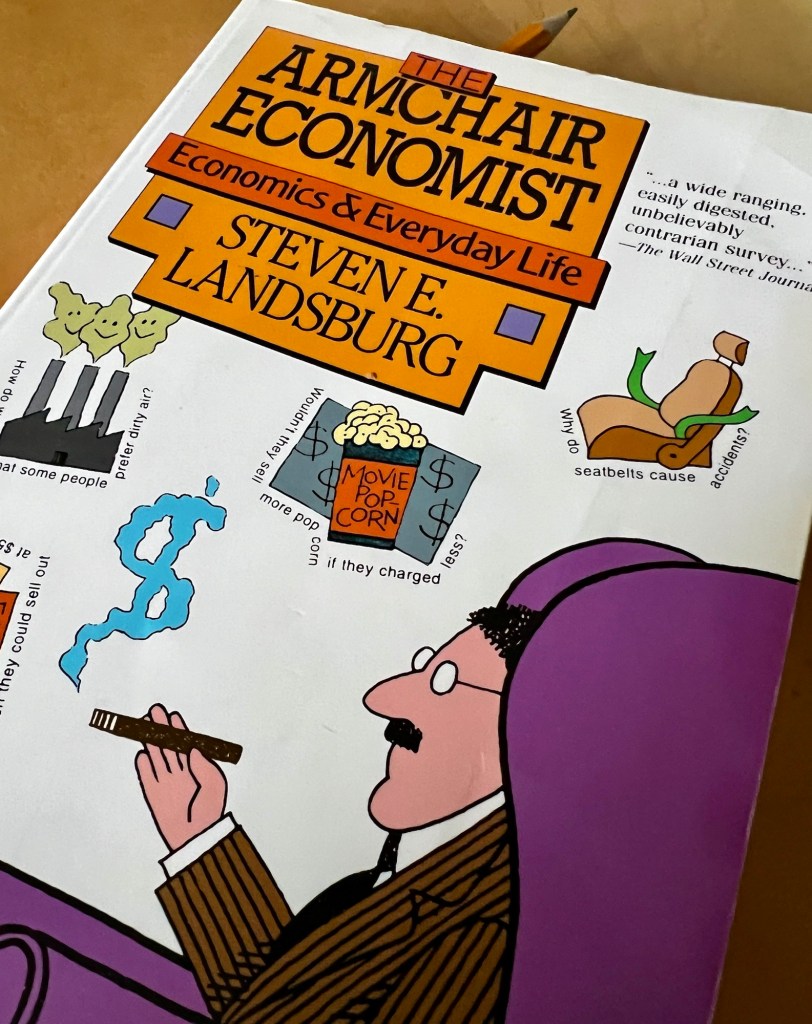





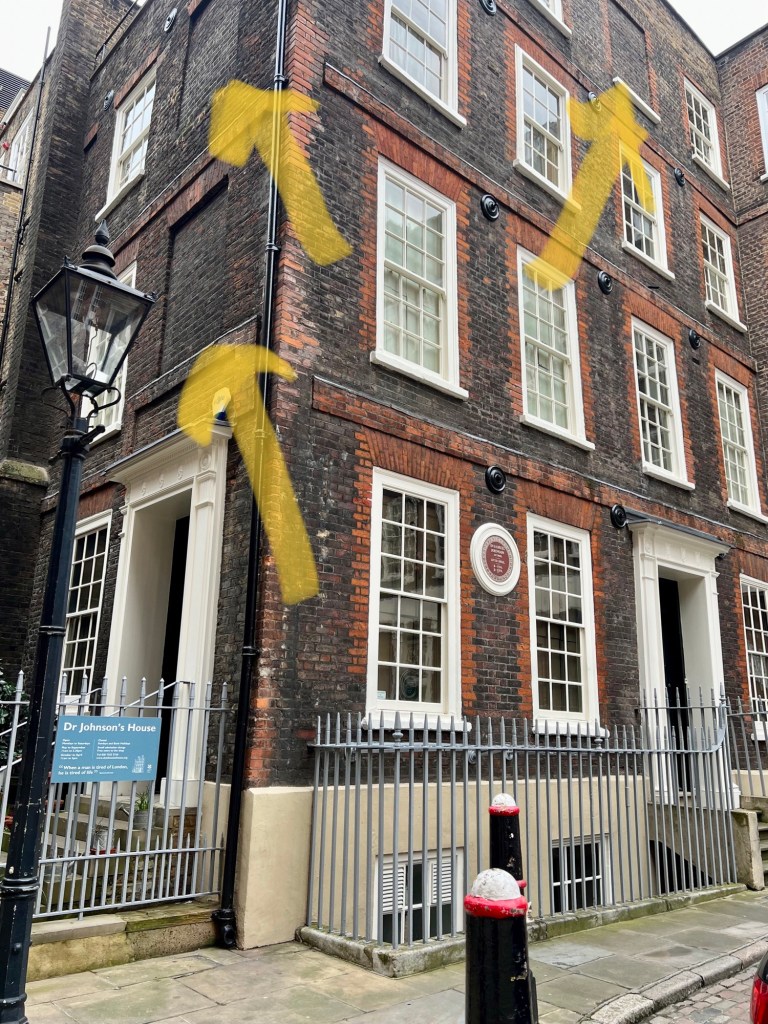



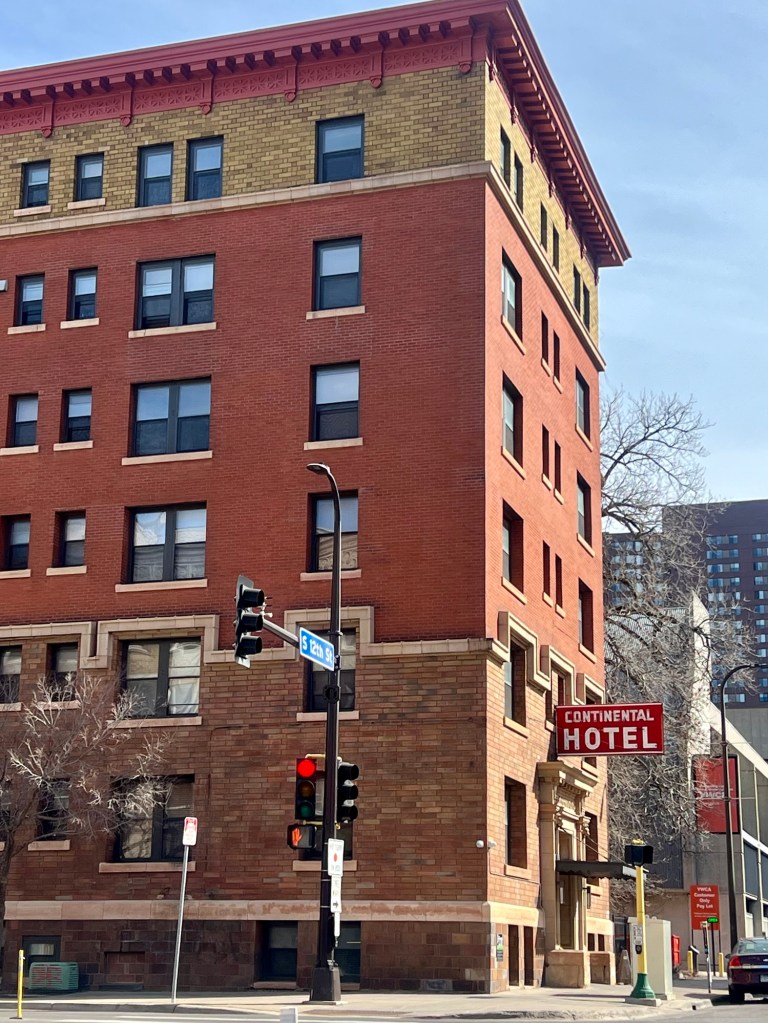

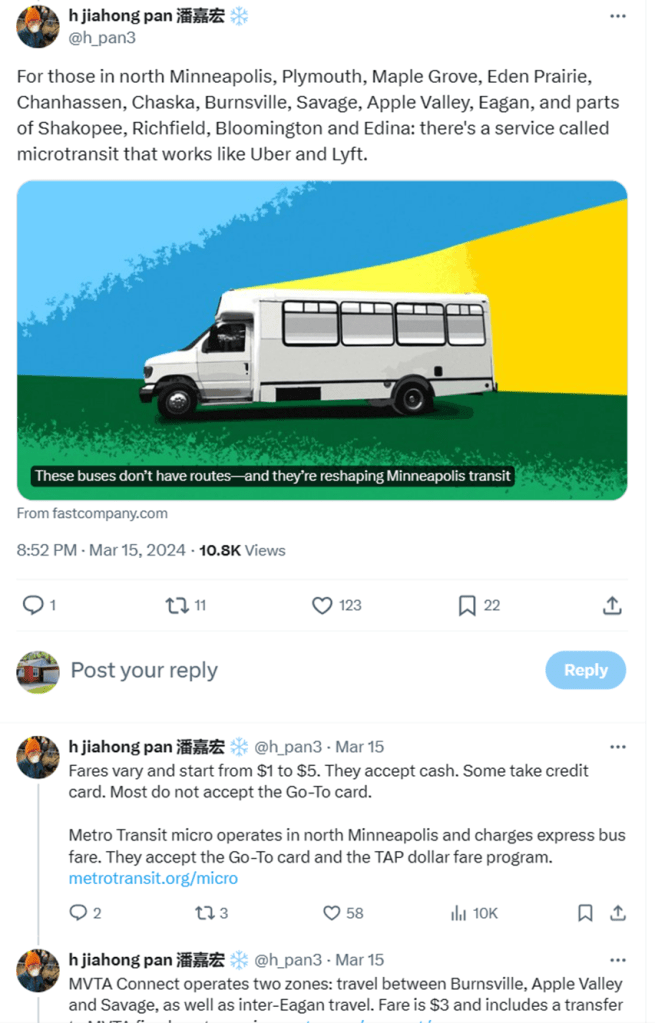


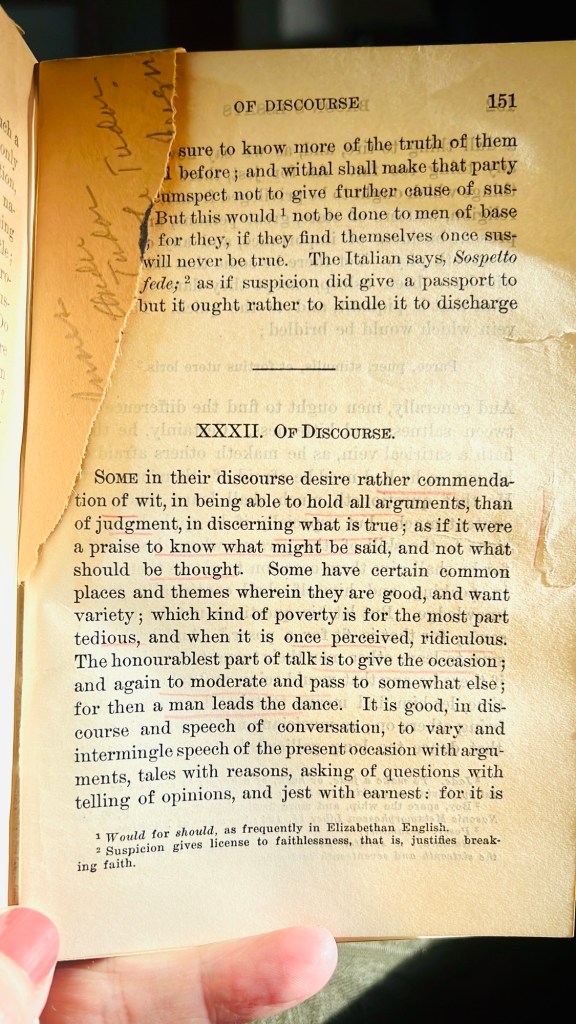



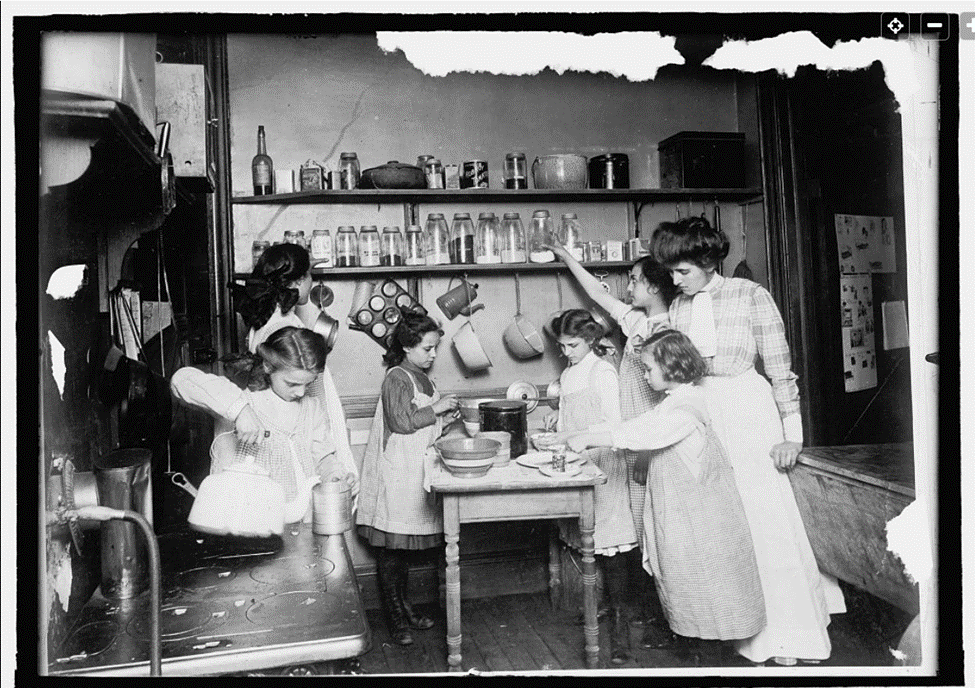
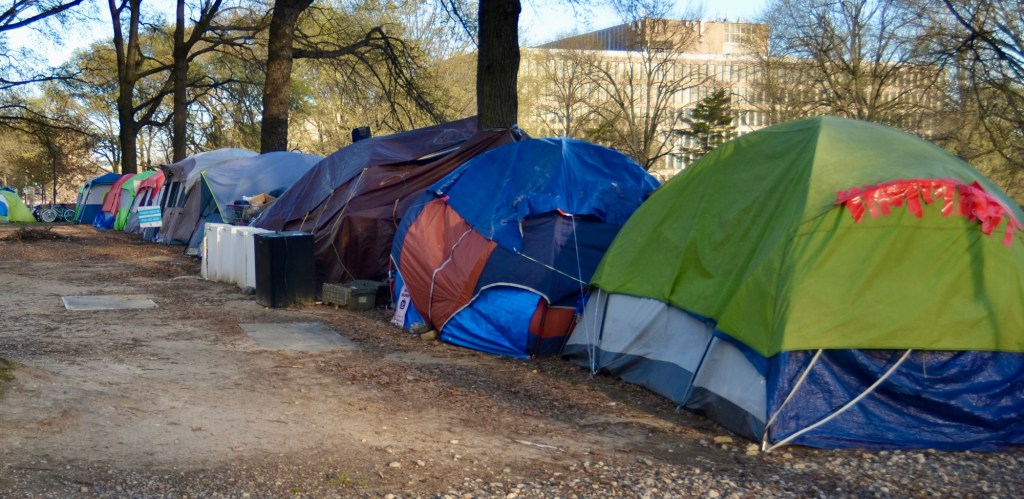










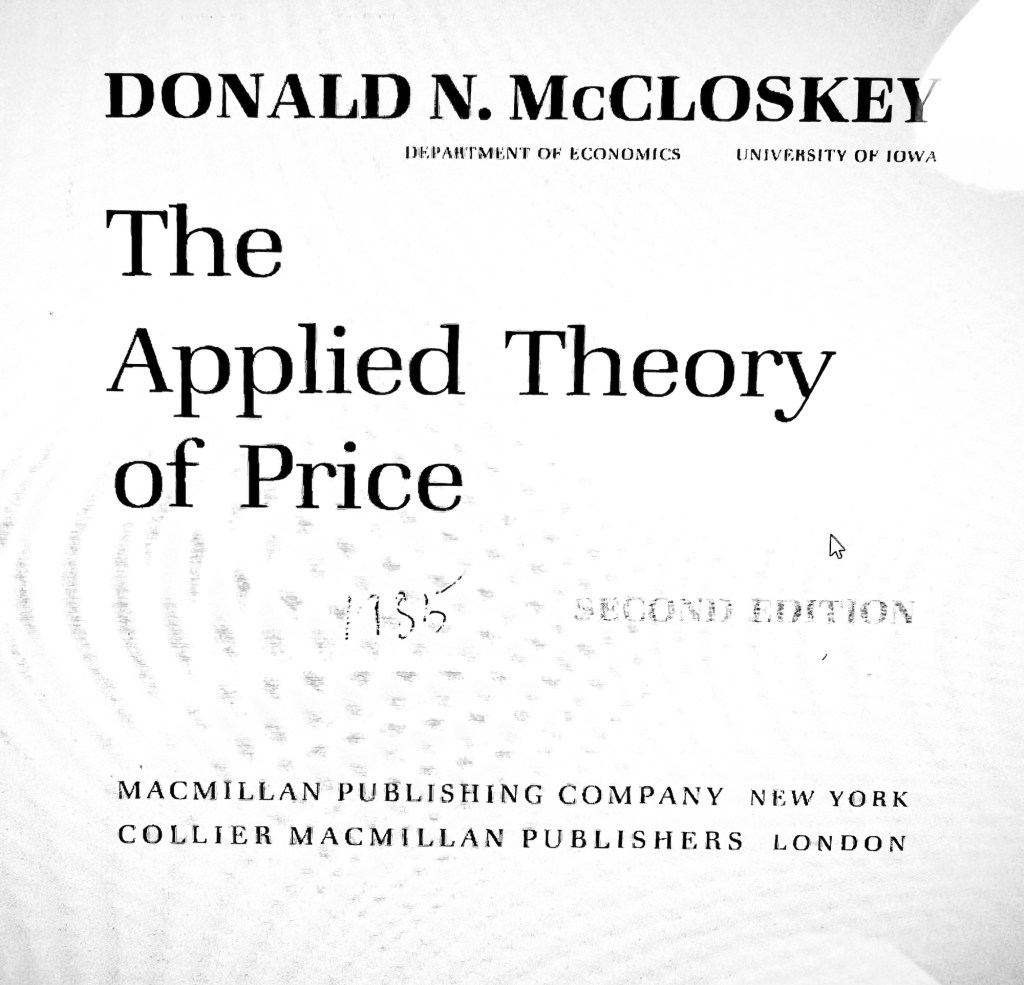
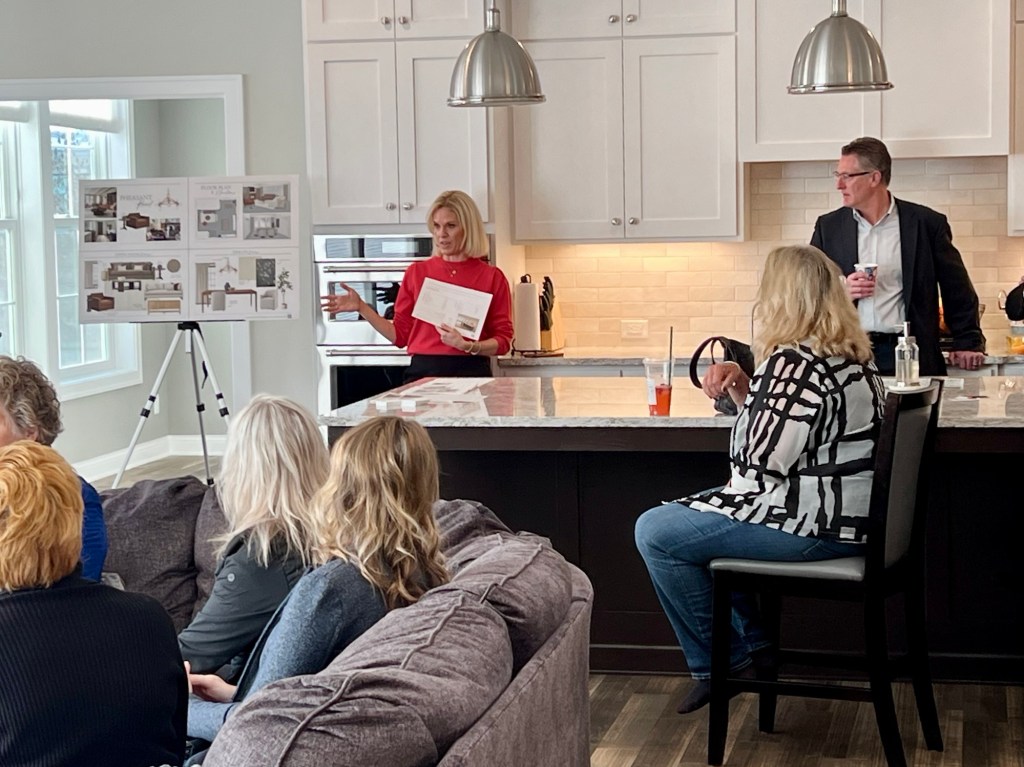






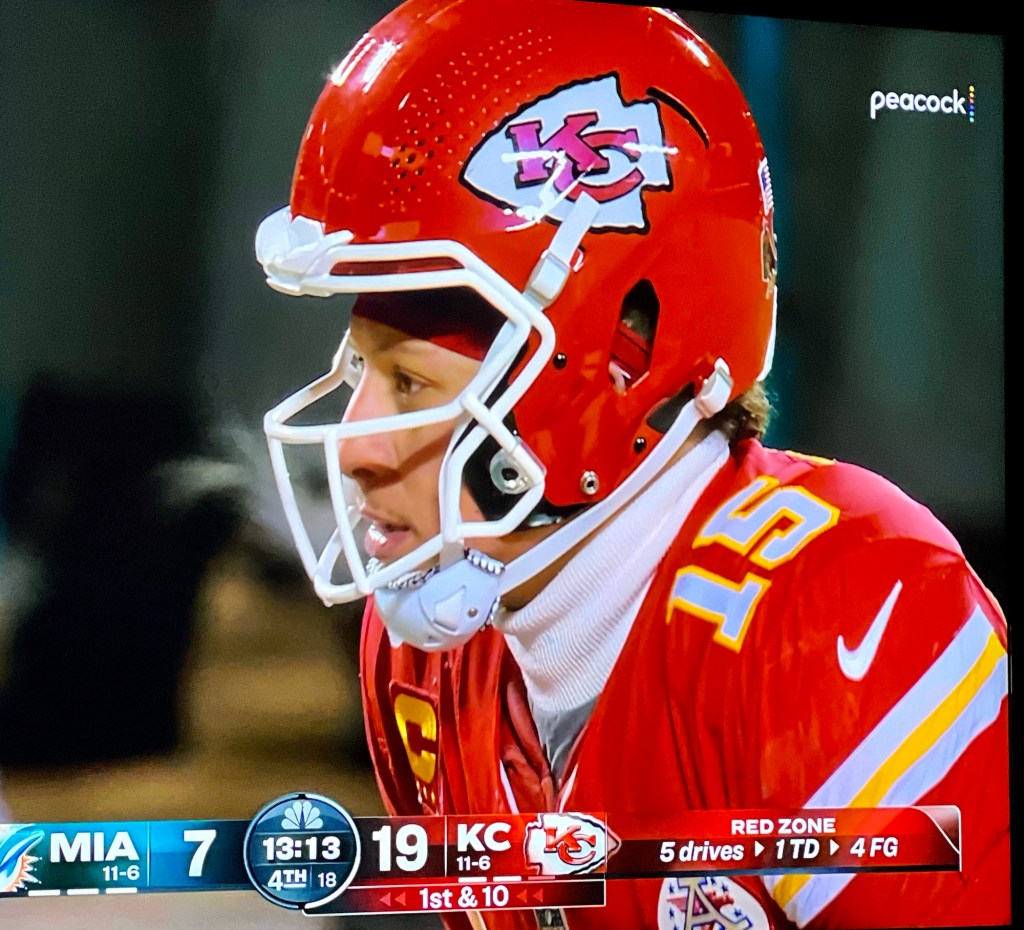









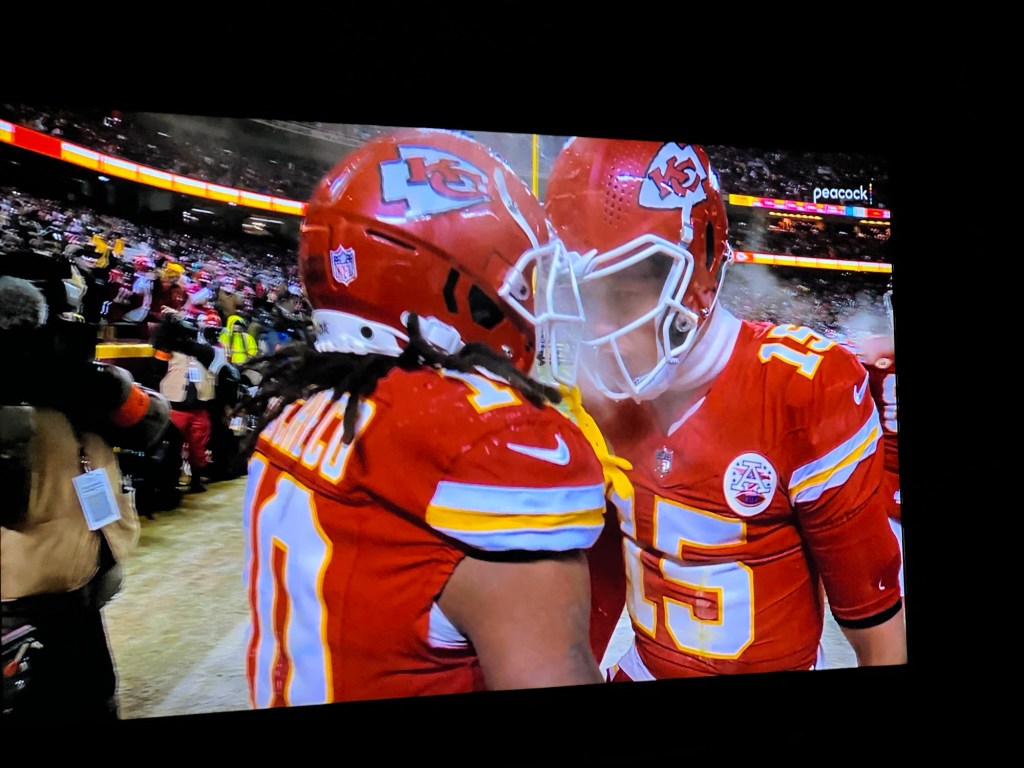


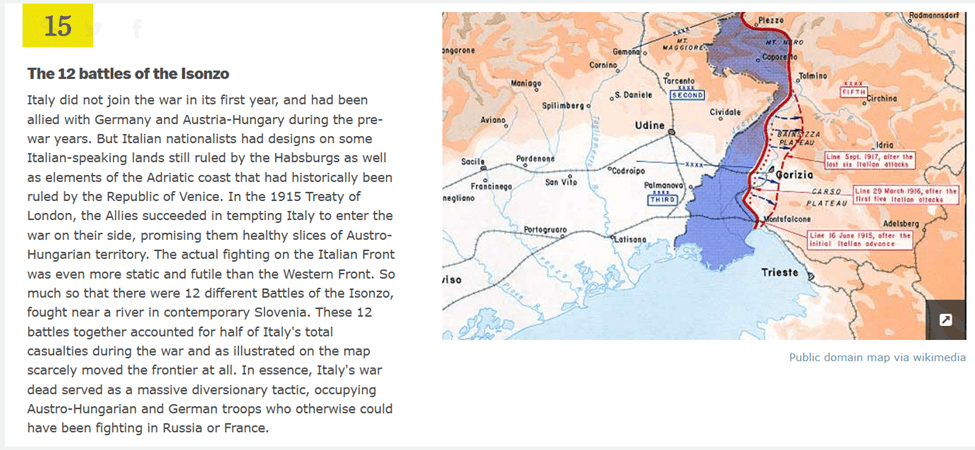

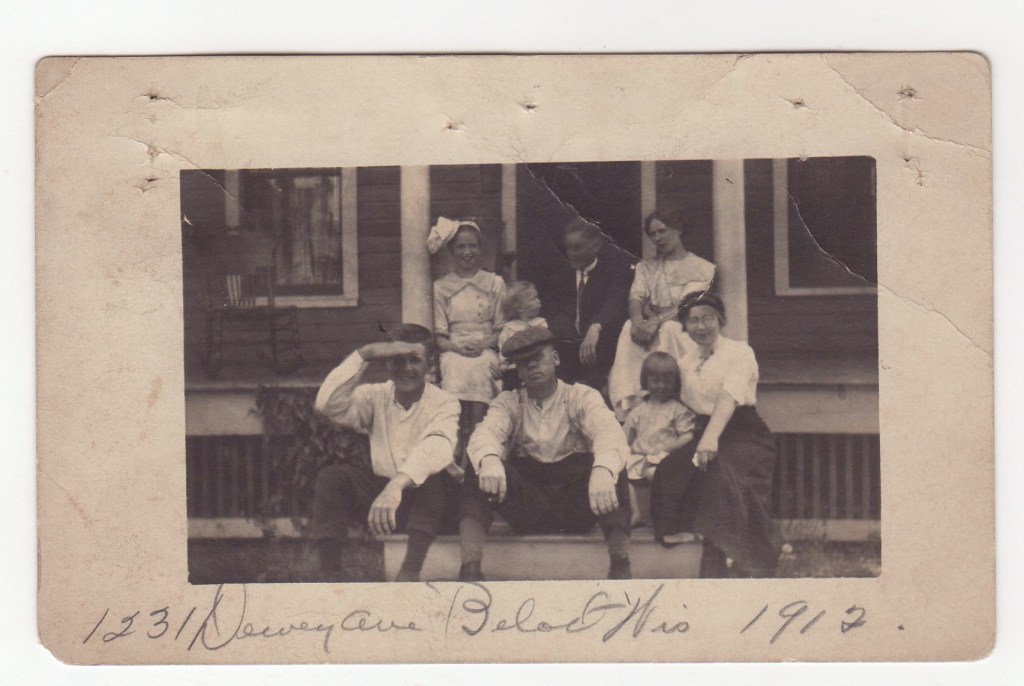



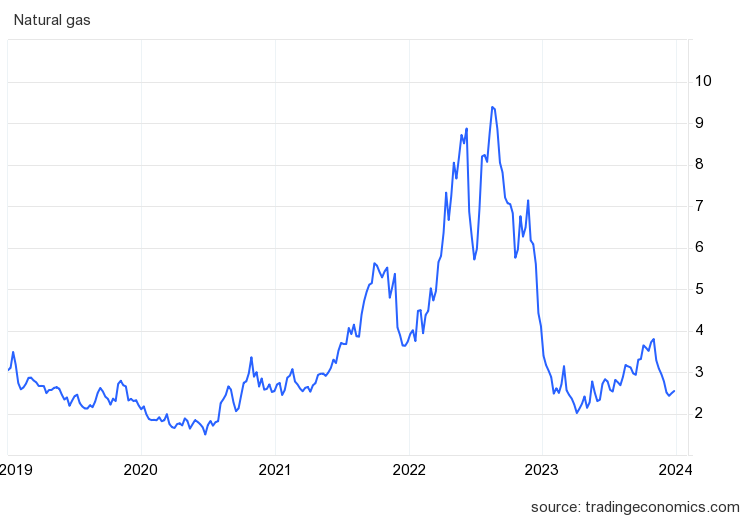




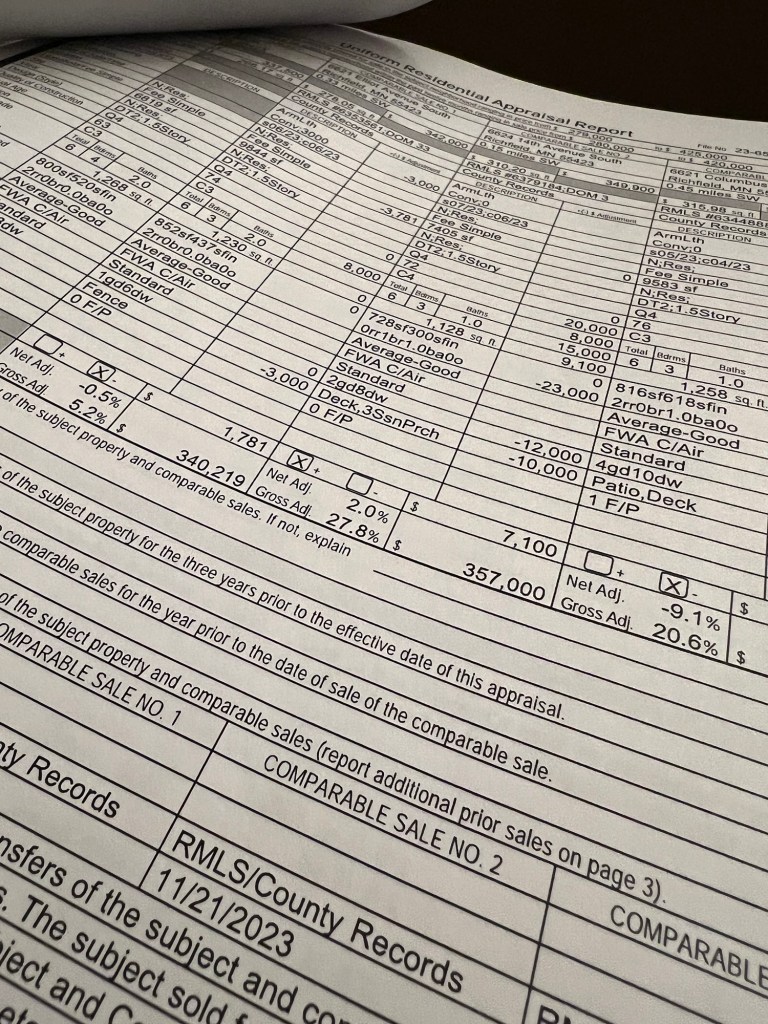




 Home Economics