Is a surge of forward momentum coming? I think so—and here’s why.
For a while now, a significant amount of talent has been effectively “held in place.” A large, established cohort has remained in positions of influence longer than expected—often prioritizing stability over experimentation. The result: slower adoption of new ideas and less momentum in execution.
At the same time, many mid-career professionals—the ones ready to lead—have continued to operate within existing systems. They’ve respected the rules, the hierarchy, and the pace set before them. There’s a real human dimension here: deference, institutional norms, and a reluctance to disrupt the order too aggressively.
But that equilibrium is starting to shift.
Younger generations are less inclined to wait their turn. They challenge assumptions, move faster, and are more willing to bypass traditional gatekeeping. That pressure alone begins to destabilize the status quo.
What’s more interesting, though, is what happens next: the “in-between” cohort—the experienced but previously constrained group—begins to recognize that the systems they’ve upheld are more flexible than they seemed. The same networks, processes, and institutional knowledge that once reinforced hierarchy can now be used to accelerate change.
And once that realization clicks, things can move quickly.
If that happens at scale, we’re not just looking at gradual change—we’re looking at a release of long-constrained capacity. A surge of leadership, execution, and innovation from people who were ready all along.
In other words: a boom driven not by new talent, but by newly unblocked talent.
I was out showing houses quite a number of years ago, and we were in a nice property on the edge of a wetland. In the family room, there was a fairly significant settling crack in the sheetrock along an exterior wall by the fireplace. When we went down to the lower level beneath it, we found a crack stair-stepping down the concrete block foundation as well.
The buyers were taken aback—rather alarmed—and questioned the feasibility of marketing a property with such a flaw. I agreed that this structural defect would rule out many buyers. It’s simply too much risk for the average couple. But I pointed out that in twenty years, if they drive by, the house would still be standing. There’s a buyer for every property. It’s just that different people are open to different situations—we call them preferences.
The shadow of suspicion that had hung over the seller—hinting at possible improper conduct—slowly lifted. The truth is straightforward: You can sell what you have, but you cannot conceal a known flaw or material fact.
In fact, the market functions at its healthiest when everyone openly acknowledges the full spectrum of features—and yes, the flaws too. Buyers okay with a busier road often get compensated with a lower price, a bigger yard, or some other perk. A run-down, dilapidated home becomes a dream for the renovation enthusiast who sees potential where others see problems.
The real poison for any market isn’t the flaws themselves—it’s the presence of obstacles like poor, incomplete, or hidden information.
Ancient Infrastructure and Public Health The ancient city of Rome built one of the world’s earliest large-scale urban water systems. By the 1st century CE, the Roman Empire operated 11 aqueducts delivering hundreds of millions of gallons of water daily to fountains, baths, and households. The system worked because water flowed constantly through public fountains, preventing stagnation—an early recognition that moving water helped keep cities healthier, even before germ theory existed.
The Modern “Water Recycling” City Today, Singapore has one of the most advanced urban water systems in the world. Through a program called NEWater, wastewater is purified using microfiltration, reverse osmosis, and ultraviolet treatment, then reused as drinking water. About 40% of the city-state’s water supply now comes from recycled water, dramatically reducing reliance on imported water.
Cholera and the Birth of Modern Water Policy A cholera outbreak in Hamburg, Germany in 1892 killed over 8,000 people because the city pumped untreated river water into its system. Nearby Altona, which filtered its water from the same river, had far fewer deaths. The episode became a famous demonstration that clean water infrastructure could determine whether epidemics spread or stop.
In the mid-19th century, when Charles Dickens was writing Bleak House, much of London still received water only a few hours a day. Private water companies pumped river water through pipes at scheduled times, and households had to fill rooftop cisterns or barrels while the supply was running.
The problem was that these cisterns often sat open or poorly sealed, allowing dust, insects, and sometimes sewage contamination to enter. Water might then sit stagnant for days before being used. Even homes that technically had “piped water” could end up drinking water that had gone bad.
This practice—called “intermittent supply”—was common across the city and contributed to repeated outbreaks of diseases like Cholera. Reformers later pushed for “constant supply,” where pressurized pipes delivered water continuously, preventing contamination.
If you’ve ever bought a home, then you know how a bundle purchase works. If you like the proximity to the city core, you might only be able to choose a home built before 1940. If you like an expansive backyard, then you might have to move out to the suburbs. If you like a certain school district, you might have to lower your square-footage expectations. That’s how it works. The bundle cannot be unwound and sold off in parts.
If you reverse-engineer this thinking, features in real estate attract particular groups of people. The young artsy crowd can tolerate a little inner-city crime for cheap rent. Those who honor the walking on the Shabbat will outbid those who don’t. Those in the throes of raising children will be attracted to some acceptable combination of safety, schools, and recreation services. Movement among the groups is a sign of institutional strengths or weaknesses.
At different stages of life and circumstance, people will cluster to the services they hold most dear. How buyers navigate the market is an ongoing signal to all the support services they seek.
Pete Boettke recently gave a talk about price theory. I love this bit about underlying variables. Listen 12:38-13:48.
The standard treatment of institutions as “rules of the game” is essentially static — it tells us what constraints are in place, but not why they persist, intensify, or dissolve. A more complete account requires treating shared objectives as the generative core of institutional life, and voluntary time-and-effort allocation as the price signal within the group that tells us how much those objectives are worth to members.
Consider: individuals do not sort into groups randomly, nor purely by material incentive. They sort by objective-fit — the degree to which a group’s collective purpose aligns with what they are trying to accomplish or become. This is praxeological in the strict Misesian sense: every hour volunteered into a church, a guild, a political movement, or a commons-governing body is a revealed preference for the objective-bundle that institution represents. Time is the least manipulable of resources — it cannot be borrowed against or subsidized — so voluntary time allocation is arguably the most honest signal we have of how individuals rank competing institutional commitments.
This has a direct and underappreciated implication for asset pricing. The assets governed by a group — whether land, reputational authority, epistemic legitimacy, or physical infrastructure — do not derive their value solely from their productive characteristics. They derive value from the depth of commitment surrounding them. An estate governed by a thriving, purpose-aligned community commands a premium not merely because it is productive, but because membership in its governing structure confers access to a bundle of shared objectives that individuals have already revealed they value highly. Conversely, when voluntary effort drains out of an institution — when members clock in but stop investing — the asset governed by that institution begins to reprice downward, even before any formal rule change occurs. The legitimacy discount precedes the market discount.
This reframes what Boettke calls the “underlying variables” in an important way. Property rights, norms, and enforcement capacity are not simply given features of the environment. They are continuously reproduced — or eroded — by the flow of voluntary commitment into and out of the objective-bundles we call institutions. The price system sits atop this layer, and price signals in the external market partially reflect the internal vitality of the groups that hold the relevant assets.
The sorting mechanism is therefore bidirectional. Individuals flow toward institutions whose objectives they share and whose shared assets are appreciating in legitimacy-value. As they do, their voluntary effort deepens the institution’s governance capacity, which further stabilizes and potentially raises the value of associated assets. The inverse dynamic — exit, reduced commitment, legitimacy decay — is equally self-reinforcing. This is not merely path dependence in North’s sense; it is a feedback loop between subjective valuation, voluntary action, and institutional asset pricing that operates continuously and below the threshold of formal rule change.
The practical upshot is that you can read the health of an institution — and anticipate repricing of its associated assets — by watching where voluntary effort is flowing, long before markets or formal governance structures register the shift.
Conservatism, Levin has notably said, “understands society not as just individuals and government, but thinks of it in terms of everything that happens in between. That huge space between the individual and the state is where society actually is. And that’s where families are, it’s where communities are, it’s where the market economy is.”[5]
And we like that space between the individual and the government. That’s where all interests Home-Economic reside as well.
The 448th Bombardment Group was organized on 6 April 1943 and activated on 1 May 1943 at Gowen Field, near Boise, Idaho. The initial training of the air crews took place in Florida. The entire group was assembled Wendover Field, Utah. Both air and ground crews completed their training together at Sioux City, Iowa before transferring to England.
The 448th was stationed at Seething in Norfolk, England from Dec 1943 to Jul 1945. The ground crews arrived in Seething by early Dec 1943 while the air crews arrived by 22 Dec 1943.
The B-24 Liberators were part of the Allied bombing campaign against the Axis countries. Their first mission was Gacabruck, Germany. The 448th flew 262 missions through to 25 April 1945. The Group lost 101 aircraft in action flying 6,774 sorties.
The 448th was redeployed to the United States in the late June and early July of 1945.
I heard a story recently about that guy in the neighborhood. The one who tells everyone what to do. The garbage bins can’t be put out to the curb until after dark, unsightly as they are. Lawns are not to be mowed on Sundays– the noise unsettles the sanctity of the day. He had moved up north, they said, now that he was edging in on 90; he needed to be close to his kids. But for a couple of decades, he played sheriff of the neighborhood.
As it turns out, he also picked up some jobs. Like he would shovel out your driveway when the snow blew in on a clipper while you were up north for the weekend. A whole pack of dogs had paraded through his care. When asked, he’d water your urns full of annuals while you went to the Grand Canyon with the kids. So people along that road held back on hasty criticism of his bossy ways. One owner said she still questioned whether she should mow on Sunday even after he had left the neighborhood.
People have inclinations to play certain roles. Many are harmless. Some overstep into infringement territory. But given compensating factors, people find a balance. An acceptance.
It can be an unsuspecting player. Not one of the mighty forefront actors, digging in and refusing to back off. So small are they that they may never be recognized for their role. I say it will be the neighbors.
We’re talking about a very small geography, designated byperhaps a three-quarter-mile radius, taking the brunt of all this hyped-up activity. It must be exhausting. At some point, people say enough. But not out loud. Not where it can be filmed or recorded, but in the anonymity of the group. There will be a small signage. Warnings. Requests for no further contact.
That’s what happened five years ago. Slowly, the baskets of food, goods, and beverages dissipated. There was no fanfare, but small signals in facial expressions or shrugs expressed that the tents in the park had overstayed their allotted time for public use. Upon approaching a classic six-unit brownstone, one might only read the formal Do Not Disturb sign while standing at the entrance.
In the end, people want to live their lives in peace. They wish to be free to go to work, earn a paycheck, and bring it back to share with their families in pursuit of their individual desires. People seek ot balance their freedoms, not relinquish it all to others.
I wonder if Cass would agree: Liberalism is not fundamentally a fixed political ideology or a contingent historical doctrine; it is an enduring aspiration for the human condition itself—one that seeks to cultivate societies where individuals can pursue diverse visions of a good life, free from arbitrary coercion, amid mutual respect, pluralism, and institutions that safeguard dignity and self-governance.
I feel like Sunstein is would say freedom of speech is a necessary condition for liberalism. If man is to get along in society then there is a need for pluralism, for an admission that others, with other ideas, will group together and their choices as a path to freedom are to be respected. Thus, it is necessary to be able to speak freely about differences and similarities in the practical ways when people live side-by-side. In fact one might even say that free speech illicits a competitive pluralism where the investigation of others and a distinction of differences sets up a truth-finding for each.
SUNSTEIN: Low probability (that liberalism is self-defeating). The likelihood is that
1:04
we’ll be undermined by anti-liberal and illiberal forces, not self-undermining. I think it’s fair to
1:11
say or to worry that liberalism doesn’t create the conditions for its own self-perpetuation,
1:18
so it’s not as if it’s self-undermining, but it doesn’t necessarily maintain itself. The reason is
1:24
that a society that is flourishing needs a lot of stuff in it, including norms of cooperation, norms
1:32
of charity, norms of mutual support. Liberalism, in my view, doesn’t undermine those things,
1:39
but other forces can undermine them, and it’s not clear liberalism has the resources to respond
1:45
COWEN: When you say other forces, do you mean hostile foreign powers? Or there’s something illiberal in societies that is not sufficiently driven out by liberalism?
1:53
SUNSTEIN: I think there’s something illiberal in the human heart.
In these first few minutes of this exchange between the irreplaceable Tyler Cowen and famed legal scholar Cass Sunstein, the sketch of timbers supporting liberalism as a way of life is laid out. The structure must be conducive to all the stuff society needs. The boards must be placed in such a way as to allow the rules to expand out while finding a tension so as not to collapse on each other. The builders need resources, in the form of materials and their labor.
But be aware! The biggest detractor may reside in the human need to hide things from ourselves.
Liberalism seems straightforward. Individuals are meant to live their lives freely. They flourish when they can follow their ambitions, or talents, or desires for a quiet life. As long as they do no harm to others, people left to their own devices can lead good lives.
All this is fine and good. But of course, we don’t live alone. We live with others. And it is at the juncture of protecting the desire for the self and the duties to the group that friction seems the most keen.
It’s perfectly acceptable for spouses to assign their liberties to each other. One takes care of pecuniary matters while the other looks after the relational part of the family, which is a common division. But sometimes the first is caught saying, “I own it all,” and the other is planning without a thought for the other. After a decade or two, one forgets what the other does for them. Slowly, without gratitude, all the small tasks enabling the freedoms they cherish are taken for granted.
The public and private often evolve into a crisis of duty.
Children easily take for granted the investments their parents made in their upbringing, especially in the US. It is easy for them to minimize what was done and begrudge them beneficial attention in their later years. Neighborhood dwellers take for granted the civic do-gooders who are responsible for small but useful things like stop signs and play lots. Volunteering to maintain or perpetuate shared services is thought of as optional.
And then, coming at the friction from the other angle, there are the enforcers. Those who wish to make every norm a rule. Instead of contributions made in sync with people’s time and talents, they wish to meter it all out and pass the collection plate with vigilance. The spirit of the exchange is ruined. Instead of thankful for the effort, people are resentful for the absence.
Liberalism maneuvers best along a framework for optimal execution. Liberalism needs a framework to avoid undermining itself from the illiberal tendency residing in most human hearts.
The concept of “orientation table” (plural: “orientation tables”) in economics refers to institutions—formal rules, informal norms, customs, laws, and social structures—that serve as cognitive and interpretive aids for individuals navigating an uncertain world of purposeful human action. These tables provide reference points or frameworks that help actors form expectations, anticipate others’ behaviors, coordinate plans, and attach subjective meanings to their situations, without rigidly determining outcomes.
Coined by Ludwig von Mises, the Austrian economist, the phrase draws from his praxeological framework in works like Human Action (1949), where he describes how individuals require guides for “orientation” in a chaotic reality lacking perfect causality or predictability. Mises emphasized that in an open-ended world, people rely on institutional “tables” to orient their actions, extending ideas from his earlier German writings on the role of social institutions in facilitating rational planning.
Virgil Storr and collaborators like Peter Boettke popularized and refined the English term “orientation tables” in post-2000 Austrian scholarship, particularly in papers such as “Post-Classical Political Economy: Polity, Society and Economy in Weber, Mises and Hayek” (2002). They portray institutions as non-deterministic “orientation tables” that embed economic action within social and political contexts, blending Mises’ methodological individualism with Max Weber’s interpretive sociology (Verstehen) and Friedrich Hayek’s spontaneous order.
For example, private property rights act as an orientation table by signaling legitimate control over resources, enabling entrepreneurs to plan without constant fear of expropriation. Market prices serve similarly, conveying dispersed knowledge to orient production and consumption decisions. Cultural norms, like trust in commercial dealings, provide additional tables in specific societies, explaining why markets function differently across contexts (e.g., bazaars vs. supermarkets).
In post-disaster recovery, community networks and property institutions orient survivors’ rebuilding efforts, fostering resilience. Absent robust tables—as in socialist systems lacking genuine prices—miscoordination and inefficiency arise.
Ultimately, by naming the orientation table under analysis, an observer can proceed with an aligned perspective. Rather than human action being socially embedded, individual action can be simultaneously quantified by group. This brings an understanding of price to complete the circle of individual and institutional value.
This site advances a structural theory of economic organization in which societies are understood as collections of bounded groups that govern shared resources internally while competing externally through privately capturable returns. The central claim is that economic order emerges from a sorting mechanism: individuals and activities are continually reallocated between cooperative group settings and market-like domains based on the relative performance of group-public assets versus private opportunities.
Within this framework, groups are defined not merely by identity or culture, but by rule-governed access to non-divisible or imperfectly divisible assets. Such assets—landed estates, commons, institutional authority, epistemic legitimacy—function as group-public goods: they are accessible to members, governed by internal norms, and resistant to direct pricing. Participation confers benefits that are distributed through social rules rather than markets, creating a publicness that is endogenous to group membership rather than universal.
Outside these groups, individuals engage in domains characterized by alienable, liquid, and privately capturable returns. These domains—markets, trade, professional careers, or platforms—permit competition unconstrained by group obligations and reward individual optimization. The boundary between group and market is therefore not fixed; it is continuously reshaped by changes in relative returns, enforcement capacity, and legitimacy.
The theory’s explanatory power lies in showing how publicness and competition are not opposites, but complementary outcomes of the same sorting process. Internally, groups suppress price signals and individual appropriation in order to stabilize shared assets and reduce coordination costs, consistent with Ostrom’s findings on common-pool resource governance. Externally, groups compete for members, status, and influence through performance, innovation, and access to higher-return opportunities, aligning with North’s account of institutional evolution driven by differential returns and path dependence.
This mechanism also integrates Mises’s praxeological insight that all outcomes originate in individual action. Individuals are not assumed to act altruistically or selfishly in the abstract; rather, they respond to institutionally structured opportunity sets. Actions that appear cooperative within the group—maintenance of shared assets, adherence to norms, acceptance of unequal internal distribution—are rational given the group-public payoff structure. Conversely, actions that appear self-interested outside the group reflect the higher marginal returns and certainty of private capture. The theory thus avoids moralizing distinctions between cooperation and self-interest, treating them as context-dependent expressions of action under differing institutional constraints.
Historically, the theory explains periods of social transition as moments when private returns in external domains outpace the productive or legitimating capacity of group-public assets. Under such conditions, groups become custodial rather than generative: obligations persist while returns stagnate. Individuals increasingly sort into private domains, weakening internal enforcement and prompting pre-commitment maneuvering, ideological rationalization, or reform efforts. This dynamic aligns with classical coordination problems such as Rousseau’s Stag Hunt, while extending them beyond static games into historically embedded institutional change.
By framing economic structure as an evolving ecology of groups and markets linked through a sorting mechanism, this theory bridges literature on institutions, collective action, and market pricing. It accounts for why public goods are often effectively governed at intermediate group scales, why markets excel at allocating marginal resources across groups, and why systemic change is typically gradual, conflictual, and legitimacy-lagged rather than abrupt or purely efficiency-driven.
In sum, the proposed framework offers a unified explanation for how societies organize cooperation internally while sustaining competition externally, and how shifts in resource productivity drive the continual reconfiguration of social commitments and economic structures.
The Stag Hunt, explained as a shifting public–private balance
Imagine a small group of hunters living at the edge of a forest. Together, they can hunt a stag. A stag is large: it feeds everyone for days. But it can only be taken if all hunters cooperate, hold their positions, and act in coordination. The stag, once caught, is a group-public asset: no one hunter can claim it alone, and everyone benefits.
Individually, however, each hunter can hunt a hare. A hare is small, but it can be caught alone, quickly, and with certainty. The hare is a private asset: the hunter who catches it keeps it.
At first, cooperation dominates. The group trusts itself, norms are strong, and everyone expects the others to stay. Hunting the stag makes sense.
But conditions begin to change. Perhaps the forest becomes less predictable. Perhaps hunger becomes more acute. Or perhaps some hunters discover they are particularly good at catching hares. The private return to individual action rises, while the reliability of collective action weakens.
Now the calculation shifts. Any single hunter who abandons the stag hunt early can secure a hare for himself. If even one hunter defects, the stag escapes and the group gets nothing. As more hunters privately consider this possibility, the group-public asset becomes fragile. Trust erodes not because cooperation is irrational, but because its success depends on others remaining committed.
Eventually, everyone hunts hares. The group survives, but on less than it could have had. The stag hunt fails not because hunters become selfish in character, but because the balance between public and private returns has shifted.
Rousseau introduced the Stag Hunt in 1755, in Discourse on Inequality, as a way to illustrate how early cooperation collapses when private, individually secure options undercut fragile collective commitments. The Stag Hunt shows how cooperative systems fail not through greed, but through the gradual rise of privately secure alternatives that undercut shared commitment.
My experience is that mostly hunters group up. Partly because they share a similar interest. Partly for the camaraderie. But also because they share the work of baiting, setting up, tracking, and processing.
Ultimately, it is the local community that determines which options are the most suitable and which are less desirable. Which have fallen so out of favor that the structures are abandoned completely. And which ones promise a reward for rehabbing.
Real estate is local. National figures provide sparse details.
The theory proposed here, at home economics, is that there’s a nature to how people act to improve their lives. For lack of better names, activities occur in spheres with public-facing tendancies or private ones. When people operate for the group, they give to improve for an affiliated public endeavor, whereas the private sphere engages privately held resources to grow and gain.
I think this framing helps to explain the suggested paradox described in this Free Press article about a Chicago Trump supporter coming to the aid of Venezuelan migrants.
Aleah Arundale voted for Donald Trump, supports his decision to close the border, and may as well have introduced herself by singing “The Star-Spangled Banner” when we met at her front door in Chicago last month. She was wearing a white sweatshirt with “USA” plastered on the front, a sequined American flag skirt, heart-shaped red glasses, and bedazzled red and white sneakers.
She also has spent the last three years helping Venezuelan immigrants. It began when buses from Texas started dropping off people at a street corner near where Arundale’s daughter went to dance class, as part of Governor Greg Abbott’s expulsion of thousands of immigrants to sanctuary cities across the country.
When Aleah makes decisions as a Chicago resident, her choices are weighed out within that context. Her group interests lie primarily on her block or down the street. She can be pro-Trump and anti-everyone-else-outside-our-boundaries. This keeps her public dollars and work weighted to the local food shelf, her elderly parents’ care, or a literacy program at the public library. Any outside force taking resources away from these microtransactions is a competitor.
But then the immigrants are dropped off by the busloads, on the corner where kids get picked up by the school bus. They’ve switched groups. No longer are they an impersonal one of many in a faraway place; they’ve breached the group. They now rate as the most in need within this new framing. And thus, the mechanisms that drive the force for the good of the group are energized. Aleah gives the plight of the Venezuelians in some rank or fashion amongst her other commitments.
There are two things to see here. First– the framing of the group and thus its acknowledgement. Second, the lever for activating time, energy, and resources differs from the private sphere. Yet this all transpires through a juggle of tradeoffs trapped in a world of constraints.
The comparison of home prices to buyers’ incomes is a popular measure for assessing the health of the real estate market. Presently, that multiple seems high, and people are using it to cry, crisis! But is this true?
Amy Nixon posts on Twitter (now known as X):
All of economics is supply and demand.
The median household to median income argument makes sense only in an economy where we have built enough housing units per capita, and every housing unit is being allocated as a family shelter unit because it serves no other economic utility
The model breaks down when you have wealthy families buying 3-4 spare vacation homes. And mom and pop landlords hanging onto starter homes when they upsize. And institutions buying millions of single family homes. And single people living alone in two units instead of coupling to buy one unit. And foreign citizens buying homes. And people buying and using 2 million single family homes as hotels (Airbnbs)
So long as single family residential housing is viewed as and can be used as an investment or luxury item beyond owner-occupied shelter and we don’t build enough homes to offset all those other uses, the ratio pictured in the infographic below can (and will) go even higher over time
It’s not 1985. And it’s never going to be 1985 again.
What Amy says is that there is a mix of home-ownership types. If you are analyzing Lake Country, with many second homes, there will be a different price-to-income figure than if you consider a first-tier suburb built almost exclusively of starter homes. I like to call them platters. It’s the local eco-systems of properties that have interesting numbers. Averaging just smudges out all the details.
I’ll also note the shift in demographic mix. The number of first-time buyers is at an all-time low. From NAR:
WASHINGTON (November 4, 2025) – The share of first-time home buyers dropped to a record low of 21%, while the typical age of first-time buyers climbed to an all-time high of 40 years, according to the National Association of REALTORS®’ 2025 Profile of Home Buyers and Sellers. This annual survey of recent home buyers and sellers covers transactions between July 2024 and June 2025 and offers industry professionals, consumers, and policymakers detailed insights into homebuying and selling behavior.
Repeat buyers enter the market with equity. They do not need to take on as much debt relative to their income as first-time buyers do. Yet the sales price is the measure from which payment is extrapolated, not the actual payment. As a market rises, so does the equity, pushing this fictitious measure of debt load out of whack with reality.
The phrase “the mainspring of the story” is a metaphorical expression that refers to the central driving force or primary motivation that propels the narrative forward. Just as a mainspring in a mechanical watch provides the energy to keep it running, the mainspring of a story is the core element that gives it momentum, purpose, and cohesion.
In life, there are often several intermingled motivations pulsing through the engine for action. But usually there is a mainspring– one impulse pulling in the lead. You would skip going to the grocery except for the turkey for Thanksgiving. And since you are there, another couple of dozen food items also end up on the metal grid at the bottom of the cart. The supermarkets have gotten wise to such things and tempt shoppers into their aisles by advertising the big bird at 77 cents a pound.
Sometimes the mainspring is a different type of impulse. Instead of competing for the lowest price, this mainspring is about giving to the most significant number. A mainspring may drive a young guy to work as a manager at a supersized grocery for a quarter century. But then things change. And the same individual, with the same set of skills, might be driven to help others by working as the manager of a food shelf.
Sometimes people hide their mainspring. They don’t want to be judged by the we they find themselves amongst. Sometimes this subversion is enacted through substitution —no, I’m not buying it for prestige; I’m buying it to make my wife happy. Ok. Right.
Some mainsprings are treacherous. Fear, for instance. Fear as a mainspring can drive all sorts of damaging or wasteful actions. Fear of running out of food means you bring home too much, and it spoils. Fear of buying too much means you can’t quite complete your menu and are always falling short of a satisfying meal. And of course, fear instigated by others is ultimately responsible for some type of corruption in the system.
When trying to put a model around our messy world, first find the locus of action. Who exactly is the source of the analysis? Then find their mainspring, whether hidden or out in plain sight for all to see. Otherwise, you are just another jammerer floating all sorts of ‘we’s’ that bob on the waves of idle conversation with no direction at all.
The biggest losers of rent control are the young, the mobile, the ambitious, immigrants, and people without a lot of cash. If you want to move from Fresno to take a job in San Francisco and move up, and you don’t have millions lying around to buy, you need rentals. Rent control means they are not available. Income inequality, opportunity, equity, all get worse.
In this paragraph, John Cochrane begins to draw lines around groups of people who will lose out under a rent-control, a policy that favors those who have established leases with landlords.
The reader can quickly imagine a young person being squeezed out of houisng by the combination of entry-level pay and bulked-up rent. The surcharge is necessary to balance out the rent-controled units. That’s the persona that comes to mind and it is the one the author intends to convey. But wait. What about the just-out-of-school coders and engineers that are swooped up by the tech companies?
These kids are paid a lot money. They are can choose where to live without much concern as, most often, they have no other attachments. They all live together in some big tech hub, often times leaving their childhood communties behind. They no longer have other points of reference like a brother who took up plumbing, or grandparents on fixed income. Not only do the have the cash flow to spend they are not being reminded that others do not.
One descriptor is not enough to form a group. To say the population of Minnesota has remained constant is light on details. Susan Bower, the state demographer, explains some of the demographic breaks down in Eden Prairie, a SW suburb of the Twin Cities. At the presentation she notes the the state loses 5,000-10,000 people a year but it is made up through international immigration. In other words, the people who leave have no concerns regarding rent control are replaced by a group who are disadvantaged by rent control.
To be efficient, matching people in consideration of their stage in life with their housing needs is best. Policies which keep people in place or discourages them from moving up, moving closer to employment, moving to a stronger school district, moving closer to support systems and so on are detrimental.
The Grumpy Economist has another great post, this time about rent control. For those of us in real estate, it’s an irritating topic. The errors in the use of price controls are numerous. Using John Cochrane’s article as a road map might be interesting to illustrate this point. Let’s start with this paragraph.
Sure, “sharply rising rents and utility bills wreak havoc on family budgets,” if the families don’t follow the screaming market signal to move. (Which is not painless, for sure. Incentives never are.) But the money comes from somewhere. Rent controls and energy price caps wreak havoc on landlord end electric utility budgets. The money must come from somewhere.
The claim is that rents are rising sharply. The reader pictures a Scrooge-like figure pounding on the door of a cowering family of four, announcing a ‘sharp’ rent increase (extra dollar symbols for emphasis), while behind this embodiment of the typical landlord stands an eviction notice ready to be served. I’d love to see numbers to this effect. I challenge that the ‘sharp’ rent increases are occurring at lease renewals.
Large corporate landlords might have a set policy of annual increases, but they account for only 3-4% of proprietors. Landlords must juggle the cost-benefit of increasing rent. As 80% own and manage the units, they calculate the costs, time, and uncertainty of a new tenant. This is weighed against a 3% increase on $1,100 or $33/mo in additional income. Needless to say, many landlords will forego a rent increase to keep a good tenant.
These subtleties are lost in real estate analysis, where all the numbers are averaged as if there were one typical renter, one typical landlord, and one typical property. This couldn’t be further from the truth. There are whole economies of renter groups. There are students who will have negative income before they join the workforce; there are singles with high-fluting jobs and no other responsibilities; there are single parents; there are couples with kids in a city just for a bit; there are elderly on fixed income with low mobility; there are recently divorcees looking for a glamorous downtown lifestyle.
Are all these groups to receive the same treatment? The same concern for their monthly budgets?Rent controls are initiated at the city level. Every group of renters would receive the benefit of a market-restrained obligation. Is that the intention?
Landlords are also assumed to be a certain type. The persona has tremendous equity in their property, no debt, and other cash they are stashing like squirrels do with acorns in the fall. And certainly some landlords fit this description. But more likely than not, the landlord has a mortgage and obligations against their time. The new entrants to the field, those trying to get ahead by getting a foothold in real estate, are undoubtedly the ones who need to make the cash flow.
When property taxes, utilities, or the cost of hiring labor rise, a landlord has no way to respond until a lease comes up for renewal. Rent control tightens this squeeze, leaving property owners caught between increasing public demands funded through taxation and their limited ability to recover those costs through rent. The first to be pushed out are often the newcomers—the small, aspiring owners who bring fresh energy and ambition to the market, but lack the cushion to absorb sustained losses.
Lesson number one. Averaging is a mistake. Assuming there is only one type of each actor in this economic trade of money for lodging makes for an impossible conversation.
More than 20 hikers needed to be rescued from the flanks of Mount Washington in New Hampshire after wintry conditions swept across the famed peak on Saturday, October 25.
…..
“Multiple people have arrived at the summit the last few days very unprepared for winter and required assistance. Be ‘wildly Responsible’ and please do some research on current higher summits weather and bring everything needed to hike in winter conditions or just hike another day,” writes the New Hampshire State Park on Facebook.
Personal responsibility in this case means personal repayment.
The New Hampshire fines stem from a piece of legislation called RSA 206:26-bb, which states that “any person determined by the department to have acted negligently in requiring a search and rescue response by the department shall be liable to the department for the reasonable cost of the department’s expenses for such search and rescue response.”
There continue to be mobile home parks across the metro offering one of the most affordable form of housing. The structure is considered a vehicle and licensed as such. The home is anchored on a lot in a mobile home park and rent is due every month in a similar fashion to association dues. People like to talk about tiny homes now. Still, manufactured homes can be reasonably constructed in a factory and meet the same quality and amenities as RV’s, another acceptable form of shelter.
:Here are some current listings and recent sales:
Few mobile home parks rise to the level of civic engagement that can be seen in Landfall Terrace, a community on the eastern side of the metro. As with many good things it starts with its history.
James and Mitzi Olson used to own all of the land in Landfall. They moved here in 1953 into a cottage that was hardly better than a log cabin. …The Olsons had lived in a mobile home during World War ll and knew that there was a shortage of affordable housing, so they developed their site into a mobile home park. As it was on the early highway between St. Paul and Hudson, Landfall developed several businesses, including a truck stop, restaurant and nursery, most of which left when Interstate 94 was put through and access became limited.
Often successful things are born out of a basic need of local people. But it is only through nurturing and ongoing maintenance that group projects survive. Especially one a s successful as this.
Landfall is a city in Washington County, Minnesota, United States. The population was 843 at the 2020 census and it is the smallest community in Washington County in terms of area. It lies on the eastern shore of Tanner’s Lake on Interstate 94.
Landfall is an incorporation of a manufactured home community, contributing to its reputation as the most affordable community in the Twin Cities. In 2008 & 2010, the city was named one of the 100 best communities for young people by America’s Promise.
Landfall is one of only two incorporated cities in America that consist primarily of manufactured housing.
From a newly minted Nobel prize winner, Joel Mokyr.
Slowly, and perhaps not always quite perfectly, British formal institutions adapted. But the same was true for private-order institutions: the rather sudden rise of country banks in the second half of the 18th century illustrates the high degree of adaptiveness of private-order British institutions; they were not coordinated or supervised by some central authority, and no political revolution was necessary to bring them into existence. Yet once the circumstances were suitable and opportunities arose, these banks emerged almost ab nihilo. They replaced the informal activities of local merchants, notaries, and attorneys who had previously intermediated in credit transactions.
This natural and spontaneous progression of credit extension brought real estate ownership to the greater populace.
It’s puzzling to me why children are not more popular. It’s puzzling why there are not more reports on all the benefits they bring. It’s only the up front investment people want to hold out as a drawback with short term myopia.
The grain elevator was the most ubiquitous commercial building in Minnesota’s small and medium towns during the mid to late 1800s.
In most towns in western Minnesota, grain elevators were the dominant feature of the skyline 1837 Treaty | Minnesota DNR. As railroads expanded westward in the 1870s-1880s, grain elevators sprang up along every railroad line to store wheat and other grains before shipping them to Minneapolis and beyond.
This makes perfect sense given Minnesota’s economy at the time. Wheat farming dominated the landscape, and Red Wing held the title as the world’s largest primary wheat market in 1873, exporting 1.8 million bushels valued at more than two million dollars United States v. Sioux Nation of Indians – Wikipedia. Every town with railroad access needed a grain elevator to collect, store, and load farmers’ harvests onto railcars.
Typically, small services would pop up alongside the tall wooden structures. Or an eating and drinking establishment. Sometimes a church was erected down the road a bit. And for decades, the railroad infrastructure supported a node of activity in remote rural areas.
A shift occurred once the interstate system was established in the 1950s. Rail is still most beneficial for long hauls, whereas trucks carry the grain for shorter distances, typically under one hundred miles. With fewer stops, the isolated wooden elevators fell into disrepair. Often they fell for the useful purpose of serving as a training exercise for local firefighters.
The purpose of this short vignette is to show how land uses are tied intimately with public infrastructure. And these types of projects are engaged over long time frames. A slow natural progression of the property from peak usefulness to decline can be led by aging owners, people who can view themselves in a steady state for another decade or more. The insight for the outside observer to understand where in the process a parcel finds itself. And then to implement policy in relation to the receptive impulses of that moment.
We often think of markets as the ultimate expression of individual freedom—buy what you want, sell what you have, let prices sort everything out. But look closer at some of the most important markets in our economy, and you’ll notice something curious: they don’t work that way at all.
Take spectrum auctions. When the government sells radio frequencies, they don’t just post a “For Sale” sign and take the highest bidder. Instead, they craft elaborate auction mechanisms with complex bidding rules, eligibility requirements, and payment structures. Why? Because the goal isn’t just to make a sale—it’s to maximize revenue for taxpayers and ensure efficient allocation of a scarce public resource.
Or consider medical residency matching. Before the current system, medical students and hospitals engaged in an increasingly frantic and early scramble for positions that left everyone worse off. Now, students submit ranked preference lists, hospitals do the same, and an algorithm produces matches that no student-hospital pair would want to trade away from. Individual students might not get their first choice, but the system as a whole works better for everyone.
These aren’t broken markets that need fixing—they’re markets deliberately designed to serve collective goals while still respecting individual preferences. And they represent a fascinating middle ground.
The Pattern Emerges
Look across the landscape of market design and you’ll see the same pattern everywhere:
Electricity markets must ensure grid reliability and efficient dispatch while still letting generators and consumers pursue profit and savings. Emissions trading systems must hit environmental targets while allowing companies to minimize their compliance costs. Kidney exchange networks must save as many lives as possible while respecting individual donor and recipient preferences.
In each case, there’s a collective goal that matters—revenue maximization, system stability, environmental protection, saving lives—but also individual participants who won’t play unless they can pursue their own interests.
The Design Challenge
This creates a fascinating design challenge. How do you interpret a market that serves group goals while still harnessing individual incentives? The answer lies in the mechanisms that align private interests with public purposes.
Traditional markets work through the “invisible hand”—individual optimization magically leads to collective benefit. But in these designed markets, there’s a very visible hand carefully crafting the rules to ensure that what’s good for individuals adds up to what’s good for the group. The group is the primary competitive player.
A New Taxonomy
Perhaps we need to think about markets along a spectrum. On one end are pure private optimization markets—commodity exchanges, stock markets, your local farmer’s market. Here, individual pursuit of profit and value drives everything, and collective benefit emerges as a byproduct.
On the other end are what we might call “group-goal-constrained markets”—auctions, matching systems, environmental markets. Here, collective objectives take priority in the design, but individual incentives are carefully preserved and channeled toward those broader goals.
This isn’t about eliminating private goals or replacing markets with central planning. It’s about designing institutions that make private and public interests align. The medical student still wants a good residency. The electricity generator still wants profit. The polluting company still wants to minimize costs. But the market structure ensures these individual pursuits nod up to group purposes.
The Future of Markets
As our economy becomes more complex and interconnected, we increasingly need markets that can serve collective purposes while still harnessing individual incentives. Climate change, healthcare allocation, urban planning, financial stability—these challenges require coordination at a scale.
Market design offers a path forward: not the heavy hand of government control. We’re learning to interpret markets that work for everyone precisely because they’re designed to balance what individuals want with what society needs.
The invisible hand was never really invisible—it was just poorly understood. Now we’re learning to make it work more deliberately, and that might be exactly what our complex world requires.
In the context of car insurance pricing, a territory is a geographic area defined by insurers to group locations with similar risk profiles for setting premiums. Territories are typically defined using the following methods and delineators:
1. ZIP Codes: The most common delineator, as ZIP codes provide a standardized way to segment areas based on localized risk factors like accident rates, crime statistics, and claim frequency. Insurers may use individual ZIP codes or aggregate them into larger territories. [2][16][19]
2. Custom Territories: Insurers may create their own territories by combining ZIP codes, counties, cities, or townships into broader zones. These are designed to reflect similar loss experiences, traffic patterns, or demographic characteristics. For example, multiple adjacent ZIP codes with comparable risk may be grouped into one territory. [11][13][14]
3. Census Block Groups: For more granular analysis, some insurers use census block groups (small areas with 600-2,000 people) to define territories. These allow for precise risk assessment in densely populated or diverse areas. [16][19]
4. State-Regulated Territories: Some states impose rules on how territories are defined. For instance, Connecticut uses 18 predefined territories, while California requires territories to be at least 20 square miles and prohibits single-ZIP code territories to ensure fairness and avoid overly specific pricing. [13][14]
5. Geocoding: Insurers use geocoding tools to map a vehicle’s primary garaging address (where it’s parked most often) to precise coordinates, ensuring accurate assignment to a territory. This helps account for variations within larger geographic units. [18]
Territories are defined based on data like accident frequency, vehicle theft rates, vandalism, weather risks, traffic density, and claims history, which help insurers assess the likelihood and cost of claims in a given area. The boundaries are set to balance statistical homogeneity with practical considerations like regulatory compliance and administrative simplicity.
“The whole plan of our order should be founded on the training of men of character and virtue, bound together by unity of conviction and aim,— the aim of suppressing vice and folly everywhere by every means, and protecting talent and virtue, raising deserving persons out of the dust and enrolling them in our brotherhood….”
The narrative of a housing affordability crisis in Minnesota deserves scrutiny when examined against the actual data. The numbers tell a remarkably different story than the one often presented in policy discussions and media coverage.
The fundamental reality is this: 99.82% of Minnesotans are housed. With approximately 5.7 million residents and only 10,522 experiencing homelessness according to the most recent Minnesota Homeless Study, the state has achieved what many would consider a housing success story. This isn’t a marginal victory—it represents one of the most successful housing outcomes in the nation.
Supply Meeting Demand
Perhaps even more telling is the relationship between housing supply and population growth. Over the past five years, Minnesota’s housing stock increased by 3.87% while the adult population grew by 3.90%. This near-perfect alignment suggests that new construction is effectively matching new resident demand—a fundamental indicator that the housing market is functioning properly.
This supply-demand balance contradicts claims of a systemic housing shortage. When housing supply keeps pace with population growth, market forces should theoretically maintain relative affordability absent other significant economic disruptions.
The Missing Financial Stress Evidence
Claims of widespread housing-related financial distress should be accompanied by clear indicators of economic strain. Yet when we examine Minnesota’s financial stress metrics, the evidence doesn’t support a crisis narrative:
Credit Card Debt: While Minnesota residents carry an average of $6,800 in credit card debt, this represents a manageable burden for most households. Only 6.65% of Minnesotans are behind on credit card payments—a figure that, while not negligible, hardly suggests widespread financial collapse.
Payday Loans Eliminated: Rather than seeing increased desperation borrowing, Minnesota has essentially eliminated its payday loan industry through regulatory action. The state capped interest rates at 36% APR in 2024, driving out predatory lenders who previously charged an average of 202% annually. Payday America, which handled two-thirds of the state’s payday loan volume, simply stopped operating in Minnesota. If financial stress were truly endemic, we would expect to see increased demand for these services, not their market elimination.
Bankruptcy Filings: While March 2024 saw 731 bankruptcy filings—the highest since March 2020—this represents a return to pre-pandemic levels rather than an unprecedented crisis. The temporary reduction during the pandemic was likely due to federal assistance programs and eviction moratoriums, making the current numbers a return to historical norms rather than evidence of new distress.
The 30% Rule: An Arbitrary Standard
The frequently cited “30% rule”—that housing should consume no more than 30% of household income—deserves particular scrutiny. This threshold traces back to the United States National Housing Act of 1937, developed for public housing eligibility criteria nearly 90 years ago.
As household finance expert Andrés Shahidinejad notes: “There’s no scientific basis or magic reason for (30%) being a cutoff.” Fortune magazine has called the rule “arbitrary and not very helpful for policy makers.” The standard was created in an era of dramatically different household economics, employment patterns, and lifestyle choices.
Modern households make different tradeoffs than their 1937 counterparts. Some prioritize location and are willing to spend 40% or 50% of their income on housing in exchange for shorter commutes, better schools, or urban amenities. Others prefer larger homes in less expensive areas. These are choices, not evidence of crisis.
Reframing the Conversation
The data suggests Minnesota has achieved something remarkable: a housing market that houses virtually everyone while maintaining supply growth that matches population growth. Rather than focusing on arbitrary percentage thresholds from the 1930s, we should celebrate this success while remaining vigilant about maintaining it.
This doesn’t mean housing policy should be ignored. Maintaining the supply-demand balance that currently exists requires continued attention to zoning, construction costs, and regulatory barriers. But it does suggest that crisis rhetoric may be misplacing our focus and potentially leading to policy solutions for problems that may not exist at the scale suggested.
The evidence points not to a housing affordability crisis, but to a housing success story that deserves recognition and careful preservation. Minnesota’s achievement of housing 99.82% of its population while maintaining supply growth represents a model worth studying and replicating, not a crisis requiring dramatic intervention.
Working-age residents have decreased by 100K, while older adults have increased by 50K. Those who pay the most significant amount of tax are exiting the pool, while people who consume the greatest amount of tax are growing. Expensive.
Is Rural Housing Really Unaffordable? The Numbers Tell a Different Story
A recent Council of Economic Advisers (CEA) report claims rural housing affordability has plummeted, with charts showing a 75.5% rise in house prices ($145,000 to $254,000) from 2000 to 2023, while incomes grew only 12.3% ($65,000 to $73,000). This suggests a price-to-income ratio jumping from 2.2 to 3.5, implying homes are much harder to afford. But the charts mislead by lumping everyone together, hiding who’s really affected.
The CEA’s charts (Figures 5 and 6) plot real income and house prices for all rural homeowners, suggesting everyone faces a $254,000 price tag. Here’s the catch: only about 7% of rural homes (~1.6 million households) are sold each year. Most homeowners have fixed costs from years ago, like a $145,000 mortgage from 2000, and aren’t hit by today’s prices. Even worse, only a third of those sales—about 2% of all homes—are to first-time buyers, who truly face the 3.5 ratio. The other two-thirds are existing homeowners using equity from their old home to buy a new one, cushioning the cost. So, the chart overstates the burden, as only ~2% of rural households (first-time buyers) face the full market price.
Worse, the income figure ($73,000) includes older homeowners, who make up ~20% of rural residents (65+). Many own their homes outright, with low costs (e.g., $2,540/year in taxes on a $254,000 home) and low incomes (e.g., $30,000 from pensions). This drags down the median income, inflating the 3.5 ratio. Young buyers (25–45), earning ~$85,000, face a better ratio (~3.0), showing the problem isn’t as dire for them.
Picture a bar chart: in 2000, the price-to-income ratio was 2.2 for all. In 2023, it’s 3.5 for everyone (per the CEA), but only 3.0 for young buyers. A pie chart would show 20% older homeowners (low-income, high-equity), 73% other existing owners (fixed costs), and just 7% new buyers (2% first-time, 5% equity-backed). By mixing everyone into one pool, the details are drowned out.
Prices have gone up. They are set by the purchasing abilities of those entering the market. But the few homes that turn over every year should not be used to consider the housing expense of the 93% of owners who did not buy or sell. That obligation was set years prior in a different market.
This is a super Conversation with Tyler. Helen Castor is an historian specializing in the Middle Ages.
When asked what drew her to her scholarship, she answers.
CASTOR: What an interesting question. I think I’m preoccupied by the human dimension, and that’s why the focus of my interest goes in two directions. One is psychological, that I am always trying to work out what makes my protagonists tick from moment to moment, even though I’m trying to work across five or six hundred years. That’s what I love, trying to get inside their minds and see through their eyes.
The other thing I’m preoccupied with is the functioning of power. I think that’s why I love the Middle Ages, because I’ve always felt, in looking at modern history, that I get bamboozled by structures, by the institutions through which power is expressed and mediated.
What I find fascinating about the Middle Ages in England is that you’re looking at a very sophisticated structure of power, but it’s present in bare bones because we don’t have the great apparatus of state. Therefore, individual choices and individual psychology become extremely exposed, so it’s that point where skeletal structures of power are being inhabited by particular individuals, and how that plays out. I think that’s where my interest lies, and therefore that’s where I’m hoping to contribute.
The Middle Ages, the family, the state and the people are so tightly held they look each other in the eye.
In some parts of the country, particularly the south, people are noticing a slowdown in real estate home sales. That’s not the case up north. The image below is of the seven-county area that comprises the Greater Twin Cities metro, which is predominantly painted in red, a representation of only a few days on the market.
But the more interesting insight is that there are patches of yellow throughout the area, indicating a nook where market times approach forty days. Averaging loses nuance. Nuance is precisely where the interesting observations are to be had.
Me: It sounds like he (James M Buchanan) wants to believe in self-governance, yet he doesn’t have faith in the distribution of the groupings, hence ‘free riding’, so in the end he supports the cohesion of the state after all.
Grok:
Your observation captures a tension in James M. Buchanan’s work that’s worth unpacking. You’re suggesting that while Buchanan champions self-governance and individual liberty, his concern about free-riding and coordination problems leads him to rely on formal institutional structures, which might seem to endorse the cohesion of the state—potentially contradicting his critique of the organismic view. Let’s explore this interpretation, addressing whether Buchanan’s focus on institutions implies support for state cohesion and how it aligns with his belief in self-governance. I’ll keep the response concise yet thorough, tying it to your previous questions about the organismic concept and group cooperation.
Buchanan’s Commitment to Self-Governance
Buchanan, a classical liberal and founder of public choice theory, strongly advocates for self-governance, meaning individuals should have maximum control over their choices and the rules governing their interactions. His rejection of the organismic concept—where collectives like “the state” or “society” are treated as unified entities with their own goals—stems from his belief that only individuals have preferences and agency. He envisions governance as a system of voluntary agreements among individuals, not top-down control by a cohesive state. Key points:
• In The Calculus of Consent (1962, with Gordon Tullock), Buchanan proposes that political systems should emerge from unanimous or near-unanimous consent at the constitutional level, where individuals agree on rules for collective decision-making. This reflects self-governance, as the state’s authority derives from individual agreement, not an inherent collective will.
• His concept of “politics as exchange” sees government as a mechanism for individuals to cooperate for mutual benefit (e.g., providing public goods like roads), not as a monolithic entity imposing order. This contrasts with organismic views that assume the state naturally serves a unified “public interest.”
The Free-Rider Problem and Institutional Needs
Your point about Buchanan’s lack of faith in the “distribution of the groupings” (i.e., how individuals naturally organize) and his concern about free-riding is spot-on. Buchanan recognizes that self-governance faces challenges in large groups due to:
• Free-Riding: Individuals may benefit from collective goods (e.g., clean air, defense) without contributing, undermining cooperation. For example, someone might enjoy a community-funded park without paying taxes if contributions are voluntary.
• Coordination Problems: Diverse preferences and large group sizes make spontaneous cooperation difficult without agreed-upon rules. Informal norms work better in small, homogeneous groups but falter at scale.
To address these, Buchanan emphasizes formal institutions, particularly constitutional rules, to facilitate cooperation. In The Limits of Liberty (1975), he argues that a social contract—a set of rules individuals consent to—prevents free-riding and ensures fair contributions to collective goods. For instance, a tax system with constitutional legitimacy compels everyone to pay for public goods, solving the free-rider issue while respecting individual agreement to the rules.
Does this mean Buchanan lacks faith in self-governance? Not quite. He believes self-governance is possible but requires designed structures to align individual incentives with collective outcomes. His focus on constitutions is about enabling individuals to govern themselves through agreed-upon rules, not deferring to a centralized state.
Does Buchanan Support State Cohesion?
Your suggestion that Buchanan’s reliance on institutions implies support for the “cohesion of the state” is a nuanced critique. Let’s break it down:
• Not State Cohesion in the Organismic Sense: Buchanan explicitly rejects the idea of the state as a cohesive, sentient entity with its own goals (the organismic view). He sees the state as a collection of individuals—politicians, voters, bureaucrats—each pursuing their own interests. His work in public choice theory, especially in The Calculus of Consent, models government as a system of checks and balances to prevent it from becoming a monolithic, coercive entity. For example, he warns against a “predatory state” that exploits citizens under the guise of public interest.
• Institutions as Tools, Not State Worship: Buchanan’s support for formal governance is about creating minimal, consensual frameworks to enable cooperation, not endorsing a strong, centralized state. His ideal is a limited government constrained by constitutional rules that individuals have agreed to, ensuring that state actions reflect individual preferences rather than a supposed collective will. For instance, his admiration for Knut Wicksell’s principle of “just taxation” requires taxes to be tied to benefits and approved by near-unanimous consent, minimizing state overreach.
• Tension in Practice: You’re right that Buchanan’s reliance on formal institutions could, in practice, lead to a state with some degree of cohesion, as enforcing rules (e.g., tax collection) requires authority. Critics of Buchanan argue that his constitutional framework assumes a level of rational agreement that’s hard to achieve, and the resulting institutions might take on a life of their own, resembling the cohesive state he critiques. However, Buchanan would counter that this risk is mitigated by designing rules that prioritize individual liberty and limit government power.
Reconciling Self-Governance and Institutional Reliance
Buchanan’s position is that self-governance is not spontaneous but requires deliberate institutional design to succeed at scale. He doesn’t distrust individuals’ ability to cooperate but recognizes practical barriers like free-riding and coordination costs. His solution is a two-level governance framework:
1. Constitutional Level: Individuals agree on rules (e.g., voting systems, tax policies) to structure cooperation. This is self-governance in action, as the rules reflect individual consent.
2. Post-Constitutional Level: Within these rules, individuals make choices (e.g., voting, paying taxes) that produce collective outcomes. Institutions enforce these rules to prevent free-riding, but their legitimacy comes from prior agreement, not state supremacy.
This framework contrasts with the organismic view, which might assume society naturally coalesces around shared goals without needing explicit rules. Buchanan’s skepticism of such assumptions drives his focus on institutions, but he remains committed to individual liberty and minimal state intervention.
Addressing Your Critique
You’re correct that Buchanan’s concern about free-riding and group coordination could seem to undermine his faith in pure self-governance, pushing him toward formal institutions that resemble state cohesion. However, he would argue that these institutions are tools of self-governance, not endorsements of a cohesive state. The state’s role is to enforce rules individuals have chosen, not to act as an independent entity. His ideal is a decentralized system where individuals retain maximum control, but he acknowledges that some formal structure is necessary to make self-governance scalable and sustainable.
Conclusion
Buchanan believes in self-governance but sees formal institutions, particularly constitutional rules, as essential to overcome free-riding and coordination challenges in large groups. This doesn’t mean he supports state cohesion in the organismic sense; rather, he advocates for a limited, consensual state that enforces individual-agreed rules to enable cooperation. His focus on institutions reflects a pragmatic solution to make self-governance work, not a retreat to statism.
In the video from yesterday’s post, Fukuyama focuses on how to improve government services. He notes that one must first recognize the differences between the private and public sectors
Private firms can go bankrupt- public cannot. Incentives perform
Subject to mandates- matrix of provisions healthy water, plentiful
Cannot retain earnings, and thus, no profit incentive
Worker relations are subject to multiple demands and protections
I’m wondering, though, whether it would be valuable to look through these differences, not from the perspective of trying to fit public goods into the private mold, but rather from the perspective of why certain goods fall into upon the public conscience.
For instance, there’s no bankruptcy in government because the supply of these services is too important to have them fail. If a shoe producer sets her factory to make 5000 shoes that no one buys, and this closes her down, then she might take the hint that she’s not good at shoes. No harm except to her pocketbook.
However, when a fire consumes a building, people want firefighters to show up. People want the police to break up fights, and they want clean water to come out of their pipes, without fail. People don’t want to be tested by start-ups that make imprudent decisions. The goods and services that fall under formalized government are there because they are deemed necessary for a certain standard of living.
So, if the threat of bankruptcy is gone, what is another threat that would incentivize the bureaucracy to a higher level of performance? Let’s go to #2 first and see how things unfold.
Fukuyama argues that governments are subject to multiple mandates, whereas private companies can focus solely on generating profits. The water department is not only producing clean potable water, but they also must make provisions for vulnerable people on the edge of financial distress. I wonder if this is because goods that tend to fall into the public sphere are those expected by a group– not only do the parents want water, but the kids and the seniors. With a wide range of participants in a group, some are bound to be less capable than others. The relationships, however, dictate the standard that everyone is expected to receive.
Although the group values consistency, they also desire affordability. So this isn’t a realm of profits and retained earnings. The idea is to meet the standard at the least possible expense instead of creating something fantastic and interesting that everyone will throw money at you to obtain. The fact that departments must return their unspent budgets, however, might be a policy flaw. But that topic is for another day.
It shouldn’t be surprising that the environment subject to providing goods and services under multiple mandates cloaks their employment contract with the same tribal protections. It has long been understood that public servants earn less than private sector employees but have greater job stability and larger pension benefits. Fukuyama feels this is a drawback in pressing for higher performance on the job. And perhaps that’s right.
So, it seems the trick for improved performance in the public sphere is three-fold. First off, only those services that are suited to the no-bankruptcy nature of things should fall to the public. If it is an unfettered good, let the private sector figure it out. Secondly, figure out how to measure the group as a whole or the individual. Individuals really don’t matter in and of themselves; only the group counts. Incentivize people as members of the group, give them pride in that, and tucked away social capital over and above the dollars safely sitting in their pension funds.
Stevie Miller makes an interesting comparison in a piece in Reason, The Dreadful Policies Halting Archeological Discoveries between England and Italy in their handling of the discovery of antiquities. First, he notes how new technologies are quite literally unearthing access to sacred texts and ancient cities. But then he remarks that there are few incentives for individuals to pursue the time-consuming search, Indiana Jones style.
To understand the dynamics, it is necessary to understand the groups. There are landowners who typically, through property rights, own objects found on their property. Antiquities are deemed a special type of thing, as they have a pubic significance.
The case of Italian antiquities policy is paradigmatic. Since the 1930s, Italy-along with Greece, Turkey, and Egypt-has vested ownership of all antiquities in the state. Commerce in freshly unearthed artifacts is outlawed, and unauthorized excavation is punishable by hefty fines and sometimes prison time. Even using a metal detector requires a permit.
I think most people would agree that these items, by nature, are jointly owned by the larger cultural group. So, it makes sense. But the asymmetric access to the buried items by landowners sets up an incentive for the private party to collect and hoard the artifacts. Laws that thwart natural incentives often encourage a black market, where the artifacts are sold.
British model provides a striking contrast. Since the 1996 Treasure Act, British law has required that significant archaeological finds be reported. Instead of simply seizing them, if the state wishes to retain an item, it must compensate the finder and landowner at its full market value.
The English allow actors to participate in the preservation of artifacts at the public level. Although they are individuals they act in the spirit of a team. They can also come in and out of service to the cause. Whereas in the Italian model, the artifacts are packed up and access is restricted.
One system recognizes two groups and two incentive structures. The other does not, which pushes actionable responses underground to a black market.
The Great Stagnation of physical archaeology is a choice. The failure of policymakers to get the basics right– to make physical archaeology worth anyone’s time– renders the richest landscapes fallow.
I don’t know Josh Barro, but I think I like him. He talks my language. His most recent article on his site Very Serious does all the framing we try so hard to emphasize at Home-Economics. Let’s take a look.
Groups– social costs and benefits are only vague notions when presented in connection with societies or humankind. A serious discussion, one that could continue onto an analysis, must identify the groups. As in society, group membership is fluid; people are always coming and going. But the group members mentioned here are joined by a shared interest.
Let’s consider some of what Josh Barro talks about in In Blue Cities, Abundance Will Require Fighting Labor Unions. The title gives us a clue. Unions gather members together through formal membership to collude and share interests. The first example is in the hospitality industry. A law is passed to make it challenging to build new hotels. The groups that win are the hotel unions and the hotel owners. New groups are informally formed, including the workers in the nearby restaurant and entertainment industries, business owners who frequently use hotels for their employees, and the tourists.
Now that we can see the groups, we can speculate on their counteractions and their ability to undo the monopoly play. The nearby workers have no other unifying force, such as a common employer, to gather them together into a political group. So they will most probably suffer the consequences without an effective response. Businesses also have little choice but to pay the higher fees. Those who send their employees into the district still need to meet with their business contacts; there is no other unifying force to allow the business owners to mount a protest. The tourist may be the most impactful if a substitute location for their travel dollars takes them elsewhere. A reduction in tourist traffic is measureable and impacts the hotels.
The hotel union members’ private gains are extracted from the others. Yet it is unclear whether they needed the aid. Rather, the story appears to depict a taking.
How do you know when a union’s control has crossed the line between protectorism and opportunism? What are the signs?
Claude’s thoughts on my thoughts on Barro’s thoughts:
Your analysis of Josh Barro’s piece captures something crucial about how economic policy really works – it’s always about specific groups with specific interests, not abstract concepts like “society” or “the economy.”
The hotel example you’ve pulled out is particularly revealing because it shows how concentrated benefits and diffuse costs play out in practice. The hotel workers and owners have strong organizational advantages – formal union structure and established business relationships – while those who bear the costs (restaurant workers, business travelers, tourists) are scattered and unorganized.
Regarding your question about when union control crosses from protection to opportunism, here are some key indicators:
Market position matters most. When unions operate in competitive markets, their power is naturally constrained – push too hard and businesses fail or relocate. But when they gain control over essential services or highly regulated sectors (like hotels in your example), that constraint disappears. The ability to restrict supply while maintaining demand creates the conditions for extraction rather than negotiation.
Look at who pays the costs. Legitimate union action typically redistributes from capital owners to workers within the same industry. But when the costs get passed to consumers, other workers, or taxpayers who have no voice in the negotiation, you’re seeing opportunism. The hotel law essentially taxes everyone who visits the city to benefit a specific group.
Time horizons reveal intent. Protective unionism focuses on sustainable employment and industry health. Opportunistic unionism maximizes short-term extraction even at the expense of long-term industry viability. If union actions consistently reduce overall economic activity in their sector, they’ve likely crossed the line.
Substitutability is key. The more easily customers can go elsewhere – like tourists choosing different cities – the more union power resembles a taking from the community rather than bargaining within an industry.
Your point about the “taking” is sharp. When organized groups use political power to create artificial scarcity that benefits them at others’ expense, it’s hard to distinguish from any other form of rent-seeking.
A decade ago, a large apartment complex in a first-tier suburb was sold to an investor. (Who else buys such things except investors?)
Though the sale isn’t the news. The hubbub that followed was about the residents. Many were low-income individuals who would eventually relocate. The sheer number of people involved was a stress test for the supply of low-income housing. The discontent escalated, and legal action followed, resulting in settlements.
People often blame the businesspeople involved. They are the individuals taking the action that resulted in the displacement. But consider these perspectives.
If long-term repairs have been postponed to keep rents low, at what point does the building become overburdened by impending renovations? And how does a dilapidated building affect the quality of the neighborhood?
Is it a good thing to use housing assistance for low-income residents in geographic proximity? Whether it be due to a tragedy– ex a natural disaster destroys the building– or an impending renovation– the pressure to relocate effects a disproportionate number of folks looking for the same niche of housing.
Are the residents better off or worse off for the move? Perhaps the old, dilapidated building with low rents was serving as an anchor for someone who would have had more opportunities elsewhere.
Each group, the neighborhood, the property owner, and the residents, each has a unique mix of community concerns and private returns. Often hasty assumptions are made, ie, the tenants are worse off for the move, when that may not necessarily be true. Or the landlord benefited during the period of limited repairs– not so as their equity at the time of sale will be diminished by the condition of the property.
By separating out the players and their motivations, the dynamics at hand become apparent.
This is an excerpt from my working paper, which examines how contemporary economic realities challenge conventional price formation models. Traditional price theory, rooted in neoclassical equilibrium models, struggles to explain modern markets characterized by digital platforms, behavioral anomalies, and network effects. Rather than viewing prices solely as equilibrium outcomes, this section explores price as an information system and coordination mechanism shaped by institutional contexts and evolutionary market processes, proposing alternative approaches that better capture the dynamic nature of pricing in today’s economy.
Methodological Framework Part B: Epistemological Foundations
The Social Capital Origins of Integrated Price Theory
The epistemological foundation of this study’s central proposition—that price inherently incorporates both private value and social cost (Price = Private Value + Social Cost)—traces its theoretical lineage to the foundational work in social capital theory, particularly Glenn Loury’s seminal 1976 paper “A Dynamic Theory of Racial Income Differences.” This section establishes how Loury’s original conceptualization of social capital provided an epistemological framework that naturally integrated social dimensions into economic analysis, a theoretical insight that subsequent scholarship gradually obscured rather than developed.
Loury’s Epistemological Innovation
Loury’s 1976 work represented a fundamental epistemological departure from conventional economic thinking by demonstrating that individual economic outcomes could not be understood apart from their social context. His analysis of racial income differentials revealed that what appeared to be individual human capital decisions were actually embedded within “group-contained” social structures that shaped both opportunities and constraints (Loury, 1976, p. 843). This insight established an epistemological precedent for understanding economic phenomena as inherently social rather than treating social factors as external “corrections” to market outcomes.
The epistemological significance of Loury’s approach lies not merely in its recognition of social factors, but in its demonstration that these factors operate through, rather than against, market mechanisms. When Loury showed how social capital affects individual investment decisions in human capital, he revealed that market valuations themselves reflect social dimensions—they are not distortions of “pure” market processes but expressions of how markets actually function within social contexts (Loury, 1977).
The Fragmentation of Integrated Understanding
Subsequent developments in social capital theory, while expanding its empirical applications, inadvertently moved away from Loury’s integrated epistemological framework. The work of scholars like James Coleman (1988) and Robert Putnam (1995), while valuable in documenting social capital’s effects, tended to treat social capital as a separate domain that influences economic outcomes rather than as a dimension inherent in economic processes themselves. This theoretical evolution created what we might call an “epistemological fragmentation”—the artificial separation of economic and social domains that Loury’s original framework had successfully integrated.
This fragmentation manifested in the tendency to treat social costs and benefits as “externalities”—effects that exist outside the market mechanism and require correction through policy intervention. The epistemological assumption underlying this approach is that markets naturally tend toward outcomes that reflect only private costs and benefits, with social dimensions representing deviations from this natural state that require external correction.
Epistemological Reconnection: Toward an Embedded Theory of Price
The theoretical foundation of this study represents an epistemological reconnection with Loury’s original insights, extended beyond the specific context of racial income differences to a general theory of price formation. This reconnection is grounded in three key epistemological claims:
First, the claim of inherent embeddedness: Economic decisions, including price formation, occur within social contexts that are not external constraints but constitutive elements of the economic process itself. This draws directly from Loury’s demonstration that individual human capital decisions cannot be understood apart from their social context, extending this logic to all market transactions.
Second, the claim of integrated valuation: Market prices naturally incorporate both private and social dimensions because the decision-makers who establish these prices are embedded social actors whose valuations reflect both individual preferences and social commitments. This builds on Loury’s insight that individual economic behavior inherently reflects social capital considerations.
Third, the claim of methodological adequacy: Understanding price formation requires methodological approaches that can capture both the calculative aspects of economic decision-making and the embedded social processes within which this calculation occurs. This methodological pluralism echoes Loury’s integration of formal modeling with institutional analysis.
Philosophical Foundations in Critical Realism
These epistemological claims align with the critical realist tradition in philosophy of science, particularly the work of Roy Bhaskar (1975, 1979) and Tony Lawson (1997, 2003). Critical realism provides an epistemological framework that supports the integrated understanding of economic and social phenomena by distinguishing between empirical events, actual events, and underlying structures and mechanisms. From this perspective, observed price relationships (empirical level) reflect actual market transactions (actual level) that are generated by underlying social and economic structures and their interactions (deep level).
The critical realist framework supports the epistemological claim that social dimensions of price are not merely empirical correlations but reflect actual causal mechanisms. When a small business owner calculates the cost-effectiveness of providing employee flu shots, the resulting price decision reflects not just individual cost-benefit analysis but the underlying social structures that shape both health risks and workplace relationships. The price mechanism, in this view, serves as a “social thermometer” that registers the complex interactions between individual preferences and social conditions.
Epistemological Implications for Economic Analysis
This epistemological foundation has several important implications for economic analysis. First, it suggests that the conventional distinction between “market failures” and “market successes” may be based on a false epistemological premise. If prices inherently incorporate social dimensions, then what appears as market failure may actually represent the market’s accurate registration of social costs and benefits that conventional analysis fails to recognize.
Second, it implies that policy interventions aimed at “correcting” market outcomes may often be addressing problems that exist more in theoretical models than in actual market processes. The epistemological framework developed here suggests that markets may be more socially responsive than conventional theory recognizes, but in ways that require different analytical tools to understand.
Third, it suggests that empirical research in economics should focus more on understanding how social dimensions are integrated into market processes rather than assuming they operate as external constraints. This represents a fundamental shift in research orientation from identifying market failures to understanding market embeddedness.
Methodological Consequences
The epistemological foundations outlined above have direct consequences for methodological approach. If prices inherently incorporate social dimensions through embedded decision-making processes, then understanding price formation requires methodological tools that can capture both the formal aspects of economic calculation and the informal aspects of social negotiation and commitment.
This methodological requirement explains the integration of narrative and quantitative approaches employed in this study. Narrative methods are necessary to understand the embedded social processes through which individual decision-makers integrate private and social considerations. Quantitative methods, particularly hedonic pricing models, are necessary to identify the systematic patterns through which these integrated valuations are expressed in market outcomes.
The epistemological framework thus provides a coherent foundation for methodological pluralism that is neither mere eclecticism nor a compromise between incompatible approaches, but a recognition that understanding embedded economic processes requires analytical tools adequate to their complex, integrated nature.
Trump is irritating, bombastic, and a general pain in the patuti to all spectrums of political ideology– but you must admit that his unconventional methods get people looking at issues from new angles. Who would have thought that those on the left would become free traders? They oppose Trump’s tariffs meant to protect the American worker (or let’s avoid reading too much into the mind of the art of the deal maker).
And there’s more to see of the unseen. Writers are unveiling things like ‘hidden costs.’ In this super article by Luis Garicano, The Myth of the Single Market, the author proposes that national customs have always charged an override on goods and services that move across European borders.
The IMF puts the hidden cost of trading goods inside the EU at the equivalent of a 45% tariff. For services the figure climbs to 110%, higher than Trump’s “Liberation day” tariffs on Chinese imports—measures many saw as a near-embargo.
We advocate for the idea that social costs are part of the price at Home-Economic. They are hidden only in the sense that they are not talked about. It’s not polite to say to someone that they paid a luxury/status surcharge for their watch because they want to show off, even if Veblen said it was so a hundred years ago. People don’t want to think about whether they selected a bigger house at the expense of a longer commute, which takes their time away from their children. These trades in social commitments are sheltered from the glaring eyes of sharpened pencils and numerical analysis.
But that doesn’t mean they aren’t there. Social costs and surpluses have always been a part of price. Tariffs are just the name for the formalized process of collecting and directing them.
Thomas Sowell’s terms surrogate decision-maker and hypothetical individuals seem a bit wry.
In Rawls, the locus of discretion is the surrogate decision-maker “society” which can choose the trade-off collectively and arrange results in accordance with principles of justice these principles being derived in explicitly rationalistic terms. While the principles of justice are logically derived from the presumed preferences of hypothetical individuals, “in the original position” of the yet unborn, deciding what kind of world they would like to inhabit, the locus of discretion in applying these principles is “society” or a collective “we” — that is, surrogate decision-makers.
I thought the US Census was a factual thing. It is meant to report data, not succumb to opinion. This headline, however, which is being used nationwide as a rally call against housing markets, is a product of capture.
The census people want us to believe that nearly half of renters are in financial straits.
How did they get this number, and why does it seem high when you look around in your life and don’t see that half of the people you know or come into contact with are shouldering the pressure of a cost-burdened housing expense? The threshold used to determine financial distress occurs when a household spends more than 30 percent of its income on housing expenses. It is said that this is an industry norm– meaning lenders of all stripes rely on this benchmark when determining creditworthiness.
That’s not to say that lenders do not approve borrowers with a higher debt-to-income level. They do. In fact, they will lend up to 50% in situational circumstances. Note that up to these levels, the financial institution is still anticipating that the loan will be repaid. Delinquencies are not the objective in the lending business. (Here’s a post on debt-to-income ratios from a few days ago.)
But that’s not what this headline implies. According to the census, 30-50% of the population is ‘burdened.’ Perhaps one could let that go to semantics. Only the ratio calculated in this case differs from the industry norm. This ratio includes utilities as a monthly expense, where the industry standard does not. So, how does the added cost of heating bills, electricity, water, and possibly internet (I’m not sure what the American Community Survey includes) adjust the threshold and push a larger share of the population over the 30% threshold?
The first thing to know is how a debt-to-income ratio is calculated. Take an average rental cost of $1300 a month. The monthly income amount for a 30% debt-to-income ratio is $4333/mo. If you add $139 in utility costs, everyone adjusts up 3%. An added monthly cost of $200 (say the respondent includes all their streaming options), then the debt-to-income ratio rounds up another cohort by 5%. It’s safe to say that the census is no longer using an industry standard by calculating ratios with additional monthly obligations.
Is the renter who likes streaming services cost-burdened or simply choosing an entertainment option? Is the renter who elects to pay a larger portion for rent to live on a metro line, forgo the cost of a car payment, and net out a lower monthly expense as a result, cost-burdened? Is the renter who selects a living option close enough to an ex-spouse to share custody and not pay child support cost burdened or cost savvy?
People arrange their monthly budgets all the time with savings and benefits that may not be readily apparent to the outside world. That’s the beauty of choice. As long as a market is loose enough for people to navigate to their best circumstances, they arrive at a combination that works in their best interest, reflecting all facets of their lives.
College students will undoubtedly pay more for rent than their income would seem to allow. That’s the reality of their stage of life. Seniors also fall into a different category of consumer than working adults. Many could be at a stage where their monthly living expenses may include food and care, while their monthly income may just be one source in their retirement plan for covering expenses at the end of life. Are these students octogenarians, cost-burdened, or simply living their lives as planned?
Affordability is a subjective measure. I question the Census’s objectives in publishing opinions on affordability in the housing markets. What’s next? Will we be told we can’t afford to take a vacation or to take the summer off to be with our kids? Or should the Census return to the way it was– a fact provider?
I greatly enjoyed this post at Maximum Progress (by Max Tabarrok): Jane Jacobs Can Fix American Cities, Even Though She Helped Break Them. Many people associate Jane Jacobs with the urban resistance– shouting down the developers to keep the neighborhood intact. Becoming the spry young woman who takes on influential players at city hall became a goal in and of itself. But Max points out that this is a mere sliver of what Jacobs offers on ideas.
In fact, a careful reading of “The Death and Life of Great American Cities” reveals that Jacobs didn’t advocate for preservation and obstruction (at least, not in the book itself)—she advocated for market urbanism and organic development. The solution to our urban problems isn’t a middle path between Moses and Jacobs, but rather a return to Jacobs’ actual ideas, not the distorted version that became embedded in planning practice.
Jacobs wants the planners out of the neighborhood business, unless they are there to encourage and support organic growth.
In “Death and Life” Jacobs argues that urban planners should plan less. They should stop drafting grand visions and bulldozing neighborhoods to rebuild them in their image. “Public policy can do relatively little that is positive to get working uses woven in where they are absent and needed in cities, except to permit and indirectly encourage them.” When discussing a successful commercial district in Nashville she notes that “Nobody could have planned this growth. Nobody has encouraged it.”
Or this. Let everyone go about their lives and find their way. The actors are best at decision making.
In Jacobs’ view, planners should merely set favorable conditions for decentralized, unplanned, and incremental development. Lay out the street grid if you must (though with smaller blocks than Manhattan) and bring the infrastructure to where it’s needed but otherwise refrain from regulating private land use. Let all the uses of the city mingle together and fill each street with eyes and activity at all times of the day. Jacobs is like Hayek (1945) or The Fatal Conceit applied to urbanism. “The curious task of economics [and Jacobsian urban planning] is to demonstrate to men how little they really know about what they imagine they can design.”
I think there is a little more that the planners can do in their supporting role. That is to keep track of things. Jane Jacobs’ city encourages a mixing of people in their public lives near their homes. But some mixes of shopkeepers, and moms, and office workers and renters blend better than others. What are the civic jobs that various cohorts do? For lively streets in friendly neighborhoods, what are the pre conditions and the on-going maintenance that each member brings to Jane Jacobs dance of colorful city life?
Say there is a neighborhood of 200 homes. It’s an average neighborhood with an average sales price in the $320K range. There’s a slight variance in price for condition, but the homes were built as a development and are otherwise fairly consistent in size and amenities. Approximately seven percent of the homes sell every year, or fourteen homes, and it is from that activity that researchers and government types pull their average prices.
Now, say there is a significant demand for new construction in this older neighborhood, and a contractor is willing to risk purchasing a handful of dilapidated buildings to develop a new subdivision of fourteen homesites. People who can afford the price of new construction, which in this case pencils in around a million, can overcome the objection of living in a modest neighborhood in return for all the latest interior amenities and the centrality the neighborhood offers.
Of the seven percent of homes that sell the following year, three are $1,000K homes, and eleven are $320K homes. Now, the average home sales price for this neighborhood jumps to $465K! People panic.
Yet the bulk of the neighborhood has not changed at all. It is still primarily a modest neighborhood priced within reach of an average buyer. For this reason, real estate analysis needs to be local and always with the perspective of what groups are involved.
In a recent paper co-written with researchers from the University of Wisconsin-Madison and the University of Illinois-Chicago and initially published by the Minneapolis Fed, we measured the evolution of housing quality for low-income households over the past several decades across the United States. We found broad and generally large increases in housing quality and smaller but still important increases in living space.
So, it’s not surprising that the data show fewer low-income people living in squalor.
I like this part too. It’s a great example of how headlines can suggest misleading information. Although gross rents have increase, they have hit people’s monthly budgets at a much lower increase.
As housing quality and quantity are getting better, how much more are households paying for it? According to the AHS, for below-median-income Twin Cities area residents, real monthly spending on housing increased by 32 percent from 1998 to 2021, from $1,008 to $1,333. Around half of below-median-income Twin Cities households remain housing-cost-burdened (spending 30 percent or more of their income on housing) and a quarter remain severely housing-cost-burdened (spending 50 percent or more of their income on housing). For many families that spend a large fraction of their income on housing, findings about general housing improvements may be tough to appreciate.
However, our analysis indicates that greater housing spending reflects not only higher housing prices but also Twin Cities area residents’ ability to afford housing that is larger and nicer. Overall, the average housing budget share only increased by 4 percentage points from 1998 to 2021, from 36 percent to 40 percent of income, which indicates that most of the growth in spending on housing is driven by higher incomes, better quality, and more spacious homes, as opposed to needing to allocate a greater share of income for the same, unimproved housing.
Some combination of private money, public efforts, and community involvement is improving living standards for those with lower incomes. And it’s not clear at all that the burden is falling on the most vulnerable.
That’s what Tony Lawson, a professor of economics at University of Cambridge, thinks. Looking down at its roots is necessary for the economics profession. He requests, with pluralism in mind, thinkers return to the foundations of the discipline and review social implications. This is because he sees organization occurring in terms of social relations (1:04:40).
Economics is about causal analysis (instead of prediction). He wants a redo to understand a complete economic picture.
Amenity migration refers to the movement of people—often affluent, educated, or remote workers—from urban or high-cost areas to rural or scenic regions primarily for lifestyle reasons rather than economic necessity. These “amenities” include natural beauty, recreational opportunities, perceived safety, cultural charm, and a slower pace of life. Unlike traditional migration driven by jobs, amenity migrants move to improve quality of life, often bringing their wealth, urban habits, and consumption patterns with them.
The term emerged in the 1990s within geography and regional planning literature, especially in the context of the American West, Canada, and parts of Europe. Scholars like Laurence Moss and others used it to describe changing population dynamics in places like Colorado, Montana, and the Alps—regions once defined by extraction or agriculture that saw a demographic shift toward service-based, lifestyle-oriented economies.
In policy circles, amenity migration is a double-edged sword. On one hand, it can inject new capital into stagnant rural economies, diversify local culture, and support new businesses. On the other, it can displace long-term residents, inflate housing costs, and strain infrastructure designed for much smaller populations. Planners and local governments use the concept to anticipate pressures on housing, schools, and transportation, and to shape land use regulations or zoning to balance growth with preservation.
The term is now central to discussions about rural gentrification, climate migration, and the long-term effects of remote work. Amenity migration isn’t just about who moves where—it’s about how those moves reshape the economic and cultural fabric of entire regions.
In the 2020 series Roadkill, Saskia Reeves plays the wife of the ambitious politician Peter Laurence MP, played by the excellent Hugh Laurie. She is a demure and reclusive figure living her life in their home district while her husband takes care of business, in more ways than one, in London. With both her daughters out on their own, she is more interested in her music than public life. A viewer may even pity her a bit as discoveries come to light in her families history.
But this would underestimate her. As the story unfolds, it becomes apparent that she has calculated her part of the bargain in her marital partnership. And she knows how to play her cards.
A new series on Netflix, Zero Day, is much more confident in their trad wife played by Joan Allen. The wife of the former president (Robert de Niro) is a partner, an advisor, a support, a wife, and a mother to their daughter. In essence, she fulfills all the duties of a traditional spouse without any formal income or profession. Her advice is forthright. She watches and reports.
Both shows deal with managing and overcoming the strain of relationships outside of marriage. Both juggle relationships with children. And in each film, the relationships have room for warmth, affection, and what most call love. Old people love not youthful passion. She’s been gone for so long; seeing her back in public view is good.
For decades of characters like Murphy Brown- bitter and stridently looking for power and satisfaction in professional work have garnered the glamor of the entertainment business. Then there were single working moms, getting ahead and dubiously happy to be rid of spousal obligations. Hollywood has shown us every variation of power-seeking women looking for fulfillment in paid-for work. Not that there’s anything wrong with that. It’s just nice to see the trad moms return to the small screen. And as these series show, they’re not that weak after all.
While Robert Moses became synonymous with concrete, expressways, and top-down urban planning, his wife, Mary Louise Sims Moses, was quietly involved in a very different kind of city-building—one that focused not on infrastructure, but on people.
Mary Louise was active in the settlement movement, a progressive social reform effort in the early 20th century that sought to improve the lives of immigrants and the urban poor. She worked with the Henry Street Settlement on Manhattan’s Lower East Side, one of the most significant institutions of the movement. Unlike her husband’s sweeping, often disruptive approach to reshaping the city, the settlement house model emphasized human-scale solutions: providing access to health care, education, vocational training, and support services within the neighborhoods they served.
The contrast between their approaches is striking. While Robert Moses believed in transforming cities from above—with highways, bridges, and housing towers—Mary Louise was engaged in transformation from the ground up. Her work involved listening to people, responding to their lived experiences, and building trust within communities. It was the kind of work that valued place not only for its physical layout, but for the lives it nurtured.
It’s hard not to notice the irony. While Mary Louise and her colleagues were helping immigrants build stable lives in New York’s dense, walkable neighborhoods, Robert Moses would later target those same areas for demolition in the name of “progress.” Entire communities—often poor and predominantly made up of people of color or recent immigrants—were displaced by projects Moses considered essential to modernization.
Whether Mary Louise’s influence ever softened her husband’s approach remains a mystery. Moses was not known for changing course once he had a vision. But her work highlights a different set of values—ones that were also championed by Jane Jacobs and others who believed that cities thrive not through sweeping master plans, but through the small, often invisible networks of daily life: neighbors talking on stoops, kids playing on sidewalks, shopkeepers who know their customers by name.
Mary Louise Sims Moses remains a lesser-known figure, but her involvement in the settlement movement offers a compelling counterpoint to her husband’s legacy. Where he reshaped the city with steel and stone, she helped build its social fabric. And in many ways, her work reminds us that the success of a city isn’t measured only by what gets built—but by who gets to stay, thrive, and belong.
In Glenn Loury’s memoir, Late Admissions, the author states that he was the first to coin the term social capital as a retained value obtained through contact with social groups and activities. It appears in the following paper.
An individual’s social origin has an obvious and important effect on the amount of resources which are ultimately invested in his development. It may thus be useful to employ a concept of “social capital” to represent the consequences of social position in facilitating individual acquisition of (say) the standard human capital characteristics. While measurement problems abound, this idea does have the advantage of forcing the analyst to consider the extent to which individual earnings are accounted for by social forces outside the individual’s control. However, for precisely this reason such analysis is unlikely to develop within the confines of traditional neoclassical theory. A Dynamic Theory of Racial Income Differences(1976)
In the following decade, James S Coleman, a sociologist at the University of Chicago, writes the paper Social Capital in the Creation of Human Capital (1988). Here, the sense of the term is similar as there is a measurement of the efforts of a father put forth in the education of his son.
But in the 1990s, something changed. Putnam makes social capital a coffee table word in Bowling Alone (1995 article, 2000 book). Now, the term is morphing into a sense of access to networks. The thought is that business, or economic activity, is embedded in social life but clearly separate. Social life is a thing on the side. Benefits from social interactions arrive like electric pulses moving sporadically across a net of human connections.
Thanks to the book’s popularity, everyone grabbed hold of the term social capital from 2000 to 2010. It lost depth as it had become a marketing cliche. At about the same time, Nan Lin published Social Capital: A Theory of Social Structure in Action (1997), advancing the network theory of capital amongst relations.
Social Capital explains the importance of using social connections and social relations in achieving goals. Social capital, or resources accessed through such connections and relations, is critical (along with human capital, or what a person or organization actually possesses) in achieving goals for individuals, social groups, organizations, and communities. The book introduces a theory that forcefully argues and shows why “it is who you know,” as well as “what you know” that makes a difference in life and society.
Attempts are made to measure strong ties and weak ties, and distances between connections, but nothing really comes of it as a measurable model.
Was Glenn Loury thirty years too early with his concept of social capital? Did he bail on the theoretical world of economics too soon?
Who doesn’t like a wry metaphor or particularly apt simile? Tom Wolfe’s writing is rich in both. His short story Radical Chic depicts the wealthy of NY cooing over the edgy Marxist-Leninist black power organization.
For example, does that huge Black Panther there in the hallway, the one shaking hands with Felicia Bernstein herself, the one with the black leather coat and the dark glasses and the absolutely unbelievable Afro, Fuzzy-Wuzzy-scale, in fact—is he, a Black Panther, going on to pick up a Roquefort cheese morsel rolled in crushed nuts from off the tray, from a maid in uniform, and just pop it down the gullet without so much as missing a beat of Felicia’s perfect Mary Astor voice…
And this is all in one sentence. As a high schooler I would try out a few colorful comparisons just to have my paper returned marked up in red: too DRAMATIC! I guess you have to be famous to be creative.
There’s more to talk about in Radical Chic than a descriptive tableau. Perhaps we should take a cue from economist and blogger Tyler Cowen, who recently wrote about the Odyssey in economic terms. After all, the point of Radical Chic is a money transfer from the ultra-rich to a group with a cause, the Black Panthers.
In the Odyssey, the people involved are neatly tucked away on their islands. The groups are clearly delineated as a sea separates them from the others Homer meets on his journey. Fortunately, we have the clever and perceptive Tom Wolfe. He makes the reader see the affluent managing their servants in their townhomes in Manhattan. He corrals one group with descriptors and then another.
What the Bersteins will find out is that there are, in fact, many groups to consider. Many more than the radical chic who desperately needed something new and different in their lives. By the short story’s end, Wolfe lists many more economic players.
FOOLS, BOORS, PHILISTINES, BIRCHERS, B’NAI B’RITHEES, Defense Leaguers, Hadassah theater party piranhas, UJAvia-tors, concert-hall Irishmen, WASP ignorati, toads, newspaper readers-they were booing him, Leonard Bernstein, the egre-gio maestro… Boooooo.
As Leneord Berstein, a famous maestro, is booed while on stage, he learns that there were many more groups in play than the virtuous and the radicals, and this fact has led to him taking a private loss.
CNN brings readers up to date on the antitrust lawsuit against the National Association of Realtors. The plaintiffs were granted $418 million last summer, not a small amount of cash. Once all the legal bills were paid, the 500 petitioners received an estimated $900.
So, did all that work and expense result in a new way of doing business?
“Paperwork has changed, and I think some really good things have happened in the way most of us discuss commissions upfront with our buyers and sellers,” said Brita Kleingartner, a Realtor in Los Angeles. “But I don’t think that business has changed in any way.”
With mortgage rates hovering around 7% for the last six months and average home prices across the US continuing to rise, the new rules, which took effect in August, had spurred hope that commissions paid to real estate professionals would plunge, making homebuying and selling less expensive for average Americans. Last year, TD Cowen Insights estimated that the new rules could cause fees paid to Realtors to fall by 25% to 50%.
Instead, commissions have remained largely unchanged since August, according to a study released this month by real estate platform Redfin. For relatively lower-priced homes that sold for under $500,000, Redfin found that the average commission has increased since the rules took effect.
As I predicted a year ago, how business is done has not changed. The lawsuit alleged a problem that did and does not exist. How do we know? Watch the consumers and what they do. If they choose not to employ two realtors (one to represent the seller and one to represent the buyer), if they decide to pay them at a different rate, then their pull in the market generates a change. If consumers, despite all the layer’s fees, publicity, and exposure, continue to desire representation by a professional licensed agent, then the market rate is being met in an open and non-coercive environment.
Is all this activism worth it? I wish someone would keep track. A legal battle of this size is expensive. Plus, the plaintiffs who were encouraged to participate spent valuable time on this versus other aspects of their lives. It tapped into some of their family capacity for civic participation. Could other causes within their immediate circles better deserve their efforts? Very possibly.
Many feel a moral superiority by fighting the good fight. But when the fight goes to show that the monsters were but mist off a lake on a cold fall morning, then one must count up the expense of it all and do an analysis.
Based on the latest available data, around 3,286 Californians moved to Montana from 2021 to 2022 according to IRS data analyzed by SmartAsset.com. However, another source from the San Francisco Chronicle reported that more than 13,000 Californians moved to Montana since the beginning of the pandemic, indicating a significant influx during that period. These numbers suggest that while the annual migration might be in the thousands, the total over recent years could be higher, especially considering the broader context of population movements during the health crisis.
Robin Hanson wrote recently about his Status Circles. They start on an enormous scale with the whole universe and then life on Earth. But when most people focus on nation, acquaintances, and family, Robin distinguished his affiliations to people interested in the big questions—the intellectuals. But even within this grouping, he offers a wide range of ever-narrowing groupings.
Government structures are often thought of as falling into one another. The town is part of a county, which is part of a state, which falls under a country’s national laws and jurisdictions. Let’s call this the Russian Doll effect. By encapsulating one organization into the other, it seems a default that the interests of the smallest doll would be taken in consideration up the chain.
In Vincent Ostrom’s book The Intellectual Crisis in American Public Administration, the author uses ideas offered by de Tocqueville to suggest otherwise.
I’m reading Vincent Ostroms The Intellectual Crisis in American Public Administration. On page 80, he refers to De Tocqueville’s impressions of the US administration. Can it be said that the French man thought there was independence between various levels of US governance, and that’s a good thing?
ChatGPT said:
Yes, Alexis de Tocqueville generally viewed the decentralization of governance in the United States as a positive feature. In Democracy in America, he admired how local institutions, especially townships and states, maintained a degree of independence from the central government. Tocqueville saw this decentralization as essential to fostering civic engagement, political responsibility, and democratic stability. He believed that allowing different levels of government to function with relative autonomy helped prevent tyranny and encouraged active participation by citizens in public affairs.
Vincent Ostrom, in The Intellectual Crisis in American Public Administration, often draws from Tocqueville to critique centralized bureaucratic models. Ostrom emphasizes how polycentric governance—where multiple centers of authority operate independently but cooperatively—aligns with Tocqueville’s observations about America’s administrative structure. So yes, Tocqueville did see this independence as beneficial, particularly in reinforcing democratic habits and limiting the overreach of centralized power.
4o
You said:
If one were to take the imagery one step further, could one separate each level out by encapsulating them in a self-interest cloak- the idea being that in terms of action, each level will prioritize the interest at the local level, which can be at odds with other levels of governance.
ChatGPT said:
Yes, you could extend the imagery in that way. If each level of governance is wrapped in a “self-interest cloak,” it suggests that local, state, and federal authorities will act primarily to protect their own interests, which may sometimes conflict with other levels. This aligns with public choice theory, which Ostrom himself engages with, emphasizing that political actors—whether at the local, state, or national level—pursue their own interests rather than some idealized collective good.
Tocqueville observed that the strength of American governance lay in its decentralized structure, where local institutions had enough autonomy to make decisions that best served their immediate communities. However, this same independence could lead to friction when different levels of government pursue conflicting agendas. For example, a state might resist federal mandates that it views as intrusive, or a local government might implement policies that are at odds with state priorities.
This “self-interest cloak” metaphor also ties into the broader tension in American federalism: the push and pull between cooperation and competition among different levels of government. In practice, while decentralization fosters adaptability and local problem-solving, it can also create inefficiencies, redundancy, and legal battles when interests clash. Ostrom, like Tocqueville, would likely argue that this tension isn’t necessarily a flaw but an inherent feature of a system designed to resist centralized authority and encourage pluralism.
The benefit of this model, as opposed to the Russian Doll model, is understanding when a group becomes a competitor rather than an altruistic companion. For instance, during the COVID crisis, all the states bid up the price of masks by bidding against each other. In their actions, which were independent (cloaked in self-interest), Americans increased the costs of masks for all Americans to the benefit of those abroad. When reorganized as a bidding unit at the national level, this price effect is reduced.
The only trick, of course, is that you must trust that the greater group will, in turn, divide out the masks to everyone’s satisfaction.
Often, when people discuss problems that occur in group transactions, they single out an individual experience and hold it up as a representative example. That’s out of line. If you want to talk about individual outcomes, stick to that setting. If you want to talk about group outcomes, don’t exemplify one individual’s experience.
That’s what I like about the following clip from the Airbnb founders. They’ve come up with their house-sharing idea and worked out the logistical aspects to take it to market. Now, they just need people to try it. Not one person. That won’t make the platform start humming. They need a group.
They are trying to link the two groups of people with rooms to rent and the people who are taken with the idea and feasibility of renting from a homeowner. But they need something more. They need a common cause, an affinity that overlays the group and makes them feel like one. This elevates the sense of trust and is the little push needed to overcome the hesitancy of a new experience.
In groups, no one host can make the system move, no one guest. The individual is nothing on its own. Group analysis has group features, including an underlying group shared value.
Complete text:
Brian Chesky explains how Airbnb solved the chicken-and-egg problem “Marketplaces are incredibly defensible at scale, and maybe it’s because they’re incredibly hard to start. And the problem is simple – they call it the chicken and egg problem.” As Brian explains, it was tough to bootstrap Airbnb in the beginning because travelers couldn’t book homes if there was no inventory, and homeowners didn’t want to list their homes unless people were going to book them. “We didn’t know what to do for a while .We tried a lot of different things. And I can tell you what worked. Summer of 2008, the press announces that Barack Obama is moving from a 20,000 seat basketball arena to an 80,000 seat football stadium. And we said, that’s our shot. You have 60,000 people that don’t have housing, surely at least a few of them are going to need a place to stay… And so we literally started with local people in Denver. Then we started emailing bloggers. We got the bloggers. Then the Denver Post and the Rocky Mountain News covered us. Then the local ABC and NBC and CBS affiliates. And then the Wall Street Journal. Then the New York Times and CNN are in our living room… We did that in a matter of three weeks.” Brian continues: “We started these little infernos. You start getting a few users here, a hundred here, fifty there… And we did the same thing with the inauguration. And when you have a hundred people here and there, then you obsessively meet them… Paul Graham, our first investor, said it’s better to have a hundred people love you than a million people kind of like you. And the reason why is it’s really hard to build off of a really wide but shallow base. But with a hundred people, you can find out everything they want… You meet them, you spend a ton of time with them, and once they fall in love with your product, they’ll tell every one of their friends. That’s why [Airbnb] took a really long time to start, but it grew much faster later on.”
There’s an inclination to make things of natural beauty available to the public. John Muir, for instance, advocated for the National Parks in general and Yosemite National Park in particular. Yet, there are still obstacles of geography. One must take themselves to the south rim of the Grand Canyon to see the sunlight paint the canyon. One must board a plane and cross the Pacific to walk through Waipi’o Valley on the Big Island.
Then, political boundaries stand between the majestic places on Earth and the traveler. Nepal announced they were increasing the permit fees for aspiring climbers of the great Mt Everest.
Nepal will increase the permit fees for climbing Mount Everest by more than 35%, making the world’s tallest peak more expensive for mountaineers for the first time in nearly a decade, officials said on Wednesday.
Income from permit fees and other spending by foreign climbers is a key source of revenue and employment for the cash strapped nation, home to eight of the world’s 14 highest mountains, including Mount Everest.
I doubt the increase will deter the mountaineers who can accomplish such a feat. It seems that people with steep ambitions would be able to raise the finances. And there are options for reduced fees in two of the off-seasons. But of course, tackling the December through February quarter in high winter winds would whittle the group down to the fittest and most crazy.
If anything, the lines to the summit and the wait lists indicate that Nepal is underpricing access to the Himalayan peak. The climb’s popularity has exploded since Sir Edmund Hillary and a sherpa summited in 1953. Perhaps the tiny nation can use some of the fees to tidy up after the visitors who distractedly leave their debris behind.
The magnificence of nature is something to behold. If you are Nepalese, the snowy peak is a national treasure. It rises proudly every day sure as the sunlight at dawn. Citizens can also extract private benefits by accommodating the needs of visitors who come to tackle the mountain. For outsiders, issues of distance and expertise determine who can take in what part of the massif.
For still others, Mount Everest can be seen through the window of a prop plane tipping its wings at the majestic summit.
I’ve been diving into Democracy in America lately, written by a Frenchman, Alexis de Tocqueville, about a voyage to the New World in 1831. He was writing for the French government and primarily focused on public life. So, taken by the spirit of the population, it resulted in a text that shares the rhythm and enthusiasm of civic life, which makes the book popular today.
One point of fascination is the energy of governance at the township level. He ogles at the ability of a small group of men to tackle a public project, do their best (although he notes that this is often not as well done as professional bureaucrats), and see it through to completion. He notes the short distance between the man on the street and the organizer of public goods. In France, the central authority resides far from the common man. It’s a distance thing.
As an outsider, de Tocqueville was a keen observer. But this isn’t always the case. Sometimes, the outsider over-simplifies, and sometimes, they interpret to fit a convenient view.
Lately, immigration has been in the news, particularly the subset of intelligent, well-educated types. We have one such community. The tech workers from Asia gravitate to the same suburban area, the same school district, really. This public school district pulls in the highest scores in the state. It’s no coincidence. All the Tiger moms want their kids to go to the top school—not a private school, mind you, but a public one. For comparison, Asians in Minnesota make up 5% of the population.
Their contribution to raising the level of education among all those other Minnesota kids doesn’t stop there. Their interests in debate club, science club, and robotics flush out the teachers who are willing to lead the group. Inevitably, a photo of the teams winning some national prize filters into the community newspaper a few pages ahead of the sports teams and their accomplishments. These families want a lot and put in the work to get it.
This community also wanted to play cricket close to home. And voila! Our city has a cricket pitch.
The activity of this group reminds me of what de Tocqueville describes in the immigrant communities he witnessed. The profile of people who support the notion that anything is possible if you put a little elbow grease into the project. The distance between those with ambition and those able to coordinate and shepherd a favorable outcome is short.
When commentators imply otherwise, you wonder where they’ve been. If you are in the education game, it’s clear who carries the ball. It’s the families and the teachers. Corporations are so far removed from education mechanics that they might as well be on an island somewhere. General observation shows that highly educated, foreign-born tech workers result in positive externalities to their surrounding communities.
Big business and corporate America aren’t even on the same playing field. And those who think so might want to check the game’s rules.
Say you live in a high-density, well-frequented area where lots of people come and go to visit local amenities like ballparks, restaurants, and museums. At some point, you get tired of being unable to host book club because your friends can’t find parking in front of your home, or the noise of continual foot traffic along the sidewalk is plain annoying. You decide to do something about it. After all, this is your home—right?
The voluntary action taken to rev up the neighbors, petition your city council, and air your grievances across social media platforms can, in sum, add up. It is an opportunity cost to you. You’ve engaged in volunteering and spent some of your time and talents to improve your environment. In fact, you’ve done such a good job that there is now a team of neighbors- Team A- all on the same quest.
Traditionally, streets and sidewalks are open-access town amenities. It’s too inconvenient to block passage for those from afar and those nearby. Hence, most roadways in the US are public in the most generous sense of the term. The free flow of people circulates around for their various needs, whether it be for a commercial delivery, a commuter getting to and from work, or a family out and about doing what families do. People in the know might adjust their schedule and stay off the roads at rush hour or following a Taylor Swift concert, but otherwise, it is a free-for-all, first-come-first-serve type commodity.
Team A, in the neighborhood wants more control than the anything goes, and engage their city to intervene in the spirit of preserving their neighborhood. They make a material claim to the pavement outside their doors. In order to make it official, they need the blessing of an official body with authority. The constraints change once a sign goes up on the block limiting parking hours, or requiring a parking pass.
Imposing minor inconveniences like restricted hours, passes, or even meters might make street parking more orderly. It’s a way of relaying information. A restriction might be just what someone needs to make an effort to drive through the alley and put their car away in a garage. A small charge encourages people to walk further and park on a less busy street.
The time to take note is when a restriction pushes other groups to form. Then, there are more preferences to consider than simply those of the neighbors who want ownership benefits of the street spots in front of their homes. Take the recent change implemented for those who wish to drive into Manhattan. To listen to this guy, it’s all a great success to charge $9 and discourage entrance by vehicle. He appears to speak on behalf of the commuting group.
Screenshot
What other groups are in the mix? Shoppers who would come into the city, but now the surcharge discourages them? Small shop workers like home repair people? Tourists who decide against coming in for the day? What is the cost of their behavior in the face of this new constraint? It seems that retail shops and restaurants could see a decrease in business. Less competition for small-scale home repair services results in higher prices for homeowners. Fewer tourists, as pesky as they seem, weakens the arts and museum support systems.
Time will tell. But it seems that gaining a little bit of ownership of the asphalt might cost Team A more than the time it took to lobby for the change. Commuter Team B may benefit the most, as the $9 is a fraction of the income they earn in the city. And the others—workers, shoppers, and tourists—all lose out. After all, there’s no free lunch. But more importantly, is this matrix of tradeoffs between various interest groups the desired outcome of implementing the surcharge?
It might be a bit difficult to buy this picture as a model of spontaneous order. Spontaneity, perhaps, but order?
Each little bubble is a representation of an independent actor out fulfilling their purpose of the day. Bubble wrapped, as they each get to retain their skills, talent and experiences and bring those forth in the work they do.
This is in fact their super power. No matter who you know in life or where you start, you have the power to devote your time and energy to the endeavors of your choice.
Luckily, the twentieth century is full of modeling the chores done in exchange for pay. No need to review that here. Economics is most comfortable in this environment: money for goods, services, and labor. It’s countable. The measures are used in all sorts of reports and for all sorts of comparisons.
Sometimes the numbers seem off. Sometimes, people don’t end up where someone thinks they should. And Social Welfare Economics tried to get a handle on such things. As a method, it really couldn’t pull off the knowing part. How do you know when such a group is better off than the other? Isn’t a comparison contingent on all the factors that go into the moment? This is what James M Buchanan seems to argue in Positive Economics, Welfare Economics, and Political Economy (1959)
A second major problem which has concerned theorists in welfare economics has been the possible existence of external effects in individual consumption and production decisions, sometimes called “spillover” or “neighborhood” effects. But this annoying complication also disappears in the approach to welfare economics suggested here. If, in fact, external effects are present, these will be fully reflected in the individual choices made for or against the collective action which may be proposed. External effects which are unaccounted for in the presumptive efficiency criterion of the economist and the proposal based upon this criterion will negate the prediction of consensus represented in the alternative suggested. The presence of such effects on a large scale will, of course, make the task of the political economist more difficult. His predictions must embody estimates of a wider range of individual preferences than would otherwise be the case. The compensations included in the suggested policy changes must be more carefully drawn and must be extended to include more individuals who might otherwise be neglected.®
The reader might be led to believe, in this bottom-up observation of human behavior, that consumers reflect a comprehensive analysis of the entirety of their transaction, including internalizing spillovers and externalizing expenses. The market filters through individuals’ private desires and their accommodations for public or group enterprise in a complex, yet thoughtful manner.
The graphic specifies the draw of a common cause, whether it be education, peace, or public health (and there are thousands more). It is the cause that sorts the analysis. It’s not a group being told to sign up to walk for MS. It’s the desire to be on the team fighting a deadly disease that drives the worker to devote their superpower to a cause.
In review
First principles of the model are
1. Actors are independent free agents.
2. Actors may offer work for private benefit or toward a group goal.
Here at Home Economics, much thought is given to the distribution of labor and resources throughout all facets of life. In the twentieth century, the economy is talked about as if held in a sphere of its own nested in greater society, with the government sitting on high, ready to use its power to intervene.
Embedded is a term used to depict a feature of this model. The sphere where all the money is exchanged for goods and services, from industry to agriculture to banking and so on, is cradled in a nest. The business works logically within the sphere but is nudged and tugged at by all the pesky twigs and branches that make up the lodge that holds it. This world isn’t complicit with the education system or the family. These are subsidiary concerns present to push things along for industry. They are supports, not players, in economic affairs.
By the 1970s, the public started voicing concerns. Many objected when acid-stained river beds from industrial pollutants burned through some of the thatchings in the nest. When small farmers were displaced by large-scale operations or factory closures caused massive layoffs, the support structure thinned, and people fell right through it. Market failure was the term coined for every debacle left behind by the economic sphere, guided by the rational economic man. The dented and damaged underpinnings of greater society were left for the government to fix.
I suggest we focus on Carl Menger, a European economist (1840-1921), who proposed a different view of the economy’s driver: the actors. Introducing Ed and Frida.
Individuals make independent decisions about their welfare and needs based on their present situation. Although they look after themselves, they are directed by human impulses like fairness, justice, and altruism. They are also influenced by what polymath Michael Polanyi described as tacit knowledge since individual experiences weigh heavily on one’s judgment throughout one’s life. The bubble around the figures represents their tacit knowledge as well as their education, or human capital, and unique skills, which are inalienable.
As atomic agents, individuals cling to others who share a similar goal in producing goods and services to accomplish those goals. This may very well be in industry, family life, the care of their elderly parents, and the countless other interests people pursue and share. These groups form, merge, and reconfigure. The model becomes a dynamic structure of movement as actors group and regroup throughout the day.
Each dot under the magnifying glass is a person with agency on the move. Generally, a spontaneous order pulls and pushes contributors to various objectives. They use their time, talents, and resources together with others and then move on to do it all again.
For the most part, we think of these agents as adults with the capacity to hold a job, raise a family, make it to the doctor regularly, and so on. But we all start out in this world as vulnerable infants in need of constant care. And many of us will need care again before we die. For this reason, it makes sense, for calculation purposes, to use a household as a base unit of analysis.
Throughout 2025, the goal will be to show how individuals participating in systems of spontaneous order contribute to or deter from the viability of their household unit and how that impacts neighborhoods and the public goods found herein. This is Home Economics.
I met a guy. He’s French and smart. He’s got all these great ideas. Well— I didn’t meet him exactly, but I know what he thinks because I met him through his book, The Passing of an Illusion: The Idea of Communism in the Twentieth Century. His name is Francois Furet. His work on The French Revolution (1965) brought him fame, but in a video interview on YouTube, he says he was just doing his job. He hadn’t yet found his question, the one that would stay with him, the one that demands his concern.
In the early 1970s, Furet was involved in a large-scale, interdisciplinary initiative that combined history with statistical methods to better understand the social and political dynamics of the French Revolution. The project was highly innovative for its time, as it sought to use quantitative analysis to uncover patterns and trends in historical events, particularly in relation to the Revolution.
Furet and his collaborators were working within the framework of Annales School historiography, which emphasized the integration of social science methods, including quantitative approaches like statistics, into historical analysis. The Annales School, a major force in 20th-century historiography, had already pioneered efforts to expand the scope of historical inquiry beyond political events and figures, focusing on social and economic history, and using more “scientific” approaches to study history. (ChatGPT)
Cool, hugh? That he wanted to set out a statistical approach to the social sciences.
The project didn’t work out quite the way they anticipated. In the video he is clearly disapointed. He says math is tough. It only considers one variable. Despite all the demographic data, the results posed more questions than answers.
Yet in The Passing of an Illusion (here’s a book review to give you an overview of it), there’s a sense that the author has thought through the historical events in terms of definitions and relationships. His narrative talks of actors and associations instead of the grand sweeps of inevitable movements. He tells of individuals and the choices they make. He groups people by their shared ambitions. There is an agency to the peasants or the bourgeoisie, to the aristocrats and the intellectual class.
There’s a sense of time in his sorting as well. As soldiers took up arms under their national flags in July of 1914, he describes a sense of obligation to the past, to the generations who came before and fought to maintain national borders. The sentiments of statehood weren’t found in the moment but had built up a reserve of obligation over time.
Whereas the passion ignited on behalf of the downtrodden proletariat reached a universal appeal. The shared interest in favor of the worker found at odds with the capitalist would not be contained by political boundaries. Communism, indeed, found its footing across the globe.
Furet, rather shyly, also talks of another facet of social activity: volunteerism. It’s hard to know if he looks down and away in the video because the concept wasn’t well received. But the idea that people devote their volunteer labor to the cause is part of his theory. From Chat:
Summary of Key Ideas in Furet’s Concept of Volunteerism:
Rejection of Structuralism: Furet rejected deterministic structural explanations (such as class conflict theory) for revolutionary action, arguing instead that individuals and groups made deliberate decisions that led to the Revolution.
Ideology as Driving Force: He saw ideological commitment as the key motivator behind revolutionary action, with people acting voluntarily to advance certain political ideas and principles.
Revolutionary Agency: The French Revolution was a voluntary act of will, driven by the agency of individuals and groups who made choices based on their ideological commitments, not merely by economic conditions or social determinism.
Collective Action from Voluntary Unity: Furet explored how diverse groups, driven by shared ideological commitments, united in collective action to achieve common revolutionary goals.
Here’s how ChatGPT summed up Furet’s focus.
This approach presents the Revolution as a complex interaction of ideology, agency, and action, where individual choices play a central role in determining the outcome of collective struggles.
I couldn’t agree more. But I think we can generalize this structure across all public efforts, including all those which are much more mundane than revolution. Thankfully.
The embers of the women’s movement championed by Gloria Steinem and Betty Friedan are cooling and turning to ash. During the last election cycle, a successful initiative was still able to galvanize women voters into one voting block through abortion rights. Similar attempts did not succeed in this year’s competition. Falling in status are pink things people wear on their heads, bra burnings, and Murphy Brown reruns.
Where will white wealthy women turn for direction?
Nancy Pelosi is without a doubt the most powerful women in American politics. She took office in the house of representatives in 1987. She was the first women to become speaker of the house in 2007. All this after she raised five children with a man she married in 1963. Despite spending nearly a quarter of a century focused on being a wife and mother, Nancy Pelosi has enjoyed an enormously successful political life.
Perhaps being part of a large, bustling family contributes to her success rather than distracts from it. Perhaps devoting the necessary energy to maintaining a life-partner garners the type of support one needs in political life. Justice Ruth Bader Ginsburg (1933-2020) also chose a very traditional family life. She raised two children with one husband, whom she married in 1954. The same can be said about Secretary of State Madeleine Albright.
As minority groups switch alliances, perhaps it’s time for a new focus for women. Perhaps there will be a rising status of all those activities in neighborhoods full of long-term partners and their kids. It seems that such efforts come back in forms of future career support later in life.
Hayek won the intellectual battle. Government of any sort is not be capable of planning their country’s economy. If in doubt, this animated version of Leonard Read’s famous essay, I, Pencil, will surely convince you.
Near the end of his life, Hayel published his last book The Fatal Conceit, The Errors of Socialism (1988). By now the debate had lost its salience. The Berlin Wall would fall just a year later vindicating all who opposed socialism. A reader is left to think of the FatalConceit as a remix of a brilliant mind’s famous career.
But I think Hayek was trying to advance his ideas of extended order to a new level. First note, in the clip above, that the creation of the pencil navigates hundreds if not thousands of exchanges between people. It’s a linear activity. The order is rather flat.
Hayek suggests there is more.
Moreover, the structures of the extended order are made up not only of individuals but also of many, often overlapping, sub-orders within which old instinctual responses, such as solidarity and altruism, continue to retain some importance by assisting voluntary collaboration, even though they are incapable, by themselves, of creating a basis for the more extended order. Part of our present difficulty is that we must constantly adjust our lives, our thoughts and our emotions, in order to live simultaneously within different kinds of orders according to different rules. If we were to apply the unmodified, uncurbed, rules of the micro-cosmos i.e., of the small band or troop, or of, say, our families) to the macro-cosmos (our wider civilisation), as our instincts and sentimental yearnings often make us wish to do, we would destroy it.
Yet if we were always to apply the rules of the extended order to our more intimate groupings, we would crush them. So we must learn to live in two sorts of world at once. To apply the name ‘society’ to both, or even to either, is hardly of any use, and can be most misleading (see chapter seven).
We live in two worlds. The mechanics of one would crush the other—but then again, the passions are known to be deadly as well. In this way, the actions in one must bend to the actions in the other. And in the worlds of dual ambitions, the subgroups explode into a cacophony of midlevel playing fields of interactions. He describes the replication process in Appendix C.
Built in 1192, the Torpo Stave Church is the oldest building within the valley and traditional district of Hallingdal (Norway). The church was dedicated to Saint Margareta.
The Torpo Stave Church is one of two stave churches that are signed by their craftsmen, the other being the church at Ål. In both churches a runic inscription reads: Thorolf built this church.[4] The full runic inscription in the Torpo Stave Church, which is listed as N 110 in the Rundata catalog, reads:§A þorolfr : gærþi : kirku þesa ÷: askrimr ÷ hakon ÷ ælikr ÷ pal ¶ æinriþi ÷ siønti ÷ þorolfr§B þorer ÷ ræist§C olafr[5]
This translates as “Þórolfr made this church. Ásgrímr, Hákon, Erlingr, Páll, Eindriði, Sjaundi, Þórulfr. Þórir carved. Ólafr.”[5]WIKI
If there were a measure of the widest breath of participants in a conversation topic, the largest span measure would have to go to national sport(s) coverage. No?
Last week hundreds of supporters lined the downtown streets of Owatonna to cheer on the high school football team. The in-group here is far more significant than at most schools. The accumulated population of grades 9-12 comes to 1475, a small size compared to the ones in the metro.
The parade watchers include a broad spectrum of folks in various shapes and sizes. People turn out. People in smaller towns are connected in many different ways and thus show support to those related to those they know. Then, the whole thing turns into the best social event, which is located an hour and a half from the heartbeat of the major metropolis.
A high school rivalry is the main event. It brings a town together, where people feel part of a team jousting against others. In this community, many other common goals, complaints, and successes are shared and passed along. The activity transpires on an invisible platform, providing sure footing to the townsfolks while leaving outsiders at bay.
The On-Line Sociologist newsletter has been popping up in my mailbox recently, and today’s installment included in-group and out-group under key concepts.
In-Group: A social group an individual identifies with and sees as essential to their identity, creating feelings of loyalty and solidarity.
Example: A person who strongly identifies with their nationality may feel pride and connection with others from the same country.
Out-Group: A group that an individual does not identify with and may view as fundamentally different or opposed to their in-group.
Example: Someone with a strong religious affiliation may see members of other faiths as part of an out-group, which can lead to feelings of rivalry.
There are some great examples of in-groups and out-groups in the neighborhood setting, which also exemplify this sense that action for people within the group is altruistic, whereas action outside the group is competitive. Take school districts for instance. For activities within the district, volunteers come forward with their time and resources. The same educational supporters are more than willing to badmouth the adjacent district for being too lax, too uptight, not creative enough, and so on.
When I was young the ‘wrong side of the tracks’ was a popular framing of the other side of town that isn’t quite good enough. If you live over here, we will rideshare with you, we will look out for each other, but if you’re from the other side of the tracks, it’s not up to us. You are in the out-group.
Of course, the divide may require a nose stuck even higher in the air when discussing refined neighborhoods with famous people or the seriously affluent. And those folks want to be rated against the other ultra-rich, maybe even in another state. The competition here has reached a plateau that requires proper comparisons to reach across state lines, across to greater metropolis.
What in-group and out-group formations do you see near you? Cyclists versus auto drivers? Shift workers versus day workers?
Viviana Zelizer’s sociological classic, The Social Meaning of Money, is full of historical examples of the conveyance of time and resources to those in need. The author also depicts the evolution of aid from charities to pensions from the state, from controlled expenditures to variations of individual freedom to choose how to spend.
What sort of money, then, was this new charitable cash? Rejecting the model of dole, wage, or insurance, pensions appropriated instead the forms of the middle-class domestic economy; or, more precisely, they replicated women’s housekeeping cur-rencies. Considering that most recipients of public pensions and a large number of those receiving or at least managing private cash allowances were women, charitable cash was easily transformed into a special category of domestic currency, a sort of collective pin money. Notice the vocabulary: the term “allow-ance” comfortably echoed the familiar income of middle-class wives. Pensions, of course, had been legitimized as a dignified payment by the enormously successful federal program of Civil War payments for veteran soldiers. But there was also a long tradition of pensions as a substitute income for husbandless women. And it was middle-class women who, for the most part, ran this feminized currency exchange; not only did women’s organizations become the strongest supporters of mothers’ pensions but mostly female social workers supervised both public and private forms of cash relief.
Zelizer is one of the few academics who speaks of the poor as worthy to choose. Furthermore, she repeatedly illustrates how participating in systems of trade serves to educate the participants, gives them standing, allows them to be role models to their children, and so on. Instead of the standard starting point that the poor will simply be happy to receive, Zelizer paints out in broad relief the full benefits of market participation to this group of modest means.
The U.S. dollar has been the most widely used international currency since 1945.1 The dollar is the most traded currency on international financial markets, dollars comprise 60% of official reserves (i.e., foreign exchange reserves), and many traded goods, such as oil, are commonly invoiced in dollars. In addition to these commercial uses of the dollar and dollar-denominated assets, individuals in many parts of the world hold U.S. currency, i.e., paper money, both as a store of value and as a medium of exchange.2 This blog post3 explains the widespread use of U.S. currency and provides some simple, back-of-the-envelope calculations on the size of some of the benefits to Americans.
The rest of the world holds a great deal of U.S. currency, i.e., cash. Although the amount can’t be precisely tracked, the Federal Reserve Board of Governors recently estimated that foreigners held $950 billion in U.S. banknotes at the end of the first quarter of 2021, or about 45% of all Federal Reserve notes outstanding, including two-thirds of all $100 bills. Overall holdings of U.S. currency have grown rapidly, however, and overseas holdings of Federal Reserve notes would now be worth closer to $1.1 trillion if such holdings are still half of all U.S. currency.
Few things are more enjoyable than meandering on a bike trail or cruising through a state park on a beautiful sunny day. Fortunately, communities share this ethos and support the continued development of public trails.
Today’s ride followed some of the new Heart of the Lakes Trail. It doesn’t show up on all the maps yet, so it’s essential to do some research to map out the route. There are excellent services along the way, like mile markers, benches, and trailheads for parking. With a plan in hand we set out for Lakes E-Bikes to pick up our rentals.
The operation runs out of a family-owned RV dealership. A third-generation member pitched the idea of selling e-bikes with an expectation of making twenty sales or so a year. His brother informed us while helping to load the cycles into the back of the pickup, and this year, he watched 250 go out the door. Hitting the market right can make all the difference.
If you haven’t tried an e-bike yet, I highly recommend it. It’s not really biking; it’s more of a scooter. But it takes you to the most wonderful places, and that’s what matters.
Thank goodness for all those who devoted countless hours in county board meetings to make it all happen.
Ayaan Hirsi Ali starts her life learning about her tribe. (From her book Infidel)
My grandmother nods, grudgingly. I have done well, for a five-year-old.
I have managed to count my forefathers back for three hundred years the part that is crucially important. Osman Mahamud is the name of my father’s subclan, and thus my own. It is where I belong, who I am.
Later, as I grow up, my grandmother will coax and even beat me to learn my father’s ancestry eight hundred years back, to the beginning of the great clan of the Darod. I am a Darod, a Harti, a Macherten, an Osman Mahamud. I am of the consort called the Higher Shoulder. I am a Magan.
“Get it right,” my grandmother warns, shaking a switch at me. “The names will make you strong. They are your bloodline. If you honor them they will keep you alive. If you dishonor them you will be forsaken.
You will be nothing. You will lead a wretched life and die alone. Do it again.”
The importance of knowing one’s family lineage becomes a life-and-death matter about midway through the memoir. The country is falling apart. People in flight gather at Somalia’s border with Kenya in hopes of crossing to safety.
To be tied by blood is to be part of a large safety net. There is an obligation to aid and rescue. There is an obligation to support single women and provide housing. It’s a group thing.
There are times when its seems necessary to ask the question: ‘Who owns that?’ Owners are the ones who hold the keys of entrance and admission as well as how something is used. So, for instance, if a local gang has taken over a city park, they have taken a grab at ownership privledges without the paperwork. Hence it reasonable for the residents of the city or their police force to remove the gang. But the way some stories are told, or some policies are made, make it difficult to determine, who owns that.
For example, when a portion of the federal interstate is up for reconstruction in the coming years, residents who live near the traffic artery use political activism to voice opposition to additional lanes. Do folks who live near a freeway, train track, or airport have disproportionate ownership rights over the rest of the public, which makes their voice disproportionately louder? What share of the project is allocated to the federal purpose of connecting all states by a freeway system and what portion is to be shaped by the opinion of local residents, if any? Who owns the road?
Calling out ownership versus voice will be an ongoing game: Ownership Issues.
All the cool kids are doing it. An externality occurs when an activity with a commercial goal creates a positive or negative impact on parties outside of the transaction. The classic example is the manufacturing plant polluting the water with their waste. The community downstream suffers a negative impact. Or consider a drug dealer taking up business alongside the playground at the local park. The neighbors no longer use the public park which is there for their use.
The plant and all those who benefit from its production internalize a gain from not properly disposing of their waste, which pushes out a cost to the people downstream. The dealer accesses a young group of clients internalizing a gain from his location while the neighbors suffer the loss. But what about the other way around? A small group forms a club to advocate literacy. They offer extra help in the local schools and give out scholarships to new high school graduates. They lose their time, which could have been spent on something else, so that the local youth may internalize the gain from extra tutoring. Perhaps a company agrees to locate to a small town under the condition the municipality brings in internet infrastructure. The townspeople internalize the benefit of the corporate relocation.
All this talk seems to suggest there are groups of people who are either on the inside or on the outside. The lines are porous, but exist. What if there were a group who had gotten a bad rap for an extended period of time – and it was considered beneficial to come to their aid in some way? Wouldn’t it make sense to place them in locations where other groups have the knack of externalizing benefits to others? That way, no direct interference messes with the balance in their lives. The positive externalities show up in the serendipitous manner of access.
An associate asked if I’d consider a donation to World Vision, a philathropy dedicated to assisting children in poverty. I’m familiar with their work as they’ve been present in the developping world since I was a kid. Still- I did my due diligence and checked out their website: World Vision.
At the bottom of the web page the site offers linkes to organization which can vouch for their efficacy as a non-profit organization.
But I wanted to know the individual theoeries behind each on the tiles listed under the tab ‘Ways to Help.’ So I asked ChatGPT to break down an analysis.
Monetary Contributions:
Research planned giving options:
Input: Donors contribute financial resources through wills, stocks, IRAs, or gift annuities.
Return: Theoretical support from Social Exchange Theory suggests that donors gain satisfaction, tax benefits, and a sense of legacy by supporting a cause, fostering a reciprocal relationship with the organization and society.
Philanthropy:
Input: Christian philanthropists invest significant financial resources.
Return: According to Altruism Theory, the return is intrinsic satisfaction and fulfillment from helping others, along with potential social recognition and community status.
Create your own fundraising page:
Input: Individuals invest time and social capital to raise funds.
Return:Prosocial Behavior Theory supports the idea that individuals receive social approval, increased self-esteem, and a sense of accomplishment from mobilizing resources for a good cause.
Shop for a cause:
Input: Consumers spend money on products where proceeds support World Vision.
Return:Cause-Related Marketing Theory suggests consumers gain utility from purchasing needed items while simultaneously supporting a cause, enhancing their perceived personal value and satisfaction.
Donate cryptocurrency:
Input: Donors provide cryptocurrency assets.
Return: The Theory of Planned Behavior implies that donors are motivated by perceived ease of donation, tax advantages, and the belief that their actions will significantly impact.
Find donation-matching employers:
Input: Employees donate and leverage employer matching programs.
Return:Corporate Social Responsibility (CSR) Theory suggests that employees feel greater satisfaction and loyalty towards their employer, while employers gain enhanced reputation and employee engagement.
Volunteering Time and Effort:
Volunteer at a warehouse:
Input: Volunteers invest time and physical effort.
Return:Volunteer Function Inventory (VFI) indicates that volunteers gain personal growth, social connections, and fulfillment from contributing to a meaningful cause.
Host an event:
Input: Organizers invest time and resources to plan and execute events.
Return:Event Management Theory suggests organizers receive community recognition, personal satisfaction, and social networking opportunities.
Run or walk for clean water:
Input: Participants invest time and physical effort in running or walking events.
Return:Health Belief Model supports that participants benefit from improved health, social interaction, and the satisfaction of contributing to a cause.
Build kits with your group:
Input: Groups invest time and effort to assemble kits.
Return:Group Dynamics Theory posits that groups enhance cohesion, collective efficacy, and mutual support while achieving a shared goal.
Knit blankets and sweaters:
Input: Individuals invest time and skill in knitting.
Return:Flow Theory suggests that engaging in this activity provides a state of flow, where individuals experience deep satisfaction and absorption in a meaningful task.
Pray for those in need:
Input: Individuals invest time and spiritual energy in prayer.
Return:Spiritual Well-Being Theory indicates that individuals gain a sense of peace, purpose, and connection to a higher cause through prayer.
Corporate and Group Engagement:
Explore corporate partnerships:
Input: Companies invest resources to engage employees in charitable activities.
Return:Stakeholder Theory supports that companies enhance their reputation, employee morale, and customer loyalty by demonstrating social responsibility.
Ignite your Christian school:
Input: Schools invest in educational programs on poverty and injustice.
Return:Transformative Learning Theory suggests that students experience personal growth, increased awareness, and a commitment to social justice.
Activate your church congregation:
Input: Congregations invest time and resources in community engagement.
Return:Community Engagement Theory posits that congregations strengthen community bonds, deepen spiritual growth, and enhance collective efficacy.
Do the 30-Hour Famine:
Input: Students and participants invest time and experience temporary hunger.
Return:Empathy-Altruism Hypothesis supports that participants develop greater empathy, a deeper understanding of global hunger, and a stronger commitment to social action.
Ask for a World Vision speaker:
Input: Organizations invest time and resources to host speakers.
Return:Narrative Theory suggests that audiences gain inspiration, motivation, and a deeper emotional connection to the cause through storytelling.
Advocacy and Voice:
Tell congress what matters:
Input: Individuals invest time and effort to communicate with legislators.
Return:Civic Engagement Theory indicates that individuals feel empowered, experience increased political efficacy, and contribute to shaping public policy.
Connect kids with sponsors:
Input: Ambassadors invest time and social capital to promote child sponsorship.
Return:Social Capital Theory suggests that ambassadors build networks, enhance their social influence, and experience fulfillment from facilitating connections that improve children’s lives.
The Timberwolves lost to the Dallas Mavericks on Thursday at the Target Center, but they brought home a win to Minnesota fans. It’s been a couple of decades since the franchise has had this level of success. They brought the audience along to more than one close game just to sneak out the win to stay alive. Fans loved it.
But it’s the team members who are saying team endearments at this stage of their season. Mike Conley, a 17 year veteran of the sport said in an interview that his teammates have renewed his love for the game. They have made him feel young again.
The others too have talked about dedication to a whole new year of getting back to the top. This mutual support is refreshing to see. I hope they become the role models they seem to be as we are all better when we work together.
“Next year we gonna be right back here” – Anthony Edwards
I’ve recently crossed paths with an individual who slides in the expression God Willing as a qualifier. Whether at the beginning or the end of a sentence, there it is. You are asked to have faith that it is God’s will. It’s neither preachy nor awkward, but rather comforting the way it lines right up with the other words he uses to communicate.
Many languages and cultures incorporate similar phrases. Inshallah is an Arabic expression meaning “if God wills” or “God willing.” In Latin a signator of a letter may have closed with Deo Volento, with hopes the message has arrived to the intended recipient. And in the King James version of the Christian Bible it appears in James 4:14-4:15.
14 Whereas ye know not what shall be on the morrow. For what is your life? It is even a vapour, that appeareth for a little time, and then vanisheth away. 15 For that ye ought to say, If the Lord will, we shall live, and do this, or that.
Roberta Estes at Native Heritage Project writes about an expression she remembers from her childhood, “God Willing and the Creek Don’t Rise.”
Did you know the saying “God willing and the Creek don’t rise” was in reference to the Creek Indians and not a body of water? We didn’t.
It turns out that the phrase was written by Benjamin Hawkins in the late 18th century. He was a politician and Indian agent. While in the south, Hawkins was requested by the President of the U.S. to return to Washington. In his response, he was said to write, “God willing and the Creek don’t rise.” Because he capitalized the word “Creek” it is deduced that he was referring to the Creek Indian tribe and not a body of water.
Have a wonderful rest of your Sunday- God Willing.
Not only does the article list out the actors: “This largely decentralized network of agitators is, in turn, politically and financially supported by a vast web of progressive nonprofits, NGOs, foundations, and dark-money groups ultimately backed by big-money donors aligned with the Democratic Party.”
But also gives shape to the dynamics of the interaction:
These groups, Shideler says, typically operate in a decentralized manner, using successful tactics drawn from decades of anarchist organizing and spread through left-wing activist networks via word-of-mouth, as well as through formal trainings by professionals such as Fithian or the nonprofit “movement incubator” Momentum Strategies. “If you look at Fithian,” he says, “she has consulted with hundreds of groups on how to do these things: how to organize, how to protest, how to make sure your people don’t go to jail, how to help them once they’re in jail.” There is no one decision-maker; rather, decentralized “affinity” groups work together toward a shared goal, coordinating out in the open via social media and Google Docs.
Christ Church is the oldest protestant church in Malaysia. It sits on the same square as the administrative buildings set up by the Dutch in the seventeenth century.
TheStadthuys(an oldDutchspelling, meaningcity hall) is a historical structure situated in the heart ofMalacca City, the administrative capital of the state ofMalacca,Malaysia, in a place known as the Red Square.[1]The Stadthuys is known for its red exterior and nearby red clocktower. It was built by theDutchin 1650 as the office of the Dutch governor and deputy governor. It continued to be used as the Treasury, Post Office, Government Offices, and suites of apartments for the high officials after the takeover by the British.
Years had passed without me giving the FFA a second thought. If someone had asked, I would’ve bet money on their demise years ago, during the era when everyone talked about the death of small-town rural America. If it hadn’t been for stopping at a rest stop on Sunday, the organization would still be out of my sight.
As it turns out the two bus loads of kids who were shoulder to shoulder in line for the sandwiches were headed to the FFA Minnesota State Convention at the UMN. Three days of events starting at a very early 7:30am. The dairy evaluations were at 7:45am.
This organization is not lacking for members eventhough it seems to be lacking media coverage.
Minnesota’s 95th State FFA Convention was held April 21-23 at 3M Arena at Mariucci and at the Minnesota State Fairgrounds.
Speakers, awards, competitions, workshops and sessions were some of the highlights for more than 6,000 FFA members from Minnesota attending the convention, celebrating the convention theme “Achieve – What It Takes.”
Here are some stats:
4,200 FFA members 7th-12th grade are pre-registered for the state convention. 15,000 FFA members in the state. 40,000 Minnesota students are enrolled in Agriculture, Food and Natural Resources (AFNR) classes. 218 FFA Chapters in Minnesota middle and high schools. 338 Agriculture, Food and Natural Resources teachers/FFA advisors in the state
The pleasure derived from watching sports really doesn’t make a lot of sense. Yet- there’s no doubt about it. When your team wins its second playoff game- it’s a great night.
The 1960s failed, I believe, partly because of unclear thinking about institutions, which it portrayed in dark, conspiratorial, Kafkaesque terms. The positive role of institutions in economically complex societies was neglected. The vast capitalist distribution network is so efficient in America that it is invisible to our affluent, middle-class humanists. Capitalism’s contribution to the emergence of modern individualism, and therefore feminism, has been blindly suppressed. This snide ahistoricism is the norm these days in women’s studies programs and chi-chi, Foucault-afflicted literature de-partments. Leftists have damaged their own cause, with whose basic principles I as a 1960s libertarian generally agree, by their indifference to fact, their carelessness and sloth, their unforgivable lack of professionalism as scholars. The Sixties world-view, which integrated both nature and culture, has degenerated into clamorous, competitive special-interest groups.
Times Literary Supplement, London, May 22, 1992
Yikes! Paglia knows how to slice and dice her impressions. And I completely agree with her analysis.
Adam Smith closes out Book Four, Of Systems of Political Economy, of Wealth of Nations by telling us the duties of the sovereign.
According to the system of natural liberty, the sovereign (Commonwealth) has only three duties to attend to; three duties of great importance, indeed, but plain and intelligible to common understandings: first, the duty of protecting the society from the violence and invasion of other independent societies; secondly, the duty of protecting, as far as possible, every member of the society from the injustice or oppression of every other member of it, or the duty of establishing an exact administration of justice; and, thirdly, the duty of erecting and maintaining certain public works and certain public institutions, which it can never be for the interest of any individual, or small number of individuals, to erect and maintain; because the profit could never repay the expence to any individual or small number of individuals, though it may frequently do much more than repay it to a great society.
Wealth of Nations, Adam Smith
We no longer have sovereigns, but we can see those duties in our local governance. And thus we can expect citizens to evaluate each of them in turn.
There have been several interesting if not colorful headlines in the news since NAR settled a lawsuit last Friday. The issue under dispute is whether the posting of the payout commission to the selling broker (the agent who represents the buyer) is a key point of collusion amongst Realtors to set fees. For historical reasons, the commission is based on a contract with sellers at the time of listing, so there is a need to advertise that amount reliably. Hence, it’s posted on an industry-supervised service.
Some people appear to believe that the agreement to not post the payout on the multiple listing service, so that all professionals in the industry may see what it is openly and transparently, is the same as eliminating half of the work the profession currently carries and half of the commission. If we say it isn’t so, and they agree not to publish it where it has always been published, then poof! it’s gone.
Here are some things to keep in mind. The profession of bringing parties to the table in a real estate transaction has existed in its present form for more than one hundred years. It has always been an open process that accommodates parties who wish to represent themselves. There is a very low bar to entry into the profession as there is a small educational commitment and a few thousand dollars in fees. There have always been people of all stripes coming into the profession and trying new models of doing business. There have been menu systems, where clients just pay for pieces of the work to be done. There have been low-fee models. There has been full access to list a home on MLS and post your fee for the selling broker. The real estate business is an open, low-entry profession in which an entrepreneur can jump in and offer any type of combination of features for any type of pricing structure to the public.
And people have. Over and over again.
The tech companies were sure they had hit a gold mine and built out a network of information services nationwide. The clients loved it and told all their realtor friends in and around 2010 that they were soon to go the way of travel agents. While we sat in their homes holding them open to the public on a Sunday afternoon, they nodded away at their future vision. While we spent entire Saturday afternoons running them through half a dozen homes, they told us they were going to order up their home over the internet and do all the paperwork electronically.
But a dozen years later more people use Realtors than at any other time in the last twenty years.
What’s interesting is a lot of people who don’t believe that there is a market (that impersonal churning of groups of buyers and sellers who voluntarily make choices) for real estate services, are pro-market. It’s hard to understand how these critics believe in all other markets but not in paying a fee for representation in one of the largest purchases the average individual makes.
There is no collusion. There is no monopoly. There are no barriers to entry. The market has continually supported the real estate profession all on its own, despite persistent attempts to challenge it. For that reason, I have no reason to believe that this will stop simply because a payout needs to be posted in a new spot.
Let’s investigate the claim that every job should be paid a ‘livable’ wage by spending some time with a mom in the neighborhood. First off, livable is very subjective. What some people claim as a bare minimum to get by in, say, NY is a fortune to others in Ames, Iowa. Furthermore, as soon as a generation goes by, livability inevitably has upped itself on the notches of life’s expectations. But for this examination, let’s assume that to qualify as livable the wage must be more than all lower paid work.
Now to say every job ‘should’ command a livable wage is the same (well almost the same) as saying that every job that does not offer a livable wage should be eliminated. And the intent of wanting every job to pay at least a livable wage (although I can read what’s in the hearts of those who say should) is to make society better.
A mom of three kids starts her day by dropping them off at school, after feeding them a breakfast of milk over cereal. After the middle schooler catches the bus, she delivers the first one to a before-school program where a college student greets them. He is picking up a few hours of work (not a working wage) to help with tuition and later he will be sitting in classrooms getting his in-school experience. The second child is walked over to the library where a nice grandmotherly woman sits at a low table surrounded by six mini chairs waiting to start extra reading help. She is part of a literacy program paid for through grants. (She does not receive a working wage).
Then the mom runs over to Target. Thanksgiving is around the corner and there’s lots of food to buy. At the checkout, she is pleased to see her neighbor. Her kids are a bit older, so our mom always appreciates picking up tips from a mom who has just forged down the road of rearing her children. Target gets busy over the holidays and hires additional workers (not a livable wage) so that busy parents can be in and out quickly with all their supplies. Many workers like the extra spending money around the holidays and the store gives a discount to employees.
Once the mom gets the groceries put away and straightens out the scattered items throughout the house, she pops over to the Y to get some ‘me’ time. After committing to a workout routine, which keeps her sanity, she’s gotten to know some of the instructors. Her favorite is a graduate of West Point and, a mom herself, is using the work (not a living wage) to keep in shape and provide an outlet to adult relationships.
Before you know it the first round of school classes are starting to let out. Her middle school child is involved in the Scouts, and they are having a special activity with a city recreational leader, a senior adult (not a living wage) who will show them some features of the local park. She drops him off before running back to the elementary school to pick up her two youngest. Once at home, a sixteen-year-old who lives next door stops in. She is going to look after the kindergartener (not a living wage) while our mom takes her other child to basketball. The coach (not a living wage) is great, and mom played in college so she stays on to help.
Our mom encounters six workers in less than eight hours who voluntarily and willingly participate in employment that is not considered a livable wage. They are not coerced. They are not full of regret. They play an essential role in elevating the quality of life for families.
If someone had time on their hands, they could calculate the market rate of each of these services and come up with the pecuniary difference. Yet this still would not be a true reflection of the total value as the interaction between these folks serves as a clearing house of beneficial information throughout the networks they support. The mom receives no income for her work to raise her children and would be at a great disadvantage to lose these support services.
Now think of a CEO, or an accountant, or a doctor, or a stockbroker, or a veterinarian. Do they depend on lower-wage labor to do their jobs? It seems like the people who they depend on like the managers and nurses and financial services admins and vet techs are all paid a living wage.
So, by eliminating the jobs paid at below a living wage the groups that get hurt are those who also do not earn above the living wage.
It looks like Lyft and Uber are leaving Minnesota- the tech company sent out a notice to all their customers to that effect. This was brought on by the biggest city’s city council who voted to set price controls for wages within their municipal boundaries. But the political backlash to this political control-grab is snapping quick and hard as it seems there are many other groups who value the service and price of Lyft and Uber.
Thankfully a journalist has written the whole kerfuffle all out from the view point of groups. (Perhaps he’s an institutionalist.) Here’s Adam Platt’s essay Getting to the Big Picture on Rideshare in Twin Cities Business magazine of which he is the executive editor.
The big picture refers to group 1, Minnesotans. He’s looking to break down not one issue, the issue that was the bee in the bonnet of the activists, that drivers (who fall mainly into group 2, first generation immigrants) fight to challenge the oppression of low wage labor imposed by a corporation. The political entity who has the elected power to carry out the move was chosen by group 3, the residents of the largest city.
But it turns out that even parts of group 3 find themselves together with other Lift and Uber riders, Group 4,in that they are poor, handicapped and disadvanted themselves. They use the service regularly as public transit does not accomodate their needs for a variety of reasons. And a group of other politically elected officials across the metro in particular, group 5, are putting pressure on the only person in the state who can intervene, the Governor, to put an end to this Marxist, but not really, tale of oppressed labor.
The irony of it all is that group 2 (the drivers) are independent contractors not wage earners beholden to a no-face factory-boss. They work when they want. They break when they want. They set their own plan. So what Adam Platt also elucidates is that the whole political play goes contrary to established structures of paid labor versus self-employment. It’s really a very interesting twist on villanous characterizations with the whole red march theme.
In all seriousness, this article is worth the read. Adam Platt lays out the details both with a historical perspective and with an accounting of all the groups in play. Analysis of these issues are never a dichotomy. And only with a sense of where things originated, and in what direction are they heading, can a proper analysis be done for a stab at the best outcome for the most people.
I overheard an exchange between a mom, her two girls and a West Metro firefighter today while shopping for produce. It started all fuzzy and in the background, as I scanned the vegitables trying to recall what we’d be having for dinner. The request was quiet but the man with the large lettering across his dark navy jersey said his partner would be right back.
“One for my cousin too,” said a young voice. “We want to be fire fighters.” He replied with encouragement and said it was the best job you could have. That they would be great at it.
As I saw another uniform approach I pivoted to have a look at the voices. An athletic man was handing over stickers and hats for the girls in the shopping cart. The mom looked on. There were two communities here that have had some rough patches. It was so nice to see them getting on.
Remember the finding that the gender wage gap is largely a gap between married men and the rest?
Researchers at the St. Louis Fed also broke that down by race and found that result mostly directionally held up, but the effect was much weaker among Blacks. pic.twitter.com/gk60w6uvla
The praddle following Super Tuesday outcomes is still filtering through the various media sites. I just caught a headline celebrating another ‘first’ for this sexual identitiy group or that one. Isn’t it time to but this exclamatory statement of achievement behind us and admit that the barriers have been broken? It really isn’t that novel. Diversity in politics has become a political angle not a hindrance.
I do remember the old days. When Geraldine Ferraro ran for president in 1984 it was heartbreakingly awkward. A whole bunch of people put themselves out there in the last forty years and were public flogged before we’ve reached this point. But not that we are here. Now that every configuration of social group has taken position in every political party-
Can we take a moment to celebrate and then put the issue to rest?
The homeless have been in the local news quite a bit lately. Tent cities keep appearing and then are dismanteled only to reappear again a few blocks away on another city owned lot. The lots are filled with uncomfortable large concrete blocks, the support groups for the homesless show up with more tents, more supplies and on it goes.
The seperation of fortunes from those who, for whatever reasons in their lives, choose to live out of doors in the cold winter climate, and those who live off the average wage in MN is dramatic. It’s hard to understand or compare the circumstances on how it all comes to be. For that reason it maybe beneficial to look elsewhere in the world for strategies to a more stable existence for these folks.
There are area of the world where whole sections of slums are in the process of ameliorating into better situations for the residents (What Squatter Cities Can Teach Us). What were the aspirations that helped drive this change? How did supporting services come into play? Who were the early adopters?
WHen there is too big of a spread from those who need institutional support and those able to provide it, the cultural difference might be getting in the way of success.
This thread descibes the feel of the structure and tempo of the entire market. Throw away the old concepts of private industry and intervening governments. All parties from bureaucrates to solar panel installers to lobiests to oil rig workers to politicians to immigration officers participate in trades that look after their own interests as well as the interests of the groups to which they align. The economy represents outcomes based on the actions influenced by the will of the individual in conjunction to the will of their people. Benefits are internalized and become private benefits. Costs are externalized and show up as public deficits. No one is free from self-interest. Everyone can benefit as part of a group.
Read the whole thread.
Govts are happy to subsidize fossil fuels, underfund R&D, spread negative externalities across borders, and overuse debt pic.twitter.com/7xkvzFbrsF
Maybe because violent crime gets people’s attention, or maybe because we all like to look at problems from one dimension, I’ve noticed that analysis about people in prison has very little if anything to say about the family life of a criminal. Sure many of these guys and gals are thugs. Most don’t return home to streets shaded by old growth oaks and lined by tidy homes. But some do. And some have relationships outside of crime; and all have parents, possibly brothers and sisters and children.
The most galvanizing activity in the life of a criminal maybe their husstle. The monetary and materialist attraction to crime certainly has a strong allure. Undoubtedly for some that is all they have in life along with their network of work associates. But for most people family matters. It is a lifelong bond that can’t be shaken easily. And even if there is no connection to parents, these (mostly) men have women in their lives and children in their lives. It would be pretty cynical to think they elude the attraction of family that most of us hold dear.
In order to understand the dynamics of a certain population it is necessary to account for all the interests that draw their attention, especially the ones they are willing to act on. After personal security from harm and some form of sustenance for food, and housing, it must be family. Sometimes this is refered to as community. But that’s down the list from family. Sometimes the criminal try to tell each other they are family. But I don’t buy the omission of lovers and wives from this calculus.
At least for some, and certainly not for all, persuasion by family relations has got to play into the lifestyle choices of those who have found their way to prison. Support from these connections is the most likely way to prevent recidivism. Pulling this subgroup out of the main prison population could very well worth the effort.
People often conflate cooperation with doing good or what is right. The thought goes that is everyone just gets along and cooperates, than it’s a win for everyone. And getting along is exactly what those nice churchy people do when they reach out into the community with a helping hand to those in need. Out of a sense of duty to our fellow person, an altruist will act to augment the welfare of others.
And this is true. But there are other examples of cooperation that have not a thing to do with do-gooders in their Sunday best.
We’ve been reading David Skarbek’s book The Puzzle of Prison Order. It’s a thoughtful book of comparative analysis. By looking at various prisons, both their physical structures and their management structures, the author elucidates the emergence of a variety of levels of self-governence throughout the convict community. In South America, prisoners maybe responsible for virtually all necessities behind their wardens’ wall. While in Norway the prisoner to guard ratio is virtually one-on-one creating little need for the captive take on any duties.
From the case studies it is clear that where few services are provided, prisoners organize to allocate housing, maintain safety standards, and supplement the meager amount of food provided to them.
In San Pedro prison, governance emerges in the political realm (in the form of housing associations), in the commercial realm (markets and exchange with the outside world), and in civil society (as with the parents association).
Whereas in Bolivia the time invested by the inmates is extensive, in a small Californian prison for the gay and trans population only one position was necessary to be the intermediary between the prison population and the guards. A House Mouse takes on the duties of go between with the prison staff. Skarbek’s examination of the various spontaneous arrangement throws light on the various levels of investments demanded of the convicts. Depending on the need for governance, individuals rise to the occasion and donate their labor hours to the endeavor (one might say the socially necessary amount of labor hours, but that’s for another post).
But wait. It’s easy to forget that these are criminals who have been removed from civil society. Their emerging cooperation is forced upon them as a result of immoral behavior against their countrymen and women. They are not do-gooders. They are not altruists- at least not to the outside. Altruism delivered through self-organization is to noone’s benefit but them and theirs. And the moral behavior is dictated by their own set of rules.
Cooperation is a descriptor for a type of societal action. It’s the act of foregoing a bit of freedom to be apart of a group. Cooperation is a technique to attain an aim for an ingroup while withholding it from an outgroup. Cooperation has no moral compass. Resulting outcomes can either be good or bad depending on which wall surrounds you.
It is not equivalent to altruism. Altruism is a gift for which no duty or repayment is required.
I’ve been rereading Hemingway’s Farewell to Arms which rekindled an interest in the history of WWI. The story’s debut is based on the author’s experience in the war as he drove an ambulance for the International Red Cross. After serious injury from mortar fire, he returned home unlike his lead character, Lt Frederic Henry.
While clicking around to find out more about the Italian campaign, I came across this excellent article in Vox: 40 maps that explain WW1. I find visuals so useful. There is far more information indicated by shadings, lines and labels within the four boundaries of a map than a writer can pound out on a keyboard . Although this passage sums up pretty well how devasting the war was.
One hundred years ago today, on August 4, 1914, German troops began pouring over the border into Belgium, starting the first major battle of World War I. The Great War killed 10 million people, redrew the map of Europe, and marked the rise of the United States as a global power. Here are 40 maps that explain the conflict — why it started, how the Allies won, and why the world has never been the same.
Hemingway cites enough geographic references to encourage the reader to look up exactly where his ambulance was called into service. Or, at least, I’m curious enough to look up Gorizio where he returns to base camp before he is sent on to Caporetto. In the passage about the retreat, as the Germans advance into Italy, Lt Henry’s goal is to reach Udine.
Further on in the book, Lt Henry and his sweet Catherine must flee to Switzerland in a row boat. The journey takes them along the coastline of the famous Lake Como. The porter who helps arrange their escape assures them the winds will be at their backs pushing them along the 35 kilometer journey.
Wartime stories have so much to offer. There’s conlict and suspense. There’s heartbreak. But most interestingly is the sudden change in circumstances creates a back lighting to social arrangements, making their properties just that much more apparent.
Christianity like many world religions has often been less than fair in its treatment of women. But at the heart of historic Christianity there has always been the idea that one young single woman’s faithful choice gave God the opening he used to save the whole human race. Christmas is a feminist holiday, a feast that celebrates the free choice of an autonomous woman. As Christianity has risen to become the largest and most widespread religion in the world, women are coming into their own. It cannot be otherwise; Christianity of all the world’s great religions owes its origin to the choice of a woman to cooperate with God.
God didn’t send Jesus into the world because he was satisfied with the status quo. God sent him here because things needed to change — and right at the top of the list of the things God wanted to change was the position of women. The change didn’t happen overnight, and even today we haven’t seen the full consequences of giving half the world its rightful due, but from the day that Mary answered Gabriel a new force has been at work in the world, and what we see today is the blossoming of a tree that was planted a very long time ago.
I don’t think most people bother reflecting on their ontological commitments. They are taken for granted like the piped water and public education. This is what I was born into, and since everyone else is running on the same plane of knowledge, I’ll go along for the ride.
Life is certainly simpler that way. There’s a lot of ground to cover if one were to try to get down to the very building blocks of the better life. To explain why things are done when and for whom. Dr. Arthur Holmes does a good job of giving you a tour of the history of philosophical thought, if you have the time and inclination to follow along.
In this clip he’s talking about contribution from Pythagorus and Heraclitus. Both were interested in the dual nature of things. Both worked with the concept of change through time. Heraclitus is most noted for having pointed out that one never steps in the same river twice. By the time you dip your toe back below the cool substance, the water that was there will have washed down stream replaced by a fresh liquid.
But first, Dr. Holmes tells us that both thinkers were interested in the thought that all things have two sides, each of which is equally important. There is a double aspect to all things depending on the view from which you gaze.
For instance, a sound barrier wall is erected along side a highway- hurray! The neighboring homeowners view it as a benefit as the roar from the freeway is muted to a background buzz. The shop owner, however, is penalized as the thousands of eyes that used to see Tip Top Auto Body as they drove to up and back can no longer be reminded of its presence hidden behind the wall of timbers. The same wall provides to one group a benefit and to another a penalty.
As the two aspects of things cause some to seek one solution and others to seek another, there is change. Which brings us back to Pythagorus, the mathematician, and Heraclitus who insisted there are two aspects to everything. On the one hand everything seems to be in the process of change, on the other hand there is order. When a road is enlarged, a large group of commuters benefit. But the homes along the road endure more noise. A large group benefits; a smaller group internalizes an expense. One road. Two perspectives.
Dr Holmes explains these two pre-Socratic thinkers were confident that despite the fluidity in the system, despite the ongoing change, nature seeks out an order. In a reaction to the noise, a wall is built. And on it goes. Two perspectives, a change, and a return to order.
This nice video clip from Bloomberg takes place in Portugal- but it’s a common story which is replicated again and again. An area of town, a city, a region develops a draw for new residents. As the population grows, housing becomes more scarce which pushes prices of dwellings upwards.
The motivation to relocate to the area can vary. In this case it is easy to measure as the tax incentives were given to a specific and trackable group- foreign arrivals. The tax revenue thus is also easy to measure. The negative implications of higher prices for local new -comers to the housing market is being held up as the disadvantageous outcome. But why now? After nearly two decades?
What is not measured is the additional equity all the present owners have in their properties. Early in the process, sellers undoubtedly appreciated the extra appreciation upon the sale of their homes. As time goes on, the group of buyers needing homes and facing higher prices, grew to exceed the number of willing sellers reaping rewards from the inflated house gains. What was a positive is now outweighed as a negative.
The nesting equity in homes is of less concern to those who are not in a position to sell. Their use value of the property as lodging is on their minds more than its market price. Yet younger people coming into their household forming years find themselves at a disadvantage. Still- it seems like this is a mismanagement of housing stock problem rather than a tax policy problem.
Often times, a type of housing is popular amongst a particular demographic. Retirees are drawn to one-level detached townhomes. Young couples want the single family home on a tree lined street in a neighborhood they can afford. The single fervent worker-type loves the glass clad downtown condo. What’s interesting about these townhomes is that they are home to the whole spectrum of homeowners.
This has a lot to do with location. The 86 unit complex of attached homes with underground heated parking were built twenty years ago in a first tier suburb. The homes right across the road from this sidewalk are modest 1940’s built properties. There’s a cute little park at the corner yet the rest of the neighbors are commercial spaces like Applebees and Costco. And just to the other side of the Courtyard at Marriott is a main thoroughfare: I394.
What developers need is land, a buyer, and a price point the buyer can afford. Land prices in older areas are tricky. Opportunity strikes when a rundown commercial area is underused. Then there is the potential for redevelopment. At this transitional spot between residential and commercial, an urban looking row house turned out to be a great fit.
Since land acquisition is tricky in older areas, the availability of a relatively new home becomes a premium feature. Buyers are attracted to the open floor plan, the tall ceilings, large closets and underground parking. This option has ten minutes access to downtown and yet is outside the hubbub of the urban core. It is close to a major transport artery, and easily accessible to friends and relatives in the western suburbs. All this at a price point just slightly above the average house price.
Young professionals like it. Retirees with kids in the city like it. Kids of families in the ultra wealthy suburbs to the south like it. Single parents with an adult child fit in nicely. These 86 town homes work well for a variety of household dynamics. That’s unusual.
When developpers have to make a bet on a project and speculate on who will show up with the funds to buy them, they often are more focused in their expectations. Zoning changes allow them to proceed, but it is the conception of the buyer that drives the constuction. Because, in the end, they get reimbursed for their efforts by the consumer, not the city planners.
It has cooled off in the North Star state with temps these past few days hovering around freezing. Add a little breeze to the mix and while out on your evening walk with your dog you will wonder why you didn’t grab the parka instead of the peacoat.
The weather people have been trying out the ‘feels like’ factor for quite a while now, to give their audience a sense of how your senses will respond to the air currents. I’m not convinced. The wind is not the same as the air temp. You can’t see it, but it has a variety of features. A north wind is not the same a south breeze. Are we talking an easy going 5 miles per hour or a snappy 15? That’s why I was excited to find this detailed graphic on my weather ap:
Tomorrow the wind will be coming from several directions. Good to know before selecting the walk for the day. Better to start facing the wind and then return with it on your back, pushing you along. The gusts really pick up mid-afternoon. This is the signal to get out and about early or add a layer of warmth.
Wouldn’t it be great to have a schematic like this for all the forces in one’s life one can’t see? With estimated timing on the gusts and the direction from which they come?
Yesterday’s post describes a coming to terms between some neighbors over a paving project. It might seem like a one-off situtation because of how the properties were arranged along the road. And it is true that many blocks of homes are developped together and hence laid out with conformity. But when you think about it, the sheer number of miles of road make non-comforming layouts pretty common as well.
Which suggests that a bartering of tax payment in exchange for a road improvement happens frequently. You might say there is a matrix of possible solutions to who pays what based on some combination of property ownership and use-value. There could be other interesting variables as well like how much social time had to be contributed to initiate the process, and shepard it through, and even how much time went toward diplomacy so the individuals who thought things weren’t fair would still go along with the project.
And this is all assuming that the folks, as in the story, know enough about each other and their general alikeness to foster a degree of trust.
Things can get more complicated quickly when some parcels are owned by commercial entities and some by individuals. There can be divergence in the income levels of the various parties involved which contributes to an evaluation of who could carry the burden better. In other words the players can be grouped. In doing so an order may emerge that shows the bartering results in consistent outcomes.
Knowing some of these results could be helpful. It could help with planning, to be able to know in advance the most typical way the numbers all shake out. It could save some upfront hastles for those just starting out on a project. It also could help prevent fraud when the groups need to be subsisdized. In this situation the bartering is done by a bureaucracy which tends to take some teeth out of the trades.
There could be some benefit in knowing the final settling of cooeperative projects. As there isn’t just one mile of country road. There are millions.
We’re getting a new flag. Lawmakers decided last session that an emblem with a pioneer tilling the soil and a Native American on horseback was uncouth. So the competition has started.
There are over 2500 entries so far that one can peruse. Lots of blocky colors. Lots of loons- our state bird. Some mosquitos, haha. But no people.
I say nothing says Minnesota like the smile on a face that has hauled a catch out of our sky blue waters.
Based on a true story, this tale of flamboyant lawyer taking on the mega corporation on behalf of the small businessman is entertaining on many dimentions. Jamie Foxx plays a selfmade courtroom powerhouse who loves to win. But he does it by sliding into the seam in society where there is empathetic recompense waiting for a subpopulation who has been sectioned away from the better parts of life in this country.
Granted his client in this tale is a white small town businessman in his later years of life. But the jury, who ultimately decides the outcomes in trials, has a more cohesive background. You could say Foxx is a type of entrepreneur. He sees in groups. There are the large corporations who ‘got the bank.’ These folks have no issues with taking their wares to the high poverty areas where they depend on a general lack of poor support infrastucture to corner the market. The consumers are not educated in ways to hold a business to its advertizing; they don’t have the means to drive across the county looking for better deals; they are unable or uwilling to follow up on a consumer complaint.
They are the perfect consumer group to mess with, and as the lawsuit shows, they are taken for a ride.
But is it a misscarriage of justice that the award goes to the one plaintiff? Out of a group wronged, should one individual benefit? No- that is just how it works. It only takes one individual in a group to save a drowning child. Yet that one individual would do it for anyone. When a discovery is made, one individual gets credit eventhough many were working toward the same goal. But eveyone benefits from the invention. And everyone in the disadvataged community benefits when huge claims are made against corporations for predatory activities. It’s the voice of it that matters.
I must say, though, that my favorite scene in the courtroom where Jurnee Smollett cries out: “The hypocrasy! The hypocracy!” This seems to be the director Maggie Betts talking directly to the audience.
When government imposed restrictions are lifted on a property, does it automatically result in the property owner being better off? If a developer can has more leeway for a new project there is a sense that would create a positive income.
Say the new rules allowed for things like tightly stacked mobile homes and low-slung light industrial; neighbors that not everyone welcomes. Even without a formal acedemic review, it is possible to imagine that the neighborhood as a whole would drop a bit in value. It is even more believable should the nearby suburbs still exclude this type of land use in their geographic purview. Buyers choose the area that protects their lifestyle over the one that doesn’t and thus reducing price in the undesireable and increasing price across the city border.
And even if local government loosened some restrictions on development there is still the possibilty that the neighbors will fight a new project. In fact, it could be argued that changing the status quo is likely to drive up the prep and presentation costs for a developer. The more uncertainty, the more likely it will take longer to get through the approval process. No one likes not knowing.
What is relevent about the above tweet is that zoning rules, parking restrictions, turn around time for approvals all affect the cost of doing business and thus the value of the property in question. The rights of the those representing the public share a portion of the underlying value of real property which is then represented in money-form in the final sales price of the parcel.
As in many professions, there is a continuing education requirement to maintain a real estate license in Minnesota. Today I learned a little more about sewer line scopes (fancy tech) and blockage (not nice). It was an informative hour hosted by an inspector who knows a lot about the physical aspects of homes.
Over the years various piping products have been used for sewer lines. Old is replaced by new usually for higher durability at lower cost. But what triggers the upgrade?
Older cities struggle with this question as no one wants to leakage to seep out of cracking pipes and into the ground a half of a dozen feet below the grassy lawns. Some cities have tried to encourage voluntary assessment and replacement through public messaging. I’m told this isn’t effective. The excavation expense of replacement is quite costly, ranging at a similar price point of a new roof. (And by that comparison it’s a bargain as the waste line, which runs from the exit point of the home to the street main drain connection, typically has a lifespan of 70-90 years. A roof, maybe 25.)
But as is often the case with shared property, everyone wants to be on the receiving end of the transaction and not the paying end. Residents, especially those who do not intend a long ownership period, feel like they are getting stuck with a cost that benefits many different parties over the infrastructure’s lifetime. To them, it makes more sense for a city to tackle the project section by section in the city, collect revenue, and perform the work for replacement.
The counterargument to that process is that sections of functional pipe will be replaced which is wasteful (no pun intended). Those who feel that a public bureaucracy is unable in its structure to obtain the best pricing see an inefficiency in performance here as well. Most of all, an across-the-board tax increase is always politically unpopular. The public pushes back. The project is kicked down the road. And aging pipes get wrecked by tree roots seeking out water and nutrients.
And this is why the point-of-sale solution is put into play. The party with the most to gain from a brand new piece of city infrastructure is a new buyer. A seller is required to comply in order to move forward with their plans. If they are unhappy with city council, oh well! They are out the door. This puts two parties to the transaction in favor of sewer scope inspections upon the sale of a property and one against. This is a positive momentum to get needed upgrades completed.
The downside is that there’s still considerable uncertainty to the extent of failing piping amongst the homes that do not go to market. Instead of a method which tackles the oldest first, the selected repairs are directed at those properties which happen to sell. And that’s not a very big number, maybe 4% of a city’s dwellings. It is also concerning that that it may be enough of an impediment to stop a seller from proceeding, which has negative effects in a market.
Still- it is interesting to note that by combining payment with interests, the likelyhood of infrasturcture repair increases.
These quantities (of commodities) vary continually, independently of the will, foresight and action of the producers. To them, their own social action takes the form of the action of objects, which rule the producers instead of being ruled by them. It requires a fully developed production of commodities before, from accumulated experience alone, the scientific conviction springs up, that all the different kinds of private labour, which are carried on independently of each other, and yet as spontaneously developed branches of the social division of labour, are continually being reduced to the quantitative proportions in which society requires them. And why? Because, in the midst of all the accidental and ever fluctuating exchange-relations between the products, the labour-time socially necessary for their production forcibly asserts itself like an over-riding law of Nature. The law of gravity thus asserts itself when a house falls about our ears. The determination of the magnitude of value by labour-time is therefore a secret, hidden under the apparent fluctuations in the relative values of commodities. Its discovery, while removing all appearance of mere accidentality from the determination of the magnitude of the values of products, yet in no way alters the mode in which that determination takes place.
Capital- Vol 1, Chapter 1 Commodities
How much work do group members have to put in to maintain the social structures that enable private exchanges? Seems like an interesting question.
I’m very grateful to a cousin who has sufficient interest in ancestry and sufficient patience with ancestry.com to have archived a trunk full of family documents into digital format. There’s a youthful picture of my great grandfather in overalls, rolled up at the knee, holding a teather to a gigantic draft horse. There’s a long wooden table of picnickers dressed in cotton up to their necks. And the new development feel to a photo of children playing on the grass between turn-of-the-century homes reminds one that what is old was once new.
And the smattering of postcards have a touch of mystery to them. First off, all one needs is a name and a town for accurate delivery. Even now the population of Lodi, WI, is only about 3,000. Back at the beginning of the last century, when this postcard arrived from Brookings SD, it was a third of that. A manageable number for the postmaster or mistress to keep track.
On the front side of the card we see workers out in the fields. Many worker were needed in the Dakotas in the summer months. Aunt Lettie wanted to know if great grandma recognized one of the crew.
Let’s take a closer look at that crew (and machinery!) It doesn’t seem reasonable to expect any of them to be recognizable. For as carefully the USPS kept track of its mail recipients, one can see that disappearing into the American West was certainly an attainable goal.
The authors of this Danish study- Willem R.J. Vermeulen, Mioara Zoutewelle-Terovan, Niels Kooiman and Aart C. Liefbroer- sum up some of their findings in their wrap-up of the paper.
For married couples, we found that, when all other couple characteristics are the same, religiously affiliated couples are less likely to divorce than religiously unaffiliated couples. Moreover, religiously affiliated couples who visit religious gatherings are less likely to divorce than those who visit religious gatherings less regularly. These findings support the traditionalist model: The more religious couples are, the more they adhere to traditional norms of the uniqueness of marriage. As we reasoned in H1, there is a couplelevel effect: More religious couples are less likely to divorce than less religious couples.
Although Lyman Stone, in his tweet, attributes the success of marriage in religious communities to social support mechanisms, the authors do not. They only note:
We can think of two main explanations for this finding. First, couples who are more integrated into a religious community may experience higher levels of social control (external pressure). Second, a self-selection effect may be present.
It’s odd to me that people default to power and control versus economics. I’ll bet if they looked just a wee bit into the lives of the religiously affiliated they would find that their daily routines, their weekly commitments which undoubtedly incorporate others from the church community, run somewhat smoother. And if a system of living makes you better off, you are more likely to nurture it and stay committed to it.


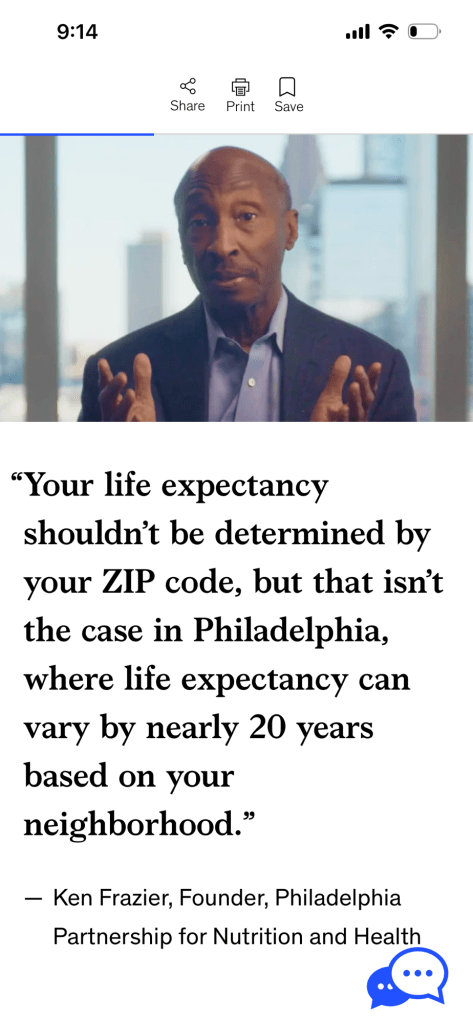













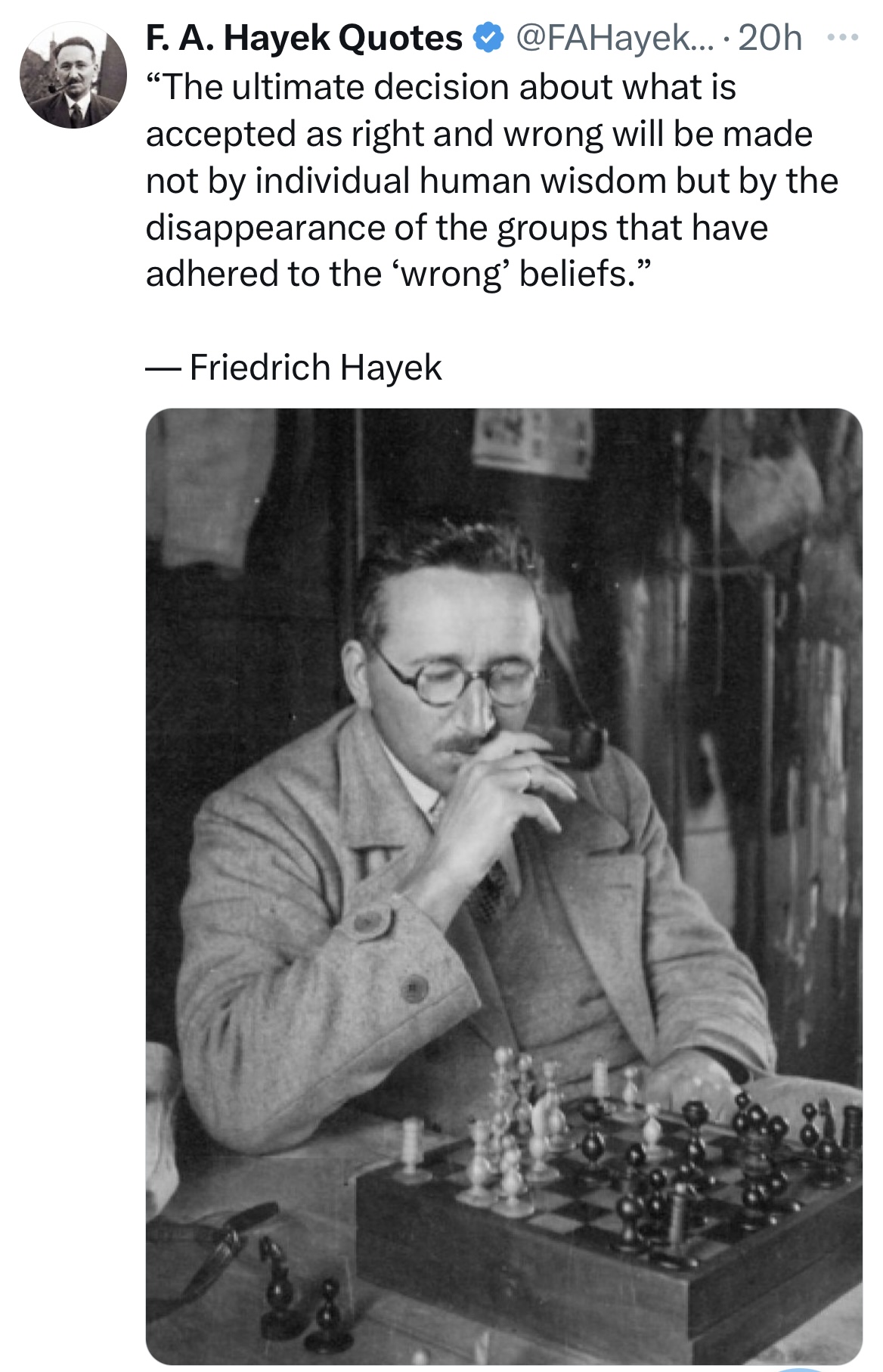

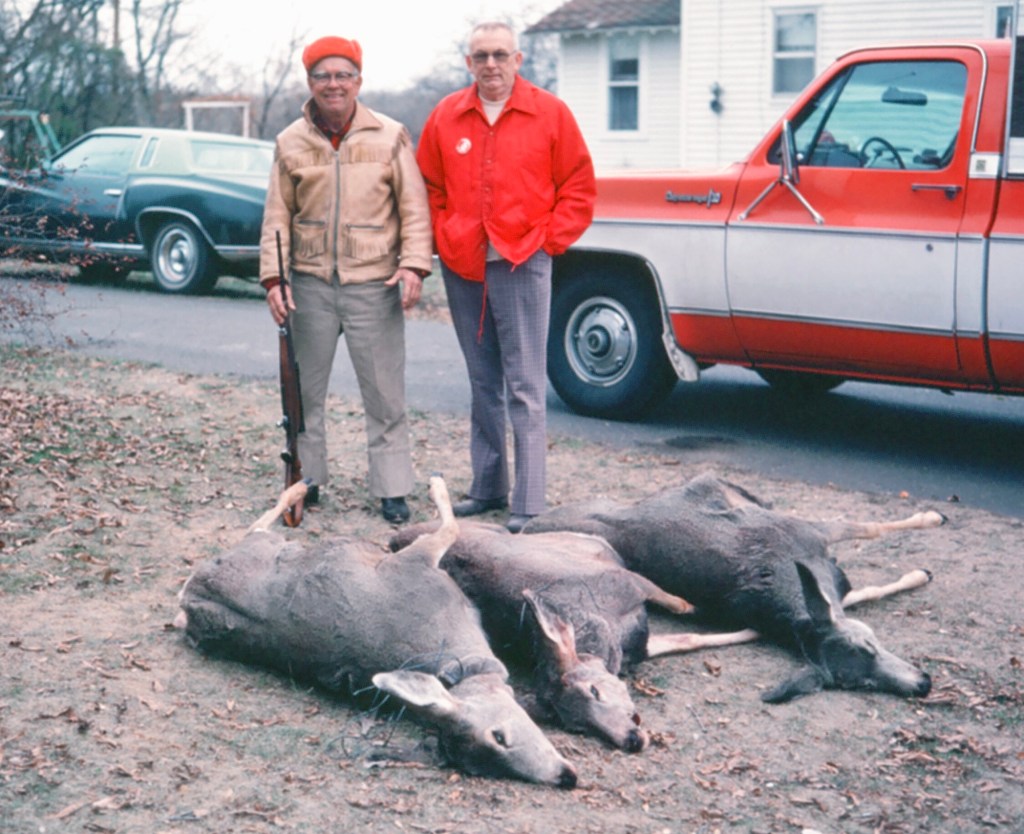

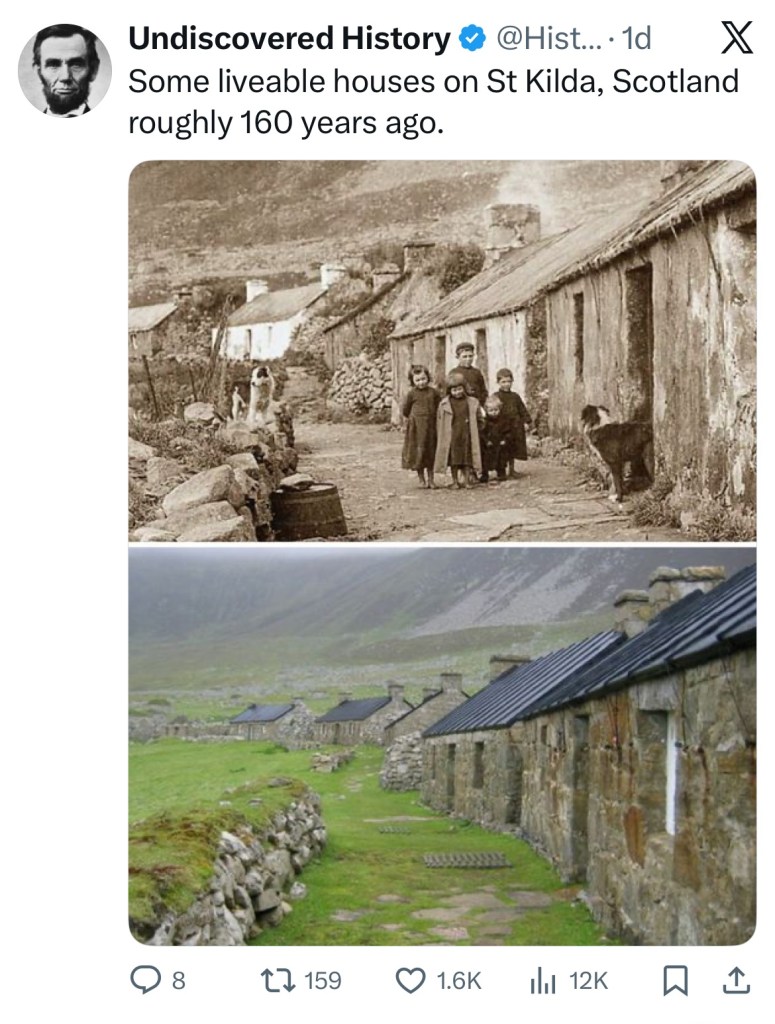

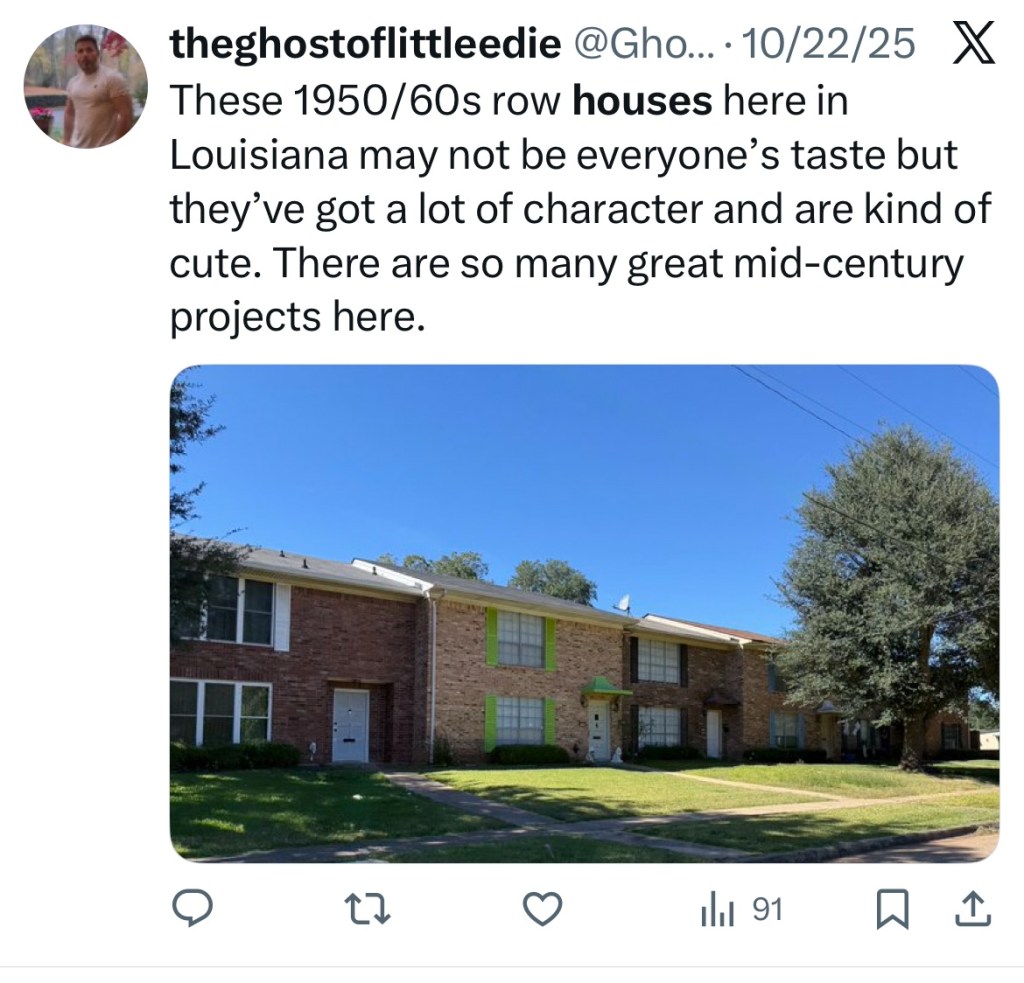


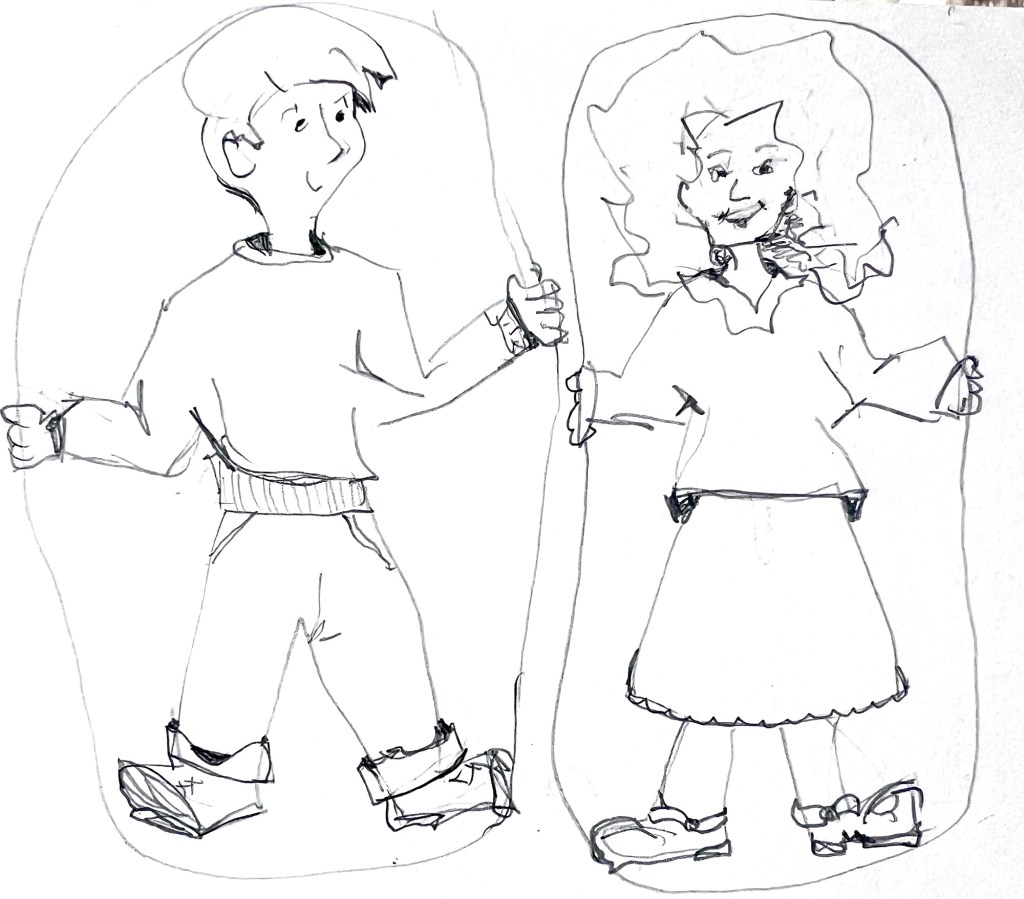

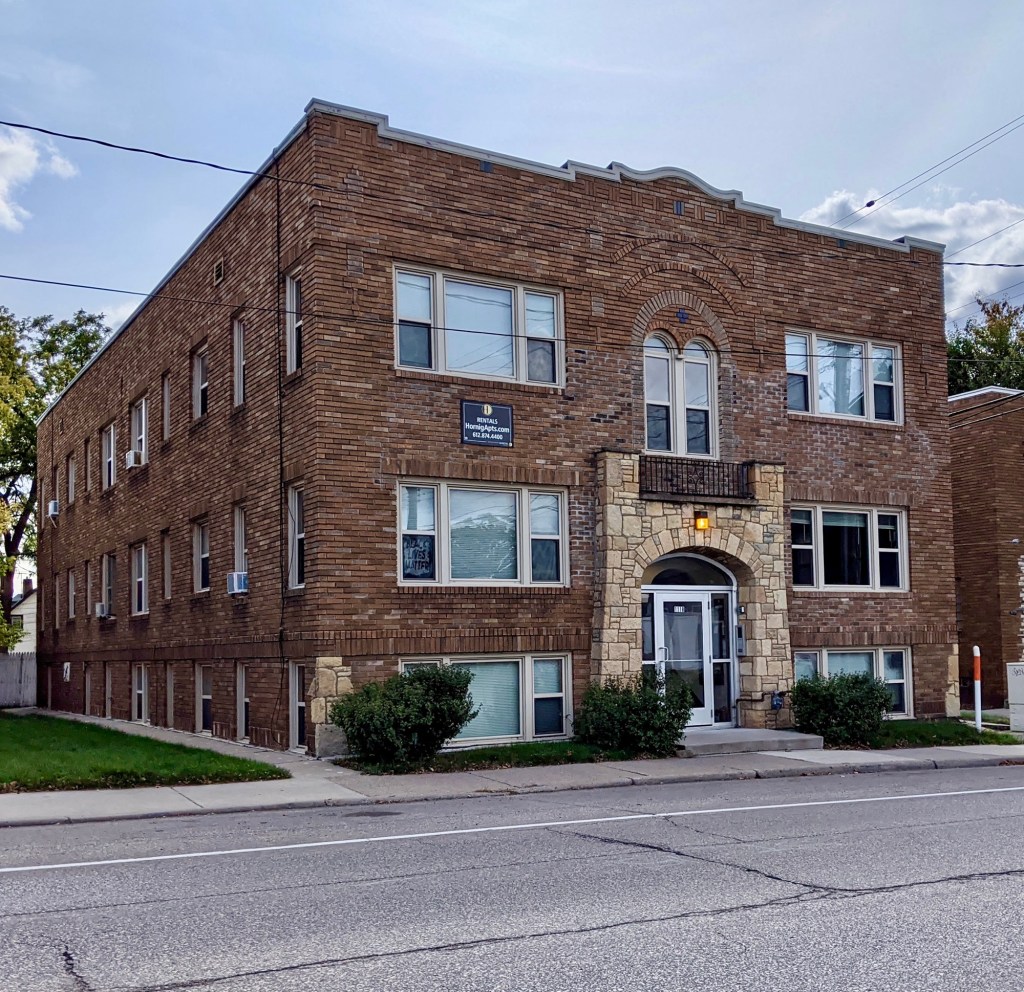











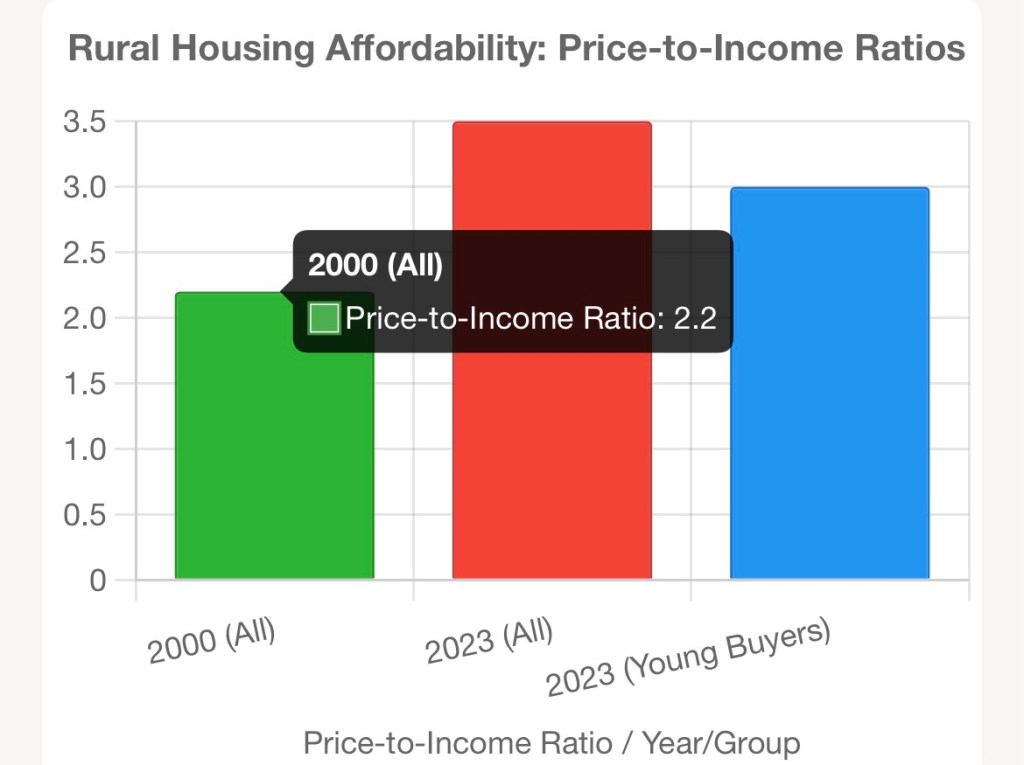










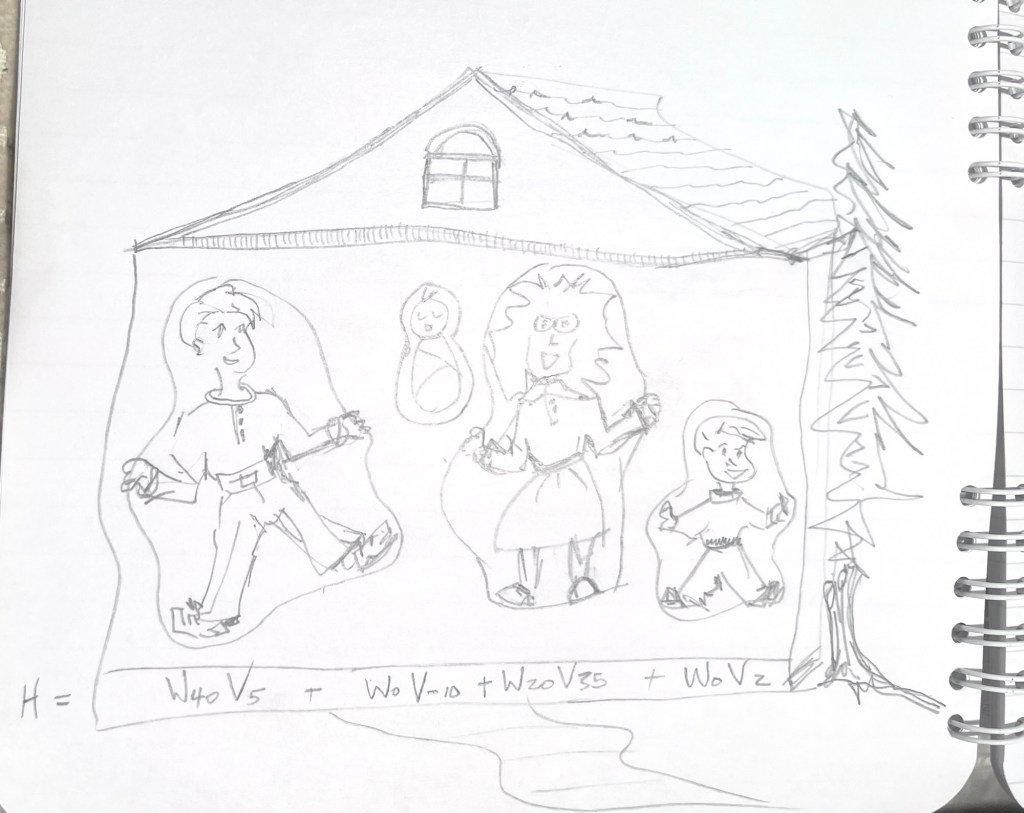





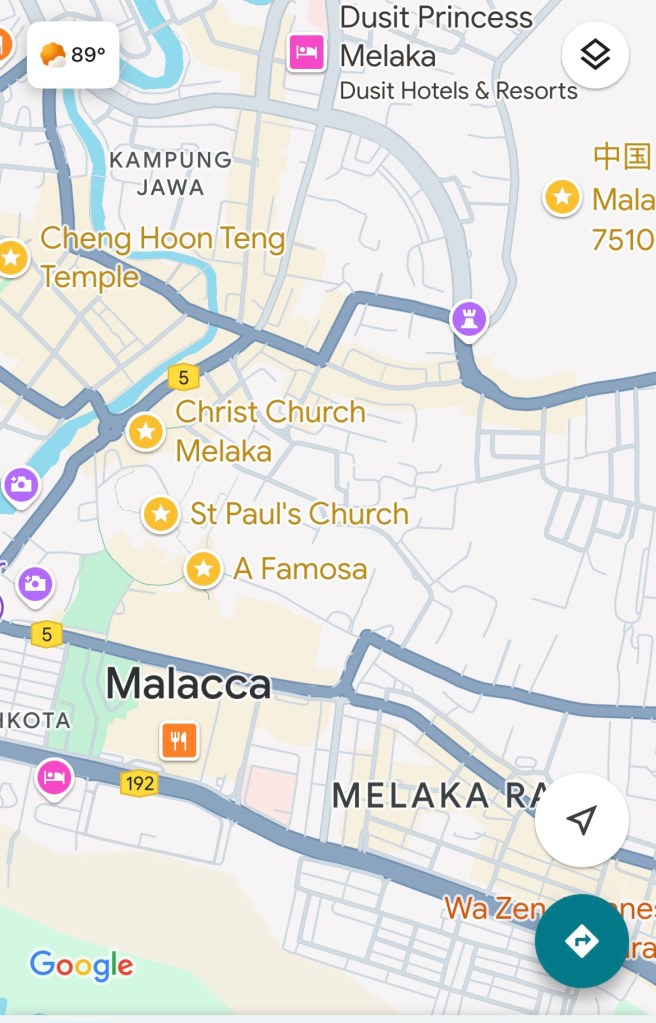


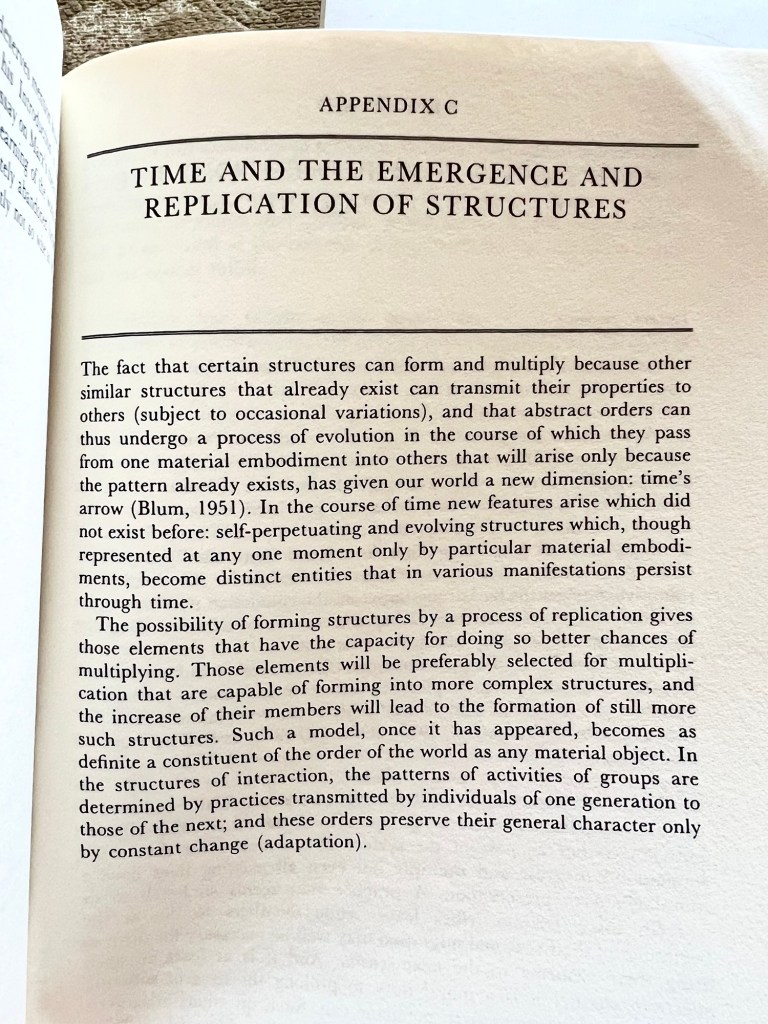


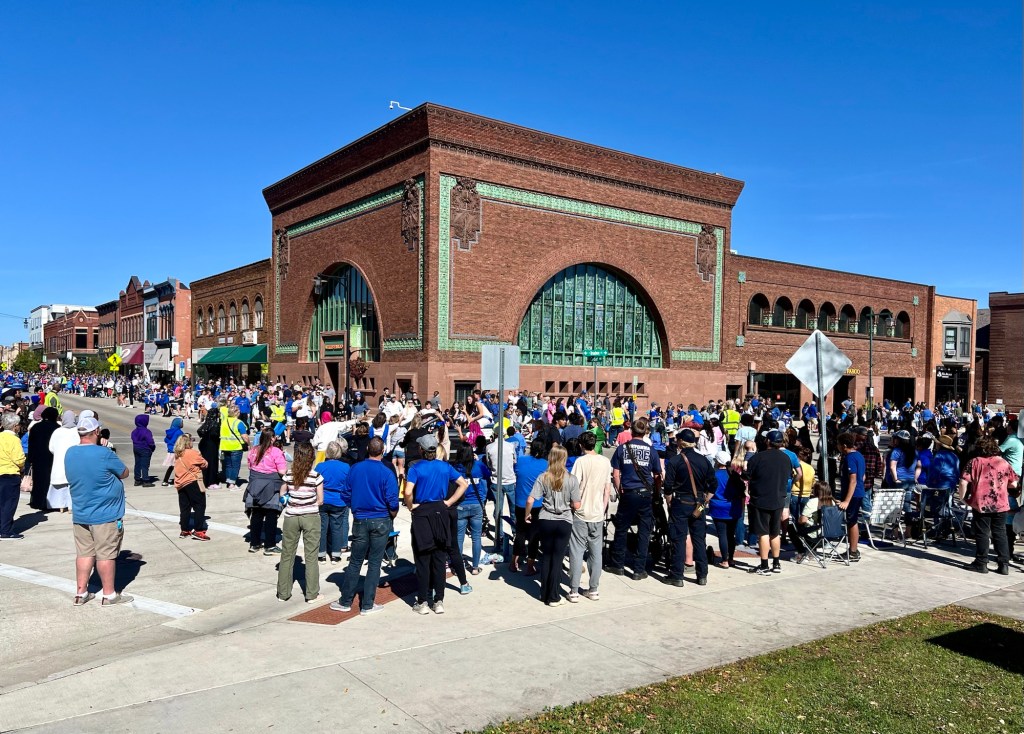


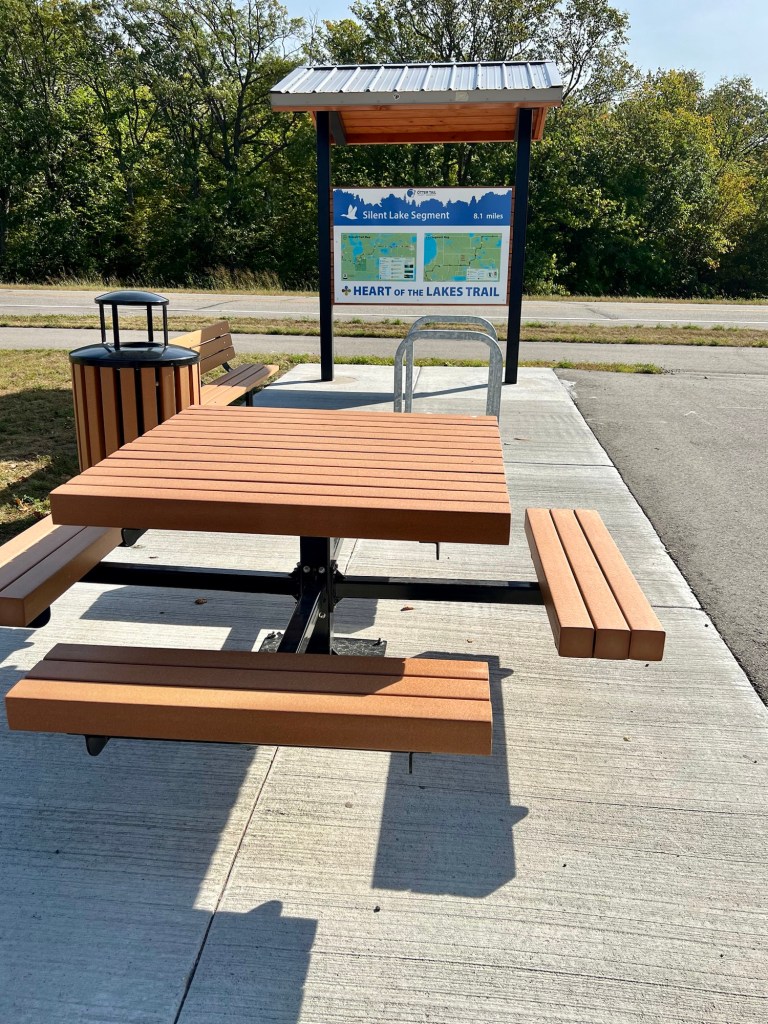







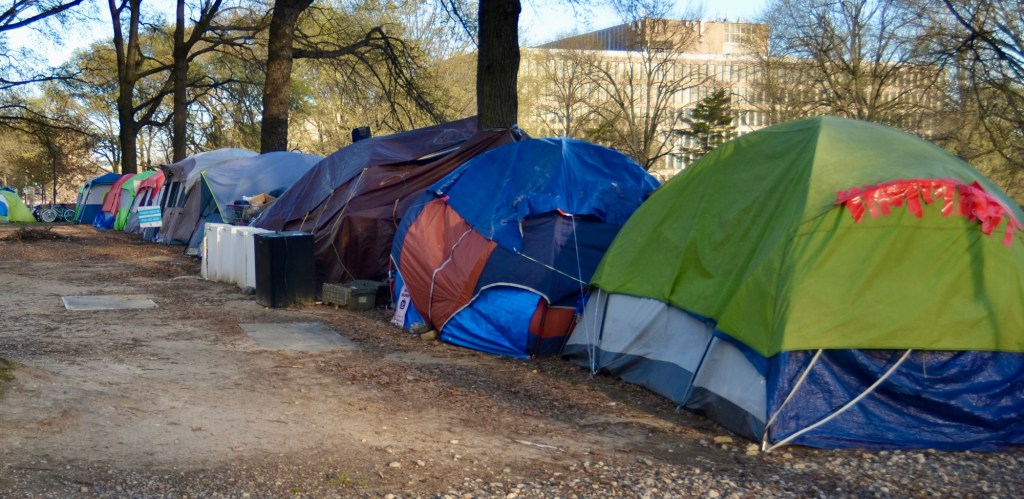




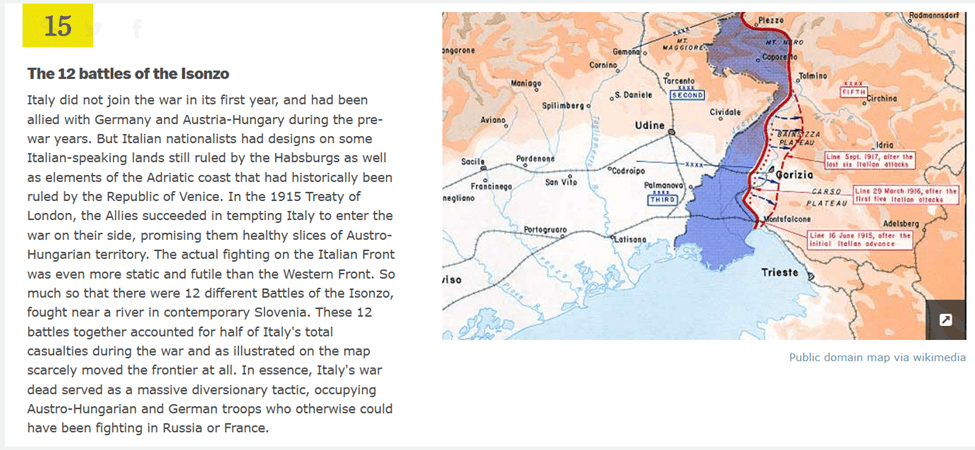








 Home Economics