They’re called influencers when they hit soccial media venues peddling cosementic products and outfits. Pop mega-star Billie Eilish isn’t hawking commodities. She’s pushing for people to make a sacrifice for the environement. Instead of enjoying a new outfit, settle for a used one. Instead of going solo in a vehicle to her concert, pair up and carpool.
“Hit Me Hard and Soft,” Eilish’s third album, is due out May 17. For the tour, she is focusing on sustainability and is continuing her longtime relationship with environmental nonprofit Reverb, to which she’ll donate a portion of proceeds from ticket sales. She’s also encouraging fans to carpool or take public transportation to her concerts and to wear thrifted or borrowed clothing rather than purchasing new. Fans are also invited to bring an empty reusable water bottle as there will be free refill stations at the venue.
Reminding people to do their part toward a common goal is one way to advance its objective. Another is to pass a law. No plastic straws, for instance, was meant to help the environement.
What I wonder about is which of these to strategies has a bigger impact, and to what degree? Spitballing it I would guess that someone of Eilish’s stature teases out more action, probably a lot more action. It wouldn’t be that hard to measure the ridership of the audience memebers.
I wonder why there aren’t more efforts to nail down the results of some of these strategies. If a mega-star can generate more significant results than a law. Skip the bannings that no one pays attention to and hire the influencers to change the world.
How do you put a number on historical value? A Minnesota bill is about to put a price on the ruby slippers worn by MN native Judy Garland in the Wizard of Oz. The slippers, stolen twenty years ago, were recently returned to their owner following the completion of the trial last year. The FBI were tipped off to the where abouts and recovered the sparkly heels in a sting.
Now the owner plans to have them auctioned off after sending them on tour. Their estimated auction value is put at $3.5 million.
The state of MN is going to put in a bid but it’s a bit shy of the estimate.
How are cultural values calculated? A one-off item is difficult to determine. But other similar items come and go from the market. Properties, for instance, have been designated as historical landmarks.
A coalition of diverse groups, it was reported, were all coming together for a housing bill. That was sixty days ago.
(KNSI) — The Central Minnesota Builders Association is throwing its support behind a piece of legislation aimed at addressing the lack of housing and the high cost of new construction.
A coalition of housing advocates and bipartisan lawmakers joined together at the State Capitol to call for an increase in access and affordability in housing through the Minnesotans for More Homes initiative.
The bill (HF 4009/SF 3964) legalizes missing middle housing and new starter homes across Minnesota.
From the builders association to affordable housing advocates, an unlikely melange of interested parties were looking for ways to reduce housing costs. How better to lower expenses then to reduce barriers to building by rolling back the rules. This bill brought authority over what can be built where to statewide control.
Once the implications of un-zoning the neighborhood hit local communities, residents weren’t impressed. Here are some of the changes proposed.
Sets a base level for density allowed on any residential lot by right (or without needing to go through a discretionary review processes) regardless of size at 2 units statewide and 4 units in cities of the first class. If certain conditions are met, 8 units are allowed in second-, third-, and fourth-class cities and 10 units may be allowed per lot in cities of the first class.
Forces administrative approvals of projects that meet the standards in the bill language and prohibits public input in the approval process.
Limits minimum lot size requirements to no greater than 2,500 square feet for first class cities and 4,000 square feet for all other cities except for Greater Minnesota cities with populations of less than 5,000.
Requires all cities to accept Accessory Dwelling Units on all residential lots regardless of size and allows property owners to subdivide their lots by right.
Prohibits off-street parking from being required close to major transit stops and limits off-street parking minimum requirements to 1 spot per unit in other areas.
Allows multifamily buildings to be built up to 150 feet tall on any lot in a commercial zoning district.
Broadly prohibits design standards for residential development and eliminates minimum square footage and floor area ratio requirements.
The cities organized and alerted their constituents who must have followed thorugh with calls to their state representatives as the bills is no longer progressing through the chambers. I doubt constitutents will agree to handing over local property rights to the state. This seems like a heavy handed, top down approach.
So how does one encourage increased density? Why- the market of course!
A recently discovered helium reservoir in Minnesota boasts “mind-bogglingly” high concentrations of the gas that are even greater than initially thought, potentially paving the way for commercial extraction.
Resource exploration company Pulsar Helium, Inc. announced the discovery of helium stores in late February, after a drill just outside of Babbitt, in northern Minnesota, located gas deposits at depths of 2,200 feet (670 meters). Initial measurements showed helium concentrations of 12.4% — which “is just a dream,” Thomas Abraham-James, the president and CEO of Pulsar Helium, told CBS News at the time. But new laboratory readings have surpassed those results.
Normally, helium is obtained as a byproduct of natural gas production, as it accumulates underground in pockets of methane and other hydrocarbons. Minnesota is one of just a handful of locations globally where helium is known to exist without hydrocarbons — the others being in Greenland and southern and eastern Africa. These sites all feature a crust of granite rock rich in uranium and thorium, as well as a rift system that fractures the rock to expose the helium produced through radioactive decay. A dose of volcanism then releases helium atoms from the rock.
Northern Minnesota has a love/hate relationship with the extraction of natural resources from the ground. The article doesn’t address how mining methods affect, if at all, the environment.
The 1960s failed, I believe, partly because of unclear thinking about institutions, which it portrayed in dark, conspiratorial, Kafkaesque terms. The positive role of institutions in economically complex societies was neglected. The vast capitalist distribution network is so efficient in America that it is invisible to our affluent, middle-class humanists. Capitalism’s contribution to the emergence of modern individualism, and therefore feminism, has been blindly suppressed. This snide ahistoricism is the norm these days in women’s studies programs and chi-chi, Foucault-afflicted literature de-partments. Leftists have damaged their own cause, with whose basic principles I as a 1960s libertarian generally agree, by their indifference to fact, their carelessness and sloth, their unforgivable lack of professionalism as scholars. The Sixties world-view, which integrated both nature and culture, has degenerated into clamorous, competitive special-interest groups.
Times Literary Supplement, London, May 22, 1992
Yikes! Paglia knows how to slice and dice her impressions. And I completely agree with her analysis.
The window-tax, as it stands at present (January, 1775), over and above the duty of three shillings upon every house in England, and of one shilling upon every house in Scotland, lays a duty upon every window, which, in England, augments gradually from two-pence, the lowest rate, upon houses with not more than seven windows; to two shillings, the highest rate, upon houses with twenty-five windows and upwards.
The principal objection to all such taxes is their inequality, an inequality of the worst kind, as they must frequently fall much heavier upon the poor than upon the rich. A house of ten pounds rent in a country town may sometimes have more windows than a house of five hundred pounds rent in London; and though the inhabitant of the former is likely to be a much poorer man than that of the latter, yet so far as his contribution is regulated by the window-tax, he must contribute more to the support of the state.
Remember the finding that the gender wage gap is largely a gap between married men and the rest?
Researchers at the St. Louis Fed also broke that down by race and found that result mostly directionally held up, but the effect was much weaker among Blacks. pic.twitter.com/gk60w6uvla
As it becomes more and more accepted that government is not the sole purveyor of public goods, but just another actor in the economy with private interests, how do we then determine: What is a public good?
Here at Home Economic, we find that people associate with groups of individuals who share a similar interest. We’ve laid out a landscape of action based on whether a participant works towards their own interests or towards the interests of a group project. When work is done for the in-group, then it is a public good for all its members. When an individual takes action in an exchange with an outgroup, then it is private only to the individual. For instance, an inventor may, on one level contribute toward the project air travel, while still retaining a portion of the new technology in the form of a grant or a patent.
The private side is more visible as it is often compensated in fungible currency. Thus the flow of money can be traced and counted. But how do we see the public side?
In How Innovation Works, Matt Ridley tells the tale of the first attempts at air travel. People in several countries were working on this idea and it is safe to say that the information which transpired from these activities fall in the basket of a public good. The American government supported an individual, Samuel Langely, with grants of $50,000 (quite a sum in 1903). Although he internalized these funds privately, Langley was unable to come up with the goods for a successful technology. It was the Wrights brothers, with their zeal and voluntary efforts, who launched the Kitty Hawk on that successful day.
They tried to privatize their invention through the patenting system so they would reap a pecuniary reward, but to no avail. The information necessary was already out in the public sphere with no way to reign it back in.
In The Invisible Hook, Peter Leeson tells us about Pirates. He tells how pirates commandeer a vessel and then set out on the seas to pillage and steal. He calls the boat a “sea going stock company” as the boat crew operated it very must like a firm. I would say, however, that the boat was a public good to the pirates who shared the common interest of pillage and plunder. Here’s why. None of the pirates could sell their share of the boat. The ownership of the pirate endeavor was non-fungible.
A public good maybe identified if the the only way to access it is through membership to a group. You can’t sell a favor you are owed from one friend to another. You relinquish all rights and benefits to the good if you leave the group. When you exit.
The praddle following Super Tuesday outcomes is still filtering through the various media sites. I just caught a headline celebrating another ‘first’ for this sexual identitiy group or that one. Isn’t it time to but this exclamatory statement of achievement behind us and admit that the barriers have been broken? It really isn’t that novel. Diversity in politics has become a political angle not a hindrance.
I do remember the old days. When Geraldine Ferraro ran for president in 1984 it was heartbreakingly awkward. A whole bunch of people put themselves out there in the last forty years and were public flogged before we’ve reached this point. But not that we are here. Now that every configuration of social group has taken position in every political party-
Can we take a moment to celebrate and then put the issue to rest?
The homeless have been in the local news quite a bit lately. Tent cities keep appearing and then are dismanteled only to reappear again a few blocks away on another city owned lot. The lots are filled with uncomfortable large concrete blocks, the support groups for the homesless show up with more tents, more supplies and on it goes.
The seperation of fortunes from those who, for whatever reasons in their lives, choose to live out of doors in the cold winter climate, and those who live off the average wage in MN is dramatic. It’s hard to understand or compare the circumstances on how it all comes to be. For that reason it maybe beneficial to look elsewhere in the world for strategies to a more stable existence for these folks.
There are area of the world where whole sections of slums are in the process of ameliorating into better situations for the residents (What Squatter Cities Can Teach Us). What were the aspirations that helped drive this change? How did supporting services come into play? Who were the early adopters?
WHen there is too big of a spread from those who need institutional support and those able to provide it, the cultural difference might be getting in the way of success.
This thread descibes the feel of the structure and tempo of the entire market. Throw away the old concepts of private industry and intervening governments. All parties from bureaucrates to solar panel installers to lobiests to oil rig workers to politicians to immigration officers participate in trades that look after their own interests as well as the interests of the groups to which they align. The economy represents outcomes based on the actions influenced by the will of the individual in conjunction to the will of their people. Benefits are internalized and become private benefits. Costs are externalized and show up as public deficits. No one is free from self-interest. Everyone can benefit as part of a group.
Read the whole thread.
Govts are happy to subsidize fossil fuels, underfund R&D, spread negative externalities across borders, and overuse debt pic.twitter.com/7xkvzFbrsF
Maybe because violent crime gets people’s attention, or maybe because we all like to look at problems from one dimension, I’ve noticed that analysis about people in prison has very little if anything to say about the family life of a criminal. Sure many of these guys and gals are thugs. Most don’t return home to streets shaded by old growth oaks and lined by tidy homes. But some do. And some have relationships outside of crime; and all have parents, possibly brothers and sisters and children.
The most galvanizing activity in the life of a criminal maybe their husstle. The monetary and materialist attraction to crime certainly has a strong allure. Undoubtedly for some that is all they have in life along with their network of work associates. But for most people family matters. It is a lifelong bond that can’t be shaken easily. And even if there is no connection to parents, these (mostly) men have women in their lives and children in their lives. It would be pretty cynical to think they elude the attraction of family that most of us hold dear.
In order to understand the dynamics of a certain population it is necessary to account for all the interests that draw their attention, especially the ones they are willing to act on. After personal security from harm and some form of sustenance for food, and housing, it must be family. Sometimes this is refered to as community. But that’s down the list from family. Sometimes the criminal try to tell each other they are family. But I don’t buy the omission of lovers and wives from this calculus.
At least for some, and certainly not for all, persuasion by family relations has got to play into the lifestyle choices of those who have found their way to prison. Support from these connections is the most likely way to prevent recidivism. Pulling this subgroup out of the main prison population could very well worth the effort.
Rent control is counter productive. From the Federal Reserve Bank of St. Louis:
Weighing Trade-offs
Economists generally have found that, while rent-control policies do restrict rents at more affordable rates, they can also lead to a reduction of rental stock and maintenance, thereby exacerbating affordable housing shortages. At the same time, the tenants of controlled units can benefit from lower costs and greater neighborhood stability—as long as they don’t move.4
For policymakers considering rent control, economics can help them anticipate possible effects and may even inform policy design for those who decide to pursue such policies. Given the trade-offs, policymakers must balance maintaining affordability for those with rental housing, while possibly shrinking the stock of affordable housing for others, especially when such housing is already in short supply.
Targeting a pecuniary benefit to a low-income group seems like an easy solution. The shift of funds from the property owners to a social value, however, promotes undesireable long-term social shortfalls. These include the convesion of rental property to owner occupied housing as the incentives cause landlords to exit the market. Or a deterioration in the quality of rental housing as, again over a longer time frame, long term maintenance becomes more difficult to fund.
The colliding of NFL fans and the Swifties may not bring political harmony, but they sure are pushing up the prices for tickets to the big game tomorrow.
KC quarterback Patrick Mahomes
But then again it would be unusual to not see evolving sympathies between the camps. It’s just not as easy to pull out their price proxies.
I'm worried about us. Last week there was a county campaign to show "Recycling is real" and this week we're telling people "Don't rake those leaves" on February 6. Are we really this dumb? Or are government comms people this bored? pic.twitter.com/yUoEF23bkL
A few days ago Time magazine posted an article entitled Millions of Americans Spend Half Their Paycheck on Rent. Here Are Median Rental Prices by State. The research used in the analysis was generated by the Joint Center for Housing Studies at Harvard. And the intent is (seemingly) to draw readers to an alarming conclusion- that there is a large underclass in America who can’t afford a place to live.
But let’s pull apart the numbers in this claim that half of rental households and who that puts in dire straights.
In Minnesota three quarters of the population own a their home. That leaves one quarter of the population living in rentals. So half of those who rent are approximately twelve percent of the population.
In Minnesota just under ten percent of the population is known to live in poverty. Let’s use an even number of ten so that we cover the homeless as well. I don’t think it is surprising that this population pays a disproportionate amount of the income in housing expenses. And it should also be noted that support for people in poverty is not categorized as income, but arrives in different categories such as child tax credits, SNAP, and renter credits.
That leaves two percent of the population unaccounted for in this observation by the Joint Center for Housing Studies at Harvard. Could there be an explanation for the remaining few who pay a large share of their montly income to rent? College and grad students come to mind. For a brief time individuals work summer jobs, take out loans and yet still must pay for housing. Many of these folks are back stopped financially by family. The policies however for student loans and financial aid give advantage to individuals with lower income. And thus kids come off their parent’s returns and file individually.
In additional to students, the elderly could fall in this category. Say someone was living out their last years in a care facility with high rental fees for comprehansive services. Maybe they are even spending down a large retirement portfolio- because that what they saved it for in the first place. Their ratio of montly expense toward rent versus income will still be high. That was planned, not unexpected.
Here are some reasonable explanations for the breakdown in how housing expenses filter through the population. None of it is worthy of a hair-on-fire headline. And diverting attention to one market can do damage elsewhere. As people who need assistance are ignored.
On a trip to Manhattan a few years ago, my son and I noticed boarded-up store fronts along the best sidewalk shopping in the city. From the layers of flyers pasted on the brick wall and the thickness of dust perched on the window ledge, it was apparent that this state of disuse was a longterm thing. It didn’t make sense. What would make an owner prefer to leave a space empty instead of collecting rent from a desireable tenant looking for a desireable location?
If you were to think of this interms of a model, one might say, what are the negative implications of renting a storefront that zero out the benefit of incoming revenue from a tenant? What circumstances cause a property owner to be more interested in sitting on a vacant portion of a building rather than maximizing profit?
I say a portion of the building because the street level space of a NYC building is most always a small percentage of the entire building.
When an investor is looking to acquire new property there’s a lot of calculating to evaluate its prospects. The price of the building is mostly determined by how much cashflow the structure can generate. The lender (as in most cases there is financing involved) is also interested in the return their borrower will receive. This determines their comfort level in receiving payment on the debt.
With this in mind, a seller will often take action, prior to going on the market, to make the property attractive not only to the buyer but to all other parties involved in the transaction. For instance, an inspector will most probably make some rounds and look for mechanical flaws. The easy fixes are best done up front. Often there is a target renter in mind for the property and enhancement will be made to their structural preferences.
When a property goes for sale, there are lots of incentives to shine the place up and present it in its best light. Any salesperson will tell you this is how to generate the best offer.
Now fast forward twenty years, or thirty years, and the young investor with ambitions to build a portfolio has done exactly that. He or she is wealthy. There is a nice amount of equity in the property and the stress to recover every dollar in rent in order to pay the bank, the insurance company, the regulatory agencies and do repairs has eased. If the property is in a strong location, it is garnering a nice return year-in-year out. Often, it is better than other investments can offer.
Now, let’s consider the rental transaction for the storefront. It’s been a couple of decades since the property has had a full upgrade. Perhaps the paint is looking a little faded. Perhaps the interior tile work has more chips in the tile than some deem acceptable. A new younger set of folks want just that much more than what was available before. So for a bit more money in rent the owner is dealing with a lot more in either managing expectations or renovations. Renovations almost always means interacting with a regulatory entity as well. Once on the property, other issues may be brought to light.
There are two factors that go into the cost-benefit calculation of securing the lease. The rent received. And another important factor which we will call the engagement factor. When the owner takes on a new tenant they are agreeing to engage with their expectations, their payment and request idiosyncrasies. It’s not just the dollars. In the same way an insurance claim is not just about getting reimbursed for the repair work. You have to deal with the insurance rep, meet three contractors to get bids, and supervise the work. There’s an engagement factor. The street level activity also has an engagement factor. If the public has become more truant, than property damage or security issues create a cost on the owner’s time.
It gets to the point that the hastle of interacting with others starts to draw down the marginal benefit of the extra rent. Throw in a potential tax implication and that little benefit could shrink to almost nothing. An empty unit creates a tax write-off. A rented unit throws off income that is now taxed at higher rates, as many deductions have run their course.
The store fronts could be collecting dust because the engagement factors are simply too expensive.
Let us consider what we call vicious luxury. No gratification, however sensual, can of itself be esteemed vicious.
A gratification is only vicious, when it engrosses all a man’s expence, and leaves no ability for such acts of duty and generosity as are required by his situation and fortune.
Suppose, that he correct the vice, and employ part of his expence in the education of his children, in the support of his friends, and in relieving the poor; would any prejudice result to society? On the contrary, the same consumption would arise; and that labour, which, at present, is employed only in producing a slender gratification to one man, would relieve the necessitous, and bestow satisfaction on hundreds.
…To say, that, without a vicious luxury, the labour would not have been employed at all, is only to say, that there is some other defect in human nature, such as indolence, selfishness, inattention to others, for which luxury, in some measure, provides a remedy; as one poison may be an antidote to another. But virtue, like wholesome food, is better than poisons, however corrected.
Minnesota has always been home to ice hockey supporters. But it’s just in the last dozen years that support for the fairer sex has come on strong. Tonight’s turnout for a 3-0 shutout win against Montreal sailed past the last attendance record of 8318 in Ottawa.
ANOTHER RECORD PWHL CROWD
A new world record for professional women’s hockey.
Just announced in Minnesota: 13,316 fans at the Xcel Energy Center attending today’s PWHL game. Outstanding. pic.twitter.com/Hwuvqa2Agj
You can’t hit a record if you don’t have a stadium. Here some deets about the Xcel Center.
Xcel Energy Center is regarded as one of the finest arenas in the world. The one-of-a-kind, multi-purpose facility is home to more than 150 sporting and entertainment events and approximately 1.7 million visitors each year.
Location: Saint Paul, Minnesota, USA – Located on six acres in downtown Saint Paul on the former site of the St. Paul Civic Center
Owner: City of Saint Paul
Operator: Saint Paul Arena Company (SPAC), an affiliate of Minnesota Sports & Entertainment (MSE)
Architectural Firm: HOK Sports Facilities Group
Construction Cost: $170 million
Opened: September 2000
Home Teams: NHL’s Minnesota Wild
First Event: Minnesota Wild vs. Mighty Ducks of Anaheim (3-1 win, preseason) – Sept. 29, 2000
Most Sellouts In A Row By An Artist: 3 – Prince – June 16-18, 2004; Taylor Swift – September 11-13, 2015
When a city is proposing to build the next sports palace, the objections run high and low, long and loud. The price ticket of $170 million seems like a bargain today. But twenty-three years ago it was a pretty penny. People write op-eds about how the money could be spent in a so much more deserving fashion.
So that begs the question, how many people have benefited from events at the stadium in the last two hunderd and seventy-six months? Is there a social bounding which occurs when strangers reminess about attendence records and concert remories? Are people drawn to living close to a mega venue?
Taking a look at thenatural gasmarkets, you can see that we have rallied a bit early during the trading session again on Thursday. Not really a big surprise considering that we had plunged so drastically over the last couple of months, but at this point we have to ask what’s left of winter. There might be a storm or two that could cause a spike in the price of natural gas, but it’s easy to see that natural gas has been a major bust this winter.
Christianity like many world religions has often been less than fair in its treatment of women. But at the heart of historic Christianity there has always been the idea that one young single woman’s faithful choice gave God the opening he used to save the whole human race. Christmas is a feminist holiday, a feast that celebrates the free choice of an autonomous woman. As Christianity has risen to become the largest and most widespread religion in the world, women are coming into their own. It cannot be otherwise; Christianity of all the world’s great religions owes its origin to the choice of a woman to cooperate with God.
God didn’t send Jesus into the world because he was satisfied with the status quo. God sent him here because things needed to change — and right at the top of the list of the things God wanted to change was the position of women. The change didn’t happen overnight, and even today we haven’t seen the full consequences of giving half the world its rightful due, but from the day that Mary answered Gabriel a new force has been at work in the world, and what we see today is the blossoming of a tree that was planted a very long time ago.
I don’t think most people bother reflecting on their ontological commitments. They are taken for granted like the piped water and public education. This is what I was born into, and since everyone else is running on the same plane of knowledge, I’ll go along for the ride.
Life is certainly simpler that way. There’s a lot of ground to cover if one were to try to get down to the very building blocks of the better life. To explain why things are done when and for whom. Dr. Arthur Holmes does a good job of giving you a tour of the history of philosophical thought, if you have the time and inclination to follow along.
In this clip he’s talking about contribution from Pythagorus and Heraclitus. Both were interested in the dual nature of things. Both worked with the concept of change through time. Heraclitus is most noted for having pointed out that one never steps in the same river twice. By the time you dip your toe back below the cool substance, the water that was there will have washed down stream replaced by a fresh liquid.
But first, Dr. Holmes tells us that both thinkers were interested in the thought that all things have two sides, each of which is equally important. There is a double aspect to all things depending on the view from which you gaze.
For instance, a sound barrier wall is erected along side a highway- hurray! The neighboring homeowners view it as a benefit as the roar from the freeway is muted to a background buzz. The shop owner, however, is penalized as the thousands of eyes that used to see Tip Top Auto Body as they drove to up and back can no longer be reminded of its presence hidden behind the wall of timbers. The same wall provides to one group a benefit and to another a penalty.
As the two aspects of things cause some to seek one solution and others to seek another, there is change. Which brings us back to Pythagorus, the mathematician, and Heraclitus who insisted there are two aspects to everything. On the one hand everything seems to be in the process of change, on the other hand there is order. When a road is enlarged, a large group of commuters benefit. But the homes along the road endure more noise. A large group benefits; a smaller group internalizes an expense. One road. Two perspectives.
Dr Holmes explains these two pre-Socratic thinkers were confident that despite the fluidity in the system, despite the ongoing change, nature seeks out an order. In a reaction to the noise, a wall is built. And on it goes. Two perspectives, a change, and a return to order.
Minnesota winters are chilly. We also get a lot of snow. The white stuff is pretty and all when it gently drifts down from a starry sky. But at some point, someone has to clear the roads and sidewalks so people can safely walk and drive to their destinations. Last season, winter played us a tough round.
Depending on how far back you go in the data, it was either the wettest or second-wettest meteorological (December-January-February) winter for the Twin Cities. Records back to 1893 are considered the most reliable, and in that case this winter was No. 1. (The winter of 1880-1881 measured a whopping 9.58 inches of precipitation.)
…
For the Twin Cities, our seasonal snowfall total, which includes the fall, is up to 71 inches. That’s 80 percent more than normal. In Duluth the total is up to 93.3 inches, 41 percent more than normal.
To keep the proper perspective, 71 inches is just under six feet of snow. Had it fallen all in one go, the banks would be taller than most of the population. However, it doesn’t snow all at once. But when it snows more than a couple of inches, someone needs to get out with a shovel or a snowblower to work away at the sidewalks whole the city and state trucks clear and salt the thoroughfares.
Lots of people had a hard time keeping up. In the denser cities centers, the need for clearing is even more acute as people need to cross sidewalks to get to bus stops or depend on their neighbors to tackle the alley so they can drive into their garages. There’s a lot more shared space. The issue of snow removal reached a feverous pitch as snow removal undone causes coatings of ice. People proposed that the city should clear the sidewalks as well as the roads. That is, until the estimates were tallied up by the budget departments.
Others offered their solutions of self-reliance from sections of concrete alleyways hither and yone. A guy with a snowplow would do it, some would say. My dad used to organize the snow plow schedule, piped up another. Fast forward six months, with the winter weather easing in around windows frames and under the door sweeps, and there’s a call put out on twitter to ask about that thing called “organizing.”
Q: does anyone here live in St. Paul and do the thankless task of "organizing" for your alley snowplow? If so, I'd love to chat with you!
Barack Obama was the first legit person I heard use the term neighborhood organizer as a job description. It’s actually quite apt for spontaneous social labor. A job needs to get done across some jointly held property or responsibility, and someone’s got to do it. The push and pull of participation and gratitude are part of the dynamic, and then there are the leaders that keep track, and, like Bill Lindeke, there are the advertizers or communicators keeping the clan informed on how to keep the tradition going, in case a break in the chain has defrayed the tacit knowledge.
With Christmas around the corner, it’s time to start pulling together some gifts for the family. Both sites I purchased from today gave me the opportunity to donate to a cause before checkout. This isn’t a new idea. McDonalds has had their change bin outside the drive-through window for ever. Grocery stores allow the local schools to bag purchases in exchange for a donation. But today it was two for two. And this shop gave me four options for giving.
Years ago a friend said it’s easier to extract money from people when money is on the move. Too true, too true.
When the new rent control policies were being stirred up under the name of rent stabilization, I thought the policy types were trying out some new branding. But Arthur Okun’s essay The Agenda for Stabilization show the term well in use before 1970. The idea that government would influence pricing in the name of a stable economy isn’t a new idea.
At least Okun, who was the Chairman of the Council of Economic Advisers, proposes that private industry take heed of guidance to voluntarily adjust their pricing expectations.
Second, the appeal for restraint must be based on some set of ground rules that spell out what private decision makers are being asked to do. “Drive carefully” is not an effective substitute for a posted speed limit. Speed limits on wages and prices will inevitably share some of the imperfections of those on the highways. They will contain an element of arbitrariness, just as a fifty-mile speed limit is arbitrary in the sense that it is not demonstrably superior to forty-nine or fifty-one. Just as a passing lane is needed on the highways, so a “passing lane” must be provided for wages and prices, allowing relative shifts over time in response to the signals of the market. Just as some speeders will escape the eyes of the traffic patrol, so some violators of the price and wage standards will not be identified.
Despite their imperfections, speed limits on the highways serve the nation well and so can those on prices and wages.
The owners of Cup Foods along with other business owners in George Floyd Square are suing the city of Minneapolis and Mayor Jacob Frey over alleged lost business.
I think this is an interesting match-up: social justice vs. neighborhood grocer. If it goes to a jury will they simpathize with a city’s effort to designate space to an internationally recognized event, or the corner store who served a disadvantaged neighborhood deligently?
They seek over $1.5 million in damages, claiming the city and the mayor were negligent in violating the city’s nuisance ordinance and charter.
The damages don’t even seem that high. But let’s look at the claims.
Cup Foods at GeorgeFloydSquare and 4 other businesses (owned by the same family) are suing the @CityMinneapolis and @MayorFrey for the violent crime wasteland they've created at the intersection of 38th and Chicago (as we've been telling you for 3.5 years).
The claims revolve around two issues: the blockades halted business traffic and secondly the complete lack of police presence encouraged excessive crime. I can’t imagine anyone coming up with a strong rebuttal.
Perhaps the courts will be successful where the city was not in making it politically feasible to dismantle what has become hallowed ground for those who place social justice activities in the forefront of their lives.
It has cooled off in the North Star state with temps these past few days hovering around freezing. Add a little breeze to the mix and while out on your evening walk with your dog you will wonder why you didn’t grab the parka instead of the peacoat.
The weather people have been trying out the ‘feels like’ factor for quite a while now, to give their audience a sense of how your senses will respond to the air currents. I’m not convinced. The wind is not the same as the air temp. You can’t see it, but it has a variety of features. A north wind is not the same a south breeze. Are we talking an easy going 5 miles per hour or a snappy 15? That’s why I was excited to find this detailed graphic on my weather ap:
Tomorrow the wind will be coming from several directions. Good to know before selecting the walk for the day. Better to start facing the wind and then return with it on your back, pushing you along. The gusts really pick up mid-afternoon. This is the signal to get out and about early or add a layer of warmth.
Wouldn’t it be great to have a schematic like this for all the forces in one’s life one can’t see? With estimated timing on the gusts and the direction from which they come?
It’s unclear to me why some stories from one’s youth stay with you and some don’t. I must have keyed into my grandmother feeling self-concious about a financial sparsing of the cost to pave over the county road which serviced their home. Whenever there are costs and people and public goods, there is bound to be a bunch of judging on who is doing what and whether it is enough.
My grandparents lived on a gravel road on the outskirts of a small town. They also owned the farmland along their side of the road. Across the thoroughfare the land had been parceled into perhaps twenty homesites. For many years a gravel surface was considered adequate, despite the layer of dust left on a car going to and from and despite the washboard effect that eventually appeared and made the vehicles tremor as the wheels caught the dirt ridges.
At some point, enough neighbors got together and decided it was time to make a request to the township to pave the road with asphalt. This takes a bit of work. There’s a process. Enough of the residents need to be interested to start a government agency’s wheels in motion. The cost of the improvement shows up as an assessment where, in many cases, the cost to the homeowner is based on the number of feet of frontage to the road.
At least that’s the standard setup.
But in this case my grandmother objected. Her theory was if they all got the same use out of the road, then that is what should determine how the expense should be covered. Afterall, they don’t expect people from Bemidji to pay, even though in theory anyone from Bemidji can use the road. The residents on the road each come and go with a similar frequency, and fair would be to say those who use it split it equally.
My grandmother was savvy enough to know that property ownership would play into her final bill for this public amelioration. But she didn’t think she should have to pay 20 times more than the folks across the road simply because her farmland abutted the pavement. Furthemore, she realized that her lack of support for the project could endanger it from going forward.
I’m not sure where the numbers settled exactly. The road has been paved ever since. What is interesting is that this story is an example of a bartering in order to come to a cooperative solution to community improvement. All these neighbors were of similar standing. It would be difficult for any of the others to call out two educators as evil landowners. It was just a group of neighbors, in a small town arriving at a balance between use-value, property ownership and resources.
Fall is a popular time of year for Galas. People get dressed up in fancy clothes and meet at ballrooms venues to be served fancy food and asked to bid on an assortment of items. There are weekend getaway trips or theme baskets full of goodies, there are NBA basketball tickets or a signed jersey from a baseball star.
The bidding gets started before the presenters give the audience an update on the progress for the cause at hand. Participants watch their phones for updates on which items they are getting bumped off by a higher bid. But it is only the final minutes of the bidding that matter. That’s when you want to be the one to bump with a higher bid, right before the auction stops.
So you end up paying $20, $30, or $50 over face value for those Timberwolves tickets. What is the premium called? The face value of the tickets seems to be its use value- or what anyone would pay for the use of the ticket. But the surcharge, acheived in the ambiance of the evening could simply be a value, a social value for the cause at hand.
In this way it is easy to see the breakdown of exchange value, use value and value.
In the first three chapters of Capital Vol 1 Marx throws down his founding priciples of capitalism under the premis that labor time is the ubiquitous unit of measure. He does conceed that the quality of labor time, and hence its ability to be productive, is influenced by other factors.
The value of a commodity would therefore remain constant if the labour-time required for its production also remained constant. But the latter changes with every variation in the productiveness of labour. This productiveness is determined by various circumstances, amongst others, by the average amoun of skill of the workmen, the state of science, and the degree of its practical application, the social organisation of production, the extent and capabilities of the means of production, and by physical conditions
Capital Vol 1- Karl Marx
Think about this list. 1.The skill of the workmen 2. State of Sciene 3. degree of practical application 4. social organization of production 5. capabilities of means of production 6. Physical condition.
Couldn’t this list be 1. Quality of public education available to workforce 2. Technology 3. Vo-tech adaptation of technology 4. Governance of plant 5. Degree of logistical support including maintenance and transportation 6. The environment.
No matter what specifics came to Marx’s mind as he wrote this list- the list appears to point to what we now call public goods. The productivity of the labor hours invested depended on the quality of the public goods inplay at the plant.
.
David Harvey has an excellent YouTube series on Capital
But not house prices. These continue to rise as fewer sellers are putting their homes on the market. So even though there are fewer buyers in the market who can bear the higher cost associated with higher interest rates, the lack on inventory still provides sellers with a competitive market price.
A number of industries, furniture sales and home improvement stores for example, depend on the turnover of housing. Let’s hope the Fed doesn’t drag out the anti-inflationary methods more than necessary. A 16% drop in the volume of home sales will take a toll not only on lenders, title folks, realtors but all the other services associated with new home purchases.
When government imposed restrictions are lifted on a property, does it automatically result in the property owner being better off? If a developer can has more leeway for a new project there is a sense that would create a positive income.
Say the new rules allowed for things like tightly stacked mobile homes and low-slung light industrial; neighbors that not everyone welcomes. Even without a formal acedemic review, it is possible to imagine that the neighborhood as a whole would drop a bit in value. It is even more believable should the nearby suburbs still exclude this type of land use in their geographic purview. Buyers choose the area that protects their lifestyle over the one that doesn’t and thus reducing price in the undesireable and increasing price across the city border.
And even if local government loosened some restrictions on development there is still the possibilty that the neighbors will fight a new project. In fact, it could be argued that changing the status quo is likely to drive up the prep and presentation costs for a developer. The more uncertainty, the more likely it will take longer to get through the approval process. No one likes not knowing.
What is relevent about the above tweet is that zoning rules, parking restrictions, turn around time for approvals all affect the cost of doing business and thus the value of the property in question. The rights of the those representing the public share a portion of the underlying value of real property which is then represented in money-form in the final sales price of the parcel.
The authors of this Danish study- Willem R.J. Vermeulen, Mioara Zoutewelle-Terovan, Niels Kooiman and Aart C. Liefbroer- sum up some of their findings in their wrap-up of the paper.
For married couples, we found that, when all other couple characteristics are the same, religiously affiliated couples are less likely to divorce than religiously unaffiliated couples. Moreover, religiously affiliated couples who visit religious gatherings are less likely to divorce than those who visit religious gatherings less regularly. These findings support the traditionalist model: The more religious couples are, the more they adhere to traditional norms of the uniqueness of marriage. As we reasoned in H1, there is a couplelevel effect: More religious couples are less likely to divorce than less religious couples.
Although Lyman Stone, in his tweet, attributes the success of marriage in religious communities to social support mechanisms, the authors do not. They only note:
We can think of two main explanations for this finding. First, couples who are more integrated into a religious community may experience higher levels of social control (external pressure). Second, a self-selection effect may be present.
It’s odd to me that people default to power and control versus economics. I’ll bet if they looked just a wee bit into the lives of the religiously affiliated they would find that their daily routines, their weekly commitments which undoubtedly incorporate others from the church community, run somewhat smoother. And if a system of living makes you better off, you are more likely to nurture it and stay committed to it.
— Corey A. DeAngelis, school choice evangelist (@DeAngelisCorey) September 9, 2023
When you start to sense that the people in charge expect something of you that they don’t expect of themselves, then be on the alert. Poor intentions are often a sign that type of fraud is at hand.
If you're willing to pay the winter tax, Minneapolis has to be the best value-for-money city in the country.
19th highest median wage of any metro, 15 Fortune 500 companies, every sports league and you can get a (small) two bedroom 20 mins walk from downtown for $1,100 a month. https://t.co/gYPKnpFFLjpic.twitter.com/cX27466gZ3
Completing mastery over civil society in maximizing discretionary power can be seen as a chain of corrective moves, each one being aimed at making the social system both amenable to the state’s purpose and internally consistent, although these two requirements are not necessarily or even probably compatible. Each corrective move is consequently capable of creating some new systemic inconsistency and of necessitating other corrective moves. This sequence drives in the political dynamics, such as it is, of state capitalism.
I can never follow this type of reasoning. Is it sad when Little Leaguers want to win their game? Because that means another team must be considered loosers. Is it sad when people spend all their time in a lab and ignore their family while developping a life saving drug? Because for those few years they probably failed at parenting. Is it sad that someone is willing to take less salary to support a cause they believe in?
Holy crap, I actually agree with an anti-capitalist tweet by this moron.
Old people are always pumping up young workers' idealism as a way to pay them lower wages. Nonprofits are the worst when it comes to this, of course. pic.twitter.com/I5CEMxy3zl
Working in a position that not only provides some financial support in the form of a paycheck, but also an outlet for directing resources to a cause one supports is simply part of the mechanisms. Note that I am not saying that taking advantage of someone, or bullying someone into, or misleading people as to the cause they are supporting is alright. Those are examples of fraud.
But that people figure out ways to combine their time and resources to advance their private needs and public causes, literally everyday that they breath and walk on this earth, is simply how we all live.
Last year I decided to give our apple trees a haircut. The apple orchard tree idea had started out as my husband’s project, but after a handful of years, the trees still weren’t producing. With a little help from a youtube video, I took a clippers to them and snipped away. My flowering bushes love to have their branches trimmed after their blooms have faded. So the apples trees should too.
And it worked! The trees brimmed with blooms in the spring and the branches became weighted down with fruit by late summer. Funny how even plants respond to a little attention.
The large apples were easy to use in a crisp. But these little ones are difficult to peel. My brother who was visiting made a plug for apple butter. Apple butter? I too had never heard of it. Once you get the seeds out and slice and dice the little fruit you turn the chunks loose in a slow cooker (with some sugar and cinnamon) for ten hours. The fragrance is as fall as pumkin pie.
A compote forms which needs to be run through a blender to smooth it all out. It’s tasty and tangy even if its appearance is questionable.
You just never know what little piece of work is waiting to be done to reap well deserved rewards.
Dick’s also said its second-quarter results were affected by “inventory shrink,” which refers to the loss of inventory due to factors such as employee theft, shoplifting, and others. The company’s merchandise margin declined by 2.54 percentage points—one third of that was because of shrink, the company said.
“The biggest impact in terms of the surprise for Q2 primarily came from shrink,” said Navdeep Gupta, chief financial officer. “We thought we had adequately reserved for it. However, the number of incidents and the organized retail crime impact came in significantly higher than we anticipated.”
The National Association of Realtors has been around for more than 100 years. Three of the founding boards were in Minnesota: Minneapolis, St. Paul and Duluth.
The National Association of REALTORS® was founded as the National Association of Real Estate Exchanges on May 12, 1908 in Chicago. With 120 founding members, 19 Boards, and one state association, the National Association of Real Estate Exchanges’ objective was “to unite the real estate men of America for the purpose of effectively exerting a combined influence upon matters affecting real estate interests.”
Before this professional organization coined the word, Realtor, the people who helped facilitate the buying and selling of real property were called land agents and then real estate agents. They pop up as characters in books like the ones written by Ivan Doig about settling Montana.
NAR sets and maintains standards for the industry which brings unity to the profession. Today there are more than 1.5 million members nationwide making it the largest trades union in the country.
When Zillow launched its website in 2006 many predicted the demise of the Realtor position in the transaction. Everything would occur online! Look at the home, contact a lender, order the title work, and close on the property without viewing it! Done. This narrative permeated the market for at least ten years before it started to ebb ever so slightly.
It has now been 17 years since the entry of big tech into the real estate business and Zillow is still losing money. In 2022 real estate disrupter lost $101 million. I don’t know how venture capital works, but where does all this money come from to float unprofitable companies for decades?
The long and the short of it is that Realtors are still out helping buyers and sellers come together and make a trade. The job really hasn’t changed in any substantial way since 2006, except that advertising occurs via the web instead of print media. There are a variety of arrangements available to clients from basic services to full service. Perhaps ironically, since the age of social media, there has been a shift away from for sale by owners.
It’s pretty clear that there is a place in the market for this type of work. If you’ve had a poor experience in the past maybe the solution is to take a little extra time in selecting your realtor next time around. There are as many styles and personalities in the business as there are clients. You just need to find the right match.
Economics is a study of humankind in the ordinary business of life; it examines that part of individual and social action which is most closely connected with the attainment and with the use of the material requisites of well-being. Thus it is on the one side a study of wealth; and on the other, and more important side, a part of the study of humanity.
Have you ever noticed that there is often more to an issue at hand than you first realize?
Consider the preparation of land for home construction. Those big machines just go on into the staked-off space and move dirt around until it is pretty level- and voila! It’s ready for a new home. But then people start talking about cutting and filling. And schematic alarm bells start ringing right above the curved arch of your pinna. If there is vocabulary to learn than there is undoubtedly a whole segment of the process still to understand.
Luckily there’s YouTube to fill in the gaps.
As you can imagine, there may be outcomes from shifting around a bunch of dirt. Erosion is a typical concern. But changing a terrain effects drainage as well. So it shouldn’t be too surprising that this type of activity requires supervision by goverment in efforts to monitor the interests of the greater group.
On the flip side, a bureaucracy can really slow things down. The process. Rules are metered out in a checklist fashion instead of a dynamic response to uncovered circumstances. A centrailzed approval process is costly.
Matt Ridley’s book How Innovation Works is brimming with background on so many of the innovations (if not all the major ones) in the last few centuries. The stories are well told and each one often provides the opportunity to stress a singular feature that led to success. But I liked this quote about Samuel Morse in the Computing and Communications chapter.
Morse’s real achievement, like that of most innovators, was to battle his way through political and practical obstacles. As his biographer Kenneth Silverman put it:
Morse’s claims for himself as an innovator rest most convincingly on the part of his work he valued least, his dogged entrepreneurship. With stubborn longing, he brought his invention into the marketplace despite congressional indifference, frustrating delays, mechanical failures, family troubles, bickering partners, attacks by the press, protracted lawsuits, periods of depression.
Everybody likes the winner. Everybody likes to talk about that one moment in time when the magic happened and the invention came to fruition. But if you want to know why things aren’t going so well. then you have to look at the obstacles. Where do people see stop instead of go?
We are not only told that Morse was dogged in his pursuit, but where he stumbled. He wrestled with the government- regulatory. There were production delays and mechanical failures- workforce. He was held back due to family- personal support. Business partnerships were stained- ownership. Lawsuits- property rights. He suffered from depression- health.
Once people become famous they seem to only be identified by that accomplishment. Yet they too maneuvered through many of these same markets. Take someone like Bill Gates. His father was an attorney and his mother was a business woman. He had access to excellent advice and full family support from the garage where he tinkered with his creation. His mother is said to have been instrumental in securing his first contract with Microsoft.
Someone may have the best idea in the world, but without access to support in all areas of life, the chances of implementation would be slim.
Shopify has developed an app to track the cost of meetings held at their company.
Shopify, a Canadian e-commerce company, rolled out its Meeting Cost Calculator internally Wednesday as part ofongoing efforts to encourage emptier calendars.The tool functions as a Chrome extension built into Google Calendar, showing Shopify’s 11,000-plus global employees the estimated cost of their meetings by using data based on average compensation, number of attendees and length.
They are not the first company to question the need for weeks filled with meetings. Many employees feel their time is wasted and little gets accomplished when assembled either on-line or in person. The app calculates and displayes how many labor hours are devoted to the gathering and the financial expenditure in wages.
Here is an app that many would consider desirable- but in what way exactly? It does not facilitate the sale of a product or service which is how most business enterprises maintain their livelihoods. No- it does not gain a sale but rather the app encourages people to avoid the expense of loss.
This activity lines up more with public goods activities. The health departments mandate vaccines to avoid the spread of disease. Building codes enforce standards to prohibit structures from falling down and hurting people. Stop lights and speed bumps are put into place to avoid accidents. By pricing out the cost of the meeting, Spotify is encouraging employees to resist wasting the company dollar through elimination not production.
Less waste, more profit. A stronger company benefits all the employees. The app shows that markets are very much alive in the public realm.
Years ago I worked at a medium-sized financial institution. Every four years or so a back room clerk would be caught skimming a bit of money out of general ledger accounts and diverting it into a personal one. The sum total stolen were relatively minor $20-$40K. The typical way their ruse was discovered was when they left their desk and their actions while on vacation. As long as they were at their desks and did what needed to be done everyday, the accounts looked right side up. Once a fill-in employee took over for an extended period of time, some of the accounts showed themselves to be upside down.
The point is that even in the fulfillment of simple jobs, it is not easy to see flaws in the system from the outside. This is the reason why fraudulanet activity often gets so out of hand before being discovered. Unless- there is a whistleblower. But who really wants to take on that job? It is personally taxing both emotionally and often financially as, at least for a period of time, one’s employment may be suspended. The risks are high. And so most everyone prefers to turn away and let someone else deal with it. Not my job! They’d say.
In this story involving Movement Mortgage and the FHA/VA programs, the alleged conduct occurred in 2008. “Federal prosecutors said Thursday their investigation was triggered by a whistleblowers’ lawsuit from two former Movement Mortgage workers. They will receive $4 million of the settlement.”
"Movement Mortgage will pay $23.7M to settle probe of false claims to fed loan programs"
"… a whistleblowers’ lawsuit from two former Movement Mortgage workers. They will receive $4 million of the settlement."https://t.co/JsCBaYHyFv
Think a moment why a whistleblower might step forward. First off, it may be an individual who feels compelled to point out behavior which violates laws and norms. If the actions at hand hold their personal careers back in some way (they refuse to go to the line that others will to get paid) then their motivation may have a factor of private gain. I think it is fair to say that it is less likely they are galvanized by the prospects of a reward or settlement.
Certainly it is a public service if the whistleblowers are succesful in bringing the theft to a halt. When the cost of doing business goes up due to fraud, then all consumers pay through higher pricing.
So to review, a whistleblower may choose to use feedback loops to expose theft. Most probably they are animated by exposing something that ‘just isn’t right’. If sucessfull the cost and risk they bear is a benefit to all those in the consumer group. They may gain privately as well.
It has been decades since I’ve heard talk of contract-for-deeds. But lately, in-office meetings, or out working on transactions, people are proposing this seller means of financing as a way to put a transaction together.
I suppose favorable interest rates have kept private parties out of the financing business for the last dozen years or so. With mortgage rates at new highs, there is an opportunity for investors to pick up a decent return, even with the risk of getting the house back.
Years ago they were used not only for people who were unable to qualify for a conventional loan but also for timing purposes. A retiree liked the idea of selling on a contract and receiving quarterly land payments. That way their tax burden was spread out over time instead of boosting their obligation all in one year.
Overall most consumers seem to prefer the impersonal interaction of working with a commercial lender. But when a need arises, it’s nice that entrepreneurial responses crop up and fill in the gaps.
I kinda hope this proves to be true here locally. Owner-occupants are more likely to do all the necessary neighborhood work to keep everyone healthy and happy.
Institutional firms are pulling back from the U.S. housing market—just look at Starwood’s decision to shop 2,000 single-family rentals.
Talk about confusing sets of interests. The secretary of the interior, Deb Haaland, who is of Native American heritage, was told to ‘go home,’ (presumably to DC) when she returned to her native state of New Mexico yesterday.
But her return to Chaco Culture National Historical Park on Sunday was derailed when a group of Navajo landowners blocked the road, upset with the Biden administration’s recent decision to enshrine for the next 20 years what previously had been an informal 10-mile (16-kilometer) buffer around the World Heritage site.
Her ethnicity is meant to guarantee that the interests of her tribe are held in the highest regard in the nation’s capital. But it appears that social connections have taken a back seat to the power players of the political process. Those in control of her day job in DC want to favor the environmentalists with a land grab.
The landowners and Navajo leaders have said Haaland and the Biden administration ignored efforts to reach a compromise that would have established a smaller buffer to protect cultural sites while keeping intact the viability of tribal land and private Navajo-owned parcels for future development.
I thought affirmative action was meant to help minority groups by offering a figurehead to look up to. But when affirmative action advances political objectives of another sort, then its days as an interventionist strategy are most probably numbered.
The struggle over property rights is an economic story.
Navajo President Buu Nygren said in a statement issued Thursday that the weekend celebration was disappointing and disrespectful. It should have been cancelled, he said.
“The financial and economic losses that are impacting many Navajo families as a result of the secretary’s recent land withdrawal are nothing to celebrate,” Nygren said. “As leaders of the Navajo Nation, we support the Navajo allottees who oppose the withdrawal of these public lands.”
In this balancing act of heritage sites for posterity versus private property rights, the cultural argument proposed to be weighted more heavily. Yet if the true objective is property control to prohibit oil extraction, then it’s hard not to be cynical about claoking the issue in Native American garb and revisiting a sensitive part of American history to make a power play.
I think it was on Twitter today that someone said that using a social contract as an argument was a cop-out. But using efficiency as an argument was valid as it required an explanation of how the optimal outcome was being achieved. Somehow efficiency is tied to numbers and not norms, so it’s more difficult to spell out.
If you want to claim a social contract, though, I think you have to show who is involved in the contract and how it’s unfolding. People always talk in broad strokes- crime is up! crime is down! Sweeping statements are not very useful as within the purview of the speaker there are more then likely people who are isolated from crime even if crime is rising, and those who continue to experience crime even when a generalist can legitimately claim crime is down.
So the first hurdle in the usage of social contract as an explanation is to be able to isolate the groups held to the agreement. Who are the givers, and who are the benefactors? And besides the two to the party, there are a more general group of observers, or what I like to call the audience.
The CEO of LuluLemon recently made a show of a social contract when a handful of youths shoplifted from one of the retail stores. The benefactor from this leader’s contract of people of property were the shoplifters who faced no charges of breaking the law. The losers in this arrangement were the employees who lost their jobs as they were fulfilling the social contract they had been raised with, theft is bad and should be reported, instead of the social contract supported in a LuluLemon employee manual. The audience is the rest of us judging these interactions and evaluating how we would act should this scenario present itself.
If one is looking for efficiencies, one would have to take a closer look at the intersection of the employee’s behavior visa vie the CEO’s. If employee policy is so counter-intuitive to pre-existing social arrangements, ones that have been trained and maintained with most people since childhood, will it be efficient to expect the average worker to go against such impulses and look the other way at blatant theft? It seems there will be a brewing of backlash- or those pesky unintended consequenses.
On the other hand, if the store decides to hire a host of people who can easily ignore stealing and have no issues with criminal activity, then perhaps the social contracts between the CEO, gangster youth, and employee will be groovy. Except….if your employees feel it’s legit to operate as crooks, eventually they’ll be stealing from you themselves. And that truly can’t be very efficient.
You see, arguing optimal outcomes using social contracts requires some persuasion.
Rent control works against capital improvements. “The strict rent control policy enacted in St. Paul, coupled with the eviction moratorium and the overall economic volatility that followed the post-pandemic boom, have all made it harder for Twin Cities multifamily operators to manage their properties, particularly for those active in the affordable housing arena.”
Managment of affordable housing is the long haul pull, as opposed to the initial heady deal making. “I think, in general, there is an underappreciation of the management and operation of affordable housing. The fee structure incentivizes getting the deal done over the long-term success of the property as an ongoing community.”
Crime in a rental community acts as a tax. “For example, security issues are a big topic at many of our properties right now. Essentially this adds a ‘tax’ onto our properties because of the increased spending required. Some local policies have made it harder for us to remove residents who have engaged in dangerous behavior which is sometimes required in order to protect the rest of our residents.”
Administrative overhead caused by detailed laws takes money away from keeping property affordable. “Again, these types of policies have a lot of unintended impacts. The main one is that it is taking a lot of time and money for lawyers and accountants to understand and interpret the rules that are not well understood often even by the cities themselves. This takes away from what we would rather be doing which is producing and running housing.”
Target is not so woke anymore. The popular retailer closed a store in the Uptown area in response to crime. Recently, the company also removed some of its LGBT garments from its stores in response to hostility from some shoppers. In both cases, the Minneapolis-based chain said its first responsibility is first to the safety of its workers. Loyalty to company first, greater society second.
Target was the first retailer to rebuild (in record time) its store on Lake St. The structure was looted and burned during the riots three years ago. Local residents disproportionately benefit from discount stores. But as the shoplifting continues and vitriolic reactions from various factions have become the norm, it seems the business is wearing thin on taking moralizing stances.
In the 1950s firms incorporated a social angle into their business. A good-paying job with benefits was designated to male employees as it was assumed that those salaries funded the needs of a family. Paid family leave wasn’t necessary as it was understood that the second adult in the family was available to care for children or aging family members- at least in theory.
A paid family leave bill just passed in MN placing the burden of family support on businesses of all sizes. This model of giving paychecks directly to workers who choose to care for family in lieu of work will have pros and cons. Instead of being part of a family unit where one person provides caregiving and the other(s) focuses on earning wages, you can ‘have it all’ as they like to tell working women.
The disadvantage to atomizing this process, of detaching it from the family unit, will be the absence of feedback loops. Through a filtering system of interaction with other group members, and a give-and-take on who gets the support when a balance of aid is achieved so it is dispensed to those who need it most. Setting up formal rules eliminates the judging and metering of volunteer care. If the benefit is there, the logic is to take it.
Businesses can and do get involved in social trade. But where they excel is at unfettered trade to promote mutual well being.
A publicized good is any whose ‘public’ character results only from a policy decision to make some (otherwise private) good freely and universally available. This fact poses complications for the PGA, insofar as the set of possible publicized goods is quite extensive indeed.
I thought people had come to the realization that just about every good can be made private in the sense that others may be excluded from its use. So to develop a new term to explain that the good which could be private is now going to be called publicized to indicate it is provided by a government entity seems a bit roundabout.
What about goods provided by NGOs? Or non-profits? Or associations?
It seems more orderly to identify a good’s nature by how it is used. THis of course would need to be accompanied by a descriptor of who in the group has access to it. I think this would enhance analysis as it would start to delineate ingroups and outgroups in the analysis.
This exchange on Twitter is provocative. Here the implication is that top-down money is bad and bottom-up money is good. When an overlord government pushes an ambition down onto a community things will go sideways. When a community builds up the aspirations from the bottom everything will come up gardens and rose beds.
I’ve been living here for years and unfortunately I can confirm this process as I saw it as it developed. Unfortunately a large part is also due to the bad policies where a lot of stuff is handled by the state rather than local, which prevented Rome to develop as an alternative…
I’ve been living here for years and unfortunately I can confirm this process as I saw it as it developed. Unfortunately a large part is also due to the bad policies where a lot of stuff is handled by the state rather than local, which prevented Rome to develop as an alternative commercial hub outside tourism. Today in Rome you have a delude of top-down money (coming from the EU) to transform it even more in a Museum, and very little bottom-up money (local commerce outside tourism). With the consequence that locals are getting pushed more and more outside the city (as they can’t afford it any longer due to price spikes due to touristification) and local communities are getting slowly dismantled (new local towns are rising well outside the city).
·
I guess it’s easy to think of examples of both. When the freeway system was developed, thick swaths of housing, usually disadvanteged housing, were taken down and paved over. This top down money destroyed communities. Yet it is common for the bottom up money to restrict any building other than the status quo.
Maybe the good and the bad of top-down and bottom-up money can be more clearly seen if we divide up the player into different groups. The freeway system was and is an undeniable benefit for a great number of people. The ability to travel more efficiently for work and recreation continues to be a boon for many people. Yet for the small communities which were crushed, the creation of the roadways was definitely bad.
Similarly, when a community consistently maintains a certain level of housing through construction restrictions it is good for them. They are in fact reacting in a way that many would want to react for the small cluster above who were poorly impacted when the freeway system went through. Yet here it is viewed as negative because as they protect their nook in a greater metropolitan area, density is disproportionately falling to nearby neighborhoods.
I would argue that there’s a balance in there where the private needs of a small community are blended with the needs of the more expansive overarching community. Whether action is taken through top-down money or bottom-up money, there is a calculation that steers towards a balance in the obligations.
Thanks to the Beatles we all know that money can’t buy you love. Money can motivate a salesperson to sell a few extra units. Money can persuade a road crew to finish a paving project ahead of schedule. Money can motivate a team in getting their product design finished and into production. But for as well as money does at motivating some things, it isn’t great at moving the needle on others.
People aren’t that interested in money when it comes to losing weight. Nor does it turn a drinker into a teetotaler. And I dare say it does not ebb the urge of a bully to be kind.
Somethings people must decide they want for themselves and then take the initiative to set themselves on that course. How the people around them behave, however, has a direct impact on how all this works out. Reminders of tradeoffs, actions to eliminate possibilities, and support when on the right course may all factor into how the company one keeps makes life a little easier.
Oddly, even though money is ill-suited as an motivator, the final outcome of success aided by community support does generate increased financial well-being. When people around you work at helping you be your best, the benefits realized can be financial. Better health through weight reduction translates into less time off work. Killing an addiction eliminates the bill to buy product.
The flow can be from cash to capital or capital to cash.
I’m really having a hard time with the math behind current policies around daycare. If you’ve ever paid for care so you can work a forty-hour week, you know it’s a bundle. Yet there’s a push to have care workers unionize because they are paid too little, making that bundle turn into a load. And to divert that from circling back to being a burden on the working mother there will be a credit for the child which will come out of some tax to the people. Which all sounds like a double surcharge in administrative fees so someone else can care for a child of another who is paid a similar wage, all of whom are deemed to be paid too little.
There have been some notable retail store closures this year in the metro. On May 15th the Target on Lake St in Uptown is shutting its doors. This is one of their smaller stores and the housing nearby is quite affluent. I’d peg this loss more as an inconvenience than a hardship.
A few weeks ago the large Wal-Mart in Brooklyn Center closed. The corporation cited safety concerns for their workers but undoubtedly the rampant theft which has festered in this commercial node for quite some time was also a factor. Let’s assume that this last point has been aggravated by the failure to prosecute youth shoplifting. The recent philosophy here seems to look the other way on small crimes to stop the school-to-prison pipeline.
Pushing the costs of theft off onto corporations is simply a social tax. To save some wayward youth from entering the system, retail stores like Walmart take a little hit.
The problem with this occurs when the business removes itself from the mix. By choosing to exit the market, now it is the customers of the store who suffer a loss. According to the US Census, the per capita income in Brooklyn Center is just under $26K. Some were interviewed when the store announced its closure. Wal-Mart’s lower prices will be a greater loss to them in relative terms. So the calculation changes. The expense of higher crime is privatized across neighbors who don’t have a lot to start with.
The poor get poorer.
Shifting social costs through mandates onto business is precarious. Not because the costs are not real. Not because the businesses don’t have funds. The reason is that the nature of creating and maintaining value in social circles is different than in business. You don’t run your family like a business. Businesses are not the most efficient mechanisms for fulfilling social demands.
(Just for fun let’s think in terms of publicness and privateness. If the flow of benefit is Pub-to-Priv use this term, or Priv-to-Pub for the other way around. Changes in the judicial process give a Pub-to-Priv flow to youthful delinquents. Businesses internalized the public cost as a private expense. Then, at a certain point, exits do to the high costs.
Now the Pub-to-Priv transfer can be described as the loss of public safety transfer at a private cost by all the shoppers who now pay a surcharge at more expensive stores. To solve this, we would need to have some idea of the long-term benefits to the wayward youths. Lifelong criminals are an expense. Does this strategy work and is the benefit of keeping the youth out of a life of crime greater than more expensive groceries?)
So many political debates are about who is getting what and at whose expense. Last week, a change in charges on government-insured mortgages went viral. Buyers with high credit scores were scheduled to pay more in fees and those with poor credit scores pay less. Even if the most qualified buyer paid less overall, it felt like a redistribution from those who have played by the rules to those who haven’t.
Some issues are not financial but legal. Abortion became a pivotal issue in the last election and Minnesota politicians addressed revisions to state laws in the first round of their term’s decision-making. But how many people are affected by this issue? Here is some data from the CDC.
In 2020, 620,327 legal induced abortions were reported to CDC from 49 reporting areas. Among 48 reporting areas with data each year during 2011–2020, in 2020, a total of 615,911 abortions were reported, the abortion rate was 11.2 abortions per 1,000 women aged 15–44 years, and the abortion ratio was 198 abortions per 1,000 live births.
From 2019 to 2020, the number of abortions decreased 2%, the abortion rate decreased 2%, and the abortion ratio increased 2%. From 2011 to 2020, the number, rate, and ratio of reported abortions decreased 15%, 18%, and 9%, respectively.
The percent of women between the ages of 15-44 who choose this action is 1.14%. What is that, roughly .23% of the total state population? I realize this is a galvanizing issue for a core group of voters, but how much time should be spent on a (very) small group of constituents?
When politicians work to provide goods and services to one group they are using their publicness to transfer assets (including rights) to small constituencies who then privatize those benefits. This is a good thing when it is balanced. Is it out in right field that the total number of hours worked in a state capital building shuffling out resources in some way should square with the demands, to different degrees, of the whole? There is a publicness and privateness to every action a legislature enacts. Parsing out who, what and time frames is the trickier part.
It seems like AI would be ideal at keeping track. It’s a counting function’s dream to scan through texts and pull and sort by topics. The harder part will be to determine the first, second and teriary impacts. But nothing can be worse than the reactionary, cater to the loudest-activist, system of legislation that seems so popular today.
In 1985 Tyler Cowen, a Harvard graduate student, wrote a paper entitled: Public Goods Definitions and their Institutional Context: a Critique of Public Goods Theory. He proposes a new perspective on how we think about public goods and private goods. Remember, this was back in the day when the government provided public goods to constituents, and what private parties did amongst themselves and in the business world was mediated through a market process. It was one or the other.
The traditional definition of public goods focuses on the nature of the object or service in play. Does the lighthouse exhibit public qualities or private qualities? But Cowen proposes a new view.
The purpose of this paper is to tinker with the definition of public goods and show that nearly every good can be classified as either public or private depending upon the institutional framework surrounding the good and the conditions of the good’s production.’
One way that a good can slide between public to private is in the manner of its use. Roads serve as a great example. As long as only a few cars are on the road, the pavement appears to be public by nature. But once congestion ramps up, then the use of the road by a bunch of people may cut into another person’s personal time. The larger group of motorists impose a private cost on each other as they are no longer able to access the road without competition.
Furthermore Cowen points out.
Roads may also be more “private” if they are used for activities other than driving. To the extent that roads are used for parades, bicycling, or even littering, they are private goods.
The parade may preclude cars from the road, bicycles may obstruct a lane, and litter may decrease the marginal value of driving to everyone who dislikes litter.
Here I think it is important to note a feature that isn’t really specifically noted in the paper. He alludes that there are distinctions between consumers but doesn’t exactly set them aside. For folks who work third shift and are always commuting against traffic, the congestion never causes a privateness to their use of the road. On the other hand, the privateness of public road use is clearly seen when commuters, for a fee, can privately access an express lane in order to avoid congestion.
All the snow is just leaving the ditches here in Minnesota. And as the white stuff melts away, a crop of litter is strewn here and there. It’s too late to know who threw that Chick-fil-A wrapper casually out their car window. The garbage is a public expense to the city. Slowly neighborly people show up with empty plastic bags and walk through the soggy grass filling them up.
The trash that appears following a parade or a fundraiser walk around a scenic lake is another matter. This can be tied to an event and thus a group of people who have gathered on a certain day for a particular purpose. The detractors use the trail which skirks Lake Harriet for private use and produce a negative externality to others out on a Saturday stroll.
It’s important to keep track of the groups to meter out compensation. The chain of lakes in Minneapolis attracts events every summer weekend. The private use of public space generates trash, congestion, and parking inconveniences. For this reason, groups accept the requirement of a fee, paid to the city, for the use of what otherwise is considered a public asset. Although the fee is set by a park board or a city, the process includes thinking through who is coming into use the facilities and what other surrounding cities charge.
So the degree of publicness and privateness can be used to identify means of compensating factors. But at the core of determining publicness and privateness one must identify the groups, and whether the activities are public or private from their perspective.
What is surprising to me is that this is not a mainstream concept. Tyler Cowen is a famous economist who laid out this definition almost 40 years ago. Samuelson’s definition is often shown to have lapses in consistency- and yet it is still the textbook response. I guess tradition is hard to shake.
The upshot of this lawsuit is that welfare is property. Welfare is not a gift or a benevolent token- it is property no different than a car or a house. Albeit the property is held in the network of social connectedness of the people and the state. Here’s a summary of the case.
The Goldberg decision set the parameters for procedural due process when dealing with the deprivation of a government benefit or entitlement. The Court held that a person has a property interest in certain government entitlements, which require notice and a hearing before a governmental entity (either state or federal) takes them away. Government-provided entitlements from the modern welfare state increased substantially in the United States during the 20th century. The Goldberg court decided that such entitlements (like welfare payments, government pensions, professional licenses), are a form of “new property” that require pre-deprivation procedural protection and so did away with the traditional distinction between rights and privileges.
So to put it another way, if you are a member of a group (most probably a formal one) and you fall into a set of circumstances that have been determined to engage a resource, upon taking possession of said resource it becomes your personal property. The community held capital is internalized by the individual. Doesn’t it seem like capital which is put to use in social groups would have a name something like social capital?
If everyone in the group understood it in these terms, it seems that more people would value being a member of a group that had the capacity to make good on such promises. Often people focus on private property as a measure of wealth and well-being. But isn’t the right to tap a resource particularly when one is on the outs a valuable asset as well? There’s a case to be made for a state that has a generous capacity.
Just when you thought the @JoeBiden administration couldn't get any dumber, it does this. It's a perfect example of why government shouldn't have any involvement in the #housing market and why the FHA, Fannie Mae and Freddie Mac should all be abolished. https://t.co/WbTzZjWzfd
One of the main reasons buyers make large down payments it to get lower mortgage rates. With this new rule, buyers now have an incentive to make lower down payments. Plus, its easy to screw up your credit score to qualify for a lower rate. So it's taxpayers who'll foot the bill.
Note: I think there is a role for government mortgage provision. But playing with a pricing system which affects everyone in order to help a pocket of people with poor credit shows incredible hubris. Plus it will make everyone worse off simply so some people can feel like the are doing something.
This tweet garnered bicycle enthusiasts’ expected collective (scornful?) sigh. The Prof is out of touch and out to maintain the status quo. The activists are on the right side of history and will ride in on mechanical transportation, victory torches ablaze. But in the article, both parties are guilty of obstructed views.
First, consider the professor’s opinion that emissions increase when traffic quieting and bike lanes are installed. One would think there is research on this. It makes sense that when vehicles take longer to arrive at their destinations they emit additional pollutants. But intuition is not a substitute for facts. Even a report from taxi drivers verifying additional time taken to deliver passengers through said areas would be helpful. I judge claim number one as a fail. It makes sense to me but no proof is offered.
There is an indirect claim in the number of emails generated for support of bike lanes. The coalition is noted to have sent out a total of 93,000 emails. I’m not buying that there is a live citizen behind each of these carpings to elected officials. I have an inkling that a scan of the electronic documents would reveal automated generation. For claim number 2 in the matter of mobilized residents I give a fail. Spamming of office holders also takes their time away from other issues.
Another pressing issue that falls in the same interest group of concern for the climate is the decrease in transit ridership. The serious drop in locals who use light rail and busses is real and documented. It’s all green lights for claim number 3. And hence this would be one of the areas that should attract time and attention.
Safety is always on the top of people’s priorities. I’m not sure I follow the cliams being made about mortality and walkers. Pedestrian deaths were at an all time high in 2021 but compared to what and are the numbers still quite small? That said I’ve seen and heard about a lot of accidents regarding older riders in particular and their road experiences. Encouraging recreational weekend cylists to tackle roadsharing with four thousand pound chunks of metal seems a bit precarious. Claims about safety strong but not intirely thorough.
I know people who bike to work year around. They love it. It gets their day started with a vigorous activity that gives off energy throughout the day. It can’t possibly be that difficult to track two-wheeled commuters. A city can also use counters to enumerate the activity on trails and roadways at times to give estimates. The demand for bike lanes can be measured in better ways than spam. An same goes for pollution. Reader at intersection in before and after scenarios is easy enough.
If officials want to make sensible decisions they’ll need to look to everyday folks. Will a core group utilize the infrastructure or is it an appeasement to people who want to feel they are making a difference?
There’s no keen insight in the realization that homes on lake shore will command higher prices and those on an airplane flight path will be discounted. But there’s strength in the notion that, through math, you can ascertain a level of certainty about relationships. By stacking a whole set of prices up against numeric representations of features like crime, school districts, and transportation access, a methodology called Hedonic Regressions will generate a sense of the significance of the tie.
The hedonic price method was originally developed by Rosen (1974) and since has been used to estimate the effect of a wide variety of environmental amenities on residential property prices. Typically, house price is regressed on a series of variables that describe the physical characteristics of the house (e.g., area of the house), the neiborhood (e.g., school district), and the environmental amenity under study. Household utility may, therefore, be ‘expressed as U = u(X, Y, a), where X is a vector of house characteristic variables, Y is a vector of variables describing clzaracteristics of the neighborhood, and a denotes the environmental amenity under study .
The authors observe that home prices are affected by proximity to wildfire risk. They note some other interesting factors. When a website provides more risk information, the relationship strengthens. More knowledge impacts the market. Also as time passes, and the memory of the fire retreats, the impact on prices also dampens. This all illustrates a milling and churning of a market process.
Many papers have been written since this one about the environmental effects on house prices. Pollution is a big focus. Proximity to road arteries as well. This use of hedonic methodology only scratches the surface of gleaning information from consumers’ choices.
The query revolved around unpaid labor. Starting in the 70s, the people who wrote about such things were those who wanted recognition for the value of the work done in families, otherwise referred to as care work. The assumption of the time was that family work was done for families and hence had no commercial value. Although people have always judged how families treat each other and what they do for each other (or don’t do), one was not to put a dollar figure on such things.
It was around this time that the power struggle for command and control of the family became front and center. Which is really too bad. Instead of solving for efficiency, all bared arms for control. Instead of singing duets and pleading for what the other held, ultimatums lead to dissolutions. For decades. Which makes it unsurprising that I have not heard of Virginia Held. Her book written in 1970 sounds promising, The Public Interest and Individual Interests, but hard to get.
In The Ethics of Care as Normative Guidance: Comment on Gilligan (Journal of Social Philosophy), Held says some interesting things. You can see how she is starting to carve out two spheres, to distinguish between the realm of commerce and that of social support while still holding them under the light of a comprehensive economic system.
Or consider the portrayal of economic man, with its assumptions dominating our market-driven society, that we always and everywhere pursue our own interests and can at best bargain with others to limit the ways in which we do so as we rationally calculate our utilities. Feminists have shown the distortions in these assumptions: without caregivers acting in ways that contradict them, no infants would ever grow up to be Hobbesian men or rational calculators. In the context of caring for children, what is sought is mutual well-being, not maximization ofself-interest, and wielding superior power is usually beside the point.
But eventually the ‘should’ words start to show up. They always make me cringe. It’s the point where an author often leaves reality for some preferred world.
Care should not be understood as self-sacrifice. Egoism versus altruism is the wrong way to interpret the issues. Yes, the interests of a given caregiver and care receiver will sometimes conflict, but for the most part we do not pit our own interests against those of others in this context. We want what will be good for both or all of us together. We want our children and others we care for, and those who care for us, to do well along with ourselves, and for the relations between us to be good ones. The dominant assumption that the issues being considered are always about the self versus others or the self versus the universal “all others” needs to be revised in this context and then extended.
The work done for families or your associational life or your church is absolutely done out of self-sacrifice. How much of a stake people will invest in their cause is precisely where to look to get a sense of the strength of the ties. It’s a shame that out of a desire for recognition and status the attributes of social efforts were stuffed into the private sphere framework.
Yet, Virginia Held is someone I’ll keep in my index card stack and pursue further.
The ladies were as desperate as the gentlemen; indeed, I think they were even more so. They threw themselves into committees in the most impassioned manner, and collected subscriptions with a vehemence quite extraordinary. It appeared to us that some of them must pass their whole lives in dealing out subscrip-tion-cards to the whole Post-office Directory – shilling cards, half-crown cards, half-sovereign cards, penny cards. They wanted everything. They wanted wearing apparel, they wanted linen rags, they wanted money, they wanted coals, they wanted soup, they wanted interest, they wanted autographs, they wanted flannel, they wanted whatever Mr Jarndyce had – or had not. Their objects were as various as their demands. They were going to raise new buildings, they were going to pay off debts on old buildings, they were going to establish in a picturesque building (engraving of proposed West Elevation attached) the Sisterhood of Mediaval Marys; they were going to give a testimonial to Mrs Jellyby; they were going to have their Secretary’s portrait painted, and presented to his mother-in-law, whose deep devotion to him was well known; they were going to get up everything, I really believe, from five hundred thousand tracts to an annuity, and from a marble monument to a silver tea-pot. They took a multitude of titles. They were the Women of England, the Daughters of Britain, the Sisters of all the Cardinal Virtues separately, the Females of America, the Ladies of a hundred denominations.
The last book we tackled in the No Due Date book club was Do Markets Corrupt our Morals by Virgil Storr and Ginny Choi. I really appreciate the way the book is laid out. Instead of referencing the work of others in an offhand way, expecting the reader to know the inferences intended, the authors pulled lengthy quotes. Then there is further clarification of the material. To make it even easier to follow up, bibliographies are listed at the end of each paragraph.
This makes for a useful book. One worth hanging onto.
One of the questions the book seeks to answer is why there exists an ongoing criticism of capitalism when the data seems to indicate that open and free economies generate positive returns for societies. No need for uncertainty here. If nothing else, the authors confirm through thoughtful data and analysis that economies consisting of open and free trade, with higher levels of transparency and clear property rights, out perform every other system. And yet, the nasty, opportunistic men and women of the market live out vivid roles in the minds of the public.
Storr and Choi start off Chapter 4 with a virtuous market story. An enslaved person, Boatswain, is a skilled craftsman. His owner is progressive enough to allow him to market his skills in the greater Bahamian marketplace and for Boatwain to retain some of his earnings. Here, market forces encourage the relinquishing of a social norm so that the greater community benefits, Boatswain internalizes profits and undoubtedly his owner is relieved of some maintenance expense. All parties win.
Let’s look at a few not-so-appealing market stories. Bernie Madoff was a financier of considerable skill. He also had access to individuals with large amounts of resources with seemingly no direct demands upon them. So Mr. Madoff creates a story to draw those funds out and into his pyramid scheme. Perhaps hubris kept him going. Perhaps he began to believe his own deception. Regardless of the human foibles that perpetuated the deception, when he fell, the destruction was deadly.
But also let’s consider the market for public funds. The state of Minnesota has an 18 billion dollar surplus at the moment. There is talk of large amounts of money being directed into non-profits in a disadvantaged part of the metro area. The fear is that the dollars will not have a sufficient market disbursal system and there will be pressure on the 501c3 people to internalize the liquid assets.
They are about to dump a boatload of money into Minneapolis. That’s going to do nothing because a lot of these organizations and the people who run the organization are not out to help they are out to make money so they don’t have to work a full-time job.
Or consider a situation where two markets exist in close geographic proximity. When a group of ex-pats from a wealthy country takes up residents in a country of substantially less means, it is not long before a submarket is created. Members of the host country develop surcharges on goods in open markets. There are fees imposed at gatekeeping opportunities. This extraction of funds from one group to the next is called corruption. But could it be that this is a market force for the wealthy to support the less wealthy?
Bernie Madoff was simply a sophisticated thief. But he used a network, not simply business means, to accomplish his ruse. The demand for public money in the second scenario is justified, but the mechanisms for distribution are lacking. On many past occasions, this scenario has ended with an appropriation of funds. The last situation generates the example of a secondary market, or a black market, springing up when two distinct groups, with divergent standards of living, coexist nearby.
So I agree with the authors that the Bernies of the world get an outsized airing in the media. People love a good scandal. But I also would like to suggest that some other scenarios which appear to be theft are the result of weak, unidentified, or poorly implemented markets.
We will soon be hearing about food deserts (once again) due to three grocery stores vacating a segment of the city. The latest to close is the Wal-Mart in Brooklyn Center.
Walmart’s decision to leave, another blow to a neighborhood with a large Black population, comes on the heels of Aldi closing a store in North Minneapolis and a nearby Walgreens closing shortly afterwards.The Brooklyn Center location, which has been in operation since 2012, is one of 10 stores nationwide the retail giant is closing, according to USA TODAY.
“Why are they closing a Walmart in a Black neighborhood?” Kennedy said as she loaded rolls of paper towels and laundry detergent into her minivan.
She works in a group home close to Walmart and shops there for the low prices and wide array of products.
“I bring them here, it’s closer to the home and reasonable,” Kennedy said.
The Sahan Journal did not cover the reasons for the departure from this location but other news sources did.
Brooklyn Center police said Walmart made 6,177 calls for services in the last five years. That’s double the number of calls compared to surrounding businesses like Super 8 and Cub Foods with 3,270 and 3,038 calls, respectively. All three businesses top the city’s list for calls for services.
For further context, police say just six miles away, the Walmart in Brooklyn Park had 1,679 calls for services in the last five years.
City officials vow to fill the anchor store with another merchandiser. But wouldn’t it make more sense if the municipality focused on public safety and let the stores focus on business?
They are about to dump a boatload of money into Minneapolis. That’s going to do nothing because a lot of these organizations and the people who run the organization are not out to help they are out to make money so they don’t have to work a full-time job.
This comment confirms that it us still difficult to evaluate providers of public goods services. Why are there not more indicators? Why is the analysis kept under wraps? Where is the clearinghouse of market process that ruffles through the producers and shows the market who is getting business done?
Because without these feedback loops it is too tempting, as the Rev references, for people to privatize public funding.
According to Schumpeter, the “gale of creative destruction” describes the “process of industrial mutation that continuously revolutionizes the economic structure from within, incessantly destroying the old one, incessantly creating a new one” (Capitalism,Socialism and Democracy)
In the City of London, the remains of Roman walls juxtapose modern high rises. The destructive forces of the great fire of 1666 and the Blitz opened up windows into archiology of the ancient past. This was followed, over many generations by an energetic rebuilding.
The results of the ancient side-by-side with the modern are quite spectacular.
Yesterday the mayors of both Minneapolis and St. Paul, Frey, and Carter, stood up with attorney general Ellison to demand that two car manufacturers recall their vehicles. Why? Because they are not contributing to the public good.
In the past few years, the public’s peace of mind has been greatly unsettled by the propensity of young folk to steal cars. Carjacking they call it. Usually, the roughians just flat-out taking the keys off a mark. The Minneapolis crime map conveys the message.
The mayors are responding to a terrific increase in the number of car thefts in 2023.
In a message released Friday, the police department said there were more than 700 car thefts in January, along with 33 carjackings and “260 Thefts from Motor Vehicle.”
And then the politicians called on Kia and Hyundai to recall all their vehicles that do not have anti-theft technology. Because- “They have an obligation to keep people safe. I have an obligation to people in this city,” said Frey.”
I think both mayors have congratulated the capitalist system in a backhanded way. Manufacturers, in the process of reading their consumers, voluntarily introduced anti-theft technology to their products. Since business is a competitive process, this will undoubtedly become a standard feature.
Markets solve the problems people demand from them. They work for the public good as well as the private good.
WASHINGTON — The Biden administration plans to leverage the federal government’s expansive investment in the semiconductor industry to make progress on another goal: affordable child care.
On Tuesday, the Commerce Department will announce that any semiconductor manufacturer seeking a slice of nearly $40 billion in new federal subsidies will need to essentially guarantee affordable, high-quality child care for workers who build or operate a plant.
I’m not sure that ‘leverage’ is the proper word choice here. Subsidies for the chip manufacturers became a clear public necessity during the COVID crisis. Certain goods are so essential to US productivity that the risk of being cut off by a foreign supplier justifies the expense of keeping US chip manufacturers in business. Step one of resource flow for a public benefit affirmed.
With hopes and dreams of getting a twofer, the administration believes that by demanding daycare be provided– no no ‘affordable’ daycare be provided– the numbers will simply do double backflips and be leveraged. But all that will happen is that the subsidy calculated to support chip production will be diluted to subsidize both chip production and daycare. And maybe that’s what they want.
Say people feel that a daycare worker should be paid the same as a factory worker. Now say each daycare worker is assigned four children. Add to that an administrative overhead and a building maintenance fee. If a family has two kids in daycare, the second worker that goes to work at a factory is only taking home, a third to a quarter (?) of their wage after daycare expenses. And daycare is closed on certain days. Daycare is at a distance from home so there are logistical issues of transport. Kids have to stay home from daycare when they are sick. Such are the hidden expenses of daycare.
Don’t get me wrong. I support daycare and both my kids went to daycare. I’m just saying to get the numbers to work in this scenario, the daycare would need to be significantly subsidized to make it the better choice for the worker. Or, the worker would have to be paid a professional wage. And if an administration thinks that this is a good use of public funds, then keep track of it as a separate line item. Then we can calculate which expenditures alleviated risk and which expenditures supported women in the workforce.
Hoping and wishing the math were different won’t make it so.
When landlords and tenants get into a tussle, they end up in housing court. From the bleachers it appears the dominant activity addresses evictions. But a tenant may also ask the court to hold their rent in escrow until their complaint against their landlord is heard. That way they are not viewed as delinquent yet they are still denying the landlord access to their monthly income.
A typical rental turnover includes a tenant giving proper notice to a landlord regarding an intent to move. This is usually thirty or sixty days. The window of time allows the owner to reveiw the present condition of the unit, determine whether it needs any freshening up, and either proceed with improvements or decide to rent it as is. During the tenants remaining occupancy, the place is shown to prospective tenants and most often a new lease agreement is drawn up to match end to end with the term of the existing lease.
And then, there are times when this is not the case.
The tenant stops paying rent on the 1st. By mid-month it may be clear for a bunch of reasons that the teanant will no longer being paying rent. At this point the landlord needs to give them a two week notice of their intent to evict. Once that timeframe is completed, the landlord goes to housing court to file a complaint. In days of yore the courts were committed to processing the complaints in 6-14 days. In a post Covid, post eviction moratorium world, the wait is six weeks.
Keeping count of the cash flow reveals the landlord misses three months of rent in this last scenario- or a quarter of their annual income on the unit. One might point out that they keep the delinquent tenant’s deposit. True. But a delinquent tenant who won’t vacate a property more than likely has left the unit in rough to very damaged condition. These are folks who are often experiencing a few bumps in their lives.
On the one hand activists want landlords to house people with flaws on their rental applications. On the other hand when a landlord takes a hit on a scenario such as this one, and internalizes the loss of a quarter of annual income, it would be reasonable to expect the public to at least acknowledge the sacrifice. Instead the activists vocally promote the idea that all landlords are opportunistic wealth hoarders.
Wouldn’t it be cool if one could demonstrate who bears the social costs of things?
I want to argue that our failure to allow for any accounting of the sort of choice behavior involving investment in becoming something different has inhibited our ability to understand as well as our willingness to try to understand some of the problems of our time, both individual and social. By implicitly refusing to consider man as artifactual, we neglect the “constitution of private man, which roughly translates as “character,” as well as the “constitution of public men,” which translates into the necessary underpinning of a free society, the “character” of society, it you will.
Natural and Artificial Man, James Buchanan 1978
Because, as Buchanan concludes in the last line of his lecture, “He wants liberty to become the man he wants to become.“
Two legislators and one Minnesota senator gave a town hall talk last Saturday. With majorities in both the MN House and Senate, a swarm of bills has been flying through committee and onto a vote. Let’s have a look at them.
Education: The schools are still (and always) underfunded. They need dollars. The plug’s been pulled from the bathwater as there was no depth offered to describe relative priorities, to meeting public expectations, to backing winning strategies.
Abortion: Many didn’t believe abortion was on the ballot until the votes were counted. And sure enough, the topic occupied the first hours of the legislators’ work. The right to an abortion all the way through the third trimester was codified into the MN constitution (not sure what they mean by codify, it’s their word). Winners: feminists and women of childbearing age. At risk: unborn babies and paternal rights. Losers: Religious ideology
The Surplus: The promise to return a portion of the surplus to the taxpayers is echoing more and more faintly. It really never was a return but a redistribution where people of lesser means received the most, middle income some, and wealthy folk nothing. Instead, the audience at this town hall was told of failing bridges and infrastructure. When you want to spend bring up the tangibles. There is more resistance to human services than to maintaining nuts and bolts public hardware. No offer of project eval or expenditure return on public use. The pols always declare the need, and steer clear of distinctive comparisons or hierarchical demand for public dollars.
Universal School Lunch: One might wonder if it is the best use of funds to pick up the lunch tab for those who can and might still provide their children’s meals.
Paid Family Leave: I’ve never heard a peep on how it was determined that enough folks were locked out of taking care of a few personal errands during work time to make a law worthwhile. Nor is there a whisper regarding whose pocket this human resource benefit will come from. I’m sure some people live in this uncomfortable pinch between time and money. Making a universal law benefit is great if most people need it. If it is given to everyone when one a handful are struggling, you have to wonder whether the donations to public funds would be best employed in another manner.
This is where I have to give my legislator credit. Here the school districts are being given additional funding only to have it taken from them to cover the paid family leave. Schools are public only in their function to educate children. Public institutions are employers as well. The legislator acknowledged she was hearing from her friends at the MN Teacher’s Union. Turns out that publically funded entities are employers too.
Which highlights the importance of coordination. Elected officials are only exposed to very limited voice. There’s got to be a better format to express the desires of the constituents in the manner public funds are allocated.
Lennar, a national home builder, has been experimenting with 3D-built homes in the Austin area.
GEORGETOWN, TX – November 10, 2022 – ICON, the leader of advanced construction technologies pioneering large-scale 3D printing, and Lennar, one of the nation’s leading homebuilders, announced today that construction is underway on the largest community of 3D-printed homes and reservations will begin in 2023.
Situated north of Austin in the city of Georgetown’s master-planned community of Wolf Ranch by Hillwood Communities, a Perot company, the 100-home community combines innovative robotics, software and advanced materials to create homes that are technologically advanced, environmentally sustainable and architecturally striking. Each Lennar home in Wolf Ranch is co-designed by the renowned architectural firm BIG-Bjarke Ingels Group. Prices are anticipated to start from the mid-$400,000s.
Things must be going pretty well as it is now being reported that Elon Musk’s Boring Company will be partnering with Lennar to build a community of 110 homes near its plant in central TX. Austin Business Journal reports.
Elon Musk has already transformed a rural swath of Central Texas with facilities for Boring Company and SpaceX. It looks like the billionaire wants to erect houses next, and a public official says Musk has enlisted one of the nation’s largest homebuilders to help.
He’s not the first businessman to participate in helping workers find shelter. But it is surprising how few companies try to entice their employees to live close to work through subsidies. When you think about all the activities which take place close to home, wouldn’t the saved time of no commute contribute to a less stressed and more timely workforce?
Just think of the employee loyalty that would develop by bringing the most promising entry-level workers into a neighborhood they otherwise couldn’t afford.
On Economists Writing Everyday yesterday, Zachary Bartsch posted how he came to support a tax to pay for mosquito spraying for nearby neighbors. His neighborhood has always been sprayed, but given the mosquitos’ lack of interest in our municipal lines, he surprised himself with a collective mindset.
At first, I wanted to write a blog about the collective action problem and how one can be comfortable with oppressing the will of electoral minorities. I expected to make a Kaldor-Hicks argument in favor the potential gain of the majority. Among free-marketers, that would be the edgy thing to do. But I realized that this referendum was fundamentally about changing our set of property rights. It’s an externality story. I am now required to pay for mosquito mitigation on my land in order to prevent the harm to my neighbor.
Some might take this as an endorsement for more government. But it’s not. It is the private benefit gained from increasing the treatment area for the pests that gives dynanism to the collective product. Money (or resources) will flow to the issue as long as there are individual gains as well as the group gains.
Hence finding the right public subset to fit each public good problem is necessary for achieving the best use of resources.
The National Association of Realtors does a profile of home buyers and sellers once a year. As long as you keep in mind that the numbers are aggregated over our rather large country, there are still insights to gain. For instance, 49% of buyers say that the quality of the neighborhood is the most important factor in determining location. But quality is a subjective measure, at least as stated here. So, as long as the buyer is buying into more neighborhood amenities than they previously had, they will have a favorable view of their new neighborhood.
People also like to live near ‘their people.’ This makes sense on so many levels. It is easier to get together over a beer and a BBQ on the weekends. It’s easier to drop off the kids if you are in a pinch for a sitter. It’s easier to run a traveler to the airport or the elderly to a doctor’s appointment. People want to live near their people.
The Covid effect shows up in this next slide. Due to the opportunity for remote work, buyers had the opportunity to move further away from their present location. The distance people moved from their old house to their new house jumped from 15 miles in prior years, to 50 miles in 2022. The cabin is no longer a getaway- it’s the main residence.
In Massachusetts, criminals will be able to trade organs for a reduction in their days served.
Bill HD.3822, which would establish a “Bone Marrow and Organ Donation Program,” was introduced late last month by state Reps. Carlos González and Judith García, both Democrats. If successful, it would allow those incarcerated in the Massachusetts Department of Correction (DOC) to get their sentence reduced anywhere between 60 days and 12 months in exchange for their bodily offering, which may include a liver or kidney, among other vital body parts.
AOL
Trading body parts is a sensitive topic. Even though plenty of ill people could need these healthy replacements to survive, a kibosh is put on this activity in the marketplace of unfettered exchanges. No cash- but trade is acceptable. A chain of trades is set up for kidney match-making for example. It’s a slower process than money for product as a sequence of events between unrelated people needs to be coordinated.
Instead of trading between family members who need a transplant, in this story, the incarcerated can trade off their debt to society. Ideally, the donors would not only be looking for their early release but have some personal interest in supporting the exchange. The intrusive nature of a medical procedure imposes a cost that must be balanced in some way.
So many dust-ups in the education business seem to be about an employee’s level of dedication to the public interest since their wages are paid by public dollars. The strongest union in the state of Minnesota protects school teachers from being asked too much from the public.
Now it is the president of the University of Minnesota, Joan Gabel, who has been forced to forgo a lucrative board position:
Even though Gabel has a five-year contract with the UMN, which is a private agreement for wages in return for labor, she does not own the cloat necessary to pick up a cool $130K as a board member. That influence still is in the hands of the public. And the public said no to the side gig.
It happens the other way around too. Teachers find themselves working amongst the public when they teach in front of the classroom. Their position is a private contract that gives clear instructions on what is to be taught in the curriculum. Yet some teachers cross all sorts of lines working in personal views on history, the family, or gender.
The point of all this is that there is not one clear-cut private transaction and one clear-cut public transaction. The private incentives among public employees work in the same way as in the private market. People are always juggling a mix of both personal reward and dedication to groups of interests.
Settling on a price for unusual real estate is not an easy matter. This fact is helping a widowed Princess avoid being evicted. Her residence, an Italian Villa that was built in 1570, has been in the princess’s husband’s family since 1620. But it isn’t the longevity of its title lineage that makes it special. It comes from an era when painters used walls and ceilings as their canvases. This property boasts a rare and rather racy mural by Caravaggio.
So how exactly does a listing agent prepare a comparable property analysis for a blend of structure and art? This real estate agent (the princess was a realtor for the rich and famous prior to title aquisition) has a solid strategy. Ask high. No takers. She gets to enjoy the fine art for that much longer.
The villa’s sale was meant to resolve an inheritance dispute between Princess Rita and her three stepsons. But the court has put the property up for auction five times, failing to find a buyer even as the asking price has fallen from €471 million ($546 million) to €145 million ($157.5 million).
In the latest development, the judge handling the case has issued a 60-day eviction notice requiring Princess Rita leave the property. The decision came down on the heels of the most recent auction attempt, which took place on January 12 via the online auction site Fallco Aste.
Princess Rita is “stunned” by the court’s decision and plans to appeal the ruling, she told Reuters.
Stunned or not, you can’t say the rules don’t apply to the rich!
With a 17 Billion dollar surplus piling up in the Minnesota coffers, there will be a lot of public spending in the next few years. The message coming from the Governor’s office is a commitment to make Minnesota the best place to raise a family. This is actually what this state is known for and is near and dear to Minnesotans. Often young people will go explore the rest of the country after college and then return home once it’s time to raise their families.
There is a segment (a set, a group) of Minnesotans whose kids are not doing so well. In fact, they are scoring lower on standardized tests than their compatriots in Mississippi. One can quibble about whether these evaluations are a reflection on the state given how long these kids have been in our school systems. Or one can make excuses for the effects of Covid lockdowns, second language struggles, and general distractions from joy-riding friends. But one thing is for sure- a lot of people are not happy about it.
This is a @MPS_News school.9 out of 10 children can’t read at grade level. $18,000 per student for this? 🤯@MNParentUnion is leading the charge to put parents in control of our children’s education through a grant worth $12,000 per student
I don’t think I’m going out on a limb to say the majority of Minnesotans want these kids to do well. There is pride in not only school performance but public school performance. Most people support public schools. So there should be no problem dumping a whole bunch of cash into the schools, right? Well, no. The Minneapolis school district, educator principal for this group of children already receives $4,610 (35%) more per child than the average MN student. Putting more money into institutions that are failing to perform seems a fool’s errand.
If you ask teachers what their biggest impediment is in the classroom they will often say disruptions. Their instruction time is spent on a few instead of teaching to the crowd. Others say the disruption originates around attendance issues: either showing up late or not at all. And lastly, they express the set backs from issues of disruptive behavior.
Instead of funneling dollars through a massive bureaucracy (trickle down doesn’t work so well) why not pay the kids directly to show up and sit still for a few hours every day? Make it worth their while. Let’s say $50 is paid out every other week. That would only be $900/kid which seems like a drop in the bucket compared to the numbers seen above. Maybe they could even cluster and have special events based on who’s pulling in the best attendance records. Make it fun- kids like fun!
The average Minnesotan wants to see these kids succeed. Kids will respond to incentives. Who knows, maybe the people will even pay more, and give more of themselves and their resources if they see a glimmer of success.
This researcher with the Institute of Economic Studies has some interesting findings. When he and his colleague looked into road quality across cities, they found that the quality of road repair was not tied to the wealth of the neighborhood.
We find that about 20% of variation in road quality is between cities and 80% within. Surprisingly, road quality is almost entirely uncorrelated with neighborhood household income: rich neighborhoods (e.g. Bel Air) have no better roads than poor ones (e.g. South Central). pic.twitter.com/7F7rgsNsoj
This indicates that the cities do a uniform job in maintaining the roads and are not subject to capture from a particular group. A bureaucracy that works fairly. I speculate that this is because there is nothing particularly intriguing about asphalt. The potential social media controversies or any other profile-rising awareness is simply not going to be generated by the extent of millwork overlays in a year.
Now if there were only more indicators for consistency in city services, then it would be easier to spot the politicians who are simply going after political intreague instead of routine work.
For those of you out of our news broadcasting area, we’ve had record snowfall so far this winter. Over a Tuesday and Wednesday of this week, a storm dropped 17 inches of the white stuff (a bit more than 40 centimeters for those of you in the rest of the world). The total for the year recorded at MSP Airport is 45.5″ or 115 centimeters. It’s beautiful and all when it coats the bushes and trees with a fairytale-like mantel. It also needs to be shoveled off of roads, driveways, and sidewalks and that’s when you find out that it is not as light as powder sugar but quite heavy.
Not everyone is physically able to handle the task. This has a community effect as everyone uses the sidewalks and alleys. In the more densely populated areas of Minneapolis and St. Paul digging out of a storm is quite a project. Cars get stuck, plows try to get around them, cars get stuck more and on it goes. But on many a block, there is a neighbor with a large sturdy snow blower ($1500) who enjoys running the monster up and back across driveways and the like making short work of the daunting task.
In steps a Twitter suggestion from the Fat Culkin Brother.
Minneapolis sidewalk clearing: find the one “dad”* every couple blocks who would gleefully wake up at 5 in the morning after a snowfall and go blow out the neighbors. Have the city provide this person with a heavy duty snowblower and a $30 stipend for gas.
Tap the joy a certain set of guys (and gals!) feel in this type of community work. Give them a few extra resources and let them live the good life. Maybe even throw them a recognition event along with all the other folks who volunteer for their city.
Find a way to encourage labor that otherwise is idle.
It’s such a low-hanging fruit that others popped online to tell of how it has worked elsewhere.
Some folks in Ann Arbor started doing this years ago with neighbor donations because it’s rather expensive to fund seasonal city labor. “SnowBuddy is a unique nonprofit sidewalk snow removal service run like a public radio station…” https://t.co/niXjS12flX
Back in the day (early 90’s) Minneapolis had a program that paid community groups looking to fundraise (like my Boy Scout troop) to clear street corners. They had a staff member go around and check to see if corners were clear, then they paid. Not sure if it still exists.
The flurries started around 10am today. From the size of the flakes streaming past my window, it was clear that we were in for a lot of snow in a bit of time. When inches of white stuff blanket the countryside the plow trucks do their best to shovel it off the roads- but they can only cover so much ground in so many hours.
Intersections and on-off ramps are particularly prone to snow build-up as car wheels shove it this way and that while making their turns. At an entrance to a well-used freeway, the dark grey car spun out unable to maintain the traction it needed to get through slush.
Motorists shoveling the ramp from Excelsior Blvd. To S. Hwy 100 in St. Louis Park to free up traffic. pic.twitter.com/MeAEEFNhKx
Enter the just-in-time workers for the public good. Half a dozen motorists pull over, grab the shovels they keep in their vehicles next to the extra emergency blankets and flashlights, and dig out the drifted-over ramp entrance. No one hired them. No one will pay them. This is a spontaneous response to a need with beneficial outcomes to the first motorist and all the ones back-up behind him.
These types of workers were out in force today. Here’s a thank you from another Twitter user.
thank you to the good samaritans who came to my rescue and shoveled my car out when i was stuck on 35W today. minnesota nice is really nice 🙂
In ancient Rome, the legionnaires had a special maneuver to protect troops during an assault. When under attack soldiers drew in close and used their shields to the front of the group, to the sides, and to cover their heads. It is called the Testudo Formation, inspired from the latin word for turtle.
Then the shield-bearers wheeled round and enclosed the light-armed troops within their ranks, dropped down to one knee, and held their shields out as a defensive barrier. The men behind them held their shields over the heads of the first rank, while the third rank did the same for the second rank. The resulting shape, which is a remarkable sight, looks very like a roof, and is the surest protection against arrows, which just glance off it.[3]
If you read Asterix and Obelix books as a kid you probably remember graphic representations that looked something like:
Once in this formation, the legionnaires must act as one. They walk together, hold the shields together, and plan their course of action together. As soon as the individuals behind all those shields act individually, the testudo fails to preserve the group. And just like on the fields of battle, formations are being formed and disolved all the time.
When you think about it, this aptly describes an economic phenomenon. When people take economic action to change their odds of a bad thing happening to them, when they coordinate with others for self-preservation, then they are engaging in a testudo formation. Everyone behind the sheilds benefits from the collaboration. Everyone outside the armored cloaking is either an advisory or left to fend for themselves.
Economic action to the outside of the legionnaires is competitive and follows the private market rules. Everything from within is public and follows public market principles.
This is important because the analysis thus far tried to follow the cause instead of the group. For instance, if you advocate for clean energy, advocates tell us to always choose renewables instead of fossil fuel, a gas instead of coal, etc. This evalutaion of priorities is to be honored by developping countries or western countries alike. But what we see is that this aspirational ordering does not hold up consistently in each market.
Due to the war in Ukraine, the European energy market is suffering from a lack of Russian oil. Instead of pursuing clean energy of any form, policymakers are choosing to revert to coal. Their testudo formation is battling other adversaries. Some of these are internal. This isn’t bad or good. It is simply a reality. But it is understanding where the testudo formations are occurring which allows for a proper analysis of the economic tradeoffs.
Susan Shirk, a political science professor at the University of California San Diego, says something interesting in this WSJ podcast. The discussion is undoubtedly a result of her new book, Overreach: How China Derailed Its Peaceful Rise. I have been following the power struggle for the South China Seas from outlets, in particular via Walter Russel Mead’s articles, also in the WSJ. China has been pushing the limits of its authority with the seeming intent of antagonizing its neighbors.
My perception is that an international power play would come from the very top, Xi Jinping. But Dr. Shirk indicates other government agencies inflamed nationalist sentiment and initiated a build-up in the struggle over the South China Sea (6:45min). Lower-level bureaucracies such as the “Fishery Bureau, Coast Guard, Marine surveillance… started pursuing the defense of China’s claims in the South China Sea, and as far as I can tell, the main objective was to get bigger budgets for themselves.”
Economic pressures contribute to dynamism in government agencies as well as the private sector. The various maritime agencies compete against each other for resources and will adjust the levers at their disposal to extract sources of revenue. If nationalism provokes a supply of public funding, then it is a good they have an interest in producing.
I recently became aware of the University of Chicago’s price theory class which has been posted on You Tube. What a wealthy world we live in. A life long learners paradise!
In this clip from the class, Gary Becker talks about the concept of self-protection.
He says that self-protection is defined as people taking action to change the odds of a bad event happening.
This concept is at the core of so many neighborhood arrangements. People take the time to report loitering around a school to increase the odds preditors will be prevented from preying on the kids. People take the time to go to city council meetings to have traffic signs installed to increase the odds of improved street safety. People take the time to report food issues at a restaurant to reduce the odds of people getting sick while being served.
This type of spontaneous and voluntary contribution is the work people do on behalf of their various communities. It is not individual work as it does not matter which individual does it, only that one individual in the group steps up when an event happens to them. Their efforts are externalized across the group as they do not personally receive payment but gain through enhanced community services.
An emotional support animal; seeing eye dog; k-9 dog; drug sniffer; hunting dog; herding dog; show dog; race dog; performing dog. I’m sure there are more.
It seems that the value of the dog is in some way related to the function he or she fulfills.
As mentioned yesterday, regular maintenace is necessary to keep up on the friendly agreements we all like to benefit from. I think the saying goes: Fredom isn’t free.
Unfortunately, lots of people at the top don’t want to think about it. It’s more interesting to be the first to the top of the mountain, not the sherpa keeping food stocked at base camp. For a more precise cost to such obtuse thinking look no further than the US invasion of Iraq.
Mark Danner writes:
Three years and eight months after the Irag war began, the secretary of defense and his allies see in Irag not one war but two. One is the Real Irag War – the “outright success” that only very few would deny, the war in which American forces were “greeted as liberators,” according to the famous prediction of Vice President Dick Cheney, which he doggedly insists was in fact proved true: “true within the context of the battle against the Saddam Hussein regime and his forces. That went very quickly.” It is “within this context” that the former secretary of defense and the vice president see America’s current war in Iraq as in fact comprising a brief, dramatic, and “enormously successful” war of a few weeks’ duration leading to a decisive victory, and then . .. what? Well, whatever we are in now: a Phase Two, a “postwar phase” (as Bob Woodward sometimes calls it) that has lasted three and a half years and continues. In the first, successful, Real Iraq War, 140 Americans died. In the postwar phase, 2,700 Americans have died – and counting. What is happening now in Iraq is not in fact a war at all but a phase, a non-war, something unnamed, unconceptualized – unplanned.
Iraq-The War of the Imagination
Men of action like actionable things. Keeping up the place isn’t a thing. But it’s costly: 2700 lives if someone is counting. Whether housekeepers or peacekeepers, gardeners ot garrison- name these jobs and give them their value.
A minimum wage is likely to be a topic of political banter for the foreseeable future. In Minneapolis, small businesses must pay an employee a minimum of $13.50/hr and for large organizations (more than 100 employees) the minimum is $15/hr. One tweet that went rolling by made the claim that a living wage should be enough to pay for housing. The possibility of these numbers working out is well beyond reality in a large urban area, but let’s still consider its feasibility.
Consider a household with a couple and a high school senior. If each of these individuals were meant to earn enough to pay a mortgage or rent and then they each could secure a dwelling. Does it really make sense that everyone who wants some type of employment for money is tied to a job that supports a house? Because we certainly do not have the number of units. The US Census reports that we have just over 2.5 million housing units available to us in Minnesota.
Yet the labor force in the state is quite a bit larger than that. According to the US Bureau of Labor and Statistics, as of October 2022, there are about 3,073 million workers out bringing in a paycheck. There is enough of a shortage of housing without turning another half a million people out to look for their own place.
The spectrum of wages in the private labor market represents payment for a spectrum of skills, dedication, and commitment. The well-intended people who want a living wage for folks are really talking about a certain set of individuals. Those people are ones who, through no fault of their own, are trying to support a family on just one job. This is an unfortunate situation that does deserve support. Not only for insufficient dollars but also the insufficient hours one parent can provide in other support services.
The poverty rate in Minnesota runs around 9%. People in this category will be well served by a variety of aides necessary to boost them back into a stream of the functioning community. And then in turn the rest of the community is better off. But the solution isn’t achieved by warping the system. It is done by additional aid, provided with respect and dignity, in times of need.
There are a lot of well-spoken words in this podcast. The eloquent banter is reason enough to listen. But there’s more. The view into a variety of angles of a group within a group’s past, present, and future accomplishments are illuminated. The light shows fine variations in interpretations and perceptions.
Glenn comes in strong around the 19-minute mark. I like how he frames the issues because the template he presents could be superimposed over other groups. Feminists made claim to be the power players for all women. Some bureaucrats make the claim of saving lives through regulation. The information feedback loops are not coming from the group but from people more interested in harnessing self-aggrandizement.
And the explanation of how a citizen can be an active part of more than one collective action project, without being disloyal to either, is an important observation. One can be observant of history and yet move forward with the work of today. In fact, all the speakers are much more in tune with how to forge new paths for better outcomes than being tied down by a burdensome past.
I tried to capture an excerpt by having my phone transcribe the audio. There are a lot of gaps! But hopefully there is enough to give you a taste of their conversation.
The construction of collective goods in the welfare state or in or on behalf of defending the country against external threat people are called based upon the earth and connection to the country. We are American with meaning black Americans in the 21st-century, the descendants of those who had been enslaved and labored to become fully equal citizens there’s a story there I want my children. Among other stories, I don’t want that to be the final word. I don’t want that to be their defining will close adequate to the task at hand that we wear lightly not that we wear as a shroud that we wear with the ability to take it off and to stand outside but I don’t think yet even now in the year 2022 we can afford to give up the leverage and the power that Robert Woodson has leveraged on more than one occasion of getting people together, work on behalf of collective goals, like raising our children, maintaining order in our communities, and doing honor to the sacrifices of our ancestors.
I’m dabbling in the Selected Works of Cicero. This Roman was a gifted writer, statesman, lawyer, and orator from the first century BC. In his practical guide to how to live a good life, I like this quote:
But the field in which a man’s obligations are most liable to confusion is friendship. For if, on a friend’s behalf, you omit to do all that you properly could, that is to fail in an obligation; yet if you help him in some improper fashion, then that too is failure. However, this whole problem is governed by a short and simple rule. Apparent advantages for oneself, such as political success, wealth, sensual gratifica-tion, and so on, must never be given preference over friendship. On the other hand no man of integrity will, for the sake of a friend, act against his own country, or his honour, or his oath.
A Practical Code of Behavior: On Duties III, Cicero
In this short passage, he makes clear that the ties of friendship demand a preference for cooperative behavior versus extractive action. If you allow your friend to fail then you have failed. One is not to internalize “political success, wealth, sensual gratification” at the expense of friends. In this space of friendship, the interactions are reciprocal, carried out with loyalties over long periods of time.
However- other relations may supersede the obligation of friendship, and those are loyalties to ‘his own country, or his honour, or his oath.’ This leads us to understand that Cicero speaks of multiple public obligations. The ties to friends may compete with ties to the state or to one’s allegiance to another cause. From an inward-facing perspective, the relations are communal in nature, yet as an outward-looking collective, voila, the groups compete.
The competitive nature of private actors is understood. But when people come together with a common interest, that grouping also competes.
Forum Romanum. Somewhere in there is Cicero’s house.
Yesterday in the NYT Ross Douthat makes the case for ineffective altruism. Prompted by the recent demise of, what a new follow on Twitter amusingly called the bushied hair young man, Douthat compares the utilitarian goals of the EA folks to other philanthropists in his region of the US.
Now that it seems the bushied hair young man had less than honest intentions in aligning himself with the EA movement and used their goodwill as a cover for his very selfish motives in the creation of his crypto space, it’s easy to see where some would question who the objectives of these do-givers.
Part of Bankman-Fried’s fame lay in his proselytizing for a particular theory of philanthropic moralism — effective altruism, or E.A., an ideology with special appeal in Silicon Valley that’s reshaped the landscape of getting and giving in the past several years.
People who came into a bunch of money through technology are given a seemingly analytical means of redistributing some of their good fortunes to those in need of malaria nets and clean water. And these are worthwhile philanthropic activities. But cynicism can creep in.
The global perspective implied by E.A. analysis can create a Mrs. Jellyby temptation, where “telescopic philanthropy” aimed at distant populations is easier than taking on obligations to your actual neighbors and communities. (Picture effective altruists sitting around in a San Francisco skyscraper calculating how to relieve suffering halfway around the world while the city decays beneath them.)
Douthat talks a lot about the value of the various types of donations he uses in his article. The Harkness family were heirs to a great fortune which they distributed to three main causes in the early twentieth century. They supported the fine arts, health care, and educational institutions. Certainly, all these fields provide public goods where positive outcomes can be measured over generations.
No doubt an especially zealous analyst could trace the benefits of Harkness’s medical donations in positive “utiles” for people treated for disease over the past century. But the most visible monuments to his philanthropy are beautiful buildings, libraries, dormitories and the like, in cities and college towns across the Northeast — some connected to art for art’s sake, others connected to his interest in the proper formation of educated elites.
But then one family member is thought to be eccentric to have directed most of her good fortune to the ballet. How inefficient of her! Or was it? If this woman had devoted her life to ballet, had seen how devotion to a fine art builds confidence in young dancers, and witnessed the benefits of a community of performers, it makes perfect sense that she would direct resources to this tight-knit group. Perhaps she did not have talent or time, why wouldn’t she make use of the fact that she had money?
And perhaps it does make sense that the youthful somewhat transient super-rich from Silicon Valley would prefer to support causes in exotic destinations than the homeless they drive past on the way to work. If they acknowledge the raggedy guy on the corner, then they may feel they have to donate their time and do something for him or her. Perhaps they should join the city council. But they don’t have time for that. They don’t even have time to have their own family. So sending greenbacks across the globe is a better fit for their resources.
Who’s to say why the Harkens selected their passions. But there is probably a story there that created a need they wished to fill. If you divvy out each of these philanthropic pursuits to occur in a platter of social activity the demand and calculation of value do make sense. The resource transfer is useful to a greater public. Except for bushied hair guy. He was internalizing it all for himself.
Our book club, NoDueDate, has been reading the historical novel Red Plenty, written by Francis Spufford. With well-documented historical references (which the reader can follow in the Notes at the end) the author details how a planned economy painfully fails its participants.
The following exchange occurs at the first business lunch between Chekuskin, a middle man between business and the black market, and a business executive. He’s explaining how his services may come in handy. But the naive Stepovoi points to the Soviet’s central Plan to verify his firm’s goods are all in the pipeline.
‘You’re right, you’re quite right. Indeed they do have to give you the goods. But when, that’s the question, isn’t it? You want them now, toot sweet, because your line is waiting; but why should they care? They’ve got a whole fistful of purchase orders to fill, this time of year, and why should they care about yours? What makes you so special that they should want to serve you first, or at least, serve you soon?’ ‘You do?’ said Stepovoi. ‘Correct, old son. But there’s a little more to it than that.
Red Plenty, Chapter- Favours 1964
What Chekuskin illuminates in this brief conversation is that the terms of delivery are at least as important as having access to the goods. A manufacturer is hard-pressed to meet the Plan’s production goals if not adequately supplied with the inputs necessary to run their lines. Yet the bureaucracy has little incentive to respond promptly, to bow to the producers. The power to give and take lies within their books. The firms are at their mercy.
Some goods respond well to a network of supervision. Products that can cause bodily harm, such as drugs, benefit from bureaucratic supervision to ensure their safe consumption (the degree to which is of course always under debate!). People want to know the bridges they drive their cars across won’t collapse and that the food we eat at restaurants won’t give us food poisoning. These types of goods and services interface with the public to a degree that makes a bureaucratic overlay advantageous to the enjoyment of the products.
The widgets needed in the manufacturing example given in Spufford’s story are at the opposite end of the public versus private function gradient. The fixer, Chekuskin, is successful because the products he pushes here and there are completely interchangeable. They are not enhanced by a social overlay. They are fungible. And that is why they are ideal for a capitalist pricing system. Let the price procured from a dynamic trading system of all the suppliers and all the buyers at any point in time, and the resource will gravitate to where it is needed most.
Some goods tend toward the private, and some towards the public. But when they are forced into the wrong market, corruption inevitably occurs to allow an interface with a shadow market.
Over twenty years ago, Malcolm Gladwell became famous for elucidating tipping point scenarios. He showed us how trends become the rage, how neighborhoods fall to the criminals, and how suicides fester amongst the youth. He identifies some of the players who accelerate changes in social behavior: connectors, mavens, and salesmen. But he doesn’t come up with social indicators which would serve as signals for an up-and-coming tip.
Could there be the equivalent of a canary in a coal mine to prompt some warning? Last Wednesday the market thought FTX, the crypto giant, to be solvent. Ho hum, another day in the money. By Friday, bankruptcy proceedings eliminated large financial obligations. There’s a tip for you.
Is part of the problem that we wish not to see the signs? A neighborhood can be ignored as uninteresting, perhaps a little lower class, but fine for some. Some years go by and snarly graffiti, an assortment of tattered garbage spewing about and a gaggle of baggy clothed people around a bus stop trading something, make you turn your car around and drive right out of the area. You can’t nail down the date, but the neighborhood tipped right out of mainstream acceptable.
With so much on the line, whether billions managed by kids less than a decade into adulthood, or acres of real estate deemed unacceptable as affordable housing, you would think a set theory could ferret out some helpful indicators to warn of an impending tip.
Sleep is an important part of a healthy way of life. Yet some people find it difficult to fall into slumber. In the sixties, people turned to sleeping pills until they got hooked on them. Today people with dark-circled eyes seek help at Sleep Centers. Some are prescribed a sleep apnea machine. Does this look restful?
If you’ve raised a child you know something about bedtime. There are lots of activities involved. There’s walking to sleep, rocking to sleep, singing softly to sleep. There is equipment involved like mechanical swings. They sometimes do the trick! And accessories like a swaddle wrap that hugs the baby tight and securely. Or environmental enhancers like block-out shades which extinguish any peep of sunlight. Don’t forget noise machines.
I personally relied repitition and routine. Give the signals, and then go through with the motions. Let them play in a nice warm bath- then PJs and bed! And the routine changes over the years. When they are young it’s holding and rocking. Then it’s bedtime stories and lights out. As the years go on, the mom job is to check that the phones are put away and the homework isn’t left until the last minute.
If you think through all the efforts put towards your kid’s night sleep, how many comparable attempts are made by adults before they go hook themselves up to what looks like a medieval torture tool?
I don’t think it would be helpful to try to swaddle oneself up into a man-size cocoon, but a few weeks of yoga relaxation techniques might be worth a go. Warm baths and clean sheets can make anyone content enough to drift off into a sweet slumber. A client told me that gold is the preferred wall color for a restful night. Not sure how much it contributes, but the color seems to make me happy.
I mean how many things have people tried on their own before they run in for a professional cure to their sleepless nights?
A few posts ago I used the example of a catalytic converter to distinguish between the use of an object and its function. This automotive accessory is used to remove particulates from emissions from the combustion exhaust. In 1975 it became a mandatory car feature and hence functioned as a political solution to pollution reduction.
The DOJ announced the successful operation on Wednesday, saying it is seeking the forfeiture of $545 million in the case, as well as the arrest and charging of 21 people from five states in connection with the scheme.
Bring me the News
The network across states allowed a teenager in the Twins Cities to swipe the apparatus, sell it to a fence who passed it along to “a trio of family members who ran an unlicensed business from their home in Sacramento, California, buying stolen catalytic converters from thieves and shipping them to an auto shop in New Jersey for processing.”
The number that I think would be interesting to know is how much the kid on the street is getting for breaking the law. What type of gain is needed for a youth to be tempted into illegal activity? All they give us is:
RXMechanic reports the scrap value of more valuable catalytic converters ranging from $300 and $1,500, with the DOJ saying that depending on the vehicle and the state, they can fetch around $1,000 on the black market.
The market price for youth conversion to criminal activity seems like a useful number. What share of that would be necessary to keep the kid on the right side of the law through some type of employment? Many argue that the lack of policing and consequences for illegal activity has also encouraged theft. But how do we know without keeping track of these numbers?
When a catalytic converter functions as unfettered cash to an urban teen, what is the buyout to preserve the innocence of youth?
Twitter is all a fluster about the new management’s impending rule that one will have to pay to have a blue check next to their name. The blue checks have been a status symbol. To have a check means you’ve arrived at being someone recognizable. To get a check you need to get checked out, and verified that you’re not some Russian bot.
Stephen King says he is having nothing of it. The highlighted tweet has now accumulated half a million likes. The blue check fee is now floating out at $8/mo. Mr. King has not left Twitter yet. So you can see, the situation is still in flux.
But who should pay to verify? Who should be the watchdog of group action? There are government agencies such as the attorney general and the state auditor. I bring those two up in particular as it appears they will both be voted out of office next week. Is someone who received a salary for a surveillance job as good as someone who takes a private hit due to group member’s action?
Many groups self-regulate through an associational process. First off the keenest view of the situation is seen by those who stand shoulder to shoulder in the same environment. Their judgment of the legitimacy of a complaint is going to be more reliable. Their ability to get the right information to the right people is more probable.
But the most significant incentive is the maintenance of the reputation of the profession to the outside world. A degradation of stature would be internalized by each member. Thus the expense of voluntary surveillance of one’s group is borne out of the risk of loss should a ne’re-do-well drag the team into the mud.
I believe this supports Musk’s instincts to charge those who play to pay.
The extent of the fraud in Feeding our Future is truly shocking. Not one state employee visited the sites which purported to be feeding thousands and thousands of underserved kids. As this reporter states, it didn’t even take a site visit to uncover fictious addresses.
Yesterday, I took a drive. Not just to see the fall colors, but to check out some food distribution sites mentioned in my story today about how a prominent Bloomington woman’s nonprofit claimed it was feeding 6,400 children per day. 🧵
The lack of interest in the missing $250 mil by a certain party is a testament to its ability to control the narrative. Otherwise, surely reasonable people would have to admit the complete disinterest in where all these funds were going is extremely suspicious.
Was it the attorney general’s responsibility to find a legal means to stop the disbursement of funds? Was it the state auditor’s responsibility to review the number? Was it the state demographers’ responsibility that the number of kids being fed far exceeds the number of kids of this grouping in the state?
Are Minnesotans going to buy the story that *all is well* in the North Star State?
I was recently reminded of this quote from Friedrich Hayek. He describes how our actions are ruled by two different spheres of order. The manner of our obligations to our children does not extend past the front doors of our house. An acceptable reprimand in a workplace between boss and employee may be considered uncaring in a network of friends.
Part of our present difficulty is that we must constantly adjust our lives, our thoughts and our emotions, in order to live simultaneously within different kinds of orders according to different rules. If we were to apply the unmodified, uncurbed, rules of the micro-cosmos (i.e., of the small band or troop, or of, say, our families) to the macro-cosmos (our wider civilisation), as our instincts and sentimental yearnings often make us wish to do, we would destroy it. Yet if we were always to apply the rules of the extended order to our more intimate groupings, we would crush them. So we must learn to live in two sorts of world at once. [italics original]
The Fatal Conceit (page 18)
The value we create through our network of friends or commitments to associational fellowship operates in a different sphere from the unfettered obligations of commerce.
When I went to my copy of the book I started reading from the top of the page. Before Hayek gets to acknowledging that the two spheres of activity must work together or they will crush each other, he depicts a bunch of different players other than individuals.
Moreover, the structures of the extended order are made up not only of individuals but also of many, often overlapping, sub-orders within which old instinctual responses, such as solidarity and altruism, continue to retain some importance by assisting voluntary collaboration, even though they are incapable, by themselves, of creating a basis for the more extended order.
The Fatal Conceit (page 18)
The simplistic model portrays the selfish man using the capitalist system to maximize his interest in a zero-sum game. The state watches the public good and provides products and services to that end. But Hayek suggests that economic players can be groupings established through solidarity and altruism. These are abundant and overlapping.
Think of a formal grouping that provides public services to its members, such as a teacher’s union. When the union negotiates it is acting in a competitive ego-centric way against the public. It is a private player. Yet ever member of the union shares equally in the spoils of the union’s efforts and hence obtains a public good. It is the manner of the activity defined by the boundaries of the group which makes a wage increase public or private.
This morphing of the nature of a good through action within defined boundaries presents challenges to an accurate accounting of the whole system.
The last twenty years have been good to tech nerds. When the floppy-looking Bill Gates came out with the personal computer many people might have thought it was a one-off success. Meanwhile, the smart money left engineering, got an MBA and a job in finance. It was the 90s and it seemed like the right thing to do.
Fast forward fifteen years and money was multiplying faster than starter yeast for Amish friendship bread in Silicon Valley. Apps, games, and whatever else they do with code were the gold that the smart techs were mining. And mining with a moral superiority that what they were bringing into existence was changing every facet of the economy. Those were glory days for math majors and engineers.
Mathematical techniques also became central in economic papers. Fancy statistics and linear regression models are used to demonstrate relationships between parties and their use of resources. Fast forward to the last five years and there’s this amazing mix of massive amounts of data, computers that can handle it in a timely manner, and mathematical tools to replicate theories.
But you don’t have people educated in the classics to help parse all the people represented in the data. Even recently I saw an analysis of real estate by zip code – zip code! I encourage you to drive the parameter of an area in your city identified by zip code. Do you see consistency in the properties which would suggest similar set? In my experience urban neighborhoods are not delineated by zip code or census track.
Going forward, the methods used to sort groups to obtain useful insights could be aided more by liberal arts majors than math majors.
Local urban geographer Bill Lindeke does a nice job describing how a building boom finally came to fruition along the first light rail line in Minneapolis. When the Blue Line went in eighteen years ago, there were heightened expectations that new construction would line up along this aging railway corridor from downtown Minneapolis out to the airport. But it took time.
That was 18 years ago. And ever since, for the most part, the pace of transit-oriented development has seemed glacial. According to Metropolitan Council studies, more than 12,000 new apartments have been built along the Blue Line since its opening. But if you glance at a map, the vast majority of this construction has been downtown, or else subsidized in some way. For most interstitial stops along Hiawatha, south of downtown, there’s been very little new housing construction. Even the rosiest development booster would have to admit it’s been a slow climb.
What I remember from selling single-family homes is there was an increased interest in those within a handful of blocks from a rail stop. The houses along there are modest for the most part, and the prices ran with the metro average, so younger people latched onto the opportunity for great access to downtown Minneapolis. No need to drive to work and pay exorbitant parking. No need to drive to your favorite ballgame or watering hole. Just hop on the rail line!
The premium in the sales prices of these homes could easily have been verified by anyone with an excel program. With proper splicing of access to various public amenities, regression analysis can parse down the amounts paid for all sorts of public amenities. Improved access to transit is certainly on most consumer’s minds. Still, the price push wasn’t enough for new construction.
“It really boils down to rent levels in every neighborhood,” Sweeney said. “Historically, rents in (Longfellow) were too low to justify much new construction. Few projects worked here (and so) while there were a few things built 10 years ago, you didn’t see a large boom. But area rents have grown, which allows new construction to be feasible.”
Sweeney is the developer who has put up two new apartment buildings along the Blue Line in recent years. Policymakers and pundits want to theorize about housing solutions, but people like Sweeney and the investors who support his group are the ones who have to be able to make the numbers work. A bonus for transit infrastucture is just one component of price.
Another valid issue discussed in the article is the various timeline for the pace or even appearance of new construction in older areas. The story tells of a tipping point for this neighborhood. Still to be discussed is a more thorough overview of the neighborhood components that green light building.
Restrictions on how and what is built where is an ongoing conversation in any city planning department. Too many rules limit the number of available dwellings, pushing prices to new heights. Too few rules might infringe on the use and enjoyment neighbors are promised when they acquire their homes.
In Japan, teeny tiny apartments are being built to allow more people access to the hot areas of town. These micro apartments are smaller than a ten-by-ten-foot room which is considered a small bedroom in our neck of the woods.
With its high property prices and the world’s most populous metropolitan area, Tokyo has long been known for small accommodations. But these new apartments — known as three-tatami rooms, based on how many standard Japanese floor mats would cover the living space — are pushing the boundaries of normal living.
The article mentions that these units are not at the bottom of the market. They are stylish and new. They are attracting a younger set of renters who see themselves in a higher-end neighborhood and have yet to experience a larger apartment, and thus (perhaps) don’t feel the loss of space. It’s the match of neighborhood amenties, quality of interior finishes and price that make these small spaces work.
And they are situated near trendy locations in central Tokyo like Harajuku, Nakameguro and Shibuya, which are generally quite expensive, with luxury boutiques, cafes and restaurants. Most of the buildings are close to subway stations — the top priority for many young people.
Over two-thirds of the buildings’ residents are people in their 20s, who in Japan earn on average about $17,000 to $20,000 a year, according to government data. (Wages in Tokyo are on the higher end.)
On the other extreme of the housing restriction stories, is the conclusion of a longtime feud between a Marin County (CA) man and local regulators. He’s being evicted, in part, for operating a creative sustainable toilet that has been in use for the past fifty years.
…, he’s built a sanctuary to showcase his ideas about environmental sustainability: the Shower Tower, the Worm Palace (crucial to his composting toilet), the Tea Cave (where he has stored more than 50,000 pounds of rare, aged tea), the Tea Pagoda (where he’s hosted tea ceremonies for friends and dignitaries for more than 40 years) and so many more.
He calls it The Last Resort and he never had permission to build any of it. “I’ve been a scofflaw all my life,” said Mr. Hoffman, 78. “I have to recognize that.”
The battle between this outsider artist and the government has been going on for more than a couple of decades. Ten years ago the NYT ran a similar piece. He has a contingent of supporters and recently had a shot at maintaining the property through a historical designation. But now his eviction seems imminent. Meanwhile, new construction in the San Fransisco Bay area is being stymied by regulation-induced high prices.
This brings up the point that in some areas of the country the use of an outhouse is completely acceptable. On large acreage properties in the wide open plains, there’s no harm done in digging a hole and erectly a one-stall shack with a bench and a door with a half moon. The value or harm of regulations that allow super-small apartments or unstructured sewage disposal is entirely dependent on the group structures and commitments of nearby neighbors.
There was a time when concerns about the future of communities arose when changing preferences shifted people’s activities. When the lanes were no longer booked on Thursday evenings for leagues and bowling balls were being sold at garage sales, predictions of cultural decline became fodder for those who watch such things.
But about the same time, church basements were seeing a lot less of the ladies who know how to fill the fifty-cup aluminum coffee maker. As new generations come through communities, their preferences change. The inclinations to be supportive of a community or devote time to causes or charitable endeavors do go up in smoke in some sort of generational existential crisis. They simply find new marletplaces.
The volunteer firefighter model is on its way out. Half a century ago perhaps as much as a third of the firefighters were volunteers. Becoming part of the force was a competitive process. It was a position that held prestige. The men would hang out at the station house in shifts waiting for the next deadly blaze. Now most firehouses are staffed by paid employees or transitioning to such an arrangement.
2nd St and 5th Ave Minneapolis
One could speculate that why men don’t want to pile in and hang out in the cramped quarters of an aging firehouse. But I think it is a mistake to assume the men of today lack an impulse for civic duty. They are most probably exerting efforts elsewhere in their family or work structures. Many workplaces now offer opportunities to partner with non-profits. Many non-profits offer opportunities to become involved.
Environmental Initiative is an intermediary which is driven by a desire to improve the environment.
Currently, it is estimated that 25% of passenger vehicles cause 90% of vehicle air pollution. Older cars often have outdated or broken emission controls and exhaust equipment. By partnering with garages to repair broken emissions systems, Environmental Initiative is cleaning up some of the highest polluting cars on the road while reducing barriers to reliable transportation.
Partner garages provide low- or no-cost repairs to emission control systems. This allows car owners to reduce their car’s emissions and prioritize paying for other repairs necessary for the safety and drivability of their car.
This type of interface between people who have skilled labor, and most probably some idle time, and those who voluntarily support a cause, like pollution control, is an excellent matching game. There is an arbitrage opportunity between the former group which loses little by helping and the latter group which will be vigilant to the appropriate disbursement of reimbursements.
It’s hard to extrapolate feelings out of numbers. Novelists have the luxury (and the skill) to fine-tune phrasing in a way that demonstrates how the same scene can in fact be different. Take this passage for example:
Yes, that was it-the change was there. Before the war at a luncheon party like this people would have said precisely the same things but they would have sounded different, because in those days they were accompanied by a sort of humming noise, not articulate, but musical, exciting, which changed the value of the words themselves. Could one set that humming noise to words?
Virginia Wolf- A Room of One’s Own
But when you see numbers, tabulated-out in sales figures of Rolex sales, income disparities between adjacent countries, or tallies of police arrests- you don’t feel anything. Of all the inputs that go into economic analysis- resources, labor, utilities, transport, and so on, there is no mention of an emotional quantifier.
Yet isn’t at least a portion of why people buy a Rolex due to a feeling? A luxury good makes one stand up a little straighter and beam a little brighter. A luxury good encourages others to treat you with a little more attention. A luxury good may be the ticket to gain entry into a new network of associates. There’s a swarming effect to luxury goods where people are drawn to the aura of the wealthy establishment. At least Kim Kardashian has a billion reasons to think so.
And then there is the opposite effect. The feeling of neglect and secondary status is always in the mix when economic results are released and compared to a strong neighbor. The numbers may divvy out the details of who stands where with what, but the gnawing feeling of being two steps back and half a year behind comes to the surface in casual conversation. “Oh- they are just so brash down there!” Implying, of course, a certain nobility in lower production, further justifying complacency.
Analysis of the cost of policing goes into rows and columns as easily as any set of numbers. But the emotion of seeing your middle school buddy handcuffed and walked out of school doesn’t show up in any way in the numerical representation. How many officers are needed in a community that has memories of one type of public safety is going to be different from another. The expense to leverage community participation in crime-solving is also going to vary. Like groups need to be compared to like groups.
And similarly, when solutions are presented and discussed, time and time again by people outside a community, especially those with elitist inklings, eye-rolling follows disjointed analogies.
As one can imagine the sharp increase in mortgage interest rates is having an effect on the housing market. For the average buyers who have between 5-20% to invest as a down payment, their monthly obligation has probably increased by about 20%. Yes- that’s a lot. Hence the decline in mortgage loan applications.
mortgage applications for a home purchase are down 29% from a year ago, off 43% from their seasonally adjusted peak in early 2021 pic.twitter.com/GdiJNoQrUJ
So far, however, the change has only resulted in a deceleration in the number of buyers but not in the price of housing. For the past couple of years, buyer demand has outstripped inventory causing virtually every sale to garner between three to twenty offers. This is not hyperbole. The steady jump in the cost of housing is verification of a sellers’ market.
A few months ago, a fresh listing would still attract a strong first buyer, one who perhaps even wrote an offer above the list price in an effort to pre-empt the market. As news gets out that the market is shifting, buyers are starting to slow down and finally we are seeing inventory staying on the market more than a few days. This has advantages.
For the time being the new dynamics are attracting a new set of buyers who never were interested in the rat race of competing for a home. Making a decision within hours of viewing a home, foregoing an inspection, or offering non-refundable earnest money is not for everyone. Today’s buyers have the leisure of coming back through for a second showing, of looking into possible home improvements, of lining two options up side-by-side to see which one they prefer.
I expect this will be the status quo through the holidays. Thanksgiving to Christmas is always a slower time as many people are tied up with family obligations. Come early 2023, we’ll see how the interest rate environment is impacting price.
I recently saw this quote on Twitter: Economics is the study of human behavior under constraints. This makes sense to me if the individual and the clusters of individuals operate under maximum freedom. But the reality is that virtually all people have some sort of, or many layers of, political structures also setting constraints. Where econ stops, and where poli-sci begins is deviding line to consider.
For instance, if you were trying to figure out the choice parameters for automobiles in the Amish community you may come to the conclusion that they don’t have a preference as you cannot come up with any data. Yet the political constraint of only being allowed to drive a horse and buggy is the political constraint which explains the lack of opinion. Complete exclusions from some choices are entirely political and hence do not provide economic insights through the actor’s behaviors.
Gorgeous blooms are still to be seen at the Lyndale Rose Garden in Minneapolis
Ron DeSantis of Florida put immigration back on the front page of most newspapers a few weeks ago when he chartered a couple of planes to fly Venezuelan migrants to Martha’s Vineyard. Of course, he is not the first to shuffle off those in need of social services to other locals. The Governor of TX also recently bussed migrants to the home of Vice President Harris. But for decades those in need have shown up in Minneapolis having been given a one-way bus ticket from Chicago.
Immigrants have a place in America’s history and they continue to bring fresh economic energy with them when they arrive. Their work is visible across neighborhoods as roofers and painting contractors and nail technicians. Still- there’s an underselling of the work and services needed to bring new families into the American way of life. Who is going to be sure they have proper clothing for winter? Who can help set them up with services? Who can they call for advice on all those things a 20-something person would ring up their folks for reliable answers?
Even though the state provides another set of goods, there’s a certain type of capital needed to ease immigrants into their new communities. When a church sponsors a new family, the parish members fill the orders for all those material goods and services. Let’s say circulating capital is that which is needed to support the community interfaces between the new and existing polities.
Some communities claim they have no spare reserves. There are communities like Martha’s Vineyards who have reserves but not the structured intermediaries to deliver services. Then some communities welcome those in need despite lacking the circulating capital to maintain their existing community (this undoubtedly produces the most expensive outcome).
Hopefully we can come up with a better way to ease newcomers into American life than relying on the showmanship of politicians.




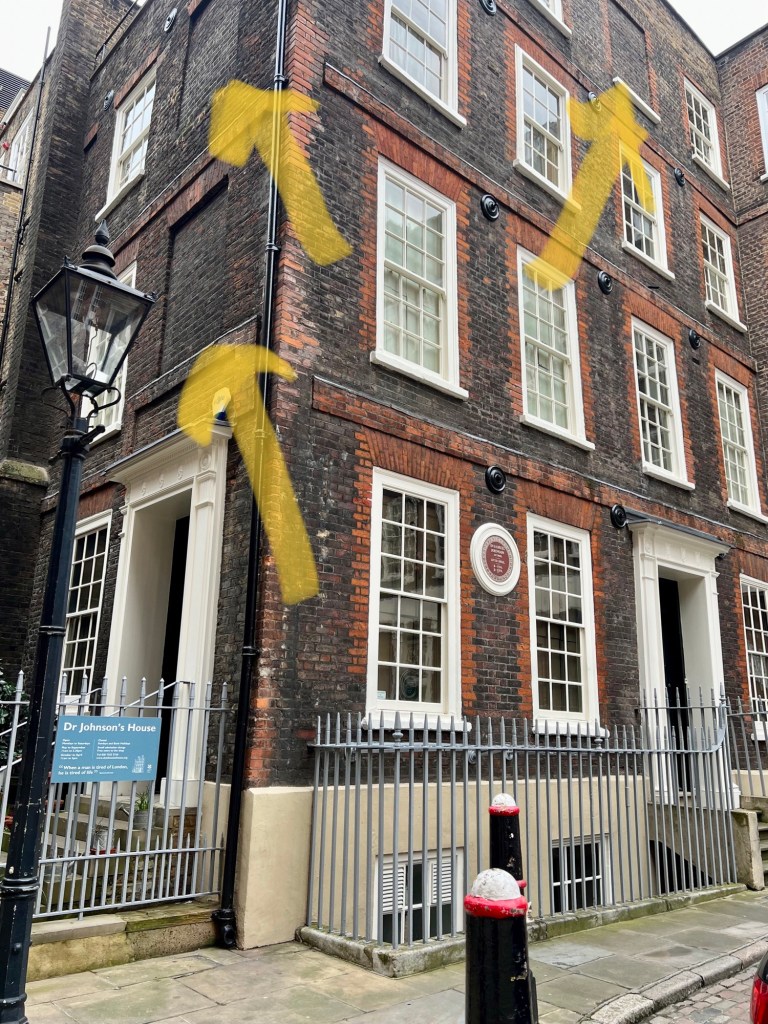


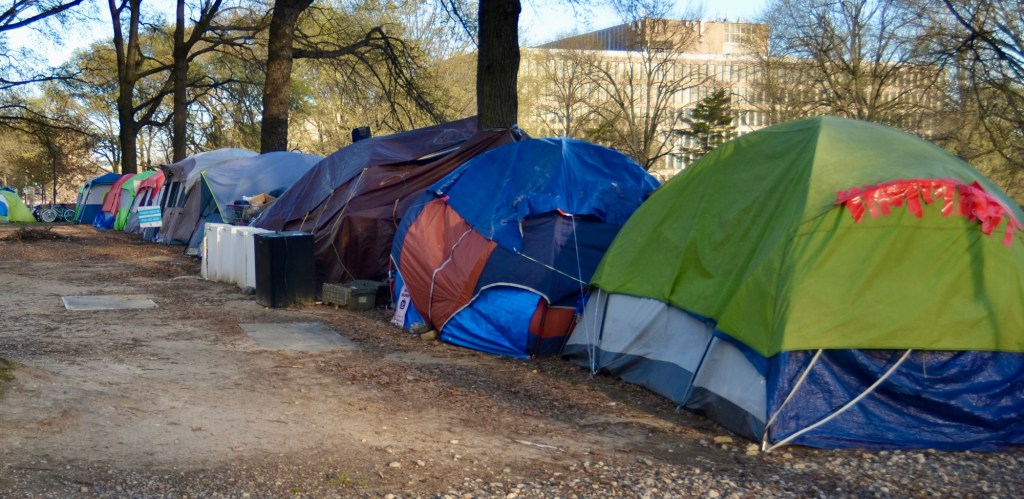


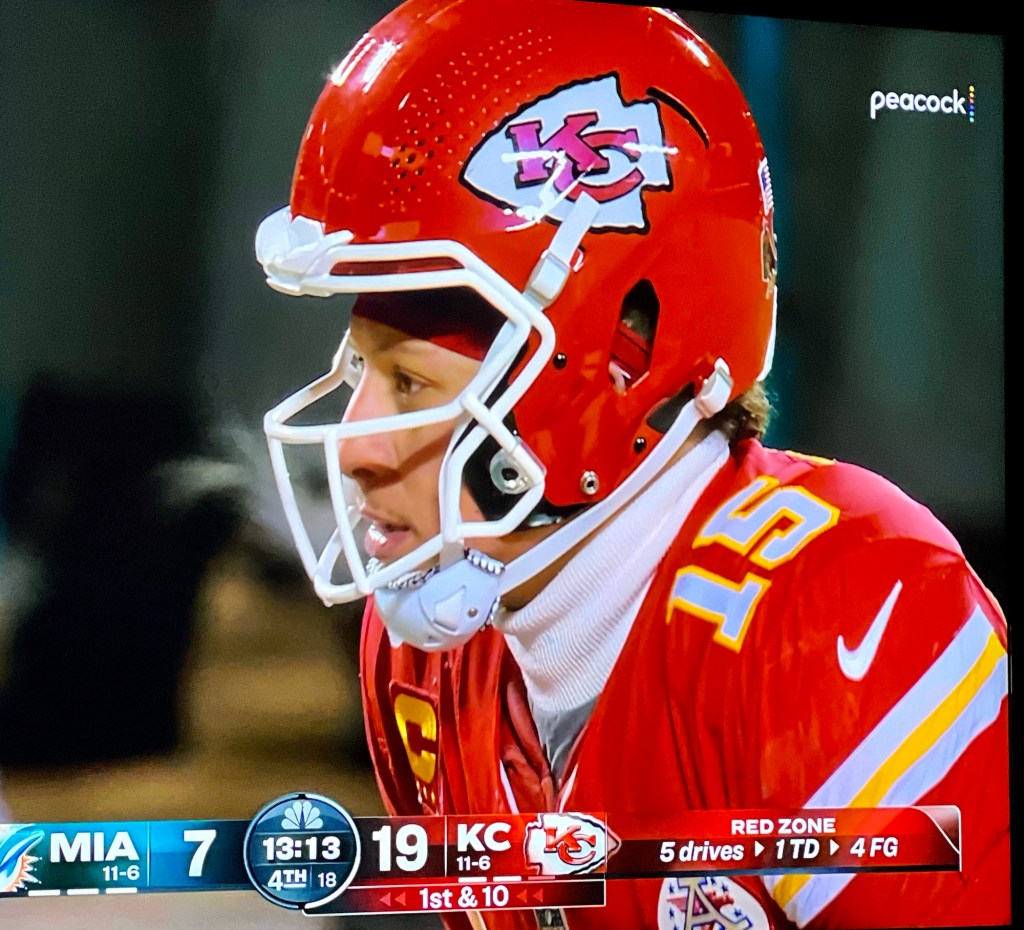


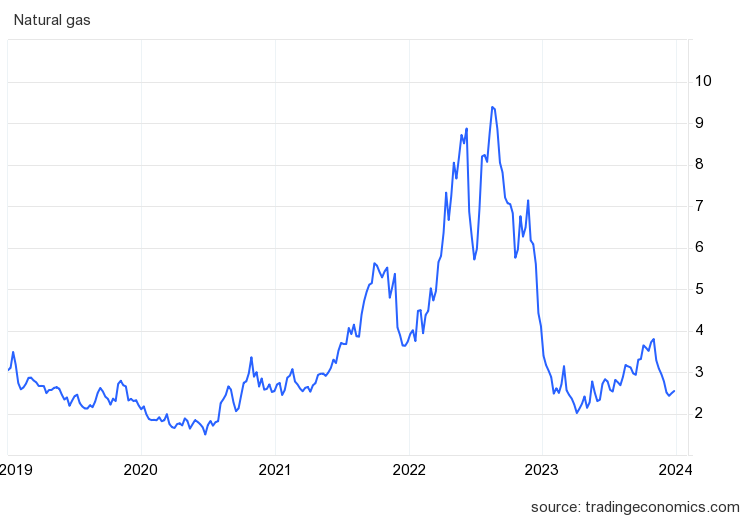



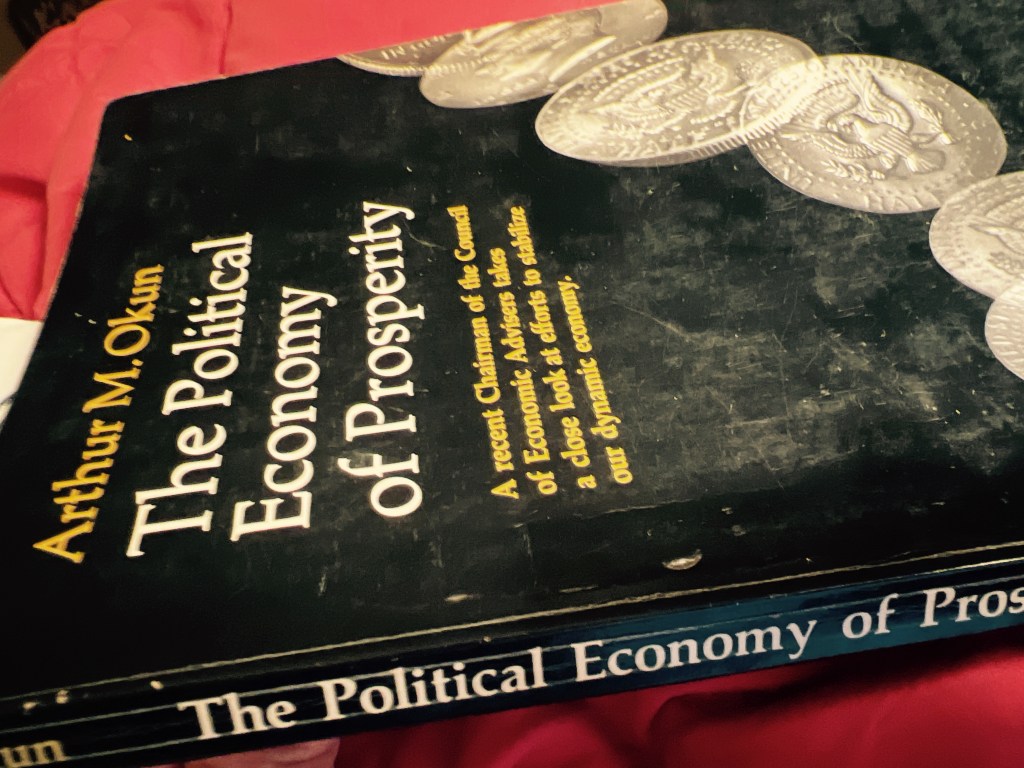

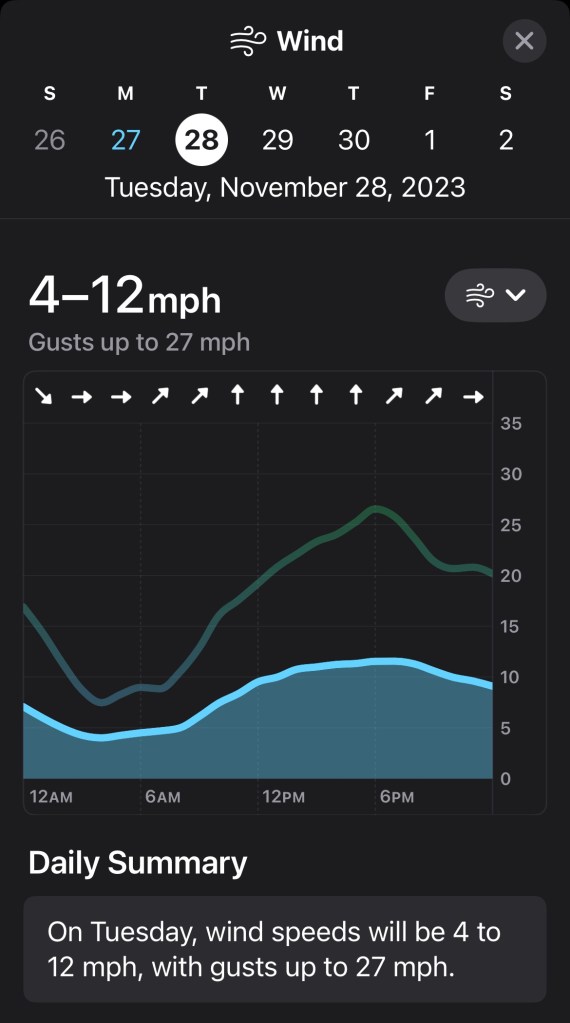















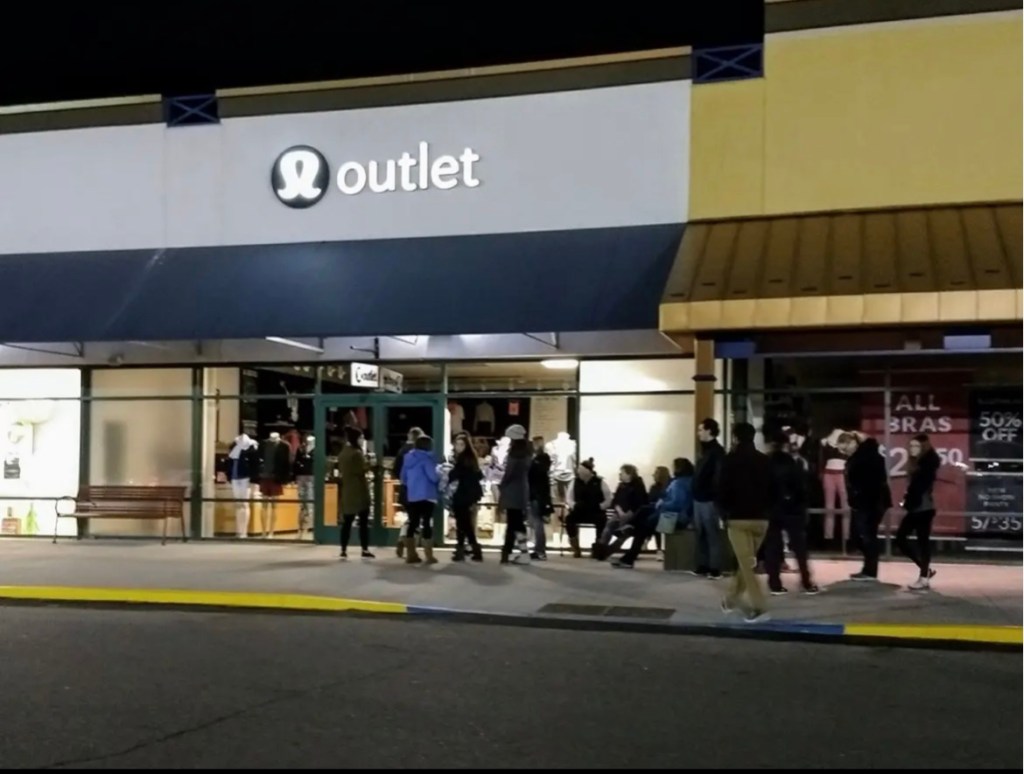
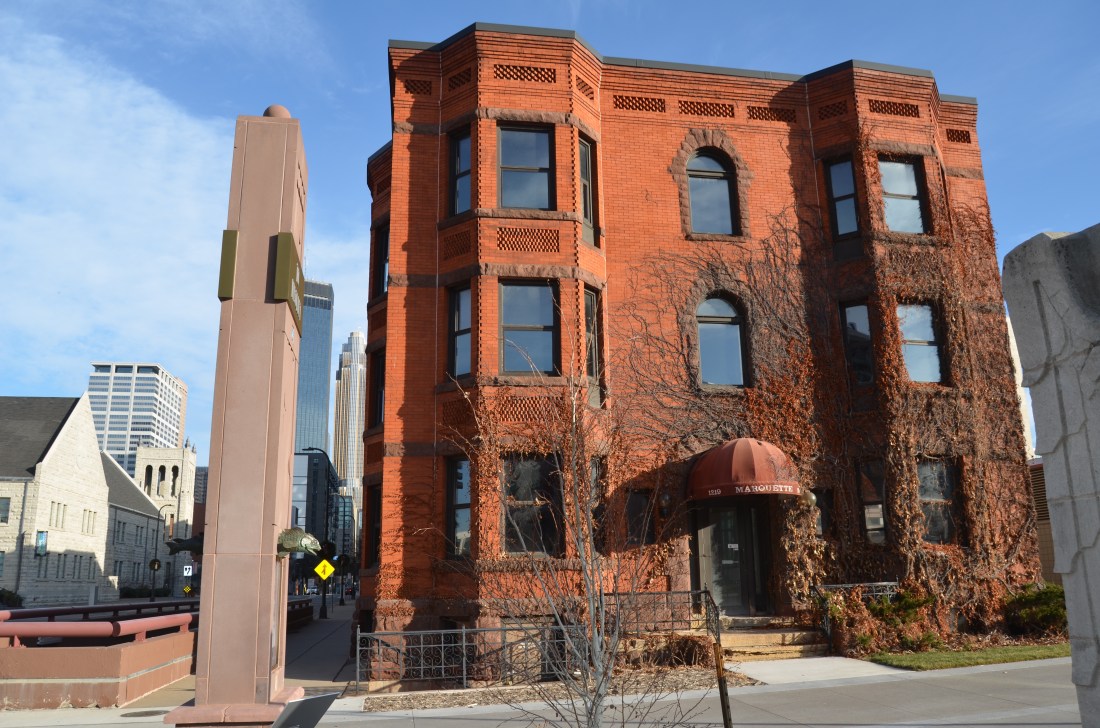





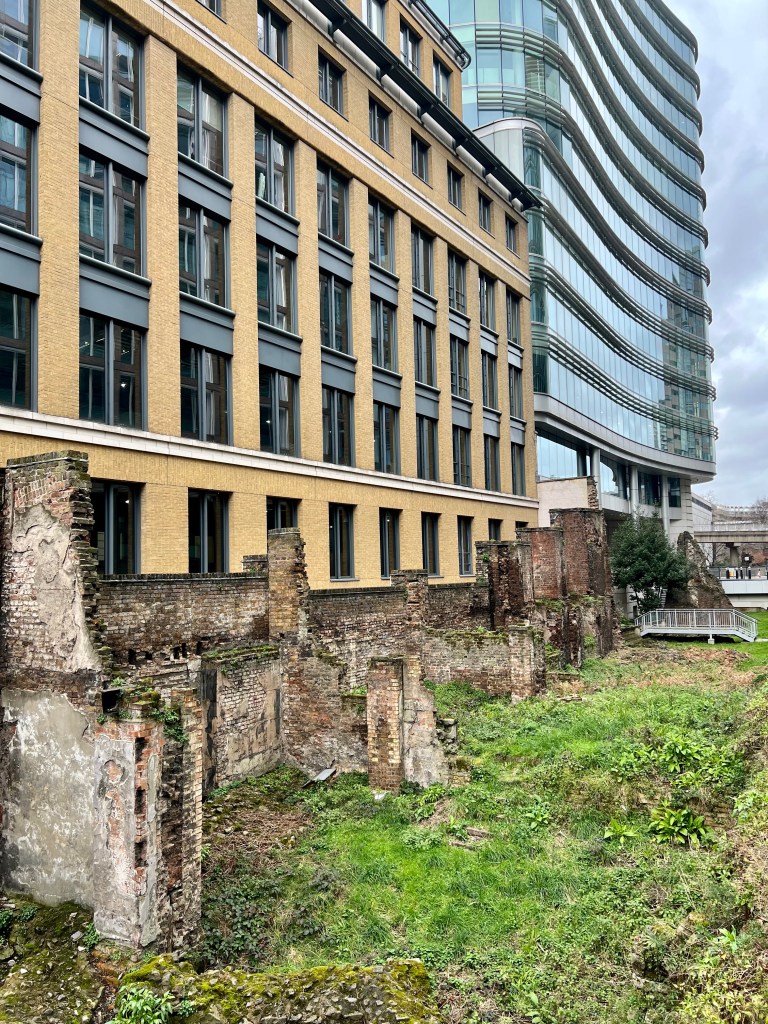
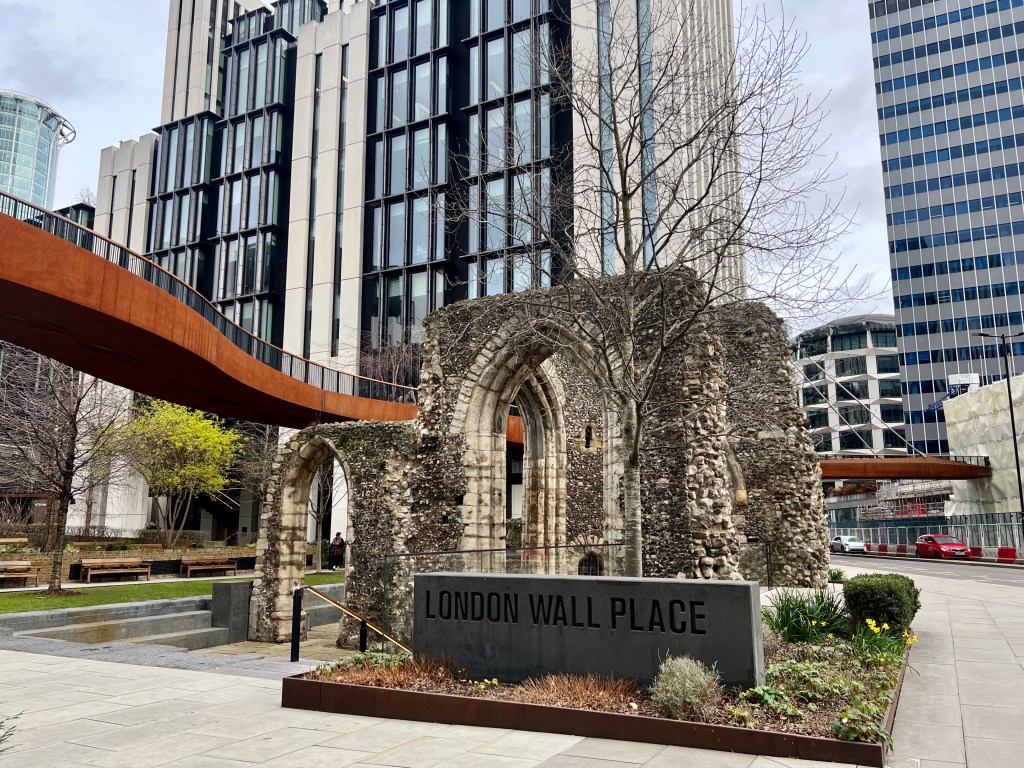




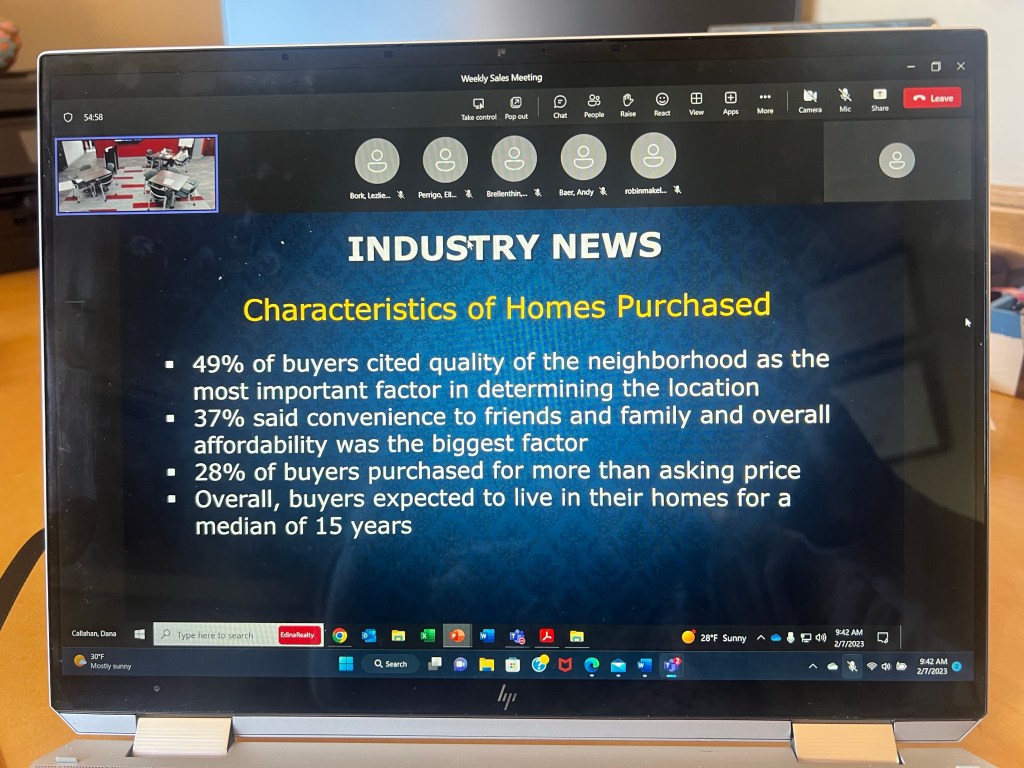
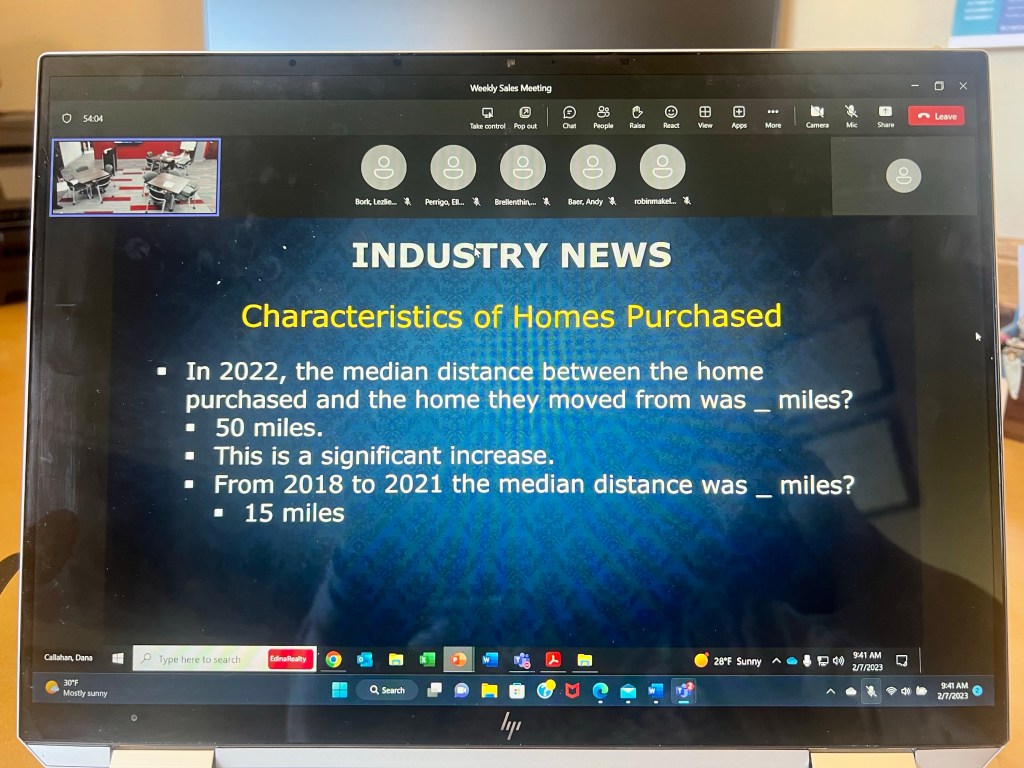




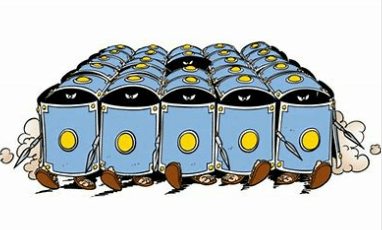



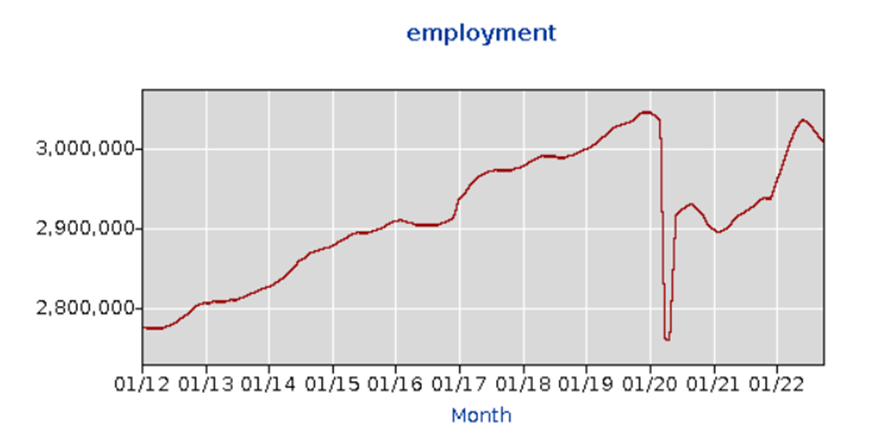

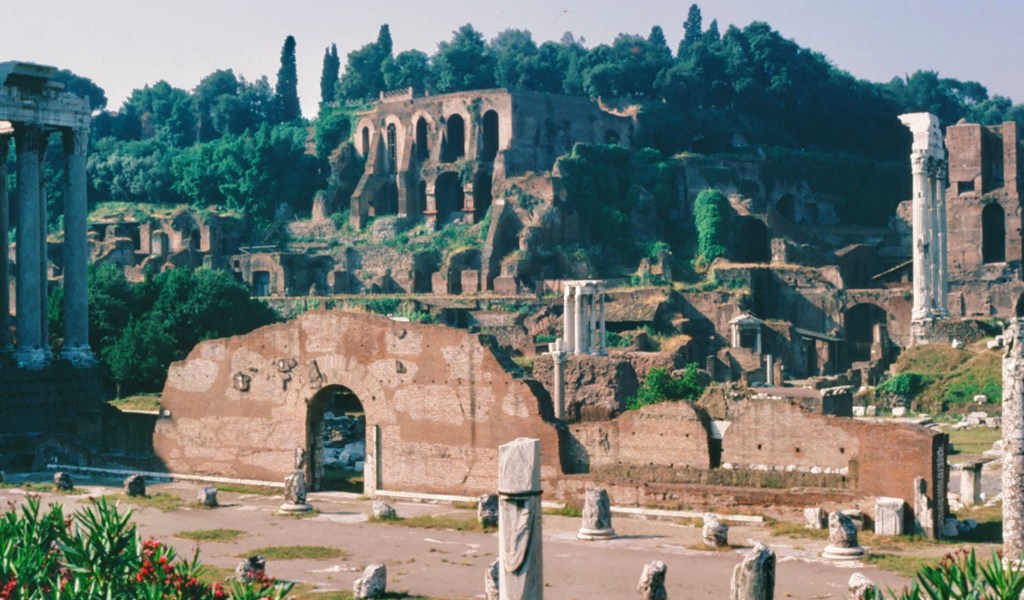




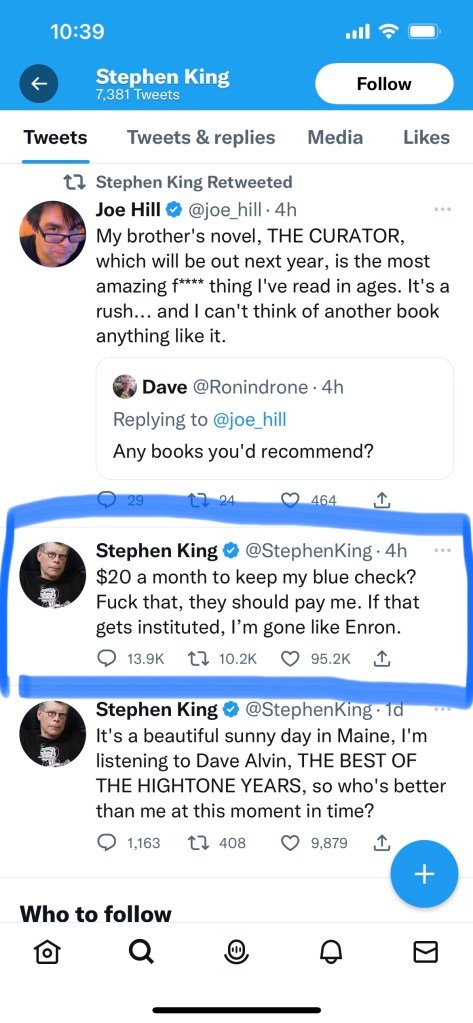





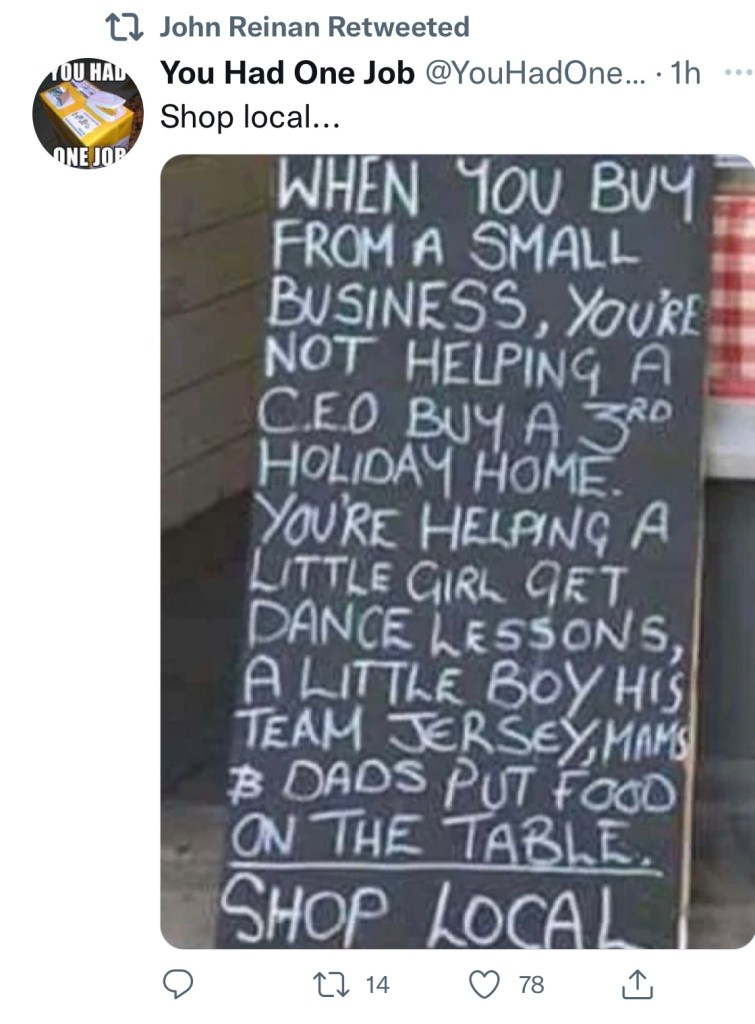

 Home Economics