It’s not a lie but…

People frequently make statements that, while technically true, lack the necessary surrounding context. Without this context, the claims can be, at the very least, misrepresented and, at worst, deceptive. Claiming context, however, maybe the responsibility of the the audience.

Consider an example.

During my highschool years, my family took advantage of me by giving me the responsibility of caring for a toddler and an enfant. I couldn’t broaden my experiences by participating in extracircullar activities or sports in highschool. I couldn’t earn my own money working at a fastfood restaurant. My family pocketed thousand of daycare dollars while I suffered a loss.

Now put context around the scenario to see if, as a member of a family, this claim is true.

  • Consider a farm family in the 1940s. People are still recovering from the great depression when thousands of farms were lost in bank repossesions. All the adults are preoccupied with the crops and livestock and feeding everyone in the household. Teenage boys sometimes leave school after eigth grade to work fulltime besides their fathers. Female family member from the old country may make the journey to help in domestic chores as an opportunity to make a new life in the US.
  • Consider a family in the 1970s. The women’s movement has championed women’s work outside the home. The parents have the financial capacity to put all their children through college. The also have the connections to mentor the kids about career choices and chanel their aspirations to people within their preferred industry. The children secure well paying jobs early in life.
  • Consider a famliy with a teenage foster child and three very young birth-children. The foster child is treated well in the household but at age eighteen is told to make it in the world by their own gumpshin.

I think most would say that the duties of the individual in the form of babysitting was matched by the duties given to her by the family in the first two scenarios. In the last scenario perhaps not so much. The point is that when a claim of retribution is made against a group, it is not possible to give an assessment until 1. the group is named 2. the context of the activity is described 3. a weighting of the benefits of being a member of the group is determined. Even then, it is often necessary to have a sense of a baseline of what social arrangements were typically acceptable for similar sets of people.

From here forward demand to know context. There is no way to assess a story without it.

Best thread of the day

This thread descibes the feel of the structure and tempo of the entire market. Throw away the old concepts of private industry and intervening governments. All parties from bureaucrates to solar panel installers to lobiests to oil rig workers to politicians to immigration officers participate in trades that look after their own interests as well as the interests of the groups to which they align. The economy represents outcomes based on the actions influenced by the will of the individual in conjunction to the will of their people. Benefits are internalized and become private benefits. Costs are externalized and show up as public deficits. No one is free from self-interest. Everyone can benefit as part of a group.

Read the whole thread.

In memory of fallen heros

A beautiful service was held today in Eden Prairie for three public servants. Grace Church hit its capacity limit of 7600 people and Prince of Peace in Burnsville also hosted a viewing session. The two police officers and a paramedic were shot in the early hours of Sunday February 18th while trying to seperate seven children from a madman. Three men went to work and did not return home to their families.

I found this eulogy particularly poignant.

No matter how hard a day most people have at work, few of us face this risk.

Images from today. The story from the Associated Press.

The power of Zone control

A new bill is being introduced in St. Paul concerning zoning. An eclectic mix of backers from builders to affordable housing advocacy groups, from the National Association of Realtors to progressive politicians, are in support eliminating exclusive zoning of single family homes across the state of Minnesota. Here’s are some of the highlights of the bill as provided by Edina Realty’s president Sheri Schmid- who did a nice job of presenting all sides of the issue at today’s company wide sales meeting.

The first bullet point is interesting. The public is denied the right to speak to their city council. It seems to me that there is an effort to take the NIMBY’s out of the conversation. Yet aren’t many, many city council meetings filled with advocacy groups doing their best to talk the loudest? Are they to be muted as well? This might be a public service.

I am an advocate for missing middle housing. In a 50s built neighborhood, it is common to see nice looking duplexes mixed in with single family homes. They blend in well and come at all levels of housing from a modest one bedroom to significant four bedroom units. They are also the main means of aquiring investment property for those entry entrepreneurs who would like to give rental property a try. I just wonder if these multifamily buildings sync with people today. The buyers in the 50s were still feeling the effects of the depression and thought of a little rental income on the side as comforting. Also families would buy a two unit property for siblings to live side by side, for instance. You just don’t hear those same demands anymore.

Let’s leave the next few points about building heights and parking for another time. Here are the points given that necessitate a shift of control from the very local level of the municipality to the state level.

The first bullet point in valid. There are too many regulations in the building process. But regulating by zoning is only one of the areas in question. Even after this is removed, said building would need to meet a whole host of other building regulations and set backs and still fit on the lot. Furthermore, these plans need to go through a planning approval process. It seems like whenever a change goes into effect on complicated process it takes the bureaucracies years to smooth out their systems.

Last I heard, considering the second bullet point, the production of new housing was on track to meet the Governor’s Task Force recommendation of 300,000 additional dwellings by 2030.

Do we need more affordable housing? Sure- the most disadvantaged in society will always, simply on a comparison scale, need to be accomodated to catch-up to the average. Minnesota has a poverty rate of just under 10 percent and folks in that income bracket have real and pressing needs. But what are the best housing opportunities for these families, and more importantly where are they?

Building more housing brings down the overall cost of housing. But helping people in need of housing as well as all the other components to a good life is a multidemential problem. I don’t think we’ve tackled all of the aspects involved. But I do think cities are at a much better vantage point to connect people to housing than the state.

Family life and Crime

Maybe because violent crime gets people’s attention, or maybe because we all like to look at problems from one dimension, I’ve noticed that analysis about people in prison has very little if anything to say about the family life of a criminal. Sure many of these guys and gals are thugs. Most don’t return home to streets shaded by old growth oaks and lined by tidy homes. But some do. And some have relationships outside of crime; and all have parents, possibly brothers and sisters and children.

The most galvanizing activity in the life of a criminal maybe their husstle. The monetary and materialist attraction to crime certainly has a strong allure. Undoubtedly for some that is all they have in life along with their network of work associates. But for most people family matters. It is a lifelong bond that can’t be shaken easily. And even if there is no connection to parents, these (mostly) men have women in their lives and children in their lives. It would be pretty cynical to think they elude the attraction of family that most of us hold dear.

In order to understand the dynamics of a certain population it is necessary to account for all the interests that draw their attention, especially the ones they are willing to act on. After personal security from harm and some form of sustenance for food, and housing, it must be family. Sometimes this is refered to as community. But that’s down the list from family. Sometimes the criminal try to tell each other they are family. But I don’t buy the omission of lovers and wives from this calculus.

At least for some, and certainly not for all, persuasion by family relations has got to play into the lifestyle choices of those who have found their way to prison. Support from these connections is the most likely way to prevent recidivism. Pulling this subgroup out of the main prison population could very well worth the effort.

NYPD Blue- Series Review

After dabbling in a few more recent series and being disapointed, I decided to go way back to 1993 and try a classic. NYPD Blue was broadcast before TEVO or streaming so I’m sure I’ve only seen a handful of the episodes. It’s interesting to see how standards have changed in the last thirty years. Some issues are spot on the same.

The writing is much sharper and less predictable than most series. The characters have more depth. But then, that’s why it had a 12 season run.

Timely Knowledge – Textbook Edition

I’m really enjoying this textbook on price theory by Deirdre Mccloskey. The explanations are lively and interesting. The book is available on-line at no cost.

As mentionned in yesterday’s post, knowledge of bargaining techiniques for a good being transacted in the marketplace is valuable to market participants. McCloskey provides this example.

But economists have not discovered very much about what constitutes exceptionally subtle bargaining. There are profound reasons why this is so. Suppose that some bargaining technique were known to be useful when employed by the Soviets-such as threatening to abandon bargaining altogether in a week if the Germans do not accede by then to the terms demanded. The Germans would come to understand this. The Germans would use it themselves. Its usefulness to the Soviets, therefore, would vanish. In general, any knowledge that the analyst of the situation acquires can be expected to be acquired by the participants. They will alter their strategies in view of the knowledge, making the knowledge obsolete. The Soviet bargainers make a “last” offer. The German bargainers know that the offer is insincere (that there are quotation marks around “last”‘) and ignore it, making their own “last” offer. But the Soviets know that the Germans know that the Soviets “last'” offer is insincere and prepare a “real” last offer. But the Germans know that the Soviets know that the Germans know that the Soviets’ “last” offer is to be replaced by their “real” last offer, itself insincere. And so forth.

Chapter 5 – Trade, page 95

Timely Knowledge

In the real estate world, transactions can take several months to come together. There is a shopping period, which is, at minimum, a few months even if a client has thought through the main parameters of their search like price points and physical attributes of the home. Then there is the waiting time for a seller with a home with just the right combination of features to put it on the market. If the first bid process is successful, the next delay is from time of signing the contract and doing a house inspection to closing. This is typically six weeks give or take.

It is not until a property closes, with a seller signing over a warranty deed and a buyer handing over a bag of cash, does the information about the transaction get revealed to the market at large. So the lague time from shopping for a home to having access the sales prices of similar properties is often half a year.

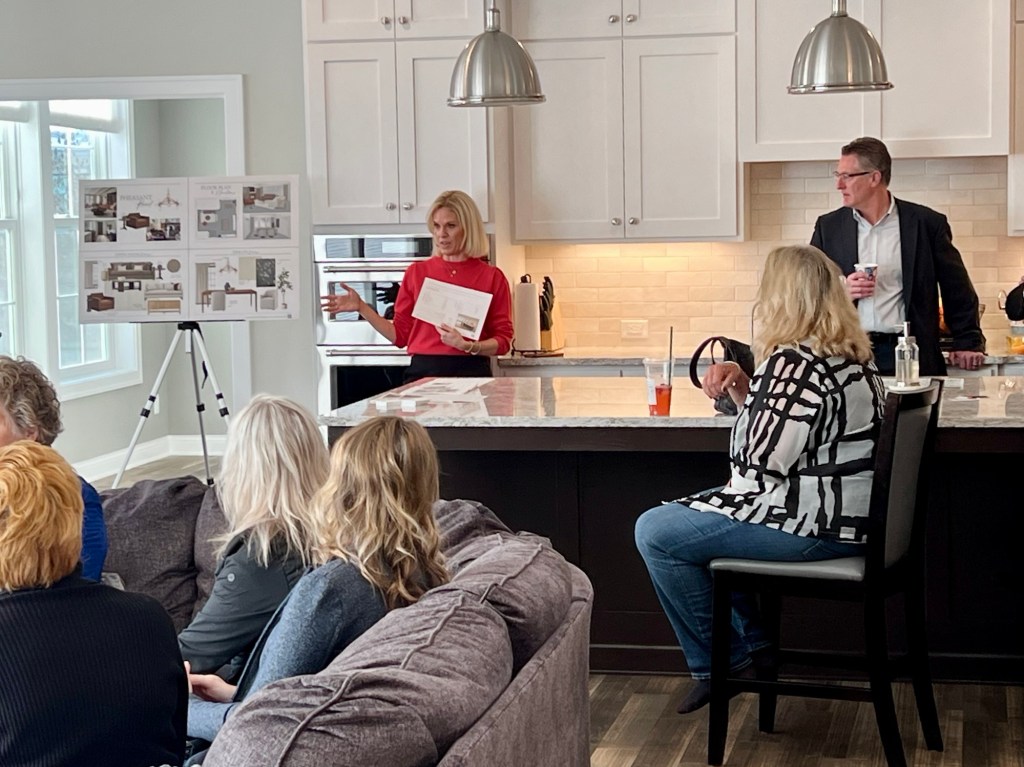
Agents that work with a large broker have the advantage of gather in meetings such as the one in the photo. Here people discuss in general terms the feel of the market. It’s useful to sense who has the upper hand in what sub-markets through antidotal evidence. Although specifics are never given out the tempo and general pace of activity is helpful.

A simple model of why

The state legislative bodies just went back to work for the season. One item they are working on involves land use regulation. The libertarian in you mught thing, ugh more rules. Maybe that’s too quick a judgement. Maybe there’s more liberty than restraint in this case.

If an issue has risen to the attention of state politicians, than it’s possible it impacts all Minnesotans. Let’s call it the greater group or G-group. From Peter Callaghan’s tweet it sounds like the rules envolve restaints at the city level. Let’s call these groups C-groups. And then let’s keep households in the story and they’ll be H-groups.

So the line of reasoning goes, that due to land use restrictions at the local level, insufficient housing is being built. Since real estate is sold in an ever adjusting market, low supply rises prices for all participants. One might even argue that low supply is gumming up the market as single, older folks are sitting in large 3-4 bedroom homes as they have no where to go. So the opportunities for new buyers and move-up buyers to navigate to a new port-of-call is slowed. While those that would prefer to give up their large home, as they are no longer using but a quarter of it, are not finding appropriate options. Hence many participants in the H-group are not feeling very free.

The C-group is responsible for, over long periods of time, formalized language on the books to prevent hither dither building. This was all done to preserve the liberty of the H-group, at those points in time. The H-group had a certain idea of what their neighborhood was meant to be. It wasn’t meant to abutt a bowling alley, or a five story apartment building. The H-group wanted to drive down tree-lined streets past other single family homes just like theirs. They wanted consistency. They wanted tranquility. And with all the other options just a bit further out, their desires did not interfere with others in the G-groups

A few generations go by, and the metro area triples in population. The spacial relations evolve to something different. Those who were newlyweds hoping for a family now are elderly with low maintenance needs. The formal regulations set out be the C-group, which made perfect sense at the time, is putting a dam in a dynamic system. Instead of transforming itself under new demands, new needs are blocked at every turn.

And so the greater group is making a rule to take out the rule that is holding back the market. Call it a liberty rule instead of a regulation. For it is through transformation of the land to new uses that allows the C-group to arrive back at a balance of the greatest freedom for the best price.

Burnsville, Mn- Trending

Burnsville is a suburb of the Mpls/St Paul metro just over the Minnesota River from Hennepin County. In the early morning hours, two police officers and one first responder were shot and killed while negotiating with a homeowner who held his family of seven children captive in the property. This is the heartbreaking reality which may befall these civil servants.

Let’s honor their profession. Everyday.

Cooperation, Altruism and Moral Judgement

People often conflate cooperation with doing good or what is right. The thought goes that is everyone just gets along and cooperates, than it’s a win for everyone. And getting along is exactly what those nice churchy people do when they reach out into the community with a helping hand to those in need. Out of a sense of duty to our fellow person, an altruist will act to augment the welfare of others.

And this is true. But there are other examples of cooperation that have not a thing to do with do-gooders in their Sunday best.

We’ve been reading David Skarbek’s book The Puzzle of Prison Order. It’s a thoughtful book of comparative analysis. By looking at various prisons, both their physical structures and their management structures, the author elucidates the emergence of a variety of levels of self-governence throughout the convict community. In South America, prisoners maybe responsible for virtually all necessities behind their wardens’ wall. While in Norway the prisoner to guard ratio is virtually one-on-one creating little need for the captive take on any duties.

From the case studies it is clear that where few services are provided, prisoners organize to allocate housing, maintain safety standards, and supplement the meager amount of food provided to them.

In San Pedro prison, governance emerges in the political realm (in the form of housing associations), in the commercial realm (markets and exchange with the outside world), and in civil society (as with the parents association).

Whereas in Bolivia the time invested by the inmates is extensive, in a small Californian prison for the gay and trans population only one position was necessary to be the intermediary between the prison population and the guards. A House Mouse takes on the duties of go between with the prison staff. Skarbek’s examination of the various spontaneous arrangement throws light on the various levels of investments demanded of the convicts. Depending on the need for governance, individuals rise to the occasion and donate their labor hours to the endeavor (one might say the socially necessary amount of labor hours, but that’s for another post).

But wait. It’s easy to forget that these are criminals who have been removed from civil society. Their emerging cooperation is forced upon them as a result of immoral behavior against their countrymen and women. They are not do-gooders. They are not altruists- at least not to the outside. Altruism delivered through self-organization is to noone’s benefit but them and theirs. And the moral behavior is dictated by their own set of rules.

Cooperation is a descriptor for a type of societal action. It’s the act of foregoing a bit of freedom to be apart of a group. Cooperation is a technique to attain an aim for an ingroup while withholding it from an outgroup. Cooperation has no moral compass. Resulting outcomes can either be good or bad depending on which wall surrounds you.

It is not equivalent to altruism. Altruism is a gift for which no duty or repayment is required.

Crazy, Stupid, Love – Movie Review

After devoting time to some movie duds, it was a delight to watch a comedy with a clever plot line. The film does a good job of contrasting the frivolity of distant social relationships versus the itimacy of the family. And in doing so says something about the value of the work necessary for such things.

The cast is impressive as well. But most of all I appreciated the laugh out loud moments.

A routine reminder

Rent control is counter productive. From the Federal Reserve Bank of St. Louis:

Weighing Trade-offs

Economists generally have found that, while rent-control policies do restrict rents at more affordable rates, they can also lead to a reduction of rental stock and maintenance, thereby exacerbating affordable housing shortages. At the same time, the tenants of controlled units can benefit from lower costs and greater neighborhood stability—as long as they don’t move.4

For policymakers considering rent control, economics can help them anticipate possible effects and may even inform policy design for those who decide to pursue such policies. Given the trade-offs, policymakers must balance maintaining affordability for those with rental housing, while possibly shrinking the stock of affordable housing for others, especially when such housing is already in short supply.

What Are the Long-run Trade-offs of Rent-Control Policies?

Targeting a pecuniary benefit to a low-income group seems like an easy solution. The shift of funds from the property owners to a social value, however, promotes undesireable long-term social shortfalls. These include the convesion of rental property to owner occupied housing as the incentives cause landlords to exit the market. Or a deterioration in the quality of rental housing as, again over a longer time frame, long term maintenance becomes more difficult to fund.

They put Us far apart-

by Emily Dickinson

They put Us far apart—

As separate as Sea
And Her unsown Peninsula—
We signified "These see"—

They took away our Eyes—
They thwarted Us with Guns—
"I see Thee" each responded straight
Through Telegraphic Signs—

With Dungeons—They devised—
But through their thickest skill—
And their opaquest Adamant—
Our Souls saw—just as well—

They summoned Us to die—
With sweet alacrity
We stood upon our stapled feet—
Condemned—but just—to see—

Permission to recant—
Permission to forget—
We turned our backs upon the Sun
For perjury of that—

Not Either—noticed Death—
Of Paradise—aware—
Each other's Face—was all the Disc
Each other's setting—saw—

Anthony Downs and Neighborhood Utilities

In Chapter 3 of An Economic Theory of Democracy, the Anthony Downs suggests government services delivered to neighborhoods be measured by their utility.

All citizens are constantly receiving streams of benefits from government activities. Their streets are policed, water purified, roads repaired, shores defended, garbage removed, weather forecast, etc. These benefits are exactly like the benefits they receive from private economic activity and are identified as government-caused only by their source. Of course, there are enormous qualitative differences between the benefits received, say, from national defense and from eating mince pie for dessert. But no matter how diverse, all benefits must be reduced to some common denominator for purposes of allocating scarce resources. This is equally true of benefits within the private sector. The common denominator used in this process we call utility.

What he goes onto say is interesting as well. The reliability of government services in policing your streets, delivery your mail or making sure that potable water is shows up in your pipes should be thought of as a flow of utility income.

Using this broad concept of utility, we can speak of a utility income from government activity. This income includes benefits which the recipient does not realize he is receiving. It also includes benefits he knows he is receiving but the exact source of which he does not know. For example, many citizens are probably not aware that the water they drink is inspected by a government agency. If inspection were discontinued, they might not realize their utility incomes had fallen until they received polluted water. Even then, not all of them would know that a cessation of government activity had caused this drop in income.

He goes on to spell out a whole bunch of utility functions. But I am still back thinking about this flow of income to neighbors. Where is a the asset value that backs this benefit?

Intersectionality

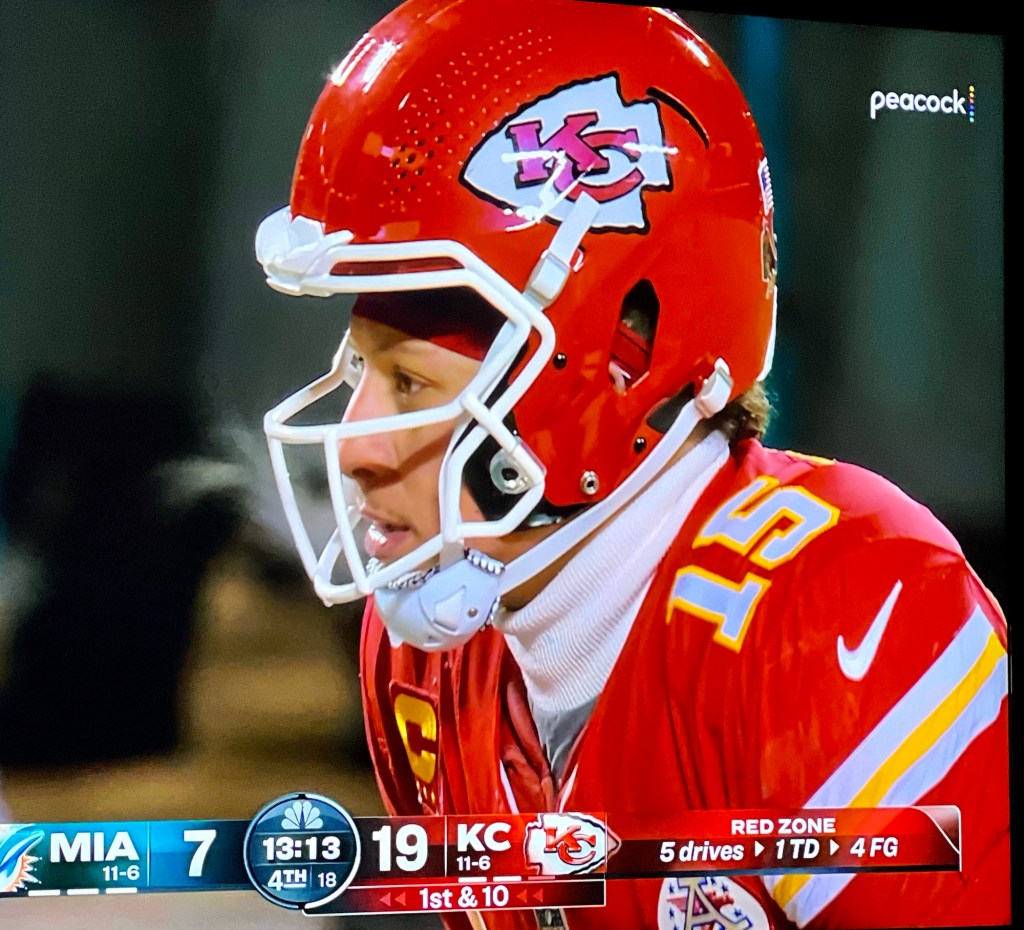
The colliding of NFL fans and the Swifties may not bring political harmony, but they sure are pushing up the prices for tickets to the big game tomorrow.

KC quarterback Patrick Mahomes

But then again it would be unusual to not see evolving sympathies between the camps. It’s just not as easy to pull out their price proxies.

The art of faith

During all the centuries of her life the church has made great use of art, but she has learned nothing from the artists. There was never an artist who did not know that he could not paint his picture or compose his music by thinking out the laws of beauty. If the church had seen the way to her truth as clearly as they did the way to theirs, there would have been no trouble and no defeat. Science never had any quarrel with artistic truth, and the artists never concerned themselves with what the scientists said was true. The painters and the poets and the musicians know that there is an order of reality in which intellectual assurance plays no part and the reason is unimportant.

And further along in Witness to the Truth:

Definitions and analyses and all such contrivances of the classifying mind were never of any importance to the poets. Aesthetic dogmas might come and go. They never touched poetry. If a man of saintly life disagreed with the churchmen’s rules, he suffered, in the so-called Ages of Faith, very painfully indeed. Not so in art. Aristotle’s Poetics was long the critics bible, but when Shakespeare was lined up against its rules and came out badly, it was not Shakespeare that suffered, but the rules.

Edith Hamilton

The best of the best and, well, the worst

Lots of publications put out their version of the ‘best’ cities. The best cities to raise a family. The best cities for bicycles or parks and trails. What’s a little humorous is the lack of consensus when it comes to the best cities for renters. Forbes’ picks has little interplay those of USA Today.

USA Today did something different, though. Here’s the results for their worst cities to be a renter list.

Downs called it Dual Rationality

As Chat GPT explains:

In Chapter 2 of “An Economic Theory of Democracy,” Anthony Downs introduces the concept of dual rationality, which he suggests characterizes individuals’ decision-making processes, particularly in economic and political contexts. This dualism reflects the idea that individuals often consider not only their narrow self-interests but also broader social concerns when making choices.

Here’s a breakdown of the dual rationality concept as outlined by Downs:

  1. Narrow Self-Interest: Downs acknowledges that individuals typically act to maximize their own utility or self-interest. This aspect of decision-making is rooted in traditional economic theory, which assumes that individuals are rational actors who seek to maximize their personal well-being. In economic choices, individuals often weigh the costs and benefits to themselves personally.
  2. Social or Broader Concerns: However, Downs also recognizes that individuals may take into account broader social or altruistic considerations when making decisions. This broader concern may include considerations for the welfare of others, societal values, or long-term societal well-being. In the context of political decision-making, voters may consider not only how policies directly affect themselves but also how they impact society as a whole or specific groups within society.

Downs argues that individuals exhibit this dual rationality in both economic and political spheres. While they may prioritize their narrow self-interest in many situations, they also incorporate social considerations into their decision-making process. This dualism reflects the complexity of human motivations and the interplay between individual and societal concerns.

By acknowledging this dual rationality, Downs provides a more nuanced understanding of decision-making processes in both economics and politics. He highlights the importance of considering not only individual self-interest but also broader societal implications when analyzing human behavior in various contexts.

Too many bureaucrats with not enough to do?

From Socrates to the Gospel of John

I can recommend this slim volume by Edith Hamilton for anyone interested in the Bible yet not interested enough to pull out the King James version they received in Sunday school and start at “ In the beginning, God created the heavens and the earth.”

Hamilton is masterful at providing a considerable amount of fodder in a condensed format without losing you, the reader. All those famous events that you’ve seen references over the years show up in an ordered format. You get to know the apostles instead if simply reading their version of Christ’s story.

Also, new to me yet the second time I’ve read about it lately, is the demonstration that the roots of Christian thought find their way back to Socrates. As in this section.

He believed with an unshakeable conviction that goodness and truth were the fundamental realities and that every human being had the capacity to attain to them. All men had within them a guide, a spark of the true light which could lead them to the full light of truth. This was Socrates’ basic belief, in the words of the Gospel of John, “The true Light which lighteth every man that cometh into the world.” His own mission he believed was to open blind eyes, to make men realize the darkness of their ignorance and evil and so to arouse in them a longing for the light; to induce them to seek until they caught a glimpse of the eternal truth and goodness “with-out variableness or shadow of tuming” which underlay life’s confusions and futilities.

Edith Hamilton was a late bloomer. She took up writing as a second career and her first book was publish when she was a spry woman of 62.

Best Performance of the Grammys

Because Chapman is delighted by the audience’s reaction to her. And Combs is delighted to perform with one of his idols. Sincerity is priceless.

Hype or valid concern?

A few days ago Time magazine posted an article entitled Millions of Americans Spend Half Their Paycheck on Rent. Here Are Median Rental Prices by State. The research used in the analysis was generated by the Joint Center for Housing Studies at Harvard. And the intent is (seemingly) to draw readers to an alarming conclusion- that there is a large underclass in America who can’t afford a place to live.

But let’s pull apart the numbers in this claim that half of rental households and who that puts in dire straights.

In Minnesota three quarters of the population own a their home. That leaves one quarter of the population living in rentals. So half of those who rent are approximately twelve percent of the population.

In Minnesota just under ten percent of the population is known to live in poverty. Let’s use an even number of ten so that we cover the homeless as well. I don’t think it is surprising that this population pays a disproportionate amount of the income in housing expenses. And it should also be noted that support for people in poverty is not categorized as income, but arrives in different categories such as child tax credits, SNAP, and renter credits.

That leaves two percent of the population unaccounted for in this observation by the Joint Center for Housing Studies at Harvard. Could there be an explanation for the remaining few who pay a large share of their montly income to rent? College and grad students come to mind. For a brief time individuals work summer jobs, take out loans and yet still must pay for housing. Many of these folks are back stopped financially by family. The policies however for student loans and financial aid give advantage to individuals with lower income. And thus kids come off their parent’s returns and file individually.

In additional to students, the elderly could fall in this category. Say someone was living out their last years in a care facility with high rental fees for comprehansive services. Maybe they are even spending down a large retirement portfolio- because that what they saved it for in the first place. Their ratio of montly expense toward rent versus income will still be high. That was planned, not unexpected.

Here are some reasonable explanations for the breakdown in how housing expenses filter through the population. None of it is worthy of a hair-on-fire headline. And diverting attention to one market can do damage elsewhere. As people who need assistance are ignored.

Some goods buoyed by groups

When Obamacare was in the works I remember crossing words with someone who proclaimed, indignantly- Everyone should have the right to healthcare! I suggested that everyone in the US did have access to care. They simply had to show up to the emergency room of a public hospital, and the code of conduct would require the medical staff to provide care.

It’s nice to hear that confirmed by an expert, Amy Finkelstein, in this interview. What she says is that there are certain products and services a society will offer based on a social contract of civility. For starters, fellow human being will not be allowed to die in the street. Action will be taken to provide the frail, the vulnerable, or the simply irresponsible, with care.

What I said back fourteen years ago, and what she says now, is that it was never whether people would get care, it was how it would be paid for. People with insurance rely on the coverage to payout. People without insurance, according to her calculations paid around twenty percent of the tab. The rest was picked up by the hospitals or the public purse.

No matter the overarching accounting system that ends up allocating resources to health expenditures, this obervation once again confirms that some products are supported by social contracts. And thus they have more efficient outcomes when the group (society, neighborhood,…) devotes some concern to the cause. If you help with kids sports, you are contributing to a reduction in child obeisity. When you taxi an elderly neighbor to their routine doctors appointments, you are preventing them from requiring more expensive treatments later.

Insurance companies understand groups from an underwriting standpoint. And that’s one way to think about it. But what I’m referring to is the time and energy people devote to the habits and actions of folks they touch on a day to day bases. This energy, if you will, squarely supports (or detracts) from public goods such as health, or safety, or family cohesiveness, or local governance. This energy is the energy behind institutions.