The extent of the fraud in Feeding our Future is truly shocking. Not one state employee visited the sites which purported to be feeding thousands and thousands of underserved kids. As this reporter states, it didn’t even take a site visit to uncover fictious addresses.
Yesterday, I took a drive. Not just to see the fall colors, but to check out some food distribution sites mentioned in my story today about how a prominent Bloomington woman’s nonprofit claimed it was feeding 6,400 children per day. 🧵
The lack of interest in the missing $250 mil by a certain party is a testament to its ability to control the narrative. Otherwise, surely reasonable people would have to admit the complete disinterest in where all these funds were going is extremely suspicious.
Was it the attorney general’s responsibility to find a legal means to stop the disbursement of funds? Was it the state auditor’s responsibility to review the number? Was it the state demographers’ responsibility that the number of kids being fed far exceeds the number of kids of this grouping in the state?
Are Minnesotans going to buy the story that *all is well* in the North Star State?
There’s a debate in our household about hanging onto stuff. My husband feels that the stacks of clothing on the shelf in the walk-in closet may be useful one day. A pair of jeans is useful, for someone. But I argue that the dozen or so new pairs of pants purchased in the past decade leave the old ones out of date and ill-fitting. And thus the function of the neglected garment has changed. An old pair of Dockers no longer serves as the vehicle to looking business casual appropriate. It now serves as clutter, or dare I say garbage.
The use of an object is different than its function. If I can separate him from a few of his items, they then become a donation to Goodwill. They may serve as a tax deduction. And when Goodwill processes them and sells them they become income for the non-profit. The flow of ownership changes in this scenario is driven by the positive values at each trade. But functions can have negative values too. Clothing may be too torn, dirty, or tattered. Then the Goodwill would bare the expense of disposing of them (although this may not be the best example as I’ve heard there is a market for rags).
So to review, an object or good can have a use or several uses. A bench can be sat on, lied on, and stood on. Perhaps a skateboarder could even use it as a prop. In that case, the function of the bench is a skateboarder’s sliding support. Notice what happened. By focusing on the function, we’ve denoted a group of people who would use the object in this fashion. Now having skateboarders transform public spaces into skateparks is not always welcome. So we have another group of people who feel a loss by the transformation of a public space.
Voila! Tagging a function to an object delineates groups of people who trade for its use, depending on how its value affects them. We are shown the marketplace.
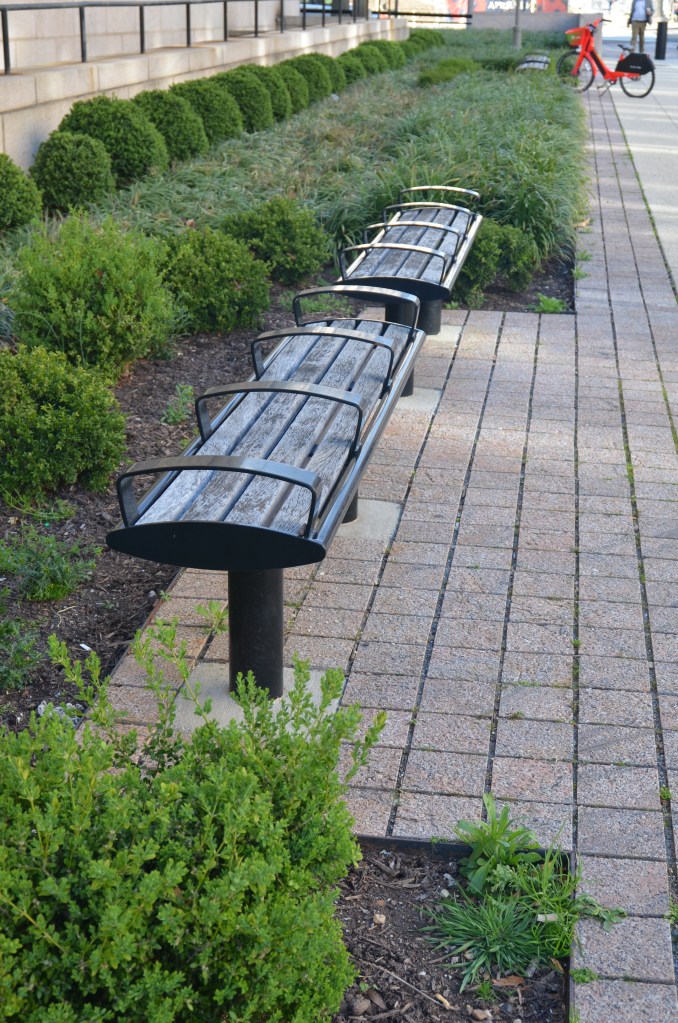
When I was out walking the pup today, I was thinking about things in terms of use, function, and design. Take for instance a park bench. You can sit on it, stand on it, or lie down across it. But its function, when used as a seat on a beautiful fall afternoon, is to enjoy the oranges and reds of the fall foliage. It may also function as a platform if there was a concert in the park and one wanted to see it over people’s heads. Lastly, it may function as a place to take a rest, especially for the homeless.
Now think about a catalytic converter. Its use is to reduce airborne pollutants produced by gas fueled vehicles, that could be harmful to people and the environment. In 1975 its function was a decisive step toward a cleaner environement as it enabled compliance with the EPA’s new mandates. Today, as the tweet below indicates, its function is currency for youth who have learned how to remove and trade them.
Michele, if you really care about public safety what you could do because you are a journalist is find out why we don’t have something in place to restrict who can buy and sell catalytic converter‘s. https://t.co/FGjoLUoMwQ
When the public surrounding a park decided to discourage the homeless from sleeping on park benches, they tackled the issue with design. And came up with this.
Isn’t it the function which determines an objects value? A bottled beverage at the check out at a grocery store may run you $2.25 even though right down the aisle you could grab a six pak for $4.59. The function of the first one is a refreshment.
The function of the stolen catalytic converters is a fungible commodity. I think Rev Christopher is asking for an economic design that would break up the market so that his youth would no longer have incentives to carjack and steal. Who’s up for the challenge?
I love books with maps. This one is on the inside cover of Dancing at the Rascal Fair by Ivan Doig. He writes about settlers in Montana at the end of the nineteenth century. Scotts were partial to the state as its vast, remote beauty reminded them of home. At the center of the tale is a reluctant school teacher who, out of necessity, accepts the position of corraling the kids into an atmosphere of education, and plays out all the ways in which the education system reaches into family life. It’s a lovely book by a poetic writer.
I came across this documentary when I searched for Vita Activa. My aim was to find more discourse on Arendt’s philosophical concept of action. The title of this documentary is woefully misleading as throughout the whole two-hour show not once is this phrase mentioned. That’s not to say that I didn’t enjoy the film. I did. Arendt is someone I’ll keep after.
Quotes from her writings are laced throughout the movie but seem a little like window dressing for the story of the twentieth-century Jewish experience. That alongside her romantic experiences takes precedence over a comprehensive overview of her thought and how the mechanics of it fit together. This was where I was hoping to learn about Vita Activa. Now I will be forced to read The Human Condition when I thought I could watch a film instead!
One reviewer of her capstone work made my day on Good Reads. Here are comments from Andrew:
Also, she seems to intuit that her ideas are complex and not immediately penetrable; some of the concepts in the first chapters that leave you scratching your head she knowingly addresses in more detail later on, without calling too much attention to the repetition and further elaboration. It’s as if she knew you wouldn’t have any idea what she was talking about the first time and wanted to inconspicuously help you, avoiding any embarrassment on your part.
Minnesotans are known for having an affinity for books, book fairs, bookstores, and well-equipped libraries. Hennepin County Library system ranks up in the top ten of the many lists proclaiming the largest collections or circulation numbers. As does the University of Minnesota’s library. But who knew that the U held the ‘the world’s largest gathering of material related to Sherlock Holmes and his creator Sir Arthur Conan Doyle?’
The Collections consist of over 60,000 items including books, journals, and a wide variety of other forms through which the transformation of the Holmes character from the printed page to a cultural icon can be traced.
Please note: The collection itself is housed in our secure underground storage area and is generally not available for viewing on a tour. If you are interested in seeing particular items from the Sherlock Holmes Collections please consult the online catalog or other finding aids to locate particular items of interest.
The story behind how this came to be is spelled out in an article in the Minneapolis/St. Paul Magazine. As with many good collections it started with a few passionate people.
“But you have to go back to 1948,” he says, to a now legendary lunch of five faculty members, all deans or department heads, all deep Sherlock Holmes enthusiasts, at Coffman Union’s Campus Club.
Then there was an addition to the collection here, and the coup of a very valuable collection in 1978.
The next domino was landing eccentric Santa Fe collector John Bennett Shaw’s massive Holmes collection. Unlike Hench, Shaw was a Holmes completist—rare posters, license plates, street signs. After the U landed Shaw’s stash in the ’90s, the floodgates opened.
All of this is located in the sub-basement of the Andersen Library on the U of MN Twin Cities campus. After nearly eighty years of collecting and maintaining the collection, you might even say it’s turning into an institution.
I was recently reminded of this quote from Friedrich Hayek. He describes how our actions are ruled by two different spheres of order. The manner of our obligations to our children does not extend past the front doors of our house. An acceptable reprimand in a workplace between boss and employee may be considered uncaring in a network of friends.
Part of our present difficulty is that we must constantly adjust our lives, our thoughts and our emotions, in order to live simultaneously within different kinds of orders according to different rules. If we were to apply the unmodified, uncurbed, rules of the micro-cosmos (i.e., of the small band or troop, or of, say, our families) to the macro-cosmos (our wider civilisation), as our instincts and sentimental yearnings often make us wish to do, we would destroy it. Yet if we were always to apply the rules of the extended order to our more intimate groupings, we would crush them. So we must learn to live in two sorts of world at once. [italics original]
The Fatal Conceit (page 18)
The value we create through our network of friends or commitments to associational fellowship operates in a different sphere from the unfettered obligations of commerce.
When I went to my copy of the book I started reading from the top of the page. Before Hayek gets to acknowledging that the two spheres of activity must work together or they will crush each other, he depicts a bunch of different players other than individuals.
Moreover, the structures of the extended order are made up not only of individuals but also of many, often overlapping, sub-orders within which old instinctual responses, such as solidarity and altruism, continue to retain some importance by assisting voluntary collaboration, even though they are incapable, by themselves, of creating a basis for the more extended order.
The Fatal Conceit (page 18)
The simplistic model portrays the selfish man using the capitalist system to maximize his interest in a zero-sum game. The state watches the public good and provides products and services to that end. But Hayek suggests that economic players can be groupings established through solidarity and altruism. These are abundant and overlapping.
Think of a formal grouping that provides public services to its members, such as a teacher’s union. When the union negotiates it is acting in a competitive ego-centric way against the public. It is a private player. Yet ever member of the union shares equally in the spoils of the union’s efforts and hence obtains a public good. It is the manner of the activity defined by the boundaries of the group which makes a wage increase public or private.
This morphing of the nature of a good through action within defined boundaries presents challenges to an accurate accounting of the whole system.
The last twenty years have been good to tech nerds. When the floppy-looking Bill Gates came out with the personal computer many people might have thought it was a one-off success. Meanwhile, the smart money left engineering, got an MBA and a job in finance. It was the 90s and it seemed like the right thing to do.
Fast forward fifteen years and money was multiplying faster than starter yeast for Amish friendship bread in Silicon Valley. Apps, games, and whatever else they do with code were the gold that the smart techs were mining. And mining with a moral superiority that what they were bringing into existence was changing every facet of the economy. Those were glory days for math majors and engineers.
Mathematical techniques also became central in economic papers. Fancy statistics and linear regression models are used to demonstrate relationships between parties and their use of resources. Fast forward to the last five years and there’s this amazing mix of massive amounts of data, computers that can handle it in a timely manner, and mathematical tools to replicate theories.
But you don’t have people educated in the classics to help parse all the people represented in the data. Even recently I saw an analysis of real estate by zip code – zip code! I encourage you to drive the parameter of an area in your city identified by zip code. Do you see consistency in the properties which would suggest similar set? In my experience urban neighborhoods are not delineated by zip code or census track.
Going forward, the methods used to sort groups to obtain useful insights could be aided more by liberal arts majors than math majors.
I happened to catch media-personality Jason DeRusha’s post in time to listen to former Governor Pawlenty take over his three-hour time slot on talk radio. The two-term governor seemed to be having a good time interviewing and surprising people across the airwaves. I don’t see how anyone can say that the political nuance of an interviewer doesn’t make a difference.
My latest favorite Twitter follow is a Reverand out of North Minneapolis. He calls it the way he sees it, pulling no political punches. Here’s an example of calling out the bread-and-butter politicians.
See here is the problem I have with your little chart. Those states on the chart. I never go to, But I do travel in and out of CD5. How about you put that one on your chart. Because there are problems there also. BTW Jim isn't worth the time of day. https://t.co/RVR6VaMq2D
And in local sports, the Timberwolves basketball season got underway with a win a couple of nights ago. Fans are in that hopeful stage of the season, excited about the potential of a winning record. We’ve had some amazing talent come through the Target Center, but have fallen short on team dynamics. Maybe this is the year? Viking football superstar Dalvin Cook and friend in costume were on the floor- wish I could afford those tickets!
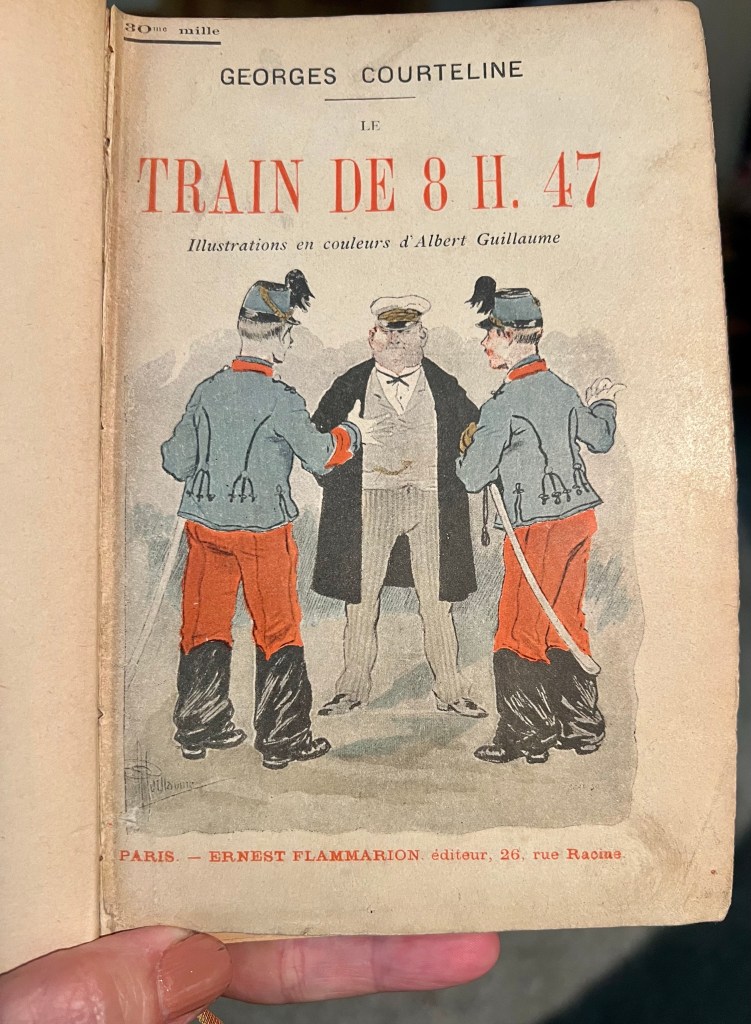
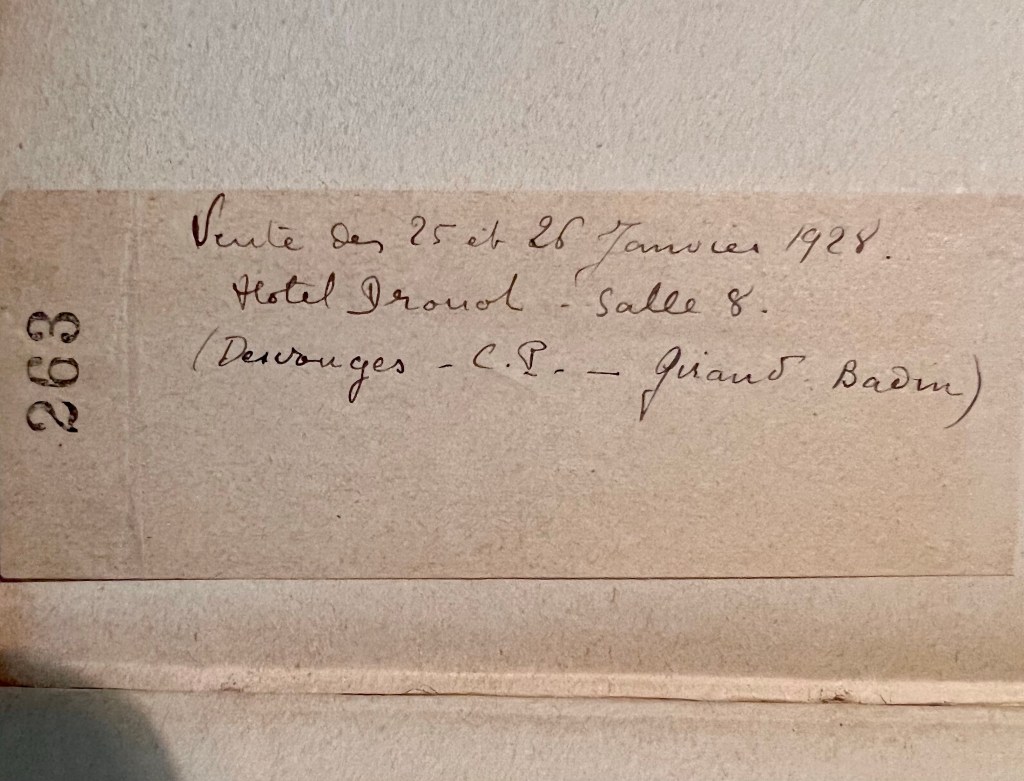
I picked up this roman at a sale some time ago. I was, and still am, intrigued by the little note tacked onto the first endsheet. The enscriptions reads “Vente les 25 et 26 Janvier 1928, Hotel ? salle 8…” The penmanship is exquisite.
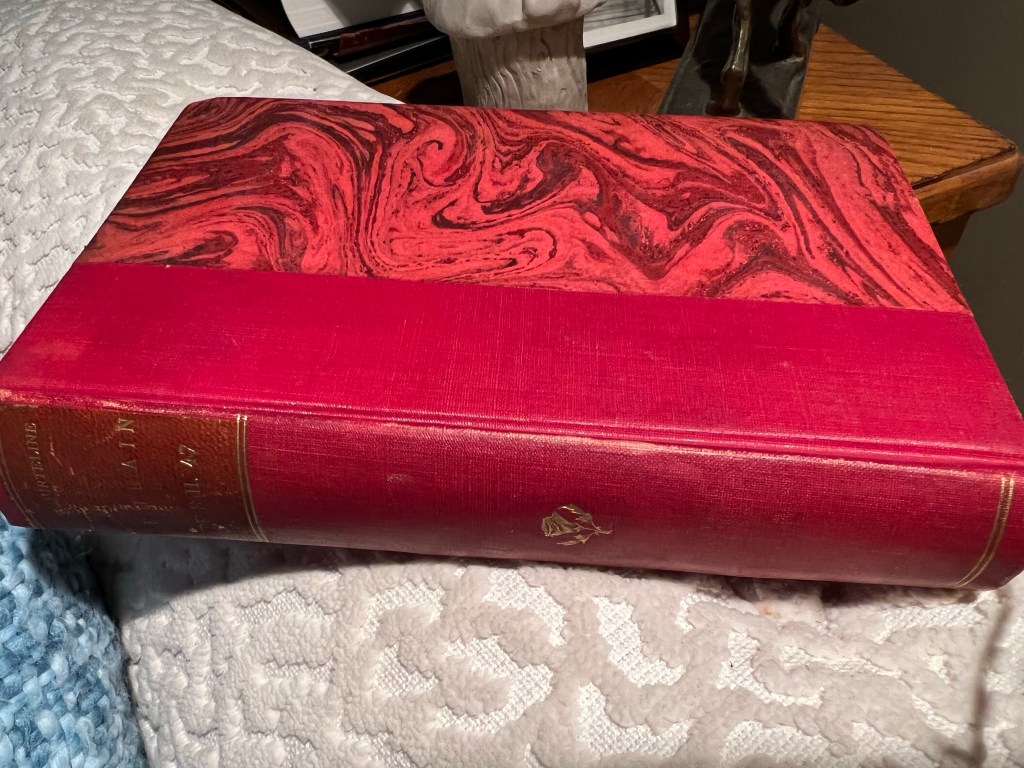
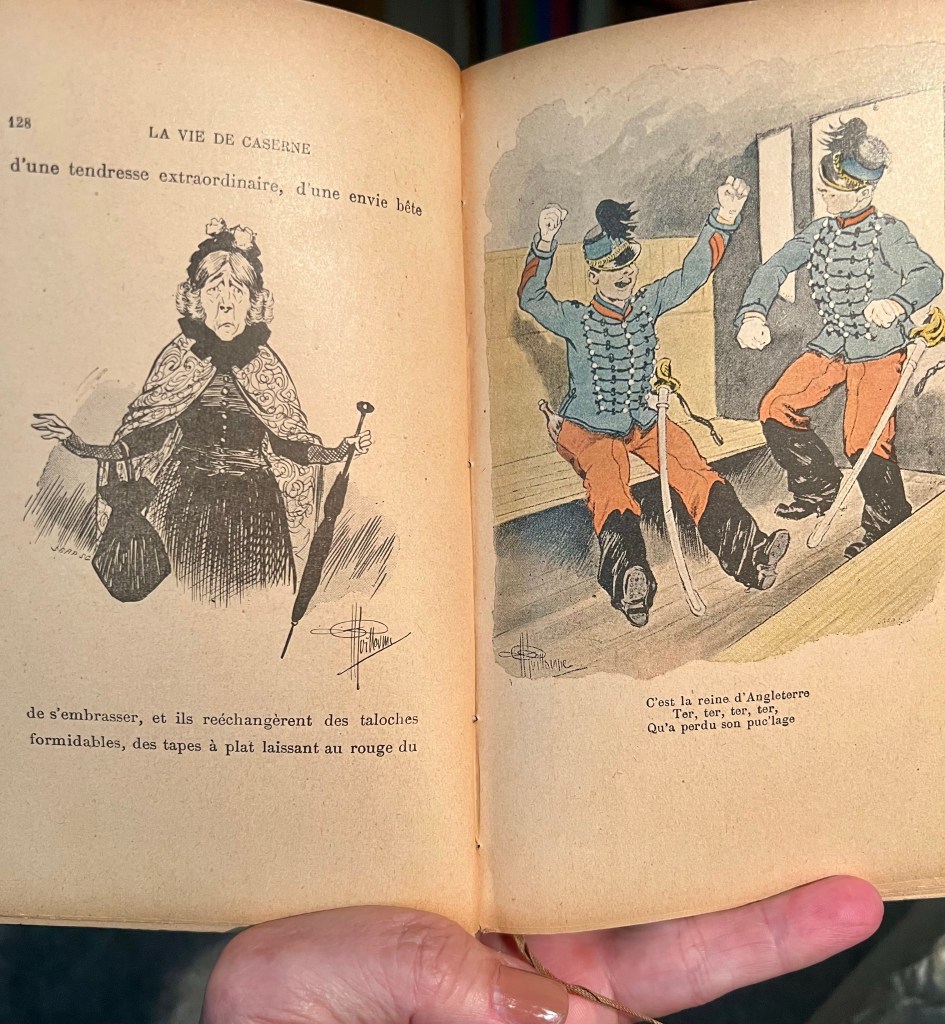
There is no doubt that this was a mass-produced book, part of a series of popular books. And I have looked into books enough to know that most do not garner any type of monetary extravagance. But I do like this book. The pages are cut to different sizes, the binding looks primitive and the marbling on the cover is a sign of a book of yesteryear. The drawings are also delightful.
And I suppose that is the reason we like to collect things, whether objects or ideas- because they delight us.
Local urban geographer Bill Lindeke does a nice job describing how a building boom finally came to fruition along the first light rail line in Minneapolis. When the Blue Line went in eighteen years ago, there were heightened expectations that new construction would line up along this aging railway corridor from downtown Minneapolis out to the airport. But it took time.
That was 18 years ago. And ever since, for the most part, the pace of transit-oriented development has seemed glacial. According to Metropolitan Council studies, more than 12,000 new apartments have been built along the Blue Line since its opening. But if you glance at a map, the vast majority of this construction has been downtown, or else subsidized in some way. For most interstitial stops along Hiawatha, south of downtown, there’s been very little new housing construction. Even the rosiest development booster would have to admit it’s been a slow climb.
What I remember from selling single-family homes is there was an increased interest in those within a handful of blocks from a rail stop. The houses along there are modest for the most part, and the prices ran with the metro average, so younger people latched onto the opportunity for great access to downtown Minneapolis. No need to drive to work and pay exorbitant parking. No need to drive to your favorite ballgame or watering hole. Just hop on the rail line!
The premium in the sales prices of these homes could easily have been verified by anyone with an excel program. With proper splicing of access to various public amenities, regression analysis can parse down the amounts paid for all sorts of public amenities. Improved access to transit is certainly on most consumer’s minds. Still, the price push wasn’t enough for new construction.
“It really boils down to rent levels in every neighborhood,” Sweeney said. “Historically, rents in (Longfellow) were too low to justify much new construction. Few projects worked here (and so) while there were a few things built 10 years ago, you didn’t see a large boom. But area rents have grown, which allows new construction to be feasible.”
Sweeney is the developer who has put up two new apartment buildings along the Blue Line in recent years. Policymakers and pundits want to theorize about housing solutions, but people like Sweeney and the investors who support his group are the ones who have to be able to make the numbers work. A bonus for transit infrastucture is just one component of price.
Another valid issue discussed in the article is the various timeline for the pace or even appearance of new construction in older areas. The story tells of a tipping point for this neighborhood. Still to be discussed is a more thorough overview of the neighborhood components that green light building.
I can’t recommend this book enough. It is beautifully written- throughout. It has a lovely and entertaining storyline. There are many layers to it yet you don’t have to live in each one. Choose! It’s part of the book.
If you like to learn about history but not through school books, you will come away with an education. There are references to Rousseau and Montaigne, Dostoyevsky and Tolstoy yet not in a pedantic way.
Mostly it is about a gentleman who is dedicated to his ideals, the love of his country, and the devotion to his friends and heritage.
Fall means snow-covered tea roses, leaves to rake, and hoses to drain. Fall means football games. Fall means pulling out the corduroys and flannel shirts. Fall means turning on the furnace. Fall means pumpkins, Halloween, and handfuls of candy.
Restrictions on how and what is built where is an ongoing conversation in any city planning department. Too many rules limit the number of available dwellings, pushing prices to new heights. Too few rules might infringe on the use and enjoyment neighbors are promised when they acquire their homes.
In Japan, teeny tiny apartments are being built to allow more people access to the hot areas of town. These micro apartments are smaller than a ten-by-ten-foot room which is considered a small bedroom in our neck of the woods.
With its high property prices and the world’s most populous metropolitan area, Tokyo has long been known for small accommodations. But these new apartments — known as three-tatami rooms, based on how many standard Japanese floor mats would cover the living space — are pushing the boundaries of normal living.
The article mentions that these units are not at the bottom of the market. They are stylish and new. They are attracting a younger set of renters who see themselves in a higher-end neighborhood and have yet to experience a larger apartment, and thus (perhaps) don’t feel the loss of space. It’s the match of neighborhood amenties, quality of interior finishes and price that make these small spaces work.
And they are situated near trendy locations in central Tokyo like Harajuku, Nakameguro and Shibuya, which are generally quite expensive, with luxury boutiques, cafes and restaurants. Most of the buildings are close to subway stations — the top priority for many young people.
Over two-thirds of the buildings’ residents are people in their 20s, who in Japan earn on average about $17,000 to $20,000 a year, according to government data. (Wages in Tokyo are on the higher end.)
On the other extreme of the housing restriction stories, is the conclusion of a longtime feud between a Marin County (CA) man and local regulators. He’s being evicted, in part, for operating a creative sustainable toilet that has been in use for the past fifty years.
…, he’s built a sanctuary to showcase his ideas about environmental sustainability: the Shower Tower, the Worm Palace (crucial to his composting toilet), the Tea Cave (where he has stored more than 50,000 pounds of rare, aged tea), the Tea Pagoda (where he’s hosted tea ceremonies for friends and dignitaries for more than 40 years) and so many more.
He calls it The Last Resort and he never had permission to build any of it. “I’ve been a scofflaw all my life,” said Mr. Hoffman, 78. “I have to recognize that.”
The battle between this outsider artist and the government has been going on for more than a couple of decades. Ten years ago the NYT ran a similar piece. He has a contingent of supporters and recently had a shot at maintaining the property through a historical designation. But now his eviction seems imminent. Meanwhile, new construction in the San Fransisco Bay area is being stymied by regulation-induced high prices.
This brings up the point that in some areas of the country the use of an outhouse is completely acceptable. On large acreage properties in the wide open plains, there’s no harm done in digging a hole and erectly a one-stall shack with a bench and a door with a half moon. The value or harm of regulations that allow super-small apartments or unstructured sewage disposal is entirely dependent on the group structures and commitments of nearby neighbors.
The rational man model is has been under attack for a while. Many have noted that what is rational becomes as slushy as ski hill in spring. Instead of shuffling all things non-rational (according to whom?) to a field of behavioral interpretation, let’s think about the essence of a transaction.
The marketplace is made up of trades. One individual or party commits labor or resources (or both) in exchange for something of value, often money. Where that settles is called the price. At that fixed point in time, at least two parties were able to come together and voluntarily agree to an exchange. The price is interesting because when people and parties repeat these activities more frequently when they can look to a history of price to feel reassured that they aren’t getting duped. Being called a fool is a significant deterrent to economic activity.
So it seems to me once there is a consistent (or statistically significant as the mathematicians like to say) price, there is a market.
Markets refer to the grouping of people or parties who are able to participate in these deals. Before you think that is anyone who chooses to stroll into the central open air market in Marrakesh, consider that not everyone can get to town. And even some of the richest citizens of the world- US women- as early as forty years ago, did not have their own bank accounts, were not on the title of the homes where they raised their children, and had no personal wealth. Barriers to markets are eveywhere in many forms.
But back to the essence of a transaction. If you are lucky to travel abroad to that exotic marketplace with covered stalls and trays piled high with brightly colored spices, you will find that as a foreigner, the price to you is not the same as the price to the countryman. A tourist will pay a surcharge if you are deemed rich enough. When you buy girl scout cookies the surcharge is a donation to scouting programs. A purchaser of organic fruits and vegetables once expressed the surcharge as a tax he willingly paid to support the farmer’s efforts. The price for the spices in the market, the cookies, or the fruits is made up of two essences: the private market one and the social surcharge.
What about the other way around. Say you hire a kid from a disadvantaged family. He doesn’t show up on time, you have to smooth things over with your customers due to some communication problems, and you’ve got to devote more time than usual to training. This employment arrangement also has two essences. The primary essence may still be to perform a job for a wage. Yet the secondary essence is done presumably to lend a hand to someone who might otherwise fall to the wayside and is accounted for in the loss of the extra time necessary to manage the employee. The second essence is social.
I’ll stand by the claim that each and every transaction has two essences. Sure- some are hard to distinguish because the product or service at hand is so well suited to the private market. And some transactions are mostly provided through public intermediaries due to the heavy social implications endogenous to the trade. There are no market failures. But that’s for another post.
With four weeks to go until election day, the campaign ads are becoming increasingly frequent. What is different this year is that every level of office, down to the Secretary of State (an administrative position), is coming up with the funds to run TV ads. And then there are counter ads. And the news media jumping in to evaluate whether the ad and counter ads are accurate.
A television ad produced by an independent expenditure group takes aim at Republican Kim Crockett in her bid to defeat Democratic Secretary of State Steve Simon.
The ad makes some truthful claims about Crockett’s stand on a couple of key election issues but also significantly misleads viewers by claiming she “proudly calls herself your ‘election denier-in-chief.’”
The ad starts with a narrator promoting Simon, saying “Secretary of State Steve Simon makes it his job to defend democracy.” That’s followed up with audio from Simon himself saying, “I have pledged to do everything to always protect the freedom to vote.”
The ad then quickly pivots to attacking Crockett, including a grainy black-and-white video of her speaking at a forum in June.
“Kim Crockett proudly calls herself your ‘election denier-in-chief,’” the ad says, with the last part of the quote making it appear Crockett is calling herself that nickname.
……
Because this ad includes a mix of misleading and out-of-context material along with truthful claims, it gets a “C” on the 5 EYEWITNESS NEWS “Truth Test.”
The state auditor’s race is also getting more play on the local public affairs program, Almanac, as several DFL candidates have refused to participate in long-held debates. This position is in place to enable an outside audit of various forms of government. Ryan Wilson is the GOP challenger and Julie Blaha is the DFL incumbent. There is some question as to whether she should have stepped in and audited the disbursal of $250 million in federal funds in the Feeding our Future fraud scandal.
But by far the biggest race in terms of ad expenditures is the competition for the seat held by congresswoman Angie Craig (DFL) in Minnesota District 2. This is the second challenge by Tyler Kistner who narrowly lost the race two years ago. During the Vikings game or the news, there are sometimes three ad installments per commercial break. Angie is back-roading in a Jeep looking down to earth and Tyler shows off his beautiful young family. The race is often cited among the top ten most competitive races in the country.
Perhaps energy generated from this political tete-a-tete is stirring up the rest- but whatever the reason Minnesotans are getting an earful about each contest from the Minnesota Governor to the Minnesota Attorney General, the Secretary of State, the State Auditor, and even on down to the County Attorneys. Tradition has it that a last-minute bombshell always explodes in the weeks leading up to November 8th. I can only imagine what that will be.
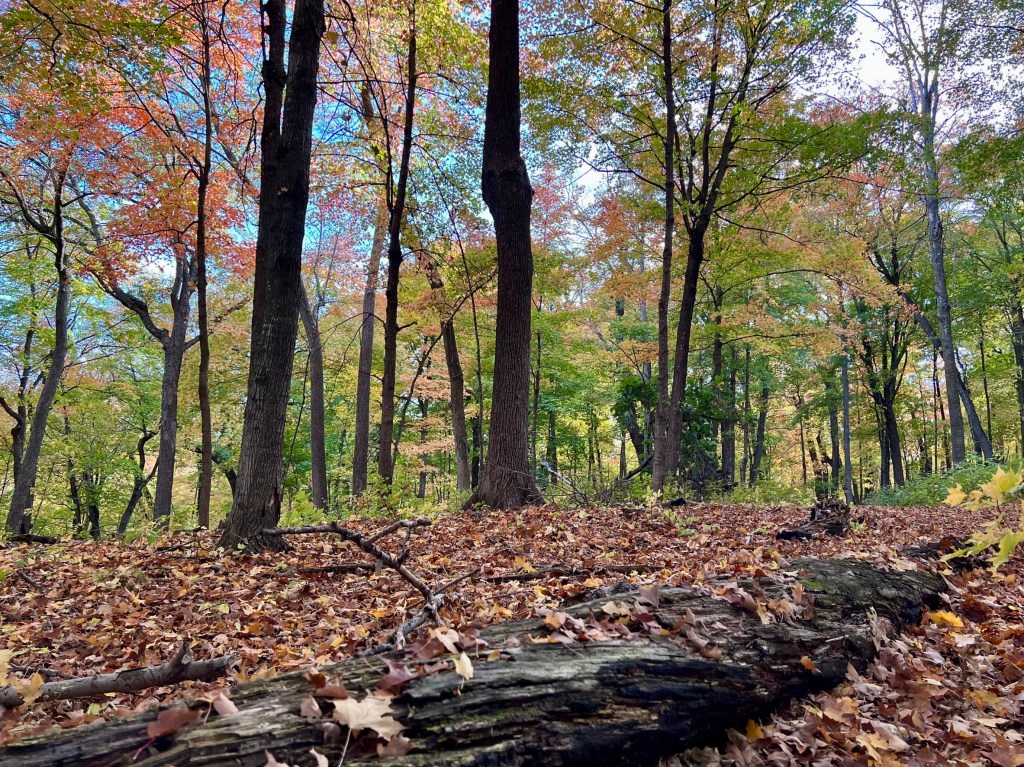
A fall that follows a long hot summer produces the most spectacular blaze orange and crimson colors amongst the tree canopies. There’s no escaping its beauty. Old elms arch over city streets littering the sidewalks with reds, yellows, and amber. Scallop-edged crowns of maples, oaks, and birches bunch up along the freeways. It’s a time of year when you don’t have to go looking for nature, as it has already found you.
My grandmother used to love taking walks in the woods. Perhaps it is because she grew up on the wide open prairie, plowed under into farmland. The woods held all sorts of delights, mystery, and adventure. She’d have us kicking through the leaves looking for mushrooms. In the spring the trillium was the first to bloom and later, under very special circumstances, we may find a Jack-in-the-Pauper. Follow a trail after a chipmunk and you may look up to see a doe, frozen in its tracks, hoping you’ll not notice it amongst a stand of popular.
I think my grandmother would have enjoyed this poem by Mary Oliver.
How I Go Into the Woods

by Mary Oliver

Ordinarily I go to the woods alone,
with not a single friend,
for they are all smilers and talkers
and therefore unsuitable.
I don’t really want to be witnessed talking to the catbirds
or hugging the old black oak tree.
I have my ways of praying,
as you no doubt have yours.
Besides, when I am alone
I can become invisible.
I can sit on the top of a dune
as motionless as an uprise of weeds,
until the foxes run by unconcerned.
I can hear the almost unhearable sound of the roses singing.
If you have ever gone to the woods with me,
I must love you very much.
There was a time when concerns about the future of communities arose when changing preferences shifted people’s activities. When the lanes were no longer booked on Thursday evenings for leagues and bowling balls were being sold at garage sales, predictions of cultural decline became fodder for those who watch such things.
But about the same time, church basements were seeing a lot less of the ladies who know how to fill the fifty-cup aluminum coffee maker. As new generations come through communities, their preferences change. The inclinations to be supportive of a community or devote time to causes or charitable endeavors do go up in smoke in some sort of generational existential crisis. They simply find new marletplaces.
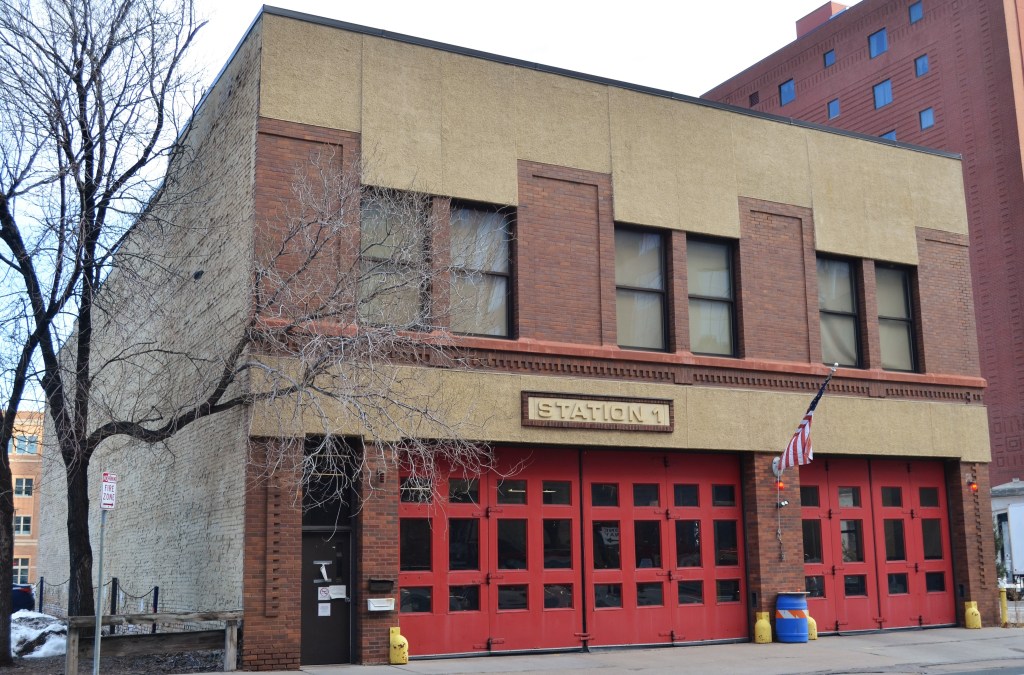
The volunteer firefighter model is on its way out. Half a century ago perhaps as much as a third of the firefighters were volunteers. Becoming part of the force was a competitive process. It was a position that held prestige. The men would hang out at the station house in shifts waiting for the next deadly blaze. Now most firehouses are staffed by paid employees or transitioning to such an arrangement.
2nd St and 5th Ave Minneapolis
One could speculate that why men don’t want to pile in and hang out in the cramped quarters of an aging firehouse. But I think it is a mistake to assume the men of today lack an impulse for civic duty. They are most probably exerting efforts elsewhere in their family or work structures. Many workplaces now offer opportunities to partner with non-profits. Many non-profits offer opportunities to become involved.
Environmental Initiative is an intermediary which is driven by a desire to improve the environment.
Currently, it is estimated that 25% of passenger vehicles cause 90% of vehicle air pollution. Older cars often have outdated or broken emission controls and exhaust equipment. By partnering with garages to repair broken emissions systems, Environmental Initiative is cleaning up some of the highest polluting cars on the road while reducing barriers to reliable transportation.
Partner garages provide low- or no-cost repairs to emission control systems. This allows car owners to reduce their car’s emissions and prioritize paying for other repairs necessary for the safety and drivability of their car.
This type of interface between people who have skilled labor, and most probably some idle time, and those who voluntarily support a cause, like pollution control, is an excellent matching game. There is an arbitrage opportunity between the former group which loses little by helping and the latter group which will be vigilant to the appropriate disbursement of reimbursements.
This 1998 Jackie Chan comedy is packed with good stuff. I’m not sure if I lost a lot of time getting to know the masterful Chan or if the serious lack of jest and comedy in today’s world makes him all the more valuable, but I really liked this movie. It is funny and smart and strong.
Within moments of the opening scenes, there is a flurry of completely inappropriate word choices. Wokeness be damned! Both actors (Chris Tucker is an excellent sidekick) are gifted in comedic gestures and facial expressions which simply amplify the use of cancellable verbal offenses. It’s so delightful.
Chan is endearing as he draws a laugh through self-deprecation and physical faux pas– but don’t let his warm-up show fool you. His use of trips and slaps and fake punches is there to set the bubbly laughter adrift in his audience. Once everyone is relaxed and ready to let go of a noisy guffaw, giggle or snicker, then Jackie Chan will show off his real moves. And they won’t let you forget the strength of this martial arts performer.
He also holds the film together with a credible yet not wholly predictable plot and lively scenes across neighborhoods, Burroughs, and architecturally interesting buildings. I loved the clips from pre-China Hong Kong.
Long (long) time host of the Twin Cities public affairs show, Almanac, is quite upset about the Governor’s lack of interest in a televised debate. Something about tradition and, ummmm, hearing the voice of our leaders, seems to strike a cord.
We can't remember the last time a candidate agreed to a debate then changed their mind. Our long standing tradition on @tptAlmanac of having the last gubernatorial debate of the election was upended when @GovTimWalz wouldn't agree to appear with @drscottjensen. Not a good trend.
Goodbye. Zillow is officially gone from the Sacramento housing market. After announcing failure as an iBuyer in late 2021, they have officially sold their last unit. Ironically, they sold this property to Opendoor.
Speaking of this last unit, Zillow bought it for $700K in Nov 2021, and withdrew the listing at $625K last month. Then they sold it to Opendoor for $354K. I haven’t pulled comps, but it’s not hard to imagine a fat discount that’ll look good on paper for Opendoor in the future.
And here’s a piece I wrote about their exit. Their failure wasn’t about market conditions, but strategy. In other words, this wasn’t about them foreseeing the future and knowing the market would change due to rates being at 7%.
There was a time when the demise of the US Postal system was all but certain. Typically criticized for being poorly run and expensive, it was thought that private competitors like UPS and FedEx would take over transporting packages, and electronic means would replace printed letters. Surely there has been a reduction in the number of personal letters (which is truly a shame) but advertisers still choose the postal service as a way to get into consumers’ households.
When I’ve gone into our local branch to purchase stamps or mail a package there are more frequently than not a few people in line. Some are clearly running a business from home and have a stack of packages needing attention. I suppose people stop in for items needing to be tracked. And then there are passport services too. I personally like the custom stamps. (Perhaps this is a hangover from stamp collecting as a child.)
Back when there was talk of starting to close down some of the branch locations, contention flared at the suggestion that their post office would be the one to close. Buildings of all shapes, sizes and styles dot the entire US. In a way, the structures reflect the character of the neighborhood. The only compromise that was reached, that I can think of nearby, was a reduction in the overall space that zipcode’s branch occupied in the building. A religious community took over the back of that structure. They administered Covid shots during the pandemic.
As I’ve proposed here at home-economic, some goods are more naturally considered public and some private. Postal delivery service appears to fall in the first category. Whether people feel the public should have access to reliable and secure delivery of letters and parcels, or- they are nostalgic for the discovery of a crisp white envelope in their post box, for the time being, the US Postal Service is still a going concern.
We were in Northfield this afternoon for parent’s weekend at St. Olaf College. After lunch at the Reunion on Main Street and a walk along the nature trail behind Skogland, we went to listen to the Family Music Performance. The freshmen male choir, directed by Tesfa Wondemagegnehu, formed a half moon on the risers first, and they did not disappoint. I had several friends in choir back so many years ago now, that these new fresh faces simply met their level of excellence.
Having no expectations for the St Olaf Band, however, led to a delightful sense of discovering something exceptional. The variety of instruments and tones and tempos! Well, listen for yourself.
It’s hard to extrapolate feelings out of numbers. Novelists have the luxury (and the skill) to fine-tune phrasing in a way that demonstrates how the same scene can in fact be different. Take this passage for example:
Yes, that was it-the change was there. Before the war at a luncheon party like this people would have said precisely the same things but they would have sounded different, because in those days they were accompanied by a sort of humming noise, not articulate, but musical, exciting, which changed the value of the words themselves. Could one set that humming noise to words?
Virginia Wolf- A Room of One’s Own
But when you see numbers, tabulated-out in sales figures of Rolex sales, income disparities between adjacent countries, or tallies of police arrests- you don’t feel anything. Of all the inputs that go into economic analysis- resources, labor, utilities, transport, and so on, there is no mention of an emotional quantifier.
Yet isn’t at least a portion of why people buy a Rolex due to a feeling? A luxury good makes one stand up a little straighter and beam a little brighter. A luxury good encourages others to treat you with a little more attention. A luxury good may be the ticket to gain entry into a new network of associates. There’s a swarming effect to luxury goods where people are drawn to the aura of the wealthy establishment. At least Kim Kardashian has a billion reasons to think so.
And then there is the opposite effect. The feeling of neglect and secondary status is always in the mix when economic results are released and compared to a strong neighbor. The numbers may divvy out the details of who stands where with what, but the gnawing feeling of being two steps back and half a year behind comes to the surface in casual conversation. “Oh- they are just so brash down there!” Implying, of course, a certain nobility in lower production, further justifying complacency.
Analysis of the cost of policing goes into rows and columns as easily as any set of numbers. But the emotion of seeing your middle school buddy handcuffed and walked out of school doesn’t show up in any way in the numerical representation. How many officers are needed in a community that has memories of one type of public safety is going to be different from another. The expense to leverage community participation in crime-solving is also going to vary. Like groups need to be compared to like groups.
And similarly, when solutions are presented and discussed, time and time again by people outside a community, especially those with elitist inklings, eye-rolling follows disjointed analogies.
The measure used when transacting in wood is called a cord- or 128 cubic feet.
Up north (as we call any rural community vaguely north of the Minneapolis-St. Paul metro) it is common for homeowners to heat their homes with wood. There are stoves built to burn the split logs slowly and maximize efficiency. Sometimes the black cast iron fireboxes are in the lower level of the dwelling, or sometimes out in the yard with a venting system drawing the hot air into the home.
No matter what or where, there’s a lot of work involved. Fallen wood in a forest may be there for the taking but the labor involved in sawing the timber into eighteen-inch lengths and splitting it into manageable widths is persistent labor. Then there is the hauling and stacking. It will make a Lumber Jack (or Jill) out of you.
The backup system in most homes is baseboard electric. Often people use some combination of the two, loading up the fire before bed and then counting on the baseboards to kick in toward dawn. The remote nature of rural living makes it difficult for utility companies to run natural gas lines along all the roadside ditches. Natural gas is the most prevalent form of fuel for homes in the metro. It is also the most economical, whereas electric heat is the most expensive. Propane is a less common option and has its own set of drawbacks.
It would be wonderful if battery technology was advanced enough to capture and store energy off solar panels. The energy would flow right through the existing baseboard network. But in a part of the world where the temps can run below freezing for several weeks at a time, it simply isn’t possible to rely on solar energy. As populations grow, gas lines are appearing in populated areas. Splitting wood is a young man’s game and when given the option, most consumers are ready to convert to gas.













 Home Economics