Price of Lumber Plummets

Market Insider

The price of lumber is dropping precipitously as the housing market cools off in response to higher mortgage interest rates. During the first peak in 2020 and on through 2021 the cause of the price increases was attributed to supply chain issues and trade with Canada. But the second peak in late 2021 was said to be driven by the producers. Maybe they’ll regret it. I can think of a handful of people who have moved to alternative plans (than building or building projects) as a result of the high prices. Once the wave of properties under construction leaves the pipeline, the builders might find themselves short of work.

In Memory

Memorial Day is a holiday for reflection. Officially it is a time when a nation recognizes the soldiers who died while fighting to preserve a country’s most pressing values: liberty, fraternity, and the pursuit of happiness. This isn’t just done in the nation’s capital but all over the 1.9 billion acres that constitute the continental United States. If anything, there is greater attention paid to the monuments placed in honor of fallen soldiers from small communities than in large metropolitan centers.

The process of remembering brings history to a family’s doorstep. People review why their uncle was drafted, and how the events unfolded. Perhaps the pain of the ultimate sacrifice still aches a bit. The recall of the story and the memory of the tradeoffs is a beneficial exercise. It is hard to see how things balance out if not told within the context of the moment.

Today, many people will feel an impulse to spend a few silent moments at their relative’s gravestones. After all, we are a product of what our grandmothers and grandfathers did with their lives, in both productive and unproductive terms. Our parents’ reaction to their upbringings in turn influences how in time and effort they contributed to our own. Some of this we may find lovely and some of this may be unpleasant. But there is no separating the unrolling of events.

To take a peaceful moment or an hour and reflect upon the circumstances of their situations, to give credit for their accomplishments within the constraints of their lives and be an impartial observer of all they had to work with is fruitful. At different stages of our own lives, we are perhaps even more appreciative of what was done or not done, and how it all played out. It’s difficult if not impossible to evaluate people’s choices as if in their shoes.

It’s more difficult to know where you are going if you don’t know where you came from.

Lawn games vs. the Government

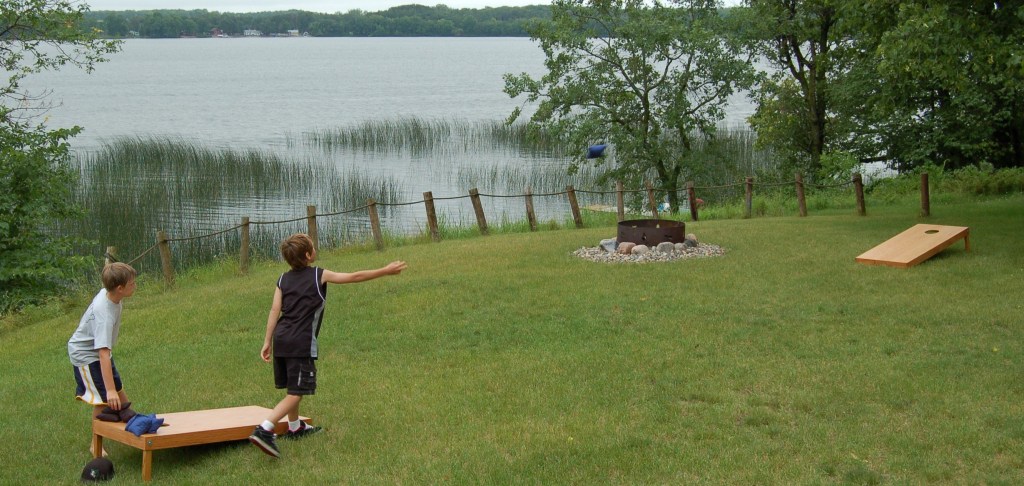
It’s the Memorial Day long weekend here in the US, a time when people get together with family and friends to visit and recreate. French Park, a regional park on the north side of Medicine Lake was full of folks today. Most were gathered in clusters around a set of picnic tables, grills cooking, and people chatting. The beach had some activity, as did the volleyball pit. Forty years ago, you may have seen people throwing lawn darts- metal darts with a pointed tip and aerodynamic fins. But they’ve long been banned in the US (Still legal in Europe).

Bag toss is a very popular activity at picknicks in the lakes area.

In April 1987, seven-year-old Michelle Snow was killed by a lawn dart thrown by one of her brothers’ playmates in the backyard of their home in Riverside, California, when the dart penetrated her skull and caused massive brain trauma.[9] The darts had been purchased as part of a set of several different lawn games and were stored in the garage, never having been played before the incident occurred.[9] Snow’s father David began to advocate for a ban on lawn darts, claiming that there was no way to keep children from accessing lawn darts short of a full ban,[9][10] and, partly as a result of Snow’s lobbying, on December 19, 1988, the U.S. Consumer Product Safety Commission introduced an outright ban on lawn darts in the U.S.[11] In the previous eight years, 6,100 Americans had visited hospital emergency rooms as the result of lawn-dart accidents. Of that total, 81% were 15 or younger, and half were 10 or younger. During the week when the commission voted to ban the product, an 11-year-old girl in Tennessee was hit by a lawn dart and fell into a coma.[9]

Wiki

Not to diminish the tragedy of a child’s death but forever labeling an artifact a weapon following one incidence of loss of life is surely government overreach. And then to add this numerical representation of 6100 hospital visits over 8 years without any reference points is so weak. According to the CDC, there were 130 million emergency room visits in 2018. So– 6100 divided by 8 taken as a fraction of 130,000,000— or basically an extremely trivial amount.

The lack of bracketing of relative impact on health and safety issues is mind-boggling. It takes one tragedy and a loud voice to create a law which forever bans an object. Meanwhile, knives kill people, hammers go bang upon the head, and if Hart to Hart is to be trusted as a reliable source, a marble paperweight or carved bookend can do just fine as well.

Sometimes it feels like people need answers- Why did the parents not give proper instruction to the children? How could the friends have been so careless? Why do innocent children sometimes die expectantly? People want to take action so as to make these questions go away. They demand something be done.

Common sense says that sometimes these are not questions for government and legislators. These are questions to be discuss within the religious community of your choice.

Auctions for fun

Mackenzie Scott was in the local news last week after donating six million dollars to the local chapter of Big Brothers Big Sisters. That might be a drop in the bucket for the ex-spouse of Amazon founder Jeff Bezos. “The donation to Big Brothers Big Sisters Twin Cities is one of a number of no-strings-attached gifts Scott has made to charities and racial-equity causes. In all, Scott has donated more than $12 billion to more than 1,250 nonprofits since 2020.” But it is equal to the annual budget of this worthy non-profit.

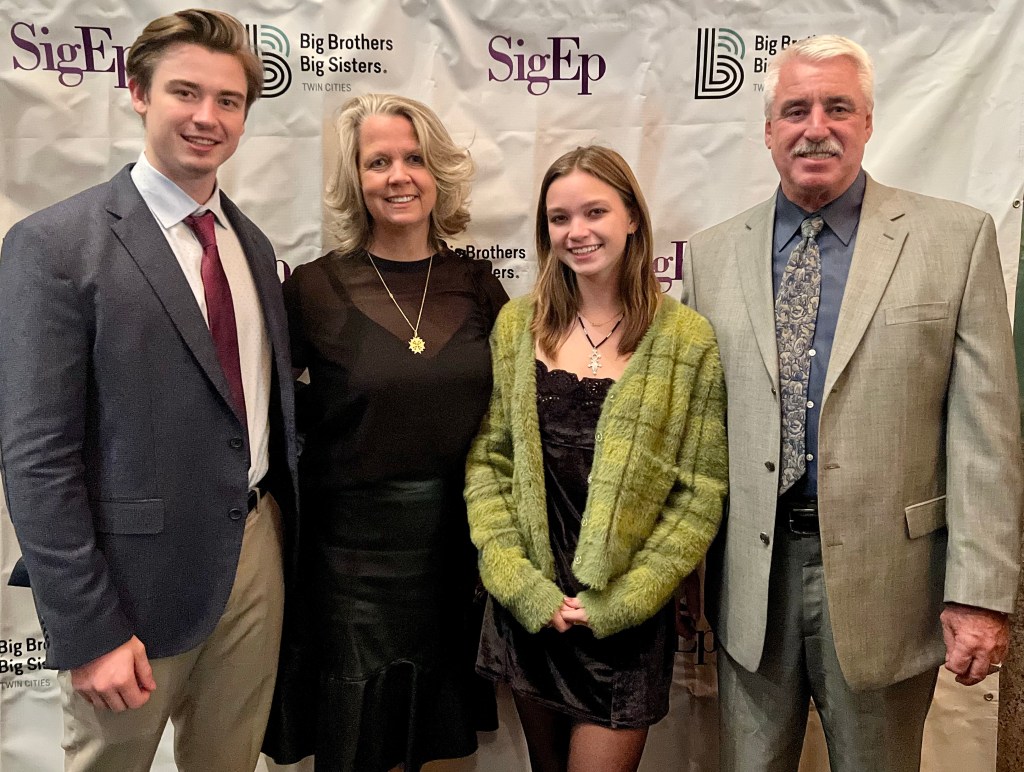
My son’s frat, SigEp, supports the organization as well. That’s how I ended up with my family at a fundraiser on behalf of Big Brothers last fall. I used to avoid galas because I didn’t find them fun at all. After a few turns on the dance floor, I’ve learned how to enjoy fundraising auctions.

My family at a SigEp organized fundraiser for Big Brother Big Sister

First, give yourself enough time to review the offerings. As in any purchase situation, it’s good to have options. I try to find things I enjoy but often don’t purchase as other more practical uses for money always seem to take precedence. At this event, my interest was piqued by four tickets to a Wolves game at the Target Center.

The whole idea of the event is to raise money. And there is an expectation that parents will participate in the fundraising (not obligatory, of course, but expected). So, there is a demand to make some sort of expenditure. You can always buy those certificates for eateries at face value, but that’s not very fun.

Most auctions are played out through an app. Once you start bidding you gauge the number of buyers for the item based on the response time on a counter bid. If two parties (or more) are bidding up the price without your participation, it might be a good choice to look for another auction item. If only one bidder is countering your bid, stick with it. Let them hold the high bid.

At this event of about three hundred people, the cutoff for bidding on live auction items was fifteen minutes into the presentation. This made it easier. In the last minute of open bidding, the high bidder was listening to the emcee while I placed the winning bid. It was exciting! First, because I had bought something I normally would put off purchasing. Second, I could feel good about playing my role as a parent. And lastly, it was nice to support the work of Big Brothers Big Sisters.

It was a three-for-one transaction!

UBI and collectively provided goods

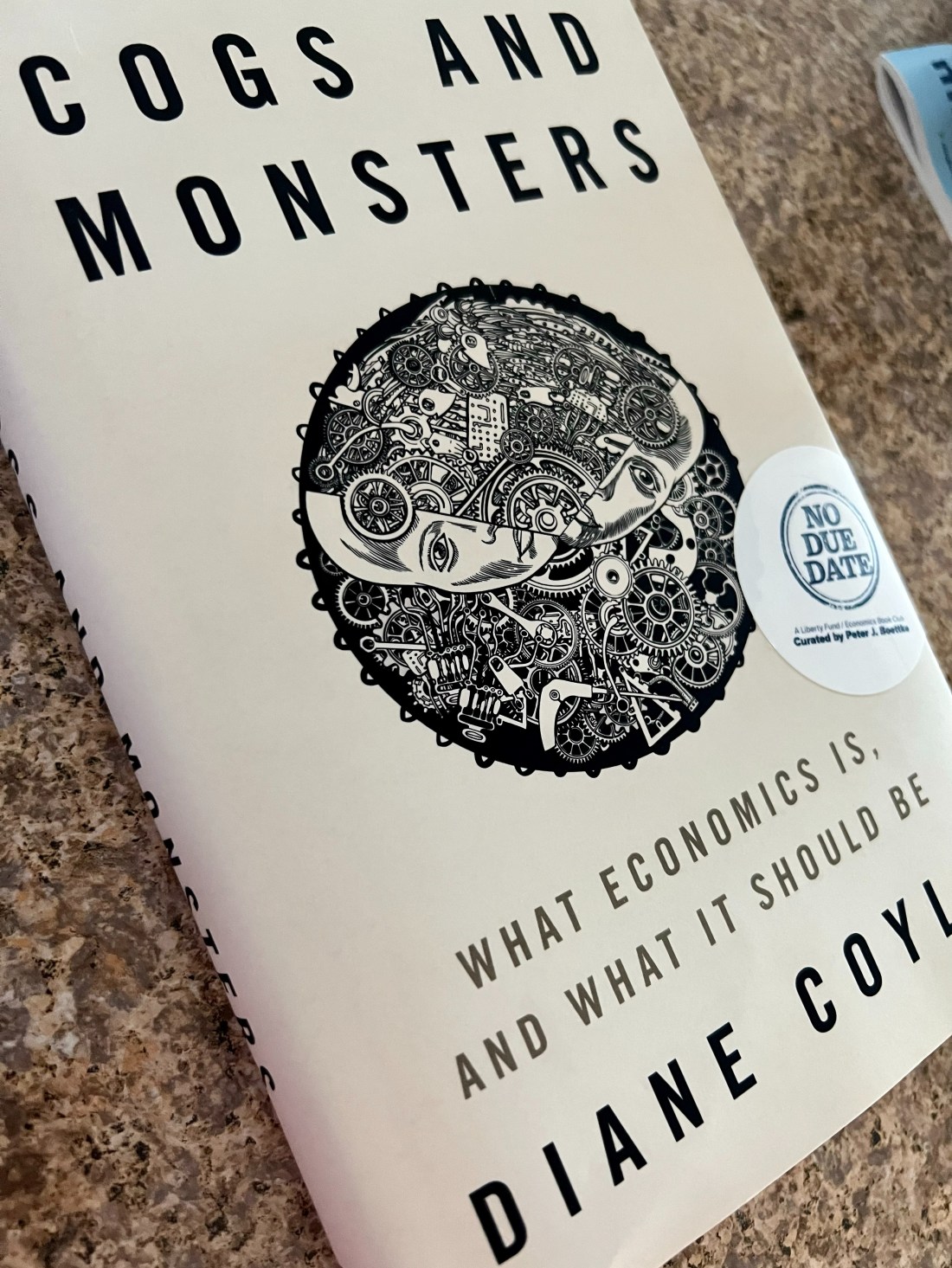
In a recent broadcast of Econ Talk with Russ Roberts, economist Diane Coyle (Cogs and Monsters: What Economics Is, and What It Should Be) expresses dissatisfaction with universal basic income, or UBI, as a policy solution. She reasons that the $10-$15K a year could not be used to purchase collective goods:

But what you can’t do with an Universal Basic Income is buy collective goods. And, to the extent you care about communities and improving the chances of those who are the least well off, then it’s often those collectively-provided goods that matter a good deal–the transport network, the quality of the public schools, the quality of the healthcare that you can access.

So, a lot of these classic public goods or traditionally collectively-provided goods are very important; and you can’t, with your individual $10,000 or $15,000 dollars, go and purchase those.

Econ Talk

I too feel that UBI is an unsatisfactory policy intervention.

When I was a few years past out of college, one of my classmates had used some family money to purchase a vehicle most would say was beyond her income level. I don’t remember if it was an Audi or a mid-range convertible. She admitted straight out she enjoyed how she was treated differently when she pulled up in a luxury vehicle versus a second-hand compact. She claimed she received better service. In other words, she felt a disproportionate outlay of her monthly income on a vehicle bought her into a higher level of service network.

Indeed, you can’t buy your way into, say, a network of moms who trade-off watching each other’s kids. Similarly, one of the moms can’t just decide to sell all the reciprocal arrangements she has stored away through her mom friendships. Money is mostly used for unfettered transactions, whereas chits of return favors are the currency of collective goods. But money can buy you the Lulu Lemon leggings that all the moms wear, or a membership to the gym where they work out and spend time by the pool in the summer months. Money helps get to the networks even if you can’t use it to buy your way all the way in.

My reason for disliking UBI is slightly different, yet similar. I too think that people who are not wealthy could benefit more from social structures than cash. UBI is just half a transaction. Giving people a monthly stipend does nothing to teach them how the social side of the economy works: exchanges, reciprocity, feedback, and the like. Simply transferring money to people, without having them think through and evaluate a selection of options, without experiencing the pros and cons of various relationships and outcomes, robs them of the experience of the market.

If you really want people to become wealthy, you would take the time to show them how.

Biden supports mobile homes

As part of his efforts to ease housing costs, President Biden is proposing to facilitate financing of mobile homes:

Supporting production and availability of manufactured housing. The majority of people buying new manufactured homes rely on personal property financing (chattel lending) rather than conventional mortgages. This type of financing typically costs more than traditional mortgage financing due to higher interest rates and shorter loan terms. Freddie Mac has announced that it will complete a feasibility assessment for the requirements and processes necessary to support loan purchases of personal property manufactured housing loans. If FHFA approval is obtained, Freddie Mac will purchase these kinds of loans to assist with product design and support future loan purchase capabilities. Beyond personal property financing, both Fannie Mae and Freddie Mac (the Enterprises), in their Duty to Serve Plans, also released revised purchase targets for manufactured housing loans, which will have the effect of fostering greater liquidity for manufactured housing and increasing delivery of manufactured homes. Finally, recognizing the cost and development time savings provided by manufactured housing, HUD is making it easier to finance new units and helping manufacturers update their designs to meet changing consumer demands. This includes working to increase the usability of FHA’s Title I loan program for Manufactured Housing, supporting greater securitization of Title I loans through Ginnie Mae’s platform, updating the HUD Code to allow manufacturers to modernize and expand their production lines, and helping manufacturers respond to supply chain issues.

https://www.whitehouse.gov/briefing-room/statements-releases/2022/05/16/president-biden-announces-new-actions-to-ease-the-burden-of-housing-costs/?utm_source=substack&utm_medium=email

Mobile homes are a valid housing option. And opportunities for financing are more limited than a brick and motor structure so to speak. But the other big obstacle in this form of shelter is the ownership and operation of the park- or the land upon which the homes are parked. As metro areas grow the pressure to vacate the land and use it for other purposes increases. You never see new mobile home parks enter a city, so once they are gone, that’s it for that type of property.

It seems like it would be more acceptable to neighbors to allow small scale mobile home parks, perhaps a site with half a dozen homes. I suppose the management of the site, on such a small scale, would not be profitable. This is where a city would need to confer with its non-profits to see if there’s an interest in covering what can’t be successfully achieved in the market.

TS Elliot- from East Coker

Home is where one starts from. As we grow older
The world becomes stranger, the pattern more complicated
Of dead and living. Not the intense moment
Isolated, with no before and after,
But a lifetime burning in every moment
And not the lifetime of one man only
But of old stones that cannot be deciphered.
There is a time for the evening under starlight,
A time for the evening under lamplight
(The evening with the photograph album).
Love is most nearly itself
When here and now cease to matter.

Claims about Trees

To be sure, I’m a big supporter of trees. Still- I wonder about these claims:

According to research conducted by MPRB, each city taxpayer saves around $100 a year from trees being on public property. Trees process about 200 million gallons of water each year, saving up to $6 million in stormwater management costs.

https://bringmethenews.com/minnesota-lifestyle/minneapolis-wants-to-use-1m-in-federal-cash-to-plant-200000-more-trees

The population of Minneapolis is around 420,000. Of course, some of these are children who rely on their parents to pay taxes. Let’s say persons under 18 are around 20% of the city’s population, that leaves 336,000 taxpayers. At $100 savings per taxpayer, that comes to 33.6 million– not 6 million. Or if you go the other way and divide the 6 million by 336,000 taxpayers, the savings are $18 per person.

No link to the research to see the numbers.

Seventies Cinema- Movie Reviews

It was a great weekend to take in two thrillers from the seventies. My husband was away and since he is not a big fan of vintage films, I took advantage of having full control of the TV. Three Days of the Condor (1975) and Marathon Man (1976) are both thrillers whose suspense relies on dishonest civil servants (thanks to Nixon I suppose). Both are better written than what usually presents itself on the screen. Both run quite a bit of interesting and creative footage of Manhattan. If you’ve been to New York lately you might enjoy comparing the then and the now.

The seventies are in full glory in both films. Who can wear a pair of jeans, aviation glasses, and a tweed jacket better than Redford? Cars are burly beasty things, there’s more garbage on the streets than we now expect, and business suits are more common than business casual. The runners who share the trail around the reservoir with Hoffman wear short shorts which have yet to have a fashion revival.

Both protagonists are intellectuals, not tough guys (although their tight abs both make a taught appearance). They are dupped or naive to the mechanics of greed and deception until shocked by the loss of life around them. Provoked, they put their smarts into solving for the villains. Alas, as per custom, there is only one female per film- gorgeous and seductive- in place to shine a brighter light on the lead character while making themselves available to aid and support the male lead as is required of them.

The ending of Three Days of the Condor was a little off for me (and ironic now some forty years later). Marathon Man is more gruesome but overall richer in the story and social context. I enjoyed them both but if only could pick one would recommend Marathon Man.

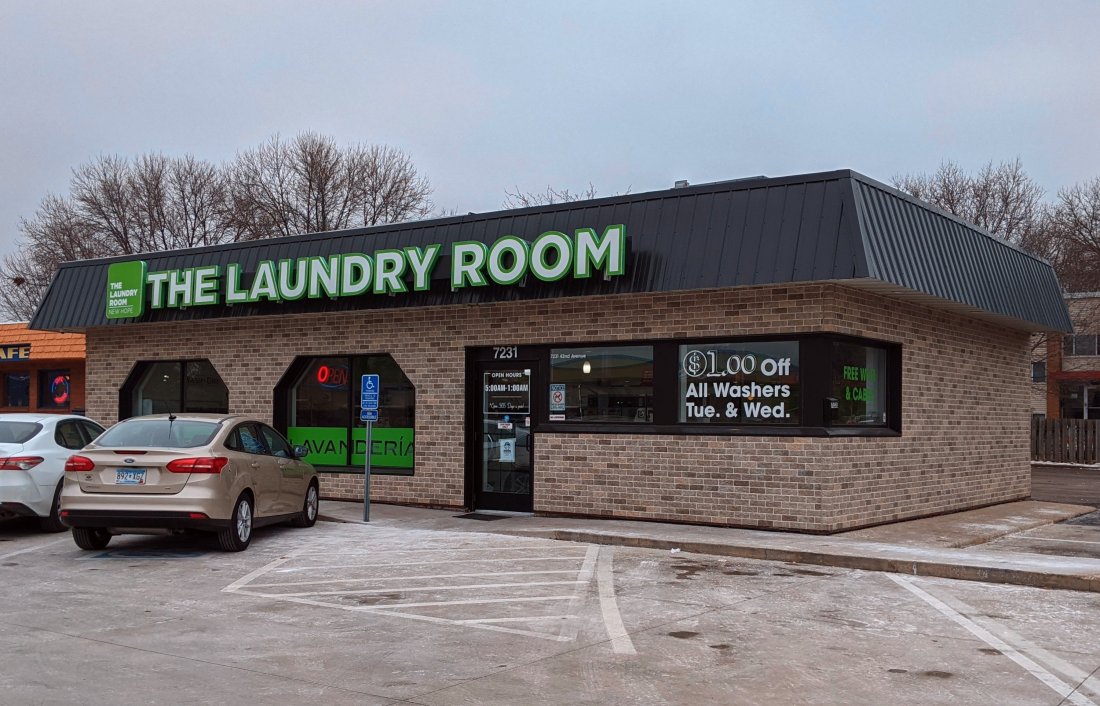
Trading Laundry

Perhaps thirty years ago, I was a loan officer at a large local bank. In those days we sat behind oversized mahogany desks in the open lobby of branch buildings located all over the metro. Clients would wander in, pull up the guest chair, and have a chat about whatever type of financing they had in mind. If they were organized, they would have brought in all their tax forms and bank statements, and we would apply pen to paper and go through an application together.

I was working at a site located on an old-fashioned main street in a town that had been swallowed up by urban growth. A late middle-aged woman with an unassuming presentation sat down across from my desk with all her papers ruffling out of a manila folder. She owned the dry cleaner a few storefronts down the street. New environmental regulations were going into place addressing issues around the chemicals used in the cleaning process. She had some colorful words regarding the changes, stating that they were simply meant to put small business owners out of business.

When I did the write up for her loan (we manually underwrote loans as algorithms were still fifteen years off) I was taken aback by her barebones income. I rarely saw advertising for the brick fronted building that housed her operation. It turns out she had inherited the business from her parents and was simply hanging on, doing what had always been done before. I remember wondering at age twenty something how it could be worth being a small business owner if you weren’t in it for the money.

As it turns out, social situations are a large part of business.

I have no way of judging whether this woman enjoyed running her parents dry cleaning business. If so, then how she spent her workday was a good match despite the low income. If not, what could have been done to loosen the emotional ties which fettered her to a life of dealing with chemical solvents? Selling a small business is a little tricky as it is hard to know what they are worth. Better information and connections with other people in the business might have led to a trade. Perhaps she never investigated other business ventures or careers.

The point is, that whether it is to attain a higher level of satisfaction from one’s own life, or whether the motivation is to put a business to a higher and better use, facilitating and coordinating transactions is part of the equation.

Post Covid

I was driving past a full parking lot the other day, distantly thinking that it was odd. Pulling the thought to the forefront of another narrative running through my head, I realized it was because the lot is used by those who take our suburban commuter bus downtown. People are returning to work. After Target announced it would no longer be requiring employees to report to their downtown head office, I thought other employers would follow suit. Apparently not.

My late afternoon errand was uncomfortably delayed by the first traffic jam I’ve been boxed into in two years. Dreadful. Stuck between long lines of vehicles crawling along a freeway. No- I didn’t check the mapping app to see if there was a better route. I haven’t had to for so long that it didn’t even occur to me. Rush hour is back, and it is ugly.

As the few masks I’ve kept handy in my purse are pulverized at the bottom of my Kate Spade handbag I realize that I haven’t worn one in ages. And I’m thankful.

Dealing with power players

I wish there was a discipline that focused solely on power. Political science only covers one slice of the use of power. The mechanics of government and the people employed to push and pull all the levers are well covered in academia. I’d like people to cover the power plays at a more local level, how they hold people back from living their best lives, and what can be done about it.

Fathers and Sons. August Wilson wrote one of his recognized plays, Fences while living in St. Paul Minnesota in 1985. A pivotal action in the narrative occurs when the father interrupts his son’s chance at a football scholarship by pulling his son from the high school team. The elder claims he is protecting his son from the racism he endured. The son feels otherwise. No matter the motivation, a parent has the power to restrain their child’s success. In this story, the son finds opportunity in the armed forces and his ambitions are rewarded with a secure career.

Physical Leverage. A well-known form of intimidation via physical force resides in domestic relationships. There are already social service support systems in place to help women (in particular) escape from an abusive partner. Yet they don’t. Perhaps, if they had understood the power structure earlier, it would make a difference. Fear of physical abuse is also used by neighborhood bullies to deter being ratted out. From the outside the answer in both cases might seem clear: turn the bums in. Yet these power players are part of their families, their networks, their lives. The solution is to level the field through an understanding of how to neutralize their power.

Socialites. The term socialites may feel as dated as old lace, but there are people skilled at managing who gets invited (or not) to social events. Many valuable benefits evolved from connections made during social gatherings. Those who control who’s in, and who’s not, wield a particular type of power.

The machinations of elected officials have far less impact on people’s lives than those closely connected to them. By understanding power, and how it’s used, or abused, people could navigate that line of staying with their pack while living fuller lives.

Land for sale?

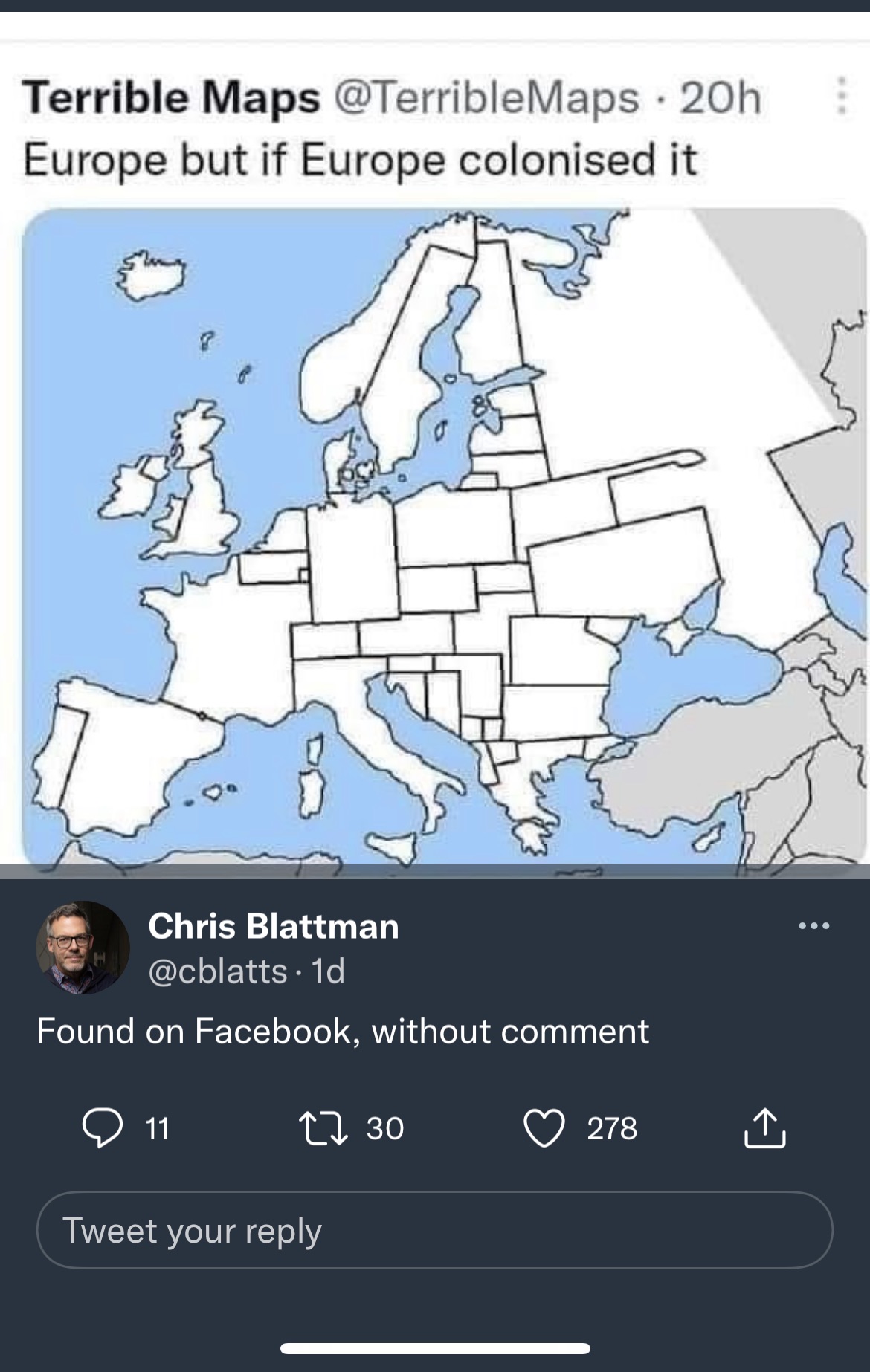
With war being out of fashion and colonialism a relic of a bygone era- how is a country is to acquire more land?

Even on a small scale, purchasing property that is owned by multiple independent parties is a messy business. In the middle of this satellite photo, you will notice fifteen five-acre homesites which were surrounded by open land twenty years ago. Developers in the home building business can spend years negotiating with neighbors to sell in unison.

These homes also happen to be fairly substantial. This just means that their values as stand-alone parcels are strong which pushes the buyout price higher than say a dilapidated tear-down property. Over time, however, if an owner thinks it is inevitable that their home will be torn down, they refrain from improving the property. It feels like a waste of their money. When the exterior starts to look run down, the neighboring properties are also affected. And slowly, the owners succumb to the pressures of an expanding metro, get used to the idea of living elsewhere and sell out to a builder.

This story is a way of suggesting a scenario where land could be sold between countries.

  1. If the land is being used in an obsolete manner, owners over time could be persuaded to convert to a higher use.
  2. If the buyer country had more infrastructure to offer, the owners’ material situation improves with the sale. It has become fashionable to take shots at British colonialism, but no one seems to complain that the occupied countries received British passports and the privileges it bestows.
  3. Plan on the process taking time, as in generational time.
  4. As long as the land is low value and underutilized, there is most like a buyout price (speculative, of course!)

Why do people prefer the suburbs?

Like dueling twin cities, there is an ongoing feud between those who love the city versus those who prefer a suburb. Here are a few reasons why people move out to the burbs. I present these in no particular order other than how they come to mind.

  1. Many buyers desire privacy. They want their own space and don’t really want to feel obliged to interact with their neighbors. It’s not to say that they don’t greet the resident across the street with a cheery hello- it’s just that they want to be able to retreat behind their four walls if they so desire. There is a little more elbow room on a .25-.31 of an acre lot which is standard in the burbs, than on a city lot which runs about half the size.
  2. Less drama. That’s how an acquaintance explained it long ago. When you pull back your front shades and see a guy sleeping in his car in a pile of refuge, you wonder if you should go investigate. It’s not that he is causing you any harm, but you feel like you should go check on him. This happens far less out in the burbs.
  3. Many suburbs offer reliable transit access to a central city around business hours. It is a myth that dwellers in the urban core do not require a vehicle whereas suburbanites do. I make this claim through observation, but I’d love to see statistics that prove me wrong.
  4. The core cities indeed have many more restaurants. But the burbs have a greater selection of grocery and big box type of shopping all with easy access. Any store that needs space, Ikea, car dealers, REI, and Best Buy, will find space in less dense areas.
  5. In Minnesota both the burbs and the city value parks and trails. But there are more lots in the outer areas which have views onto nature areas, marsh lands, and waterways. Since people find happiness in nature, this also edges the suburban options up a nudge from the city.

There’s a lot to love in all areas of a metro area. Luckily everyone likes a slightly different combination. It is a bit silly to poke fun at one area over the other when it’s clear that there are plusses and minuses to all options.

U.S. Marshals- Movie Review

Tommy Lee Jones is awesome in this 1998 thriller. It was produced at a time when it was still OK to portray law enforcement as macho. But I bet you didn’t know this about the weathered faced, gun totting enforcer of the law:

He (Tommy Lee Jones) attended Harvard College on need-based aid; his roommate was future Vice PresidentAl Gore.[7] As an upperclassman, he stayed in Dunster House[7] with roommates Gore and Bob Somerby, who later became editor of the media criticism site The Daily Howler. Jones graduated cum laude with a Bachelor of Arts degree in English in 1969; his senior thesis was on “the mechanics of Catholicism” in the works of Flannery O’Connor.[

Wiki

Wesley Snipes also performs well above average as the ever-resourceful, escape artist fugitive. As Jones and his crew of U.S. Marshals pursue Snipes from Chicago to the swamps of Kentucky and then onto New York, the evidence against Snipes starts to smell overcooked. The State Department security gets involved and I love how they are portrayed: dark suits, sunglasses, non-distinct features.

The special effects are also splendid. An airplane crash gets five stars for creativity. I loved the swamp scenes. The views of downtown Chicago from the U.S. Marshal’s office make you want to visit the windy city. Even the car chase scenes in New York are fresh.

Don’t let the vintage of the movie dissuade you. It’s fun to see mobile phones the size of a small shoe, Robert Downey Jr looks fresh out of college and the police are not on the defensive. One drawback is the two weak female roles– but it’s a reminder that most movies today have more substantial parts for women. This film is worth your time.

15$/hr will do?

Proponents of a 15$/hour minimum wage claim this wage will provide a worker with a livable wage. This is a little hard to swallow this as an across-the-board benchmark as standards of living change across the country. Even within Minnesota, the wage may be considered a decent amount in the outstate areas to just above starting wage in the cities. Price setting or creating artificial bounds in economic systems inevitably creates more problems than they solve.

Setting a floor based on a threshold of a plucked-from-the-air minimum standard of living assumes that each worker is supporting themselves on this one job. High school kids would receive the wage and they are supported by parents. The stay-at-home spouse of a family unit might pick up a job for a while for extra cash, not for the core flow of funds to pay the bills. These workers may not want to work to the level of getting paid a higher wage, or as teenagers, not be qualified for a higher wage. So, let’s set these two groups aside.

For the workers who need to support themselves on one job, a minimum wage could provide them with a bit more money. But there would be a loss too. Pricing is a source of information. If a full-time worker cannot command a sufficient wage in the market to meet their basic expenditures, people should be asking why– not topping off their salary and sending them out in the world. What would they need to obtain the job at a better wage, and what would it take to get it: education? a connection? flexible hours?

Say there was a pattern of a whole set of workers who were unable to secure sufficient work. And it became clear that the reason was geography, transportation, or language skills. Would it make more sense to supplement their wage with a stipend until the restricting constraint was lifted? Would it make more sense to overcome the reason for below-par wage offers so that they may be confident of higher wages in the future?

Don’t mess with the pricing system. It’s valuable information. It provides all the insights necessary to help people progress towards self-sufficiency.

Changing forms, changing agency

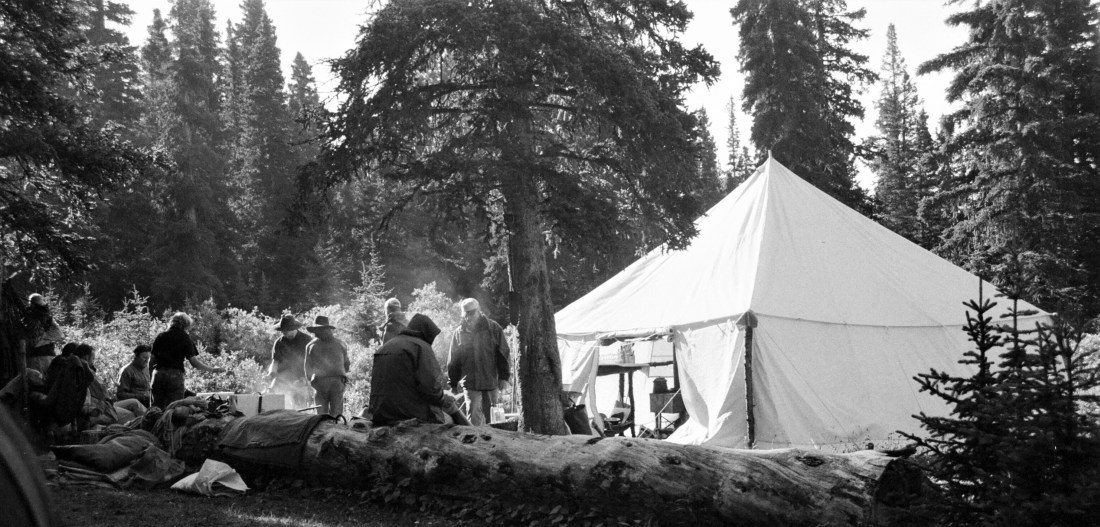
Steinbeck is known for writing from the vantage point of those who struggle on the edges of society. In The Grapes of Wrath, the reader travels along with a convoy of Americans fleeing the dust bowl-ridden southern states for better opportunities in California. The estimated three hundred thousand people who traveled across the country were of little means. They would simply pull over to the side of the road at the end of a day of driving and camp for the night.

In the evening a strange thing happened: the twenty families became one family, the children were the children of all. The loss of home became one loss, and the golden time in the West was one dream. And it might be that a sick child threw despair into the hearts of twenty families, of a hundred people; that a birth there in a tent kept a hundred people quiet and awestruck through the night and filled a hundred people with the birth-joy in the morning. A family which the night before had been lost and fearful might search its goods to find a present for a new baby. In the evening, sitting about the fires, the twenty were one. They grew to be units of the camps, units of the evenings and the nights.

The Grapes of Wrath, Steinbeck

This passage effortlessly describes a transformation that occurs when people share the same mission and experiences. While in route the families keep their possession to themselves and head west. Once they gather for the evening, the individuals meld into a group. This impacts how resources are shared.

The families learned what rights must be observed–the right of privacy in the tent; the right to keep the past black hidden in the heart; the right to talk and to listen; the right to refuse help or to accept, to offer help or to decline it; the right of son to court and daughter to be courted, the right of the hungry to be fed; the rights of the pregnant and the sick
to transcend all other rights.

The use of the word ‘rights’ probably has some of you cringing as it parallels the language of today’s activists. Others are about to be dismissive of this depiction as it is one of a simple commune. After all, experimentation with communal living in the 60s and 70s proved repeatedly to be a failure. But transformation into a group of one is only a temporary situation. And at times groups with similar interests are better to ban together and share resources under provisional rules.

The agency of the group becomes more important than the agency of the individual, at least while they are on the road. Every morning each family unit gathers up their few possessions and straps them onto their truck. And in the evening, they rejoin the other travelers. In this morphing of individuals, small groups, and mass immigration of the recently destitute there is a non-pecuniary tumbling of resources in order to pull everyone forward.

Consider another example of resource distribution. It is notable in its discord with traditional economic thinking and is used by clergy to offer another avenue of economic reasoning. The parable in the bible describes how a landowner chooses to compensate his workers.

Matthew 20:1-16
New International Version
The Parable of the Workers in the Vineyard
20 “For the kingdom of heaven is like(A) a landowner who went out early in the morning to hire workers for his vineyard.(B) 2 He agreed to pay them a denarius[a] for the day and sent them into his vineyard.

3 “About nine in the morning he went out and saw others standing in the marketplace doing nothing. 4 He told them, ‘You also go and work in my vineyard, and I will pay you whatever is right.’ 5 So they went.

“He went out again about noon and about three in the afternoon and did the same thing. 6 About five in the afternoon he went out and found still others standing around. He asked them, ‘Why have you been standing here all day long doing nothing?’

7 “‘Because no one has hired us,’ they answered.

“He said to them, ‘You also go and work in my vineyard.’

8 “When evening came,(C) the owner of the vineyard said to his foreman, ‘Call the workers and pay them their wages, beginning with the last ones hired and going on to the first.’

9 “The workers who were hired about five in the afternoon came and each received a denarius. 10 So when those came who were hired first, they expected to receive more. But each one of them also received a denarius. 11 When they received it, they began to grumble(D) against the landowner. 12 ‘These who were hired last worked only one hour,’ they said, ‘and you have made them equal to us who have borne the burden of the work and the heat(E) of the day.’

13 “But he answered one of them, ‘I am not being unfair to you, friend.(F) Didn’t you agree to work for a denarius? 14 Take your pay and go. I want to give the one who was hired last the same as I gave you. 15 Don’t I have the right to do what I want with my own money? Or are you envious because I am generous?’(G)

16 “So the last will be first, and the first will be last.”(H)

A current vision of the workplace challenges this story as compensation does not correspond to hours worked. Each worker is an individual and each hour worked is a unit to peg on a tally sheet. And this is often the most productive way to accomplish workplace projects.

But I think here, the message is that the landowner has a different goal in mind. He challenges those that say it isn’t fair as he lived up to the bargain he struck with them at the beginning of the day. The motivation behind the landowner continuing to hire workers until the last hour cannot be judged from their perspective. I feel the story asks you to consider the workers as a set, where each one is offered the daily wage.

Forms and agency of a communal nature have always, and will always, be a part of our economic landscape. They play an integral part in the progress made toward goals such as pollution reduction, safety, and thousands of social and cultural objectives at play in our lives. The goal is to understand their shape and impact on the process.

New Construction News

#Dallas builder: “Interest lists are shrinking or buyers are truly pausing.”

#Houston builder: “Many first-time buyers simply no longer qualify with the increase in interest rates, as their debt-to-income ratio gets out of whack.”

#SanAntonio builder: “Traffic has been cut in half since the hike in rates.”

#Raleigh builder: “Investor activity has slowed dramatically.”

#Provo builder: “Investors are evaluating the investment more critically than in the past.”

#WashingtonDC builder: “Traffic half what it was in March. Worried about first time buyers. Many fewer REAL buyers than number of people collected on interest list last 6 months. Certainly more attempts [from buyers] to negotiate.”

#Seattle builder: “Pause by a large population of buyers. To achieve our desired [sales] pace, we had to make price adjustments. Rates starting to knock people out of qualification.”

#RiversideSanBernardino builder: “Cancellations are starting to creep up due to loan declines and job losses. Waiting lists are certainly smaller. Saw an immediate change in buyer behavior when rates climbed over 5%.”

#LosAngeles builder: “Buyers who are stretching to purchase have become more cautious.”

#SanDiego builder: “Buyers are definitely a bit more edgy.”

#Denver builder: “Sales are slowing due to higher prices and rates. Backlog of buyers have remained but we are seeing new prospects priced out with interest rates and anticipated payments. Conforming loans quoting over 6%.”

#Boise builder: “Rising interest rates may have pulled some buyers forward, and we expect to see a slowing of sales in the coming months as a result.”

#SaltLakeCity builder: “In our lower priced segments, buyers are compromising and reducing options.”

#Bend builder: “Our market has slowed and prices are starting to drop.”

#Atlanta builder: “Seen a decrease in the number of potential buyers who are participating in best and final offers on homes/homesites.”

#Knoxville builder: “Detached 2,000-3,000 square foot product still selling, just not with 3 buyers for every home like a few months ago.”

#Allentown builder: “Double hit of higher home prices and higher mortgage interest rates clearly has reduced the number of qualified buyers. Our waiting list is almost zero as of April 30th.”

#Philadelphia builder: “Between higher interest rates and higher sales prices, along with high gas prices and a volatile stock market, we’re seeing a pullback in our sales.”

#Tampa builder: “We’ve seen a significant shift in buyer behavior in the last 30 days. Florida was on fire and pricing has really come to a high point, and people are not willing to pay the prices anymore.”

#Indianapolis builder: “Traffic has significantly declined and people have paused on moving forward with purchases.”

#KansasCity builder: “Our lower end product has paused or slowed dramatically.”

#Columbus builder: “Higher rates are definitely tempering buyer enthusiasm and traffic.”

#Baltimore builder: “Buyers aren't putting in as many options as they did last year.”

#Reno builder: “Cancellation rate last month more than doubled from 6% to 16%. We attribute this to buyers that did not lock interest rates early in purchase process. Also seeing many buyers put buying decision on hold.”

#Fresno builder: “Finding an increase in cancellations due to the rate increase. The majority of cancellations are resulting from fear vs non-qualification.”

#Cleveland builder: “Once we reach home closings, about 5% of our current customers on the books will be forced to bust out as they originally qualified at a 3.25% rate and won't be able to stretch beyond this.”

#Sacramento builder: “Seeing trouble qualifying for entry-level buyers as they are priced out by rates.”

#SanJose builder: “Quality traffic has significantly decreased.” THE END

Originally tweeted by Rick Palacios Jr. (@RickPalaciosJr) on May 9, 2022.

Being fair to your kids

There’s a lot of talk in policy discussions about fairness and how it is evaluated. One angle of the conversation that can’t be underestimated is the accounting or measure for the item at hand. There’s a propensity to measure everything in dollars. But the nature of public goods resists such restraints. Here’s an example.

Say one of your children was destined to be an engineer, and the most prestigious engineering school in your area was part of the big ten local university. The child is accepted and successfully completes a degree. Now say the second child’s career will be optimized by obtaining a liberal arts education. The top school in this regard is a private college which costs thirty percent more than the public university. The second child succeeds, as well, at completing their degree and both children are hired into their desired professions.

Does the parent owe the first child the 30% differential in tuition for the four years of private college? An argument for fairness might include an accounting of dollars spent on each child. Then child number one could make a claim for the additional funds. Some might find this manner of divvying up resources as fair.

On the other hand, both children attained the goal of a secondary education which allowed them to maximize their professional lives. In this manner, they both received the intended objective of their secondary education. In this case the fairness moves away from the money spent versus the achievement of the goal.

Note that in this story there are some assumptions made about the overarching available choices. Both chose from the surrounding area and did not compete to enter institutions farther afield at greater expense. There’s a reasonableness that the children are staying within the same zone of options. To switch to another layer of economic choices could alter the fairness consensus. Which is why this issue gets so sticky so quickly.

Hospitality in Rawalpindi

I was recently reminded of the travel writer Dervla Murphy. Her book Full Tilt: Ireland to India With a Bicycle lingered on the shelves of my childhood home. It is a journal entry account of a solo bicycle trip across Europe, Iran, Afghanistan, (West) Pakistan and India. The journey starts in the winter of 1963. Her travel log is far from a dull diary style as her entries are picturesque and informative.

The landscape, as throughout Swat, was very green and we passed through many pinewoods where the aroma of resin mingled in the hot air with the scents of a multitude of flowering wild shrubs and herbs. Weeping willows lined some stretches of the road, granting a brief escape from the sun, ‘Irish’ bramble hedges and ditches induced homesickness, and on the slopes of the grey, round-topped mountains little green bushes like juniper grew thickly.

There were few travel resources when we ventured across Pakistan some five years later. Mostly plans were made based on firsthand accounts from other embassy personnel. Car travel was easy. The roads were uncongested in the countryside, and although city driving was haphazard, it was a slow-as-you-go type of driving. I can’t imagine depending entirely on a bicycle. Although there is the benefit of the pace allowing for lingering views of your surroundings, such as this approach to Murree.

The hour from 6.30 to 7.30 p.m. was unforgettable, with sun set colours tinting the snowy ridges of the Himalayan foothills, and long shadows stretching across the valley’s steep slopes, which were terraced and irrigated in orderly patterns and dotted by tiny mud houses. Then the cool radiance of moon light succeeded the brief dusk as I dragged myself up the last and steepest two miles to the P.W.D. rest-house where I’m now half asleep as I write.

This hill station lies to the northeast of Rawalpindi. The photo below of the head post office is at its town center.

I left Murree at 7.30, having called on the Irish Presentation nuns at the somewhat startling hour of 6.45 a.m. and got a terrific reception. They’re always so pathetically pleased to see someone fresh from Ireland that it’s worth the effort of answering all the usual questions for the umpteenth time. On the way out of Murree a carload of tourists stopped to ask was I the Irish woman? When I said ‘yes’ they asked if I was going to Madras, and I said ‘perhaps’, whereupon they gave me their address and told me I must stop with them.

Every time I’ve read one of Dervla’s accounts I’ve been taken back by her bravery. She shows a steadfast trust in the general good nature of human beings. And although she had a few run-ins over her travels, her adventures confirm that there are more people who are hospitable than not.

Lack of logic- rent control edition

This thread is from a month ago or so, but the data is still valid. There has been a precipitous drop in new construction permits in St. Paul since last fall’s election put rent control in place.

This thoughtful article on rents in the Minneapolis and St. Paul area confirms that rents have only been easing up until 2020. The author believes rents have been on the decline since then.

The actual advertised median rents for one- and two-bedroom apartments are lower — in actual dollars — in 2022 than they were in late 2018. Three-bedroom rents went up 2 percent over the four years, while inflation went up 11 percent over the same time. These shifts started more than a year before the pandemic. “Post” pandemic increases look big due to the atypical and extremely low rents during summer 2020. But trends show that Minneapolis rents have simply returned to pre-pandemic levels. 

This data is in high contrast to the inflammatory, high-rent-evil-landlord hype that was circulating prior to the elections. And despite this lengthy and analytical exposition of a responsive system, there is a parroting of the party line:

We also need more tenant protections, like just-cause eviction and rent stabilization. We need to ensure that every person has the income to afford a home whether from increased wages, making housing subsidy an entitlement or social housing. Minneapolis minimum wage hasn’t yet reached $15 per hour, and $15 is a long way from the NLIHC-calculated $17.27 housing wage needed to afford just a studio apartment in the Twin Cities.

Unfortunately, there is an audience for such questionable logic.

Missing Narratives?

I’m not a fan of the abortion debate. It’s painful on many levels, from both sides. But I do wonder why there are so few (none that I know of) who have written a reflective narrative about their experience. People gush at length about so many personal and controversial experiences. Many revel in being at the center of such things. But on this issue it’s crickets.

The silence is telling.

James Buchanan, the lighthouse and club goods

Hence, the theory of clubs is, in one sense, a theory of optimal exclusion, as well as one of inclusion. Consider the classic lighthouse case. Variations in property rights, broadly conceived, could prohibit boat operators without ” light licenses ” from approaching the channel guarded by the light. Physical exclusion is possible, given sufficient flexibility in property law, in almost all imaginable cases, including those in which the interdependence lies in the act of consuming itself. Take the single person who gets an inoculation, providing immunization against a communicable disease. In so far as this action exerts external benefits on his fellows, the person taking the action could be authorized to collect charges from all beneficiaries under sanction of the collectivity.

An Economic Theory of Clubs (1965)

Storytelling then and now

You know how all the marketing people like to say- let the ad tell your story? The whole story method seems to crop up on LinkedIn or on how-to advice to promote businesses on social media. One simply must come up with an interesting backdrop.

Storytelling now doesn’t hold a candle to storytelling back in Bach’s day. In the 1700’s the account of the death and resurrection of Christ was sung out on Good Friday over a three plus hour service. Have a listen to the Netherlands Bach Society interpretation of the piece.

Personally, I prefer the time when a story was spun into something beautiful instead of a soft shoe move to peak the interest of a commercial audience.

Differences between culture, institutions, and platters

When people talk about the culture it seems like they are referring to a product. It is something you can point to and see its shape. For instance, the term popular culture conjures up images of the latest doo-wop band or a well-viewed film series or the latest forms of dance. It is the culmination of artistic products consumed by the masses.

High culture on the other hand tips a hat to a cappella choir singing St. Mathew’s Passion accompanied by a local chamber orchestra. Or to well-dressed patrons sipping white wine at an art gallery opening. The idea of culture summons up what there is to be consumed in a city dedicated to the arts. It is the experiential outcome.

Institutions also reside in the societal space. But the term emphasizes the commitment rather than the outcome. Political institutions are those dedicated to the appropriate functioning of a political system. The institution of the family refers to the rules and norms which enhance rather than detract from family relations. There are institutions which support the armed forces, or the justice system, or k-12 education.

Since institutions are defined by their objective, they are often qualified in terms of being strong or weak. This qualification refers to how well the society in question is meeting its objectives. Whereas culture is the end product– a work culture, a drug culture– institutions are the social goals people are willing to organize around and enforce at a high level. Yet both of these terms are used in the broadest sense. There is a vagueness of how it all works beyond naming the task at hand.

The one thing we can say about both cultural goods and institutional goods is that they are both public goods, in the modern sense. If a neighborhood has a drug culture, it may roam through all its streets. If a business has a paternalistic culture, all its employees will benefit from matching pension plans or flexible family leave. We are not talking about individual agents; we are talking about individuals who are just one in a group of many.

What both terms fail to include is any type of tie-in to resource limitations. And that is where platters come in. For the purposes of analysis, one must narrow down the view. One must pick a passion and a people and account for what they have to contribute to such endeavors. And once you do this it is easier to see how the competing interests in people’s lives only allow for so much dedication to cultural activity or institutional enforcement. The platter is a slice of communal activity to be placed under a microscope and analyzed.