A crisis to learn by

The situation in Ukraine has captivated an audience jarred by the reality that there are still political actors in the world who will initiate violence without any provocation. The tenacity of the Ukrainian people and their ability to resist their super-power neighbor has forced scads of entities to reevaluate their stance on state sovereignty.

I am one of the millions turning to twitter and broadcast journalism to scrounge for the latest news clips and opinions. This is where it has been reported that Sweden, Finland and Switzerland have all come out in support of Ukraine. Since these countries have traditionally remained neutral during European conflicts, their willingness to devote resources has a double impact to a regional goal of liberal democratic governance.

A sudden crisis, whether due to a pandemic or this military incursion, provides a backlight to the duality of actors’ actions. In principle, countries stay out of the affairs of their neighbors. But when a bully shows up and violates a foundational tenet, then resources can shift to become public resources to a newly formed coalition

And this duality is not only being laid out plain to see between political entities. The borderlands between what is private and what is public is also on display in banking and financial systems. Accounts are being frozen. If the rich Russians can’t get their millions, they may not like the drag on their lifestyles. Payment communications are hampered by booting Russian banks off SWIFT. And to be sure these measures cause a loss to the business partners in the west.

Still, many say the sanctions are not enough. The dependence on Russian oil is a good-as-gold cash flow to pay for all the tanks and bullets and bombs that are being dropped on the Ukrainian people. On this evening’s news the tradeoffs being discussed involved pushing environmental advocacy to the side in order to produce and ship North American oil to Europe.

In this dynamic, instead of a public cause like the environment being pitted against the private benefits of big business, there are two valued public causes vying for resources. And in this case, it would be helpful to find where the pricing shows up in order to guide politicians in choices representative of their constituents. When is better for their people to choose safety over climate, or climate over governance, or…

Because every city budget, or country budget, or state budget is a statement on the relative demand for resources amongst the list of public ambitions. Yet the settling of the accounts is due to political jockeying or loud interest group activity. It would be more helpful to have access to a numerical framing de, one which is determined from recent tradeoffs between actors.


The Blind Men and the Elephant

I seem to come across two types of articles about real estate. The first is straightforward but rather boring as it simply reports the latest price movements in a ticker-tape-announcement sort of way. The other is a much more complicated, rambling article which touches on every aspect of housing that one could imagine. These remind me of a parable which originates out of the Indian subcontinent. The story describes a handful of men trying to address an issue by groping at it from all sides. It goes something like this.

A group of blind men heard that a strange animal, called an elephant, had been brought to the town, but none of them were aware of its shape and form. Out of curiosity, they said: “We must inspect and know it by touch, of which we are capable”. So, they sought it out, and when they found it they groped about it. The first person, whose hand landed on the trunk, said, “This being is like a thick snake”. For another one whose hand reached its ear, it seemed like a kind of fan. As for another person, whose hand was upon its leg, said, the elephant is a pillar like a tree-trunk. The blind man who placed his hand upon its side said the elephant, “is a wall”. Another who felt its tail, described it as a rope. The last felt its tusk, stating the elephant is that which is hard, smooth and like a spear.

Wikipedia

Pricing and homelessness and house maintenance and building restrictions and greedy developers and disgruntled renters and building equity and housing density and parking and so much more can all be jumbled into one passage about, real estate. It’s too much.

We need some rules.

Most of the population of the area under consideration navigates and open market system of securing housing. They are as much of a price setter as the sellers, including the developers. Who has the upper hand in the market goes through cycles and it noted by things like time on market or number of properties taking a price reduction before receiving an offer. We’ve been in a sellers’ market for a number of years and people have seemed to forget that a buyers’ market will be here in due course.

But the brings up a second category of conversation. The number of dwellings versus the number of households in the area of interest is rarely printed. It seems like looking into this metric would be helpful. Otherwise, it is unclear what happened to reduce the dwellings or to increase the households and thus forcing the increased expense. It would also bring into better focus what groups of people maybe hanging onto unused properties. For instance, if the issue were that older folks had transitioned into assisted care yet couldn’t come to terms with letting go of their property, perhaps there would be some inducement to make that happen.

The third category is around how groups of people learn to live side-by-side. This brings in all that comes before a city council. There are, and rightly so, rules made at the state level as well. In Minnesota we have an intermediate level of governance, the Metropolitan Council, which controls the expansion of the metro. Logistically the number of layers of governance from an HOA to a city to the Metropolitan Council to the State has led to some significant inefficiencies. There is work here to be done to better coordinate these providers of public services.

On the flip side you have all the private activities that go into building new and maintaining existing structures. This makes up category four. The motivations and markets that drive these efforts reside in the traditional economic realm, and rightly so. Contractors, plumbers, electricians, homeowners, carpenters, landlords, banks, and so on all how this operates, and for the most part it runs well.

However, at some point, someone decided that category five, those that need help with their housing, should be the wards of the housing developers. I think it came out of the political language: “We need to build more affordable housing.” New construction is not affordable, it is the most expensive type of housing. This destined-to-fail concept was laid at the feet of those that construct buildings. The real conversation here is not how to fit xx many affordable (by who’s standards?) units into a new project. It is who and how will the entire public (city, state) pay to subsidize the rent for those who can’t pay for themselves.

The final conversation is about taxation. But that’s too complicated to tackle on a Friday evening. But maybe we can turn the elephants back into the jungle?

Markets in Competing Interests

Today this appeared on Twitter.

The Lt Governor has been a strong advocate for trans youth since she ran four years ago. The posting indicates a continued dedication of her time and interest and political capital to this sub-group of Minnesota’s youth.

A new candidate for Hennepin Couty Sherrif (the largest county in the state, maybe 20% of total population) Jai Hanson, challenges her, and asks why the other kids don’t deserve to be nurtured to their true and full selves.

A third observer makes the claim that these are not competing issues. Herein lies the practical problem. People who feel versus people who count.

Some folks seem to think that the caring and demanding more is all it takes. I care about our schools so I’m going to ask for more resources for the kids. I care about the loss of life due to drunk driving, so I’m going to push for driver safety programs and prosecution of drunk drivers. There’s no thought given to length of the agenda, or whether their issues take all of the air out of the room. There’s a flat-out denial that resources are finite. If you care, you can make anything happen.

In reality, if you are gearing everyone up for one group of kids, then you are not gearing them up for another group of kids. The efforts of activism, or the labor to promote and voice social issues, has a set capacity. It’s not about caring enough.

Help with ID

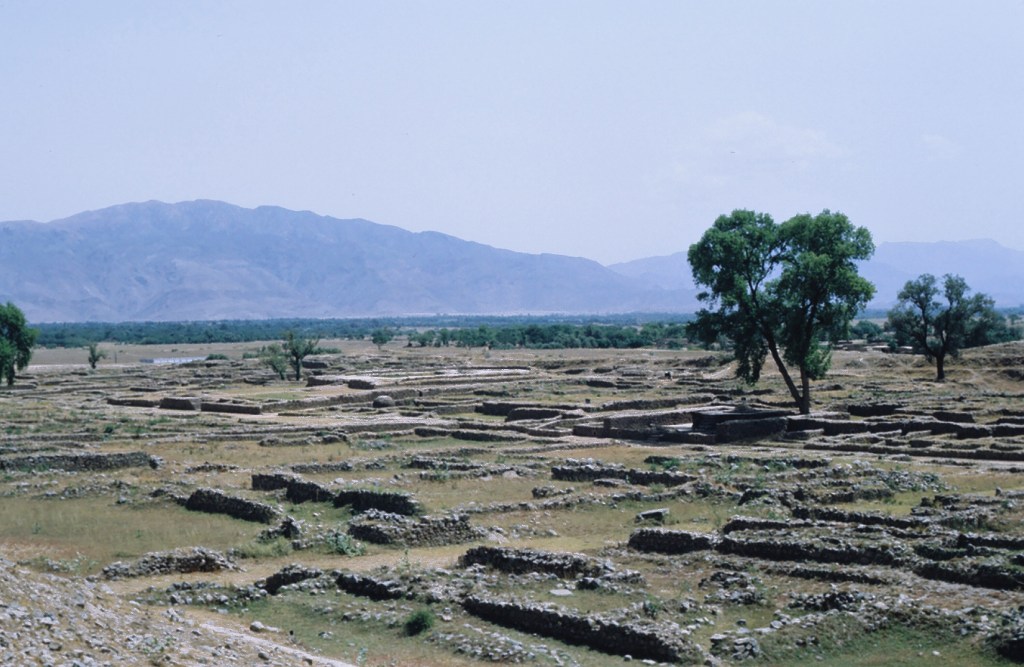
I’m pretty sure these photos were taken on a trip through the Indus River valley, and on up to a hill station in the most northern part of Punjab province, Pakistan. The only lost city that makes sense is one established by the Greeks when they invaded India in 180BC, the city of Sirkap. But if anyone out there can confirm? It would be a great help in confirming a segment of my childhood travels.

From Wikipedia:

The site of Sirkap was built according to the “Hippodamian” grid-plan characteristic of Greek cities. It is organized around one main avenue and fifteen perpendicular streets, covering a surface of around 1,200 by 400 meters (3,900 ft × 1,300 ft), with a surrounding wall 5–7 meters (16–23 ft) wide and 4.8 kilometers (3.0 mi) long. The ruins are Greek in character, similar to those of Olynthus in Macedonia.

Numerous Hellenistic artifacts have been found, in particular coins of Greco-Bactrian kings and stone palettes representing Greek mythological scenes. Some of them are purely Hellenistic, others indicate an evolution of the Greco-Bactrian styles found at Ai-Khanoum towards more indianized styles. For example, accessories such as Indian ankle bracelets can be found on some representations of Greek mythological figures such as Artemis.

Wikipedia

The Commonplace

By Walt Whitman

The commonplace I sing; How cheap is health! how cheap nobility!

Abstinence, no falsehood, no gluttony, lust; The open air I sing, freedom, toleration,

(Take here the mainest lesson-less from books-less from the schools,)
The common day and night-the common earth and waters, Your farm-your work, trade, occupation,

The democratic wisdom underneath, like solid ground for all.

1891

Sending Signals

I’d be curious to know which non-verbal cues are the most readily interpreted. Language seems like it would rank right up there near the top. An accent reveals someone’s location of origin. Although in the US a tinge or a twang, here or there, can cover a large geographic mass.

In Minnesota we have a number of cities with American Indian names like Edina, Wayzata and Mahtomedi. A stumble here puts the speaker clearly out of state. The use of soda or pop lets us know who is from Wisconsin or Illinois.

But what about other indicators, facial expressions for instance. There are those who greet people full on, eyes wide, and smile bright. There are those who look down and away and mumble. There are again others who stand upright, rigid and talk with the hushed MPR voice that they do so well on Saturday Night Live. Each of these descriptions may have led you to conjure up an image and start coloring in some thoughts around these characters.

Facial gestures can also steer conversation. A hard stare, a doubting wrinkle at the brow, a mocking curl of the lips, are all tools that one can use to impose status, perceived or real, over another. And this type of power, is oh so important in managing the conversation and the direction of the interaction.

Body language is on a continuum. You’ve got the leaners and the straighten uppers, the gesticulators and the laughers. But I’ve always been impressed with the brashness of those who will turn their shoulder (or full body) to create a block between a newcomer and a gathered group. I mean you might as well shout for all to hear: “I don’t want you here!”

People are so caught up in what is said. I find the silent part of language is far more sophisticated. This is where the demarcation of in-group and out-group are drawn. This is where it is quietly confirmed whether you’re in, or out.

Memories

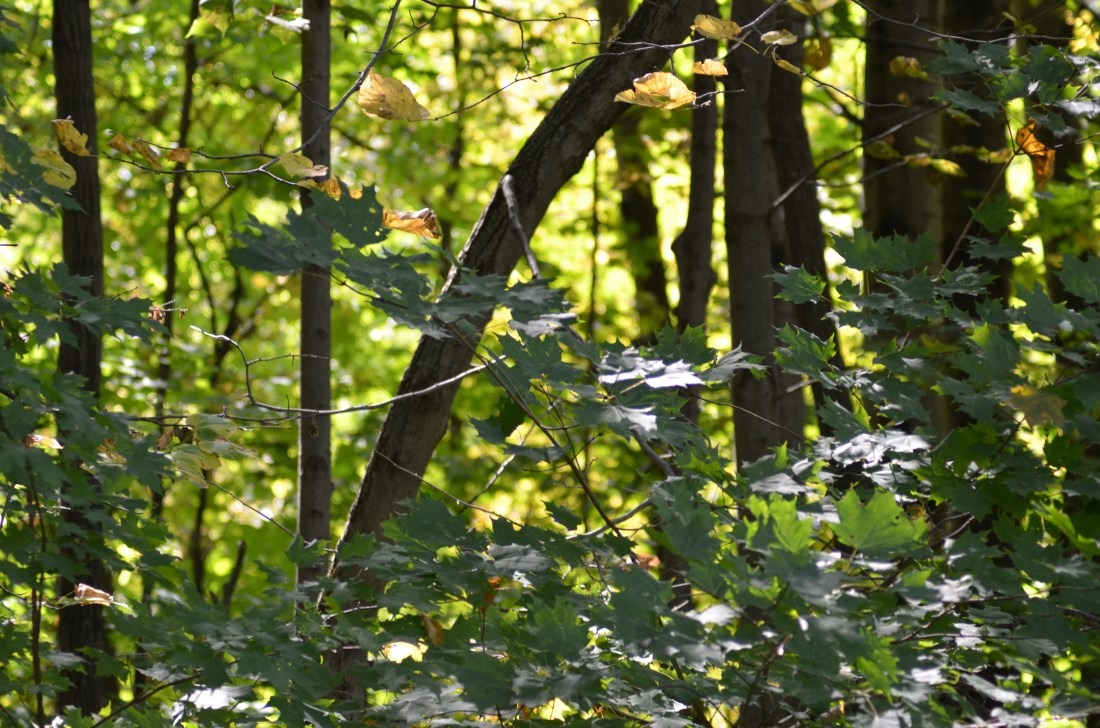
My grandmother delighted in the woods. From a young age she led my brothers and I in through the underbrush, searching. Nature was a treasure chest waiting to be discovered and she was Indiana Jones leading the adventurers into the cavern full of gold.

These were not well-groomed urban parks with asphalt trails meandering through a grove of trees, edged by grass, keeping walkers out of the mud. She took us into a dense cropping of oaks and maples and elms. All of them shooting up wildly, looking for the light. Large trunks lay where they fell after a significant windstorm, embarrassed by their exposed roots toppled to one side. A thick cover of faded dull leaves lay thick across the forest floor.

I can still see her in her cotton white shirt embroidered at the neckline, mint green Bermuda shorts and practical tan shoes. She would reach down, gather us around, and gently push the undergrowth to the side. With the delicacy of a hand model, she would pull back the cover on an earthy Jack-in-the-Pulpit or an elegant Lady Slipper.

She delighted in her success at finding us these special flora amongst all the mundane. For the rest of the outing we’d hear on repeat, “Weren’t we so lucky to find the red trillium, weren’t we? ” White trillium carpets the woods in the early spring before the leaves emerge, but we found ourselves nodding in agreement at the fortitude at coming across the red variety. How could you not get caught up in her enthusiasm?

As we got older my brothers lost interest in her guided tours or took up spending hours on my grandfather’s aluminum fishing boat. But I continued to tag along. She’d hear from someone in town where blueberry bushes had been spotted in some wayside ditch on a remote up-north road. With couple of empty plastic ice cream buckets in the back of her red VW bug, off we’d go to find what the woods had to offer us.

“Look,” she would say. Look at the bloom, the owl, the stream, the berries, the poison Ivy! Look. If I have any skills in observing nature, it is thanks to my Oma.

No Asymmetry- just- what is public and what in private

All urban neighborhoods have rules. The garbage cans, for instance, in our neighborhood must be kept inside a garage or behind an enclosure of a certain dimension. The can might always sit on the private lot, even while down by the curb on collection day. Yet the city residence at some point gathered up in the city council chambers and voted that garbage bins are unsightly and hence violate the public enjoyment of our streets.

Although property rights secure ownership of the home and plantings and outbuildings, the neighborhood considers the outer appearance of the street as a shared good. And hence feels it reasonable to set some guidelines for those who don’t pick up on the nuances of social norms. To be sure these vary from place to place throughout a metro area. Some cities are fine with RV’s in the drive, while others do not permit extra cars in the drive and require garage doors closed while not in use.

Changing times present changing issues. The advent of Air B&B led to concerns around properties being used for entertaining instead of everyday life. Although the use of the short-term rental property is just for the structure, the noise and traffic that come along with vacationers is a negative externality to the neighbors. They are interfering with the public space shared amongst the group. And that is how it ends up on the city council persons’ agenda.

So how about the other way around? If a neighbor uses private resources to do a project which has positive externalities, is it reasonable for them to knock on the door across the street and ask for some equity payback, for having increased the value of the neighborhood? Can they say, “See the lovely $70K custom landscape job, with perennials bordering a gorgeous paver driveway and the welcoming front patio? I just increased your home value, so get your checkbook out and give me a little of that extra equity you’ve got tucked away in your house value.”

The error in the thinking here is in categorizing the goods as public or private. The activity which was done (hiring a designer, picking out the plan, hiring a landscape firm) was achieved for private purposes. The activity did not touch the neighbors’ private goods, like damaging a basement through flooding or perhaps taking down a tree that was right on the lot line. These landscaping transactions are in the moment and fungible.

Improving the facade of your home and thus elevating the ambiance on the road also directly impacts the neighbors (in the same way that a burnt out, boarded up house has a negative impact). This is a public impact. With public goods, you don’t see the cash until you exit the group. The stock of all the public goods tied to the neighborhood may go up and down through the ownership time period- but it is only upon leaving the group that a dollar figure is recorded on these non-fungible values.

Noticing the different mechanisms is a keyway to identify whether a good is public or private.

The reasons why a homeowner would over improve their property knowing that they pay the tab and others will benefit through externalities are important to understand, especially in policy recommendations. The net result of one improvement is generally a cascading effect of others. When people enjoying what they see across the way, they tweak their own property as it pleases them. Sometimes a little seed money from a city can be a catalyst to get the ball rolling.

These are the borderlands where publics and privates get negotiated. In city council meetings and across back fences. There is no one recipe. A reactive, amicable and consistent system of governance seems key.

Tipping at Windmills

I have to say I’ve never read Don Quixote but the drawing of a slender man holding a spear, sitting astride a horse, with a windmill on the horizon quickly comes to mind. A one-line plot synopsis goes something like this: “Don Quixote is a middle-aged gentleman from the region of La Mancha in central Spain. Obsessed with the chivalrous ideals touted in books he has read, he decides to take up his lance and sword to defend the helpless and destroy the wicked.”

As the self-appointed knight goes looking for a fight he runs into all sorts of ruffians and ne’er-do-wells. He brings trouble upon himself and accomplishes little on behalf of the needy. So- here’s the question. Do high morals come first and then the search for those in need? Or is it best if those in need show themselves, so that their situations can be rectified? Perhaps Cervantes was trying to tip his hand indicating cards in favor of the later not the former.

Indeed, there is a story breaking in the Twin Cities right now that indicates if supply of funds is made available with lofty intentions, the criminals show up for the taking. And take they do. The Sahan Journal reports:

Between 2018 and 2021, Feeding Our Future accessed $244 million of federal child nutrition money. The FBI alleges that little of this money actually went to feed children. In a series of search warrants, the agency lists tens of millions of dollars allegedly redirected toward personal spending, including luxury cars, expensive property, and high-end travel. 

Part of the quarter of a billion dollars went to fourteen properties including $2.8M for a Minneapolis mansion, $500K for a fourplex, $500K for an apartment in Nairobi, $2.5M for a commercial space on Lake St, $1.1M for two lake lots in Prior Lake, $575K for a home in Savage, $14K on lawn care, $87K on vehicles, $49K to travel agencies and the list goes on….

And what was it the non-profit professed to be doing in order to access those federal dollars? They claimed to feed 60,000 children in November of 2021 out of a small one-story building. Did the logistics of how all those children were descending on that location not occur to those in charge of dispersing funds?

It was just back in 2015 that a similar con was discovered involving fictitious daycare provision in the same community. The restitution at that time was reported at $4.6M but there were allegations that $100M had been funneled out of the country. Yet instead of calling out criminality, this is how the politician representing that the district responded.

State Rep. Ilhan Omar, DFL-Minneapolis, said she’s troubled by the reports of childcare fraud, but notes that the fraud investigations wouldn’t be possible without communication between DHS and the Somali community.

“Vilifying an entire community — as stories like this often do — does not serve justice or get results. Collaboration does,” said Omar in a statement responding to the Fox 9 story.

It seems to me that when administrators go looking for a cause they create a market which someone steps in and fills with a demand. Want a woke endeavor but can’t find one? – We can fix that! And sure enough. That kind of cash flow will find a pocket to line. I hope they realize Don Quixote was a bit mad.

Words from Unpopular Essays

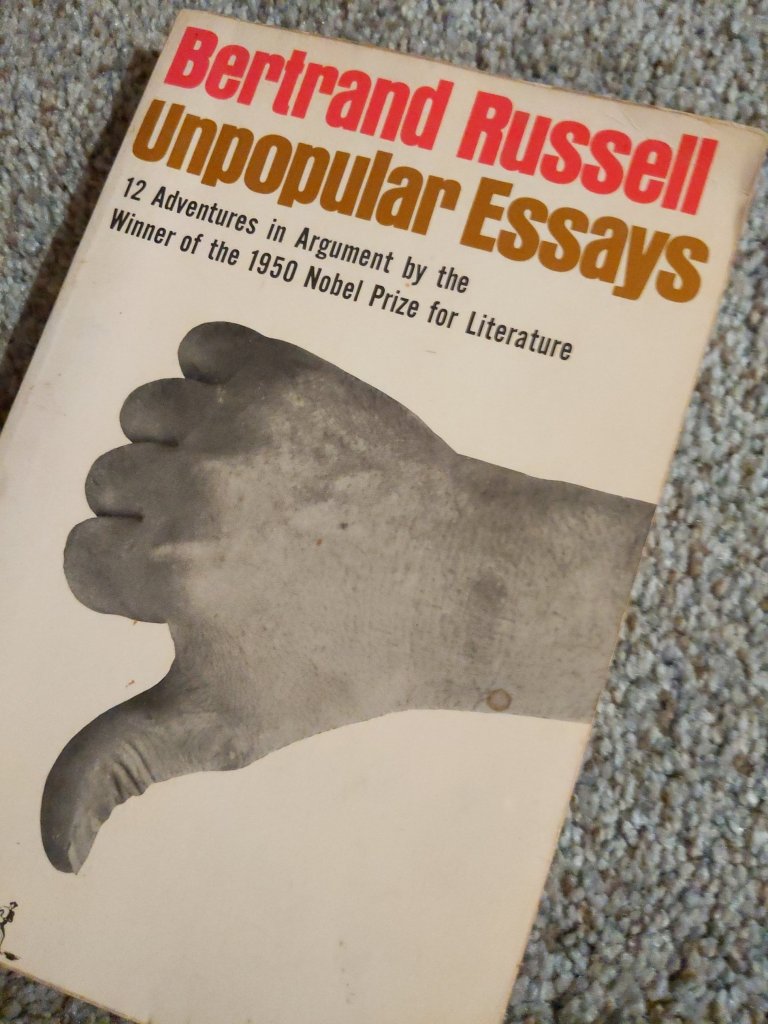
Philosophy has had from its earliest days two different objects which were believed to be closely interrelated. On the one hand, it aimed at a theoretical understanding of the structure of the world; on the other hand, it tried to discover and inculcate the best possible way of life. From Heraclitus to Hegel, or even to Marx, it consistently kept both ends in view; it was neither purely theoretical nor purely practical, but sought a theory of the universe upon which to base a practical ethic.

Bertrand Russell

Market Failure- Or tapping to a different tempo?

If you are too young to remember when Julia Roberts came into her own as an actress, rewatch Erin Brockovich. No one can flash a smile as well as Roberts. And the zesty character of an everyday single mom taking on corporate America in a David and Goliath story is a perfect match for Julia.

But this real-life tale is a redemption tale for markets. Wait- you don’t have to go googling the plot to confirm the intent of the story was to exemplify market failure of the classic kind. The firm (in this case the Pacific Gas & Electric Company- but there were many) in an effort to maximize profits, refused to look into claims of contaminants seeping into the neighboring soil and water. In order to keep track of things, let’s name the marketplace with the anchoring of the firm. Let’s call this traditional collection of goods, customers and firm, M1. PG&E is striving to provide goods and services to their consumers at the best prices. It’s a win for everyone in M1!

But not so fast. Erin Brockovich steps in as an activist and donates hundreds of hours of her (unpaid) labor to help determine that the residents near the plant are suffering from externalities of M1. This is where most people stop and claim that capitalism doesn’t work because M1 has not taken into consideration the surrounding community. Truth be told, they just haven’t finished watching the movie. Because it is soon readily apparent that M1 is contained in M2. And it is in M2 that Brockovich and her law firm and the community residents are going to form a common interest and push back on M1.

Here’s a good spot to encourage the reader to look back through the menu to categories explained at Home-Economic. The activity in a social sphere is governed by groups sharing a common interest, and the efforts or sacrifices they are willing to contribute towards that goal and the ongoing and updated norms which guide their behavior. The young paralegal revved up the M2 by going to the group (audience) and educating them to the claims at hand. This spurs on further efforts to make M2 more efficient by rectifying the public health concerns being externalized by M1.

As many law firms know, if claims of this nature are successfully demonstrated, the courts will order a balancing of accounts through a financial settlement. This not only pays those harmed for the externalities, it also makes it clear to other firms that being negligent will end badly. In this case it took $335 million in 2006 to bring M2 back into balance.

Note too that this process also occurs for positive externalities. For instance, a company produces widgets in M1 at a certain cost to consumers. Then there is a technology improvement in a broader market, call it M2. Once the firm has access to the public good of knowledge of a new process/technology, then product prices drop and consumers in M1 internalize the benefit through lower prices.

The question isn’t whether the market is failing. The question is what market are we in and where is the inefficiency.

Vigilance for identifying and cleaning up pollutants has a long history.

For Valentine’s

e. e. cummings

since feeling is first
who pays any attention
to the syntax of things
will never wholly kiss you,

wholly to be a fool
while Spring is in the world

my blood approves,
and kisses are a better fate
than wisdom
lady i swear by all flowers. Don't cry
-the best gesture of my brain is less than
your eyelids' flutter which says

we are for each other: then
laugh, leaning back in my arms
for life's not a paragraph

And death i think is no parenthesis

Look for the winners

I was at Wal-Mart a few weeks ago and kept passing the same shopper as we meandered through the aisles, her going in one direction and me in the other. She was on her cell and was talking loudly as people do. I only caught bits of conversation as I replenished my pasta supply or tried to remember which condiments were running low. She was relaying the equity situation in her house in a heady manner, the way people talk when there is money involved. She was going over it as if to sort it out herself, how the equity she had gained was something to work with, but then she would also be paying more on the next purchase. It was unchartered territory.

There is a tendency to talk about the real estate market as one great monolith of a thing which spans the entire US. Although it is true that you can look at aggregate numbers for the entire nation, doing so eliminates many insights. Proclamations about rising prices (or falling for that matter) is rather ho hum. Concluding that rising prices is bad as it prohibits or makes it more difficult for newcomers to enter the market is true but fails to acknowledge the winners in the market.

History is quickly forgotten, so I’ll dust off this chart to remind everyone of the homeownership rates for the last twenty years.

Loose credit pushed many buyers into homeownership from the early 2000’s until the crash started in 2007. The common refrain back then was if there was a pulse, there was financing. And the rise in homeownership rates climbed nicely by 5%. A lot of the mortgages were initiated at a below market rate which was fixed for seven years. Once the favorable payment expired many consumers went into default, and hence the steep decline in rates during the crash.

But some first-time buyers, who wouldn’t have qualified if the loose credit hadn’t been offered, did hang onto their properties. And now, twelve years later, they have a nice amount of equity. These are one of the groups of people policies should be focusing on today. Like the modest shopper in Wal-Mart, they have gained a nice equity position yet don’t quite know what to do with it.

Here’s another story of a first-time buyer who was able to use family connections to purchase a home off market. Her relative used their equity to move up, and she secured a lovely home. I find these stories much more interesting than, Stop! Prices are rising. The sky is falling!

Series Review: The girl from Oslo

I was hoping to watch the series Tehran but since I was on Netflix the algorithms offered me this instead (Tehran is on Apple TV). It’s only one season with ten half hour episodes.

The film takes you to a variety of settings as the story plays out in Oslo and Israel and Egypt. The characters are also interesting as they represent different aspects of each of these areas.

The plot is suspenseful and for the most part believable. We’re about two thirds of the way through but it won’t take long to view the rest of the episodes as it’s top of the list for TV entertainment.

Bonus to those who move

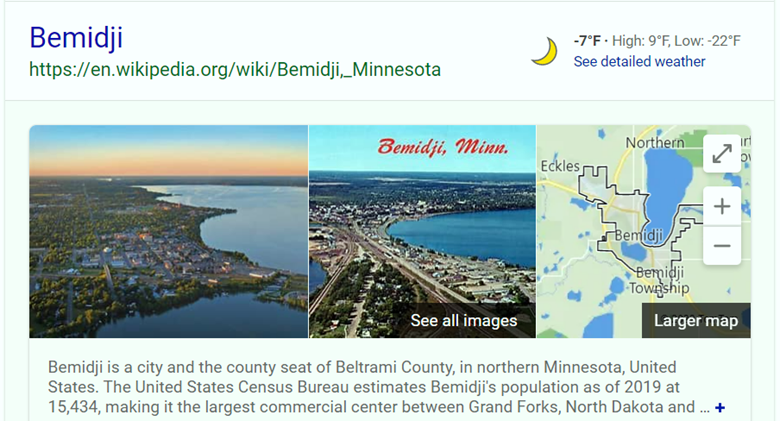
Cities around the US are paying people to relocate to their town. Marketplace recently ran a success story out of Bemidji Minnesota. They featured two families who took the city up on the offer of $2500 to cover the move. It seems that is enough money to risk the relocation expenses. Bemidji is getting pretty far north, not to the Canadian border but definitely that direction.

I pulled the demographics just to give you an idea of the landscape and was presently surprised by two things. First- the median age is a lot lower than I would have guessed. (For a generation or more these towns were aging) And furthermore, births are exceeding deaths by almost two to one. This is quite a switch.

Bemidji has a total of 11,917 people and of those residents there are 5,547 males and 6,370 females. The median age of the male population is 25.3 and the female population is 30.8. There are approximately 585 births each year and around 304 deaths.

https://www.movingideas.org/bemidji-mn/

These two families cited the work/life balance, a change of the pace of things, as the reason for moving to a smaller community from Topeka and Phoenix. Of course, the costs across the board are lower, but the lifestyle change is another way of saying they recapture more of their time. They can use their free hours to raise more children, get involved in civic projects, or simply have more fun pursuing hobbies which enrich their lives.

Since many writers and ambitious folks chose to live in the big coastal towns there is often this assumed bias that everyone wants to live in NYC or San Fransisco or LA too, they simply can’t. The reality is that a $2500 bonus will get people to choose a much different way of life.

Story of the TikTok poster and a rent-controlled apartment

A young woman from New York City created a media stir last year, when she posted shots of her scrumptious apartment on the upper west side of Manhattan (where all the famous people live). She gave an on-line audience a peek into the dreamy lifestyle of making fresh again an old-world charm unit in one of the most expensive real estate markets in the world. It’s no surprise that a school of media swimmers followed her. This story line has already proven successful in the sitcom Friends which aired for ten seasons.

Just like Monica (Courtney Cox) on Friends, the special ed teacher inherited her rent-controlled apartment. It is her childhood home, and the rules allow for a transference of benefit from parent to child. Unlike on TV there are monthly fees associated with the utilities and maintenance of the unit. Given the age of the building, I can guarantee you that $1300/mo rent does not cover the normal combination of heat, electric, water/sewer, common area updates, exterior maintenance which is usually collected through condo fees. For comparison, here’s a listing for a condo built in 1981 and the condo fees run $1424/mo.

Whereas this story has captured the imagination of many who would love to swap living situations with the young New Yorker, others may wonder how this came to be. I can’t supply the context for the imposition of rent control a number of decades ago, but I think today’s housing advocates might see the inefficiency of one individual receiving such a significant benefit. Nor do I think voters today (knowingly) would divert money from the flow of funds through the housing market in a way which would allow this scenario to develop downstream.

Therein lies the danger of using laws to replace economics. Laws are static whereas economic systems are dynamic.

Say a group of people, whether a rural town. or a suburb or a big city have a certain capacity to provide resources for the housing of some community members. We do this naturally of course, when we house our children or perhaps an elderly relative. An example of a dynamic change is how the norms have varied on when children are launched into the real world. Whereas boomers mostly left home at eighteen, millennials stayed on avoiding homeownership and household formation. (Joint Studies for Housing Study- Harvard)

But over and above family ties, the community pays part (or all) of the rent for those who cannot care or themselves. Funds can be funneled through non-profits like Caring and Sharing hands which operates entirely on private donations. At a city level there is an authority to use tax increment financing (TIF), usually in conjunction with monies from the state level. At the federal level the section 8 voucher plan is the largest component of HUD’s budget. These bureaucratic mechanisms are slow and unresponsive to demand.

The disjointedness of subsidy providers is even less able to match individuals and families with the community infrastructures which not only support them but also allow them to participate in a productive manner. Ideally it is through increased involvement in mainstream activities which allow move people back into self-sufficiency, and eventually homeownership.

It’s important to note in the TikTok story that the parents never became homeowners. They never increased their wealth through property ownership. Most probably because there were too many incentives in place to retain their apartment. And the same is true for their daughter. Not only is the TikTok’er afforded a place to live, but she is also monetizing her lifestyle through social media. From what I hear, YouTubers can earn quite a bit when their videos are viewed in the 100’s of thousands. And why shouldn’t she make such extractions? She is simply complying with the incentives set up by the rent-control agreements of years gone by.

The Recall

By Rudyard Kipling

I AM the land of their fathers.
In me the virtue stays.
I will bring back my children,
After certain days.

Under their feet in the grasses
My clinging magic runs.
They shall return as strangers.
They shall remain as sons.

Over their heads in the branches
Of their new-bought, ancient trees,
I weave an incantation
And draw them to my knees.

Scent of smoke in the evening,
Smell of rain in the night-
The hours, the days and the seasons,
Order their souls aright,

Till I make plain the meaning
Of all my thousand years-
Till I fill their hearts with knowledge,
While I fill their eyes with tears.

Veblen, Context, and Claire

Context isn’t something you can see, which makes it hard to put a finger on. To add a layer of opacity, often people have reasons to hide their situations from some while signaling in full regalia to others. One of the first to pick up on the flare some wish to exhibit was Thorstein Veblen, a farmstock Norwegian, an affiliate of one of our finer Minnesota schools Carleton College. It’s not surprising that a-salt-of-the-earth type of guy would be at odds with (what he considered) the wasteful expenditures of the wealthy in The Theory of the Leisure Class. He’s probably best known for coining the phrase conspicuous consumption.

But the purchase of a $20K Rolex watch is as much a ticket to a click as a gang sign. The price tag is only a means of filtering out those of lower economic standing. Within the economic platter of folks who drive Maserati’s or buy jewels at Tiffany’s, the price settles in amongst other choices. Possession of such things delineates the group. Many people judge this, as did Veblen, in a disdainful manner. Though it isn’t all that different or more harmful than other social parameters, set and enforced by others.

Last fall there was fallout when the Art Institute of Chicago let all their docents- long time educated volunteers- go. The group of one hundred or so later-age privileged women were judged to be a closed access group. I have a feeling they weren’t selective. It’s more logical that this collection of unpaid workers with passion for artistic endeavors and creators, is thrilled to shed their knowledge on anyone who will listen. By dismissing these women, the museum lost more than the price of a Rolex, all for fear that their presence would be taken out of context.

There’s the context of expenditure, and the context of appearances and also the context of work. Consider, for example, the dog show folks. Amongst my acquaintances there is a couple who posts more photos about their show puppies than most do of their kids. They live for their dogs. We all had to chip in to buy the local K-9’s bullet proof vests. If you doubt the amount of (unpaid) time people will invest to be part of a superior level of dog obedience, check out the National Dog Show. In 2020 Claire, a Scottish Deerhound, brought home a blue ribbon.

Investigative reporter starts at NYT and gets 4.2K suggestions for stories

Let’s speculate on reasons for the lack of trust brewing in the non-profit sector at the moment.

Cash- A notable seismic shift in philanthropy since the onslaught of apps and everything social is the ability to tap anyone’s good will. Set up a GoFundMe and boom- thousands of dollars appear. Lots of money on the move with little firsthand knowledge of how those dollars are being distributed is bound to give fodder to conspiracy theorists.

Case in point- GoFundMe recently refunded almost 10million to donors supporting the trucker rally in Canada after eligibility of purpose is scrutinized. Which leads to the next trust buster. The short synopsis which accompanies the funding request often lack a complete flushing out of context (which I hear is in scarce supply these days). The public gets caught up in the cause of the moment and then has donator remorse when they realize that perhaps they didn’t quite understand organization’s mission.

But to be fair, the replies to David Fahrenthold’s tweets range from medical fraud to mega churches, from patriotic themes like Wounded Warriors to AARP of all things. The gist seems to be that the feedback loops on the not-for-profit are waving in the wind like those crazy inflatable advertising men.

The daily grind of Dinner

The early years of dinner-for-the-family is all about tricking and tom foolery. How to make the key foods, that you know the toddlers will lift off their plates and consume, into some new version of itself by adding a colorful stack of carrot sticks or a half circle of goldfish swimming the edges of the plate. Just keeping them astride their stool for a bit longer with a distraction of some sort might earn you an extra bite of their meal.

Shopping wasn’t too much of a burden as their pallets were limited. The work was definitely at the table and not so much behind the scenes. But that all changes once they meet their first vegetarian. The abrupt assault on the woes of meat products comes at you as fast as a horse running for the barn. Abruptly there is nothing in the pantry that will quench their appetite. A new menu and grocery list is required posthaste.

Fortunately, within a week, most middle schoolers cave to their stomachs rather than pursue the higher moral standing of a vegan diet. At least my meat lovers did (thank the lord). But little did I know, a new foe was about to sabotage my grocery, pantry, prep and serve routine. Ennui. Exactly. The “there’s nothing in this house to eeeaaattttttt.”

I’d patiently list off all that was in the ready: enchiladas, kung pao chicken, hamburgers, wild rice soup, pork chops and rice, and of course tacos or spaghetti, amongst other versions or pasta. No, no, no and no. Nothing was enough. The shelves were bare; their stomachs empty; isn’t there something I could do?

I learned by now from the moms at the baseball fields or basketball courts that they had thrown in the towel. Frozen pizza, Costco dinners, and take out were the options offered up in their households. And it’s not to say that we didn’t see of a few of those through our household at dinner time either. But more than the health aspect of prepped food is the economy that bugged me. Frozen Bertolli’s packaged chicken alfredo and penne costs three times what it would to make at home. And barely saves anytime as long as you have some grilled chicken in the freezer and all the other ingredients.

But that’s the key, isn’t it? Making dinner isn’t just the fifteen to twenty minutes of prep and another half hour to cook. One has to know the family’s interests, have the products on hand, be agile and knowledgeable enough to pull it all together. The work involved in feeding a family is by far the most time-consuming activity in homemaking and it is known to be a significant contributor to health and better living.

I teased them through their late high school years that they thought a multicultural chef lived in the fridge and would jump out like some Suess character to accommodate their every culinary demand. Fortunately, it just took a little separation from home, and half a school year eating food from a university cafeteria, to adjust their point of view. Now our dinner table is a destination for a nice meal and visit.

I don’t regret having put in that time instead of bailing on the whole thing. They will start out with more knowledge on how to run a kitchen then I did. And now my job is a cream puff.

Swerve

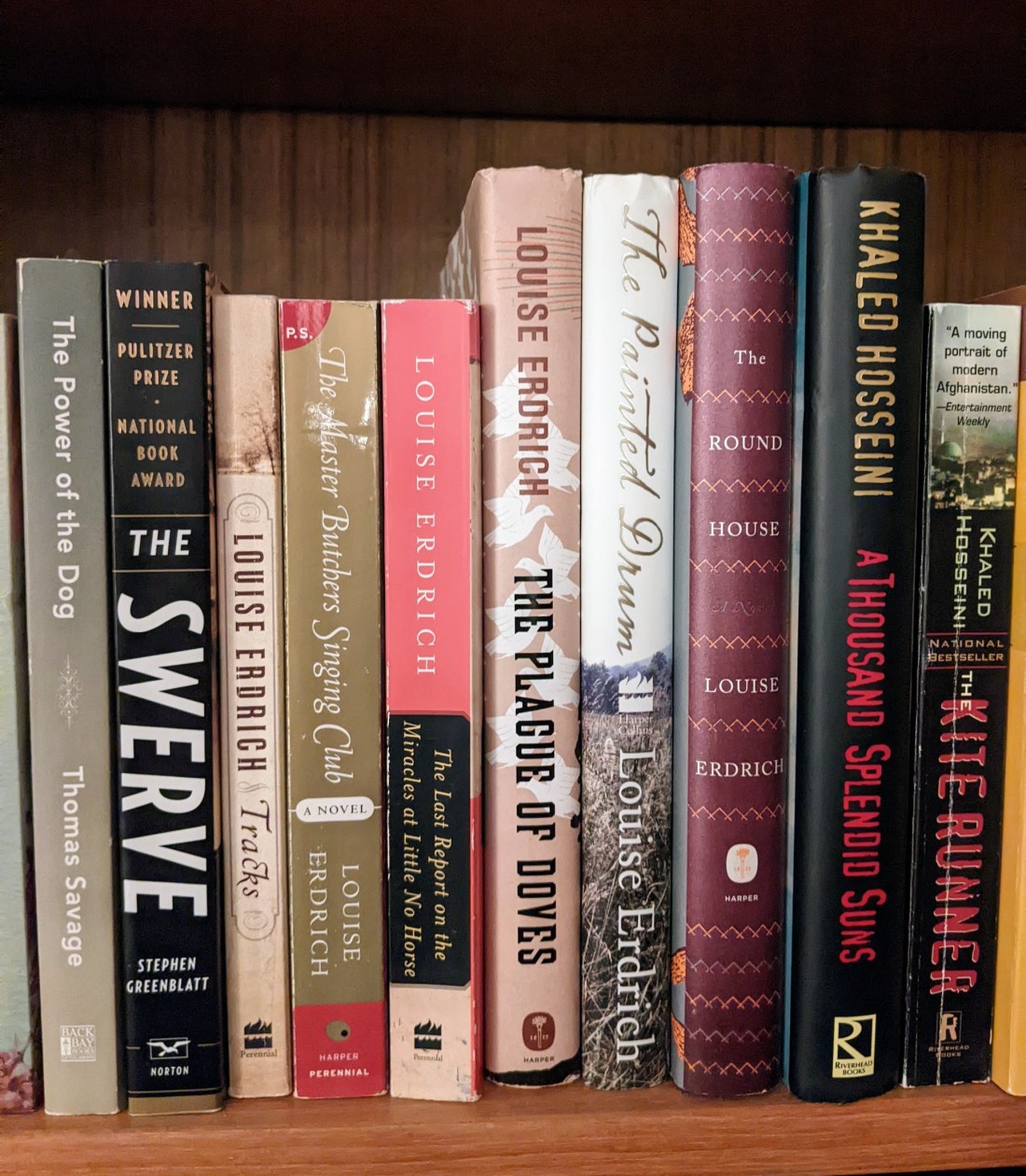
Louise Erdrich owns a bookstore in an old part of Minneapolis. It’s a brick one story store front next to a restaurant which serves patrons at tables on the sidewalk in nice weather. Inside it’s stuffy with books like an oversized wool sweater. There are armchairs between the bookshelves to sit on and browse the pages of potential purchases. Once I saw a late-middle-aged women in glasses, chomping on gum, as she speed-read a tome as if she were in a library.

I frequented the store through the anticipated demise of tangible print. There may have been as few as three independent bookstores in the Twin Cities around 2010-2012. Being a well-recognized author, Erdrich could keep one going on her own reputation (probably at great personal expense). Anyway, the support staff on site were subtly helpful, available with insights from behind the cash register perched on an over-sized oak display cabinet. This is how I came upon the book, The Swerve: How the World Became Modern, by Stephen Greenblatt.

The Swerve: How the World Became Modern (paperback edition: The Swerve: How the Renaissance Began[1]) is a book by Stephen Greenblatt and winner of the 2012 Pulitzer Prize for General Non-Fiction and 2011 National Book Award for Nonfiction.[2][3]

Greenblatt tells the story of how Poggio Bracciolini, a 15th-century papal emissary and obsessive book hunter, saved the last copy of the Roman poet Lucretius‘s De rerum natura (On the Nature of Things) from near-terminal neglect in a German monastery, thus reintroducing important ideas that sparked the modern age.[4][5][6]

Wiki

I had asked for a book that would offer up some history in an entertaining manner, and it provided that and more. As the story is told, one can see how a whole sets of ideas can be set off in the wrong direction. And at that time other thoughts are ignored and put to the side, only to be the subject of great discoveries at a later date.

It’s refreshing that the study of economics seems to be taking an assessment of its own history. During the cold war there was such a dichotomy between capitalism versus all the rest, that ideas were smothers if political implications found them unfriendly. And then there were greater hurdles around languages and translations. Maurice Allais for instance refused to have his works translated from French. He was recognized with the Nobel Prize in 1988 “for his pioneering contributions to the theory of markets and efficient utilization of resources.” Yet many other economists from the English-speaking world are given credit for observations which he (perhaps) got after first.

I would think the internet will make it easier for people in pursuit of similar interests to find each other going forward. In the meantime, never forget the past.

The paradox of the outsider

Say you lived in a small rural community. Maybe there is one main grocery store in town and three churches of various denominations. All grades k-12 are taught in one building, with the younger ages on one side of the building complex. The senior high kids get the classrooms closest to the gym and the middle schoolers fill the classrooms sandwiched in between. Busses bring in kids from rural route addresses.

Now imagine one family is experiencing financial difficulties and the couple is separating. The land they farm came down through her family, so she is staying on the site to try to make a go of it. Eighteen months in, the past due notices are piling up and she comes to terms with the reality of having to sell. Normally this productive land is swept up by competing farmers wanting to increase their holdings. The nearby owners are usually particularly interested as the expense to move large farm equipment like combines is expensive. But the sale stalls- why?

In a small, isolated community there are only so many social activities, through church or the school sports or maybe a community center. When you run into someone at the high school basketball game or service on Sunday you don’t want to read across your neighbor’s face that they think you took advantage of their misfortune. When the idea is to get out and enjoy a round a golf or relax over a beer at the VFW, you don’t want to run into the lady who may feel like you stole her inheritance.

The paradox is that community is meant to be there for each other when times are bad. But in this case the aversion of being accused of profiteering is damaging to those who need help the most. And this is how an outsider can step in, easily appraise a favorable situation and finalize the purchase. The cost of social stigma is not felt by the outsider.

This a corruption of some kind. The community breaks its own rules and allows a profit to leave the group for another. A sense of loss remains. People turn on the outsider. They are the profiteer! They are not to be trusted.

Wright county Iowa

Poem about parents from Edna St. Vincent Millay

SINGING-WOMAN FROM THE WOOD’S EDGE

WHAT should I be but a prophet and a liar,
Whose mother was a leprechaun, whose father was a friar?
Teethed on a crucifix and cradled under water,
What should I be but the fiend’s god-daughter?

And who should be my playmates but the adder and the frog,
That was got beneath a furze-bush and born in a bog?
And what should be my singing, that was christened at an altar,
But Aves and Credos and Psalms out of the Psalter?

You will see such webs on the wet grass, maybe,
As a pixie-mother weaves for her baby,
You will find such flame at the wave’s weedy ebb
As flashes in the meshes of a mer-mother’s web,

But there comes to birth no common spawn
From the love of a priest for a leprechaun,
And you never have seen and you never will see
Such things as the things that swaddled me!

After all’s said and after all’s done,
What should I be but a harlot and a nun?

In through the bushes, on any foggy day,
My Da would come a-swishing of the drops away,
With a prayer for my death and a groan for my birth,
A-mumbling of his beads for all that he was worth.

And there sit my Ma, her knees beneath her chin,
A-looking in his face and a-drinking of it in,
And a-marking in the moss some funny little saying
That would mean just the opposite of all that he was praying!

He taught me the holy-talk of Vesper and of Matin,
He heard me my Greek and he heard me my Latin,
He blessed me and crossed me to keep my soul from evil,
And we watched him out of sight, and we conjured up the devil.

Oh, the things I haven’t seen and the things I haven’t known,
What with hedges and ditches till after I was grown,
And yanked both ways by my mother and my father,
With a “Which would you better?” and a “Which would you rather?”

With him for a sire and her for a dam,
What should I be but just what I am?