Month: October 2021
Matrix is more than a movie
The movie Matrix made a big splash in 1999, propelling Keanu Reeves to stardom. He wasn’t the producer’s first pick for the lead, Neo, a programmer who senses something in his environment is not quite right. The matrix refers to a simulated reality, created by intelligent machines. As long as the lives of the actors were contained within this vessel of distraction, their bodies energized the mechanical systems.
The dictionary confers a similar definition for the word matrix:
- an environment or material in which something develops; a surrounding medium or structure.”free choices become the matrix of human life”
Once a surrounding medium or structure looses physical form it can be challenging to see, and we can start to question if it is still there. The mimes from my youth, following the lead of the famous Marcel Marceau, would stand on Paris street corners gesturing in such a way that you could visualize the wall their elbow leaned against, or the box that encased them. See for yourself.
In mathematics a matrix is a grid of numbers, like an excel spread sheet. The numbers are arranged in such a way that they represent value descriptions for a variety of features.
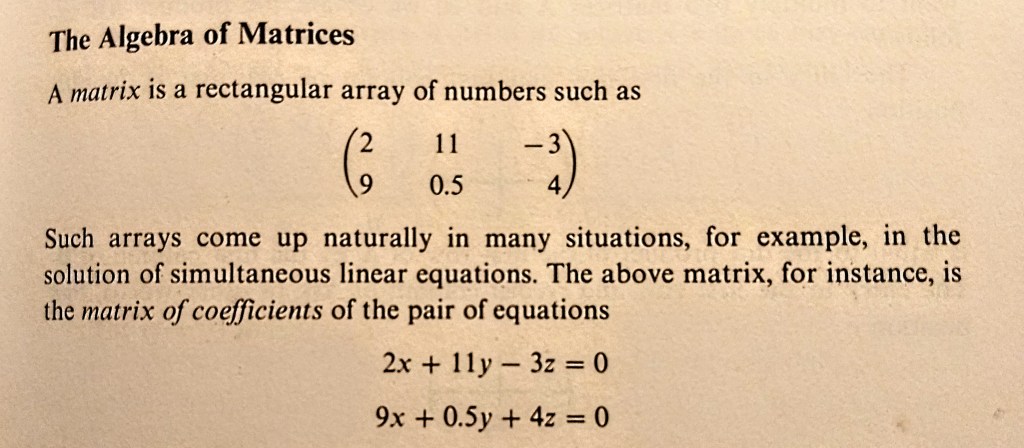
Say life was simple and one could devote free time (time away from a job for money) to one of three activities. Time caring for children ‘x’, time for keeping food in the house ‘y’ and time for exercise ‘z’. Collecting hundreds of these sets would generate some baseline numbers. But soon enough sorting subgroups reveal new environments. And further investigation reveals that groups can have a variety of properties when they interact.
What we are looking for are the numbers that go astray, that vault off the charts, that tell us “This is where we need help!” The numbers will spell out an environment that we cannot see, yet we can still be confident it is defined. And as such it can help us solve for situations that leave others behind. We have to let the matrices, like the mimes, form the space for this type of calculation.
Haunted Houses

Henry Wadsworth Longfellow – 1807-1882
All houses wherein men have lived and died
Are haunted houses. Through the open doors
The harmless phantoms on their errands glide,
With feet that make no sound upon the floors.
We meet them at the door-way, on the stair,
Along the passages they come and go,
Impalpable impressions on the air,
A sense of something moving to and fro.
There are more guests at table than the hosts
Invited; the illuminated hall
Is thronged with quiet, inoffensive ghosts,
As silent as the pictures on the wall.
The stranger at my fireside cannot see
The forms I see, nor hear the sounds I hear;
He but perceives what is; while unto me
All that has been is visible and clear.
We have no title-deeds to house or lands;
Owners and occupants of earlier dates
From graves forgotten stretch their dusty hands,
And hold in mortmain still their old estates.
The spirit-world around this world of sense
Floats like an atmosphere, and everywhere
Wafts through these earthly mists and vapoursdense
A vital breath of more ethereal air.
Our little lives are kept in equipoise
By opposite attractions and desires;
The struggle of the instinct that enjoys,
And the more noble instinct that aspires.
These perturbations, this perpetual jar
Of earthly wants and aspirations high,
Come from the influence of an unseen star
An undiscovered planet in our sky.
And as the moon from some dark gate of cloud
Throws o’er the sea a floating bridge of light,
Across whose trembling planks our fancies crowd
Into the realm of mystery and night,—
So from the world of spirits there descends
A bridge of light, connecting it with this,
O’er whose unsteady floor, that sways and bends,
Wander our thoughts above the dark abyss.
Windfalls from Me but not from Thee
Is it just me or do others feel like the idea for a capital tax is about feeling a little green over business windfalls? Chance smiled on the likes of Bezos and Zuckerberg in the game of life, but they didn’t really do anything to deserve all that extra cash. They just happen to be at the right place at the right decade for the culmination of years of societal work. Or more importantly, they figured out how to tap it.
The COVID money was a windfall for some families. I heard more than one interviewee expressing an appreciation for how the unexpected chunk of cash enabled them to relocate, or search out new employment. One mom said she got her kids passports so they would be able to travel once the virus subsided. Without the windfall from the government subsidy, she wouldn’t have had the money for such luxuries.
Minnesota runs a state lottery. It was established by voter referendum in 1988. Its total revenue garners as much as $668.6 million per year. I always see people lining up at the customer service counter to buy their numbers when I’m at the grocery store. Here are some of the latest jackpots.

Windfalls used to entice tax revenue seem to be OK. Windfalls as a chance outcome from mass distribution of pubic funds during a pandemic seem to be OK. But windfalls due to business savvy and persistence need to be reined in by taxation. The accumulation of all that cash is villainous, an affront to all that is moral.
Windfalls, it seems, are good if implemented by me but not by thee.
Moving money & the unrealistic unrealized capital gains tax
Years ago a friend pointed out that it is easier to capture money when it is moving. As workers earn a wage, it is easier to capture a tax as funds transfer from the employer to the employee. At the time an asset is sold, it is easy to capture a tax from the dollars passing from one owner to the next. When purchases are made at a cash register it is easier to add on a sales tax. You get the picture.
And for this simple practicality, the asset tax or Biden’s wealth tax, was doomed from the get go.
There are other practical reasons that gum up the whole idea. Assets fluctuate in value over periods of time. So the years that the asset increases in value you pay a tax, but the years the asset decreases in value the government pays you back? Sounds like an accounting nightmare. Sounds like a scenario made for grift.
Maybe it’s more than just the practicality of money on the move. The severing of ownership leads to a settling of accounts, which includes an obligation to the greater group in the form of a tax. Use of assets for philanthropy, start-ups (basically business charity), endowments and so forth is a different type of supporting the greater group than the stream of funds channeled through taxes to pay for services.
The problem it seems is in the mechanism to draw the substantial assets to turn them over to political process. And maybe that a good thing.
In appreciation of HG Wells
I’m just now reading HG Wells. I wasn’t into science fiction as a child, so I never picked up The Time Machine when it was making the rounds amongst my brother’s middle school things. How fortunate to have left this work untouched, to be able to dabble in such writing today. Part of the appeal of novels like War of The Worlds was the terror of it. As captured in this passage where the British are fleeing from the invading Martians.
The legendary hosts of Gothe and Huns, the hugest armies Asia has ever seen, would have been but a drop in that current. And this was no disciplined march; it was a stampede — a stampede gigantic and terrible – without order and without a goal, six million people, unarmed and unprovisioned, driving headlong. It was the beginning of the rout of civilization, of the massacre of mankind.
But I particularly like the descriptions which conjure up amazing visuals, such as this one.
Directly below him the balloonist would have seen the network of streets far and wide, houses, churches, squares, crescents, gardens already derelict – spread out like a huge map, and in the southward blotted. Over Ealing, Richmond, Wimbledon, it would have seemed as if some monstrous pen had flung ink upon the chart. Steadily, incessantly, each black splash grew and spread, shooting out ramifications this way and that, now banking itself against rising ground, now pouring swiftly over a crest into a new-found valley, exactly as a gout of ink would spread itself upon blotting paper.
At the end of the nineteenth century, ballooning allowed everyday folks to reach upwards to the skies. Leading his audience up to the heights of the clouds, in order to show them what lay below, must have enthralled their imagination. And those of generations to come. Just how many cartoons of your youth stole this visual of thick black ink spilling over a hand written map on parchment paper? I can think of many.
Movies of the story have also been made and remade. In all there have been seven films depicting HG Wells’ War of the Worlds. The most recent feature, from 2005, was directed by Steven Spielberg, and stared Tom Cruise and Dakota Fanning. I’ll have to get around to watching it!
To hire a Mayor

In about a week elections will be held here in the US. The presidential spot won’t be on a ballot for another three years, but there are still some important races in the works. Like the Mayor of Minneapolis.
With the largest commercial center in the state also home to many government service centers, public institutions like the University of Mn (home to 60,000 students) and sports and entertainment centers, it’s sometimes hard to get your head around the fact that only the residents of Minneapolis vote on core services like who is in charge of public safety. (The city proper has about 420K residents whereas the entire metropolitan area has a population of 3.65 million people.)
The city of Minneapolis has been engaged in a very vocal discussion around this issue and in the following video clip you can get a feel for how the political positions have shaken out. The incumbent mayor has risen in his position since the death of George Floyd had him numb and silent. He is more confident and more assured about the path ahead and his contribution to the journey.
There are three other candidates in the conversation. One represents the left/Marxist progressive angle, then there is a the center progressive/climate action candidate, and lastly a very articulate representative of the immigrant community. All in all the clip is worth watching as it pulls apart some common themes seen across the democratic party more generally.
Minneapolis also uses rank choice voting, and the moderator raises the question of whether collaborative efforts on the part of two of the candidates fulfills the intentions of this form of democratic determination.
Jump to minute 17 to get right to the debate section of the hour long public affairs show.
Dark Forces

Dictionary.com is my go to for spelling and definitions. I get their word of the day in my email box and amuse myself (as time permits) taking their quizzes. Today they had a click bait section on the different names for Satan.
Perhaps the most well-known name for the Devil is Satan. This name appears repeatedly in the Bible, such as in Luke 22:3 when the Devil is blamed for Judas Iscariot’s betrayal of Jesus Christ: Then entered Satan into Judas surnamed Iscariot, being of the number of the twelve.
The name Satan is recorded in English before the year 900. The English word comes through the Greek Satán from the Hebrew word śātān meaning “adversary.” Whatever name he goes by, the Devil is said to be the adversary of God: the Devil is out to destroy God’s work or to tempt humanity into turning away from God toward evil.
Many of the references come from the Christian tradition, but fear not. A similar nefarious force appears across cultures.
Of course, the Devil appears in Muslim scripture as well. Ash-Shaytān comes from the Arabic al-Shaytān and is etymologically connected to the English Satan. The “ash” or “al” indicates that one is talking about the Devil (with a capital D) as opposed to a devil or demon.
The name Ash-Shaytān has several different variants in Arabic, including Shaytan, Shaitan, and Sheitan.
https://www.dictionary.com/e/s/devil-names/#1
I bring this up only because when people write about failed institutions the fall guy or gal is always a leader of some sort. The blame is laid at the feet of some the top banker, bureaucrat, general or prominent figure. I can’t really see how institutions fail due to one individual, powerful or not. The implementation of services and work following the guidance of norms rests with all the hundreds of individuals who partake in the activity.
Institutions can fail because humans are subject to weaknesses. Whether it is a Jinn sitting on a shoulder, or a dark force rustling through the trees, the inclination for each and every person to be tempted into a corruption large or small is real. Do you know of a teacher who has marked down a grade because they found the student arrogant? Or a banker who omitted to waive some promotional fees because the customer had been a you-know-what?
These are small corruptions. But they are real. The great recession of 2008 was a pyramid of small to progressively large corruption at every level of the mortgage industry; from the loan processors all the way up to packaging of the investment portfolios. Sure everyone wants to go after the high buck Wall Street guys, but $40/yr title closers were prosecuted for fraud as well.
Maybe due to my Christian background it is easy for me to accept that temptations are present and real. That human weakness is part of the deal. But it seems like the way the story is often told is that the average person is neutral to good, and only those with a lot to gain or loose can be tempted. It is erroneous in the the same way that the gift of charity is only considered a plus on the spread sheet of social accounting.
Whatever framework is used for the mechanics of institutional production, it must allow for negative numbers. For as dictionary.com reminds us today, there are evil forces everpresent amongst us.
Assessing Risk

Stories about visiting soldiers
I pick up used books in all sorts of places. When I drop off a load of goods at the Goodwill (I have no patience for hosting garage sales, all that storing and sorting and ticketing), I always pop into the retail part of the store to see what books have found their way to the shelves. There’s inevitably an eclectic mix. That’s where I might have picked up A Bell for Adano, by John Hersey. I had never heard of it. The cover said it had won a Pulitzer Prize and a few page flips showed it was set in Italy. The odds were in my favor.
It started slow. About seventy pages in I’m questioning who this guy is–he studied at Yale and Cambridge, then taught for several decades at Yale. He was born in China. Interesting enough to keep plowing through the story of an American major put in administrative charge of a small Italian town in the early years following the allied victory in Europe. The writing is clear but unimpressive.
Then some economics filters in. He starts with endearing stories about wine and hair cuts.
He traced the black market in wine to the house of Carmelina, wife of the lazy Fatta. The very first person who bought wine from Carmelina, on the very first night of the invasion, was Corporal Chuck Schultz. Carmelina’s story to the Major was that the Corporal had just handed her a dollar and walked away. Schultz’s story was that the Italian lady had haggled and shouted and threatened to call the police. In any case, Schultz paid a dollar. The regular price for that grade of wine before the invasion had been twenty lire, or twenty cents.
Four soldiers sauntered into a barber shop one morning, and made motions with their fingers around their skulls that indicated they wanted haircuts. None of them could speak Italian, so they based their payment on what they had last paid for haircuts in the States.
Each plunked down a fifty cent piece and said: “Keep the change, Joe.” The regular price for haircuts had been three lire, or three cents, shaves had cost two lire. Here in one morning’s work, the barber had made two hundred lire. He retired to a life of leisure, and refused to cut any hair for three weeks, till his money gave out.
Then the vignettes turn more somber. There are two economic platters, that of the American soldiers and that of the local Italians. The clash of the two is upsetting a balance of exchanges. The most basic needs of the villagers are put at risk.
The welfare of the town was really threatened by the black market in food. Peasants, instead of bringing their grapes and melons and fresh vegetables into the town market, would go to the various bivouac areas and hang around the edges until they could catch a straggler. Then, in the heat of the day, they would tempt the Americans with cool-looking fruits, and would sell them for anywhere from ten to twenty times the proper prices. It got so bad that city people would buy what little fruit did reach the town market, and would take it out into the country to sell it to the foolhardy Americans.
To stop, or at least to curb, the black market, Major Joppolo did three things: he put the town out of bounds to American soldiers, who from then on could enter only on business; he had the Carabinieri stop all food-stuffs from leaving the town; and he fined anyone caught selling over-price or under-measure three thousand lire– a lifetime’s savings for a poor Italian peasant.
Major Joppolo is struggling with how to manage the economic forces which drive fungible exchanges for commodities, such as the desire to sell to the highest bidder. When two very different economies intersect with one another, how does one straighten out the obligation to community versus pull of premium pricing? How indeed do other social commitments, such as those to far away marriages, all pan out when distance and time and groups live temporarily in close proximity to one another?
I will read on to find out. I’m starting to like this guy Hersey.
For C.W.B.

Elizabeth Bishop

                           I

Let us live in a lull of the long winter winds
      Where the shy, silver-antlered reindeer go
On dainty hoofs with their white rabbit friends
      Amidst the delicate flowering snow.

All of our thoughts will be fairer than doves.
     We will live upon wedding-cake frosted with sleet.
We will build us a house from two red tablecloths,
      And wear scarlet mittens on both hands and feet.

                          II

Let us live in the land of the whispering trees,
    Alder and aspen and poplar and birch,
Singing our prayers in a pale, sea-green breeze,
    With star-flower rosaries and moss banks for church.

All of our dreams will be clearer than glass.
    Clad in the water or sun, as you wish,
We will watch the white feet of the young morning pass
    And dine upon honey and small shiny fish.

                         III

Let us live where the twilight lives after the dark,
    In the deep, drowsy blue, let us make us a home.
Let us meet in the cool evening grass, with a stork
    And a whistle of willow, played by a gnome.

Half-asleep, half-awake, we shall hear, we shall know
    The soft "Miserere" the wood-swallow tolls.
We will wander away where wild raspberries grow
    And eat them for tea from two lily-white bowls.
Throw back Tuesday
Skin in the game: Librarian Edition

Here’s a story about skin in the game.
I was a little irritated with the library folks during the whole Covid thing. I felt the restrictions on library access carried on well past the point of other ‘returning to normal’ trends. The buildings were completely closed to traffic for over a year and when they did reopen, patrons were allowed 15 minutes to retrieve their materials and leave. Finally, in recent months the branches have been open (with masks) for people to linger.
I had swung into a branch with tall airy ceilings and well spaced furniture to review a book that had popped into one of the blogs I follow. Skimming a book can give me a pretty good indication of whether I’ll want to devote time for the full read. In this case, I simply wanted to re-shelve it but given the sensitivity to the virus, I walked it back to the entrance area and book return.
I approached the lady peeking out from behind a large pump bottle of sanitizer gel (if I never smell sanitizer again it will be too soon), rubber gloved hands folded over each other just below her sky blue mask, with seemingly nothing to do. She pointed over to the book return conveyor belt. But next time, she said, I should go ahead and shelf the book myself. The protections, it seems were just for her. Protecting the next patron from virus germs I could have left on the book, did not rise to her concern. Gels, masks, gloves were for some show, but not the one that protects the public.
In order to reveal how people really feel on an issue, calculate what they will give up, if anything, to achieve their ideal.
Two sided games people play

There are many types of two sided games that people play. Say a politician devotes a large share of his time and energies to a light rail project which in the end is funded. He has a bragging rights to getting a project through, a resume builder. But in his own life he has no interest in using mass transit. It’s inconvenient. It’s time consuming and he’s a busy man.
Or consider the high-priced neighborhood’s reaction to the light rail line plundering down along a low use section of rail, right behind their carefully painted turn-of-the-century homes. No- no rail here when there are so many better routes! Law suits. Delays. The same folks who entertain mega-donors on verandas decked out with overflowing flower planters, raising funds for the morally upright party, have a thing or two to say about transit for the masses skimming exclusive dominium.
Then there are the folks who will use the transit for commuting as it is the best option for them. They will consider the location of the rail in the choice of their housing and their employment. Their lives are not devoted to political activism or moral considerations. Even though the thought of cleaner transport may appeal to them it is a straightforward balancing of accounts and utility which drives their decisions.
There’s a separate accounting for the time and energies and dollars for each of these actors in the development and consumption of light rail.
From great grandma’s photo album
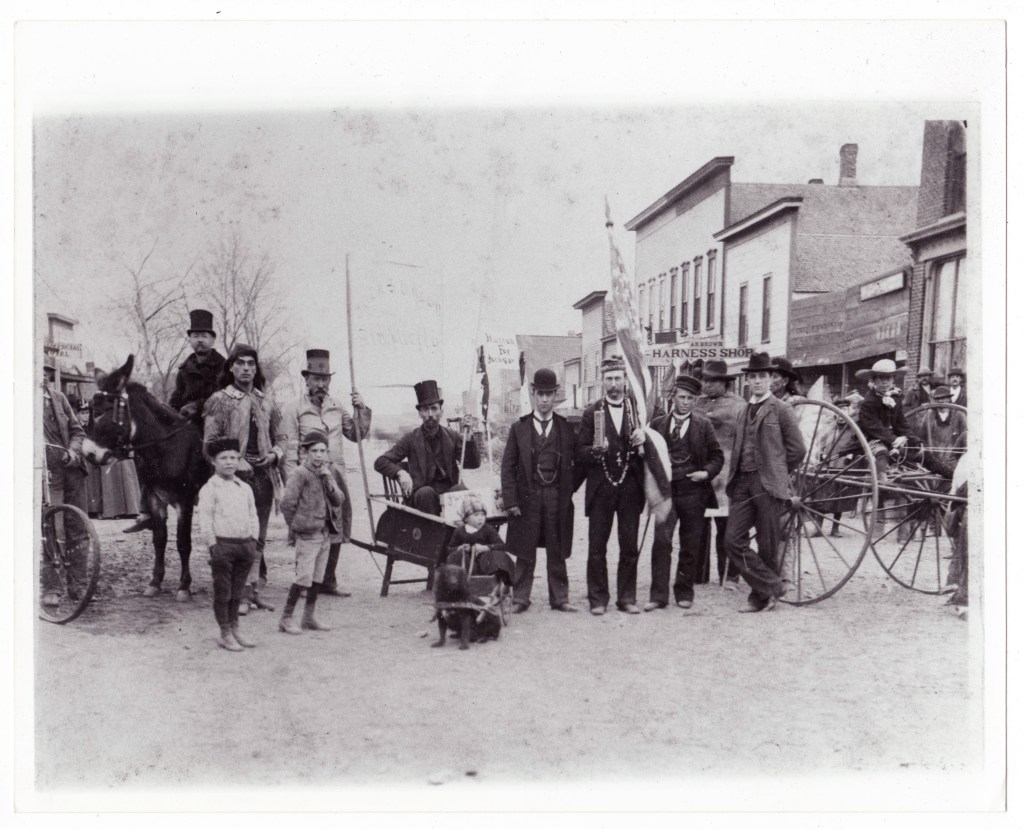
I love this old photo of my great great grandfather Anfinson at a political rally. He’s the one holding the flag. What a motley crew of citizens out and about supporting their favorite politicians. And lest you think there are no women involved in the political process, take a closer gander behind the mule to the left. A covey of proper women folk are gathered.
If they can handle the maintenance and advancement of American democracy, then I’m sure we can too.
From my cousin: It’s definitely Cambridge, where he lived:
This pic is Main Street in Cambridge Iowa. The buildings match up.

I think they’re either campaigning for, or celebrating the victory of
Frank Jackson, Governor of Iowa 1893
http://uipress.lib.uiowa.edu/bdi/DetailsPage.aspx?id=194
This would make Anfin about 55 y.o.
Understanding the Problem

I so enjoyed using the light rail in Calgary that it got me thinking about transit and what it means to a city. Ironically it is Covid that put me on the bus in the first place. The rental cars were all booked, and I have family in the city, so I wasn’t dependent on public transport. I wanted to use it to give myself a little independence. What a pleasant surprise to find it so convenient, clean and timely.
(The other companion structural hardscape I noticed were the frequent pedestrian bridges arching over the thoroughfares. They lead people to the light rail stops, of course. They also bridge neighborhoods, which is very useful for parks and trail access. But I digress, back to transit.)
It is no longer controversial to say that real estate home values increase along light rail lines. Studies are easy to come by. Here is a section from a piece posted on the Federal Reserve Bank of St. Louis’ site.
Property Values and Development
One benefit of light rail is its potential impact on nearby property values. There is much academic literature on this angle.
The research generally finds that rail transit has a positive impact on residential property values, although the impact is relatively small. One study found that property values in Portland, Ore., increased by $75 for every 100 feet closer a home is to a light-rail station, and the average home price in New York declined by about $2,300 for every 100 feet farther from the station.[1] In another study of the Portland rail system, the authors found that home prices increase as a result of being closer to a rail transit station, but the effect was only significant within 1,500 feet of the station.[2] Another study found that the typical home in San Diego sold for $272 more for every 100 meters closer to a rail station, but the distance to a rail station in Sacramento had no significant impact on residential property values.[3]
Saint Louis Fed
See the problem with the analysis? There is a pretty potpourri of measures. And the use of dollars (as opposed to percentages), as if property values in Portland are the same as New York or San Diego. The distances from the stations are in feet and meters. Then an observation is made that the effects are small– compared to what?
In math, every problem starts with definitions. You can’t very well solve for something if you haven’t determined what is at stake. We know that the public good transit exerts an externality on the private good, a home. But how does it work?
TO BE CONTINUED
Travel Notes
Connectivity notes: The upshot of the phone upgrade to an iPhone 13 Pro is that it appears to have been completely worth while. In past years I have had limited connectivity in the Calgary, Alberta area (through Sprint). This trip I had a signal virtually all the time- when we went for a horseback ride in Sheep River Provincial Park the data didn’t load until we hit some peaks. Now whether the improved connectivity was due to my conversion to the T-Mobile 5G network or simply due to a superior antenna in the iPhone 13 Pro, I will never know. No matter- the result is that I had far better service.
Photos notes: The photos captured my new phone are fabulous. It picks up the light, focuses properly and has an ease of use that allows my subjects to be captured in the moment. I am sure I will produce more fun stuff as I get to know the phone’s features better. And it sure beats carrying around a bulky DSLR camera, especially in the great outdoors.


One way to show the level of depth in every picture is to enlarge it several times and see how grainy the image becomes. You can see the shot at the lower right is still nice and crisp.
I’m excited to keep playing with my new phone toy to see what other party tricks are encased in its new blue finish.
Transit notes: Calgary transit system is quite good. The bargain price is $3.5CAD ($2.8US). Google maps provides estimate timing for bus and light rail arrivals which are remarkably accurate. This helps to reduce idle time in the use of mass transit which in turn lines it up more favorably against a car. I even looked up directions (Google Maps) by transit from the airport. The duration of the trip increased considerably– by forty minutes.
My first inclination was to eliminate the option. But then I started to consider how long it takes to rent a car. You have to get from the air terminal to the rental agency. Then you usually stand in line as other passengers are doing the same thing. All in all, renting a car often burns the same 45 minutes. I’ll revisit the option down the road.
Covid notes: Canada is still under a lot of Covid stress. You need to be vaccinated and show proof of a less-than-72-hour-old-negative-test result to enter the country. You need to create an ArriveCan account. You will be asked to show your vaccine card at restaurants. But it was the random testing at the airport, after arrival, that I thought was completely over the top. Oh well– they let me in and it was sure nice to be back in Alberta.
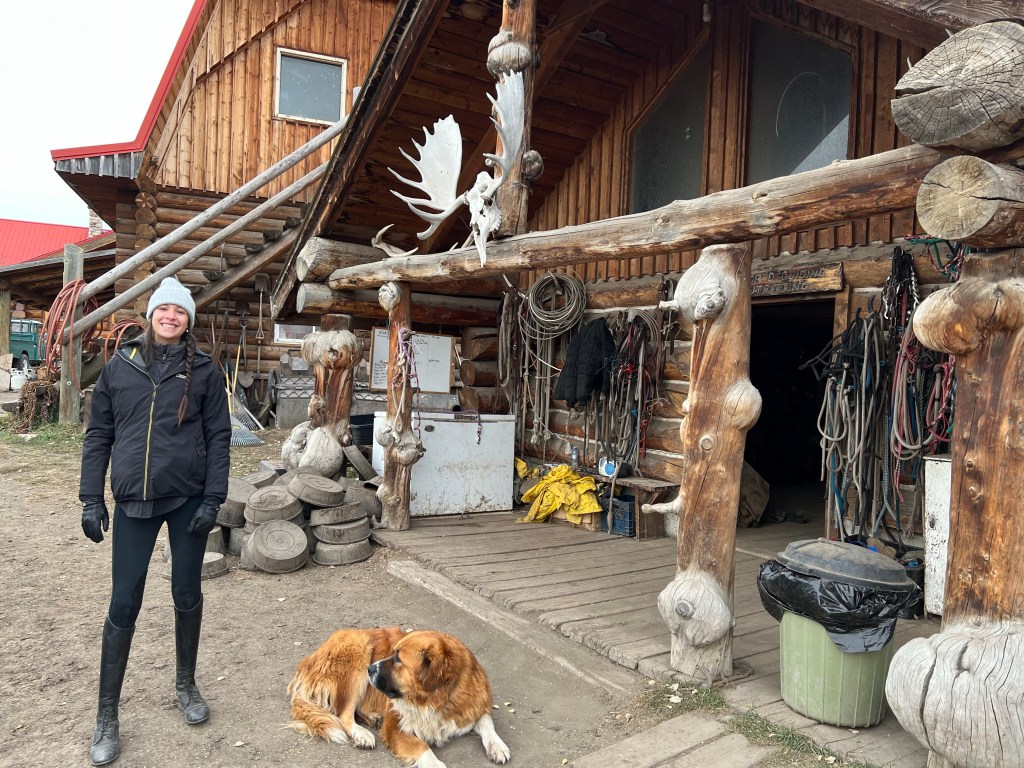
Kananaskis Country


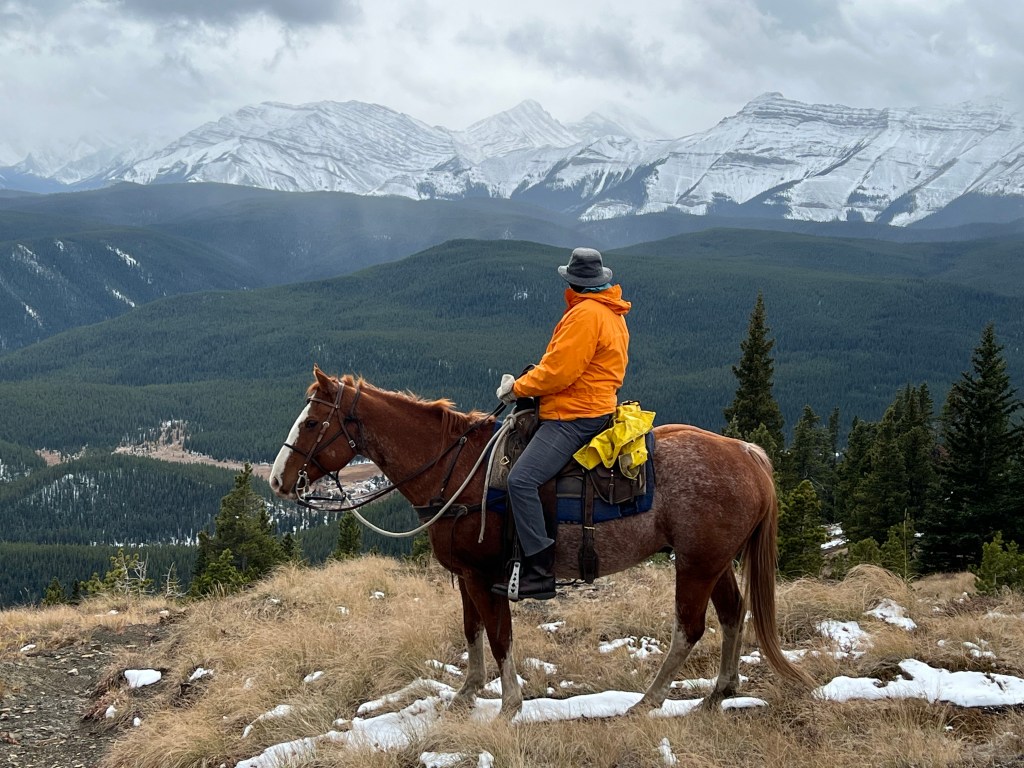
Being puffed up with knowledge goes way back

Taken from the Confessions of Saint Augustine:
But having then read those books of the Platonists, and thence been taught to search for incorporeal truth, I saw Thy invisible things, understood by those things which are made; and though cast back, I perceived what that was which through the darkness of my mind I was hindered from contemplating, being assured “That Thou wert, and wert infinite, and yet not diffused in space, finite or infinite; and that Thou truly art Who art the same ever, in no part nor motion varying; and that all other things are from Thee, on this most sure ground alone, that they are.” Of these things I was assured, yet too unsure to enjoy Thee. I prated as one well skilled; but had I not sought Thy way in Christ our Saviour, I had proved to be, not skilled, but killed. For now I had begun to wish to seem wise, being filled with mine own punishment, yet I did not mourn, but rather scorn, puffed up with knowledge. For where was that charity building upon the foundation of humility, which is Christ Jesus? or when should these books teach me it? Upon these, I believe, Thou therefore willedst that I should fall, before I studied Thy Scriptures, that it might be imprinted on my memory how I was affected by them; and that afterwards when my spirits were tamed through Thy books, and my wounds touched by Thy healing fingers, I might discern and distinguish between presumption and confession; between those who saw whither they were to go, yet saw not the way, and the way that leadeth not to behold only but to dwell in the beatific country. For had I first been formed in Thy Holy Scriptures, and hadst Thou in the familiar use of them grown sweet unto me, and had I then fallen upon those other volumes, they might perhaps have withdrawn me from the solid ground of piety, or, had I continued in that healthful frame which I had thence imbibed, I might have thought that it might have been obtained by the study of those books alone.
Miscarriage of History

A friend and I met for dinner recently. As we sat on the outdoor patio with a woven fence providing a nice block from the concrete urban surroundings, we caught up on family and old acquaintances. Once those topics had run their course, the conversation turned to current events in the city. It’s hard for even the ardent supporters of liberal progressivism not to observe the denouement of crime around them. As cycles go, the recent swing has whipped the curve right off the edges of the paper.
“Jxx’s mom once told me that the best of intentions in excess, often mutate into the worst of outcomes.” She said, a forkful of Tuna Poke Bowl suspended midway between her plate and mouth.
Not just intentions, I thought later as our dinner conversation replayed, but those rallied by excessive analysis of history, and primed like a bonfire on the Fourth of July with the venom of anger unaddressed. No wonder Lake Street had been set ablaze.
History is a recall of the past, as a reminder of both the good, the bad, the productive, the detrimental, and how all of it came to be. History is to learn from, to recognize and to account for. To use the cognitive qualities of our brains, (those useful tissues which separate us from other mammals) to grow into something more than we were before.
I question who it helps to replay the worst of things again and again. Gnashing through history seems counter productive, erodes confidence amongst those who need their confidence rebuilt. Taking a group’s worst of times and displaying it on a jumbotron for all to relive, is, maybe even hurtful. And the motivation for those who rally such action may be spurred on by some inner and other anger.
Anger can turn a story into a saga. It may soothe one but create a burden on another, one of a younger generation, one in the audience. History isn’t meant to assuage miscellaneous anger, sending out sideway messages. History isn’t meant to be a tool to those who only wish to transfer their personal suffering onto a greater audience for their own peace.
New Tricks- BBC crime drama
I’m a sucker for cop shows. I find a new series and watch it through to the last episode while sticking to a diet of no more than one a day. Bosch was a recent favorite; a grainy late age LA detective with the stomach for justice over politics. He had a great side kick in Jamie Hector (also know for appearances in The Wire).
I was looking for a new series while trying to switch things up a little bit, and found something fun and new in the BBC production of New Tricks (also on Amazon). It’s a little bit older having been produced in 2003, but that doesn’t take away from the interesting mix of detectives with their foibles or their unique skills. A snappy veteran cop is given a threesome of retired detectives and assigned cold case files.
The story lines are clever instead of gruesome. There are no car chases. There is a dose of unsavory behavior. And a dash of OCD mania. In other words it is very British and very un-Hollywood. A perfect replacement for Bosch. Happy viewing!
Making Rules

One thing that bugs me is the lack of understand that making rules is more than making rules. A problem needs a fix. The answer is to make a rule for that! But requesting an audience to do something is foisting a power over them; it implies an authority and a compliance. It assumes that the work, or inconvenience, of following the rule has been judged to have a balancing positive effect.
More often than not, however, the rule making authority doesn’t follow through with compliance.
Recently, an acquaintance lamented that her town house association board was going through the complex, unit by unit, looking (most literally standing on the sidewalk out front in a little cluster) for unauthorized exterior embellishments. There was a rule on the books that owners were not allowed to litter the grass with such things as quaint stone benches, large urns overflowing with geraniums or petunias, or an artfully decorated signs bellowing WELCOME.
After a bunch of years of non-compliance, the residents of this twenty unit community were now going to be served notice to remove their horticultural self-expression. My friend didn’t want to give up her planters now that she had grown to enjoy them. Phooey on the rules!
How many municipalities set up ordinances which they cannot enforce and code compliances which go uninspected? Having the authority to do so, yet not following through creates complacency. Before you know it people are used to disregarding what is so carefully written down as community guidance. And worse yet, residents get angry and feel a suffered loss once enforcement action gets underway. If no rule had been written to start, wouldn’t the group be better off?
Writing rules, as a rule, needs to be taken seriously.
Mountain Moon
What should I remodel?
Clients who have been in their homes for a while will sometimes give their realtor a call to ask which home improvements they should tackle. Maybe they would really like a new kitchen but are afraid the expenditure would not be entirely reflected in the price of the home upon resale. This is true to various degrees for all improvements. The chart below gives you an idea of how much of a return one can get on various upgrades.
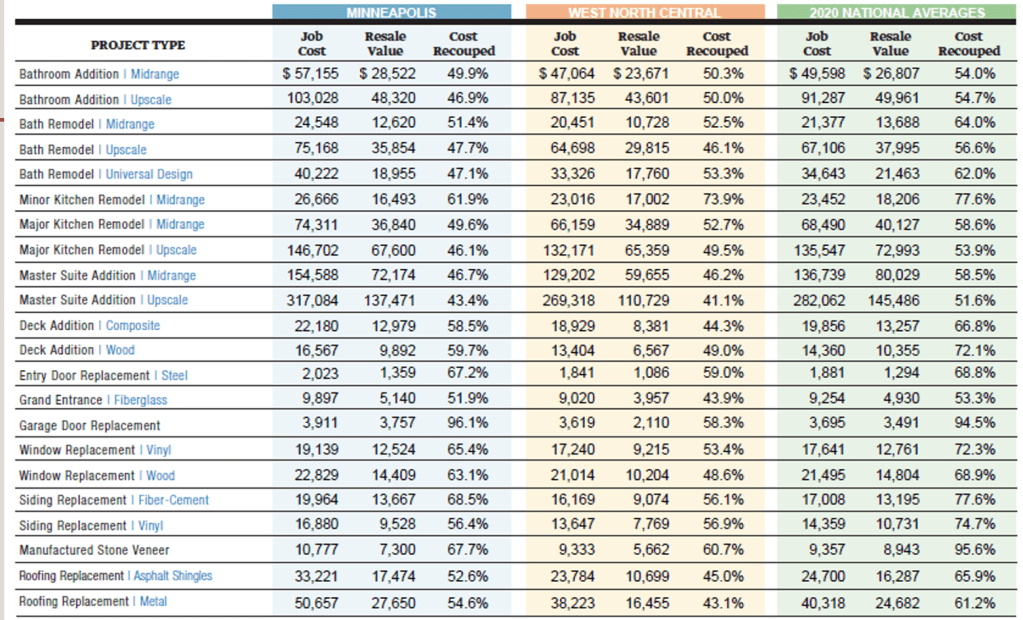
Of course these prices will vary depending on where you live, but it gives you a general idea of how the market reacts to different features. Kitchens are a popular upgrade as we all spend a lot of time in this space. When clients ask, is it worth it? They must be reminded that they are purchasing a kitchen partly for themselves, for their personal use. The return they eventually get at time of sale shouldn’t be as big of a factor as their personal enjoyment of the renovated space for the time they live in the home.
It is interesting to note that some of the greatest returns are generated by exterior remodeling such as a new garage door, siding and stone veneer. This drives home the value buyers place on curb appeal- the public face of the property. With this in mind we can hope to see, over time, that neighborhoods continue to line their streets with trees, fuss with a little landscaping and keep their home facades quaint and inviting.
Full Disclosure
Wouldn’t it be cool if every time a public figure spoke, and metered out their opinion, a subtitle line was ticker-taping across the bottom of the screen disclosing which identity the person was prioritizing in the rhetoric? I was just on Twitter and a few local policy types were out denying a certain support of Blah Blah Blah. But are they making such pronouncements as a member of a political coalition? As a citizen of the municipality? As a member of a family?
Because it would be helpful to know if statements are motivated by power positions or sincere objective evaluation of the issue at hand.
Mostly it seems to be about power for the ones with the loudest voices. This is unfortunate for the advancement of the public conversation. The merits, drawbacks and possible outcomes of amendments are not discussed as much as who can do what for whom. I know, I know, that is the political game.
But doesn’t anyone care about the actual results?
I always tell my clients that the only ones who know the market are the parties in the mix, making the decisions around the exchange. In political policy making the recipients of the benefits are only superficially involved in the conversation. It is always assumed the receipt of anything will be beneficial and well received. I think we are shorting ourselves out of feedback.
Political actors seem to respond more to power than to economics outcome. Being able to distinguish between rhetoric for themselves versus their parties versus their constituents would undoubtedly enhance the system.
Android versus iOS

For a couple of decades I was an android owner. The price differential was a three to one, yet for me the value wasn’t. I didn’t need an iOS to get my emails, text, and yes, even use it as a phone to talk to people. The androids were good enough.
Well… I spent the weekend setting up apps on my new iPhone 13 Pro. So here’s what changed and how things are going so far.
But first a little history. The other members in our little household have been ardent Apple supporters. As soon as grandpa upped the Christmas gift money, the first born consolidated some savings and bought his first iPhone. I thought nothing more about it than the need for adolescents to keep up with the other kids at school until we were on a road trip in rural Montana. All our phones lost service on the road, but the kids’ phones were the first to pick up a signal as soon as we hit Bozeman or Butte or Missoula. Given we were on the same plan, I had to admit their equipment was better.
With travel on the near horizon, the need for connectivity is an impending necessity. Upgrading to 5G and those experiences with rural travel had me reading through the spec list at the Apple counter. The kicker that brought the purchase home was the video editing software. I’ve been trying for a year an a half to clip and edit short video takes and had to bail (as often is the case when delving into new technology applications) on it as it was simply too time consuming to figure out. The iPhone 13 promised efficiencies.
Now that I’ve had it for a few days it is obviously a superior machine. It’s not just about image or style, but better features. At time of app setup you are given the option to disconnect from future ads. In skyping I noticed the superior audio. Reading the screen is easier on the eyes. I’m still playing with the camera but the first shots are quite good. I look forward to trying out all the settings at various times of day and night.
I have yet to get to the movie editing function. When I do I’m sure it will end up in a post.
Fall, Leaves, Fall
Emily Brontë
Fall, leaves, fall; die, flowers, away;
Lengthen night and shorten day;
Every leaf speaks bliss to me
Fluttering from the autumn tree.
I shall smile when wreaths of snow
Blossom where the rose should grow;
I shall sing when night’s decay
Ushers in a drearier day.

Interesting architecture

I showed a house this week which had floor to ceiling plate glass windows, sight line views out every window onto nature, and a Wolf gas range which would make any chef perspire gently at the brow. It was also priced twice as much, quite literally, than other home of comparable size with similar lot amenities.
The name of the architect as well as the brand of each notable feature in the home was listed out prominently in the comments. And the quality of the materials and construction were evident– from the tiled heated driveway to the reflecting pool. But what exactly should one pay for artistic features?
First off, to state the obvious, there will be those who will pay nothing. They will prefer to allocate the extra expenditure to square footage, and purchase a mini mansion in lieu of designer small. Right out of the gate, the buyer pool is a subset of all buyers. But more than likely the final bid will come from a select few who follow and appreciate the particular architect. Which explains why the name is featured so prominently in the marketing materials.
One could say that their is a community of buyers who find value in purchasing a property of such a design. And since that community would be trading property amongst each other, that extra premium could be said to be non-fungible to the community. It will always exist amongst them.
Now this concept could be a hard sell if it weren’t for the recent popularity of non-fungible tokens, or NFT’s. This new fangled art is available for purchase for all those who invest in crypto currency. The value to those outside the crypto community is, well, zero. And what would happen if the crypto community disbanded, lost interest in a form of currency that requires mega wattage to mine? Then the NFT’s would be worth zero.
In the NFT example it is easier to accept the non-fungible feature as the technology makes a clean line between those who can buy, trade and value the tokens, and those who cannot. A home built by a particular architect has residual value not tied to its design features. But the premium people pay is non-fungible. It’s tied to the community who support and value the artist in question.
 Home Economics