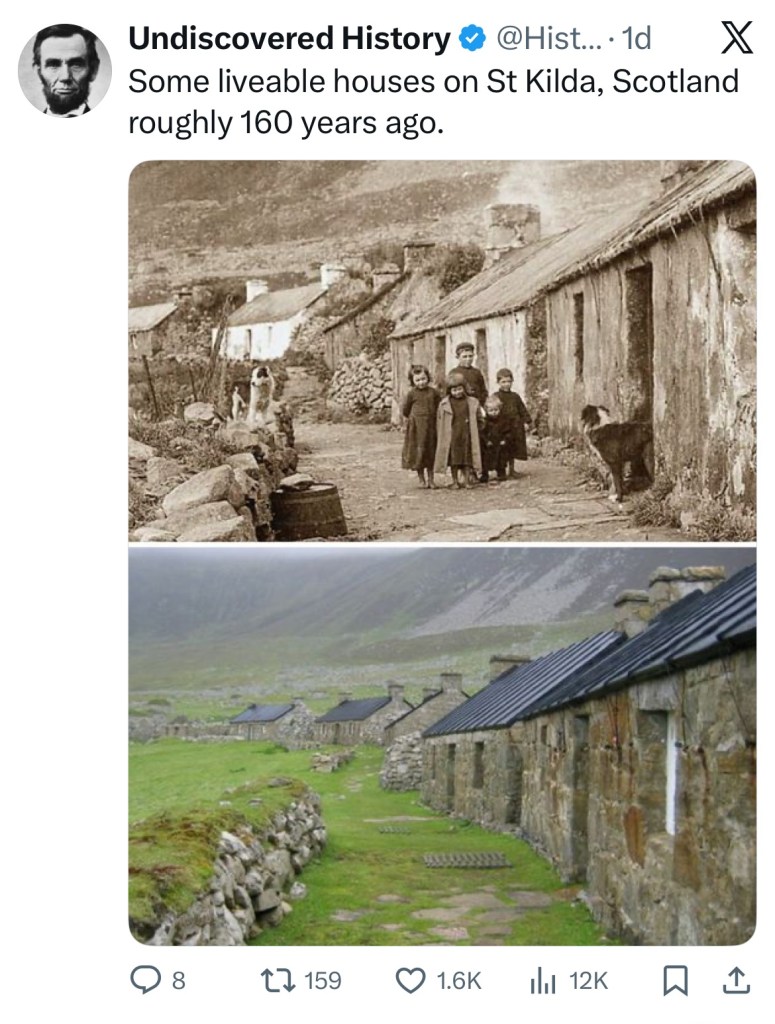
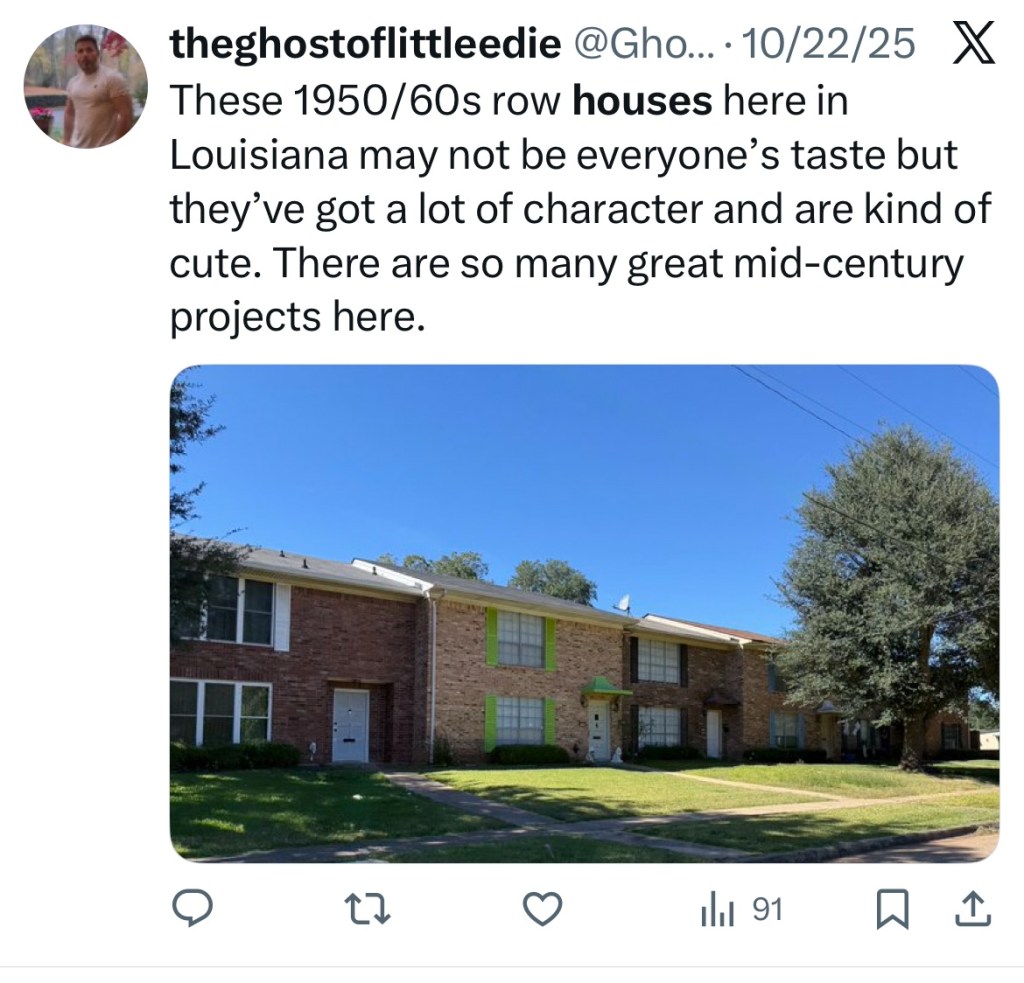
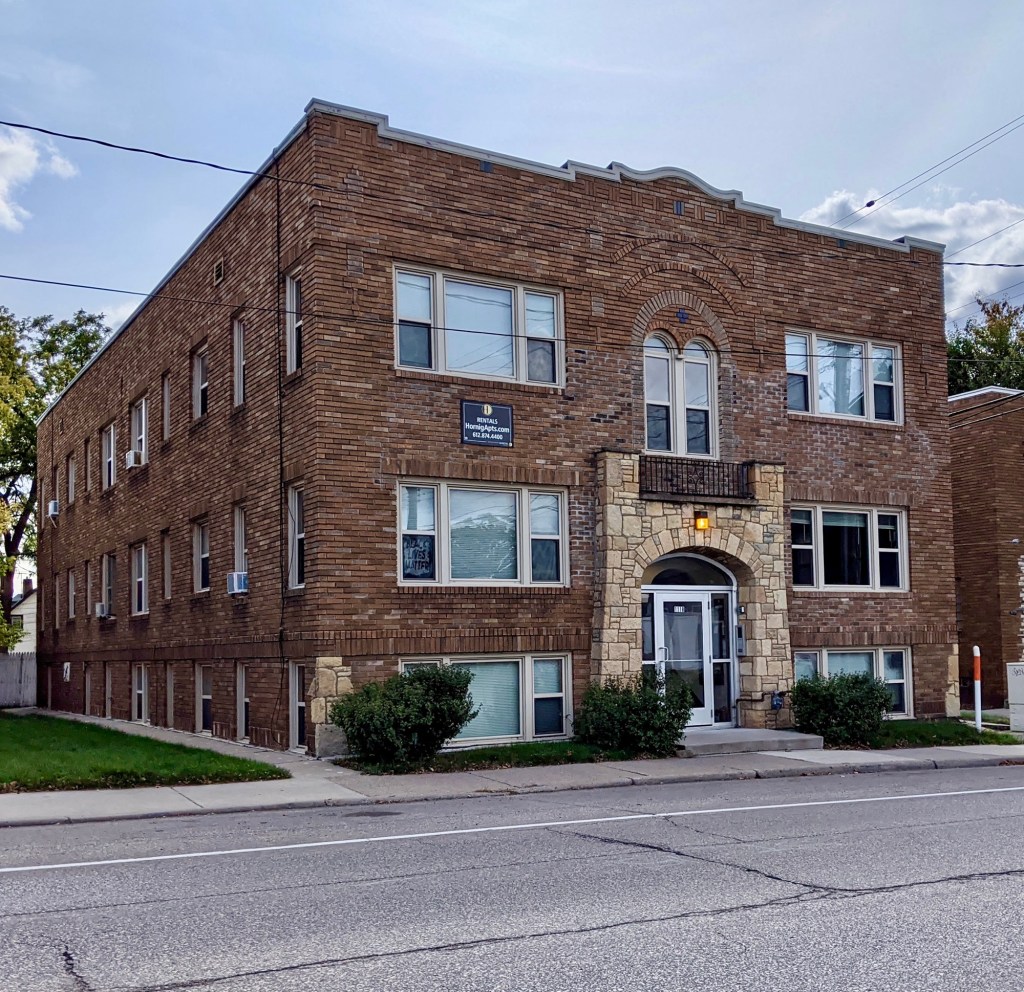
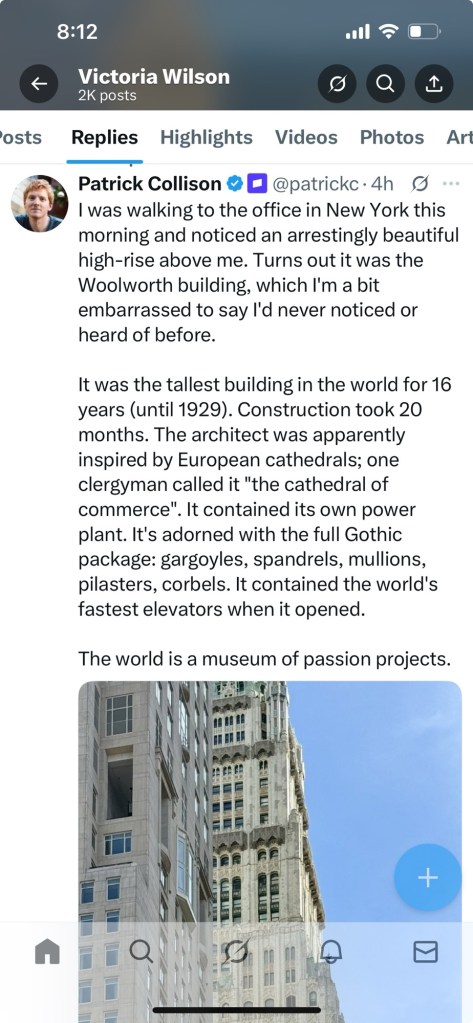
Whatโ€™s considered acceptable?

Standards can change over time.

Standards can vary between cities.

Standards may vary based on taste.

Ultimately, it is the local community that determines which options are the most suitable and which are less desirable. Which have fallen so out of favor that the structures are abandoned completely. And which ones promise a reward for rehabbing.

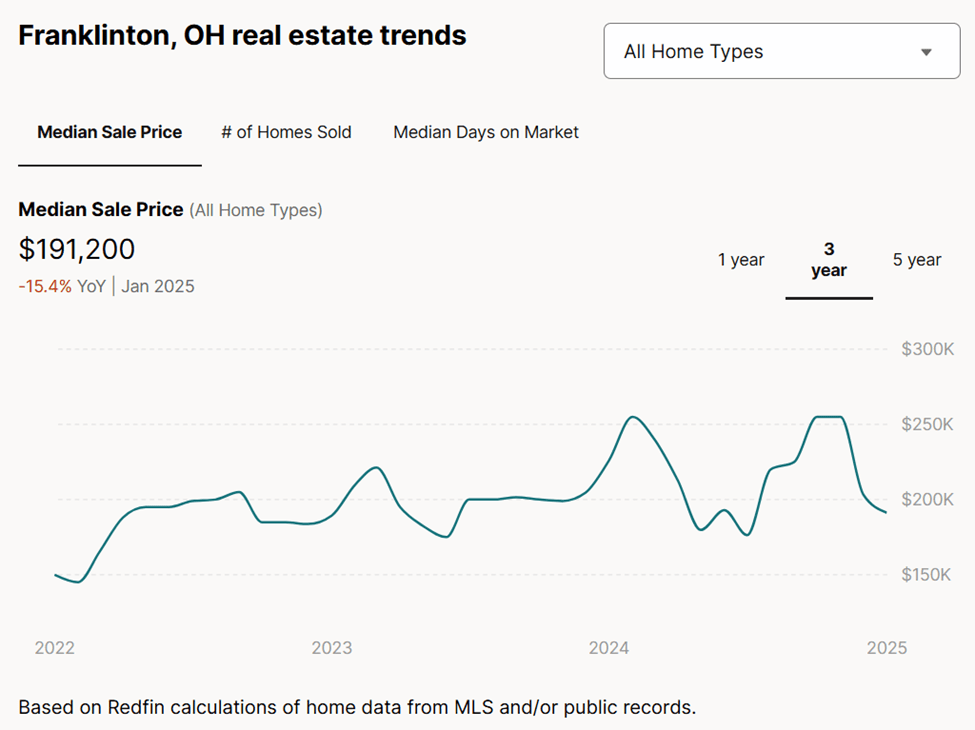
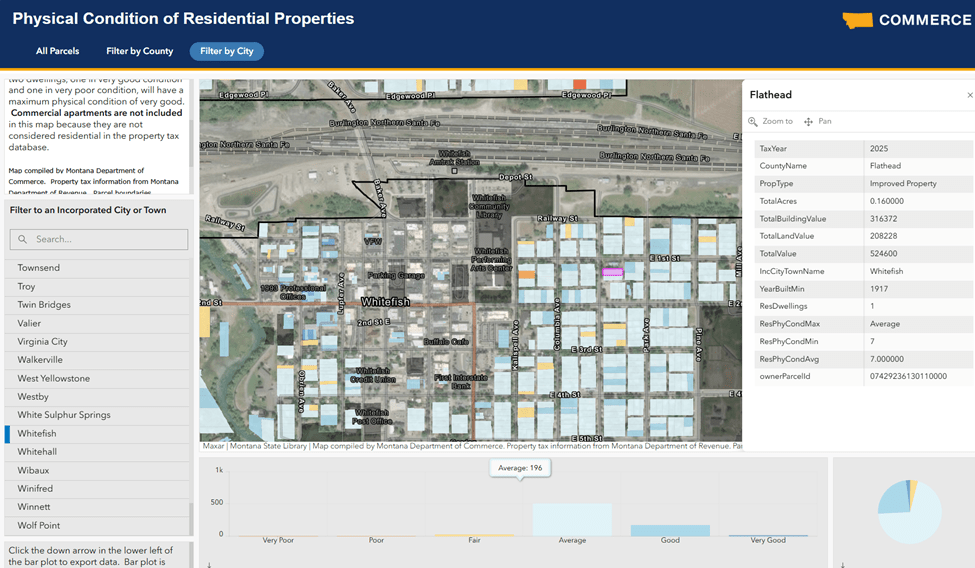
Real estate is local. National figures provide sparse details.

How would it feel?

People speculate why young people have delayed home purchases. Only around 20% of home purchases fall in this category. A historic low. But is it that surprising? Look at the surge of foreclosures in ’07-’08 and ’09. Hundreds of thousands of people who were never meant to have financial struggles lost their homes.

Children ages 8-12, old enough to sense the stresses within their families, yet too young to analyze the impact of a national financial crisis, were bystanders to these unpleasant legal actions in the early 2000’s. These are today’s young home buyers. Uncertain of what a real estate purchase will do for them. The anxiety associated with foreclosures has often been portrayed in litterature.

In Death of a Salesman, the familyโ€™s fear of losing their home emerges gradually, revealed not through a dramatic announcement but through Lindaโ€™s quiet confession that they are barely keeping up with the mortgage. She tells Biff and Happy that Willy has been borrowing money just to make the house paymentsโ€”a disclosure that reframes the entire domestic landscape. What had seemed like an ordinary family home is suddenly understood as something fragile, held together by secrecy and strain.

The looming threat of foreclosure exposes the playโ€™s deepest emotional fractures. The mortgage becomes a symbol of Willyโ€™s unraveling identityโ€”his failure as a provider and his desperate clinging to the American Dream. Lindaโ€™s hushed explanations carry a mournful tenderness, showing how fear and loyalty tangle together under financial pressure. For Willy, the house is both sanctuary and burden, and the possibility of losing it turns that symbol of pride into a reminder of collapse. The familyโ€™s anxiety over the homeโ€™s instability reveals how economic pressure corrodes affection, pride, and hope, tightening around them until it shapes every gesture they make toward one another.

I can show you

The theory proposed here, at home economics, is that there’s a nature to how people act to improve their lives. For lack of better names, activities occur in spheres with public-facing tendancies or private ones. When people operate for the group, they give to improve for an affiliated public endeavor, whereas the private sphere engages privately held resources to grow and gain.

I think this framing helps to explain the suggested paradox described in this Free Press article about a Chicago Trump supporter coming to the aid of Venezuelan migrants.

Aleah Arundale voted for Donald Trump, supports his decision to close the border, and may as well have introduced herself by singing โ€œThe Star-Spangled Bannerโ€ when we met at her front door in Chicago last month. She was wearing a white sweatshirt with โ€œUSAโ€ plastered on the front, a sequined American flag skirt, heart-shaped red glasses, and bedazzled red and white sneakers.

She also has spent the last three years helping Venezuelan immigrants. It began when buses from Texas started dropping off people at a street corner near where Arundaleโ€™s daughter went to dance class, as part of Governor Greg Abbottโ€™s expulsion of thousands of immigrants to sanctuary cities across the country.

When Aleah makes decisions as a Chicago resident, her choices are weighed out within that context. Her group interests lie primarily on her block or down the street. She can be pro-Trump and anti-everyone-else-outside-our-boundaries. This keeps her public dollars and work weighted to the local food shelf, her elderly parents’ care, or a literacy program at the public library. Any outside force taking resources away from these microtransactions is a competitor.

But then the immigrants are dropped off by the busloads, on the corner where kids get picked up by the school bus. They’ve switched groups. No longer are they an impersonal one of many in a faraway place; they’ve breached the group. They now rate as the most in need within this new framing. And thus, the mechanisms that drive the force for the good of the group are energized. Aleah gives the plight of the Venezuelians in some rank or fashion amongst her other commitments.

There are two things to see here. First– the framing of the group and thus its acknowledgement. Second, the lever for activating time, energy, and resources differs from the private sphere. Yet this all transpires through a juggle of tradeoffs trapped in a world of constraints.

The error of price-to-income-

The comparison of home prices to buyers’ incomes is a popular measure for assessing the health of the real estate market. Presently, that multiple seems high, and people are using it to cry, crisis! But is this true?

Amy Nixon posts on Twitter (now known as X):

All of economics is supply and demand.

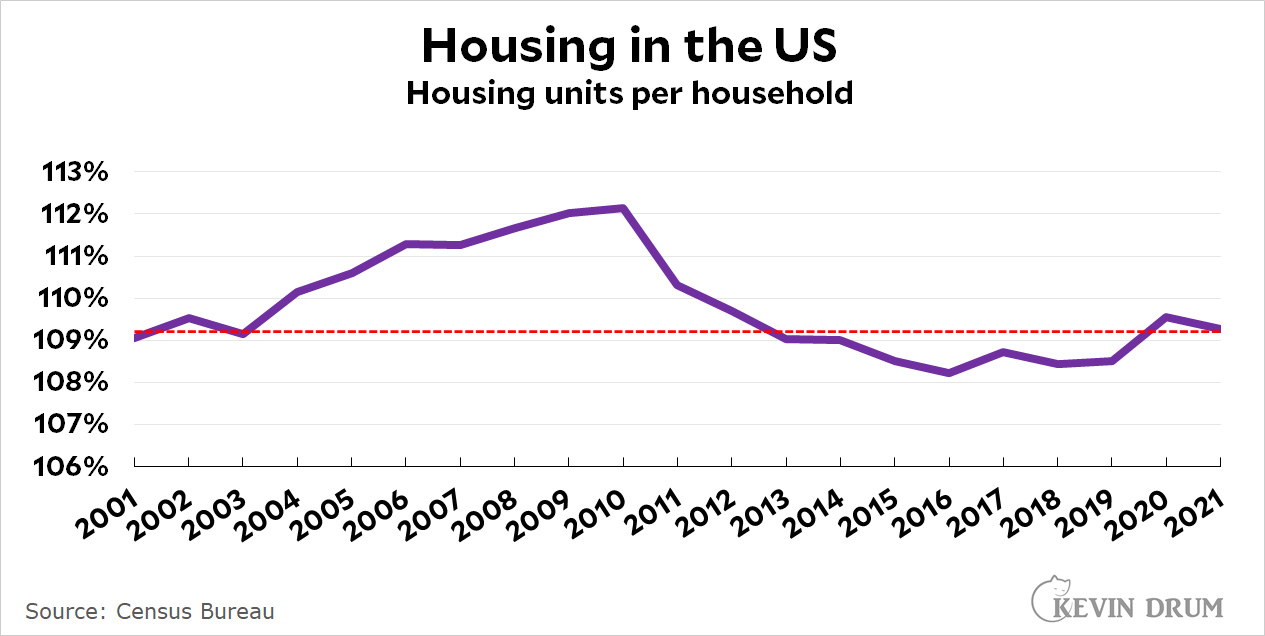
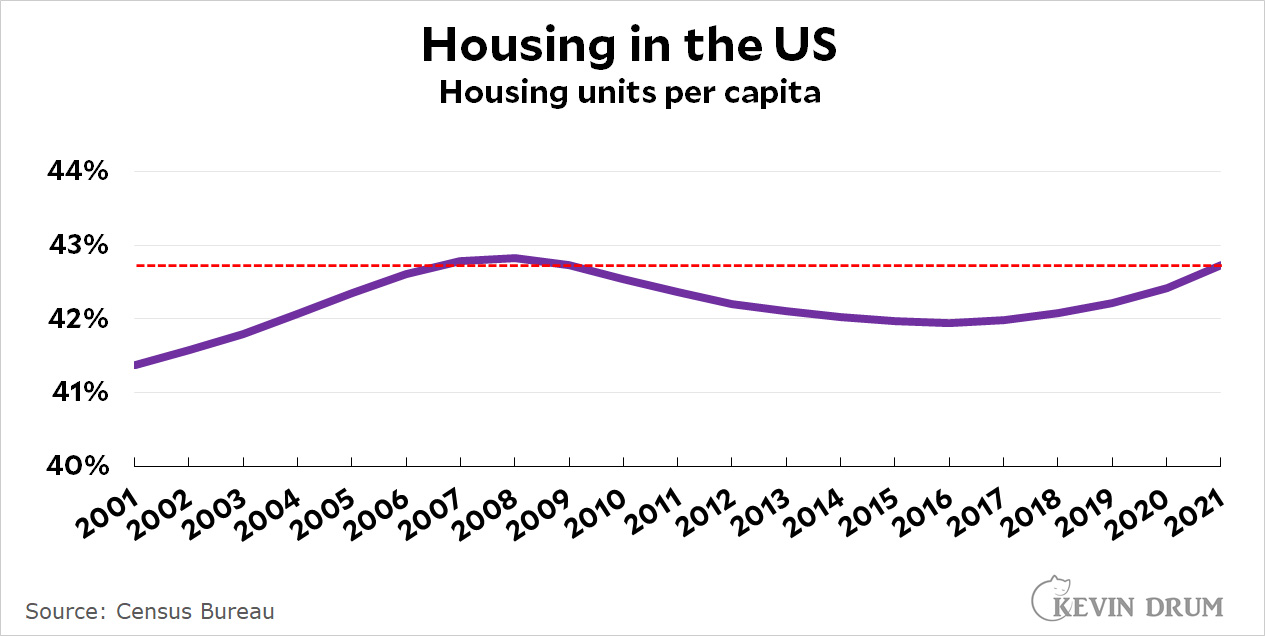
The median household to median income argument makes sense only in an economy where we have built enough housing units per capita, and every housing unit is being allocated as a family shelter unit because it serves no other economic utility

The model breaks down when you have wealthy families buying 3-4 spare vacation homes. And mom and pop landlords hanging onto starter homes when they upsize. And institutions buying millions of single family homes. And single people living alone in two units instead of coupling to buy one unit. And foreign citizens buying homes. And people buying and using 2 million single family homes as hotels (Airbnbs)

So long as single family residential housing is viewed as and can be used as an investment or luxury item beyond owner-occupied shelter and we donโ€™t build enough homes to offset all those other uses, the ratio pictured in the infographic below can (and will) go even higher over time

Itโ€™s not 1985. And itโ€™s never going to be 1985 again.

What Amy says is that there is a mix of home-ownership types. If you are analyzing Lake Country, with many second homes, there will be a different price-to-income figure than if you consider a first-tier suburb built almost exclusively of starter homes. I like to call them platters. It’s the local eco-systems of properties that have interesting numbers. Averaging just smudges out all the details.

I’ll also note the shift in demographic mix. The number of first-time buyers is at an all-time low. From NAR:

WASHINGTON (November 4, 2025) โ€“ The share of first-time home buyers dropped to a record low of 21%, while the typical age of first-time buyers climbed to an all-time high of 40 years, according to the National Association of REALTORSยฎ’ 2025 Profile of Home Buyers and Sellers. This annual survey of recent home buyers and sellers covers transactions between July 2024 and June 2025 and offers industry professionals, consumers, and policymakers detailed insights into homebuying and selling behavior.

Repeat buyers enter the market with equity. They do not need to take on as much debt relative to their income as first-time buyers do. Yet the sales price is the measure from which payment is extrapolated, not the actual payment. As a market rises, so does the equity, pushing this fictitious measure of debt load out of whack with reality.

Learn from Grumpy

The Grumpy Economist has another great post, this time about rent control. For those of us in real estate, it’s an irritating topic. The errors in the use of price controls are numerous. Using John Cochrane’s article as a road map might be interesting to illustrate this point. Let’s start with this paragraph.

Sure, โ€œsharply rising rents and utility bills wreak havoc on family budgets,โ€ if the families donโ€™t follow the screaming market signal to move. (Which is not painless, for sure. Incentives never are.) But the money comes from somewhere. Rent controls and energy price caps wreak havoc on landlord end electric utility budgets.ย The money must come from somewhere.

The claim is that rents are rising sharply. The reader pictures a Scrooge-like figure pounding on the door of a cowering family of four, announcing a ‘sharp’ rent increase (extra dollar symbols for emphasis), while behind this embodiment of the typical landlord stands an eviction notice ready to be served. I’d love to see numbers to this effect. I challenge that the ‘sharp’ rent increases are occurring at lease renewals.

Large corporate landlords might have a set policy of annual increases, but they account for only 3-4% of proprietors. Landlords must juggle the cost-benefit of increasing rent. As 80% own and manage the units, they calculate the costs, time, and uncertainty of a new tenant. This is weighed against a 3% increase on $1,100 or $33/mo in additional income. Needless to say, many landlords will forego a rent increase to keep a good tenant.

These subtleties are lost in real estate analysis, where all the numbers are averaged as if there were one typical renter, one typical landlord, and one typical property. This couldn’t be further from the truth. There are whole economies of renter groups. There are students who will have negative income before they join the workforce; there are singles with high-fluting jobs and no other responsibilities; there are single parents; there are couples with kids in a city just for a bit; there are elderly on fixed income with low mobility; there are recently divorcees looking for a glamorous downtown lifestyle.

Are all these groups to receive the same treatment? The same concern for their monthly budgets?Rent controls are initiated at the city level. Every group of renters would receive the benefit of a market-restrained obligation. Is that the intention?

Landlords are also assumed to be a certain type. The persona has tremendous equity in their property, no debt, and other cash they are stashing like squirrels do with acorns in the fall. And certainly some landlords fit this description. But more likely than not, the landlord has a mortgage and obligations against their time. The new entrants to the field, those trying to get ahead by getting a foothold in real estate, are undoubtedly the ones who need to make the cash flow.

When property taxes, utilities, or the cost of hiring labor rise, a landlord has no way to respond until a lease comes up for renewal. Rent control tightens this squeeze, leaving property owners caught between increasing public demands funded through taxation and their limited ability to recover those costs through rent. The first to be pushed out are often the newcomersโ€”the small, aspiring owners who bring fresh energy and ambition to the market, but lack the cushion to absorb sustained losses.

Lesson number one. Averaging is a mistake. Assuming there is only one type of each actor in this economic trade of money for lodging makes for an impossible conversation.

Who can tax?

There are laws about such things. The authority to take a cut off a sale or charge or demand an annual fee for property, whether homes or cars, needs to be officially granted. The funds travel from individuals to a fund for government officials to distribute out for public commitments.

But there are other things local governments do that act as a tax. There are all sorts of city permits required to replace a hot water heater or install a deck. When a builder applies for approval of a subdivision, the city council may say that is all fine and good as long as a sliver of the land is threaded through as a trail and a chunk of green space in the middle is spun up into a playground. The release of land is a tax on the developer. A good one mind you but still a relinquishing of an asset.

What would be the difference between a favorable tax and a verging-on-illegal tax?

Having a developer build in parks and trails at the time of development leaves an asset for the new owners directly, and for the city at large for those who travel further for recreation. This flow of money from a private company back to the community, for the use of all residents, seems to fall in the spirit of the arrangement. It is a particularly timely ask since retrofitting older neighborhoods with parks and trails is difficult and impractical.

Consider another example. A builder wants to convert a five-story building in a historic district in a significant US city. There are extensive regulations associated with the age and history of the area. There are also regulations in place to meet current environmental concerns. Without spending the time to delve into every detail, the end result is that the builder must install solar panels on the roof of the building, which cannot be serviced by the building due to its age and preservation requirements. The building’s infrastructure cannot effectively utilize the energy output from the solar panels.

The final agreement is to hand over ownership of the panels to the utility company. Their maintenance and output will now be maintained by a completely separate entity, even though they sit atop the developer’s project and the developer’s bottom line had to muscle in their expense.

Doesn’t this seem like a direct transfer of funds from the builder to another semi-private company? Doesn’t it seem like a redistributive tax or at least a subsidy? Does the municipality this type of taxing authority?

50 year mortgages and the nature of things

A proposal for a 50-year amortization mortgage aims to make homeownership more affordable by spreading payments over a longer period, thereby reducing monthly costs. However, the trade-off is that borrowers would pay substantially more interest over the life of the loan and build equity more slowly. Advocates argue it could ease housing affordability pressures, especially in high-cost markets, and improve access for younger or first-time buyers. Critics counter that such loans may inflate housing prices further, extend household debt burdens, and delay financial stability. Overall, a 50-year amortization reflects a policy tension between affordability and long-term economic prudence.

Hereโ€™s a clear example comparing 30-year vs. 50-year amortization on a $350,000 home, assuming a fixed interest rate of 6% and no down payment (to isolate the amortization effect):


Loan TermMonthly Payment (Principal + Interest)Total Paid Over TermTotal Interest Paid
30 years @ 6%$2,098$755,280$405,280
50 years @ 6%$1,870$1,122,000$772,000

The 50-year loan lowers the monthly payment by about $228, but total interest nearly doubles over the life of the loan โ€” a very expensive trade-off for the borrower in the long run.

Adjustable-rate mortgages offer another way to reduce payments, at least initially. ARMs typically begin with a lower introductory interest rate (for example, 5% for the first five years on a 5/1 ARM) before adjusting annually based on market conditions.

While ARMs can make early payments comparable to or even lower than a 50-year fixed loan, they carry rate-reset risk โ€” payments can rise sharply if interest rates increase. Currently, availability is moderate: most lenders still offer ARMs (3/1, 5/1, 7/1 terms), but after the 2008 crisis, underwriting standards became stricter, and long-term fixed loans remain more common.

I’m all for offering a wide variety of financial instruments for consumers to use in the purchase of a home. However, over the long run, I don’t feel that the 50-year amortization allows for a sufficient paydown. As people navigate their lives, they count on the equity that accumulates through price appreciation and mortgage debt reduction. A healthy market is fluid, where people can buy and sell without being constrained by excessive debt.

I’ll make the claim that people find the market unaffordable because they don’t want to buy what is affordable to them. This is difficult to demonstrate without specifics. But each housing market has a range of price points. If folks are paying rent, then they are more likely to be able to acquire a property with a similar payment. They simply don’t want to live in that particular spot, or do the repairs necessary to improve it, or view it as a starter home from which they will move on someday.

What you donโ€™t know yourself

A home is a complicated purchase. The variables are numerous. The structure is what everyone thinks of first: bedrooms, bathrooms, beautiful kitchens. There are niche items, such as screened-in porches or swimming pools. There are external demands, such as level lawns and striking views. All that along with the nuts and bolts of square footage, the year the home was built, and the number of garage spaces go into the assessed values as calculated for tax purposes.

But there’s more that goes into the process of the home purchase at the time of the transaction. Market conditions, interest rates, and the time of year impact the buying and selling process. The condition of the home can certainly swing a property from very desirable to manageable, only for the most hearty investor. Sometimes the right buyer shows up and eagerly signs for the home in part because the semi loaded with their household belonging is on the way and will need to be unloaded, or parked at a considerable expense.

Real estate is a complicated product. So when a client looks over their showing sheet and wants to talk price, it is important to remind them that is set between buyers and sellers. That as participants in the market they are the best judges of the price based on the path that has led them to the home. As their agent, we can show how the numbers fall within an acceptable range of what the market has recently born out. But ultimately it is up to them to risk missing out by staying low or having buyerโ€™s remorse by going high.

As Pete Boetkke recently wrote in What Hayek Understood About the Unknowable Nature of Markets:

But the dynamics of a market arenโ€™t a given to be applied as one thinks wise when powerful people want to mandate lower rent or produce more computer chips. They must be generated, discovered, utilized, and conveyedโ€”constantly adapting and adjusting to the changing circumstances of economic life. โ€œThe continuous flow of goods and services,โ€ Hayek wrote, โ€œis maintained by constant deliberate adjustments, by new dispositions made every day in the light of circumstances not known the day before, by B stepping in at once when A fails to deliver.โ€

Although these words are generalized, the ideas are there. It is a process of discovery that encourages or dissuades people as they navigate their choices amongst the homes for sale. And when they identify one that offers more of what they really desire with fewer compromises on items that bother, then they move with confidence in securing the transaction. Often, until that point in the process, they don’t know what they want themselves.

Number Nuance

Yesterday’s post showed off a range of house prices across the country. Since housing expenses are the largest portion of most people’s budgets, they greatly influence people’s standards of living and disposable income. To live a lush life in St. Louis might only allow you to squeak by in Salt Lake City.

For that reason, itโ€™s funny when someone brags about their โ€œsix-figure salaryโ€ โ€” and then you find out they live in Washington State. Sure, congratulations on your $100K, but thatโ€™s basically a modest Minnesota income with prettier mountains and pricier coffee. Thereโ€™s a strange amnesia that kicks in when people talk about money across states, as if groceries, gas, and rent were all federally standardized.

Then thereโ€™s the gross-up crowd โ€” those who love to quote the full sticker price of their income, conveniently forgetting everything that comes off the top. Taxes, insurance premiums, pension contributionsโ€ฆ not to mention the hidden perks that donโ€™t show up on a pay stub: flexible hours, remote days, or a workplace that doesnโ€™t mind if you pick up your kid at 3 p.m. Some of the most valuable parts of a job canโ€™t be cashed out โ€” theyโ€™re lived.

Each region and industry really runs on its own microclimate of opportunity. What looks โ€œlow payโ€ in one city can mean stability, a yard, and free weekends somewhere else. Meanwhile, other jobs look golden until you notice the 70-hour weeks, commutes, and housing markets that never quite forgive you.

And then, of course, there are our Canadian friends. Always happy to tell you about their million-dollar home โ€” in Canadian dollars, around $720K USD. Not quite as flashy a number. But don’t worry, weโ€™ll do the math for you, eh?

MT is up to $495!

California is always high. I remember when Colorado pricing surged ahead of Minnesotaโ€™s, but thatโ€™s been like that for a while now.

Connecticut seems low for the east coast. And Alabama is a bargain! Especially since their school system is starting to put out some strong scores.

Which stateโ€™s average price of housing surprised you?

Dynamic Private-Order Institutions

From a newly minted Nobel prize winner, Joel Mokyr.

Slowly, and perhaps not always quite perfectly, British formal institutions adapted. But the same was true for private-order institutions: the rather sudden rise of country banks in the second half of the 18th century illustrates the high degree of  adaptiveness of private-order British institutions; they were not coordinated or supervised by some central authority, and no political revolution was necessary to bring them into existence. Yet once the circumstances were suitable and opportunities arose, these banks emerged almost ab nihilo. They replaced the informal activities of local merchants, notaries, and attorneys who had previously intermediated in credit transactions.

This natural and spontaneous progression of credit extension brought real estate ownership to the greater populace.

Read his insights at Ideas Mattered, But So Did Institutions.

Veblenโ€™s pecuniary obsession

Thorstein Veblen, the Norwegian-American economist raised in rural Minnesota, left an indelible mark on social theory with his 1899 classic, The Theory of the Leisure Class. In that book alone, he wielded the term โ€œpecuniaryโ€ over 200 times, hammering home his critique of money-driven motives in society. Makes you wonder: was Veblen subtly arguing that transactions fueled chiefly by monetary incentives carry a distinct, perhaps colder essenceโ€”diverging sharply from exchanges rooted in social bonds, reciprocity, or community welfare?

Tariffs on Timber

Many home builders, contractors and retailers wagered that higher U.S. tariffs on imports would boost the cost of lumber, while lower interest rates would lift demand for the building material.

But those bets have failed to pay off โ€” and lumber prices have tallied a steep decline from a record high reached only three weeks ago. MarketWatch

Of course, there’s more than just tariffs in play in the market. Housing demand is down. Many new owners tackle renovations in the first months of home ownership. Fewer sales mean fewer renovations.

The market had rallied on classic โ€œbuy the rumor, sell the factโ€ action, he told MarketWatch. Prices for lumber had been higher just a few weeks ago based on the idea that tariffs were going to be attached to lumber and people were going to have to pay substantially higher costs โ€” yet the underlying demand isnโ€™t there, Kuta said.

People also overestimated where interest rates would be and their impact on lumber demand, which continues to slide lower, he added, with the โ€œswing and a missโ€ he referred to based on housing statistics and earnings for publicly traded companies that supply lumber.

For now, the addition of tariffs has not resulted in the anticipated price increase. So what’s the takeaway? Hire contractors and get that house addition done! Lumber prices, a main component in construction, are down because demand is down, which on turn means contractors are looking for jobs– it is time to build.

A way to think about transaction costs

Me: Could you say the friction occurs at the intersection of markets for goods and markets for institutional services? Itโ€™s a settling of accounts between two spheres

Grok: Yes, thatโ€™s a sharp way to frame it. Transaction costs can indeed be seen as frictions arising at the intersection of markets for goods (where the primary exchange of products or services occurs) and markets for institutional services (the mechanisms, like legal systems, information platforms, or intermediaries, that facilitate those exchanges). These costs reflect the โ€œsettling of accountsโ€ between the two spheres, as you put it, because they emerge from the interaction of the core transaction (buying/selling a good) and the supporting infrastructure needed to make it happen.

For example:

  • In the goods market, supply and demand determine the price of, say, a car.
  • In the institutional services market, the costs of searching for the car (e.g., via a platform), negotiating the contract (e.g., legal fees), or ensuring delivery (e.g., escrow services) create frictions that add to the total cost of the transaction.
  • These frictions are where the two spheres โ€œsettle accounts,โ€ as the efficiency of institutional services (or lack thereof) directly impacts the ease and cost of completing the transaction in the goods market.

This interplay can be stickyโ€”high institutional costs (e.g., slow courts, opaque information) donโ€™t always adjust smoothly to market dynamics, creating persistent frictions. Conversely, competitive institutional markets (e.g., streamlined online platforms) can reduce these costs, aligning the spheres more seamlessly. Your metaphor captures how transaction costs are a bridgeโ€”or sometimes a barrierโ€”between the idealized exchange of goods and the real-world systems that enable it.

About Buchanan, faith in people, and self-governance

Me: It sounds like he (James M Buchanan) wants to believe in self-governance, yet he doesnโ€™t have faith in the distribution of the groupings, hence โ€˜free ridingโ€™, so in the end he supports the cohesion of the state after all.

Grok:

Your observation captures a tension in James M. Buchananโ€™s work thatโ€™s worth unpacking. Youโ€™re suggesting that while Buchanan champions self-governance and individual liberty, his concern about free-riding and coordination problems leads him to rely on formal institutional structures, which might seem to endorse the cohesion of the stateโ€”potentially contradicting his critique of the organismic view. Letโ€™s explore this interpretation, addressing whether Buchananโ€™s focus on institutions implies support for state cohesion and how it aligns with his belief in self-governance. Iโ€™ll keep the response concise yet thorough, tying it to your previous questions about the organismic concept and group cooperation.

Buchananโ€™s Commitment to Self-Governance

Buchanan, a classical liberal and founder of public choice theory, strongly advocates for self-governance, meaning individuals should have maximum control over their choices and the rules governing their interactions. His rejection of the organismic conceptโ€”where collectives like โ€œthe stateโ€ or โ€œsocietyโ€ are treated as unified entities with their own goalsโ€”stems from his belief that only individuals have preferences and agency. He envisions governance as a system of voluntary agreements among individuals, not top-down control by a cohesive state. Key points:

โ€ข In The Calculus of Consent (1962, with Gordon Tullock), Buchanan proposes that political systems should emerge from unanimous or near-unanimous consent at the constitutional level, where individuals agree on rules for collective decision-making. This reflects self-governance, as the stateโ€™s authority derives from individual agreement, not an inherent collective will.

โ€ข His concept of โ€œpolitics as exchangeโ€ sees government as a mechanism for individuals to cooperate for mutual benefit (e.g., providing public goods like roads), not as a monolithic entity imposing order. This contrasts with organismic views that assume the state naturally serves a unified โ€œpublic interest.โ€

The Free-Rider Problem and Institutional Needs

Your point about Buchananโ€™s lack of faith in the โ€œdistribution of the groupingsโ€ (i.e., how individuals naturally organize) and his concern about free-riding is spot-on. Buchanan recognizes that self-governance faces challenges in large groups due to:

โ€ข Free-Riding: Individuals may benefit from collective goods (e.g., clean air, defense) without contributing, undermining cooperation. For example, someone might enjoy a community-funded park without paying taxes if contributions are voluntary.

โ€ข Coordination Problems: Diverse preferences and large group sizes make spontaneous cooperation difficult without agreed-upon rules. Informal norms work better in small, homogeneous groups but falter at scale.

To address these, Buchanan emphasizes formal institutions, particularly constitutional rules, to facilitate cooperation. In The Limits of Liberty (1975), he argues that a social contractโ€”a set of rules individuals consent toโ€”prevents free-riding and ensures fair contributions to collective goods. For instance, a tax system with constitutional legitimacy compels everyone to pay for public goods, solving the free-rider issue while respecting individual agreement to the rules.

Does this mean Buchanan lacks faith in self-governance? Not quite. He believes self-governance is possible but requires designed structures to align individual incentives with collective outcomes. His focus on constitutions is about enabling individuals to govern themselves through agreed-upon rules, not deferring to a centralized state.

Does Buchanan Support State Cohesion?

Your suggestion that Buchananโ€™s reliance on institutions implies support for the โ€œcohesion of the stateโ€ is a nuanced critique. Letโ€™s break it down:

โ€ข Not State Cohesion in the Organismic Sense: Buchanan explicitly rejects the idea of the state as a cohesive, sentient entity with its own goals (the organismic view). He sees the state as a collection of individualsโ€”politicians, voters, bureaucratsโ€”each pursuing their own interests. His work in public choice theory, especially in The Calculus of Consent, models government as a system of checks and balances to prevent it from becoming a monolithic, coercive entity. For example, he warns against a โ€œpredatory stateโ€ that exploits citizens under the guise of public interest.

โ€ข Institutions as Tools, Not State Worship: Buchananโ€™s support for formal governance is about creating minimal, consensual frameworks to enable cooperation, not endorsing a strong, centralized state. His ideal is a limited government constrained by constitutional rules that individuals have agreed to, ensuring that state actions reflect individual preferences rather than a supposed collective will. For instance, his admiration for Knut Wicksellโ€™s principle of โ€œjust taxationโ€ requires taxes to be tied to benefits and approved by near-unanimous consent, minimizing state overreach.

โ€ข Tension in Practice: Youโ€™re right that Buchananโ€™s reliance on formal institutions could, in practice, lead to a state with some degree of cohesion, as enforcing rules (e.g., tax collection) requires authority. Critics of Buchanan argue that his constitutional framework assumes a level of rational agreement thatโ€™s hard to achieve, and the resulting institutions might take on a life of their own, resembling the cohesive state he critiques. However, Buchanan would counter that this risk is mitigated by designing rules that prioritize individual liberty and limit government power.

Reconciling Self-Governance and Institutional Reliance

Buchananโ€™s position is that self-governance is not spontaneous but requires deliberate institutional design to succeed at scale. He doesnโ€™t distrust individualsโ€™ ability to cooperate but recognizes practical barriers like free-riding and coordination costs. His solution is a two-level governance framework:

1. Constitutional Level: Individuals agree on rules (e.g., voting systems, tax policies) to structure cooperation. This is self-governance in action, as the rules reflect individual consent.

2. Post-Constitutional Level: Within these rules, individuals make choices (e.g., voting, paying taxes) that produce collective outcomes. Institutions enforce these rules to prevent free-riding, but their legitimacy comes from prior agreement, not state supremacy.

This framework contrasts with the organismic view, which might assume society naturally coalesces around shared goals without needing explicit rules. Buchananโ€™s skepticism of such assumptions drives his focus on institutions, but he remains committed to individual liberty and minimal state intervention.

Addressing Your Critique

Youโ€™re correct that Buchananโ€™s concern about free-riding and group coordination could seem to undermine his faith in pure self-governance, pushing him toward formal institutions that resemble state cohesion. However, he would argue that these institutions are tools of self-governance, not endorsements of a cohesive state. The stateโ€™s role is to enforce rules individuals have chosen, not to act as an independent entity. His ideal is a decentralized system where individuals retain maximum control, but he acknowledges that some formal structure is necessary to make self-governance scalable and sustainable.

Conclusion

Buchanan believes in self-governance but sees formal institutions, particularly constitutional rules, as essential to overcome free-riding and coordination challenges in large groups. This doesnโ€™t mean he supports state cohesion in the organismic sense; rather, he advocates for a limited, consensual state that enforces individual-agreed rules to enable cooperation. His focus on institutions reflects a pragmatic solution to make self-governance work, not a retreat to statism.

Compare, Contrast, Visualize

This is an excerpt from my working paper, which examines how contemporary economic realities challenge conventional price formation models. Traditional price theory, rooted in neoclassical equilibrium models, struggles to explain modern markets characterized by digital platforms, behavioral anomalies, and network effects. Rather than viewing prices solely as equilibrium outcomes, this section explores price as an information system and coordination mechanism shaped by institutional contexts and evolutionary market processes, proposing alternative approaches that better capture the dynamic nature of pricing in today’s economy.

B. Comparative Analysis: Evaluating Theoretical Frameworks

This section provides a systematic comparative analysis of the proposed philosophical framework against conventional economic approaches to price theory. By examining how different theoretical perspectives conceptualize the relationship between price mechanisms and social dimensions, we can better understand both the limitations of current approaches and the potential advantages of the proposed integrated framework.

Conventional Economic Frameworks: The Separation Paradigm

Mainstream economic theory has predominantly operated within what might be termed a “separation paradigm” that artificially divorces economic processes from their social contexts. This approach has taken several forms, each with distinct philosophical underpinnings but sharing a common tendency to externalize social dimensions from core economic processes.

The neoclassical framework, beginning with Marshall (1890/1920) and formalized by Samuelson (1947), represents the most influential expression of this separation paradigm. This approach treats social costs and benefits as “externalities”โ€”phenomena that exist outside the market mechanism and require correction through policy intervention. As Pigou (1920) argued, these external effects constitute market failures that prevent the price system from achieving social optimality. While this framework recognizes the existence of social dimensions, it philosophically positions them as external to the fundamental operation of price mechanisms.

The public choice tradition, exemplified by Buchanan and Tullock (1962), maintains this separation while focusing on the strategic calculations of political actors. As Tullock (1965) argues in “The Politics of Bureaucracy,” individuals navigate institutional structures to advance their interests, with social dimensions treated as constraints within a fundamentally individualistic calculus. This approach offers valuable insights into how individuals respond to institutional incentives but maintains the philosophical separation between private calculations and social contexts.

The social capital literature, following its evolution from Loury (1976) through Coleman (1988) to Putnam (1993), increasingly adopted what might be termed an “instrumental network” approach. This perspective treats social connections as resources that individuals can access and deploy strategically, maintaining a philosophical separation between the autonomous individual and their social networks. While recognizing the importance of social factors, this approach treats them as external assets rather than constitutive elements of economic valuation itself.

The Integrated Framework: Embeddedness and Unified Valuation

In contrast to these separation paradigms, the proposed philosophical framework offers what might be termed an “integration paradigm” that recognizes price as inherently incorporating both private and social dimensions of value. This comparative analysis highlights several key distinctions:

1. Outcomes vs. Processes

Conventional frameworks focus predominantly on outcomesโ€”the results of market transactions as measured by efficiency or utility maximization. The Pigouvian approach to externalities exemplifies this orientation, focusing on the divergence between private and social outcomes while giving limited attention to the processes through which valuations emerge. Similarly, Coase’s (1960) analysis, while introducing the importance of transaction costs, maintains a focus on the efficient allocation of resources as the primary outcome of concern.

The proposed framework, in contrast, emphasizes processesโ€”the embedded social practices through which valuations emerge and evolve. Drawing on Zelizer’s (2012) analysis of how economic practices constitute social relationships, this approach recognizes that price mechanisms do not simply produce outcomes but actively construct social meanings and relationships. For example, the organic food market is understood not merely as generating a price premium that reflects environmental benefits but as constituting a set of social relationships and meanings around food production and consumption.

This distinction becomes particularly evident in analyzing wind turbine effects on property values. Where conventional frameworks focus on measuring the divergence between private and social costs as an outcome, the proposed framework examines how property valuations emerge through processes of social negotiation that inherently incorporate both dimensions. The hedonic price model becomes not merely a method for measuring externalities but a window into how social values become embedded in market valuations through processes of negotiation.

2. Calculation vs. Negotiation

Conventional frameworks conceptualize price formation primarily as a process of calculationโ€”the aggregation of individual utility functions or the balancing of marginal costs and benefits. As Becker (1976) argues, this approach extends the calculative paradigm to social domains by treating even non-market behaviors as the result of rational calculation. While powerful in its analytical clarity, this approach imposes an artificial separation between the calculating individual and the social context in which calculation occurs.

The proposed framework, drawing on Callon’s (1998) analysis of market devices, understands price formation as a process of negotiationโ€”the ongoing social construction of value through interaction. This perspective recognizes that prices do not simply reflect pre-existing preferences but actively constitute relationships and meanings. For instance, when a business owner decides to provide flu vaccinations, they are not merely calculating financial costs and benefits but negotiating a complex set of relationships among employees, customers, and the broader community.

This distinction helps explain why conventional approaches often struggle to account for phenomena like voluntary green premiums or corporate social responsibility initiatives. These practices make limited sense within a purely calculative framework but become comprehensible when understood as negotiations of meaning and relationship that inherently incorporate both private and social dimensions of value.

3. Autonomy vs. Interdependence

Conventional frameworks generally assume economic actors as fundamentally autonomousโ€”making decisions independently based on their preferences and constraints. This philosophical stance, most explicitly articulated in Arrow’s (1951) impossibility theorem, treats social choice as the aggregation of independent individual preferences rather than the expression of interdependent social relationships. Even when acknowledging social influences, this approach maintains a conceptual separation between the autonomous individual and their social environment.

The proposed framework recognizes economic actors as fundamentally interdependentโ€”embedded within networks of relationship that constitute both their understanding of value and their capacity for action. Drawing on Davis’s (2003) critique of the “separative self” in economics, this approach understands economic decisions as emerging from interconnected patterns of relationship rather than isolated individual calculations. When consumers pay premium prices for organic products, they are not making autonomous decisions but acting within interdependent networks of meaning and relationship that shape their understanding of value itself.

This distinction helps explain why conventional approaches often treat environmental values or social justice concerns as external to economic valuationโ€”they maintain a philosophical commitment to autonomous individuals whose interdependence is treated as secondary rather than constitutive. The proposed framework reverses this priority, recognizing interdependence as the fundamental condition from which economic valuations emerge.

4. Strategy vs. Meaning

Conventional frameworks typically conceptualize economic behavior as strategicโ€”actors making choices to advance their interests within given constraints. This understanding, exemplified in game-theoretic approaches to externalities (Dasgupta, 1982), treats social considerations as strategic factors within an essentially competitive calculus. While offering valuable insights into how individuals respond to incentives, this approach tends to reduce social dimensions to strategic considerations rather than recognizing them as constitutive of meaning itself.

The proposed framework understands economic behavior as inherently meaningfulโ€”constituting social relationships and identities through exchange. Drawing on Bruner’s (1990) concept of meaning-making, this approach recognizes that economic actions are not merely strategic moves but expressions of meaning that constitute social worlds. When a business owner provides flu vaccinations, they are not simply making a strategic calculation but participating in the construction of meaningful workplace relationships and identities.

This distinction helps explain why conventional approaches often struggle to account for the emotional and symbolic dimensions of economic behaviorโ€”they maintain a philosophical commitment to strategic rationality that marginalizes considerations of meaning. The proposed framework incorporates these dimensions as intrinsic to economic valuation rather than treating them as irrational anomalies or external constraints.

Comparative Empirical Implications

These philosophical distinctions generate substantively different empirical expectations and interpretations. Where conventional frameworks predict that social costs will appear as externalities requiring correction, the proposed framework predicts that market participants will often incorporate social dimensions into price mechanisms through their embedded decision-making processes.

The hedonic pricing model provides a useful comparative lens. Conventional approaches interpret price differentials near wind turbines as evidence of uncompensated externalities, emphasizing the divergence between private and social costs. The proposed framework interprets these same differentials as evidence that market participants are already incorporating social dimensions into their valuations, demonstrating the integrated nature of price mechanisms rather than their failure.

Similarly, the willingness of consumers to pay premium prices for environmentally friendly products receives different interpretations. Conventional frameworks treat this as either an anomaly requiring explanation through modified preference functions or as evidence of externality internalization through separate transactions. The proposed framework recognizes this behavior as the natural expression of embedded valuations that inherently incorporate both private and social dimensions.

Integration with Existing Economic Insights

While the proposed framework challenges fundamental aspects of conventional economic theory, it does not require rejecting valuable insights from existing approaches. Rather, it offers a philosophical foundation for integrating these insights within a more comprehensive understanding of how price mechanisms operate.

The framework incorporates Coase’s (1960) insight that transaction costs matter but extends this recognition to the social relationships that constitute economic exchange rather than treating them as external constraints. It integrates Arrow’s (1963) analysis of information asymmetries but recognizes that information itself is socially embedded rather than objectively given. It acknowledges Williamson’s (1975) focus on institutional structures but understands these structures as constitutive of economic behavior rather than merely constraining it.

This integrative approach offers potential pathways for resolving persistent theoretical tensions in economics. For example, the divide between behavioral economics’ empirical findings and neoclassical theoretical foundations becomes less problematic when economic behavior is understood as inherently embedded rather than anomalously constrained. Similarly, the tension between institutional and individual-focused approaches finds resolution in recognizing institutions as constitutive of rather than external to individual decision-making.

Comparative Philosophical Robustness

A final dimension of comparative analysis concerns philosophical robustnessโ€”the capacity of theoretical frameworks to accommodate complex realities without artificial simplification or ad hoc modifications. Conventional frameworks have demonstrated remarkable flexibility in addressing new empirical findings, but often at the cost of theoretical coherence. As anomalies emergeโ€”from voluntary carbon offsets to corporate social responsibilityโ€”these frameworks typically accommodate them through preference modifications or externality redefinitions that preserve the underlying separation paradigm.

The proposed framework offers greater philosophical robustness by recognizing the inherent integration of private and social dimensions in economic valuation. Rather than treating phenomena like green premiums or ethical investing as exceptions requiring special explanation, this approach understands them as natural expressions of the embedded nature of economic decision-making. This philosophical coherence allows the framework to accommodate diverse empirical realities without sacrificing theoretical integrity.

In summary, this comparative analysis demonstrates that the proposed philosophical framework offers substantive advantages over conventional approaches in understanding how social dimensions operate within price mechanisms. By shifting from outcomes to processes, calculation to negotiation, autonomy to interdependence, and strategy to meaning, this framework provides a more comprehensive and coherent account of how prices already incorporate social costs and benefitsโ€”not as external corrections but as intrinsic components of economic valuation itself.

Theoretical Innovation

This is an excerpt from my working paper, which examines how contemporary economic realities challenge conventional price formation models. Traditional price theory, rooted in neoclassical equilibrium models, struggles to explain modern markets characterized by digital platforms, behavioral anomalies, and network effects. Rather than viewing prices solely as equilibrium outcomes, this section explores price as an information system and coordination mechanism shaped by institutional contexts and evolutionary market processes, proposing alternative approaches that better capture the dynamic nature of pricing in todayโ€™s economy.


IV. Theoretical Innovation

A. Proposed Philosophical Framework: Embeddedness and the Integrated Price Mechanism

This research proposes a fundamental reconceptualization of price theory through the lens of embeddednessโ€”a philosophical framework that recognizes economic transactions as inherently situated within social contexts rather than artificially separated from them. Building on Polanyi’s (1944/2001) foundational insight that economic activities are embedded in social relations, this framework advances a more integrated understanding of price mechanisms, where Price = Private Value + Social Cost represents not an external correction but an inherent reality of market functioning.

From Agency to Embeddedness: Reconceptualizing Economic Decision-Making

The traditional economic paradigm has privileged what might be termed an “agency perspective,” positioning economic actors as autonomous decision-makers pursuing clearly defined goals within a social environment that remains largely unexamined. As Williamson (1975) argued, economic institutions are primarily understood as mechanisms for facilitating the efficient pursuit of individual interests. This philosophical stance has produced valuable insights regarding allocative efficiency but has simultaneously constrained our understanding of how social dimensions operate within economic systems.

The proposed philosophical framework shifts toward what Granovetter (1985) terms “embeddedness”โ€”recognizing that economic actions are fundamentally situated within, shaped by, and constitutive of social relationships. This shift allows us to transcend the artificial analytical separation between “economic” and “social” factors that has characterized mainstream economic theory since Marshall (1890/1920). Rather than viewing social dimensions as external influences or constraints on otherwise autonomous economic decisions, this framework recognizes them as intrinsic elements of economic valuation itself.

This perspective transforms our understanding of price mechanisms in several crucial ways. First, it reconceptualizes economic actors not as isolated utility-maximizers but as socially embedded individuals whose preferences and valuations inherently incorporate social dimensions. Second, it reframes markets not as abstract coordination mechanisms but as socially constructed institutions that reflect and reinforce collective values. Third, it reconsiders price formation not as the aggregation of purely private valuations but as complex negotiations of value that intrinsically include social dimensions.

The Philosophical Roots of Integrated Price Theory

The proposed framework draws upon several philosophical traditions that have remained underutilized in economic theory. First, it builds upon Heidegger’s (1927/1962) concept of “being-in-the-world” (Dasein), which emphasizes that human existence is inherently contextual rather than abstracted. Economic actors do not stand apart from their social worlds, making calculations from an objective distance; rather, they are always already embedded within networks of meaning and relationship that constitute their understanding of value itself.

Second, it incorporates insights from feminist economic philosophy, particularly Nelson’s (2006) critique of the separative self that has dominated economic theory. As Nelson argues, the conception of autonomous economic agents making decisions in isolation represents a philosophical fiction that obscures the relational nature of economic life. The proposed framework recognizes that economic valuations emerge from interconnected patterns of relationship rather than isolated individual calculations.

Third, the framework engages with Dewey’s (1922) pragmatist understanding of valuation as an active process embedded in concrete situations rather than an abstract mental operation. Dewey’s insight that values are not pre-given but emerge through contextual engagement allows us to understand how social dimensions are naturally incorporated into price mechanisms through the situated practical reasoning of market participants.

Price as Social Institution: Beyond the Private-Social Dichotomy

Central to this philosophical framework is a reconceptualization of price itself. Rather than viewing price as an essentially private valuation that occasionally requires correction for social factors, this framework understands price as what Searle (1995) terms a “social institution”โ€”a collectively constituted reality that inherently incorporates both individual and social dimensions of value.

This understanding transcends the conventional dichotomy between private and social costs by recognizing that economic actors themselves do not experience this distinction in practice. When a business owner decides to provide flu vaccinations for employees, they are not separately calculating private benefits and then adding social considerations; rather, their valuation process inherently incorporates both dimensions simultaneously. Similarly, when consumers pay premium prices for organic products, they are not engaging in two separate transactionsโ€”one for the product and one for social benefitsโ€”but rather expressing a unified valuation that intrinsically includes both dimensions.

This philosophical reframing has profound implications for economic theory. It suggests that what conventional economics has termed “externalities” are not phenomena that exist outside price mechanisms but rather aspects of value that have been artificially excluded from economic analysis through reductive theoretical frameworks. The problem lies not in market failures but in conceptual failures that have prevented us from recognizing how social dimensions are already incorporated into price through the embedded decision-making of market participants.

Reconceptualizing Social Capital: From Linear Networks to Embedded Fields

This philosophical framework also offers a path to recover and extend Loury’s (1976) original insights regarding social capital. Loury’s conceptualization of social capital as a group-contained phenomenon recognized the embedded nature of economic opportunities, particularly in his analysis of racial income differences. However, as this concept evolved through Coleman (1988), Putnam (1993), and Lin (2001), it increasingly adopted a more individualistic framework that treated social capital as a resource that individuals could access and deploy rather than a field of relationships in which they were embedded.

The proposed framework returns to Loury’s original insight but extends it further by drawing on Bourdieu’s (1986) understanding of social capital as operating within fields of practice rather than through linear networks. This perspective allows us to recognize how price mechanisms operate not through the aggregation of isolated individual preferences but through complexly embedded fields of valuation that inherently incorporate social dimensions.

By reconceptualizing social capital as an embedded field rather than a networkable resource, we can better understand how social costs and benefits become intrinsically incorporated into price mechanisms. The business owner considering flu vaccinations operates within a field of practice that includes employee health, customer relations, and institutional normsโ€”all of which inform their valuation process not as external considerations but as constitutive elements of their economic reasoning.

From Calculation to Negotiation: Price as Social Process

A final philosophical dimension of this framework involves shifting from understanding price as the result of individual calculations to recognizing it as emerging from processes of social negotiation. Drawing on Zelizer’s (2012) concept of “relational work,” this perspective recognizes that prices do not simply reflect pre-existing valuations but actively constitute social relationships and meanings.

This shift helps us understand why organic food commands premium pricesโ€”not simply because consumers have calculated private benefits and added social considerations, but because the price itself represents a negotiation of meaning that constitutes both economic value and social relationships. The organic certification standard functions as what Star and Griesemer (1989) term a “boundary object”โ€”a shared reference point that enables coordination across different social worlds without requiring consensus about precise meanings.

This understanding of price as social negotiation rather than mere calculation provides a philosophical foundation for reconceptualizing how social dimensions operate within market mechanisms. It allows us to recognize that what conventional economics treats as externalities are often aspects of value that have been excluded from analysis through theoretical frameworks that reduce price to calculation rather than recognizing it as negotiation.

In summary, the proposed philosophical framework shifts from agency to embeddedness, from calculation to negotiation, and from understanding price as an aggregation of private values to recognizing it as a social institution that inherently incorporates both private and social dimensions. This framework provides the philosophical foundation for reconceptualizing price theory in a way that transcends artificial separations between economic and social valuations.

Methodological Framework (con’t)

This is an excerpt from my working paper, which examines how contemporary economic realities challenge conventional price formation models. Traditional price theory, rooted in neoclassical equilibrium models, struggles to explain modern markets characterized by digital platforms, behavioral anomalies, and network effects. Rather than viewing prices solely as equilibrium outcomes, this section explores price as an information system and coordination mechanism shaped by institutional contexts and evolutionary market processes, proposing alternative approaches that better capture the dynamic nature of pricing in today’s economy.

Methodological Framework Part B: Epistemological Foundations

The Social Capital Origins of Integrated Price Theory

The epistemological foundation of this study’s central propositionโ€”that price inherently incorporates both private value and social cost (Price = Private Value + Social Cost)โ€”traces its theoretical lineage to the foundational work in social capital theory, particularly Glenn Loury’s seminal 1976 paper “A Dynamic Theory of Racial Income Differences.” This section establishes how Loury’s original conceptualization of social capital provided an epistemological framework that naturally integrated social dimensions into economic analysis, a theoretical insight that subsequent scholarship gradually obscured rather than developed.

Loury’s Epistemological Innovation

Loury’s 1976 work represented a fundamental epistemological departure from conventional economic thinking by demonstrating that individual economic outcomes could not be understood apart from their social context. His analysis of racial income differentials revealed that what appeared to be individual human capital decisions were actually embedded within “group-contained” social structures that shaped both opportunities and constraints (Loury, 1976, p. 843). This insight established an epistemological precedent for understanding economic phenomena as inherently social rather than treating social factors as external “corrections” to market outcomes.

The epistemological significance of Loury’s approach lies not merely in its recognition of social factors, but in its demonstration that these factors operate through, rather than against, market mechanisms. When Loury showed how social capital affects individual investment decisions in human capital, he revealed that market valuations themselves reflect social dimensionsโ€”they are not distortions of “pure” market processes but expressions of how markets actually function within social contexts (Loury, 1977).

The Fragmentation of Integrated Understanding

Subsequent developments in social capital theory, while expanding its empirical applications, inadvertently moved away from Loury’s integrated epistemological framework. The work of scholars like James Coleman (1988) and Robert Putnam (1995), while valuable in documenting social capital’s effects, tended to treat social capital as a separate domain that influences economic outcomes rather than as a dimension inherent in economic processes themselves. This theoretical evolution created what we might call an “epistemological fragmentation”โ€”the artificial separation of economic and social domains that Loury’s original framework had successfully integrated.

This fragmentation manifested in the tendency to treat social costs and benefits as “externalities”โ€”effects that exist outside the market mechanism and require correction through policy intervention. The epistemological assumption underlying this approach is that markets naturally tend toward outcomes that reflect only private costs and benefits, with social dimensions representing deviations from this natural state that require external correction.

Epistemological Reconnection: Toward an Embedded Theory of Price

The theoretical foundation of this study represents an epistemological reconnection with Loury’s original insights, extended beyond the specific context of racial income differences to a general theory of price formation. This reconnection is grounded in three key epistemological claims:

First, the claim of inherent embeddedness: Economic decisions, including price formation, occur within social contexts that are not external constraints but constitutive elements of the economic process itself. This draws directly from Loury’s demonstration that individual human capital decisions cannot be understood apart from their social context, extending this logic to all market transactions.

Second, the claim of integrated valuation: Market prices naturally incorporate both private and social dimensions because the decision-makers who establish these prices are embedded social actors whose valuations reflect both individual preferences and social commitments. This builds on Loury’s insight that individual economic behavior inherently reflects social capital considerations.

Third, the claim of methodological adequacy: Understanding price formation requires methodological approaches that can capture both the calculative aspects of economic decision-making and the embedded social processes within which this calculation occurs. This methodological pluralism echoes Loury’s integration of formal modeling with institutional analysis.

Philosophical Foundations in Critical Realism

These epistemological claims align with the critical realist tradition in philosophy of science, particularly the work of Roy Bhaskar (1975, 1979) and Tony Lawson (1997, 2003). Critical realism provides an epistemological framework that supports the integrated understanding of economic and social phenomena by distinguishing between empirical events, actual events, and underlying structures and mechanisms. From this perspective, observed price relationships (empirical level) reflect actual market transactions (actual level) that are generated by underlying social and economic structures and their interactions (deep level).

The critical realist framework supports the epistemological claim that social dimensions of price are not merely empirical correlations but reflect actual causal mechanisms. When a small business owner calculates the cost-effectiveness of providing employee flu shots, the resulting price decision reflects not just individual cost-benefit analysis but the underlying social structures that shape both health risks and workplace relationships. The price mechanism, in this view, serves as a “social thermometer” that registers the complex interactions between individual preferences and social conditions.

Epistemological Implications for Economic Analysis

This epistemological foundation has several important implications for economic analysis. First, it suggests that the conventional distinction between “market failures” and “market successes” may be based on a false epistemological premise. If prices inherently incorporate social dimensions, then what appears as market failure may actually represent the market’s accurate registration of social costs and benefits that conventional analysis fails to recognize.

Second, it implies that policy interventions aimed at “correcting” market outcomes may often be addressing problems that exist more in theoretical models than in actual market processes. The epistemological framework developed here suggests that markets may be more socially responsive than conventional theory recognizes, but in ways that require different analytical tools to understand.

Third, it suggests that empirical research in economics should focus more on understanding how social dimensions are integrated into market processes rather than assuming they operate as external constraints. This represents a fundamental shift in research orientation from identifying market failures to understanding market embeddedness.

Methodological Consequences

The epistemological foundations outlined above have direct consequences for methodological approach. If prices inherently incorporate social dimensions through embedded decision-making processes, then understanding price formation requires methodological tools that can capture both the formal aspects of economic calculation and the informal aspects of social negotiation and commitment.

This methodological requirement explains the integration of narrative and quantitative approaches employed in this study. Narrative methods are necessary to understand the embedded social processes through which individual decision-makers integrate private and social considerations. Quantitative methods, particularly hedonic pricing models, are necessary to identify the systematic patterns through which these integrated valuations are expressed in market outcomes.

The epistemological framework thus provides a coherent foundation for methodological pluralism that is neither mere eclecticism nor a compromise between incompatible approaches, but a recognition that understanding embedded economic processes requires analytical tools adequate to their complex, integrated nature.

After an Abstract comes the Introduction

This is an excerpt from my paper which examines how contemporary economic realities challenge conventional price formation models. Traditional price theory, rooted in neoclassical equilibrium models, struggles to explain modern markets characterized by digital platforms, behavioral anomalies, and network effects. Rather than viewing prices solely as equilibrium outcomes, this section explores price as an information system and coordination mechanism shaped by institutional contexts and evolutionary market processes, proposing alternative approaches that better capture the dynamic nature of pricing in today’s economy.

A. Research Problem and Contextual Landscape

Contemporary economic theory has constructed an artificial divide between private and social valuations that fundamentally mischaracterizes the nature of price mechanisms. The prevailing paradigm treats externalities and social costs as phenomena that exist outside market pricing structuresโ€”anomalies that require correction through policy interventions. This perspective has led to theoretical frameworks that fail to recognize how price already incorporates social dimensions of value.

This paper challenges this dominant position by advancing the thesis that price inherently accounts for social costs and benefits, functioning as Price = Value Private + Social. The conventional framing treats social costs as separate from private market transactions, focusing exclusively on externalities and spillovers as market failures requiring intervention. However, this approach overlooks crucial evidence that market participants routinely anticipate and internalize social dimensions in their valuation processes.

Several critical shortcomings emerge from the current theoretical framework. First, mainstream economics acknowledges that stock prices anticipate political actions and regulatory changes, yet fails to systematically incorporate this anticipatory social pricing into its core models. Second, empirical evidence demonstrates consumers’ willingness to pay emotional surcharges for products with perceived social benefits, yet this phenomenon remains marginalized in standard economic analysis. Third, economists typically wait for social costs to manifest as measurable externalities before acknowledging their existence, rather than recognizing their presence within the price mechanism itself.

This theoretical blind spot can be traced to a pivotal shift in economic philosophy that occurred following Glenn Loury’s groundbreaking 1976 paper, “A Dynamic Theory of Racial Income Differences,” which introduced the concept of social capital as a group-contained phenomenon. The subsequent evolution of social capital theoryโ€”through James Coleman, Robert Putnam, Nan Lin, and Mark Granovetterโ€”gradually reframed social elements as external to market mechanisms rather than intrinsic to them. This conceptual migration has created artificial boundaries between private and social valuations that distort our understanding of how markets function.

By examining this historical trajectory and proposing a reconceptualization of price theory that acknowledges the inherent social dimensions of value, this research aims to resolve theoretical inconsistencies in contemporary economic philosophy and develop a more coherent understanding of market dynamics. The implications extend beyond theoretical discourse, offering potential pathways to address pressing socioeconomic challenges through a more sophisticated understanding of how social costs and benefits are already embedded within price mechanisms.

B. Theoretical Positioning

The philosophical underpinnings of twentieth-century economic analysis were largely constructed upon a reductive conception of human behaviorโ€”the rational actor paradigm, which posited economic agents as autonomous individuals pursuing narrowly defined self-interest. This framework, most prominently championed by neoclassical economists, created theoretical models that excluded the complex social dimensions inherent in economic exchange. By privileging methodological individualism, mainstream economics systematically marginalized the communal aspects of human decision-making and the social embeddedness of market interactions.

The 1970s marked a critical turning point with scholars like Kenneth Arrow, Gary Becker, and others beginning to interrogate this limited conception by examining economic trades within previously neglected domains such as family structures and racial dynamics. This represented an important, though incomplete, expansion of economic thought. While these analyses acknowledged that social factors could influence economic decisions, they still fundamentally positioned these factors as external constraints or modifications to an essentially self-interested calculus.

This paper advances a more radical philosophical proposition: economic actors do not merely respond to social factors as external influences but fundamentally incorporate communal objectives alongside personal gain when allocating their labor and resources. This perspective challenges the artificial separation between individual and collective interests that has dominated economic philosophy. Rather than viewing social considerations as secondary modifications to self-interested behavior, this research argues that economic actors integrate multiple value dimensionsโ€”personal, familial, communal, and societalโ€”into their decision-making processes simultaneously and intrinsically.

This theoretical reframing has profound implications for how we understand price mechanisms. When economic actors integrate communal objectives into their decision calculus, the resulting prices already embed both private and social valuations. Market exchanges thus represent complex negotiations of value that transcend the narrow confines of individualistic utility maximization. By recognizing this inherent integration, we can begin to develop more sophisticated theoretical tools that accurately capture the multidimensional nature of economic exchange.

The proposed philosophical framework does not reject the insights gained from examining self-interested behavior, but rather situates such behavior within a more comprehensive understanding of human action that acknowledges our fundamental social embeddedness. This perspective builds upon but substantially extends the work begun by Arrow and others, offering a philosophical foundation for reconceptualizing how social dimensions operate not merely around but within economic decision-making and price formation.

Writing with Claude

This is an excerpt from my paper which examines how contemporary economic realities challenge conventional price formation models. Traditional price theory, rooted in neoclassical equilibrium models, struggles to explain modern markets characterized by digital platforms, behavioral anomalies, and network effects. Rather than viewing prices solely as equilibrium outcomes, this section explores price as an information system and coordination mechanism shaped by institutional contexts and evolutionary market processes, proposing alternative approaches that better capture the dynamic nature of pricing in today’s economy.

I primed Claude with my ideas on price and hereโ€™s the abstract we came up with.

Abstract

This paper challenges the conventional economic paradigm that artificially separates private and social valuations in price mechanisms. Through a critical examination of mainstream economic philosophy and its historical evolution, I argue that market participants routinely incorporate social dimensions directly into their valuations, functioning as Price = Value Private + Social. The research traces how economic theory shifted from Glenn Loury’s original conceptualization of social capital as a group-contained phenomenon toward increasingly individualistic interpretations that marginalized the embedded nature of economic decisions. Drawing on critical realist philosophy and integrating insights from economic sociology, feminist economics, and ecological economics, I develop a theoretical framework that reconceptualizes price as a social institution intrinsically incorporating both private and social dimensions rather than requiring external correction for “externalities.” Through comparative analysis with conventional frameworks and empirical investigation using hedonic pricing models, the paper demonstrates how this integrated understanding resolves theoretical inconsistencies in contemporary economics while offering more coherent approaches to complex socioeconomic challenges. The implications extend beyond theoretical discourse to policy design, suggesting a fundamental shift from external correction to institutional design that recognizes the inherently social nature of market valuation.

Trump- shock think

Trump is irritating, bombastic, and a general pain in the patuti to all spectrums of political ideology– but you must admit that his unconventional methods get people looking at issues from new angles. Who would have thought that those on the left would become free traders? They oppose Trump’s tariffs meant to protect the American worker (or let’s avoid reading too much into the mind of the art of the deal maker).

And there’s more to see of the unseen. Writers are unveiling things like ‘hidden costs.’ In this super article by Luis Garicano, The Myth of the Single Market, the author proposes that national customs have always charged an override on goods and services that move across European borders.

The IMF puts the hidden cost of trading goods inside the EU at the equivalent of a 45% tariff. For services the figure climbs to 110%,ย higher than Trumpโ€™s โ€œLiberation dayโ€ย tariffs on Chinese importsโ€”measures many saw as a near-embargo.

We advocate for the idea that social costs are part of the price at Home-Economic. They are hidden only in the sense that they are not talked about. It’s not polite to say to someone that they paid a luxury/status surcharge for their watch because they want to show off, even if Veblen said it was so a hundred years ago. People don’t want to think about whether they selected a bigger house at the expense of a longer commute, which takes their time away from their children. These trades in social commitments are sheltered from the glaring eyes of sharpened pencils and numerical analysis.

But that doesn’t mean they aren’t there. Social costs and surpluses have always been a part of price. Tariffs are just the name for the formalized process of collecting and directing them.

Thank Trump for that bit of awareness.

Understanding DTIโ€™s

A debt-to-income (DTI) ratio is a financial metric that compares a personโ€™s monthly debt payments to their gross monthly income, expressed as a percentage. Itโ€™s calculated by dividing total recurring debt (e.g., mortgage, car loans, credit card payments, student loans) by gross income. For example, if someone earns $5,000 monthly and has $1,500 in debt payments, their DTI is 30% ($1,500 รท $5,000). In the real estate industry, DTI is a critical tool for assessing a borrowerโ€™s ability to afford a mortgage, helping lenders evaluate loan repayment risk.

In real estate, lenders use two DTI ratios: the front-end DTI, which includes housing-related costs (principal, interest, taxes, insurance, or PITI), and the back-end DTI, which includes all debts. Conventional loans, backed by Fannie Mae or Freddie Mac, typically prefer a front-end DTI of 28% and a back-end DTI of 36%, though up to 45โ€“50% may be allowed with strong credit or reserves. FHA loans allow 31%/43%, and VA loans often cap at 41% total DTI. Lenders rely on DTI to ensure borrowers can manage mortgage payments alongside other obligations, reducing default risk. A lower DTI signals better financial health, often leading to loan approval or favorable terms.

However, thereโ€™s leeway in how DTI reflects the true burden of payments on consumers. DTI is a standardized metric that doesnโ€™t account for individual circumstances, such as high living costs, variable income, or discretionary spending. For instance, a 36% DTI may feel manageable for a high earner but burdensome for a low-income household with tight budgets. Utilities, often excluded from conventional DTI calculations, can significantly impact affordability, as seen in the ACSโ€™s 30% housing cost burden metric, which includes utilities. Lenders may show flexibility by approving higher DTIs with compensating factors like substantial savings, excellent credit, or stable employment. Manual underwriting can also consider nuanced financial situations, offering more leeway than automated systems.

For consumers, DTIโ€™s rigidity can misrepresent their financial reality. A single parent with childcare costs or someone in a high-cost area may struggle despite a โ€œhealthyโ€ DTI. Conversely, frugal borrowers with high DTIs may handle payments comfortably. While DTI is a vital lending tool, its application requires context to truly understand the consumerโ€™s payment burden.

Stagnant vs Dynamic

A reader writes about enterprises who succeed by not only complying with regulations but pursuing further advancement in their industries with the intended spirit.

For example, businesses in the renewable energy sector often find that adhering to strict environmental regulations can spur innovation, leading to the development of more efficient technologies.

โ€ฆ

Companies that embrace these regulations find themselves at the forefront of sustainability and often cultivate a loyal consumer base that values corporate responsibility. 

Given these perspectives, Iโ€™m curious: 

How do you think businesses in sectors with fewer regulations can proactively embrace innovative practices that mirror those in more regulated industries?

He makes a good point. Often, regulation is introduced when asymmetric information has left consumers in the dark about what goes into the product they are buying. Once the word gets out that such and such creates environmental harm, people take it upon themselves to come up with solutions. Just recently, it’s been observed that electric cars reduce carbon emissions, and yet there are environmental expenses in the production of their batteries.

Regulations can serve as an intervention that signals something is up. But regulations are rigidand stagnant and respond directly to a moment in time. Further discoveries, like the fact that battery production also harms the environment, may make a regulation in favor of electric cars more harmful, not less.

Regulations are expensive to maintain and supervise. Often, they are left on books well past their useful life simply because people are not sure of their expiration date. Sometimes multiple enforcers create confusion and waste. No one doubts the benefits of smoke detectors. House fires still cause fatalities, so enforcing the use of $60 smoke detectors seems like a no-brainer. The thing is, multiple agencies become involved in the proper use of the device. Are they to be installed in the sleeping rooms or right outside the sleeping rooms? How many are needed? On every floor? One inspector calls out this rule, and another dictates another rule. Pretty soon, builders are installing fifteen detectors just to not have to follow up on a $60 item. Multiply this by the thousands, and a small thing grows into a monster.

Smoke detectors are still worth regulating. Regulations are part of the process. Finding optimal use of regulations is the trick

I appreciate hearing from readers!

It’s not just the Regulation

The chat out there is that there are too many regulations in housing, driving up the cost of building, owning, and maintaining a home. This is true. But there’s nuance missing.

The people who enforce rules have an impact on how the drag they pose. This can happen in several ways.

  1. Holding the rule to the letter of the law when the issue at hand is not causing harm.
  2. Frequently changing rules catch owners and practitioners off guard, leaving them to scramble and incur costs to catch up or reformulate their plans.
  3. Enforcers, being subject to human impulses, become zealous enforcers with an overt sense of obligation to lay down the law.

The people in the mix can add costs simply by providing incorrect information. For instance, a homeowner is considering refurbishing certain items in their bathroom. Upon a preliminary call to the permitting department, they are given a lengthy list of what they should do without being provided with a reduced list of what could be done at a lower level. This discourages the homeowner to the point of throwing up their hands and not proceeding with any improvements.

Many people look into new construction over a several-year period. Many folks are hitting their maximum budget, as is easy to do with a new build. And every time they return to talk to the builder representative in the model, they are told about a new building code that adds $3-4K to the price. That’s enough to bounce some buyers out of the market.

Many inspectors are great. Some inspectors enjoy their jobs, too much so. They crane their necks around and try to find some new objection in the nearby vicinity of the project at hand. They infer there’s more to it until questioned for specifics. In effect, they feel more attached to the notion of a power broker than to the idea of helping a community maintain safe housing.

Ultimately, counting the number of regulations as a measure of the process’s drag is one indicator. But it is an underestimation. At the first step of inquiry, then during the application for a permit, and finally at the time of final approval, the individuals involved in the process can add a substantial drain on the timeline. These costs are in both time, money, and emotion.

Grokโ€™s definition of Social Capital

Key Points

  • Social capital is generally understood as the value derived from social networks and relationships, including trust and cooperation, that help individuals and groups achieve goals.
  • Research suggests it encompasses connections among people, norms of reciprocity, and trustworthiness, facilitating collective action.
  • Definitions vary, with some emphasizing economic benefits and others focusing on community and social cohesion, reflecting ongoing scholarly debate.

Definition

Social capital refers to the networks of relationships and the associated norms of trust and reciprocity that enable individuals and groups to work together effectively. Itโ€™s like the glue that holds communities together, helping people support each other to achieve common goals, whether in business, neighborhoods, or social groups.

Importance and Examples

This concept is crucial in fields like sociology and economics, where it explains how strong social ties can lead to better job opportunities, community resilience, or even lower crime rates. For instance, if you have a wide network of friends who trust each other, you might find it easier to get help during tough times, like finding a job through a referral.

Unexpected Detail

While often seen as purely beneficial, social capital can sometimes exclude outsiders, creating tight-knit groups that might not welcome new members, which can lead to social inequality.


Survey Note: Comprehensive Analysis of Social Capital

Social capital is a multifaceted concept that has been extensively explored in sociology, economics, and related fields, reflecting its importance in understanding social interactions and their outcomes. This note aims to provide a detailed examination of its definition, variations, and implications, drawing from a range of sources to ensure a thorough understanding.

Defining Social Capital: Core Concepts

At its core, social capital is understood as the value derived from social networks and relationships that facilitate collective action and mutual benefit. A widely cited definition comes from Robert D. Putnam (2001), who describes it as “connections among individuals โ€“ social networks and the norms of reciprocity and trustworthiness that arise from them” (Wikipedia). This definition highlights both the structural (networks) and cultural (trust, reciprocity) dimensions, suggesting that social capital is not just about who you know, but how these relationships function to support cooperative efforts.

The World Bank, in development contexts, often frames social capital as “the institutions, relationships, and networks that shape the quality and quantity of a society’s social interactions,” emphasizing its role in fostering community engagement and trust. This perspective aligns with efforts to enhance social cohesion in low- and middle-income countries, particularly in areas like health and environmental sustainability.

Historical and Scholarly Perspectives

The concept of social capital has evolved over time, with early uses dating back to L. J. Hanifan (1916), who defined it as “goodwill, fellowship, mutual sympathy and social intercourse among a group of individuals and families who make up a social unit” (Wikipedia). This focus on community bonds laid the groundwork for later scholars like Pierre Bourdieu (1983), who saw it as “the aggregate of the actual or potential resources which are linked to possession of a durable network of more or less institutionalized relationships of mutual acquaintance and recognition.” Bourdieuโ€™s view introduces an economic lens, suggesting social capital as a resource that can be invested for returns, such as career advancement.

James Coleman (1988) further expanded this, defining social capital as “a variety of entities with two elements in common: they all consist of some aspect of social structure, and they facilitate certain actions of actorsโ€ฆwithin the structure” (Wikipedia). This structural focus underscores how social capital enables actions, such as improved group performance or entrepreneurial success, by leveraging existing networks.

Variations in Definition and Context

The definition of social capital varies significantly across disciplines and contexts, reflecting its adaptability but also contributing to scholarly debate. In economics, as seen in Investopedia, it is often described as “the practical outcome of informal interactions between people that can be attributed to networking in the business world,” focusing on professional gains like enhanced supply chain relations or strategic alliances (Investopedia). In contrast, sociological perspectives, such as those from the Institute for Social Capital, emphasize “social relations that have productive benefits,” highlighting community-level outcomes like improved health and education (Institute for Social Capital).

This variability is evident in a table of definitions from various scholars, as compiled from Wikipedia: Scholar Definition L. J. Hanifan (1916) “Goodwill, fellowship, mutual sympathy and social intercourse among a group of individuals and families who make up a social unit.” Pierre Bourdieu (1983) “The aggregate of the actual or potential resources which are linked to possession of a durable network of more or less institutionalized relationships of mutual acquaintance and recognition.” Thomas Sander “The collective value of all social networks (who people know), and the inclinations that arise from these networks to do things for each other (norms of reciprocity).” James Coleman (1988) “A variety of entities with two elements in common: they all consist of some aspect of social structure, and they facilitate certain actions of actorsโ€ฆwithin the structure.” Robert D. Putnam (2001) “Connections among individuals โ€“ social networks and the norms of reciprocity and trustworthiness that arise from them.” Francis Fukuyama “Generally understood rules that enable people to cooperate such as the norm of reciprocity or religious doctrine like Christianity.” Nan Lin “Investment in social relations with expected returns in the marketplace.” Robison, Schmid, Siles (2002) “Sympathy”: the object of another’s sympathy has social capital; those who have sympathy for others provide social capital. Baker (1990) “A resource that actors derive from specific social structures and then use to pursue their interests; it is created by changes in the relationship among actors.”

This table illustrates the diversity, with definitions ranging from community-focused (Hanifan) to market-oriented (Lin), reflecting the conceptโ€™s broad applicability.

Applications and Implications

Social capital has been applied to explain a range of outcomes, from superior managerial performance and the growth of entrepreneurial firms to enhanced community resilience and lower crime rates. For example, studies have found that higher levels of social capital correlate with better employment rates, academic performance, and individual health outcomes (Britannica). In business, itโ€™s seen as valuable as financial or human capital, with networking and internet use exemplifying how social capital works to improve efficiency (Investopedia).

However, an unexpected detail is that social capital can sometimes have negative effects, such as excluding outsiders and reinforcing social inequalities. Tight-knit networks might benefit insiders but create barriers for those outside, potentially exacerbating divisions within society. This duality is noted in discussions around bonding versus bridging social capital, where bonding (within groups) can strengthen internal ties but may not connect to broader networks (ScienceDirect).

Recent Research and Ongoing Debates

Recent research, as seen in platforms like ScienceDirect, suggests that social capital remains an elusive concept, with no single definition dominating the literature (ScienceDirect). A 2019 study by the Institute for Social Capital found that definitions continue to vary, with some scholars advocating for a standardized approach, while others argue for context-specific interpretations (Institute for Social Capital). This ongoing debate underscores the complexity, with some viewing social capital as a form of capital akin to economic resources, while others criticize its measurement and application, particularly in quantifying effects on outcomes.

Public Perception and Everyday Relevance

Public understanding, as reflected in recent X posts, often simplifies social capital to the support and opportunities derived from relationships. For instance, one X post from March 20, 2025, states, “Social capital is more than just who you knowโ€”it’s about how you support and collaborate with others,” emphasizing its role in long-term success (X post). Another from the same day notes, “When you hear success isn’t just about money, but about the relationships you build, what comes to your mind?” linking it to the value of connections (X post). These perspectives align with academic definitions but highlight its practical, everyday relevance.

Conclusion

In summary, social capital is a dynamic concept defined by the networks and norms that enable cooperation and mutual benefit, with applications across personal, community, and economic spheres. Its definitions vary, reflecting disciplinary and contextual differences, but core themes of trust, reciprocity, and collective action remain central. This analysis, drawing from scholarly sources and public discourse, underscores its importance and the ongoing efforts to refine its understanding.

Key Citations

Snapshot

By March, the real estate market is at one of its most substantial positions in the year. The snapshot of information below, taken from the Minneapolis Area Association of Realtors, shows that the market is running slow this Spring. Despite pended units being down around 5%, prices continue to inch up, an interesting, if not intuitively incorrect, outcome.

Origins of Social Capital

In Glenn Loury’s memoir, Late Admissions, the author states that he was the first to coin the term social capital as a retained value obtained through contact with social groups and activities. It appears in the following paper.

An individual’s social origin has an obvious and important effect on the amount of resources which are ultimately invested in his development. It may thus be useful to employ a concept of โ€œsocial capital” to represent the consequences of social position in facilitating individual acquisition of (say) the standard human capital characteristics. While measurement problems abound, this idea does have the advantage of forcing the analyst to consider the extent to which individual earnings are accounted for by social forces outside the individual’s control. However, for precisely this reason such analysis is unlikely to develop within the confines of traditional neoclassical theory. A Dynamic Theory of Racial Income Differences (1976)

In the following decade, James S Coleman, a sociologist at the University of Chicago, writes the paper Social Capital in the Creation of Human Capital (1988). Here, the sense of the term is similar as there is a measurement of the efforts of a father put forth in the education of his son.

But in the 1990s, something changed. Putnam makes social capital a coffee table word in Bowling Alone (1995 article, 2000 book). Now, the term is morphing into a sense of access to networks. The thought is that business, or economic activity, is embedded in social life but clearly separate. Social life is a thing on the side. Benefits from social interactions arrive like electric pulses moving sporadically across a net of human connections.

Thanks to the book’s popularity, everyone grabbed hold of the term social capital from 2000 to 2010. It lost depth as it had become a marketing cliche. At about the same time, Nan Lin published Social Capital: A Theory of Social Structure in Action (1997), advancing the network theory of capital amongst relations.

Social Capital explains the importance of using social connections and social relations in achieving goals. Social capital, or resources accessed through such connections and relations, is critical (along with human capital, or what a person or organization actually possesses) in achieving goals for individuals, social groups, organizations, and communities. The book introduces a theory that forcefully argues and shows why “it is who you know,” as well as “what you know” that makes a difference in life and society.

Attempts are made to measure strong ties and weak ties, and distances between connections, but nothing really comes of it as a measurable model.

Was Glenn Loury thirty years too early with his concept of social capital? Did he bail on the theoretical world of economics too soon?

No Housing Crisis

Kevin Drum proposed that in a 2022 article– and I agree entirely.

The real issue here is that America doesn’t have a housing crisis.

I’m not sure why, but I find the new urbanists one of the most annoying groups in the progressive pantheon. It’s not because they’re wrong, precisely, or because they’re meanspirited, or anything like that. There’s just a disconnect from reality that seems to motivate so much of what they say and do.

Take America’s housing crisis. Here it is:

We have as much housing per household as we had in 2001. And just in case you think I’m cheating with this “household” business, here it is per person:

We have more housing per capita than we did in 2001.

Just wait and see as the market softens. Prices in some markets have already ebbed away from a peak, and the number of homes on the market is creeping up. Builders who notoriously hold on to their list prices are marking spec homes down a bit. The tight market was not due to a shortage as much as the normal pressure of people moving to changes in their lives.

But the best part of Drum’s article is how he feels about the people who try to set a national agenda on housing: the urbanists.

But this still doesn’t really explain why I find the urbanists annoying. Here’s my real beef: they are obsessed with big cities. They spend nearly all their time trying to convince us that big, crowded cities should become even bigger and more crowded. Or that suburbs should become big and crowded, just like cities. This is a fantastic waste of time. Residents of big cities don’t want to become more crowded and resident of suburbs don’t want to become more like cities. They will fight you forever on this. Absolutely forever. The game isn’t worth the candle, especially when there are so many other far more useful things we could be devoting our energy to.

So why waste time on this? The urbanists will haul out studies about economic gains, environmental impacts, mass transit, etc., but they massively oversell those benefits and completely ignore the downsides of crowding. Instead, they should be spending approximately 100% of their time promoting policies that would get people out of big cities and into smaller cities that have room to grow.

It is funny how everyone wants to talk about ‘world-class cities.’ Ho-hum cities are where it is at for understanding the baselines of success.

Franklinton, Ohio

I recently led a reading group for Jane Jacobs’s famous book, The Death and Life of the Great American City. We covered just the first two chapters, where she introduces her philosophy of how cities work and starts off the conversation with the simple yet practical sidewalk. Participants were quick to bring the conversation to present-day examples. That is how I was introduced to Franklinton, Ohio, a neighborhood of Columbus.

As I reviewed the video, I longed for more information about the area. Turning to the real estate websites, I was pleased to see how advanced they’ve become. The most thorough presentation so far goes to Homes.com. Here are some of the bits of information I found informative.

After keying in the neighborhood in the search box, this nice introductory page pops up with a map and current listing. The for-sale signs on the map give an instant feel for price and amount of inventory presently on the market.

This is an excellent snapshot of the neighborhood. There are 49 homes for sale, and 77 have been sold in the last year. Market time is thirty days, quick but not unbearable for buyers. In fact, prices have come down one percent in the last twelve months.

This next section gives some demographics and neighborhood amenities and addresses the most frequently asked questions about an area.

The Redfin site had some extras like this price history graph.

Back to the Homes.com site for this interesting comparison between Franklinton and greater Columbus, Ohio.

Real Estate Registries

It’s a little hard to believe, but the concept of recording land ownership in a centralized (and supervised) public location is a relatively new thing. In Great Britain, a nationwide mandate was not enacted until 1990. The title work! The property claims! It must have been a messy process. And what if a deed went up in a fire or was thought to have turned to ash?

Here’s a Chat overview of the history of real property titling.

1. The Era of Deeds and Legal Descriptions (Pre-19th Century โ€“ Early 20th Century)

  • Great Britain
    • Land ownership was historically recorded through deeds, private legal documents that had to be manually traced to prove ownership.
    • The system lacked a central registry, meaning land transactions relied on historic title chains stored by property owners and lawyers.
  • United States
    • A similar system of deed recording existed, often based on metes and bounds descriptions (especially in the Eastern U.S.) or the Public Land Survey System (PLSS) (for lands acquired after 1785).
    • County governments recorded deeds, but there was no standardized way to track land ownership.

2. Early Land Registries and First Steps Toward Systematic Record-Keeping (Mid-19th Century โ€“ Early 20th Century)

  • Great Britain
    • 1862 โ€“ Land Registry Act established HM Land Registry, but participation was voluntary.
    • 1875 โ€“ Land Transfer Act simplified the process, but land registration was still not compulsory.
    • 1897 โ€“ London mandated land registration, gradually expanding nationwide.
  • United States
    • 1800s โ€“ Early county plat maps and tax assessment rolls began organizing land records more systematically.
    • Late 19th โ€“ Early 20th Century โ€“ Cadastral surveys (especially in the Western U.S.) improved property mapping.
    • 1920s-1930s โ€“ States and local governments began experimenting with numbered parcel systems for property taxation.

3. Systematic Land Registration and Adoption of Parcel Numbering (Mid-20th Century โ€“ 21st Century)

  • Great Britain
    • 1925 โ€“ Land Registration Act made registration compulsory for land sales in designated areas, gradually covering more of England and Wales.
    • 1990 โ€“ Almost all land transactions required registration.
    • 2002 โ€“ Digital land registration introduced, enabling electronic transactions.
  • United States
    • 1950s-1970s โ€“ Parcel Identification Numbers (PINs) were introduced in many counties to systematically track land ownership and taxation.
    • 1970s-1990s โ€“ Geographic Information Systems (GIS) were integrated into land records, linking parcel data to maps.
    • 2000s-Present โ€“ Digital land records became the norm, allowing online access to property information.

Key Takeaways

  1. Both Great Britain and the U.S. started with deed-based systems requiring lengthy title searches.
  2. Great Britain centralized land registration earlier (1862), but it became widespread only by the 20th century.
  3. The U.S. never adopted a national land registry but instead developed county-based parcel identification systems (PINs) during the mid-to-late 20th century.
  4. Both systems are now largely digital, enabling online property searches, tax assessments, and real estate transactions.

It was only twenty-five years ago that abstract books were still in circulation. When a property changed hands, the abstracts were located and pages were added to reflect the changes. The result multi-page pad told the parcel’s ownership story, as seen below.

Property Condition Ratings

Montana’s Commerce Department has an interesting rating system for property conditions. Finding parcel information with physical measures is standard fare. But this site color codes each parcel with a rating from very poor to very good.

This is important as a long list of defrayed maintenance can negatively affect older properties. The costs for windows, siding, plumbing, and so on only increase as a property ages. It would be interesting to know what metrics are used to draw the ratings. If accurate, it is helpful information. At some point, for example, the cost necessary to bring a home back to an acceptable condition exceeds the finished project’s market value. These parcels are excellent prospects for tear-downs.

Of course, homes with pet deer, like this one in Whitefish, MT, which is near the pink square on the above map, are more valuable.

Cash is not always the answer

They say some things you can’t buy. Or maybe some things are more conducive to pecuniary transactions than others. Take the Violence Interrupters. By the summer of 2020, the community wanted to try a new angle on crime prevention, as an article from September explains.

MINNEAPOLIS (WCCO) — The city of Minneapolis is sending members of the community into the streets to prevent violence that is plaguing the city.

They are called the Violence Interrupters, and they’re tasked with stopping shootings by mediating conflicts in the community, and following up with individuals to decrease retaliatory violence.

Jamil Jackson and his group of interrupters are on the move.

“Our mantra is engage, relationships, resources,” Jackson said. “We’re teachers, we’re business owners, we’re city employees, we’re park employees, we’re just individuals who came to the call and had a desire to come out here and change.”

Their bright-orange shirts stand out, so they can walk in and use their relationships within the community to stop the shootings before they happen

The idea was that if responsible people in the neighborhood could step in on demand when they saw an event unfolding, interacting with police would be avoided entirely. Neighbors helping neighbors have the advantage of, in many cases, a clearer view of the issues at hand.

Others have written about this very thing, extolling the benefits of an active community busy engaging with each other across the sidewalks and parks of a neighborhood. Here’s what Jane Jacobs wrote in The Death and Life of Great American Cities.

The first thing to understand is that the public peace the sidewalk and street peace-of cities is not kept primarily by the police, necessary as police are. It is kept primarily by an intricate, almost unconscious, network of voluntary controls and standards among the people themselves, and enforced by the people themselves.

With good intentions, an office of violence prevention was created and funding was carved into the city budget to pay people in the neighborhood to step in and prevent an incident from escalating. So what happened? Fast-forward to this week in 2025.

Some Minneapolis City Council members say the cityโ€™s Neighborhood Safety Department (NSD) has been too riddled with mismanagement to continue overseeing violence intervention programs. On Thursday, three council members proposed that more than $1.1 million be allocated to Hennepin County to temporarily take over two intervention programs. 

For more than a year, council members have routinely flagged concerns over the department that administers violence interruption programs. Several violence interruption groups reported contracts that had lapsed or gone unpaid last year, which council members say shrunk safety services in parts of the city. A 2023 lawsuit also alleged the department arbitrarily awarded millions of dollars in contracts without adequate oversight. 

Things have gotten so bad that the council people, who are most vocal against professional police, no longer want to be responsible for this new form of neighborhood quieting. But why didn’t it work? It has the right components.

It’s the money.

The eyes-on-the-street people, who help keep the peace, are many and are often never called on to intervene in any way. To meter out the job to an individual is resource misallocation as it takes a large group, a whole neighborhood, of people to monitor and, through small actions, or phone calls, or gestures, alter the course of events. There isn’t enough of a job for just one person.

When resources don’t have a direct draw against them, they become ripe for fraud. Those in charge of the money have to put it somewhere. Opportunists realize this and create a demand where none exists.

Community policing is a group thing. It does not jive with the division of labor or hourly wages. Whoever is available when the car crashes into a pole and is set on fire, whoever happens to be passing by and has the will and capacity to help, are those who step up voluntarily in times of need. For that they receive an award.

Not just trendy

The founders of Airbnb, Brian Chesky, Nathan Blecharczyk, and Joe Gebbia, (see yesterday’s post) were not looking to sell a trendy item like beanie babies. They were looking to change the framing of travel lodging. This entailed getting people to use their platform while having their new method benefit from all the classic institutional supports. Both hosts and visitors require safety, for instance. What are the ways people monitor for safety? They report objections. The site allows both parties to provide feedback.

A fad can take off when it strikes people’s fancy at a particular moment. When the Twins baseball team headed to the World Series twice in a handful of years, fans took to Homer Hankies as a sign of their support. The whole stadium flutter with the white kerchiefs. It’s a simple transaction: an object for cash. No further servicing or support is needed. It’s a perfect private market trade.

The sharing market, whether house sharing or car sharing, has added dimensions of safety and property damage. My son’s friend ran some cars through Turo while in college. One rental went awry when the leasor passed off the vehicle to an acquaintance. Fortunately, there was a tile in the trunk, so it was easy to track down at a nearby strip mall. The boys gained access to the parked car and waited. When the dude came out of the store, he saw the vehicle was occupied and realized his ride was over. The boys drove by him slowly to emphasize the game was up.

Some transactions, like selling stock out of your Merrilyn portfolio, are private. And then some require engaging circles of cooperative action to enforce the rules of the trade.

Prefab Rebranded?

When Amazon changes the name of a product and puts it out there, it has a better chance of being embraced by the market. This seems to be true with the tiny home priced at an attractive $47K.

$46999

Buy on Amazon

The 30-foot-deep house has a floor plan thatโ€™s anything but tiny, despite its name. Itโ€™s made with high-quality materials like steel that, according to the brand, will stand up against harsh weather conditions. It has two stories that you can access via a staircase, and it comes prewired with electricity and plumbing, making it live-in-ready upon installation.  The sleek walls are also insulated, so you’ll stay cozy and cool all year long, and they’re soundproof, providing privacy between rooms. 

On the first floor, thereโ€™s a bedroom with a full-size bathroom: It has a toilet, sink with storage, and a private shower area. The kitchen has built-in cabinets while the open-concept living room has ample space for a couch, a coffee table, and a dining room table. The second floor houses the main bedroom, an en suite bathroom, and sliding glass doors that lead out to a charming deck with space for chairs, a fire pit, or a patio heater

Trailer homes and prefab homes have been on the market for decades. The difference lies in their setting. Despite their name, the former is traditionally stationary in a trailer park. Rent is paid to a landlord who maintains the grounds and hook-up services. Prefab homes are built in a factory and shipped in pieces to the purchaser.

So far, the prefab homes are not common in the Minnesota market. Perhaps Amazon will change all that.

Embedded bugs

embedded [ษ™mหˆbedษ™d, emหˆbedษ™d] adjective

  1. (of an object) fixed firmly and deeply in a surrounding mass; implanted: “a gold ring with nine embedded stones”

I’ve never followed the use of this word as a descriptor of how norms and values influence economic activity. So I asked Chat. How is it that Karl Polanyi, who wrote The Great Transformation, talks of actors navigating a dynamic system where the act of their own free will and yet somehow is fixed firmly and deeply, i.e., embedded, in pre-set cultural norms? Here’s Chat’s response.

You raise a compelling point about the term “embedded” potentially being seen as static or limiting. However, in Karl Polanyiโ€™s usage, the term โ€œembeddedโ€ does not imply a rigid or unchanging system. Rather, it signifies that economic activity is integrally tied to social, cultural, and political frameworks. Within this embedded system, change and enhancement by participants are entirely consistent with the concept.

Why “Embedded” Is Appropriate in Polanyiโ€™s Framework:

  1. Embeddedness Is About Integration, Not Inflexibility:
    • Polanyi uses “embedded” to describe how economies are integrated into social and cultural systems, rather than existing as separate, autonomous spheres (as in the market economy).
    • Embeddedness highlights that norms, values, and institutions guide economic behavior, but it does not preclude change or evolution. It acknowledges that human agency and interaction shape these systems over time.
  2. Dynamic Nature of Embedded Systems:
    • An embedded system evolves as participants interact with and reinterpret the norms and institutions that structure their actions. These systems are adaptive and responsive to changing circumstances, such as shifts in resources, relationships, or external pressures.
    • For example, reciprocity in a small community might evolve to accommodate new technologies or trade relationships, but it remains embedded because it is still governed by the communityโ€™s social values.
  3. The Contrast with Disembedded Economies:
    • Polanyi contrasts embedded economies with disembedded ones, where economic activity becomes โ€œautonomous,โ€ governed solely by market principles. In disembedded systems, human relationships are subordinated to market imperatives, creating a more rigid and dehumanized structure.
    • Embeddedness, by contrast, ensures that economic systems remain rooted in human relationships, which are inherently flexible and participatory.
  4. Room for Agency and Innovation:
    • Embeddedness does not eliminate agency or pre-set participants to fixed standards. Instead, it provides a context within which people act, negotiate, and innovate. Participants are active agents in shaping the system, but their actions are always informed by their embedded relationships and cultural understandings.

A Possible Refinement: “Interwoven” or “Integrated”?

For clarity, terms like โ€œinterwovenโ€ or โ€œintegratedโ€ might better capture the dynamic, evolving nature of the systems Polanyi describes. These terms emphasize the mutual influence between individuals and institutions, as well as the ongoing negotiation and adaptation of norms.

Conclusion:

The term “embedded” in Polanyiโ€™s framework is appropriate because it emphasizes the interdependence of economic, social, and cultural systems. However, it is crucial to understand that embedded systems are not static. They are enhanced and reshaped by participants, reflecting a dynamic and evolving process rather than a pre-set, unchanging standard. If the term “embedded” feels too rigid, alternatives like โ€œinterwovenโ€ or โ€œintegratedโ€ can convey the same idea with more emphasis on fluidity.

I still say embedded is misleading. Economic activity doesn’t sit in a nest of norms and rules. It participates in making norms and rules along the way. In the process, economic agents are continuously confronted with the choice of Exit, Voice, and Loyalty.

How about you? Does economic activity sit atop a mangle of social requirements calling out orders? Or are social needs slid in side-by-side with personal gains?

Housing Starts and Prices

Max Tabarrock pulled out these interesting graphs in his tweet (https://twitter.com/MTabarrok/status/1870631673911754883) to emphasize the effect of a higher rate of new construction and price in Japan.

Looking at large data sets can lose a lot of nuance. Not all countries show step-change movement between housing starts and priceโ€”take Spain as an example. The US numbers show that prices stayed low for years after the great recession, even after building starts started to rebound.

Local numbers, in conjunction with local conditions, are far more revealing in real estate.

Construction customs and outcomes

In a recent post, House Prices and Quality: 1971 vs. 2023, Jeremy Horpedahl points out the difference in house prices by time values, which I really like for comparison purposes. He notes, “As you can see, in 2023 it took 31 percent more hours of work to buy a square foot of the median home, compared with 1971.” Furthermore, he makes the adjustments for the extra footage most homes offer today versus when the Brady Bunch lived in their swanky multi-level Californian home.

Then he goes on to say the quality of construction in the 1970s was modern and hence met a certain threshold of acceptability. I would argue that’s not the case. The 70s was a time of experimentation with new methods driven by a desire to enhance eco-friendliness. These materials and techniques did not provide the same longevity of use as the old country techniques from earlier in the century. This article cites a variety of issues. Focusing on a few mechanical components of a home will best exemplify how the norms and standards of the time affect the durability of the product, which is internalized in price.

Homes are expensive to buy and to maintain. One justification for paying the premium for new construction is that all major mechanicals are warranted for ten years, and most, on average, will last more than that. Heating and cooling systems have an average lifespan of fifteen years and cost $12-14K. Roofs keep homeowners dry for twenty-two years or so ($15K). Windows and siding can vary significantly depending on the quality of the materials.

For instance, in the photo on the right, the windows are original to the 1912 apartment building. They are wooden double-hung sashes that protected the lower level laundry and storage area from the weather for a century, serving the purpose intended. The windows on the left are vinyl replacement windows that were installed less than fifteen years ago. The dirty-looking glass is called a broken seal. Moisture has found its way through the double-paned structure, dictating that they are a failed mechanical by industry standards.

Window repair and replacement are among the more costly repairs in a home. The insert on the left probably costs about $3,500 in our market, just for one window.

The 1970s were full of experimentation with lower-quality materials. Hardwood flooring was replaced with plywood and then covered with carpet. Whereas wood floors are sanded and refinished for a beautiful crisp feel once every twenty years, carpet wears out in about a third of the time, seven years. My hardwood flooring guy tells me they have been back to refinish quarter-inch oak in one-hundred-year-old homes. There is the esthetic appeal to this home feature but it also translates to lower upkeep.

Solid stucco exteriors (stucco is a cement-like product that lasts for thirty years or more) are another application prevalent in homes built prior to the 1970s. Exteriors were instead clad in inexpensive plywood. This fibrous product does not necessarily fail in functionality after twenty years but no longer takes paint well and hence looks thrifty. Woodpeckers tend to find it appealing for sharpening their beaks as well.

By the late 1980s, homes built in the 1970s were highly unpopular. In part, their split entry style and vaulting with dark beamed ceilings had lost their cosmetic appeal to younger buyers. Buyers also longed for quality craftsmanship. The seventies homes were built cheaply, and consumers felt it. Most people wouldn’t have verbalized their selection as a commentary on an experiment in housing gone wrong, but they showed it in their choices.

Talk of Tariffs- MN Edition

In 2022, Minnesota traded a total of $6.2 billion with Mexico. With our neighbors to the north in Canada, Minnesota traded more than $21 billion.

In response to the question of who pays for tariffs, University of Minnesota professor of economics Tim Kehoe replied, “And the findings have been that somewhere between 90% and 100%– the number gets bigger over time– of the tariff revenue comes from US firms or consumers. That is, we pay more for the imports.” But this is really a follow-the-money answer. Where does the cash come from that goes into the tax revenue? The consumer who made the purchase.

This is an incomplete analysis.

The economist says Minnesotans will pay higher prices to cover the tariffs. Yet he suggests that when countries retaliate, they simply have the choice to buy goods elsewhere. It seems that a country that imposes a tariff suffers, and one that chooses a less efficient trade with another partner also suffers a loss. The question isn’t whether the less agreeable trading arrangements are costly. The question is what the cost of buying is, and is that worth it?

Consider the objectives at hand.

“Now, President-elect Donald Trump says, on day one in office, he will impose sweeping new tariffs of 25% on Canada and Mexico and another 10% tariff on China. Trump says, the Mexico-Canada tariff is to crack down on illegal immigration and drugs. “

I’d be interested in an analysis that shows how tariff penalties will incentivize these trading partners to respond to the above-mentioned objectives. Will the cost of this trade arrangement induce Mexico and Canada to put some muscle into immigration issues? How about drugs?

The American people want these issues addressed, and this implies they are willing to put resources towards this aim. Will these new trade agreements prove to be the most cost-effective compared to other enforcement options? (MPR article quoted)

Compliance costs for public entities and non-profits

Mark Gilson provides excellent service free of charge on X. He compiles findings from school board meetings into an easy-to-digest post on Twitter. I assume this search, compile, and reformat function is the result of an AI application. Getting information out to consumers, especially in the non-profit and public spheres will be greatly enhanced as a result.

How many parents have the time to attend or sift through school board meeting minutes? Do small association non-profits even post things such as minutes, financials, or filings? I don’t think so. One must either be all in and participate in board-level activities or throw up one’s hand and go along with whatever is required regarding fees and opportunities.

Lack of transparency, however, fuels skepticism and fraud. I’ve been on many a youth activities board where whispers of handing the hand in the till swirl around. There can be takings directly from paid dues. If there is food involved, people joke about how all the over-bought items end up in the tournament director’s garage. These are little annoyances and the fodder for the Debbie Downers.

Lack of tracking and documentation shortchanges the associational activity from another angle. It denies potential participants the numbers necessary to evaluate how their support will or won’t mesh with the group. Some sort of account of the organization allows shoppers for such endeavors to judge how they can fit in.

The non-profit world could bear more fruit with a bit of product labeling.

Insurance and Bureaucracies

There’s a certain type of contractor who shows up when an insurance-triggering event sweeps through a neighborhood. There’s a knock on the door. A fresh-looking worker type of guy is handing a brochure out to the owner as he starts a pitch on what looks like damage to the roof. We work with your insurance company, he offers with confidence.

In this scenario, the skill of working with the claim has more to do with understanding how to max out the claim and get it paid than simply roofing the home. There are incentives to work toward the company-set reimbursement schedules rather than the lowest cost for quality that is usually in play on home repairs. The money involved is often in the 15-20% surcharge range.

I’ve noticed bids given to bureaucracies have a similar play-to-the-maximum reconstruction nature. Say a county acquires a home through tax forfeiture. Most homes in this category are in tough shape, as the owners endured financial hardship for an extended period. Perhaps there’s a little mold along the bathtub caulk line and the lower edge of the sheetrock in the basement. Perhaps the major mechanicals have been patched and primped but desperately need replacement. Once the contractors are aware of the type of seller, everything is ripped down to the studs, cut up two feet off the floor, redone with green-board, and high-efficiency appliances purchased. The impulse to do it right by-passes all budget measures.

It seems to me the best remedy is to have stand-in owners who look like everyday market participants. Otherwise expect to pay and extra 20%.

Hayek’s Extended Order

Hayek won the intellectual battle. Government of any sort is not be capable of planning their country’s economy. If in doubt, this animated version of Leonard Read’s famous essay, I, Pencil, will surely convince you.

Near the end of his life, Hayel published his last book The Fatal Conceit, The Errors of Socialism (1988). By now the debate had lost its salience. The Berlin Wall would fall just a year later vindicating all who opposed socialism. A reader is left to think of the Fatal Conceit as a remix of a brilliant mindโ€™s famous career.

But I think Hayek was trying to advance his ideas of extended order to a new level. First note, in the clip above, that the creation of the pencil navigates hundreds if not thousands of exchanges between people. It’s a linear activity. The order is rather flat.

Hayek suggests there is more.

Moreover, the structures of the extended order are made up not only of individuals but also of many, often overlapping, sub-orders within which old instinctual responses, such as solidarity and altruism, continue to retain some importance by assisting voluntary collaboration, even though they are incapable, by themselves, of creating a basis for the more extended order. Part of our present difficulty is that we must constantly adjust our lives, our thoughts and our emotions, in order to live simultaneously within different kinds of orders according to different rules. If we were to apply the unmodified, uncurbed, rules of the micro-cosmos i.e., of the small band or troop, or of, say, our families) to the macro-cosmos (our wider civilisation), as our instincts and sentimental yearnings often make us wish to do, we would destroy it.

Yet if we were always to apply the rules of the extended order to our more intimate groupings, we would crush them. So we must learn to live in two sorts of world at once. To apply the name ‘society’ to both, or even to either, is hardly of any use, and can be most misleading (see chapter seven).

We live in two worlds. The mechanics of one would crush the otherโ€”but then again, the passions are known to be deadly as well. In this way, the actions in one must bend to the actions in the other. And in the worlds of dual ambitions, the subgroups explode into a cacophony of midlevel playing fields of interactions. He describes the replication process in Appendix C.

Social influence on price- Endogenous or External?

It was a privilege to meet sociologist Viviana Zelizer yesterday. Our No Due Date book club read her 1994 book The Social Meaning of Money and we are fortunate to have an hour live with authors to discuss their work.

I think ChatGPT provides some interesting insights into her work:

Viviana Zelizer’s work suggests that the value of social relations is not simply an external force acting on price, nor is it strictly endogenous in the sense of being fully determined within the price mechanism itself. Instead, she argues that social relations and economic transactions are deeply interwoven in a way that both shapes and is shaped by the cultural and moral contexts surrounding them.
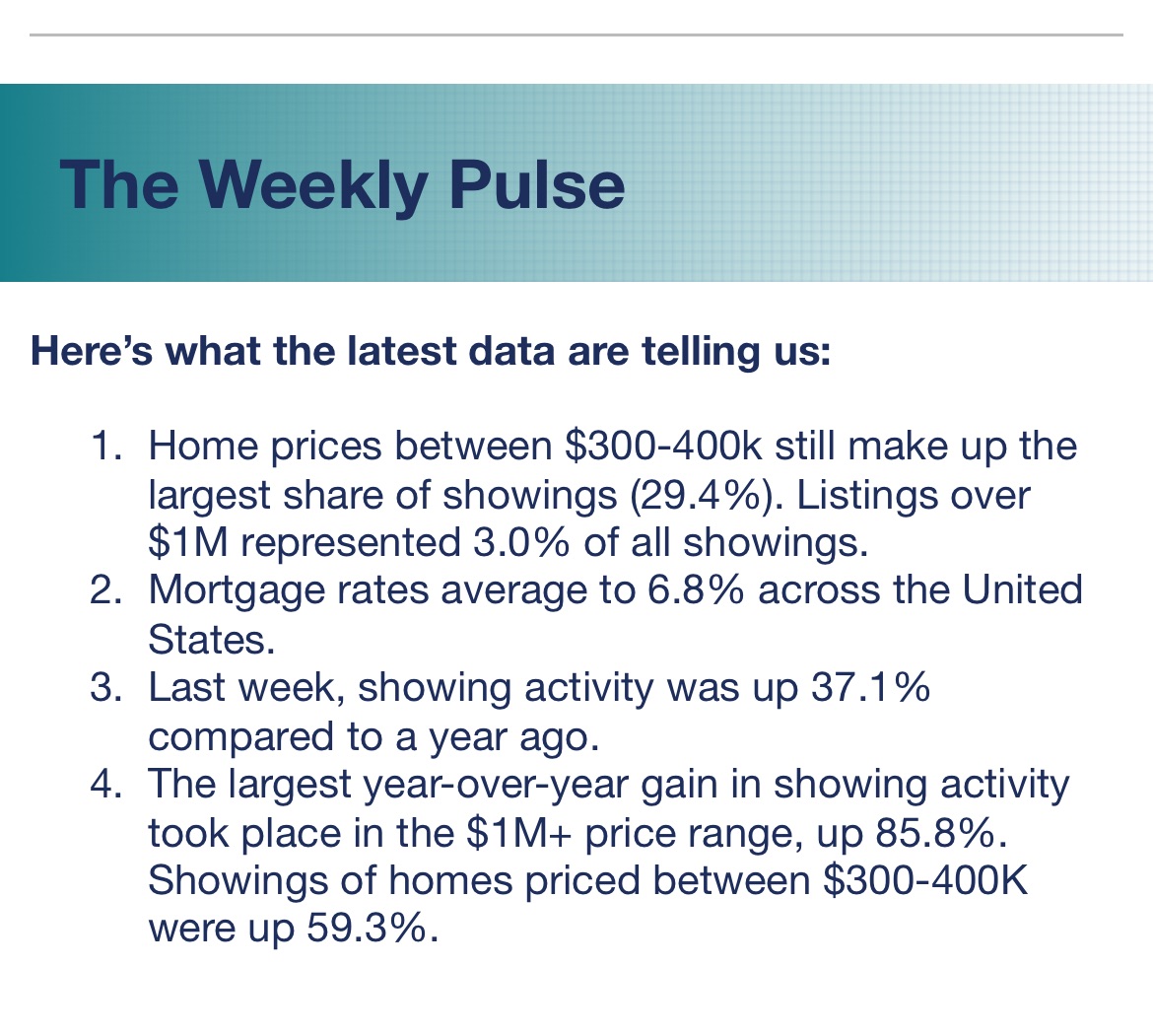
In her framework, Zelizer contends that social values and economic exchanges co-constitute one another. That is, social relations influence economic value and practices, but these exchanges also affect the nature of social relationships. For example, in “The Social Meaning of Money,” she demonstrates that people assign specific social meanings to money and earmark it for different purposes (like gifts or household expenses), which reinforces particular social relationships. The relational context affects how money is perceived and used, indicating that social and moral values are not external to money and price but integral to how people understand and navigate economic transactions.

Zelizer’s approach thus goes beyond a simple model of “external influence” or “endogenous value,” advocating instead for a relational view. She calls this the โ€œrelational workโ€ perspective, emphasizing that people continuously create and manage the boundaries between social and economic life. Through this process, social norms and values both influence and are influenced by economic behavior, making them mutually constitutive rather than separable or one-directional forces.

Shopping

Buyers and sellers are always feeling their way through the market process whether they are trading homes, water softeners, or landscaping services. Sellers make their products or services known, and buyers respond by coming to tour a home, requesting a bid on a water softener, or having the landscaper over to explain what could be accomplished at a certain budget.

The more complicated the product, the greater the need to investigate all the options. A home search may take six months as the homeowners-to-be seek out different areas, consider different floor plans, and evaluate the level of condition they need to fit their lifestyle. It’s a hard-earned process as it requires a fair amount of time and attention.

Appliances and smaller mechanicals are a bit less involved. There are often a couple of models the installers offer, some based on efficiency, some based on the manufacturer’s reputation. But there is more than the component to consider. There are differences amongst the installers as well. Some will ‘forget’ to pull a permit. Some will encourage the homeowners to consider a list of additional adjustments (shut-off valves, new venting, replace an access panel, and so on). Some will do the bare minimum and think that anything more is a waste. Some will go above and beyond code on the install and anything else in the area. For some picky folks this is the way to go.

The point is that there isn’t one way to buy a house or get a job done. The landscaper can pull out all the existing shrubs and rock border around a house and start over from the dirt. Or the landscaper can bring in a new stone edging, fertilize the existing plants, top it all off with some new mulch, and have it looking trim. One might hire a crew from the neighborhood to support a local business, or one might prefer the design plans, plants, and shiny equipment from the large nursery in town.

Shopping is part of the discovery process. It reveals a lot about what goes into price.

Getting cash to those in need

Viviana Zelizer’s sociological classic, The Social Meaning of Money, is full of historical examples of the conveyance of time and resources to those in need. The author also depicts the evolution of aid from charities to pensions from the state, from controlled expenditures to variations of individual freedom to choose how to spend.

What sort of money, then, was this new charitable cash? Rejecting the model of dole, wage, or insurance, pensions appropriated instead the forms of the middle-class domestic economy; or, more precisely, they replicated women’s housekeeping cur-rencies. Considering that most recipients of public pensions and a large number of those receiving or at least managing private cash allowances were women, charitable cash was easily transformed into a special category of domestic currency, a sort of collective pin money. Notice the vocabulary: the term “allow-ance” comfortably echoed the familiar income of middle-class wives. Pensions, of course, had been legitimized as a dignified payment by the enormously successful federal program of Civil War payments for veteran soldiers. But there was also a long tradition of pensions as a substitute income for husbandless women. And it was middle-class women who, for the most part, ran this feminized currency exchange; not only did women’s organizations become the strongest supporters of mothers’ pensions but mostly female social workers supervised both public and private forms of cash relief.

Zelizer is one of the few academics who speaks of the poor as worthy to choose. Furthermore, she repeatedly illustrates how participating in systems of trade serves to educate the participants, gives them standing, allows them to be role models to their children, and so on. Instead of the standard starting point that the poor will simply be happy to receive, Zelizer paints out in broad relief the full benefits of market participation to this group of modest means.

Intellectuals’ fascination with the foreign

I do not understand why people look abroad when we have the best institutions right here. Secure property rights underpin the entire real estate industry. No one does it better. And yet.

Beleive the explanation and move on. Nothing to see here.

The Value of Dirt

Iowa is an agricultural state home to more pigs than people. The deep, dark topsoil which coats the landscape is one of the richest in the world. Its topography is ideally suited for large machinery to work across acres of flat open spaces.

Ratings are given to the productivity of each site and tracked by Iowa State University. Land rents and sales prices are also posted and often used in commerce.

Will signs work?

I say no.

The City of St. Paul is looking to curb panhandling in busy intersections. It’s looking to encourage people to donate money to organizations that help those who are unhoused instead of handing out cash. FOX 9

City leaders say theyโ€™re doing it for public safety reasons. It’s putting signs up at intersections to bring awareness to drivers on how to help those who are unhoused. 

This is so Minnesotan. If we simply ask nicely, the good people of St. Paul will listen and do as we say! Let’s ignore incentives and inclinations.

There are two groups and two forces at work. The well enough to do in their cars are compelled at the sight of the need to fulfill an urge to act. Their instincts are crying to lend a helping hand. This is so easily accomplished by reaching into a wallet for a few dollars and rolling down a window. Searching for a reputable organization to direct funds to is tedious and not very rewarding. When you send in a check, you just get a thank you but no human touch.

Incentives for Group 1: Sign 0 Direct Give 1

The second group is the panhandlers. They have a need and are working to externalize cash from motorists’ desire for mutual aid. Although public policy types may rationalize that these folks really need this, and really need that, and it’s all because of X, does not eliminate the clear immediate need for cash. That’s their mission. The solution in the sign does not meet this need.

Incentives for Group 2: Sign 0 Direct Give 1

The sign idea does not work. If vouchers were given to motorists who want to reach out and touch someone to make a difference, and the panhandler could take said voucher to the organization for cash, among other things, then you would meet the incentives for both Groups 1 and 2. The organizations would also have a shot at ‘selling’ the panhandlers on their other services. If successful, the panhandlers would no longer need to hit the curbs with their stools and cardboard signs.

Disaster! Price

As long as prices are ticker taping along with typical elan, most people are happy to know that the amount they would give for a good or service is agreed to spontaneously, but many others. Sure, people will complain when a touch of frost ruins the citrus crop in Florida, leading to higher prices for grapefruit, lemons, or oranges. Little fluctuations make the dinner table news but are not show-stoppers in the ever-churning commerce between vendors and consumers.

The vibe changes when a typhoon rolls into the Sunshine State. Proclamations against price gouging come from the political power at hand. Every four-by-eight piece of plywood is needed to cover glass windows. However, the market system is no longer viewed as the desirable mechanism for distribution. Profit at the hands of disaster makes people uncomfortable.

Insurance alleviates the restraints of fears for the suddenly disadvantaged. When a hail storm comes through, insurance replaces all damaged vehicles or roofs. No one cries, ” Price gouging!” Everything is all right as long as it’s on the insurance company’s tab. Insurance coverage didn’t take the repairs out of the market system, but it did change the size of the risk group.

This happened with masks during COVID. In the early days of the virus, state health departments were desperate to get masks for essential personnel. As the prices soared, administrators realized every state was bidding up the price from foreign suppliers. Changing the buyer group from the state to the federal level, tampered down the bids.

Disasters are shared concerns over more extensive groups of people. The market system is not in error; it just needs regrouping.

Prices have Personalities

The War on Prices, How Popular Misconceptions About Inflation, Prices, and Value Create Bad Policy is a compilation of essays edited by Ryan A. Bourne. The twenty-four entries are organized into three sections: Inflation, Prices, and Price Controls and Value. Bourne steers the way with introductory comments.

What I like best about the book is the variety of stories in which price plays a leading role. You start to notice that the numerical representation tallied at the time of transaction in the exchange of a good or service has its own flareโ€”a price personality.

George Mason economist Alex Tabarrok is known for describing price as ‘a signal wrapped up in an incentive.’

Here, we’re looking at the action price- a very popular one indeed. It is the price that will cause the actors in the market to take charge and make a deal. Action price is the number most serious sellers want to post to attract buyers and move some merchandise.

But there are many others. Take Chameleon Price. In the West Needs Water story, we hear about the city of LA going out into the country in search of water rights. The early Californian farmers had secured water rights, which were now more valuable in the quickly growing urban area. When the Water Board went to the rural farmers with money in hand, they wanted to purchase the land at a price derived from its agricultural value. Soon, sellers realized that they were not selling farmland; they were selling water rights and demanded a price linked to the increased property values on the receiving end of the water.

At first glance, the object in the transaction takes on one appearance only to change to another hue at a new price.

More price talk to come.

Ownership Issues – Water out West

Water is a slippery issue. You can pump water from the ground if you have your own well. It costs you the electric bill. As an owner of the lot, you have rights to the water swelling through the subterranean substrate.

The farmers who arrived first in the West have rights to the water in rivers through the first possession doctrineโ€” a similar principle to land and mineral rights. Under this doctrine, historical patterns of water use give rise to de facto property rights. Specifically, whoever historically has diverted water and put it to beneficial use gains a legal right to continue diverting water for beneficial use in the future. Farmers diverted flows from rivers and streams through dams and irrigation ditch networks. Projects by the Bureau of Reclamation, part of the U.S.

Department of the Interior, augmented these systems and after 1926 would contract only with irrigation districts for water delivery. The fact that farmers have rights to and use vast quantities of water in an arid region is not a problem, in theory, if those water rights could then be traded to urban users who might value them more. But the history of water trading in the West offers a cautionary history about how difficult it can be, in practice, to facilitate true markets and arrange trades through property rights. (The West Needs Water Markets, but Achieving That is Tough, Peter Van Doren)

When you pay a water bill in an urban area to your local municipality, you are paying for the infrastructure to pipe the water to your home, as well as the water treatment process. Private property rights determine the type of access: well, municipal, irrigation ditches… The value of the water shows up as capital in the plot of land with access rights.

To obtain Owens Valley water for the aqueduct, the Los Angeles Water Board purchased over 800 farms and the water rights that came with them. Negotiations were difficult because of bilateral monopoly. The board was the only buyer and was under pressure to buy because Los Angeles was in a drought in the early 1920s. Large farmers formed pools to collude as sellers. Sellers wanted the surplus from the increased land values in Los Angeles arising from the water availability. The city’s board offered compensation based on agricultural revenue from the farms.

The LA people wanted to buy out agricultural land based on farm use. The farmers realized they were selling access to water. Thus they based their price on the value increase of the properties receiving their water rights in LA. This makes sense.

But then there can be no complaints when the agricultural land can no longer be farmed. The property’s use value transformed, and the transaction compensated the sellers at market value.

A little project

Building a new structure is a process!


Even a small project like this shed involves: structure permit, earth moving permit, excavator, township road approach approval, deliveries, the builderโ€™s crew, garage door guy, electrician, concrete guy, and state electrical review.

All in for what you see (excluding land cost) $63K.

How Will I Know?

In 1986, a young Whitney Houston captivated audiences with another breakout hit, How Will I Know. Before she gives in to her passionate feelings for the object of her desire, she wants reassurance. She wants to be sure the love in her heart is not leading her astray.

In the refrain, she tells us, ‘Don’t trust your feelings.’ Apparently, the moment of passion is not always a reliable barometer for stormy weather. ‘Love can be deceiving.’ When triggered by a natural impulse, the urge to rush in may lead one off course.

Following your heart, or your passion, is a tricky business. The natural inclinations to react in an altruistic manner may also lead to misgivings. How do we know who should step in when a family is in turmoil? Should it be presumed that a vagabond would be happier in a group home? How do we know who truly needs help and who is an opportunist?

The video tells us more. There’s a moment when all Whitney’s peeps are on the phone. I assume she’s calling her gal pals for advice on the object for her affection. She asking them, how will she know? And I think she is on the right track. Most people look to their peer group to decide how they know who needs help and who’s fine in the moment.

The Neighbors- Hospital repurpose con’t

The most valuable aspect of the Fergus Falls Hospital is the apparent lack of objection by the community to being neighborly with a spectrum of individuals under the auspices of mental illness. For over a century, the facility housed a tenth of the town’s population.

Imagine, for the purposes of conversation, that returning the hospital to a newly renovated in-patient treatment facility would allow for a capacity of five hundred residents. Now imagine the alternative. How much time would be required at city council meetings to obtain neighbors’ approval to house five hundred residents in group homes of fifteen residents, or thirty-three sites. It’s mind-boggling, as more often than not the site will not pass the NIMBYs, and thus the process would start over and over again.

The stories told during the tour of the historic complex included tales of interaction in the town of Fergus Falls. Some residents simply walked off the campus and were not pursued. Some residents were gregarious in their interaction with visitors on the long grassy lawn in front of the entrance of the building. But there they coexisted, the residents who lived in the facility over one hundred and twenty-five years and the townspeople of fifteen thousand.

I overheard bits of conversation after the tour guide had wrapped up his talk. A nurse who had started working at the hospital in 1977 was relating some of her memories to a cluster of silver-haired women. A man of a similar generation shared that he had lived on site in his youth. The reality of people’s stories is never as frightening as what is envisioned by a neighborhood asked to become host to this group of society. The reality is far more banal and empathetic.

It’s hard not to believe that the hospital brought many a profession or at least a stable job with a pension. Although not near a bustling metropolis, the area has many beautiful natural features in its lakes and open spaces. For those interested in the outdoors, hunting and fishing, there isn’t a better place to be. For those who enjoy a nestled small town atmosphere or space that acreage living affords, this is where you can find both. A housing and professional facility for those who now live under bridges and in tents on concrete curbs could bring solace to the residents and an income for local residents.

The town not doubt has a mix of good memeories, humorous memories, and undoubtedly some bad ones. But never has it been said or implied that the hospotal closed under pressure from the nieghbors.

Fergus Falls Hospital (con’t)

In a rural county seat, two and a half hours northwest of the Twin Cities, is an arc-shaped building complex that housed mentally ill patients for a century and a quarter. The state hospital was decommissioned in 2007. It is owned by the city of Fergus Falls and now sits vacant, waiting for news of its destiny.

Although the buildings were maintained as long as they were used, a building of that age requires on-going maintenance. Older buildings often are more expensive to keep up as one project leads to another and the standard products and sizes which were used at time of construction are now special orders and customs fits.

Infrastructure, like pipes, electrical and safety measures also age out of their useful life. Take the orange column in this photo.

It reminds me of those chutes they set up in high-rise buildings when they are remodeling. But no, it is not a trash chute. The guide on our tour of the site said there are slides inside those rusty tubes so residents could slip out and evacuate in the event of a fire. Somehow, I’m not sure if they would still meet code.

Renovations cost money. New construction costs even more money. Here’s a project in Austin with no historical appeal (those roof lines are very unpopular in MN!). The project still costs $600K per unit.

The long and the short of it is that the material condition of the buildings does not unduly affect their commodity value, if you will. The age of the structures should not deter a redevelopment in and of itself. The numbers will most likely fall in line with other residential redos.
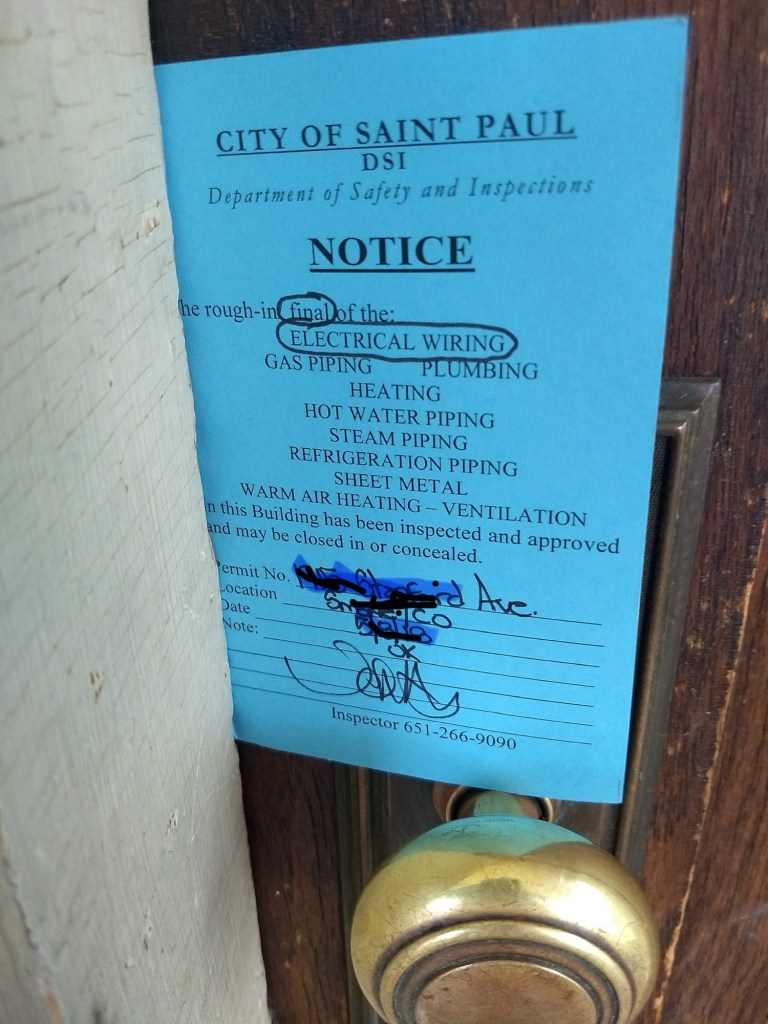
Flow

Often, the merits of a transaction are given from the perspective of a single agent in the trade. An assembly line-worker lost their job when the plant was moved to another location. This is bad. The worker suffered a loss. Quickly, within sentences, the effect is generalized to all the workers in the plant, town or even region. The Experience of the middle aged white guy who is difficult to retrain and find meaningful work of the same quality is the catalyst for all sorts of feelings and demands for government intervention.

Do you see the slide? From a valid totaling up of wins and losses for one individual turned into a model involving segments of society.

It’s important to declare which model is in play as this dictates whether the players are individuals or groups, whether the tally of net benefit or loss is assigned to one or to many, and perhaps most interestingly the flow of reaction and counterreaction as value settles in the system. More interesting insights surface when consequential outcomes are looked at in a flow of events.

Think back to the time of the 2008 recession. Say one buyer purchased a home at the peak of the housing market with a three-year adjustable ARM. When the ARM recalculated in 2011, the buyer’s payment adjusted upwards to an amount beyond their ability to pay. Due to the recession, the value of the home had decreased below the mortgage balance. The buyer ends up in a familiar situation at that time and loses the property to foreclosure. This is a clear loss.

But say every other homeowner in the neighborhood had owned their homes for more than ten years. None of them were interested in selling until after 2015. These individuals realized no impact from the value changes during the recession expcept to see their assessed values decline resulting in lower property taxes. As a neighborhood the effects of the recession were uneventful.

In the plant closure story, there were most probably workers who ended up better off for the closure. Perhaps it encouraged them to return to school to achieve an updated skill. At the other end of work life, perhaps someone nearing retirement ended up with a more favorable retirement package. Getting people to think of workers as a mass might be useful for unions, but loses a finess of obeservation for analysis.

It seems, to have a profitable discussion, one must pick a playing field. If you want to pick a town, then the players are all the workers, their economic impact on local services, and the support available through the municipality’s local services. Who netted out what and where did the money settle in time periods 1, 2, and 3 following a plant closure. If there was a draw of support from a higher level of governance, maybe the playing field needs to be moved up a rung to the county level, or to the region within the state. The players then get expanded to blend in other economic agents and their positive and negative tallies.

Instead, the story is usually told like some mid-19th century Russian novel. The peasants were persecuted and the capitalists must be blamed! This is not helpful.

Soft or Firm but definitely not Lumpy

When’s the last time you thought about your mattress? Probably when you were out looking to buy one. There are products like that. We are in the market for a new one so rarely that we forget they are a commodity. It turns out, mattress manufacturers are getting hit hard by the slowdown in real estate transactions.

It’s pretty common to hear about the effects of home sales on the home improvement industry. New buyers put around eighty percent of their upgrades into a new home within the first six months of ownership. No moves means no dissatisfaction with the status quo, which means far fewer trips to Menards, Home Depot, and Lowes.

As with many things, it’s a combinations of factors hitting the mattress makers. More and more buyers are purchasing on-line. Victoria Freeman at the Manhattan Institute (MI) writes:

Brick-and-mortar storefronts are suffering the most because mattress demand has recently shifted toward online sales. As shown below, the โ€˜mattress-in-a-box’ model has risen in popularity โ€“ while only 27% of consumers would purchase a mattress online in 2016, 47% would do so in 2020. Younger consumers, who tend to prefer online shopping, are driving this change.  

A change of shopping venue has given an edge to those who ship and are able to undercut price.

In particular, Chinese exporters often sell through Amazon rather than setting up a U.S. storefront because it minimizes the length of the supply chain, cutting costs. On Amazon, a Queen size mattress from China can thus sell for less than $175 โ€“ a marked bargain compared to the average price of around $1,000. The consequence of consumersโ€™ savings on mattresses, though, is that domestic mattress producers are losing market share and hence cutting jobs. 

As someone who is often frustrated at not being able to touch and feel before I purchase, I wonder how this will go. If a mattress simply shows up at your home, will the consumer get what they want, or will the mattress be too firm or too soft? And what’s the deal with those inflatable or rather expandable mattresses? Do they really hold their shape long term?

Mostly it’s interesting to note the instigator of a shifting mattress market is the real estate sales slowdown. Markets are unpredictable, spontaneous, and fun to follow.

Transaction action and Institutions

Does affordable housing vary in quality based on location? Or is it simply a category of housing no different than a category of a car or a type of breakfast cereal? If you can use the home to shelter a household whose income falls below an acceptable level, then the property adequately meets its intended value.

A group of black pastors, led by Dr. Alfred Babington-Johnson, thinks location does matter. They are suing Minnesota Housing, an agency responsible for the allocation of public funds to subsidized housing, for exacerbating a household’s access to success by predominantly building in areas serviced by weak institutions.

A prominent voice among Black Twin Cities ministers, Babington-Johnson sued Minnesota Housing and the Metropolitan Council last year, arguing that state and regional efforts to build affordable housing effectively have backfired, increasing racial segregation while concentrating poverty in poor neighborhoods.

โ€œWhether thatโ€™s done with proven intentionality, the outcomes clearly indicate none of the disparities go away,โ€ Babington-Johnson said in an interview Wednesday. โ€œThe educational gaps donโ€™t close. The economic opportunities donโ€™t materialize.โ€

In this quote, Babington-Johnson refers to two institutions: schooling and the workplace. Efforts to develop educated people are regarded as the path to improved employment. Yet when people reside in areas where 40-50% of the residents live below the poverty level, it is easy to imagine that the lack of informal networking and time resources available to nurture these institutions is not at hand.

The Minnesota Housing Commissioner counters:

In a letter to the state advisory committee last month, Minnesota Housing Commissioner Jennifer Ho wrote that โ€œin the last several years, 63% of the new rental units in the Twin Cities metro area that have been awarded funds through the Agencyโ€™s Consolidated Request for Proposals have been in the suburbs while 37% have been in the central cities of Minneapolis and St. Paul.โ€

Which seems to contradict what people on the ground are feeling. My question, as a casual follower of the issues, is why are the numbers so hard to come by? Every time I’ve gone down the rabbit hole to try to nail down the numerical facts of these conversations, time has not allowed for a successful outcome. As public information, it seems they should be accessible. Attorneys for the pastor group put out these numbers.

Attorneys for Stairstep noted that in the Twin Cities, more than 23,000 affordable housing units received subsidies that began between 2017 and 2021. Of them, 56% โ€” or 13,000 units โ€” were subsidized by Minnesota Housing, the Met Council or another form of state funding.

Note the difference in verbiage between ‘new’ units versus all subsidized units. Two thirds of the new units may go to the suburbs. However, this clouds the issue, which is that most subsidies, by the structure of aid distribution, flow to neighborhoods of high poverty. The Housing Commissioner proposes work to be done to create the ideal institutions in place.

โ€œFor example,โ€ she said, โ€œthe only avenue for lower-income parents of color to access well-resourced schools should not be making them move to a white, wealthy community, which may lack other opportunities that they value. Rather, we should invest in disinvested communities and ensure that all schools are well resourced, allowing people to achieve equity in place.โ€

The implications that folks could be giving up support groups in a move is a valid one. But who would be in the best position to provide voice to whether it is more feasible to relocate or to enhance institutions in high poverty areas? The pastors, or the residents if given the choice to move, or the government who holds monopoly on dictating where the housing units are located? Shouldn’t residents have a choice?

Show me the Market

I don’t think people will balk at the idea of dual choice, that with every transaction there are blended motivations to the self and to society. But what will be fun to pursue is the idea of a market for the social side of life. The price will set us free (or at least make a lot of decisions easier).

A deal on the table

In the 1988 movie Working Girl, Sigourney Weaver has a dramatic entrance to a boardroom setting complete with a bevy of men in grey three-piece suits and heavy mahogany paneling. ย Her hair is 80s height, her attire speaks a woman of means, and her use of crutches is both intimidating and explanatory as to why she wasnโ€™t invited to the meeting. Weaverโ€™s urgency to attend is due to, as she announces, โ€œGentlemen, we have a deal on the table.โ€

The coming together of parties to a transaction is often featured in cinema in this high-drama boardroom fashion. Tension is integral to two parties, each feeling the other is getting the best of them, and they stand off with their legal eagles at hand. Both benefit from the trade, or they would not be present. The pressure to settle is high.

Weaver is there to claim her stake in the transaction, as there are many participants in the successful execution of a trade. The close of deal-making is when each party comes away with either what theyโ€™ve given or what they’ve gotten. There is a settling of accounts.

How to find an infill lot

It’s not easy.

Clients who want to live in an old neighborhood have few choices. The open land is gone. Most homes that are in the neighborhood are in good enough shape to add value to the lot upon which they are perched. Ideally, the clients want to find a tear down, or a home is such rough shape that most everyone cannot see a renovation opportunity. But it doesn’t stop there. As this thread explains, there are more issues in play.

Soil testing and estimates for debris removal and site prep are easy numbers to come by. The tricky bits of information is whether the plan the clients have in mind will fit on the parcel and still comply with the building codes and municipal ordinances.

Lack of information results in uncertainty. Too much uncertainty and people do not want to move forward. That’s not progress!

MN Homestead History

It’s impressive really. Stat. 507.02

Before Minnesota achieved statehood, the Territory of Minnesota enacted a homestead exemption statute that shielded homestead property from โ€œsale on execution, or other process of a court.โ€ Rev. Terr. Stat., ch. 71, ยง 93 (1851). When Minnesota entered the Union, the homestead exemption was incorporated into the Minnesota Constitution and it remains there today. Minn. Const. of 1857, art. I, ยง 12. In relevant part, Article I, Section 12, provides that a โ€œreasonable amount of property shall be exempt from seizure or sale for the payment of any debt or liability.โ€ The purpose of the homestead exemption is to โ€œpreserve the homestead to the family even at the sacrifice of just demands.โ€ Holden v. Farwell, Ozmun, Kirk & Co., 223 Minn. 550, 558-59, 27 N.W.2d 641, 646 (1947). Indeed, in order to ensure โ€œa stable and independent citizenry and thereby promote the public welfare, it has always been the policy of the law to protect with jealous zeal the homestead right of the citizen.โ€ Id. at 558, 27 N.W.2d at 646.

The Legislature has enacted various statutes implementing the constitutional directive. Minnesota Statutes ยง 510.01 (2012) defines the homestead as the โ€œhouse owned and occupied by a debtor as the debtorโ€™s dwelling place, together with the land upon which it is situated to the amount of area and value hereinafter limited and defined.โ€ Minnesota Statutes ยง 510.02 (2012) further provides that the homestead exemption shall be limited to 160 acres or less, and shall not exceed $300,000, or $750,000 if the homestead is primarily used for agricultural purposes, subject to periodic adjustment of the dollar amounts in the manner set forth in Minn. Stat. ยง 550.37, subd. 4a (2012). The exemption extends to the debts of both spouses even if only one spouse holds legal title to the homestead property. See Minn. Stat. ยง 510.04 (2012).

Consistent with the purpose of preserving the homestead to the family, Minnesota law has, at least since 1865, provided that no conveyance of the homestead by a husband is valid unless โ€œthe wife joins in the deed of conveyance.โ€ Minn. Gen. Stat., ch. 68, ยง 5 (1865). That requirement, which is currently codified at Minn. Stat. ยง 507.02, is now gender-neutral and provides:

If the owner is married, no conveyance of the homestead, except a mortgage for purchase money under section 507.03, a conveyance between spouses pursuant to section 500.19, subdivision 4, or a severance of a joint tenancy pursuant to section 500.19, subdivision 5, shall be valid without the signatures of both spouses. A spouseโ€™s signature may be made by the spouseโ€™s duly appointed attorney-in-fact.

Minn Lawyer

Ownership means maintenance

I’m an advocate for homeownership. No question. But to develop products which prematurely get people of little means into a home is irresponsible. For example:

For a time the monthly expenses may be all that is owed. After a while larger mechancial expenses appear. Some can be deferred by stop gapping replacements here and there. Eventually the folks will end up with a home that has not appreciated because of all the impending repairs.

What I like about this paper

A recent paper, Houston, you have a problem: How large cities accommodate more housing, by Anthony W. Orlando and Christian L Redfearn, offers a new reading of real estate data.

Consider the stylized fact that unmet demand is most-inexpensively delivered on low-cost land at the periphery of the commuting shed, known as a โ€œgreenfieldโ€ site. This type of development uses low-cost, low-density construction methods. However, in productive and desirable urban areas, low-cost landโ€”especially close to jobs and retailโ€”is quickly consumed, pushing single-family home builders farther away from the amenities that make these urban areas attractive. Eventually, this progression reaches a limit in which commuting back to these amenities is too costly. At this point, the greenfield land is effectively โ€œbuilt out,โ€ and developers are forced to look inward to more expensive land closer to the core where spatial amenities are valued by renters and buyers. When this โ€œinfillโ€ development becomes a larger share of new housing supply, the marginal cost of supplying a new housing unit will increase, and the elasticity of supply will fall. Thus, even in the absence of different regulatory regimes, an MSA with more population and more density will appear to have a steeper supply curve because large and growing urban markets naturally progress in this direction.

Real estate has a history of being talked about in static numbers. Orlando and Redfearn discover a dynamic in their research. A city grows along the fringe where the developers can build over large parcels of undeveloped land. This is the most consumer-friendly by meeting the desired structure for the lowest cost. But at some point, the authors observe that the commute to a central business district causes infill projects to gain in status. At that point, a city gains new units within the old infrastructure instead of in the greenfield.

Much of what we have learned in the two decades since DiPasquale (1999) first prompted the field to investigate housing supply is aggregate and static in nature. The goal of this empirical work is to document the location of housing stocks within several MSAs over a long time of growth. The results presented in the article are largely descriptive. It is abundantly clear that aggregate analyses miss the compelling dynamics we documented.

Why stop at the trade-off between low cost fringe housing versus commute time? There are many other interesting dynamics to expore.

The business of Public Goods

My grandmother would tell a story of giving in their rural Iowa community. Word would get out after a Sunday service at Holmes Lutheran Church that a family was in need. A gathering of kids’ clothes or staple food supplies would be left in a neutral pickup area, maybe at the end of a driveway. Then the mother in need would later pick it up. Poverty was shameful, you see. Direct contact in the transference of aid would be a disrespectful slight on their condition.

The evolution of social welfare has come a long way since the happenings along the gravel roads squaring off sections of farmland. Provision of resources funnels through formal government channels instead of being left solely to the church aid societies of the 50s. Efforts to detach stigma from acceptance of aid are ongoing. The evolution of food stamps is a credit card with funds for the purchase. Free lunches are provided in all school buildings so there is no distinguishing between families that qualify for aid and those who don’t.

It’s hard to see how public humiliation in the face of unforeseen circumstances is profitable. However these control mechanisms were developed as a means of discouraging group members from taking more out of the communal pot of resources than needed. It was a social metering of loosely held assets. Back-up reserves are not attached to one specific individual in the group. They are intended to meet the shortfalls of the worse off.

Scolding looks are used in other ways to keep up shared appearances, When the neighbor grass is getting knee high they may feel the scorn of dogwalkers as they pass on the sidewalk. Pushing and nudging with looks, back turns, and low whispers are simply how it’s done in society when it’s thought necessary to get the word out about control of shared space.

There’s a two-fold reason these norms are swept away in the face of dire poverty. The unkindness is too harsh as the victims are too vulnerable. And furthermore who wants to discourage, in any way, a mother from taking food for their child? The desire for stigma-free acceptance of benefits for kids is simply a long-term win for the group. Healthy kids make for healthy adults.

There are those who, however, may come to an erroneous conclusion about the tapping of public benefits without those disdainful social guardrails. Some will pursue as many benefits as they can find available to them with no personal calculation of need. And others still take the pursuit of public benefits as a business model. They dreamt of being an entrepreneur, they say. This claim is being made in defiance of accusations of fraud.

When public goods and resources are formalized through government metering, then funny things happen. They no longer have the appearance of a common pool resource but rather they take on a more private form under the guise of a ‘program.’ Gone are the nuances of need-based use. Instead, they are peddled and appropriated in a coin-counting manner.

Perhaps an ingredients label is required. This is a one-hundred percent publically funded resource. It is fraudulent to transact outside its intended mission.

What was learned?

As the Lift/Uber kerfuffle comes to a close, it will be interesting to see what is learned from the two year process of politicians acting as labor negotiators between the independent ride share drivers and the platform owners.

The Governor singed a bill amid grandstanding to settle a set ride fare which all parties found acceptable. This is a win as the service is valued by a spectrum of riders and sectors. The negotiations, however, were lengthy. As one council member recently observed, the final horse trading involved in getting to ‘yes’ from all sides used up the political capital that could have been used to get the bonding bill done this year. No bonding bill means no bonding money for all the projects requested across the sate. The loss is all the agreements that were left unconsidered due to the distraction of a relatively small pool of workers.

Economists refer to this as opportunity costs. If your capital is doing one thing, it can’t be doing another. Some might say the politicians are constrained by the amount of time they have in a session to review, discuss, and come to terms on items of public concern. But if public officials are in the profession of providing goods and services of value to their constituents, doesn’t it follow that their choice of which products to work on is actionable? To not make time for the bonding bill is a choice not a constraint

Rosolino and Pete continue to develop this argument that โ€œopportunity costs be regarded not as constraints to which individuals passively respond. Rather they are the reciprocal of choice itself.โ€ Paper in the link.

Insurance Update

Come to find out, property insurance rates on a $300,000 home vary by state. They vary a lot. The annual premiums for a dwelling in Missouri and Mississippi are twice as much as Maryland and Maine. Minnesota is, of course, just average.

Insurance.com

If you haven’t thought about your insurance coverage in a while it might be an idea to dust off the policy and dig into what is covered. Some riders are negligible in cost yet nice to have when the situation arises. And example for coverage is on the water line from the meter in your basement to the connector at the street. Standard deductibles have also gone up from $1000 to $2500. The larger deductible may save your annual premium $200-$300.

Also, be sure to understand how the coverage works. With all the roof claims, often driven by contractors knocking on doors after a hailstorm goes through a neighborhood, companies have changed the payouts on roof replacements. Many companies will prorate the coverage once a roof is over fifteen years old. If the storm comes through in the twentieth year of the asphalt shingle life, then the homeowner only gets paid the value of the remaining years of life.

A periodic review is indeed essential for staying informed about external factors that may affect your insurance coverage. Even if you are content with your current provider, the insurance market continuously evolves, making regular evaluations crucial for ensuring that your coverage aligns with your needs and the prevailing circumstances.

Freddie Mac calculates Boomers’ Exit

As of 2022 there were 69 million Boomers, accounting for 21% of the U.S. population, and 38% of total homeowner households. Boomers are overrepresented in the homeowner demographic because homeownership rates tend to increase as households age, gradually starting to decline as households age beyond age 75 (Exhibit 4).

As of 2022, Boomers were between 58-76 years of age. By 2035, these Boomers will be between the ages of 71 and 89. We estimate the retention rates of these age cohorts as they age over the period from 2000-202211 (Exhibit 5).

Applying these retention rates to the Boomer households as of 2022, we estimate the number of Boomer households each year through 2035. We find a gradual decline in the number of Boomer households over time from around 32 million in 2022 to 23 million by 2035 as the oldest Boomers reach ages close to 90. Per this estimate, there will be 9.2 million fewer Boomer homeowner households by 2035 (Exhibit 6).

That’s more than 9 million homes available for the Gen Z’s who are entering into their home buying years.

Read the entire report from Freddie Mac February Outlook.

Title work from the Book of Ruth

In Chapter 4 a plot of land is identified for aquisition.

3. And he said unto the kinsman, Nแบฅ-o-mi, that is come again out of the country of which, selleth a parcel of land, which was our brother Elim-แบฝ-lฤ“ch’s:

Then one worries about past liens and encumbrances.

5. Then said Bo-ฤƒz, What day thou buyest the field of the hand of Naomi, thou must buy it also of Ruth the Moabitess, the wife of the dead, to raise up the name of the dead upon his inheritance.

So one asks for witnesses to the transaction.

9 And Bo-ฤƒz said unto the elders, and unto all the people, Ye are witnesses this day, that I have bought all that was E-lim’-e-lech’s, and all that was Chi-li-ฤƒn’s and Mรคh-lรตn’s, of the hand of Na’-o-mฤฉ.

Instead of gap coverage, the buyer secures the potential claimant to the land through marriage.

10 Moreover Ruth the Moabitess, the wife of Mรคh-lon, have I purchased to be my wife, to raise up the name of the dead upon his inheritance, that the name of the dead be not cut off from among his brethren, and from the gate of his place: ye are witnesses this day.

That’s a wrap on a closing.

The thing is- many countries still rely on insufficiently formal titling of land.

Austin Tx and the Missing Middle

Kyla Scanlon- economist

I love this clip by Kyla about the housing market in Austin. Build more housing and prices moderate. Too true.

There’s another factor at play here. Austin is a new town which has experienced a lot of growth. And along with the growth, prosperity. So for folks in the area to be pro-expansion and in turn pro-housing growth is an easy turn.

In more established cities, there are networks of additional interests all meshing on top of the landscape. There were reasons why residents fought for and built out their cities following those rules. For new growing metros, the Austin plan would be easy to adopt. For more those with longer histories, it’s not the same game. Here it will take other strategies to urge continued housing growth.

Ruby slippers and a Value question

How do you put a number on historical value? A Minnesota bill is about to put a price on the ruby slippers worn by MN native Judy Garland in the Wizard of Oz. The slippers, stolen twenty years ago, were recently returned to their owner following the completion of the trial last year. The FBI were tipped off to the where abouts and recovered the sparkly heels in a sting.

Now the owner plans to have them auctioned off after sending them on tour. Their estimated auction value is put at $3.5 million.

The state of MN is going to put in a bid but it’s a bit shy of the estimate.

How are cultural values calculated? A one-off item is difficult to determine. But other similar items come and go from the market. Properties, for instance, have been designated as historical landmarks.

Game Theory or Discovery?

The higher interest rates have cooled the residential real estate market a bit, which is nice because for a run of three years or so, every home that was in decent condition was selling in multiple offers. It was common for a buyer to bid on four, five, seven homes before they were the winners.

Recently at a sales meeting the manager pulled the topic out of his list of things to talk about at a meeting because some properties are still attracting several offers. The strategies the office came up with filled the large sheet of paper on the easel at the front of the room. There’s more than one way to write and present an offer to a seller.

This made me think of game theory as the purpose of the meeting conversation was to theorectically compare strategies amongst the active participants in the market. Like in game theory, agents develop a sense of their buyers valuation of the home. There are many angles to this, but given the process of considering other options, perhaps loosing out on other bidding situations, the agent shares the strategies discussed amongst the agents in the meeting, and advises the buyer accordingly.

While reading Isreal Kirzner work, I thought his concept of discovery best described the process buyers go through in the market to arrive at their home purchase. After repeated investigations into the various housing options, perhaps with breaks in between to go home and reassess the purpose of the move, buyers discover their best option and only then are motivated to pursue an offer to the seller.

I can see now that the game theory part is the setup for strategy, competition and cooperation with the seller once the property has been identified. The discovery part has to do solely with the buyers insights into which property has that added benefit that boosts the property ahead of others in accomodating their needs. It is more useful to them and their particular circumstances.

It’s funny beause often a buyer is attracted to a property for the some or all of the same reasons the seller has enjoyed it during their tenure. And that affinitiy for the same likes and dislikes encourages the parties toward cooperation.

Business Opportunity!

Kenya needs title companies.

Lisa Bernstein explains Private Ordering

Example of private ordering described by Anthony Downs.

The purpose of shifting services to the neighborhood level is not just to improve quality but also to encourage self-development of local residents and enhancement of their personal values. Neighborhood self-development usually occurs most effectively through spontaneous, unplanned local efforts often led by charismatic individuals. In city after city the most effective such efforts have emerged from the dramatic leadership of one or a few unique individuals who took it upon themselves to “do something” about local conditions and galvanized others into : action. Inevitably, their efforts reflect their own unique combinations of talents and are therefore difficult to replicate elsewhere.

Neighborhoods and Urban Development

Choosing Bids

You might have gotten a recommendation to always get three bids when inviting contractors over to do work on your property. This is wise for a couple of reasons.

First off, it’s common to see a spread in the proposal amounts. I’d say on average I’ve seen a twenty percent spread on quotes for roofs, garage doors, tile remodels and so on. Of course, everyone is consious of the cost of things and twenty percent is quite a bit. But you’ll notice other differences between the bids.

The second issue concerns the type of work to be done. The proposal above is quite detailed. There are measures and a sketch to demontrate spacial relationships. It has a floor drain option, and a service door pad option, and an apron. The posts from the overhang are noted and there is a suggestion to bring the patio floor out past them for a higher quality finish. In contrast, it competes with a proposal that was received by text and just gave to figures for the floor and the patio. And that figure exceeds this one with all the extras by ten percent. There were other bids somewhere in between these two.

This isn’t a difficult project, so why would various contractors want to diverge so seriously from the standard pricing? Most trades people work for themselves. They get to choose their pricing, and some feel they are worth more money. Others feel that they don’t want the work unless they get the premium amount. And they probably don’t get the work as many consumers like to check around. But that one consumer, who is in a squeeze, with a deadline to meet, might be happy as punch to pay a little extra and get the high priced guy to come at a moments notice. There’s room in the market for this.

For as many personalities there are subs. The contractors who are detailed will be appreciated by detail oriented people. The ones that keep it simple and quick will find their niche too. Some people find details irritating. Part of what the consumer wants is a good price, but they also want to connect socially with standards and timing.

Homelessness and squatter cities

The homeless have been in the local news quite a bit lately. Tent cities keep appearing and then are dismanteled only to reappear again a few blocks away on another city owned lot. The lots are filled with uncomfortable large concrete blocks, the support groups for the homesless show up with more tents, more supplies and on it goes.

The seperation of fortunes from those who, for whatever reasons in their lives, choose to live out of doors in the cold winter climate, and those who live off the average wage in MN is dramatic. It’s hard to understand or compare the circumstances on how it all comes to be. For that reason it maybe beneficial to look elsewhere in the world for strategies to a more stable existence for these folks.

There are area of the world where whole sections of slums are in the process of ameliorating into better situations for the residents (What Squatter Cities Can Teach Us). What were the aspirations that helped drive this change? How did supporting services come into play? Who were the early adopters?

WHen there is too big of a spread from those who need institutional support and those able to provide it, the cultural difference might be getting in the way of success.

Timely Knowledge – Textbook Edition

I’m really enjoying this textbook on price theory by Deirdre Mccloskey. The explanations are lively and interesting. The book is available on-line at no cost.

As mentionned in yesterday’s post, knowledge of bargaining techiniques for a good being transacted in the marketplace is valuable to market participants. McCloskey provides this example.

But economists have not discovered very much about what constitutes exceptionally subtle bargaining. There are profound reasons why this is so. Suppose that some bargaining technique were known to be useful when employed by the Soviets-such as threatening to abandon bargaining altogether in a week if the Germans do not accede by then to the terms demanded. The Germans would come to understand this. The Germans would use it themselves. Its usefulness to the Soviets, therefore, would vanish. In general, any knowledge that the analyst of the situation acquires can be expected to be acquired by the participants. They will alter their strategies in view of the knowledge, making the knowledge obsolete. The Soviet bargainers make a “last” offer. The German bargainers know that the offer is insincere (that there are quotation marks around “last”‘) and ignore it, making their own “last” offer. But the Soviets know that the Germans know that the Soviets “last'” offer is insincere and prepare a “real” last offer. But the Germans know that the Soviets know that the Germans know that the Soviets’ “last” offer is to be replaced by their “real” last offer, itself insincere. And so forth.

Chapter 5 – Trade, page 95

Timely Knowledge

In the real estate world, transactions can take several months to come together. There is a shopping period, which is, at minimum, a few months even if a client has thought through the main parameters of their search like price points and physical attributes of the home. Then there is the waiting time for a seller with a home with just the right combination of features to put it on the market. If the first bid process is successful, the next delay is from time of signing the contract and doing a house inspection to closing. This is typically six weeks give or take.

It is not until a property closes, with a seller signing over a warranty deed and a buyer handing over a bag of cash, does the information about the transaction get revealed to the market at large. So the lague time from shopping for a home to having access the sales prices of similar properties is often half a year.

Agents that work with a large broker have the advantage of gather in meetings such as the one in the photo. Here people discuss in general terms the feel of the market. It’s useful to sense who has the upper hand in what sub-markets through antidotal evidence. Although specifics are never given out the tempo and general pace of activity is helpful.

Anthony Downs and Neighborhood Utilities

In Chapter 3 of An Economic Theory of Democracy, the Anthony Downs suggests government services delivered to neighborhoods be measured by their utility.

All citizens are constantly receiving streams of benefits from government activities. Their streets are policed, water purified, roads repaired, shores defended, garbage removed, weather forecast, etc. These benefits are exactly like the benefits they receive from private economic activity and are identified as government-caused only by their source. Of course, there are enormous qualitative differences between the benefits received, say, from national defense and from eating mince pie for dessert. But no matter how diverse, all benefits must be reduced to some common denominator for purposes of allocating scarce resources. This is equally true of benefits within the private sector. The common denominator used in this process we call utility.

What he goes onto say is interesting as well. The reliability of government services in policing your streets, delivery your mail or making sure that potable water is shows up in your pipes should be thought of as a flow of utility income.

Using this broad concept of utility, we can speak of a utility income from government activity. This income includes benefits which the recipient does not realize he is receiving. It also includes benefits he knows he is receiving but the exact source of which he does not know. For example, many citizens are probably not aware that the water they drink is inspected by a government agency. If inspection were discontinued, they might not realize their utility incomes had fallen until they received polluted water. Even then, not all of them would know that a cessation of government activity had caused this drop in income.

He goes on to spell out a whole bunch of utility functions. But I am still back thinking about this flow of income to neighbors. Where is a the asset value that backs this benefit?

The best of the best and, well, the worst

Lots of publications put out their version of the ‘best’ cities. The best cities to raise a family. The best cities for bicycles or parks and trails. What’s a little humorous is the lack of consensus when it comes to the best cities for renters. Forbes’ picks has little interplay those of USA Today.

USA Today did something different, though. Here’s the results for their worst cities to be a renter list.

Downs called it Dual Rationality

As Chat GPT explains:

In Chapter 2 of “An Economic Theory of Democracy,” Anthony Downs introduces the concept of dual rationality, which he suggests characterizes individuals’ decision-making processes, particularly in economic and political contexts. This dualism reflects the idea that individuals often consider not only their narrow self-interests but also broader social concerns when making choices.

Here’s a breakdown of the dual rationality concept as outlined by Downs:

  1. Narrow Self-Interest: Downs acknowledges that individuals typically act to maximize their own utility or self-interest. This aspect of decision-making is rooted in traditional economic theory, which assumes that individuals are rational actors who seek to maximize their personal well-being. In economic choices, individuals often weigh the costs and benefits to themselves personally.
  2. Social or Broader Concerns: However, Downs also recognizes that individuals may take into account broader social or altruistic considerations when making decisions. This broader concern may include considerations for the welfare of others, societal values, or long-term societal well-being. In the context of political decision-making, voters may consider not only how policies directly affect themselves but also how they impact society as a whole or specific groups within society.

Downs argues that individuals exhibit this dual rationality in both economic and political spheres. While they may prioritize their narrow self-interest in many situations, they also incorporate social considerations into their decision-making process. This dualism reflects the complexity of human motivations and the interplay between individual and societal concerns.

By acknowledging this dual rationality, Downs provides a more nuanced understanding of decision-making processes in both economics and politics. He highlights the importance of considering not only individual self-interest but also broader societal implications when analyzing human behavior in various contexts.

Some goods buoyed by groups

When Obamacare was in the works I remember crossing words with someone who proclaimed, indignantly- Everyone should have the right to healthcare! I suggested that everyone in the US did have access to care. They simply had to show up to the emergency room of a public hospital, and the code of conduct would require the medical staff to provide care.

It’s nice to hear that confirmed by an expert, Amy Finkelstein, in this interview. What she says is that there are certain products and services a society will offer based on a social contract of civility. For starters, fellow human being will not be allowed to die in the street. Action will be taken to provide the frail, the vulnerable, or the simply irresponsible, with care.

What I said back fourteen years ago, and what she says now, is that it was never whether people would get care, it was how it would be paid for. People with insurance rely on the coverage to payout. People without insurance, according to her calculations paid around twenty percent of the tab. The rest was picked up by the hospitals or the public purse.

No matter the overarching accounting system that ends up allocating resources to health expenditures, this obervation once again confirms that some products are supported by social contracts. And thus they have more efficient outcomes when the group (society, neighborhood,…) devotes some concern to the cause. If you help with kids sports, you are contributing to a reduction in child obeisity. When you taxi an elderly neighbor to their routine doctors appointments, you are preventing them from requiring more expensive treatments later.

Insurance companies understand groups from an underwriting standpoint. And that’s one way to think about it. But what I’m referring to is the time and energy people devote to the habits and actions of folks they touch on a day to day bases. This energy, if you will, squarely supports (or detracts) from public goods such as health, or safety, or family cohesiveness, or local governance. This energy is the energy behind institutions.

Shifting Standards

Is this claim about Minneapolis renters correct? Is paying 30% of monthly income toward housing a distressed situation?

Lenders often extend the debt-to-income ratios to 30% for all types of loans.

This claim is false. It is the result of shifting standards for political posturing.

Empty rental- is that rational?

On a trip to Manhattan a few years ago, my son and I noticed boarded-up store fronts along the best sidewalk shopping in the city. From the layers of flyers pasted on the brick wall and the thickness of dust perched on the window ledge, it was apparent that this state of disuse was a longterm thing. It didn’t make sense. What would make an owner prefer to leave a space empty instead of collecting rent from a desireable tenant looking for a desireable location?

If you were to think of this interms of a model, one might say, what are the negative implications of renting a storefront that zero out the benefit of incoming revenue from a tenant? What circumstances cause a property owner to be more interested in sitting on a vacant portion of a building rather than maximizing profit?

I say a portion of the building because the street level space of a NYC building is most always a small percentage of the entire building.

When an investor is looking to acquire new property there’s a lot of calculating to evaluate its prospects. The price of the building is mostly determined by how much cashflow the structure can generate. The lender (as in most cases there is financing involved) is also interested in the return their borrower will receive.โ€‚This determines their comfort level in receiving payment on the debt.

With this in mind, a seller will often take action, prior to going on the market, to make the property attractive not only to the buyer but to all other parties involved in the transaction. For instance, an inspector will most probably make some rounds and look for mechanical flaws. The easy fixes are best done up front. Often there is a target renter in mind for the property and enhancement will be made to their structural preferences.

When a property goes for sale, there are lots of incentives to shine the place up and present it in its best light. Any salesperson will tell you this is how to generate the best offer.

Now fast forward twenty years, or thirty years, and the young investor with ambitions to build a portfolio has done exactly that. He or she is wealthy. There is a nice amount of equity in the property and the stress to recover every dollar in rent in order to pay the bank, the insurance company, the regulatory agencies and do repairs has eased.โ€‚If the property is in a strong location, it is garnering a nice return year-in-year out. Often, it is better than other investments can offer.

Now, let’s consider the rental transaction for the storefront. It’s been a couple of decades since the property has had a full upgrade. Perhaps the paint is looking a little faded. Perhaps the interior tile work has more chips in the tile than some deem acceptable. A new younger set of folks want just that much more than what was available before.โ€‚So for a bit more money in rent the owner is dealing with a lot more in either managing expectations or renovations. Renovations almost always means interacting with a regulatory entity as well. Once on the property, other issues may be brought to light.

There are two factors that go into the cost-benefit calculation of securing the lease. The rent received. And another important factor which we will call the engagement factor. When the owner takes on a new tenant they are agreeing to engage with their expectations, their payment and request idiosyncrasies. It’s not just the dollars. In the same way an insurance claim is not just about getting reimbursed for the repair work. You have to deal with the insurance rep, meet three contractors to get bids, and supervise the work. There’s an engagement factor.โ€‚The street level activity also has an engagement factor. If the public has become more truant, than property damage or security issues create a cost on the owner’s time.

It gets to the point that the hastle of interacting with others starts to draw down the marginal benefit of the extra rent. Throw in a potential tax implication and that little benefit could shrink to almost nothing. An empty unit creates a tax write-off. A rented unit throws off income that is now taxed at higher rates, as many deductions have run their course.
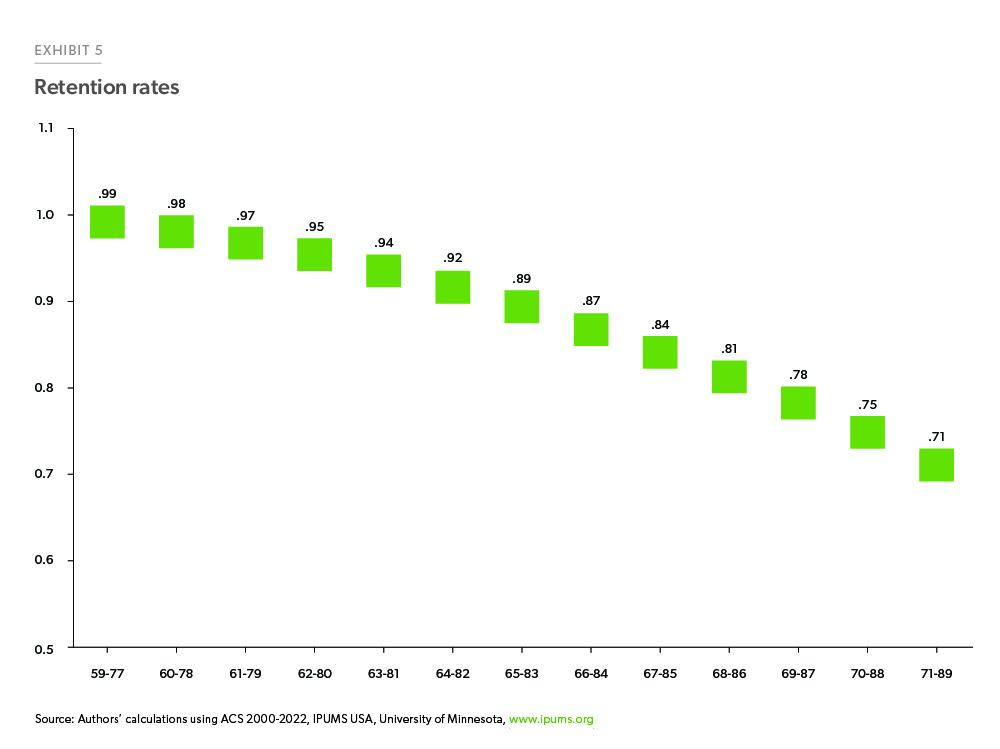
The store fronts could be collecting dust because the engagement factors are simply too expensive.

Starting Points

It is difficut to jump right into a conversation around real estate topics. Have you ever noticed when opinion makers writeup their latest takes on what should happen with rent control or land taxes or zoning how incredibly broad a field they lay out before their readers? This is as helpful as coming up with a policy for diabetes on a worldwide scale. Someone who must cope with this disease has wide ranging opportunities for care, access to drugs and simply inside knowledge of norms and practives depending on where they live. One insight canโ€™t possibly have a global impact.

In order to talk real estate one must select a starting point. For years, following the great recession, the analysis focused on why homeowners lost their homes. Other people are obsessed with real estate developers in the same way Swifties demure on whether she will make it to the next Kansas City Chiefs game. Still others love to banter about city councils and figure out how many votes it will take to tweak zoning from single family to multi-family. And what is to be done about parking?

This is TMI. Way too much.

I find the most fruitful place to start is at the time of transaction. When I was a loan officer decades ago we called it ‘the deal.’ Our manager, a plump Napoleon-type who loved to give you a hard time late on a Friday afternoon so you would think about him throughout the weekend, said the term was off the table. Too tacky (unlike him). From then on, as we sat behind oversized wooden desks that would make Matlock proud, we were to call every loan we closed a transaction.

So at home-economic we will always come back to the deal that was made when two people shook hands and exchanged a good or service for something of value.

Say you wanted to set up an analysis of tenant/landlord relationships. The starting point would be the lease. The written agreement that is signed between the parties prior to occupancy outlines the terms of the agreement including the monthly obligation and the landlord’s responsibilities. Simple right? Nada- there is much more nuance. And the configurance of renters and landlords (because there are many varieties of these actors) can cause all sorts of imblances that are not fully flushed out in the contract. But the parties to the deal and the agreement they reach is where to start.

More noodling on models to come.

Oh Happy Days- the 50’s

Mid-century modern homes have a decisive following. This home threw off the compartimental feel of the 40’s one-and-a-half story bungalow. Which meant more open and flowing plans. Large open windows brought nature in through the glass. Endless wood panels made the indoors feel like the woods. Beams crossed the vaulted ceilings. Roman brick created an elongated modern look at the focal point of the living spaces. The more geometric angles and the cleaner the lines, the better.

This is a great example of a home that needed little updating as the original plan was preserved all these years.

For all the joy the physical features of the fifties rambler can bring, there are compromises. The floor plans will reflect the acceptable arrangement of its time, including the lack of a master bath. In today’s busy world, some people may not care for all the lawn care necessary for the oversized lots that often surround these structures. And the municipal infrastructure, now seventy years old, may require some attnetion.

Houses are like that . One thinks only of what is between the walls and under the roof. But intrinsic to the property is a bunch of informal and formal superstructures.

John R Commons makes it about transactions

Taken from Institutional Economics, 1931, American Economic Review, Vol 21

But the smallest unit of the institutional economists is a unit of activity–a transaction, with its participant.

Every choice, on analysis, turns out to be a three dimensional act, which, as may be derived from the issues arising in disputes, is at one and the same time, a performance, an avoidance, and a forbearance. Performance is the exercise of power over nature or others; avoidance is its exercise in one direction rather than the next available direction; while forbearance is the exercise, not of the total power except at a crisis, but the exercise of a limited degree of one’s possible moral, physical or economic power. Thus forbearance is the limit placed on per-formance; performance is the actual performance; and avoidance is the alternative performance rejected or avoided all at one and the same point of time.

And lastly, this finally.

Consequently the final social philosophy, or “ism”- which is usually a belief regarding human nature and its goal towards which institutional economics trends is not something foreordained by divine or natural “right,” or materialistic equilibrium, or “laws of nature” it may be communism, fascism, capitalism. If managerial and rationing transactions are the starting point of the philosophy, then the end is the command and obedience of communism or fascism. If bargaining transactions are the units of investigation then the trend is towards the equality of opportunity, the fair competition, the equality of bargaining power, and the due process of law of the philosophy of liberalism and regulated capitalism. But there may be all degrees of combination, for the three kinds of transactions are interdependent and variable in a world of collective action and perpetual change, which is the uncertain future world of institutional economies.

Go Badgers!

Quest for the best

It’s important ot note early on in the quest-for-the-best house (an on-going project in 2024 at Home Economic) a few types of homes will be quickly eliminated. To qualify to be the best home to take to market, it must be an attractive home to a bunch of people. Like hundreds of thousands of people.

The inclination to become nostalgic and nominate the turn-of-the-century home of relatives several generations back, simple won’t do. The market for sentimentality exists only between a tight group of people.

Other factors attract only a slim pool of buyers. I once took the Empire Builder from Minneapolis to West Glacier in Montana. After leaving Minnesota the tracks run through North Dakota and Montana skirting the Canadian border by forty miles. Trains are wonderfully spacious which allows people to circulate. A woman from Devil’s Lake or Lakota or Epping explained that Amtrack was her best bet for travel. Bismark was hours away and air travel wouldn’t take her to her relatives, a day’s journey down the tracks by rail.

Property in remote areas may offer privacy. The views from a log cabin at the foot of the Grand Tetons are unique and spectacular. A two hunderd acre ranch in the Bitteroot Valley maybe a haven for horse lovers. Whereas movie stars a celebrities might relish the distance this keeps between them and their fans, most buyers would struggle to make a life in extremely rural conditions.

Historic homes, iconic homes, or those with sentimental ties are not qualifiers for the best-of-the-best. Nor are propeties in remote locales. Simply too few can make those work.

A vote for San Antonio

Talking about the best of the best when it comes to houses, here’s a vote for Alamo Heights in San Antonio, TX from X.

Let’s consider his priorities.

Lot size is cited at a third of an acre. For comparison, a typical city lot from the 40’s on tree lined, sidewalk fringed street is about a fifth of an acre. So a third of an acre is more generous, yet by no means expansive.

Next Girdley mentions easy access to the beach. Parks, trails, and outdoor recreation areas are popular amenities for many homeowners. Several overlapping groups take advantage of the outdoors for excercise, sports, and leisure.

Ease of circulation is important to most everyone. If you are not commuting to a job, you still need to get out and shop, or get your family here and there, or drive to medical appointments, and so on. Note here that transport by car is assumed. If the writer meant public transit, it would be mentioned.

Schools- this public amenity affects a lot of households. Although there are generalized winners and loosers, the rating systems for districts stem from subjective opinions. He likes the schools in Alamo Heights.

Lastly he mentions access to another form of transit, air travel. This note may be a nod to an airport nearby, or to the geographic distance to California. It’s hard to know if it is an infrastructure issue or a natural circumstance.

To summarize, Gridley votes Alamo Heights as an optimal bundle of building site, access to nature, road infrastructure, public schools and air travel.

Are there other factors that people use to judge their optimal real estate package? That’s what we will be exploring. Stay tuned.

Appraising and the market

In many cases, mortgage companies require an appraisal on a property before lending money against it. This involves a professional appraiser touring the property, taking many measurements, and then compiling a report which is often a dozen pages in length.

Although there are three methods listed as options to determine value, the most prevalent one by far is the use of comparables. The income approach, which, as the name implies, relies on backing a value out of the stream of income from rents. But a single family residential is purchase for owner occupants rather than investors, so that method doesn’t make as much sense. Nor does the cost approach. If one were to estimate the cost to build a 70’s split or a 1920’s craftsman, the differentiators quickly make the analysis impractical.

Thus the method du jour is to find three near-by properties of similar size and imporvements which have sold within the last six months. A tabular comparison is done as seen in the photo to make adjustment for variances. A deck was worth a $10K swing. Footage, bedrooms, baths, condition and so are tweaked up and down the columns. Once the number are in place, a tally at the bottom gives a range which justifies the buyer’s purchase price and allows the lender to happily lend against the home.

As long as the property is in a fairly large area of similar homes, this approach works well. But when there are none close-by which resemble the one in question, things get stickier for the appraiser. The one significant factor taken for granted in the comparison method is that the area is the same. Change areas, and foundational assumptions are out the window.

Relearning self-governance

Minnesota winters are chilly. We also get a lot of snow. The white stuff is pretty and all when it gently drifts down from a starry sky. But at some point, someone has to clear the roads and sidewalks so people can safely walk and drive to their destinations.โ€‚Last season, winter played us a tough round.

Depending on how far back you go in the data, it was either the wettest or second-wettest meteorological (December-January-February) winter for the Twin Cities. Records back to 1893 are considered the most reliable, and in that case this winter was No. 1. (The winter of 1880-1881 measured a whopping 9.58 inches of precipitation.)

For the Twin Cities, our seasonal snowfall total, which includes the fall, is up to 71 inches. Thatโ€™s 80 percent more than normal. In Duluth the total is up to 93.3 inches, 41 percent more than normal.

MPR

To keep the proper perspective, 71 inches is just under six feet of snow. Had it fallen all in one go, the banks would be taller than most of the population. However, it doesn’t snow all at once. But when it snows more than a couple of inches, someone needs to get out with a shovel or a snowblower to work away at the sidewalks whole the city and state trucks clear and salt the thoroughfares.

Lots of people had a hard time keeping up. In the denser cities centers, the need for clearing is even more acute as people need to cross sidewalks to get to bus stops or depend on their neighbors to tackle the alley so they can drive into their garages. There’s a lot more shared space. The issue of snow removal reached a feverous pitch as snow removal undone causes coatings of ice. People proposed that the city should clear the sidewalks as well as the roads. That is, until the estimates were tallied up by the budget departments.

Others offered their solutions of self-reliance from sections of concrete alleyways hither and yone. A guy with a snowplow would do it, some would say. My dad used to organize the snow plow schedule, piped up another. Fast forward six months, with the winter weather easing in around windows frames and under the door sweeps, and there’s a call put out on twitter to ask about that thing called “organizing.”

Barack Obama was the first legit person I heard use the term neighborhood organizer as a job description. It’s actually quite apt for spontaneous social labor. A job needs to get done across some jointly held property or responsibility, and someone’s got to do it. The push and pull of participation and gratitude are part of the dynamic, and then there are the leaders that keep track, and, like Bill Lindeke, there are the advertizers or communicators keeping the clan informed on how to keep the tradition going, in case a break in the chain has defrayed the tacit knowledge.

Shopping and Giving

With Christmas around the corner, it’s time to start pulling together some gifts for the family. Both sites I purchased from today gave me the opportunity to donate to a cause before checkout. This isn’t a new idea. McDonalds has had their change bin outside the drive-through window for ever. Grocery stores allow the local schools to bag purchases in exchange for a donation. But today it was two for two. And this shop gave me four options for giving.

Years ago a friend said it’s easier to extract money from people when money is on the move. Too true, too true.

Okun and passing lanes

When the new rent control policies were being stirred up under the name of rent stabilization, I thought the policy types were trying out some new branding. But Arthur Okun’s essay The Agenda for Stabilization show the term well in use before 1970. The idea that government would influence pricing in the name of a stable economy isn’t a new idea.

At least Okun, who was the Chairman of the Council of Economic Advisers, proposes that private industry take heed of guidance to voluntarily adjust their pricing expectations.

Second, the appeal for restraint must be based on some set of ground rules that spell out what private decision makers are being asked to do. “Drive carefully” is not an effective substitute for a posted speed limit. Speed limits on wages and prices will inevitably share some of the imperfections of those on the highways. They will contain an element of arbitrariness, just as a fifty-mile speed limit is arbitrary in the sense that it is not demonstrably superior to forty-nine or fifty-one. Just as a passing lane is needed on the highways, so a “passing lane” must be provided for wages and prices, allowing relative shifts over time in response to the signals of the market. Just as some speeders will escape the eyes of the traffic patrol, so some violators of the price and wage standards will not be identified.

Despite their imperfections, speed limits on the highways serve the nation well and so can those on prices and wages.

More from Marx on Value

All that these things now tell us is, that human labour-power has been expended in their production, that human labour is embodied in them. When looked at as crystals of this social substance, common to them all, they areโ€” Values.

We have seen that when commodities are exchanged, their exchange-value manifests itself as something totally independent of their use-value. But if we abstract from their use-value, there remains their Value as defined above. Therefore, the common substance that manifests itself in the exchange-value of commodities, whenever they are exchanged, is their value.

Capital Vol 1, Karl Marx

Marx clearly had an agenda. He tried to peel back the onion on the theory of capitalism in order to prove his class struggle theory. He was looking for answers to the frictions of his time. Still- it feels like he missed a more wholistic conception by pegging his ephemeral sense of Value, which permiates and settles throughout the sytem, to the average hour of socially necessary labor time.

There’s something to dedicating one’s time to one’s passions. It’s an expression of interest to give to a cause through one’s labor. Yet- Values can be supported by other resources as well. They can also be neglected leading to negative Values.

What Marx does best here is throw some talcum dust on unseeable efforts so as to fingerprint what Values people are working towards when they make exchanges out in the market. Surging and ebbing through the system of market prices, groups of people express what they care about and what they neglect. Here’s to searching out Value, even if it is not tied to the Labor Theory of Value.

How many people does it take to do a sewer scope?

It’s a gritty looking thing, isn’t it? Nestled into the concrete floor of a basement shoulder to shoulder to the hot water heater. But that teal cap, covered in years of grime, needs to be twisted off the main stack in order to have a look-see into the drain and out to the street.

This home was built in 1960, and who knows if the the lid has ever been lifted. The sewer scope guy wouldn’t touch it. Said it looked like it would splinter if a guy threw some weight behind a wrench to twist it off. And you can’t exactly leave a house with the main drain wide open. He’d be stuck.

A sewer scope inspection is a relatively new add on to the inspection process in the sale of a home. Homeowners are responsible for the line which transport all the waste products from the pipes from the home to where it connects to the city infrastructure. So if tree roots have dug into it and it weeps waste product into the soil, then the owner is required to do the repair. This can entail digging up the front yard and replacing the pipe or running a liner pipe through the damaged area. It’s on the more expensive side of a home repair.

Some cities of predominantly 40-60’s built homes require the line be scoped prior to sale. This envolves accessing the drain and sending a camera at the end of a line down through the pipes. The guy today said that typically it takes 80 feet to hit the connection. The city then determines whether the property needs work.

The one in the photo isn’t located in a city with a point-of-sale ordinance concerning waste lines. The sewer scope guy was there on behalf of a buyer. The seller suggested he run the camera through the laundry drain pipe instead, yet alas, that pipe’s diameter is too small. So a sewer repair guy was supposed to come out to the house, but he couldn’t on short notice. Instead, a few days later, a contractor who was familiar with the house went over and installed a new cap.

Today the inspector guy was successful. His footage showed the buyer that all was well until the 60ft mark at which point a bundle of debris was causing a blockage. No real concerns, he said. Just need a Rotter Rooter type out to clear the path.

All this is to point out one small part in the massive collection of parts that comprise a home. When it wasn’t in working order a scurry of others had to swirl around to but it back right. No issues, no problem. An issue, possible delays. Sometimes none of the parts are of concern. But when there are issues, a person with comprehensive experience is going to keep the transaction on track. They’ll know who to call when. And that’s why people hire a professional. Because they add value through their knowledge.

A mile of country road

It’s unclear to me why some stories from one’s youth stay with you and some don’t. I must have keyed into my grandmother feeling self-concious about a financial sparsing of the cost to pave over the county road which serviced their home. Whenever there are costs and people and public goods, there is bound to be a bunch of judging on who is doing what and whether it is enough.

My grandparents lived on a gravel road on the outskirts of a small town. They also owned the farmland along their side of the road. Across the thoroughfare the land had been parceled into perhaps twenty homesites. For many years a gravel surface was considered adequate, despite the layer of dust left on a car going to and from and despite the washboard effect that eventually appeared and made the vehicles tremor as the wheels caught the dirt ridges.

At some point, enough neighbors got together and decided it was time to make a request to the township to pave the road with asphalt. This takes a bit of work. There’s a process. Enough of the residents need to be interested to start a government agency’s wheels in motion. The cost of the improvement shows up as an assessment where, in many cases, the cost to the homeowner is based on the number of feet of frontage to the road.

At least that’s the standard setup.

But in this case my grandmother objected. Her theory was if they all got the same use out of the road, then that is what should determine how the expense should be covered. Afterall, they don’t expect people from Bemidji to pay, even though in theory anyone from Bemidji can use the road. The residents on the road each come and go with a similar frequency, and fair would be to say those who use it split it equally.

My grandmother was savvy enough to know that property ownership would play into her final bill for this public amelioration. But she didn’t think she should have to pay 20 times more than the folks across the road simply because her farmland abutted the pavement. Furthemore, she realized that her lack of support for the project could endanger it from going forward.

I’m not sure where the numbers settled exactly. The road has been paved ever since. What is interesting is that this story is an example of a bartering in order to come to a cooperative solution to community improvement. All these neighbors were of similar standing. It would be difficult for any of the others to call out two educators as evil landowners. It was just a group of neighbors, in a small town arriving at a balance between use-value, property ownership and resources.

Alienation

I read somewhere this past week that ‘everyone would want to live in a mansion in the Hamptons.’ But I’m not buying it. I sit and wonder how many more years I have to hang onto my kidsโ€™ childhood home to keep them happy. Because I personally would prefer to downsize and have less to care for. A mansion? Can you imagine not only the maintenance expense but the time-burn everyday of caring for a beast of a building with a showcase yard? No- not everyone wants to live in a mega-home.

It kind of reminds me of the thought that workers want a meaningful connection to their work. I don’t see that. I think most workers are very content to get their piece of the work done (in a competitent and self-satisfying way no-doubt) but once it receives the stamp of approval, the commondity needs to mosey itself onto the next person. The deal was to receive a rate of pay completeing one section of a process.

Can you imagine if every transaction you participated in could be in some way tied back to you; that there was never closure, forever the potential of reworking what was meant, what the deal included, whether there sufficient oversight and care. I can’t. And I don’t think anyone wants these lingering warranties.

I’m not exactly sure what Marx meant about inalienable. But it certainly seems to work best if everyone investigates the commodities in question, but once traded, workers indeed alienate from their products.

Gala events and use values

Fall is a popular time of year for Galas. People get dressed up in fancy clothes and meet at ballrooms venues to be served fancy food and asked to bid on an assortment of items. There are weekend getaway trips or theme baskets full of goodies, there are NBA basketball tickets or a signed jersey from a baseball star.

The bidding gets started before the presenters give the audience an update on the progress for the cause at hand. Participants watch their phones for updates on which items they are getting bumped off by a higher bid. But it is only the final minutes of the bidding that matter. That’s when you want to be the one to bump with a higher bid, right before the auction stops.

So you end up paying $20, $30, or $50 over face value for those Timberwolves tickets. What is the premium called? The face value of the tickets seems to be its use value- or what anyone would pay for the use of the ticket. But the surcharge, acheived in the ambiance of the evening could simply be a value, a social value for the cause at hand.

In this way it is easy to see the breakdown of exchange value, use value and value.

Motivated by Timing

Everyone’s heard it- capitalism is bad because it caters to people who are greedy. It’s all about money, greenbacks, bills. And in this way converts every human activity into a monetary accounting.

But that’s often not the case. The timing of an event or an aquisition often has a large impact on the desire to trade. Take travel. Families with kids want to catch a plane to grandma’s house when the kids are off school. If they were greedy, than they would save the dollars and pull the kids from class. The airlines respond to the demand at the holidays by increasing fares. So they must be greedy. Whereas, the price increase just encourages those who are not beholden to a school schedule to pick a different day; the price system encourage them to free up their seat so a kid can head to Grandma’s for Thanksgiving.

Timing has been a key feature in the Amazon Prime business. It’s not just that you can find what you want on line at a price you feel is acceptable, but you can get it tomorrow. The item is nore valuable to you since you can use it quicker.

Timing also plays into what typ a store you shop at. Pay a little more and shop at the smal exclusive grocery instead of the large box store with better prices. I know economists call this opportunity cost, but for some it’s different than substituing your labor time. It’s a luxury to walk in and walk out with the item you want. It makes you feel special.

Timing is a key motivator in personal transactions. I bet it features up there second only to price.

NAR looses lawsuit

Oct 31 (Reuters) – A U.S. jury on Tuesday found the National Association of Realtors and some residential brokerages, including units of Warren Buffett’s Berkshire Hathawayย (BRKa.N), liable to pay $1.78 billion in damages for conspiring to artificially inflate commissions for home sales.

Reuters

For more than fifteen years, Silicoln Valley has tried to lure customers away from Realtors and have them buy direct. VC has the money, they have the technology, they have the consumer’s attention. Yet when it comes to the transaction the customers keep realtors on their team.

Why can’t market oriented people accept what the open market is saying?

Use value and leisure time

Marx has a lot of interesting things to say in Capital which have nothing to do with revolutions and red flags. In the first three chapters of Vol 1 he sets out a structure for commercial intereaction before, during and after a transaction. He is particulary interested in the concept of value- who creates it, how it moves through the system and thus who should reap rewards from it.

Marx ran aground focusing on labor value as the defining characteristic of economic production. All else should fall under the measure of a man’s labor turned out not to be. But in his efforts to justify this theory he sketched out a structure which is interesting and useful. Value is an internal component to a product. Price represents some reflection of the value it contains. If a commodity has no use in the parketplace than it has no value.

Spending labor time on something that is not useful, then bcan be described as simply engaging in a hobby. It’s a leisure time activity. If you dig out in the yard and grew somebeautiful dahlias, but not to sell, than you are engaging in a avocation. It’s important to have a way of distinguishing between unpaid work activities. Caring for a child is useful and hence has value. In this way Marx lays the groundwork for a scientific approach to appreciating those activities not represented by prices.

Regret

Regret emerges from a sense of loss. It’s an emotion that some think of as melancholic, sad, dismal. Yet in truth it is an emotion which helps to keep our choices in check.

One may be regretful because they failed to act.

One may be regretful because they failed to appreciate what was offered to them.

One may be regretful because the market changed while they were focused on other things

One may be regretful because they misjudged their circumstance.

If one experienced a sense of loss because they waited on the sidelines while the market took off, then they will be a more serious player the next time around. If one experienced a loss after they turned down an offer to engage in the market, then they will take the next offer more seriously. If one experiences a loss because the market changed when they were not paying attention, then they become better at watching their surroundings. If one experiences a loss because they were over confident (or under confident) about their personal circumstances thus leading to a mismatch, then they maybe more realistic the next time around.

Having regrets is a means of becoming.

Motivated by weather

As the beautiful fall days come to a close and the forecasts include temps in the 30’s, consumers are wrestled from their automated routines and think, “I must get xyz done before the snow flies!”

Changes in temps are a definite factor in the real estate business. I suppose it is self-interest, in a way. A seller is better off to take the time to finally put an extra coat of paint on their front door, and tuck the garden hoses in the garage, and clear the gutters of all those golden leaves. A seller will be looking after themselves when they go to put their home on the market in March as the door will be a cheery greeting to a prospective buyer, and the hozes won’t look odd all covered in snow, and there won’t be an ice dam where the leaf debris would have clogged the gutters.

Buyers are also nudged along by the changing seasons. The cool crisp air reminds them that they thought they’d be in their new place before the end of the year. The passing of time draws their thoughts back over what they’ve seen so far in the market. Perhaps they regret passing on a purchase. Perhaps they realize that their demands are quite steep. Perhaps a little reflection reveals just what it is that has been holding them back.

Changing season can be the motivator to put in a little extra effort to prep a home prior to the arrival of winter winds. Or talk of Halloween candy and Thanksgiving dinner can encourage a buyer to revisit what he has learned so far about the market. In either instance, a driving rain from the north not only strips the autumn color from the trees but also plays a part in the home buying process.

Claims about Govt Giveaways

When government imposed restrictions are lifted on a property, does it automatically result in the property owner being better off? If a developer can has more leeway for a new project there is a sense that would create a positive income.

Say the new rules allowed for things like tightly stacked mobile homes and low-slung light industrial; neighbors that not everyone welcomes. Even without a formal acedemic review, it is possible to imagine that the neighborhood as a whole would drop a bit in value. It is even more believable should the nearby suburbs still exclude this type of land use in their geographic purview. Buyers choose the area that protects their lifestyle over the one that doesn’t and thus reducing price in the undesireable and increasing price across the city border.

And even if local government loosened some restrictions on development there is still the possibilty that the neighbors will fight a new project. In fact, it could be argued that changing the status quo is likely to drive up the prep and presentation costs for a developer. The more uncertainty, the more likely it will take longer to get through the approval process. No one likes not knowing.

What is relevent about the above tweet is that zoning rules, parking restrictions, turn around time for approvals all affect the cost of doing business and thus the value of the property in question. The rights of the those representing the public share a portion of the underlying value of real property which is then represented in money-form in the final sales price of the parcel.

Pairing payment with interests

As in many professions, there is a continuing education requirement to maintain a real estate license in Minnesota. Today I learned a little more about sewer line scopes (fancy tech) and blockage (not nice). It was an informative hour hosted by an inspector who knows a lot about the physical aspects of homes.

Over the years various piping products have been used for sewer lines. Old is replaced by new usually for higher durability at lower cost. But what triggers the upgrade?

Older cities struggle with this question as no one wants to leakage to seep out of cracking pipes and into the ground a half of a dozen feet below the grassy lawns. Some cities have tried to encourage voluntary assessment and replacement through public messaging. I’m told this isnโ€™t effective. The excavation expense of replacement is quite costly, ranging at a similar price point of a new roof. (And by that comparison itโ€™s a bargain as the waste line, which runs from the exit point of the home to the street main drain connection, typically has a lifespan of 70-90 years. A roof, maybe 25.)

But as is often the case with shared property, everyone wants to be on the receiving end of the transaction and not the paying end. Residents, especially those who do not intend a long ownership period, feel like they are getting stuck with a cost that benefits many different parties over the infrastructure’s lifetime. To them, it makes more sense for a city to tackle the project section by section in the city, collect revenue, and perform the work for replacement.

The counterargument to that process is that sections of functional pipe will be replaced which is wasteful (no pun intended). Those who feel that a public bureaucracy is unable in its structure to obtain the best pricing see an inefficiency in performance here as well. Most of all, an across-the-board tax increase is always politically unpopular. The public pushes back. The project is kicked down the road. And aging pipes get wrecked by tree roots seeking out water and nutrients.

And this is why the point-of-sale solution is put into play. The party with the most to gain from a brand new piece of city infrastructure is a new buyer. A seller is required to comply in order to move forward with their plans. If they are unhappy with city council, oh well! They are out the door. This puts two parties to the transaction in favor of sewer scope inspections upon the sale of a property and one against. This is a positive momentum to get needed upgrades completed.

The downside is that there’s still considerable uncertainty to the extent of failing piping amongst the homes that do not go to market. Instead of a method which tackles the oldest first, the selected repairs are directed at those properties which happen to sell. And that’s not a very big number, maybe 4% of a city’s dwellings. It is also concerning that that it may be enough of an impediment to stop a seller from proceeding, which has negative effects in a market.

Still- it is interesting to note that by combining payment with interests, the likelyhood of infrasturcture repair increases.

Marx is undersold

These quantities (of commodities) vary continually, independently of the will, foresight and action of the producers. To them, their own social action takes the form of the action of objects, which rule the producers instead of being ruled by them. It requires a fully developed production of commodities before, from accumulated experience alone, the scientific conviction springs up, that all the different kinds of private labour, which are carried on independently of each other, and yet as spontaneously developed branches of the social division of labour, are continually being reduced to the quantitative proportions in which society requires them. And why? Because, in the midst of all the accidental and ever fluctuating exchange-relations between the products, the labour-time socially necessary for their production forcibly asserts itself like an over-riding law of Nature. The law of gravity thus asserts itself when a house falls about our ears. The determination of the magnitude of value by labour-time is therefore a secret, hidden under the apparent fluctuations in the relative values of commodities. Its discovery, while removing all appearance of mere accidentality from the determination of the magnitude of the values of products, yet in no way alters the mode in which that determination takes place.

Capital- Vol 1, Chapter 1 Commodities

How much work do group members have to put in to maintain the social structures that enable private exchanges? Seems like an interesting question.

Happy to know Don Lavoie

We are pouring over Lavoie’s book Rivalry and Central Planning this month and it is a pleasant surprise that the text is gentle on the eyes. No squinting. No twisted eyebrows. He writes in a pleasant and forthright manner.

This page is worth reproducing as it overrides so much of what is taught in standard economics classes, the ones with the supply and demand curves settling sweetly on a set price. There is one price! And the consumer wants to know what it is. Yet…how do you tell them then that, it depends. On what? Well- one what is in the air at the moment of the transaction.

Markets exist in a fluid and dynamic system. Prices are representative of what has happened in the past. Thus they provide a guide to the future. But it is the participants of the moment who then again come to settle the new prices. And on it goes.

Local Market Update

September has been showdown month between buyers and sellers. Not much is going under contract. I think most people expected mortgage interest rates to edge down due to the improving news on inflation. Then mid-month the Fed doubled down and rate went the other direction. They hit a 22 year high.

People are looking over their sholders trying to figure out where the recession is in this economy. People have jobs. Unemployment is low. Present home owners for the most part have equity which gives them flexibility to make decisions. The increases in food prices have taken a chunk out of people’s monthly budgets but that is easing off not escalating.

Higher rates do price some folks out of a purchase. But for the rest of the buyers out there, I anticipate they’ll get used to the new normal. At some point, the reason for wanting a different home will lure them into a decision. Hopefully, they will also appreciate that the bargaining power of having the upper hand. Because as soon as rates turn, there will be a new influx of competition for homes taking us back to the days of multiple offers.

Econ in Fiction- Raymond Chandler Edition

I happened to be at the Minnetonka Government building getting my tabs renewed when I couldnโ€™t help but swing into the library for a new read. I was looking for something easy and entertaining. Raymond Chandler came to mind and The High Window was sitting there nicely on the five-high shelving.

Iโ€™ve been a fan of Chandler since my twenties but am just getting around to figuring out why. First- he is a master at geographic descriptions. Not only in painting out the physical details but layering in thick colors to depict the social situation of the residents. Thereโ€™s quite a long passage that I thought would be a bit much to reproduce here. So instead, here is how the author takes you to Idle Valley in just a few opening lines of chapter seventeen.

About twenty miles north of the pass a wide boulevard with flowering moss in the parkways turned towards the foothills. It ran for five blocks and died without a house in its entire length. From its end a curving asphalt road dove into the hills. This was Idle Valley.

The High Window by Raymond Chandler

The author’s real savoir-faire, however, is sliding in difficult valuations of social activity at just the right moment. Take his explanation to his haughty client, Mrs. Murdock, of the expense he would bear through mediating institutions should he keep her story to himself instead of coming clean to the police.

I got up and walked around my chair and sat down again. I leaned forward and took hold of my kneecaps and squeezed them until my knuckles glistened.

“The law, whatever it is, is a matter of give and take, Mrs. Murdock. Like most other things. Even if I had the legal right to stay clammed up- refuse to talk and got away with it once, that would be the end of my business. I’d be a guy marked for trouble. One way or another they would get me. I value your business, Mrs. Murdock, but not enough to cut my throat for you and bleed in your lap.”

She reached for her glass and emptied it.

It makes you wonder, as a reader, what came first for Raymond Chandler. Did he write the detective novels for the pleasure of his audience? Or did he write to lay out a landscape where he could fold in the types of ideas that stay with you and play in your head?

When a city promises shelter

New York City is obliged to provide shelter to those in need due to the Callahan v. Carey consent decree created 42 years ago. Originally thought to act as a safety net catching a few transient men, it has ballooned into an enormous expense.

It eventually grew to a $2-billion-a-year industry housing all comers โ€” and is likely to cost the city $4 billion this year and ahead, as long as influx of illegal immigrants doubles the shelter population.

New York Post

If all large cities floated the same offering, perhaps NYC wouldn’t feel the burden of this right to shelter. As it stands it, the city is particularly attractive to migrants.

Without question, the โ€œrightโ€ is the central reason New York is spending far more per migrant than any other large city โ€” nearly $40,000 a head here, vs. under $3,000 in Los Angeles and less than $7,000 in Chicago.

The mayor of the Big Apple is rightly going to adjust the benefits flowing out of the city coffers. As situations change, as population groups change, as the intentions for the support changes, government has an obligation to reassess the overall distribution of funds versus obligations.

The scenario is also a reminder that public funds, through programs, create a market. If one city creates laws to favor certain population groups, these groups will show up. In creating a new law, the intent might only be to help the few in town who clearly have a need. But once it is established as a formal offering, others are bound to migrate, incentivized by the above market public program.