When should a community gather up its resources and provide a service to all members? And when should individuals be turned out into the world to navigate on their own dime? These debates cross all levels of government.
Some provisions are accepted as a government thing, like piped water or sewer. Even basic universals like education attract conversation about private options. Roads are sometimes (although truly not very often) toll roads. Bridges are mostly a public venture, as are parks. What takes a good out of private production and places it in the receivership of a bureaucracy?
Fear usually. Police and firefighters are in place to ensure personal safety. The New Deal was to alleviate fears against a repeat of depression era outcomes. When society risks a loss that compels a human response, society steps forward with a safety net.
Mamdani, New York Cities new mayor, sold the people on a fear of escalating grocery prices and thus the need for a government run store. This seems different than when a small community rounds up a helicopter rescue for a mountain climber who ventured up a nearby peak alone and unprepared.
So who gets to pick what there is to fear? Not everyone does this well. Hereโs Mises (from Theory and History)
They recommend some policies, reject others, and do not bother about the effects that must result from the adoption of their suggestions.
This neglect of the effects of policies, whether rejected or recommended, is absurd. For the moralists and the Christian proponents of anticapitalism do not concern themselves with the economic organization of society from sheer caprice. They seek reform of existing conditions because they want to bring about definite effects. What they call the injustice of capitalism is the alleged fact that it causes widespread poverty and destitution. They advocate reforms which, as they expect, will wipe out poverty and destitution. They are therefore, from the point of view of their own valuations and the ends they themselves are eager to attain, inconsistent in referring merely to something which they call the higher standard of justice and morality and ignoring the economic analysis of both capitalism and the anticapitalistic policies. Their terming capitalism unjust and anticapitalistic measures just is quite arbitrary since it has no relation to the effect of each of these sets of economic policies.
Taking over a grocery is sure to fail financially without ensuring any additional food security for those who need it. Itโs a vanity project. Wouldnโt it be like telling the mountaineer that a government representative would need to participate in the planning and execution of his climb? Yet here, the little community bears a disproportionate cost for the climbers’ foolishness.
It seems that the risk to persons and the community happens to various degrees. Whether the risk triggers community involvement has to do with its extreme and the distance between the risky step and all the other steps in between.
Capital theory is the branch of economics that studies the nature, role, measurement, and productivity of capital โ the produced means of production (machines, factories, tools, infrastructure, software, etc.) that are used to produce goods and services.
It tries to answer fundamental questions like:
What exactly is โcapitalโ?
How should it be measured?
How does capital contribute to economic growth and income distribution (wages vs. profit/interest)?
Why does the return on capital (interest rate or profit rate) behave the way it does?
Capital theory has been one of the most controversial and technically difficult areas in economics, especially in the 20th century.
Key Concepts and Debates
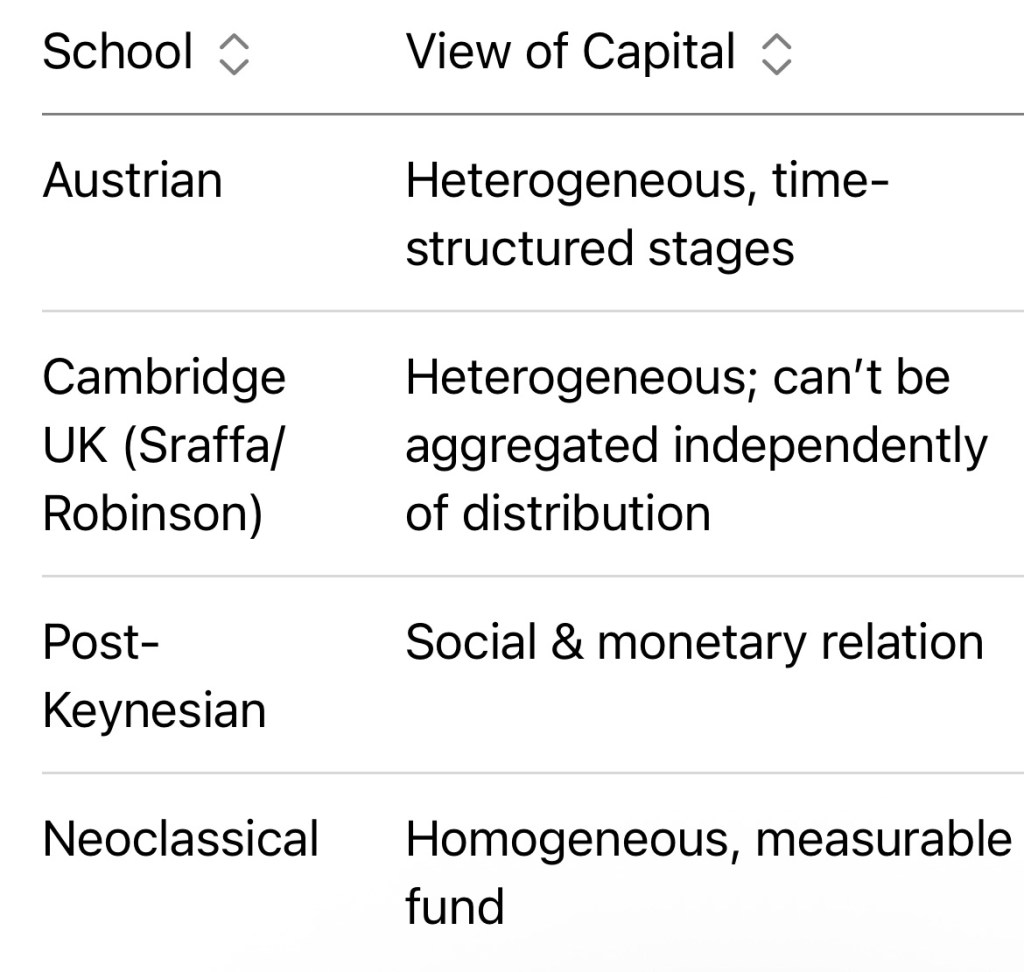
Capital as a homogeneous โfundโ (neoclassical view)
Mainstream neoclassical economics (since the late 19th century) treats capital as a single, measurable quantity (like โdollars of capitalโ or a โstock of valueโ).
In simple production functions (e.g., Y = F(K, L)), K (capital) is treated like labor L โ you can smoothly substitute one for the other.
The interest rate is the price that equilibrates saving and investment.
The Cambridge Capital Controversy (1950sโ1970s) โ the big critique
Economists from Cambridge, UK (Joan Robinson, Piero Sraffa, Luigi Pasinetti) challenged the neoclassical view.
Major problems they exposed:
Reswitching: The same technique of production can become profitable again at lower (or higher) interest rates, destroying the simple idea that lower interest rates always lead to more โcapital-intensiveโ techniques.
Capital reversing: Higher interest rates can sometimes lead to using more capital-intensive methods โ the opposite of what neoclassical theory predicts.
Measurement problem: You cannot measure the โquantity of capitalโ independently of the interest rate or profit rate, because capital goods are heterogeneous (a robot โ a shovel). Their value depends on future profits, which depend on the interest rate โ a circularity.
Conclusion of the critics: The aggregate production function and the idea of a downward-sloping demand curve for capital are logically flawed.
Austrian view (Bรถhm-Bawerk, Hayek, Lachmann)
Capital is highly heterogeneous and time-structured.
Production takes time; capital goods are โintermediate goodsโ at different stages of completion.
Emphasizes the โperiod of productionโ or โroundaboutnessโ: more productive methods are more time-consuming.
Interest originates from time preference (people value present goods over future goods).
Post-Keynesian / Sraffian view
Rejects marginal productivity theory of distribution.
The rate of profit is determined by monetary factors, class struggle, or growth requirements, not by the โmarginal product of capital.โ
Capital is valued in terms of its own reproduction cost (Sraffaโs โprice of productionโ).
Modern mainstream response
After the Cambridge controversy, most neoclassical economists largely ignored the deep logical problems and continued using aggregate production functions for practical reasons (they work reasonably well empirically in many contexts).
Some (e.g., โnew growth theoryโ) shifted focus to knowledge, human capital, and ideas rather than physical capital.
Summary Table of Major Schools
Bottom Line
Capital theory is the attempt to understand one of the most important concepts in economics โ capital โ and it remains unresolved. The mainstream treats capital as a simple scalar quantity for modeling convenience, but the Cambridge controversies showed that this simplification has serious logical flaws once you dig into the details. The debate is largely dormant in mainstream teaching but still very much alive among economic methodologists and heterodox economists.
The phrase โthe mainspring of the storyโ is a metaphorical expression that refers to the central driving force or primary motivation that propels the narrative forward. Just as a mainspring in a mechanical watch provides the energy to keep it running, the mainspring of a story is the core element that gives it momentum, purpose, and cohesion.
In life, there are often several intermingled motivations pulsing through the engine for action. But usually there is a mainspring– one impulse pulling in the lead. You would skip going to the grocery except for the turkey for Thanksgiving. And since you are there, another couple of dozen food items also end up on the metal grid at the bottom of the cart. The supermarkets have gotten wise to such things and tempt shoppers into their aisles by advertising the big bird at 77 cents a pound.
Sometimes the mainspring is a different type of impulse. Instead of competing for the lowest price, this mainspring is about giving to the most significant number. A mainspring may drive a young guy to work as a manager at a supersized grocery for a quarter century. But then things change. And the same individual, with the same set of skills, might be driven to help others by working as the manager of a food shelf.
Sometimes people hide their mainspring. They don’t want to be judged by the we they find themselves amongst. Sometimes this subversion is enacted through substitution โno, I’m not buying it for prestige; I’m buying it to make my wife happy. Ok. Right.
Some mainsprings are treacherous. Fear, for instance. Fear as a mainspring can drive all sorts of damaging or wasteful actions. Fear of running out of food means you bring home too much, and it spoils. Fear of buying too much means you can’t quite complete your menu and are always falling short of a satisfying meal. And of course, fear instigated by others is ultimately responsible for some type of corruption in the system.
When trying to put a model around our messy world, first find the locus of action. Who exactly is the source of the analysis? Then find their mainspring, whether hidden or out in plain sight for all to see. Otherwise, you are just another jammerer floating all sorts of ‘we’s’ that bob on the waves of idle conversation with no direction at all.
There continue to be mobile home parks across the metro offering one of the most affordable form of housing. The structure is considered a vehicle and licensed as such. The home is anchored on a lot in a mobile home park and rent is due every month in a similar fashion to association dues. People like to talk about tiny homes now. Still, manufactured homes can be reasonably constructed in a factory and meet the same quality and amenities as RV’s, another acceptable form of shelter.
:Here are some current listings and recent sales:
Few mobile home parks rise to the level of civic engagement that can be seen in Landfall Terrace, a community on the eastern side of the metro. As with many good things it starts with its history.
James and Mitzi Olson used to own all of the land in Landfall. They moved here in 1953 into a cottage that was hardly better than a log cabin.ย …The Olsons had lived in a mobile home during World War ll and knew that there was a shortage of affordable housing, so they developed their site into a mobile home park. As it was on the early highway between St. Paul and Hudson, Landfall developed several businesses, including a truck stop, restaurant and nursery, most of which left when Interstate 94 was put through and access became limited.
Often successful things are born out of a basic need of local people. But it is only through nurturing and ongoing maintenance that group projects survive. Especially one a s successful as this.
Landfall is a city in Washington County, Minnesota, United States. The population was 843 at the 2020 census and it is the smallest community in Washington County in terms of area. It lies on the eastern shore of Tanner’s Lake on Interstate 94.
Landfall is an incorporation of a manufactured home community, contributing to its reputation as the most affordable community in the Twin Cities. In 2008 & 2010, the city was named one of the 100 best communities for young people by America’s Promise.
Landfall is one of only two incorporated cities in America that consist primarily of manufactured housing.
โShop talkโ means conversation about work or a particular profession, especially when it happens outside of work or in social settings.
It often implies that people are talking about technical details, jargon, or inside-baseball topics that only others in the same field would fully understand โ sometimes to the boredom of outsiders.
Examples:
โLetโs not get into shop talk at the party โ nobody else here wants to hear about accounting software.โ
โWhenever those two doctors get together, itโs all shop talk.โ
So, itโs basically work-related conversation among colleagues or professionals, often used with a slightly negative or teasing tone (โugh, enough shop talk!โ).
You said:
Name three reasons why an outsider does not follow the insider baseball.
ChatGPT said:
Here are three clear reasons why outsiders often donโt follow inside baseball (or shop talk):
Specialized Knowledge or Jargon โ Insiders use technical terms, acronyms, or references that make sense only within that field. Outsiders lack the background to decode the language. Example: A software engineer says, โWe just migrated from monolith to microservices,โ and a non-tech person hears gibberish.
Different Context or Priorities โ Insiders share a sense of whatโs important in their work โ the stakes, the rivalries, the subtleties. Outsiders donโt know why those details matter. Example: A debate about which research framework is superior means little to someone outside academia.
No Emotional Investment โ Insiders are personally invested โ their reputations, routines, and identities are tied to the topic. Outsiders lack that emotional hook, so the conversation feels dry or trivial. Example: Two chefs passionately argue about knife brands while everyone else at the table just wants to eat.
You said:
Take these three reasons- are they not the features of an institutional network?
ChatGPT said:
Thatโs an astute connection โ yes, those three reasons are very much features of an institutional network.
Letโs unpack that:
Specialized Knowledge or Jargon โ Bounded Communication System Institutions build and maintain their own languages โ technical terms, shorthand, and shared references that mark belonging. This linguistic specialization not only allows for efficiency among insiders but also creates boundaries that separate members from outsiders. Itโs a classic form of social closure: if you donโt speak the language, youโre not fully in.
Different Context or Priorities โ Shared Frames of Relevance Institutional networks define what counts as important, legitimate, or meaningful. Insiders share a frame of reference shaped by the institutionโs history, goals, and internal hierarchies. Outsiders, lacking that frame, canโt easily interpret why certain details matter. This is how institutions reproduce themselves โ by shaping what participants see as relevant knowledge.
Emotional Investment โ Identity and Belonging Institutions arenโt just about rules and roles; they generate emotional commitments. Peopleโs sense of identity becomes tied to their institutional membership โ whether itโs a profession, academic discipline, or bureaucratic body. That investment reinforces the networkโs cohesion and its internal culture, even as it alienates outsiders.
So in effect, โshop talkโ and โinside baseballโ are the micro-level expressions of institutional boundaries. They show how networks of practice sustain themselves through shared knowledge, values, and affective ties โ precisely the stuff that makes them opaque to outsiders.
From a newly minted Nobel prize winner, Joel Mokyr.
Slowly, and perhaps not always quite perfectly, British formal institutions adapted. But the same was true for private-order institutions: the rather sudden rise of country banks in the second half of the 18th century illustrates the high degree of adaptiveness of private-order British institutions; they were not coordinated or supervised by some central authority, and no political revolution was necessary to bring them into existence. Yet once the circumstances were suitable and opportunities arose, these banks emerged almost ab nihilo. They replaced the informal activities of local merchants, notaries, and attorneys who had previously intermediated in credit transactions.
This natural and spontaneous progression of credit extension brought real estate ownership to the greater populace.
โUtilizing existing infrastructure can bring homes to the market quickly, avoiding some of the delays associated with redevelopment or greenfield housing development,โ says Hannah Jones, senior economic research analyst at Realtor.com.ยฎ. “The shift from retail to residential is a logical solution in a country facing a persistent housing shortage.”
She added that malls in suburban states like New Jersey and Floridaโboth with well-established commercial corridors and housing pressuresโare especially ripe for this type of redevelopment.
There was this sweet service dog at the airport the other day. A working dog, they call them, helping their owners overcome a sight impairment or a hearing decline. Emotional support animal designations are often used to help college kids bring their feline friends into the dorm. Itโs the law that pets can skirt the law. If they meet the standard of a group objective, and an opening of access to those with disabilities meets a group desire level need. The puppy with whisky gold hair and large eyes isnโt a private pet but a public support. The pouch is a new thing even if she looks like the same old thing. And hence in this new nature, is tallied up in a different manner.
Those of you who follow this site know that we view the boundary between public and private as fundamentally a matter of choice. Bridges can be privately owned and charge tolls, but they more commonly become part of public transportation infrastructure. These decisions about what remains public versus private are often driven by considerations of efficiency and practical management. It was fascinating, then, to recently discover that following the collapse of communism in 1989, one of the most immediate and sweeping divestitures involved housing itself. Here’s that remarkable story.
The Great Housing Transfer: Eastern Europe’s Post-1989 Privatization Revolution The collapse of state socialism in Eastern Europe triggered one of history’s largest transfers of public wealth to private hands through housing privatization. Between 1990 and the early 2000s, millions of state-owned apartments were sold to sitting tenants at deeply discounted prices, fundamentally reshaping the region’s housing landscape and creating lasting economic and social consequences. From State Monopoly to Private Ownership Under communist rule, Eastern European countries maintained near-total state control over housing. In most countries, 80-90% of urban housing stock was publicly owned, with the state serving as both landlord and developer. This represented one of the most comprehensive public housing systems in modern history, housing the majority of urban populations across the Soviet sphere. The transition was dramatic and swift. Following the privatisation of state-owned housing in the transition to a market economy in the early 1990s, CEE countries now record some of the highest homeownership rates in the OECD, with over 70% of households owning their home outright. Countries like Hungary, Slovakia, and the Czech Republic saw homeownership rates soar from under 20% to over 80% within a single decade. The Titling Process: Converting Tenants to Owners The privatization process varied by country but followed similar patterns. Most governments opted for “sitting tenant” sales, offering apartments directly to current occupants rather than through open markets. The privatization policy of the 1990s aimed to make the sitting tenants owners of their rented flats, by offering 70โ90 per cent discounts on the price of the houses and flats. The legal titling process was often complex, requiring new property registries and cadastral systems. Many countries had to create entirely new frameworks for private property ownership, having operated under state control for decades. Voucher systems were also employed, where citizens were given or could inexpensively buy a book of vouchers that represent potential shares in any state-owned company, though these were more commonly used for enterprise privatization than housing. The Value Transfer: A Massive Subsidy The financial scale of these transfers was enormous. With discounts typically ranging from 70-90% below estimated market value, the programs represented massive implicit subsidies to sitting tenants. In Hungary alone, the value transfer has been estimated at several billion dollars in current terms. The Czech Republic’s privatization program transferred approximately 1.2 million units, representing roughly one-third of the entire national housing stock. These discounts were justified as compensation for years of poor maintenance and recognition of tenants’ de facto investment in their homes through decades of occupancy. However, the beneficiaries were not necessarily the neediestโmiddle-class professionals and party officials often lived in the most desirable state housing and captured the largest windfall gains. Lingering Effects: Winners, Losers, and Market Distortions The privatization legacy continues to shape Eastern European housing markets today. The dramatic shift to homeownership created several persistent challenges: Market Thinness: The formal rental market is generally thin and underdeveloped โ only in the Czech Republic is the rental market home to more than 15% of households (19%). This limits labor mobility and creates barriers for young people entering housing markets. Quality Degradation: Multi-apartment buildings dominate the housing stock, many built during the communist period. As a result, the stock is ageing and of poor quality. Most households cannot afford to maintain or upgrade their dwellings according to environmental requirements. The mass transfer of maintenance responsibilities to individual owners without corresponding financial capacity has led to widespread deterioration. Social Housing Shortage: The social housing supply in most CEE countries is well below the OECD average, with the exception of Poland and Slovenia. The elimination of public housing left a gap in affordable housing provision that has never been adequately filled. Inequality Effects: The privatization created a new form of wealth inequality, where accident of residential location in 1989 determined lifetime wealth accumulation. Urban professionals gained valuable assets, while rural residents and those in less desirable locations received minimal benefits. The Eastern European housing privatization represents both a remarkable success in creating a property-owning democracy and a cautionary tale about the unintended consequences of rapid large-scale privatization. Three decades later, the region continues to grapple with the market distortions and social challenges created by this unprecedented transfer of public wealth to private hands.
Polanyi’s Double Movement and the Evolution of Economic Thought
The Household Foundation โข Original containment: In household economies, the tension between acquisition (growth, accumulation) and protection (equitable distribution, waste prevention) operates within manageable, face-to-face relationships โข Natural limits: Family/clan structures provide built-in mechanisms for both encouraging productive activity and preventing destructive excess โข Embedded economics: Economic activity remains subordinated to social relationships and moral obligations
The Great Transformation: Market Economy Emergence โข Dis-embedding: Economic activity becomes separated from social relationships and moral constraints โข Fictitious commodities: Land, labor, and money become treated as market commodities despite not being produced for sale โข Double movement emergence: Society’s protective response to market fundamentalism becomes institutionalized
Evolutionary Responses in Economic Thought
Adam Smith (1776) โข Market optimism: Invisible hand suggests self-interest can serve social good โข Early recognition: Acknowledged moral sentiments and social bonds as necessary counterweights โข Household parallel: Like family moral economy, broader society needs ethical framework alongside market mechanisms
Karl Marx (1867) โข Protective critique: Exposed capitalism’s tendency toward crisis and worker exploitation โข Systemic analysis: Showed how market expansion undermines its own foundations through overproduction and underconsumption โข Double movement insight: Predicted capitalism would generate its own contradictions requiring protective responses
รmile Durkheim (1893) โข Social solidarity: Distinguished mechanical (traditional) from organic (modern) solidarity โข Integration challenge: Modern division of labor requires new forms of social cohesion โข Protective institutions: Professional associations and moral regulation needed to prevent anomie
Rosa Luxemburg (1913) โข Accumulation limits: Capitalism requires constant expansion into non-capitalist areas โข Imperial protection: Advanced economies use state power to secure markets and resources โข Global household: Imperial expansion recreates household-like extraction relationships on world scale
John Maynard Keynes (1936) โข Market failure recognition: Markets alone cannot ensure full employment or stability โข State intervention: Government must provide protective functions through fiscal and monetary policy โข Embedded liberalism: Markets need social and political frameworks to function sustainably
Friedrich Hayek (1944) โข Spontaneous order: Complex economies require market coordination beyond human planning capacity โข Anti-protection warning: Government intervention threatens individual freedom and economic efficiency โข Market fundamentalism: Pure market logic as protection against totalitarian planning
Contemporary Double Movement Tensions
Neoliberal Expansion (1980s-2008) โข Market fundamentalism: Hayek’s vision implemented globally through deregulation and privatization โข Household disruption: Traditional protective mechanisms (unions, welfare states, community institutions) weakened โข Global reach: Market logic penetrates previously protected spheres (education, healthcare, environment)
Protective Responses (2008-present) โข Financial crisis: Market failure triggers protective interventions (bailouts, regulation) โข Populist movements: Political responses to economic dislocation and inequality โข Environmental limits: Climate change forces recognition of growth’s destructive potential โข Digital economy: New forms of commodification (data, attention) generate protective responses
Synthesis: The Persistent Tension
The household analogy reveals how economic thought has grappled with scaling up the balance between acquisition and protection:
โข Smith to Marx: Recognition that market expansion requires moral/social counterweights โข Durkheim to Keynes: Development of institutional mechanisms for social protection โข Hayek’s challenge: Market efficiency versus social protection trade-offs โข Contemporary crisis: Global markets outpacing protective institutions’ capacity
The enduring question: How can societies maintain the household economy’s natural balance between productive growth and protective distribution as economic relationships become increasingly complex and geographically dispersed?
The term โeconomicsโ comes from the ancient Greek word oikonomia, which translates to โmanagement of the householdโ (oikos meaning โhouseโ and nomos meaning โlawโ or โmanagementโ). In ancient Greece, thinkers like Xenophon and Aristotle discussed economics in the context of managing household resources, including property, agriculture, and labor, to ensure the well-being of the family unit. This was a practical concept focused on efficiency and resource allocation within the home or estate, rather than the broader market-based systems we associate with economics today.
The word economics evolved from its original Greek meaning of โhousehold managementโ (oikonomia) to a broader concept over centuries, with key shifts occurring as societies and intellectual thought developed. Hereโs a concise overview of when and how this transformation happened:
โข Ancient Greece (4thโ5th Century BCE): As you noted, oikonomia referred to managing household resources, as discussed by thinkers like Xenophon and Aristotle. It focused on practical matters like agriculture, trade within the estate, and family welfare, with some extension to city-state (polis) administration.
โข Medieval and Early Modern Periods (5thโ17th Century): The concept remained tied to household or estate management in feudal Europe, but as commerce and trade grew, thinkers began applying similar principles to larger entities like manors or small states. The term wasnโt yet used for broader societal systems, but mercantilist ideas (1500sโ1700s) started focusing on national wealth and trade, laying groundwork for a wider scope.
โข 18th Century โ Enlightenment and Classical Economics: The shift to a broader meaning took shape during the Enlightenment. In 1776, Adam Smithโs The Wealth of Nations marked a pivotal moment, redefining economics as the study of wealth creation, distribution, and consumption across societies. Smith and contemporaries like David Ricardo moved the focus from households to markets, trade, and national economies, emphasizing concepts like division of labor and free markets.
โข 19th Century โ Formalization of Economics: By the 1800s, economics solidified as a discipline studying societal resource allocation. Thinkers like John Stuart Mill and Karl Marx expanded its scope to include production, labor, and capital on a national and global scale. The term political economy was often used, reflecting its focus on state and societal systems.
โข Late 19thโEarly 20th Century โ Modern Economics: The marginalist revolution (1870s) and the work of economists like Alfred Marshall further abstracted economics into a science of human behavior, choices, and resource scarcity. Marshallโs 1890 book Principles of Economics popularized the term โeconomicsโ over โpolitical economy,โ cementing its modern, broad meaning as the study of how societies allocate scarce resources.
But letโs not forget about the distinction of political economyโ
The term political economy played a crucial role in the evolution of the word economics from its original Greek meaning of โhousehold managementโ (oikonomia) to its modern, broader sense. Hereโs how political economy fits into the sequence, building on the earlier discussion:
โข Ancient Roots (4thโ5th Century BCE): As mentioned, oikonomia in ancient Greece referred to household or estate management, with some application to city-state governance (e.g., Aristotleโs discussions of resource allocation in the polis). This laid the groundwork for thinking about resource management beyond the household, but the term political economy didnโt exist yet.
โข Medieval and Early Modern Periods (5thโ17th Century): During this time, economic thought was still largely tied to household or feudal estate management, but as trade and mercantilism grew, scholars began applying resource management principles to larger entities like states. The term political economy emerged in the early 17th century, particularly with works like Antoine de Montchrestienโs 1615 Traictรฉ de lโoeconomie politique, which explicitly used the term to describe the management of state resources and wealth. Here, โpoliticalโ referred to the polis or state, extending oikonomia to national governance, trade, and wealth accumulation (e.g., mercantilist policies focused on state power and gold reserves).
โข 18th Century โ Enlightenment and Rise of Political Economy: The term political economy became prominent during the Enlightenment as thinkers like Adam Smith, David Hume, and the French Physiocrats (e.g., Franรงois Quesnay) analyzed wealth, trade, and production at a societal level. In 1776, Smithโs The Wealth of Nations used political economy to describe the study of how nations generate and distribute wealth, focusing on markets, labor, and trade policies. This marked a clear shift from household management to the broader study of economic systems influenced by government policies, laws, and institutions. Political economy was the dominant term for what we now call economics during this period.
โข 19th Century โ Peak and Transition of Political Economy: In the early 1800s, political economy was the standard term for the discipline, as seen in the works of David Ricardo, John Stuart Mill, and Karl Marx. It encompassed the study of production, distribution, and consumption, often with a focus on how political structures (e.g., class systems, government policies) shaped economic outcomes. For example, Marxโs critique of capitalism in Das Kapital (1867) was framed as a work of political economy, analyzing economic systems through the lens of power and class dynamics. However, by the mid-to-late 19th century, the term began to be seen as too narrow, as it emphasized political and social factors over emerging scientific approaches to resource allocation.
โข Late 19thโEarly 20th Century โ Shift to โEconomicsโ: The marginalist revolution (1870s), led by economists like William Stanley Jevons, Carl Menger, and Lรฉon Walras, shifted the focus to individual choices, marginal utility, and mathematical models of resource scarcity. Alfred Marshallโs Principles of Economics (1890) popularized the term economics as a more neutral, scientific label, dropping the โpoliticalโ to emphasize the study of universal principles of resource allocation across societies. Political economy began to be seen as a subfield, focusing on the interplay of politics and economics (e.g., trade policies, labor laws), while economics became the broader discipline.
In summary, political economy emerged in the 17th century as an extension of oikonomia to state-level resource management, became the dominant term for economic thought in the 18th and early 19th centuries, and bridged the gap between household-focused economics and the modern, abstract science of economics. By the late 19th century, economics overtook political economy as the broader term, with political economy now often referring to a specific lens within economics that examines the role of political institutions and power in economic systems.
Is it politics? Is it the economy? Or is it some mix of the two?
Thorstein Veblen, the Norwegian-American economist raised in rural Minnesota, left an indelible mark on social theory with his 1899 classic, The Theory of the Leisure Class. In that book alone, he wielded the term โpecuniaryโ over 200 times, hammering home his critique of money-driven motives in society. Makes you wonder: was Veblen subtly arguing that transactions fueled chiefly by monetary incentives carry a distinct, perhaps colder essenceโdiverging sharply from exchanges rooted in social bonds, reciprocity, or community welfare?
We often think of markets as the ultimate expression of individual freedomโbuy what you want, sell what you have, let prices sort everything out. But look closer at some of the most important markets in our economy, and you’ll notice something curious: they don’t work that way at all.
Take spectrum auctions. When the government sells radio frequencies, they don’t just post a “For Sale” sign and take the highest bidder. Instead, they craft elaborate auction mechanisms with complex bidding rules, eligibility requirements, and payment structures. Why? Because the goal isn’t just to make a saleโit’s to maximize revenue for taxpayers and ensure efficient allocation of a scarce public resource.
Or consider medical residency matching. Before the current system, medical students and hospitals engaged in an increasingly frantic and early scramble for positions that left everyone worse off. Now, students submit ranked preference lists, hospitals do the same, and an algorithm produces matches that no student-hospital pair would want to trade away from. Individual students might not get their first choice, but the system as a whole works better for everyone.
These aren’t broken markets that need fixingโthey’re markets deliberately designed to serve collective goals while still respecting individual preferences. And they represent a fascinating middle ground.
The Pattern Emerges
Look across the landscape of market design and you’ll see the same pattern everywhere:
Electricity markets must ensure grid reliability and efficient dispatch while still letting generators and consumers pursue profit and savings. Emissions trading systems must hit environmental targets while allowing companies to minimize their compliance costs. Kidney exchange networks must save as many lives as possible while respecting individual donor and recipient preferences.
In each case, there’s a collective goal that mattersโrevenue maximization, system stability, environmental protection, saving livesโbut also individual participants who won’t play unless they can pursue their own interests.
The Design Challenge
This creates a fascinating design challenge. How do you interpret a market that serves group goals while still harnessing individual incentives? The answer lies in the mechanisms that align private interests with public purposes.
Traditional markets work through the “invisible hand”โindividual optimization magically leads to collective benefit. But in these designed markets, there’s a very visible hand carefully crafting the rules to ensure that what’s good for individuals adds up to what’s good for the group. The group is the primary competitive player.
A New Taxonomy
Perhaps we need to think about markets along a spectrum. On one end are pure private optimization marketsโcommodity exchanges, stock markets, your local farmer’s market. Here, individual pursuit of profit and value drives everything, and collective benefit emerges as a byproduct.
On the other end are what we might call “group-goal-constrained markets”โauctions, matching systems, environmental markets. Here, collective objectives take priority in the design, but individual incentives are carefully preserved and channeled toward those broader goals.
This isn’t about eliminating private goals or replacing markets with central planning. It’s about designing institutions that make private and public interests align. The medical student still wants a good residency. The electricity generator still wants profit. The polluting company still wants to minimize costs. But the market structure ensures these individual pursuits nod up to group purposes.
The Future of Markets
As our economy becomes more complex and interconnected, we increasingly need markets that can serve collective purposes while still harnessing individual incentives. Climate change, healthcare allocation, urban planning, financial stabilityโthese challenges require coordination at a scale.
Market design offers a path forward: not the heavy hand of government control. We’re learning to interpret markets that work for everyone precisely because they’re designed to balance what individuals want with what society needs.
The invisible hand was never really invisibleโit was just poorly understood. Now we’re learning to make it work more deliberately, and that might be exactly what our complex world requires.
A topic under examination that runs through War and Peace is the analysis of warfare. What were the keys to Napoleonโs success? The size of the army, or the genius of the man? Or something else.
In Part 15, chapter II Tolstoys starts us we thinking in terms of individual agents.
ONE OF THE MOSt conspicuous and advantageous departures from the so-called rules of warfare is the independent action of men acting separately against men huddled together in a mass. Such independent activity is always seen in a war that assumes a national character.
The author then tells us the accepted view is that it is about counting soldiers, guns, and supplies.
Military science assumes that the relative strength of forces is identical with their numerical proportions. Military science maintains that the greater the number of soldiers, the greater their strength.
Butโฆ
Military science, seeing in history an immense number of examples in which the mass of an army does not correspond with its force.
And thus Tolstoy suggests there is something else. He wants to be scientific about this thing. He calls it X.
One has but to renounce the false view that glorifies the effect of the activity of the heroes of history in warfare in order to discover this unknown quantity, x.
X is the spirit of the army, the greater or less desire to fight and to face dangers on the part of all the men composing the army, which is quite apart from the question whether they are fighting under leaders of genius or not, with cudgel or with guns that fire thirty times a minute.
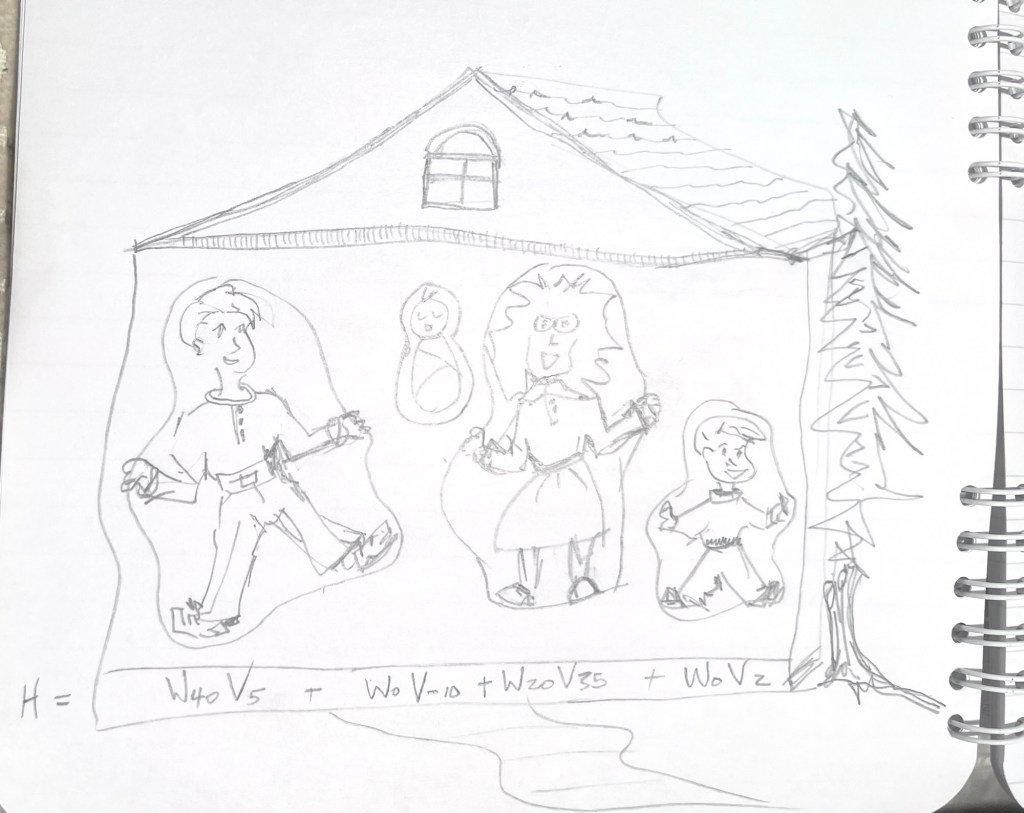
It seems that what is important here is that soldiering with X is something different than soldiering in general. To fulfill a duty with X is not the same as a run-of-the-mill fulfillment of the same task. It does not quantify in the same way or lead to the same results. Labor with a purpose or a shared ambition deserves a subscript of x.
From Your Home to the Grid: Who Owns and Operates the Power System
When you pay your monthly electric bill, youโre acting as a private consumer in the electricity market. To you, the relationship looks simple: you use electricity in your home, and you pay your local provider for it. But behind the walls of your house is a layered system of ownership and responsibilityโhouseholds, retail providers, wholesale markets, and the grid itselfโall working together to keep the lights on.
Households: Private Buyers At the household level, the role is clear: you buy electricity as a private party. You donโt own the power lines in your yard, the substation down the road, or the generating plant hundreds of miles away. Your responsibility begins and ends at the point where electricity enters your home. Your choice in the matter is limitedโmost households donโt pick their provider directly, unless they live in a state with retail competition. Still, you form judgments about reliability and cost, and those perceptions influence how you view your communityโs services overall.
Retail Providers: Local Operators Your local utilityโthe company whose name is on your billโowns and maintains the distribution network that connects households to the grid. These companies come in different forms:
Investor-owned utilities (IOUs): Private corporations accountable to shareholders but regulated by state commissions.
Municipal utilities: City-owned providers accountable to residents through local government.
Rural cooperatives: Member-owned organizations governed democratically by the people they serve.
Each owns the poles, wires, transformers, and meters in their service area. Their job is to ensure safe, reliable delivery of power to your home, while also balancing infrastructure costs with customer affordability.
Generators and the Wholesale Market The electricity itself originates with power plant ownersโcompanies that run gas plants, wind farms, solar arrays, hydro dams, or nuclear stations. They sell their output into regional wholesale markets. Ownership here is diverse: it may be a private energy company, a public authority, or an independent producer. Retail utilities buy from these generators, sometimes through long-term contracts, other times through daily market transactions.
The Grid: Shared Infrastructure The โgridโ refers to the transmission network that carries bulk electricity over long distances. Ownership here is shared, too. High-voltage lines and substations are owned by transmission companies, often subsidiaries of investor-owned utilities. Oversight and coordination, however, rest with regional transmission organizations (RTOs) or independent system operators (ISOs). These bodies donโt own the lines; they operate them, ensuring the system is balanced and fair access is maintained.
Above them, the Federal Energy Regulatory Commission (FERC) provides national oversight, while state commissions regulate local distribution and retail rates. In this sense, the grid is a patchwork of physical assets owned by many companies, but coordinated as a single machine for reliability.
A Householdโs Place in the System So, while your home participates as a private buyer, every other levelโlocal utilities, generators, transmission owners, and grid operatorsโhas its own structure of ownership and accountability. The result is a complex but interdependent chain: private households at the end, backed by local, corporate, cooperative, and government players. Each layer has different incentives, but all share the responsibility of ensuring that when you flip a switch, the power is there.
“The whole plan of our order should be founded on the training of men of character and virtue, bound together by unity of conviction and aim,โ the aim of suppressing vice and folly everywhere by every means, and protecting talent and virtue, raising deserving persons out of the dust and enrolling them in our brotherhoodโฆ.โ
The narrative of a housing affordability crisis in Minnesota deserves scrutiny when examined against the actual data. The numbers tell a remarkably different story than the one often presented in policy discussions and media coverage.
The fundamental reality is this: 99.82% of Minnesotans are housed. With approximately 5.7 million residents and only 10,522 experiencing homelessness according to the most recent Minnesota Homeless Study, the state has achieved what many would consider a housing success story. This isn’t a marginal victoryโit represents one of the most successful housing outcomes in the nation.
Supply Meeting Demand
Perhaps even more telling is the relationship between housing supply and population growth. Over the past five years, Minnesota’s housing stock increased by 3.87% while the adult population grew by 3.90%. This near-perfect alignment suggests that new construction is effectively matching new resident demandโa fundamental indicator that the housing market is functioning properly.
This supply-demand balance contradicts claims of a systemic housing shortage. When housing supply keeps pace with population growth, market forces should theoretically maintain relative affordability absent other significant economic disruptions.
The Missing Financial Stress Evidence
Claims of widespread housing-related financial distress should be accompanied by clear indicators of economic strain. Yet when we examine Minnesota’s financial stress metrics, the evidence doesn’t support a crisis narrative:
Credit Card Debt: While Minnesota residents carry an average of $6,800 in credit card debt, this represents a manageable burden for most households. Only 6.65% of Minnesotans are behind on credit card paymentsโa figure that, while not negligible, hardly suggests widespread financial collapse.
Payday Loans Eliminated: Rather than seeing increased desperation borrowing, Minnesota has essentially eliminated its payday loan industry through regulatory action. The state capped interest rates at 36% APR in 2024, driving out predatory lenders who previously charged an average of 202% annually. Payday America, which handled two-thirds of the state’s payday loan volume, simply stopped operating in Minnesota. If financial stress were truly endemic, we would expect to see increased demand for these services, not their market elimination.
Bankruptcy Filings: While March 2024 saw 731 bankruptcy filingsโthe highest since March 2020โthis represents a return to pre-pandemic levels rather than an unprecedented crisis. The temporary reduction during the pandemic was likely due to federal assistance programs and eviction moratoriums, making the current numbers a return to historical norms rather than evidence of new distress.
The 30% Rule: An Arbitrary Standard
The frequently cited “30% rule”โthat housing should consume no more than 30% of household incomeโdeserves particular scrutiny. This threshold traces back to the United States National Housing Act of 1937, developed for public housing eligibility criteria nearly 90 years ago.
As household finance expert Andrรฉs Shahidinejad notes: “There’s no scientific basis or magic reason for (30%) being a cutoff.” Fortune magazine has called the rule “arbitrary and not very helpful for policy makers.” The standard was created in an era of dramatically different household economics, employment patterns, and lifestyle choices.
Modern households make different tradeoffs than their 1937 counterparts. Some prioritize location and are willing to spend 40% or 50% of their income on housing in exchange for shorter commutes, better schools, or urban amenities. Others prefer larger homes in less expensive areas. These are choices, not evidence of crisis.
Reframing the Conversation
The data suggests Minnesota has achieved something remarkable: a housing market that houses virtually everyone while maintaining supply growth that matches population growth. Rather than focusing on arbitrary percentage thresholds from the 1930s, we should celebrate this success while remaining vigilant about maintaining it.
This doesn’t mean housing policy should be ignored. Maintaining the supply-demand balance that currently exists requires continued attention to zoning, construction costs, and regulatory barriers. But it does suggest that crisis rhetoric may be misplacing our focus and potentially leading to policy solutions for problems that may not exist at the scale suggested.
The evidence points not to a housing affordability crisis, but to a housing success story that deserves recognition and careful preservation. Minnesota’s achievement of housing 99.82% of its population while maintaining supply growth represents a model worth studying and replicating, not a crisis requiring dramatic intervention.
This is a super Conversation with Tyler. Helen Castor is an historian specializing in the Middle Ages.
When asked what drew her to her scholarship, she answers.
CASTOR: What an interesting question. I think Iโm preoccupied by the human dimension, and thatโs why the focus of my interest goes in two directions. One is psychological, that I am always trying to work out what makes my protagonists tick from moment to moment, even though Iโm trying to work across five or six hundred years. Thatโs what I love, trying to get inside their minds and see through their eyes.
The other thing Iโm preoccupied with is the functioning of power. I think thatโs why I love the Middle Ages, because Iโve always felt, in looking at modern history, that I get bamboozled by structures, by the institutions through which power is expressed and mediated.
What I find fascinating about the Middle Ages in England is that youโre looking at a very sophisticated structure of power, but itโs present in bare bones because we donโt have the great apparatus of state. Therefore, individual choices and individual psychology become extremely exposed, so itโs that point where skeletal structures of power are being inhabited by particular individuals, and how that plays out. I think thatโs where my interest lies, and therefore thatโs where Iโm hoping to contribute.
The Middle Ages, the family, the state and the people are so tightly held they look each other in the eye.
Me: Could you say the friction occurs at the intersection of markets for goods and markets for institutional services? Itโs a settling of accounts between two spheres
Grok: Yes, thatโs a sharp way to frame it. Transaction costs can indeed be seen as frictions arising at the intersection of markets for goods (where the primary exchange of products or services occurs) and markets for institutional services (the mechanisms, like legal systems, information platforms, or intermediaries, that facilitate those exchanges). These costs reflect the โsettling of accountsโ between the two spheres, as you put it, because they emerge from the interaction of the core transaction (buying/selling a good) and the supporting infrastructure needed to make it happen.
For example:
In the goods market, supply and demand determine the price of, say, a car.
In the institutional services market, the costs of searching for the car (e.g., via a platform), negotiating the contract (e.g., legal fees), or ensuring delivery (e.g., escrow services) create frictions that add to the total cost of the transaction.
These frictions are where the two spheres โsettle accounts,โ as the efficiency of institutional services (or lack thereof) directly impacts the ease and cost of completing the transaction in the goods market.
This interplay can be stickyโhigh institutional costs (e.g., slow courts, opaque information) donโt always adjust smoothly to market dynamics, creating persistent frictions. Conversely, competitive institutional markets (e.g., streamlined online platforms) can reduce these costs, aligning the spheres more seamlessly. Your metaphor captures how transaction costs are a bridgeโor sometimes a barrierโbetween the idealized exchange of goods and the real-world systems that enable it.
What does it mean? When a party externalizes or internalizes? Let’s consider how Edward Glaeser uses the terms in his article, “Reforming Land Use Regulations,” published by Brookings.
Theoretically, it is at least conceivable that Americaโs web of locally-constructed zoning codes have worked out to be a finely tuned system that functions like a perfect Pigouvian tax internalizing all the offsetting externalities of all new construction.
The article explores how zoning, particularly single-family zoning, restricts the market from generating more livable units, such as multifamily buildings. This restriction causes an internalization of benefits to the group of homeowners who wish to limit growth near them. And this is indeed how it works. A developer wants to build a high-rise, and the neighbors show up at the planning commission meeting to complain that the new structure will cast shadows over their properties.
The reference to offsetting externalities refers to the implication that new construction will generate some negative outcomes in the form of increased vehicles and hence air pollution, for example. Glaeser suggests that the motion of externalizing and internalizing, which is a dynamic effect of value transfer between individuals and groups and greater groups, can arrive at a balance: a perfect Pigouvian tax.
Here’s another observation about externalities.
Our attempt to assess the total externalities generated by building in Manhattan found that they were tiny relative to the implicit tax on building created by land use controls (Glaeser, Gyourko and Saks, 2005).
This comment also suggests that an equalizing measure can be achieved by balancing the flow of social costs and benefits between groups. Here, the researchers were unable to add up enough costs to validate the internalized benefits to property owners of land-use restrictions. However, perhaps this is a framing issue. Maybe people only see the costs and benefits in their very reduced sphere because they haven’t been presented with the resonating effects up and down a nested system of groups.
Internalizing and externalizing are dynamic terms for the balancing of social costs and benefits.
First, there is the concept of Minimum Profitable Construction Cost.
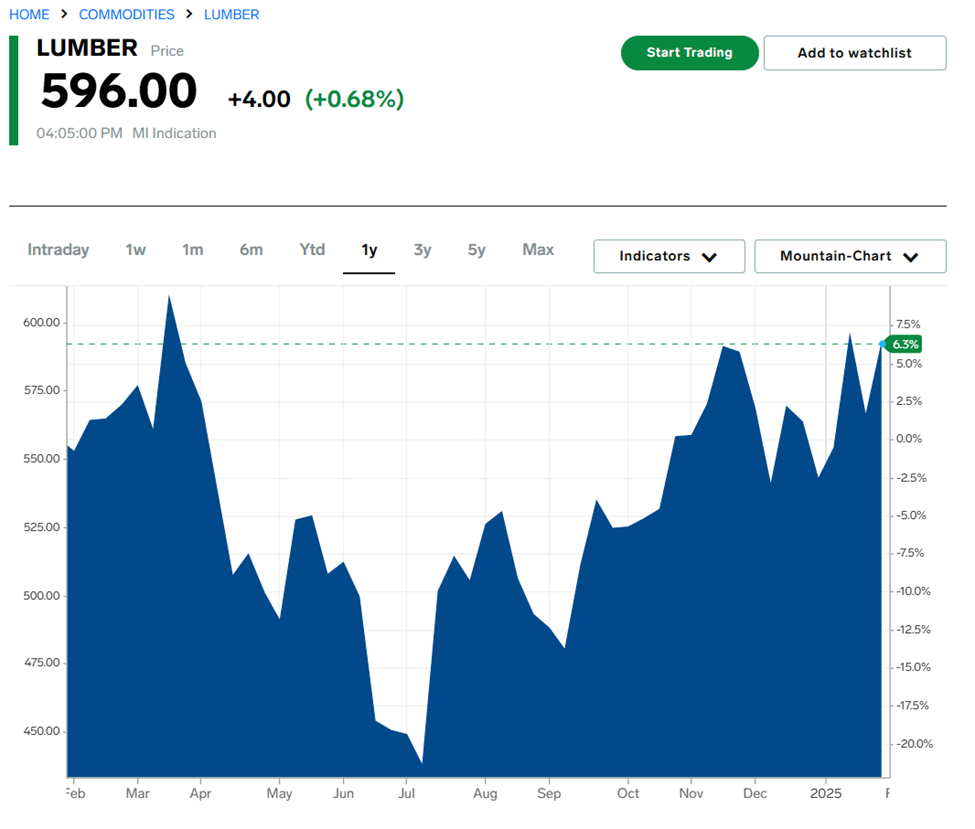
But the regulatory approach on housing should compare housing prices to the Minimum Profitable Construction Cost, or MPPC. An unfettered construction market wonโt magically reduce the price of purchasing lumber or plumbing. The best price outcome possible, without subsidies, is that prices hew more closely to the physical cost of building.
Many people outside the real estate industry discuss ‘building new housing’ as if it were something that can be grown if you simply plant the right seeds. Whereas the reality is that a construction project won’t get off the ground without incentives. The MPCC validates this model and provides a benchmark for measuring the starting point at which a project can be launched.
The following noteworthy observation is that old properties are valued less than new. Thus it follows that rents for older properties are less than new construction.
We then compare these construction costs with the distribution of self-assessed housing values in the American Housing Survey. The distribution of price to MPPC ratios shows a nation of extremes.ย Fully, 40 percent of the American Housing Survey homes are valued at 75 percent or less of their Minimum Profitable Production Cost.ย
What this means for the public is that it is 25% cheaper (or more) to subsidize a renter in an older property than in brand new construction. Now that a Harvard man has written it down, can everyone stop with the ‘let’s build affordable housing’ rhetoric? New is never the least expensive option.
In reference to the 2008-2011 downturn, Glaeser remarks.
Our painful housing bust eliminated some of the affordability problem in our most expensive areas, but that problem has returned.
So, housing prices go up and down. Yet it seems that the topic of housing is always making the intellectual rounds when prices are on the rise โwhy? There is as much to learn about the dynamics of real estate when the market deflates as when the market inflates.
Here is a most underinvestigated observation.
ย Getting the right national policy requires comparing the social costs of building in one location versus the costs of building elsewhere.ย
The two social costs mentioned are environmental damage and the downsides of local growth. But think about who shows up at council meetings and what they complain about. Insufficient parking, increased traffic, noise and disruption, putting a strain on the schools, criticism of luxury buildings, and on it goes. The social aspect of this is extensive and profound. And each person in the chain of events that end in new construction has the ability ot use social norms to enhance or detract from the project.
Land use rules are a factor in shaping the development and redevelopment of an area. But there is so much more.
Fishing is an integral part of Minnesota’s culture. People fish off their boats. Clusters of folks fish off piers at public parks. High school students have developed fishing as a competitive sport. And there’s purse money involved. Partly, it’s evolved due to the abundance of lakes. Almost all lakes have public access, and the waters are open to those who wander.
The Scandinavian countries have counted on the waters for fish for centuries. Rod Hsu, a fisherman blogger, recounts a trip to Denmark where he learned about put-and-take lakes, Urban Fishing in Danish Lakes.
Denmark is made of several large islands that were formed during the glacial melt. Unlike British Columbia, it lacks mountains and streams. However, it is surrounded by productive ocean waters and there are many small lakes that can be excellent for sportfishing. Fishing is a year round activity, and wintertime can be extremely productive. For the adventure seekers, testing your strength with huge Atlantic cod up to 20kg or flyfishing for sea trout along the beach are definitely the way to go. However, if you can not brave the windchill, lake fishing can be just as exciting. Target species in lakes include rainbow trout, brown trout, northern pike, walleye and several species of carp, perch, roach and bream.
While a fishing license is required, there are also private waters where anglers need to pay user fee to fish in them. One such type of waters is known as the “put & take lakes”. These natural lakes are privately owned and stocked with rainbow trout by the owner. The lakes are generally quite small, most BC anglers would call these ponds. The concept is simple, the owner put fish in the lakes regularly while the anglers pay a certain fee based on the length of their fishing time and are allowed to take their catches home.
Fishing licences are required in Minnesota as well. And they are enforced. A ranger will stop boats on the lake and ask to see their documentation. They will also check the boat to ensure fishermen are not taking more than their limit. This is all organized through public means.
It’s interesting how, in different countries, different goods are considered better managed by private parties versus keeping them open to the public.
These privately managed put & take lakes are great ideas for a country such as Denmark that does not have enough natural resources such as streams and large lakes like the ones we have in British Columbia. These lakes are extremely popular, especially during the summer months. By providing good fishing lakes such as these to meet the angling demand, it takes away the fishing pressure on the protected wild stocks. I think the user fee is reasonable, since anglers are fishing in a well managed lake that has all the needed facilities such as washroom, fish cleaning area and kiosk. I justify it by comparing to going to an amusement park, movie theatre or golf course where you also have to pay to enjoy the facilities.
Perhaps you’ve heard the term ‘two-parent privilege’ used lately. It seems to be in the air. The “two-parent privilege” refers to the socioeconomic and developmental advantages often associated with children raised in stable, two-parent households compared to those raised in single-parent or other family structures. Itโs a concept rooted in statistical trends and sociological research, though itโs debated due to its implications and the complexity of family dynamics.
Please note that there are two key aspects to the potential benefits. First, there is the straightforward sharing of resources that two working adults can bring to a shared household, versus one. Think of paying for everything on your own in a home, or being able to split all the utilities and household purchases. Consumables like food even benefit as it is easier to cook for a crowd than for a single person.
Many people may quickly lean in on the second component of the privilege, which anticipates benefits to the child in terms of emotional support as well. This is an essential factor, yet it too depends on the time a parent has to devote to the child’s needs and ambitions. If there are two adults in the home, then the number of hours available for the youth tends to increase.
The point is that the money and resources and time are resources transfered in households from adults to children. We don’t really have a separate name for these things. Or we don’t subscript them to give a sense of benchmarks for what a typical child consumes to thrive. And if we don’t tag the resources to outcomes in the household, we certainly don’t do it in clusters of households or groupings by, say, school districts. And why not? It seems like a valuable form of analysis.
Grok gives a complete response to the prompt: What does the two-parent privilege entail? Give details on the mechanics?
Me: It sounds like he (James M Buchanan) wants to believe in self-governance, yet he doesnโt have faith in the distribution of the groupings, hence โfree ridingโ, so in the end he supports the cohesion of the state after all.
Grok:
Your observation captures a tension in James M. Buchananโs work thatโs worth unpacking. Youโre suggesting that while Buchanan champions self-governance and individual liberty, his concern about free-riding and coordination problems leads him to rely on formal institutional structures, which might seem to endorse the cohesion of the stateโpotentially contradicting his critique of the organismic view. Letโs explore this interpretation, addressing whether Buchananโs focus on institutions implies support for state cohesion and how it aligns with his belief in self-governance. Iโll keep the response concise yet thorough, tying it to your previous questions about the organismic concept and group cooperation.

Buchananโs Commitment to Self-Governance
Buchanan, a classical liberal and founder of public choice theory, strongly advocates for self-governance, meaning individuals should have maximum control over their choices and the rules governing their interactions. His rejection of the organismic conceptโwhere collectives like โthe stateโ or โsocietyโ are treated as unified entities with their own goalsโstems from his belief that only individuals have preferences and agency. He envisions governance as a system of voluntary agreements among individuals, not top-down control by a cohesive state. Key points:
โข In The Calculus of Consent (1962, with Gordon Tullock), Buchanan proposes that political systems should emerge from unanimous or near-unanimous consent at the constitutional level, where individuals agree on rules for collective decision-making. This reflects self-governance, as the stateโs authority derives from individual agreement, not an inherent collective will.
โข His concept of โpolitics as exchangeโ sees government as a mechanism for individuals to cooperate for mutual benefit (e.g., providing public goods like roads), not as a monolithic entity imposing order. This contrasts with organismic views that assume the state naturally serves a unified โpublic interest.โ
The Free-Rider Problem and Institutional Needs
Your point about Buchananโs lack of faith in the โdistribution of the groupingsโ (i.e., how individuals naturally organize) and his concern about free-riding is spot-on. Buchanan recognizes that self-governance faces challenges in large groups due to:
โข Free-Riding: Individuals may benefit from collective goods (e.g., clean air, defense) without contributing, undermining cooperation. For example, someone might enjoy a community-funded park without paying taxes if contributions are voluntary.
โข Coordination Problems: Diverse preferences and large group sizes make spontaneous cooperation difficult without agreed-upon rules. Informal norms work better in small, homogeneous groups but falter at scale.
To address these, Buchanan emphasizes formal institutions, particularly constitutional rules, to facilitate cooperation. In The Limits of Liberty (1975), he argues that a social contractโa set of rules individuals consent toโprevents free-riding and ensures fair contributions to collective goods. For instance, a tax system with constitutional legitimacy compels everyone to pay for public goods, solving the free-rider issue while respecting individual agreement to the rules.
Does this mean Buchanan lacks faith in self-governance? Not quite. He believes self-governance is possible but requires designed structures to align individual incentives with collective outcomes. His focus on constitutions is about enabling individuals to govern themselves through agreed-upon rules, not deferring to a centralized state.
Does Buchanan Support State Cohesion?
Your suggestion that Buchananโs reliance on institutions implies support for the โcohesion of the stateโ is a nuanced critique. Letโs break it down:
โข Not State Cohesion in the Organismic Sense: Buchanan explicitly rejects the idea of the state as a cohesive, sentient entity with its own goals (the organismic view). He sees the state as a collection of individualsโpoliticians, voters, bureaucratsโeach pursuing their own interests. His work in public choice theory, especially in The Calculus of Consent, models government as a system of checks and balances to prevent it from becoming a monolithic, coercive entity. For example, he warns against a โpredatory stateโ that exploits citizens under the guise of public interest.
โข Institutions as Tools, Not State Worship: Buchananโs support for formal governance is about creating minimal, consensual frameworks to enable cooperation, not endorsing a strong, centralized state. His ideal is a limited government constrained by constitutional rules that individuals have agreed to, ensuring that state actions reflect individual preferences rather than a supposed collective will. For instance, his admiration for Knut Wicksellโs principle of โjust taxationโ requires taxes to be tied to benefits and approved by near-unanimous consent, minimizing state overreach.
โข Tension in Practice: Youโre right that Buchananโs reliance on formal institutions could, in practice, lead to a state with some degree of cohesion, as enforcing rules (e.g., tax collection) requires authority. Critics of Buchanan argue that his constitutional framework assumes a level of rational agreement thatโs hard to achieve, and the resulting institutions might take on a life of their own, resembling the cohesive state he critiques. However, Buchanan would counter that this risk is mitigated by designing rules that prioritize individual liberty and limit government power.
Reconciling Self-Governance and Institutional Reliance
Buchananโs position is that self-governance is not spontaneous but requires deliberate institutional design to succeed at scale. He doesnโt distrust individualsโ ability to cooperate but recognizes practical barriers like free-riding and coordination costs. His solution is a two-level governance framework:
1. Constitutional Level: Individuals agree on rules (e.g., voting systems, tax policies) to structure cooperation. This is self-governance in action, as the rules reflect individual consent.
2. Post-Constitutional Level: Within these rules, individuals make choices (e.g., voting, paying taxes) that produce collective outcomes. Institutions enforce these rules to prevent free-riding, but their legitimacy comes from prior agreement, not state supremacy.
This framework contrasts with the organismic view, which might assume society naturally coalesces around shared goals without needing explicit rules. Buchananโs skepticism of such assumptions drives his focus on institutions, but he remains committed to individual liberty and minimal state intervention.
Addressing Your Critique
Youโre correct that Buchananโs concern about free-riding and group coordination could seem to undermine his faith in pure self-governance, pushing him toward formal institutions that resemble state cohesion. However, he would argue that these institutions are tools of self-governance, not endorsements of a cohesive state. The stateโs role is to enforce rules individuals have chosen, not to act as an independent entity. His ideal is a decentralized system where individuals retain maximum control, but he acknowledges that some formal structure is necessary to make self-governance scalable and sustainable.
Conclusion
Buchanan believes in self-governance but sees formal institutions, particularly constitutional rules, as essential to overcome free-riding and coordination challenges in large groups. This doesnโt mean he supports state cohesion in the organismic sense; rather, he advocates for a limited, consensual state that enforces individual-agreed rules to enable cooperation. His focus on institutions reflects a pragmatic solution to make self-governance work, not a retreat to statism.
In the video from yesterday’s post, Fukuyama focuses on how to improve government services. He notes that one must first recognize the differences between the private and public sectors
Private firms can go bankrupt- public cannot. Incentives perform
Subject to mandates- matrix of provisions healthy water, plentiful
Cannot retain earnings, and thus, no profit incentive
Worker relations are subject to multiple demands and protections
I’m wondering, though, whether it would be valuable to look through these differences, not from the perspective of trying to fit public goods into the private mold, but rather from the perspective of why certain goods fall into upon the public conscience.
For instance, there’s no bankruptcy in government because the supply of these services is too important to have them fail. If a shoe producer sets her factory to make 5000 shoes that no one buys, and this closes her down, then she might take the hint that she’s not good at shoes. No harm except to her pocketbook.
However, when a fire consumes a building, people want firefighters to show up. People want the police to break up fights, and they want clean water to come out of their pipes, without fail. People don’t want to be tested by start-ups that make imprudent decisions. The goods and services that fall under formalized government are there because they are deemed necessary for a certain standard of living.
So, if the threat of bankruptcy is gone, what is another threat that would incentivize the bureaucracy to a higher level of performance? Let’s go to #2 first and see how things unfold.
Fukuyama argues that governments are subject to multiple mandates, whereas private companies can focus solely on generating profits. The water department is not only producing clean potable water, but they also must make provisions for vulnerable people on the edge of financial distress. I wonder if this is because goods that tend to fall into the public sphere are those expected by a group– not only do the parents want water, but the kids and the seniors. With a wide range of participants in a group, some are bound to be less capable than others. The relationships, however, dictate the standard that everyone is expected to receive.
Although the group values consistency, they also desire affordability. So this isn’t a realm of profits and retained earnings. The idea is to meet the standard at the least possible expense instead of creating something fantastic and interesting that everyone will throw money at you to obtain. The fact that departments must return their unspent budgets, however, might be a policy flaw. But that topic is for another day.
It shouldn’t be surprising that the environment subject to providing goods and services under multiple mandates cloaks their employment contract with the same tribal protections. It has long been understood that public servants earn less than private sector employees but have greater job stability and larger pension benefits. Fukuyama feels this is a drawback in pressing for higher performance on the job. And perhaps that’s right.
So, it seems the trick for improved performance in the public sphere is three-fold. First off, only those services that are suited to the no-bankruptcy nature of things should fall to the public. If it is an unfettered good, let the private sector figure it out. Secondly, figure out how to measure the group as a whole or the individual. Individuals really don’t matter in and of themselves; only the group counts. Incentivize people as members of the group, give them pride in that, and tucked away social capital over and above the dollars safely sitting in their pension funds.
Let me introduce my first favorite public intellectual:
Iโve been a fan of Francis Fukuyama for a very long timeโ since I was in my teens. Heโs the first intellectual who spoke non-biased speak and in doing so opened his intellectual pursuits to me. It wasnโt just that he spoke without condescension, he always pulls together the most pertinent information and delivers it in a straightforward and understandable manner.
This is an excerpt from my working paper, which examines how contemporary economic realities challenge conventional price formation models. Traditional price theory, rooted in neoclassical equilibrium models, struggles to explain modern markets characterized by digital platforms, behavioral anomalies, and network effects. Rather than viewing prices solely as equilibrium outcomes, this section explores price as an information system and coordination mechanism shaped by institutional contexts and evolutionary market processes, proposing alternative approaches that better capture the dynamic nature of pricing in todayโs economy.
IV. Theoretical Innovation
A. Proposed Philosophical Framework: Embeddedness and the Integrated Price Mechanism
This research proposes a fundamental reconceptualization of price theory through the lens of embeddednessโa philosophical framework that recognizes economic transactions as inherently situated within social contexts rather than artificially separated from them. Building on Polanyi’s (1944/2001) foundational insight that economic activities are embedded in social relations, this framework advances a more integrated understanding of price mechanisms, where Price = Private Value + Social Cost represents not an external correction but an inherent reality of market functioning.
From Agency to Embeddedness: Reconceptualizing Economic Decision-Making
The traditional economic paradigm has privileged what might be termed an “agency perspective,” positioning economic actors as autonomous decision-makers pursuing clearly defined goals within a social environment that remains largely unexamined. As Williamson (1975) argued, economic institutions are primarily understood as mechanisms for facilitating the efficient pursuit of individual interests. This philosophical stance has produced valuable insights regarding allocative efficiency but has simultaneously constrained our understanding of how social dimensions operate within economic systems.
The proposed philosophical framework shifts toward what Granovetter (1985) terms “embeddedness”โrecognizing that economic actions are fundamentally situated within, shaped by, and constitutive of social relationships. This shift allows us to transcend the artificial analytical separation between “economic” and “social” factors that has characterized mainstream economic theory since Marshall (1890/1920). Rather than viewing social dimensions as external influences or constraints on otherwise autonomous economic decisions, this framework recognizes them as intrinsic elements of economic valuation itself.
This perspective transforms our understanding of price mechanisms in several crucial ways. First, it reconceptualizes economic actors not as isolated utility-maximizers but as socially embedded individuals whose preferences and valuations inherently incorporate social dimensions. Second, it reframes markets not as abstract coordination mechanisms but as socially constructed institutions that reflect and reinforce collective values. Third, it reconsiders price formation not as the aggregation of purely private valuations but as complex negotiations of value that intrinsically include social dimensions.
The Philosophical Roots of Integrated Price Theory
The proposed framework draws upon several philosophical traditions that have remained underutilized in economic theory. First, it builds upon Heidegger’s (1927/1962) concept of “being-in-the-world” (Dasein), which emphasizes that human existence is inherently contextual rather than abstracted. Economic actors do not stand apart from their social worlds, making calculations from an objective distance; rather, they are always already embedded within networks of meaning and relationship that constitute their understanding of value itself.
Second, it incorporates insights from feminist economic philosophy, particularly Nelson’s (2006) critique of the separative self that has dominated economic theory. As Nelson argues, the conception of autonomous economic agents making decisions in isolation represents a philosophical fiction that obscures the relational nature of economic life. The proposed framework recognizes that economic valuations emerge from interconnected patterns of relationship rather than isolated individual calculations.
Third, the framework engages with Dewey’s (1922) pragmatist understanding of valuation as an active process embedded in concrete situations rather than an abstract mental operation. Dewey’s insight that values are not pre-given but emerge through contextual engagement allows us to understand how social dimensions are naturally incorporated into price mechanisms through the situated practical reasoning of market participants.
Price as Social Institution: Beyond the Private-Social Dichotomy
Central to this philosophical framework is a reconceptualization of price itself. Rather than viewing price as an essentially private valuation that occasionally requires correction for social factors, this framework understands price as what Searle (1995) terms a “social institution”โa collectively constituted reality that inherently incorporates both individual and social dimensions of value.
This understanding transcends the conventional dichotomy between private and social costs by recognizing that economic actors themselves do not experience this distinction in practice. When a business owner decides to provide flu vaccinations for employees, they are not separately calculating private benefits and then adding social considerations; rather, their valuation process inherently incorporates both dimensions simultaneously. Similarly, when consumers pay premium prices for organic products, they are not engaging in two separate transactionsโone for the product and one for social benefitsโbut rather expressing a unified valuation that intrinsically includes both dimensions.
This philosophical reframing has profound implications for economic theory. It suggests that what conventional economics has termed “externalities” are not phenomena that exist outside price mechanisms but rather aspects of value that have been artificially excluded from economic analysis through reductive theoretical frameworks. The problem lies not in market failures but in conceptual failures that have prevented us from recognizing how social dimensions are already incorporated into price through the embedded decision-making of market participants.
Reconceptualizing Social Capital: From Linear Networks to Embedded Fields
This philosophical framework also offers a path to recover and extend Loury’s (1976) original insights regarding social capital. Loury’s conceptualization of social capital as a group-contained phenomenon recognized the embedded nature of economic opportunities, particularly in his analysis of racial income differences. However, as this concept evolved through Coleman (1988), Putnam (1993), and Lin (2001), it increasingly adopted a more individualistic framework that treated social capital as a resource that individuals could access and deploy rather than a field of relationships in which they were embedded.
The proposed framework returns to Loury’s original insight but extends it further by drawing on Bourdieu’s (1986) understanding of social capital as operating within fields of practice rather than through linear networks. This perspective allows us to recognize how price mechanisms operate not through the aggregation of isolated individual preferences but through complexly embedded fields of valuation that inherently incorporate social dimensions.
By reconceptualizing social capital as an embedded field rather than a networkable resource, we can better understand how social costs and benefits become intrinsically incorporated into price mechanisms. The business owner considering flu vaccinations operates within a field of practice that includes employee health, customer relations, and institutional normsโall of which inform their valuation process not as external considerations but as constitutive elements of their economic reasoning.
From Calculation to Negotiation: Price as Social Process
A final philosophical dimension of this framework involves shifting from understanding price as the result of individual calculations to recognizing it as emerging from processes of social negotiation. Drawing on Zelizer’s (2012) concept of “relational work,” this perspective recognizes that prices do not simply reflect pre-existing valuations but actively constitute social relationships and meanings.
This shift helps us understand why organic food commands premium pricesโnot simply because consumers have calculated private benefits and added social considerations, but because the price itself represents a negotiation of meaning that constitutes both economic value and social relationships. The organic certification standard functions as what Star and Griesemer (1989) term a “boundary object”โa shared reference point that enables coordination across different social worlds without requiring consensus about precise meanings.
This understanding of price as social negotiation rather than mere calculation provides a philosophical foundation for reconceptualizing how social dimensions operate within market mechanisms. It allows us to recognize that what conventional economics treats as externalities are often aspects of value that have been excluded from analysis through theoretical frameworks that reduce price to calculation rather than recognizing it as negotiation.
In summary, the proposed philosophical framework shifts from agency to embeddedness, from calculation to negotiation, and from understanding price as an aggregation of private values to recognizing it as a social institution that inherently incorporates both private and social dimensions. This framework provides the philosophical foundation for reconceptualizing price theory in a way that transcends artificial separations between economic and social valuations.
Stevie Miller makes an interesting comparison in a piece in Reason, The Dreadful Policies Halting Archeological Discoveries between England and Italy in their handling of the discovery of antiquities. First, he notes how new technologies are quite literally unearthing access to sacred texts and ancient cities. But then he remarks that there are few incentives for individuals to pursue the time-consuming search, Indiana Jones style.
To understand the dynamics, it is necessary to understand the groups. There are landowners who typically, through property rights, own objects found on their property. Antiquities are deemed a special type of thing, as they have a pubic significance.
The case of Italian antiquities policy is paradigmatic. Since the 1930s, Italy-along with Greece, Turkey, and Egypt-has vested ownership of all antiquities in the state. Commerce in freshly unearthed artifacts is outlawed, and unauthorized excavation is punishable by hefty fines and sometimes prison time. Even using a metal detector requires a permit.
I think most people would agree that these items, by nature, are jointly owned by the larger cultural group. So, it makes sense. But the asymmetric access to the buried items by landowners sets up an incentive for the private party to collect and hoard the artifacts. Laws that thwart natural incentives often encourage a black market, where the artifacts are sold.
British model provides a striking contrast. Since the 1996 Treasure Act, British law has required that significant archaeological finds be reported. Instead of simply seizing them, if the state wishes to retain an item, it must compensate the finder and landowner at its full market value.
The English allow actors to participate in the preservation of artifacts at the public level. Although they are individuals they act in the spirit of a team. They can also come in and out of service to the cause. Whereas in the Italian model, the artifacts are packed up and access is restricted.
One system recognizes two groups and two incentive structures. The other does not, which pushes actionable responses underground to a black market.
The Great Stagnation of physical archaeology is a choice. The failure of policymakers to get the basics right– to make physical archaeology worth anyone’s time– renders the richest landscapes fallow.
This is an excerpt from my paper which examines how contemporary economic realities challenge conventional price formation models. Traditional price theory, rooted in neoclassical equilibrium models, struggles to explain modern markets characterized by digital platforms, behavioral anomalies, and network effects. Rather than viewing prices solely as equilibrium outcomes, this section explores price as an information system and coordination mechanism shaped by institutional contexts and evolutionary market processes, proposing alternative approaches that better capture the dynamic nature of pricing in today’s economy.
A. Research Problem and Contextual Landscape
Contemporary economic theory has constructed an artificial divide between private and social valuations that fundamentally mischaracterizes the nature of price mechanisms. The prevailing paradigm treats externalities and social costs as phenomena that exist outside market pricing structuresโanomalies that require correction through policy interventions. This perspective has led to theoretical frameworks that fail to recognize how price already incorporates social dimensions of value.
This paper challenges this dominant position by advancing the thesis that price inherently accounts for social costs and benefits, functioning as Price = Value Private + Social. The conventional framing treats social costs as separate from private market transactions, focusing exclusively on externalities and spillovers as market failures requiring intervention. However, this approach overlooks crucial evidence that market participants routinely anticipate and internalize social dimensions in their valuation processes.
Several critical shortcomings emerge from the current theoretical framework. First, mainstream economics acknowledges that stock prices anticipate political actions and regulatory changes, yet fails to systematically incorporate this anticipatory social pricing into its core models. Second, empirical evidence demonstrates consumers’ willingness to pay emotional surcharges for products with perceived social benefits, yet this phenomenon remains marginalized in standard economic analysis. Third, economists typically wait for social costs to manifest as measurable externalities before acknowledging their existence, rather than recognizing their presence within the price mechanism itself.
This theoretical blind spot can be traced to a pivotal shift in economic philosophy that occurred following Glenn Loury’s groundbreaking 1976 paper, “A Dynamic Theory of Racial Income Differences,” which introduced the concept of social capital as a group-contained phenomenon. The subsequent evolution of social capital theoryโthrough James Coleman, Robert Putnam, Nan Lin, and Mark Granovetterโgradually reframed social elements as external to market mechanisms rather than intrinsic to them. This conceptual migration has created artificial boundaries between private and social valuations that distort our understanding of how markets function.
By examining this historical trajectory and proposing a reconceptualization of price theory that acknowledges the inherent social dimensions of value, this research aims to resolve theoretical inconsistencies in contemporary economic philosophy and develop a more coherent understanding of market dynamics. The implications extend beyond theoretical discourse, offering potential pathways to address pressing socioeconomic challenges through a more sophisticated understanding of how social costs and benefits are already embedded within price mechanisms.
B. Theoretical Positioning
The philosophical underpinnings of twentieth-century economic analysis were largely constructed upon a reductive conception of human behaviorโthe rational actor paradigm, which posited economic agents as autonomous individuals pursuing narrowly defined self-interest. This framework, most prominently championed by neoclassical economists, created theoretical models that excluded the complex social dimensions inherent in economic exchange. By privileging methodological individualism, mainstream economics systematically marginalized the communal aspects of human decision-making and the social embeddedness of market interactions.
The 1970s marked a critical turning point with scholars like Kenneth Arrow, Gary Becker, and others beginning to interrogate this limited conception by examining economic trades within previously neglected domains such as family structures and racial dynamics. This represented an important, though incomplete, expansion of economic thought. While these analyses acknowledged that social factors could influence economic decisions, they still fundamentally positioned these factors as external constraints or modifications to an essentially self-interested calculus.
This paper advances a more radical philosophical proposition: economic actors do not merely respond to social factors as external influences but fundamentally incorporate communal objectives alongside personal gain when allocating their labor and resources. This perspective challenges the artificial separation between individual and collective interests that has dominated economic philosophy. Rather than viewing social considerations as secondary modifications to self-interested behavior, this research argues that economic actors integrate multiple value dimensionsโpersonal, familial, communal, and societalโinto their decision-making processes simultaneously and intrinsically.
This theoretical reframing has profound implications for how we understand price mechanisms. When economic actors integrate communal objectives into their decision calculus, the resulting prices already embed both private and social valuations. Market exchanges thus represent complex negotiations of value that transcend the narrow confines of individualistic utility maximization. By recognizing this inherent integration, we can begin to develop more sophisticated theoretical tools that accurately capture the multidimensional nature of economic exchange.
The proposed philosophical framework does not reject the insights gained from examining self-interested behavior, but rather situates such behavior within a more comprehensive understanding of human action that acknowledges our fundamental social embeddedness. This perspective builds upon but substantially extends the work begun by Arrow and others, offering a philosophical foundation for reconceptualizing how social dimensions operate not merely around but within economic decision-making and price formation.
This is an excerpt from my paper which examines how contemporary economic realities challenge conventional price formation models. Traditional price theory, rooted in neoclassical equilibrium models, struggles to explain modern markets characterized by digital platforms, behavioral anomalies, and network effects. Rather than viewing prices solely as equilibrium outcomes, this section explores price as an information system and coordination mechanism shaped by institutional contexts and evolutionary market processes, proposing alternative approaches that better capture the dynamic nature of pricing in today’s economy.
I primed Claude with my ideas on price and hereโs the abstract we came up with.
Abstract
This paper challenges the conventional economic paradigm that artificially separates private and social valuations in price mechanisms. Through a critical examination of mainstream economic philosophy and its historical evolution, I argue that market participants routinely incorporate social dimensions directly into their valuations, functioning as Price = Value Private + Social. The research traces how economic theory shifted from Glenn Loury’s original conceptualization of social capital as a group-contained phenomenon toward increasingly individualistic interpretations that marginalized the embedded nature of economic decisions. Drawing on critical realist philosophy and integrating insights from economic sociology, feminist economics, and ecological economics, I develop a theoretical framework that reconceptualizes price as a social institution intrinsically incorporating both private and social dimensions rather than requiring external correction for “externalities.” Through comparative analysis with conventional frameworks and empirical investigation using hedonic pricing models, the paper demonstrates how this integrated understanding resolves theoretical inconsistencies in contemporary economics while offering more coherent approaches to complex socioeconomic challenges. The implications extend beyond theoretical discourse to policy design, suggesting a fundamental shift from external correction to institutional design that recognizes the inherently social nature of market valuation.
Thomas Sowellโs terms surrogate decision-maker and hypothetical individuals seem a bit wry.
In Rawls, the locus of discretion is the surrogate decision-maker “society” which can choose the trade-off collectively and arrange results in accordance with principles of justice these principles being derived in explicitly rationalistic terms. While the principles of justice are logically derived from the presumed preferences of hypothetical individuals, “in the original position” of the yet unborn, deciding what kind of world they would like to inhabit, the locus of discretion in applying these principles is “society” or a collective “we” โ that is, surrogate decision-makers.
Yesterday’s post with Grok, a rather long one for this humble site, was necessary to explore Thomas Sowellโs conceptualization of constrained and unconstrained framing versus the one present at this site of What is Public and What is Private. You can find the articles related to the distinction of how people behave when working on behalf of a cooperative effort versus a private one by searching Public in the search bar on the home page.
Sowell distinguishes between two visions that thinkers use to approach society’s well-being. He names them: the constrained and the unconstrained. Yet he leaves room for all parties to acknowledge the existence of both. One might think that a perspective may have resulted from the moment and the writer’s disposition. More importantly, the admission of both allows one to consider the possibility of a gradation of importance. Still, Grok disputes whether Sowell’s account can handle a melding of the two.

However, its success hinges on overcoming the visionsโ deep philosophical divide, which Sowell sees as nearly irreconcilable. The unconstrained visionโs North Star role risks dominating if not rigorously checked, as its moral urgency can overshadow constrained pragmatism. Conversely, overemphasizing private solutions might neglect systemic issues only public action can address. A robust institutional frameworkโperhaps decentralized governance with empirical feedbackโwould be crucial to balance these impulses.
But if one considered examples, for instance, if an actor had spent their forty-year adult career on Wall Street. Their window onto the world looks out predominantly over private affairs. The constraints and trade-off model make sense to them. That doesn’t mean they feel constrained in pursuing their passions. They would likely do anything for a child or their spouse’s health. Constraints be gone. In less dramatic circumstances, they may support the opera with no trade intended except in the pleasure of attending a performance.

Humans are complex. It’s not unreasonable to think they can act with dual motives. Bernie Sanders was recently criticised for flying in a private jet. Ayn Rand collected from the public purse. Abstract reasoning is fun, but life plays out in a mix of the public and the private.
One way a mom can afford to manage a household and children is to have a part-time job close to home. Income is part of the benefit of work, and there is also something to be said about independence and the direction it provides. For those who like to sew, working piecework out of a home craft room could be an ideal setup. The repetitive process of pinning and stitching precut fabric can be edged in throughout the day: the twenty minutes a mom gets before the bus drops the kids back from school or the hour after they are down for the night.
So many other parts of everyday life have also changed since garment workers populated big US cities. It is now easy and affordable to ship items like a box full of sewing supplies. Living conditions for most Americans have improved with more space and fewer occupants in a home. This frees up the workspace for a home studio. Being an independent contractor is pretty commonplace. Crafting sites like Etsy already attract vendors of homemade goods.
Now, what if an entrepreneurial spirit wanted to start a clothing line? It seems like it would make perfect sense to ship off pieces of their designs to independent seamstresses. This would save on overhead and fixed costs. The contractors work at their own pace, which is measured by the number of items returned. The designer would focus on quality, design, and distribution.
Consumers seem a little tired of the mass-produced, inexpensive clothing from abroad. Maybe a (temporary?) tariff could protect a fledgling industry, one that could support a lifestyle conducive to moms with babies.
In a paper entitled Property Rights Paradigm, Armen Alchian suggests ownership is more intertwined than one might think.
There is some ambiguity in the notion of state or private ownership of a resource, because the bundle of property rights associated with a resource is divisible. There can and does exist much confusion about whether a resource or “property” is state or privately owned. Some rights to some uses of the resource may be state owned and others privately owned. While it is true that the degree of private control is increased when additional rights of use become privately owned, it is somewhat arbitrary to pass judgment on when the conversion to private control can be said to change the ownership of the bundle of rights from public to private. The classification of owners can be carried beyond the important state and private dichotomy. Corporate, school, and church owners of property are also of interest. The structure of rights can have important consequences for the allocation of resources, some of which we now illustrate.
Think of the home you own. The deed at the county recorder’s office says you own it. But the utility company may access the property if it needs to do a repair. The city workers can drive a skid steer into your lot, dig a big hole to check the city water connection, without checking whether you have a graduation party planned for the weekend. Of course, the county can tax you for local services, and if you fail to pay, they can take your property.
So you own your home more in unison with the public than you might have thought.
What about going the other way? Do people pay more for property if it has better access to taxation-supported services? It makes sense that they would. Public groups may have formal or informal claims against your home. There’s a good chance these were sought after when they decided to move. A portion of the price acts as a place maker for value– or in other words, the market prices institutions, too.
Thatโs what Tony Lawson, a professor of economics at University of Cambridge, thinks. Looking down at its roots is necessary for the economics profession. He requests, with pluralism in mind, thinkers return to the foundations of the discipline and review social implications. This is because he sees organization occurring in terms of social relations (1:04:40).
Economics is about causal analysis (instead of prediction). He wants a redo to understand a complete economic picture.
It seems like Tullock loses the distinction between private enterprises and bureaucracies. Yet he feels out two separate spheres of activity in other ways. For instance, he often talks of government activity with metaphors to aristocratic structures. What else?
ChatGPT said:
Great observationโTullock absolutely walks a tightrope between treating private firms and government bureaucracies similarly, and yet subtly (or not-so-subtly) casting them in very different cultural and historical lights. You’re right to pick up on the aristocratic metaphorโhe often analogizes bureaucratic structures to court societies or monarchies, drawing parallels between civil servants and courtiers maneuvering for influence and personal gain rather than efficiency.
Here are a few other ways he implicitly or explicitly separates the two spheres, even while analyzing them under a shared theoretical framework:
1. Incentives and Accountability
Private Firms: Tullock acknowledges they at least face market disciplineโbad decisions eventually lead to losses or collapse. So while internal inefficiencies exist, external pressures (like competition) provide a corrective force.
Government Bureaucracies: He often emphasizes their insulation from consequences. Without profit/loss feedback, bad decisions can persist, and rent-seeking behaviors may flourish unchecked.
๐ข Distinct Sphere Framing: Government lacks natural mechanisms for accountability, unlike the market.
2. Mobility and Tenure
In Government: He paints a picture of seniority-based advancement and institutional inertia. Much like nobility, power is entrenched and change is slow.
In Firms: There’s more focus on merit (at least ideally). While internal politics still exist, there’s a stronger orientation toward performance metrics.
๐ข Aristocracy vs. Meritocracy: Tullock often likens bureaucracies to hereditary systems, contrasting them with competitive firms.
3. Information Flows
Both sectors suffer from distorted or dampened information within hierarchies, but:
Government: Tullock is more cynical. Information is deliberately misrepresented due to political incentives.
Private Sector: While problems exist, they are more often framed as accidental or due to scale, not malice.
๐ข Intentional vs. Structural Failure: He attributes more intentional obfuscation to bureaucracies.
4. Evolutionary Pressure
Firms: Subject to what he sees as a Darwinian selectionโfirms that fail disappear.
States/Bureaucracies: Tullock sees these as less adaptive. Institutions can persist and grow regardless of performance, accumulating inefficiencies like “termite damage.”
๐ข Market Darwinism vs. Political Drift: Private firms evolve or die; bureaucracies ossify.
5. Terminology and Tone
Even in word choice:
Firms are often discussed in neutral economic language.
Governments are discussed with irony, historical metaphor (aristocracy, empires), or even biological metaphors (parasites, termites).
๐ข Narrative Framing: Tullock is more openly skepticalโeven causticโwhen writing about state structures.
In Short:
Tullock uses a unified analytical lens for organizational behaviorโespecially regarding rent-seeking and inefficiencyโbut layers rhetorical and conceptual distinctions between public and private. He acknowledges that both are prone to internal dysfunction, but he seems to believe that only one (the private firm) is subject to adequate correction, while the other (government) tends toward stagnation, self-dealing, and excess.
The fact seems to be, then, that human society, as distinguished from plant and animal society, is organized on two levels, the biotic and the cultural. There is a symbiotic society based on competition and a cultural society based on communication and consensus. As a matter of fact the two societies are merely different aspects of one society, which, in the vicissitudes and changes to which they are subject remain, nevertheless, in some sort of mutual dependence each upon the other. The cultural superstructure rests on the basis of the symbiotic substructure, and the emergent energies that manifest themselves on the biotic level in movements and actions reveal themselves on the higher social level in more subtle and sublimated forms.
Robert Ezra Park, โHuman Ecologyโ from American Journal of Sociology (1936)
A local non-profit executive recently stepped down from her post after her income, as listed on the organization’s tax form 990, was circulated publicly. The salary with bonus came to three-quarters of a million dollars. That’s a lot for around here. Claude says.
The average wage for a non-profit CEO in Minnesota is approximately $100,000-$130,000 per year, though this can vary significantly based on the organization’s size, budget, location within the state, and sector.
Larger non-profits with bigger budgets (especially in healthcare or education) tend to pay more, sometimes exceeding $200,000 for organizations with substantial operations. Small non-profits might pay significantly less, potentially in the $60,000-$80,000 range.
The Twin Cities metro area typically has higher compensation than rural Minnesota for comparable positions due to cost of living differences.
It would be one thing if the organization were a privately funded, hoity-toity type of group that brought in musicians from the Netherlands to listen to Back. If that’s what the philanthropists want ot do with their dollars, so be it. But the organization at hand is a food shelf. One that is substantially funded by tax dollars. Most of the criticism of this aggressive CEO’s salary compared it to the governor’s salary of under $ 150,000 per year. Again, justifying getting paid five times more than the lead state politician is difficult to wrap one’s analytical head around.
The thing is, the professional who run non-profits don’t view their jobs as volunteer work or civic obligations. They compete for salaries just like everyone else. Or, at least, that’s what they tell us when the salary of the University of Minnesota’s head person (I think over a million now) circulates through the news. Furthermore, group of people- usually a board of directors- must have approved the wage. Hence, there are several layers of people and opportunities to object or influence involved.
In years gone by people may have worked in social services at reduced rates with a sense of getting something in return for a discount on their labor. Soldiers are often recognized for their service in public by being allowed to board a plane early or receiving a discount at the till. The little perks of dedicating one’s life to serving others may arrive in the form of help at a time when a little extra assistance means a great deal. But the executives at the foodshelf appeared to be comparing their salaries to those of for-profit positions.
This tension between the management team, their mission, and the thousands of volunteers (16,000 according to their tax filings) who donate their time for no tangible returns is representative of a clash between the driving force of a mission versus the force of private interests. Claude will have the last word.
You’ve touched on an interesting observation about non-profit compensation, especially at the executive level. While non-profits are defined by their mission rather than generating profit for shareholders, many do operate with substantial budgets and compete in the broader labor market for talent.
Several factors contribute to the high executive compensation at some non-profits:
Market competition – Non-profits often compete with for-profit companies for skilled executives and must offer competitive salaries.
Organization size and complexity – Managing large organizations with multi-million or billion-dollar budgets, hundreds of employees, and complex operations requires significant expertise.
Fundraising ability – Boards often justify high executive pay when leaders demonstrate exceptional fundraising capabilities that bring in far more than their salary costs.
Mission impact – The argument is sometimes made that paying for top talent leads to better mission delivery and greater social impact.
That said, there’s often tension between these market realities and public expectations about non-profit compensation. Many donors and community members expect non-profit salaries to reflect a degree of sacrifice in service to the mission, particularly given the tax benefits these organizations receive.
The gap between executive pay and front-line worker compensation at some non-profits also raises questions about organizational values and resource allocation.
Social capital is generally understood as the value derived from social networks and relationships, including trust and cooperation, that help individuals and groups achieve goals.
Research suggests it encompasses connections among people, norms of reciprocity, and trustworthiness, facilitating collective action.
Definitions vary, with some emphasizing economic benefits and others focusing on community and social cohesion, reflecting ongoing scholarly debate.
Definition
Social capital refers to the networks of relationships and the associated norms of trust and reciprocity that enable individuals and groups to work together effectively. Itโs like the glue that holds communities together, helping people support each other to achieve common goals, whether in business, neighborhoods, or social groups.
Importance and Examples
This concept is crucial in fields like sociology and economics, where it explains how strong social ties can lead to better job opportunities, community resilience, or even lower crime rates. For instance, if you have a wide network of friends who trust each other, you might find it easier to get help during tough times, like finding a job through a referral.
Unexpected Detail
While often seen as purely beneficial, social capital can sometimes exclude outsiders, creating tight-knit groups that might not welcome new members, which can lead to social inequality.
Survey Note: Comprehensive Analysis of Social Capital
Social capital is a multifaceted concept that has been extensively explored in sociology, economics, and related fields, reflecting its importance in understanding social interactions and their outcomes. This note aims to provide a detailed examination of its definition, variations, and implications, drawing from a range of sources to ensure a thorough understanding.
Defining Social Capital: Core Concepts
At its core, social capital is understood as the value derived from social networks and relationships that facilitate collective action and mutual benefit. A widely cited definition comes from Robert D. Putnam (2001), who describes it as “connections among individuals โ social networks and the norms of reciprocity and trustworthiness that arise from them” (Wikipedia). This definition highlights both the structural (networks) and cultural (trust, reciprocity) dimensions, suggesting that social capital is not just about who you know, but how these relationships function to support cooperative efforts.
The World Bank, in development contexts, often frames social capital as “the institutions, relationships, and networks that shape the quality and quantity of a society’s social interactions,” emphasizing its role in fostering community engagement and trust. This perspective aligns with efforts to enhance social cohesion in low- and middle-income countries, particularly in areas like health and environmental sustainability.
Historical and Scholarly Perspectives
The concept of social capital has evolved over time, with early uses dating back to L. J. Hanifan (1916), who defined it as “goodwill, fellowship, mutual sympathy and social intercourse among a group of individuals and families who make up a social unit” (Wikipedia). This focus on community bonds laid the groundwork for later scholars like Pierre Bourdieu (1983), who saw it as “the aggregate of the actual or potential resources which are linked to possession of a durable network of more or less institutionalized relationships of mutual acquaintance and recognition.” Bourdieuโs view introduces an economic lens, suggesting social capital as a resource that can be invested for returns, such as career advancement.
James Coleman (1988) further expanded this, defining social capital as “a variety of entities with two elements in common: they all consist of some aspect of social structure, and they facilitate certain actions of actorsโฆwithin the structure” (Wikipedia). This structural focus underscores how social capital enables actions, such as improved group performance or entrepreneurial success, by leveraging existing networks.
Variations in Definition and Context
The definition of social capital varies significantly across disciplines and contexts, reflecting its adaptability but also contributing to scholarly debate. In economics, as seen in Investopedia, it is often described as “the practical outcome of informal interactions between people that can be attributed to networking in the business world,” focusing on professional gains like enhanced supply chain relations or strategic alliances (Investopedia). In contrast, sociological perspectives, such as those from the Institute for Social Capital, emphasize “social relations that have productive benefits,” highlighting community-level outcomes like improved health and education (Institute for Social Capital).
This variability is evident in a table of definitions from various scholars, as compiled from Wikipedia: Scholar Definition L. J. Hanifan (1916) “Goodwill, fellowship, mutual sympathy and social intercourse among a group of individuals and families who make up a social unit.” Pierre Bourdieu (1983) “The aggregate of the actual or potential resources which are linked to possession of a durable network of more or less institutionalized relationships of mutual acquaintance and recognition.” Thomas Sander “The collective value of all social networks (who people know), and the inclinations that arise from these networks to do things for each other (norms of reciprocity).” James Coleman (1988) “A variety of entities with two elements in common: they all consist of some aspect of social structure, and they facilitate certain actions of actorsโฆwithin the structure.” Robert D. Putnam (2001) “Connections among individuals โ social networks and the norms of reciprocity and trustworthiness that arise from them.” Francis Fukuyama “Generally understood rules that enable people to cooperate such as the norm of reciprocity or religious doctrine like Christianity.” Nan Lin “Investment in social relations with expected returns in the marketplace.” Robison, Schmid, Siles (2002) “Sympathy”: the object of another’s sympathy has social capital; those who have sympathy for others provide social capital. Baker (1990) “A resource that actors derive from specific social structures and then use to pursue their interests; it is created by changes in the relationship among actors.”
This table illustrates the diversity, with definitions ranging from community-focused (Hanifan) to market-oriented (Lin), reflecting the conceptโs broad applicability.
Applications and Implications
Social capital has been applied to explain a range of outcomes, from superior managerial performance and the growth of entrepreneurial firms to enhanced community resilience and lower crime rates. For example, studies have found that higher levels of social capital correlate with better employment rates, academic performance, and individual health outcomes (Britannica). In business, itโs seen as valuable as financial or human capital, with networking and internet use exemplifying how social capital works to improve efficiency (Investopedia).
However, an unexpected detail is that social capital can sometimes have negative effects, such as excluding outsiders and reinforcing social inequalities. Tight-knit networks might benefit insiders but create barriers for those outside, potentially exacerbating divisions within society. This duality is noted in discussions around bonding versus bridging social capital, where bonding (within groups) can strengthen internal ties but may not connect to broader networks (ScienceDirect).
Recent Research and Ongoing Debates
Recent research, as seen in platforms like ScienceDirect, suggests that social capital remains an elusive concept, with no single definition dominating the literature (ScienceDirect). A 2019 study by the Institute for Social Capital found that definitions continue to vary, with some scholars advocating for a standardized approach, while others argue for context-specific interpretations (Institute for Social Capital). This ongoing debate underscores the complexity, with some viewing social capital as a form of capital akin to economic resources, while others criticize its measurement and application, particularly in quantifying effects on outcomes.
Public Perception and Everyday Relevance
Public understanding, as reflected in recent X posts, often simplifies social capital to the support and opportunities derived from relationships. For instance, one X post from March 20, 2025, states, “Social capital is more than just who you knowโit’s about how you support and collaborate with others,” emphasizing its role in long-term success (X post). Another from the same day notes, “When you hear success isn’t just about money, but about the relationships you build, what comes to your mind?” linking it to the value of connections (X post). These perspectives align with academic definitions but highlight its practical, everyday relevance.
Conclusion
In summary, social capital is a dynamic concept defined by the networks and norms that enable cooperation and mutual benefit, with applications across personal, community, and economic spheres. Its definitions vary, reflecting disciplinary and contextual differences, but core themes of trust, reciprocity, and collective action remain central. This analysis, drawing from scholarly sources and public discourse, underscores its importance and the ongoing efforts to refine its understanding.
When the building starts topped out in the 2022s, it was impossible to get any type of tradesperson to call you back for a job.
Now that they are on the decline– it’s time to get those projects rolling. Not only will the pricing be more attractive, but you’ll also keep the industry rolling until interest rates taper.
Would it be appropriate to say that Marx described two spheres of value creation: one held within the workforce through their hands passing over the products produced, and another in the taking to market by the capitalist and selling of the goods in exchange for money?
ChatGPT said:
Yes, it would be appropriate to describe Marxโs theory as recognizing two spheres of value creationโone rooted in labor and production, and the other in exchange and the marketโbut with a crucial hierarchical relationship between them.
Marxโs Two Spheres of Value Creation
The Sphere of Production (Labor as the Source of Value)
This is where real economic value is created.
Workers apply their mental and physical labor to raw materials, transforming them into useful goods.
The value of a commodity is determined by the socially necessary labor time required to produce it.
This value originates in the workforce, as their hands (and minds) shape raw materials into finished products.
The Sphere of Exchange (Market & Realization of Value)
The capitalist takes the goods to market, where they are exchanged for money.
This is where the value created in production is realizedโbut crucially, no new value is added here.
The price at which goods are sold can fluctuate due to supply, demand, and competition, but ultimately, the total value in society remains tied to labor.
In Glenn Loury’s memoir, Late Admissions, the author states that he was the first to coin the term social capital as a retained value obtained through contact with social groups and activities. It appears in the following paper.
An individual’s social origin has an obvious and important effect on the amount of resources which are ultimately invested in his development. It may thus be useful to employ a concept of โsocial capital” to represent the consequences of social position in facilitating individual acquisition of (say) the standard human capital characteristics. While measurement problems abound, this idea does have the advantage of forcing the analyst to consider the extent to which individual earnings are accounted for by social forces outside the individual’s control. However, for precisely this reason such analysis is unlikely to develop within the confines of traditional neoclassical theory. A Dynamic Theory of Racial Income Differences(1976)
In the following decade, James S Coleman, a sociologist at the University of Chicago, writes the paper Social Capital in the Creation of Human Capital (1988). Here, the sense of the term is similar as there is a measurement of the efforts of a father put forth in the education of his son.
But in the 1990s, something changed. Putnam makes social capital a coffee table word in Bowling Alone (1995 article, 2000 book). Now, the term is morphing into a sense of access to networks. The thought is that business, or economic activity, is embedded in social life but clearly separate. Social life is a thing on the side. Benefits from social interactions arrive like electric pulses moving sporadically across a net of human connections.
Thanks to the book’s popularity, everyone grabbed hold of the term social capital from 2000 to 2010. It lost depth as it had become a marketing cliche. At about the same time, Nan Lin published Social Capital: A Theory of Social Structure in Action (1997), advancing the network theory of capital amongst relations.
Social Capital explains the importance of using social connections and social relations in achieving goals. Social capital, or resources accessed through such connections and relations, is critical (along with human capital, or what a person or organization actually possesses) in achieving goals for individuals, social groups, organizations, and communities. The book introduces a theory that forcefully argues and shows why “it is who you know,” as well as “what you know” that makes a difference in life and society.
Attempts are made to measure strong ties and weak ties, and distances between connections, but nothing really comes of it as a measurable model.
Was Glenn Loury thirty years too early with his concept of social capital? Did he bail on the theoretical world of economics too soon?
Understanding flood zones is crucial because they directly affect the safety of homes, businesses, and infrastructure. Knowing whether a property is in a high-risk flood area can help individuals and communities prepare for potential disasters, take necessary precautions, and make informed decisions about insurance. Floods can cause significant property damage, disrupt lives, and even lead to loss of life, making it essential to assess and understand the risk of flooding in any given area.
This is where FEMA maps come in. These maps, created by the Federal Emergency Management Agency, provide detailed information about flood zones, identifying areas with varying levels of flood risk. They help communities plan for floods, guide building regulations, and determine where flood insurance is required. Essentially, FEMA maps serve as a vital tool for understanding and managing flood risk.
This is the search result for 183 Dana Ave, Columbus (Franklinton) Ohio.
You will note the comment on the map that references the reduced risk due to a levee. The whole area hashed over in blue and white stripes, is protected by a seven-mile flood wall completed in 2004.
This has significance for property values as it lowers the cost of homeownership. Generally, property insurance in a flood zone can run three times the cost for the same property in a low risk area.
A local guy whoโs good with computer software is taking the time to match public figures with associational affiliations.
These non-profits were once thought to be nice background features in a community. But with all the misdirected funds in the news lately, some are recognizing associational work as players not bystanders.
Itโs fascinating how many there are to consider.
The O-ring model in economics offers an explanation of a production weakness.
The O-ring theory of economic development is a model of economic development put forward by Michael Kremer in 1993,[1] which proposes that tasks of production must be executed proficiently together in order for any of them to be of high value. The key feature of this model is positive assortative matching, whereby people with similar skill levels work together.[1]
The model argues that the O-ring development theory explains why rich countries produce more complicated products, have larger firms and much higher worker productivity than poor countries.[2]
However, this model understates the possible results, as its production is thought to be positive. In communal markets, the weakest link can fail in their task and draw against the resources other teammates offer.
At Home Economics, we like to distinguish between two types of products: some are more conducive to private transactions, and others are more conducive to communal or public transactions. Those in the first category benefited greatly from the division of labor, for instance. Every worker in the chain focuses on one job, and the line produces a fabulous model T. The second category includes activities such as the ‘eyes on the street’ method of public safety, which was developed by urbanist Jane Jacobs. If a community is mindful of on-goings outside their front doors and reports as necessary, then residents benefit from reduced crime.
Now consider two forms of education delivery. Say one involves students completing modules of schoolwork from a home computer. The overall score of the class will harmed by the weakest link, but each individual performs independently. Now consider a classroom setting. Say one child often misses the bus. They regularly arrive late to class. This disrupts the teacher’s material delivery and causes friction between the students. In this communal situation, it is not only the tardy child who suffers but the whole class. This scenario is one most often given in explanation of why some high-poverty elementary schools suffer from below-average performance.
With items suited to private goods production, the o-ring model implies fewer products that meet perfection. If a company builds laptops and one worker fails to meet standards, fewer laptops are sold. But in a group scenario, where the leaders, perhaps of a certain age, are unwilling to adopt an electronic methodology, say a new accounting feature, they create more work for employees effectively pulling negative productivity.
The negative impact potential in the o-ring model for communal products is underestimated.
The Minnesota Court of Appeal recently made an interesting ruling. The court concluded that a car’s interior may be a public space if it sits atop a public road.
The Minnesota Supreme Court ruled Wednesday that the interior of a vehicle is a โpublic placeโ if it is driven on public roads, in a case involving a criminal charge over a BB gun found under a driverโs seat. MSN
We at Home-Economic.com like to think through public and private spaces. Typically, what is considered public is defined by access. If anyone can stroll into a park, it is a public space. If you can walk through the doors of the public library, have a seat in a nice armchair, and read for a couple of hours, then it is a public space.
Wayzata Library is part of the Hennepin County Library System. Great views of Lake Minnetonka!
So, is public transit public in the same way? One might argue it is not. You can board the bus if you pay a fee. It is more of a service subsidized by the public and charged at a reduced rate. Is the interior of the bus a public space? In the sense that the buses are owned, usually by a metropolitan community, then it is public to the municipality. Yet- to board a passenger still needs to come up with the fee. Thus, there is a bit of the private side of life to the transaction.
In looking for perspectives on how to consider the interior space in a privately owned vehicle, the court considered this:
In trying to clearly define what exactly is a public place in relation to a personโs vehicle, McKeigโs opinion focused first on Minnesota legal statute concerning the transportation of firearms, explainingย how the lawย allows for legal firearm possession in a vehicle: โA person may only transport a firearm in a motor vehicle under certain conditions, including in a gun case, unloaded and in the closed trunk of the vehicle, or with a valid permit.โ
It seems a little unusual to me to look for the lines between what is private and what is public in a law regarding the use of firearms. But far be it for me to judge! I have no legal training.
It just seems that if a car is privately ownedand can be contained and controlled by its owner, it should be considered entirely private, even if it sits on a public road.
Although it is fair to keep in mind, or rather it is essential, to keep in mind that many other factors could contribute to the drop off in new housing permits in the city. If you can think back to the last time you made a housing decision, what were the core attributes of your new place to live? Perhaps safety. Crime is up in the city. What else? Perhaps schools. School performance and attendance rates are down. Perhaps proximity to work. Many employment situations went with a remote model, leaving the downtown core empty, reducing the premium to be close-in.
There are many variables that contribute to or detract from the desirability of living situations. Zoning has an impact, but it is way down the list of the core features that impact people’s daily lives.
CNN brings readers up to date on the antitrust lawsuit against the National Association of Realtors. The plaintiffs were granted $418 million last summer, not a small amount of cash. Once all the legal bills were paid, the 500 petitioners received an estimated $900.
So, did all that work and expense result in a new way of doing business?
โPaperwork has changed, and I think some really good things have happened in the way most of us discuss commissions upfront with our buyers and sellers,โ said Brita Kleingartner, a Realtor in Los Angeles. โBut I donโt think that business has changed in any way.โ
With mortgage rates hovering around 7% for the last six months and average home prices across the USย continuing to rise, the new rules, which took effect in August, had spurred hope that commissions paid to real estate professionals would plunge, making homebuying and selling less expensive for average Americans. Last year, TD Cowen Insights estimated that the new rules could cause fees paid to Realtorsย to fall by 25% to 50%.
Instead, commissions have remained largely unchanged since August, according to a study released this month by real estate platform Redfin. For relatively lower-priced homes that sold for under $500,000, Redfin found that the average commission has increased since the rules took effect.
As I predicted a year ago, how business is done has not changed. The lawsuit alleged a problem that did and does not exist. How do we know? Watch the consumers and what they do. If they choose not to employ two realtors (one to represent the seller and one to represent the buyer), if they decide to pay them at a different rate, then their pull in the market generates a change. If consumers, despite all the layer’s fees, publicity, and exposure, continue to desire representation by a professional licensed agent, then the market rate is being met in an open and non-coercive environment.
Is all this activism worth it? I wish someone would keep track. A legal battle of this size is expensive. Plus, the plaintiffs who were encouraged to participate spent valuable time on this versus other aspects of their lives. It tapped into some of their family capacity for civic participation. Could other causes within their immediate circles better deserve their efforts? Very possibly.
Many feel a moral superiority by fighting the good fight. But when the fight goes to show that the monsters were but mist off a lake on a cold fall morning, then one must count up the expense of it all and do an analysis.
Chat gives an overview of what types of reporting are asked of non-profit organizations.
Nonprofit organizations are required to complete various types of reporting to maintain compliance with federal, state, and local regulations. These reporting requirements ensure financial transparency, accountability, and proper governance. The primary form of federal reporting is the IRS Form 990 series, which includes different versions depending on the nonprofitโs revenue and assets. Large organizations must file Form 990, while smaller ones may qualify for Form 990-EZ or the simplified Form 990-N (e-Postcard). Nonprofits with unrelated business income must submit Form 990-T, and private foundations must file Form 990-PF. Additionally, nonprofits receiving more than $750,000 in federal grants are subject to a Single Audit under OMB Uniform Guidance.
At the state level, many nonprofits must comply with charitable solicitation regulations, requiring annual registration and financial disclosures with the Attorney Generalโs office or another designated entity. Some states mandate additional corporate annual reports to maintain nonprofit status. Organizations with employees must also adhere to payroll tax reporting, including Form 941 for quarterly payroll taxes and W-2s for employees.
Beyond government oversight, nonprofits are reviewed by various watchdog organizations and trade associations that assess transparency, governance, and financial responsibility. Groups such as Charity Navigator, GuideStar (by Candid), BBB Wise Giving Alliance, and CharityWatch rate nonprofits based on financial health, accountability, and transparency. Many donors and grantmakers rely on these ratings when deciding which nonprofits to support.
Trade associations like the National Council of Nonprofits, Association of Fundraising Professionals (AFP), and Independent Sector provide best practices and ethical standards for nonprofit governance. Certain industry-specific organizations, such as the Council on Accreditation (COA) for human services nonprofits, the Joint Commission for healthcare-related nonprofits, and NAEYC for early childhood education nonprofits, offer accreditation programs to ensure nonprofits meet high standards in their respective fields.
Despite these oversight measures, fraud remains a concern in the nonprofit sector. Strengthening fraud prevention efforts could include stricter audit requirements, mandatory conflict-of-interest policies, and enhanced financial disclosure standards. Increasing public access to real-time financial reporting could deter misuse of funds, and whistleblower protections could encourage internal accountability. Additionally, watchdog organizations could collaborate with regulatory agencies to identify and penalize fraudulent activities more efficiently. By reinforcing these measures, nonprofits can build greater public trust while ensuring that charitable contributions are used effectively to serve their intended missions.
But something must be missing– as non-profits attract subterfuge and fraud. What other measures could be considered to validate the good works at hand? What about engagement?
When I was a young office worker, my employer supported several non-profit organizations. United Way was big at the time. Walking to raise money was a popular form of fundraising, and the presence of walkers out and about brought causes like MS into the public’s view. They were annual events.
When volunteers give their time, they implicitly endorse the activity. It’s a little vote of confidence for the cause and the folks in charge. Record volunteer participation if you want to determine an organization’s legitimacy.
It’s kind of silly to say markets do not like uncertainty. Markets deal with new news all the time. Who thought Nvidia was going to surge last year and then precipitously drop in January? As a market participant, you can take advantage of such speculation. Bloomberg reports this activity in a newsletter today.
People don’t want to think of aid grants as having a market, but they do. They involve needs, donors and are constrained by resources. By abruptly closing down USAID, a repricing in the market for assistance will follow. Some of the needs will rise to the level of attracting a backer. But how?
Voice is used on this side of the market to advertise demand. Hereโs an interesting comment from X.
People who need help are not always in a position to voice that need loud enough to be heard. But I think Mike Benz has a point. Why isnโt the international community, or doctors and health professionals commenting on the lack of funding?
So what next? Most probably some of the projects will continue under the management of the State Department. In the meantime, a market process sifts through the various priorities of market participants. Some needs abroad may be taken over by other philanthropies. Some local organizations might have to downsize.
Whatโs important, is the ones that are no longer deemed worthy of funding will no longer find a match.
After a challenging year, U.S. housing starts saw a 15.8% surge in December 2024, reaching an annualized rate of 1.50 million units. This growth was largely driven by a 61.5% rebound in multifamily construction, while single-family starts rose 3.4%. Despite this late-year boost, overall housing starts for 2024 fell 3.9% compared to 2023, reflecting a cooling market due to higher mortgage rates and construction costs.
A significant portion of the lumber used for home construction in the U.S. still comes from Canada, accounting for 25-30% of total softwood lumber consumption. However, the cost of lumber has fluctuated. Over the last year, lumber prices have declined from elevated levels seen in 2022-2023, as supply chains improved and housing demand adjusted. As of early 2025, lumber prices are around $538 per thousand board feet, down from previous highs but still above pre-pandemic averages.
Trade policy remains a critical factor. In August 2024, the U.S. increased tariffs on Canadian softwood lumber from 8.05% to 14.54%. Additionally, a new 25% tariff on Canadian and Mexican imports, set to take effect in February 2025, could drive costs higher. These tariffs may slow future building starts as material costs rise, impacting affordability and overall construction activity.
While Decemberโs surge in housing starts is promising, builders must navigate ongoing supply chain challenges and policy shifts that could influence construction costs in the months ahead.
The founders of Airbnb, Brian Chesky, Nathan Blecharczyk, and Joe Gebbia, (see yesterday’s post) were not looking to sell a trendy item like beanie babies. They were looking to change the framing of travel lodging. This entailed getting people to use their platform while having their new method benefit from all the classic institutional supports. Both hosts and visitors require safety, for instance. What are the ways people monitor for safety? They report objections. The site allows both parties to provide feedback.
A fad can take off when it strikes people’s fancy at a particular moment. When the Twins baseball team headed to the World Series twice in a handful of years, fans took to Homer Hankies as a sign of their support. The whole stadium flutter with the white kerchiefs. It’s a simple transaction: an object for cash. No further servicing or support is needed. It’s a perfect private market trade.

The sharing market, whether house sharing or car sharing, has added dimensions of safety and property damage. My son’s friend ran some cars through Turo while in college. One rental went awry when the leasor passed off the vehicle to an acquaintance. Fortunately, there was a tile in the trunk, so it was easy to track down at a nearby strip mall. The boys gained access to the parked car and waited. When the dude came out of the store, he saw the vehicle was occupied and realized his ride was over. The boys drove by him slowly to emphasize the game was up.
Some transactions, like selling stock out of your Merrilyn portfolio, are private. And then some require engaging circles of cooperative action to enforce the rules of the trade.
Paul Erdos, featured yesterday, chose a lifestyle that led to a striking number of shared work projects. Due to the sheer number of work friends, a number system was developed to keep track of the network that worked on shared ideas. Chat explains.
Paul Erdลs, one of the most prolific mathematicians of the 20th century, collaborated with an extraordinary number of researchers throughout his life. His collaborators are often counted as part of the famous “Erdลs Number” system, where Erdลs himself has an Erdลs Number of 0, his direct collaborators have a number of 1, their collaborators have a number of 2, and so on.
Estimated Number of Collaborators
Erdลs collaborated with approximately 511 mathematicians on research papers during his lifetime. These collaborations resulted in over 1,500 papers, making him one of the most prolific authors in mathematical history.
This number of collaborators reflects Erdลs’s unique approach to mathematicsโhe would travel extensively, visiting mathematicians worldwide, and work intensively with them on specific problems. This collaborative approach led to his reputation as a “mathematical nomad.”
Now, how do you think that work went when you think about all these math types puzzling over combinatorics or vertices of convex polygons? Did Erdos have a payroll and dole out cash? It seems it was the opposite. Collaborators and friends brought him into their home and put him up so he could work with them out of their university. This is not work compensated through pecuniary means.
So what’s in it for the collaborators? The Edos number, of course. Being in the Erdos network gives one sense of participation in the mathematical theory underway, and then their Erdos number specifies a claim to a distance from Erdos himself.
To recap, this type of work is voluntary and participatory, and the end product feeds into a jointly held assetโa school of thought in mathematics. Money is not the primary motivation for action. Membership in the network and the potential for the elevated position are the compensating factors. Every participant has access to the knowledge. It is a public good.
Here’s Chat’s visual.
Is it a public good to the whole world? In a sense, yes, but not in a practical sense. Just like it’s not practical to say the streets of Fargo, ND, are public to the whole world. The knowledge is open, but only a few will have the talents and learned knowledge to comprehend it. Only people in the geographic vicinity of Fargo will use their streets.
Is there externalizing and internalizing going on? Sure- when a new entrant learns a theorem, it becomes part of their knowledge. They have acquired the benefit, internalized, of the learned network. If a few of them collaborate on a textbook and sell it for their private pecuniary gain, they externalize knowledge and realize a gain. These actions do not conflict or reduce the network’s accomplishment. They add to the power and benefit of the group. The image you see inflates.
Paul Erdos’ life had living constraints, just as ours do. Yet the value of his research was such that he could be entertained at associates’ homes to assist in writing all 1,500 papers he left to the world.
One way to think about the public and the private is whether the activity is, rather uniformly, the benefit to a group of individuals or whether the benefit can be captured by an individual (or entity) which can preclude others.
According to Chat, here are some well-known models framed around two sectors of activity- the public and the private.
Yes, there are several economic models and frameworks that distinguish outcomes in two distinct spheres: public/groups (e.g., government, associations, nonprofits) and private individuals or organizations (e.g., households, corporations). These models analyze how actions, decisions, or policies produce effects that logically fall into one sphere or the other. Below are examples of such models:
1. Tiebout Model of Local Public Goods
Overview: This model explains how individuals “vote with their feet” by choosing communities that provide the optimal level of public goods (like schools, parks) for their preferences.
Public Sphere Outcomes:
Local governments provide public goods financed through taxes.
Group-level outcomes emerge as communities cater to specific preferences.
Private Sphere Outcomes:
Households or individuals make decisions about where to live based on private utility maximization (e.g., balancing taxes with public goods quality).
Distinctiveness: The model distinguishes between collective outcomes (e.g., quality of local schools) and private choices (residential decisions).
2. Coase Theorem (Private Bargaining vs. Public Regulation)
Overview: Coase’s theorem analyzes how private bargaining can resolve externalities without government intervention if property rights are clearly defined and transaction costs are low.
Public Sphere Outcomes:
If private bargaining fails due to high transaction costs, the government may step in with regulations or taxes to address the externality (e.g., pollution controls).
Private Sphere Outcomes:
Individuals or firms negotiate outcomes to internalize the externality (e.g., a factory pays a neighboring community for air pollution damages).
Distinctiveness: The model separates cases where private solutions are feasible from those requiring public intervention.
3. Public Choice Theory
Overview: Public choice models apply economic principles to political decision-making, distinguishing between individual preferences (in markets) and collective choices (in political processes).
Public Sphere Outcomes:
Collective decisions are made through voting, lobbying, or legislative processes, leading to public goods provision or redistribution.
Private Sphere Outcomes:
Individuals and corporations pursue private interests, such as profit maximization or personal utility.
Distinctiveness: The model highlights conflicts between collective outcomes (e.g., tax policies) and private incentives (e.g., tax avoidance).
4. Ostromโs Commons Governance (Private vs. Collective Action)
Overview: Elinor Ostromโs work explores how communities manage shared resources (e.g., fisheries, forests) through collective action rather than relying on markets or governments.
Public Sphere Outcomes:
Collective agreements and rules are created to manage resources sustainably, benefiting the group as a whole.
Private Sphere Outcomes:
Individuals or firms may overexploit resources if acting in self-interest without collective rules (tragedy of the commons).
Distinctiveness: The model contrasts sustainable group governance with unsustainable private behavior.
5. Samuelsonโs Theory of Public Goods
Overview: Samuelson formalized the distinction between public goods (non-excludable and non-rivalrous) and private goods (excludable and rivalrous).
Public Sphere Outcomes:
Goods like national defense or public parks benefit everyone and are provided by governments or groups.
Private Sphere Outcomes:
Private goods like food or cars are traded in markets based on individual preferences and purchasing power.
Distinctiveness: Public goods are logically grouped into collective outcomes, while private goods are tied to individual consumption.
6. Corporate Social Responsibility (CSR) Models
Overview: CSR models analyze how corporations balance private goals (profit) with public outcomes (social and environmental responsibility).
Public Sphere Outcomes:
Actions like reducing carbon footprints or supporting local communities generate public benefits.
Private Sphere Outcomes:
Firms may adopt CSR policies for private reasons, such as enhancing brand reputation or avoiding regulatory penalties.
Distinctiveness: Outcomes are split between private gains and public benefits.
7. Club Goods Models (Shared Private Benefits vs. Public Goods)
Overview: Club goods are excludable but non-rivalrous within a specific group (e.g., private golf clubs, gated communities).
Public Sphere Outcomes:
Benefits are shared within a group (e.g., access to a community swimming pool), mimicking public goods but limited to club members.
Private Sphere Outcomes:
Individuals decide to join clubs based on their private valuation of the benefits versus the cost.
Distinctiveness: The model distinguishes between group benefits (public within the club) and individual decisions to join.
8. Tax Incidence and Distribution Models
Overview: These models analyze how taxes imposed by the government affect private individuals, groups, or firms.
Public Sphere Outcomes:
Taxes fund public services like infrastructure, healthcare, or education.
Private Sphere Outcomes:
Individuals or firms bear the tax burden directly (through income taxes) or indirectly (through price increases).
Distinctiveness: Public benefits are tied to tax-funded services, while private costs are borne by taxpayers.
Summary
Models like the Tiebout model, Coase theorem, and public choice theory offer frameworks where outcomes are clearly distinguished as belonging to the public/groups sphere versus the private sphere. These models are particularly useful for analyzing policies and decisions that impact both domains, such as taxation, public goods provision, and environmental regulation. Let me know if you’d like to explore any model further!
For anyone younger than 50, it might be hard to imagine the zeal and inflammatory context wrapped in the calling out of Marxism or Communism. There was a time when it triggered fear, fear of ostracism, loss of employment, or any many other adverse physical or social outcomes. Now that history has sorted itself out, the source of terror stemmed from the madmen who adopted Marx’s writings as their intellectual endorsement. Most agree that Marx would oppose the outcomes done under his philosophical banner. Most don’t bother to read the text to find out for themselves.
Last week, an English professor, Alex Moscowitz, suggested that Marx’s work is foundational for economics. The economists objected, debunking the validity of his work. Business people are particularly offended by his Labor Theory of Value, which the nineteenth-century thinker penned in Das Capital.
“The value of a commodity, therefore, is determined by the quantity of labor expended to produce it, but only of labor that is socially necessary. Socially necessary labor time is the labor time required to produce any use-value under the conditions of production normal for a given society and with the average degree of skill and intensity of labor prevalent in that society.” (Das Kapital, Volume I, Chapter 1)
Everyone knows that in the commercial world, one gets paid the market rate for labor.
Noah Smith types up an interesting overview of the topic in Should Economists Read Marx. He chews through a lot of the interesting aspects of the topic, including listing out the foundational economic material he was required to tackle while a PhD student. Each work tussles with market failures or public goods. The greats like Paul Samuelson and Kenneth Arrow devoted intellectual energy to issues on the cusp of private and public sectors, two sectors each with their own structure.
It’s just that people who came after Marx took his text to initiate disruption and then exert social control. Noah closes with a reminder to his contemporaries that accuracy is not everything. An impassioned sweep and forceful embellishment of an errant study can end in tragedy.
This should serve as a warning to economists โ a reminder of why although narrow theories about auctions or randomized controlled trials of anti-poverty policies might seem like small potatoes, theyโre not going to end with the skulls of thousands of children smashed against trees. Modern economics, with all of its mathematical formulae and statistical regressions, represents academia appropriately tamed โ intelligence yoked to the quotidian search for truth, hemmed in by guardrails of methodological humility. The kind of academia that Alex Moskowitz represents, where the study of Great Books flowers almost instantly into sweeping historical theories and calls for revolution and war, embodies the true legacy of Marx โ something still fanged and wild.
But what about the labor theory of value? Is there anywhere in life where there is a pooling value to the work at hand? Consider intellectual property. Is there some pool of work hours necessary to accomplish a new way of thinking about a technology? Scientists in twos and threes or on their own throw their time into advancing an idea. Isn’t the idea behind a patent that the inventor doesn’t get his labor time paid for in the idea development process, so he has a claim to future benefits from the product as a reimbursement mechanism?
What about founders and startup folks. Don’t they calculate the labor hours they think they’ll need to put into a new venture and then figure out whether they’ll be able to recoup their labor time?
Here at Home Economics, much thought is given to the distribution of labor and resources throughout all facets of life. In the twentieth century, the economy is talked about as if held in a sphere of its own nested in greater society, with the government sitting on high, ready to use its power to intervene.
Embedded is a term used to depict a feature of this model. The sphere where all the money is exchanged for goods and services, from industry to agriculture to banking and so on, is cradled in a nest. The business works logically within the sphere but is nudged and tugged at by all the pesky twigs and branches that make up the lodge that holds it. This world isn’t complicit with the education system or the family. These are subsidiary concerns present to push things along for industry. They are supports, not players, in economic affairs.
By the 1970s, the public started voicing concerns. Many objected when acid-stained river beds from industrial pollutants burned through some of the thatchings in the nest. When small farmers were displaced by large-scale operations or factory closures caused massive layoffs, the support structure thinned, and people fell right through it. Market failure was the term coined for every debacle left behind by the economic sphere, guided by the rational economic man. The dented and damaged underpinnings of greater society were left for the government to fix.
I suggest we focus on Carl Menger, a European economist (1840-1921), who proposed a different view of the economy’s driver: the actors. Introducing Ed and Frida.
Individuals make independent decisions about their welfare and needs based on their present situation. Although they look after themselves, they are directed by human impulses like fairness, justice, and altruism. They are also influenced by what polymath Michael Polanyi described as tacit knowledge since individual experiences weigh heavily on one’s judgment throughout one’s life. The bubble around the figures represents their tacit knowledge as well as their education, or human capital, and unique skills, which are inalienable.
As atomic agents, individuals cling to others who share a similar goal in producing goods and services to accomplish those goals. This may very well be in industry, family life, the care of their elderly parents, and the countless other interests people pursue and share. These groups form, merge, and reconfigure. The model becomes a dynamic structure of movement as actors group and regroup throughout the day.
Each dot under the magnifying glass is a person with agency on the move. Generally, a spontaneous order pulls and pushes contributors to various objectives. They use their time, talents, and resources together with others and then move on to do it all again.
For the most part, we think of these agents as adults with the capacity to hold a job, raise a family, make it to the doctor regularly, and so on. But we all start out in this world as vulnerable infants in need of constant care. And many of us will need care again before we die. For this reason, it makes sense, for calculation purposes, to use a household as a base unit of analysis.
Throughout 2025, the goal will be to show how individuals participating in systems of spontaneous order contribute to or deter from the viability of their household unit and how that impacts neighborhoods and the public goods found herein. This is Home Economics.
In a recent post, House Prices and Quality: 1971 vs. 2023, Jeremy Horpedahl points out the difference in house prices by time values, which I really like for comparison purposes. He notes, “As you can see, in 2023 it took 31 percent more hours of work to buy a square foot of the median home, compared with 1971.” Furthermore, he makes the adjustments for the extra footage most homes offer today versus when the Brady Bunch lived in their swanky multi-level Californian home.
Then he goes on to say the quality of construction in the 1970s was modern and hence met a certain threshold of acceptability. I would argue that’s not the case. The 70s was a time of experimentation with new methods driven by a desire to enhance eco-friendliness. These materials and techniques did not provide the same longevity of use as the old country techniques from earlier in the century. This article cites a variety of issues. Focusing on a few mechanical components of a home will best exemplify how the norms and standards of the time affect the durability of the product, which is internalized in price.
Homes are expensive to buy and to maintain. One justification for paying the premium for new construction is that all major mechanicals are warranted for ten years, and most, on average, will last more than that. Heating and cooling systems have an average lifespan of fifteen years and cost $12-14K. Roofs keep homeowners dry for twenty-two years or so ($15K). Windows and siding can vary significantly depending on the quality of the materials.
For instance, in the photo on the right, the windows are original to the 1912 apartment building. They are wooden double-hung sashes that protected the lower level laundry and storage area from the weather for a century, serving the purpose intended. The windows on the left are vinyl replacement windows that were installed less than fifteen years ago. The dirty-looking glass is called a broken seal. Moisture has found its way through the double-paned structure, dictating that they are a failed mechanical by industry standards.
Window repair and replacement are among the more costly repairs in a home. The insert on the left probably costs about $3,500 in our market, just for one window.
The 1970s were full of experimentation with lower-quality materials. Hardwood flooring was replaced with plywood and then covered with carpet. Whereas wood floors are sanded and refinished for a beautiful crisp feel once every twenty years, carpet wears out in about a third of the time, seven years. My hardwood flooring guy tells me they have been back to refinish quarter-inch oak in one-hundred-year-old homes. There is the esthetic appeal to this home feature but it also translates to lower upkeep.
Solid stucco exteriors (stucco is a cement-like product that lasts for thirty years or more) are another application prevalent in homes built prior to the 1970s. Exteriors were instead clad in inexpensive plywood. This fibrous product does not necessarily fail in functionality after twenty years but no longer takes paint well and hence looks thrifty. Woodpeckers tend to find it appealing for sharpening their beaks as well.
By the late 1980s, homes built in the 1970s were highly unpopular. In part, their split entry style and vaulting with dark beamed ceilings had lost their cosmetic appeal to younger buyers. Buyers also longed for quality craftsmanship. The seventies homes were built cheaply, and consumers felt it. Most people wouldn’t have verbalized their selection as a commentary on an experiment in housing gone wrong, but they showed it in their choices.
Some goods are best produced privately, and some perform better in the public goods market. Production in the former is enhanced by the division of labor, whereas in the latter, crowdsourcing is vital. The recent high-profile apprehension of a person of interest in the death of a local CEO is illustrative.
Letโs break down the Russian Dolls. The largest doll is the level of law enforcement, which is officially put in place by the government and funded through taxation. These forces fall under territorial boundaries. Since the attack against the healthcare executive took place on the sidewalk in front of the Hilton in Manhattan, the NYPD is in charge of the case.
These uniformed professionals went to work and quickly found the getaway route the suspected assailant took leaving the scene. He fled on foot and then jumped on an e-bike. He went through Central Park and ended up at a bus station. The officers were fortunate to find out the suspect had spent the night at a local youth hostel (Time).
A senior law enforcement official is quoted as telling the Times that the person of interest photographed used a fake New Jersey identification to book a room at a hostel, checking in on Nov. 24 after arriving in the city via bus. He then checked out of the hostel on Nov. 29, before checking back in the next day.
The real breakthrough from this local contact was a photo of the normally masked man who had been snapped in the hostel lobby. He showed his features at the friendly receptionist’s request. A citizen can contribute to an investigation simply by following the rules of their employment.
As the manhunt continued into other states, the following levels of Russian Dolls were engaged. Even though the NYPD remained in charge of the official investigation, it depended upon the work and resources of many other branches across state lines. These details remained in their reporting realm. While the media activated public interest in the case, they kept the general public interested in the pursuit.
This brings us to the McDonaldโs worker who noticed a similar-looking young man in his restaurant. He could have looked the other way. Now we are down to the last Russian doll. Not everyone at this level will engage. How many others saw the perp, became suspicious, and stayed quiet? Thereโs a potential cost of reporting, and not everyone is willing to take the risk.
Fortunately, the greater society doesn’t need everyone to report. Only one person needs to step up. This is not pay-by-the-hour employment; it is a job one does under the influence of a shared vision when the duty shows up on the other side of your counter at McDonald’s.
Public goods respond well to this blended model of paid personnel in conjunction with a more significant population of people who follow the norms, like the youth hostel receptionist, and those willing to take risks and report. But I do hope the McDonald’s worker gets a bonus.
There’s a certain type of contractor who shows up when an insurance-triggering event sweeps through a neighborhood. There’s a knock on the door. A fresh-looking worker type of guy is handing a brochure out to the owner as he starts a pitch on what looks like damage to the roof. We work with your insurance company, he offers with confidence.
In this scenario, the skill of working with the claim has more to do with understanding how to max out the claim and get it paid than simply roofing the home. There are incentives to work toward the company-set reimbursement schedules rather than the lowest cost for quality that is usually in play on home repairs. The money involved is often in the 15-20% surcharge range.
I’ve noticed bids given to bureaucracies have a similar play-to-the-maximum reconstruction nature. Say a county acquires a home through tax forfeiture. Most homes in this category are in tough shape, as the owners endured financial hardship for an extended period. Perhaps there’s a little mold along the bathtub caulk line and the lower edge of the sheetrock in the basement. Perhaps the major mechanicals have been patched and primped but desperately need replacement. Once the contractors are aware of the type of seller, everything is ripped down to the studs, cut up two feet off the floor, redone with green-board, and high-efficiency appliances purchased. The impulse to do it right by-passes all budget measures.
It seems to me the best remedy is to have stand-in owners who look like everyday market participants. Otherwise expect to pay and extra 20%.
Who are the actors in this model of labor for pay and volunteerism? Who are the laborers? They are individuals who act of their own free will. They are autonomous decision-makers; the labor in this theory is performed free from force.
Familiarity with labor for money makes the concept easy to accept. However, volunteerism is a newer type of work and deserves a little more attention. Volunteerism functions in conjunction with an individual’s shared interests. People are born to kin and kith; throughout their lives, they regroup with many other shared alliances. These affiliations result in obligations through reciprocity, attention to loyalties and possibly the necessity to exit.
The model requires an acceptance that an individual may pamper the ego and still consider others who fall within their life bubbles.
Suppose one were to write a symbolic notation of labor; one might start by defining L as the number of labor hours the individual allots to paid work and V as the number of hours allocated to volunteerism. If you had a couple where one worked 40 hours a week at a career and devoted 10 hours a week to help in the home, it would be shown as L subscript 40 V subscript 10. Let’s say the other partner worked 20 hours a week at a part-time job and filled in 30 hours to their home life; this would be shown as L subscript 20 and V subscript 30. Or- let’s say that both partners worked 40 and did domestic chores for 10; this could be written as 2(L subscript 40 + V subscript 10)
My brother told me today that Minnesota was one of the first in the game of GIS mapping. Hence, the state offers a wealth of geospatial data at Minnesota GIS and Maps.
Here’s a sample of their data on daycare providers.
This dataset is a collection of records that communicate the locations of child care, family child care and certified child care centers in Minnesota. It was created by downloading licensing information from the Minnesota Department of Human Services (DHS), geocoding the spreadsheet records and converting them to a spatial format. The approximately 10,000 records are combined into one layer, which can be queried to separate by license type. This version focuses on a smaller set of core attributes than can be found on DHS’s Licensing Information Lookup Page; see that page for all the attributes: https://licensinglookup.dhs.state.mn.us/
There’s a section called What’s in My Neighborhood?
The MPCA’s What’s in My Neighborhood contains a wide variety of environmental information about your community. This includes potentially contaminated sites, permits, licenses, registrations, inspections, and closed enforcement activities.
Potentially contaminated sites: Since the early 1980s when major federal and state cleanup programs were created, the MPCA has been aggressively searching for and helping to clean up contaminated properties, from very small to large. This website contains a searchable inventory of those properties, as well as sites that have already been cleaned up and those currently being investigated or cleaned up.
Environmental permits and registrations: This Web application also contains a searchable inventory of businesses that have applied for and received different types of environmental permits and registrations from the MPCA.
As long as prices are ticker taping along with typical elan, most people are happy to know that the amount they would give for a good or service is agreed to spontaneously, but many others. Sure, people will complain when a touch of frost ruins the citrus crop in Florida, leading to higher prices for grapefruit, lemons, or oranges. Little fluctuations make the dinner table news but are not show-stoppers in the ever-churning commerce between vendors and consumers.
The vibe changes when a typhoon rolls into the Sunshine State. Proclamations against price gouging come from the political power at hand. Every four-by-eight piece of plywood is needed to cover glass windows. However, the market system is no longer viewed as the desirable mechanism for distribution. Profit at the hands of disaster makes people uncomfortable.
Insurance alleviates the restraints of fears for the suddenly disadvantaged. When a hail storm comes through, insurance replaces all damaged vehicles or roofs. No one cries, ” Price gouging!” Everything is all right as long as it’s on the insurance company’s tab. Insurance coverage didn’t take the repairs out of the market system, but it did change the size of the risk group.
This happened with masks during COVID. In the early days of the virus, state health departments were desperate to get masks for essential personnel. As the prices soared, administrators realized every state was bidding up the price from foreign suppliers. Changing the buyer group from the state to the federal level, tampered down the bids.
Disasters are shared concerns over more extensive groups of people. The market system is not in error; it just needs regrouping.
Shoe-string organizations run valuable community services. Most employment is provided on a volunteer basis. The positions are usually stretched, leaving a few core people to bear most of the responsibility. Thus, a lot of trust is placed in the hands of folks who have just shown up for the job.
It isn’t uncommon to hear people joke about so-and-so or such-and-such, keeping a few extra concessions in their garage or pocketing some cash from the till. You wouldn’t think there would be much money in it, but a basketball tournament weekend would draw in a net of $25K back ten years ago when I ran them. That said, these thefts are typically small stuff that is not worth pursuingโexcept once in a while, a whale is caught.
Emily McMullin, 43, of Osseo, has been charged with felony theft by swindle. According to the criminal complaint, investigators believe McMullin stole $188,000 from the Elm Creek Elementary parent-teacher organization after becoming the groupโs treasurer.https://t.co/wphojzCip9
Investigators found that she began making unauthorized withdrawals less than two months after she assumed the role of treasurer.
โThe PTO debit card was also used in hundreds of personal purchases, including childcare expenses, student loan payments, groceries, and takeout food purchases,โ the criminal complaint read. โThe unauthorized transactions included checks written out to [McMullin] and deposited into her personal bank account. Once in [McMullinโs] personal bank account, the money was used for mortgage payments, bills, and other personal expenses. [She] also withdrew cash from the PTO bank or from ATMs. At various points, Defendant did make some nominal deposits from her personal bank account back to the PTO account.โ
But only a portion of the actual loss is in the dollars pilfered. Stealing from the social side of life is a strike against shoring up losses; it’s an attack on moving people forward. Kids’ programming can set youth on the right track with competition and discipline. Kids’ programming keeps young folks doing physical activity that is known to promote long-term health. Kids’ programming puts mentors in touch mentees for guidance throughout formational years.
Fraud within the industry is a drag on participation. People tend to give up their time when they trust a system and share the ethos of the work. Suspicions of theft encourage people to take their support elsewhere.
Ayaan Hirsi Ali starts her life learning about her tribe. (From her book Infidel)
My grandmother nods, grudgingly. I have done well, for a five-year-old.
I have managed to count my forefathers back for three hundred years the part that is crucially important. Osman Mahamud is the name of my father’s subclan, and thus my own. It is where I belong, who I am.
Later, as I grow up, my grandmother will coax and even beat me to learn my father’s ancestry eight hundred years back, to the beginning of the great clan of the Darod. I am a Darod, a Harti, a Macherten, an Osman Mahamud. I am of the consort called the Higher Shoulder. I am a Magan.
“Get it right,” my grandmother warns, shaking a switch at me. “The names will make you strong. They are your bloodline. If you honor them they will keep you alive. If you dishonor them you will be forsaken.
You will be nothing. You will lead a wretched life and die alone. Do it again.”
The importance of knowing one’s family lineage becomes a life-and-death matter about midway through the memoir. The country is falling apart. People in flight gather at Somalia’s border with Kenya in hopes of crossing to safety.
To be tied by blood is to be part of a large safety net. There is an obligation to aid and rescue. There is an obligation to support single women and provide housing. It’s a group thing.
Now consider the supply of a residence hall with services. Looking for a location with uptapped capacity. See the arguements here, here, here, and here for the use of this site.
Psychiatric beds per 100,000 residents, worldwide comparison. America is..a little behind pic.twitter.com/U78RMYL7Ty
Not just any asylum – one that was built in the middle of a farm field in a small Minnesota town on the railroad line between St. Paul and Fargo. The last surviving Kirkbride Building that was designed by Dr. Thomas Kirkbride: a complex of four-story structures creating an arc to maximize light and hence health benefits. At 700,000 finished square feet (TPT), the Fergus Falls (formerly) State Hospital is a lot to take care of.
If footage is hard to visualize, here are some comparisons as listed by The Measure of Things. The facility is three fourths as big as Alcatraz (960,000), two times as big as the Lincoln Memorial Reflecting Pool (339,000), and half as big as the Pentagon (1,490,000). In addition to the main buildings, there was a power plant, a gymnasium, a workshop, maintenance buildings, a rehab center, a nurses’ quarters, and acres of cropland which sustained the facility.
On a recent tour I captured a few shots.
Over its one hundred and twenty-year history, there were good times and bad. Built before the turn of the twentieth century, at its peak, it housed 1800-2000 patients. The years of overcrowding led to criticism, which in turn was addressed. The tour guide from the Ottertail Historical Society narrated a balanced set of stories from personal experiences as written in journals, to newspaper articles, to reviews given to the facility from state inspectors.
State-run institutions became an unpopular means of managing mental health patients starting in the 1980s. The trend at the time was to return individuals back into the communities for care. The hospital’s population decreased until it was closed by the state in 2007. Shortly thereafter, the property was sold to the city of Fergus Falls, a community of 14,000.
The conundrum now is what to do with these structures? A commercial building on an acreage site would get bought out and redevelopped, as is underway at the Prudential Site. Even when the buildings are in decent shape, the value of the land makes the numbers work to pull down the structure and replot the acreage for further development.
Over a few posts, I’ll discuss why this scenario is different. Of course, the location in a rural area, an hour away from the Fargo airport is a factor. The condition of the buildings comes into play in redevelopment costs. The historical designation impacts the outcome. So what is it? What is the highest and best use for a historic asylum?
Often, the merits of a transaction are given from the perspective of a single agent in the trade. An assembly line-worker lost their job when the plant was moved to another location. This is bad. The worker suffered a loss. Quickly, within sentences, the effect is generalized to all the workers in the plant, town or even region. The Experience of the middle aged white guy who is difficult to retrain and find meaningful work of the same quality is the catalyst for all sorts of feelings and demands for government intervention.
Do you see the slide? From a valid totaling up of wins and losses for one individual turned into a model involving segments of society.
It’s important to declare which model is in play as this dictates whether the players are individuals or groups, whether the tally of net benefit or loss is assigned to one or to many, and perhaps most interestingly the flow of reaction and counterreaction as value settles in the system. More interesting insights surface when consequential outcomes are looked at in a flow of events.
Think back to the time of the 2008 recession. Say one buyer purchased a home at the peak of the housing market with a three-year adjustable ARM. When the ARM recalculated in 2011, the buyer’s payment adjusted upwards to an amount beyond their ability to pay. Due to the recession, the value of the home had decreased below the mortgage balance. The buyer ends up in a familiar situation at that time and loses the property to foreclosure. This is a clear loss.
But say every other homeowner in the neighborhood had owned their homes for more than ten years. None of them were interested in selling until after 2015. These individuals realized no impact from the value changes during the recession expcept to see their assessed values decline resulting in lower property taxes. As a neighborhood the effects of the recession were uneventful.
In the plant closure story, there were most probably workers who ended up better off for the closure. Perhaps it encouraged them to return to school to achieve an updated skill. At the other end of work life, perhaps someone nearing retirement ended up with a more favorable retirement package. Getting people to think of workers as a mass might be useful for unions, but loses a finess of obeservation for analysis.
It seems, to have a profitable discussion, one must pick a playing field. If you want to pick a town, then the players are all the workers, their economic impact on local services, and the support available through the municipality’s local services. Who netted out what and where did the money settle in time periods 1, 2, and 3 following a plant closure. If there was a draw of support from a higher level of governance, maybe the playing field needs to be moved up a rung to the county level, or to the region within the state. The players then get expanded to blend in other economic agents and their positive and negative tallies.
Instead, the story is usually told like some mid-19th century Russian novel. The peasants were persecuted and the capitalists must be blamed! This is not helpful.
Here are some of the eighty-four responses which rolled onto the thread in just a few hours.
Compassionate Action for Animals
All About Family
MELSA for libraries
Minneapolis City Soccer org
People Serving People (Shelter)
Bridging (furnishings)
CommonBond Communities (Shelter)
Community Aid Network MN (Food)
Open Arms MN (Food for critically ill)
Planned Parenthood
Habitat for Humanity
Union Gospel Mission
Ronald McDonald House
Community Kitchen
Political Campaign
For Goodness Cakes (Foster Kids)
Sactuary Supply Depot (Mutual Aid for unhoused)
Animal Humane Society
Tool Library
Walker Art Ctr
CANMN (Mutual Aid with language barriers)
The Sheridan Story (Child Hunger)
Teen Center
Your Mom’s House
DC Silver Lining
The Crisis Nursery (Child Care Drop off)
International Institute of MN serving refugees
MN Women’s Prison Book Project
Listening House
Peace House
Minneapolis Animal Care and Control
Save a Bull Rescue (Dog rescue)
People’s Laundry
Second Harvest
Face 2 Face Health Counseling
Boneshaker Books
EMT at the University of MN
St Croix Trailblazers (Special Needs)
Volunteer Match dot Org
Local Elementary and Middle Schools
Extreme Noise
Southside Harm Reduction Center (Crisis Line)
The Bitty Kitty Brigade (Foster)
Feed my Starving Children
NorthPoint Health and Wellness
Minneapolis Institute of Art
Fairview Hospital
Second Harvest (Food Shelf)
Twin Cities Walk to end Alzheimers
Caring for Cats
Abbott Northwestern Hospital
Cardz for Kids
Junior Achievement
Meals on Wheels
Cedar Cultural Center
Darts
The Open Door
YouthLink
Pet Haven Mn
The benefit to volunteer hours is that at every donation an individual evaluates the worth of their time against the mission at hand. This anarchist form of dispensing goodwill will never exceed the need and hence avoids fraud. It also is given with the lowest possible overhead.
Zoning is not a taking by the government. Zoning is a means for a population to control the neighborhood where they live. Whether they bought into the single-family setting, or whether they zoned the corner bar out of their neighborhood, it’s the neighbors’ call.
There’s no shortage of desire for control. So accept zoning. It’s here to stay.
Allison Shertzer takes issue with the headline’s cryptic economic message. If there is enough housing, then the price for occupancy should settle to the price each resident can afford. If there are fifty homes in a settlement and fifty households, then those who can pay the most pick first, and down the line, the pricing match shuffles until the last match of the least desirable to the household to those with the least resources. This simplified balance market omits nuances like how two homes are tied up when people transition from one property to another. Or that when major renovations are underway, it is difficult to live on the property, so it is vacant.
The basic premise, however, is that when there are sufficient structures to shelter every household, the price to live in those structures is pushed through the system to reflect consumers’ ability to pay. After all, even at the lowest end of the scale, it would be better for the property owner to receive some income from a less advantaged person than to let the property sit vacant.
Or is it?
It is refreshing to see a study confirming that dwellings are, in the big picture, available in sufficient numbers. “The numbers showed that from 2010 to 2020, household formation did exceed the number of homes available. However, there was a large surplus of housing produced in the previous decade. In fact, from 2000 to 2020, housing production exceeded the growth of households by 3.3 million units. The surplus from 2000 to 2010 more than offset the shortages from 2010 to 2020.”
This article tries more than most to zero in on what is concerning. It’s not affordability in general. When ten parties are bidding on a house, that tells us there are plenty of households who find the price within their range of acceptability. When houses are selling, and apartments are rented, then folks have the funds to make those arrangements work.
What is of concern, and has always been of concern, is sheltering those at the very lowest of means. This brings us back to the question: If there are open units to occupy, is there a reason why they would be left vacant instead of settling for some cash flow? Yes, there is a reason. In some cases, the net monthly cash flow is negative. The issue is being talked about as if it concerns the building, but it’s really about the necessity of support services.
It would be even more refreshing if the conversation went in that direction instead of hammering away about building affordable housing, which is another cryptic economic fallacy.
In Jennifer Burns biography of Milton Friedman, the famous economist is portrayed as affable and polite even under duress.
Still- he had many detractors. People in this camp, I suspect, might have been turned off by the thought that every service or enterprise is done better in the private sector.
Here is a section from Milton Friedman, the Last Conservative explaining how easy it would be to charge to enter the National Parks. And there is a small fee to access the park, as there is the cost of a stamp to post a letter.
“The entrances to a national park like Yellowstone, on the other hand, are few,” continued the Friedmans. It would be easy to set up tolls at the entrance. “I the public wants this kind of an activity enough to pay for it, private enterprise will have every incentive to provide such parks,” they concluded. Similar logic extended to the post office, public housing, toll roads, and even Social Security. Each of these could be more efficiently handled by private enterprise, the Friedmans proposed, enumerating a list of fourteen “activities currently undertaken by government in the U.S.” that could not be justified by their principles. “This list is far from comprehensive,” the authors noted.
But havenโt you ever wondered why some things remain in public hands while some are replaced by private alternatives?
Why are most parks public? Why is USPS still around after all the alternative forms of communication have evolved? Why do toll roads exist only in limited markets?
History continues to challenge the Friedmansโ view that all goods and services respond best in traditional private markets.
They’re called influencers when they hit soccial media venues peddling cosementic products and outfits. Pop mega-star Billie Eilish isn’t hawking commodities. She’s pushing for people to make a sacrifice for the environement. Instead of enjoying a new outfit, settle for a used one. Instead of going solo in a vehicle to her concert, pair up and carpool.
โHit Me Hard and Soft,โ Eilishโs third album, is due out May 17. For the tour, she is focusing on sustainability and is continuing her longtime relationship with environmental nonprofit Reverb, to which sheโll donate a portion of proceeds from ticket sales. Sheโs also encouraging fans to carpool or take public transportation to her concerts and to wear thrifted or borrowed clothing rather than purchasing new. Fans are also invited to bring an empty reusable water bottle as there will be free refill stations at the venue.
Reminding people to do their part toward a common goal is one way to advance its objective. Another is to pass a law. No plastic straws, for instance, was meant to help the environement.
What I wonder about is which of these to strategies has a bigger impact, and to what degree? Spitballing it I would guess that someone of Eilish’s stature teases out more action, probably a lot more action. It wouldn’t be that hard to measure the ridership of the audience memebers.
I wonder why there aren’t more efforts to nail down the results of some of these strategies. If a mega-star can generate more significant results than a law. Skip the bannings that no one pays attention to and hire the influencers to change the world.
Westminister Church has a wonderful town hall forum that hosts interesting visitors in a its beautiful nave. Today’s guest was Keyu Jin whose book, The New China Playbook, Beyond Socialism and Capitalism, was recently published. I was not familiar with this professor from the London School of Economics but the title of the talk drew me in.
After the half hour talk, Prof Jin took questions from the audience. Tane Danger, the host, looks through the cards in order to group similar topics together.
One audience member asks about the nuts and bolts of the k-12 education system in China. She responded that the party originally was responsible for education and it was free to all. But the one child policy in conjunction with fierce competition to vie for the best spots in the work force, led couples to hire tutors. A high score on placement exams guarantee economic and social advancement. Thus, in response to demand, a large industry of private education providers was spawned. This led families of limited means to expend, according to Jin, as much as a quarter of their income on supplemental instruction.
Prof Jin saw this as a negative outcome to capitalism. People’s hopes and fears for their children’s success were being exploited by a private entrepreneurial spirit.
Which brings us back to a favorite topic here at Home Economics. The theory is that certain endeavors are better suited to cooperate efforts of resource providers, while others respond favorably to incentives. In the first instance, the common goal is achieved through public governance and provisions, whether informally within a group or formally via a state structure. Public education has positive impacts from all angles in a society which is undoubtedly why it was established and is still maintained as a public good in the US.
Prof Jin provides a counterfactual. When the state fails to prioritize education, private entrepreneurs jump in and fill the gap. In her example, their success in combination with the high stakes creates an inefficiency.
Sue Christianson watched in shock and heartbreak as Russia invaded Ukraine in 2022, and she wondered what she could do to help.
Christianson, of St. Paul, was looking for a way to donate money online when she came across a Forbes article that mentioned ENGin, a nonprofit organization that pairs Ukrainians with English-speaking volunteers for free online conversation practice.
This is how she ended up helping a Ukrainian — now living in Minnesota — practice his English via Zoom or Google meet.
Mary Divine shares more about the need for volunteers.
When people have time, and they see a need, they willingly give of their time and expertise. It’s the work we do keeping a social objective in mind.
Read about it here, as Mary Divine explains in the Pioneer Press. Perhaps you can spare some time as well?
The Uber/Lyft conversation in the Twin City area provides material to illustrate the dual nature of transactions. Let’s revisit the players. The drivers provide a service to riders for a fee. They also use a platform which takes a cut of the fare in exchange for technology services and national branding.
Drivers left the taxi structure back ten years ago or so. And it does not sound like they want to go back to the taxi arrangement and work for a boss, but are encouraging other ride share companies to enter the market. They are disgruntled with private pecuniary measures, yet satisfied with the soical benefits and flexibility of the job.
Riders are pleased with the services at today’s pricing. Present public transit options like the bus or metro mobility are actually cheaper but do not replace the service. The groups that would be most damaged by the loss of the ride share structure, since there is no substitute, are disabled folks and those who use it to go bar hopping. The social detriment to the first group would be internalized by loss of freedom and a reduction in trips to their medical appointments. Social detriment would be externalized through outcomes from drunken driving.
Another group of riders would have an impact on local businesses and conventions. The travelers who arrive from elsewhere in the US are familiar with Uber and Lyfts through their national presence. Their apps are already downloaded on their phones and they know the drill. The travel community is worried about how removing this transit option will be externalized onto their business.
Other ride share providers have always been able to enter the market. Drivers have always been able to seek out other work at traditional taxi oulets and other types of driver opportunities like school bus driving. (There are regular job postings for this in our districy choice.) Now that Uber/Lyft’s departure may be eminent, five other platforsm are said to be interested in the market. Yet there are regulatory costs.
Uber and Lyft’s threat to leave the Minneapolis area has sparked a lot of interest from outside players. But the cost of operating a ride share business is not for the faint of heart. It costs $37,000 for a license in Minneapolis, plus another $10,000 wheel chair accessibility fee. St. Paul’s license fee is $41,000. MSP Airport requires a $10,000 security deposit and a $500 license fee.
Separately, it costs about $150,000 to secure a commercial auto insurance policy for a rideshare company.
The issue around the driver’s fare split is presented, politically, as the wealthy corporate boss taking advantage of a punch clock worker. This isn’t the turn-of-the-century, nor are we talking about a factory. And since the platforms have yet to make a profit, that visual is difficult to sustain. But this broohaha may be the trick to get other companies to enter the market and have a go. Should they offer drivers a better cut, then the labor flow will move over to the ride share platform.
— Frederick Melo, Reporter (@FrederickMelo) March 25, 2024
The key in all this is freedom. If drivers have the freedom to work as taxi drivers, or bus drivers, or drivers for ride share platforms, then they will gravitate to the best situation for their private interests, leaving the failing apps to die off. If riders find services that better suit their needs, then their business will filter over to new options.
Picking numbers and setting up a dam in the system inadvertently sets off financial as well as social repercussions without clearing them through the numerous social structures involved.
It started over 30 years ago. Steven Landsburg wrote the popular book The Armchair Economist in 1993. Through popular stories of economoc quandries and paradoxes, he challenges the long held premise of the rational agent.
Quite the opposite: Our working assumption is that whatever people do, they have excellent reasons for doing.
If we as economists can’t see their reasons, then it is we who have a new riddle to solve.
Since then the discipline has been flooded with sub-categories. There is behavioral economics, feminist economics, health economics, environment economics and so on. Perhaps there’s a thread that ties them together.
As it becomes more and more accepted that government is not the sole purveyor of public goods, but just another actor in the economy with private interests, how do we then determine: What is a public good?
Here at Home Economic, we find that people associate with groups of individuals who share a similar interest. Weโve laid out a landscape of action based on whether a participant works towards their own interests or towards the interests of a group project. When work is done for the in-group, then it is a public good for all its members. When an individual takes action in an exchange with an outgroup, then it is private only to the individual. For instance, an inventor may, on one level contribute toward the project air travel, while still retaining a portion of the new technology in the form of a grant or a patent.
The private side is more visible as it is often compensated in fungible currency. Thus the flow of money can be traced and counted. But how do we see the public side?
In How Innovation Works, Matt Ridley tells the tale of the first attempts at air travel. People in several countries were working on this idea and it is safe to say that the information which transpired from these activities fall in the basket of a public good. The American government supported an individual, Samuel Langely, with grants of $50,000 (quite a sum in 1903). Although he internalized these funds privately, Langley was unable to come up with the goods for a successful technology. It was the Wrights brothers, with their zeal and voluntary efforts, who launched the Kitty Hawk on that successful day.
They tried to privatize their invention through the patenting system so they would reap a pecuniary reward, but to no avail. The information necessary was already out in the public sphere with no way to reign it back in.
In The Invisible Hook, Peter Leeson tells us about Pirates. He tells how pirates commandeer a vessel and then set out on the seas to pillage and steal. He calls the boat a “sea going stock company” as the boat crew operated it very must like a firm. I would say, however, that the boat was a public good to the pirates who shared the common interest of pillage and plunder. Here’s why. None of the pirates could sell their share of the boat. The ownership of the pirate endeavor was non-fungible.
A public good maybe identified if the the only way to access it is through membership to a group. You can’t sell a favor you are owed from one friend to another. You relinquish all rights and benefits to the good if you leave the group. When you exit.
These are the grand national and social forces which have come into existence since the time of the Communist Manifesto, and have nullified what otherwise might have been accurate predictions of that Manifesto. For Karl Marx had based his calculations upon the purely mechanical, economic evolution of machinery, of tools, of markets, of supply and demand. He had not weighed these spiritual and psychological forces which have revolutionized the modern world. He had not seen beneath the economic forces. He had not seen the power of patriotism by virtue of which the divers classes of these different nations would finally unite. He had not seen the movement of trade unionism through which laborers learned to organize, learned self-control, learned to negotiate with em-ployers, learned that they need not fall back into the pauper condition that Marx predicted, but that by negotiation, by arbitration, they might make an agreement with the capitalists, that they might come to terms with the capitalists and divide the product between them.
The spirit of trade unionism, instead of being that of class struggle, is the spirit of partnership. The trade union movement looks upon itself, not as the irreconcilable opponent of capitalism, but as & member of the family. Being a member of the family it is entitled to have a row with the head of the family, and to live apart for a time, but it has not yet taken out a divorce. Trade unionists do not presume, as Karl Marx did, that the members of the family can do without the head of the family. Trade unionism is based upon that principle of partnership which we see in & different way in the home. Consequently here we have a spiritual movement which has not attacked family, religion, and property, as Karl Marx had done, but has organized itself to get a larger share of profits by negotiation, by agreement, by strikes.
Industrial Goodwill, John R Commons 1919
Why didnโt the Austrians appreciate John R Commons?
Javier Milei is the recently elected president of Argentina. He is a vocal libertarian and critic of socialism. He gave a speech this week at the World Economic Forum (WEF) in Davos Switzerland where all those with lots of money, or political power, or both, go to mull over global issues.
Here are some reactions on Twitter.
Mileiโs speech is dangerous & ideological misinterpretation of economic history. Itโs not about MARKET vs STATE. Itโs about CONFIDENT & CAPABLE governments working w business around global challenges. Opposite of my @wef point โก๏ธ https://t.co/vIFr6mtQJ2https://t.co/f6uAGYa6sO
This view of the State vs. the Market seems a little old fashion. Does anyone really believe that one entity, the bureaucracy paid for through taxation, provides all public goods to all citizens? Often the media acknowledges the role of non-profits, like the Red Cross, stepping in with services in countries under siege. The western countries are set apart in their degrees of social democracy, implying that the decision to draw lines between state provision of benefits and the private sector vary depending on the will and the customes of the people.โThe concept of a dichotomy between two centers of power, the State and Big Business, is so twentieth century.
Here’s an example of two people hearing the same speech and yet not registering the same intake of information. Rodrik says Milei denounces neoclassical economics as another brand of collectivism, empowering the state through the doctrine of market failure.
This speech by Milei is something. Denounces neoclassical economics as another brand of collectivism, empowering the state thru the doctrine of market failure (which of course is an "oxymoron" since markets, based on voluntary exchange, can never fail!) https://t.co/M8zPYmUZkg
Here’s the section of Milei’s speech this Havard professor is referring to:
The problem with Neoclassicals is that the model they fell in love with does not map reality, so they put down their mistakes to supposed market failures rather than reviewing the premises of the model.
Under the pretext of a supposed market failure, regulations are introduced. These regulations create distortions in the price system, prevent economic calculus, and therefore also prevent saving, investment and growth.
This problem lies mainly in the fact that not even supposed libertarian economists understand what the market is because if they did understand, it would quickly be seen that itโs impossible for there to be market failures.
President Javier Milei’s WEF speech at Davos 2024
I don’t hear Milei saying neoclassical economics is a brand of collectivism. The neoclassical model, although powerful and useful, does not always represent of the entire economic picture under analysis. Instead of addressing why that could be and re-evaluating the premises of the model, hands have been thrown in the air and the following conclusion reached: “It’s not the model! It’s a failure in the marketplace itself. Players in the market are not rational when it comes to certain things. Hence, there is no market for these items.”
Who is called to shepard the irrational? The steadfast hands of the politicians who in turn hand off their mandates to the bureaucrats. This is the opportunity for collectivism, in the under utilization of the model. Even with the best intentions, a pencil pusher is not a player in the transaction. And this artificial involvement with the pricing system causes the mess. Barriers are erected. Transparency turns opaque and then solid. Consumers are dubious of outcomes and become cynical of efforts.
What President Milei is suggesting is that the underlying components and conceptual structure of markets has not been fully flushed out. Part of the driving force behind decisions are either taken for granted, ignored or simply not significant in a particular transaction. Once people digest how men and women search for meaning, how they are compelled to act on desires for freedom, a better life, and in support for the health and well being of the ones they love- then there will be an understanding. An interpretation of a market failure is the result of the failure to properly identify the players to the transaction, their objectives and how all this plays out.
And then there’s this guy. I’m using his post mainly because he has the best clip of the speech. Yet what he says is interesting as it is so man-of-the-street in its political orientation. If you object to a government intervention then you support fat cat Wall Street types. Sadly, excessive regulation mainly hits small business and the least skilled. They don’t have the capital required to navigate the new rules and regulations. And so, it becomes easier for them to work for others, loosing their freedoms, security and access to property.
I heard that Milei's speech at the WEF champions freedom, so I listened. It doesn't. It seeks to move power and control from governments to corporations if you listen carefully and thatโs happening anyway. What he doesnโt say is that governments and corporations are owned by theโฆ pic.twitter.com/he8nLabi7Z
Minnesota has always been home to ice hockey supporters. But it’s just in the last dozen years that support for the fairer sex has come on strong. Tonight’s turnout for a 3-0 shutout win against Montreal sailed past the last attendance record of 8318 in Ottawa.
ANOTHER RECORD PWHL CROWD
A new world record for professional womenโs hockey.
Just announced in Minnesota: 13,316 fans at the Xcel Energy Center attending todayโs PWHL game. Outstanding. pic.twitter.com/Hwuvqa2Agj
You can’t hit a record if you don’t have a stadium. Here some deets about the Xcel Center.
Xcel Energy Center is regarded as one of the finest arenas in the world. The one-of-a-kind, multi-purpose facility is home to more than 150 sporting and entertainment events and approximately 1.7 million visitors each year.
Location:ย Saint Paul, Minnesota, USA โ Located on six acres in downtown Saint Paul on the former site of the St. Paul Civic Center
Owner:ย City of Saint Paul
Operator:ย Saint Paul Arena Company (SPAC), an affiliate of Minnesota Sports & Entertainment (MSE)
Architectural Firm:ย HOK Sports Facilities Group
Construction Cost:ย $170 million
Opened:ย September 2000
Home Teams:ย NHLโs Minnesota Wild
First Event:ย Minnesota Wild vs. Mighty Ducks of Anaheim (3-1 win, preseason) โ Sept. 29, 2000
Most Sellouts In A Row By An Artist:ย 3 โ Prince โ June 16-18, 2004; Taylor Swift โ September 11-13, 2015
When a city is proposing to build the next sports palace, the objections run high and low, long and loud. The price ticket of $170 million seems like a bargain today. But twenty-three years ago it was a pretty penny. People write op-eds about how the money could be spent in a so much more deserving fashion.
So that begs the question, how many people have benefited from events at the stadium in the last two hunderd and seventy-six months? Is there a social bounding which occurs when strangers reminess about attendence records and concert remories? Are people drawn to living close to a mega venue?
Of all the dozens of features buyers look for in a home purchase, property taxes barely bubble into the conversation. Must haves are things like number of bedrooms, bathrooms and garages. A property tax rate of xx% is never a delineating factor. In part that is because people have already processed the pro’s and con’s of the various areas that attract their attention. Indirectly, the cost of property taxes has already been judged as one of the many components of a city’s attributes.
One sees property tax comparisons much more frequently in this type of format. Here it is presented as a bragging point for the city which included it in its newsletter.
I rummaged through my sources of poetry and quotes looking for an expression of gratitude and came up empty. Nada. Gratitude is an important acknowledgment. It gives form to those around us who support and direct us. Itโs surprising find so few who wish to say thank you.
Until you look to the church. The Lutherans know how to write a hymn or two.
Anthony de Jasay’s views on mutual agreement, or mutual consent, are grounded in his broader philosophical perspective, particularly his emphasis on voluntary interactions and individual autonomy. While he didn’t provide a formal definition of mutual agreement, his writings suggest several distinguishing features of such agreements according to his viewpoint:
Voluntary Consent: Mutual agreements, as understood by de Jasay, must be based on the voluntary consent of the parties involved. In his view, individuals should be free to make choices and enter into agreements without coercion or external interference.
Absence of Force or Fraud: For de Jasay, genuine mutual agreements exclude any element of force, fraud, or coercion. The parties must be free from threats, deceit, or manipulation that could undermine the voluntary nature of the agreement.
Reciprocal Benefit: De Jasay often stressed the idea that mutual agreements should be mutually beneficial. In other words, each party to the agreement should perceive that they gain something of value from the arrangement. This aligns with his broader economic thinking about voluntary exchange in market transactions.
Private Autonomy: Mutual agreements are rooted in individual autonomy and the right to make decisions about one’s own life and property. De Jasay believed that individuals should be free to set the terms of their agreements and contracts as long as they do not harm others.
Enforceability: While de Jasay advocated for the minimal role of government, he recognized the importance of having a legal framework to enforce contracts and protect property rights. In a society based on mutual agreements, there should be mechanisms in place to resolve disputes and uphold the terms of agreements.
Consent-Based Governance: De Jasay’s thinking extended to the realm of political philosophy, where he argued for forms of governance that are based on the consent of the governed. He believed that individuals should not be subjected to a government’s authority without their consent.
Avoidance of Imposed Agreements: De Jasay was critical of government policies and regulations that imposed agreements or conditions on individuals without their consent. He preferred a system where individuals had the freedom to choose the agreements and associations they entered into.
It’s important to note that Anthony de Jasay’s views on mutual agreement are closely tied to his broader philosophical stance, which emphasizes individual liberty, limited government, and the primacy of voluntary interactions. His work often challenged the legitimacy of coercive authority and sought to establish a framework in which individuals could exercise their autonomy through mutual agreements and contracts while enjoying protection from fraud and force within a legal system.
Anthony de Jasay’s book The State may be his most recognized work, but it is not an easy read. So I went looking for more material to get a quicker fix on what he is all about. About twenty years ago he wrote about his house and his dog. It was a way to point out that the household members have a special claim on the home that outsiders do not. I like to think that the contenance and use of the home is a public good to its residents, dogs included.
De Jasay goes a step further to point out that others could possibly have claims to the home based on the neighborhood activities. The firefighters provide safety and the city infrastructure pipe in water and pipe out waste. Here again we have public goods being provided but instead of the line for insiders and outsiders being at the exterior walls of the home they are in a ring around the city or suburb or municipality.
More thought is needed fully to unravel the question of who owns your house, and indeed the question of who owns anything. If there were no fire brigade, the whole street might have burned down and your house would no longer stand. The fire brigade has contributed something to its value, and some figure ought to be put against their name. The utilities should not be forgotten, for how would you like to live in a house without running water, electricity and so forth? Some tentative numbers had better be credited to them. Surely, however, you cannot just ignore the builder who erected the house, the lumberman, the brick factory, the cement works and all the other suppliers without whom the builder could not have erected it. They too must have their contribution recognized, even if it must be done in a rough-and ready fashion.
But the best part of what de Jasay has to say is that the settling of accounts occurs at time of transaction.
Once this is understood, we can move on to the major point. All contributions of others to the building of your house have been paid for at each link in the chain of production. All current contributions to its maintenance and security are likewise being paid for. Value has been and is being given for value received, even though the โvalueโ is not always money and goods, but may sometimes be affection, loyalty or the discharge of duty. In the exchange relation, a giver is also a recipient, and of course vice versa.
Completing mastery over civil society in maximizing discretionary power can be seen as a chain of corrective moves, each one being aimed at making the social system both amenable to the state’s purpose and internally consistent, although these two requirements are not necessarily or even probably compatible. Each corrective move is consequently capable of creating some new systemic inconsistency and of necessitating other corrective moves. This sequence drives in the political dynamics, such as it is, of state capitalism.
Dickโs also said its second-quarter results were affected by โinventory shrink,โ which refers to the loss of inventory due to factors such as employee theft, shoplifting, and others. The companyโs merchandise margin declined by 2.54 percentage pointsโone third of that was because of shrink, the company said.
โThe biggest impact in terms of the surprise for Q2 primarily came from shrink,โ said Navdeep Gupta, chief financial officer. โWe thought we had adequately reserved for it. However, the number of incidents and the organized retail crime impact came in significantly higher than we anticipated.โ
The National Association of Realtors has been around for more than 100 years. Three of the founding boards were in Minnesota: Minneapolis, St. Paul and Duluth.
The National Association of REALTORSยฎ was founded as the National Association of Real Estate Exchanges on May 12, 1908 in Chicago. With 120 founding members, 19 Boards, and one state association, the National Association of Real Estate Exchanges’ objective was “to unite the real estate men of America for the purpose of effectively exerting a combined influence upon matters affecting real estate interests.”
Before this professional organization coined the word, Realtor, the people who helped facilitate the buying and selling of real property were called land agents and then real estate agents. They pop up as characters in books like the ones written by Ivan Doig about settling Montana.
NAR sets and maintains standards for the industry which brings unity to the profession. Today there are more than 1.5 million members nationwide making it the largest trades union in the country.
When Zillow launched its website in 2006 many predicted the demise of the Realtor position in the transaction. Everything would occur online! Look at the home, contact a lender, order the title work, and close on the property without viewing it! Done. This narrative permeated the market for at least ten years before it started to ebb ever so slightly.
It has now been 17 years since the entry of big tech into the real estate business and Zillow is still losing money. In 2022 real estate disrupter lost $101 million. I don’t know how venture capital works, but where does all this money come from to float unprofitable companies for decades?
The long and the short of it is that Realtors are still out helping buyers and sellers come together and make a trade. The job really hasn’t changed in any substantial way since 2006, except that advertising occurs via the web instead of print media. There are a variety of arrangements available to clients from basic services to full service. Perhaps ironically, since the age of social media, there has been a shift away from for sale by owners.
It’s pretty clear that there is a place in the market for this type of work. If you’ve had a poor experience in the past maybe the solution is to take a little extra time in selecting your realtor next time around. There are as many styles and personalities in the business as there are clients. You just need to find the right match.
Shopify has developed an app to track the cost of meetings held at their company.
Shopify, a Canadian e-commerce company, rolled out its Meeting Cost Calculator internally Wednesday as part ofย ongoing efforts to encourage emptier calendars.ย The tool functions as a Chrome extension built into Google Calendar, showing Shopifyโs 11,000-plus global employees the estimated cost of their meetings by using data based on average compensation, number of attendees and length.
They are not the first company to question the need for weeks filled with meetings. Many employees feel their time is wasted and little gets accomplished when assembled either on-line or in person. The app calculates and displayes how many labor hours are devoted to the gathering and the financial expenditure in wages.
Here is an app that many would consider desirable- but in what way exactly? It does not facilitate the sale of a product or service which is how most business enterprises maintain their livelihoods. No- it does not gain a sale but rather the app encourages people to avoid the expense of loss.
This activity lines up more with public goods activities. The health departments mandate vaccines to avoid the spread of disease. Building codes enforce standards to prohibit structures from falling down and hurting people. Stop lights and speed bumps are put into place to avoid accidents. By pricing out the cost of the meeting, Spotify is encouraging employees to resist wasting the company dollar through elimination not production.
Less waste, more profit. A stronger company benefits all the employees. The app shows that markets are very much alive in the public realm.
Matt Ridley, in his book how Innovation Works, and who it flourishes in freedom, identifies several actors in the innovation game. First he rebukes the claim that government is primarily responsible for new things.
It is just that it does not happen very often, and that far more often inventions and discoveries emerge by serendipity and the exchange of ideas, and are pushed, pulled, moulded, transformed and brought to life by people acting as individuals, firms, markets and, yes, sometimes public servants.
But donโt rely on big business to bring about new things either.
Big companies are bad at innovating, because they are too bureaucratic, have too big a vested interest in the status quo and stop paying attention to the interests, actual and potential, of their customers. Thus for innovation to flourish it is vital to have an economy that encourages or at least allows outsiders, challengers and distuptors to get a foothold.
It’s funny how you shape opinions about people. And then you find out a whole other side to them. Prof Singer is so clear and comprehensible in this interview with Bryan Magee.
Years ago I worked at a medium-sized financial institution. Every four years or so a back room clerk would be caught skimming a bit of money out of general ledger accounts and diverting it into a personal one. The sum total stolen were relatively minor $20-$40K. The typical way their ruse was discovered was when they left their desk and their actions while on vacation. As long as they were at their desks and did what needed to be done everyday, the accounts looked right side up. Once a fill-in employee took over for an extended period of time, some of the accounts showed themselves to be upside down.
The point is that even in the fulfillment of simple jobs, it is not easy to see flaws in the system from the outside. This is the reason why fraudulanet activity often gets so out of hand before being discovered. Unless- there is a whistleblower. But who really wants to take on that job? It is personally taxing both emotionally and often financially as, at least for a period of time, one’s employment may be suspended. The risks are high. And so most everyone prefers to turn away and let someone else deal with it. Not my job! They’d say.
In this story involving Movement Mortgage and the FHA/VA programs, the alleged conduct occurred in 2008. “Federal prosecutors said Thursday their investigation was triggered by a whistleblowersโ lawsuit from two former Movement Mortgage workers. They will receive $4 million of the settlement.”
"Movement Mortgage will pay $23.7M to settle probe of false claims to fed loan programs"
"… a whistleblowersโ lawsuit from two former Movement Mortgage workers. They will receive $4 million of the settlement."https://t.co/JsCBaYHyFv
Think a moment why a whistleblower might step forward. First off, it may be an individual who feels compelled to point out behavior which violates laws and norms. If the actions at hand hold their personal careers back in some way (they refuse to go to the line that others will to get paid) then their motivation may have a factor of private gain. I think it is fair to say that it is less likely they are galvanized by the prospects of a reward or settlement.
Certainly it is a public service if the whistleblowers are succesful in bringing the theft to a halt. When the cost of doing business goes up due to fraud, then all consumers pay through higher pricing.
So to review, a whistleblower may choose to use feedback loops to expose theft. Most probably they are animated by exposing something that ‘just isn’t right’. If sucessfull the cost and risk they bear is a benefit to all those in the consumer group. They may gain privately as well.
Once there was a service called a taxi. For a fee, passengers could hire a ride from here to there. This was an organized commercial venture with firms and drivers and passengers arriving at an acceptable balance of profits, fares, wages, and benefits. There was a govorning role in place as well, one developed over time.
Then came the internet and individuals outside the taxi service business could offer people rides. Without the formal structure and regulation, thus fares were considerably cheaper. This was good for the consumer, especially those of modest means. This internet-based method of connecting those with cars to those who needed rides seemed like a win-win for everyone.
Then drivers (who did this for a living instead of simply being in the neighborhood) found they needed better working conditions. The conditions that were most probably in place in the taxi industry that was disrupted. Labor activists jumped in to help guide a political process. Drivers donated extra voluntary time. Paths were forged with local politicians. A bill is written and passed. The celebration that followed looked like this.
But the stark numbers reality of the push to revert back to the original model has been ignored in favor of winning. The old model is considerably more expensive to the consumer. Without a need for the internet service, Uber and Lyft claim they will leave the market. Should the drivers prefer the original taxi model, that is fine. But it is a mistake to ignore the reality of the other parties. The Governor overrode the unanimous preference of his party in order to study the matter further.
BREAKING: Gov. Tim Walz has just vetoed the Uber/Lyft ride share bill and then signed an executive order to create a committee to study ride share regulations. pic.twitter.com/LoWsnDwPGO
I’ve got to give the Gov credit for putting economics over politics on this one. Or did he? If the ones being hurt by the labor regulations had been higher-income folks, I’m sure he would have signed off.
How many ways are there to determine whether an action or good is public or private?
By ownership. If the good is owned by a community, like a park, then it is public. If it is owned by an individual, as a homeowner owns their home, then it is private.
By its use. If the park is used by drug traffickers, and the average citizen is too afraid to use it, then the park is owned by the criminals. If an owner of a car rents it out on Turo and pockets the funds then the car is privately owned.
By a moral standard. A worker has a private claim to a product their hands helped to create. It is a public good to pay parents-workers to stay home on paid leave with their infants.
The political types down at the state capital are scrambling to finish the bills they want signed before the end of session. One such document involves a mandate for hospitals to form boards of nurses who in some way dictate the required staff levels in Minnesota hospitals. The largest hospital in MN, and most famous, said not so fast. Mayo Clinic threatened to take a sizable investment elsewhere should this come to be.
Last week, I predicted here that this wrinkle would be ironed out.
But what’s interesting is the justification that the speaker of the house used to explain why Mayo is getting a carve-out in the bill. In an interview yesterday Hortman tells Esme Murphy that the hospital operates at a different level than others in the state as they cater to famous dignitaries from around the world. The implication is that the demands of competing worldwide for care are a valid substitute for regulatory intrusion from a board of nurses.
Speaker Hortman told @esmemurphy over the wknd that she believes a compromise on nurse staffing bill "that does treat Mayo differentlyโ will be agreed to soon. Cited Mayo's scheduling tools and unique role as a hospital that treats "kings and princes." https://t.co/fHDYAmX8AB
I wish this type of platter identification (the medical provision at a worldwide level, versus a metro level, versus an outstate level, to give a few possible divisions) was used more widely in the analysis and provision of public goods.
A talk to a group of children. Published in Mein Weltbild, Amsterdam: Querido Verlag, 1934.
MY DEAR CHILDREN:
I rejoice to see you before me today, happy youth of a sunny and fortunate land.
Bear in mind that the wonderful things you learn in your schools are the work of many generations, produced by enthu siastic effort and infinite labor in every country of the world.
All this is put into your hands as your inheritance in order that you may receive it, honor it, add to it, and one day faithfuls hand it on to your children. Thus do we mortals achieve in-mortality in the permanent things which we create in common.
If you always keep that in mind you will find a meaning in life and work and acquire the right attitude toward other nations and ages.
In 1985 Tyler Cowen, a Harvard graduate student, wrote a paper entitled: Public Goods Definitions and their Institutional Context: a Critique of Public Goods Theory. He proposes a new perspective on how we think about public goods and private goods. Remember, this was back in the day when the government provided public goods to constituents, and what private parties did amongst themselves and in the business world was mediated through a market process. It was one or the other.
The traditional definition of public goods focuses on the nature of the object or service in play. Does the lighthouse exhibit public qualities or private qualities? But Cowen proposes a new view.
The purpose of this paper is to tinker with the definition of public goods and show that nearly every good can be classified as either public or private depending upon the institutional framework surrounding the good and the conditions of the good’s production.’
One way that a good can slide between public to private is in the manner of its use. Roads serve as a great example. As long as only a few cars are on the road, the pavement appears to be public by nature. But once congestion ramps up, then the use of the road by a bunch of people may cut into another person’s personal time. The larger group of motorists impose a private cost on each other as they are no longer able to access the road without competition.
Furthermore Cowen points out.
Roads may also be more “private” if they are used for activities other than driving. To the extent that roads are used for parades, bicycling, or even littering, they are private goods.
The parade may preclude cars from the road, bicycles may obstruct a lane, and litter may decrease the marginal value of driving to everyone who dislikes litter.
Here I think it is important to note a feature that isn’t really specifically noted in the paper. He alludes that there are distinctions between consumers but doesn’t exactly set them aside. For folks who work third shift and are always commuting against traffic, the congestion never causes a privateness to their use of the road. On the other hand, the privateness of public road use is clearly seen when commuters, for a fee, can privately access an express lane in order to avoid congestion.
All the snow is just leaving the ditches here in Minnesota. And as the white stuff melts away, a crop of litter is strewn here and there. It’s too late to know who threw that Chick-fil-A wrapper casually out their car window. The garbage is a public expense to the city. Slowly neighborly people show up with empty plastic bags and walk through the soggy grass filling them up.
The trash that appears following a parade or a fundraiser walk around a scenic lake is another matter. This can be tied to an event and thus a group of people who have gathered on a certain day for a particular purpose. The detractors use the trail which skirks Lake Harriet for private use and produce a negative externality to others out on a Saturday stroll.
It’s important to keep track of the groups to meter out compensation. The chain of lakes in Minneapolis attracts events every summer weekend. The private use of public space generates trash, congestion, and parking inconveniences. For this reason, groups accept the requirement of a fee, paid to the city, for the use of what otherwise is considered a public asset. Although the fee is set by a park board or a city, the process includes thinking through who is coming into use the facilities and what other surrounding cities charge.
So the degree of publicness and privateness can be used to identify means of compensating factors. But at the core of determining publicness and privateness one must identify the groups, and whether the activities are public or private from their perspective.
What is surprising to me is that this is not a mainstream concept. Tyler Cowen is a famous economist who laid out this definition almost 40 years ago. Samuelson’s definition is often shown to have lapses in consistency- and yet it is still the textbook response. I guess tradition is hard to shake.
The upshot of this lawsuit is that welfare is property. Welfare is not a gift or a benevolent token- it is property no different than a car or a house. Albeit the property is held in the network of social connectedness of the people and the state. Here’s a summary of the case.
Theย Goldbergย decision set the parameters for proceduralย due processย when dealing with the deprivation of a government benefit or entitlement. The Court held that a person has aย propertyย interest in certain government entitlements, which require notice and a hearing before a governmental entity (either state or federal) takes them away. Government-provided entitlements from the modernย welfare stateย increased substantially in theย United Statesย during the 20th century. Theย Goldbergย court decided that such entitlements (like welfare payments, governmentย pensions, professionalย licenses), are a form of “new property” that require pre-deprivation procedural protection and so did away with the traditional distinction between rights and privileges.
So to put it another way, if you are a member of a group (most probably a formal one) and you fall into a set of circumstances that have been determined to engage a resource, upon taking possession of said resource it becomes your personal property. The community held capital is internalized by the individual. Doesn’t it seem like capital which is put to use in social groups would have a name something like social capital?
If everyone in the group understood it in these terms, it seems that more people would value being a member of a group that had the capacity to make good on such promises. Often people focus on private property as a measure of wealth and well-being. But isn’t the right to tap a resource particularly when one is on the outs a valuable asset as well? There’s a case to be made for a state that has a generous capacity.
In The Great Society, Amity Shlaes tells how the Johnson administration attacks societal issues on all levels. The US government had the power and financial backing to go big and throw policy solutions at social problems on a grand scale. They wanted so badly to plan from above that they didnโt look for solutions from below.
The chapter on housing is particularly telling. Massive complexes were vigorously built to house the poor. Is it not ironic that the tower structure at Pruitt-Igoe was chosen under pecuniary pressures (pg 240)? Yet no parks were allowed. No fathers were allowed (pg 241). When solving a social sphere problem, the men in charge used business school analysis.
They went big and failed big not only in the provision of housing but also in the decision to demolish existing housing. In cities across the US, and certainly here in Minneapolis, large tracts of single-family home neighborhoods were bulldozed. Locally this happened for the installation of I35 and I94. Along I94, which connects Minneapolis and St Paul, an African American neighborhood called Rondo was greatly diminished.
Here again, I have no doubt the logic was based on finances. Dilapidated homes are plagued by expenses from defrayed mechanical maintenance. Since home resale values in these areas were undoubtedly low, the dollars and cents reasoning said to tear them down.
What The Great Society tore down, however, were networks of relationships between people who were already isolated from the greater group. They were the relationships that provided care for the old and the young. They were the connections between the workers who get extended family a job; or the mom who takes in a niece. Only later will Jane Jacobs becomes famous for documenting the interpersonal work exercised between neighbors.
It seems the people in charge in the 60โs simply thought that with enough cash and good intentions, they could conquer any social ill (as some people still think today). Schlaes provides so many examples of grand schemes which fell flat. Missing is a system that balances needs and resources while being sensitive to incentives.
The ladies were as desperate as the gentlemen; indeed, I think they were even more so. They threw themselves into committees in the most impassioned manner, and collected subscriptions with a vehemence quite extraordinary. It appeared to us that some of them must pass their whole lives in dealing out subscrip-tion-cards to the whole Post-office Directory – shilling cards, half-crown cards, half-sovereign cards, penny cards. They wanted everything. They wanted wearing apparel, they wanted linen rags, they wanted money, they wanted coals, they wanted soup, they wanted interest, they wanted autographs, they wanted flannel, they wanted whatever Mr Jarndyce had – or had not. Their objects were as various as their demands. They were going to raise new buildings, they were going to pay off debts on old buildings, they were going to establish in a picturesque building (engraving of proposed West Elevation attached) the Sisterhood of Mediaval Marys; they were going to give a testimonial to Mrs Jellyby; they were going to have their Secretary’s portrait painted, and presented to his mother-in-law, whose deep devotion to him was well known; they were going to get up everything, I really believe, from five hundred thousand tracts to an annuity, and from a marble monument to a silver tea-pot. They took a multitude of titles. They were the Women of England, the Daughters of Britain, the Sisters of all the Cardinal Virtues separately, the Females of America, the Ladies of a hundred denominations.
The last book we tackled in the No Due Date book club was Do Markets Corrupt our Morals by Virgil Storr and Ginny Choi. I really appreciate the way the book is laid out. Instead of referencing the work of others in an offhand way, expecting the reader to know the inferences intended, the authors pulled lengthy quotes. Then there is further clarification of the material. To make it even easier to follow up, bibliographies are listed at the end of each paragraph.
This makes for a useful book. One worth hanging onto.
One of the questions the book seeks to answer is why there exists an ongoing criticism of capitalism when the data seems to indicate that open and free economies generate positive returns for societies. No need for uncertainty here. If nothing else, the authors confirm through thoughtful data and analysis that economies consisting of open and free trade, with higher levels of transparency and clear property rights, out perform every other system. And yet, the nasty, opportunistic men and women of the market live out vivid roles in the minds of the public.
Storr and Choi start off Chapter 4 with a virtuous market story. An enslaved person, Boatswain, is a skilled craftsman. His owner is progressive enough to allow him to market his skills in the greater Bahamian marketplace and for Boatwain to retain some of his earnings. Here, market forces encourage the relinquishing of a social norm so that the greater community benefits, Boatswain internalizes profits and undoubtedly his owner is relieved of some maintenance expense. All parties win.
Let’s look at a few not-so-appealing market stories. Bernie Madoff was a financier of considerable skill. He also had access to individuals with large amounts of resources with seemingly no direct demands upon them. So Mr. Madoff creates a story to draw those funds out and into his pyramid scheme. Perhaps hubris kept him going. Perhaps he began to believe his own deception. Regardless of the human foibles that perpetuated the deception, when he fell, the destruction was deadly.
But also let’s consider the market for public funds. The state of Minnesota has an 18 billion dollar surplus at the moment. There is talk of large amounts of money being directed into non-profits in a disadvantaged part of the metro area. The fear is that the dollars will not have a sufficient market disbursal system and there will be pressure on the 501c3 people to internalize the liquid assets.
They are about to dump a boatload of money into Minneapolis. Thatโs going to do nothing because a lot of these organizations and the people who run the organization are not out to help they are out to make money so they donโt have to work a full-time job.
Or consider a situation where two markets exist in close geographic proximity. When a group of ex-pats from a wealthy country takes up residents in a country of substantially less means, it is not long before a submarket is created. Members of the host country develop surcharges on goods in open markets. There are fees imposed at gatekeeping opportunities. This extraction of funds from one group to the next is called corruption. But could it be that this is a market force for the wealthy to support the less wealthy?
Bernie Madoff was simply a sophisticated thief. But he used a network, not simply business means, to accomplish his ruse. The demand for public money in the second scenario is justified, but the mechanisms for distribution are lacking. On many past occasions, this scenario has ended with an appropriation of funds. The last situation generates the example of a secondary market, or a black market, springing up when two distinct groups, with divergent standards of living, coexist nearby.
So I agree with the authors that the Bernies of the world get an outsized airing in the media. People love a good scandal. But I also would like to suggest that some other scenarios which appear to be theft are the result of weak, unidentified, or poorly implemented markets.
Tyler Cowen is making a big deal about ChatGPT and other similar sounding boards over at Marginal Revolution. I can see why now that I’ve tried it. Applied to my circumstances, it could have changed the trajectory of my adult life had I had access to its output thirty-odd years ago.
While still in my twenties it was hard to miss the observation that funds intended for the destitute were often siphoned off by intermediaries. The people at the top wanted to respond to a call to DO SOMETHING. (sometimes they were obliged to respond as in the lawsuits directed at banks for avoiding neighborhoods). But as someone who sat on the bank floor and disbursed money to the folks deemed responsible for the distribution, it was only a matter of time before a story of theft ricocheted back through the community.
I was reminded of stories from my childhood where gifts of equipment or food were made to foreign governments with the best of intentions. But the equipment was unable to be kept serviced and unusable tractors sat in fields where farmers tilled the earth with oxen. And unfettered dollars simply drifted away into this politician’s pocket or that one’s.
There must be an academic community, I thought, interested in these types of urban questions. Why poor neighborhoods stay poor despite all their various subsidies seemed like a pressing issue. I started perusing the urban studies sections of bookstores, but the selections were limited. It was on trips to progressive cities like Portland where Powell’s bookstore actually offered more than a few titles. It lived up to its moniker the largest independent bookstore.
Yet I still didn’t find what I was looking for because all these texts had a political bent to them. It goes something like this. Strong men/women ruin everything by building too much (sprawl), building too dense (greedy), and charging too much (gentrification). You can see the contradictions here. The lack of the (hopefully) now obvious premise that to get one thing you have to give on another. Choices are connected and results are not to be gained from fiction in our imaginations.
Freezeframe. Had I met a ChatGpt at this point I would have found Thomas Sowell much more quickly. It was a handful of years through distractions of work and young children before I stumbled upon his writing, I was in my thirties by then. His work encouraged and interested me in what I now know to be public choice. With Chat, I would have met Hayek and Mises and the slew of the Austrians within the year. Instead, it has taken twenty. Or maybe more. Time is a drifty thing.
I also would have figured out that the notion expressed here of a social value being an intrinsic part of price was a philosophical take and not an economic one. I had no time for philosophy as an undergrad because none of the writers wrote for an undergraduate audience. They were too difficult to read and rarely tied their thoughts to real examples. Had I had Chat I could have discussed this shortfall and become informed on the author’s references. With Chat all sorts of missing pieces could have been colored in.
All I’ve ever wanted to is to able to show that when the current politicians dump a whole bunch of the $18B surplus into North Minneapolis they will create more moral hazard than the public good. That the flow of dollars is only one part of a transaction and that social ties are the other. To ignore the very real choices of the intermediaries, whether they be the 501c3โs or the local politicians, flushing a whole bunch of cash through their channels without a marketplace connecting to the very real needs of disadvantaged people is hopelessly flawed.
James Buchanan got that. ChatCGT would have told me with a well-directed question or two.
As usual, Tyler is right. The AI tool eliminates geographic distances. No need to run to Portland to the big boy bookstore. No need to read volumes of philosophers you can’t follow. Just ask a question or two and the service will scan the material and report back. The interactive feature of Chat is much more powerful than a Google search where information is offered up with no context.
It was more than likely through Google or Amazon that I was introduced to Adam Smith’s The Theory of Moral Sentiments, a confirmation there were inklings long ago of the tie between markets and morals. Yet the notion that a decline in home values follows persistent crime, that a home in an outstanding school district will cost more, and all the other public good impacts on real estate, required some building blocks to explain. One missing piece to the puzzle (undoubtedly the most significant) is the divergent nature of work. For the ingroup, participants give in order to shore up. For the outgroup, participants request unfettered payment in order to gain and grow.
Two different types of work. One done for the public interest of your family, community, interest group, or passion. One done for a wage from your employer, investment earnings, a business. Two types of payment. One is connected through networks of reciprocity while the other is unfettered and free to flow. But just to make everything a little crazy- the two human actions do not occur in isolation but in unison. Sure there are some transactions we have with our children which are almost entirely personal. And there are transactions of financial instruments that are almost entirely pecuniary. But not.
Real estate is interesting because many interest groups are tied by proximity. So the sale of real estate is the perfect vehicle for analyzing the outcomes of human action in both the public and the private spheres. Even ChatGPT knows this. Check out yesterday’s post. It will thus be through the analysis of housing prices in relation to the efforts people invest in private and public functions in their neighborhoods which will tell how well the politicians are doing with all that public money.
The Dem trifecta in Minnesotaโs state offices is leading to a flurry of bills being passed. The latest is free school lunch for all k-12 students. A well-posed media shot of the Governor being body-embraced by a cluster of elementary school kids is as tart as an artificial sweetener.
We know the school kids aren’t banging down the doors for a bureaucratic response to their midday meal, so who’s asking for this culinary delight? The neediest kids were already receiving free breakfast and lunch at their public schools. From what I can follow on social media, the desireability of universal provision of food will first off not necessitate the requirement of some to ‘ask’ for a meal through the paperwork. And secondly, it will catch the kids whose parents fail to fill out the paperwork.
MN is a pretty well-off state. The poverty rate for children is 12%. From personal experience, I can attest that well over 12% of school kids are receiving free and reduced lunch. In other words, there was already a largesse to feeding the kids. Yet- to look at the celebration in St. Paul one would think this is a breakthrough of some sort.
Some politicians are asking for the ground rules on when and how the government should take from some and give to others. A new legislator, Walter Hudson, from an NW exurban area posted this recently.
I really want to hear the argument that we're owed stuff paid for by others.
So far, all I get when asking is indignant ridicule, which I receive as a concession of intellectual defeat.
If your case was moral and rational, you could make it easily, and it wouldn't anger you.
Although everyone can feel good about putting food in the mouths of babes, if those babes don’t need the food more than some other babes need mental health assistance, housing, or some other basic need, then the tradeoffs determined by politicians are failing the system.
There’s a deeper answer to Hudson’s question. Where in the interlinked transactions of public dollars flowing to private citizens can we identify comparative needs? Where do we see the production value of public dollars invested?
All markets have rules, even if you donโt think about them. Covent Garden was an unruly place until they thought to build the barn and write down some rules.
If you were to ask people what disappoints them about markets they would say that markets carry out their business without feeling, that they focus on pecuniary profits in the short run and forget about the little guy.
It’s true. The beauty of unfetter trade is based on the ability of unrelated people to transact without forethought to social obligation. That is the feature which makes them powerful elevating nearly all of humanity to some higher level than a century ago. So what kind of quandry are we in if the secret power is the not so secret downfall?
No quandary, just a shift. Pecuniary markets handle private goods in a fine fashion. There are markets for goods carrying a varying degree of social innuendo. Here you pay to belong. You exit when you want out. You give of your time and money to foster the nurturing of the social objective. It is still through discovery and evaluation of choices that consumers choose their municipalities, their school districts, their transit option.
People are disappointed when they look for the public market amongst private goods. It’s not there. So they cry foul!
For example, the job market spans a wide range of pay from part-time coffee pourers to financial wizards a la Warren Buffet. Clocking in at a Starbucks three mornings a week might be just what a retiree wants. The money makes it worth getting up a little earlier. But they are really interested in the job to get out of the house and interact with various people in a pleasant setting. One might even go as far as to say having this minimal low stress obligation is good for their health.
It wouldn’t work well if the only employment option was a latte mixer. And this is where the trouble starts. Some individuals are only able to pull down basic jobs, and others feel this is not right. They create a rule that every head of household is entitled to employment at a living wage. In this reframing it is decided that society, or the greater group, owes the working family a living wage.
It’s rather perplexing how the liberals feel about landlords. If in doubt check out this new round of rules and fees being proposed at the Minnesota Legislature.
The bill would also restrict landlord entry and apply fees to landlords for subsequent violations. It was approved and referred to the House Judiciary Finance and Civil Law Committee.
The bill offers few exceptions while outlining well-defined penalties.
The types of fees that would be banned include those for move-in, move-out, vague administration practices, lease processing, amenity and access to rental portals.
โHF315 would prohibit those non-optional fees for non-optional services,โ said Rachael Sterling, a housing attorney at HOME Line.
โThis is different from a pet fee or parking fee a tenant can elect to add to their monthly costs,โ she said.
Violators would pay either three times the amount of each unenforceable fee or $500, whichever is greater. In addition, the court could award reasonable attorney fees to tenants.
Landlords entering residential properties could be limited to a four-hour window between 8 a.m. and 8 p.m. and be required to give at least 24-hour notice. Instead of a civil penalty of $100, minimum penalties would have to match or exceed one monthโs rent and reasonable attorneyโs fees.
Are there really that many landlords entering units before 8am and after 8pm? Because it seems to me that most business people would prefer to be at home during these hours. The move-in move-out fees could be reflective of a condo building’s rules to charge accordingly. But I’m splitting hairs.
In the bigger scheme of things, I’m just not sure why progressives don’t jump into the rental business, buy some buildings and rent them out? Every time there is a market downturn I hope that one of these groups sweeps up a bunch of properties and rents them out.
Yesterday the mayors of both Minneapolis and St. Paul, Frey, and Carter, stood up with attorney general Ellison to demand that two car manufacturers recall their vehicles. Why? Because they are not contributing to the public good.
In the past few years, the public’s peace of mind has been greatly unsettled by the propensity of young folk to steal cars. Carjacking they call it. Usually, the roughians just flat-out taking the keys off a mark. The Minneapolis crime map conveys the message.
The mayors are responding to a terrific increase in the number of car thefts in 2023.
In a message released Friday, the police department said there were more than 700 car thefts in January, along with 33 carjackings and “260 Thefts from Motor Vehicle.”
And then the politicians called on Kia and Hyundai to recall all their vehicles that do not have anti-theft technology. Because- “They have an obligation to keep people safe. I have an obligation to people in this city,” said Frey.”
I think both mayors have congratulated the capitalist system in a backhanded way. Manufacturers, in the process of reading their consumers, voluntarily introduced anti-theft technology to their products. Since business is a competitive process, this will undoubtedly become a standard feature.
Markets solve the problems people demand from them. They work for the public good as well as the private good.
WASHINGTON โ The Biden administration plans to leverage the federal governmentโs expansive investment in the semiconductor industry to make progress on another goal: affordable child care.
On Tuesday, the Commerce Department will announce that any semiconductor manufacturer seeking a slice of nearly $40 billion in new federal subsidies will need to essentially guarantee affordable, high-quality child care for workers who build or operate a plant.
I’m not sure that ‘leverage’ is the proper word choice here. Subsidies for the chip manufacturers became a clear public necessity during the COVID crisis. Certain goods are so essential to US productivity that the risk of being cut off by a foreign supplier justifies the expense of keeping US chip manufacturers in business. Step one of resource flow for a public benefit affirmed.
With hopes and dreams of getting a twofer, the administration believes that by demanding daycare be provided– no no ‘affordable’ daycare be provided– the numbers will simply do double backflips and be leveraged. But all that will happen is that the subsidy calculated to support chip production will be diluted to subsidize both chip production and daycare. And maybe that’s what they want.
Say people feel that a daycare worker should be paid the same as a factory worker. Now say each daycare worker is assigned four children. Add to that an administrative overhead and a building maintenance fee. If a family has two kids in daycare, the second worker that goes to work at a factory is only taking home, a third to a quarter (?) of their wage after daycare expenses. And daycare is closed on certain days. Daycare is at a distance from home so there are logistical issues of transport. Kids have to stay home from daycare when they are sick. Such are the hidden expenses of daycare.
Don’t get me wrong. I support daycare and both my kids went to daycare. I’m just saying to get the numbers to work in this scenario, the daycare would need to be significantly subsidized to make it the better choice for the worker. Or, the worker would have to be paid a professional wage. And if an administration thinks that this is a good use of public funds, then keep track of it as a separate line item. Then we can calculate which expenditures alleviated risk and which expenditures supported women in the workforce.
Hoping and wishing the math were different won’t make it so.