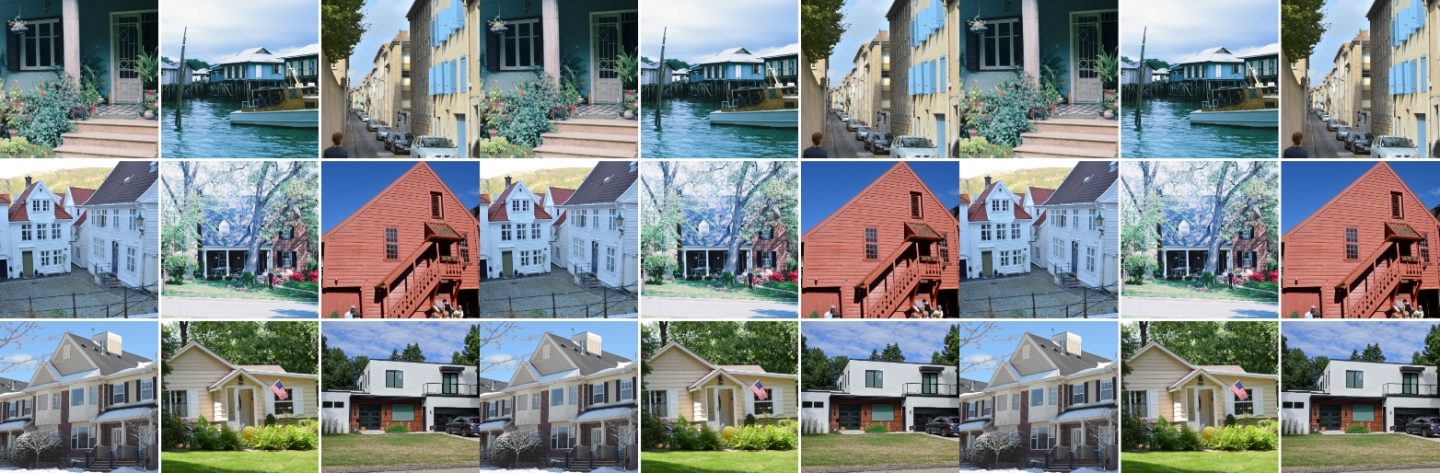
Eric Hembre, a senior economist at the Federal Reserve Bank of Minneapolis, offers a new perspective on counting homeownership. Rather than measuring the percentage of housing structures occupied by an owner versus a renter, Hembre considers how many people in the population being observed are homeowners. This distinguishes households that accommodate multiple adults from those occupied by just one or two owners and their children under eighteen.
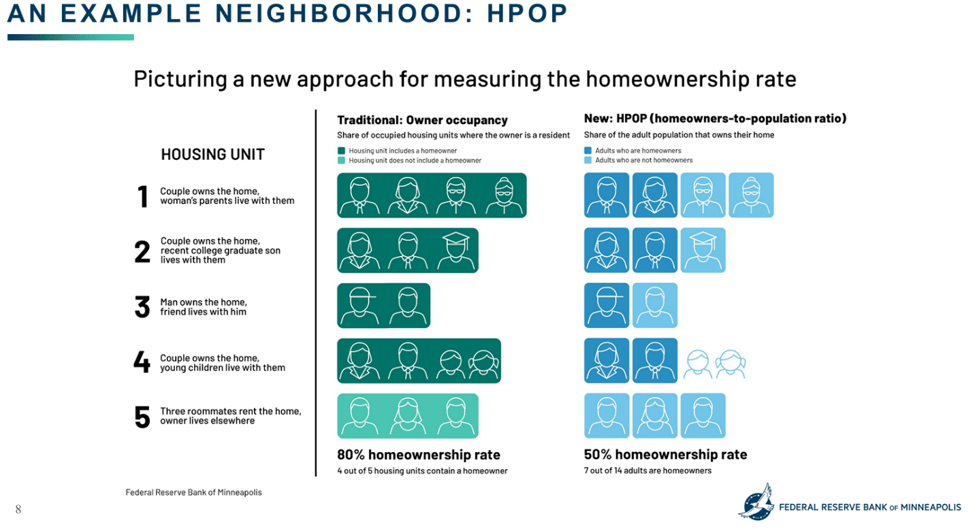
He calls this new measure the Homeowners-to-Population Ratio (HPOP). It is based on people, rather than structures.
Here are some slides from a presentation given to the Minneapolis Area Association of Realtors this past week that help clarify the concept.
What could be interesting about this measure is observing various community outcomes as the ownership rate drops—which implies a larger number of adult work hours taking place in the home. It’s reasonable to assume there might be some sharing of duties, like mowing the grass or caring for dependent family members. But what else?
Could there be more associational work done informally through neighborhood groups? Are the streets better tended and free of litter? Are the sidewalks more likely to be shoveled? Do people report better health because there are more adults to give rides to medical appointments?
It raises an interesting question about the relationship between homeownership and the less visible work that goes into maintaining a community. Beyond the structures themselves, what changes when the people living in them have different arrangements of ownership, responsibility, and time?