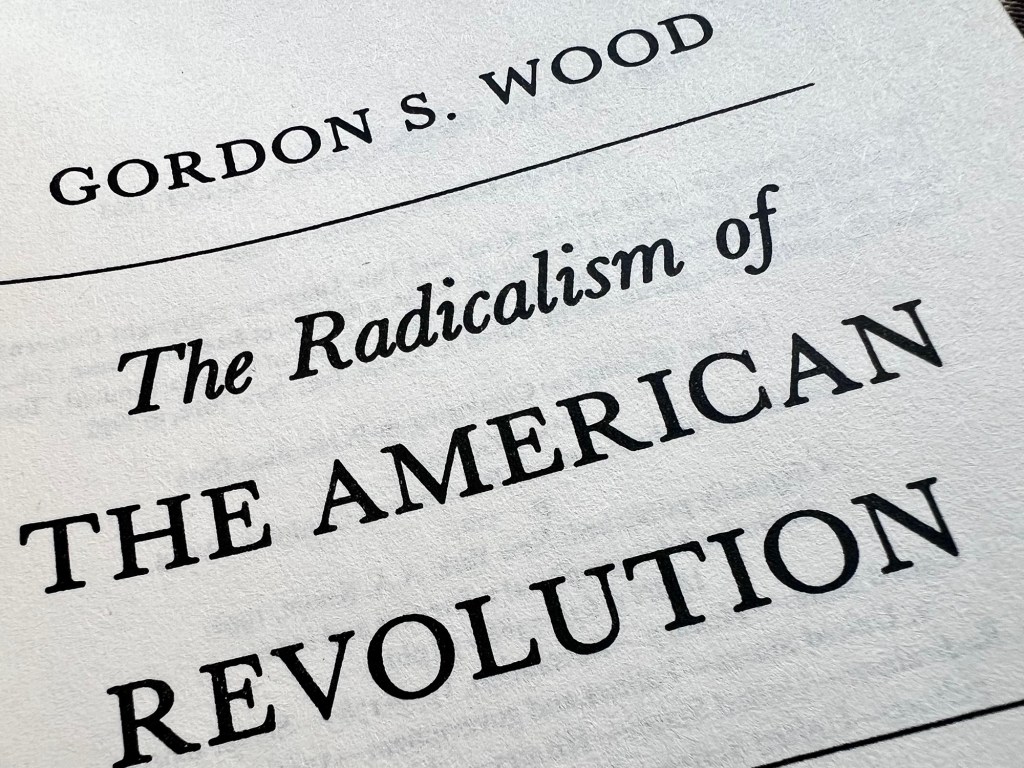
Gordon Wood captures a telling anxiety in The Radicalism of the American Revolution. Even ardent republicans worried that widening access to learning might destabilize the social order. As he notes, some “enthusiastic republican gentlemen, when they saw the lengths to which such attacks on liberal learning could be carried, eventually backed away.” Benjamin Rush, for instance, retained religious objections to the classics but by 1810 argued that “a learned education” ought once again to “become a luxury in our country.” He feared that rising wealth would let “too many ordinary people, particularly plain farmers,” afford college for their sons—something that had once been largely confined to cities and the learned professions. Basic skills like “reading, writing, and arithmetic” should be “as common and as cheap as air” and form a kind of “sixth or civic sense” for every citizen in a republic, but higher learning needed guarding.
This hesitation feels strikingly modern—much like today’s debates over AI, where critics warn that democratizing powerful tools could backfire, erode expertise, or unleash unintended social disruption. Yet history shows the opposite dynamic fueled America’s revolutionary success. The broad push for literacy and practical education, combined with the dismantling of old monarchical hierarchies and social restrictions, created a powerful “mega-push.” Newly educated (or semi-educated) ordinary people encountered opened avenues for ambition, mobility, and association. They could form committees and interest groups for the greater cause of independence while pursuing private property, commerce, and self-defined dreams—without the old deference or birth-based barriers holding them back.
In this way, the American Revolution demonstrated the power of pairing wider knowledge with freer social pathways. Atomistic individuals didn’t lose their capacity for personal striving; they channeled it into both private gain and collective republican achievement. The result was transformative.