Thank you to all the visitors from around the world who have stop by this page for a visit. I appreciate all of you.
And here is wishing you the freedom to “Climb Ev’ry Mountain” in 2024!
Searching for value
Thank you to all the visitors from around the world who have stop by this page for a visit. I appreciate all of you.
And here is wishing you the freedom to “Climb Ev’ry Mountain” in 2024!
Rereading the classics at a later stage of life is a bit of a detective story. Was The Good Earth by Pearl Buck a breakthough because stories from China were new to the West? Did My Antonia strike a chord with its lucid portrayal of the nascent qualities of pioneer life? But then again why wasn’t Edith Hamilton’s The Way of the Greeks given more notice in the past when today it sells at Target in a combo package with The Roman Way? Could it be that making difficult subjects facile was not women’s work?
As I started through Hemingway’s A Farewell to Arms I couldn’t give much extra credit for the subject matter of an American at the Italian-Austrian front. The prose is of high quality, of course. But then I hit this show stopper passage. A conversation is written up as if by an easedropper on the hosipital ward took notes of a farewell visit from a handful of friends.
The tickets are very expensive. I will draw a sight draft on my grandfather, I said. A what? A sight draft. He has to pay or I go to jail. Mr. Cunningham at the bank does it. I live by sight drafts. Can a grandfather jail a patriotic grandson who is dying that Italy may live? Live the American Garibaldi, said Rinaldi. Viva the sight drafts, I said. We must be quiet, said the major. Already we have been asked many times to be quiet. Do you go tomorrow really, Federico? He goes to the American hospital I tell you, Rinaldi said. To the beautiful nurses. Not the nurses with beards of the field hospital. Yes, yes, said the major, I know he goes to the American hospital. I don’t mind their beards, I said. If any man wants to raise a beard let him. Why don’t you raise a beard, Signor Maggiore? It could not go in a gas mask. Yes it could. Anything can go in a gas mask. I’ve vomited into a gas mask. Don’t be so loud, baby, Rinaldi said. We all know you have been at the front Oh, you fine baby, what will I do while you are gone? We must go, said the major. This becomes sentimental. Listen, I have a surprise for you. Your English. You know? The English you go to see every night at their hospital? She is going to Milan too. She goes with another to be at the American hospital. They had not got nurses yet from America. I talked to-day with the head of their ri-parto. They have too many women here at the front. They send some back. How do you like that, baby? All right. Yes? You go to live in a big city and have your English there to cuddle you. Why don’t I get wounded? Maybe you will, I said. We must go, said the major. We drink and make noise and disturb Federico. Don’t go. Yes, we must go. Good-by. Good luck. Many things. Ciaou. Ciaou. Ciaou. Come back quickly, baby. Rinaldi kissed me. You smell of lysol. Good-by, baby. Good-by. Many things. The major patted my shoulder. They tiptoed out. I found I was quite drunk but went to sleep.
A Farewell to Arms, Hemingway
What a fabulous stream of words. For the passage to be a success, it needs to occur at a point in the story where the reader knows enough about each participant to identfy their voice. Nothing else is feigned. It is a magical transport to a time and a place and a grouping of friends somewhere in the Dolomites.
The effects of the 2008-2009 downturn were still very much in play when this movie came out in 2011. And the overall greed is bad and Wall Street is all about greed themes hang heavy throughout this film. Still, I enjoyed reviewing what a day in 2008 meant to a firm full of traders. It must have been dramatic if not confusing.
There were many angles to the socio-economic inputs which resulted in the claoking of mortgage back securities as viable market instruments. This film steps in at the moment of realization that people – many more people than blue suited Wall Street types – had been swimming in a pool of self-deception. What unravels is directed by the actions of those who stay on message and continue to choose the cash over conscience. They sell off the firm’s entire portfolio by noon.
It is nothing but self-indulgent to pin the motivation-by-money blame on these worker bees. As if they only respond to monetary incentives. Yet each actor from Demi Moore to Zachary Quinto (who plays the calm savant rather well) to Kevin Spacey utter the words “I did it for the money.”
Overall the film is about an interesting event which is played out by excellent actors. One just needs to be prepared for all the messaging.
Trading Economics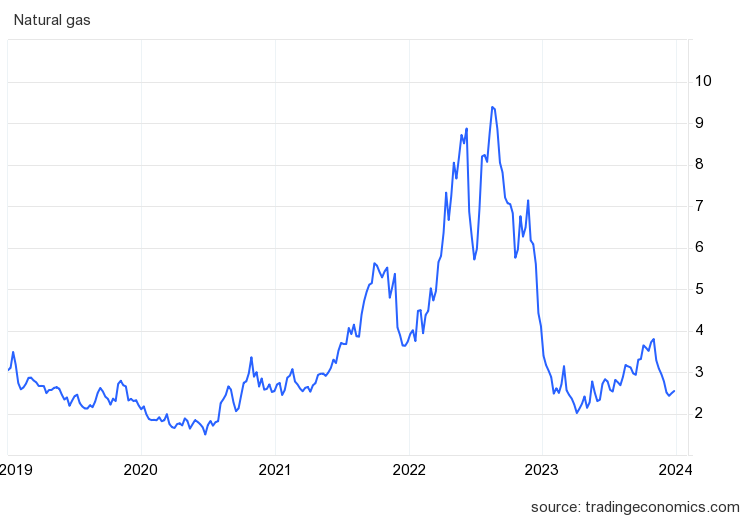
Taking a look at the natural gas markets, you can see that we have rallied a bit early during the trading session again on Thursday. Not really a big surprise considering that we had plunged so drastically over the last couple of months, but at this point we have to ask what’s left of winter. There might be a storm or two that could cause a spike in the price of natural gas, but it’s easy to see that natural gas has been a major bust this winter.

Christmas trees were hard to come by in Addis in 1974.
We make men without chests and expect of them virtue and enterprise. We laugh at honour and are shocked to find traitors in our midst. We castrate and bid the geldings be fruitful
The Abolition of Man
How would the quote go if it had women in mind?

The table is cleared except for the fancy placemats. The dishes are stacked precariously high on the drying rack, The counters are wiped down and tomorrow morning’s coffee is set to brew at 6:45 am. A curtain of contentment is closing down the house. Someone is snoring in front of the droning TV; someone is investgating a new toy; another is plotting which outfits will be worn in what order. Another holiday is in the books.
It often starts with the cutting of the tree.

There are lights and decorations. And there is shopping for the lights that have died and the decorations that need refreshing. And then there is food planning and gift lists. To which we get back to more shopping in the mega grocery stores and the funky coops. On it goes around and around for three weeks or so. Hits and misses on where to go for what. A tally of presents reveals that one has more than the other which is a serious violation of the holiday fairness rule. So back out to the stores you go.
Some will try to convince you that cash is better than a gift. I’m not against cash. Lots of people will greatfully accept a Christmas check. It’s just not the same. You can’t socially leverage cash, it’s just currency. If you give someone cash they still won’t pay the money for the thing they really want yet feel it’s a bit too much. Cash won’t pay for the lost opportunity that a gift giver had at an antique shop when they spotted the last piece of china that would make a complete set.
With a little effort and a lot of listening, a gift giver can easily provide a value over and above cash. Which leads to a very peaceful end close to the holiday where everyone in the house feels a little bit richer.

Luther made good on his intentions to craft congregational songs in the German language, and this legacy is preserved in these facsimile editions, but moreso it is preserved in Lutheran churches and hymnals, where Luther’s corpus of hymns is still performed via carefully curated translations. Baptist hymnal compilers and worship leaders have generally limited themselves to “The battle hymn of the Reformation,” but this year’s grand anniversary is an opportunity to explore the greater breadth of Luther’s hymn writing.
Luther’s final collection was published in 1545, the year before his death. Geystliche Lieder Mit einer newen vorrhede, printed by Valentin Babst, contained 120 German hymns, 35 of which were by Luther, with his final revisions. Among the newer pieces were Luther’s two Christmas hymns, the longer “Vom Himmel hoch da komm ich her,” known in English as “From heaven above to earth I come” by Catherine Winkworth, and the shorter hymn, “Vom Himmel kam der Engel Schaar,” translated as “To shepherds as they watched by night” by Richard Massie.
By Chris Fenner
From Walter Russell Mead’s 2012 Yule Tide Blog:
Christianity like many world religions has often been less than fair in its treatment of women. But at the heart of historic Christianity there has always been the idea that one young single woman’s faithful choice gave God the opening he used to save the whole human race. Christmas is a feminist holiday, a feast that celebrates the free choice of an autonomous woman. As Christianity has risen to become the largest and most widespread religion in the world, women are coming into their own. It cannot be otherwise; Christianity of all the world’s great religions owes its origin to the choice of a woman to cooperate with God.
God didn’t send Jesus into the world because he was satisfied with the status quo. God sent him here because things needed to change — and right at the top of the list of the things God wanted to change was the position of women. The change didn’t happen overnight, and even today we haven’t seen the full consequences of giving half the world its rightful due, but from the day that Mary answered Gabriel a new force has been at work in the world, and what we see today is the blossoming of a tree that was planted a very long time ago.
Talking about methods, I noticed one method pop up on Twitter around the value of providing free school meals (breakfast and lunch) to all school children. There has always been provisions to feed children in poverty at schools across the state of Minnesota. So about 12% of school age children’s families were not charged and 88% were billed by the school. Or moms prepared lunchs and sent them out in backpacks.
In actions reflective of an exuberant majority, the law makers passed a bill to cover meals for all children. (We feed kids instead of banning books! was a slogan this year) On the face of things it sounds like a wonderful thing to do. In the world of constraints it shouldn’t be a surprise anyone that the cost of the program is bulging well past the initial number. Listen to little onion.
Is it valid to compare the cost of free meals to the cost of police misconduct settlements? On the one hand government decided to pay food bill for families who could afford to buy their kids lunch. On the other hand there’s a number for mismanagement of a police force and the subsequent fallout. One is for sustenance, the other is for public security. The only thing to grab onto here is that taxpayer money settles the tab. Method Grade: F-.
Here’s another method to present whether the cost of increasing the school meal tab to cover all students is justified.
We note a pattern here between those who support free lunch- they value it more than funding the police. Public safety is a concern for all. Lunches are covering less than 20 percent of the population. Lack of public safety results in a loss of some kind to all citizens. Lack of school meals, in this case, means a few more PB&J’s and carrots sticks for some families. As a method, these comparisons, well, are weak. Method Grade: F-.
The Gov thinks the program is worth it since a mom wrote to him and said she appreciated not having to pack lunchs ever morning for her three kids.
At least in this method a politician was listening to a constituent. Method Grade: F+.
In many cases, mortgage companies require an appraisal on a property before lending money against it. This involves a professional appraiser touring the property, taking many measurements, and then compiling a report which is often a dozen pages in length.
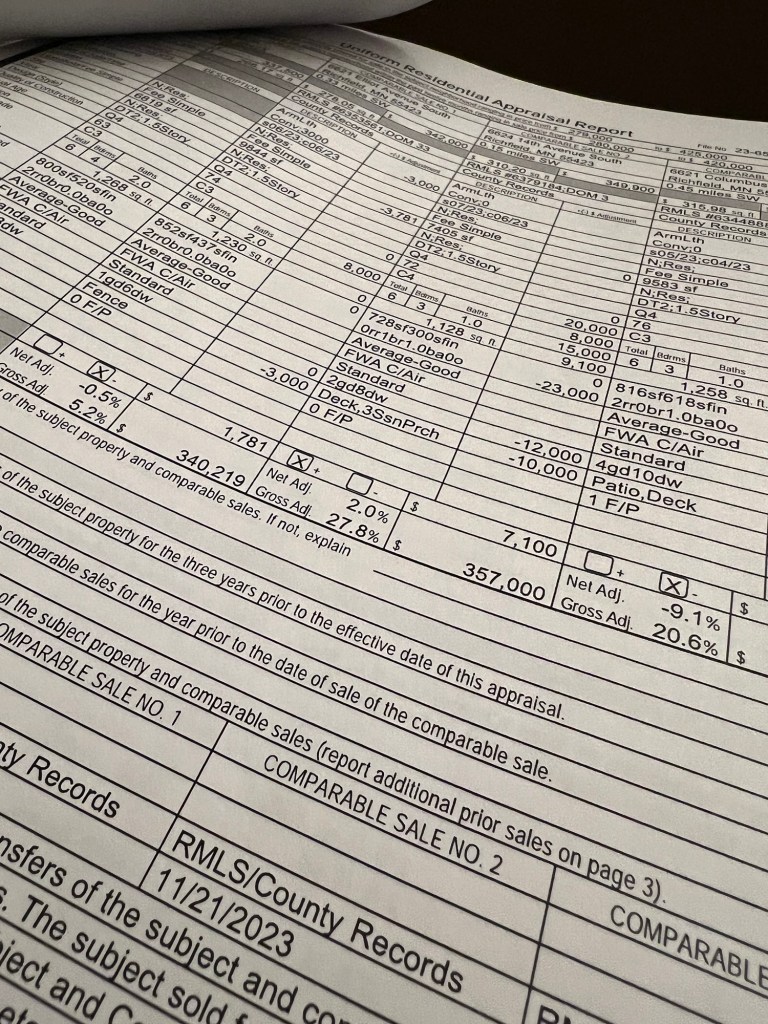
Although there are three methods listed as options to determine value, the most prevalent one by far is the use of comparables. The income approach, which, as the name implies, relies on backing a value out of the stream of income from rents. But a single family residential is purchase for owner occupants rather than investors, so that method doesn’t make as much sense. Nor does the cost approach. If one were to estimate the cost to build a 70’s split or a 1920’s craftsman, the differentiators quickly make the analysis impractical.
Thus the method du jour is to find three near-by properties of similar size and imporvements which have sold within the last six months. A tabular comparison is done as seen in the photo to make adjustment for variances. A deck was worth a $10K swing. Footage, bedrooms, baths, condition and so are tweaked up and down the columns. Once the number are in place, a tally at the bottom gives a range which justifies the buyer’s purchase price and allows the lender to happily lend against the home.
As long as the property is in a fairly large area of similar homes, this approach works well. But when there are none close-by which resemble the one in question, things get stickier for the appraiser. The one significant factor taken for granted in the comparison method is that the area is the same. Change areas, and foundational assumptions are out the window.
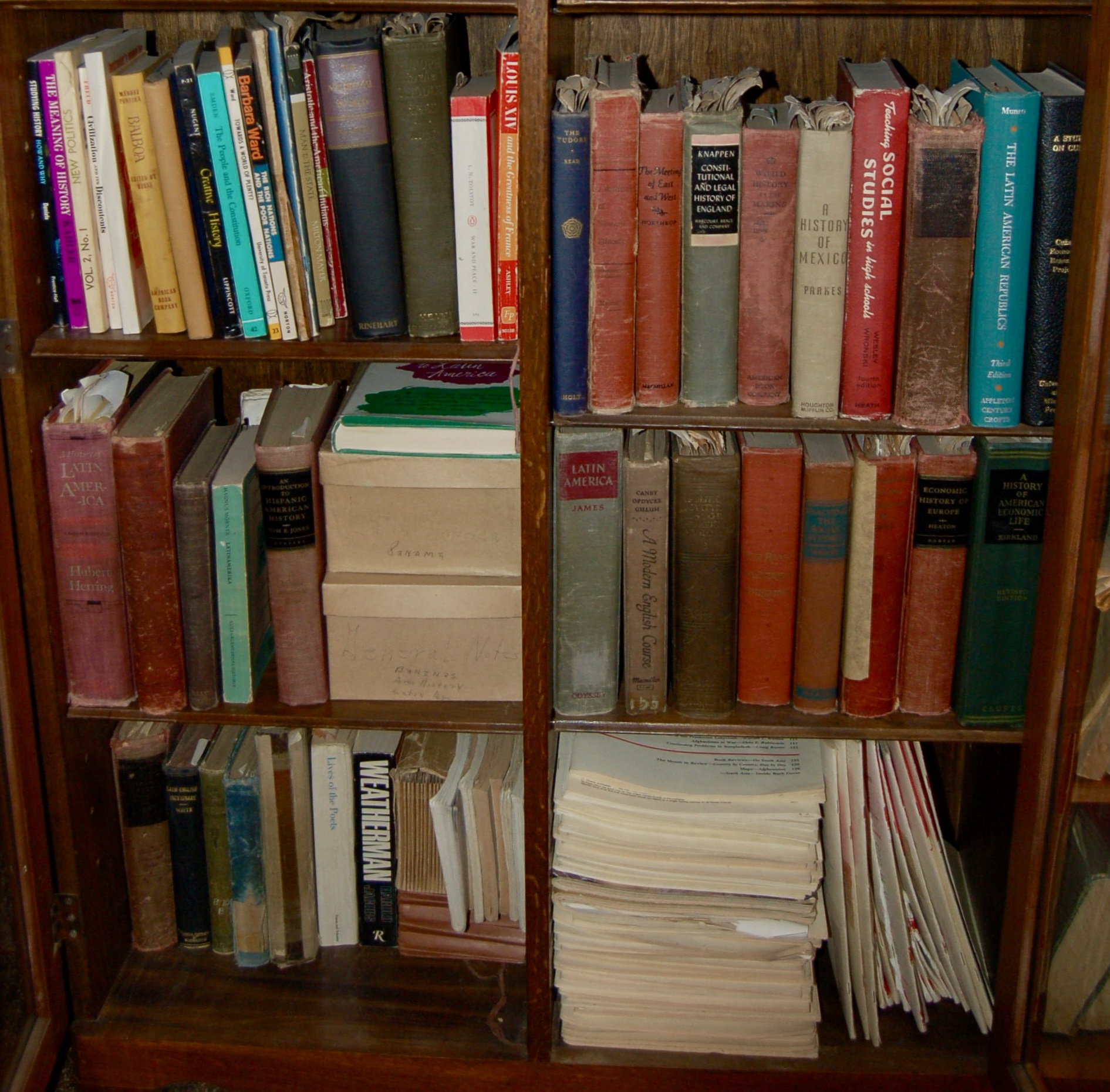
I don’t think most people bother reflecting on their ontological commitments. They are taken for granted like the piped water and public education. This is what I was born into, and since everyone else is running on the same plane of knowledge, I’ll go along for the ride.
Life is certainly simpler that way. There’s a lot of ground to cover if one were to try to get down to the very building blocks of the better life. To explain why things are done when and for whom. Dr. Arthur Holmes does a good job of giving you a tour of the history of philosophical thought, if you have the time and inclination to follow along.
In this clip he’s talking about contribution from Pythagorus and Heraclitus. Both were interested in the dual nature of things. Both worked with the concept of change through time. Heraclitus is most noted for having pointed out that one never steps in the same river twice. By the time you dip your toe back below the cool substance, the water that was there will have washed down stream replaced by a fresh liquid.
But first, Dr. Holmes tells us that both thinkers were interested in the thought that all things have two sides, each of which is equally important. There is a double aspect to all things depending on the view from which you gaze.
For instance, a sound barrier wall is erected along side a highway- hurray! The neighboring homeowners view it as a benefit as the roar from the freeway is muted to a background buzz. The shop owner, however, is penalized as the thousands of eyes that used to see Tip Top Auto Body as they drove to up and back can no longer be reminded of its presence hidden behind the wall of timbers. The same wall provides to one group a benefit and to another a penalty.
As the two aspects of things cause some to seek one solution and others to seek another, there is change. Which brings us back to Pythagorus, the mathematician, and Heraclitus who insisted there are two aspects to everything. On the one hand everything seems to be in the process of change, on the other hand there is order. When a road is enlarged, a large group of commuters benefit. But the homes along the road endure more noise. A large group benefits; a smaller group internalizes an expense. One road. Two perspectives.
Dr Holmes explains these two pre-Socratic thinkers were confident that despite the fluidity in the system, despite the ongoing change, nature seeks out an order. In a reaction to the noise, a wall is built. And on it goes. Two perspectives, a change, and a return to order.

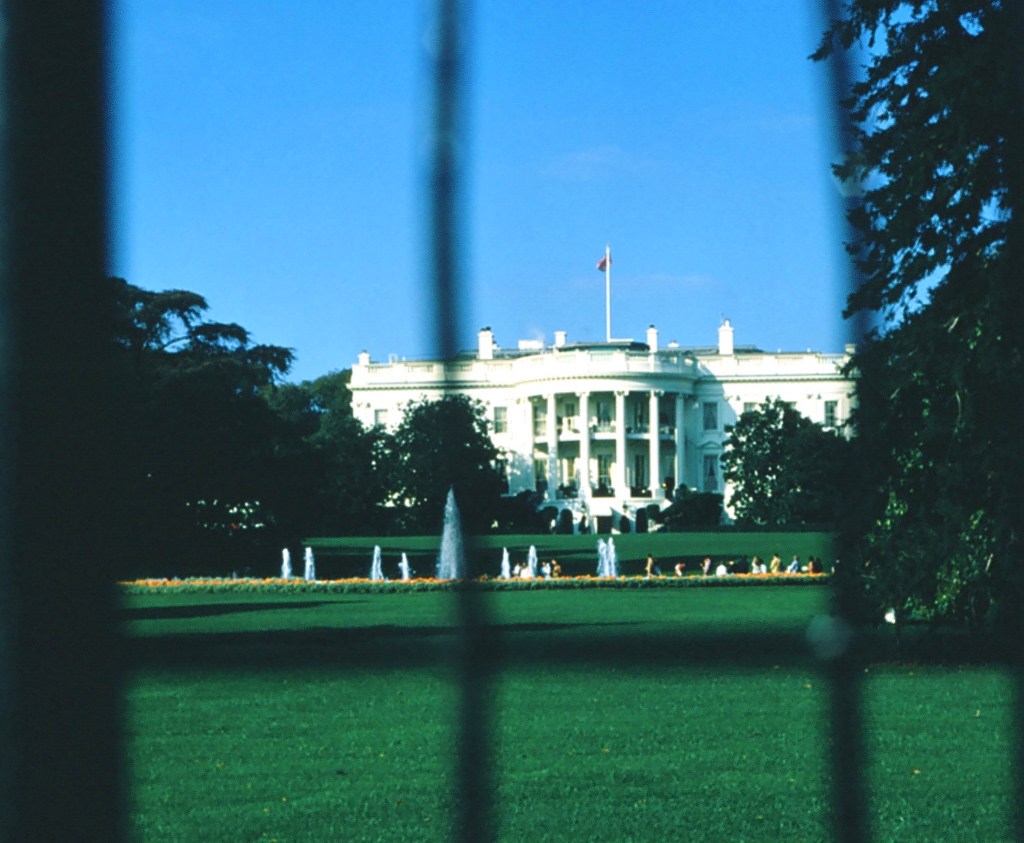
There are some houses that are better known than others. I bet 99% of the US population could identify the White House in a line up.
There’s the house that so dismassed Jimmy Stewart in It’s a Wonderful Life. The turn of the century home has aged over the years and Stewart finds the on-going maintenance a dispointment. Also from the silver screen is the gorgeous Home Alone Chicago residence of the McCallisteer family. Kevin (McCauley Culkin) is ingenious at rigging it up with all sorts of traps for the goofey thieves.
From the small screen, the Brady Bunch house- a cool 70’s split home comes to mind. How many times do those floating stairs carry the six kids up and down? The California suburban build’s features are a constant reminder that father Mike Brady is a hip architect. From sitcom comedy there’s Archy Bunkers house on All in the Family, and Roseanne Barr’s family spend a lot if time on the livingroom couch in Roseanne.
One of my favorites from earlier childhood was the log cabin in the big woods- home to Ma, Pa, Mary, Laura and Carrie Ingalls. Built by hand; heated with a wood stove. Family time was all the time in the one room structure with a loft. The scenes often would spill out into the barn just to keep some conversations private.
What about you? Which homes hover in your memory?
I finally got around to watching The Big Labowski and can see why it is a cult classic. The depth and variety of special characters in this film make it delightful and funny. But if it weren’t for Jeff Bridge’s hard-to-place ability to maintain a running continuity through a sequence of unpredictable events, the film could have been a wreck.
It’s not just the characters. The filming, especially the portraitures, is magnificent. Granted there were a lot of interesting faces to capture, but in addition to framing, music added flare, timing was spot on. It really does need to be watched several times to see just how the directors and cameramen/women worked the magic.
The Coen brothers grew up one suburb over, educated in the public schools there. It’s a nice thought that their creativity was nurtured just down the road.
I don’t know what prompted my mother to show up with an armful of Alice Munro books one visit. There are at least seven standing shoulder-to-shoulder on the teak bookcase in the living room. From the penciled prices on the inside cover one can surmise that these were purchased across several used book shops. There was a hunt involved in this curation.
The Canadian writer had received a prize or an award (one of many). It was most likely the Nobel Prize in Literature. Now presented with a starter kit of her work, I felt obliged to dig in and read through them. And I tried. Several times. But man, she talks about adultery as if the characters reside in two apartments rather than one. At one moment I’m over here, now I’m over there. It’s it a fairweather day, n’est pas?
Yet when trajedy strikes, a big beam of light is shown on the hurt and meaness and dismay all jostling about between the pages. I’ve known others to be fascinated with gore. They’ll interrupt the flow of conversation to inquiry whether you heard about the toursit who was mauled by a grizzly. “Can you imagine?” and in questioning drawing your mind to do exactly that. “Walking along in the stunning Rockies one moment and then batted about by a three hundred pound beast. Can you imagine?”
Munro’s writing is like that for me. She dwells in the bleak interactions of unhappy people. She’s intent on bringing her readers to trajedy’s door and then have them be torn in two by betrayal or blistered from disappointment.

But here’s why you should revisit a writer who once didn’t suit you. Because now I know her plan. So I can scroll through the tumbling words, at the ready to deflect the hurtful human behavior; I can appreciate how she strings those words, and phrases, peppered with timely punctuation, into a lovely text.
This nice video clip from Bloomberg takes place in Portugal- but it’s a common story which is replicated again and again. An area of town, a city, a region develops a draw for new residents. As the population grows, housing becomes more scarce which pushes prices of dwellings upwards.
The motivation to relocate to the area can vary. In this case it is easy to measure as the tax incentives were given to a specific and trackable group- foreign arrivals. The tax revenue thus is also easy to measure. The negative implications of higher prices for local new -comers to the housing market is being held up as the disadvantageous outcome. But why now? After nearly two decades?
What is not measured is the additional equity all the present owners have in their properties. Early in the process, sellers undoubtedly appreciated the extra appreciation upon the sale of their homes. As time goes on, the group of buyers needing homes and facing higher prices, grew to exceed the number of willing sellers reaping rewards from the inflated house gains. What was a positive is now outweighed as a negative.
The nesting equity in homes is of less concern to those who are not in a position to sell. Their use value of the property as lodging is on their minds more than its market price. Yet younger people coming into their household forming years find themselves at a disadvantage. Still- it seems like this is a mismanagement of housing stock problem rather than a tax policy problem.
Minnesota winters are chilly. We also get a lot of snow. The white stuff is pretty and all when it gently drifts down from a starry sky. But at some point, someone has to clear the roads and sidewalks so people can safely walk and drive to their destinations. Last season, winter played us a tough round.
Depending on how far back you go in the data, it was either the wettest or second-wettest meteorological (December-January-February) winter for the Twin Cities. Records back to 1893 are considered the most reliable, and in that case this winter was No. 1. (The winter of 1880-1881 measured a whopping 9.58 inches of precipitation.)
…
For the Twin Cities, our seasonal snowfall total, which includes the fall, is up to 71 inches. That’s 80 percent more than normal. In Duluth the total is up to 93.3 inches, 41 percent more than normal.
MPR
To keep the proper perspective, 71 inches is just under six feet of snow. Had it fallen all in one go, the banks would be taller than most of the population. However, it doesn’t snow all at once. But when it snows more than a couple of inches, someone needs to get out with a shovel or a snowblower to work away at the sidewalks whole the city and state trucks clear and salt the thoroughfares.
Lots of people had a hard time keeping up. In the denser cities centers, the need for clearing is even more acute as people need to cross sidewalks to get to bus stops or depend on their neighbors to tackle the alley so they can drive into their garages. There’s a lot more shared space. The issue of snow removal reached a feverous pitch as snow removal undone causes coatings of ice. People proposed that the city should clear the sidewalks as well as the roads. That is, until the estimates were tallied up by the budget departments.
Others offered their solutions of self-reliance from sections of concrete alleyways hither and yone. A guy with a snowplow would do it, some would say. My dad used to organize the snow plow schedule, piped up another. Fast forward six months, with the winter weather easing in around windows frames and under the door sweeps, and there’s a call put out on twitter to ask about that thing called “organizing.”
Barack Obama was the first legit person I heard use the term neighborhood organizer as a job description. It’s actually quite apt for spontaneous social labor. A job needs to get done across some jointly held property or responsibility, and someone’s got to do it. The push and pull of participation and gratitude are part of the dynamic, and then there are the leaders that keep track, and, like Bill Lindeke, there are the advertizers or communicators keeping the clan informed on how to keep the tradition going, in case a break in the chain has defrayed the tacit knowledge.

With Christmas around the corner, it’s time to start pulling together some gifts for the family. Both sites I purchased from today gave me the opportunity to donate to a cause before checkout. This isn’t a new idea. McDonalds has had their change bin outside the drive-through window for ever. Grocery stores allow the local schools to bag purchases in exchange for a donation. But today it was two for two. And this shop gave me four options for giving.

Years ago a friend said it’s easier to extract money from people when money is on the move. Too true, too true.
Scandinavian humility was a mainstay thread throughout Garrison Keilor’s forty-year run of A Prairie Home Companion. The radio variety show ran weekly on Minnesota Public Radio to a large and devoted audience. Later the show was held at the Fitzgerald Theater in St. Paul and more than once I was unable to get tickets to a sold-out show when an out-of-town guest suggested we attend.
His material centered on the slow pace in a rural community, the Lutheran way of life and a matter of fact sensibility. He ended every show with: “That’s the news from Lake Wobegon where all the women are strong, all the men good looking and all the children above average.”
This same type of virtue of modesty appears here is a Viking poem:
On little shores and little seas
live people of little sense;
everyone has equal wisdom
where the world is half as wide.

Moderately wise a man should be-
don't wish for too much wisdom;
the men who live  the fairest lives
know just a number of things.

Moderately wise  a man should be-
don't wish for too much wisdom;
a man's heart  is seldom happy
if he is truly wise.

Moderately wise a man should be-
don't wish for too much wisdom;
if you can't see far into the future,
you can live free from care.

Flames from one log leap to another, fire kindles fire;
a man learns from the minds of others,
a fool prefers his own.

Get up early if you are after another man's life or money;
a sleeping wolf will seldom make a kill
nor a warrior win lying down.

Get up early if you have few men, and attend to your tasks yourself;
much slips by while you lie in bed-
work is half of wealth.
Taken from the Viking Poem: Sayings of the High One

Often times, a type of housing is popular amongst a particular demographic. Retirees are drawn to one-level detached townhomes. Young couples want the single family home on a tree lined street in a neighborhood they can afford. The single fervent worker-type loves the glass clad downtown condo. What’s interesting about these townhomes is that they are home to the whole spectrum of homeowners.

This has a lot to do with location. The 86 unit complex of attached homes with underground heated parking were built twenty years ago in a first tier suburb. The homes right across the road from this sidewalk are modest 1940’s built properties. There’s a cute little park at the corner yet the rest of the neighbors are commercial spaces like Applebees and Costco. And just to the other side of the Courtyard at Marriott is a main thoroughfare: I394.
What developers need is land, a buyer, and a price point the buyer can afford. Land prices in older areas are tricky. Opportunity strikes when a rundown commercial area is underused. Then there is the potential for redevelopment. At this transitional spot between residential and commercial, an urban looking row house turned out to be a great fit.
Since land acquisition is tricky in older areas, the availability of a relatively new home becomes a premium feature. Buyers are attracted to the open floor plan, the tall ceilings, large closets and underground parking. This option has ten minutes access to downtown and yet is outside the hubbub of the urban core. It is close to a major transport artery, and easily accessible to friends and relatives in the western suburbs. All this at a price point just slightly above the average house price.
Young professionals like it. Retirees with kids in the city like it. Kids of families in the ultra wealthy suburbs to the south like it. Single parents with an adult child fit in nicely. These 86 town homes work well for a variety of household dynamics. That’s unusual.
When developpers have to make a bet on a project and speculate on who will show up with the funds to buy them, they often are more focused in their expectations. Zoning changes allow them to proceed, but it is the conception of the buyer that drives the constuction. Because, in the end, they get reimbursed for their efforts by the consumer, not the city planners.
Claim: 40% of the MN population are exposed to excessive radon in their homes.
Yet death from lung cancer attributed to anything other than smoking runs about 2%(?) of total mortality in the state.
Forty percent of the population highly exposed. Two percent die.
Something doesn’t square. Or I can’t add.
Actually, Minnesotans have a lower risk of death from cancer overall, when compared to other states (lunger cancer is 29%of total cancer with 85% of that total attributed to smoking tabacco). This is from the CDC:
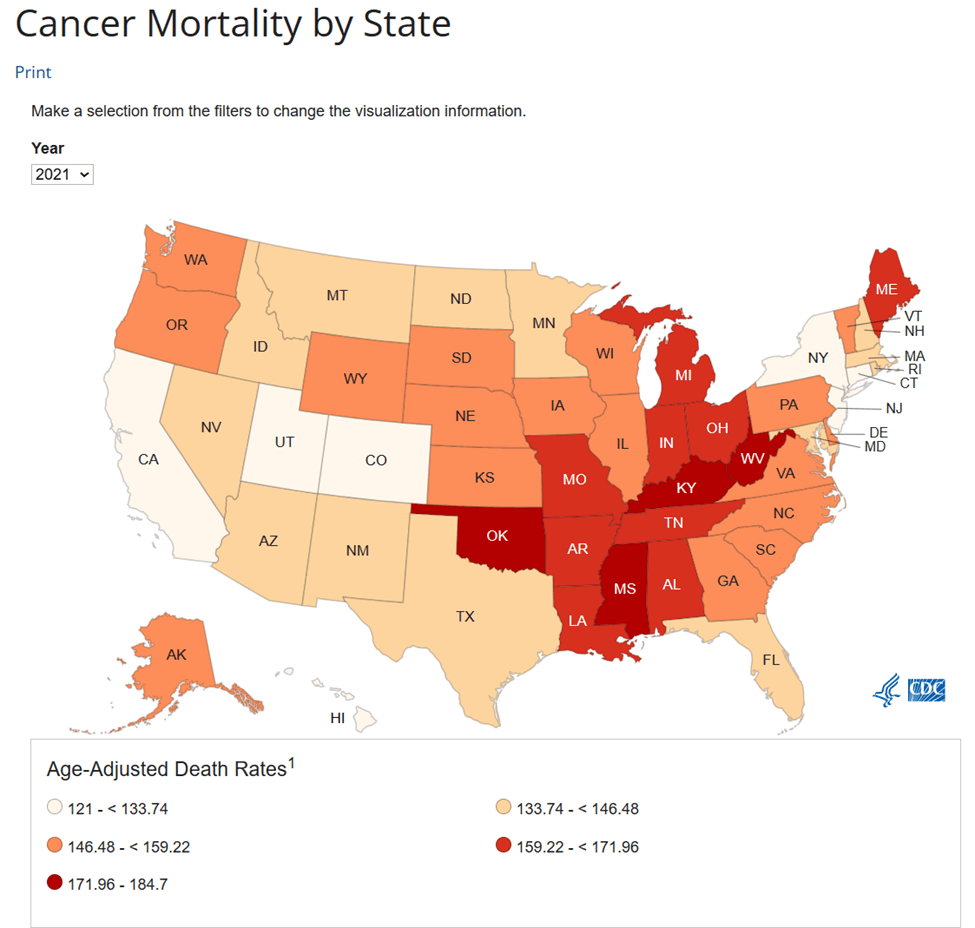
But the interesting question isn’t about radon, or testing for radon, or installing a radon mitigation system, or all the subsequent industry that has sprung from radon concerns.
The interesting question is what social norms and investments make our health indexes better than average?
Some felt the State of Mn needed a little rebranding. Here’s the new state seal.
I think it is a nice combination of symbolism with a bit of formal style. The dark royal blue looks snappy in conjuction with the the taupy silver.
The finalists for the state flag are a bit perplexing. New yes. Stately? Distinguished? Enduring? Not so sure.
I mean, they all look like the start of a quilting project. Large blocks of color. Geometric designs. What is suppose to regally flutter in the wind atop stately buildings looks like it should lie quietly spread across a queen size bed edged by a collection of blue and yellow shams.
Sometimes it is nice to do a refresh on a state symbol. But I think we can do better than flying quilt squares in the air.

Came across an excellent selection of books, with a penchant for the old Norse at a recent estate sale.
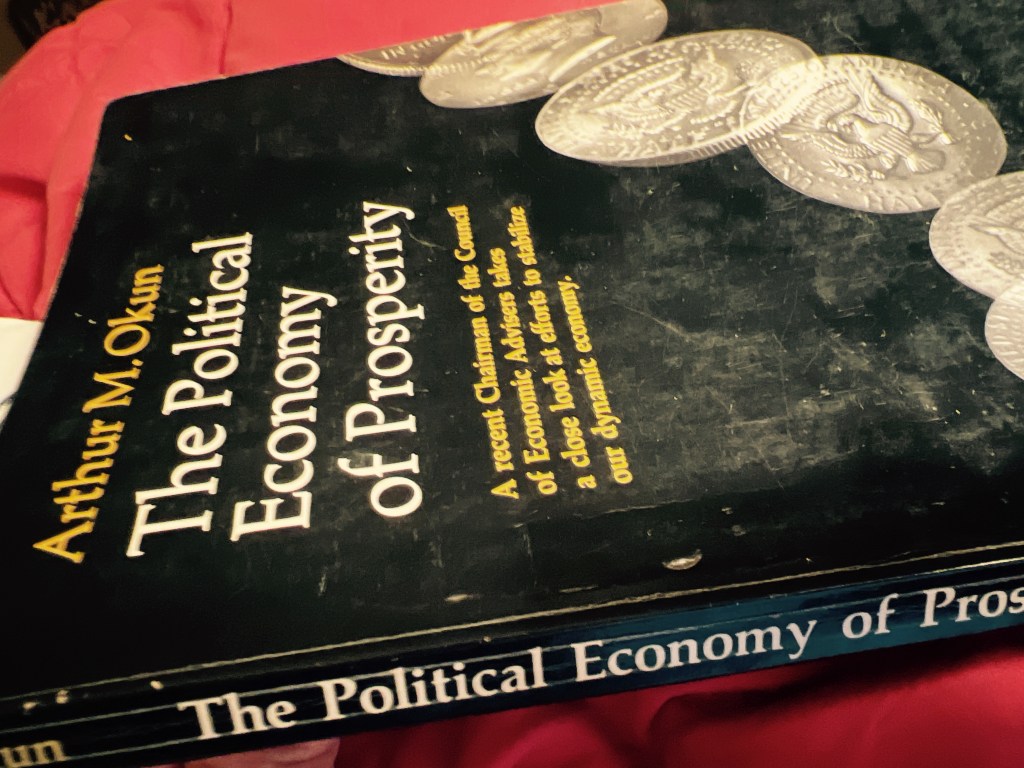
When the new rent control policies were being stirred up under the name of rent stabilization, I thought the policy types were trying out some new branding. But Arthur Okun’s essay The Agenda for Stabilization show the term well in use before 1970. The idea that government would influence pricing in the name of a stable economy isn’t a new idea.
At least Okun, who was the Chairman of the Council of Economic Advisers, proposes that private industry take heed of guidance to voluntarily adjust their pricing expectations.
Second, the appeal for restraint must be based on some set of ground rules that spell out what private decision makers are being asked to do. “Drive carefully” is not an effective substitute for a posted speed limit. Speed limits on wages and prices will inevitably share some of the imperfections of those on the highways. They will contain an element of arbitrariness, just as a fifty-mile speed limit is arbitrary in the sense that it is not demonstrably superior to forty-nine or fifty-one. Just as a passing lane is needed on the highways, so a “passing lane” must be provided for wages and prices, allowing relative shifts over time in response to the signals of the market. Just as some speeders will escape the eyes of the traffic patrol, so some violators of the price and wage standards will not be identified.
Despite their imperfections, speed limits on the highways serve the nation well and so can those on prices and wages.
I tell my secret? No indeed, not I:
Perhaps some day, who knows?
But not to-day; it froze, and blows, and snows, And you're too curious: fie!
You want to hear it? well:
Only, my secret's mine, and I won't tell.

Or, after all, perhaps there's none:
Suppose there is no secret after all, But only just my fun.
To-day's a nipping day, a biting day;
In which one wants a shaw,

A veil, a cloak, and other wraps:
I cannot ope to every one who taps, And let the draughts come whistling through my hall;
Come bounding and surrounding me, Come buffeting, astounding me,
Nipping and clipping through my wraps and all.
I wear my mask for warmth: who ever shows His nose to Russian snows
To be pecked at by every wind that blows?
You would not peck? I thank you for good will, Believe, but leave that truth untested still.

Spring's an expansive time: yet I don't trust
March with its peck of dust,
Nor April with its rainbow-crowned brief showers, Nor even May, whose flowers
One frost may wither through the sunless hours.

Perhaps some languid summer day,
When drowsy birds sing less and less, And golden fruit is ripening to excess, If there's not too much sun nor too much cloud,
And the warm wind is neither still nor loud,
Perhaps my secret I may say,
Or you may guess.

Rates are back to where they were at the beginning of September.

 Home Economics