ChatGPT and want ads

Even years ago I would read employment ads and wonder what exactly the words referred to. If you are not in an industry then you are not privy to the latest diction. This can be frustrating for the job seeker and a little mystifying for the idly curious. But have no fear, ChatGPT is here!

I was helping an entry-level computer programmer applicant and couldn’t follow the list of preferred prerequisites listed in the job description. Turning the text loose on Chat generated a plain language description of SEO and AWS technologies and many more mysterious terms. Asking further for examples of Core Web Vitals or cross-browser functional testing led to more specific, easy-to-read, applications.

Part of the job was to adjust or test for whether web content through browser windows matched with what a user views on a phone screen. And then I knew part of what that job was all about. Chat had bridged a knowledge gap. And was very pleasant about it too.

Is it sad people care?

I can never follow this type of reasoning. Is it sad when Little Leaguers want to win their game? Because that means another team must be considered loosers. Is it sad when people spend all their time in a lab and ignore their family while developping a life saving drug? Because for those few years they probably failed at parenting. Is it sad that someone is willing to take less salary to support a cause they believe in?

It isn’t sad.

Working in a position that not only provides some financial support in the form of a paycheck, but also an outlet for directing resources to a cause one supports is simply part of the mechanisms. Note that I am not saying that taking advantage of someone, or bullying someone into, or misleading people as to the cause they are supporting is alright. Those are examples of fraud.

But that people figure out ways to combine their time and resources to advance their private needs and public causes, literally everyday that they breath and walk on this earth, is simply how we all live.

Trying new things

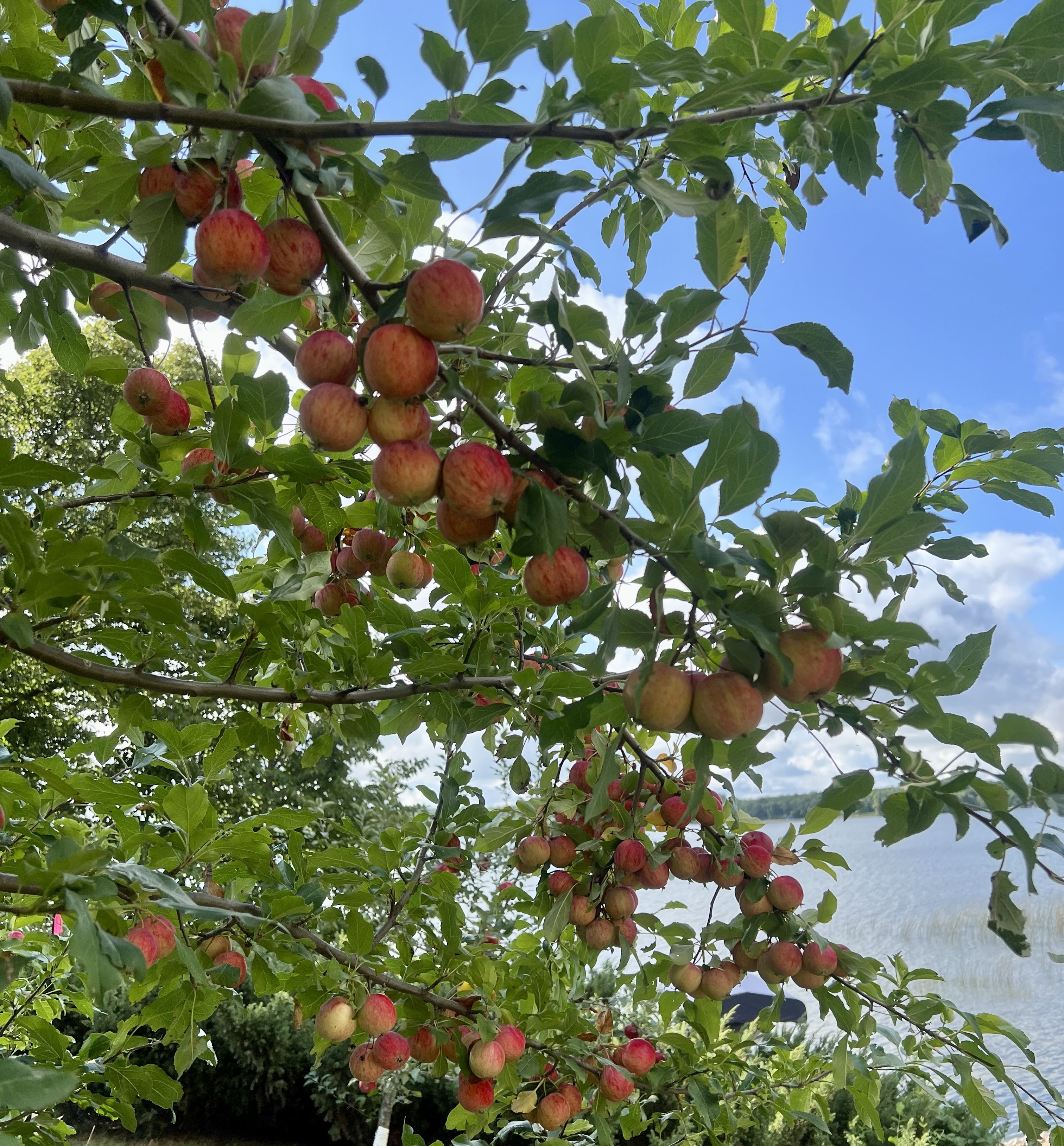
Last year I decided to give our apple trees a haircut. The apple orchard tree idea had started out as my husband’s project, but after a handful of years, the trees still weren’t producing. With a little help from a youtube video, I took a clippers to them and snipped away. My flowering bushes love to have their branches trimmed after their blooms have faded. So the apples trees should too.

And it worked! The trees brimmed with blooms in the spring and the branches became weighted down with fruit by late summer. Funny how even plants respond to a little attention.

The large apples were easy to use in a crisp. But these little ones are difficult to peel. My brother who was visiting made a plug for apple butter. Apple butter? I too had never heard of it. Once you get the seeds out and slice and dice the little fruit you turn the chunks loose in a slow cooker (with some sugar and cinnamon) for ten hours. The fragrance is as fall as pumkin pie.

A compote forms which needs to be run through a blender to smooth it all out. It’s tasty and tangy even if its appearance is questionable.

You just never know what little piece of work is waiting to be done to reap well deserved rewards.

The Moon

Robert Louis Stevenson

1850 –1894

The moon has a face like the clock in the hall;
She shines on thieves on the garden wall,
On streets and fields and harbour quays,
And birdies asleep in the forks of the trees.

The squalling cat and the squeaking mouse,
The howling dog by the door of the house,
The bat that lies in bed at noon,
All love to be out by the light of the moon.

But all of the things that belong to the day
Cuddle to sleep to be out of her way;
And flowers and children close their eyes
Till up in the morning the sun shall arise.

Does locking up the gangsters work?

The Feds have been busy cracking down on crime in the Twin Cities. Three gangs in particular have been targeted by the attorney general first with an arrest of 45 members of the Highs, the Lows, and the Bloods in May. A few weeks ago, another fourteen members were charged under the RICO, a law originally intended to curb Mafia activity.

The short term results are good.

“There have been 127 fewer families who’ve had a loved one affected by gun violence this year compared to last,” O’Hara said. “Despite having the lowest number of sworn members in the MPD in decades, the level of gun violence in Minneapolis this summer is dropping to near pre-pandemic levels.”

At the news conference, O’Hara stood beside a chart that showed a big spike in the number of shooting victims in the city in mid 2020 — 111 of them that June alone. There were smaller spikes in 2021 and last year.

By June of this year, the number of reported gunshot wound victims in the city had fallen to 35. Homicides are also down, and carjackings fell by half compared to this time in 2022.

But will it last? Will residents be able to get back to watching their kids play ball without having to duck from stray bullets from gangsta’s in cars? Many wish they had the answer, and I certainly can’t say I know. But here is where I’d look for information: in groups.

The attorney general said that since 2020 local criminal activity coalesced and became more organized. From this one could infer that replacements for the 45-60 indicted criminals are in the wings, ready to take over their new positions in each respective gang. Law enforcement does their job, builds a case, and locks up the ne’r-do-wells only to open up new spots for fledging criminals in the pipeline.

Perhaps if there is stress in the organization there is an opportunity to detect the strength of the hold the delinquents have on associated groups. For instance, are they still able to recruit the youth? Or can this group be bought out of the interaction with other types of youth programming? What about the neighbors in general- are they doing as they are told to do or being subversive? Another group to watch are the informants. Are they staying loyal to their criminal friends or providing more information than usual?

In loose terms one might be looking for variables that represent how these groups are open to exiting the relationship, willing to voice their objections, or, a measure of the degree of loyalty they have to the gangsters.

How to find the capacity

One thing you notice, after you have lived in a home for more than one stage of life, is that at different times people have a little more time on their hands than at others. Take tending to the front lawn. Most people care at least a bit about how their home presents itself to the street. It’s the public side of the property.

Even the most fastidious of lawns can be seen with a dandelion or two when the owners are in the throes of elementary school children. It’s tough to get out and do the extra fertilizing when there is a baby to bathe, school lunches to make, and homework time. The crabgrass is green after all, so does it really matter that it is flouncing its long legs over the tender shoots of Kentucky bluegrass?

If you were trying to figure out the level of public capacity a neighbrohood had in its reserves, you might want to stroll the neighborhood and see if residents are pulling through on commonly expected maintenance. If the sidewalks are not shoveled in the winter it maybe because the residents are not home enough to make it happen. Or it might be because many of the residents are elderly or disabled.

Delve a bit more into a neighborhood and you might hear of complaints that an intersection is dangerous and ‘they’ haven’t done anything about it. Perhaps they don’t know how to get to a city council meeting and register a request to consider a stop sign at the intersection. Perhaps the they that do know how to get to the city council meetings are communiting across twon and are not around enough to work it into their schedule. It takes different they skills to keep all the different neighborhood amenities tuned up.

Answering some of these questions would help to determine why the store of reserves to perform typical neighborly duties is going missing. It’s always easier to identify the lack of state capacity than the abundance of it.

Air – Movie Review with Econ too

If you lived through the 80’s you will appreciate the references to a decade slowly sliding out of sight of the rearview mirror. Both Affleck and Damon came of age in this decade and it’s as if they sat around and brainstormed a long list of all their memories and refused to leave one out. The nostalgia was appreciated by this viewer. Along the same vein is the pleasure of being filled in on the back story of the cosmic celebrity launch of Michael Jordan’s career.

The prize for most charismatic performance goes to Chris Tucker who plays a co-worker, Howard White, at Nike. His vocabulary and gestures are emphatic without excess. He is really entertaining and effective. He interfaces with a lot of the athletes’ families and, along with Viola Davis, does justice to the racial component of the times.

There is a lot of fun economic type of stuff in this film. The blind bidding for example. All the players want to know what the other parties are up to. They ferret around for information. Then they return to their own base and try to get the team on board. There’s a lot of disbelief and eye-rolling. Can it be true? No not that much! Blind bids are hard on buyers. They have one shot at being the winner, so they want to push the price without reaching for more than they need to.

The relationship side(s) to deal-making runs throughout the movie. The agent to the athlete. The company’s closer to the sports agent. The talent scout to the CEO. This has been played out on the big screen before and doesn’t cover new ground as much as meter out all the different angles and ties and degrees of trust.

Matt Damain’s character Sonny wins over the Jordans through action, not words. He shows up at their doorstep, risking his job and position in the field, to demonstrate his belief in the lanky, composed, freshman. Through his knowledge of all the past games he shows he’s put in the time to understand the players’ game. In fact, it is by pointing out to Deloris Jordan that the competing companies are all words and not action that he builds her trust.

A lot of people talk about trust as if it is something that appears or can be bestowed. But trust is the result of seeing how people act and then basing an expectation of the future on the actions of the past.

How crime is priced

Dick’s also said its second-quarter results were affected by “inventory shrink,” which refers to the loss of inventory due to factors such as employee theft, shoplifting, and others. The company’s merchandise margin declined by 2.54 percentage points—one third of that was because of shrink, the company said.

“The biggest impact in terms of the surprise for Q2 primarily came from shrink,” said Navdeep Gupta, chief financial officer. “We thought we had adequately reserved for it. However, the number of incidents and the organized retail crime impact came in significantly higher than we anticipated.”

Barrons

No tech substitution in Real Estate?

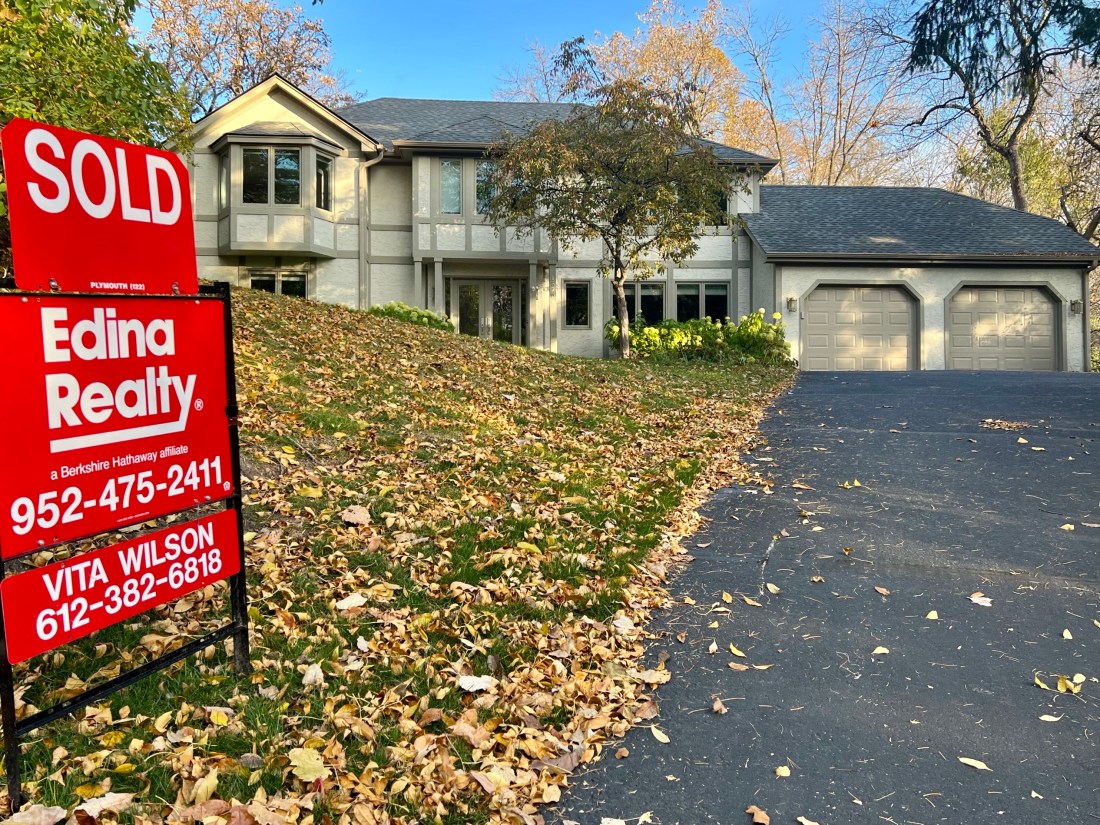
The National Association of Realtors has been around for more than 100 years. Three of the founding boards were in Minnesota: Minneapolis, St. Paul and Duluth.

The National Association of REALTORS® was founded as the National Association of Real Estate Exchanges on May 12, 1908 in Chicago. With 120 founding members, 19 Boards, and one state association, the National Association of Real Estate Exchanges’ objective was “to unite the real estate men of America for the purpose of effectively exerting a combined influence upon matters affecting real estate interests.”

Before this professional organization coined the word, Realtor, the people who helped facilitate the buying and selling of real property were called land agents and then real estate agents. They pop up as characters in books like the ones written by Ivan Doig about settling Montana.

NAR sets and maintains standards for the industry which brings unity to the profession. Today there are more than 1.5 million members nationwide making it the largest trades union in the country.

When Zillow launched its website in 2006 many predicted the demise of the Realtor position in the transaction. Everything would occur online! Look at the home, contact a lender, order the title work, and close on the property without viewing it! Done. This narrative permeated the market for at least ten years before it started to ebb ever so slightly.

It has now been 17 years since the entry of big tech into the real estate business and Zillow is still losing money. In 2022 real estate disrupter lost $101 million. I don’t know how venture capital works, but where does all this money come from to float unprofitable companies for decades?

The long and the short of it is that Realtors are still out helping buyers and sellers come together and make a trade. The job really hasn’t changed in any substantial way since 2006, except that advertising occurs via the web instead of print media. There are a variety of arrangements available to clients from basic services to full service. Perhaps ironically, since the age of social media, there has been a shift away from for sale by owners.

It’s pretty clear that there is a place in the market for this type of work. If you’ve had a poor experience in the past maybe the solution is to take a little extra time in selecting your realtor next time around. There are as many styles and personalities in the business as there are clients. You just need to find the right match.

Notes from the local paper

Cannabis. There’s a long article in the local paper about new rules around the use of Marijuana. The long and the short of it is that even though the state made it a legal substance, it can’t be enjoyed in any public spaces. Apparently weed isn’t as main stream as people thought.

Bees. I don’t really understand the fascination with tending to a hive of bees. The swarm seems to show up and disappear at will. But the thought of a mass of buzzing insects with stingers does make a mother worry. However- the bees got the thumbs-up vote. Residents are free to be beekeepers.

Green Step. An association has been circulating recruiting cities to join their organization which tracks and scores municipalities on compliance to preset environmental goals. Seems like a lot of signaling to me. Plus extra work for city employees. But the pressure group won, and Plymouth will become a Green Step city.

Mental Illness. If the number of words were a measure of importance, this topic is woefully under-represented. A two and a half inch space advertized a September meeting to talk about this very important issue.

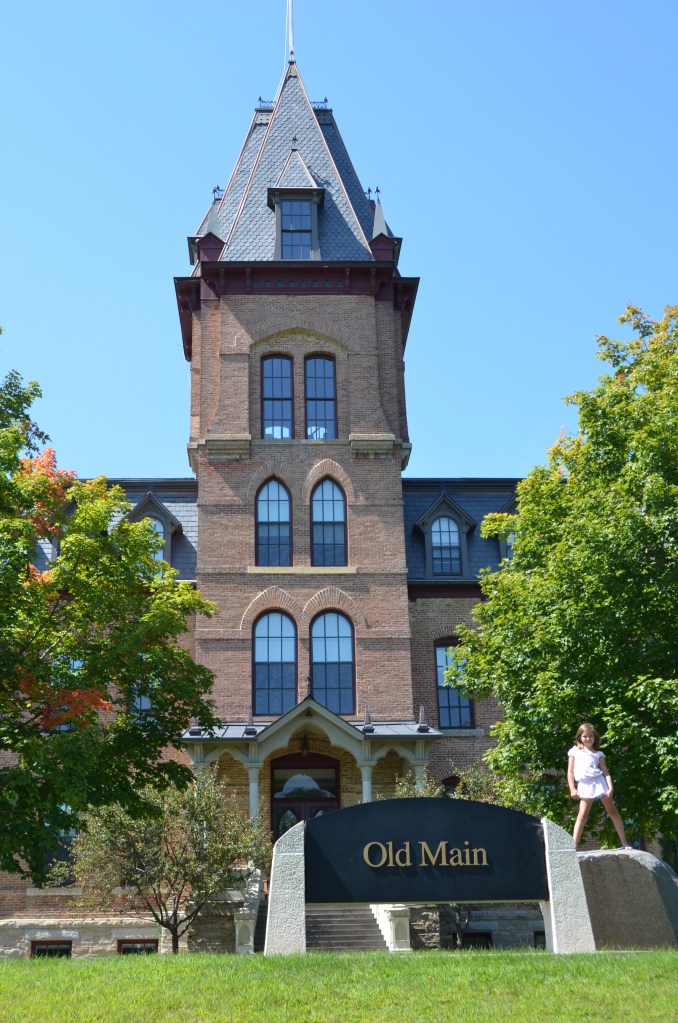
Nice quote from the St Olaf Econ page

Economics is a study of humankind in the ordinary business of life; it examines that part of individual and social action which is most closely connected with the attainment and with the use of the material requisites of well-being. Thus it is on the one side a study of wealth; and on the other, and more important side, a part of the study of humanity.

Alfred Marshall, Principles of Economics
St Olaf College

Historic Minneapolis

I just listed a condo in a brick brownstone built in 1917. The stately building looks over Powder Horn Park. The three-level buildings line up along the sidewalks, high over the baseball diamonds, playgrounds, and trails around the lake. There is a public bike rack right out front as a reminder that there is no need to fret over the lack of garages as the bike infrastructure in the city is an adequate substitute.

The most significant differences between this one-hundred-year-old structure and one built today lay inside and out. An all-brick exterior is prohibitively costly. This is really too bad because not only is the exterior beautiful it requires very little maintenance. On the inside the units are efficiencies or one bedrooms. Even though there are many households of one, these two configurations are the least likely to appear in new construction. And then everyone complains about the price of things.

Below is the plat map from 1914 and shows the lots between 14th Ave and 12 Ave on the NE corner of the park as undeveloped.

Mpls Fed and Housing Data

Minneapolis Federal Reserve Building 1972-1997

The Minneapolis Fed’s recent article about housing in MN provides data supporting some positive trends. If you’ve lived in the state for a while, and know people who’ve moved away to other similar cities and then returned, you have firsthand points of reference to the favorable cost of living we have here. Mid-sized cities like Denver, Portland, and Dallas are more expensive than the Minneapolis-St Paul metropolitan area. Here’s a chart from the article which says as much:

This is not to say that everyone within our territorial boundaries has adequate shelter. And thus it is fortunate that the Fed is putting some shape around the goal of increasing the number of homes available. Because, of course, more supply translates into better pricing. From their analysis, it appears that the region is on track so far.

I was in a meeting of realtors once where a peer did not readily accept that more units meant better pricing. And, although not voiced specifically in this manner, I think what she was getting at is that if the structures don’t match the need of the households, then there may not be an increase in supply. No increase in inventory—no better pricing.

This points to the benefit of being able to match segments of the market. How many shelters have a physical structure which matches the need of this type of household? Do those inventories line up or are they disjointed?

It’s no wonder data is valuable. There’s always more data necessary to understand our world.

There’s more to it

Have you ever noticed that there is often more to an issue at hand than you first realize?

Consider the preparation of land for home construction. Those big machines just go on into the staked-off space and move dirt around until it is pretty level- and voila! It’s ready for a new home. But then people start talking about cutting and filling. And schematic alarm bells start ringing right above the curved arch of your pinna. If there is vocabulary to learn than there is undoubtedly a whole segment of the process still to understand.

Luckily there’s YouTube to fill in the gaps.

As you can imagine, there may be outcomes from shifting around a bunch of dirt. Erosion is a typical concern. But changing a terrain effects drainage as well. So it shouldn’t be too surprising that this type of activity requires supervision by goverment in efforts to monitor the interests of the greater group.

On the flip side, a bureaucracy can really slow things down. The process. Rules are metered out in a checklist fashion instead of a dynamic response to uncovered circumstances. A centrailzed approval process is costly.

Do Divas need TLC?

In all seriousness- it is great to see all the concert goers post pictures on social media. The days of the virus are over.

Tiebout competition leads to markets for ties

The voluntary nature of consenting to a particular pirate ship’s constitution facilitated what economists call “Tiebout competition” between pirate crews. Tiebout competition is the process whereby governments compete for citizens, so-named for the economist who first articulated this process, Charles Tiebout. The idea is a simple one. If citizens can “vote with their feet,” governments must be more responsive to what citizens want. They must offer lower tax rates, better public services, and refrain from preying on citizens, or citizens will move to another jurisdiction that does. Governments care about this because their ability to raise tax revenues requires a tax base. And if citizens move out of one jurisdiction to another, in the jurisdiction citizens are fleeing from the tax base shrivels up. Pirates’ voluntary governance structure means they didn’t in have governments. But the principle of Tiebout competition applies as much to their floating societies as it does to competition between governments.

The Invisible Hook, The Invisible Economics of Pirates by Peter T. Leeson

Dead To Me- Series Review

Business is often slow in August for lenders and realtors. People are distracted with plans; those they committed to months ago like weddings and family reunions, those in the moment like work golf outings and those hastily snuck in as the end of summer draws near. It’s not a productive time to hop on the phone and try to bring peoples’ attention back to business.

Which explains the extra TV time.

I gave this series a shot out of curiosity to see an older Christina Applegate. The actress gets kudos for creating a distinct persona for her performance as Kelly Bundy in Married With Children. Some of those sassy characteristics and hard edges appear here too. They are familiar, like an old friend, without being distracting to her new role Jen, the grieving widow.

Applegate is well-matched with Linda Cardellini who plays Judy Hale. They have contrasting personalities and traits providing moments of humor and sympathy. The story line puts the women on a rollercoaster ride. At times the audience is let in on parts of the secrets lurking in their lives. At times the audience is misinformed.

There is a nice range of female characters in the show. The police detective who is handling the hit-and-run case is quite humorous. The mom who lives across the street from Christina. The realtor’s mother-in-law. But it’s not just a chick flick. There is the handsome Steve Wood, the respectable Christopher Doyle, and quirky Pastor Wayne.

Like many sitcoms, there is redundancy and sometimes the action is slow. But overall, I’ve enjoyed the first season and plan to continue binging on the 30-minute episodes. Happy Summer!

Group slippage

When I was growing up the 70’s feminists were ruffling a lot of feathers. What was hard to swallow is that, as a group, they assumed all women supported their efforts. After all, activists like Betty Friedan, Gloria Steinem, and Kate Millett believed they were working on behalf of all women. But just because they believed it so doesn’t mean it was.

In Matt Ridley’s book, How Innovation Works, the author suggests that it is a group of inventors most often working on a new technology. He cites the light bulb as an example. As many as twenty inventors may have been the first to produce a successful prototype. And Ridley feels that if one or two of the leaders had fallen away, then it would have just been a matter of time before another from the group would have succeeded. The way he describes groups of people with a common ambition reminds me of types of legions, all walking in step and yet replaceable.

I’d suggest that this no harm no foul quality of group members is one way to distinguish who is on a team and who is not. It’s a good way to test for slippage. That way in policy conversations it is easier to keep track of whether the actors are appropriately portioned off.

A thoughtful new conversation between Russ Roberts and Daron Acemoglu was released last week on Econ Talk. They mull through the good and the bad impacts of technology since the start of the Industrial Revolution (IR). And they list off many different groups which makes for a fun review. Here are the ones I tracked in just the first bit of the show. (times are approximate)

2:49 We. This appears to refer to present-day dwellers. And rightfully true, everyone on earth has a greater standard of living from something that stemmed out of the IR.

4:30 Innovators. This group refers to the individual who successfully laid claim and also ownership to a piece of new technology. I’d say this is a bit of slippage as not everyone working as an innovator gets paid. In fact, many toil with no reward. So this is slippage.

4:59 Replaced Worker. I think this group is rightly described when talking in such general terms. Upon the implementation of a new way of doing things, there will be changes to job structures. If the conversation were focused closer to a particular event, then more details on the various levels of impact would be necessary to keep the members of each group interchangeable.

7:00 Peasants. There are a number of points made in the conversation that rely on social and class status versus wage and monitary status. I think this is a type of slippage.

The circumscribing of these first four groups differs in quality. The general big group WE allows for a sweeping claim. Yet the sheer size of it makes its delineation only interesting as a starting point to a conversation.

The loose use of INNOVATORS is problematic. Most people will assume that all parties to the group extracted a tidy sum. Yet so many people work on new ideas at their expense and never are reimbursed. This leads the public to believe that entrepreneurs are greedy as they expect so much for not more than a sure thing. A more accurate group notation here would avoid that misunderstanding.

Part of whether the grouping makes sense is based on the context of the conversation. In this talk, there was mention that the REPLACED WORKER in the US only lost out on a good-paying job for a portion of his career. Whereas in the UK, history shows that technological innovations sometimes depleted worker opportunities for several generations. So it seems here the term is too general to make a worthy representation of the group in one of the two scenarios.

There were several references to groups that describe a class rather than a worker. PEASANTS, lords, and ladies, the Abbotts. To me, this switches the analysis from activity that generates objects bought and sold in a market, to life outcomes of both workers and their families based on social status. It switches from an unfettered exchange of some form of monetary compensation to reflections on health, access to food and supplies, voice and power within a community.

There are a lot of reasons to name a group correctly. But the best reason is to do no harm to those too busy with life to speak up and object.

Liberty for me but not for thee

The US is known as the land of liberty. But do we really trust others with liberty?

Parents give their children choices within a certain menu. A child who wants to veer off the well-trodden path may test her parents’ support for liberty. In fact, the necessity to shepherd and control is pretty well everywhere from family structure to the workplace, from associational work to social gatherings.

Don’t be too odd at the next dinner party you attend or more than likely you will be dropped off the future invitee list. The US is the flag carrier for the right to be free. But there seems to be a premise to even staunch stalwarts of freedom. People don’t really think about it. But it’s there.

It goes like this- you can be free if you’re like me.

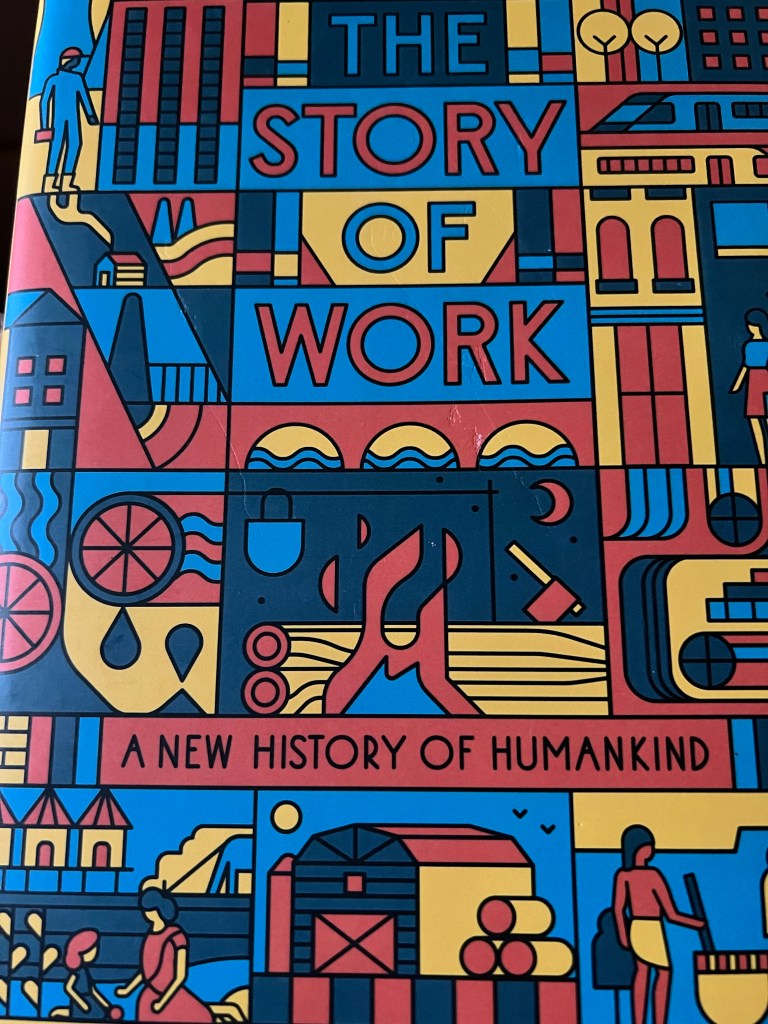
The Story of Work by Jan Lucassen

Great cover art

I’m just beginning to turn the pages caught behind the cover of this decent size book on work. It is an ambitious swing at a topic with deep historical routes. Chapter 1 starts: Humans at Work, 700,000-12,000 Years Ago.

The intention is to cover all forms of labor from tribal reciprocity to slavery, from domestic work to wage paid labor. Often the references to the first three are in form only. Slowly if becomes apparent that real work is paid work. The other forms are historical.

We’ll see if this book is different!