Activism in lieu of Church

A few weeks ago, John McWhorter appeared on a talk hosted by St. Olaf’s Institute for Freedom and Community. It was entitled Antiracism as a Religion. He’s not the only public intellectual drawing lines between the needs of the woke and the services of religious communities. But he did write a book about it, Woke Racism: How a New Religion Has Betrayed Black America.

Edmund Santurri, the moderator, a philosophy professor at the college on the hill, seemed genuinely offended that McWhorter aligned a practice imbued with a holy sacrament with secular activism. And I see his point. Although the faith aspect of religious identity is only a portion of a relationship to a church. Many people attend worship in congregations where they do not agree with the entire catechism. The church going families I know participate in the church for the wide breath of community interactions both between congregants and with the greater public.

In a recent Bloomberg column, Tyler Cowen theorizes that this natural desire to be part of shared interests is what drives many tech workers to the Woke.

Wokeism does. In fact, this semi-religious function of woke ideology may help explain what many people perceive as the preachy or religious undertones to woke discourse.

You might wonder why this shared culture is left-wing rather than right-wing. Well, given educational polarization in the U.S., and that major tech companies are usually located in blue states, it is much easier for a left-leaning common culture to evolve. But the need for common cultural norms reinforces and strengthens what may have initially been a mildly left-leaning set of impulses.

Developing such a common culture is especially important in tech companies, which rely heavily on cooperation. The profitability of a major tech company typically is based not on ownership of unique physical assets, but on the ability of its workers to turn ideas into products. So internal culture will have to be fairly strong — and may tend to strengthen forces that intensify modest ideological proclivities into more extreme belief systems…

Marginal Revolution

All of this goes to support the theory behind this site. In the same way there is a human tendency for greed, there is also a tendency for compassion.

When people are isolated in their daily lives from those who could benefit from their good works– such as in the scenario of a company full of affluent highly educated workers– they are left with services that have no destination. It is plausible to say there can even develop a sense of unease about how much has come their way when well aware of the plight of many others. When denied that weekly outlet of giving that a church could provide, the wealthy workers may seize up with guilt.

And of course, it is all good and well that people should get involved with many of the non-religious associational affiliations like professional associations and company sponsored non-profits. It is recommended! Unfortunately, these can seem mundane. So when activists come along with promises of REAL CHANGE at revolutionary tempos, it’s all very appealing.


Hold Tight- Netflix Series Review

I’m three or four episodes in on this thriller-drama and am enjoying the intrigue. It’s one of those stories that introduces the audience to a variety of characters, only loosely linked at first. And then like a wide fishing net thrown over the water, it is drawn in tight until all the characters’ stories are touching. In the meantime, you are left wondering who means what to whom.

I was also attracted to the locality as the story takes place in Warsaw. Recently there’s been a photo cycling through Twitter feeds of Warsaw’s downtown skyline. It made me realize how little I knew about this city.

The characters are convincing. There’s some blood and gore but not too much. But most of all it’s fun as because it leaves you guessing.

Words for Wordle

There’s a fun little game to play when you need a fifteen-minute break from whatever has been eating away at your attention. It’s Wordle. The NY Times purchased the guessing game that went viral earlier this year. The player gets five guesses to solve for the word of the day. Clues are revealed by the tiles turning yellow (letter in the word yet not in right place) or green (correct letter in correct placement).

I like to go for as many correct letters as I can get in the first two attempts. Once you have three of four letters and perhaps the correct placement of at least one of them, my chance of a correct guess increases.

Some computer types with extra time on their hands tackled solving the puzzle in the least number of guesses. It turns out that the key is to pick a strong starting word. Here are some choices that should set you up for a three-try success: SLATE, SAUCE, SLICE, SHALE, TRIED, CRANE, and LEANT.

What’s your favorite Wordle strategy?

Institutional marketplaces

When you think of institutions, you don’t think of the definition of the word as much as examples: marriage, the family, the justice system, or the education system. These are commonly recognized as they exist across all societies. Even criminals have their own justice system. Institutions are loosely defined as the formal and informal rules that organize social, political, and economic relations. But if one wanted to use institutions as a defining element of economic activity, it is worth teasing out a few of their components.

If there are rules, it is implied that there is a group of people who both agree to the rules and maintain them. It is also logical that the rules are put in place to maintain or protect a shared value, a common interest. So, in talking about institutions, it only makes sense to state which group is attached to the rules and what exactly is their objective. Furthermore, if the group must take action to support or defend the rules, then we will call this work.

Consider the institution of marriage. The joining of two people by a vow of devotion to one another varies considerably across society. The impact of this variance can help delineate subgroups of institutional marriage groups. For instance, the swingers who find the swapping of partners at a poolside party are probably not spending a lot of time with couples at Good Shepard Lutheran Church in many a midwestern town. Which is a way of saying that the institution-M for the party people, sub-S, has a different social contract and obligation for W work, then the M sub-C who sing hymns on Sunday morning.

I don’t think anyone would challenge the claim that these two groups live and work on their marriage in different realms. But what can we call these special places where rules are created and enforced, where groups of people meet to work in the effort of securing a value for their social commitments? The word institution has too broad a reach and leaves out the notion of an ongoing exchange.

I like the visual of a platter. All the swingers are out there tipping on a platter, mixing with new members of their loosely held marital vows. While the church people recognize marriage time and again at weddings and baptisms and anniversary potlucks in the church basement. If there is a loss of life, people deliver casseroles. If there are signs of discord, the kids get invited out so the parents can work on the issues of discontent. The contract isn’t only to one another but in support of the institution.

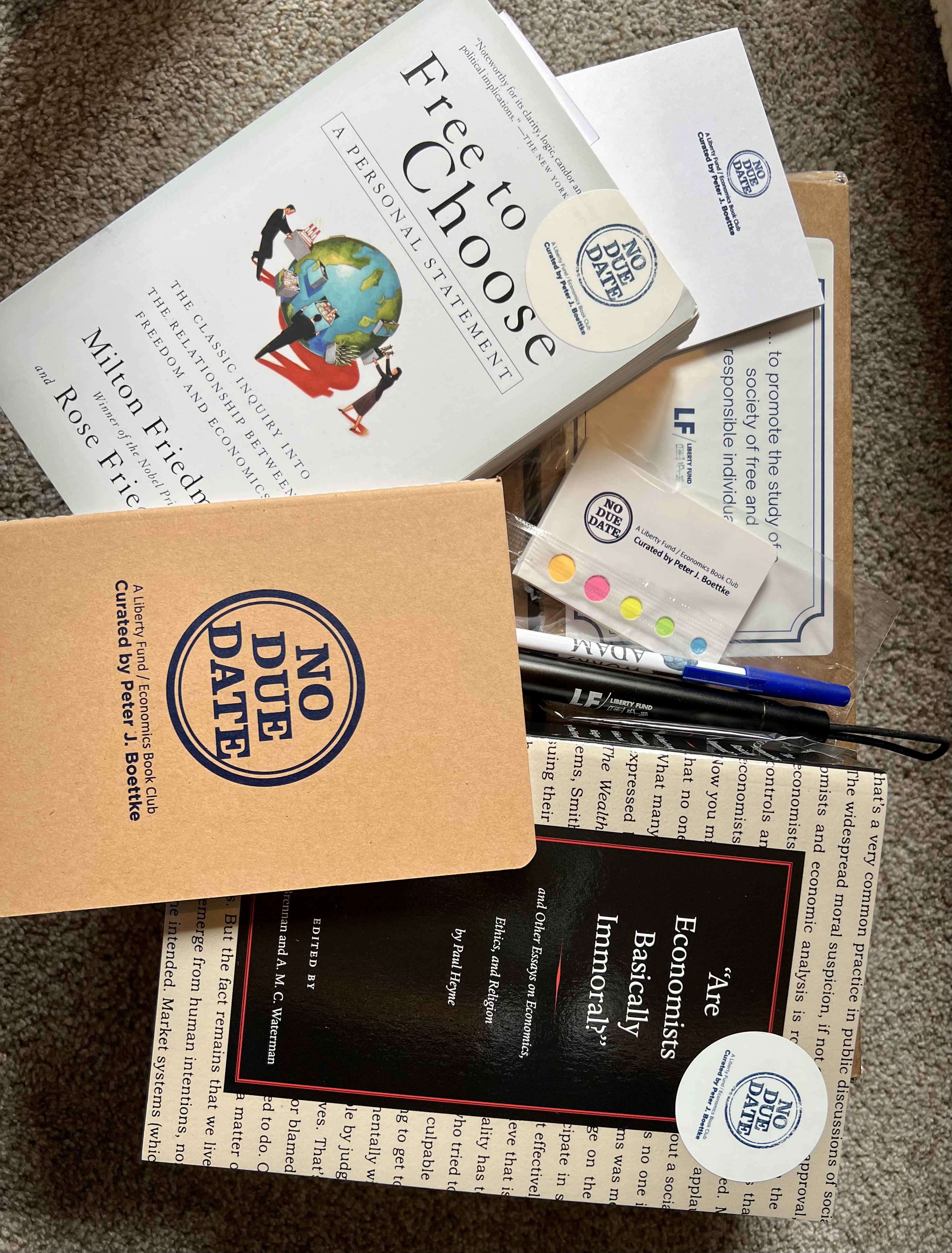
These eco-socio-platters are the marketplaces for institutions. Failing to define them can lead to uncomfortable misunderstandings. According to my new book club book, Are Economists Basically Immoral? (Heyne) Laurence Summers got himself into a bruhaha by mixing platters.

Lawrence Summers, the chief economist of the World Bank, got him. self in serious trouble last December when he sent a memo to some bank colleagues arguing that polluting activities ought to be shifted from developed to less developed countries. He argued that the demand for a clean environment has a very high-income elasticity: which means that people become keener on it as their incomes rise. He said that wealthier people are ordinarily willing to sacrifice more for aesthetically pleasing environments than are poor people. Moreover–and I suspect this is what really got him into trouble- he claimed that the health effects of pollution are less in a poor country than in a rich country because the forgone earnings of people whose health is adversely affected by pollution are so much lower in poor countries, because of both lower incomes and shorter life expectancies. Someone leaked that memorandum to an environmental group and a hail of criticism descended on the World Bank and Lawrence Summers. Summers protested that his statements were designed as a sardonic counterpoint, an effort to sharpen the analysis.”

Making comparisons across vastly different eco-socio-platters will more likely make you look bad than good. By taking a stark look at the economic circumstances of poor people and propping their platter up next to where the rich people live, the audience could only feel outraged. Not because the observations were wrong but because they are empathetic to the plight of the poor more than the truth. Being so bluntly presented with the fact that people of meager circumstances have different life outcomes invokes a sense that all is not right in the world. In the public or institutional realm, this is the fuel that ignites action.

It’s not helpful, however, to have false comparison made which instigate action. And that is the fundamental reason why we need to define our platter. Swingers and Lutherans don’t mix.

Men playing boules

Somewhere on the island of Malta

When you think about a game (basketball, tennis, boules), how much of the game is about the rules and how much is about social entanglements? The idea is to play to win based on a set of predetermined rules. But in the process of doing so can there be interruptions? Who settles disputes? Is the audience able to comment and come to a player’s aide? Is there handicapping based on size or age of the players?

So, what say you? 90-75-50 percent of the process is the game, and the rest is social?

Dewey on Method

But while associated behavior is, as we have already noted, a universal law, the fact of association does not of itself make a society. This demands, as we have also seen, perception of the consequences of a joint activity and of the distinctive share of each element in producing it. Such perception creates a common interest; that is concern on the part of each in the joint action and in the contribution of each of its members to it. Then there exists something truly social and not merely associative. But it is absurd to suppose that a society does away with the traits of its own constituents so that it can be set over against them. It can only be set over against the traits which they and their like present in some other combination.

Getting More Properties to Market

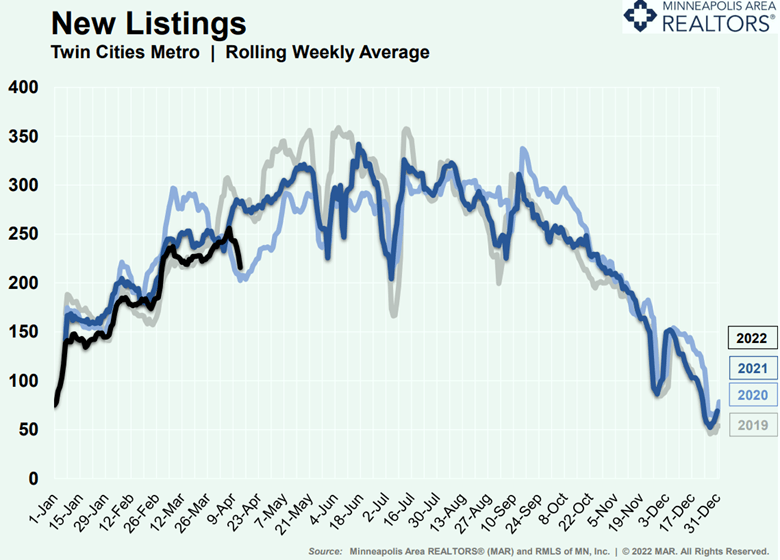
As the new listings plunge to pandemic-year levels, an obvious question is how do we get more properties to market. Where are they, and why isn’t the regular turn over in ownership providing opportunities for new buyers to acquire property?

I’d be curious to see a study about the effects of the capital gains tax on people who own less than four properties. Say an individual held onto a condo or townhome after they got married. It was fairly easy to rent, and the years roll by as one gets busy with family and life. Before you know it there is a couple hundred thousand dollars of equity tied up in the rental. Now if the owner were to sell, they would have to recapture depreciation and pay capital gains. And this is substantial.

If this tax is holding back sellers from releasing their property to market which in turn disallows wealth growth by a younger generation- perhaps it is more of a societal detriment than a source of income.

Insights

When I was just joining the workforce, a reputable mentor leaned in and confided that people would really enjoy my insights. That has not been my experience. Not at all.

A couple facts of human nature must be acknowledged. First off, we don’t want to be shown up. For example, some observations of the workplace, even by a lowly employee, may lead one to conclude that the man in charge is dropping the ball. Hence the man in charge does not appreciate insights. A great way to slow down a career is thus by providing them. Lesson one in workplace politics- make others shine and hope they bring you with them.

Many humans are susceptible to jealousy problems. Being insightful and recognized as such, can arouse feelings of envy. This results in two outcomes. Peers downplay the value of the perspicacity. Secondly, the keen observer will be left out of the next social gathering for the arrogance of making others feel diminished. Outrage.

We all like to hide things from ourselves. We can’t help it. And the motivation behind being unsupportive of a stronger peer is one of those things. It’s not convenient for the ego. So that’s the quandary. How to hide talent until it finds its perfect support structure to flourish and become unstoppable.

How many triggers are in this post?

It won’t take much googling to find out about the recent dust-up around Ilhan Omar’s illusion of quasi-universal American racism against Muslims. Instead of being distracted by the inflammatory nature of the post and reposting by a competitor for her seat for office, think about the mechanism she is using and how, in the past, it worked to her advantage.

First, you’ll need to know a little background information about the place where she grew up. As MPR reports, “Minnesota is home to the nation’s largest Somali population, numbering 74,000 with 46,000, or about 62 percent, estimated to be born outside the country.” But it wasn’t always that way. Omar arrived with her family in the mid-’90s. By 1999 only 3% of the state’s population was of African American heritage and 8% of minority background. In the latest census, over 20 percent of Minnesotans are considered non-white.

The average Minneapolitan is politically blue- but many people have supported immigrants from the start. Church groups sponsored and supported families coming from Asia as well as Africa. But an increase in such a great number is bound to upset some taken-for-granted norms and expectations. The remedy for this is to advocate tolerance for that which you do not know. But how can you know what you do not know?

This is where the trick comes in. If you don’t know how people on an airplane will react to Muslims praying in an airplane, then you can be led to believe the worst in people by the expert local politician. Furthermore, a Minnesotan with little exposure to being abroad may feel obliged to go along with the outrage and turn on themselves (mysteriously the same people who nurtured the immigration process to start). This I’m-going-to-tell-you-how-horrible-you-are strategy has worked in a naive crowd who could in fact find a few horrible people to point to.

Things have changed. People are remembering that there are a lot of good people out there- in fact, most people are kind and decent. Ilhan seems to have lost her touch with reading the room. It will no longer be enough to be the beautiful rebel, sword in hand a la Jean d’Arc, on a quest against any evil human monster she chooses to pursue.

Tax Day USA

Today is the day you must file your taxes in the US. Expats are also required to file no matter where they live abroad. We pay federal taxes, as well as state taxes, which are established independently. Here’s an economist’s estimate on taxes ranked by the amount paid:

If I had an opportunity to influence tax policy, I would pursue two objectives. Create a process that a high school graduate can accomplish independently of any professional services. Create a process where taxpayers experience, in some way, the cause and effect of payment and services.

Structural memories

Have you ever viewed the listing of a home that you lived in long ago? The visual impact of the images stirs up the memories nestled in the folds of gray matter. We lived at 510 St. Olaf Ave over fifty years ago. My father had been assigned to Vietnam and my mother, two brothers and I stayed stateside near my grandparents. This property was only forty years old back then, but it was already considered a vintage home- not a cookie-cutter suburban home.

There are video loops from our time here that my mind has kept ready at hand. The winter had been a snowy one and the sidewalk to the street has banked high with the white stuff. My grandpa stopped over one weekend day and tossed me gently into the cool crystals. The snow was as soft as a mattress and my Opa’s joy enfolded me as I sunk in the snow. My brother loved to climb up into the limbs of the massive old pine right outside the back door. One afternoon he took a tumble and mom said she had warned him.

I remember the inside as well. We had cats and they carelessly wandered all over the kitchen counters. My mom’s sisters would come over and bake bread and there were the felines, pressing their paws onto the cotton towels covering the rising dough. I’ve never cared for cats.

My bedroom faced the street. It was the smallest- my brothers always got the largest room as they had to share. My twin bed pushed up to the window which was adorned by a Swiss Dot curtain. The headboard was a nursery rhyme stitched onto a cloth, like a sampler but two feet by three feet. I remember thinking that everything must already have been invented, every famous line said. It was the sixties and there was a sense of accomplishing great things in the air.

It was a different time then. A man’s salary was enough to raise a family of five in a decent house on a tree-lined street. People weren’t shy about wanting to live near extended family to visit on the weekends and see the kids. But I was completely wrong about the finale of future accomplishments. It’s just that a few decades of social destruction put progress on hold. The dismantling and reformulating of the family power structure may just now be finding a balance. And that with that, creators and builders and innovators can count on a social base to support them.

Bertrand Russell remembers Joseph Conrad

I have a slim book called Portraits from Memory and Other Essays, by Bertrand Russell. Here’s what the famous mathematician-philosopher recalls about the author of Heart of Darkness.

He spoke English with a very strong foreign accent, and nothing in his demeanor in any way suggested the sea. He was an aristocratic Polish gentleman to his finger tips. His feeling for the sea, and for England, was one of romantic love–love from a certain distance, sufficient to leave the romance untarnished. His love for the sea began at a very early age. When he told his parents that he wished for a career as a sailor, they urged him to go into the Austrian navy, but he wanted adventure and tropical seas and strange rivers surrounded by dark forests; and the Austrian navy offered him no scope for these desires. His family were horrified at his seeking a career in the English merchant marine, but his determination was inflexible.

The two became close friends. Each identified in the other a shared esprit.

In all this I found myself closely in agreement with him. At our very first meeting, we talked with continually increasing intimacy. We seemed to sink through layer after layer of what was superficial, till gradually both reached the central fire. It was an experience unlike any other that I have known. We looked into each other’s eyes, half appalled and half intoxicated to find ourselves together in such a region. The emotion was as intense as passionate love, and at the same time all-embracing. I came away bewildered, and hardly able to find my way among ordinary affairs.

A rebirth in rural MN?

Empty houses are depressing. I know everyone has been concentrating on the shortage of housing, but it wasn’t so long ago that vacancies were blight problems. There’s rural abandonment and urban board-ups- but they both cause neighboring properties to suffer.

For decades younger people left small-town communities as soon as they could, looking for adventure and employment in major metropolitan areas. Quaint brick main streets became ghost-like and there was a lot of gnashing of teeth that only the elderly would remain on all the Oak, Elm, and Division streets of small-town America. This trend has changed. Although the statistics show that young adults (between 25 and 29 years of age) relocated to urban centers, the trend is reversed for 30-to 34-year-olds.

The migration of couples back to rural areas in their young family years must include the availability of adequate housing at more affordable prices. At some point, people started to realize that small towns were stitched together by sidewalks tunneled by the foliage of old-growth trees. And that they could afford the beautiful craftsman with an arched front door and amazing built-ins.

With the expansion of working from home arrangements, I’m sure the trend back to rural communities will continue. Even though the schools are often not as high test as metro schools, and the availability of specialty stores and restaurants is lacking, families live an easier life further away from the hustle of urban commotion.

Trends are always in flux. I imagine that keeping track of housing stock and whether it is in use would feature in policy conversations. In the days of Anthony Downs, the concern was around the age of housing. This seems secondary to its occupancy.

The money doesn’t make it to its destination

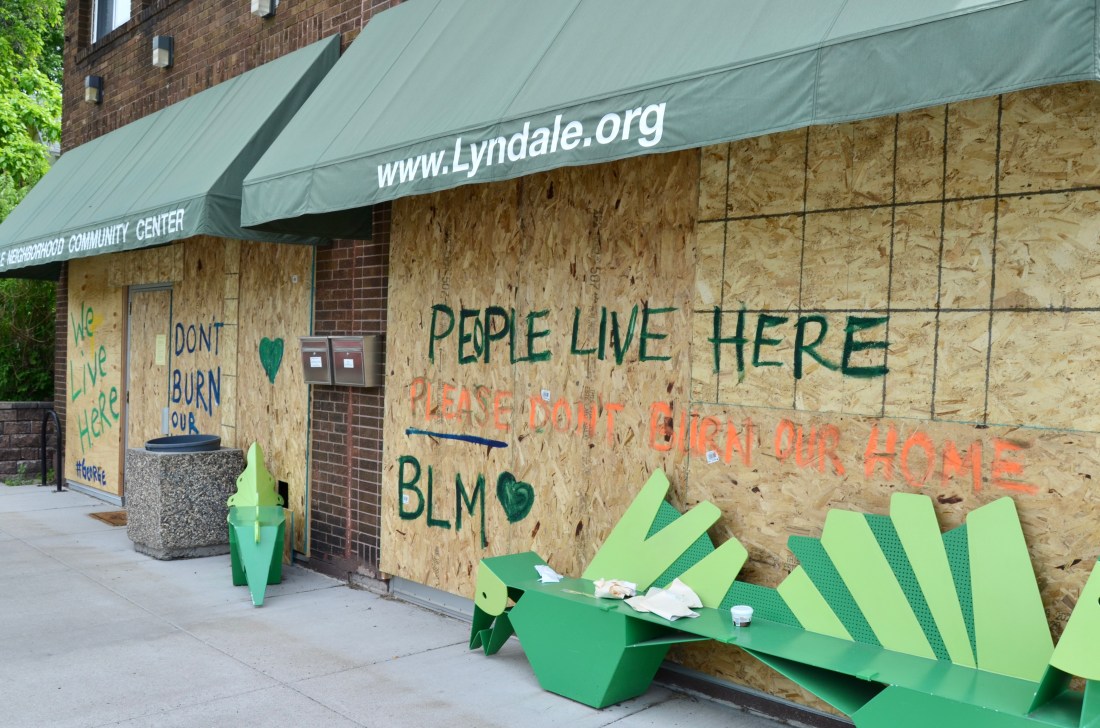
I doubt it is a surprise to anyone that Black Lives Matters cannot account for $60 million of the $90 million they received in donations following the death of George Floyd. A recent purchase of a 6500 square foot mansion with pool, studio and many other flashy features drew attention to the organization’s finances.

The report has further fueled questions about BLM’s finances barely a year after it released the first look into its finances. The foundation said it collected over $90 million in 2020 alone and committed $21.7 million in funding to various BLM chapters and grassroots organizations. With its operating budget set at $8.4 million, more than $60 million was unaccounted for.

Black Lives Matter purchases $6 million property with donation money

The group didn’t always attract large sums of money. It started as a hashtag #Blacklivesmatters in 2013. The call to arms took hold and grew into the rally call for protests following detrimental treatment of black Americans by the police and justice system. For many years the work involved organizing protests following the deaths of Trayvon Martin, Michael Brown, and Eric Garner.

If the social product is to reset conduct toward a minority group in and around criminal activity, BLM is the marketing arm of the industry.

In 2020 social media drew world-wide attention when a teenage girl filmed the death of a black man while a police officer held a knee to his neck. The dramatic unfurling of anger, protests, outside influence, sabotage, precinct burning, national guard intervention were all branded by the Black Lives Matter hashtag. When people (consumers) wanted to respond to unfair treatment to fellow human being, as the natural human response leads them to do, they sent their resources to BLM. But this is the same as sending money to the advertisers who create TV ads (sorry I’m old!) instead of paying the company in question directly and receiving a good in return.

BLM is an activist organization, a group that wants to shed light on an issue. The $90 million went to the advertisers not to actors within the system which needs correcting. And since they are not in a position to really change anything within the police/justice schematic, the money is too easily grifted.

When markets shift, who wins? Who loses?

Rates are on the rise making mortgage money a chunk more expensive. For example, a few months ago, the principal and interest payment on a $350K loan was $1452/mo at a rate of 2.875%. But today’s rates are hovering around 5.25% which pulls in a p&i of $1933/mo. This $481/mo shift will come as quite a surprise to consumers who have long gotten used to low, stable interest rates.

The rate increases are the result of efforts by the Federal Reserve to slow down inflation. As seen below, CPI has increased sharply in the last year and shows no signs of moderation.

Real estate makes up a portion of the index and traditionally an increase in the monthly cost of a mortgage will tamper demand. Although homes in top condition or in prime areas are still selling in multiple offers in our area, there is a sense that the hold-no-barred rush for housing is subsiding.

This makes buyers who are not knocked out of the market by the more ample payment one of the winners in the shift. Even if they pay about the same amount of money for a home, they are less like to give up other concessions such as a home inspection or a preferred closing date. Buyers who can no longer afford to buy are, for the time being, out of luck. New buyers, just getting approved, are held neutral by the rate shift. They have no relative comparison to other options; the new rates are simply what it costs to buy.

Sellers with mainstream acceptable homes are also held neutral in the shift. Plenty of buyers will still materialize for their homes, and although the escalating prices are falling away, the sellers will still secure a sale at today’s higher price point. Sellers of homes with a significant drawback- and these vary depending on the market- but things like shared driveways or proximity to freeways, these properties will struggle to attract a buyer. So, sellers of properties with more condition issues or physical drawbacks will lose in a quickly escalating rate environment.

Lenders are losers too. The past couple of years has been flush with refinancing. Higher rates dry that market up. Homeowners in need of cash with a mortgage at two and a half percent are going to look to other options rather than a refinance. Second mortgages have served this demand in the past. It’s the folks that must refinance to pay off an ex-spouse or consolidate higher-interest consumer debt who will lose out financially on higher rates.

First-time buyers who bought a few years ago should feel pretty good about their situation in hindsight. Since they bought, they have gained some nice equity and now they realize the benefit of a fixed payment at a low rate. While their friends in rentals experience periodic rent increases, the new homeowners have stabilized their monthly obligation. These are the examples that need to be talked up to give renters (who qualify) the confidence to become homeowners.

As a realtor, I look forward to a balanced market. Some consumers can act quickly and compete for properties. But many people need more time to think things through. A bit of a slow-down will bring a new set of buyers into the marketplace. And this is a good thing.

Minneapolis Fed Series


The Minneapolis Federal Reserve has started a regular zoom offering. Today’s event was part one in a rent stabilization series. Libby Starling from the Fed was the moderator. Edward Goetz, of the UMN and author of Clearing the Way, is known for favoring rent control. The two other panelists, Sophie House (NYU) and Jenny Schuetz (Brookings) offered new perspectives on the issue.

One objection stems from an efficiency issue. Creating an across-the-board rent control rule means that those who do not need a subsidy receive it anyway. Instead of targeted benefits to people in need of assistance, all renters benefit from an increased restriction. In fact, it is noted that all the rent-controlled apartments remaining in Manhattan are occupied by wealthy New Yorkers.

I like the image that a community has only so many dollars to devote to the financial support for people who can’t afford their housing. Worrying about the efficient allocation of this bundle of cash will keep the system tight and free(er) from fraud. Blanket rules mess with the market for rental housing. Targeting benefits while maintaining the natural flows in the shelter business will distribute resources based on priorities in an entire system.

Conjuring up a bag of cash marketed as subsidy housing money is one new framing. Another is to group types of consumers. The story of rental restrictions is always told as the battle between the poor and the horrible greedy landlord. These conversations seem more about taking money away from the investors (determining a *fair* appreciation) than trying to get people into the best housing situation. Mainstream buyers are not thinking about their seller’s finances when the make an offer on their home; they are thinking about the great kitchen and the short commute and the great schools for the kids.

When we’re trying to house the least advantaged, public dollars should be leveraged to put people in close proximity to the public services they need most. If they have kids, offer a subsidy to keep them in the same school district for the remainder of their children’s K-12 education. If they are a lower wage worker, see if the companies will participate in a subsidy which keeps the workers close-by. If the recipient of the subsidy is in need of regular medical care, have their stipend be tied to buildings close to significant medical facilities. Match the group of people the lowest rung of income to the neighborhoods which are best suited to notching them up and out of this social stratosphere.

There are some rotten landlords out there. And they need to be pursued for a higher level of service for any of the tenants who live in their buildings. But don’t tie up the bag of subsidy cash with buildings. This wastes social dollars and doesn’t get the intended recipients into the best match of housing supply.

GoldenEye- Movie Review

Rewatching GoldenEye was a lot of fun. It takes the audience back to the West versus the Russians with all sorts of flair. My favorite visuals are the numerous arial scenes which are very well done. They don’t feel gimmicky or dated. Just about every other form of transportation is fit into a chase or explosion scene of some sort- including James driving down the villains in a tank. Q sets 007 up with a fabulous BMW convertible.

The supporting women have some depth to them. This is Judy Dench’s first Bond movie, and she is looking sharp in 1995. She blends beautifully the strength of the position with a parental caring for her prize agent. Femme fatal, Famke Janssen, pulls off the psycho-sexy armed and dangerous woman. She’s a soldier who enjoys her job a little too much. The glamorous nerd who wins James’ heart is played by Isabella Scorupco. Sure- she’s beautiful too, but her real skill to save the world is, wait for it, coding.

There’s quite a bit of humor throughout the movie. Most of it centers around poking fun at the philandering, cocktail drinking Bond. Laugh off the old to usher in a newer 007, I suppose. If you know the franchise, you will laugh along. The computers will also make you smile. They are deep desktop boxes the size of a small black and white TV.

Pierce Brosnan isn’t my overall favorite Bond, but he does a good job in the film. It is a classic blend of dramatic scenes, chases, international destinations, and stunts. I thought it was well worth a couple hours of my time.

More from Downs

Anthony Downs wrote Neighborhoods and Urban Development in 1981, yet this quote is as applicable today as it must have been then.

Each city’s strategy must balance two sometimes conflicting objectives. The first is encouraging renovation, since it upgrades residents environments and benefits the city government fiscally. The second is minimizing harm to low-income renters. In loose housing markets, city policies can encourage maximum revitalization, since displaced households can find alternative accommodations without suffering much harm. But tight housing markets pose a cruel policy dilemma, because revitalization may then cause severe hardship for poor displaced households. They probably cannot easily find alternative accommodations without paying much more for them–if then.

A tension exists between two groups of housing consumers, each interested in the same option: the bargain-priced property. What isn’t discussed in time. If transitions are in sync with the natural timing of residents giving up their homes, then it is a win for the city to benefit from stronger housing stock, and the poor who has moved to better circumstance.

My concern is that there is a little public commentary about helping the disadvantaged to match with neighborhoods best suited to meet their public goods needs. The conversation always seems to be about keeping people put, …in dilapidated housing.

Let’s go for the double win. We have the capacity.

Old Fashioned Theft vs Social

Most people have a pretty good grasp on theft. An object belongs to one person and someone else takes it. There’s an ownership issue and a transference of the item or cash to another without knowledge or permission. For instance, a few weeks ago the news carried a story of an employee at Yale stealing electronic equipment. She ordered equipment over and above what was needed, sold the surplus, and pocketed upwards of $40Million. That’s a lot of cash.

One can only assume that she was able to get away with the scam for that long because she was in a position of trust. The status of employees was beyond reproach and hence normal protocols of employees taking at minimum a week’s vacation were waved away. This last part is social theft. It’s distinct from material theft.

Let’s take another example. Bernie Madoff plead guilty in 2009 to running the largest Ponzi scheme in the world and was sentenced to 150 years in prison. Taking people’s money and not giving it back to them is old-fashioned theft. The social component of Madoff’s scheme was to rely on his community ties to feed his graft. Wikipedia calls it affinity fraud.

Madoff targeted wealthy American Jewish communities, using his in-group status to obtain investments from Jewish individuals and institutions. Affected Jewish charitable organizations considered victims of this affinity fraud include Hadassah, the Women’s Zionist Organization of America, the Elie Wiesel Foundation and Steven Spielberg‘s Wunderkinder Foundation. Jewish federations and hospitals lost millions of dollars, forcing some organizations to close. The Lappin Foundation, for instance, was forced to close temporarily because it had invested its funds with Madoff.[109]

When an actor internalizes a benefit received by being a member of a public group and then steals, the deceit is double.

Spring will be blooming soon

Northern Lights Azaleas

It snowed here today. Which has me thinking all the harder about the early spring blooms which will be appearing shortly in my garden. I love them- all of them. The one featured above is a dwarf bush rising only about a foot from my landscape rock. But the blooms are so luminescent that the shimmer of the petals will catch your eye from below.

Diversity Education

As for many professions, Minnesota Realtors are required to complete fifteen hours of continuing education per annum to maintain their license. This coursework may cover a variety of issues, and some of it can be unexpectedly helpful. The required modules are often redundant or heavy on regulatory dates and descriptors. This year it revolves around discriminatory covenants written on deeds from the 1920s-to 1940s. These are reprehensible in their blatant racism toward non-Caucasians.

I think revisiting this history is important. We should be reminded that nice people, perhaps even relatives of local realtors, don’t always do nice things. That said, I think it is important to tell the story accurately. A portion, perhaps 20-25% of the lots, had exclusionary covenants. The portion of non-white residents in Minnesota at that time was less than 1% of the population.

I guess what I’m trying to point out is that just because a portion of a population can be criticized for what always should have been unlawful behavior, doesn’t mean that everyone behaved poorly. You don’t need an entire population to be in your home court to lead a happy and productive life. And to set that expectation will only lead to disappointment.

The glory of long sentences- Steinbeck

Chapter 3 – Grapes of Wrath

THE CONCRETE HIGHWAY was edged with a mat of tangled, broken, dry grass, and the grass heads were heavy with oat beards to catch on a dog’s coat, and foxtails to tangle in a horse’s fetlocks, and clover burrs to fasten in sheep’s wool; sleeping life waiting to be spread and dispersed, every seed armed with an appliance of dispersal, twisting darts and parachutes for the wind, little spears and balls of tiny thorns, and all waiting for animals and for the wind, for a man’s trouser cuff or the hem of a woman’s skirt, all passive but armed with appliances of activity, still, but each possessed of the anlage of movement.

What is public, Sidewalk clearing edition

When I started writing more extensively about the economics of neighborhoods, I thought a good place to start was by dislodging the concept of public and private from the old school delineation. This version says that certain goods are public by nature, as in the notorious lighthouse whose beams bring all boats to shore safely. And it is right for the government to administer public goods which make up the public sector.

My view is that societies determine what they (they can be the citizens in a democracy or a dictator or an elite group in an autocracy) want to be public and what they desire to remain private. I wrote about it in a little lengthier piece, Our Problem is a Problem of Design.

How people come up with what is private and what is public is interesting from a resource distribution standpoint. But it isn’t money that is usually the driver for what is public. It is personal safety. The Hennepin Avenue Bridge in Minneapolis started out as a private endeavor allowing for crossings across the mighty Mississippi in the early years of the grain mill district. But repairs and safety concerns, in the end, pushed the overpass to transition to the city. Transport, in general, seems to fair better in government hands.

Let me bring you back to the snow removal story. One would think it parallels a consumption model of, say, water delivery. The household uses so much water and is billed for it. This isn’t accurate as there are no other means of obtaining water. The city acts a monopoly supplier of the good. And it is fairly straightforward and uncontriversial to bill by consumption.

Presently many residents do clear the sidewalks fronting the road to their homes. Let’s spitball it at 75%. This is labor provided at no cost to the public out of civic mindedness. If the city chose to take on the removal of snow as a public good, they are walking away from .75 x $20mil (the cost of the program) or $15mil. Plus, it seems with a little leadership, and city council support instead of neglect, there would be a capacity for folks to voluntarily pitch-in and clear more walks.

The thing about public goods is that they must be provided to all. Once a good is publicized, then the cost for the entire community is borne out by the public. In this case, the analysis points to further civic engagement rather than adding to the already full plate of demands on the city’s budget.

The story of the snow on sidewalks

When it comes to neighborliness it’s hard to get concrete numbers. There is a general sense that pitching in and helping out is a good thing. But does it count as economic activity? Here’s a story about snow falling on sidewalks that helps demonstrate the cold hard cash of being a good neighbor.

Sidewalks are common features of residential areas allowing the public to walk along the road. People stroll for exercise; they walk their dogs; they catch a bus at the bus stop. Residents are sometimes surprised when the concrete needs to be replaced that they are responsible for (the relatively costly) expense. The long-established norm is that the owner of the building behind the walk is the caretaker of the public walk. In a winter climate, the household also must clear the sidewalk of snow. Failure to do so can be hazardous as melt and refreeze makes for icy walkways.

The city of Minneapolis has been suffering from a lack of interest by residents to tackle to forty feet runs. A March 23rd editorial opinion in the Start Tribune calls a spade a spade, “let’s acknowledge that Minneapolis has an unacceptably large population of residents who feel no particular obligation to keep their walks clear.” It was written in response to a proposal that is making its way through city hall for the city to embrace the chore. The instigating motivation is people’s safety– “An unshoveled walk gets in the way not only of walking, but also of sightless navigating, of wheelchair maneuvering and other modes of travel that most of us need not master. When walks are covered in snow, a blind woman using a white cane cannot tell the difference between a residential street and an open field. A man in a wheelchair cannot negotiate the snow and ice, and might choose to risk traveling in the street instead.”

Please be aware that there are already serious repercussions in place for the n’er-do-wells who find it difficult to put their hands on a shovel. Here’s a violation letter:

I spoke with the crew who was clearing snow one morning. The gal said they can co up to thirty front walks in a day. Let’s see, 30 x $229= $6870. Paying six employees for eight hours of work only comes to $1680. It seems like a good money maker! But maybe they have to wait until someone complains to justify going out and shoveling.

This isn’t the first time shoveling has been a news feature. In 2018 the president of the Minneapolis City Council, Lisa Bender, was sited. Two of her constituents got creative and made an instructional video.

Another factor in shovel-gate might be the proportion of renters to owners in the city which runs about 53-47%. Owners receive the violation letter, but renters are in many cases responsible for snow removal in single-family homes, duplexes, and tri-plexes. Perhaps the process would be more effective if the $229 fee was directed at the residents of a dwelling.

Some argue that folks are disabled and for that reason cannot clear their walks. The US Census reports that 8.8% of city residents fall in that category. One would think that there is a capacity amongst city residents to lend a hand and help the few who can’t fend for themselves. But instead of pursuing a culture change, the city is looking into publicizing (my word, nationalizing at the city level). As one can imagine transferring a job to a bureaucracy is a little pricey. They are anticipating $20 million in this case.

Just to review the dynamics here. Most cities count on the goodwill of neighbors to clear walkways for the public. This is unpaid labor. For cultural reasons the residents of Minneapolis resist this norm. Instead of working on converting the mindset and showing people that it can be rewarding to lend a hand to someone in need, the city is pricing out the service. This process of making public something that was handled privately is called publicizing (the opposite of privatizing). The process will not only be more expensive, but it will also forgo the capacity of citizens to participate in their community. Publicizing is a change of structure not just a form of payment. It eliminates the possibility of citizens to see how simple gestures go a long way in communal endeavors.

And the price of neighborliness- for all you economists- is $20 million.