A handful of years ago a new term showed up in housing forums and real estate continuing ed classes. NOAH. The acronym stands for naturally occurring affordable housing. The Greater Minnesota Housing Fund explains:
The majority of affordable rental housing in the United States can be found in modest apartment buildings in every city and suburb.
These units are home to every stripe of renter and receive no federal or state subsidy at all. These Class B and Class C rental units comprise the bulk of affordable housing in the country today, but there is nothing to guarantee that they will stay that way.
Nationwide, this affordable rental housing is at risk. In prime real estate markets, this “naturally occurring affordable housing’ (NOAH) is often operated under poor management or in disrepair. Speculators are eager to snap up these developments, upgrade a few amenities, and convert these once-affordable homes to higher-market rents. This loss of affordability threatens the stability of individuals and families who are displaced, and even entire communities.
It was like a frosty burst of January air through an open front door. A much needed break from endless harping on ‘building’ more affordable housing. New construction is the most expensive form of housing and how it is in a community’s best interest pay top dollar for very few units is anxiety rising for any spendthrift.
It is equally refreshing to read that a real estate investor in Charlotte, Mark Ethridge, is building on the concept of NOAH. Here’s how he got started:
Ethridge had watched for years as properties like this were snatched up by big money investors who’d quickly renovate them, jack up the rents and then sell them off for a quick profit. With an estimated 120 people moving to the city every day and an economy on the rise, growth in Charlotte had put these kinds of apartment complexes in the sights of housing investors who saw them not as affordably priced homes for lower income residents but as undervalued assets.
Ethridge has attracted a bunch of like minded people to run up a $58 million fund for the purpose of providing housing at below market rates. The difference here is that his investors will receive annual returns on their investments, just at a reduced rate.
Bowles insists this is not philanthropy, and giving the fund a for-profit structure was a way to bring the discipline needed to ensure it would work for the long run. “We are capitalists,” he says. “We believe in capitalism. But if it’s going to survive, we have to make it work for more people. A lot more people.”
The city is still involved with help on the financing end of things and in return there is a twenty year deed restriction placed on the title of the property to ensure 80-100 percent of the units are rented to residents at the low end of the income scale.
Ethridge calls the effort “social impact capital,” and he says the Housing Impact Fund’s investors recognize that their investment can be both beneficial to society and profitable. “The nice thing about buying existing properties, unlike new construction, they cash flow the day you buy them,” Ethridge says. “So we will pay quarterly returns to our investors and we expect that cash flow to be relatively consistent.”
Some words or phrases latch onto you like thistles while walking through blooming prairie grasses. They tag onto your pant leg until you notice them and pluck them off for a closer look. Labor wedge has such a nice visual, a separation between what a model is predicting and the empirical data, I think that’s how it wedged its way into my thoughts.
It seems to be a fairly new macroeconomic term, defined at the start of a paper by Loukas Karabarbounis, University of Chicago, as:
Do fluctuations of the labor wedge, defined as the gap between the firm’s marginal product of labor (MPN) and the household’s marginal rate of substitution (MRS), reflect fluctuations of the gap between the MPN and the real wage or fluctuations of the gap between the real wage and the MRS? For many countries and most forcefully for the United States, fluctuations of the labor wedge predominantly reflect fluctuations of the gap between the real wage and the MRS.
At different time periods, American households have found it advantageous to substitute out paid work for something else. They preferred to spend their time, perhaps at home, performing valued activities for their families. Or perhaps the value was found in associational life of another nature. De Tocqueville said years ago that Americans are apt at associational life.
More interesting are the measuring questions. How do we categorize where people have the opportunity to perform duties which build capital for themselves and, most probably, their communities? Where are they exerting energies in lieu of showing up for a paycheck?
Sorting by their economic benefit seems sensible. If the ambitions fall under health related activities (staying out of the workforce to care for an aging parent) then the credit goes to pubic health. If education (during these Covid times people are staying out the workforce to supervise their children’s education) is the goal then shuffle those hours to the public education column of the ledger. If governance (people are choosing to spend their time on park boards or citizen commissions instead of working) is where the hours are spent, then register the tally under civics, and so on.
A better understanding of these motives and ventures will smooth out the prickly problem of labor wedges.
“And what did you do all day?” He would ask as he came through the front door at about 6 o’clock. An inquiring look searched out his wife, while the follow-up phrase, “while I was out earning a paycheck to pay for this house, the food we are about to eat and the clothing for the kids,” was left hanging in the air, unsaid. Having returned to his home, he had not yet transitioned from the private nature of the workplace.
Through the 70’s and 80’s the notion of unpaid labor in the home was adjudicated many times over as marriages came apart. Terms like like spousal support, child support, alimony, pension obligations, all forced the issue that what she did all day could not be classified as leisure time. And carved out what we all knew: a worker in a home environment is a valuable component to the economic outcomes of the family.
By 1989 a formal accounting was given to the work done by homemakers, caregivers to the elderly and to children, and all those who exist in the realm of domesticity. Dale W. Jorgenson of Harvard and Barbara W Fraumeni wrote a paper that led to a measure of unpaid labor in the form of human capital, where it took up a spot in the national income accounting system. Jorgenson explains.
Barbara Fraumeni and I (1989) have proposed a measure of the output of education and training, namely, the increment to lifetime labor incomes. This accrues as current income to individuals who receive the education and training. Our approach has the important advantage of providing separate measures of output and input. The value of input into investment in education is equal to expenditures on education and the incomes of students in school. The value of output is equal to additions to lifetime labor incomes.
In more current times Michael Christian has maintained the accounting of human capital in the US. Our very own Ellen McGrattan, with the Federal Reserve Bank of Minneapolis, collected her comments on Michael Christian’s 2010 paper on human capital accounting. From the abstract:
Michael Christian’s paper presents a human capital account for the United States for the period 1994 to 2006. The main findings are twofold. First, the total human capital stock is about three-quarters of a quadrillion dollars in 2006. This estimate is roughly 55 times gross domestic product (GDP) and 16 times the net stock of fixed assets plus consumer durables. His second finding is that the measures of gross investment in human capital are sensitive to alternative assumptions about enrollment patterns. In my comments, I emphasize the need for greater interaction between human capital accountants and applied economists. To date, there remains a disconnect between those measuring human wealth and those investigating its economic impact.
McGrattan isn’t satisfied with summing up a present value for the life-time work that could be performed by ‘non-market’ individuals, she would like more specifics on what actual economic outcomes will evolve from their work performance.
Perhaps what is needed is more focus on economic questions and less focus on the magnitudes of the human capital wealth estimates. Whether these estimates are based on current costs or on lifetime earnings, economists can construct the same statistics in their model economies as satellite accountants construct for actual data. Unfortunately, there still remains a great divide between those measuring human wealth and those investigating its economic impact.
I don’t want to put words in her mouth, but it seems like she would like the evaluation of this type of work to be centered around an economic objective. She goes onto reference a paper that she co-author with Edward Preston, Unmeasured Investment and the Puzzling US Boom in the 1990s. Although reading such a thing is more than a little intimidating, I was able to pickup that they measured a decrease in household labor and an increase in unpaid business labor which then lined up nicely to justify the business boom of the 90’s.
What are the common threads between business people who dig in and amp up their unpaid work into R&D which results in a business boom, and a homemaker who stays home to care for children? Both are doing work for a long term return, they are building capital for themselves, but also a larger group. Both are only able to perform because they are in a situation of opportunity. If they were to offer those work hours to someone else, it would be work for pay, and not at all the same thing.
I believe this is the type of framing Ellen McGrattan is requesting. She would like to see the study of unpaid work categorized, as we do here at home-economic.com by objective, and measured in that way. Rather than assume a measure based on a summation of remaining years of work life in concert with educational attainment.
Matthew Yglesias writes in his newsletter yesterday:
Defunding the police is a bad idea that, wisely, the voters and political system have rejected.
But it was so thoroughly successful as a slogan that a situation has emerged online in which a willingness to embrace it is widely seen as the key sign of one’s commitment to taking complaints about police misconduct seriously.
The reality is just the opposite.
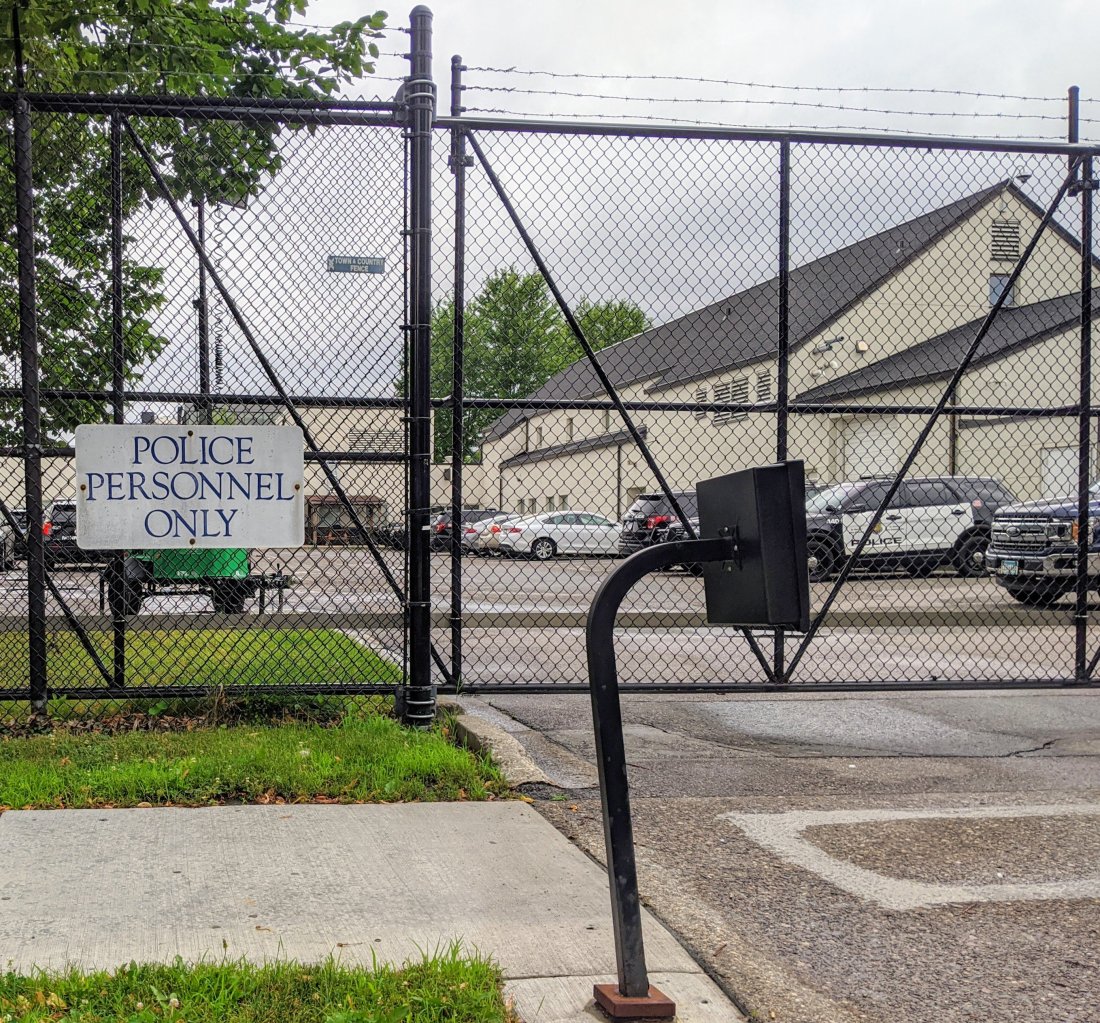
True statement: the reality is just the opposite. As crime has increased this year, the need for resources devoted to public safety has increased, not decreased. The Minneapolis City Council didn’t get the memo. They are working off another economic model as they continue to entertain agendas which weaken the ability of the mayor, the police chief (who is now on a short list for a job in California) as well as the police force to do their job. MPR reports on January 15th.
The Minneapolis City Council on Friday took steps — again — toward trying to get a proposal on the ballot this year that would allow the city to replace its Police Department with a new public safety agency.
Their model appears to motivated by the need to subdue an ever present and ever impounding anger. The anger at the memory of, for example, the sound of thick soled heavily polished black shoes across the high gloss middle school floors, the glint off the handcuffs, the roughness of the shove as the uniform twists a best friend’s arm around and behind his back, before the jangle down the halls as the officer and youth depart through the heavy wood doors, to the back seat of the squad car.
Anger still simmering some three decades on. Like a clip on auto replay. A disturbing removal of a 12-13-14 year old from their place of learning. I have no doubt that every activist who seeks to dismantle the police, relives (and perhaps fosters) a simmering wrath against an established societal structure or symbol thereof.
Regardless of whether the activist’s personal case-by-case experience has merit, the model they pursue and the action it initiates will not result in productive outcomes. It is a model that seeks to break apart established norms, as opposed to working with them.
Yglesias seems confident that the greater group (it’s all about the group) does not follow the logic of diverting police funding to social workers, despite the catchy slogan. And as the cost of not being able to travel freely around the city without concern of being car jacked, or jumped to make a Venmo transfer, the public’s sympathy for those wronged by past interactions with the police appears to be waning.
Yet there is still a concern about errant police, as there should be. The inability of police chiefs to dismiss the truly bad apples, as Ygelsias calls them, the acceptance by the profession to let them back in, to reinstate them, has outsiders thinking outside intervention is necessary. We are right to step in when the police can’t police themselves!
Perhaps it’s time to step back, (further back) to take in a new view, to change-up the framing. Let’s start with some basics. 1. Police officers are no more good, or bad, than the general population. 2. Nor are they any more good or bad at evaluating themselves and their performance. Good. We’ve established that we are dealing with basically a decent group of people who show up for work with the intentions of doing their jobs. Since the pay isn’t great, we have to assume there is also some sort of personal sense of honor in the position.
The dicey work police officers do is risky not only because the threat of physical violence is undoubtedly present, but also because they are stepping into some social interaction gone awry. When they are called to a domestic dispute, they have to assess the conditions which led to an escalation in a marriage. When they are called to a corner drug deal, their survival can depend on assessing the players on the street. The police are called into restore safety to a highly charged marketplace of social interaction.
So is it surprising that this basically decent group of people will always choose the perspective of one of their own in that assessment? Or that they band in support of each other to the bitter end? They endure criticism and penalties at the hands of their black sheep members, yet on the whole they hold fast. That is how untrusting they are of an outside world assessment of their workplace situations.
And I wouldn’t assume a lack of methods to get the bad apples out of the barrel. Sometimes opportunities present themselves, and as a group, they find a way. Certainly that is true in other groups. Could more opportunities be made available for the black sheep of the group to be pushed out? Most probably. But that is an internal matter.
To be honest, I’ve read a lot of lists of horrible things the police have done, but you rarely hear of these as a percentage over the whole group. Or as a percentage of all the work tasks they perform. The only way to gauge the group is to take their numbers in that identity. Pulling out the one completely unacceptable incident as a representation of the profession is measuring oranges to apples.
When you start with the assumption that the group as a whole is as decent as the rest of us, it’s hard to get to “they are all inhumane idiots who are abusive beyond control.”
Years ago someone gave me some advice when I was learning to downhill ski. “Fear,” he said, “makes you want to sit back on your heals. But this is exactly what you don’t want to do. Lean down the hill, keeping your weight centered over your feet. That’s the way to tackle the slope.” The police need to lean into policing where most of the violent crime has been occurring. Despite resistance and lack of cooperation, they need to get those cases solved. To make believers and reliable partners out of a population who needs their support.
Standardized by shape and weight: 5,000 years ago, people used rings, bangles and axe blades as an early form of money.
The concept of fair or equal trade shows up 2500 years before ancient Greeks lean-in to put words to the consistencies of human existence. It was important enough for folks to hone skills to gauge the weight of a trading token.
The Dutch researchers examined more than 5,000 bars, axe blades, and rings from the period of 2150-1700 BC. The examined objects came from different archaeological sites, including in what is today South Germany, Austria, the Czech Republic, as well as North Germany and southern Scandinavia. They found not only single objects, but whole collections (hoards) of several hundred pieces.
It appears that in addition to having found the benefits of doux commerce, man of the Bronze Age was familiar with greed and hoarding. There are some constants in the world.
It’s old news that folks having been abandoning New York and San Francisco. Not surprisingly many of these coastal creatures are staying in the east or the west.
LEAVING NEW YORK CITY
Top destination cities for U-Haul customers leaving New York City during the pandemic include Bridgeport, Poughkeepsie and New Haven. Outside the Northeast, the top destination is Chicago in the Midwest and Atlanta in the South.
The top 10 states DIY movers from New York City are migrating to are: New York (outside NYC); New Jersey; Pennsylvania; Connecticut; Massachusetts; Virginia; Maryland; Florida; Rhode Island; and North Carolina.
LEAVING THE BAY AREA
Top destination cities for U-Haul customers leaving the Bay Area during the pandemic include the Sacramento/Roseville corridor, San Diego and Stockton. Outside of California, the top destinations are Reno, Las Vegas, Portland, Phoenix and Seattle.
The top 10 states DIY movers from the Bay Area customers are migrating to are: California (outside the Bay Area); Nevada; Arizona; Oregon; Washington; Colorado; Texas; Utah; Idaho; and New Mexico.
What’s nice to see is the middle of the country states filling out many of the spots in the top 20. A bunch have also moved up significantly in their standings.
I wonder sometimes if the people who want to raise the minimum wage actually go on site and meet some of these workers and employers. They might be surprised to find situations other than the poor and the destitute. They might find new to the workforce people, and people who need a lot of flexibility, and people that drift in and out of jobs because that’s what they want to do. They might find people who are accepting the wage because they get something for it.
In each of these situations the employer is giving something in return. If you are new to the trade, you will need a lot of extra coaching and assistance. Your boss is ‘working’ extra hours in training or staying late or forgoing other responsibilities. A new to the workforce employees may need more understanding and leeway on other issues like sticking to a schedule and what to do when your car doesn’t start and how to handle notice for time away.
Flexible and short-term employment also causes a churn for employers who have the responsibility of maintaining all the HR administrative work. Yet many people I’ve know over the years, that do not qualify as destitute, have been willing to work those jobs because they are a temporary distraction, jobs they don’t have to think about, that can be ditched in a heartbeat.
I was hired for one of my first jobs due to family connections. Some might object to that, but a connection is a control string on the employee. Anything the dependent does reflects on the career officer, which puts in play strong incentives for adequate performance. When a connection is not available for that first job, employers may have to work a little harder at supervising until they are confident of the reliability of their new worker.
I could go on with examples, even if some are now taboo to talk about. I’m sure someone would frown if I pointed out that the language barriers create more work for employers. And certainly I’d be accused of the ‘r’ word if I pointed out that getting to know other folks’ culture whether about language, or sick time, or parental leave, would certainly be an adjustment versus hiring the neighbor’s kid whose father works for you.
We have to admit that this type of ‘social’ work exists, call it something, give it value, so we can enumerate it, and use it in fruitful discussions. But since there is a lack of accounting, there is no science to the discussion around minimum wage–there are just opinions. Predictions.
Until we call it out, and give a name to the work that must be done to shore up cultural and social issues; until we count the number of hours of work that goes into it, we won’t have the sophistication to deal with getting low wage workers up the economic ladder.
Have you ever noticed that there are yes jobs and no jobs? Attorneys are likely to say, “No, that’s too risky.” What would we do if all entrepreneurs listened to their accountants when they called up to say, “No, we can’t afford that!” Then there are processing types of jobs who like to say, “No, that’s not included in your policy.” Luckily there are visionaries that say, “Yes, let’s build a skyscraper!” And keep saying yes to all the naysayers as they wade through setbacks and plan approvals. And there are journalists that say, “Yes, we can meet the deadline for that story!” Then there are the killjoys, “No, no, no drag racing is not allowed, even if everyone is home on Covid lockdown.” But seriously, do you think Elon Musk says yes or no?
When you read something like this:
Online registration launched at noon but was disrupted within an hour as the website was overwhelmed with a peak of 10,000 hits per second. The site closed to new registrants at 2 p.m. in order to serve people stuck in a waiting queue, but in the end connected more than 5,000 people with vaccine appointments this Thursday through Saturday.
It feels like the vaccine distribution got assigned to the risk monitor, process types instead of the we-can-meet-that-deadline types. Give the right job to the right people.
In a Bloomberg article yesterday, Laura Millan Lombrana encouraged governments attending the United Nations climate talks to push oil and gas companies to fix methane leaks. Due to new satellite technology, which helps identify the location of the seepage, there is an economic efficiency argument to such action.
Methane emissions need to fall 70% over the next decade, a decline equivalent to eliminating CO₂ emissions from all cars and trucks across Asia, according to the report. Fixing methane leaks would be cost-effective for energy companies because the captured methane can be sold as natural gas. The cost of repairs and maintenance needed to capture methane can often be paid for by the value of the additional gas brought to the market.
The new information (as to where the pipes are leaking) is one driver for action, but there is also the notion that the low emissions benchmark, set in the Covid year, offers up a new goal. This combination of information and technology coupled with motivation, made me think of Harvey Lieberman’s concept of “X”-Efficiency. He was a professor at Harvard and is best known for coining this concept. Here’s how he describes it in Allocative Efficiency vs. “X”-Efficiency.
Our primary concern is with the broader issue of allocative efficiency versus an initially undefined type of efficiency that we shall refer to as “X-efficiency.” The magnitude and nature of this type of efficiency is examined in Sections II and III. Although a major element of “X- efficiency” is motivation, it is not the only element, and hence the terms “motivation efficiency” or “incentive efficiency” have not been employed.
He identifies the possibility of meeting a higher efficiency with new motivations, usually in combination with other factors. In the Bloomberg article, the sense of urgency around climate change motivates fixing the methane leaks.
The level of unit cost depends in some measure on the degree of X-efficiency, which in turn depends on the degree of competitive pressure, as well as on other motivational factors. The responses to such pressures, whether in the nature of effort, search, the utilization of new information, is a significant part of the residual in economic growth.
It’s hard to know for sure, but it sure seems like Leibenstein’s “X”-Efficiency refers to the efficiency attained in the blending of the public and private spheres.
After the first of the year, I wrapped up the novels I was reading and made a promiss to myself to be a little more selective. To only read high caliber writing. That’s how I came upon In Dubious Battle. I wasn’t aware of the buildup to an apple pickers’ strike until I was bending back the binding so the pages eased open in my hands. And strikes are turning out to be very good scenarios for expressions of the social economic side of the economy.
Take what Mac says here to Dr. Burton, who has been brought in to be on hand to mend any of the strikers who get caught up in a tussle. Mac’s trying to figure out why Burton keeps showing up when he doesn’t get paid, nor does he seem interested in the cause. In other words Mac can’t figure out the ambitions for what he refers to as ‘work’ when it falls neither in the private or public sphere.
“Yes, you. You’re not a Party man, but you work with all the time; you never get anything for it. I don’t know whether you believe in what we’re doing or not, you never say, you just work. I’ve been out with you be fore, and I’m not sure you believe in the cause at all.”
Dr. Burton laughed softly. “It would be hard to say. I could tell you some of the things I think; you might not like them. I’m pretty sure you wouldn’t like them.”
“Well, let’s hear them, anyway.”
“Well, you say I don’t believe in the cause. That’s like not believing in the moon. There ‘ve been communes be fore, and there will be again. But you people have an idea that if you can establish the thing, the job’ll be done. Nothing stops, Mac. If you were able to put an idea into effect tomorrow, it would start changing right away. Establish a commune, and the same gradual flux will continue.”
“Then you don’t think the cause is good?”
Burton sighed. “You see? We’re going to pile up on that old rock again. That’s why I don’t like to talk very often. Listen to me, Mac. My senses aren’t above reproach, but they’re all I have. I want to see the whole picture as nearly as I can. I don’t want to put on the blinders of ‘good’ and ‘bad,’ and limit my vision. If I used the term ‘good’ on a thing I’d lose my license to inspect it, because there might be bad in it. Don’t you see? I want to be able to look at the whole thing.”
Burton turns out to be a bit of a philosopher. He’s there putting in the work so he can understand the why of it all. He and I agree the flux will continue. That the whole pricing mechanism is always in motion, and for that reason time must be understood. He also is indifferent to the ‘good’ of it. He isn’t going to shuffle through the risks versus the rewards, he is there trying to understand the beams that turn the wheel and the flow of the water that pushes on the buckets.
In the following few pages Dr. Burton talks about group-men. “I watch these group-men, for they seem to me to be a new individual, not at all like a single man. A man in a group isn’t himself at all: he’s a cell in an organism that isn’t like him any more than the cells in your body are like you. I want to watch the group, and see what it’s like.”
I’m looking forward to reading what else Burton observes.
A home is consider a private good–one that owned for one’s use and enjoyment. Its says so in the county recorders after all. It would follow that one could do whatever one wants with their home. Well almost.
That sidewalk, that runs along the street, you can’t block it. You have to let the neighbors walk their dogs and the kids to ride their bikes along it. And don’t be digging near any of the utilities that have easements across your lot to bring water, electric power and natural gas onto you property. If you wake up one morning (as in the photo) and there is a huge hole in your front yard, the city can do that too. The workers can dig down and see if your water connection to the street is leaking.
Ok- fine. The front yard has restrictions placed on it, but the backyard is all privately owed, to dig up and do what you wish with it. Not so fast. If you unearth an artifact from a native American tribe, it is not yours to keep. Despite being on your soil you maybe obliged to relinquish it for the public to enjoy and appreciate as part of their heritage.
But inside the house is all mine. Well, kind of. If you live in the state of MN than your spouse has rights to the home no matter if their name in on the title or not. Which isn’t a conflict, usually, as most couples jointly enjoy the fixtures attached to the land. It’s not like there is a penny slot to fill every time you toast a slice of bread, or the washer dryer is coin operated to divvy up the cost of its use. Couples and families use the features of a home in a public fashion, for all to enjoy.
So yes the home is primarily private to the person on the title. But there are all sorts of public interests that take a little nip out of ownership.
Some, like the utility companies, provide valuable, essential services. In fact the reliability of services, like high speed internet, can make an area more desirable. The reliability of a city to be responsive to snow removal and road maintenance can create increased interest in the neighborhoods they serve. Public utilities and city services are daily necessities, hence exhibit high impact. Whereas the likelihood of a pre-historic relic being dug up on a property is rare, and so, although the public has an interest, any practical impact is low.
These are just a few of the public interests in the very private investment of a home. There are many more besides the utility commissions, and the city utilities. There are a bunch of other public entities that make an appearance on your property tax bill. There are fees for police and firefighters, fees for school districts, fees for county services.
Your home is your castle. But your castle shares many commonplace interests with lots of other castles.
Economics studies the competitive and cooperative behavior of people in resolving conflicts of interest that arise because wants exceed what is available.
MINNEAPOLIS (AP) — Some Minneapolis City Council members are preparing a new plan that seeks to replace the city’s police department in the wake of George Floyd’s death.
Phillipe Cunningham, Steve Fletcher and Jeremy Schroeder are working on a proposal to create a new public safety department that removes the police department as a standalone department from the city charter.
The three are still working on their plan and expect to release it by the end of January, the Star Tribune reported. It would require voter approval.
Cunningham told the newspaper that the proposal might place oversight of the new department on par with many other city departments, giving the council legislative authority while the mayor would retain executive authority.
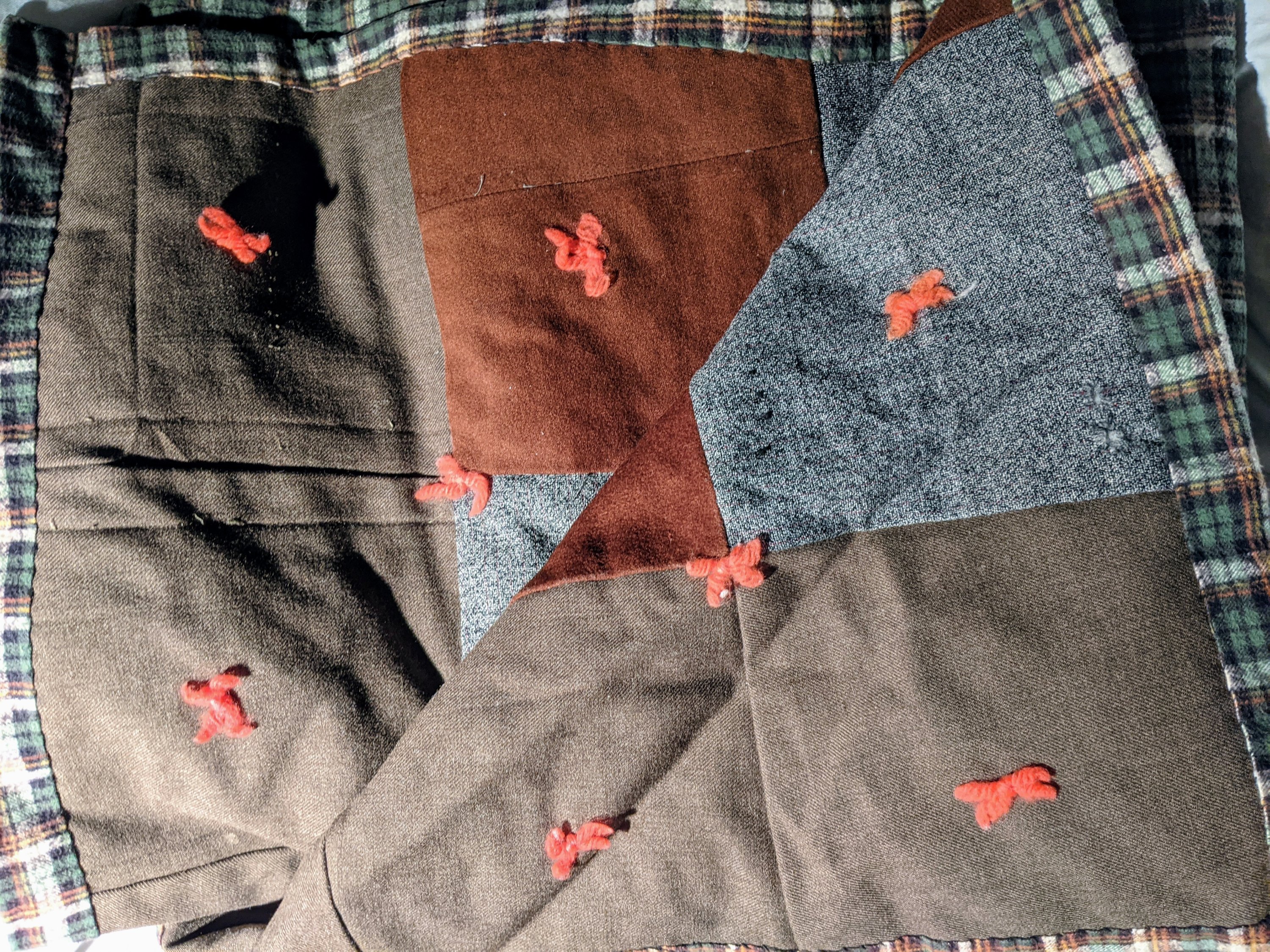
My great-grandma stitched this quilt before I was born. My grandma said they would save up old coats, then cut them into squares, piece them, back them with flannel and pull the yarn ties through.
This all took place through long winters out on a farm in southwestern Minnesota, not far from St. James. One house to every 80 acres or so. There was more time than money (more cold and snow back then too) so this was how people passed the time.
What explains the continued popularity of quilting is harder to figure out. This site will connect you with 49 quilter guilds in the area, and I’m sure that accounts for only a fraction of the women (mostly women) who gather in homes or church basements to sew up their creations.
The financial incentives were shipped off to Asia long ago. So it makes you wonder whether some folks simply have to tinker and make stuff. If they don’t do it for money, they’ll do it for distraction as it brings them joy.
You have to have space for such things like workshops and studios. And if your tinkering is on metal and wood you’ll require a garage with a heater mounted from the ceiling in the corner. Did all those spaces where people bend metal and pound on things get shipped off too, eliminating a creative environment? Have we stop creating new better things for lack of workshops?
The EPA has designated January as National Radon Awareness Month. “Test. Fix. Save a life.” is their tag line.
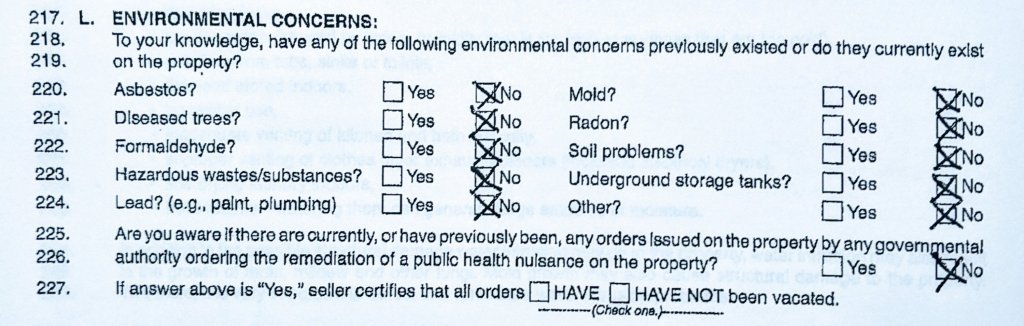
Those of us in the business of helping folks buy and sell homes, have been hearing about the health concerns emanating from radon seeping into homes for the past twenty years. In the first part of the 2000’s, health department officials encouraged buyers to test for radon at time of purchase. Radon was listed alongside a variety of other environmental concerns on the state of Minnesota mandatory seller’s disclosure.
Consumer response to radon did not match the government’s concern, and in 2014 the MN Radon Awareness Act went into effect. The variation in apprehension is best represented by the amount of space now dedicated to the topic in the seller’s disclosure. Lines 279-309 (2020 version) of the body of the disclosure speaks to radon alone–more lines than wells, septics, or any other topic. And two pages of information regarding the detection and harm of radon gas were tacked onto the end. Out of a twelve page disclosure virtually three pages, or one quarter of the document, is now devoted to radon (as opposed to foundations, or water penetration, or roofs).
The new disclosure established an industry standard which dictates the seller is obligated to mitigate a home which tests above the 4 cPi/L established by the EPA. It’s unclear if buyers request the install due to fear for their health, or because they don’t want to be the sucker-who-got-stuck-with-the-bill at a later date, when they go to sell.
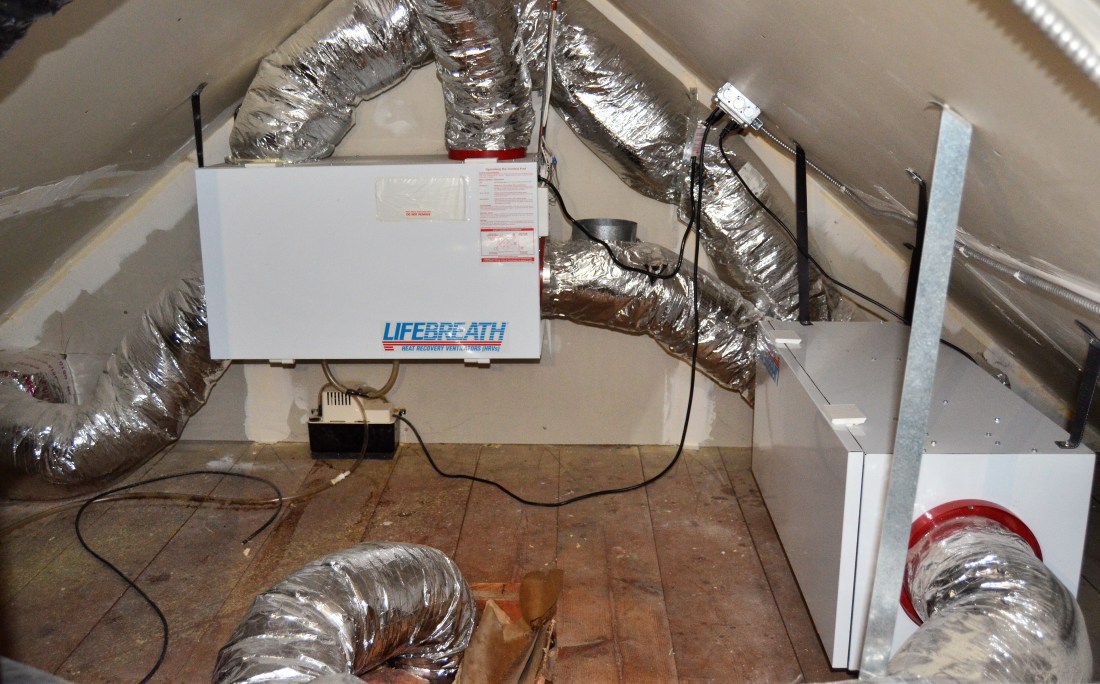
Over the course of implementing tests and installations there have been some inconsistencies which have resulted in the need for a final arbitrator. For instance, a few years ago an inspector turned off the air exchange system that a seller had installed in his 1920’s home to enhance the heating and cooling functions. The EPA guidelines state that HVAC systems should be running as normal during the test. However, since this air exchanger was located in the attic (not in the basement) the inspector felt it was an extraneous appliance and turned it off.
The reading came in slightly over the benchmark of 4 cPi/L. As it had already been a contentious negotiation the seller refused any additional compensation. The buyer choose to use $1200 (compensation negotiated for a cracked clay chimney flu) on a radon mitigation system that would not be necessary had the exchanger been left running. They chose between fire safety and radon safety.
By early 2019 licensing of inspectors who perform radon testing was implemented to handle the inevitable variations in the use of the testing apparatus, including decisions regarding air exchangers. Since the MN Radon Awareness Act went into effect, a whole industry of inspectors (tests range from $180-$240) and mitigation installers (system installation ranging from $1000-$1800) as well as a bureaucracy to monitor and deal with complaints, has been established.
Background
The story the Minnesota Health Department has been stressing is that cancer is the leading cause of death in the state. But the leader is all cancers. Mortality rates for cancer vary within demographic groups, but generally, lung cancer makes up around 25% of cancer fatalities. Radon is called out as the second leading cause of lung cancer after cigarette smoking. What they don’t say is that radon is lumped in with second hand smoke and accounts for just 12% of the cases of lung cancer.
Feel free to chime in if I’m doing my math wrong, but a quarter of all cancer cases is around 2500 (lung). Then twelve percent of that number is 2500 x .12 = 300. In other words, death due to radon isn’t even on this top ten chart. It accounts 38% of the souls that commit suicide.
From the keys on my calculator, I have death from radon registering in at no more than 5 per 100,000. Below this grouping of accidental deaths which make up 6% of all deaths (from MN Department of Health):
Falls (2.7%): 21.1 per 100,000 population
Accidental poisoning: (1.6%) 12.8 per 100,000 population
Motor vehicle (1.0%): 8.1 per 100,000 population
The average Minnesotan is four times more likely to die from a fall, twice as likely to be accidentally poisoned and slightly more likely to die in a car crash. The claim that more than 40% of homes in Minnesota are contaminating people’s lungs with radon gas and killing them is not jiving with consumers’ personal experiences.
Nationwide Agenda from the EPA
One has to assume that the MN Health Department is following a directive for radon procedures from the EPA’s national agenda. However the EPA offers not one article newer than 2003 on its website to validate research tying lung cancer to levels of radon in homes.
A paper from Korea, which looks at the topic using measures of radon in homes, was published in March of 2016 and is the most recent academic paper I could find. It too references almost exclusively research papers written prior to 2000. Ji Young Yoon et all (Department of Humanities and Social Medicine, Ajou University School of Medicine, Suwon, Korea) wrote “Indoor radon exposure and lung cancer: a review of ecological studies” which was published in The Annals of Occupation and Environmental Medicine. There had been no studies to date in their country. They found:
For Korea, we observed tremendous differences in indoor radon concentrations according to region and year of study, even within the same region. In correlation analysis, lung cancer incidence was not found to be higher in areas with high indoor radon concentrations in Korea.
Scanning the bio’s of the faculty at the College of Design at the UMN, not one cites an interest or expertise in radon. There seems to be a lack of interest in funding or pursuing this topic.
How can we be following guidance that doesn’t appear to have been updated or even reviewed in the last ten years?
That was then this is now
Furthermore there has been a dramatic decrease in lung cancer’s claim on lives.
The death rate from cancer in the US declined by 29% from 1991 to 2017, including a 2.2% drop from 2016 to 2017, the largest single-year drop ever recorded, according to annual statistics reporting from the American Cancer Society. The decline in deaths from lung cancer drove the record drop. Deaths fell from about 3% per year from 2008 – 2013 to 5% from 2013 – 2017 in men and from 2% to almost 4% in women. However, lung cancer is still the leading cause of cancer death.
The American Cancer Society estimates deaths from all lung cancer in MN in 2021 will come in at 1950. Twelve percent of this is 234.
Time has changed the circumstances but there has been no release, or at least, re-evaluation, of the protocol. It’s like everyone moved-on and no one told the bureaucrats. So they keep RADON at the top of their checklist of ‘to-do’s. Meanwhile a whole industry of inspectors, installers and licensing and compliance people are settling into a new market.
It’s that mindset that if, ‘We can save one life!’ Then it is all justified. Yet–if 2020 has taught any lessons it is, that even in lives, there are trade-offs.
Costs
In 2019 closed home sales in the 16 county greater metro area (Minneapolis Area Association of Realtors) came to just shy of 60,000 transactions. Take out new construction (10%) and townhomes (25%), and take out a few for opting out of radon testing assuming 36,000 test were performed. A radon test performed by a now licensed inspector averages $200. The (conservative) amount spent on radon testing in 2019 totals $7,200,000.
The MN Department of Health estimates that 40% of homes in MN will test over the benchmark set by the EPA as hazardous to one’s health, or 4 pCi/L. That would lead us to expect that 40% of the homes tested high and negotiated the installation of a radon mitigation system into their purchase. At an approximate average cost of $1200, that comes to a total expenditure for the state of MN to (36000 sales x .4 x $1200) $17,280,000.
Based on these numbers, Minnesotans spent nearly $24,480,000 on mitigating radon in 2019. The tag line from the ‘EPA Test. Fix. Save a life’ promotes an image of each install resulting in fewer deaths to cancer. But is that true?
The amount of money our metro community spent on radon is a flash in the pan compared to a state budget or even a (metro) county budget. But $24,480,000 for community associational groups, who are on the ground interfacing with those struggling with mental health and substance abuse, it is a pot of gold. And that’s where the money should be going. When a 70+ year old passes, it folds into the course of life. The impact of a father OD’ing, leaving young children behind, or the death if a youth, high on the latest street drug, will galvanize community effects that reverberate, even to the point of burning down a mile stretch of buildings.
Wouldn’t our communities be better off by spending that $24,480,000 on mental health to deter suicide? Wouldn’t this, for instance, help with community policing? I say yes.
Motivations and Spheres
The difficulty, of course, is that we can’t transfer the $24 mil from the radon pocket to the mental health pocket. Government used their ability to pressure a commercial endeavor to set up the radon industry. In fact, with the death rate for lung cancer dropping, it almost feels like the health officials are spurred onto be more aggressive. “We’re doing so well making widgets, lets make more!”
Unfortunately this is a business mindset, for work in the private sphere, one that seeks to expand and grow. The public good mindset is quite the opposite. Since the work in the public sphere is often performed to prevent something from happening–as in this case, to prevent lung cancer. Once that is accomplished, activities should cease, and resources reallocated to other demands of the public that now climb up to a higher priority.
In the meantime, the industry standard for radon testing, at time of a house purchase, has created paying jobs for inspectors and bureaucrats. Quite naturally, their motivation will be to support this new structure from a private point of view. It is not part of their employment to evaluate whether this the best use of societal funds. The inspectors and installers and continuing ed teachers and state licensures and public health workers will support the process because it pays the bills that support their families.
What happened to the feedback loop? Where in the system should there be a check to see if programs are on the right track? Feedback has been stifled because to criticize the noble cause of saving life has not tolerated.
What I am and what I’m not saying
I am not saying I have the expertise to validate or deny the tie of radon in homes to lung cancer.
I am pointing out that public health officials have struggled to get this issue to take traction in the public mind. I am saying that no research in the last fifteen years has validated our present path to safety (and one study has countered it). I am saying that an industry, in the private sphere, has sprung from these government actions, draining over $24,480,000/year from community funds for this issue. I am saying death rates from lung cancer have plummeted in the last ten years. I am saying there is no feedback loop to public officials to demand a review. I am saying it is no longer good enough to make one agenda and then push it through for a decade without any consideration that time alters all things.
For a generation there has been the activist approach in government. Select a cause; implement it nationwide; get the talking points out to all the communication outlets so it is heard in stereo; then never relent. I am saying that this is no longer good enough.
While the government will need to employ short-term measures to avoid a wave of displaced households, one major step toward resolving the underlying problems in the housing market would be repealing an obscure 22-year-old addition to the Housing Act of 1937, the Faircloth Amendment. Passed in an era when the reputation of housing projects was at a low, the amendment prohibits any net increase in public-housing units.
According to research by Wallet Hub, here are the top five states in order:
Rank
State
Score
‘Family Fun’
‘Health & Safety’
‘Education & Child Care’
‘Affordability’
1
Massachusetts
60.88
9
10
3
6
21
2
Minnesota
60.57
14
5
8
11
5
3
North Dakota
60.10
33
7
2
14
1
4
New York
59.80
2
21
6
5
47
5
Vermont
59.16
40
1
5
27
4
Raising a healthy, stable family sometimes requires moving to a new state. And the reasons for moving are often similar: career transitions, better schools, financial challenges or a general desire to change settings. Wants and needs don’t always align in a particular state, though. For instance, a state might offer a low income-tax rate but have a subpar education system. However, families do not need to make these kinds of tradeoffs. They can avoid such problems by knowing which states offer the best combination of qualities that matter most to parents and their kids.
The column on the far right is title ‘Social Economics.’ The full report is here.
I’ve been a big fan of Meryl Streep ever since Sophie’s Choice (1982), but for some reason hadn’t gotten around to watching her portrayal of Prime Minister Margaret Thatcher in The Iron Lady (2012, directed by Phyllida Lloyd, a British film director and producer). It seemed like the perfect match-up for a Saturday night: the story of the first women to rise to the highest political office in the UK brought to life by a favorite actress.
Yet-I found this movie perplexing. The film opens with a batty old lady stumbling around a shop, buying a pint of milk. I could barely make out Meryl and was confused how this could be Thatcher, who putters anonymously along the streets of London. Getting wise to the technique of starting a story at the end of a life, and then filling in the important stuff in a retrospective, I sit back and wait.
And wait. Nearly half the film is about an elderly lady hallucinating about her kind and beloved husband. It’s a touching story, but not exactly what the most powerful woman of the western world in the twentieth century is known for. The message seemed to be that this woman had a supportive father as well as a devoted husband- lucky girl! That’s how she managed to enter the halls of power.
Even when the film gets around to her accomplishments, they leave out interesting details, like that she was a chemistry major. No information or encounters in her subsequent academic pursuits, or early years. We do discover her husband was a businessman and also a family man, but isn’t the story about her?
More often than not the portrayal of her career lands on the tragic- such as the scene where she is writing letters to the families of the servicemen who died in the Falklands War. No mention that the conflict was provoked by an Argentinian invasion on April 2nd, 1982, and was wrapped up with a decisive victory by June 17th. What does a girl have to do to get a little recognition?
An overt concentration on the loosing side of her political career continues through the whole film, from the riots following her proposal of a “community charge,” to the waning of political judgement after so many years in office, to the tears that spring to her eyes when she resigns. Yet the voice of her husband pipes in, “Chin up old girl.” There’s Denis with his unfaltering support.
This representation of Prime Minister Maggie Thatcher, the longest serving prime minister of her generation, blessed as a dementia patient so she doesn’t have to relive a faltering political career, is more than a little odd. Any female who started in a grocery store and rose to lead men, not listen to them, must have been– spellbinding.
It’s not even difficult to find her admirers. Check out the level of reverence in William F Buckley Jr’s voice as he introduces her in this clip from Firing Line. Meanwhile, she sits in her chair composed and alert, neither aloof nor nervous. Just present. This was 1977. Two years into being the leader of her party, and two years away from being elected to the top job.
It would have been far more interesting to tell the tale of how she discovered and cultivated her ability to captivate her male (and female) counterparts. Instead of showing how two men coach her into a new hair do and enhance her elocution skills (ho hum), how about the moments she went from awkward to confident, from nervous to calm, from hesitant to determined? How did she come to realize her je-ne-sais-quoi?
Meryl Streep took home the best actress Oscar for her performance. I just don’t think she was playing Maggie Thatcher.
Say an individual, Bob, is concerned about a public good, like the environment. He decides to make a new year’s resolution to do something about it. Over a two to three year period, he activates others in his industry to legislate a testing requirement that costs the consumers, say, $200 on average per transaction. Note that this organizing and petitioning and writing communications and attending meetings was all done outside of the pay-check sphere of life.
One of the objectors to the added commission-for-the-public-good points out that, other than providing information, the testing will not give rise to any tangible reductions in green house emissions. Bob and his cohorts respond that doing something is better than doing nothing. Is he right?
Now let’s say that instead of doing the testing one could give the $200 to the client to not use their personal vehicle for a month, or to not take an airplane trip. In both scenarios there would be a measurable and immediate impact on green house emissions. Given these choices, it’s fair to say that there are other ways to spend $200 which would result in a greater impact on the goal to reduce global warming.
Numbers must be run so the public has a means of comparison. While everyone is working on (lobbying for, debating in favor of) one idea, other more valuable ideas are neglected, omitted from the realm of public consideration. Even though no one received payment for their time, the capacity of a community to engage and respond was tapped. So despite Bob’s sincere interest in climate change, doing nothing is, in fact, better than advocating for an unsubstantiated claim.
Now let’s say Bob was particularly talented at organizing and galvanizing folks around a cause. And due to this success he continued to seek approval and status through this type of work. The impetus for action transforms to status seeking, increasing Bob’s private persona, versus the stated tangible impact to any group concern. Now, in an error of commission, a form of corruption, starts to germinate.
The answer is not to stop the Bobs of the world. Hardly. The intent of this blog is to encourage the meaningful enumeration of choices; to clarify the resources used as inputs and record the increases in public capacity and capital; the intent is to provide the information necessary to steer Bob’s ambitions to the most productive choices.
For as long as I can remember, my mom tackled an extensive Christmas mailing with mimeographed updates of our family’s progress printed on colored paper. My job was to fold and insert these single-spaced typed communications into elegant cards purchased from UNICEF.
The greeting cards provided a means for people to support the United Nations International Children’s Emergency Fund while purchasing a commodity. Girl Scout cookies blend this genre of multi-function purchase. And some large retailers, like Target, will donate a percent of the purchases to the school of the customers’ choice, distributing funds to public good providers in much the same way.
When a UNICEF ad appeared as I scrolled through my Facebook feed, I clicked to see what they were up to. Holiday cards are still a mainstay with 18 categories to filter through and hundreds of choices from there. But that’s not all. The site has an extensive offering gifts, jewelry, and so on.
They’ve stepped up their offerings but also their accounting of how much the purchaser will contribute towards the benefit of desperate children. For just shy of a hundred dollars the buyer receives a hand crafted ring, and prevents 54 children from contracting measles. In addition to laying out the the tally of how many lives will receive a health benefit, the site allows the buyer to meet the artist. These brief bio’s can further connect buyer and seller through other shared interests.
UNICEF is creating an Amazon of dual sphere commerce.
Americans might benefit from a greater understanding of the Chinese custom of saving face, or Mianzi.
The Chinese concept of “face” (aka 面子 or miànzi) refers to a cultural understanding of respect, honor and social standing. Actions or words that are disrespectful may cause somebody to “lose face” while gifts, awards and other respect-giving actions may “give face”.
For good or for bad, Americans’ preoccupation with being right and transparency, seems to have folks battling-it-out on every single issue. Calling people out in public. Pursuing them until they are fired. Demanding video to confirm or deny what did, or did not, happen.
There is more at risk than your own embarrassment when you act to loose face, those near you are affected as well. So they act accordingly.
Raising your voice with someone in public is strictly frowned upon. Causing a scene makes bystanders lose face through embarrassment suffered on your behalf. They may actually scurry away from the scene to save face! Even if you win whatever argument, you’ll lose as a whole.
Don’t misunderstand my allegiance to the individualism and pursuit of the truth facilitated by our democratic system. It’s just with a public health crisis impacting our economic activity, I’m wondering if there is something to learn from those who start all solutions from the communal vantage point. If, by allowing some people, or groups of people, a little slack in making the wrong decisions, we will move more quickly to plan B, C or D? By letting people save face we skip that time delay of digging-in to hold onto poorly conceived territory.
I sure don’t grasp the fine tuned logistics of Manzi. But the Chinese have a whole social capital structure in Guanxi-based corporate social capital tied into their business dealings. There is an understanding and acceptance that social transactions are a component of economic outcomes.
Allowing people to be wrong at times without a public airing seems to be a way to keep the whole machine purring gently. Can’t we just let some arguments die without an investigation? After all that’s how we live our lives. You’ll strike out as a parent if you berate your kid when he’s up to bat, and your marriage will be stinkier than the garbage that your husband forgot to pull to the curb if you make a scene out in front of the neighbors. We evaluate which battles to fight all the time.
Maybe saving face has a place on this side of the Pacific.
In South Africa a start-up called Bitprop is helping with affordable housing by building and securing tenants for backyard rental units (in return for a percentage of the income stream from the rentals for a set number of years).
Our duties include locating investors, drawing up professional building plans, sourcing reliable local builders, and enforcing good environmental practices. Furthermore, we work with the homeowner to develop landlord, financial and entrepreneurial skills.
It is estimated that 30 million people in South Africa do not have formal property titles to their homes. So a significant outcome of the process is securing a recordable claim to the property for the owner.
Bitprop works to “Enable micro property development at a macro scale”. We want to prove that previously ‘invisible’ property assets, which are not recognised by normative legal or financial institutions, can be developed into valuable investment opportunities. We do this by taking each homeowner that we work with through the process of securing their title deed.
The focus is on generating income from the renters. But property ownership does more for homeowners including incentivizing repairs and improvements. Perhaps, more importantly, the titling process enables people to buy and sell their property more freely should their circumstances warrant a change. If Bitprop is as successful as they wish to be, they will create a valuable public good.
Our dream is that we do this so well—because we have the commercial incentives to do it well because if we do, the risk in our property investment goes down—that we, on a voluntary, private basis, start mapping land, step by step, and then we get the council to acknowledge this as a low-cost, digital- and- technology-based title deed.
Eco-tourism is a big player in Kenya’s GDP, coming in at close to 10%. Despite this economic success, decades of outside influence on the care and preservation of wildlife has some expressing tension around land use.
The only community Conservancy I know in Kenya that isn't under the thumb of a Conservation pirate NGO ✊🏿https://t.co/DbDGTXjBUh
The conservancy, portrayed in this BBC clip, celebrates the initiatives of local ownership.
Nashulai Maasai Conservancy , is the first ever community led and managed Conservancy which has been created to on the borders of the Maasai Mara National Reserve . The conservancy has been established for wildlife conservation but the local community would also live within the area and share it with both wildlife and livestock . It is a mixed model Conservancy the first of its kind in Mara
The point to be made here is that what was an agreeable arrangement 47 years ago, two generations or so, may no longer have the same feel to it. At that time perhaps there was insufficient home-grown ability to manage the parks, and as the shared objective of wildlife preservation still appealed to all, it was advantageous to have outsiders come in and put everything in place.
What was appealing and profitable in a social, ecological and financial sense, a half a century ago, is showing some wear. Now that the outsiders are no longer needed, they are pirates. They are taking instead of giving. Time has changed the circumstances.
I have been a fan of Walter Russell Mead’s Yule Tide Blog since back when he wrote at The American Interest (now the American Purpose). His annual recap of the Christmas Story has something to offer both steadfast Christians as well as those simply curious about the faith and what it entails. Today’s entry starts:
The Christmas story suggests that we can somehow try to be loyal members of our nations, our families, our tribes—and to reach out to the broader human community of which we are also a part.
Just because we all belong to groups, doesn’t preclude us from reaching out to others. In fact there is a desire to do so. Yet a tension arises.
It’s a puzzle. Human beings need roots in a particular culture and family, and those roots shape them; at the same time, human beings have values (like freedom and democracy) and ideas (like the Pythagorean theorem and the laws of thermodynamics) that demand to be recognized as universal. We seem perpetually torn between “cosmopolitan” and “local” values: universal ideas and the customs of the country.
Importantly, within the faith there an obligation to welcome and help strangers.
We think of the trade-off between local identities and universal values as a modern problem, but it is deeply rooted in human experience. In the ancient world, where tribal and family affiliations were very strong, many cultures shared a strong belief in the moral duty of hospitality to strangers, whatever their tribe. Day-to-day life revolved around your own group of close associates, but the duty of hospitality required a willingness to look beyond these limits to recognize the common humanity and worth of all people.
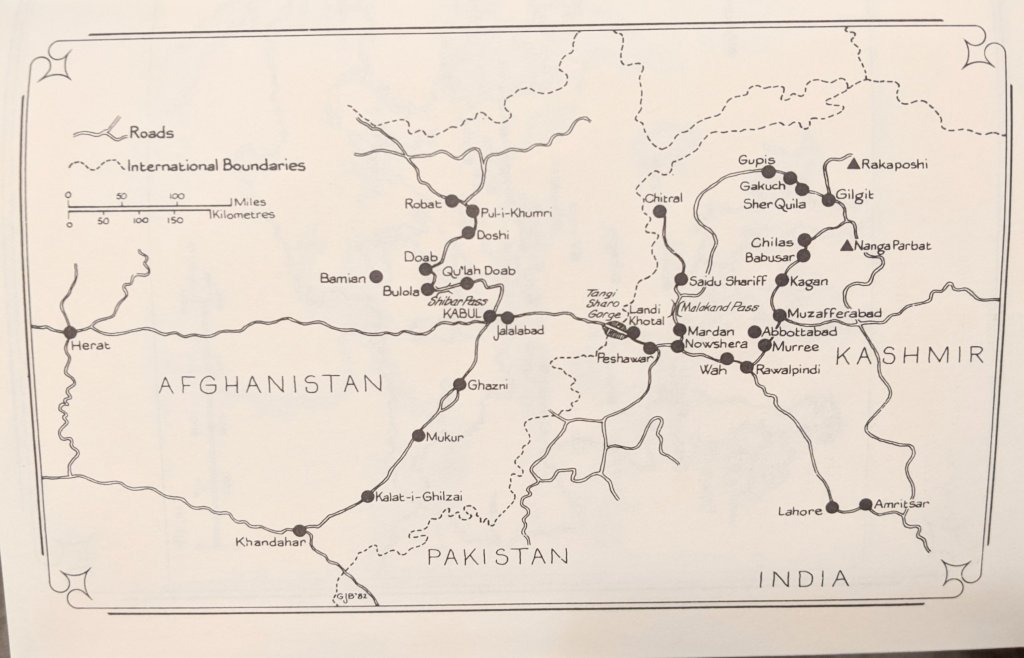
And this is hardly unique to Christianity. The tradition of hospitality runs throughout Islam. Read adventurer Dervla Murphy‘s account of her solo bicycle trip from Ireland to India in 1963, as detailed in Full Tilt.
Her dedication reads: “To the peoples of Afghanistan and Pakistan with gratitude for their hospitality for their principles and with affection for those who befriended me.”
You can be true to your tribe, true to your group within your group, and still reach outside that structure for all sorts of interactions. Not only can this be true, it is the best form of social commerce. And not everyone has to play. This show-stopper-outrage that has controlled our dialogue, the one that holds up the one offending example, sidesteps the reality that a few bad apples (racists, sexists or otherwise horrible people) don’t monopolize the ability for the rest of us to extend a hand where they won’t.
One doesn’t have to practice in a faith community to believe in the goodness of human nature.











 Home Economics