*How* are rent-stabilized buildings different than non-stabilized buildings?
One key pattern is that upkeep (measured by permits) seems to be lower : Compared to non-stabilized control buildings with similar unit count, they have about half as many alteration permits.
If you’ve ever had to dig in your yard, you know the first step is to call the power company. Before a shovel hits the dirt, utility crews mark the lawn with a rainbow of little flags, showing where buried lines and cables run. Those markers are a reminder that beneath every property lies a web of infrastructure you don’t own but rely on every single day. This network is owned and maintained by your local electric company—the same one that sends you a monthly bill. Whether electricity enters your home through an overhead mast or a buried cable, the reliability of service rests with these local players.
Behind the Flags: How Power Reaches Homes The electricity that hums through a house begins far away, at generating stations powered by natural gas, wind, solar, hydro, or nuclear energy. High-voltage lines move that power long distances until substations step the energy down to safer levels. From there, your local utility takes over, operating the distribution system that delivers electricity to neighborhoods and households.
For homeowners, the poles you see on the street—or the lines you don’t see underground—are not just background scenery. They are the lifelines of everyday living. Flicking on a light switch, charging a laptop, or running an air conditioner all depend on the quiet, constant work of utilities keeping those lines in good order.
Reliability and Perception While utilities don’t often feature at the top of a buyer’s checklist the way school districts or commute times do, reliability still shapes homeowner perception. Most people only notice electricity when it fails, but repeated outages or slow restoration times can quickly create frustration. Just like trash pickup or snow plowing, electricity is a municipal-style service that residents take for granted—until it stops.
In this sense, dependability forms a kind of background preference. A household may not choose a neighborhood primarily for its utility provider, but they still form judgments, even if peripheral, about whether the service is reliable, responsive, and trustworthy. When those expectations aren’t met, the dismay can be just as real as when other civic services break down.
The Household–Utility Relationship Every month, the bill you pay reflects both the energy you used and the infrastructure behind it. Rates cover not only the electricity itself but also the upkeep of poles, wires, substations, and the crews ready to respond when trouble strikes. For families on tight budgets, these costs can feel heavy, which is why many utilities offer assistance programs or rebates to help households manage expenses.
More Than Wires Ultimately, the connection between utilities and homes is about more than cables and meters. It’s about ensuring every household can reliably plug into modern life. From the flags in your lawn to the wires above your street, utilities provide the unseen backbone of comfort, safety, and opportunity—making sure that when you flip the switch, the lights always come on.
The state’s acting U.S. Attorney Joseph H. Thompson provided this statement about the decision to terminate the HHS program:
“We welcome today’s news. Fraud has been eating away at Minnesota’s public programs for years, costing taxpayers billions. Ending the Housing Stabilization Services program cuts off a major source of abuse, but this is just the beginning. The fight against fraud continues, and a broader reckoning is long overdue.”
What does it mean? When a party externalizes or internalizes? Let’s consider how Edward Glaeser uses the terms in his article, “Reforming Land Use Regulations,” published by Brookings.
Theoretically, it is at least conceivable that America’s web of locally-constructed zoning codes have worked out to be a finely tuned system that functions like a perfect Pigouvian tax internalizing all the offsetting externalities of all new construction.
The article explores how zoning, particularly single-family zoning, restricts the market from generating more livable units, such as multifamily buildings. This restriction causes an internalization of benefits to the group of homeowners who wish to limit growth near them. And this is indeed how it works. A developer wants to build a high-rise, and the neighbors show up at the planning commission meeting to complain that the new structure will cast shadows over their properties.
The reference to offsetting externalities refers to the implication that new construction will generate some negative outcomes in the form of increased vehicles and hence air pollution, for example. Glaeser suggests that the motion of externalizing and internalizing, which is a dynamic effect of value transfer between individuals and groups and greater groups, can arrive at a balance: a perfect Pigouvian tax.
Here’s another observation about externalities.
Our attempt to assess the total externalities generated by building in Manhattan found that they were tiny relative to the implicit tax on building created by land use controls (Glaeser, Gyourko and Saks, 2005).
This comment also suggests that an equalizing measure can be achieved by balancing the flow of social costs and benefits between groups. Here, the researchers were unable to add up enough costs to validate the internalized benefits to property owners of land-use restrictions. However, perhaps this is a framing issue. Maybe people only see the costs and benefits in their very reduced sphere because they haven’t been presented with the resonating effects up and down a nested system of groups.
Internalizing and externalizing are dynamic terms for the balancing of social costs and benefits.
There are lots of ways groups form in order to tackle shared interests. “In 1955, the Minnesota Legislature authorized the creation of watersheds through the Watershed Act. The intent of the Act was to develop water management policies and plans on a watershed basis, because water does not follow political boundaries.”
Water flows in the direction of the lowest point. If your neighbor’s lot sits higher than yours, then more than likely you will deal with the drainage that flows following a storm. For that reason, people in a shared drainage system collaborate to be sure adverse effects are tackled. These generally include land use planning, flood control and conservation projects.
From an analysis point of view, the watersheds are interesting as they are independent of standard governance structures. Water crosses country lines, meanders between cities, and flows around carefully surveyed property lines. They can group people and their properties over vast plains.
But where is the value in the grouping? Mainly in the flood zone analysis. Inundation and water tables effect construction prospects and insurance issues.
Although it is fair to keep in mind, or rather it is essential, to keep in mind that many other factors could contribute to the drop off in new housing permits in the city. If you can think back to the last time you made a housing decision, what were the core attributes of your new place to live? Perhaps safety. Crime is up in the city. What else? Perhaps schools. School performance and attendance rates are down. Perhaps proximity to work. Many employment situations went with a remote model, leaving the downtown core empty, reducing the premium to be close-in.
There are many variables that contribute to or detract from the desirability of living situations. Zoning has an impact, but it is way down the list of the core features that impact people’s daily lives.
A few months ago, I wrote about an investor who bought a property with an old style of electrical wiring called knob and tube. Their post was an example of the complexity of a rehad project. The price of the building was undoubtedly part of their decision-making. But you don’t always know what you are buying. Inspections are done to determine all the variables upfront; when it comes to real estate renovations, there are bound to be some unexpected costs. The expense of rewiring a nine-unit building was a downstroke against their profit.
Homes have so many features, which leads people to make different choices depending on their skills, what they value, and their tolerance to risk. Some homeowners, for instance, will not purchase a home with a tuck-under garage. The thought of the amount of energy loss every time the twenty-foot double garage door goes up in the winter when it is below zero makes them cringe. The energy inefficiency of this floor plan makes the home unacceptable in their eyes.
Over time, particularly when mechanicals or construction processes improve, old systems like knob and tube wiring make their way out of the market. First, the market starts to reject the item, so sellers, in preparation for sale, determine they would be best off making the improvement before going on the market. Sometimes, the insurance company will influence the market by making it more expensive to insure certain features, which provides incentives for replacing those items. Eventually, the old way of doing things becomes obsolete and unacceptable to buyers.
This process may take a couple of decades or a quarter century. Old-timers grumble about replacing perfectly feasible mechanicals, wasting funds that could be spent elsewhere. A long time ago, a local electrician advised that as long as the cylindric glass fuses supported the current demand, then all was well. When one insurance company refuses coverage, other smaller companies may step in. And around it goes until the verdict changes and most homes have been converted.
Consider this method versus a regulation. Once an empowered authority draws a line and publishes a restriction, the market no longer has the ability to evaluate this change in contrast to all the dozens of other upgrades and improvements that can go into a home. The burden falls most heavily on the more dated homes, which are often owned by people who have gotten on in years and are not keeping up on things or those of lesser means who patch and plug problems as that’s the best they can do.
A decree from above creates an acute demand for that one mechanical, which, in my experience, causes opportunistic behavior and price inflation. The market system is the kinder and gentler way to transition from one set of norms to another.
In a recent post, House Prices and Quality: 1971 vs. 2023, Jeremy Horpedahl points out the difference in house prices by time values, which I really like for comparison purposes. He notes, “As you can see, in 2023 it took 31 percent more hours of work to buy a square foot of the median home, compared with 1971.” Furthermore, he makes the adjustments for the extra footage most homes offer today versus when the Brady Bunch lived in their swanky multi-level Californian home.
Then he goes on to say the quality of construction in the 1970s was modern and hence met a certain threshold of acceptability. I would argue that’s not the case. The 70s was a time of experimentation with new methods driven by a desire to enhance eco-friendliness. These materials and techniques did not provide the same longevity of use as the old country techniques from earlier in the century. This article cites a variety of issues. Focusing on a few mechanical components of a home will best exemplify how the norms and standards of the time affect the durability of the product, which is internalized in price.
Homes are expensive to buy and to maintain. One justification for paying the premium for new construction is that all major mechanicals are warranted for ten years, and most, on average, will last more than that. Heating and cooling systems have an average lifespan of fifteen years and cost $12-14K. Roofs keep homeowners dry for twenty-two years or so ($15K). Windows and siding can vary significantly depending on the quality of the materials.
For instance, in the photo on the right, the windows are original to the 1912 apartment building. They are wooden double-hung sashes that protected the lower level laundry and storage area from the weather for a century, serving the purpose intended. The windows on the left are vinyl replacement windows that were installed less than fifteen years ago. The dirty-looking glass is called a broken seal. Moisture has found its way through the double-paned structure, dictating that they are a failed mechanical by industry standards.
Window repair and replacement are among the more costly repairs in a home. The insert on the left probably costs about $3,500 in our market, just for one window.
The 1970s were full of experimentation with lower-quality materials. Hardwood flooring was replaced with plywood and then covered with carpet. Whereas wood floors are sanded and refinished for a beautiful crisp feel once every twenty years, carpet wears out in about a third of the time, seven years. My hardwood flooring guy tells me they have been back to refinish quarter-inch oak in one-hundred-year-old homes. There is the esthetic appeal to this home feature but it also translates to lower upkeep.
Solid stucco exteriors (stucco is a cement-like product that lasts for thirty years or more) are another application prevalent in homes built prior to the 1970s. Exteriors were instead clad in inexpensive plywood. This fibrous product does not necessarily fail in functionality after twenty years but no longer takes paint well and hence looks thrifty. Woodpeckers tend to find it appealing for sharpening their beaks as well.
By the late 1980s, homes built in the 1970s were highly unpopular. In part, their split entry style and vaulting with dark beamed ceilings had lost their cosmetic appeal to younger buyers. Buyers also longed for quality craftsmanship. The seventies homes were built cheaply, and consumers felt it. Most people wouldn’t have verbalized their selection as a commentary on an experiment in housing gone wrong, but they showed it in their choices.
Everyone is talking about peeling back regulations. I, too, think this is a good thing. Picking which rules should go and which should stay is the question of the day. The rules were put in place often to save folks from some harm, so those would be worth keeping, right? But where is the final test to turn for such judgement?
Every industry will be different. Perhaps people in each walk of business will have an opportunity to point out the absurd or even the slightly off base.
Real estate construction offers a wide play of potential overreach by bureaucrats. At least from the layman’s side of things, it’s a bit difficult to understand the fine nuances of a vent’s proximity to a floorboard. Can a metal heat vent ever rise to a temperature that would ignite a beam? If the vent turns at this angle it is unacceptable, yet a few degrees to that angle it passes.
AI could be one way to double-check the interpretations of safety requirements. Instead of well-intended people imposing the most stringent interpretations of what is safe, a history of events could be considered. The power of scanning large files allows thousands of cases of, say, insurance claims to detail actual construction failures that resulted in harm. If there has never been a claim involving a heat vent setting framing on fire, that should give some direction on whether the rule is worth pursuing.
The standards each community picks will reflect its risk tolerance. But if the level of acceptability has risen far above what the average person tolerates in their own dwelling, then the rule makers are stifling the construction process and adding undue expense.
Buyers and sellers are always feeling their way through the market process whether they are trading homes, water softeners, or landscaping services. Sellers make their products or services known, and buyers respond by coming to tour a home, requesting a bid on a water softener, or having the landscaper over to explain what could be accomplished at a certain budget.
The more complicated the product, the greater the need to investigate all the options. A home search may take six months as the homeowners-to-be seek out different areas, consider different floor plans, and evaluate the level of condition they need to fit their lifestyle. It’s a hard-earned process as it requires a fair amount of time and attention.
Appliances and smaller mechanicals are a bit less involved. There are often a couple of models the installers offer, some based on efficiency, some based on the manufacturer’s reputation. But there is more than the component to consider. There are differences amongst the installers as well. Some will ‘forget’ to pull a permit. Some will encourage the homeowners to consider a list of additional adjustments (shut-off valves, new venting, replace an access panel, and so on). Some will do the bare minimum and think that anything more is a waste. Some will go above and beyond code on the install and anything else in the area. For some picky folks this is the way to go.
The point is that there isn’t one way to buy a house or get a job done. The landscaper can pull out all the existing shrubs and rock border around a house and start over from the dirt. Or the landscaper can bring in a new stone edging, fertilize the existing plants, top it all off with some new mulch, and have it looking trim. One might hire a crew from the neighborhood to support a local business, or one might prefer the design plans, plants, and shiny equipment from the large nursery in town.
Shopping is part of the discovery process. It reveals a lot about what goes into price.
I swung through Sauk Centre recently and took a picture of the birthplace home of writer Sinclair Lewis (1885-1951). It’s hard for us to imagine how popular his books, Main Street, Babbitt, and others were back at the beginning of the twentieth century. They were immediate hits, turning the small-town boy into a millionaire.
He was born to a doctor and his wife in 1885 in this home in a town which then was home to about sixteen hundred residents.
The detail work on the structure is notable for a home of this period. The balustrade along the porch roof, a frieze below its eaves, the dentil work, and scrolled corner brackets. The windows are topped with a cornice and sided by shutters. One must wonder if immigrant labor from the old country was put to work in creating such ornate structures. The timber most likely arrived on the railroad tracks which ran through town less than three blocks away. The rail bed is now a regional bike trail facilitating a different type of traffic.
It’s a handsome home. At the time it was built, there was no electricity. That would have come later. The roads were dirt, and in the back stands a structure more attuned to a small barn, most likely designed for a carriage. The turn of the century brought all sorts of technological improvements from plumbing, to windows, and lighting. Foundations changed from dugout cellars to functional deeper spaces. But whenever I see the attention to artistic accents on the Victorian era homes, I have to think there was an extra pleasure in their creation.
The town is only three times the size it was back when Lewis exposed the stifling discomforts of small-town life. In a way, he is similar to his peer Zora Neale Hurston (1891-1960), who wrote about her youth community in Florida, telling of insights some would prefer not be exposed. Norms are meant to be understood and followed but not openly discussed in good company.
How would that work exactly, an efficiency commission? In the business world, when the system is open and monopolies aren’t gumming up the flow of things, new entrants keep prices lean by undercutting the legacy companies, while maintaining a high enough price so as not to go bust. This tension is how people trust that they are paying a competitive price.
🚨🚨BREAKING: Elon Musk just volunteered to help on a Government Efficiency Committee to rein in government waste.
When groups or governments come up with pledges to jointly pay for goods and services, the obligation to purchase distorts a more fluid and flexible exchange. It also can set up a fictitious demand, as in the Feeding our Future Fraud case. The knowledge that the funds would arrive gave a financial incentive to fabricate the hungry kids who demanded the meals.
Another inefficiency appears in the form of joint missions, also known as mission creep. For instance, a government acquires a property in poor condition. Instead of bringing it up to the standard that most of the nearby residents would do if it were their home, the government entity goes over and above, not by a little but perhaps by three times the expense of average expectations. “Because it is the right thing to do.”
There are two counting mechanisms that could help an efficiency commission discuss examples such as these. The first is to count the population of the end recipients or receivers of service. A simple demographic count of the kids meant to be served would have immiediately revealed the fraud that led to the theft of $250 million from Federal subsidies. The state demographer has those numbers. It’s not hard to add.
The second example requires a comparison to the average typical repair for the area. Many home repairs and services vary in price. Should a homeowner go with the highest efficiency model, or is 80% high enough? It seems that the likely answer lies with the community of like-minded folks and not the bureaucrat. Wouldn’t it make most sense to spend the money in the fashion that a conscientious owner in the neighborhood would choose to do? After all, they’ve gone through the scheme of pricing and comparing.
Those in charge of public dollars should be vigilant to avoid being taken for a ride, as well as in line with the spending expectations of their constituents.
Vacant properties are not popular with municipalities. Cities create a vacant land registry to keep a running log of properties that do not host residents. Here are directions from the town of Brookhaven New York.
There is no longer a requirement to submit a notarized application or payment through the mail – it is all available online. The cost to register is $360 for the year and can be paid through our secure online platform.
Please be advised, that any owner, or agent of an owner acting on behalf of the owner, who fails to register a vacant building or to pay any fees required to be paid pursuant to the provisions of Chapter 87, within 30 days after they become due, shall constitute a violation punishable upon conviction thereof by a fine in the amount of not less than $1,000 nor more than $15,000 for each failure to register, or for each failure to pay a required vacant building registration fee.
The amount of the fine implies that full buildings are of value to the hamlet. Perhaps, in part, this is due to the services a resident will take up once they walk up their sidewalk every day to their front door. Perhaps having people come and go in the neighborhood keeps everyone more secure. Here are the benefits as expressed by the bureaucrats.
Registrant’s point of contact will be notified by phone and/or email of issues that may arise such as:
Property maintenance (tall grass, litter on property, etc.)
When the Town is notified by law enforcement of unauthorized occupancy
If property becomes unsecure.
When properties are registered, the Town will have contact information and will have the opportunity to notify the owner/property manager to correct any issues before taking action. This will save the property owner money.
The city of Miami goes one step further and requires the owners post a no-tresspassing sign and authorize their police force to enter the property should a need for their services become apparent.
Install No Trespassing Sign
Once you’ve submitted your forms, you’ll need to install a No Trespassing sign on the property (this can be any sign purchased any where).
Although it may never cross your mind, your comings and goings every day in your neighborhood and place of business are a public service.
Disclosures are often used to inform consumers in the early stages of a transaction. They are especially popular when there is thought to be an imbalance of savoir-faire between the parties. The idea is that if the consumers really knew what they were in for, they would have made another decision. This conclusion might have been drawn under suspicion that the vendors are hiding material facts. Or one might think this is a bit haughty and judgy on the part of the regulator putter-togetherers. This implies that consumers cannot do a little research and inform themselves before making a decision. Either way, all other things equal, more information is better than less information, right?
Maybe.
Gathering information is part of any worthwhile transaction. Only after a review of alternatives can a purchasers feel confident that their decision best suits their needs. At the beginning of the process they may feel confident in their priorities only to have them challenged. They may walk in thinking they’re buying a sedan and drive out in an SUV.
In addition to supporting a spirit of investigation, it is to the consumers’ benefit to learn early on that to be vigilant in their interactions. A good shopper will ask questions and compare answers. An environment of abundant disclosures might lead people to believe that they will be told what is best for them. And everytime they feel they could have done better, they will wonder why no one was there to guide them.
In 2023 there were 34 of these permitted in the city core. Year to date, another 4. In Hennepin county the total of 3-4 unit multi-family permitted in 2023 came to 78.
In the latest round of environmental review versus the world (or do it my way legislation), the boxers are the almighty climate combatants versus those who request a road expansion. I should qualify. When I say ‘request,’ I mean demonstrated demand through usage. If the roadways are full, then it’s safe to say that the participants find travel along that freeway by car best suits their needs. Once vehicles come to a standstill on a commute, they are polluting an extra amount by idling. Managing the road system to facilitate flow keeps emissions lower.
A new law passed last year requires an environmental review before authorizing a roadway enlargement. Calculating a social cost at the time of the transaction, like a road installation, is an interesting thing to do. It should be done in conjunction with calculating of all the other benefits prompt and efficient transporation offers, such as getting the elderly to their doctors’ appointments or kids to their extra-circular activities, as well as getting commuters to their jobs.
Residents are dong that all the time. Cars cost money to own and maintain. Consumers will use them when they are their best option. Denying a population access to a road enlargement pushes them to substitute less desireable options. These are less attractive not because of their love affairs with the car, but most probably because they eat into their time and ability to achieve their other daily tasks.
If the goal is to reduce trip miles, then study populations who achieve success at all their goals while using the fewest miles. How is their matrix of choices allowing this to happen? What are their priorities and how did they achieve them. I can promiss one answer. It isn’t because a bureaucrat squeezed their road improvement project.
Come to find out, property insurance rates on a $300,000 home vary by state. They vary a lot. The annual premiums for a dwelling in Missouri and Mississippi are twice as much as Maryland and Maine. Minnesota is, of course, just average.
If you haven’t thought about your insurance coverage in a while it might be an idea to dust off the policy and dig into what is covered. Some riders are negligible in cost yet nice to have when the situation arises. And example for coverage is on the water line from the meter in your basement to the connector at the street. Standard deductibles have also gone up from $1000 to $2500. The larger deductible may save your annual premium $200-$300.
Also, be sure to understand how the coverage works. With all the roof claims, often driven by contractors knocking on doors after a hailstorm goes through a neighborhood, companies have changed the payouts on roof replacements. Many companies will prorate the coverage once a roof is over fifteen years old. If the storm comes through in the twentieth year of the asphalt shingle life, then the homeowner only gets paid the value of the remaining years of life.
A periodic review is indeed essential for staying informed about external factors that may affect your insurance coverage. Even if you are content with your current provider, the insurance market continuously evolves, making regular evaluations crucial for ensuring that your coverage aligns with your needs and the prevailing circumstances.
Man who kept his boat besides his house was ordered from the city to put up a fence to hide the boat from view. So he built the fence and hired someone to paint it. pic.twitter.com/wrkQh6RjXn
The state legislative bodies just went back to work for the season. One item they are working on involves land use regulation. The libertarian in you mught thing, ugh more rules. Maybe that’s too quick a judgement. Maybe there’s more liberty than restraint in this case.
Minnesota House and Senate will begin work on a sweeping change in local housing land use Tuesday, limiting city ability to regulate so-called Missing Middle housing. Bills are DFL led but with GOP co-sponsorship.https://t.co/4PIIZZoGqj
If an issue has risen to the attention of state politicians, than it’s possible it impacts all Minnesotans. Let’s call it the greater group or G-group. From Peter Callaghan’s tweet it sounds like the rules envolve restaints at the city level. Let’s call these groups C-groups. And then let’s keep households in the story and they’ll be H-groups.
So the line of reasoning goes, that due to land use restrictions at the local level, insufficient housing is being built. Since real estate is sold in an ever adjusting market, low supply rises prices for all participants. One might even argue that low supply is gumming up the market as single, older folks are sitting in large 3-4 bedroom homes as they have no where to go. So the opportunities for new buyers and move-up buyers to navigate to a new port-of-call is slowed. While those that would prefer to give up their large home, as they are no longer using but a quarter of it, are not finding appropriate options. Hence many participants in the H-group are not feeling very free.
The C-group is responsible for, over long periods of time, formalized language on the books to prevent hither dither building. This was all done to preserve the liberty of the H-group, at those points in time. The H-group had a certain idea of what their neighborhood was meant to be. It wasn’t meant to abutt a bowling alley, or a five story apartment building. The H-group wanted to drive down tree-lined streets past other single family homes just like theirs. They wanted consistency. They wanted tranquility. And with all the other options just a bit further out, their desires did not interfere with others in the G-groups
A few generations go by, and the metro area triples in population. The spacial relations evolve to something different. Those who were newlyweds hoping for a family now are elderly with low maintenance needs. The formal regulations set out be the C-group, which made perfect sense at the time, is putting a dam in a dynamic system. Instead of transforming itself under new demands, new needs are blocked at every turn.
And so the greater group is making a rule to take out the rule that is holding back the market. Call it a liberty rule instead of a regulation. For it is through transformation of the land to new uses that allows the C-group to arrive back at a balance of the greatest freedom for the best price.
People don’t associate wells with metropolitan homes. Wells are a country thing. When there is distance between homes, putting in infrastructure like water lines or gas lines or internet connections is more difficult to justify in the money sense.
When you do run into a well issue in the city it is usually to do with an old abandoned well. There is always a time when every housing development was new. The post WWII baby boom pushed demand for housing before all the infrastructure was figured out. So many homes in the first tier suburbs were serviced by a well. The well room was located under the front stoop (steps to front entrance) and housed the pump and holding tank.
Ten years go by and many municipalities start catching up on their water main infrastructure. A rule is passed that no well can be dropped once municipal water is available in the road. A generation goes by and the pumps start to fail. Perhaps the owners had been using the well water to water their gardens, but this use doesn’t warrant the cost of a new pump. So there it sits in the damp well room, under the front steps.
Eventually people realize that hundreds of unsealed wells could cause a public health concern. The monitoring and tracking to wells is turned over to the Health Department. A disclosure is required at time of sale to indicate the status and location of any well on the property. But people think there is no harm in continuing to do what they always have done. They don’t want to bear the expense of an additional regulation.
Another generation goes by and many of the wells have been properly sealed. Those who worked in city utilities departments and at the health department and with well sealing companies have graduated onto retirement. A younger generation looks at the quaint cellar under the steps, see a clear floor, and can’t think why a well would ever have been stationed in such a spot. The pipe end protruding slightly above the concrete means nothing to them. It doesn’t take long before things are forgotten.
The tacit knowledge held by that older generation as a lived experience is gone. And those who never knew are convinced there must be some mistake. And thus, for infrastructure of a certain level of social benefit, a central regulating agency is desireable.
Rent control works against capital improvements. “The strict rent control policy enacted in St. Paul, coupled with the eviction moratorium and the overall economic volatility that followed the post-pandemic boom, have all made it harder for Twin Cities multifamily operators to manage their properties, particularly for those active in the affordable housing arena.”
Managment of affordable housing is the long haul pull, as opposed to the initial heady deal making. “I think, in general, there is an underappreciation of the management and operation of affordable housing. The fee structure incentivizes getting the deal done over the long-term success of the property as an ongoing community.”
Crime in a rental community acts as a tax. “For example, security issues are a big topic at many of our properties right now. Essentially this adds a ‘tax’ onto our properties because of the increased spending required. Some local policies have made it harder for us to remove residents who have engaged in dangerous behavior which is sometimes required in order to protect the rest of our residents.”
Administrative overhead caused by detailed laws takes money away from keeping property affordable. “Again, these types of policies have a lot of unintended impacts. The main one is that it is taking a lot of time and money for lawyers and accountants to understand and interpret the rules that are not well understood often even by the cities themselves. This takes away from what we would rather be doing which is producing and running housing.”
Once there was a service called a taxi. For a fee, passengers could hire a ride from here to there. This was an organized commercial venture with firms and drivers and passengers arriving at an acceptable balance of profits, fares, wages, and benefits. There was a govorning role in place as well, one developed over time.
Then came the internet and individuals outside the taxi service business could offer people rides. Without the formal structure and regulation, thus fares were considerably cheaper. This was good for the consumer, especially those of modest means. This internet-based method of connecting those with cars to those who needed rides seemed like a win-win for everyone.
Then drivers (who did this for a living instead of simply being in the neighborhood) found they needed better working conditions. The conditions that were most probably in place in the taxi industry that was disrupted. Labor activists jumped in to help guide a political process. Drivers donated extra voluntary time. Paths were forged with local politicians. A bill is written and passed. The celebration that followed looked like this.
But the stark numbers reality of the push to revert back to the original model has been ignored in favor of winning. The old model is considerably more expensive to the consumer. Without a need for the internet service, Uber and Lyft claim they will leave the market. Should the drivers prefer the original taxi model, that is fine. But it is a mistake to ignore the reality of the other parties. The Governor overrode the unanimous preference of his party in order to study the matter further.
BREAKING: Gov. Tim Walz has just vetoed the Uber/Lyft ride share bill and then signed an executive order to create a committee to study ride share regulations. pic.twitter.com/LoWsnDwPGO
I’ve got to give the Gov credit for putting economics over politics on this one. Or did he? If the ones being hurt by the labor regulations had been higher-income folks, I’m sure he would have signed off.
Most objections to markets of private goods are that, in their exuberance, they roll on by some social concerns. The industrious plant pollutes; the labor market does not support all families; the tech firm runs the table to accelerate advancements in their field. It’s thought that markets allow the power of the purse to trample on the wants of the people.
So– the people make rules.
And that is where you see the counterarguments to the objection to markets. Even though we don’t think about it, marketplaces are formed by rules. Markets are a combination of people taking action, the objects in trade, and the marketplace where it all occurs.
New rules mean a new marketplace. And in that new marketplace, with either informal norms or formal rules around the social concerns mentioned above, a new set of prices evolve. In a bubbling and ever-unfolding process, the markets renew to the will of the consumers.
The morals of some groups will keep their marketplaces at arm’s length. The Amish live a lifestyle that remains separate from mainstream America. Some people will never buy crypto or derivatives as their uncertainty about the products gives rise to a fear of being duped. Others may only allow family members to care for their children.
But the argument that the combination of people, with all their human inclinations, along with the variety of goods and services they wish to voluntarily exchange, and the meeting place where buyers and sellers are brought together is inherently a moral abyss seems unsubstantiated.
It’s rather perplexing how the liberals feel about landlords. If in doubt check out this new round of rules and fees being proposed at the Minnesota Legislature.
The bill would also restrict landlord entry and apply fees to landlords for subsequent violations. It was approved and referred to the House Judiciary Finance and Civil Law Committee.
The bill offers few exceptions while outlining well-defined penalties.
The types of fees that would be banned include those for move-in, move-out, vague administration practices, lease processing, amenity and access to rental portals.
“HF315 would prohibit those non-optional fees for non-optional services,” said Rachael Sterling, a housing attorney at HOME Line.
“This is different from a pet fee or parking fee a tenant can elect to add to their monthly costs,” she said.
Violators would pay either three times the amount of each unenforceable fee or $500, whichever is greater. In addition, the court could award reasonable attorney fees to tenants.
Landlords entering residential properties could be limited to a four-hour window between 8 a.m. and 8 p.m. and be required to give at least 24-hour notice. Instead of a civil penalty of $100, minimum penalties would have to match or exceed one month’s rent and reasonable attorney’s fees.
Are there really that many landlords entering units before 8am and after 8pm? Because it seems to me that most business people would prefer to be at home during these hours. The move-in move-out fees could be reflective of a condo building’s rules to charge accordingly. But I’m splitting hairs.
In the bigger scheme of things, I’m just not sure why progressives don’t jump into the rental business, buy some buildings and rent them out? Every time there is a market downturn I hope that one of these groups sweeps up a bunch of properties and rents them out.
Local urban geographer Bill Lindeke does a nice job describing how a building boom finally came to fruition along the first light rail line in Minneapolis. When the Blue Line went in eighteen years ago, there were heightened expectations that new construction would line up along this aging railway corridor from downtown Minneapolis out to the airport. But it took time.
That was 18 years ago. And ever since, for the most part, the pace of transit-oriented development has seemed glacial. According to Metropolitan Council studies, more than 12,000 new apartments have been built along the Blue Line since its opening. But if you glance at a map, the vast majority of this construction has been downtown, or else subsidized in some way. For most interstitial stops along Hiawatha, south of downtown, there’s been very little new housing construction. Even the rosiest development booster would have to admit it’s been a slow climb.
What I remember from selling single-family homes is there was an increased interest in those within a handful of blocks from a rail stop. The houses along there are modest for the most part, and the prices ran with the metro average, so younger people latched onto the opportunity for great access to downtown Minneapolis. No need to drive to work and pay exorbitant parking. No need to drive to your favorite ballgame or watering hole. Just hop on the rail line!
The premium in the sales prices of these homes could easily have been verified by anyone with an excel program. With proper splicing of access to various public amenities, regression analysis can parse down the amounts paid for all sorts of public amenities. Improved access to transit is certainly on most consumer’s minds. Still, the price push wasn’t enough for new construction.
“It really boils down to rent levels in every neighborhood,” Sweeney said. “Historically, rents in (Longfellow) were too low to justify much new construction. Few projects worked here (and so) while there were a few things built 10 years ago, you didn’t see a large boom. But area rents have grown, which allows new construction to be feasible.”
Sweeney is the developer who has put up two new apartment buildings along the Blue Line in recent years. Policymakers and pundits want to theorize about housing solutions, but people like Sweeney and the investors who support his group are the ones who have to be able to make the numbers work. A bonus for transit infrastucture is just one component of price.
Another valid issue discussed in the article is the various timeline for the pace or even appearance of new construction in older areas. The story tells of a tipping point for this neighborhood. Still to be discussed is a more thorough overview of the neighborhood components that green light building.
Most people agree that some rules are necessary. People cannot coexist with a reliance on internal moral compasses and common sense. Conflict is bound to arise and rules shape how to proceed once this happens. Even in the case of simple standards, rules can facilitate living in close quarters. It may seem like trivial overreach to implement a maximum grass height. But in fact, it’s the benchmark that tells the neighbors when they can say enough! Hire someone to mow that hay field.
A certain number of ordinances enables standard responses, which ease the ability of society to get along. But as the rule setting continues, a weird thing happens. People who like power (and often who understand power) mandate regulations to feel powerful. They talk a good game about the issues at hand, but you’ll notice the conversation always revolves back to some coalition beating out another coalition. There’s an ever-present fascination with some sneaky move that one group played on another.
People who like power are needed on occasion. But often these people have left the issue and the objectives at hand. The resolution is just a bobble to fight for. They are not useful in the daily duties of getting the job done. And this appears to be taking a toll on the workforce.
The New York Times looked into Why City Workers in New York Are Quitting in Droves. Read it. It’s all about power plays. The jobs have not changed, nor the compensation, nor the fact that the private sector has always been more lucrative. So what’s left? The social position of jobs has diminished and it is no surprise that the “(R)esignations and retirements from the Police Department are the highest they have been in nearly two decades.”
Other jobs that have become undesirable are the enforcers of the rules. “A critical New York City inspection team, which responds to violations and complaints about lead paint, mold, heat and hot water, has been hampered by a severe staffing shortage, with 140 positions waiting to be filled.” Call it pandemic enforcement fatigue. There is no status in it anymore.
And as tired as everyone is with discharging mandates, workers want a little freedom too.
Many also cited Mayor Eric Adams’s campaign to compel city workers to return to the office full time, a stance that was reinforced in late May. “While hybrid scheduleshave become more common in the private sector, the mayor firmly believes that the city needs its workers to report to work every day in person,”
All I’m saying is that rule makers have fallen out of fashion, let’s hurry up and take advantage of the loss of status. Repeal the dumb rules and regulations. There are plenty out there.
Kenneth Ahrens recently wrote a paper, Robbing Peter to Pay Paul, The Redistribution of Wealth Caused by Rent Control. He was kind enough to join the Minneapolis Area Association of Realtors in a zoom call to present the material. It’s of particular interest in our market as he uses the effects of a recent ballot measure in the city of St. Paul. The paper is written in clear plain language and starts with a nice historical review of rent control in the US. It’s well worth the read. Here is the abstract.
Abstract
We use the price effects caused by the passage of rent control in St. Paul, Minnesota in 2021, to study the transfer of wealth across income groups. First, we find that rent control caused property values to fall by 6-7%, for an aggregate loss of $1.6 billion. Both owner-occupied and rental properties lost value, but the losses were larger for rental properties, and in neighborhoods with a higher concentration of rentals. Second, leveraging administrative parcel-level data, we find that the tenants who gained the most from rent control had higher incomes and were more likely to be white, while the owners who lost the most had lower incomes and were more likely to be minorities. For properties with high-income owners and low-income tenants, the transfer of wealth was close to zero. Thus, to the extent that rent control is intended to transfer wealth from high-income to low-income households, the realized impact of the law was the opposite of its intention.
Ahrens mentioned that his peers were wondering why he was working on demonstrating the problems with a policy that has been shown to have greater negative impacts than positive ones. Experiments with rent control in the 50s and the 70s are long forgotten. A new generation of problem solvers and activists are reviving old ideas despite their flaws. The focus seems to be on preserving a renter’s ability to stay in their apartment by capping rent increases. This in turn transfers wealth from the landlord to the tenant.
Although the intent might be to have a one-for-one transfer from the pocket of the property owner to the renter, Ahrens points out that it is not that straightforward. “Basic economic theory predicts that rent control causes both transfers of wealth and deadweight losses (DWL) for property owners. These losses can be divided into a direct capitalization loss and an indirect negative externality loss.” A deadweight loss might derive from postponement of maintenance and repairs due to lack of income. “The sum of these effects is observable as a decline in the market value of real estate, as the property can no longer generate a market rate flow of income and fewer repairs to the property mean a lesser quality building.”
Furthermore, the transfers benefit the wealthy and hurt the less wealthy. In their findings, the lower income owners realize the greatest decline in home values- 8.52%- than any other transfer.
Excerpt from Table VII
There have already been meetings in St. Paul to adjust the stringent rent control measures passed last November. But there is no talk of reversal. Constituents seem to feel that renters in some way are not getting a fair shake.
Maybe I can take a run at the reasoning. Renters play a role in the community as do property owners. They are not as vested as they are more mobile, yet they too can be good citizens. Perhaps they go to city hall to petition for a road safety concern, a new playground, or more observance of a problem property. Perhaps they are the bus stop mom or the football coach. Perhaps they help maintain a safe light rail system or advocate for better bike lanes. For all that personal time spent on city infrastructure, they enjoy an improved environment. Yet the homeowners enjoy greater home values. And renters face the possibility of being priced out.
Of course, homeowners do not always enjoy greater home values. I remember a period of three years following the great recession where most sellers brought a check to closing to buy out their remaining mortgage balance. Sellers also feel a pinch in their bottom line when cosmetic updates have not been done, or repairs deferred. Renters find it far less costly simply to move to a newer updated unit. Such are the differences between ownership and rentals.
Maybe there is a new framework to consider. One that takes into consideration the economic issues of civic participation yet still tallies the risks of ownership. What’s clear to me is that if economists do not come up with analytical tools that better express the motivations and incentives constituents are expressing in their political decisions, then we will continue to suffer through cascading unintended consequences of bad policy.
In her latest book, Cogs and Monsters, Diane Coyle takes a long hard look at the discipline of economics. She offers substantial proof that many things we care about are left out of the accounting in a traditional analysis. It’s a topic she is familiar with as she wrote another book about GDP which relays a history of the measure and suggests there are some missing pieces to the analysis.
Her peers are not to be persuaded. Frustration ensues when novel ways to approach issues are shuffled under a pile of papers and surreptitiously ignored. Here is the story of the shopkeepers versus energy waste through open doors.
As you walk down a high street in the winter, you will find many stores with their doors wide open blasting out heat in the entrance. This is not a desirable state of affairs either in environmental terms or in terms of the stores’ energy bills. So why do they continue to do it? Their fear of discouraging ambling shoppers from entering their store, when every competitor’s door is open, outweighs their desire to cut the electricity bill, or reduce emissions. No shop can shut the door unless the others do so. It is a classic co-ordination problem, and the campaign aims to co-ordinate actions, but cannot succeed until a critical mass of door closers has been reached on every high street. A regulation banning open doors would achieve the same, and more effectively because individual shops could not backslide.
In today’s parlance, there is a tension between the ability of small business owners to make a profit and an edict from the state to preserve energy. It’s Mainstreet versus the government (or the activists, or the greens). The positioning is that people in business just care about making money and don’t do enough to contribute to social problems. The counter arguement is that businesses are suppose to look after the bottom line- that is the how the system works. Due to this dichotomy, a proposal to regulate shop doors is considered authoritarian. We the lofty intellectuals have made a calculation that- you- the lowly shop keepers must sacrifice for the greater good and close your doors!
If you read Coyle’s book closely, however, she has more to say. From what I understand, the mandate to shut the shop doors is meant to ignite the coordination of a beneficial activity. Clearly, shopkeepers care about more than their businesses, just as everyone does. They may choose to make concessions for all sorts of socially beneficial reasons. Perhaps their brother-in-law is a supplier, but not the cheapest supplier. Perhaps they close on Sunday for religious reasons. At every turn, business choices are made in unison with other interests. And there is a very good chance many care about the wasted heat slipping out their front doors.
The policy to regulate the shutting of doors isn’t a heavy-handed state mandate. What it does is give the group a chance to start a new norm, one which they would be open to if they had assurances that everyone would follow through, Once underway, the theory is that shutting of the door becomes a voluntary social norm with compliance and enforcement.
To see it in that light, it is necessary to put it on display in the public goods market. The fear is that one shopkeeper closing their door bears an external expense for her commitment to a social interest. Unless there is a good chance that the majority of the group are so environmentally inclined, the efforts will inevitably be circumvented and the efforts will fail.
So here is the important part. Coyle is making a judgment in a marketplace of energy-conservation interests that not 1-out-of-10, not 5-out-of-10, but 9-out-of-10 of the Mainstreet businesses will find this a favorable action with assurances. The question should be, how is she evaluating that market? Where does she see the numbers that say this group will go along with this policy, or that group will not?
Consumers of resources are regularly making calls about how much they are willing to sacrifice for their children, their environment, their commutes, and their churches… These are all done in shades of grey and not in thumbs up or thumbs down moral decisions. To implement successful coordination policies we need to be able to read the market so that the initial assurance of participation is followed by the development of a new voluntary institution.
This thread is from a month ago or so, but the data is still valid. There has been a precipitous drop in new construction permits in St. Paul since last fall’s election put rent control in place.
This thoughtful article on rents in the Minneapolis and St. Paul area confirms that rents have only been easing up until 2020. The author believes rents have been on the decline since then.
The actual advertised median rents for one- and two-bedroom apartments are lower — in actual dollars — in 2022 than they were in late 2018. Three-bedroom rents went up 2 percent over the four years, while inflation went up 11 percent over the same time. These shifts started more than a year before the pandemic. “Post” pandemic increases look big due to the atypical and extremely low rents during summer 2020. But trends show that Minneapolis rents have simply returned to pre-pandemic levels.
This data is in high contrast to the inflammatory, high-rent-evil-landlord hype that was circulating prior to the elections. And despite this lengthy and analytical exposition of a responsive system, there is a parroting of the party line:
We also need more tenant protections, like just-cause eviction and rent stabilization. We need to ensure that every person has the income to afford a home whether from increased wages, making housing subsidy an entitlement or social housing. Minneapolis minimum wage hasn’t yet reached $15 per hour, and $15 is a long way from the NLIHC-calculated $17.27 housing wage needed to afford just a studio apartment in the Twin Cities.
Unfortunately, there is an audience for such questionable logic.
When I started writing more extensively about the economics of neighborhoods, I thought a good place to start was by dislodging the concept of public and private from the old school delineation. This version says that certain goods are public by nature, as in the notorious lighthouse whose beams bring all boats to shore safely. And it is right for the government to administer public goods which make up the public sector.
My view is that societies determine what they (they can be the citizens in a democracy or a dictator or an elite group in an autocracy) want to be public and what they desire to remain private. I wrote about it in a little lengthier piece, Our Problem is a Problem of Design.
How people come up with what is private and what is public is interesting from a resource distribution standpoint. But it isn’t money that is usually the driver for what is public. It is personal safety. The Hennepin Avenue Bridge in Minneapolis started out as a private endeavor allowing for crossings across the mighty Mississippi in the early years of the grain mill district. But repairs and safety concerns, in the end, pushed the overpass to transition to the city. Transport, in general, seems to fair better in government hands.
Let me bring you back to the snow removal story. One would think it parallels a consumption model of, say, water delivery. The household uses so much water and is billed for it. This isn’t accurate as there are no other means of obtaining water. The city acts a monopoly supplier of the good. And it is fairly straightforward and uncontriversial to bill by consumption.
Presently many residents do clear the sidewalks fronting the road to their homes. Let’s spitball it at 75%. This is labor provided at no cost to the public out of civic mindedness. If the city chose to take on the removal of snow as a public good, they are walking away from .75 x $20mil (the cost of the program) or $15mil. Plus, it seems with a little leadership, and city council support instead of neglect, there would be a capacity for folks to voluntarily pitch-in and clear more walks.
The thing about public goods is that they must be provided to all. Once a good is publicized, then the cost for the entire community is borne out by the public. In this case, the analysis points to further civic engagement rather than adding to the already full plate of demands on the city’s budget.
From March 12th- April 10th builders showcase their model homes by having them open to the public. It is a convenient way for buyers to get out and look at what is being built around the metro. Some people go to see the latest trends in home design and decor. Some are interested in the latest technology. But many are considering a move and would like to build new.
The key appeal to the building is the personalization of choosing some of the finishes. There are very few truly custom builders, these work at the top of the price range, but even national builders allow the choice between several packages of finishes. Some buyers feel so strongly about having a hand in the creation of the home as well as being the first owner that building is their only option.
This explains how they justify the price they pay for that privilege. New builds are beautiful, crisp, modern- but they are not cheap.
Buyer making plans with a builder rep via Skype
Out of the 343 new properties on the tour, only a couple are priced below the Twin Cities metro median sales price of $340K. Most of the least expensive options are townhomes, but one is a split entry with the upper level finished. Most are also located on the outer peripheral of the urban area. Or in other words, half of the metro home buyers can purchase homes at lower prices and in closer proximity to infrastructure like jobs, education, medical facilities, shopping, and so on.
If a chief accountant of the community had to select a type of property to offer to members who needed help paying the rent, it is clear that she could stretch her public purse further by going with existing homes instead of new. The math is pretty clear.
I seem to come across two types of articles about real estate. The first is straightforward but rather boring as it simply reports the latest price movements in a ticker-tape-announcement sort of way. The other is a much more complicated, rambling article which touches on every aspect of housing that one could imagine. These remind me of a parable which originates out of the Indian subcontinent. The story describes a handful of men trying to address an issue by groping at it from all sides. It goes something like this.
A group of blind men heard that a strange animal, called an elephant, had been brought to the town, but none of them were aware of its shape and form. Out of curiosity, they said: “We must inspect and know it by touch, of which we are capable”. So, they sought it out, and when they found it they groped about it. The first person, whose hand landed on the trunk, said, “This being is like a thick snake”. For another one whose hand reached its ear, it seemed like a kind of fan. As for another person, whose hand was upon its leg, said, the elephant is a pillar like a tree-trunk. The blind man who placed his hand upon its side said the elephant, “is a wall”. Another who felt its tail, described it as a rope. The last felt its tusk, stating the elephant is that which is hard, smooth and like a spear.
Pricing and homelessness and house maintenance and building restrictions and greedy developers and disgruntled renters and building equity and housing density and parking and so much more can all be jumbled into one passage about, real estate. It’s too much.
We need some rules.
Most of the population of the area under consideration navigates and open market system of securing housing. They are as much of a price setter as the sellers, including the developers. Who has the upper hand in the market goes through cycles and it noted by things like time on market or number of properties taking a price reduction before receiving an offer. We’ve been in a sellers’ market for a number of years and people have seemed to forget that a buyers’ market will be here in due course.
But the brings up a second category of conversation. The number of dwellings versus the number of households in the area of interest is rarely printed. It seems like looking into this metric would be helpful. Otherwise, it is unclear what happened to reduce the dwellings or to increase the households and thus forcing the increased expense. It would also bring into better focus what groups of people maybe hanging onto unused properties. For instance, if the issue were that older folks had transitioned into assisted care yet couldn’t come to terms with letting go of their property, perhaps there would be some inducement to make that happen.
The third category is around how groups of people learn to live side-by-side. This brings in all that comes before a city council. There are, and rightly so, rules made at the state level as well. In Minnesota we have an intermediate level of governance, the Metropolitan Council, which controls the expansion of the metro. Logistically the number of layers of governance from an HOA to a city to the Metropolitan Council to the State has led to some significant inefficiencies. There is work here to be done to better coordinate these providers of public services.
On the flip side you have all the private activities that go into building new and maintaining existing structures. This makes up category four. The motivations and markets that drive these efforts reside in the traditional economic realm, and rightly so. Contractors, plumbers, electricians, homeowners, carpenters, landlords, banks, and so on all how this operates, and for the most part it runs well.
However, at some point, someone decided that category five, those that need help with their housing, should be the wards of the housing developers. I think it came out of the political language: “We need to build more affordable housing.” New construction is not affordable, it is the most expensive type of housing. This destined-to-fail concept was laid at the feet of those that construct buildings. The real conversation here is not how to fit xx many affordable (by who’s standards?) units into a new project. It is who and how will the entire public (city, state) pay to subsidize the rent for those who can’t pay for themselves.
The final conversation is about taxation. But that’s too complicated to tackle on a Friday evening. But maybe we can turn the elephants back into the jungle?
I listened in on a housing forum discussion today and in the chat a question appeared: “Why are developers not building more housing?” Below is a graph representing the nationwide trend. The trend follows here in Minnesota.
As you can see during the recession of 2007 the industry went from a production level of 2,200 to 500 (thousand). Or the production dropped by over 75%. And still hasn’t recovered a decade later.
The story of why can be told by thinking through what that drop between 2006-2008 meant for thousands of individuals whose assets and livelihoods were tied up in new construction. It’s common for land developers to spend several years of work, from conception to approval to shovel in the ground, before collecting earnest money checks for a new-build that takes another six months to close. The recession left thousands of projects half done with foreclosure notices piling up at the county. Development is a high risk, with a lot of upfront costs, type of business. Once you fall off that bronco, it’s hard to climb back in the saddle.
Others were bit too hard to forget that time period. Building requires all types of workers from framers to concrete contractors to plumbers, electricians, and finish carpenters to name just a few. If three quarters of the jobs closed down, then just as many workers were caught unemployed. This meant looking for jobs elsewhere. Many from the Twin Cities went up to work on the oil fields up in North Dakota. This tore families apart who were already reeling from financial pressures.
Maybe an industry could get back on top of these objections after four or five years. People forget about the past and remember what it was they liked about their previous occupation. And new construction permits have gone up mostly lead by large national builders. Undoubtedly another constraint is the annual upping of regulatory requirements. Builders have to explain these extra costs to the consumers and simultaneously know that they are often framed as greedy, profiteers. That probably gets old.
The public may not remember the wind-swept developments with foreclosure signs, but I’m sure the investors do.
There’s a portion of interstate in downtown Minneapolis that funnels through a tunnel. When the interstate was built in the sixties, the congestion at this SW corner of the city warranted the expense and logistics involved in sinking in the subterranean passage. That was 1969, and in 1971 the neighbors threw a party in the below ground venue celebrating its completion.
Fast forward to the here and now and the congestion has returned. In 2018, according to one estimate, 185,000 cars passed through the tunnel every day. And not always successfully as the video clip shows. The end result is that there is often a back up from the feeders that bring traffic through the tunnel.
As a motorist approaches the city from the west during peak hours, and the downtown skyline takes shape above the dash, there’s inevitably lineup to exit on a right hand ramp to the tunnel and destinations beyond. Vehicles can start queuing up a couple of miles before the turn. Well before the green overhead placards announces the interchange.
As you sit behind the wheel, see-sawing down the right hand lane, there are always those drivers. You know the ones. They bypass the two mile wait, dart in, merge in, or arrogantly come to a full stop on the interstate, blinker pulsing, and wait until someone lets them in. (Do they realize they are at a full stop on a freeway?) I used to get irritated at such line jumpers. I used to pull up so tight to the bumper in front of me so as to deny them any chance of sliding in.
But time has altered my view.
Most skippers pull into spot ahead of trucks. There’s a slight incline on the bypass and the trucks can’t gear up fast enough to keep the line tight. There is often the space for several vehicles ahead of a semi. Then you have the putterers, so conservative in their driving that they leave ample room between them and the car in front. The darters grab those opportunities and fill those spaces. It dawned on me one day, maybe as the late afternoon sun reflected back on me off of one of those glass paneled high rises, that the line jumpers actually make the process more efficient, not less.
Of course it doesn’t work so well if no one conforms to the norms of courtesy. But the thing is that in group activities, you don’t need everyone to follow the rules at all times. In the case of freeway sharing, this example indicates a little bending of intentions makes the system flow a little freer. We just need most of the people pointing the same direction. Not every last one.
Which is one way of saying we shouldn’t get all bent out of shape by the few objectionable sheep in the flock. Spend time an energy on the majority, and keep moving forward.
With the help of a vest and air source, a diver can sink to the ocean floor and have a look around. Instead of walking a trail and spotting robins and blue jays, the reefs spit out the whitespotted Toby, or the devil scorpion fish (my favorite), or the coffee table sized sea turtles.
Scuba diving is an enjoyable hobby which has gotten more and more popular in recent years. PADI, the Professional Association of Diving Instructors, reports that they hold certifications for 28 million underwater strollers worldwide. A certification is the end result of passing a course and an open water swim exam.
PADI® (Professional Association of Diving Instructors®) is the world’s largest ocean exploration and diver organization, operating in 186 countries and territories, with a global network of more than 6,600 dive centers and resorts and over 128,000 professional members worldwide. Issuing more than 1 million certifications each year, and with over 28 million certifications to date, PADI enables people around the world to seek adventure and save the ocean through underwater education, life-changing experiences and travel. For over 50 years, PADI is undeniably The Way the World Learns to Dive®, maintaining its high standards for dive training, safety and customer service, monitored for worldwide consistency and quality.
From either the PADI linked page or FB page
The organization was started in 1966 by a couple of guys who didn’t like the status quo and wanted to do something better. Given its worldwide reach, one can’t help but wondering how they got established and grew into the association of choice.
This isn’t a situation of government setting up a bunch of rules and allocating a means of enforcement. This is associational work. Why people choose this certification process would be something to consider.
This fall both the cities of Minneapolis and St. Paul will have questions around rent control on their ballots. The latter’s proposal is the most straightforward. It asks voters for the right to cap annual rent increases at 3% with no exceptions (an exception might be to increase rent at a higher rate after a major renovation to the property, for example). This, I’m told, would be the most restrictive rent control measure in the country.
Minneapolis’ proposal beats around the bush a little bit as the ballot question simply asks to allow the Minneapolis City Council to investigate rent control stabilization. Many people feel that should this request pass, then the city council would simply move forward on any initiatives they felt appropriate without further input from constituents. (There’s that Minnesotan passive aggressiveness again.)
The movement seems to find momentum from the social justice warriors. We’re going to protect the citizens from the capitalists!
There’s no interest in considering price signals as a way of communicating resource allocation, or a neighborhood’s strengths and weaknesses. And maybe more importantly the relative power of the public goods in each little nook of the city. Clearly there’s no interest in comparing prices and using those relative differences to match prospective renters to the areas which would offer the greatest capacity at meeting their short comings.
The only issue at stake here is whether the stabilization controls rent increases. Because this is thought to be economically beneficial to the renter.
Capping rents however does not make a landlord keep a property in good repair; it does not prohibit them from collecting rent and not pay their mortgage. Rent stabilization does not make a landlord vigilant about the heating and cooling system, nor replacing aging appliances. It doesn’t stop them from hedging on the required time notice for entering the unit, nor being adept at keeping the noise down in the building.
Capping rents does not make the bad landlords more responsive in any way.
But most importantly, rent stabilization does not transfer any wealth to renters in times of steep real estate appreciation. When prices are climbing as they have in recent years, it does not alleviate the feeling that some folks are being left behind.
Helping transition renters to owners, showing them the ropes on caring for and managing their own home, does put them in a position of gaining wealth. And that’s the goal good-willed people should be setting their sites on. Not arbitrary price fixing.
On Friday, Governor Walz lifted the statewide mask mandate for those who have been vaccinated. His announcement coordinated with the CDC’s announcement to do the same. It took local politicians off guard, however, who turned around and extended the mandate in their cities. The claim is the risk is too great as the disparity gap is still too large.
The latest numbers show the counties in the metro are all hovering around 70%, which is the target number for herd immunity. But even out in the greater metro people at stores are wearing masks. I noticed this yesterday when I was picking up stuff for my garden. I asked at the first store and the clerk said they will continue with the policy “until everyone is vaccinated.”
Of course there are cascading stories on social media about how people are acting and how people should be acting. Discourse which battles the personal liberties versus public responsibilities debate is a national pastime– or at least a way some people need to process change in their lives. Talk it out.
But who is responsible for getting their constituents vaccinated? It’s hard not to question whether the local politicians crying fowl on disparities will be eating crow for how badly they’ve delivered safety to their constituents. Vaccines were first made available by special designation. Now they are easy to get everywhere- the state, pharmacies, community centers, health providers. If a local pol can’t handle the coordination of a free and vastly available public good, then– what?
It sets off the bat vibes that these leaders are primarily power players, and not practical cogs in the boring denouement of public life. And for sure we need power players now and again, but only, now and again. Excessive attachment to power, when pols see themselves above the nuts and bolts of public life, inevitably leads to the need for more masking.
The best take on why people aren’t showing face so far was from my daughter. “They don’t want to loose the mask because then people will think they are Republicans.”
With the mowing season upon us, let’s take a moment to reflect upon the subtle pressures in play which keep the block looking shipshape. Our pediatrician and I bantered around such stories, years ago when my then toddler kids were having a yearly wellness check. He lived in a tony part of town where buffed-up two stories sit on manicured postage stamp lots edged with crisp sidewalks.
A discarded bike in the grass would provoke an arched eyebrow. A creative chalk drawing colorfully leading up to the foot of the round top front door would cause a yoyo effect, as the pedestrian’s eyes followed the artwork up and back. An offensive pile of unattended fall leaves would cause the dog walker to yank the poor creatures nose as they hurried off.
Whether you are more casual about your yard work, or dig out each objectional dandelion at first sight of their jagged leaves amongst the soldier straight grass blades, it is something to consider at time of home purchase. Just how much time you are comfortable devoting to trimming hedges and potting geraniums can determine the admiration or wrath of your nearby neighbors.
To err on the tiptop side will mean an injurious sniff every time a green thumber strolls their pooch down the sidewalk. Err too casual, and you’ll cringe every time you approach your drive and note the massive brambling tea roses full of deadwood. You don’t want to turn into ‘that neighbor’ who inadvertently comments, or pulls a face, or displays some sort of other gesture of disapproval.
There aren’t specific standards on these things. A city may have an ordinance in place to regulate the maximum length of the grass. But it is usually pretty lenient– in the mid-calf to knee range. Even though you own your property, your neighbors have a say in its outward appearance, both through nudging and formal recourse.
Biden’s 2.5 trillion infrastructure plan has supply side incentives for getting additional housing up and running. The push is provided by grants to those who will eliminate restrictive zoning laws.
The fact sheet goes on to describe this zoning plan in two sentences, as follows:
CNS News
Eliminate exclusionary zoning and harmful land use policies. For decades, exclusionary zoning laws — like minimum lot sizes, mandatory parking requirements, and prohibitions on multifamily housing — have inflated housing and construction costs and locked families out of areas with more opportunities.
President Biden is calling on Congress to enact an innovative, new competitive grant program that awards flexible and attractive funding to jurisdictions that take concrete steps to eliminate such needless barriers to producing affordable housing.
The City of Minneapolis rezoned the entire city in 2019 to allow for multi-family dwellings across the city. What was discovered however, is that there are still many additional rules in place that restrict developers from completing the task. Things like height restrictions and underground parking. As most of the requests thus far have been in the high demand neighborhoods, the planners seem disinterested in working out the kinks.
The persistent thought that development for the wealthy is a negative, not a positive, continues to restrain people in power from acting.
The city gets full credit, however, for bringing back some old school methods of diversifying the composition of household formation. In November of 2019 a change in zoning was approved to allow for intentional housing clusters. This is a similar set-up to a rooming house where residents share a kitchen and one or more bathrooms.
The intentional community cluster development ordinance allows nonprofit organizations, government agencies or healthcare agencies to create collections of small housing units (tiny homes) and a common house or rooming houses with shared facilities on a city lot that is at least 10,000 square feet. The developments are allowed in any part of the city with the exception of industrial zoning districts.
Most recently, the county in conjunction with Avivo, a local non-profit, created “Avivo Village, an indoor community of 100 secure, private dwellings or “tiny houses” created to provide shelter to individuals experiencing unsheltered homelessness, has opened in Minneapolis’ North Loop Neighborhood.”
And the council continues to push through additional changes.
A few days ago “the Minneapolis Council Business, Inspections, Housing and Zoning Committee approved a provision that would remove language from the city’s Housing Code regarding occupancy requirements. Currently, the city’s Housing Code limits occupancy by restricting dwellings “to one family that must be related by blood, marriage or domestic partnership.”
All this undoing of how housing is built and used in the city is a start to allowing more people move into more space. More units leads to lower costs. But it is also necessary to keep the history of such restrictions close at hand. The reasons constituents blocked rooming houses were because they became problem spaces. So what’s the plan to prevent this from happening?
To revive old systems and proclaim them to be new solutions without any consideration of their history seems shortsighted. They do provide lesser expensive housing. But there needs to be an active and on-going companion piece to keep the public from turning on these ‘new’ solutions again, down the road.
A few days ago I suggested that home buyers and sellers, at least while in the process of a transaction, do not place monetary value on a city’s truth-in-housing process (TISH). Whether the city mandated point-of-sale ordinance contributes to the transfer of property is not a new discussion. It’s not even controversial in the sense that the handful of cities which require the inspections are steadfast in the process and very few new cities have ventured down the road of its implementation. You can read the Minneapolis Realtor Association position statement on the matter here.
Let’s consider the expense of the regulation in a modest suburb of 23,000 households which experiences a ten percent turnover in any one year. The city collects a fee of $250 x 2300 or $575K to cover the costs of TISH. By design this fee pays inspectors on staff and the administrative burden of processing the certificates. Financially it is a wash through the city coffers.
What exactly do the residents get for the $575K? The idea, of course, is that the condition of the housing stock is elevated to some degree. As you can read in the position statement this reasoning is flawed, at least in a relative sense. The properties that come to market have been prepped and prettied up. Buyers often require sellers to do repairs before closing based on their own private inspections. Furthermore new owners, in their excitement, invest further in mechanical and cosmetic improvements. Just ask Home Depot.
The truth-in-housing process does double duty to the private process of a more comprehensive inspection. The city is perhaps better prepared to catch failures to pull or complete permits, but that is also covered in the disclosure process required my Minnesota law.
Regulations are needed. They are desired. Let’s just be as efficient with them as possible. If the objective is to elevate housing stock, I would argue that constituents may choose something other than TISH. They may choose for the $500K to be shoveled back into clearing up permits for the least advantaged households in their community. They may choose for the city to carry out TISH on properties that have not pulled a permit in the last fifteen years.
Many mechanicals have an average 15 year lifespan: appliances, hot water heaters, even furnaces. In a fifteen year window roofs might be replaced, window and doors. There’s a good chance that these households are not pulling permits because they either suffer from lack of money or the ability to tackle large projects. Wouldn’t this be a good use of half a million? To aid those who are not able to help themselves with their housing maintenance?
I don’t claim to know how a city’s population would respond. But I know the present system doesn’t even allow the conversation to happen. (And those with the most expertise in the process are quite deliberately left out on the permis they are only capable of self-interest.) Establishing a periodic rethink of regulations refreshes the figures, and the costs, the possible alternatives, and the goals.
Wouldn’t it be great if truth-in-regulations were right there, printed on glossy paper, with all the other summary reports of a city’s performance?
The housing market is marching to pomp and circumstance as apartment dwellers and condo owners are graduating to detach single family living. As this Star and Tribune weekend article announces, “In risky move, buyers waive inspections in red hot Twin Cities home market.”
Everyone benefits from an inspection. Buyers learn what it is they are buying, and sellers are far less likely to hear about conditions issues after the fact. The average home owner has somewhat limited knowledge of all the mechanicals in a house, and first time buyers are truly limited in their understanding of not only how it all works, but more importantly which items are costly.
It is risky for the average buyer to accept a home without an inspector’s professional opinion. The fear is that hidden behind some panel is a terrible crack in the foundation or behind an electrical panel cover is a box about to be set alight by over-fused breakers. So wouldn’t you think there would be some value placed on a city’s truth-in-housing process? This is a process where the city requires the soon to be seller to have a city inspector come to the property and do a less thorough review, yet still a systematic evaluation of the structural features of the home.
The city collects a permit fee somewhere in the $200-250 range, produces a report, and sometimes request repairs. Yet never once in over twenty-five years have I heard a buyer say, “I don’t need to get this home inspected because I know xyz city has done one already.” Even in these fiercely competitive times when buyers are bidding on three, four, five houses before securing a purchase, they hang onto the inspection contingency.
If the actors in the market do not value the city inspections, who is receiving a benefit from the $250 being spent on the housing market? The seller is simply complying with the rules. The buyers, even the ones who only want assurance that the home won’t collapse around them on the day of move-in, don’t value it. Anyone not involved in the transfer of property, pay no attention to it.
City officials when considering a truth-in-housing ordinance say things like, ‘preserve the housing stock,’ and, ‘get in there and look around,’ and, ‘make sure they are keeping things up.’ I doubt the money is a profit to the city, maybe a breakeven. It seems that the $250 times thousands of transactions per year is the expense to feel like something is being done.
It wouldn’t be that hard to investigate the subject, especially in this market. There is an advantage for a buyer to waive the inspection as the seller will consider the offer more favorably over another; the sellers will not have to wait a handful of days to know the transaction is finalized. Simply tracking transactions between two cities, one with a truth-in-housing and one without would determine if there is any consideration given to the report.
In the reports that city’s send out to constituents pie charting out how they spend their tax dollars, it might be beneficial if city’s also had to justify the benefits of their permitting expenses. Instead of a truth-in-housing, a truth-in-regulation.
After a steady stream of buyers came through my new listing today, it’s hard to believe some people are out preparing for what is being presented as an inevitable wave of short sales.
When I sold this mid-century modern home to my clients in 2010 the listing sheet bragged that it was not a short sale, that the folks on title as owners did not have to beg permission from a lender to sell their home. A little over a decade ago buyers in the marketplace had become weary of dealing with corporate interests who had to forego of some profits in order to allow a sale to proceed. What we call a traditional seller was a valued party to the transaction.
With demand for single family homes peaking as inventory shrinks, the days of bank owned properties are part of a foggy past. But maybe it makes sense that the reason for the inventory shortage is in part due to the protections in place for all those distressed sellers who would have had to jump in the game and let their homes go to market. Once a past due seller realizes they can live rent and payment free, why not coast it out.
If the incentives are there, that is exactly what should be anticipated.
One fellow realtor went to a class recently offered on the topic, and said the presenter had some pretty astounding numbers. They are predicting a tsunami of distressed property once Covid protections are lifted. Time will tell how demand absorbs it all.
I wonder sometimes if the people who want to raise the minimum wage actually go on site and meet some of these workers and employers. They might be surprised to find situations other than the poor and the destitute. They might find new to the workforce people, and people who need a lot of flexibility, and people that drift in and out of jobs because that’s what they want to do. They might find people who are accepting the wage because they get something for it.
In each of these situations the employer is giving something in return. If you are new to the trade, you will need a lot of extra coaching and assistance. Your boss is ‘working’ extra hours in training or staying late or forgoing other responsibilities. A new to the workforce employees may need more understanding and leeway on other issues like sticking to a schedule and what to do when your car doesn’t start and how to handle notice for time away.
Flexible and short-term employment also causes a churn for employers who have the responsibility of maintaining all the HR administrative work. Yet many people I’ve know over the years, that do not qualify as destitute, have been willing to work those jobs because they are a temporary distraction, jobs they don’t have to think about, that can be ditched in a heartbeat.
I was hired for one of my first jobs due to family connections. Some might object to that, but a connection is a control string on the employee. Anything the dependent does reflects on the career officer, which puts in play strong incentives for adequate performance. When a connection is not available for that first job, employers may have to work a little harder at supervising until they are confident of the reliability of their new worker.
I could go on with examples, even if some are now taboo to talk about. I’m sure someone would frown if I pointed out that the language barriers create more work for employers. And certainly I’d be accused of the ‘r’ word if I pointed out that getting to know other folks’ culture whether about language, or sick time, or parental leave, would certainly be an adjustment versus hiring the neighbor’s kid whose father works for you.
We have to admit that this type of ‘social’ work exists, call it something, give it value, so we can enumerate it, and use it in fruitful discussions. But since there is a lack of accounting, there is no science to the discussion around minimum wage–there are just opinions. Predictions.
Until we call it out, and give a name to the work that must be done to shore up cultural and social issues; until we count the number of hours of work that goes into it, we won’t have the sophistication to deal with getting low wage workers up the economic ladder.
The EPA has designated January as National Radon Awareness Month. “Test. Fix. Save a life.” is their tag line.
Those of us in the business of helping folks buy and sell homes, have been hearing about the health concerns emanating from radon seeping into homes for the past twenty years. In the first part of the 2000’s, health department officials encouraged buyers to test for radon at time of purchase. Radon was listed alongside a variety of other environmental concerns on the state of Minnesota mandatory seller’s disclosure.
Consumer response to radon did not match the government’s concern, and in 2014 the MN Radon Awareness Act went into effect. The variation in apprehension is best represented by the amount of space now dedicated to the topic in the seller’s disclosure. Lines 279-309 (2020 version) of the body of the disclosure speaks to radon alone–more lines than wells, septics, or any other topic. And two pages of information regarding the detection and harm of radon gas were tacked onto the end. Out of a twelve page disclosure virtually three pages, or one quarter of the document, is now devoted to radon (as opposed to foundations, or water penetration, or roofs).
The new disclosure established an industry standard which dictates the seller is obligated to mitigate a home which tests above the 4 cPi/L established by the EPA. It’s unclear if buyers request the install due to fear for their health, or because they don’t want to be the sucker-who-got-stuck-with-the-bill at a later date, when they go to sell.
Over the course of implementing tests and installations there have been some inconsistencies which have resulted in the need for a final arbitrator. For instance, a few years ago an inspector turned off the air exchange system that a seller had installed in his 1920’s home to enhance the heating and cooling functions. The EPA guidelines state that HVAC systems should be running as normal during the test. However, since this air exchanger was located in the attic (not in the basement) the inspector felt it was an extraneous appliance and turned it off.
The reading came in slightly over the benchmark of 4 cPi/L. As it had already been a contentious negotiation the seller refused any additional compensation. The buyer choose to use $1200 (compensation negotiated for a cracked clay chimney flu) on a radon mitigation system that would not be necessary had the exchanger been left running. They chose between fire safety and radon safety.
By early 2019 licensing of inspectors who perform radon testing was implemented to handle the inevitable variations in the use of the testing apparatus, including decisions regarding air exchangers. Since the MN Radon Awareness Act went into effect, a whole industry of inspectors (tests range from $180-$240) and mitigation installers (system installation ranging from $1000-$1800) as well as a bureaucracy to monitor and deal with complaints, has been established.
Background
The story the Minnesota Health Department has been stressing is that cancer is the leading cause of death in the state. But the leader is all cancers. Mortality rates for cancer vary within demographic groups, but generally, lung cancer makes up around 25% of cancer fatalities. Radon is called out as the second leading cause of lung cancer after cigarette smoking. What they don’t say is that radon is lumped in with second hand smoke and accounts for just 12% of the cases of lung cancer.
Feel free to chime in if I’m doing my math wrong, but a quarter of all cancer cases is around 2500 (lung). Then twelve percent of that number is 2500 x .12 = 300. In other words, death due to radon isn’t even on this top ten chart. It accounts 38% of the souls that commit suicide.
From the keys on my calculator, I have death from radon registering in at no more than 5 per 100,000. Below this grouping of accidental deaths which make up 6% of all deaths (from MN Department of Health):
Falls (2.7%): 21.1 per 100,000 population
Accidental poisoning: (1.6%) 12.8 per 100,000 population
Motor vehicle (1.0%): 8.1 per 100,000 population
The average Minnesotan is four times more likely to die from a fall, twice as likely to be accidentally poisoned and slightly more likely to die in a car crash. The claim that more than 40% of homes in Minnesota are contaminating people’s lungs with radon gas and killing them is not jiving with consumers’ personal experiences.
Nationwide Agenda from the EPA
One has to assume that the MN Health Department is following a directive for radon procedures from the EPA’s national agenda. However the EPA offers not one article newer than 2003 on its website to validate research tying lung cancer to levels of radon in homes.
A paper from Korea, which looks at the topic using measures of radon in homes, was published in March of 2016 and is the most recent academic paper I could find. It too references almost exclusively research papers written prior to 2000. Ji Young Yoon et all (Department of Humanities and Social Medicine, Ajou University School of Medicine, Suwon, Korea) wrote “Indoor radon exposure and lung cancer: a review of ecological studies” which was published in The Annals of Occupation and Environmental Medicine. There had been no studies to date in their country. They found:
For Korea, we observed tremendous differences in indoor radon concentrations according to region and year of study, even within the same region. In correlation analysis, lung cancer incidence was not found to be higher in areas with high indoor radon concentrations in Korea.
Scanning the bio’s of the faculty at the College of Design at the UMN, not one cites an interest or expertise in radon. There seems to be a lack of interest in funding or pursuing this topic.
How can we be following guidance that doesn’t appear to have been updated or even reviewed in the last ten years?
That was then this is now
Furthermore there has been a dramatic decrease in lung cancer’s claim on lives.
The death rate from cancer in the US declined by 29% from 1991 to 2017, including a 2.2% drop from 2016 to 2017, the largest single-year drop ever recorded, according to annual statistics reporting from the American Cancer Society. The decline in deaths from lung cancer drove the record drop. Deaths fell from about 3% per year from 2008 – 2013 to 5% from 2013 – 2017 in men and from 2% to almost 4% in women. However, lung cancer is still the leading cause of cancer death.
The American Cancer Society estimates deaths from all lung cancer in MN in 2021 will come in at 1950. Twelve percent of this is 234.
Time has changed the circumstances but there has been no release, or at least, re-evaluation, of the protocol. It’s like everyone moved-on and no one told the bureaucrats. So they keep RADON at the top of their checklist of ‘to-do’s. Meanwhile a whole industry of inspectors, installers and licensing and compliance people are settling into a new market.
It’s that mindset that if, ‘We can save one life!’ Then it is all justified. Yet–if 2020 has taught any lessons it is, that even in lives, there are trade-offs.
Costs
In 2019 closed home sales in the 16 county greater metro area (Minneapolis Area Association of Realtors) came to just shy of 60,000 transactions. Take out new construction (10%) and townhomes (25%), and take out a few for opting out of radon testing assuming 36,000 test were performed. A radon test performed by a now licensed inspector averages $200. The (conservative) amount spent on radon testing in 2019 totals $7,200,000.
The MN Department of Health estimates that 40% of homes in MN will test over the benchmark set by the EPA as hazardous to one’s health, or 4 pCi/L. That would lead us to expect that 40% of the homes tested high and negotiated the installation of a radon mitigation system into their purchase. At an approximate average cost of $1200, that comes to a total expenditure for the state of MN to (36000 sales x .4 x $1200) $17,280,000.
Based on these numbers, Minnesotans spent nearly $24,480,000 on mitigating radon in 2019. The tag line from the ‘EPA Test. Fix. Save a life’ promotes an image of each install resulting in fewer deaths to cancer. But is that true?
The amount of money our metro community spent on radon is a flash in the pan compared to a state budget or even a (metro) county budget. But $24,480,000 for community associational groups, who are on the ground interfacing with those struggling with mental health and substance abuse, it is a pot of gold. And that’s where the money should be going. When a 70+ year old passes, it folds into the course of life. The impact of a father OD’ing, leaving young children behind, or the death if a youth, high on the latest street drug, will galvanize community effects that reverberate, even to the point of burning down a mile stretch of buildings.
Wouldn’t our communities be better off by spending that $24,480,000 on mental health to deter suicide? Wouldn’t this, for instance, help with community policing? I say yes.
Motivations and Spheres
The difficulty, of course, is that we can’t transfer the $24 mil from the radon pocket to the mental health pocket. Government used their ability to pressure a commercial endeavor to set up the radon industry. In fact, with the death rate for lung cancer dropping, it almost feels like the health officials are spurred onto be more aggressive. “We’re doing so well making widgets, lets make more!”
Unfortunately this is a business mindset, for work in the private sphere, one that seeks to expand and grow. The public good mindset is quite the opposite. Since the work in the public sphere is often performed to prevent something from happening–as in this case, to prevent lung cancer. Once that is accomplished, activities should cease, and resources reallocated to other demands of the public that now climb up to a higher priority.
In the meantime, the industry standard for radon testing, at time of a house purchase, has created paying jobs for inspectors and bureaucrats. Quite naturally, their motivation will be to support this new structure from a private point of view. It is not part of their employment to evaluate whether this the best use of societal funds. The inspectors and installers and continuing ed teachers and state licensures and public health workers will support the process because it pays the bills that support their families.
What happened to the feedback loop? Where in the system should there be a check to see if programs are on the right track? Feedback has been stifled because to criticize the noble cause of saving life has not tolerated.
What I am and what I’m not saying
I am not saying I have the expertise to validate or deny the tie of radon in homes to lung cancer.
I am pointing out that public health officials have struggled to get this issue to take traction in the public mind. I am saying that no research in the last fifteen years has validated our present path to safety (and one study has countered it). I am saying that an industry, in the private sphere, has sprung from these government actions, draining over $24,480,000/year from community funds for this issue. I am saying death rates from lung cancer have plummeted in the last ten years. I am saying there is no feedback loop to public officials to demand a review. I am saying it is no longer good enough to make one agenda and then push it through for a decade without any consideration that time alters all things.
For a generation there has been the activist approach in government. Select a cause; implement it nationwide; get the talking points out to all the communication outlets so it is heard in stereo; then never relent. I am saying that this is no longer good enough.
Say an individual, Bob, is concerned about a public good, like the environment. He decides to make a new year’s resolution to do something about it. Over a two to three year period, he activates others in his industry to legislate a testing requirement that costs the consumers, say, $200 on average per transaction. Note that this organizing and petitioning and writing communications and attending meetings was all done outside of the pay-check sphere of life.
One of the objectors to the added commission-for-the-public-good points out that, other than providing information, the testing will not give rise to any tangible reductions in green house emissions. Bob and his cohorts respond that doing something is better than doing nothing. Is he right?
Now let’s say that instead of doing the testing one could give the $200 to the client to not use their personal vehicle for a month, or to not take an airplane trip. In both scenarios there would be a measurable and immediate impact on green house emissions. Given these choices, it’s fair to say that there are other ways to spend $200 which would result in a greater impact on the goal to reduce global warming.
Numbers must be run so the public has a means of comparison. While everyone is working on (lobbying for, debating in favor of) one idea, other more valuable ideas are neglected, omitted from the realm of public consideration. Even though no one received payment for their time, the capacity of a community to engage and respond was tapped. So despite Bob’s sincere interest in climate change, doing nothing is, in fact, better than advocating for an unsubstantiated claim.
Now let’s say Bob was particularly talented at organizing and galvanizing folks around a cause. And due to this success he continued to seek approval and status through this type of work. The impetus for action transforms to status seeking, increasing Bob’s private persona, versus the stated tangible impact to any group concern. Now, in an error of commission, a form of corruption, starts to germinate.
The answer is not to stop the Bobs of the world. Hardly. The intent of this blog is to encourage the meaningful enumeration of choices; to clarify the resources used as inputs and record the increases in public capacity and capital; the intent is to provide the information necessary to steer Bob’s ambitions to the most productive choices.
TOPA (Tenant Opportunity to Purchase Act), a proposal to offer renters the first right of refusal when their landlord wants to sell the property, is back on the front burner at Minneapolis City Hall. Some politicians see giving tenants part of a landlord’s property rights as a way to mitigate the expense of housing. The only perspective where this is at all rational, is from the view that property owners are simply sitting on a sack of gold coins which they refuse to share.
A story which is meant to support the tenant’s first right of refusal as a valid policy is told here: Tenants of Five Minneapolis Buildings Now Own Their Homes. Yet this suite of buildings was owned by a truly poor landlord. And because the guy was a fraud, the tenants acquired the buildings without TOPA. It will be interesting to watch the unfolding of this tale as more than likely these properties are run down and will have expensive repairs in the coming years. I’m expecting buyer’s remorse.
To understand the process and in turn the length of time a property could be tied up before sale, here are TOPA process charts from Washington DC. The financial power behind owning an asset is the ability to sell it and obtain your investment. When that ability is in question, markets do not respond well, hence value is affected. The TOPA process is considerably uncertain.
I attended this TOPA forum at the UMN presented by CURA. The presenters were Dominic T. Moulden is a longtime resource organizer at Organizing Neighborhood Equity and Michael Diamond, Professor of Law at the Georgetown University Law Center, teaches corporations, contracts, and a seminar in affordable housing. The non-profit housing community in attendance seemed skeptical.
NBC news covered how TOPA rules tie up the sale while parties arbitraged the TOPA rights to the highest bidder. (video) Although in effect since the 1980’s, it was more or less forgotten until Andrew McGuire Esq started a business ‘getting renters maximum dollar’ for their TOPA rights. He estimates it’s a 100 million a year market.
In San Franciscothey call it COPA. And it is not the tenants who make the purchase but a pre-selected non-profit. Also from 2019:
If approved, the COPA would give the first right to purchase (this includes a first right to offer to purchase and a first right of refusal to match an existing offer) vacant lots or residential rental buildings with three or more units to nonprofit housing organizations. This means that when an owner of a multi-unit building puts it up for sale or has received an offer to purchase, nonprofit housing organizations that are pre-selected by the City would have a chance to bid on the building first or to match an existing offer.
According to NorthStar MLS, of the 699 duplexes or triplexes sold in the last year in Minneapolis only 14 of them were built after 1970. For fifty years this simple multi-family form of housing has more or less been ignored. They are few and far between in suburbs, undoubtedly for the same reason.
So significant were the feelings against this type of housing that, despite having lifted single family zoning in Minneapolis earlier in the year, additional obstacles are preventing their creation. Restrictions such as building heights and parking throw enough of a question mark into the approval process, that developers are bailing on the idea before even approaching the planning commission.
Over the years I’ve heard of individuals using duplexes as their first steps to becoming real estate investors; then there was a story of elderly sisters going in together on a building so they could live out the remainder of their lives as neighbors. Small multi-family buildings fit right in with single family homes unobtrusively. It would be nice to see more of them.
A story I've been looking out for: real estate developer Tahoe Group's default left thousands who bought homes in pre-sale offerings adrift. They paid their deposit, and owe mortgage repayments, but their homes may never arrive (By @xieyuxy and myself!)https://t.co/EFAyVFqAbG
I’m not tuned-in to how new construction is done in China, but I can say why this would never happen in Minnesota. Clients are on a time-line. They would not proceed with a purchase agreement until a somewhat (within 30 days or less) firm closing and occupancy date was clearly possible. The project would have to be far enough through the city approval process to be assured of no delays. With the hint of a builder’s lack of ability to retain tradespeople, buyers will shift to a builder that has deep enough pockets to hang onto good workers.
In a very hot market, buyers will put down money to hold lots or condo units pre-construction. This dollar amount is a small fraction of the total cost of the unit. If the developer went bust, those funds could be at risk. Only in the relatively small number of custom built single-family homes do clients risk a construction loan, where the builder receives disbursements from the bank over the six month period it takes to build a home. But the timing would never put the buyer on the hook for the full amount of the mortgage.
Let’s hope local politicians take note of the failure of the people to endorse expanding the power of local governments to use rent control, known as Prop 21 in California, which failed on a ballot measure by a 59.72%-40.28% vote.
There is a movement to provide home energy index scores for home that are going up for sale. It would accompany the homeowners’ disclosure. The Department of Energy provides this explanation in a lengthy document from 2017.
Like a miles-per-gallon rating for a car, the Home Energy Score is an easy-to-produce rating designed to help homeowners and homebuyers gain useful information about a home’s energy performance. Based on an in-home assessment that can be completed in less than an hour, the Home Energy Score not only lets a homeowner understand how efficient the home is and how it compares to others, but also provides recommendations on how to cost-effectively improve the home’s energy efficiency.
Like the stickers in the car windows which provide information on gas consumption, or the label on food products itemizing their contents, a house will be given a score between 1-10. The State of Oregon’s website has a nice, concise, easy-to-read page about the process. Here’s the first part about the score:
I’m just not convinced it’s that simple. When goods are new, whether a car, or a furnace or even a whole house, I think a scoring system could have some value. A home that has had a variety of owners, over six, seven, ten decades, some keeping them squeaky clean, some letting slide a whole host of maintenance and repairs issues, would prove to have a difficult history to rank from 1-10. The full report from the Department of Energy is long and strenuous to follow, and probably a better reflection of the complexity of scoring an entire structure.
The mandate for standardized nutritional facts labeling on food has been in place since 1990. The obesity rates, however, in the US continue to rise from 12% in 1990 to 23% by 2005 to upwards of 35% in some states in 2019. Despite being notified of what they are buying (which to be perfectly clear I am in favor of) consumer’s eating habits are becoming worse not better. Forcing businesses to label is something the government has the power to do, but it doesn’t mean it will be effective in accomplishing the goal.
If the goal is to persuade homeowners to spend extra money on home energy improvements, the tactic I would pursue is to search out the most likely group that has shown interest in this purchase. Retirees on a fixed income are good examples. The combination of desiring a low monthly obligation and of being at a point in life when there is extra money for this versus other activities, leads their homes to often having superior mechanicals (which undoubtedly offsets the dated décor). Or if you really want people to seal up the cracks in their homes so all the a/c doesn’t leak out in the summer nor heat in the winter, team up with the pest control people. I promiss that moms will pay a lot to plug up all the holes and keep the mice out.
The enforcement of norms is an everyday event. Whether through disapproving looks across a bin of oranges at the grocery store in response to a parent’s disciplining techniques, or the scoff of disbelief at your friend’s new beau’s use of culturally insensitive language, or showing up to work with a card and flowers for a co-worker who recently lost a spouse. The behavior of shaping, criticizing or supporting of each other is judged and metered out with eye movements, gestures, and offers to help.
Once an infraction is deemed serious, it is made a law- you shall be prosecuted if you leave your toddler in a hot car while you shop. There is a lot of ground covered, a lot of degrees of severity and risk in parental actions, between scolding a toddler over a pyramid of piled up produce and locking someone up for child endangerment. But everyone can agree that we are all better off by formally acknowledging a certain threshold of acceptable behavior and enforcing persecution against those who cross over.
We are all better off knowing we can drink tap water from the faucet and that our houses won’t crumble overhead, and we can feed our kids hotdogs from the concessions stands at the Little League games. Accepting these standards and counting on a system, comprised of a series of reportings and enforcements, will maintain the freedom to move in and between communities safely. This is a social advantage we often take for granted.
It can also be shown that at some point there are diminishing return to regulations as their burdens cause detriments that are costly. Most of these arguments set up a discord revolving around health and safety (often tied in with the environment) versus the ability to supply families with income from a job. But this source of monetary capital also affects a person’s ability to lead a healthy safe life. You end up with this big teeter-totter where on one side all the variables set to maximize production of industry are weighted, and on the other, all the variables set to maximize social concerns piled up. What we want to find is at what point where the board finds balance.
Since this topic will be the question of this century, let’s start with a wide angle view in considering the use of regulation to keep the teeter-totter level.
Regulations for commercial enterprises seem to ratchet-up more freely than to release and reevaluate. There are many indications that the systems in place which regulate commerce, (often bureaucracies like Departments of Commerce and Federal Administrations, but cities as well) are not getting the feedback necessary to properly account for all the downsides to their actions. Things at the city and county level work fairly well. Yet, I propose that in the case of big business the intended beneficiaries of the regulation are removed from the system. They do not receive an accurate evaluation of the issues nor a proper accounting. And except to become activists at times of tragedy, they fail to regularly communicate with the regulating agencies.
For purposes of contrast, first consider water quality which is administered at the city level. Complaints about the water filter up through the city council and can be voiced at open city council meetings. Elected officials respond to constituents, especially those who show up. Even city staff feel the pressure when the seats are all taken in the normally hushed city council chambers. Other than the very notable example of Flint MI (and undoubtedly a few under-reported incidents) potable water is successfully provided to 331 million people in the US.
Take hot dogs at a concession stand. The county public health people have the power to decide the cleanliness of the two-windowed, wood clad concession stand with its pretzel warmer and popcorn popper and slushy machine. It is in their power to have it to meet the same standards as a science lab, of they so choose. But the regulator, who is more than likely a part of the community, knows that if the rules checklist becomes too long, making the workload too great for the already tapped, completely volunteer workforce to handle, it will shut down. No concessions, no extra money. No extra money, no new uniforms or dugouts, or pitcher mounds. Do ballfield concession stands or Rotary pancake breakfasts really need to be run at restaurant level standards of cleanliness to keep people safe? Or is there some other level that is ‘good enough’ that won’t squelch to whole endeavor?
Regulation of businesses, however, are missing the community tie-in. Commercial enterprises are regulated by bureaucracies, where people develop careers and other monetary incentives to successfully develop and implement regulations. It’s their job. The purpose of the position is to protect the consumer, where more protection always seems better.
This system removes the citizens that show up at the council meeting both in favor and against city action from the system. The bureaucrats judge and evaluate. They search for evidence to justify their position, not from the public, but from other detached experts. The consumer who can best express the complete picture of tradeoffs for their particular lot in life, has no routine forum. The next closest party to the transaction is the business person who hears and tries to comply with the requests of the consumers. Yet he/she is considered tainted by a money motive, and hence regarded with suspicion or often disregarded.
With the absence of a consumer evaluator, there is no system wide continual assessment of the costs and benefits of the regulation. There is no dynamic information being provided to determine when the regulation has gone too far and is causing too great of a burden.
So what to do? One solution is to consider how people live, by considering their revealed preferences. Testing, if you will, where the new standards are in relation to what the population expresses as their acceptable risk level. For instance, say you have a city that imposes a rental property review based on a scoring system comprised of a four page list of items. Missing smoke detector 5 points, missing receptacle plate 2 points, no furnace tune-up in the last year 5 point, ripped window screen 1 point, etc.. When the property scores 20 or more the renters must vacate the property as it is deemed inhabitual.
Now let’s say the assessment is used on the other 23 homes on the block. If 75 percent of them failed then it seems that the review checklist is too stringent. The regulator are basically saying to its own constituents that their standard of house maintenance are inadequate and they must move. (How do you think that would go over?)
Think of how this came about. The property regulators were trying to do right by the tenants, trying to get rid of the slumlords. They developed a tool that would allow them to put a handful of bad actors out of business. They get little community objection. Even very acceptable landlords are going to stay quiet when heavy handed regulation is in the mix as they are fearful of retaliation. But by setting a standard well above the average accepted living conditions, the regulators have raised the cost of providing housing. Since cost is reflected in rents, this causes undo pressure on affordable rentals.
Indexing off a general-population-standard may not be the end-all-be-all, but it would provide a starting point for the group. If analysis showed reasons for regulators to require more out of a subgroup (rental property), than at least this could be publicly discussed and agreed upon. But forcing the landlords to provide housing units at a higher standard than the average, and hence places undue costs on the provision of housing, avoids a proper accounting. This leads to endless circular discussions about the lack of affordable housing and whose to blame and whose to pay.
Furthermore when regulations don’t match the populations expectations, people resort to go-arounds until the formal rules are disregarded entirely. The highway speed limit debate that started in the early seventies left the public conversation once States set their driving limit to how fast motorists tended drive.
As a part of the system, development, implementation and enforcement of regulations need to be influenced by all actors. When a bureaucracy takes on an agency of their own, which allows them a power position which in effect rebuffs feedback from the general population. Using an indexing method for the group would at least reveal an average standard. It would provide an initial means of analysis. Ideally, even in situations of complex issues there could be a greater transparency with all the costs at hand. And in this way the average citizen could participate in a continual feedback loop while they assess their costs. Without this participation we are simply creating a power void ready to be filled by bureaucratic czars.
We’ve lost track of regulation by allowing it to jump out of the mechanics of the entire system. Lack of transparency and convoluted agency keep any meaningful accounting of the tradeoffs. In the same way that the business community’s opinion of the issues at hand are tainted by the money motive, so are the bureaucrats. They are incented to build their agencies, find new safety concerns, beat back business with zeal. So why are we surprised when they do so?
The Metropolitan Council was conceived a little over fifty years ago with the foresight that the Twin City Metropolitan Area of Minneapolis and St. Paul would benefit from a multi-county planning entity. Large infrastructure projects like transit and water/sewer in particular would be best coordinated regionally in lieu of by an aggregation of cities. The 17 member council serves at the pleasure of the sitting governor. Here is a nice fact sheet providing an overview of the council’s latest accomplishments.
The council wields a tremendous amount of power for an unelected body. Over the years objections to this structure have been voiced by champions of both the left and the right. But for the time being, it is a structure which continues to influence the growth of residential settlement through patterns of transportation provided by bus and light rail, and through the provision of city and water.
In a presentation last week, Charlie Zelle, the chair of the council stressed that his agency is responsible for planning. In light of this spirit, I would like to propose a new way to frame up some of the research.
There are two new infrastructure projects which will offer circulation options for residents. First off, a new interchange off interstate I94 will provide direct access to the city of Dayton, a third tier suburb. Dayton, with a population of 6,302, was bypassed for development and become donut hole to suburban expansion while the populations of neighboring communities grew: Maple Grove to 71k, Champlin to 25k and Rogers to the NW to 13K. The mayor of Dayton touts the economic potential that will be unlocked by the anticipated increase in vehicle traffic from the off ramp.
The second infrastructure project is the Southwest Light Rail which recently received its Full Funding Grant Agreement from the Federal Transit Administration. This transit option links the four SW suburbs of St. Louis Park, Hopkins, Minnetonka, and Eden Prairie to the City of Minneapolis.
Excitement around Southwest LRT in not just confined to transportation advocates, already the alignment has seen hundreds of millions of dollars of private investments along the line. From affordable housing to commercial centers, Southwest LRT is making an impact on the state’s economy a trend which will continue far into the future.
Both of these projects will allow a new pattern of circulation for residents. One will experience growth and transformation from rural low density to suburban. The other will allow a built community to circulate more readily to and from the downtown core.
Whereas commuters and businesses are often the focus of the benefits to transit, I would be interested in seeing how all pubic goods in these communities fare following the completion of these two projects. Are there effects to public safety? Are the public schools over-loaded or better-funded? Are people healthier due to better access to medical care?
Maybe part of the concern regarding representation within the Metropolitan Council is for this reason; for the need to voice both the positive and negative impacts of transit and water/sewer infrastructure (restrictions) on the suite of public goods underwritten by a city. Elected officials, especially mayors, manage a boutique of goods for their residents, and they are not seeing the Council take all of them into consideration
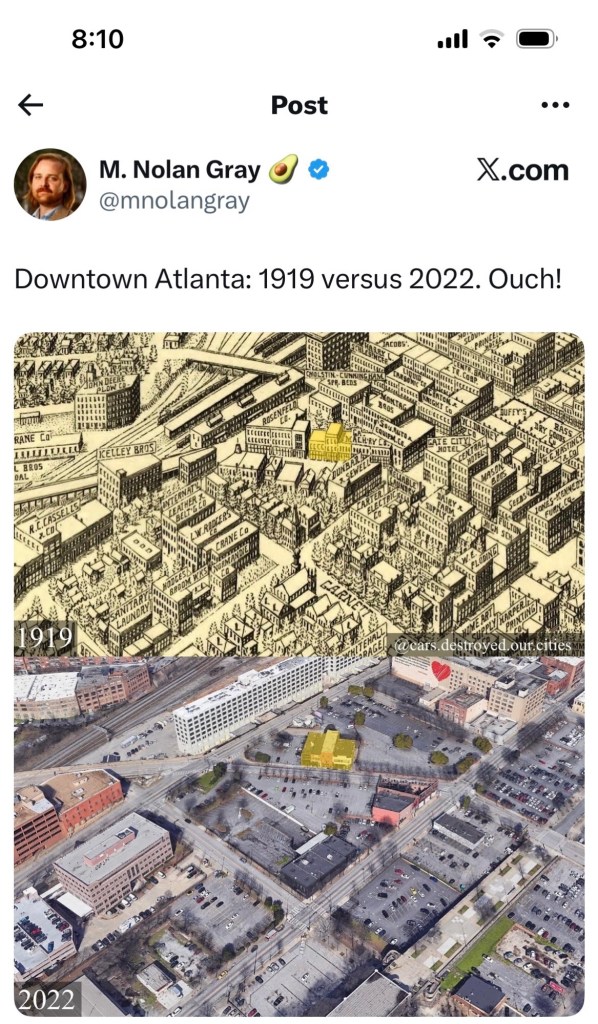
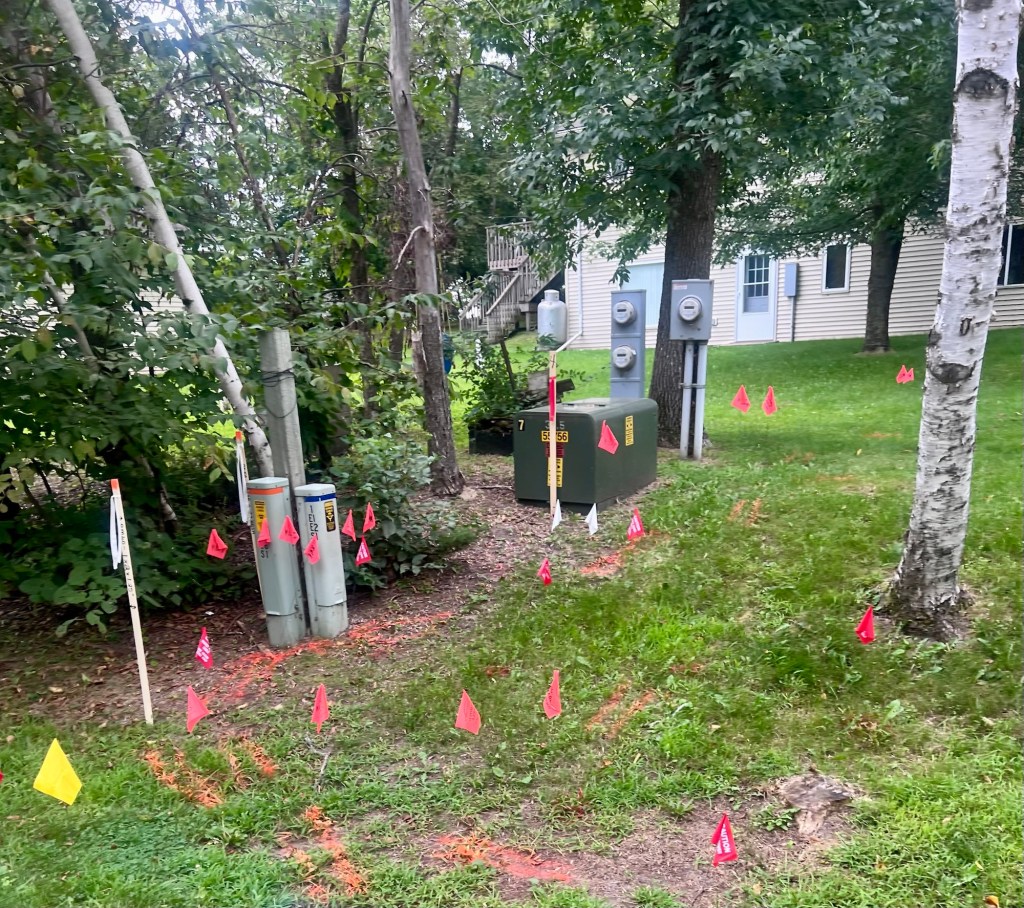







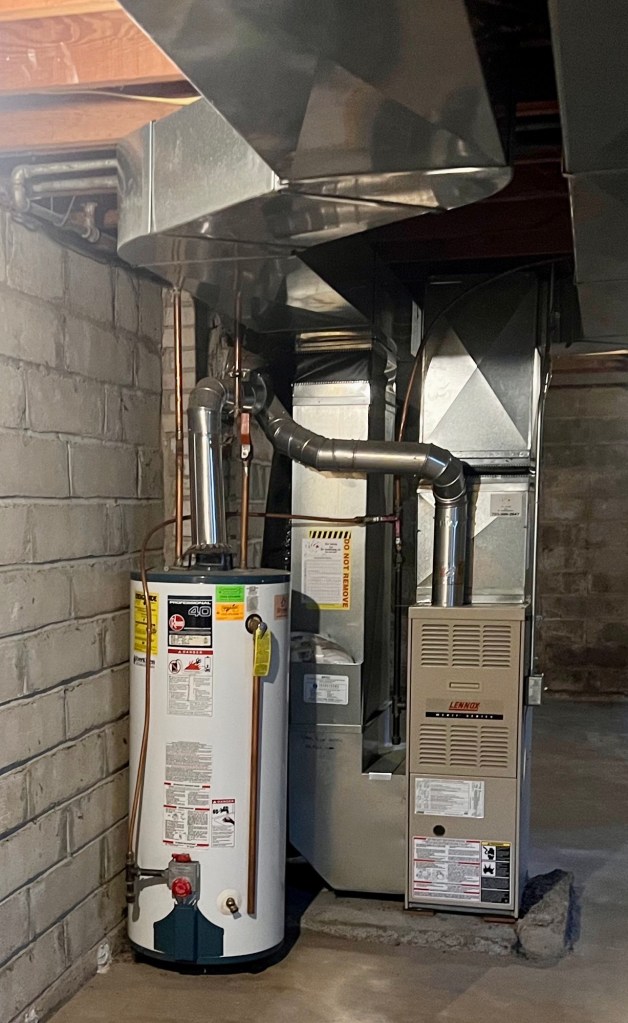



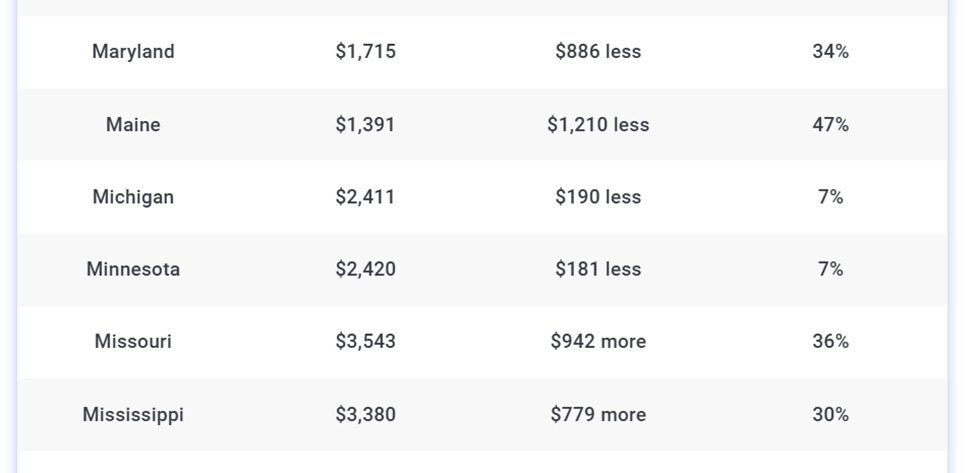


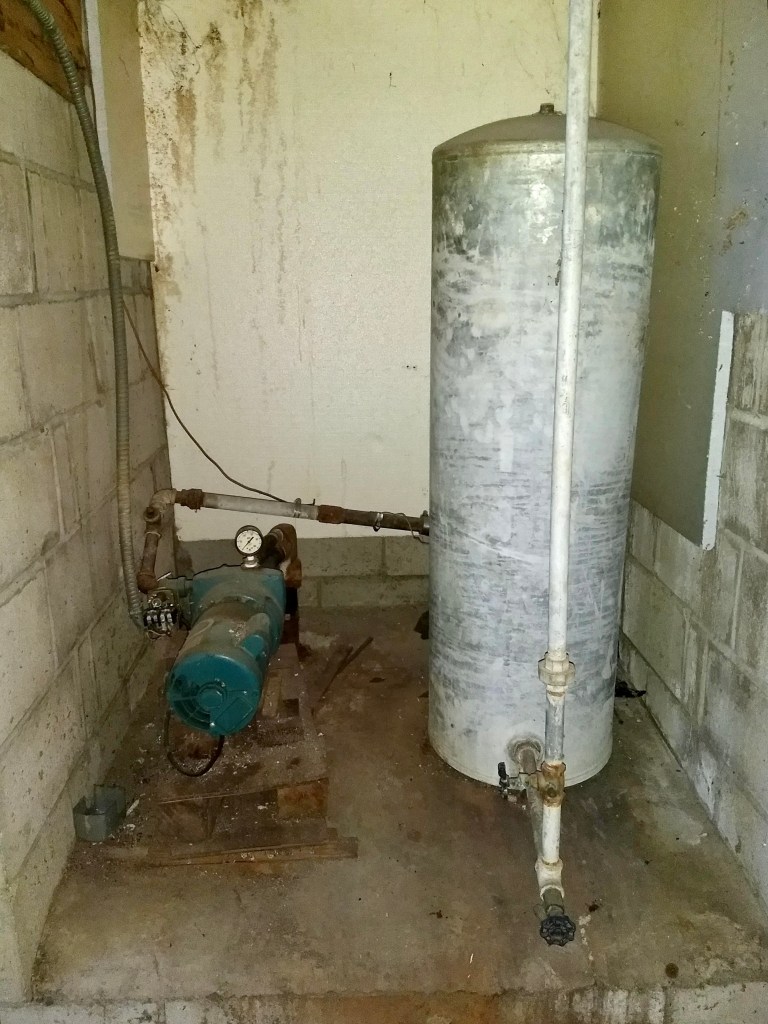




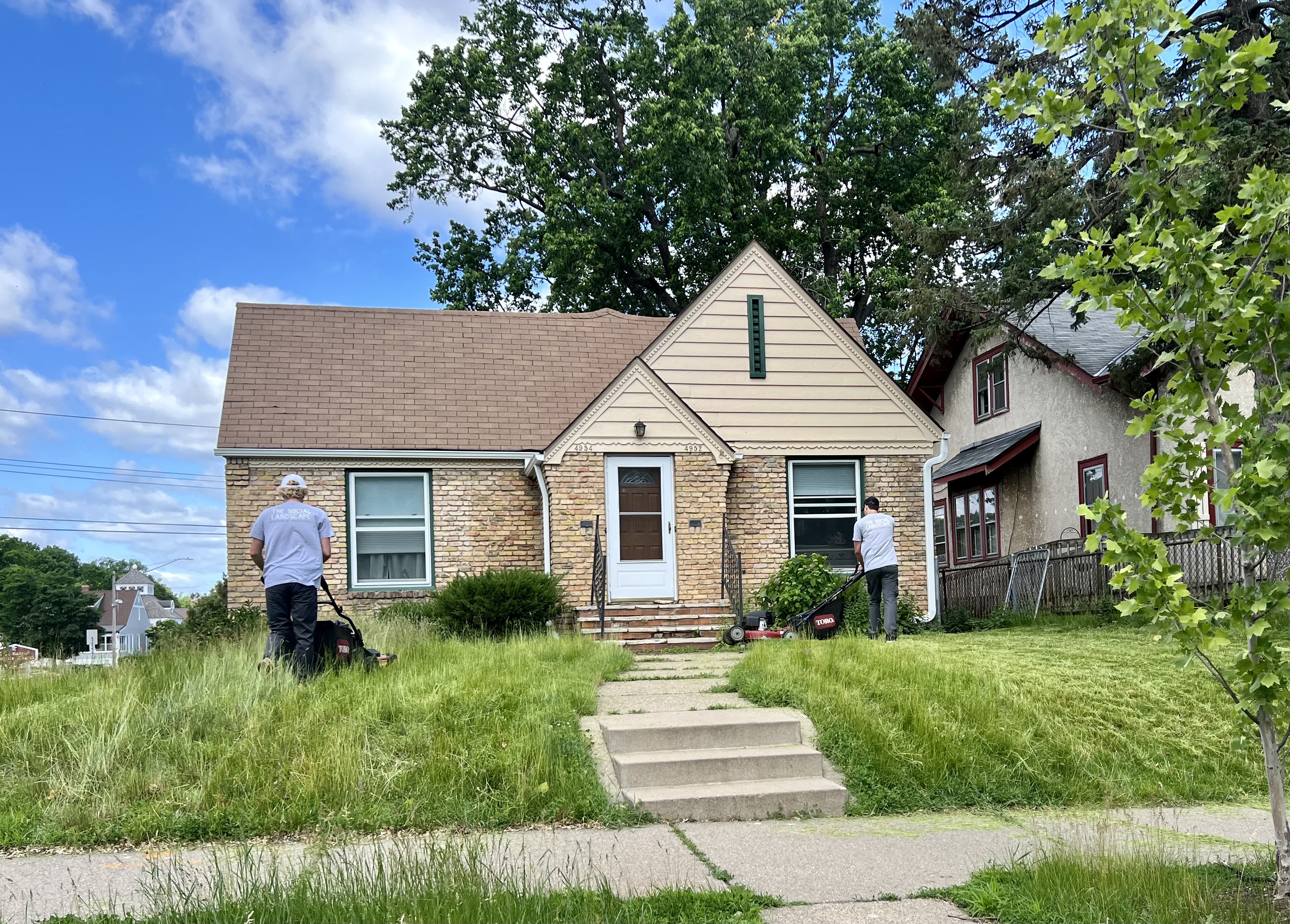

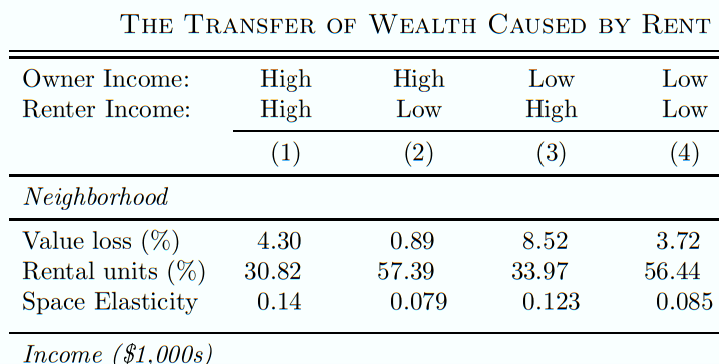




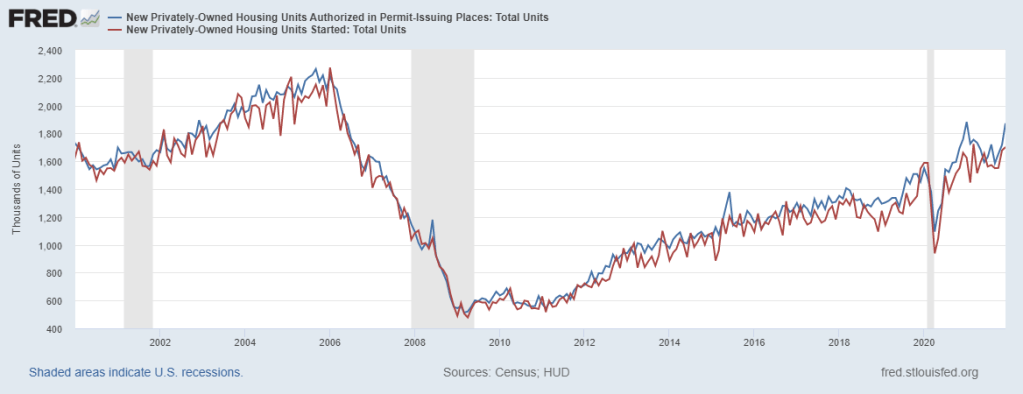









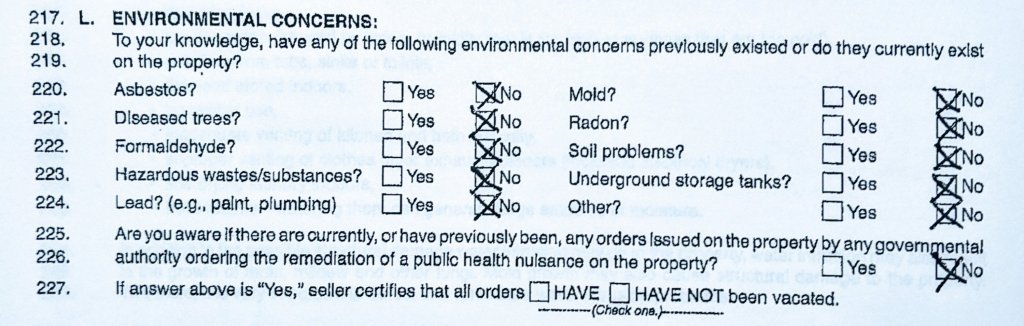
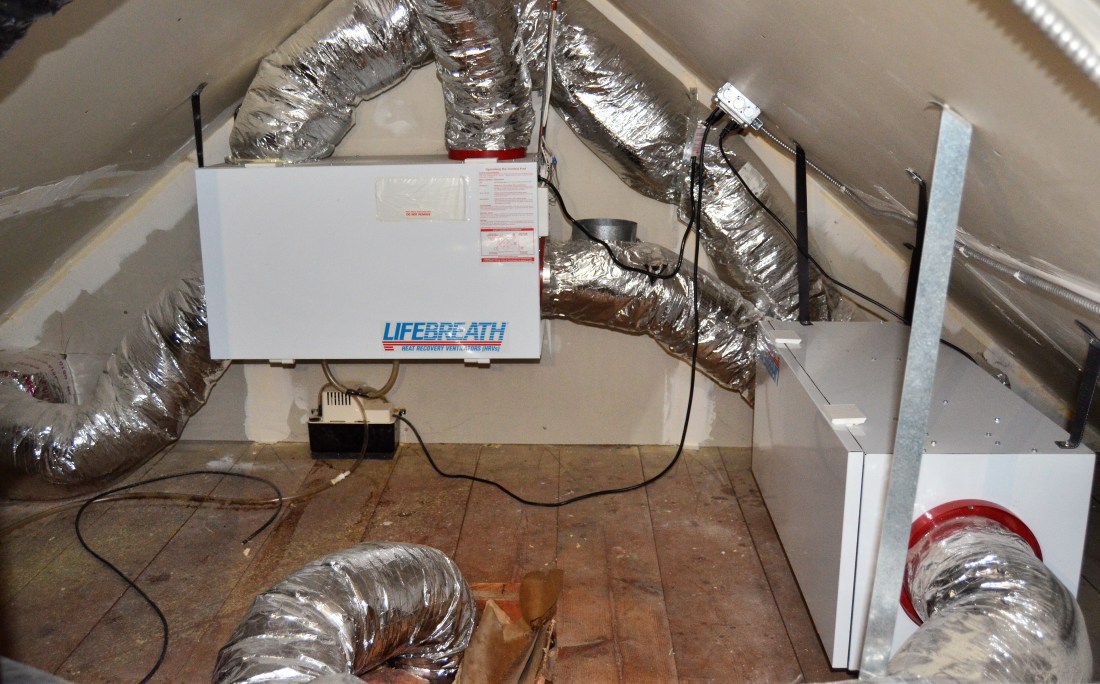
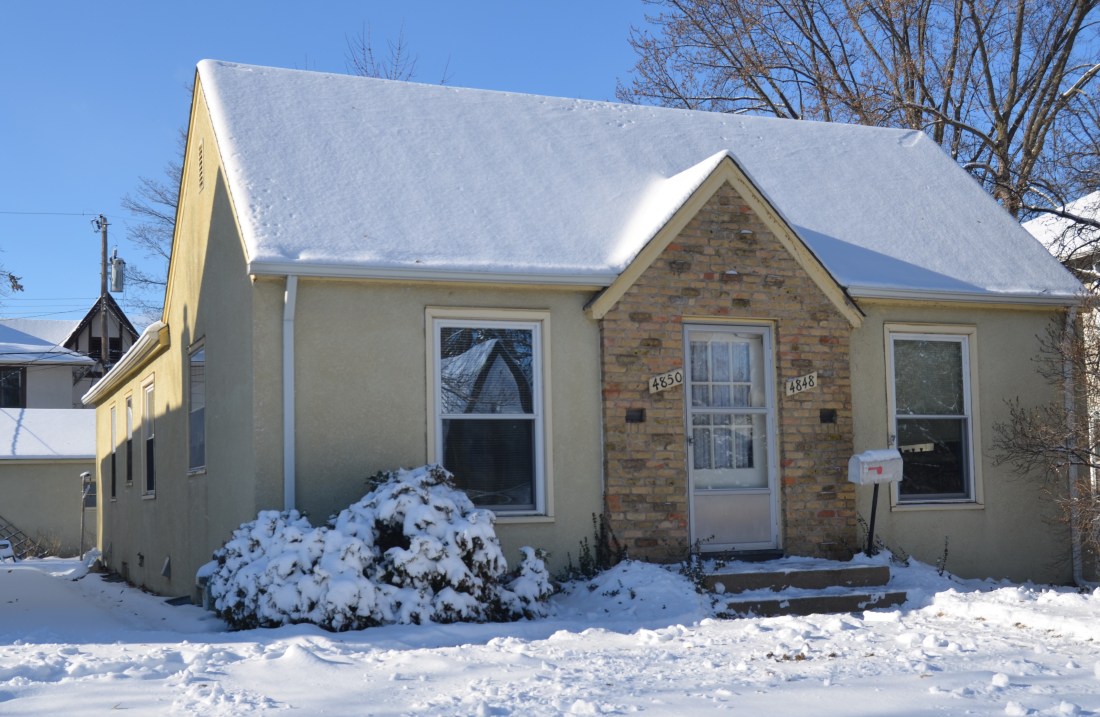


 Home Economics