
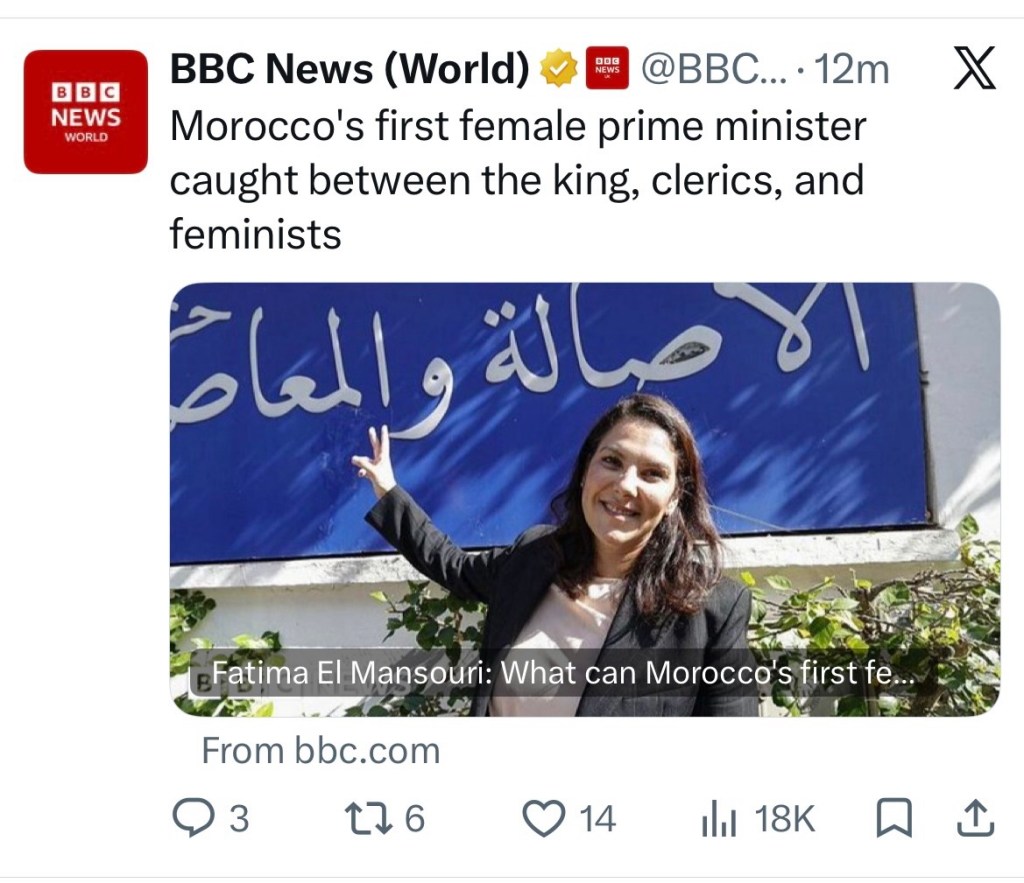
Morocco’s traditional patriarchal culture just produced a female prime minister: Fatima Zahra El Mansouri.
Younger people may already treat this as ordinary. They’re not old enough to remember how awkward it felt when Geraldine Ferraro ran for national office in 1984 along side Walter Mondale. She lacked the routine of regular public presentations and debates, so she came across as unprepared. She was the butt of jokes in polite society, and the locker-room talk was worse.
It’s useful to look back and see the distance covered. In recent decades there have been so many firsts that treating this as a singular breakthrough starts to feel like nostalgia rather than news. Let politicians do the work and be judged on the results.
A newer marker of female emancipation is the number of notable crooks reaching the stage. A documentary about one such figure came out this weekend. Years ago, closed doors kept most of this in check; then social norms did the rest. Women were often so pleased simply to reach the rank that they wouldn’t risk it over something as reckless as grand theft.
That’s less true now. The young woman with the pretty smile and lean figure can still lean on the assumption that she won’t be read as a criminal. As is often the case, though, the thieves eventually get caught, tried, and punished.
As disheartening as that is, it is also evidence that the feminist movement has largely done its job. Women demonstrably have access to the same powerful decision-making machinery as men in this country—and the same capacity to misuse it.


