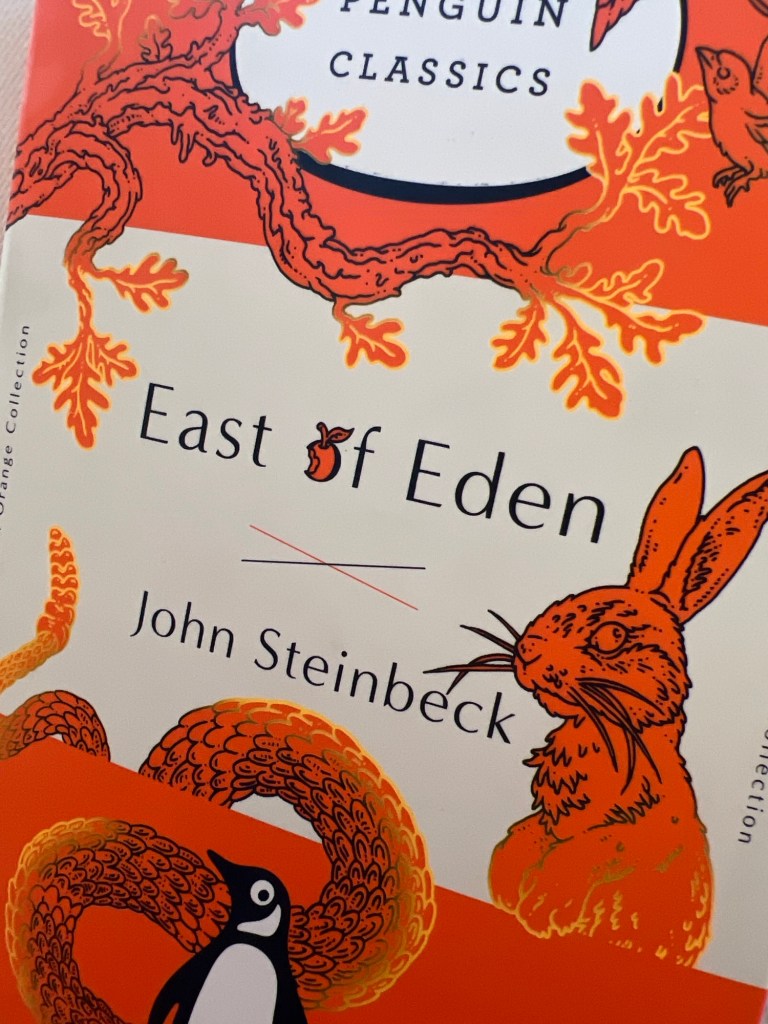
In East of Eden, Mr. Lee explains to Samuel Hamilton:
“After two years we felt that we could approach your sixteen verses of the fourth chapter of Genesis. My old gentlemen felt that these words were very important too’Thou shalt’ and ‘Do thou.’ And this was the gold from our mining: “Thou mayest.’ “Thou mayest rule over sin? The old gentlemen smiled and nodded and felt the years were well spent. It brought them out of their Chinese shells too, and right now they are studying Greek.”
Samuel said, “It’s a fantastic story. And I’ve tried to follow and maybe I’ve missed somewhere. Why is this word so important?”
Lee’s hand shook as he filled the delicate cups. He drank his down in one gulp. “Don’t you see?” he cried. “The American Standard translation orders men to triumph over sin, and you can call sin ignorance. The King James translation makes a promise in ‘Thou shalt,’ meaning that men will surely triumph over sin. But the Hebrew word, the word timshel—”Thou mayest’-that gives a choice. It might be the most important word in the world. That says the way is open. That throws it right back on a man.
For if “Thou mayest’—it is also true that “Thou mayest not’ Don’t you see?”
“Yes, I see. I do see.
Social mixing allows for seeing through the eyes of a translator.