Golf has always been a popular sport in Minnesota. Perhaps it’s the nature loving side of people that the sport entices as a full eighteen holes takes four hours or more of your leisure time on a pleasant summer day. Perhaps it’s because we have traditionally offered a large variety of courses which helps keep the green fees and cart rentals reasonable. Also there are many levels of difficulty so players of all ages and abilities can find a set of links where they’ll fit right in.

Minnesota punches far above its weight in golf. Roughly 90% of its 460–480 courses are public—the highest share in the U.S.—making the game unusually accessible. Participation ranks among the nation’s strongest per capita, with nearly 580,000 golfers and millions of rounds logged each year despite a short northern season. The state’s golf economy generates about $3 billion in impact. Minnesota is also the only state to have hosted every major USGA championship plus the Ryder Cup, Solheim Cup, and PGA Championship. Compared with sunbelt destinations, green fees stay moderate (weekday public averages near $45), while municipal tracks often open for far less. In short: abundant public access, avid players, big economic footprint, and championship pedigree packed into a cold-climate state.
But every once in a while a course now surrounded by urban living is put up for sale. That’s the situation for Les Bolstad, a course owned by the University of Minnesota has been sold to a developer, Rachel Development. Here is a preliminary conceptual plan as presented to the Falcon Heights City Council.
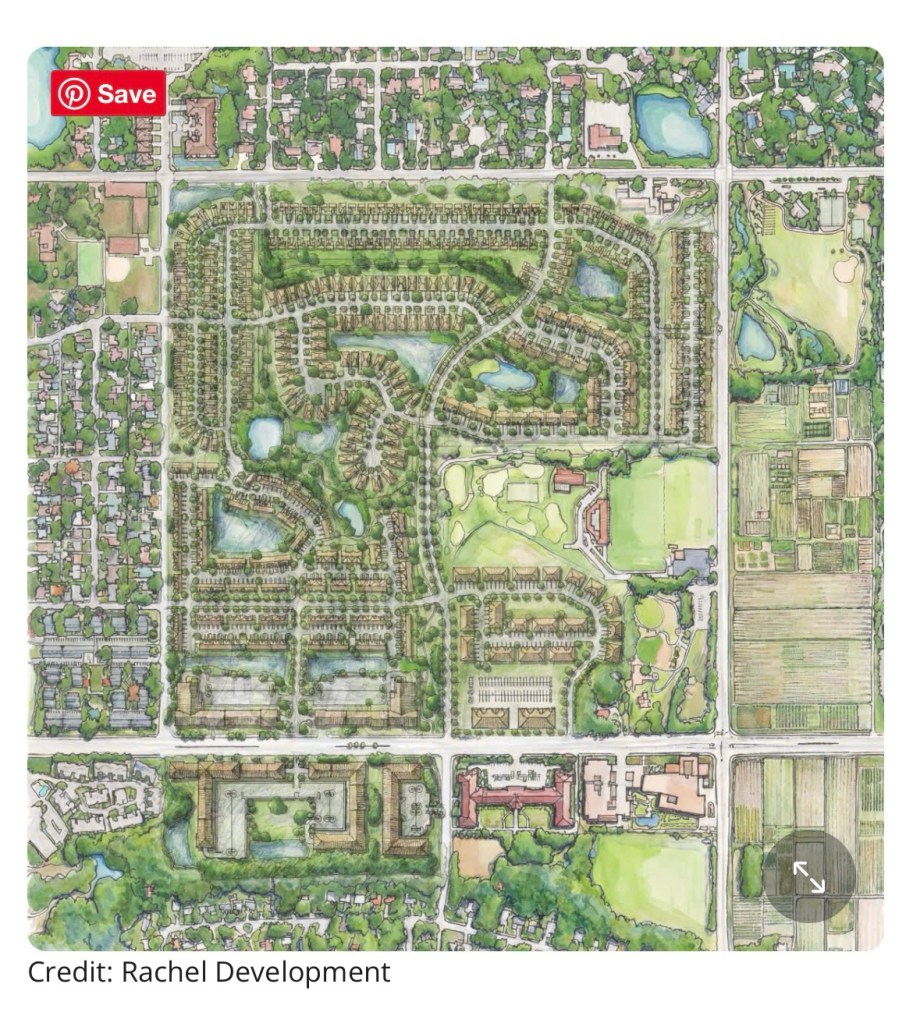
The city covers an area of 2.4 square miles smack dab between the two urban centers. And only boasts a population of 5700.
Predictably, a municipality once overlooked or ignored is the target of reels of advice from housing and planning types. Those who are stimulated by power are right there to suggest controlling features or beat the drum for greater state control and less local control.
What do you think? Should city councils as representatives of the residents manage and guide development? Is this an endorsement of the classical liberal project?


