It’s a holiday long weekend, which makes for gatherings of family and friends. It’s a time to relax and enjoy each other’s company. And often that can include collaborating on a 1000-piece puzzle.
What is it that makes puzzling enjoyable?
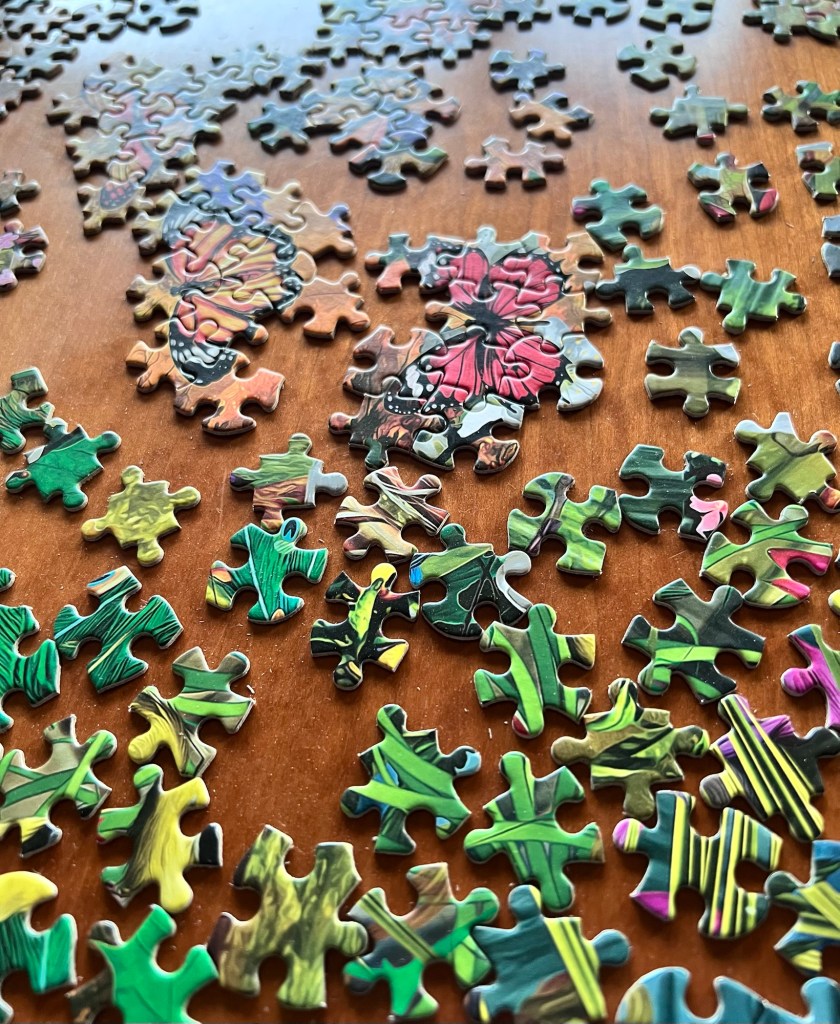
Is it the systematic sorting that soothes the randomness and starts to pull disparate pieces into groups? The patterns emerge as the colors are gathered side by side. Slowly the eye catches the lines that thread the image together. Pictures emerge—first in fragments, then in quiet revelation, as chaos yields to coherence.
Or is it the search for the edge pieces that is rewarding? At first it’s difficult to tell what’s up and what’s down and what runs along a side. Piece by piece, the framing of the picture gives it boundaries, turning an overwhelming scatter into something contained and possible. The straight lines become a quiet promise: order is achievable, one deliberate fit at a time.
Perhaps it’s the satisfaction of fitting the jagged edges into a smooth coupling. Or training your eye to look only at what clasps what, since the fogginess of the color gives no guidance with gradations or pattern. Each successful connection carries a small, tactile triumph—the soft click of belonging, the momentary alignment of form and purpose.
It’s hard to tell. But puzzles are fun. They mirror the holiday itself: a shared endeavor where individual efforts interlock, randomness finds rhythm, and the whole slowly comes into view amid laughter, conversation, and the steady companionship of those around the table. In the end, what matters isn’t solving it fastest, but the gentle, collaborative journey—the way disparate lives and pieces find their place together.

 Home Economics