A mine, a port, and a road

Josh Hendrickson has an interesting New Year’s Day post on Economic Forces today. He reviews the term cooperation costs as proposed by Earl Thompson in a 1982 paper: Underinvestment Traps and Potential Cooperation. Hendrickson uses Thompson’s framework to discuss a breakdown or perceived breakdown in optimal investment in three scenarios. Each one offers a unique combination of the collective and private forces at work in the creation, penalty or use of a public good.

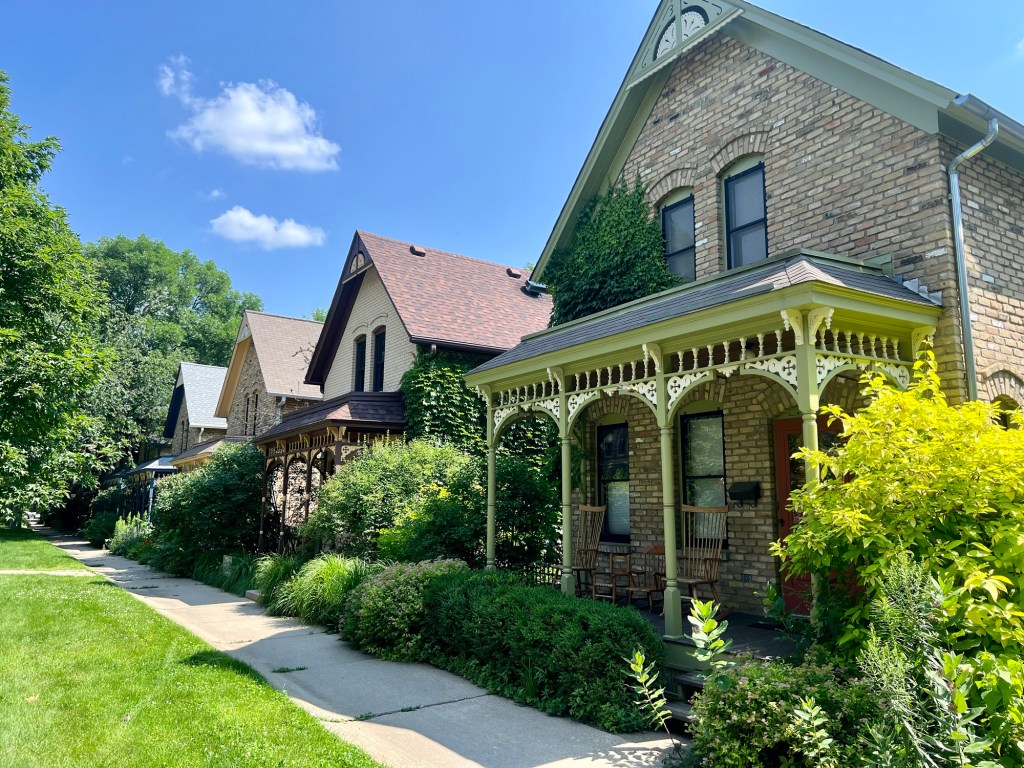
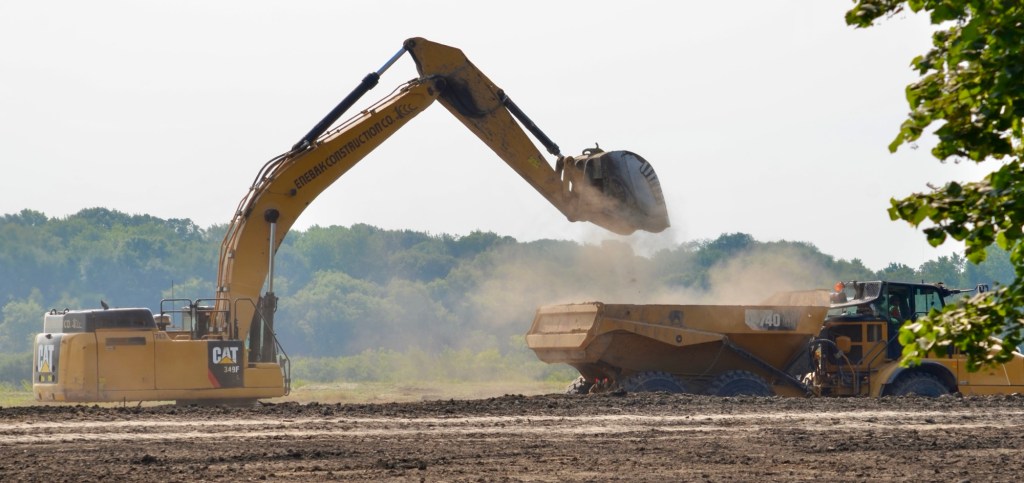
Let’s fit the first story about a mine, a port, and a road into the context I propose here at Home Economics. Instead of considering the whole landscape within a single system, break the system into groups, each with a mainspring to action. The mine is a profit-oriented venture. Its existence depends on the collection of actors that make up its workforce and investors, all of whom share an interest in extracting a private gain from their involvement. The group of people involved in the port’s operations is in a similar situation. The road is different. It is an infrastructure open to all nearby residents as well as those travelling for commercial needs. Roads are most often paid for by the larger group, as it is beneficial to most that their use remains open, even to the lowest payees. Even though members of GrMine and GrPort are also members of GrRoad, it is safe to assume the last group is significantly larger than either of the first two.

Earl Thompson’s model posits that the potential cooperation cost is the expense borne by investors in the mine and the port, along with the state, of communicating and bartering to secure the construction of the road. This happens at a fixed point in time, and once it is done, there are no more cooperation costs. Hence, the thought that those who come later free ride on the use of the road.

I propose to look at each group separately. Amongst the members of each group, there are shared social concerns. The ability to get to work on a good road may be one amenity of value. Yet the benefit of the new road for the mine workers may be a different value than the port workers, again depending on distances or substitutes that each set has access to. The municipality ( county/state or government structure of choice) is composed of a population that also should perceive a benefit from the road. However, this could be, on a per-person basis, of much lower value.

One of the three groups could be comprised of a population that is willing to pay for the entire road, as it is that valuable to them. If the mine is so remote, and the port area already has suitable transportation infrastructure in place, then in order to get employees out to the mine and product in from the mine, the mine might find it suitable to bear most of the expense. Or there could be some suitable combination. But the calculation involves each individual who must act for the enterprise to succeed.

There is also the possibility that the overarching group creates additional costs as members resist the new road due to costs not borne by either the mine group or the port group. If the road goes through a residential neighborhood, then the projected traffic noise has a negative impact on the residents, lowering their property values. In this communication stage of the project, their resistance to cooperation could be seen in city council meetings as voices of objection. Thompson’s model does not allow for outside resistance. Sorting by groups and their interests clarifies how costs are borne and hence who may sabotage cooperation.

There are all sorts of combinations of coordination costs between these three groups that could make it more worthwhile for one or the other to front the bill. We see developers putting in roads to provide access to a new development. We see municipalities investing in infrastructure to attract businesses. All of these choices are dependent on the particular situation and point in time. To say that those who come later take advantage of the cooperation costs of those who come before isn’t accurate, as the system is dynamic. They may not have paid for the cost, but they were not a part of any of the benefits of the original decision-making either.

The other factor facilitated by the sorting into groups is the time factor. The set-up time to open a mine is bound to be different than to complete a road. And what type of road are we talking: dirt, gravel, or asphalt? The reality is that these projects live over varying time spans. This factors into the decision to cooperate. Cooperation costs are not a single fixed cost, but a time-indexed stream of costs and benefits, discounted differently by each group.

The structural issue, for the purpose of analysis, is that the individual actors, reacting to their own concerns, reveal shared concerns with members of their group. The degree of this value plays into the cooperation costs of settling with outside parties on their shared interests. Thompsonโ€™s cooperation costs assume a fixed set of beneficiaries; once group membership, veto players, and time-path asymmetries are introduced, the free-rider interpretation no longer holds.
London- a late bloomer in the water department

No one in the western world really questions whether water provision is best suited to the public or private spheres. Being hooked up to city water and sewer is unanimously considered a good thing. Was it always that way? Well- no. Londoners purchased water from private suppliers through the end of the nineteenth century.

John Broich gives an excellent history of how the desire for water provision shaped London.

His account tells how secondary cities in the British Isles adopted a municipal water system decades before the great capital on the Thames. In fact, the continued delays in accomplishing this civic feat help exemplify the many facets of interests and the levers in play. There are issues of pollution and health concerns, there are networks of private providers, and the wealthy who buy their way to what they want. There is petty jealousy and the pride of belonging to an international city. And most astonishing, there is no government structure to handle such infrastructure outside of the walls of ancient London.

For provincial water reformers, the principles on which the administration of water was based-as well as the engineering principles on which water provision was based-were meant to make their cities more modern in the sense expressed by Avery, the Birmingham councilor.

“When water is under the control of private companies, the chief desire of the directors is to obtain good dividends,” said a Bradford town councilor in 1852. “When the Town Council possesses the works,” he continued, “their chief object is to make the works instrumental to the promotion of cleanliness, the health, and the comfort of all classes of citizens.”57

Water administration by a directly representative body was to provide an obvious contrast to the commercial companies that made independent decisions about water quality, abundance, and price based on the profit motive.

It is an excellent story depicting the nature of what is public and what is private. For a literary companion piece, consider reading Dickens’s Bleak House.

Mobil Homes

There continue to be mobile home parks across the metro offering one of the most affordable form of housing. The structure is considered a vehicle and licensed as such. The home is anchored on a lot in a mobile home park and rent is due every month in a similar fashion to association dues. People like to talk about tiny homes now. Still, manufactured homes can be reasonably constructed in a factory and meet the same quality and amenities as RV’s, another acceptable form of shelter.

:Here are some current listings and recent sales:

Few mobile home parks rise to the level of civic engagement that can be seen in Landfall Terrace, a community on the eastern side of the metro. As with many good things it starts with its history.

James and Mitzi Olson used to own all of the land in Landfall. They moved here in 1953 into a cottage that was hardly better than a log cabin.ย …The Olsons had lived in a mobile home during World War ll and knew that there was a shortage of affordable housing, so they developed their site into a mobile home park. As it was on the early highway between St. Paul and Hudson, Landfall developed several businesses, including a truck stop, restaurant and nursery, most of which left when Interstate 94 was put through and access became limited.

Often successful things are born out of a basic need of local people. But it is only through nurturing and ongoing maintenance that group projects survive. Especially one a s successful as this.

Landfall is a city in Washington County, Minnesota, United States. The population was 843 at the 2020 census and it is the smallest community in Washington County in terms of area. It lies on the eastern shore of Tanner’s Lake on Interstate 94.

Landfall is an incorporation of a manufactured home community, contributing to its reputation as the most affordable community in the Twin Cities. In 2008 & 2010, the city was named one of the 100 best communities for young people by America’s Promise.

Landfall is one of only two incorporated cities in America that consist primarily of manufactured housing. 

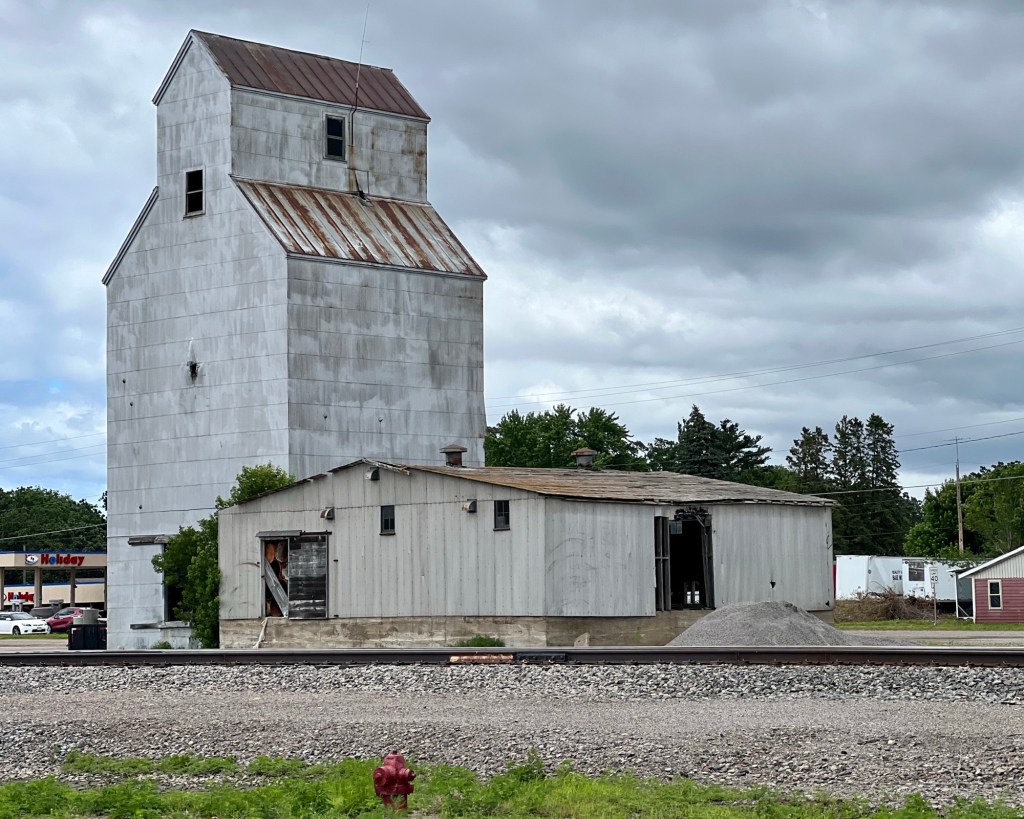
What a grain elevator could say

The grain elevator was the most ubiquitous commercial building in Minnesota’s small and medium towns during the mid to late 1800s.

In most towns in western Minnesota, grain elevators were the dominant feature of the skyline 1837 Treaty | Minnesota DNR. As railroads expanded westward in the 1870s-1880s, grain elevators sprang up along every railroad line to store wheat and other grains before shipping them to Minneapolis and beyond.

This makes perfect sense given Minnesota’s economy at the time. Wheat farming dominated the landscape, and Red Wing held the title as the world’s largest primary wheat market in 1873, exporting 1.8 million bushels valued at more than two million dollars United States v. Sioux Nation of Indians – Wikipedia. Every town with railroad access needed a grain elevator to collect, store, and load farmers’ harvests onto railcars.

Typically, small services would pop up alongside the tall wooden structures. Or an eating and drinking establishment. Sometimes a church was erected down the road a bit. And for decades, the railroad infrastructure supported a node of activity in remote rural areas.

A shift occurred once the interstate system was established in the 1950s. Rail is still most beneficial for long hauls, whereas trucks carry the grain for shorter distances, typically under one hundred miles. With fewer stops, the isolated wooden elevators fell into disrepair. Often they fell for the useful purpose of serving as a training exercise for local firefighters.

The purpose of this short vignette is to show how land uses are tied intimately with public infrastructure. And these types of projects are engaged over long time frames. A slow natural progression of the property from peak usefulness to decline can be led by aging owners, people who can view themselves in a steady state for another decade or more. The insight for the outside observer to understand where in the process a parcel finds itself. And then to implement policy in relation to the receptive impulses of that moment.

Airport Expansion- Missoula Edition

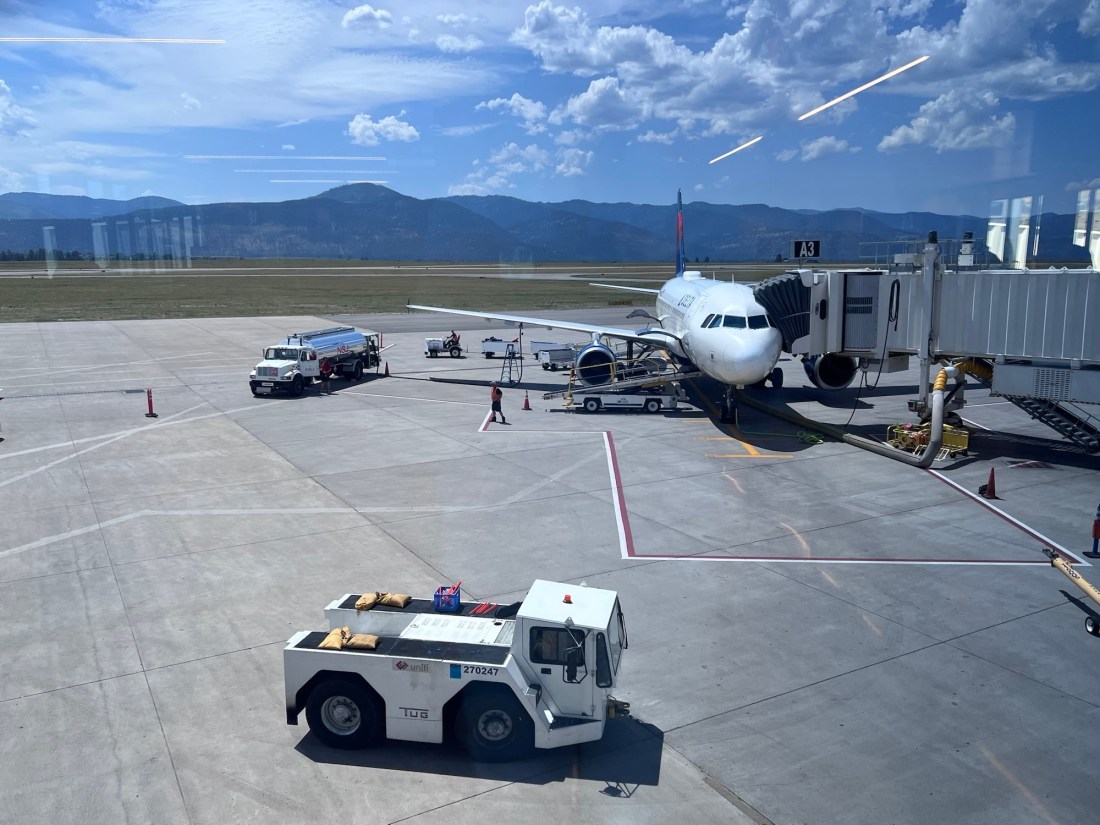
I flew into Missoula today and the Montana Airport is wrapping up a major multi-phase expansion that reshapes regional travel and brings broader economic shifts in its wake. Here are some of the details:


The Physical Build-Out

  • Total Cost: Over $110 million for the full terminal expansion.
  • What’s New: New gates, expanded baggage claim, rental car lanes, security upgrades, and room for new routes and carriers.
  • Who’s Paying: a combo of the Feds and private interests
    • Federal: More than $50 million in grants, mostly from the Bipartisan Infrastructure Law.
    • State & Local: Matched funds from the Missoula Economic Partnership, businesses, and banksโ€”no local tax dollars used.
    • Recent Boost: A $6M federal grant (2024) will help complete the next terminal phase.

Skyward Travel Growth

  • Missoula set a passenger record in 2024: Over 1 million flyers, up nearly 12% from the year before.
  • Targeting 1.5 million by 2044 as travel demand soars.
  • Now offering more frequent flights and year-round service to Chicago, thanks to an $875k federal grant.

The Ripple Effects

๐Ÿ“š University of Montana Perks

  • Easier access = stronger recruitment, research partnerships, and conference travel.
  • Out-of-state students now find Missoula more reachable and appealing.

๐Ÿ˜๏ธ Housing Pressures

  • Expansion is fueling demand for housing, especially near the university and airport.
  • Rent hikes are real: Locals report steep increases, with โ€œaffordableโ€ now starting near $1600/month.
  • Development impact fees (passed on to buyers) may also be contributing to rising costs.

๐Ÿ’ผ Local Economy

  • Jobs during construction and in airport operations.
  • Tourism boost: More flights mean more visitors spending at hotels, restaurants, and shops.
  • Stronger air links help regional business and health access.

๐Ÿšง Challenges Ahead

  • Affordability squeeze: Residents and students are feeling the pinch from rising rents.
  • Infrastructure stress: More travelers and new residents will test city roads, utilities, and services.
  • Equity concerns: Growth must be balanced to include long-term residents and low-income communities.

Final Approach

Missoulaโ€™s airport expansion is more than a construction project โ€” itโ€™s a gateway to growth. With smart federal funding and local vision, the region is positioning itself for a more connected future. But keeping Missoula livable as it grows will take coordination on housing, transportation, and community needs. How would one go about making some projections? Estimates of impacts and time frames could be interesting to local public leaders.

Artifactual Incentives

Stevie Miller makes an interesting comparison in a piece in Reason, The Dreadful Policies Halting Archeological Discoveries between England and Italy in their handling of the discovery of antiquities. First, he notes how new technologies are quite literally unearthing access to sacred texts and ancient cities. But then he remarks that there are few incentives for individuals to pursue the time-consuming search, Indiana Jones style.

To understand the dynamics, it is necessary to understand the groups. There are landowners who typically, through property rights, own objects found on their property. Antiquities are deemed a special type of thing, as they have a pubic significance.

The case of Italian antiquities policy is paradigmatic. Since the 1930s, Italy-along with Greece, Turkey, and Egypt-has vested ownership of all antiquities in the state. Commerce in freshly unearthed artifacts is outlawed, and unauthorized excavation is punishable by hefty fines and sometimes prison time. Even using a metal detector requires a permit.

I think most people would agree that these items, by nature, are jointly owned by the larger cultural group. So, it makes sense. But the asymmetric access to the buried items by landowners sets up an incentive for the private party to collect and hoard the artifacts. Laws that thwart natural incentives often encourage a black market, where the artifacts are sold.

British model provides a striking contrast. Since the 1996 Treasure Act, British law has required that significant archaeological finds be reported. Instead of simply seizing them, if the state wishes to retain an item, it must compensate the finder and landowner at its full market value.

The English allow actors to participate in the preservation of artifacts at the public level. Although they are individuals they act in the spirit of a team. They can also come in and out of service to the cause. Whereas in the Italian model, the artifacts are packed up and access is restricted.

One system recognizes two groups and two incentive structures. The other does not, which pushes actionable responses underground to a black market.

The Great Stagnation of physical archaeology is a choice. The failure of policymakers to get the basics right– to make physical archaeology worth anyone’s time– renders the richest landscapes fallow.

Circuits and Tariffs

At least a couple of decades ago, when I’d help a client purchase a home that happened to be along an open field, I’d remind them that the view may not always stay that way. The Twin City metro was growing and fields just like the one adjoining their new home were being plowed in and repurposed into neighborhoods of single-family homes. They would nod in acknowledgement and yet still feel a loss when a crop of dwellings soldiered up outside their windows.

There are more situations like that– where the surrounding circumstances change and present residents feel like a cost is imposed on them. Take that lightning rod word: gentrification. In certain circles, it is spit out with as much vehemence as the title capitalist. In reality, gentrification implies that a neighborhood is getting cleaned up, crime is being brought down, structures are being fixed up, and truancy is being pushed out. But when you spruce up the place, more people want to live there. This is distressing to longtime residents who don’t want to see rent prices rise in response to higher demand. The situation is changing around them without their consent!

Or consider an elderly couple who own a large, beautifully situated parcel of land on Flathead Lake. In the years they moved to northwestern Montana, it was remote. Desolate even. Over time, others discovered their paradise and passed the word along to still more people who appreciate views of the rugged snow-capped Rockies. As people arrive, more services are necessary which pushes up property taxes. Is it fair for the elderly to endure the increases? They did nothing to give rise to these new obligations, and now the expense may make their living choice beyond their reach.

Tariffs are a response to the same issue. When the pool of labor is opened up to a global market, should the loss of work in the Midwest manufacturing industries fall solely to die-cutters and assemblymen? They did nothing to change the circumstances, yet they bear the burden. Wall Street profits, labor abroad profits, and they are told to adapt.

What is the proper cycle of protection for the renter affected by gentrification? How long would the elderly be eligible for lower property taxes? Is there a natural circuit for these things to enable an easing of the effects of changing circumstances to all involved?

No Housing Crisis

Kevin Drum proposed that in a 2022 article– and I agree entirely.

The real issue here is that America doesn’t have a housing crisis.

I’m not sure why, but I find the new urbanists one of the most annoying groups in the progressive pantheon. It’s not because they’re wrong, precisely, or because they’re meanspirited, or anything like that. There’s just a disconnect from reality that seems to motivate so much of what they say and do.

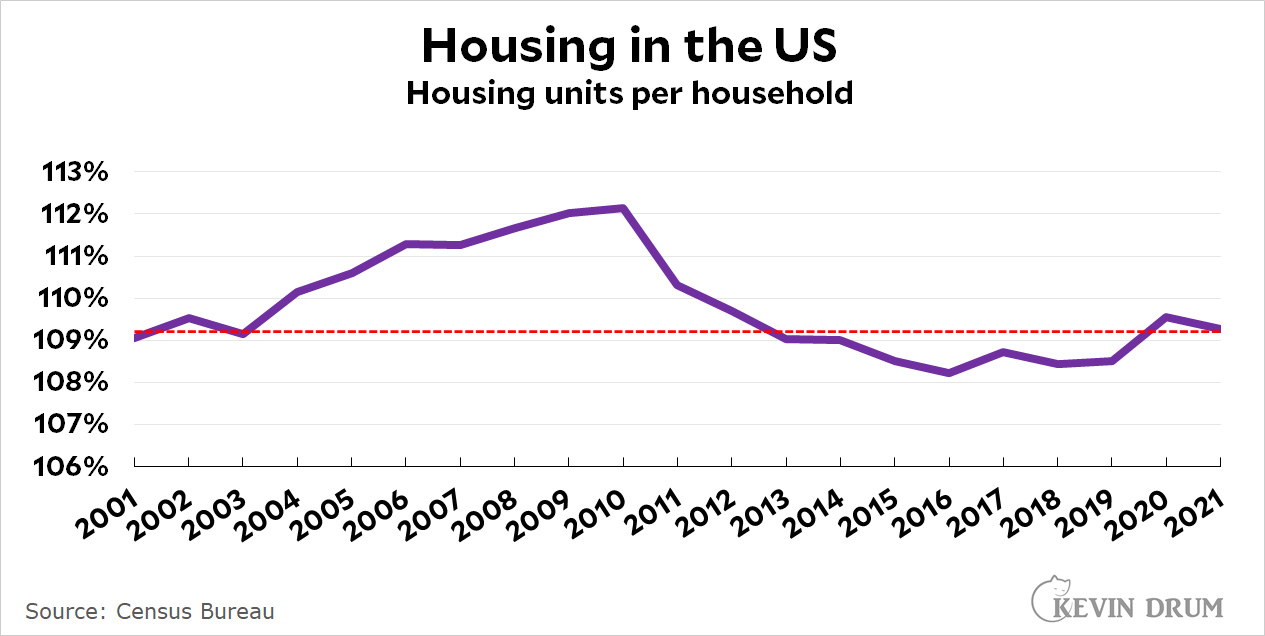
Take America’s housing crisis. Here it is:

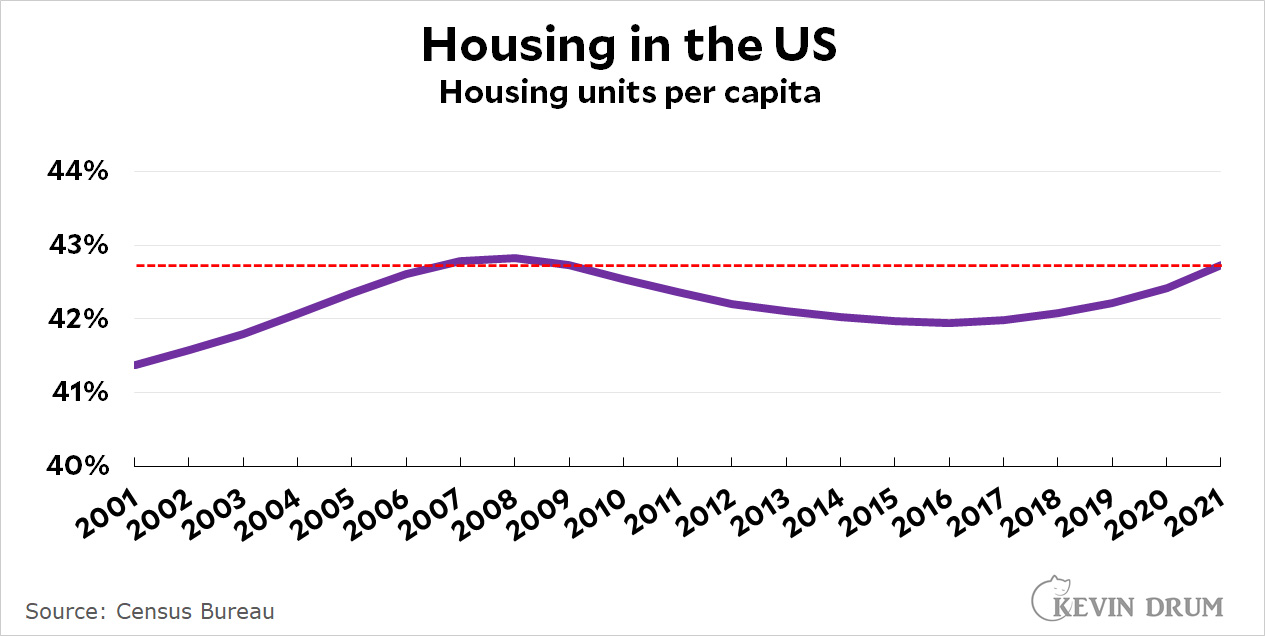
We have as much housing per household as we had in 2001. And just in case you think I’m cheating with this “household” business, here it is per person:

We have more housing per capita than we did in 2001.

Just wait and see as the market softens. Prices in some markets have already ebbed away from a peak, and the number of homes on the market is creeping up. Builders who notoriously hold on to their list prices are marking spec homes down a bit. The tight market was not due to a shortage as much as the normal pressure of people moving to changes in their lives.

But the best part of Drum’s article is how he feels about the people who try to set a national agenda on housing: the urbanists.

But this still doesn’t really explain why I find the urbanists annoying. Here’s my real beef: they are obsessed with big cities. They spend nearly all their time trying to convince us that big, crowded cities should become even bigger and more crowded. Or that suburbs should become big and crowded, just like cities. This is a fantastic waste of time. Residents of big cities don’t want to become more crowded and resident of suburbs don’t want to become more like cities. They will fight you forever on this. Absolutely forever. The game isn’t worth the candle, especially when there are so many other far more useful things we could be devoting our energy to.

So why waste time on this? The urbanists will haul out studies about economic gains, environmental impacts, mass transit, etc., but they massively oversell those benefits and completely ignore the downsides of crowding. Instead, they should be spending approximately 100% of their time promoting policies that would get people out of big cities and into smaller cities that have room to grow.

It is funny how everyone wants to talk about ‘world-class cities.’ Ho-hum cities are where it is at for understanding the baselines of success.

What is public, What is private

The Minnesota Court of Appeal recently made an interesting ruling. The court concluded that a car’s interior may be a public space if it sits atop a public road.

The Minnesota Supreme Court ruled Wednesday that the interior of a vehicle is a โ€œpublic placeโ€ if it is driven on public roads, in a case involving a criminal charge over a BB gun found under a driverโ€™s seat. MSN

We at Home-Economic.com like to think through public and private spaces. Typically, what is considered public is defined by access. If anyone can stroll into a park, it is a public space. If you can walk through the doors of the public library, have a seat in a nice armchair, and read for a couple of hours, then it is a public space.

Wayzata Library is part of the Hennepin County Library System. Great views of Lake Minnetonka!

So, is public transit public in the same way? One might argue it is not. You can board the bus if you pay a fee. It is more of a service subsidized by the public and charged at a reduced rate. Is the interior of the bus a public space? In the sense that the buses are owned, usually by a metropolitan community, then it is public to the municipality. Yet- to board a passenger still needs to come up with the fee. Thus, there is a bit of the private side of life to the transaction.

In looking for perspectives on how to consider the interior space in a privately owned vehicle, the court considered this:

In trying to clearly define what exactly is a public place in relation to a personโ€™s vehicle, McKeigโ€™s opinion focused first on Minnesota legal statute concerning the transportation of firearms, explainingย how the lawย allows for legal firearm possession in a vehicle: โ€œA person may only transport a firearm in a motor vehicle under certain conditions, including in a gun case, unloaded and in the closed trunk of the vehicle, or with a valid permit.โ€

It seems a little unusual to me to look for the lines between what is private and what is public in a law regarding the use of firearms. But far be it for me to judge! I have no legal training.

It just seems that if a car is privately ownedand can be contained and controlled by its owner, it should be considered entirely private, even if it sits on a public road.

Group problem, group solution

Often, when people discuss problems that occur in group transactions, they single out an individual experience and hold it up as a representative example. That’s out of line. If you want to talk about individual outcomes, stick to that setting. If you want to talk about group outcomes, don’t exemplify one individual’s experience.

That’s what I like about the following clip from the Airbnb founders. They’ve come up with their house-sharing idea and worked out the logistical aspects to take it to market. Now, they just need people to try it. Not one person. That won’t make the platform start humming. They need a group.

They are trying to link the two groups of people with rooms to rent and the people who are taken with the idea and feasibility of renting from a homeowner. But they need something more. They need a common cause, an affinity that overlays the group and makes them feel like one. This elevates the sense of trust and is the little push needed to overcome the hesitancy of a new experience.

In groups, no one host can make the system move, no one guest. The individual is nothing on its own. Group analysis has group features, including an underlying group shared value.

Complete text:

Brian Chesky explains how Airbnb solved the chicken-and-egg problem โ€œMarketplaces are incredibly defensible at scale, and maybe itโ€™s because theyโ€™re incredibly hard to start. And the problem is simple – they call it the chicken and egg problem.โ€ As Brian explains, it was tough to bootstrap Airbnb in the beginning because travelers couldnโ€™t book homes if there was no inventory, and homeowners didnโ€™t want to list their homes unless people were going to book them. โ€œWe didnโ€™t know what to do for a while .We tried a lot of different things. And I can tell you what worked. Summer of 2008, the press announces that Barack Obama is moving from a 20,000 seat basketball arena to an 80,000 seat football stadium. And we said, thatโ€™s our shot. You have 60,000 people that donโ€™t have housing, surely at least a few of them are going to need a place to stayโ€ฆ And so we literally started with local people in Denver. Then we started emailing bloggers. We got the bloggers. Then the Denver Post and the Rocky Mountain News covered us. Then the local ABC and NBC and CBS affiliates. And then the Wall Street Journal. Then the New York Times and CNN are in our living roomโ€ฆ We did that in a matter of three weeks.โ€ Brian continues: โ€œWe started these little infernos. You start getting a few users here, a hundred here, fifty thereโ€ฆ And we did the same thing with the inauguration. And when you have a hundred people here and there, then you obsessively meet themโ€ฆ Paul Graham, our first investor, said itโ€™s better to have a hundred people love you than a million people kind of like you. And the reason why is itโ€™s really hard to build off of a really wide but shallow base. But with a hundred people, you can find out everything they wantโ€ฆ You meet them, you spend a ton of time with them, and once they fall in love with your product, theyโ€™ll tell every one of their friends. Thatโ€™s why [Airbnb] took a really long time to start, but it grew much faster later on.โ€

My Everest?

There’s an inclination to make things of natural beauty available to the public. John Muir, for instance, advocated for the National Parks in general and Yosemite National Park in particular. Yet, there are still obstacles of geography. One must take themselves to the south rim of the Grand Canyon to see the sunlight paint the canyon. One must board a plane and cross the Pacific to walk through Waipi’o Valley on the Big Island.

Then, political boundaries stand between the majestic places on Earth and the traveler. Nepal announced they were increasing the permit fees for aspiring climbers of the great Mt Everest.

Nepal will increase the permit fees for climbing Mount Everest by more than 35%, making the worldโ€™s tallest peak more expensive for mountaineers for the first time in nearly a decade, officials said on Wednesday.

Income from permit fees and other spending by foreign climbers is a key source of revenue and employment for the cash strapped nation, home to eight of the worldโ€™s 14 highest mountains, including Mount Everest.

I doubt the increase will deter the mountaineers who can accomplish such a feat. It seems that people with steep ambitions would be able to raise the finances. And there are options for reduced fees in two of the off-seasons. But of course, tackling the December through February quarter in high winter winds would whittle the group down to the fittest and most crazy.

If anything, the lines to the summit and the wait lists indicate that Nepal is underpricing access to the Himalayan peak. The climb’s popularity has exploded since Sir Edmund Hillary and a sherpa summited in 1953. Perhaps the tiny nation can use some of the fees to tidy up after the visitors who distractedly leave their debris behind.

The magnificence of nature is something to behold. If you are Nepalese, the snowy peak is a national treasure. It rises proudly every day sure as the sunlight at dawn. Citizens can also extract private benefits by accommodating the needs of visitors who come to tackle the mountain. For outsiders, issues of distance and expertise determine who can take in what part of the massif.

For still others, Mount Everest can be seen through the window of a prop plane tipping its wings at the majestic summit.

Harnessing a Spontaneous Order?

Randy Clark has gotten a hold of a turn-a-bout momentum, bringing the DC metro into an about-face toward ridership satisfaction. Is there a method to his madness? First, consider the background, from the Washingtonian.

Clarke arrived in Washington at a low point for Metro. In July 2022, the Omicron variant was causing a midsummer spike in Covid cases and DC had one of the highest rates of remote work in the country. Bus and rail trips were still stuck at about half their pre-pandemic levels. The previous October, a relatively new 7000-series train had derailed on the Blue Line in Arlington, leading to a rebuke from the National Transportation Safety Board.

The metro chief was not a train enthusiast from the start. But as he went through school, he became fascinated by how transport touches many other aspects of life. People need to connect with each other and travel the distances to do just that, which gives the service a public flair. This sets up the juggle between the funding flow from governing bodies and the satisfaction of the general population.

There are two sometimes conflicting areas of public-transportation management: (a) politics, or how to obtain funding and craft policy, and (b) operations, or how to make trains and buses run safely and on time. An effective transit leader has to excel at both.

The payer and the end user are disjointed. So how does a manager of such a system tie the money and the product together?

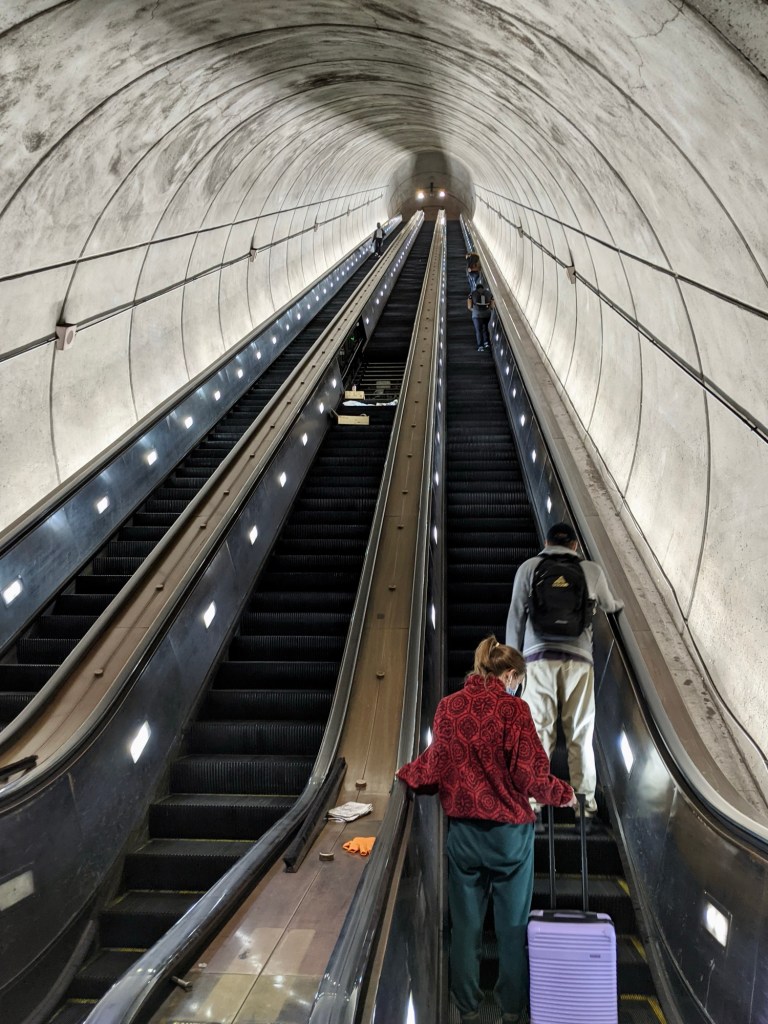
A regular rider, Clarke has a commuterโ€™s perspective on Metroโ€”and an executiveโ€™s fluency with how it works. Onboard, he tells me about the relative quietness of the systemโ€™s tracks (they use massive lengths of continuous welded rail, so they donโ€™t make the loud click-clack of, for example, the New York City subway) and the stretch of track where trains travel fastest (the tunnel between Rosslyn and Foggy Bottom).

It’s hard to get payers on board when the users are unhappy with the product. Clark dedicates himself to changing that.

When the system is working poorly, Metro can feel dated, even a little sad. But when itโ€™s working well, itโ€™s easy to feel the pride behind its creation. Clarkeโ€™s fans credit him with restoring that feeling, and he believes vibes matter. When transit infrastructure is broken and dirty, he says, riders and local politicians get frustrated. They ride less, drive more, andโ€”consciously or unconsciouslyโ€”devalue the system. By contrast, when trains and buses run frequently and stations feel clean, riders feel more pride and lawmakers believe the system is worth supporting.

Priming the pump to lure riders back to the metro is only one side of the story. The funding side is more complicated for this public good because 1. it has no dedicated funding source, and 2. its ridership draws from Virginia, Maryland and DC. Clark must shake out the individuals who place train transit at the forefront of their priorities. He is looking for the individuals out of the three groups who share this transit goal.

For now, Clarke is riding high, the closest thing to a rock star local transit has ever known. And heโ€™s not changing his hands-on approach. As he rides the rails, he notes any problems he sees: Recently, he pointed out a broken gate to a station manager, and repairs were soon made.

Minimal ridership in 2021

Disaster! Price

As long as prices are ticker taping along with typical elan, most people are happy to know that the amount they would give for a good or service is agreed to spontaneously, but many others. Sure, people will complain when a touch of frost ruins the citrus crop in Florida, leading to higher prices for grapefruit, lemons, or oranges. Little fluctuations make the dinner table news but are not show-stoppers in the ever-churning commerce between vendors and consumers.

The vibe changes when a typhoon rolls into the Sunshine State. Proclamations against price gouging come from the political power at hand. Every four-by-eight piece of plywood is needed to cover glass windows. However, the market system is no longer viewed as the desirable mechanism for distribution. Profit at the hands of disaster makes people uncomfortable.

Insurance alleviates the restraints of fears for the suddenly disadvantaged. When a hail storm comes through, insurance replaces all damaged vehicles or roofs. No one cries, ” Price gouging!” Everything is all right as long as it’s on the insurance company’s tab. Insurance coverage didn’t take the repairs out of the market system, but it did change the size of the risk group.

This happened with masks during COVID. In the early days of the virus, state health departments were desperate to get masks for essential personnel. As the prices soared, administrators realized every state was bidding up the price from foreign suppliers. Changing the buyer group from the state to the federal level, tampered down the bids.

Disasters are shared concerns over more extensive groups of people. The market system is not in error; it just needs regrouping.

Cracking the kid’s question

My husband and I both come from families with five kids. Even then, ours were larger families, as the average US woman bore 3.6 children. Big families were those with ten or more children. A college friend with twelve siblings scored top prize in the mega family category.

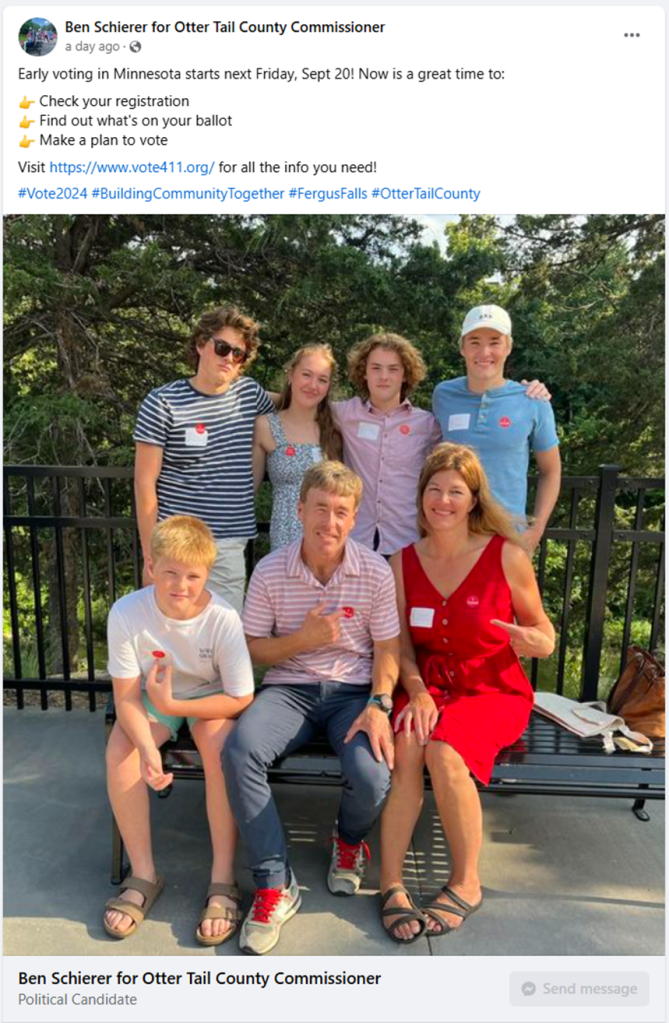
Today’s fertility rates are not even up to replacement numbers. So, what can be done to make large families fun again? One approach may be to consider them in election choices. Here’s a father of five kids running for a county commissioner position. People who live a lifestyle conducive to a gaggle of kids are bound to favor programs and support services geared that way.

Most people want similar things, such as personal safety, good schools, and adequate health care, all within the reach of decent employment. However, a large families’ focus is undoubtedly skewed to their preferences. Safety means kids can navigate city roads to and from schools and parks without harm. In contrast, a family with a musical prodigy may be perfectly willing to buffer themselves against some urban crime so their child can be within reach of the top ballet school. One wants ubiquitous small town the other wants access to specific cultural activities.

Good schools, for instance, mean good public schools in the large family scenario. It can also mean a school that isn’t too elite so that their kids have a chance to dabble in varsity sports or theater or debate without being squeezed out by intense competition. Large families form a buying group of public services. Figuring out how to match the most likely who desire a large family with the mix of services that enriches their lives is the best way to grow the population.

Historic Designation Success

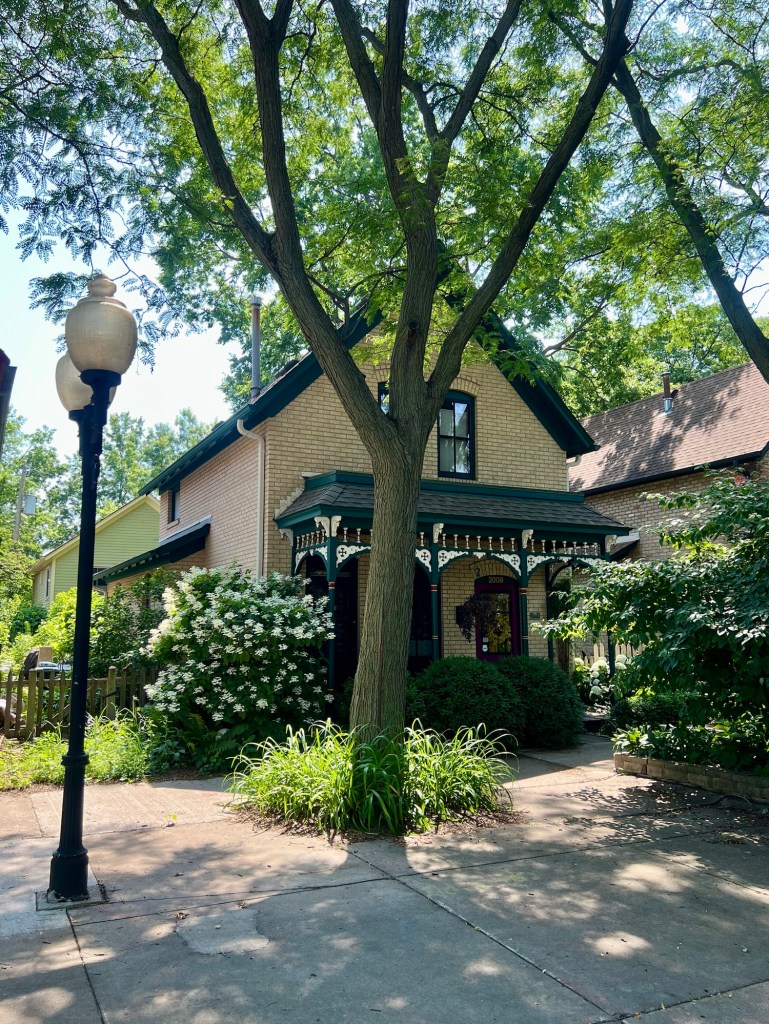
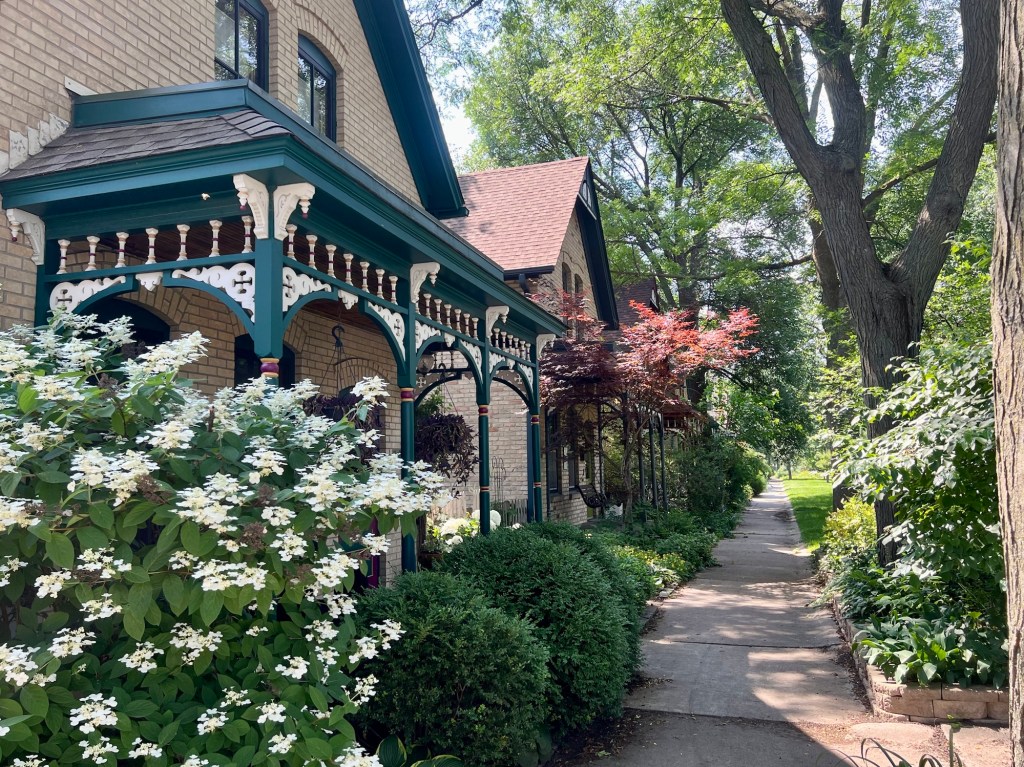
Milwaukee Avenue Historic District, Minneapolis

Chronology

1883

Real estate agent William Ragan purchases four blocks in Minneapolis to develop high-density housing for the growing numbers of immigrant workers coming to the city.

1890

Raganโ€™s development, along what comes to be known as 22 ยฝ Avenue, is completed.

1906

The residents of 22 ยฝ Avenue petition for the name of their street to be changed to Woodland Avenue. It changes to Milwaukee Avenue instead, perhaps because of the nearby Milwaukee Railroad.

1970

The houses of Milwaukee Avenue are run down due to suburban growth and disinvestment in city neighborhoods since the 1950s.

1970

The Minneapolis Housing and Redevelopment Authority plans to demolish most of the western portion of the Seward Neighborhood, including Milwaukee Avenue, as part of their urban renewal plan. This inspires citizens to organize to stop demolition.

1971

Activists who oppose the renewal plan gain control of the Seward West Project Area Committee.

1973

Tense negotiations between the PAC and MHRA motivate Jeri Reilly and Robert Roscoe of the PAC to form the Milwaukee Avenue Planning Team with Bill Schatzlein and Bob Scroggins of the MHRA to discuss how to advance the redevelopment plan.

1973

The Milwaukee Avenue Planning Team launches a study to determine the feasibility of rehabilitation.

1974

Milwaukee Avenue receives its designation from the National Register of Historic Places on May 2.

1974

The MHRA gives up on its demolition plan and begins to support the Milwaukee Area Planning Teamโ€™s recommendations for rehabilitation.

1975

Rehabilitation begins on three Milwaukee Avenue houses in October.

1975

The Minneapolis Heritage Preservation Commission designates Milwaukee Avenue a historic district.

2007

Milwaukee Avenue celebrates its thirtieth anniversary of rehabilitation with a self-guided walking tour of eight of the restored homes The Preservation Alliance of Minnesota organizes the event.

2015

The Milwaukee Avenue Homeowners Association (MAHA), sponsored by the Seward Neighborhood Group (SNG), receives grant money to install a bronze plaque on Milwaukee Avenue describing the district’s evolution and historic status.

Shogun- Series Review

This is a great series. The clashing of European and Japanese customs are just one interesting twist in the struggle for power following the death of a great ruler. Another is the depth and power of the female characters. I can’t think of an english speaking war genre with a similar balance of captivating roles.

I remember the splash James Cavell’s novel Shogun made when it was published in 1975. We were also living abroad, and the depiction of cultural interaction was familiar. My brother remembers it as the first novel he could read straight through. The strength of the story lines holds the imagination of all ages, including that of a fourteen-year-old.

Even though a copy of his 1980 book Noble House stakes a spot on my bookshelf, I haven’t thought of James Cavell in years. His background is (perhaps predictably) adventurous.

Imprisoned in Changi[edit]

Shot in the face,[5] he was captured in Java in 1942 and sent to a Japanese prisoner of war camp on Java. Later, he was transferred to Changi Prison in Singapore.[6]

In 1981, Clavell recounted:

Changi became my university instead of my prison. Among the inmates there were experts in all walks of lifeโ€”the high and the low roads. I studied and absorbed everything I could from physics to counterfeiting, but most of all I learned the art of surviving, the most important course of all.[5]

Prisoners were fed a quarter of a pound (110 g) of rice per day, one egg per week and occasional vegetables. Clavell believed that if atomic bombs had not been dropped on Hiroshima and Nagasaki he would not have survived the war.[5]

WIKI

I also did not realize he wrote The Great Escape, another favorite film from my childhood.

Watch on HULU with ads.

Pottery

When my kids were young I tool them to a fund raiser called Empty Bowls. Participants crafted bowls from supplies laid out by volunteers. Then came back to glaze them. On the final day they returned to pick up the creations in exchange for a donation towards curbing hunger in the community. Little did I know at the time that this would launch my daughter’s pottery vocation.

She crafted this pot, sturdy enough to hold my orchid’s heavy blooms.

Pottery workshops are offered in various places all over the world. Thereโ€™s Seagrove Potters in North Carolina, thereโ€™s Royal Delft pottery in the Netherlands, and thereโ€™s Stoke-on-Trent in Great Britain which claims to be the ceramics capital of the world.

Mostly I am happy to see her take a liking to a creative process.

Christ Church, Malacca

Christ Church is the oldest protestant church in Malaysia. It sits on the same square as the administrative buildings set up by the Dutch in the seventeenth century.

The Stadthuys (an old Dutch spelling, meaning city hall) is a historical structure situated in the heart of Malacca City, the administrative capital of the state of Malacca, Malaysia, in a place known as the Red Square.[1] The Stadthuys is known for its red exterior and nearby red clocktower. It was built by the Dutch in 1650 as the office of the Dutch governor and deputy governor. It continued to be used as the Treasury, Post Office, Government Offices, and suites of apartments for the high officials after the takeover by the British.

WIKI

The best conversation

The Uber/Lyft conversation in the Twin City area provides material to illustrate the dual nature of transactions. Let’s revisit the players. The drivers provide a service to riders for a fee. They also use a platform which takes a cut of the fare in exchange for technology services and national branding.

Drivers left the taxi structure back ten years ago or so. And it does not sound like they want to go back to the taxi arrangement and work for a boss, but are encouraging other ride share companies to enter the market. They are disgruntled with private pecuniary measures, yet satisfied with the soical benefits and flexibility of the job.

Riders are pleased with the services at today’s pricing. Present public transit options like the bus or metro mobility are actually cheaper but do not replace the service. The groups that would be most damaged by the loss of the ride share structure, since there is no substitute, are disabled folks and those who use it to go bar hopping. The social detriment to the first group would be internalized by loss of freedom and a reduction in trips to their medical appointments. Social detriment would be externalized through outcomes from drunken driving.

Another group of riders would have an impact on local businesses and conventions. The travelers who arrive from elsewhere in the US are familiar with Uber and Lyfts through their national presence. Their apps are already downloaded on their phones and they know the drill. The travel community is worried about how removing this transit option will be externalized onto their business.

Other ride share providers have always been able to enter the market. Drivers have always been able to seek out other work at traditional taxi oulets and other types of driver opportunities like school bus driving. (There are regular job postings for this in our districy choice.) Now that Uber/Lyft’s departure may be eminent, five other platforsm are said to be interested in the market. Yet there are regulatory costs.

Uber and Lyft’s threat to leave the Minneapolis area has sparked a lot of interest from outside players. But the cost of operating a ride share business is not for the faint of heart. It costs $37,000 for a license in Minneapolis, plus another $10,000 wheel chair accessibility fee. St. Paul’s license fee is $41,000. MSP Airport requires a $10,000 security deposit and a $500 license fee.

Separately, it costs about $150,000 to secure a commercial auto insurance policy for a rideshare company.

MSN.com

The issue around the driver’s fare split is presented, politically, as the wealthy corporate boss taking advantage of a punch clock worker. This isn’t the turn-of-the-century, nor are we talking about a factory. And since the platforms have yet to make a profit, that visual is difficult to sustain. But this broohaha may be the trick to get other companies to enter the market and have a go. Should they offer drivers a better cut, then the labor flow will move over to the ride share platform.

The key in all this is freedom. If drivers have the freedom to work as taxi drivers, or bus drivers, or drivers for ride share platforms, then they will gravitate to the best situation for their private interests, leaving the failing apps to die off. If riders find services that better suit their needs, then their business will filter over to new options.

Picking numbers and setting up a dam in the system inadvertently sets off financial as well as social repercussions without clearing them through the numerous social structures involved.

Huge crowd shows up for debut of Women’s Hockey

Minnesota has always been home to ice hockey supporters. But it’s just in the last dozen years that support for the fairer sex has come on strong. Tonight’s turnout for a 3-0 shutout win against Montreal sailed past the last attendance record of 8318 in Ottawa.

You can’t hit a record if you don’t have a stadium. Here some deets about the Xcel Center.

Xcel Energy Center is regarded as one of the finest arenas in the world. The one-of-a-kind, multi-purpose facility is home to more than 150 sporting and entertainment events and approximately 1.7 million visitors each year.

  • Location:ย Saint Paul, Minnesota, USA โ€“ Located on six acres in downtown Saint Paul on the former site of the St. Paul Civic Center
  • Owner:ย City of Saint Paul
  • Operator:ย Saint Paul Arena Company (SPAC), an affiliate of Minnesota Sports & Entertainment (MSE)
  • Architectural Firm:ย HOK Sports Facilities Group
  • Construction Cost:ย $170 million
  • Opened:ย September 2000
  • Home Teams:ย NHLโ€™s Minnesota Wild
  • First Event:ย Minnesota Wild vs. Mighty Ducks of Anaheim (3-1 win, preseason) โ€“ Sept. 29, 2000
  • Largest Concert Crowd:ย 20,554 โ€“ Shania Twain โ€“ Oct. 28, 2003
  • Most Sellouts In A Row By An Artist:ย 3 โ€“ Prince โ€“ June 16-18, 2004; Taylor Swift โ€“ September 11-13, 2015

When a city is proposing to build the next sports palace, the objections run high and low, long and loud. The price ticket of $170 million seems like a bargain today. But twenty-three years ago it was a pretty penny. People write op-eds about how the money could be spent in a so much more deserving fashion.

So that begs the question, how many people have benefited from events at the stadium in the last two hunderd and seventy-six months? Is there a social bounding which occurs when strangers reminess about attendence records and concert remories? Are people drawn to living close to a mega venue?