
Passionate pursuits

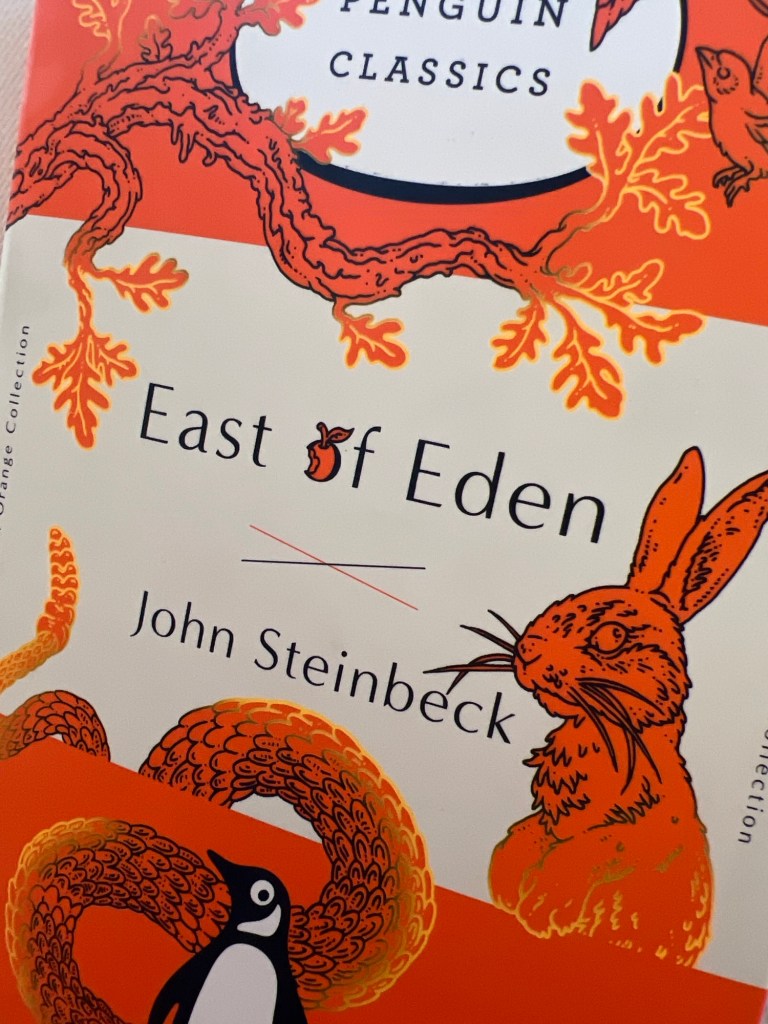
In Chapter 14 of East of Eden, Steinbeck gives us a beautiful portrait of his mother, Olive. There is warmth and admiration in his description of her, but there is economics there as well.

In addition to being a schoolteacher, Olive’s goodwill extends primarily to her family, then to her neighbors, and, on special occasions, perhaps as far as the county line. Her social concern moves outward in concentric circles, but eventually it stops.

Until her neighbor, Martin Hopps, is killed in World War I.

His death awakens something different in her. Olive throws herself into the work of selling Liberty Bonds. Her motivation is clearly not greed, even if she may have been compensated for selling the bonds—a detail Steinbeck does not specify. Something in her orientation has changed. The death of a young neighbor has altered the way she sees her relationship to the larger community, and her actions follow from that change.

Her bond-selling becomes almost a personal mission. Eventually, she receives recognition in the form of an airplane ride in an Army plane. But the recognition is almost beside the point. The economic activity came first. The transaction was the vehicle through which her particular concern could be expressed.

This is a useful reminder that economic outcomes do not begin with prices. They begin with people, situated in relationships and institutions, acting from particular orientations. The same market opportunity can produce very different actions depending upon what an individual values, whom they feel connected to, what obligations they recognize, and what has happened in their lives.

Olive’s story is therefore more than an example of altruism. It is an example of institutional clearing: a personal experience, a relationship with a neighbor, a national event, a market mechanism, and a particular individual orientation come together to produce an economic action.

Economic outcomes can be driven by many fuels. Price is one of them. But so are memory, obligation, affection, loyalty, recognition, identity, and a sense of contribution. To understand the outcome, we have to look not only at the transaction, but at the person and the institutional world through which that transaction is being cleared.

This version makes Steinbeck do some of the theoretical work for you rather than turning the passage into a generic “people aren’t motivated by money” argument.
The Feast of the Goat

This carefully crafted book intertwines three tales occurring around the 1961 assassination of Rafael Trujillo, the brutal dictator of the Dominican Republic. The author’s language is beautiful and descriptive. He astutely matches the voices of each of his characters to the vernacular. There are enough historical facts to learn something without the narrative becoming pedantic. All these features make it brilliant.

But I believe the author is trying for more. It’s as if he wants to answer the question: How does a brutal dictator maintain such cruel control of a country for three decades? He is laying out how it works. First, he tells us of the agents. He gives us Urania. She returns to her homeland with the sole objective of presenting her father with a tally of her expenses for a decision he made so long ago. Then there are the insurgents, working together in a high-risk pursuit. And there is the dictator who is conflated with the state, as he has all those powers and economic means at his disposal.

The author is clear that there are more units of shared interest. Each of these agents has ties to the family. And each of these has varying fortunes depending on its ranking within the social structure.

To keep his model tight, the author does not pursue the family as agents who take action. He keeps to three stories, three positions of departure around one historical event. The first is the view of the lead character, Urania Cabal. Her story is one of private loss. One might want to point out that her upbringing in the upper echelon of society is what led to her success at Harvard and in the legal profession. Though her return after thirty-five years in the US is only to punish her father. To make it clear that his betrayal was beyond redemption.

The insurgents’ story is interesting as they tell individuals tales while collaborating in the assassination of the all-powerful leader. Their losses under the dictator’s reign are aired. There’s an ongoing tally of the wrongs against them, the losses they’ve incurred, and the potential penalties their actions could bring to them and their families, all while dangling the glory of being the crew that extinguishes the dictatorship. They work as a team. Their action influences the direction of the country.

Truiljo’s firm grip on the small Caribbean country occurred through control of the secret police, the army, and industry. His private gains were considerable. Truiljo’s ability to manipulate the interests of subordinates is significant. But the author gives us more insight. He shows, by running these stories simultaneously, how Truiljo understood the impact of corruption on other close affiliations. He led people to a point of no return, destroying collations one by one. One wonders if his fear of the church is somehow related to a fear of the levers of redemption.

I believe that Mario Vargas Llosa uses this book to break out individual agents, groups as agents, and show how they interact, how they are motivated, and where all the gains and losses occur. It shows up in his language.

On page 267, Trujillo’s girltrader and dealmaker tells Urania’s father, “He (Trujillo) will call you. He’ll return what’s been taken from you. Uranita’s future will be secure. Think of her, Agustín, and shake off your antiquated prejudices. Don’t be an egotist.” He offers a perverse message of fulfilling his family obligation, of helping out his daughter, by offering her up as a sexual morsel to the dictator.

On page 322 the author emphasizes the active reformulation of groups as agents, “As if in a dream, in the hours that followed he saw this assemblage of Trujillo’s family, relatives, and top leaders form cliques, dissolve them, and form them again as events began to connect like pieces filling in the gaps of a puzzle until a solid figure took shape.” Once the new assemblage forms, it becomes one. A solid shape.

On page 355, the brilliant Vargas Llosa reminds his readers to depend on human nature: “Doña María’s response had been predictable: her greed was stronger than any other passion.” The first lady could be depended on to prioritize personal interests over group ideals.

In this book, the audience is presented with a model of group agency, with actions for the self or for the group, with an accounting in a before-and-after setting of people’s fortunes and deficits. Vargas Llosa answers the question of how it works.

Fully modeled with examples.

Trad wives in Hollywood

In the 2020 series Roadkill, Saskia Reeves plays the wife of the ambitious politician Peter Laurence MP, played by the excellent Hugh Laurie. She is a demure and reclusive figure living her life in their home district while her husband takes care of business, in more ways than one, in London. With both her daughters out on their own, she is more interested in her music than public life. A viewer may even pity her a bit as discoveries come to light in her families history.

But this would underestimate her. As the story unfolds, it becomes apparent that she has calculated her part of the bargain in her marital partnership. And she knows how to play her cards.

A new series on Netflix, Zero Day, is much more confident in their trad wife played by Joan Allen. The wife of the former president (Robert de Niro) is a partner, an advisor, a support, a wife, and a mother to their daughter. In essence, she fulfills all the duties of a traditional spouse without any formal income or profession. Her advice is forthright. She watches and reports.

Both shows deal with managing and overcoming the strain of relationships outside of marriage. Both juggle relationships with children. And in each film, the relationships have room for warmth, affection, and what most call love. Old people love not youthful passion. She’s been gone for so long; seeing her back in public view is good.

For decades of characters like Murphy Brown- bitter and stridently looking for power and satisfaction in professional work have garnered the glamor of the entertainment business. Then there were single working moms, getting ahead and dubiously happy to be rid of spousal obligations. Hollywood has shown us every variation of power-seeking women looking for fulfillment in paid-for work. Not that there’s anything wrong with that. It’s just nice to see the trad moms return to the small screen. And as these series show, they’re not that weak after all.