The screenshot below, from a Bloomberg newsletter, tells a story that has been told before. An area in a downtown, or alongside a river, or in a first-tier suburb, becomes blighted beyond repair. As a result, a new development is scheduled to replace it.
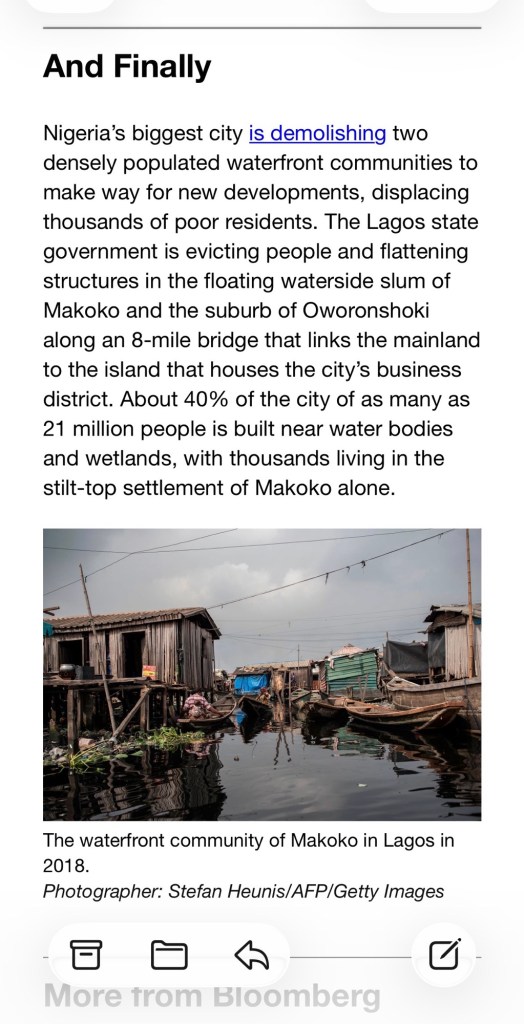
The question is not whether it should happen. It simply does. Over again, worldwide, across all types of geography. When the plot of land becomes more valuable for a new purpose, the natural progression is for it to be redeveloped.
On a small scale, you see it in a neighborhood when one home has been let go to the point that it does not command a price above the lot value. A new owner, or a builder, secures it, razes the structure and builds anew. At least that is what most of the neighbors desire. A dilapidated home is no fun to drive by every day. Once one property becomes blighted, it seems that others follow suit. So new is nice.
The news gets a hold of the story when a significant portion of residents are caught in this cycle, and it requires a large swath of land to turn over. That’s the story posted above. PBS covered a renovation of a large apartment complex in Richfield, The Crossroads at Penn, due to the significant number of residents were low-income.
And that’s really what the outrage is about. It’s not about renovations. It’s not about a few people who in the end are better off in a new environment for all the reasons others move: proximity to medical facilities or jobs, families, better schools, and so on. The story becomes news when the sheer number of residents involved requires more social capital than is readily at hand.
Property maintenance is expensive and ongoing. Policies that hamper repairs will yield negative returns at multiple levels. Ideally, caring for the poor entails preservation of suitable property, not its destruction.
 Home Economics