
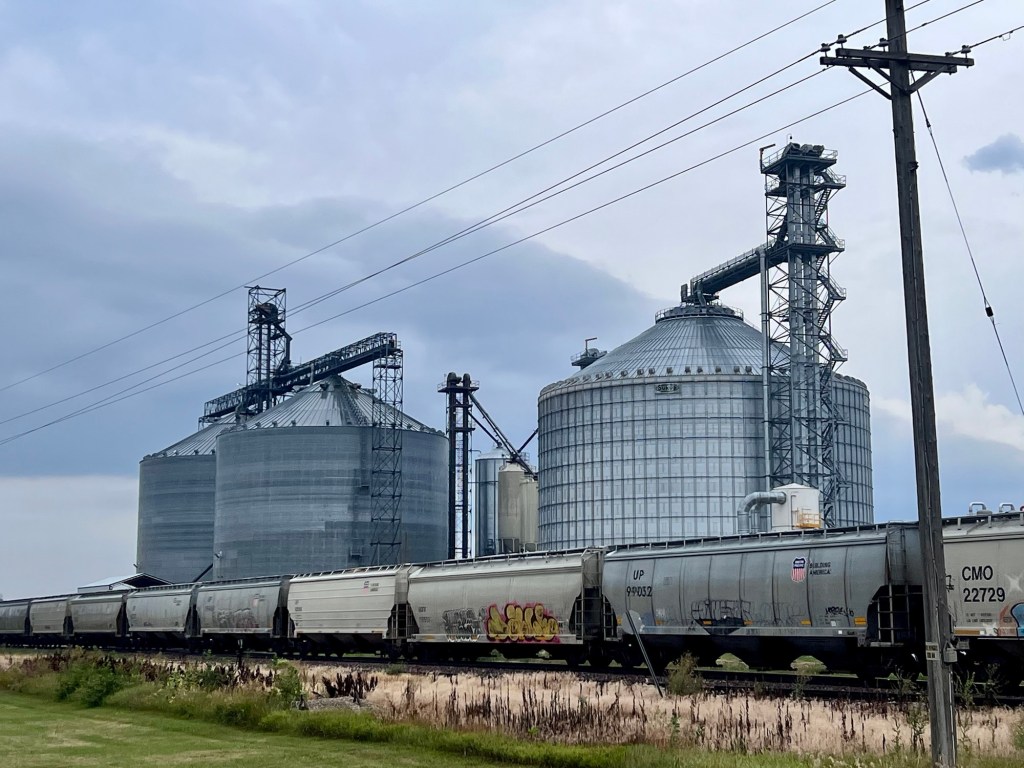
Corn dominates rail grain volume. Union Pacific is a major Midwest player in this traffic, alongside BNSF and others. Rail’s advantages are cost and capacity over distance, plus lower emissions per ton-mile than trucks—critical when production is concentrated in the Plains and demand is scattered or overseas.
This is a classic grain terminal scene: large cylindrical elevators (silos) with headhouses, leg conveyors, and loading infrastructure feeding a long string of covered hoppers. The cars are the standard dry-bulk type used for corn, soybeans, wheat, etc. UP markings and “Building America” slogan are clear; the CMO car is another common reporting mark in the mix. Graffiti is routine on freight equipment. Power lines, weeds, and the roadside vantage point give it that everyday rural industrial feel under flat Midwestern skies. These facilities are the nodes where local harvest volume concentrates for efficient rail outbound.
Rail is a backbone for moving U.S. crops, especially longer-haul grain. Roughly 24–26% of total U.S. grain (corn, soybeans, wheat, etc.) moves by rail in recent years, with trucks handling the majority (~60–62%, mostly shorter hauls from farm to elevator).


