
Gordon Wood is so captivating. His vivid depictions in The Radicalism of the American Revolution deliver an extraordinary level of detail—one that anyone drawn to the complexities of human choice and decision-making will find impossible to resist.
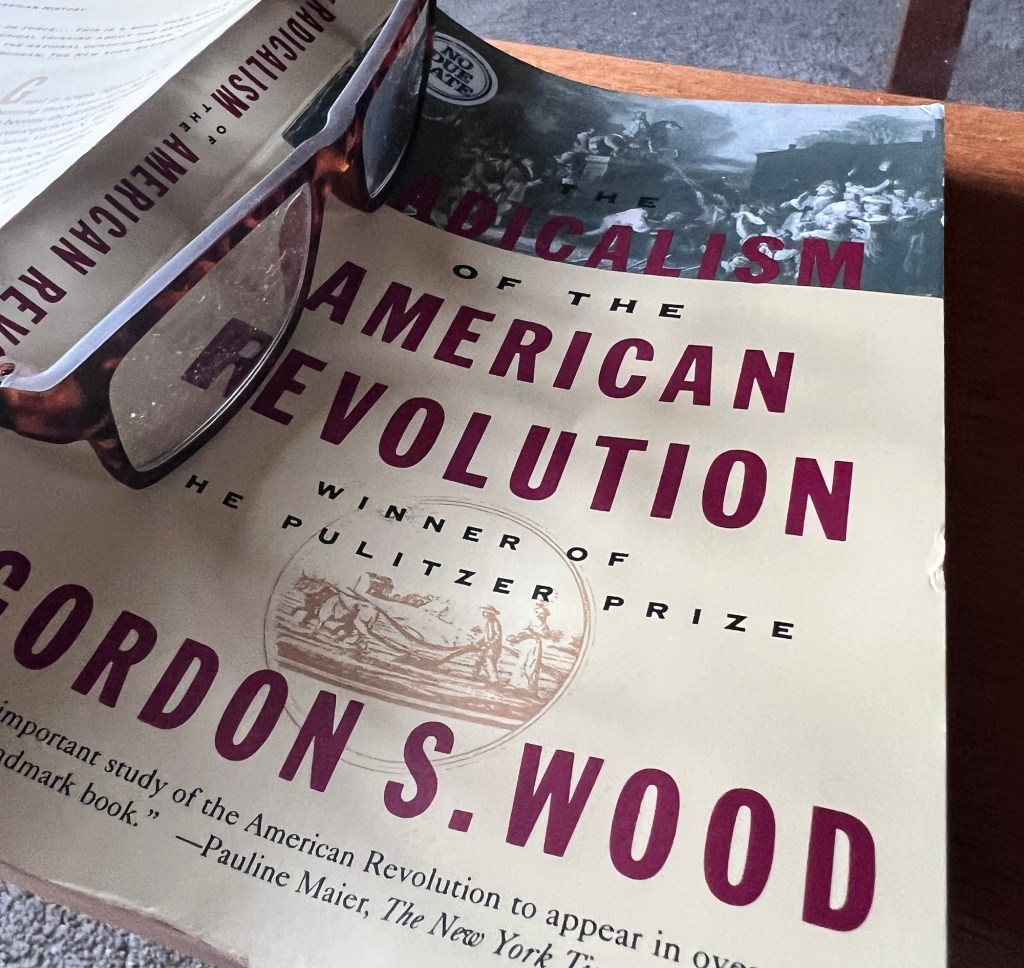
And what I love most is how Wood moves fluidly through every level of society. He refuses to tell the story as if only a handful of prominent figures pull the levers of history while everyone else sits as passive spectators. Instead, he gives us a comprehensive, richly textured view of the social positions, finely tuned choices, and densely interconnected relationships of ordinary Americans as they lived through the Revolution and helped shape the nation’s creation story.
It might be fun to model out the way he frames all these actors.
In the meantime he treats us to things we never knew before. Like the control mechanisms for limiting a societal obligation of care.
All of this movement in New England put unbearable pressure on the region’s old warning-out laws. These laws had been part of the older culture of paternal dependency in which everyone was supposed to belong somewhere. If vagrants stayed in a town for a given period-three months in Connecticut and New Hampshire, one year in Massachu-setts-they were then considered members of the community, which became responsible for their welfare. Warning-out was designed to absolve the community of this responsibility: men and women warned out could not claim legal inhabitancy. From mid-century the numbers of persons formally warned out in this way by various towns increased remarkably, so much so that town clerks began making lists of those warned out instead of writing separate warrants for each one. By the late 176os Massachusetts and Connecticut began shifting responsibility for identifying transients from the communities to the individual transients themselves. In 1771 the movement of people became so much greater that Connecticut and New Hampshire could no longer maintain their short three-month period for legal residency; they extended it to one year and brought their laws into line with Massachusetts.