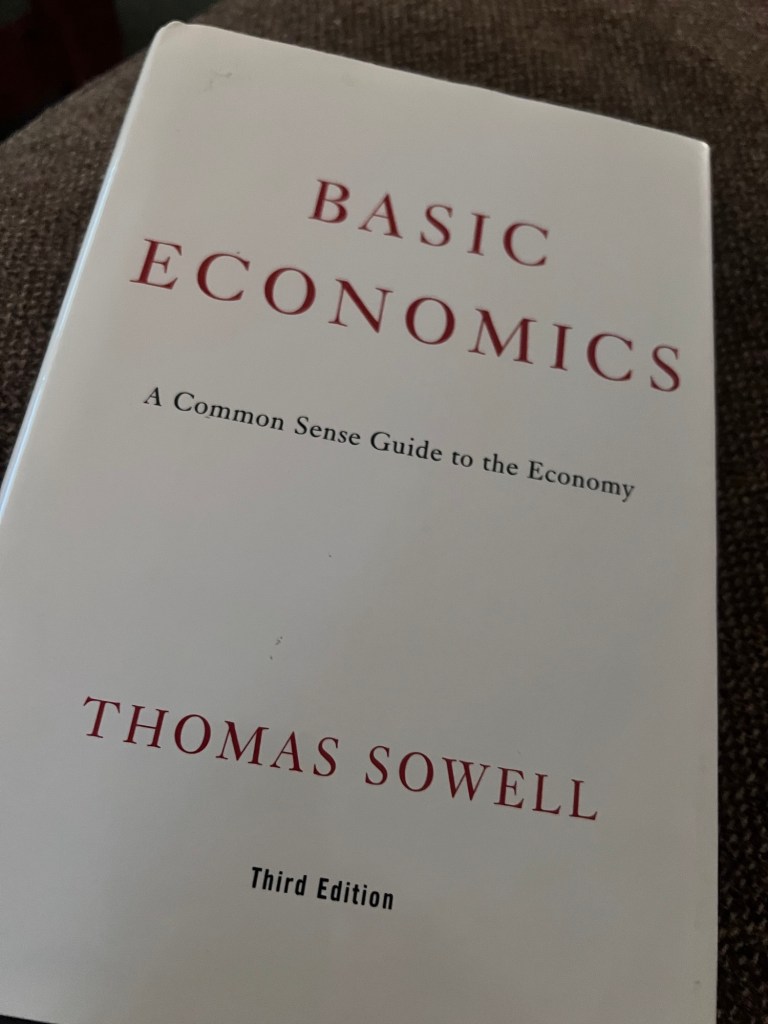
Thomas Sowell frequently argues that the lifeblood of politics is replacing market coordination with government intervention, a process achieved by manufacturing a “crisis,” pushing aggressive media messaging, and demanding taxpayer financing. In books like Basic Economics, Sowell details how politicians constantly chirp about an affordable housing crisis, claiming the free market has failed due to “greed”. According to Sowell, this political narrative flips reality on its head. It is usually prior government interventions—such as artificial zoning restrictions or mandated loose lending standards—that distort the market in the first place. By labeling the resulting fallout a crisis, politicians successfully manufacture public anxiety, enabling them to capture massive public funding and expand their regulatory power.
Sowell’s core philosophy demands looking at real-world data rather than political talking points. While political rhetoric today frequently claims the national housing sector is on the brink of collapse, local empirical metrics often tell a completely different story:
Minnesota historically maintains one of the lowest mortgage delinquency rates in the United States, routinely outperforming the national average due to strong regional employment and high baseline home equity.
While macro-level tracking platforms require a subscription for state-by-state historic line graphs, the structural timeline of Minnesota’s delinquency behavior follows a distinct pattern:
📊 The Minnesota Mortgage Delinquency Timeline
  Rate (%)
   10 |             _/\_  (2008-2010 Peak: ~7.5%)
    8 |           _/    \_
    6 |          /        \                  /\ (COVID Spike: ~6.2%)
    4 |   ______/          \______         _/  \_
    2 |  /                        \_______/      \_______/\  (Current 2026: ~2.1%)
    0 +-------------------------------------------------------
     1995  2000    2008     2015    2019   2021   2024   2026
This data shows no stress in the sytem.