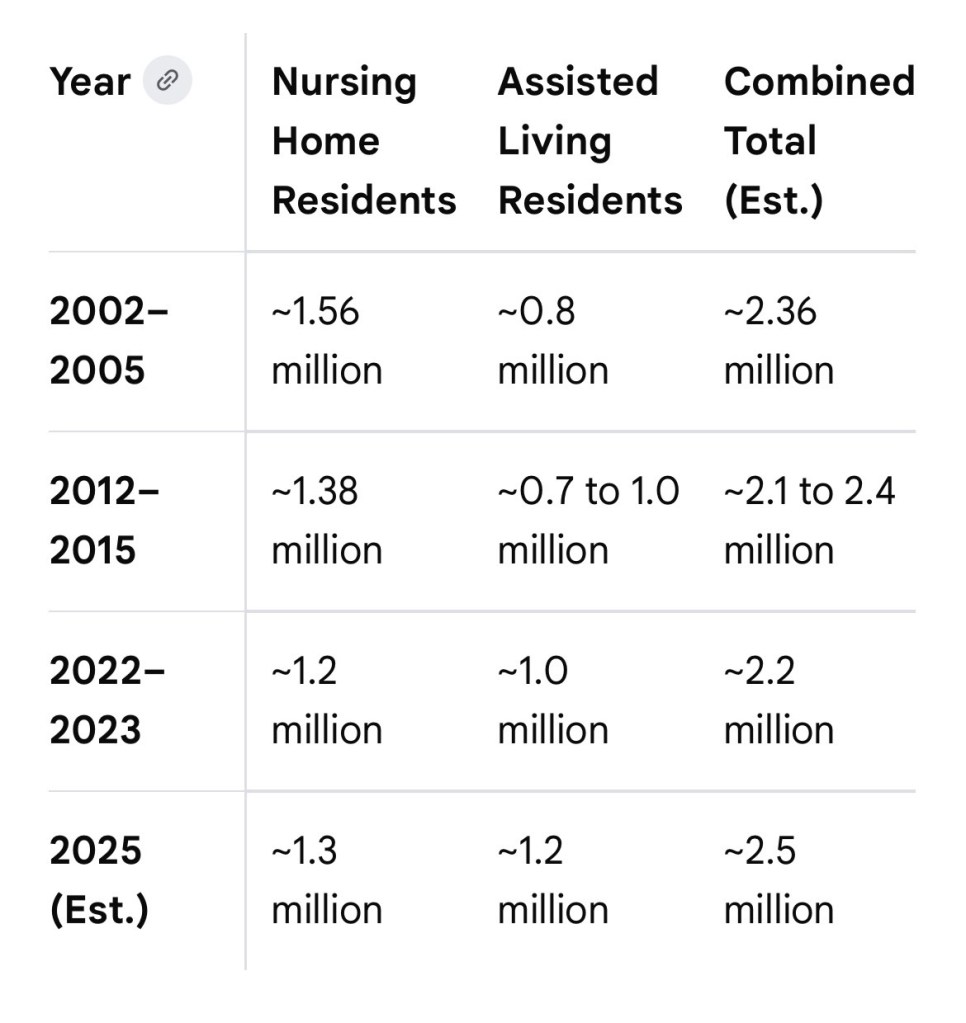
Approximately 0.7% to 0.8% of the total U.S. population—representing about 2.2 to 2.5 million individuals—currently lives in senior care housing. Among the elderly population (ages 65+), roughly 5% to 7% reside in these facilities.
Historical Residency Values (Last 20 Years)
While the total number of seniors in care has risen due to population aging, the percentage of seniors living in institutional settings like nursing homes has generally declined as “aging in place” and home-based services have expanded.
Key Long-Term Trends
- The Shift to Assisted Living: In the early 2000s, nursing homes held nearly double the population of assisted living facilities. Today, the two sectors are nearly equal in size as healthier seniors opt for less restrictive residential care.
- Declining Nursing Home Rates: The share of adults 65+ in nursing homes dropped from about 5% in 2005 to roughly 2.3% by 2025.
- Occupancy Recovery: Following a decline during the COVID-19 pandemic, senior housing occupancy rates reached a high of 88.7% in late 2025, driven by the aging Baby Boomer generation.
- Age Concentration: Residency is heavily concentrated among the “oldest-old.” While only ~1.1% of those aged 65–74 live in nursing homes, that figure jumps to 13.2% for those 85 and older.

 Home Economics