Sure— you knew that Kronborg Castle, on the NE tip of Zealand in Denmark, was the setting inspiration for Shakespeare, in Hamlet.
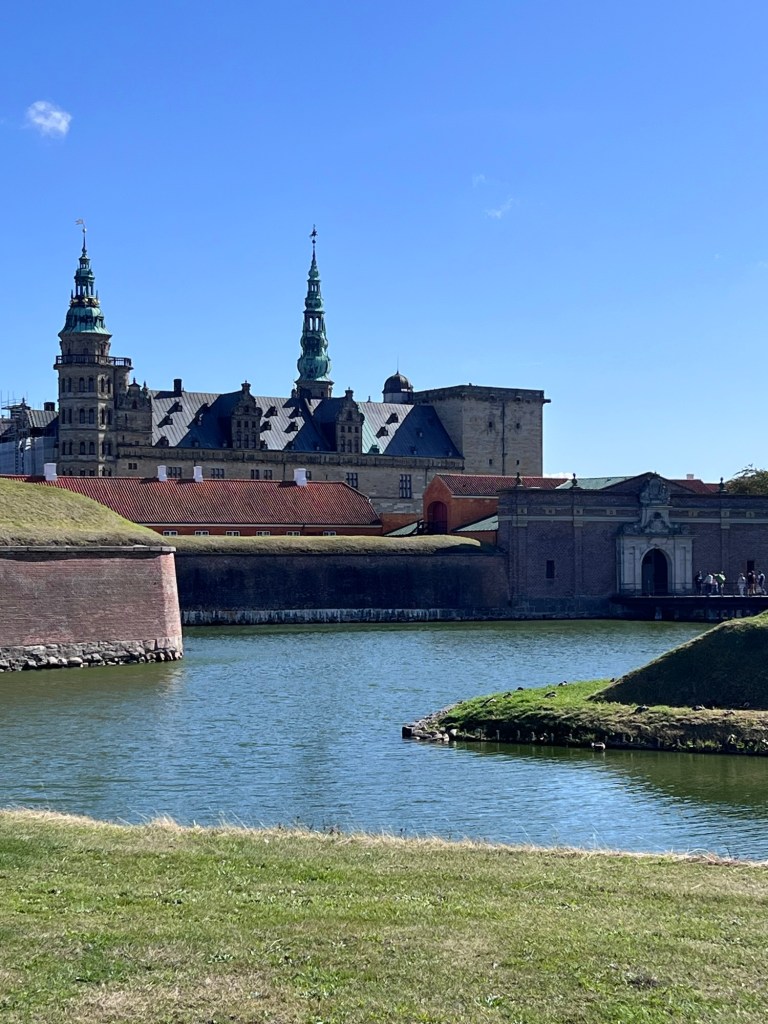
But did you realize its raison d’etre is an economic story?
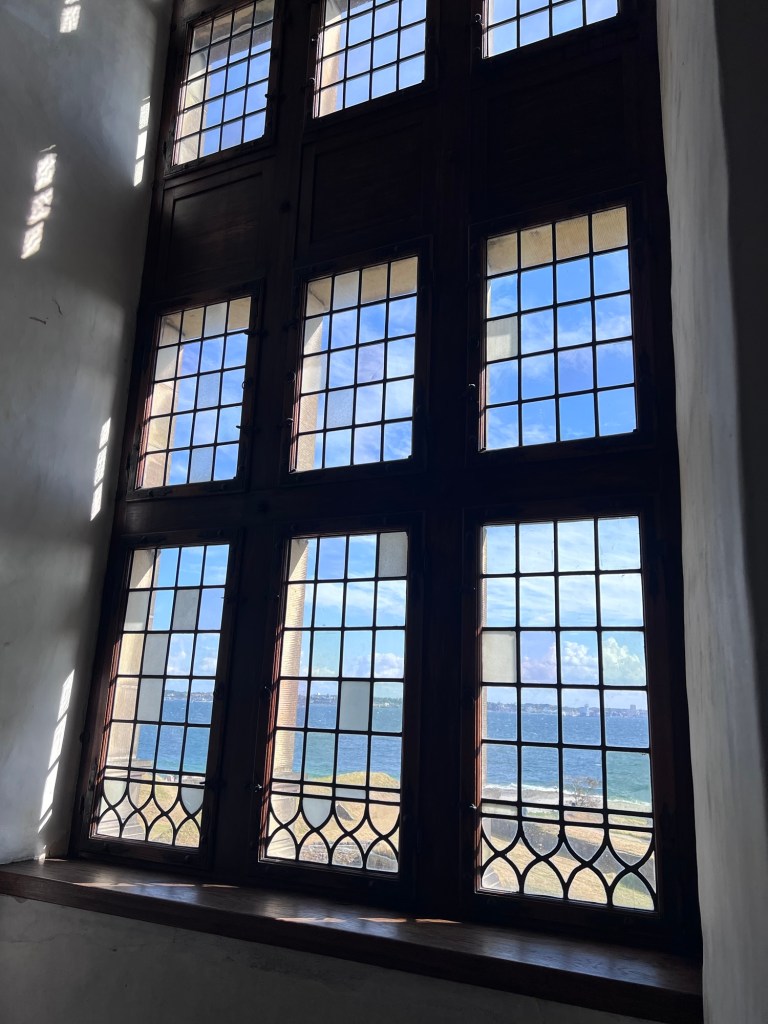
See that short distance from the edge of the ramparts to the coast afar? That’s a narrow strait— perfect for tax collection.
Kronborg Castle was constructed by Denmark to enforce the collection of “Sound Dues,” a tariff levied on all ships passing through the Øresund strait between Denmark and Sweden.
The castle’s cannons ensured that vessels complied, generating significant revenue for the Danish Crown for over 400 years.
Kronborg and the Sound Dues
- Strategic location: In the 1420s, King Eric VII of Denmark built a fortress named Krogen on the site of present-day Kronborg. The castle was strategically positioned on the narrowest point of the Øresund, which at just 4 kilometers (2.5 miles) wide, served as a crucial entryway to and from the Baltic Sea.
- Enforcement of tariffs: The castle and its formidable cannons guaranteed that all commercial ships entering or leaving the Baltic paid the Sound Dues.
- Revenue generation: For centuries, the Sound Dues were a main source of income for the Danish royals, funding not only the maintenance of the castle but also covering a significant portion of Denmark’s state income.
- Preventing fraud: To prevent ships’ captains from undervaluing their cargo to lower the tariff, the Danish king could exercise the right to buy the entire cargo for the value stated.
- Upgraded fortress: In the mid-1500s, King Frederick II radically expanded and rebuilt the fortress into the lavish Renaissance castle known today as Kronborg. The project was almost entirely funded by the Sound Dues.


 Home Economics