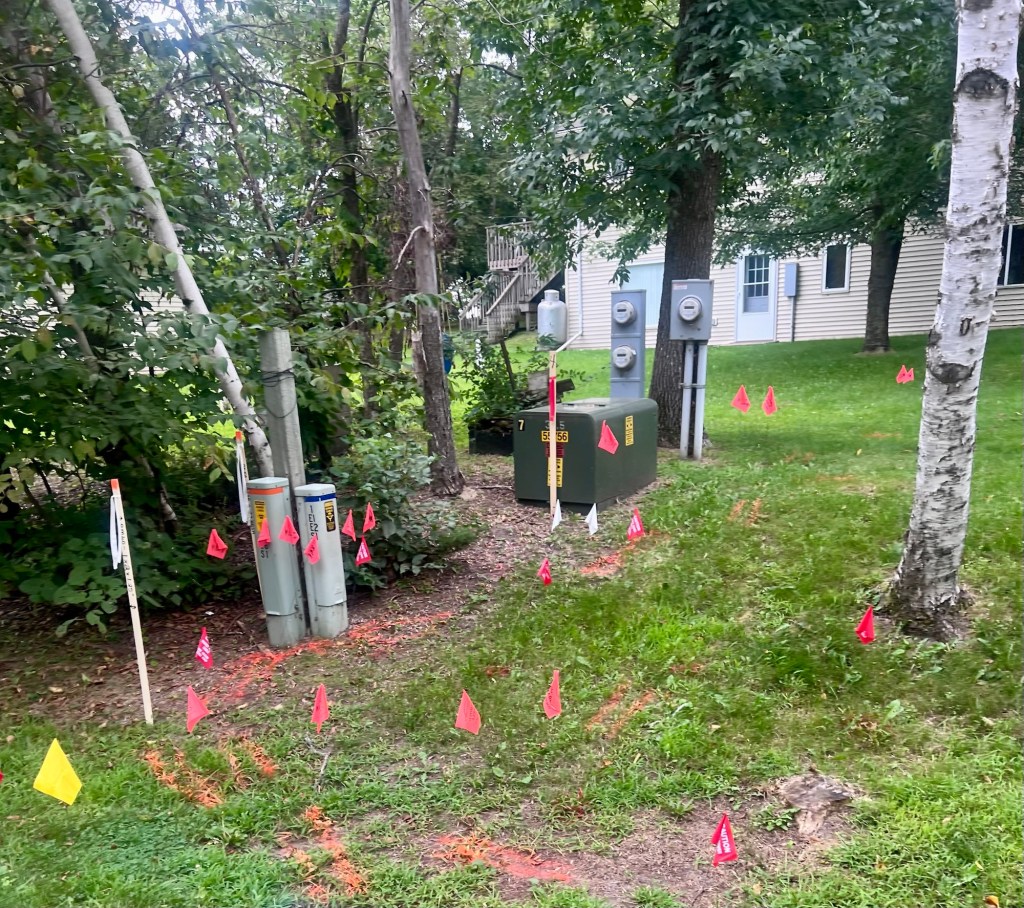
If you’ve ever had to dig in your yard, you know the first step is to call the power company. Before a shovel hits the dirt, utility crews mark the lawn with a rainbow of little flags, showing where buried lines and cables run. Those markers are a reminder that beneath every property lies a web of infrastructure you don’t own but rely on every single day. This network is owned and maintained by your local electric company—the same one that sends you a monthly bill. Whether electricity enters your home through an overhead mast or a buried cable, the reliability of service rests with these local players.
Behind the Flags: How Power Reaches Homes
The electricity that hums through a house begins far away, at generating stations powered by natural gas, wind, solar, hydro, or nuclear energy. High-voltage lines move that power long distances until substations step the energy down to safer levels. From there, your local utility takes over, operating the distribution system that delivers electricity to neighborhoods and households.
For homeowners, the poles you see on the street—or the lines you don’t see underground—are not just background scenery. They are the lifelines of everyday living. Flicking on a light switch, charging a laptop, or running an air conditioner all depend on the quiet, constant work of utilities keeping those lines in good order.
Reliability and Perception
While utilities don’t often feature at the top of a buyer’s checklist the way school districts or commute times do, reliability still shapes homeowner perception. Most people only notice electricity when it fails, but repeated outages or slow restoration times can quickly create frustration. Just like trash pickup or snow plowing, electricity is a municipal-style service that residents take for granted—until it stops.
In this sense, dependability forms a kind of background preference. A household may not choose a neighborhood primarily for its utility provider, but they still form judgments, even if peripheral, about whether the service is reliable, responsive, and trustworthy. When those expectations aren’t met, the dismay can be just as real as when other civic services break down.
The Household–Utility Relationship
Every month, the bill you pay reflects both the energy you used and the infrastructure behind it. Rates cover not only the electricity itself but also the upkeep of poles, wires, substations, and the crews ready to respond when trouble strikes. For families on tight budgets, these costs can feel heavy, which is why many utilities offer assistance programs or rebates to help households manage expenses.
More Than Wires
Ultimately, the connection between utilities and homes is about more than cables and meters. It’s about ensuring every household can reliably plug into modern life. From the flags in your lawn to the wires above your street, utilities provide the unseen backbone of comfort, safety, and opportunity—making sure that when you flip the switch, the lights always come on.

 Home Economics