This is from Bloomberg’s news letter a few days ago:
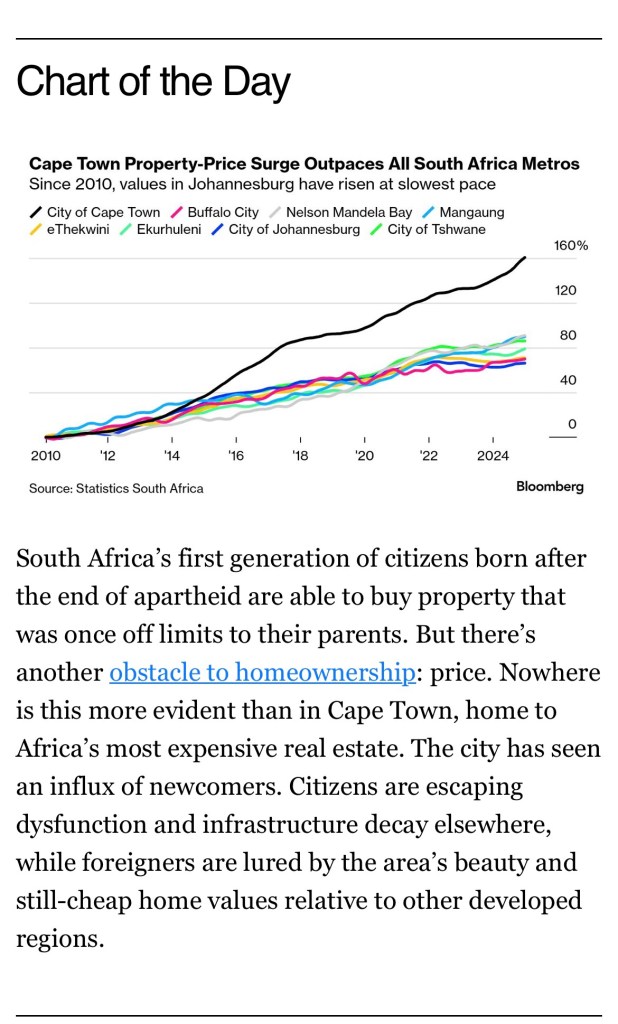
This example comes from South Africa, but the pattern is familiar in city neighborhoods across the United States. A single area becomes highly sought after—often because of a natural amenity like a lake, a hilltop view, or tree-lined streets. As people concentrate their attention and investment there, surrounding neighborhoods are overlooked. That neglect can manifest in subtle forms—like disrepair or increased petty crime—which only reinforces the appeal of the original “best” area.
At first, residents welcome the rising property values. But over time, that early advantage turns into a burden. Friends and family are priced out. Local businesses close as commercial rents climb, replaced by boutique shops that cater to outsiders. What began as a benefit morphs into a form of isolation.
A regional perspective offers a solution. If planners and policymakers ensure that all neighborhoods remain livable and desirable—not just one or two—the pressure on any single area can be eased. Without that balance, scarcity drives runaway prices, and the community as a whole suffers.

 Home Economics