Even prior to the election outcome, there was bipartisan interest in reducing regulations which hinder housing. Yet in 2024, efforts around housing ended up being a power struggle between different levels of government and zoning control. Traditionally, land use is determined at the local level. The political efforts were geared at removing local control through state mandates. Come to find out, residents like to control the land in their direct periphery.
With the new administration, one would anticipate this spirit of deregulation to find its way to most industries. Is there a good place start? Where would less government result in a net positive? Where are the low hanging fruit?
The market solves for social concerns. Tesla is a prominent example. If there is a mass of consumers with a shared concern, than they will demand it of the market. Looking for the majorities with shared common interest might be a start. For example a ballot measure passed in Minnesota to divert funds from the lottery to the environmental trust fund. It passed with 77.5% of the vote.
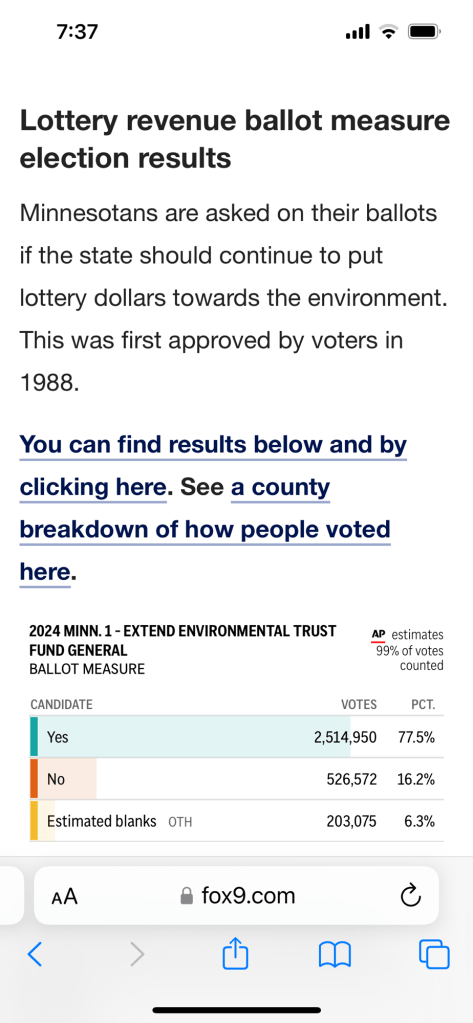
When people voluntarily allocate resources for a casue there is a better chance that mediating their interests through the market will result in a more efficient outcome. Without the surcharge of bureaucracy and the unintended outcomes of intervention, markets often are more fruitful. When it comes to the environment, the majority of Minnesotans indicate that they will spend the money to preserve and protect.


 Home Economics