Tolstoy spends more pages telling us about the Russian aristocracy than the serfs, but when he does describe them at work in the fields it is some of his most beautiful writing. Being the curious type, I did a little digging and found this excellent paper on the micro economy of the time. Micro-Perspectives on 19th-century Russian Living Standards provides a widespread overview of the prices in the years following the emancipation of the serfs.
Their finances weren’t great- but according to this paper their income was sufficient to purchase enough food and basic living utensils. What messed things up for this class of people which constituted eighty percent of the population, was the failure under land reform to allow private ownership.
Historians of this period have come to very different conclusions regarding the impact of these social and economic changes on rural living standards. A long tradition in Soviet and Western scholarship views the emancipation and land reforms as re-imposing constraints on the peasantry that amounted to a new form of serfdom. Peasants were assigned formal membership in land communes, which continued to be characterized by collective control over property rights and joint liability for land and tax obligations. According to this literature, the external burdens
placed on peasant communities remained exceptionally high and even exceeded those imposed under serfdom. Tied to such obligations and subject to the whims of communal decision-making, peasants were unable to improve agricultural productivity, freely dispose of their land, or leave agriculture for industrial work. These restrictions kept living standards low and led the agrarian economy into crisis by the 1890s.
This paper, Russian Inequality on the Eve of Revolution, focuses on inequality in Russia. There is plenty to talk about. The chart I liked best from the paper is this one which shows that writers made as much as doctors and professionals. At least that seems like an admiral priority.
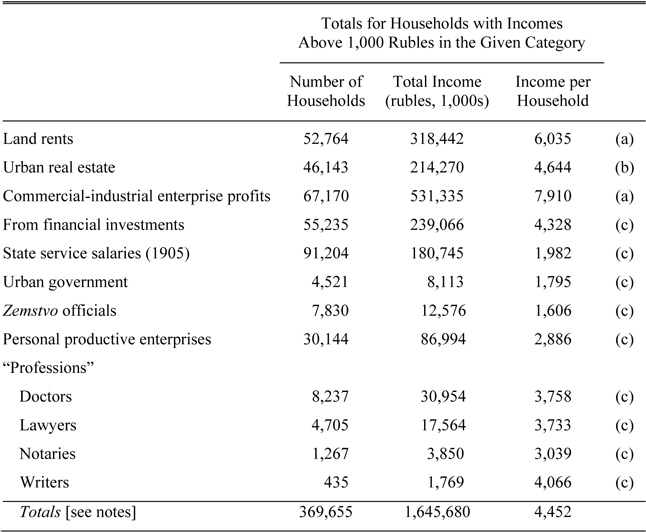

 Home Economics