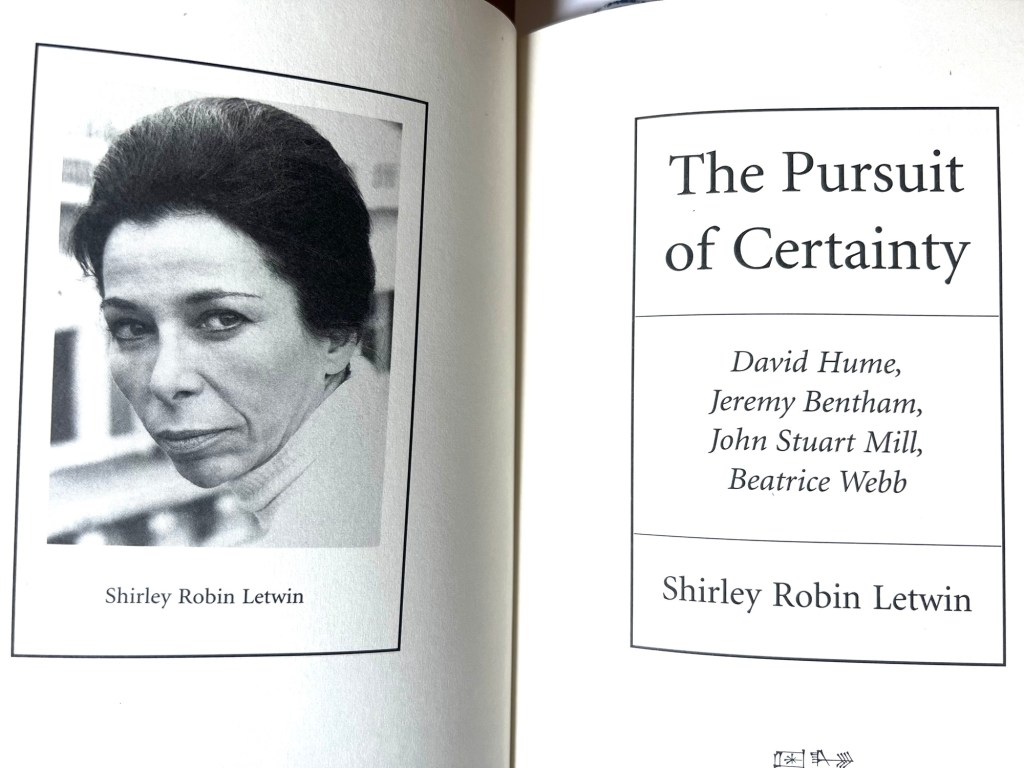
David Hume, a member of the Scottish Enlightenment crew and good friend to Adam Smith, was a practical sort of guy. Perhaps it was his good sense that kept him out of the universities and engaged with a broader, more genial audience. He wrote on many topics. Fortunately, people like Letwin parse through the material to pull out interesting bits like this one.
But if the politician had to be in a way mediocre, he had also to be thoroughly civilized. Civilization was not the same as morality. Hume refused to divide men into good and bad; in the history he rounded off each portrait with a neat balance of virtues and vices, that fails utterly to give a picture of a living man, but makes it clear that he was neither saint nor villain. For Hume would allow no character to be “wholly bad or good; tho’ the prejudices of party make writers run easily into the extremes of both panegyric and of satire.”
So often people are painted as all evil or all angel when we all know, as David Hume tells us, there’s at least a bit of both in most everyone. Then what should we look for in evaluating the political performance of public servants who are apt to be swayed in both directions?
The political morality Hume demanded is in a way far more difficult to observe than the extremest puritan austerity. For it is easy either to follow some set of rules absolutely or to ignore moral qualms altogether. It is easy also to try to establish a perfect city, come what may. But the man who tries to adapt himself to circumstances and yet preserve his integrity, to recognize new problems without destroying law and order, has an endless task. He is eternally obliged to balance one thing against another, to distinguish and compromise, and all this without falling into moral indifference. Perhaps most difficult of all, Hume’s politics assumes great personal resources, an ability to find meaning in life for oneself, and to require from the state nothing more than a convenient setting for private enthusiasms.

 Home Economics