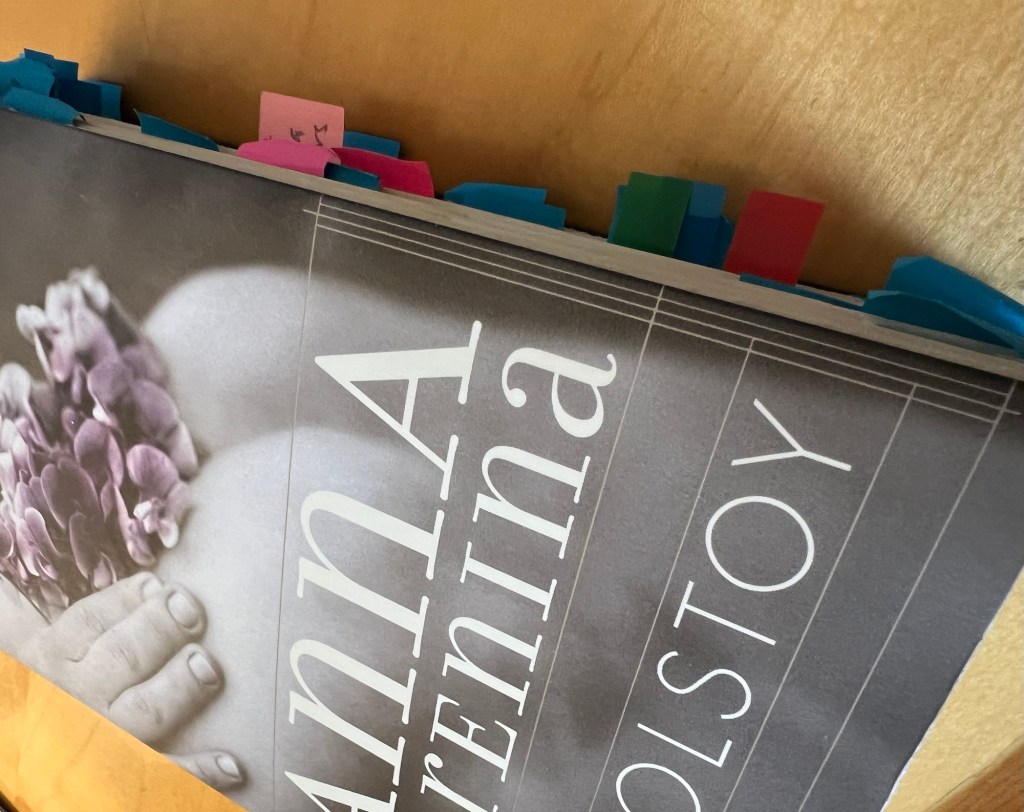
You know how you just stumble into a good situation sometimes? I’ve had the good fortune of reading Anna Karenina with a bunch of smart people. The conversation has left more questions unanswered than answers securly rendered. Which leads to the most lovely contemplation throughout the day.
One continuing thread of inquiry over the four weeks has been around the feelings, aspirations, and fulfillment of joy in the rich selection of characters in the novel. How the characters are able, or how they fail, to pursue their best lives. What brings them pleasure and satisfaction versus what brings them torment and madness.
Some in the group have observed that joy bubbles up as part of process of search, discovery and consumation. Kitty, for example may not have felt much joy when a suitor she desired, Vronsky, turned his affections toward Anna. In fact she made herself sick with shame and dismay to the point that her parents whisk her away to an overseas location. A joy meter would register below zero for Kitty at this point in the story. Yet later on in the novel she too finds love.
Is a joy to be measured in the instant? Or over a period of time? Is joy to be measured in stages of life?
Anna was joyful in her first marriage until she met true love. Her passion was all she needed as long as she and Vronsky could steer clear of the judging eyes of greater society. She clung to the joy in the steady state part of the relationship, making every attempt in her personal appearance and ambitions to be attractive. But in her isolation from female companionship and social interactions she looses touch with reality and is driven mad.
Is this the moment where the measure on her joy barometer is the best representation of her life?

 Home Economics