Not just any asylum – one that was built in the middle of a farm field in a small Minnesota town on the railroad line between St. Paul and Fargo. The last surviving Kirkbride Building that was designed by Dr. Thomas Kirkbride: a complex of four-story structures creating an arc to maximize light and hence health benefits. At 700,000 finished square feet (TPT), the Fergus Falls (formerly) State Hospital is a lot to take care of.
If footage is hard to visualize, here are some comparisons as listed by The Measure of Things. The facility is three fourths as big as Alcatraz (960,000), two times as big as the Lincoln Memorial Reflecting Pool (339,000), and half as big as the Pentagon (1,490,000). In addition to the main buildings, there was a power plant, a gymnasium, a workshop, maintenance buildings, a rehab center, a nurses’ quarters, and acres of cropland which sustained the facility.
On a recent tour I captured a few shots.
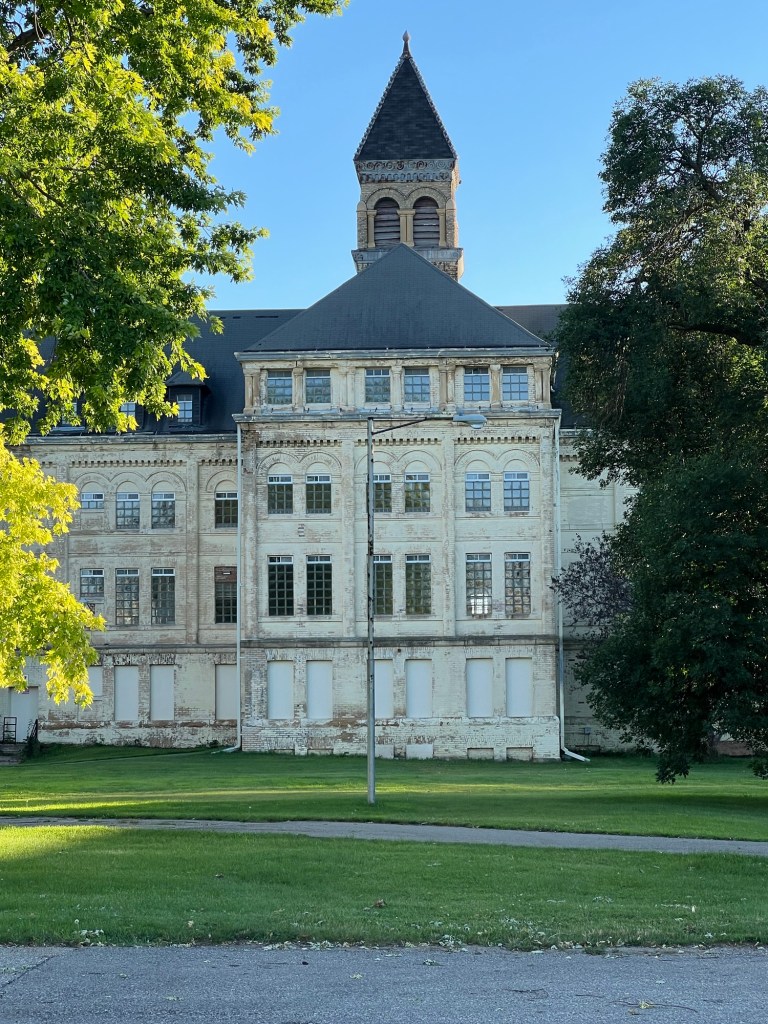
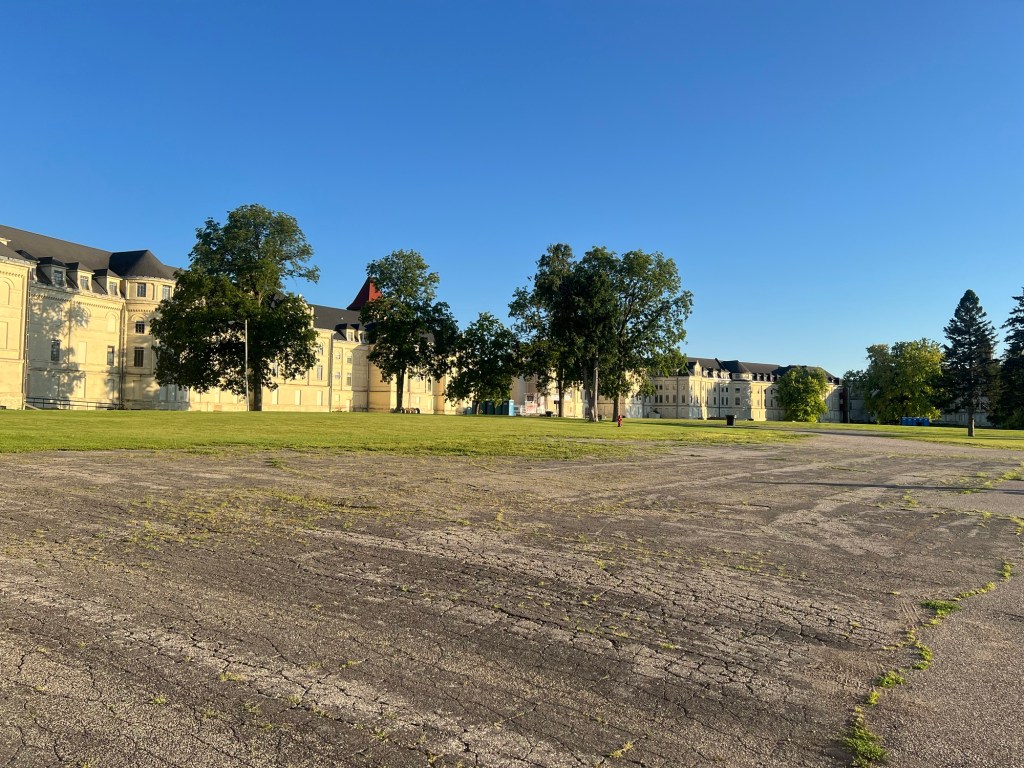

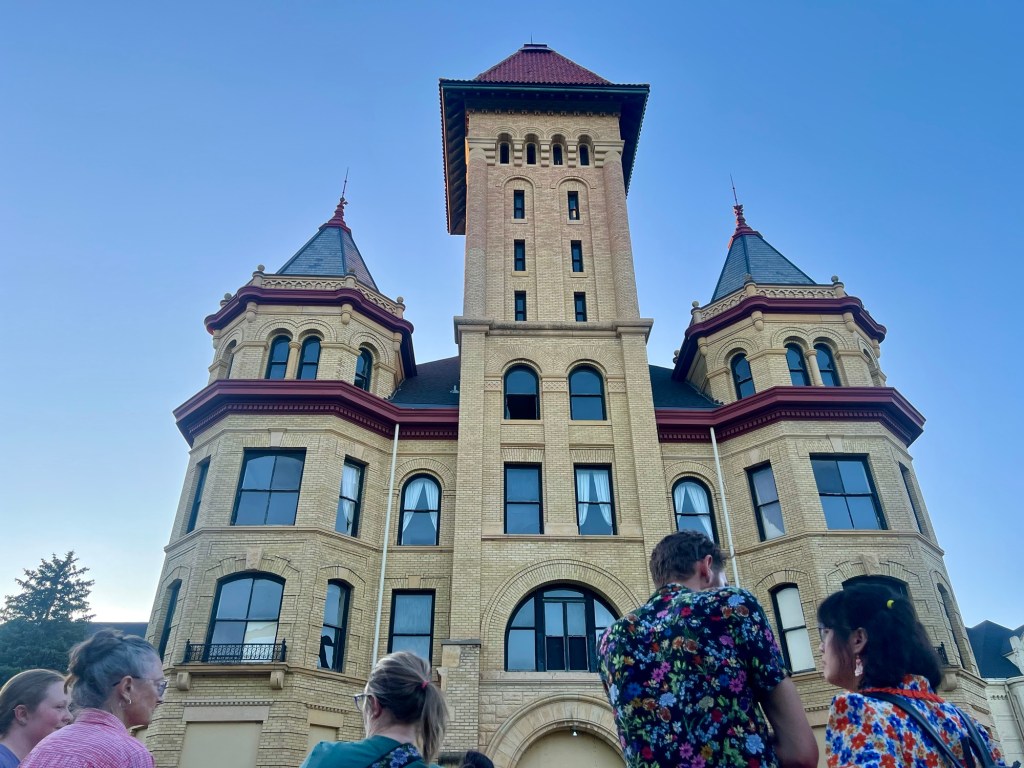
Over its one hundred and twenty-year history, there were good times and bad. Built before the turn of the twentieth century, at its peak, it housed 1800-2000 patients. The years of overcrowding led to criticism, which in turn was addressed. The tour guide from the Ottertail Historical Society narrated a balanced set of stories from personal experiences as written in journals, to newspaper articles, to reviews given to the facility from state inspectors.
State-run institutions became an unpopular means of managing mental health patients starting in the 1980s. The trend at the time was to return individuals back into the communities for care. The hospital’s population decreased until it was closed by the state in 2007. Shortly thereafter, the property was sold to the city of Fergus Falls, a community of 14,000.
The conundrum now is what to do with these structures? A commercial building on an acreage site would get bought out and redevelopped, as is underway at the Prudential Site. Even when the buildings are in decent shape, the value of the land makes the numbers work to pull down the structure and replot the acreage for further development.
Over a few posts, I’ll discuss why this scenario is different. Of course, the location in a rural area, an hour away from the Fargo airport is a factor. The condition of the buildings comes into play in redevelopment costs. The historical designation impacts the outcome. So what is it? What is the highest and best use for a historic asylum?

 Home Economics