People don’t associate wells with metropolitan homes. Wells are a country thing. When there is distance between homes, putting in infrastructure like water lines or gas lines or internet connections is more difficult to justify in the money sense.
When you do run into a well issue in the city it is usually to do with an old abandoned well. There is always a time when every housing development was new. The post WWII baby boom pushed demand for housing before all the infrastructure was figured out. So many homes in the first tier suburbs were serviced by a well. The well room was located under the front stoop (steps to front entrance) and housed the pump and holding tank.
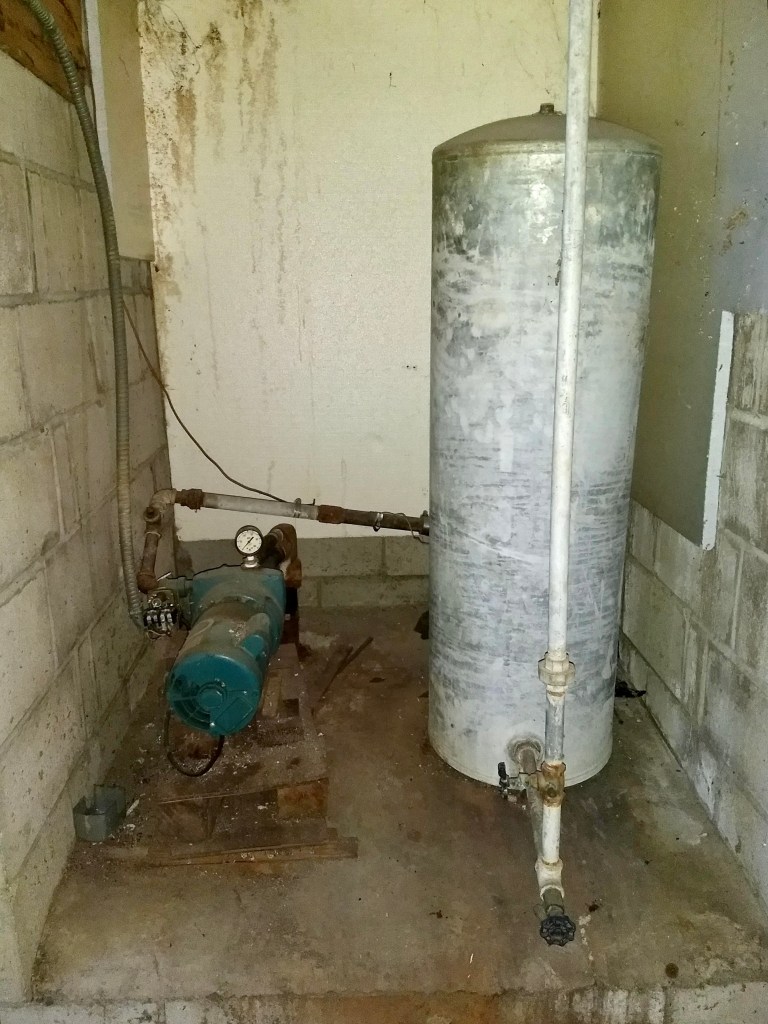
Ten years go by and many municipalities start catching up on their water main infrastructure. A rule is passed that no well can be dropped once municipal water is available in the road. A generation goes by and the pumps start to fail. Perhaps the owners had been using the well water to water their gardens, but this use doesn’t warrant the cost of a new pump. So there it sits in the damp well room, under the front steps.
Eventually people realize that hundreds of unsealed wells could cause a public health concern. The monitoring and tracking to wells is turned over to the Health Department. A disclosure is required at time of sale to indicate the status and location of any well on the property. But people think there is no harm in continuing to do what they always have done. They don’t want to bear the expense of an additional regulation.
Another generation goes by and many of the wells have been properly sealed. Those who worked in city utilities departments and at the health department and with well sealing companies have graduated onto retirement. A younger generation looks at the quaint cellar under the steps, see a clear floor, and can’t think why a well would ever have been stationed in such a spot. The pipe end protruding slightly above the concrete means nothing to them. It doesn’t take long before things are forgotten.
The tacit knowledge held by that older generation as a lived experience is gone. And those who never knew are convinced there must be some mistake. And thus, for infrastructure of a certain level of social benefit, a central regulating agency is desireable.

 Home Economics