The pro-pollinator people have gained further traction in preventing cities from undermining their wildflower gardens. A few years ago, in the SW Minnesota city of Mankato, a court ruled in favor of the homeowner to maintain the usually tall and gangly plants that the Monarchs and the Eastern Tiger Swallow or Red Admirals like to float over. The city said it was a public nuisance. The courts said no- the owner could save the bees.
A pollinator friendly article by Christopher Ingraham (the Washington Post journalist who critized northern MN and then moved his family there when he realized it was better for his kids) ran in the Minnesota Reformer. He explains, “new language requires cities to allow homeowners to install and maintain a managed natural landscape.”
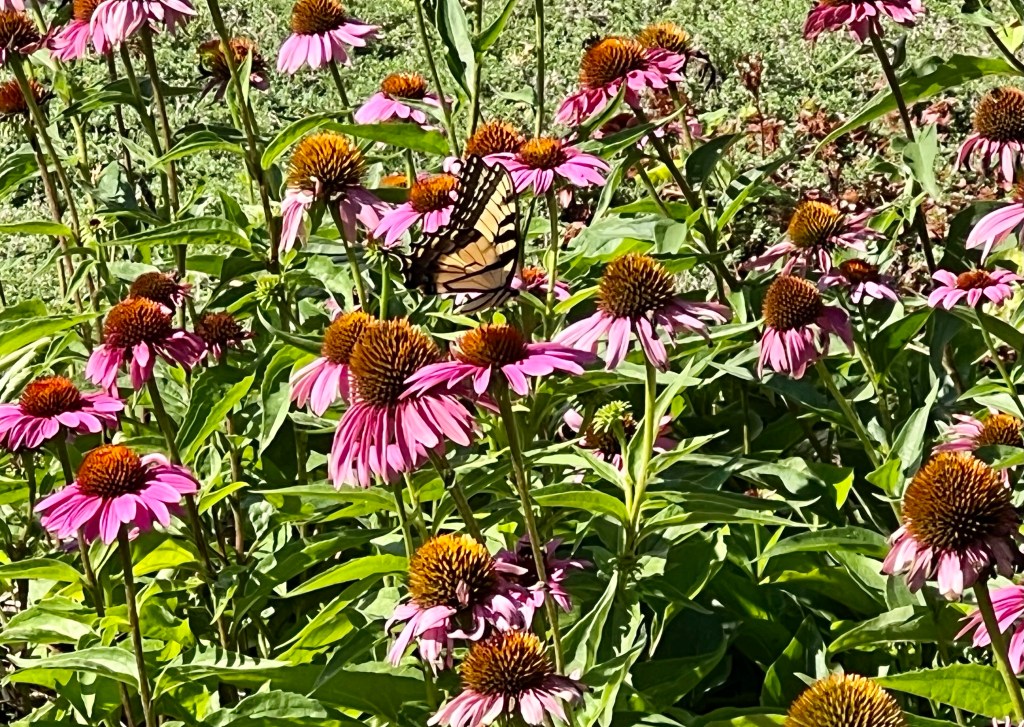
Not every neighbor is thrilled with a relaxed yard which often looks unruly. Most cities have a restriction on how high the grass can grow before being declared a nuisance. Where some people see vivacious boulevard greenery, others fear bees and flying weed spores.
The private property rights people should rejoice. Owners are now protected in their ability to choose alternative landscaping. But you’d be surprised how quickly people turn on a dime when a rule is one they favor rather than oppose. Lots of people feel neighbors have some ownership in the view from the road. Whether it means you have to store you garage containers out of site, or keep the clip of your turf tight to the ground. Neighbors care!
The question becomes which level of governance is the right one to best address neighborhood expectations. As you can imagine the folks who are OK with dog kennels and RV’s sitting on a driveway all winter can hold different expectations than other metro dwellers. So shouldn’t this be a local decision?And who really gets to decided how many butterflies is the right number of butterflies?
It seems odd to me that this type of provision shows up in the state government finance bill. Wouldn’t something like this fit into the parks and trails type of category. Minneapolis Parks alone manage 6084 acres of land. Three River Parks, which covers an area mostly in Hennepin County, provide access to 27,000 acres of nature and wildlife to metro residents. Then of course local cities look after the local parks. The city of Plymouth for instance grooms 1855 acres. If state level politicians wanted to finance something for the butterflies and the bees, they could have given seed money to to one or all of these land stewards.

 Home Economics